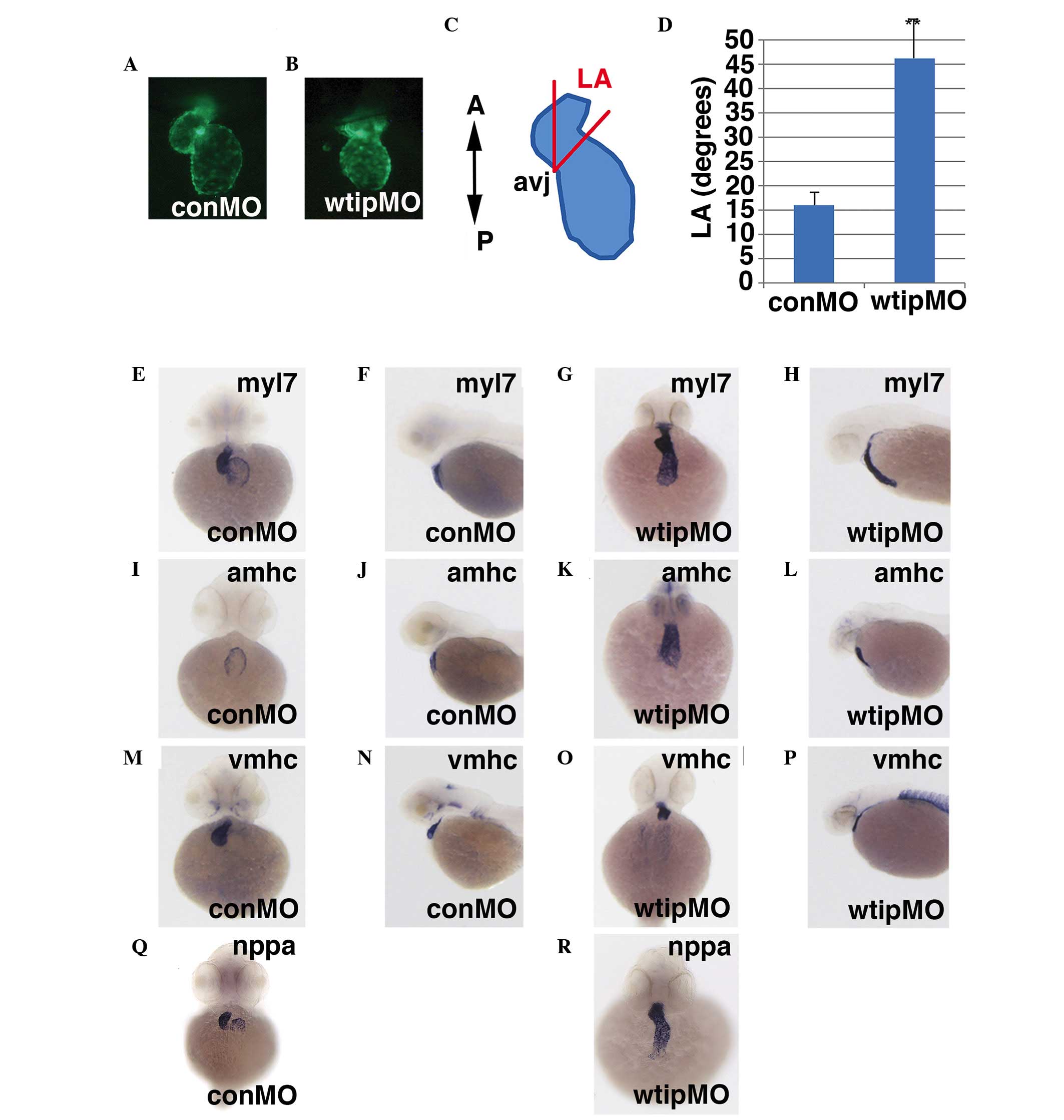
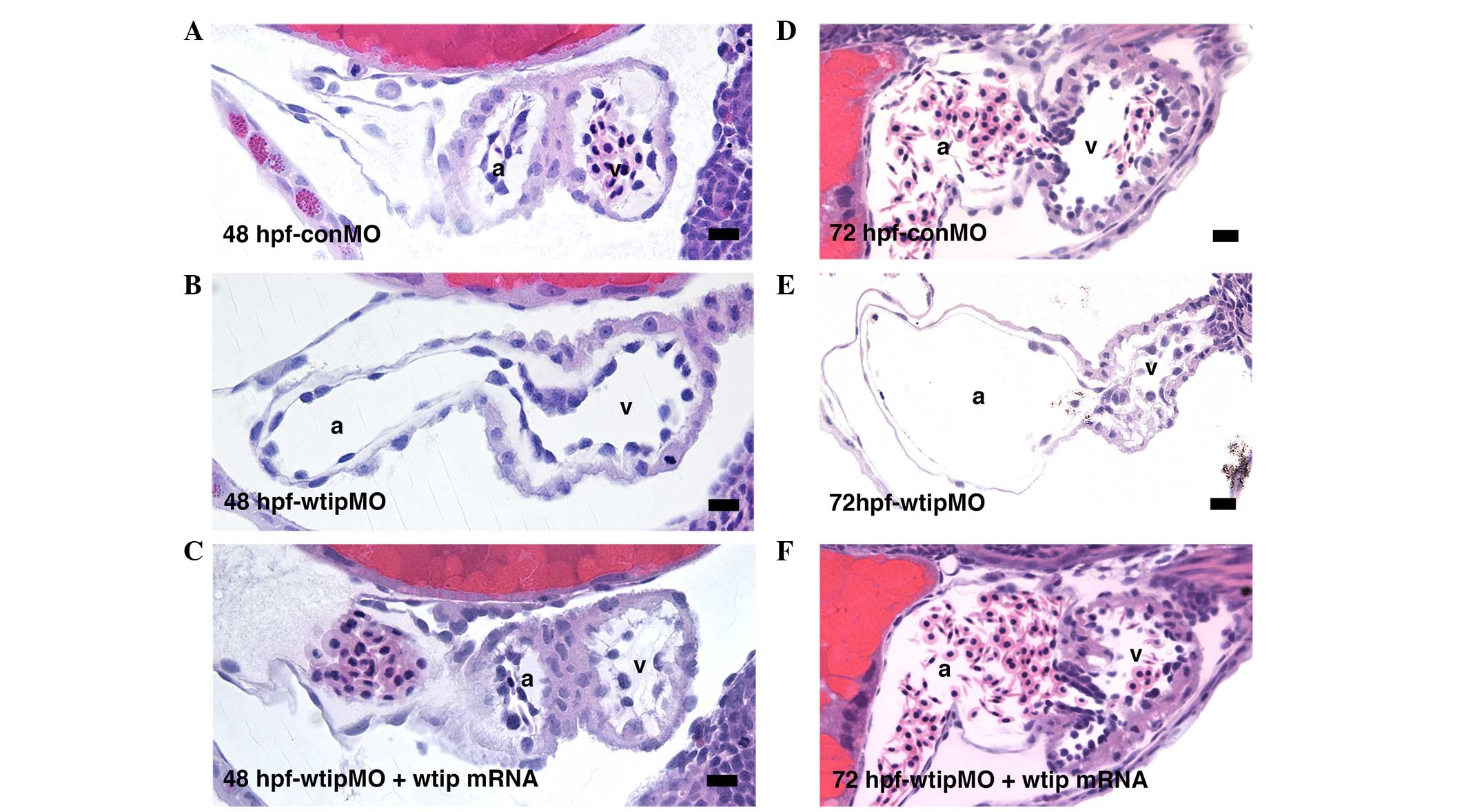
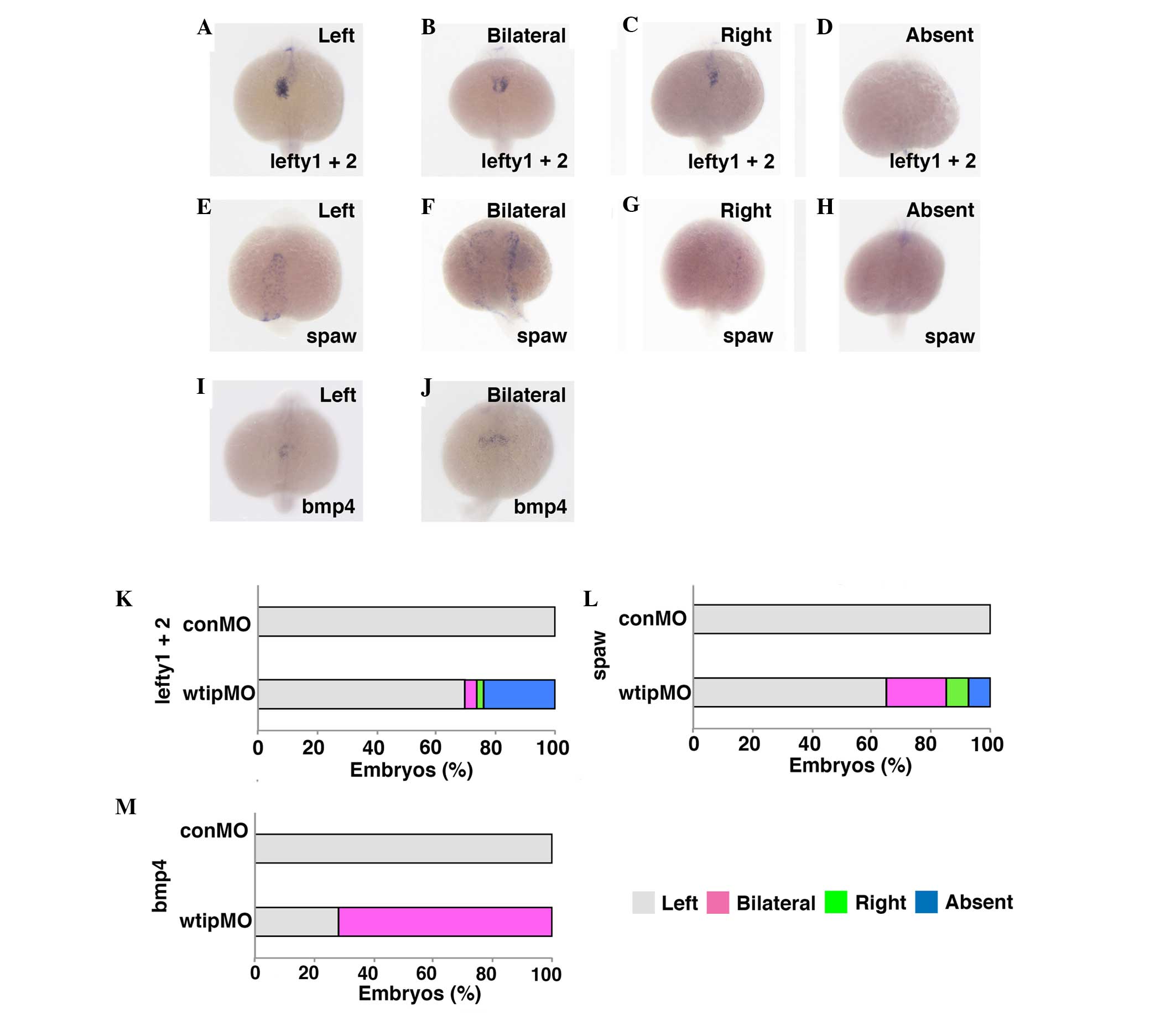
|
1
|
DeHaan RL: Morphogenesis of the vertebrate
heart. Organogenesis. DeHaan RL and Ursprung H: Holt, Rinehart and
Winston; New York: pp. 377–419. 1965
|
|
2
|
Serbedzija GN, Chen JN and Fishman MC:
Regulation in the heart field of zebrafish. Development.
125:1095–1101. 1998.PubMed/NCBI
|
|
3
|
Bagatto B, Francl J, Liu B and Liu Q:
Cadherin2 (N-cadherin) plays an essential role in zebrafish
cardiovascular development. BMC Dev Biol. 6:232006. View Article : Google Scholar : PubMed/NCBI
|
|
4
|
Fishman MC and Chien KR: Fashioning the
vertebrate heart: Earliest embryonic decisions. Development.
124:2099–2117. 1997.PubMed/NCBI
|
|
5
|
Mikawa T and Fishman DA: Retroviral
analysis of cardiac morphogenesis: Discontinuous formation of
coronary vessels. Proc Natl Acad Sci USA. 89:9504–9508. 1992.
View Article : Google Scholar : PubMed/NCBI
|
|
6
|
Mikawa T and Gourdie RG: Pericardial
mesoderm generates a populations of coronary smooth muscle cells
migrating into the heart along with ingrowth of the epicardial
organ. Dev Biol. 174:221–232. 1996. View Article : Google Scholar : PubMed/NCBI
|
|
7
|
Dettman RW, Denetclaw W Jr, Ordahl CP and
Bristow J: Common epicardial origin of coronary vascular smooth
muscle, perivascular fibroblasts, and intermyocardial fibroblasts
in the avian heart. Dev Biol. 193:169–181. 1998. View Article : Google Scholar : PubMed/NCBI
|
|
8
|
Pérez-Pomares JM, Macías D, García-Garrido
L and Munõz-Chápuli R: Immunolocalization of the vascular
endothelial growth factor receptor-2 in the subepicardial
mesenchyme of hamster embryos: Identification of the coronary
vessel precursors. HIstochem J. 30:627–634. 1998. View Article : Google Scholar : PubMed/NCBI
|
|
9
|
Vrancken Peeters MP, Gittenberger-de Groot
AC, Mentink MM and Poelmann RE: Smooth muscle cells and fibroblasts
of the coronary arteries derive from epithelial-mesenchymal
transformation of the epicardium. Anat Embryol (Berl). 199:367–378.
1999. View Article : Google Scholar
|
|
10
|
Gittenberger-de Groot AC, Vrancken Petters
MP, Bergweff M, Mentink MM and Poelmann RE: Epicardial outgrowth
inhibition leads to compensatory mesothelial outflow tract collar
and abnormal cardiac septation and coronary formation. Cir Res.
87:969–971. 2000. View Article : Google Scholar
|
|
11
|
Reese DE, Mikawa T and Bader DM:
Development of the coronary vessel system. Circ Res. 91:761–768.
2002. View Article : Google Scholar : PubMed/NCBI
|
|
12
|
von Gise A and Pu WT: Endocardial and
epicardial to mesenchymal transitions in heart development and
disease. Circ Res. 110:1628–1645. 2012. View Article : Google Scholar : PubMed/NCBI
|
|
13
|
Manner J: Experimental study on the
formation of the epicardium in chick embryos. Anat Embryol (Berl).
187:281–289. 1993. View Article : Google Scholar
|
|
14
|
Svensson EC: Deciphering the signals
specifying the proepiardium. Cir Res. 106:1789–1790. 2010.
View Article : Google Scholar
|
|
15
|
Bakkers J: Zebrafish as a model to study
cardiac development and human cardiac disease. Cardiovasc Res.
91:279–288. 2011. View Article : Google Scholar : PubMed/NCBI
|
|
16
|
Kreidberg JA, Sariola H, Loring JM, Maeda
M, Pelletier J, Housman D and Jaenisch R: WT-1 is reqiored for
early kidney development. Cell. 74:679–691. 1993. View Article : Google Scholar : PubMed/NCBI
|
|
17
|
Kwee L, Baldwin HS, Shen HM, Stewart CL,
Buck C, Buck CA and Laobow MA: Defective development of the
embryonic and extraembryonic circulatory systems in vascular cell
adhesion molecule (VCAM-1) deficient mice. Development.
121:489–503. 1995.PubMed/NCBI
|
|
18
|
Yang JT, Raybum H and Hynes RO: Cell
adhesion events mediated by alpha 4 integrins are essential in
placental and cardiac development. Development. 121:549–560.
1995.PubMed/NCBI
|
|
19
|
Moore AW, Mclnnes L, Kreidberg J, Hastie
ND and Schedl A: YAC complementation shows a requirement for Wt1 in
the development of epicardium, adrenal gland and throughout
nephrogenesis. Development. 126:1845–1857. 1999.PubMed/NCBI
|
|
20
|
Red-Horse K, Ueno H, Weissman IL and
Krasnow MA: Coronary arteries from by developmental reprogramming
of venous cells. Nature. 464:549–553. 2010. View Article : Google Scholar :
|
|
21
|
von Gise A, Zhou B, Honor LB, Ma Q, Petryk
A and Pu WT: WT1 regulates epicardial epithelial to mesenchymal
transition through β-catenin and retinoic acid signaling pathways.
Dev Biol. 356:421–431. 2011. View Article : Google Scholar : PubMed/NCBI
|
|
22
|
Serluca FC: Development of the
proepicardial organ in the zebrafish. Dev Biol. 315:18–27. 2008.
View Article : Google Scholar : PubMed/NCBI
|
|
23
|
Liu J and Stainier DY: Tbx5 and Bmp
signaling are essential for proepicardium specification in
zebrafish. Circ Res. 106:1818–1828. 2010. View Article : Google Scholar : PubMed/NCBI
|
|
24
|
Lepilina A, Coon AN, Kikuchi K, Holdway
JE, Roberts RW, Burns CG and Poss KD: A dynamic epicardial injury
response supports progenitor cell activity during zebrafish heart
regeneration. Cell. 127:607–619. 2006. View Article : Google Scholar : PubMed/NCBI
|
|
25
|
Kikuchi K, Gupta V, Wang J, Holdway JE,
Wills AA, Fang Y and Poss KD: tcf21+ epicardial cells adopt
non-myocardial fates during zebrafish heart development and
regeneration. Development. 138:2895–2902. 2011. View Article : Google Scholar : PubMed/NCBI
|
|
26
|
Kikuchi K, Holdway JE, Major RJ, Blum N,
Dahn RD, Begemann G and Poss KD: Retinoic acid production by
endocardium and epicardium is an injury response essential for
zebrafish heart regeneration. Dec Cell. 20:397–404. 2011.
View Article : Google Scholar
|
|
27
|
Kim J, Wu Q, Zhang Y, Wiens KM, Huan Y,
Rubin N, Shimada H, Handin RI, Chao MY, Tuan TL, et al: PDGF
signaling is required for epicardial function and blood vessel
formation in regenerating zebrafish hearts. Proc Natl Acad Sci USA.
107:17206–17210. 2010. View Article : Google Scholar : PubMed/NCBI
|
|
28
|
Wu H, Lee SH, Gao J, Liu X and
Iruela-Arispe ML: Inactivation of erythropoietin leads to defects
in cardiac morphogenesis. Development. 126:3597–3605.
1999.PubMed/NCBI
|
|
29
|
Chen TH, Chang TC, Kang JO, Choudhary B,
Makita T, Tran CM, Burch JB, Eid H and Sucov HM: Epicardial
induction of fetal cardiomyocyte proliferation via a retinoic
acid-inducible trophic factor. Dev Biol. 250:198–207. 2002.
View Article : Google Scholar : PubMed/NCBI
|
|
30
|
Sengbusch JK, He W, Pinco KA and Yang JT:
Dual functions of [alpha]4[beta]1 integrin in epicardial
development: Initial migration and long-term attachment. J Cell
Biol. 157:873–882. 2002. View Article : Google Scholar : PubMed/NCBI
|
|
31
|
Hatcher CJ, Diman NY, Kim MS, Pennisi D,
Song Y, Goldstein MM, Mikawa T and Basson CT: A role for Tbx5 in
proepicardial cell migration during cardiogenesis. Physiol
Genomics. 18:129–140. 2004. View Article : Google Scholar : PubMed/NCBI
|
|
32
|
Schlueter J and Brand T: A right-sided
pathway involving FGF8/Snai1 controls asymmetric development of the
proepicardium in the chick embryo. Proc Natl Acad Sci USA.
106:7485–7490. 2009. View Article : Google Scholar : PubMed/NCBI
|
|
33
|
Schulte I, Schlueter J, Abu-Issa R, Brand
T and Männer J: Morphological and molecular left-right asymmetries
in the development of the proepicardium: A comparative analysis on
mouse and chick embryos. Dev Dyn. 236:684–695. 2007. View Article : Google Scholar : PubMed/NCBI
|
|
34
|
Chen JN, van Eeden FJ, Warren KS, Chin A,
Nüsslein-Volhard C, Haffter P and Fishman MC: Left-right pattern of
cardiac BMP4 may drive asymmetry of the heart in zebrafish.
Development. 124:4373–4382. 1997.PubMed/NCBI
|
|
35
|
Shu X, Huang J, Dong Y, Choi J,
Langenbacher A and Chen JN: Na,K-ATPase alpha2 and Ncx4a regulate
zebrafish left-right patterning. Development. 134:1921–1930. 2007.
View Article : Google Scholar : PubMed/NCBI
|
|
36
|
Fakhro KA, Choi M, Ware SM, Belmont JW,
Towbin JA, Lifton RP, Khokha MK and Brueckner M: Rare copy number
variations in congenital heart disease patients identify unique
genes in left-right patterning. Proc Natl Acad Sc USA.
108:2915–2920. 2011. View Article : Google Scholar
|
|
37
|
Chin AJ, Saint-Jeannet JP and Lo CW: How
insights from cardiovascular developmental biology have impacted
the care of infants and children with congenital heart disease.
Mech Dev. 129:75–97. 2012. View Article : Google Scholar : PubMed/NCBI
|
|
38
|
Francis RJ, Christopher A, Devine WA,
Ostrowski L and Lo C: Congenital heart disease and the
specification of left-right asymmetry. Am J Physiol Heart Circ
Physiol. 302:H2102–H2111. 2012. View Article : Google Scholar : PubMed/NCBI
|
|
39
|
Slough J, Cooney L and Brueckner M:
Monocilia in the embryonic mouse heart suggest a direct role for
cilia in cardiac morphogenesis. Dev Dyn. 237:2304–2314. 2008.
View Article : Google Scholar : PubMed/NCBI
|
|
40
|
Srichai MB, Konieczkowski M, Padiyar A,
Konieczkowski DJ, Mukherjee A, Hayden PS, Kamat S, El-Meanawy MA,
Khan S, Mundel P, et al: A WT1 co-regulator controls podocyte
phenotype by shuttling between adhesion structures and nucleus. J
Biol Chem. 279:14398–14408. 2004. View Article : Google Scholar : PubMed/NCBI
|
|
41
|
van Wijk NV, Witte F, Feike AC, Schambony
A, Birchmeier W, Mundlos S and Stricker S: The LIM domain protein
Wtip interacts with the receptor tyrosine kinase Ror2 and inhibits
canonical Wnt signaling. Biochem Biophys Res Commun. 390:211–216.
2009. View Article : Google Scholar : PubMed/NCBI
|
|
42
|
Langer EM, Feng Y, Zhaoyuan H, Rauscher FJ
III, Kroll KL and Longmore GD: Ajuba LIM proteins are snail/slug
corepressors required for neural crest development in Xenopus. Dev
Cell. 14:424–436. 2008. View Article : Google Scholar : PubMed/NCBI
|
|
43
|
Das Thakur M, Feng Y, Jagannathan R, Seppa
MJ, Skeath JB and Longmore GD: Ajuba LIM proteins are negative
regulators of the Hippo signaling pathway. Curr Biol. 20:657–662.
2010. View Article : Google Scholar : PubMed/NCBI
|
|
44
|
Bubenshchikova E, Ichimura K, Fukuyo Y,
Powell R, Hsu C, Morrical SO, Sedor JR, Sakai T and Obara T: Wtip
and Vangl2 are required for mitotic spindle orientation and cloaca
morphogenesis. Biol Open. 1:588–596. 2012. View Article : Google Scholar : PubMed/NCBI
|
|
45
|
Gana S, Veggiotti P, Sciacca G, Fedeli C,
Bersano A, Micieli G, Maghnie M, Ciccone R, Rossi E, Plunkett K, et
al: 19q13.11 cryptic deletion: Description of two new cases and
indication for a role of WTIP haploinsufficiency in hypospadias.
Eur J Hum Genet. 20:852–856. 2012. View Article : Google Scholar : PubMed/NCBI
|
|
46
|
Westerfield M: The Zebrafish Book A Guide
For The Laboratory Use Of Zebrafish Danio (Brachydanio) Rerio. 4th
edition. University of Oregon Pressm; Eugene, OR: 2000
|
|
47
|
Feng J, Jia N, Han LN, Huang FS, Xie YF,
Liu J and Tang JS: Microinjection of morphine into thalamic nucleus
submedius depresses bee venom-induced inflammatory pain in the rat.
J Pharm Pharmacol. 60:1355–1363. 2008. View Article : Google Scholar : PubMed/NCBI
|
|
48
|
Amack JD and Yost HJ: The T box
transcription factor no tail in ciliated controls zebrafish
left-right asymmetry. Curr Biol. 14:685–690. 2004. View Article : Google Scholar : PubMed/NCBI
|
|
49
|
Hauptmann G and Gerster T: Multicolor
whole-mount in situ hybridization. Methods Mol Biol. 137:139–148.
2000.PubMed/NCBI
|
|
50
|
Thisse C and Thisse B: High-resolution in
situ hybridization to whole-mount zebrafish embryos. Nat Protoc.
3:59–69. 2008. View Article : Google Scholar : PubMed/NCBI
|
|
51
|
Yelon D, Home SA and Stainier DY:
Restricted expression of cardiac myosin genes reveals regulated
aspects of heart tube assembly in zebrafish. Dev Biol. 214:23–37.
1999. View Article : Google Scholar : PubMed/NCBI
|
|
52
|
Berdougo E, Coleman H, Lee DH, Stainier DY
and Yelon D: Mutation of weak atrium/atrial myosin heavy chain
disrupts atrial function and influences ventricular morphogenesis
in zebrafish. Development. 130:6121–6129. 2003. View Article : Google Scholar : PubMed/NCBI
|
|
53
|
Long S, Ahmad N and Rebagliati M: The
zebrafish nodal-related gene southpaw is required for visceral and
diencephalic left-right asymmetry. Development. 130:2303–2316.
2003. View Article : Google Scholar : PubMed/NCBI
|
|
54
|
Ahmad I, Pacheco M and Santos MA:
Exzymatic and nonenzymatic antioxidants as an adaptaion to
phagocyte-induced damage in Anguilla Anguilla L. following in situ
harbor water exposure. Exotoxicol Environ Saf. 57:290–302. 2004.
View Article : Google Scholar
|
|
55
|
Chernyavskaya Y, Ebert AM, Milligan E and
Garrity DM: Voltage-gated calcium channel CACNB2 (β2.1) protein is
required in the heart for control of cell proliferation and heart
tube integrity. Dev Dyn. 241:648–662. 2012. View Article : Google Scholar : PubMed/NCBI
|
|
56
|
Kim S, Zaghloul NA, Bubenshchikova E, Oh
EC, Rankin S, Katsanis N, Obara T and Tsiokas L: Nde1-mediated
inhibition of ciliogenesis affects cell cycle re-entry. Nat Cell
Biol. 13:351–360. 2011. View Article : Google Scholar : PubMed/NCBI
|
|
57
|
Pritchard-Jones K, Fleming S, Davison D,
Bickmore W, Porteous D, Gosden C, Bard J, Buckler A, Pelletier J,
Housman D, et al: The candidate Wilms' tumour gene is involved in
genitourinary development. Nature. 346:194–197. 1990. View Article : Google Scholar : PubMed/NCBI
|
|
58
|
Armstrong JF, Pritchard-Jones K, Bickmore
WA, Hastie ND and Bard JB: The expression of the Wilms' tumour
gene, WT1, in the developing mammalian embryo. Mech Dev. 40:85–97.
1993. View Article : Google Scholar : PubMed/NCBI
|
|
59
|
Drummond IA, Majumdar A, Hentschel H,
Elger M, Solnica-Krezel L, Schier AF, Neuhauss SC, Stemple DL,
Zwartkruis F, Rangini Z, et al: Early development of the zebrafish
pronephros and analysis of mutations affecting pronephric function.
Development. 125:4655–4667. 1998.PubMed/NCBI
|
|
60
|
Carmona R, González-Iriarte M,
Pérez-Pomares JM and Muñoz-Chápuli R: Localization of the Wilm's
tumour protein WT1 in avian embryos. Cell Tissue Res. 303:173–186.
2001. View Article : Google Scholar : PubMed/NCBI
|
|
61
|
Ichimura K, Bubenshchikova E, Powell R,
Fukuyo Y, Nakamura T, Tran U, Oda S, Tanaka M, Wessely O, Kurihara
H, et al: A comparative analysis of glomerulus development in the
pronephros of medaka and zebrafish. PLoS One. 7:e452862012.
View Article : Google Scholar : PubMed/NCBI
|
|
62
|
Van der Heiden K, Groenendijk BC, Hierck
BP, Hogers B, Koerten HK, Mommaas AM, Gittenberger-de Groot AC and
Poelmann RE: Monocilia on chicken embryonic endocardium in low
shear stress areas. Dev Dyn. 235:19–28. 2006. View Article : Google Scholar
|
|
63
|
Perner B, Englert C and Bollig F: The
Wilms tumor genes wt1a and wt1b control different steps during
formation of the zebrafish pronephros. Dev Biol. 309:87–96. 2007.
View Article : Google Scholar : PubMed/NCBI
|
|
64
|
Auman HJ, Coleman H, Riley HE, Olale F,
Tsai HJ and Yelon D: Functional modulation of cardiac form through
regionally confined cell shape changes. PLoS Biol. 5:e532007.
View Article : Google Scholar : PubMed/NCBI
|
|
65
|
Mably JD, Modhideen MA, Burns CG, Chen JN
and Fishman MC: Heart of glass regulates the concentric growth of
the heart in zebrafish. Curr Biol. 13:2138–2147. 2003. View Article : Google Scholar : PubMed/NCBI
|
|
66
|
Baker K, Warren KS, Yellen G and Fishman
MC: Defective 'pacemaker' current (Ih) in a zebrafish mutant with a
slow heart reate. Proc Natl Acad Sci USA. 94:4554–4559. 1997.
View Article : Google Scholar
|
|
67
|
Jacob E, Drexel M, Schwerte T and Pelster
B: Influence of hypoxia and of hypoxemia on the development of
cardiac activity in zebrafish larvae. Am J Physiol Regul Integr
Comp Physiol. 283:R911–R917. 2002. View Article : Google Scholar : PubMed/NCBI
|
|
68
|
Vermot J, Forouhar AS, Liebling M, Wu D,
Plummer D, Gharib M and Fraser SE: Reversing blood flows act
through klf2a to ensure normal valvulogenesis in the developing
heart. PLoS Biol. 7:e10002462009. View Article : Google Scholar : PubMed/NCBI
|
|
69
|
Nagai Y, Asaoka Y, Namae M, Saito K,
Momose H, Mitani H, Furutani-Seiki M, Katada T and Nishina H: The
LIM protein Ajuba is required for ciliogenesis and left-right axis
determination in medaka. Biochem Biophys Res Commun. 396:887–893.
2010. View Article : Google Scholar : PubMed/NCBI
|
|
70
|
Witzel HR, Jungblut B, Choe CP, Crump JG,
Braun T and Dobreva G: The LIM protein Ajuba restricts the second
heart field progenitor pool by regulating Isl1 activity. Dev Cell.
23:58–57. 2012. View Article : Google Scholar : PubMed/NCBI
|
|
71
|
Essner JJ, Vogan KJ, Wagner MK, Tabin CJ,
Yost HJ and Brueckner M: Conserved function for embryonic nodal
cilia. Nature. 418:37–38. 2002. View Article : Google Scholar : PubMed/NCBI
|
|
72
|
Essner JJ, Amack JD, Nyholm MK, Harris EB
and Yost HJ: Kupffer's vesicle is a ciliated organ of asymmetry in
the zebrafish embryo that initiates left-right development of the
brain, heart and gut. Development. 132:1247–1260. 2005. View Article : Google Scholar : PubMed/NCBI
|
|
73
|
Kramer-Zucker AG, Olale F, Haycraft CJ,
Yoder BK, Schier AF and Drummond IA: Cilia-driven fluid flow in the
zebrafish pronephros, brain and Kupffer's vesicle is required for
normal organogenesis. Development. 132:1907–1921. 2005. View Article : Google Scholar : PubMed/NCBI
|
|
74
|
Wessely O and Obara T: Fish and frogs:
Models for vertebrate cilia signaling. Front Biosci. 13:1866–1880.
2008. View Article : Google Scholar
|
|
75
|
Swanhart LM, Cosentino CC, Diep CQ,
Davidson AJ, de Caestecker M and Hukriede NA: Zebrafish kidney
development: basic science to translational research. Birth Defects
Res C Embryo Today. 93:141–156. 2011. View Article : Google Scholar : PubMed/NCBI
|
|
76
|
Brueckner M: Impact of genetic diagnosis
on clinical management of patients with congenital heart disease:
Cilia point the way. Circulation. 125:2178–2180. 2012. View Article : Google Scholar : PubMed/NCBI
|
|
77
|
Svensson LG: Percutaneous aortic valves:
Effective in inoperable patients, what price in high-ris patients?
J Thorac Cardiovasc Surg. 140(6 Suppl): S10–S13; discussion
S86–S91. 2010. View Article : Google Scholar : PubMed/NCBI
|
|
78
|
Poss KD, Wilson LG and Keating MT: Heart
regeneration in zebrafish. Science. 298:2188–2190. 2002. View Article : Google Scholar : PubMed/NCBI
|
|
79
|
Myklebust R, Engedal H, Saetersdai TS and
Ulstein M: Primary 9 + 0 cilia in the embryonic and the adult human
heart. Anat Embryol (Berl). 151:127–139. 1977. View Article : Google Scholar
|
|
80
|
Beis D, Bartman T, Jin SW, Scott IC,
D'Amico LA, Ober EA, Verkade H, Frantsve J, Field HA, Wehman A, et
al: Genetic and cellular analyses of zebrafish atrioventricular
cushion and valve development. Development. 132:4193–4204. 2005.
View Article : Google Scholar : PubMed/NCBI
|
|
81
|
Smith KA, Langendijk AK, Courtney AD, Chen
H, Paterson D, Hogan BM, Wicking C and Bakkers J: Transmembrane
protein 2 (Tmem2) is required to regionally restrict
atrioventricular canal boundary and endocardial cushion
development. Development. 138:4193–4198. 2011. View Article : Google Scholar : PubMed/NCBI
|