Spandidos Publications Logo
  • About
    • About Spandidos
    • Aims and Scopes
    • Abstracting and Indexing
    • Editorial Policies
    • Reprints and Permissions
    • Job Opportunities
    • Terms and Conditions
    • Contact
  • Journals
    • All Journals
    • Oncology Letters
      • Oncology Letters
      • Information for Authors
      • Editorial Policies
      • Editorial Board
      • Aims and Scope
      • Abstracting and Indexing
      • Bibliographic Information
      • Archive
    • International Journal of Oncology
      • International Journal of Oncology
      • Information for Authors
      • Editorial Policies
      • Editorial Board
      • Aims and Scope
      • Abstracting and Indexing
      • Bibliographic Information
      • Archive
    • Molecular and Clinical Oncology
      • Molecular and Clinical Oncology
      • Information for Authors
      • Editorial Policies
      • Editorial Board
      • Aims and Scope
      • Abstracting and Indexing
      • Bibliographic Information
      • Archive
    • Experimental and Therapeutic Medicine
      • Experimental and Therapeutic Medicine
      • Information for Authors
      • Editorial Policies
      • Editorial Board
      • Aims and Scope
      • Abstracting and Indexing
      • Bibliographic Information
      • Archive
    • International Journal of Molecular Medicine
      • International Journal of Molecular Medicine
      • Information for Authors
      • Editorial Policies
      • Editorial Board
      • Aims and Scope
      • Abstracting and Indexing
      • Bibliographic Information
      • Archive
    • Biomedical Reports
      • Biomedical Reports
      • Information for Authors
      • Editorial Policies
      • Editorial Board
      • Aims and Scope
      • Abstracting and Indexing
      • Bibliographic Information
      • Archive
    • Oncology Reports
      • Oncology Reports
      • Information for Authors
      • Editorial Policies
      • Editorial Board
      • Aims and Scope
      • Abstracting and Indexing
      • Bibliographic Information
      • Archive
    • Molecular Medicine Reports
      • Molecular Medicine Reports
      • Information for Authors
      • Editorial Policies
      • Editorial Board
      • Aims and Scope
      • Abstracting and Indexing
      • Bibliographic Information
      • Archive
    • World Academy of Sciences Journal
      • World Academy of Sciences Journal
      • Information for Authors
      • Editorial Policies
      • Editorial Board
      • Aims and Scope
      • Abstracting and Indexing
      • Bibliographic Information
      • Archive
    • International Journal of Functional Nutrition
      • International Journal of Functional Nutrition
      • Information for Authors
      • Editorial Policies
      • Editorial Board
      • Aims and Scope
      • Abstracting and Indexing
      • Bibliographic Information
      • Archive
    • International Journal of Epigenetics
      • International Journal of Epigenetics
      • Information for Authors
      • Editorial Policies
      • Editorial Board
      • Aims and Scope
      • Abstracting and Indexing
      • Bibliographic Information
      • Archive
    • Medicine International
      • Medicine International
      • Information for Authors
      • Editorial Policies
      • Editorial Board
      • Aims and Scope
      • Abstracting and Indexing
      • Bibliographic Information
      • Archive
  • Articles
  • Information
    • Information for Authors
    • Information for Reviewers
    • Information for Librarians
    • Information for Advertisers
    • Conferences
  • Language Editing
Spandidos Publications Logo
  • About
    • About Spandidos
    • Aims and Scopes
    • Abstracting and Indexing
    • Editorial Policies
    • Reprints and Permissions
    • Job Opportunities
    • Terms and Conditions
    • Contact
  • Journals
    • All Journals
    • Biomedical Reports
      • Information for Authors
      • Editorial Policies
      • Editorial Board
      • Aims and Scope
      • Abstracting and Indexing
      • Bibliographic Information
      • Archive
    • Experimental and Therapeutic Medicine
      • Information for Authors
      • Editorial Policies
      • Editorial Board
      • Aims and Scope
      • Abstracting and Indexing
      • Bibliographic Information
      • Archive
    • International Journal of Epigenetics
      • Information for Authors
      • Editorial Policies
      • Editorial Board
      • Aims and Scope
      • Abstracting and Indexing
      • Bibliographic Information
      • Archive
    • International Journal of Functional Nutrition
      • Information for Authors
      • Editorial Policies
      • Editorial Board
      • Aims and Scope
      • Abstracting and Indexing
      • Bibliographic Information
      • Archive
    • International Journal of Molecular Medicine
      • Information for Authors
      • Editorial Policies
      • Editorial Board
      • Aims and Scope
      • Abstracting and Indexing
      • Bibliographic Information
      • Archive
    • International Journal of Oncology
      • Information for Authors
      • Editorial Policies
      • Editorial Board
      • Aims and Scope
      • Abstracting and Indexing
      • Bibliographic Information
      • Archive
    • Medicine International
      • Information for Authors
      • Editorial Policies
      • Editorial Board
      • Aims and Scope
      • Abstracting and Indexing
      • Bibliographic Information
      • Archive
    • Molecular and Clinical Oncology
      • Information for Authors
      • Editorial Policies
      • Editorial Board
      • Aims and Scope
      • Abstracting and Indexing
      • Bibliographic Information
      • Archive
    • Molecular Medicine Reports
      • Information for Authors
      • Editorial Policies
      • Editorial Board
      • Aims and Scope
      • Abstracting and Indexing
      • Bibliographic Information
      • Archive
    • Oncology Letters
      • Information for Authors
      • Editorial Policies
      • Editorial Board
      • Aims and Scope
      • Abstracting and Indexing
      • Bibliographic Information
      • Archive
    • Oncology Reports
      • Information for Authors
      • Editorial Policies
      • Editorial Board
      • Aims and Scope
      • Abstracting and Indexing
      • Bibliographic Information
      • Archive
    • World Academy of Sciences Journal
      • Information for Authors
      • Editorial Policies
      • Editorial Board
      • Aims and Scope
      • Abstracting and Indexing
      • Bibliographic Information
      • Archive
  • Articles
  • Information
    • For Authors
    • For Reviewers
    • For Librarians
    • For Advertisers
    • Conferences
  • Language Editing
Login Register Submit
  • This site uses cookies
  • You can change your cookie settings at any time by following the instructions in our Cookie Policy. To find out more, you may read our Privacy Policy.

    I agree
Search articles by DOI, keyword, author or affiliation
Search
Advanced Search
presentation
Molecular Medicine Reports
Join Editorial Board Propose a Special Issue
Print ISSN: 1791-2997 Online ISSN: 1791-3004
Journal Cover
October-2016 Volume 14 Issue 4

Full Size Image

Sign up for eToc alerts
Recommend to Library

Journals

International Journal of Molecular Medicine

International Journal of Molecular Medicine

International Journal of Molecular Medicine is an international journal devoted to molecular mechanisms of human disease.

International Journal of Oncology

International Journal of Oncology

International Journal of Oncology is an international journal devoted to oncology research and cancer treatment.

Molecular Medicine Reports

Molecular Medicine Reports

Covers molecular medicine topics such as pharmacology, pathology, genetics, neuroscience, infectious diseases, molecular cardiology, and molecular surgery.

Oncology Reports

Oncology Reports

Oncology Reports is an international journal devoted to fundamental and applied research in Oncology.

Experimental and Therapeutic Medicine

Experimental and Therapeutic Medicine

Experimental and Therapeutic Medicine is an international journal devoted to laboratory and clinical medicine.

Oncology Letters

Oncology Letters

Oncology Letters is an international journal devoted to Experimental and Clinical Oncology.

Biomedical Reports

Biomedical Reports

Explores a wide range of biological and medical fields, including pharmacology, genetics, microbiology, neuroscience, and molecular cardiology.

Molecular and Clinical Oncology

Molecular and Clinical Oncology

International journal addressing all aspects of oncology research, from tumorigenesis and oncogenes to chemotherapy and metastasis.

World Academy of Sciences Journal

World Academy of Sciences Journal

Multidisciplinary open-access journal spanning biochemistry, genetics, neuroscience, environmental health, and synthetic biology.

International Journal of Functional Nutrition

International Journal of Functional Nutrition

Open-access journal combining biochemistry, pharmacology, immunology, and genetics to advance health through functional nutrition.

International Journal of Epigenetics

International Journal of Epigenetics

Publishes open-access research on using epigenetics to advance understanding and treatment of human disease.

Medicine International

Medicine International

An International Open Access Journal Devoted to General Medicine.

Journal Cover
October-2016 Volume 14 Issue 4

Full Size Image

Sign up for eToc alerts
Recommend to Library

  • Article
  • Citations
    • Cite This Article
    • Download Citation
    • Create Citation Alert
    • Remove Citation Alert
    • Cited By
  • Similar Articles
    • Related Articles (in Spandidos Publications)
    • Similar Articles (Google Scholar)
    • Similar Articles (PubMed)
  • Download PDF
  • Download XML
  • View XML
Article Open Access

Cytoplasmic translocation of high-mobility group box-1 protein is induced by diabetes and high glucose in retinal pericytes

  • Authors:
    • Junghyun Kim
    • Chan‑Sik Kim
    • Eunjin Sohn
    • Jin Sook Kim
  • View Affiliations / Copyright

    Affiliations: Korean Medicine Convergence Research Division, Korea Institute of Oriental Medicine, Daejeon 34054, Republic of Korea
    Copyright: © Kim et al. This is an open access article distributed under the terms of Creative Commons Attribution License.
  • Pages: 3655-3661
    |
    Published online on: September 2, 2016
       https://doi.org/10.3892/mmr.2016.5702
  • Expand metrics +
Metrics: Total Views: 0 (Spandidos Publications: | PMC Statistics: )
Metrics: Total PDF Downloads: 0 (Spandidos Publications: | PMC Statistics: )
Cited By (CrossRef): 0 citations Loading Articles...

This article is mentioned in:


Abstract

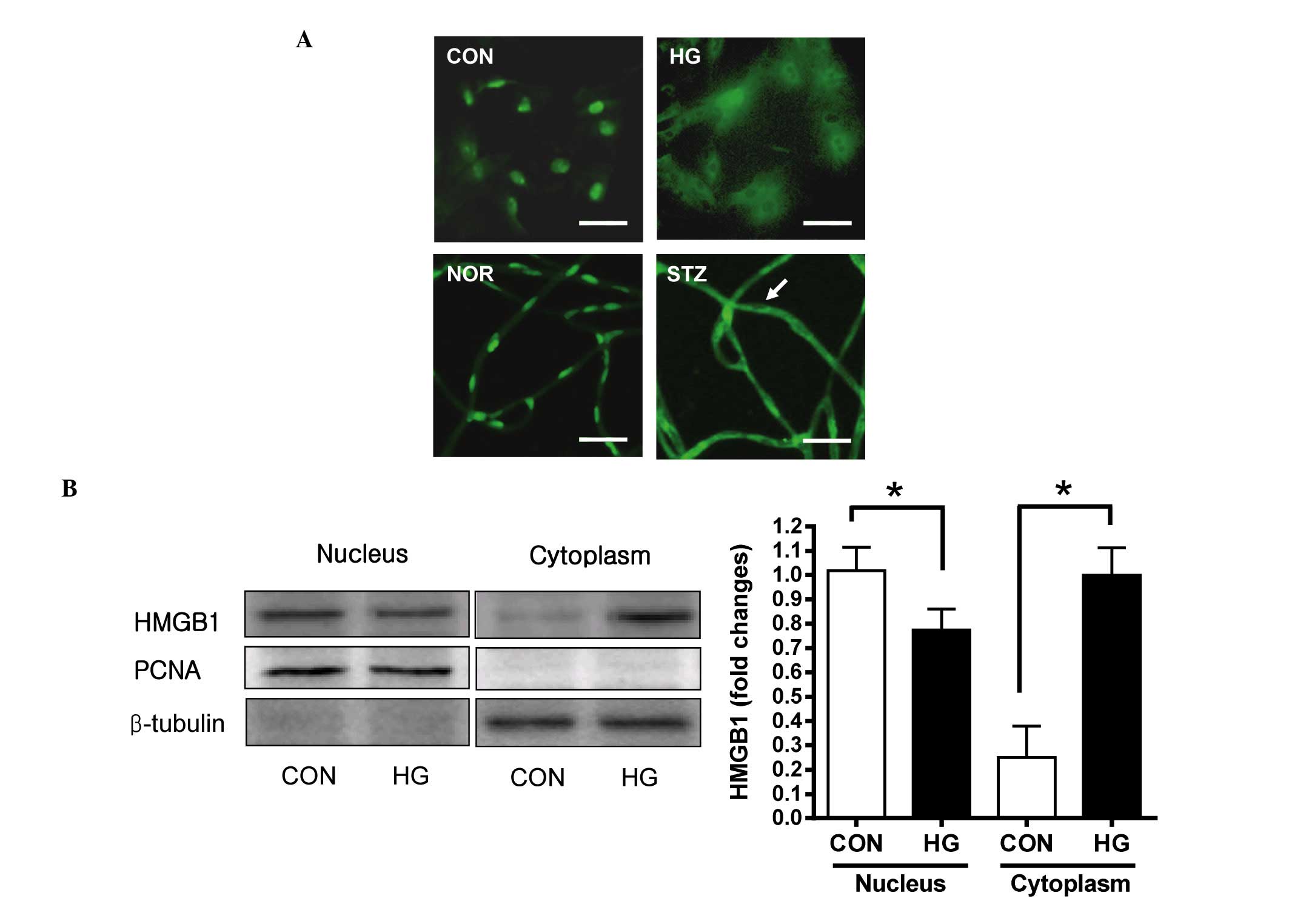
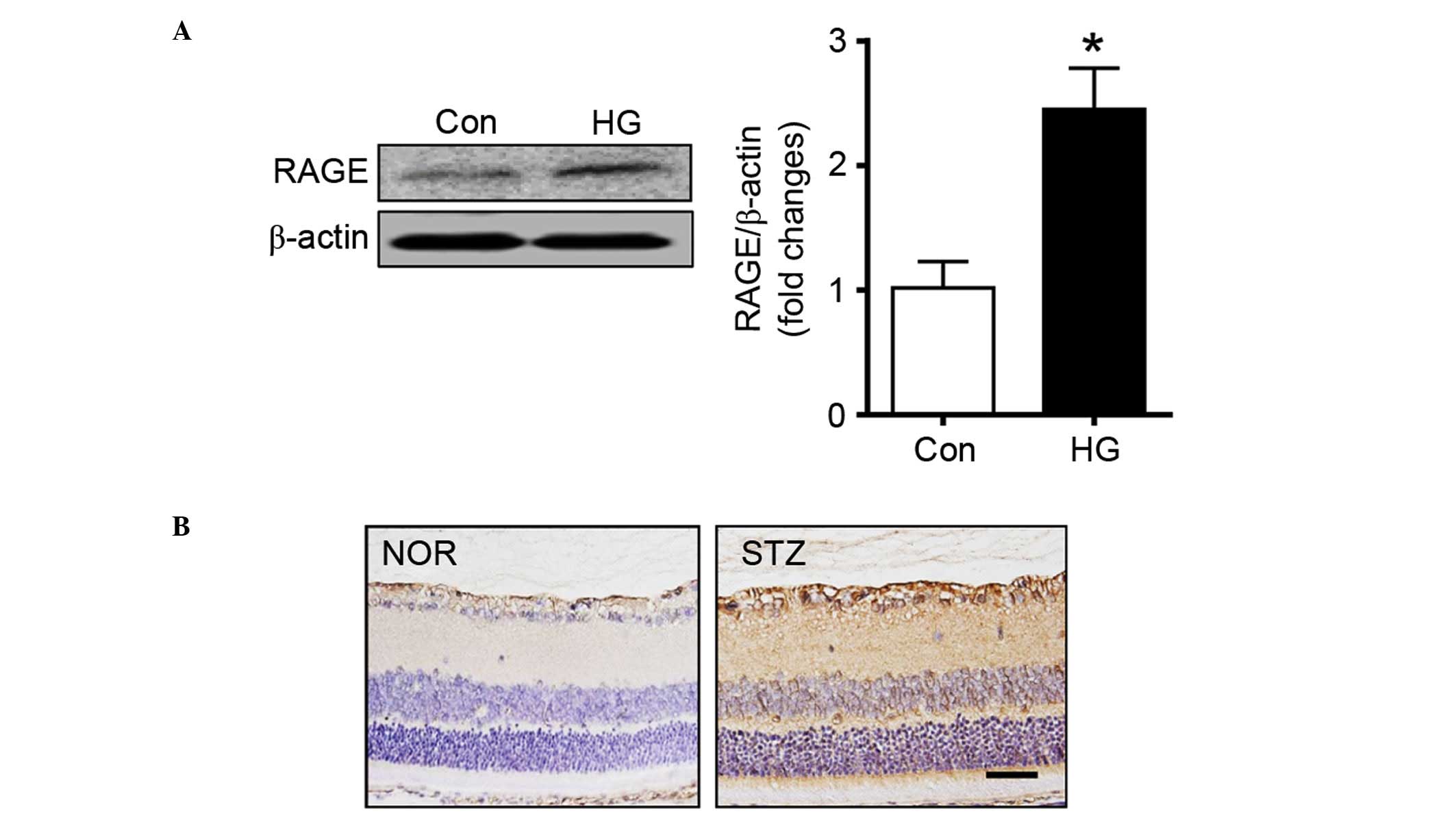
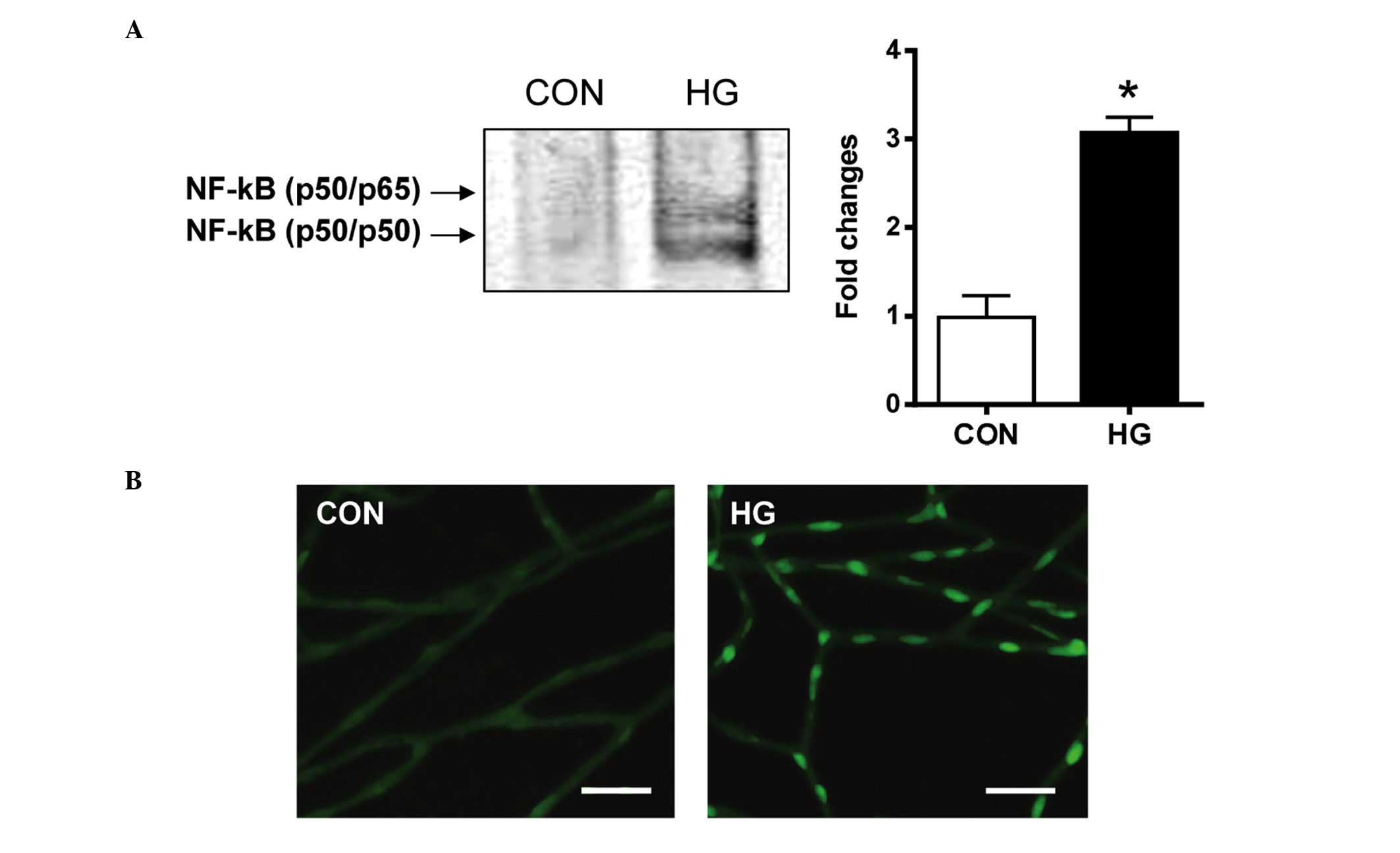
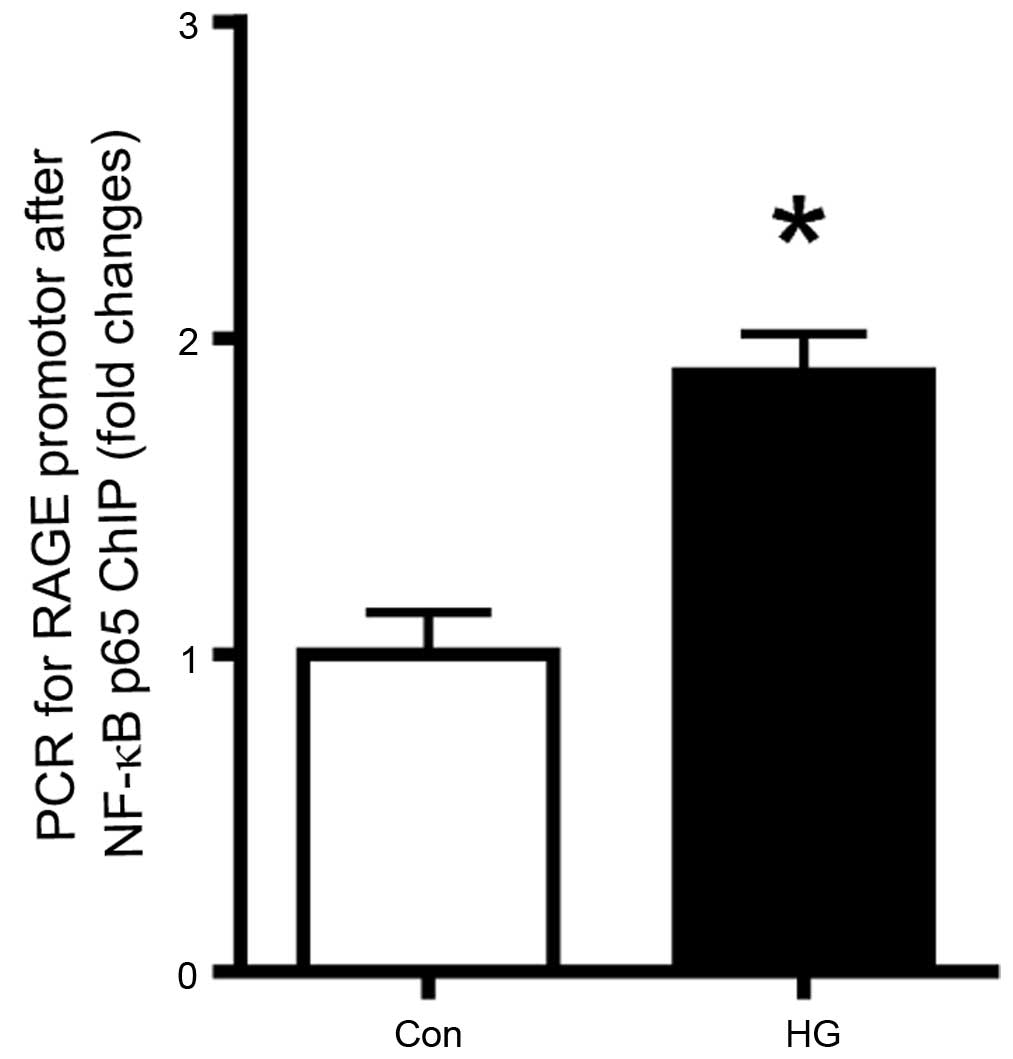
The aim of the present study was to assess the involvement of the high-mobility group box-1 (HMGB1) protein, receptor for advanced glycation end products (RAGE) and nuclear factor (NF)-κB signaling pathway in the development of diabetic retinopathy. Rat primary retinal pericytes were exposed to 25 mmol/l D‑glucose for 48 h. Diabetic retinal vessels were prepared from streptozotocin-induced diabetic rats 12 weeks following the induction of diabetes. The expression of HMGB1 was detected using immunofluorescence staining. The expression of RAGE and the activity of NF‑κB were analyzed using western blot and electrophoretic mobility shift assays, respectively. The results showed that HMGB1 was translocated to the cytoplasm of the high glucose‑treated pericytes and diabetic retinal pericytes, whereas, in the control cells and the normal retinas, HMGB1 was expressed in the cell nuclei only. The expression of RAGE, a potential receptor for HMGB1, and the activity of NF‑κB were also increased in the high glucose‑treated pericytes, compared with the normal control cells. In addition, high glucose increased the binding of NF‑κB to the RAGE promoter. These findings suggested that the cytoplasmic translocation of HMGB1 may be caused by diabetes and high glucose in retinal pericytes, and that the pathogenic role of HMGB1 may be dependent on the expression of RAGE and activation of NF‑κB.
View Figures

Figure 1

Figure 2

Figure 3

Figure 4

View References

1 

The DCCT Research Group: The effect of intensive treatment of diabetes on the development and progression of long-term complications in insulin-dependent diabetes mellitus. N Engl J Med. 329:977–986. 1993. View Article : Google Scholar

2 

Joussen AM, Poulaki V, Le ML, Koizumi K, Esser C, Janicki H, Schraermeyer U, Kociok N, Fauser S, Kirchhof B, et al: A central role for inflammation in the pathogenesis of diabetic retinopathy. FASEB J. 18:1450–1452. 2004.PubMed/NCBI

3 

King GL: The role of inflammatory cytokines in diabetes and its complications. J Periodontol. 79:1527–1534. 2008. View Article : Google Scholar : PubMed/NCBI

4 

Muller S, Ronfani L and Bianchi ME: Regulated expression and subcellular localization of HMGB1, a chromatin protein with a cytokine function. J Intern Med. 255:332–343. 2004. View Article : Google Scholar : PubMed/NCBI

5 

Bianchi ME: Significant (re)location: How to use chromatin and/or abundant proteins as messages of life and death. Trends Cell Biol. 14:287–293. 2004. View Article : Google Scholar : PubMed/NCBI

6 

Ulloa L and Messmer D: High-mobility group box 1 (HMGB1) protein: Friend and foe. Cytokine Growth Factor Rev. 17:189–201. 2006. View Article : Google Scholar : PubMed/NCBI

7 

Scaffidi P, Misteli T and Bianchi ME: Release of chromatin protein HMGB1 by necrotic cells triggers inflammation. Nature. 418:191–195. 2002. View Article : Google Scholar : PubMed/NCBI

8 

Bianchi ME and Manfredi A: Chromatin and cell death. Biochim Biophys Acta. 1677:181–186. 2004. View Article : Google Scholar : PubMed/NCBI

9 

Lotze MT and Tracey KJ: High-mobility group box 1 protein (HMGB1): Nuclear weapon in the immune arsenal. Nat Rev Immunol. 5:331–342. 2005. View Article : Google Scholar : PubMed/NCBI

10 

Jiang W, Li J, Gallowitsch-Puerta M, Tracey KJ and Pisetsky DS: The effects of CpG DNA on HMGB1 release by murine macrophage cell lines. J Leukoc Biol. 78:930–936. 2005. View Article : Google Scholar : PubMed/NCBI

11 

Riedemann NC, Guo RF and Ward PA: The enigma of sepsis. J Clin Invest. 112:460–467. 2003. View Article : Google Scholar : PubMed/NCBI

12 

Fiuza C, Bustin M, Talwar S, Tropea M, Gerstenberger E, Shelhamer JH and Suffredini AF: Inflammation-promoting activity of HMGB1 on human microvascular endothelial cells. Blood. 101:2652–2660. 2003. View Article : Google Scholar

13 

Wang H, Bloom O, Zhang M, Vishnubhakat JM, Ombrellino M, Che J, Frazier A, Yang H, Ivanova S, Borovikova L, et al: HMG-1 as a late mediator of endotoxin lethality in mice. Science. 285:248–251. 1999. View Article : Google Scholar : PubMed/NCBI

14 

Taniguchi N, Kawahara K, Yone K, Hashiguchi T, Yamakuchi M, Goto M, Inoue K, Yamada S, Ijiri K, Matsunaga S, et al: High mobility group box chromosomal protein 1 plays a role in the pathogenesis of rheumatoid arthritis as a novel cytokine. Arthritis Rheum. 48:971–981. 2003. View Article : Google Scholar : PubMed/NCBI

15 

Inoue K, Kawahara K, Biswas KK, Ando K, Mitsudo K, Nobuyoshi M and Maruyama I: HMGB1 expression by activated vascular smooth muscle cells in advanced human atherosclerosis plaques. Cardiovasc Pathol. 16:136–143. 2007. View Article : Google Scholar : PubMed/NCBI

16 

Kalinina N, Agrotis A, Antropova Y, DiVitto G, Kanellakis P, Kostolias G, Ilyinskaya O, Tararak E and Bobik A: Increased expression of the DNA-binding cytokine HMGB1 in human atherosclerotic lesions: Role of activated macrophages and cytokines. Arterioscler Thromb Vasc Biol. 24:2320–2325. 2004. View Article : Google Scholar : PubMed/NCBI

17 

Yao D and Brownlee M: Hyperglycemia-induced reactive oxygen species increase expression of the receptor for advanced glycation end products (RAGE) and RAGE ligands. Diabetes. 59:249–255. 2010. View Article : Google Scholar

18 

Lupo G, Motta C, Giurdanella G, Anfuso CD, Alberghina M, Drago F, Salomone S and Bucolo C: Role of phospholipases A2 in diabetic retinopathy: In vitro and in vivo studies. Biochem Pharmacol. 86:1603–1613. 2013. View Article : Google Scholar : PubMed/NCBI

19 

Tamura H, Miyamoto K, Kiryu J, Miyahara S, Katsuta H, Hirose F, Musashi K and Yoshimura N: Intravitreal injection of corticosteroid attenuates leukostasis and vascular leakage in experimental diabetic retina. Invest Ophthalmol Vis Sci. 46:1440–1444. 2005. View Article : Google Scholar : PubMed/NCBI

20 

Jonas JB and Söfker A: Intraocular injection of crystalline cortisone as adjunctive treatment of diabetic macular edema. Am J Ophthalmol. 132:425–427. 2001. View Article : Google Scholar : PubMed/NCBI

21 

Cai J, Kehoe O, Smith GM, Hykin P and Boulton ME: The angiopoietin/Tie-2 system regulates pericyte survival and recruitment in diabetic retinopathy. Invest Ophthalmol Vis Sci. 49:2163–2171. 2008. View Article : Google Scholar : PubMed/NCBI

22 

Capetandes A and Gerritsen ME: Simplified methods for consistent and selective culture of bovine retinal endothelial cells and pericytes. Invest Ophthalmol Vis Sci. 31:1738–1744. 1990.PubMed/NCBI

23 

Kondo T, Hosoya K, Hori S, Tomi M, Ohtsuki S, Takanaga H, Nakashima E, Iizasa H, Asashima T, Ueda M, et al: Establishment of conditionally immortalized rat retinal pericyte cell lines (TR-rPCT) and their application in a co-culture system using retinal capillary endothelial cell line (TR-iBRB2). Cell Struct Funct. 28:145–153. 2003. View Article : Google Scholar : PubMed/NCBI

24 

Wang YL, Hui YN, Guo B and Ma JX: Strengthening tight junctions of retinal microvascular endothelial cells by pericytes under normoxia and hypoxia involving angiopoietin-1 signal way. Eye (Lond). 21:1501–1510. 2007. View Article : Google Scholar

25 

Cacicedo JM, Benjachareowong S, Chou E, Ruderman NB and Ido Y: Palmitate-induced apoptosis in cultured bovine retinal pericytes: Roles of NAD (P)H oxidase, oxidant stress, and ceramide. Diabetes. 54:1838–1845. 2005. View Article : Google Scholar : PubMed/NCBI

26 

Schreiber E, Matthias P, Müller MM and Schaffner W: Rapid detection of octamer binding proteins with 'mini-extracts', prepared from a small number of cells. Nucleic Acids Res. 17:64191989. View Article : Google Scholar : PubMed/NCBI

27 

Bradford MM: A rapid and sensitive method for the quantitation of microgram quantities of protein utilizing the principle of protein-dye binding. Anal Biochem. 72:248–254. 1976. View Article : Google Scholar : PubMed/NCBI

28 

von Knethen A, Callsen D and Brüne B: NF-kappaB and AP-1 activation by nitric oxide attenuated apoptotic cell death in RAW 264.7 macrophages. Mol Biol Cell. 10:361–372. 1999. View Article : Google Scholar : PubMed/NCBI

29 

Vos MD, Ellis CA, Elam C, Ulku AS, Taylor BJ and Clark GJ: RASSF2 is a novel K-Ras-specific effector and potential tumor suppressor. J Biol Chem. 278:28045–28051. 2003. View Article : Google Scholar : PubMed/NCBI

30 

Hori O, Brett J, Slattery T, Cao R, Zhang J, Chen JX, Nagashima M, Lundh ER, Vijay S, Nitecki D, et al: The receptor for advanced glycation end products (RAGE) is a cellular binding site for amphoterin. Mediation of neurite outgrowth and co-expression of rage and amphoterin in the developing nervous system. J Biol Chem. 270:25752–25761. 1995. View Article : Google Scholar : PubMed/NCBI

31 

Clynes R, Moser B, Yan SF, Ramasamy R, Herold K and Schmidt AM: Receptor for AGE (RAGE): Weaving tangled webs within the inflammatory response. Curr Mol Med. 7:743–751. 2007. View Article : Google Scholar

32 

Motiejunaite R and Kazlauskas A: Pericytes and ocular diseases. Exp Eye Res. 86:171–177. 2008. View Article : Google Scholar

33 

Kuwabara T and Cogan DG: Retinal vascular patterns. VII. Acellular change. Invest Ophthalmol. 4:1049–1064. 1965.PubMed/NCBI

34 

Sims DE: Diversity within pericytes. Clin Exp Pharmacol Physiol. 27:842–846. 2000. View Article : Google Scholar : PubMed/NCBI

35 

Joussen AM, Murata T, Tsujikawa A, Kirchhof B, Bursell SE and Adamis AP: Leukocyte-mediated endothelial cell i njury and death in the diabetic retina. Am J Pathol. 158:147–152. 2001. View Article : Google Scholar : PubMed/NCBI

36 

Kern TS: Contributions of inflammatory processes to the development of the early stages of diabetic retinopathy. Exp Diabetes Res. 2007:951032007. View Article : Google Scholar

37 

Hofmann MA, Drury S, Fu C, Qu W, Taguchi A, Lu Y, Avila C, Kambham N, Bierhaus A, Nawroth P, et al: RAGE mediates a novel proinflammatory axis: A central cell surface receptor for S100/calgranulin polypeptides. Cell. 97:889–901. 1999. View Article : Google Scholar : PubMed/NCBI

38 

Bierhaus A, Schiekofer S, Schwaninger M, Andrassy M, Humpert PM, Chen J, Hong M, Luther T, Henle T, Klöting I, et al: Diabetes-associated sustained activation of the transcription factor nuclear factor-kappaB. Diabetes. 50:2792–2808. 2001. View Article : Google Scholar : PubMed/NCBI

39 

Thornalley PJ: Dietary AGEs and ALEs and risk to human health by their interaction with the receptor for advanced glycation endproducts (RAGE)-an introduction. Mol Nutr Food Res. 51:1107–1110. 2007. View Article : Google Scholar : PubMed/NCBI

40 

Ramasamy R, Yan SF and Schmidt AM: Arguing for the motion: Yes, RAGE is a receptor for advanced glycation endproducts. Mol Nutr Food Res. 51:1111–1115. 2007. View Article : Google Scholar : PubMed/NCBI

41 

Heizmann CW: The mechanism by which dietary AGEs are a risk to human health is via their interaction with RAGE: Arguing against the motion. Mol Nutr Food Res. 51:1116–1119. 2007. View Article : Google Scholar : PubMed/NCBI

42 

Foell D, Wittkowski H, Vogl T and Roth J: S100 proteins expressed in phagocytes: A novel group of damage-associated molecular pattern molecules. J Leukoc Biol. 81:28–37. 2007. View Article : Google Scholar

43 

Yamagishi S, Takeuchi M, Matsui T, Nakamura K, Imaizumi T and Inoue H: Angiotensin II augments advanced glycation end product-induced pericyte apoptosis through RAGE overexpression. FEBS Lett. 579:4265–4270. 2005. View Article : Google Scholar : PubMed/NCBI

44 

Yan SD, Schmidt AM, Anderson GM, Zhang J, Brett J, Zou YS, Pinsky D and Stern D: Enhanced cellular oxidant stress by the interaction of advanced glycation end products with their receptors/binding proteins. J Biol Chem. 269:9889–9897. 1994.PubMed/NCBI

45 

Karin M and Ben-Neriah Y: Phosphorylation meets ubiquitination: The control of NF-[kappa]B activity. Annu Rev Immunol. 18:621–663. 2000. View Article : Google Scholar

46 

Kim J, Kim OS, Kim CS, Kim NH and Kim JS: Cytotoxic role of methylglyoxal in rat retinal pericytes: Involvement of a nuclear factor-kappaB and inducible nitric oxide synthase pathway. Chem Biol Interact. 188:86–93. 2010. View Article : Google Scholar : PubMed/NCBI

47 

Kim J, Son JW, Lee JA, Oh YS and Shinn SH: Methylglyoxal induces apoptosis mediated by reactive oxygen species in bovine retinal pericytes. J Korean Med Sci. 19:95–100. 2004. View Article : Google Scholar : PubMed/NCBI

48 

Romeo G, Liu WH, Asnaghi V, Kern TS and Lorenzi M: Activation of nuclear factor-kappaB induced by diabetes and high glucose regulates a proapoptotic program in retinal pericytes. Diabetes. 51:2241–2248. 2002. View Article : Google Scholar : PubMed/NCBI

49 

Zhang SX, Wang JJ, Dashti A, Wilson K, Zou MH, Szweda L, Ma JX and Lyons TJ: Pigment epithelium-derived factor mitigates inflammation and oxidative stress in retinal pericytes exposed to oxidized low-density lipoprotein. J Mol Endocrinol. 41:135–143. 2008. View Article : Google Scholar : PubMed/NCBI

Related Articles

  • Abstract
  • View
  • Download
  • Twitter
Copy and paste a formatted citation
Spandidos Publications style
Kim J, Kim CS, Sohn E and Kim JS: Cytoplasmic translocation of high-mobility group box-1 protein is induced by diabetes and high glucose in retinal pericytes. Mol Med Rep 14: 3655-3661, 2016.
APA
Kim, J., Kim, C., Sohn, E., & Kim, J.S. (2016). Cytoplasmic translocation of high-mobility group box-1 protein is induced by diabetes and high glucose in retinal pericytes. Molecular Medicine Reports, 14, 3655-3661. https://doi.org/10.3892/mmr.2016.5702
MLA
Kim, J., Kim, C., Sohn, E., Kim, J. S."Cytoplasmic translocation of high-mobility group box-1 protein is induced by diabetes and high glucose in retinal pericytes". Molecular Medicine Reports 14.4 (2016): 3655-3661.
Chicago
Kim, J., Kim, C., Sohn, E., Kim, J. S."Cytoplasmic translocation of high-mobility group box-1 protein is induced by diabetes and high glucose in retinal pericytes". Molecular Medicine Reports 14, no. 4 (2016): 3655-3661. https://doi.org/10.3892/mmr.2016.5702
Copy and paste a formatted citation
x
Spandidos Publications style
Kim J, Kim CS, Sohn E and Kim JS: Cytoplasmic translocation of high-mobility group box-1 protein is induced by diabetes and high glucose in retinal pericytes. Mol Med Rep 14: 3655-3661, 2016.
APA
Kim, J., Kim, C., Sohn, E., & Kim, J.S. (2016). Cytoplasmic translocation of high-mobility group box-1 protein is induced by diabetes and high glucose in retinal pericytes. Molecular Medicine Reports, 14, 3655-3661. https://doi.org/10.3892/mmr.2016.5702
MLA
Kim, J., Kim, C., Sohn, E., Kim, J. S."Cytoplasmic translocation of high-mobility group box-1 protein is induced by diabetes and high glucose in retinal pericytes". Molecular Medicine Reports 14.4 (2016): 3655-3661.
Chicago
Kim, J., Kim, C., Sohn, E., Kim, J. S."Cytoplasmic translocation of high-mobility group box-1 protein is induced by diabetes and high glucose in retinal pericytes". Molecular Medicine Reports 14, no. 4 (2016): 3655-3661. https://doi.org/10.3892/mmr.2016.5702
Follow us
  • Twitter
  • LinkedIn
  • Facebook
About
  • Spandidos Publications
  • Careers
  • Cookie Policy
  • Privacy Policy
How can we help?
  • Help
  • Live Chat
  • Contact
  • Email to our Support Team