Spandidos Publications Logo
  • About
    • About Spandidos
    • Aims and Scopes
    • Abstracting and Indexing
    • Editorial Policies
    • Reprints and Permissions
    • Job Opportunities
    • Terms and Conditions
    • Contact
  • Journals
    • All Journals
    • Oncology Letters
      • Oncology Letters
      • Information for Authors
      • Editorial Policies
      • Editorial Board
      • Aims and Scope
      • Abstracting and Indexing
      • Bibliographic Information
      • Archive
    • International Journal of Oncology
      • International Journal of Oncology
      • Information for Authors
      • Editorial Policies
      • Editorial Board
      • Aims and Scope
      • Abstracting and Indexing
      • Bibliographic Information
      • Archive
    • Molecular and Clinical Oncology
      • Molecular and Clinical Oncology
      • Information for Authors
      • Editorial Policies
      • Editorial Board
      • Aims and Scope
      • Abstracting and Indexing
      • Bibliographic Information
      • Archive
    • Experimental and Therapeutic Medicine
      • Experimental and Therapeutic Medicine
      • Information for Authors
      • Editorial Policies
      • Editorial Board
      • Aims and Scope
      • Abstracting and Indexing
      • Bibliographic Information
      • Archive
    • International Journal of Molecular Medicine
      • International Journal of Molecular Medicine
      • Information for Authors
      • Editorial Policies
      • Editorial Board
      • Aims and Scope
      • Abstracting and Indexing
      • Bibliographic Information
      • Archive
    • Biomedical Reports
      • Biomedical Reports
      • Information for Authors
      • Editorial Policies
      • Editorial Board
      • Aims and Scope
      • Abstracting and Indexing
      • Bibliographic Information
      • Archive
    • Oncology Reports
      • Oncology Reports
      • Information for Authors
      • Editorial Policies
      • Editorial Board
      • Aims and Scope
      • Abstracting and Indexing
      • Bibliographic Information
      • Archive
    • Molecular Medicine Reports
      • Molecular Medicine Reports
      • Information for Authors
      • Editorial Policies
      • Editorial Board
      • Aims and Scope
      • Abstracting and Indexing
      • Bibliographic Information
      • Archive
    • World Academy of Sciences Journal
      • World Academy of Sciences Journal
      • Information for Authors
      • Editorial Policies
      • Editorial Board
      • Aims and Scope
      • Abstracting and Indexing
      • Bibliographic Information
      • Archive
    • International Journal of Functional Nutrition
      • International Journal of Functional Nutrition
      • Information for Authors
      • Editorial Policies
      • Editorial Board
      • Aims and Scope
      • Abstracting and Indexing
      • Bibliographic Information
      • Archive
    • International Journal of Epigenetics
      • International Journal of Epigenetics
      • Information for Authors
      • Editorial Policies
      • Editorial Board
      • Aims and Scope
      • Abstracting and Indexing
      • Bibliographic Information
      • Archive
    • Medicine International
      • Medicine International
      • Information for Authors
      • Editorial Policies
      • Editorial Board
      • Aims and Scope
      • Abstracting and Indexing
      • Bibliographic Information
      • Archive
  • Articles
  • Information
    • Information for Authors
    • Information for Reviewers
    • Information for Librarians
    • Information for Advertisers
    • Conferences
  • Language Editing
Spandidos Publications Logo
  • About
    • About Spandidos
    • Aims and Scopes
    • Abstracting and Indexing
    • Editorial Policies
    • Reprints and Permissions
    • Job Opportunities
    • Terms and Conditions
    • Contact
  • Journals
    • All Journals
    • Biomedical Reports
      • Information for Authors
      • Editorial Policies
      • Editorial Board
      • Aims and Scope
      • Abstracting and Indexing
      • Bibliographic Information
      • Archive
    • Experimental and Therapeutic Medicine
      • Information for Authors
      • Editorial Policies
      • Editorial Board
      • Aims and Scope
      • Abstracting and Indexing
      • Bibliographic Information
      • Archive
    • International Journal of Epigenetics
      • Information for Authors
      • Editorial Policies
      • Editorial Board
      • Aims and Scope
      • Abstracting and Indexing
      • Bibliographic Information
      • Archive
    • International Journal of Functional Nutrition
      • Information for Authors
      • Editorial Policies
      • Editorial Board
      • Aims and Scope
      • Abstracting and Indexing
      • Bibliographic Information
      • Archive
    • International Journal of Molecular Medicine
      • Information for Authors
      • Editorial Policies
      • Editorial Board
      • Aims and Scope
      • Abstracting and Indexing
      • Bibliographic Information
      • Archive
    • International Journal of Oncology
      • Information for Authors
      • Editorial Policies
      • Editorial Board
      • Aims and Scope
      • Abstracting and Indexing
      • Bibliographic Information
      • Archive
    • Medicine International
      • Information for Authors
      • Editorial Policies
      • Editorial Board
      • Aims and Scope
      • Abstracting and Indexing
      • Bibliographic Information
      • Archive
    • Molecular and Clinical Oncology
      • Information for Authors
      • Editorial Policies
      • Editorial Board
      • Aims and Scope
      • Abstracting and Indexing
      • Bibliographic Information
      • Archive
    • Molecular Medicine Reports
      • Information for Authors
      • Editorial Policies
      • Editorial Board
      • Aims and Scope
      • Abstracting and Indexing
      • Bibliographic Information
      • Archive
    • Oncology Letters
      • Information for Authors
      • Editorial Policies
      • Editorial Board
      • Aims and Scope
      • Abstracting and Indexing
      • Bibliographic Information
      • Archive
    • Oncology Reports
      • Information for Authors
      • Editorial Policies
      • Editorial Board
      • Aims and Scope
      • Abstracting and Indexing
      • Bibliographic Information
      • Archive
    • World Academy of Sciences Journal
      • Information for Authors
      • Editorial Policies
      • Editorial Board
      • Aims and Scope
      • Abstracting and Indexing
      • Bibliographic Information
      • Archive
  • Articles
  • Information
    • For Authors
    • For Reviewers
    • For Librarians
    • For Advertisers
    • Conferences
  • Language Editing
Login Register Submit
  • This site uses cookies
  • You can change your cookie settings at any time by following the instructions in our Cookie Policy. To find out more, you may read our Privacy Policy.

    I agree
Search articles by DOI, keyword, author or affiliation
Search
Advanced Search
presentation
Molecular Medicine Reports
Join Editorial Board Propose a Special Issue
Print ISSN: 1791-2997 Online ISSN: 1791-3004
Journal Cover
November-2016 Volume 14 Issue 5

Full Size Image

Sign up for eToc alerts
Recommend to Library

Journals

International Journal of Molecular Medicine

International Journal of Molecular Medicine

International Journal of Molecular Medicine is an international journal devoted to molecular mechanisms of human disease.

International Journal of Oncology

International Journal of Oncology

International Journal of Oncology is an international journal devoted to oncology research and cancer treatment.

Molecular Medicine Reports

Molecular Medicine Reports

Covers molecular medicine topics such as pharmacology, pathology, genetics, neuroscience, infectious diseases, molecular cardiology, and molecular surgery.

Oncology Reports

Oncology Reports

Oncology Reports is an international journal devoted to fundamental and applied research in Oncology.

Experimental and Therapeutic Medicine

Experimental and Therapeutic Medicine

Experimental and Therapeutic Medicine is an international journal devoted to laboratory and clinical medicine.

Oncology Letters

Oncology Letters

Oncology Letters is an international journal devoted to Experimental and Clinical Oncology.

Biomedical Reports

Biomedical Reports

Explores a wide range of biological and medical fields, including pharmacology, genetics, microbiology, neuroscience, and molecular cardiology.

Molecular and Clinical Oncology

Molecular and Clinical Oncology

International journal addressing all aspects of oncology research, from tumorigenesis and oncogenes to chemotherapy and metastasis.

World Academy of Sciences Journal

World Academy of Sciences Journal

Multidisciplinary open-access journal spanning biochemistry, genetics, neuroscience, environmental health, and synthetic biology.

International Journal of Functional Nutrition

International Journal of Functional Nutrition

Open-access journal combining biochemistry, pharmacology, immunology, and genetics to advance health through functional nutrition.

International Journal of Epigenetics

International Journal of Epigenetics

Publishes open-access research on using epigenetics to advance understanding and treatment of human disease.

Medicine International

Medicine International

An International Open Access Journal Devoted to General Medicine.

Journal Cover
November-2016 Volume 14 Issue 5

Full Size Image

Sign up for eToc alerts
Recommend to Library

  • Article
  • Citations
    • Cite This Article
    • Download Citation
    • Create Citation Alert
    • Remove Citation Alert
    • Cited By
  • Similar Articles
    • Related Articles (in Spandidos Publications)
    • Similar Articles (Google Scholar)
    • Similar Articles (PubMed)
  • Download PDF
  • Download XML
  • View XML
Article

Exogenous hydrogen sulfide protects against high glucose‑induced inflammation and cytotoxicity in H9c2 cardiac cells

  • Authors:
    • Zena Huang
    • Xiaobian Dong
    • Xiaodong Zhuang
    • Xun Hu
    • Lichun Wang
    • Xinxue Liao
  • View Affiliations / Copyright

    Affiliations: Department of Cardiology, The First Affiliated Hospital of Sun Yat‑sen University, Guangzhou, Guangdong 510080, P.R. China
  • Pages: 4911-4917
    |
    Published online on: October 13, 2016
       https://doi.org/10.3892/mmr.2016.5846
  • Expand metrics +
Metrics: Total Views: 0 (Spandidos Publications: | PMC Statistics: )
Metrics: Total PDF Downloads: 0 (Spandidos Publications: | PMC Statistics: )
Cited By (CrossRef): 0 citations Loading Articles...

This article is mentioned in:


Abstract

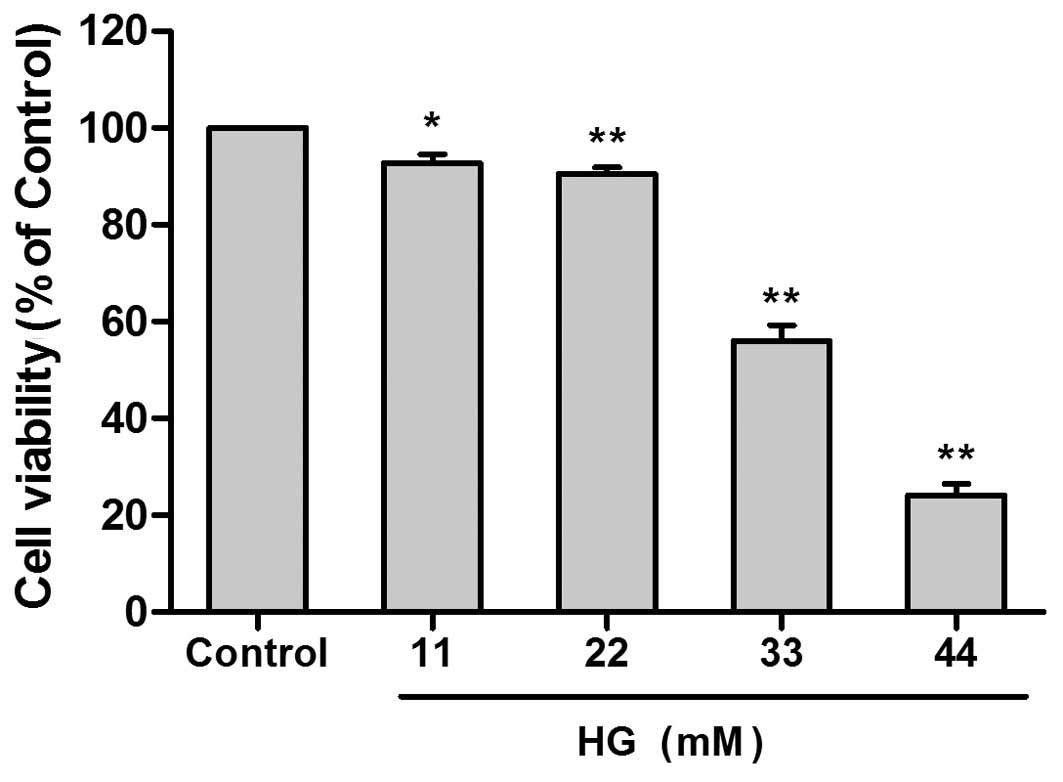
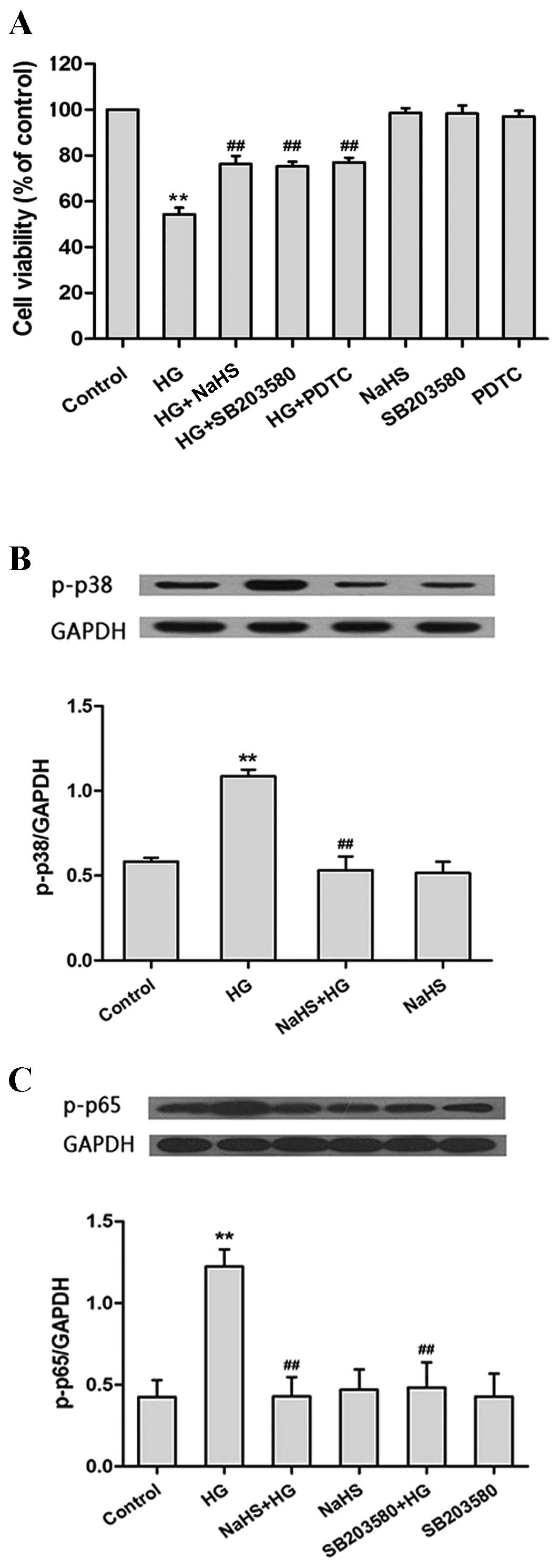
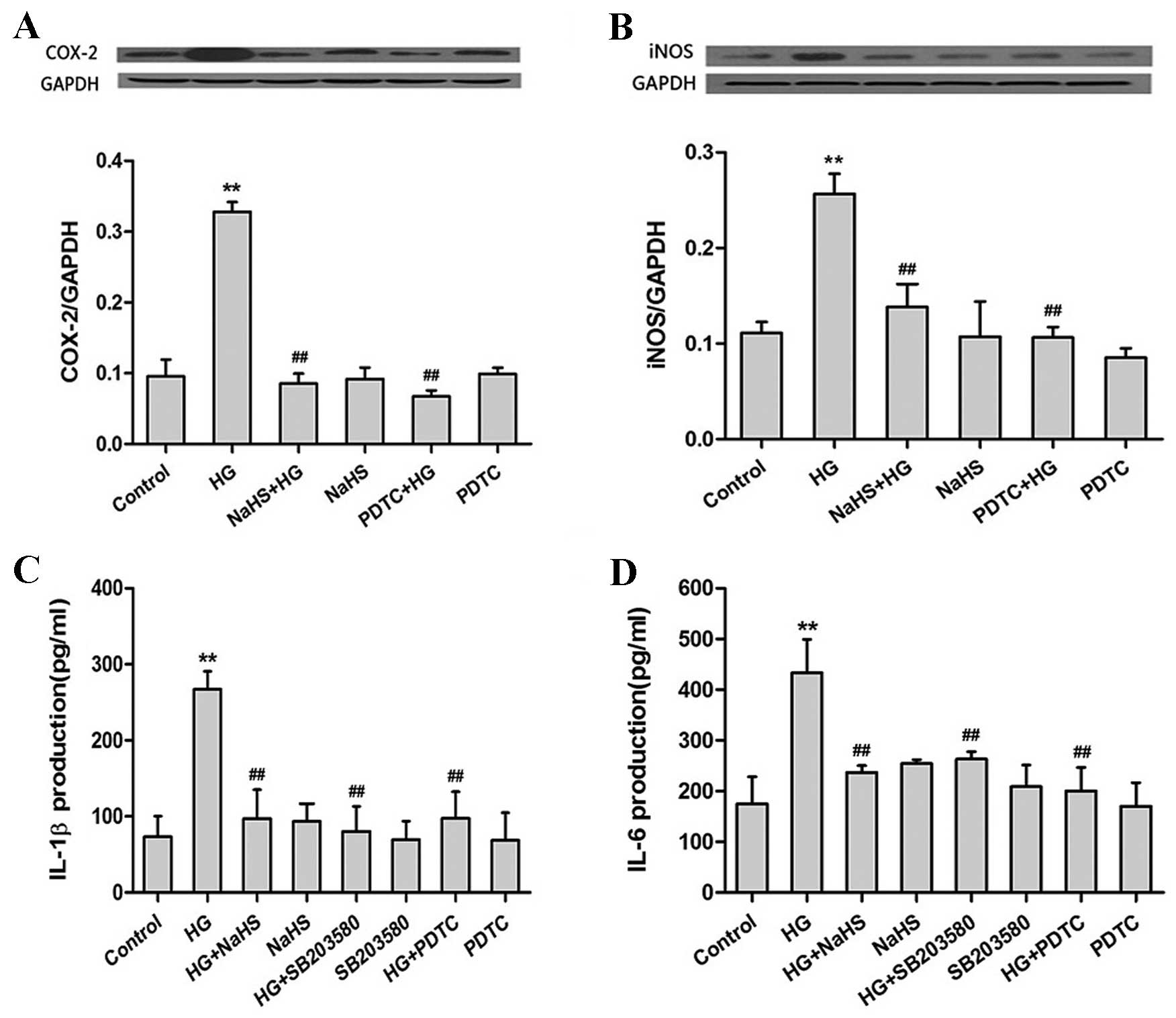
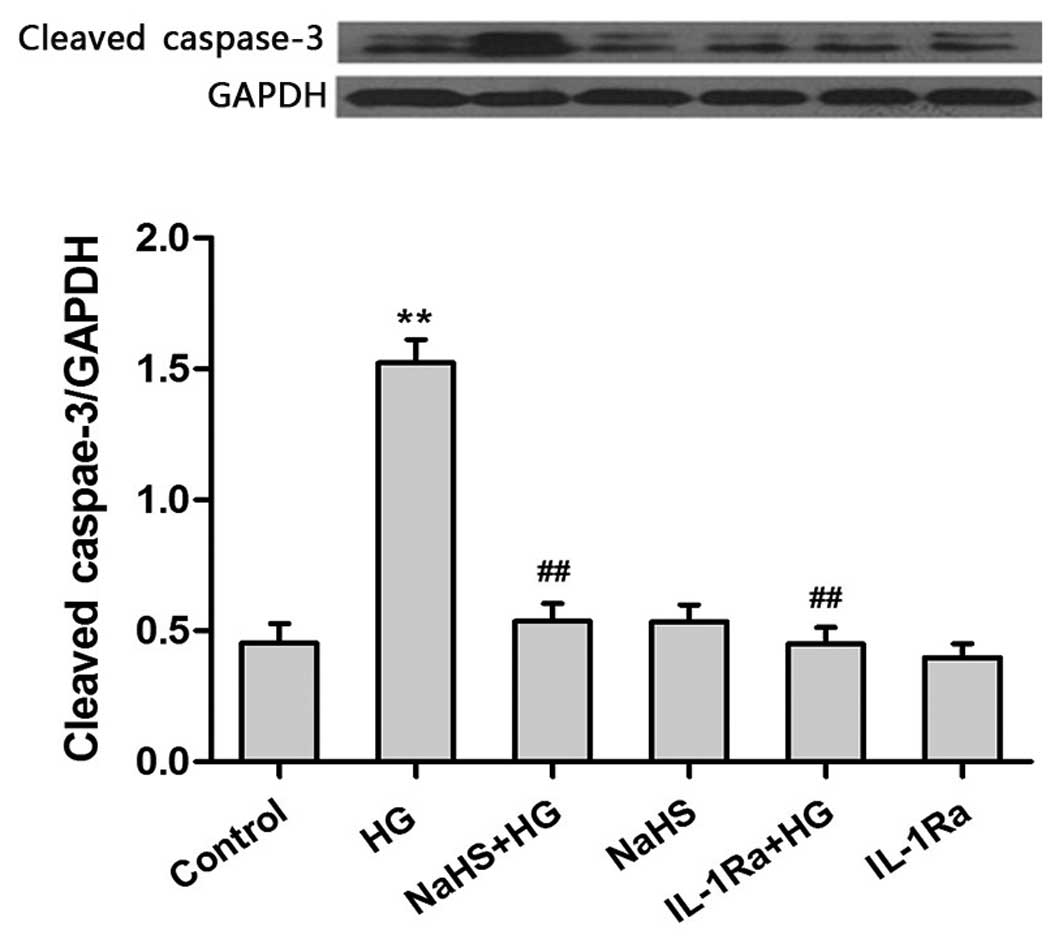
Hyperglycemia serves an important role in the pathogenesis of diabetic cardiomyopathy. The aim of the present study was to investigate whether exogenous hydrogen sulfide (H2S) protects against high glucose‑induced inflammation and cytotoxicity in cardiac cells by inhibiting the p38 mitogen‑activated protein kinase (MAPK)/nuclear factor‑κB (NF‑κB), cyclooxygenase‑2 (COX‑2) and inducible nitric oxide synthase (iNOS) signaling pathways. Rat H9c2 myocardium cells were exposed to 33 mM glucose (high glucose, HG) for 24 h to stimulate HG‑induced cytotoxicity. One group of cells was pretreated with NaHS (a donor of H2S) prior to HG exposure, and cell viability was determined using the Cell Counting Kit‑8 assay. The protein expression levels of p38MAPK, the phosphorylated p65 subunit of NF‑κB, iNOS, COX‑2 and caspase‑3 were analyzed by western blotting, and the protein expression levels of interleukin (IL)‑1β and IL‑6 were detected by enzyme‑linked immunosorbent assay (ELISA). Pretreatment of H9c2 cells with NaHS for 30 min prior to exposure to HG significantly ameliorated the expression of p38MAPK and NF‑κB. In addition, pretreatment with NaHS markedly attenuated p38MAPK/NF‑κB‑mediated cytotoxicity and inflammation, as evidenced by the significant increase in cell viability and decrease in iNOS, COX‑2, IL‑1β and IL‑6 expression levels. Furthermore, treatment of cells with NaHS significantly decreased the expression of caspase‑3, which suggested that NaHS attenuated HG‑induced apoptosis. In conclusion, the results of the present study provided evidence to suggest that exogenous H2S protects against HG‑induced cytotoxicity and inflammation in H9c2 cardiac cells. H2S may exert these cytoprotective effects via inhibition of the p38MAPK/NF‑κB, COX‑2 and iNOS signaling pathways.
View Figures

Figure 1

Figure 2

Figure 3

Figure 4

View References

1 

Chen L, Magliano DJ and Zimmet PZ: The worldwide epidemiology of type 2 diabetes mellitus-present and future perspectives. Nat Rev Endocrinol. 8:228–236. 2011. View Article : Google Scholar : PubMed/NCBI

2 

Goyal BR and Mehta AA: Diabetic cardiomyopathy: Pathophysiological mechanisms and cardiac dysfuntion. Hum Exp Toxicol. 32:571–590. 2013. View Article : Google Scholar : PubMed/NCBI

3 

Poornima IG, Parikh P and Shannon RP: Diabetic cardiomyopathy: The search for a unifying hypothesis. Circ Res. 98:596–605. 2006. View Article : Google Scholar : PubMed/NCBI

4 

Shen E, Li Y, Li Y, Shan L, Zhu H, Feng Q, Arnold JM and Peng T: Rac1 is required for cardiomyocyte apoptosis during hyperglycemia. Diabetes. 58:2386–2395. 2009. View Article : Google Scholar : PubMed/NCBI

5 

Puthanveetil P, Zhang D, Wang Y, Wang F, Wan A, Abrahani A and Rodrigues B: Diabetes triggers a PARP1 mediated death pathway in the heart through participation of FoxO1. J Mol Cell Cardiol. 53:677–686. 2012. View Article : Google Scholar : PubMed/NCBI

6 

Evans JL, Goldfine ID, Maddux BA and Grodsky GM: Oxidative stress and stress-activated signaling pathways: A unifying hypothesis of type 2 diabetes. Endocr Rev. 23:599–622. 2002. View Article : Google Scholar : PubMed/NCBI

7 

Igarashi M, Wakasaki H, Takahara N, Ishii H, Jiang ZY, Yamauchi T, Kuboki K, Meier M, Rhodes CJ and King GL: Glucose or diabetes activates p38 mitogen-activated protein kinase via different pathways. J Clin Invest. 103:185–195. 1999. View Article : Google Scholar : PubMed/NCBI

8 

Crowell JA, Steele VE, Sigman CC and Fay JR: Is inducible nitric oxide synthase a target for chemoprevention? Mol Cancer Ther. 2:815–823. 2003.PubMed/NCBI

9 

Cho SY, Park SJ, Kwon MJ, Jeong TS, Bok SH, Choi WY, Jeong WI, Ryu SY, Do SH, Lee CS, et al: Quercetin suppresses proinflammatory cytokines production through MAP kinases and NF-kappaB pathway in lipopolysaccharide-stimulated macrophage. Mol Cell Biochem. 243:153–160. 2003. View Article : Google Scholar : PubMed/NCBI

10 

Puthanveetil P, Zhang D, Wang Y, Wang F, Wan A, Abrahani A and Rodrigues B: Diabetes triggers a PARP1 mediated death pathway in the heart through participation of FoxO1. J Mol Cell Cardiol. 53:677–686. 2012. View Article : Google Scholar : PubMed/NCBI

11 

Jenke A, Wilk S, Poller W, Eriksson U, Valaperti A, Rauch BH, Stroux A, Liu P, Schultheiss HP, Scheibenbogen C and Skurk C: Adiponectin protects against Toll-like receptor 4-mediated cardiac inflammation and injury. Cardiovasc Res. 99:422–431. 2013. View Article : Google Scholar : PubMed/NCBI

12 

Streicher JM, Kamei K, Ishikawa TO, Herschman H and Wang Y: Compensatory hypertrophy induced by ventricular cardiomyocyte-specific COX-2 expression in mice. J Mol Cell Cardiol. 49:88–94. 2010. View Article : Google Scholar : PubMed/NCBI

13 

Soetikno V, Sari FR, Sukumaran V, Lakshmanan AP, Mito S, Harima M, Thandavarayan RA, Suzuki K, Nagata M, Takagi R and Watanabe K: Curcumin prevents diabetic cardiomyopathy in streptozotocin-induced diabetic rats: Possible involvement of PKC-MAPK signaling pathway. Eur J Pharm Sci. 47:604–614. 2012. View Article : Google Scholar : PubMed/NCBI

14 

Liu YH, Lu M, Hu LF, Wong PT, Webb GD and Bian JS: Hydrogen sulfide in the mammalian cardiovascular system. Antioxid Redox Signal. 17:141–185. 2012. View Article : Google Scholar : PubMed/NCBI

15 

Holwerda KM, Karumanchi SA and Lely AT: Hydrogen sulfide: Role in vascular physiology and pathology. Curr Opin Nephrol Hypertens. 24:170–176. 2015. View Article : Google Scholar : PubMed/NCBI

16 

Li L, Bhatia M and Moore PK: Hydrogen sulphide-A novel mediator of inflammation? Curr Opin Pharmacol. 6:125–129. 2006. View Article : Google Scholar : PubMed/NCBI

17 

Chen SL, Yang CT, Yang ZL, Guo RX, Meng JL, Cui Y, Lan AP, Chen PX and Feng JQ: Hydrogen sulphide protects H9c2 cells against chemical hypoxia-induced injury. Clin Exp Pharmacol Physiol. 37:316–321. 2010. View Article : Google Scholar : PubMed/NCBI

18 

El-Seweidy MM, Sadik NA and Shaker OG: Role of sulfurous mineral water and sodium hydrosulfide as potent inhibitors of fibrosis in the heart of diabetic rats. Arch Biochem Biophys. 506:48–57. 2011. View Article : Google Scholar : PubMed/NCBI

19 

Guo R, Wu K, Chen J, Mo L, Hua X, Zheng D, Chen P, Chen G, Xu W and Feng J: Exogenous hydrogen sulfide protects against doxorubicin-induced inflammation and cytotoxicity by inhibiting p38MAPK/NFκB pathway in H9c2 cardiac cells. Cell Physiol Biochem. 32:1668–1680. 2013.PubMed/NCBI

20 

Xu W, Wu W, Chen J, Guo R, Lin J, Liao X and Feng J: Exogenous hydrogen sulfide protects H9c2 cardiac cells against high glucose-induced injury by inhibiting the activities of the p38 MAPK and ERK1/2 pathways. Int J Mol Med. 32:917–925. 2013.PubMed/NCBI

21 

Wei WB, Hu X, Zhuang XD, Liao LZ and Li WD: GYY4137, a novel hydrogen sulfide-releasing molecule, likely protects against high glucose-induced cytotoxicity by activation of the AMPK/mTOR signal pathway in H9c2 cells. Mol Cell Biochem. 389:249–256. 2014. View Article : Google Scholar : PubMed/NCBI

22 

Zhou X and Lu X: Hydrogen sulfide inhibits high-glucose-induced apoptosis in neonatal rat cardiomyocytes. Exp Biol Med (Maywood). 238:370–374. 2013. View Article : Google Scholar : PubMed/NCBI

23 

Fulda S: Targeting apoptosis for anticancer therapy. Semin Cancer Biol. 31:84–88. 2015. View Article : Google Scholar : PubMed/NCBI

24 

Mortuza R and Chakrabarti S: Glucose-induced cell signaling in the pathogenesis of diabetic cardiomyopathy. Heart Fail Rev. 19:75–86. 2014. View Article : Google Scholar : PubMed/NCBI

25 

Rodrigues B, Cam MC and McNeill JH: Metabolic disturbances in diabetic cardiomyopathy. Mol Cell Biochem. 180:53–57. 1998. View Article : Google Scholar : PubMed/NCBI

26 

Cheng Y, Ndisang JF, Tang G, Cao K and Wang R: Hydrogen sulfide-induced relaxation of resistance mesenteric artery beds of rats. Am J Physiol Heart Circ Physiol. 287:H2316–H2323. 2004. View Article : Google Scholar : PubMed/NCBI

27 

Ali MY, Ping CY, Mok YY, Ling L, Whiteman M, Bhatia M and Moore PK: Regulation of vascular nitric oxide in vitro and in vivo; a new role for endogenous hydrogen sulphide? Br J Pharmacol. 149:625–634. 2006. View Article : Google Scholar : PubMed/NCBI

28 

Hosoki R, Matsuki N and Kimura H: The possible role of hydrogen sulfide as an endogenous smooth muscle relaxant in synergy with nitric oxide. Biochem Biophys Res Commun. 237:527–531. 1997. View Article : Google Scholar : PubMed/NCBI

29 

Kiss L, Deitch EA and Szabo C: Hydrogen sulfide decreases adenosine triphosphate levels in aortic rings and leads to vasorelaxation via metabolic inhibition. Life Sci. 83:589–594. 2008. View Article : Google Scholar : PubMed/NCBI

30 

Lim JJ, Liu YH, Khin ES and Bian JS: Vasoconstrictive effect of hydrogen sulfide involves downregulation of cAMP in vascular smooth muscle cells. Am J Physiol Cell Physiol. 295:C1261–C1270. 2008. View Article : Google Scholar : PubMed/NCBI

31 

Abe K and Kimura H: The possible role of hydrogen sulfide as an endogenous neuromodulator. J Neurosci. 16:1066–1071. 1996.PubMed/NCBI

32 

Hu LF, Wong PT, Moore PK and Bian JS: Hydrogen sulfide attenuates lipopolysaccharide-induced inflammation by inhibition of p38 mitogen-activated protein kinase in microglia. J Neurochem. 100:1121–1128. 2007. View Article : Google Scholar : PubMed/NCBI

33 

Li L, Bhatia M and Moore PK: Hydrogen sulphide-a novel mediator of inflammation? Curr Opin Pharmacol. 6:125–129. 2006. View Article : Google Scholar : PubMed/NCBI

34 

Johansen D, Ytrehus K and Baxter GF: Exogenous hydrogen sulfide (H2S) protects against regional myocardial ischemia-reperfusion injury-Evidence for a role of K ATP channels. Basic Res Cardiol. 101:53–60. 2006. View Article : Google Scholar : PubMed/NCBI

35 

Elrod JW, Calvert JW, Morrison J, Doeller JE, Kraus DW, Tao L, Jiao X, Scalia R, Kiss L, Szabo C, et al: Hydrogen sulfide attenuates myocardial ischemia-reperfusion injury by preservation of mitochondrial function. Proc Natl Acad Sci USA. 104:15560–15565. 2007. View Article : Google Scholar : PubMed/NCBI

36 

Jain SK, Bull R, Rains JL, Bass PF, Levine SN, Reddy S, McVie R and Bocchini JA: Low levels of hydrogen sulfide in the blood of diabetes patients and streptozotocin-treated rats causes vascular inflammation? Antioxid Redox Signal. 12:1333–1337. 2010. View Article : Google Scholar : PubMed/NCBI

37 

Yusuf M, Huat BT Kwong, Hsu A, Whiteman M, Bhatia M and Moore PK: Streptozotocin-induced diabetes in the rat is associated with enhanced tissue hydrogen sulfide biosynthesis. Biochem Biophys Res Commun. 333:1146–1152. 2005. View Article : Google Scholar : PubMed/NCBI

38 

Du J, Hui Y, Cheung Y, Bin G, Jiang H, Chen X and Tang C: The possible role of hydrogen sulfide as a smooth muscle cell proliferation inhibitor in rat cultured cells. Heart Vessels. 19:75–80. 2004. View Article : Google Scholar : PubMed/NCBI

39 

Hu LF, Lu M, Wu ZY, Wong PT and Bian JS: Hydrogen sulfide inhibits rotenone-induced apoptosis via preservation of mitochondrial function. Mol Pharmacol. 75:27–34. 2009. View Article : Google Scholar : PubMed/NCBI

40 

Oh GS, Pae HO, Lee BS, Kim BN, Kim JM, Kim HR, Jeon SB, Jeon WK, Chae HJ and Chung HT: Hydrogen sulfide inhibits nitric oxide production and nuclear factor-kappaB via heme oxygenase-1 expression in RAW264.7 macrophages stimulated with lipopolysaccharide. Free Radic Biol Med. 41:106–119. 2006. View Article : Google Scholar : PubMed/NCBI

41 

Tripatara P, Patel NS, Collino M, Gallicchio M, Kieswich J, Castiglia S, Benetti E, Stewart KN, Brown PA, Yaqoob MM, et al: Generation of endogenous hydrogen sulfide by cystathionine gamma-lyase limits renal ischemia/reperfusion injury and dysfunction. Lab Invest. 88:1038–1048. 2008. View Article : Google Scholar : PubMed/NCBI

42 

Tamizhselvi R, Moore PK and Bhatia M: Inhibition of hydrogen sulfide synthesis attenuates chemokine production and protects mice against acute pancreatitis and associated lung injury. Pancreas. 36:e24–e31. 2008. View Article : Google Scholar : PubMed/NCBI

43 

Sivarajah A, McDonald MC and Thiemermann C: The production of hydrogen sulfide limits myocardial ischemia and reperfusion injury and contributes to the cardioprotective effects of preconditioning with endotoxin, but not ischemia in the rat. Shock. 26:154–161. 2006. View Article : Google Scholar : PubMed/NCBI

44 

Boudina S and Abel ED: Diabetic cardiomyopathy, causes and effects. Rev Endocr Metab Disord. 11:31–39. 2010. View Article : Google Scholar : PubMed/NCBI

45 

Zheng X, Zhu S, Chang S, Cao Y, Dong J, Li J, Long R and Zhou Y: Protective effects of chronic resveratrol treatment on vascular inflammatory injury in steptozotocin-induced type 2 diabetic rats: Role of NF-kappaB signaling. Eur J Pharmacol. 720:147–157. 2013. View Article : Google Scholar : PubMed/NCBI

46 

MacMicking J, Xie QW and Nathan C: Nitric oxide and macrophage function. Annu Rev Immunol. 15:323–350. 1997. View Article : Google Scholar : PubMed/NCBI

47 

Bardell AL and MacLeod KM: Evidence for inducible nitric-oxide synthase expression and activity in vascular smooth muscle of streptozotocin-diabetic rats. J Pharmacol Exp Ther. 296:252–259. 2001.PubMed/NCBI

48 

Alhouayek M and Muccioli GG: COX-2-derived endocannabinoid metabolites as novel inflammatory mediators. Trends Pharmacol Sci. 35:284–292. 2014. View Article : Google Scholar : PubMed/NCBI

49 

Zamorano B and Carmona MT: Prostaglandin-E2 and cyclic adenosine 3′-5′ monophosphate levels in the hypertrophied rat heart. Biol Res. 25:85–89. 1992.PubMed/NCBI

50 

Song ZF, Chen DY, DU B and Ji XP: Poly (ADP-ribose) polymerase inhibitor reduces heart ischaemia/reperfusion injury via inflammation and Akt signalling in rats. Chin Med J (Engl). 126:1913–1917. 2013.PubMed/NCBI

51 

Liu ZF, Zheng D, Fan GC, Peng T and Su L: Heat stress prevents lipopolysaccharide-induced apoptosis in pulmonary microvascular endothelial cells by blocking calpain/p38 MAPK signalling. Apoptosis. 21:896–904. 2016. View Article : Google Scholar : PubMed/NCBI

52 

Dong Y, Yin S, Song X, Huo Y, Fan L, Ye M and Hu H: Involvement of ROS-p38-H2AX axis in novel curcumin analogues-induced apoptosis in breast cancer cells. Mol Carcinog. 55:323–334. 2016. View Article : Google Scholar : PubMed/NCBI

53 

Han OJ, Joe KH, Kim SW, Lee HS, Kwon NS, Baek KJ and Yun HY: Involvement of p38 mitogen-activated protein kinase and apoptosis signal-regulating kinase-1 in nitric oxide-induced cell death in PC12 cells. Neurochem Res. 26:525–532. 2001. View Article : Google Scholar : PubMed/NCBI

Related Articles

  • Abstract
  • View
  • Download
  • Twitter
Copy and paste a formatted citation
Spandidos Publications style
Huang Z, Dong X, Zhuang X, Hu X, Wang L and Liao X: Exogenous hydrogen sulfide protects against high glucose‑induced inflammation and cytotoxicity in H9c2 cardiac cells. Mol Med Rep 14: 4911-4917, 2016.
APA
Huang, Z., Dong, X., Zhuang, X., Hu, X., Wang, L., & Liao, X. (2016). Exogenous hydrogen sulfide protects against high glucose‑induced inflammation and cytotoxicity in H9c2 cardiac cells. Molecular Medicine Reports, 14, 4911-4917. https://doi.org/10.3892/mmr.2016.5846
MLA
Huang, Z., Dong, X., Zhuang, X., Hu, X., Wang, L., Liao, X."Exogenous hydrogen sulfide protects against high glucose‑induced inflammation and cytotoxicity in H9c2 cardiac cells". Molecular Medicine Reports 14.5 (2016): 4911-4917.
Chicago
Huang, Z., Dong, X., Zhuang, X., Hu, X., Wang, L., Liao, X."Exogenous hydrogen sulfide protects against high glucose‑induced inflammation and cytotoxicity in H9c2 cardiac cells". Molecular Medicine Reports 14, no. 5 (2016): 4911-4917. https://doi.org/10.3892/mmr.2016.5846
Copy and paste a formatted citation
x
Spandidos Publications style
Huang Z, Dong X, Zhuang X, Hu X, Wang L and Liao X: Exogenous hydrogen sulfide protects against high glucose‑induced inflammation and cytotoxicity in H9c2 cardiac cells. Mol Med Rep 14: 4911-4917, 2016.
APA
Huang, Z., Dong, X., Zhuang, X., Hu, X., Wang, L., & Liao, X. (2016). Exogenous hydrogen sulfide protects against high glucose‑induced inflammation and cytotoxicity in H9c2 cardiac cells. Molecular Medicine Reports, 14, 4911-4917. https://doi.org/10.3892/mmr.2016.5846
MLA
Huang, Z., Dong, X., Zhuang, X., Hu, X., Wang, L., Liao, X."Exogenous hydrogen sulfide protects against high glucose‑induced inflammation and cytotoxicity in H9c2 cardiac cells". Molecular Medicine Reports 14.5 (2016): 4911-4917.
Chicago
Huang, Z., Dong, X., Zhuang, X., Hu, X., Wang, L., Liao, X."Exogenous hydrogen sulfide protects against high glucose‑induced inflammation and cytotoxicity in H9c2 cardiac cells". Molecular Medicine Reports 14, no. 5 (2016): 4911-4917. https://doi.org/10.3892/mmr.2016.5846
Follow us
  • Twitter
  • LinkedIn
  • Facebook
About
  • Spandidos Publications
  • Careers
  • Cookie Policy
  • Privacy Policy
How can we help?
  • Help
  • Live Chat
  • Contact
  • Email to our Support Team