Spandidos Publications Logo
  • About
    • About Spandidos
    • Aims and Scopes
    • Abstracting and Indexing
    • Editorial Policies
    • Reprints and Permissions
    • Job Opportunities
    • Terms and Conditions
    • Contact
  • Journals
    • All Journals
    • Oncology Letters
      • Oncology Letters
      • Information for Authors
      • Editorial Policies
      • Editorial Board
      • Aims and Scope
      • Abstracting and Indexing
      • Bibliographic Information
      • Archive
    • International Journal of Oncology
      • International Journal of Oncology
      • Information for Authors
      • Editorial Policies
      • Editorial Board
      • Aims and Scope
      • Abstracting and Indexing
      • Bibliographic Information
      • Archive
    • Molecular and Clinical Oncology
      • Molecular and Clinical Oncology
      • Information for Authors
      • Editorial Policies
      • Editorial Board
      • Aims and Scope
      • Abstracting and Indexing
      • Bibliographic Information
      • Archive
    • Experimental and Therapeutic Medicine
      • Experimental and Therapeutic Medicine
      • Information for Authors
      • Editorial Policies
      • Editorial Board
      • Aims and Scope
      • Abstracting and Indexing
      • Bibliographic Information
      • Archive
    • International Journal of Molecular Medicine
      • International Journal of Molecular Medicine
      • Information for Authors
      • Editorial Policies
      • Editorial Board
      • Aims and Scope
      • Abstracting and Indexing
      • Bibliographic Information
      • Archive
    • Biomedical Reports
      • Biomedical Reports
      • Information for Authors
      • Editorial Policies
      • Editorial Board
      • Aims and Scope
      • Abstracting and Indexing
      • Bibliographic Information
      • Archive
    • Oncology Reports
      • Oncology Reports
      • Information for Authors
      • Editorial Policies
      • Editorial Board
      • Aims and Scope
      • Abstracting and Indexing
      • Bibliographic Information
      • Archive
    • Molecular Medicine Reports
      • Molecular Medicine Reports
      • Information for Authors
      • Editorial Policies
      • Editorial Board
      • Aims and Scope
      • Abstracting and Indexing
      • Bibliographic Information
      • Archive
    • World Academy of Sciences Journal
      • World Academy of Sciences Journal
      • Information for Authors
      • Editorial Policies
      • Editorial Board
      • Aims and Scope
      • Abstracting and Indexing
      • Bibliographic Information
      • Archive
    • International Journal of Functional Nutrition
      • International Journal of Functional Nutrition
      • Information for Authors
      • Editorial Policies
      • Editorial Board
      • Aims and Scope
      • Abstracting and Indexing
      • Bibliographic Information
      • Archive
    • International Journal of Epigenetics
      • International Journal of Epigenetics
      • Information for Authors
      • Editorial Policies
      • Editorial Board
      • Aims and Scope
      • Abstracting and Indexing
      • Bibliographic Information
      • Archive
    • Medicine International
      • Medicine International
      • Information for Authors
      • Editorial Policies
      • Editorial Board
      • Aims and Scope
      • Abstracting and Indexing
      • Bibliographic Information
      • Archive
  • Articles
  • Information
    • Information for Authors
    • Information for Reviewers
    • Information for Librarians
    • Information for Advertisers
    • Conferences
  • Language Editing
Spandidos Publications Logo
  • About
    • About Spandidos
    • Aims and Scopes
    • Abstracting and Indexing
    • Editorial Policies
    • Reprints and Permissions
    • Job Opportunities
    • Terms and Conditions
    • Contact
  • Journals
    • All Journals
    • Biomedical Reports
      • Information for Authors
      • Editorial Policies
      • Editorial Board
      • Aims and Scope
      • Abstracting and Indexing
      • Bibliographic Information
      • Archive
    • Experimental and Therapeutic Medicine
      • Information for Authors
      • Editorial Policies
      • Editorial Board
      • Aims and Scope
      • Abstracting and Indexing
      • Bibliographic Information
      • Archive
    • International Journal of Epigenetics
      • Information for Authors
      • Editorial Policies
      • Editorial Board
      • Aims and Scope
      • Abstracting and Indexing
      • Bibliographic Information
      • Archive
    • International Journal of Functional Nutrition
      • Information for Authors
      • Editorial Policies
      • Editorial Board
      • Aims and Scope
      • Abstracting and Indexing
      • Bibliographic Information
      • Archive
    • International Journal of Molecular Medicine
      • Information for Authors
      • Editorial Policies
      • Editorial Board
      • Aims and Scope
      • Abstracting and Indexing
      • Bibliographic Information
      • Archive
    • International Journal of Oncology
      • Information for Authors
      • Editorial Policies
      • Editorial Board
      • Aims and Scope
      • Abstracting and Indexing
      • Bibliographic Information
      • Archive
    • Medicine International
      • Information for Authors
      • Editorial Policies
      • Editorial Board
      • Aims and Scope
      • Abstracting and Indexing
      • Bibliographic Information
      • Archive
    • Molecular and Clinical Oncology
      • Information for Authors
      • Editorial Policies
      • Editorial Board
      • Aims and Scope
      • Abstracting and Indexing
      • Bibliographic Information
      • Archive
    • Molecular Medicine Reports
      • Information for Authors
      • Editorial Policies
      • Editorial Board
      • Aims and Scope
      • Abstracting and Indexing
      • Bibliographic Information
      • Archive
    • Oncology Letters
      • Information for Authors
      • Editorial Policies
      • Editorial Board
      • Aims and Scope
      • Abstracting and Indexing
      • Bibliographic Information
      • Archive
    • Oncology Reports
      • Information for Authors
      • Editorial Policies
      • Editorial Board
      • Aims and Scope
      • Abstracting and Indexing
      • Bibliographic Information
      • Archive
    • World Academy of Sciences Journal
      • Information for Authors
      • Editorial Policies
      • Editorial Board
      • Aims and Scope
      • Abstracting and Indexing
      • Bibliographic Information
      • Archive
  • Articles
  • Information
    • For Authors
    • For Reviewers
    • For Librarians
    • For Advertisers
    • Conferences
  • Language Editing
Login Register Submit
  • This site uses cookies
  • You can change your cookie settings at any time by following the instructions in our Cookie Policy. To find out more, you may read our Privacy Policy.

    I agree
Search articles by DOI, keyword, author or affiliation
Search
Advanced Search
presentation
Molecular Medicine Reports
Join Editorial Board Propose a Special Issue
Print ISSN: 1791-2997 Online ISSN: 1791-3004
Journal Cover
December-2016 Volume 14 Issue 6

Full Size Image

Sign up for eToc alerts
Recommend to Library

Journals

International Journal of Molecular Medicine

International Journal of Molecular Medicine

International Journal of Molecular Medicine is an international journal devoted to molecular mechanisms of human disease.

International Journal of Oncology

International Journal of Oncology

International Journal of Oncology is an international journal devoted to oncology research and cancer treatment.

Molecular Medicine Reports

Molecular Medicine Reports

Covers molecular medicine topics such as pharmacology, pathology, genetics, neuroscience, infectious diseases, molecular cardiology, and molecular surgery.

Oncology Reports

Oncology Reports

Oncology Reports is an international journal devoted to fundamental and applied research in Oncology.

Experimental and Therapeutic Medicine

Experimental and Therapeutic Medicine

Experimental and Therapeutic Medicine is an international journal devoted to laboratory and clinical medicine.

Oncology Letters

Oncology Letters

Oncology Letters is an international journal devoted to Experimental and Clinical Oncology.

Biomedical Reports

Biomedical Reports

Explores a wide range of biological and medical fields, including pharmacology, genetics, microbiology, neuroscience, and molecular cardiology.

Molecular and Clinical Oncology

Molecular and Clinical Oncology

International journal addressing all aspects of oncology research, from tumorigenesis and oncogenes to chemotherapy and metastasis.

World Academy of Sciences Journal

World Academy of Sciences Journal

Multidisciplinary open-access journal spanning biochemistry, genetics, neuroscience, environmental health, and synthetic biology.

International Journal of Functional Nutrition

International Journal of Functional Nutrition

Open-access journal combining biochemistry, pharmacology, immunology, and genetics to advance health through functional nutrition.

International Journal of Epigenetics

International Journal of Epigenetics

Publishes open-access research on using epigenetics to advance understanding and treatment of human disease.

Medicine International

Medicine International

An International Open Access Journal Devoted to General Medicine.

Journal Cover
December-2016 Volume 14 Issue 6

Full Size Image

Sign up for eToc alerts
Recommend to Library

  • Article
  • Citations
    • Cite This Article
    • Download Citation
    • Create Citation Alert
    • Remove Citation Alert
    • Cited By
  • Similar Articles
    • Related Articles (in Spandidos Publications)
    • Similar Articles (Google Scholar)
    • Similar Articles (PubMed)
  • Download PDF
  • Download XML
  • View XML
Article

Resveratrol alleviates sepsis‑induced myocardial injury in rats by suppressing neutrophil accumulation, the induction of TNF‑α and myocardial apoptosis via activation of Sirt1

  • Authors:
    • Rui An
    • Lei Zhao
    • Jian Xu
    • Cong Xi
    • Haixun Li
    • Guohong Shen
    • Wei Zhang
    • Shumiao Zhang
    • Lijun Sun
  • View Affiliations / Copyright

    Affiliations: Department of Radiology, Xijing Hospital, The Fourth Military Medical University, Xi'an, Shaanxi 710032, P.R. China, Department of Neurosurgery, Xijing Hospital, The Fourth Military Medical University, Xi'an, Shaanxi 710032, P.R. China, Department of Neurology, Baoji City People's Hospital, Baoji, Shaanxi 721000, P.R. China, Integrated Branch, Armed Police Corps Hospital of Shaanxi Taiyuan, Shaanxi 030006, P.R. China, Department of Physiology, The Fourth Military Medical University, Xi'an, Shaanxi 710032, P.R. China
  • Pages: 5297-5303
    |
    Published online on: October 19, 2016
       https://doi.org/10.3892/mmr.2016.5861
  • Expand metrics +
Metrics: Total Views: 0 (Spandidos Publications: | PMC Statistics: )
Metrics: Total PDF Downloads: 0 (Spandidos Publications: | PMC Statistics: )
Cited By (CrossRef): 0 citations Loading Articles...

This article is mentioned in:


Abstract

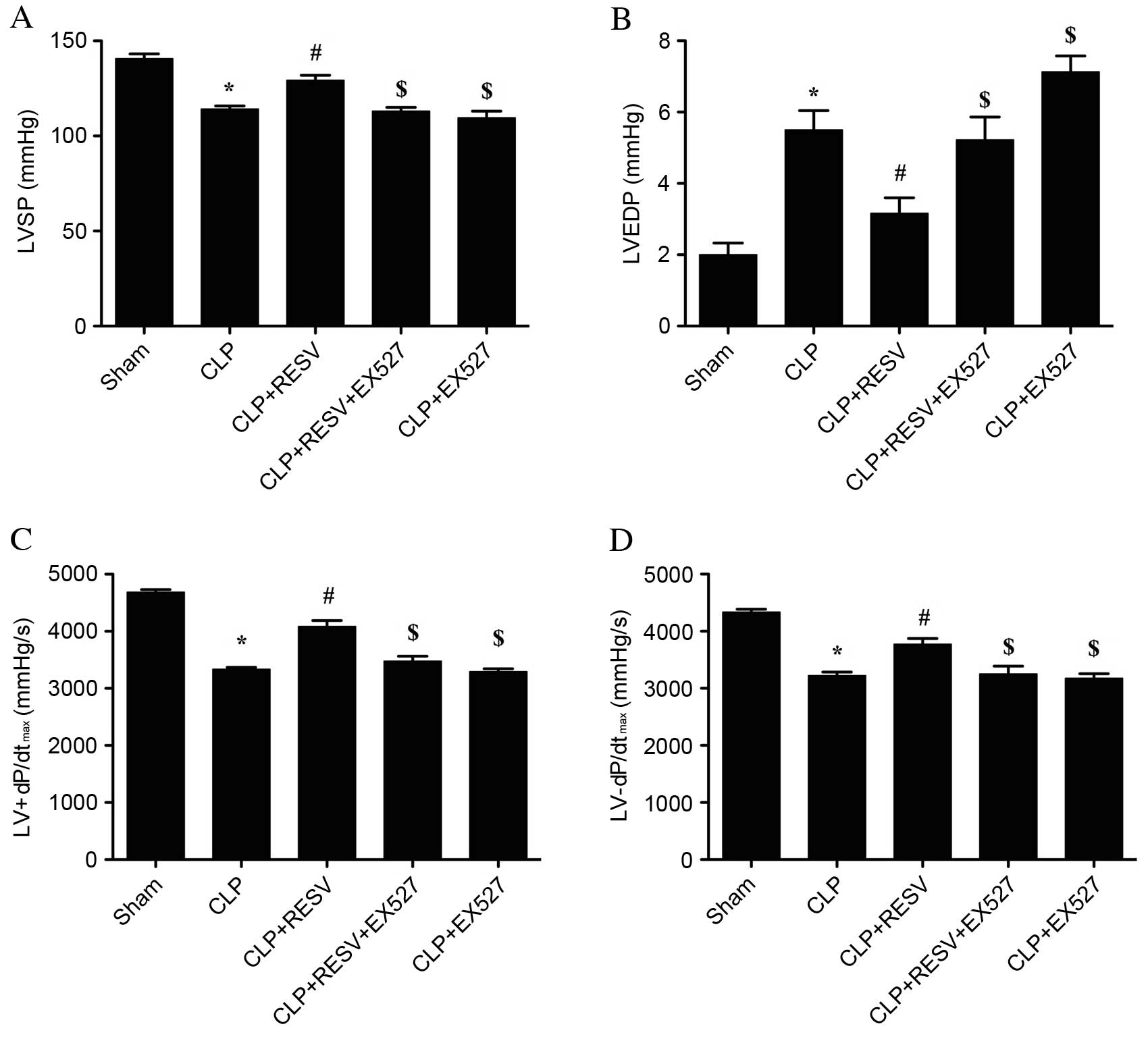
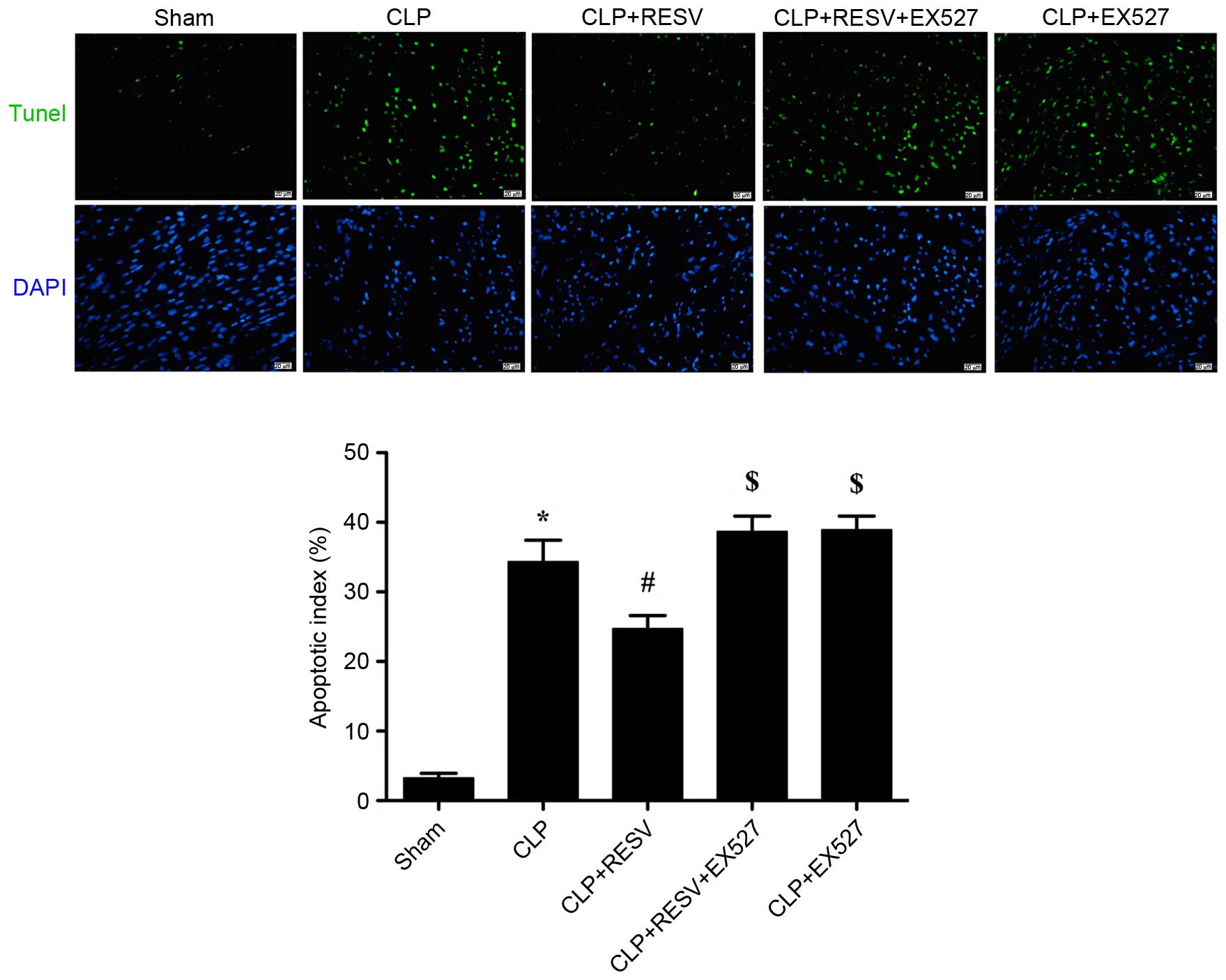
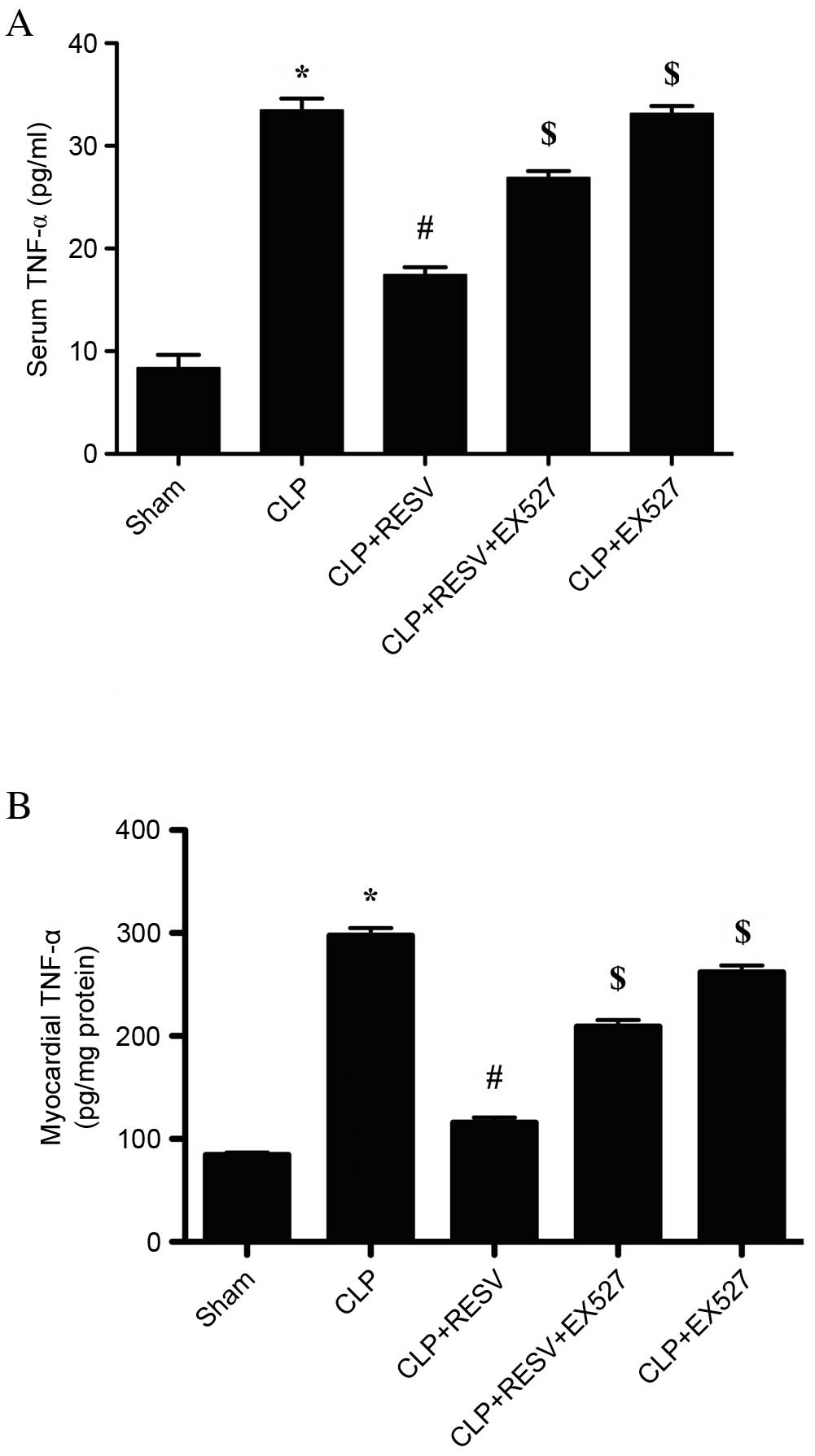
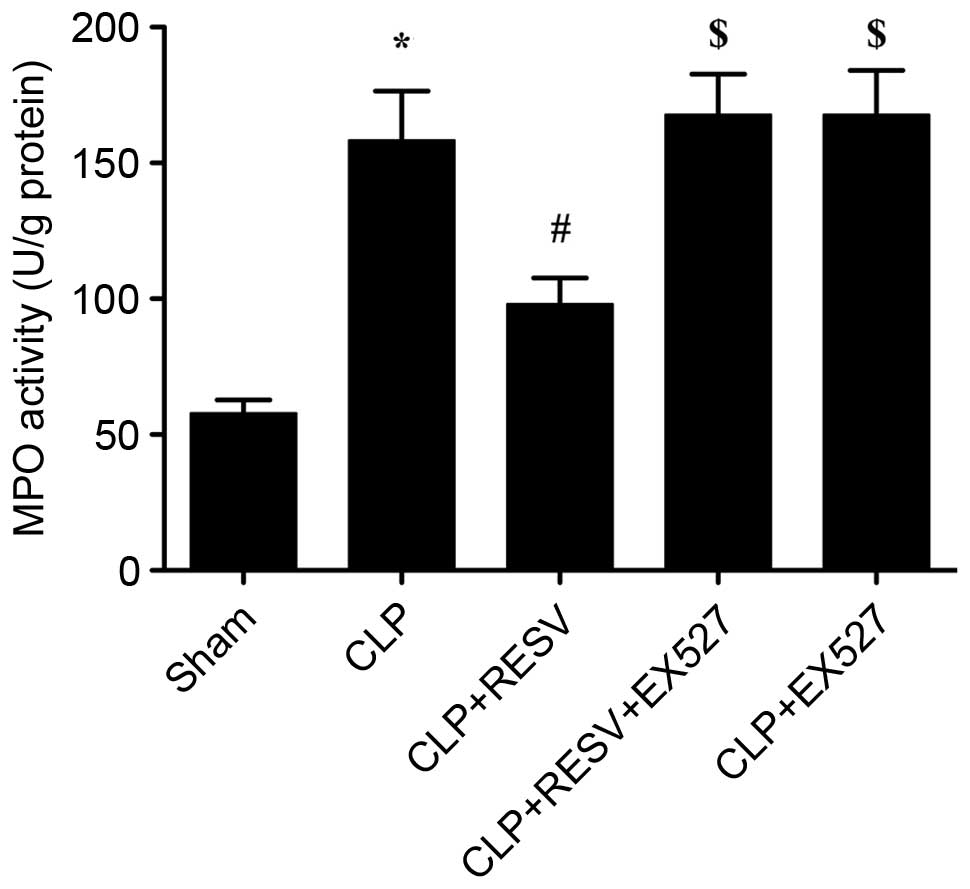
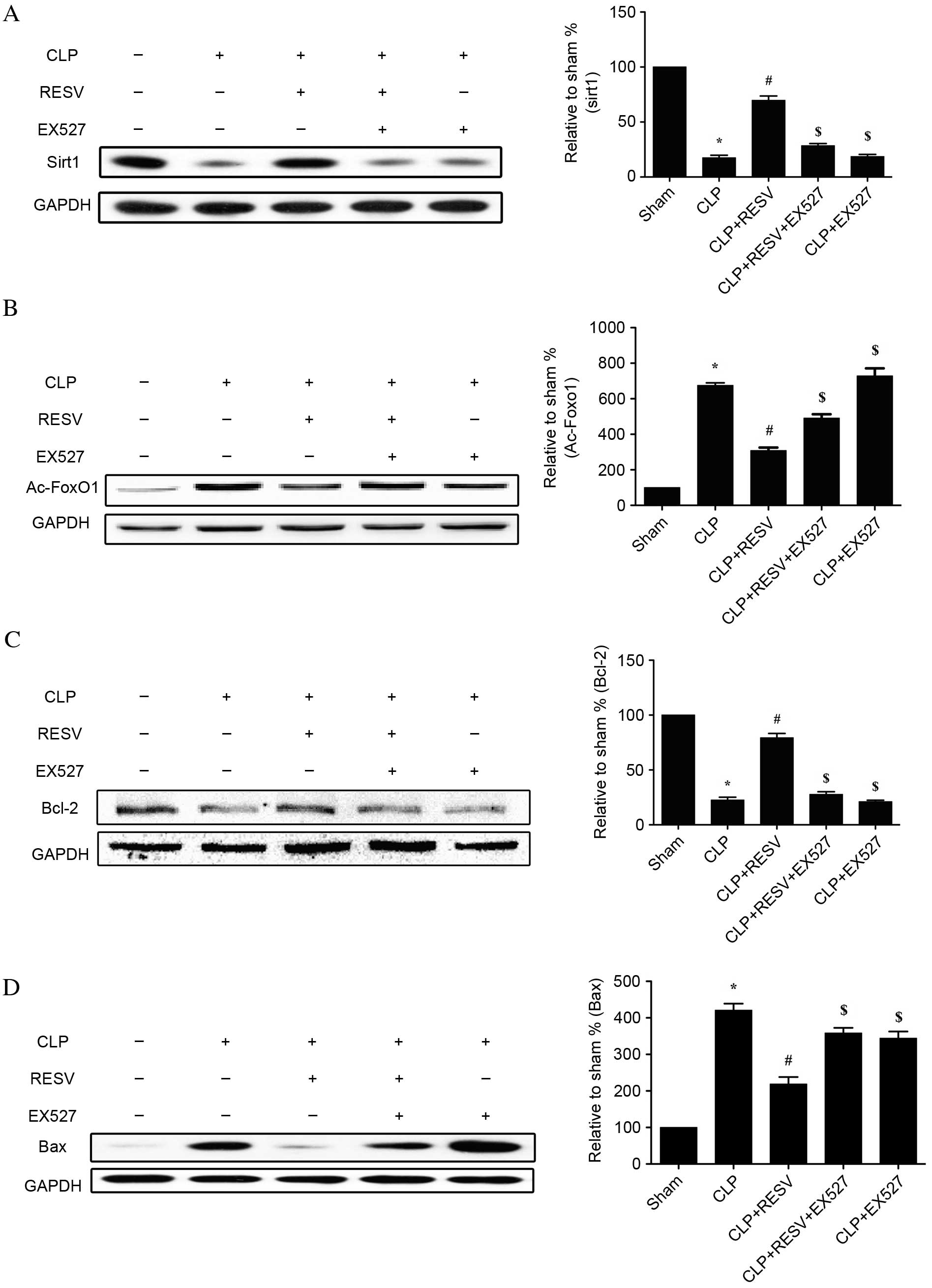
Sepsis is a severe inflammatory response to systemic infection that frequently affects the myocardium. Previous studies have suggested that resveratrol (RESV) is protective in sepsis. The present study aimed to investigate the role of sirtuin 1 (Sirt1) signaling in the protective effect of intraperitoneally administered RESV against sepsis‑induced myocardial injury. Cecal ligation and puncture, or a sham operation, were performed in male Sprague‑Dawley rats, and the levels of tumor necrosis factor (TNF)‑α and myeloperoxidase (MPO) were assessed by ELISA and an MPO activity kit, respectively. The extent of myocardial apoptosis was assessed by TUNEL staining. The protein expression levels of Sirt1, acetylated (Ac)‑Forkhead box O1 (FoxO1), B cell lymphoma 2 apoptosis regulator (Bcl‑2) and Bcl‑2 associated protein X apoptosis regulator (Bax) were detected by western blot analysis. RESV was demonstrated to attenuate myocardial apoptosis and decrease the production of TNF‑α and MPO. Additionally, RESV upregulated the expression of Sirt1 and Bcl‑2, and downregulated the expression of Ac‑FoxO1 and Bax. The protective effects of RESV were abolished by EX527, a Sirt1 inhibitor. RESV has therefore been demonstrated to attenuate myocardial injury in sepsis by decreasing neutrophil accumulation, TNF‑α expression, and myocardial apoptosis via activation of Sirt1 signaling. These results suggest a novel therapeutic strategy for the clinical treatment of sepsis.
View Figures

Figure 1

Figure 2

Figure 3

Figure 4

Figure 5

View References

1 

Annane D, Bellissant E and Cavaillon JM: Septic shock. Lancet. 365:63–78. 2005. View Article : Google Scholar : PubMed/NCBI

2 

Frolkis I, Klein Y, Locker C, Adi N, Dahan E, Uretzsky G, Shapira I and Sorkine P: Vipera aspis venom reduces lethality and down-regulates tumor necrosis factor-alpha in a rat model of LPS-induced sepsis. Cytokine. 49:319–324. 2010. View Article : Google Scholar : PubMed/NCBI

3 

Angus DC, Linde-Zwirble WT, Lidicker J, Clermont G, Carcillo J and Pinsky MR: Epidemiology of severe sepsis in the United States: Analysis of incidence, outcome, and associated costs of care. Crit Care Med. 29:1303–1310. 2001. View Article : Google Scholar : PubMed/NCBI

4 

Dellinger RP, Levy MM, Rhodes A, Annane D, Gerlach H, Opal SM, Sevransky JE, Sprung CL, Douglas IS, Jaeschke R, et al: Surviving sepsis campaign: International guidelines for management of severe sepsis and septic shock, 2012. Intensive Care Med. 39:165–228. 2013. View Article : Google Scholar : PubMed/NCBI

5 

An R, Zhao L, Xi C, Li H, Shen G, Liu H, Zhang S and Sun L: Melatonin attenuates sepsis-induced cardiac dysfunction via a PI3K/Akt-dependent mechanism. Basic Res Cardiol. 111:82016. View Article : Google Scholar : PubMed/NCBI

6 

Rudiger A and Singer M: Mechanisms of sepsis-induced cardiac dysfunction. Crit Care Med. 35:1599–1608. 2007. View Article : Google Scholar : PubMed/NCBI

7 

Court O and Kumar A, Parrillo JE and Kumar A: Clinical review: Myocardial depression in sepsis and septic shock. Crit Care. 6:500–508. 2002. View Article : Google Scholar : PubMed/NCBI

8 

van der Poll T and van Deventer SJ: Cytokines and anticytokines in the pathogenesis of sepsis. Infect Dis Clin North Am. 13:413–426, ix. 1999. View Article : Google Scholar : PubMed/NCBI

9 

Borra MT, Smith BC and Denu JM: Mechanism of human SIRT1 activation by resveratrol. J Biol Chem. 280:17187–17195. 2005. View Article : Google Scholar : PubMed/NCBI

10 

Li YG, Zhu W, Tao JP, Xin P, Liu MY, Li JB and Wei M: Resveratrol protects cardiomyocytes from oxidative stress through SIRT1 and mitochondrial biogenesis signaling pathways. Biochem Biophys Res Commun. 438:270–276. 2013. View Article : Google Scholar : PubMed/NCBI

11 

Liu BL, Zhang X, Zhang W and Zhen HN: New enlightenment of French Paradox: Resveratrol's potential for cancer chemoprevention and anti-cancer therapy. Cancer Biol Ther. 6:1833–1836. 2007. View Article : Google Scholar : PubMed/NCBI

12 

Smeding L, Leong-Poi H, Hu P, Shan Y, Haitsma JJ, Horvath E, Furmli S, Masoom H, Kuiper JW, Slutsky AS, et al: Salutary effect of resveratrol on sepsis-induced myocardial depression. Crit Care Med. 40:1896–1907. 2012. View Article : Google Scholar : PubMed/NCBI

13 

Xu W, Lu Y, Yao J, Li Z, Chen Z, Wang G, Jing H, Zhang X, Li M, Peng J and Tian X: Novel role of resveratrol: Suppression of high-mobility group protein box 1 nucleocytoplasmic translocation by the upregulation of sirtuin 1 in sepsis-induced liver injury. Shock. 42:440–447. 2014. View Article : Google Scholar : PubMed/NCBI

14 

Xu F, Burk D, Gao Z, Yin J, Zhang X, Weng J and Ye J: Angiogenic deficiency and adipose tissue dysfunction are associated with macrophage malfunction in SIRT1-/− mice. Endocrinology. 153:1706–1716. 2012. View Article : Google Scholar : PubMed/NCBI

15 

Motta MC, Divecha N, Lemieux M, Kamel C, Chen D, Gu W, Bultsma Y, McBurney M and Guarente L: Mammalian SIRT1 represses forkhead transcription factors. Cell. 116:551–563. 2004. View Article : Google Scholar : PubMed/NCBI

16 

Guo R, Liu W, Liu B, Zhang B, Li W and Xu Y: SIRT1 suppresses cardiomyocyte apoptosis in diabetic cardiomyopathy: An insight into endoplasmic reticulum stress response mechanism. Int J Cardiol. 191:36–45. 2015. View Article : Google Scholar : PubMed/NCBI

17 

Gao R, Ma Z, Hu Y, Chen J, Shetty S and Fu J: Sirt1 restrains lung inflammasome activation in a murine model of sepsis. Am J Physiol Lung Cell Mol Physiol. 308:L847–L853. 2015. View Article : Google Scholar : PubMed/NCBI

18 

Arnhold J: Properties, functions, and secretion of human myeloperoxidase. Biochemistry (Mosc). 69:4–9. 2004. View Article : Google Scholar : PubMed/NCBI

19 

Thom SR, Milovanova TN, Bogush M, Yang M, Bhopale VM, Pollock NW, Ljubkovic M, Denoble P, Madden D, Lozo M and Dujic Z: Bubbles, microparticles, and neutrophil activation: Changes with exercise level and breathing gas during open-water SCUBA diving. J Appl Physiol (1985). 114:1396–1405. 2013. View Article : Google Scholar : PubMed/NCBI

20 

Mallat Z, Hugel B, Ohan J, Lesèche G, Freyssinet JM and Tedgui A: Shed membrane microparticles with procoagulant potential in human atherosclerotic plaques: A role for apoptosis in plaque thrombogenicity. Circulation. 99:348–353. 1999. View Article : Google Scholar : PubMed/NCBI

21 

Angus DC and van der Poll T: Severe sepsis and septic shock. N Engl J Med. 369:840–851. 2013. View Article : Google Scholar : PubMed/NCBI

22 

Calis J, van Woensel J and Lemson J: Severe sepsis and septic shock. N Engl J Med. 369:20622013. View Article : Google Scholar : PubMed/NCBI

23 

Merx MW and Weber C: Sepsis and the heart. Circulation. 116:793–802. 2007. View Article : Google Scholar : PubMed/NCBI

24 

Stanley WC, Recchia FA and Lopaschuk GD: Myocardial substrate metabolism in the normal and failing heart. Physiol Rev. 85:1093–1129. 2005. View Article : Google Scholar : PubMed/NCBI

25 

Sharshar T, Gray F, de la Grandmaison G Lorin, Hopkinson NS, Ross E, Dorandeu A, Orlikowski D, Raphael JC, Gajdos P and Annane D: Apoptosis of neurons in cardiovascular autonomic centres triggered by inducible nitric oxide synthase after death from septic shock. Lancet. 362:1799–1805. 2003. View Article : Google Scholar : PubMed/NCBI

26 

Wang X, Qin W, Qiu X, Cao J, Liu D and Sun B: A novel role of exogenous carbon monoxide on protecting cardiac function and improving survival against sepsis via mitochondrial energetic metabolism pathway. Int J Biol Sci. 10:777–788. 2014. View Article : Google Scholar : PubMed/NCBI

27 

Zou X, Xu J, Yao S, Li J, Yang Y and Yang L: Endoplasmic reticulum stress-mediated autophagy protects against lipopolysaccharide-induced apoptosis in HL-1 cardiomyocytes. Exp Physiol. 99:1348–1358. 2014. View Article : Google Scholar : PubMed/NCBI

28 

Zhang T, Yan T, Du J, Wang S and Yang H: Apigenin attenuates heart injury in lipopolysaccharide-induced endotoxemic model by suppressing sphingosine kinase 1/sphingosine 1-phosphate signaling pathway. Chem Biol Interact. 233:46–55. 2015. View Article : Google Scholar : PubMed/NCBI

29 

Antonucci E, Fiaccadori E, Donadello K, Taccone FS, Franchi F and Scolletta S: Myocardial depression in sepsis: From pathogenesis to clinical manifestations and treatment. J Crit Care. 29:500–511. 2014. View Article : Google Scholar : PubMed/NCBI

30 

Vincent JL, Bakker J, Marécaux G, Schandene L, Kahn RJ and Dupont E: Administration of anti-TNF antibody improves left ventricular function in septic shock patients. Results of a pilot study. Chest. 101:810–815. 1992. View Article : Google Scholar : PubMed/NCBI

31 

Wu X, Zhang B, Fan R, Zhao L, Wang Y, Zhang S, Kaye AD, Huang L and Pei J: U50, 488H inhibits neutrophil accumulation and TNF-α induction induced by ischemia-reperfusion in rat heart. Cytokine. 56:503–507. 2011. View Article : Google Scholar : PubMed/NCBI

32 

Unnewehr H, Rittirsch D, Sarma JV, Zetoune F, Flierl MA, Perl M, Denk S, Weiss M, Schneider ME, Monk PN, et al: Changes and regulation of the C5a receptor on neutrophils during septic shock in humans. J Immunol. 190:4215–4225. 2013. View Article : Google Scholar : PubMed/NCBI

33 

Kolgazi M, Sener G, Cetinel S, Gedik N and Alican I: Resveratrol reduces renal and lung injury caused by sepsis in rats. J Surg Res. 134:315–321. 2006. View Article : Google Scholar : PubMed/NCBI

34 

Holthoff JH, Wang Z, Seely KA, Gokden N and Mayeux PR: Resveratrol improves renal microcirculation, protects the tubular epithelium, and prolongs survival in a mouse model of sepsis-induced acute kidney injury. Kidney Int. 81:370–378. 2012. View Article : Google Scholar : PubMed/NCBI

35 

Hao E, Lang F, Chen Y, Zhang H, Cong X, Shen X and Su G: Resveratrol alleviates endotoxin-induced myocardial toxicity via the Nrf2 transcription factor. PLoS One. 8:e694522013. View Article : Google Scholar : PubMed/NCBI

36 

Wang X, Buechler NL, Yoza BK, McCall CE and Vachharajani VT: Resveratrol attenuates microvascular inflammation in sepsis via SIRT-1-Induced modulation of adhesion molecules in ob/ob mice. Obesity (Silver Spring). 23:1209–1217. 2015. View Article : Google Scholar : PubMed/NCBI

37 

Bishayee A, Waghray A, Barnes KF, Mbimba T, Bhatia D, Chatterjee M and Darvesh AS: Suppression of the inflammatory cascade is implicated in resveratrol chemoprevention of experimental hepatocarcinogenesis. Pharm Res. 27:1080–1091. 2010. View Article : Google Scholar : PubMed/NCBI

38 

Lagouge M, Argmann C, Gerhart-Hines Z, Meziane H, Lerin C, Daussin F, Messadeq N, Milne J, Lambert P, Elliott P, et al: Resveratrol improves mitochondrial function and protects against metabolic disease by activating SIRT1 and PGC-1alpha. Cell. 127:1109–1122. 2006. View Article : Google Scholar : PubMed/NCBI

39 

Sun W, Wang W, Kim J, Keng P, Yang S, Zhang H, Liu C, Okunieff P and Zhang L: Anti-cancer effect of resveratrol is associated with induction of apoptosis via a mitochondrial pathway alignment. Adv Exp Med Biol. 614:179–186. 2008. View Article : Google Scholar : PubMed/NCBI

40 

Daitoku H, Hatta M, Matsuzaki H, Aratani S, Ohshima T, Miyagishi M, Nakajima T and Fukamizu A: Silent information regulator 2 potentiates Foxo1-mediated transcription through its deacetylase activity. Proc Natl Acad Sci USA. 101:10042–10047. 2004. View Article : Google Scholar : PubMed/NCBI

41 

Kalle AM, Mallika A, Badiger J, Alinakhi Talukdar P and Sachchidanand: Inhibition of SIRT1 by a small molecule induces apoptosis in breast cancer cells. Biochem Biophys Res Commun. 401:13–19. 2010. View Article : Google Scholar : PubMed/NCBI

42 

Guo S, Yao Q, Ke Z, Chen H, Wu J and Liu C: Resveratrol attenuates high glucose-induced oxidative stress and cardiomyocyte apoptosis through AMPK. Mol Cell Endocrinol. 412:85–94. 2015. View Article : Google Scholar : PubMed/NCBI

43 

Wang R, Liu YY, Liu XY, Jia SW, Zhao J, Cui D and Wang L: Resveratrol protects neurons and the myocardium by reducing oxidative stress and ameliorating mitochondria damage in a cerebral ischemia rat model. Cell Physiol Biochem. 34:854–864. 2014. View Article : Google Scholar : PubMed/NCBI

44 

Lin Y, Zhu J, Zhang X, Wang J, Xiao W, Li B, Jin L, Lian J, Zhou L and Liu J: Inhibition of cardiomyocytes hypertrophy by resveratrol is Associated with Amelioration of endoplasmic reticulum stress. Cell Physiol Biochem. 39:780–789. 2016. View Article : Google Scholar : PubMed/NCBI

Related Articles

  • Abstract
  • View
  • Download
  • Twitter
Copy and paste a formatted citation
Spandidos Publications style
An R, Zhao L, Xu J, Xi C, Li H, Shen G, Zhang W, Zhang S and Sun L: Resveratrol alleviates sepsis‑induced myocardial injury in rats by suppressing neutrophil accumulation, the induction of TNF‑α and myocardial apoptosis via activation of Sirt1. Mol Med Rep 14: 5297-5303, 2016.
APA
An, R., Zhao, L., Xu, J., Xi, C., Li, H., Shen, G. ... Sun, L. (2016). Resveratrol alleviates sepsis‑induced myocardial injury in rats by suppressing neutrophil accumulation, the induction of TNF‑α and myocardial apoptosis via activation of Sirt1. Molecular Medicine Reports, 14, 5297-5303. https://doi.org/10.3892/mmr.2016.5861
MLA
An, R., Zhao, L., Xu, J., Xi, C., Li, H., Shen, G., Zhang, W., Zhang, S., Sun, L."Resveratrol alleviates sepsis‑induced myocardial injury in rats by suppressing neutrophil accumulation, the induction of TNF‑α and myocardial apoptosis via activation of Sirt1". Molecular Medicine Reports 14.6 (2016): 5297-5303.
Chicago
An, R., Zhao, L., Xu, J., Xi, C., Li, H., Shen, G., Zhang, W., Zhang, S., Sun, L."Resveratrol alleviates sepsis‑induced myocardial injury in rats by suppressing neutrophil accumulation, the induction of TNF‑α and myocardial apoptosis via activation of Sirt1". Molecular Medicine Reports 14, no. 6 (2016): 5297-5303. https://doi.org/10.3892/mmr.2016.5861
Copy and paste a formatted citation
x
Spandidos Publications style
An R, Zhao L, Xu J, Xi C, Li H, Shen G, Zhang W, Zhang S and Sun L: Resveratrol alleviates sepsis‑induced myocardial injury in rats by suppressing neutrophil accumulation, the induction of TNF‑α and myocardial apoptosis via activation of Sirt1. Mol Med Rep 14: 5297-5303, 2016.
APA
An, R., Zhao, L., Xu, J., Xi, C., Li, H., Shen, G. ... Sun, L. (2016). Resveratrol alleviates sepsis‑induced myocardial injury in rats by suppressing neutrophil accumulation, the induction of TNF‑α and myocardial apoptosis via activation of Sirt1. Molecular Medicine Reports, 14, 5297-5303. https://doi.org/10.3892/mmr.2016.5861
MLA
An, R., Zhao, L., Xu, J., Xi, C., Li, H., Shen, G., Zhang, W., Zhang, S., Sun, L."Resveratrol alleviates sepsis‑induced myocardial injury in rats by suppressing neutrophil accumulation, the induction of TNF‑α and myocardial apoptosis via activation of Sirt1". Molecular Medicine Reports 14.6 (2016): 5297-5303.
Chicago
An, R., Zhao, L., Xu, J., Xi, C., Li, H., Shen, G., Zhang, W., Zhang, S., Sun, L."Resveratrol alleviates sepsis‑induced myocardial injury in rats by suppressing neutrophil accumulation, the induction of TNF‑α and myocardial apoptosis via activation of Sirt1". Molecular Medicine Reports 14, no. 6 (2016): 5297-5303. https://doi.org/10.3892/mmr.2016.5861
Follow us
  • Twitter
  • LinkedIn
  • Facebook
About
  • Spandidos Publications
  • Careers
  • Cookie Policy
  • Privacy Policy
How can we help?
  • Help
  • Live Chat
  • Contact
  • Email to our Support Team