Introduction
Acute liver failure (ALF) is a severe condition,
which is associated with a high rate of mortality resulting from
excessive hepatocyte death in a short time (1). At present, there are limited
effective preventative and therapeutic strategies for the treatment
of this disease, short of liver transplantation (2,3).
Therefore, there is an urgent need to develop novel drugs to
control this condition. Lipopolysaccharide (LPS)- and
D-galactosamine (GalN)-induced acute liver injury in mice is a
well-established animal model that may accurately represent
clinical symptoms in humans (4).
It is widely used to investigate the underlying mechanisms and
potential therapies for ALF. GalN is a specific hepatotoxic agent
that inhibits RNA and protein synthesis in hepatocytes (4). LPS induces the production of
inflammatory cytokines, resulting in subsequent liver tissue injury
(5). Furthermore, LPS induces
Kupffer cell activation via the Toll-like receptor 4 signaling
pathway, and subsequently activates nuclear factor (NF)-κB and
initiates the release of inflammatory cytokines, including
interleukin (IL)-1β, IL-6 and tumor necrosis factor (TNF)-α
(6,7).
Nobiletin is an O-methylated flavonoid present in
citrus peels, with an empirical formula of
C21H22O8 and a molecular weight of
402.39, which has been reported to possess anti-inflammatory and
antioxidant properties (8–10). Previous studies have reported that
nobiletin may protect against cisplatin-induced acute kidney injury
by preserving renal function and restoring antioxidant status
(11). Furthermore, a Citrus
aurantium extract, which is rich in nobiletin and tangeretin,
has been demonstrated to inhibit ethanol-induced liver injury in
mice via modulation of AMP-activated protein kinase and
NF-E2-related factor 2 (Nrf2)-related signals (12). In addition, nobiletin and
tangeretin have been reported to suppress LPS-induced osteoclast
formation and bone resorption in an experimental model of
periodontitis (13). However, the
effects of nobiletin on LPS/GalN-induced liver injury remain
unclear. The present study aimed to determine the effects of
nobiletin on LPS/GalN-induced liver injury in mice.
Materials and methods
Animals
Male C57BL/6 mice (weight, 18–22 g; age, 6 weeks)
were purchased from the Center of Experimental Animals of Chongqing
Medical University (Chongqing, China). The mice were housed in an
environmentally controlled room (temperature, 24±1°C; humidity,
40–80%) under a 12-h dark/light cycle with free access to food and
water. All animal experimentation described in the present study
was performed according to the recommendations in the Guide for the
Care and Use of Laboratory Animals of the National Institutes of
Health. The study was approved by the committee on the Ethics of
Animal Experiments of Chongqing Medical University.
Experimental design
A total of 50 mice were randomly divided into five
groups: PBS control group, LPS/GalN group and nobiletin (50, 100
and 200 mg/kg) + LPS/GalN groups. To induce acute liver injury, the
mice were intraperitoneally injected with LPS (100 µg/kg;
Sigma-Aldrich; Merck Millipore, Darmstadt, Germany) and GalN (700
mg/kg; Sigma-Aldrich; Merck Millipore). A total of 50, 100 or 200
mg/kg nobiletin (92600; Sigma-Aldrich; Merck Millipore) was
administered intraperitoneally 2 h prior to LPS/GalN injection. The
mice were sacrificed under anesthesia with sodium pentobarbital (40
mg/kg, intraperitoneally). Blood and liver tissues were
subsequently collected for analysis.
Serum hepatic enzymes
Following LPS and GalN injection, all groups were
fasted for 24 h, and blood samples were collected from the
eyeballs. Each blood sample was incubated for 30 min at room
temperature, and was then centrifuged at 1,200 × g for 10
min at 4°C. Serum alanine aminotransferase (ALT) and aspartate
aminotransferase (AST) levels were analyzed using an automatic
serum analyzer (7600–120; Hitachi High-Technologies Corporation,
Tokyo, Japan).
ELISA assay
Liver tissue samples were homogenized in ice-cold
PBS (Wuhan Boster Biological Technology Co., Ltd., Wuhan, China)
and were centrifuged at 1,200 × g for 20 min at 4°C.
Supernatants were collected and TNF-α, IL-1β and IL-6 expression
was analyzed using commercially available ELISA kits (cat. nos.
EK0394, EK0411 and EK0527; Wuhan Boster Biological Technology Co.,
Ltd.) according to the manufacturer's protocols. The absorbance was
measured at 450 nm using a microplate reader (Bio-Tek ELx800;
Bio-Tek Instruments, Inc., Winooski, VT, USA).
Histological analysis
Liver tissues collected from the mice were fixed
with 10% formalin (10D15B, Wuhan Boster Biological Technology Co.,
Ltd.) for 24 h at room temperature, embedded in paraffin wax and
cut into 6-µm sections. For hematoxylin and eosin staining, the
slides bearing tissue sections were stained with hematoxylin
(Beyotime Institute of Biotechnology, Haimen, China) for 5 min and
1% eosin solution (Beyotime Institute of Biotechnology) for 30 sec
at room temperature. Following hematoxylin and eosin staining, the
slides were observed for conventional morphological evaluation
under a light microscope (Eclipse TE2000-U; Nikon Corporation,
Tokyo, Japan) and images were captured at ×400 magnification.
Western blot analysis
A total of 24 h after LPS/GalN injection, liver
tissues were harvested and homogenized in radioimmunoprecipitation
assay lysis buffer (P0013D; Beyotime Institute of Biotechnology) to
prepare whole protein extracts. Tissue lysates were centrifuged at
12,000 × g for 10 min at 4°C. A nuclear/cytoplasmic protein
extraction kit (P0028; Beyotime Institute of Biotechnology) was
used to extract nuclear proteins in accordance with the
manufacturer's protocol. Protein concentrations were quantified by
bicinchoninic acid assay (Beyotime Institute of Biotechnology) and
aliquots of 50 µg per sample of liver tissue homogenates or nucleus
fractionation were electrophoresed. Subsequently, proteins were
separated by 10% SDS-PAGE and were transferred to polyvinylidene
fluoride membranes (EMD Millipore, Billerica, MA, USA). The
membranes were blocked for 1 h at 37°C using bovine serum albumin
(Beyotime Institute of Biotechnology) Each membrane was incubated
separately with the following rabbit primary antibodies:
Anti-inducible nitric oxide synthase (iNOS) (sc-8310; 1:600),
anti-cyclooxygenase (COX)-2 (sc-7951; 1:600), anti-NF-κB (sc-372;
1:500), anti-phosphorylated (p)-inhibitor of NF-κB (IκB)
(sc-101713; 1:500), anti-IκB (sc-371, 1:500), anti-Nrf2 (sc-722;
1:500), anti-heme oxygenase (HO)-1 (sc-10789; 1:500), anti-GADPH
(sc-25778; 1:1,000) and anti-TATA box binding protein (sc-33736;
1:1,000) (all Santa Cruz Biotechnology, Inc., Dallas, TX, USA).
Subsequently, the membranes were incubated with horseradish
peroxidase-linked goat anti-rabbit immunoglobulin G (1:10,000; cat.
no. 7074; Cell Signaling Technology, Inc., Danvers, MA, USA) for 1
h at room temperature. Protein bands were visualized using a
western blotting detection system (ChemiDoc™ XRS+; Bio-Rad
Laboratories, Inc., Hercules, CA, USA) and analyzed using a
densitometry system (Quantity One v4.6.2; Bio-Rad Laboratories,
Inc.) according to the manufacturer's protocol.
Statistical analysis
An independent sample t-test was used to determine
the statistical differences between two groups. Multiple group
comparisons were tested using one-way analysis of variance,
followed by Tukey post hoc test and a 95% confidence interval
(P<0.05) was accepted as indicative of significance. All
statistical analyses were performed using SPSS 12.0 statistical
software (SPSS, Inc., Chicago, IL, USA). All experiments were
repeated three times and data are presented as the mean + standard
error.
Results
Nobiletin inhibits LPS/GalN-induced
serum ALT and AST levels
To assess the protective effects of nobiletin on
LPS/GalN-induced liver injury in mice, serum ALT and AST levels
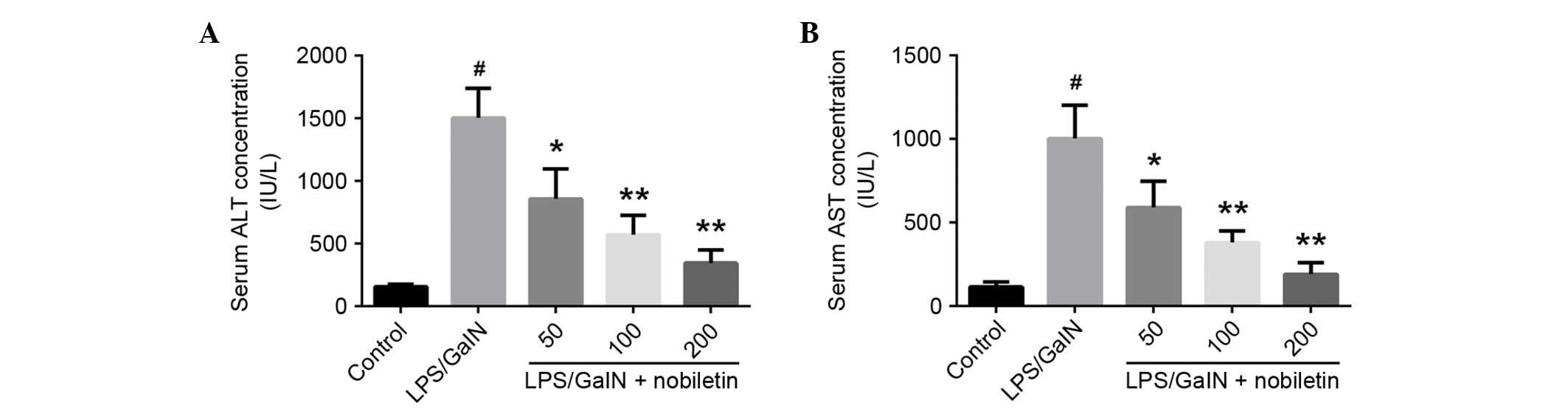
were detected 24 h after LPS/GalN treatment. As shown in Fig. 1, ALT and AST levels were
significantly increased after LPS/GalN treatment. However, the
increased levels were attenuated following administration of
nobiletin (50, 100 and 200 mg/kg).
LPS/GalN-induced histopathological
changes are reduced by nobiletin treatment
The histopathological state of the liver tissues was
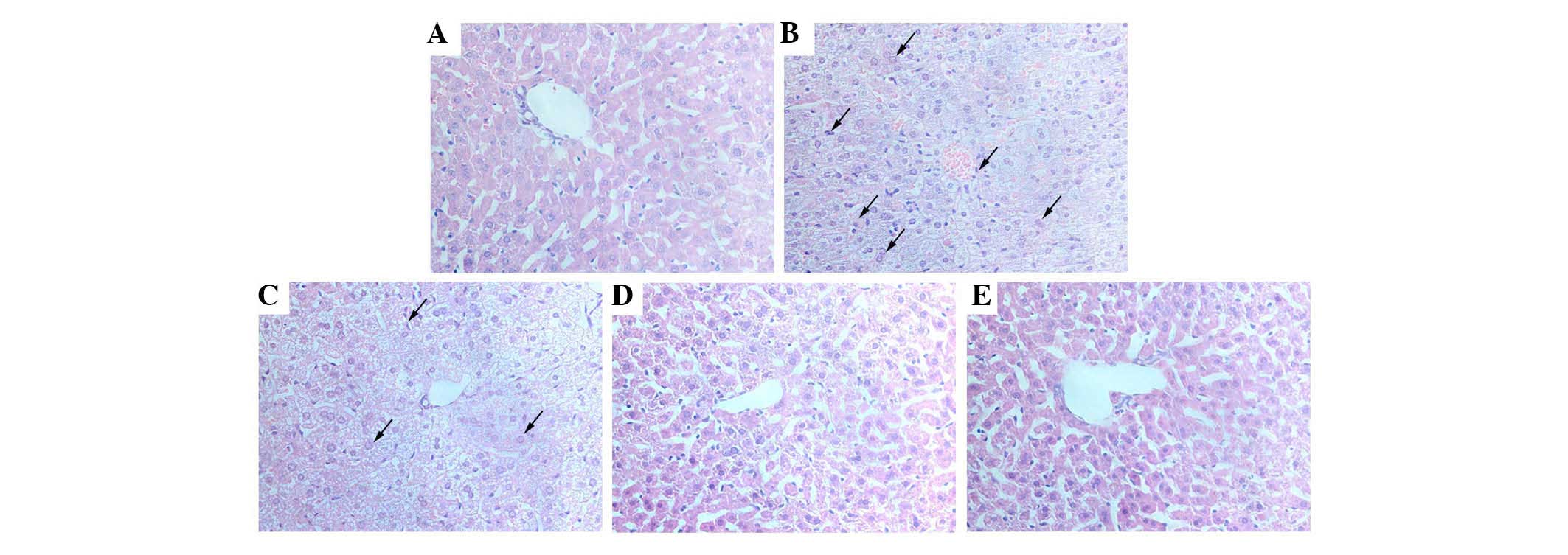
observed under a light microscope. As shown in Fig. 2, liver sections from the normal
control group exhibited normal lobular architecture and cellular
structure. Liver sections from the LPS/GalN group exhibited marked
pathological alterations, including extensive areas of portal
inflammation, cellular necrosis, and inflammatory cell
infiltration. However, these pathological alterations were markedly
attenuated in the nobiletin-treated groups.
Nobiletin inhibits hepatic IL-1β, IL-6
and TNF-α production
To determine the anti-inflammatory effects of
nobiletin, hepatic IL-1β, IL-6 and TNF-α production was detected
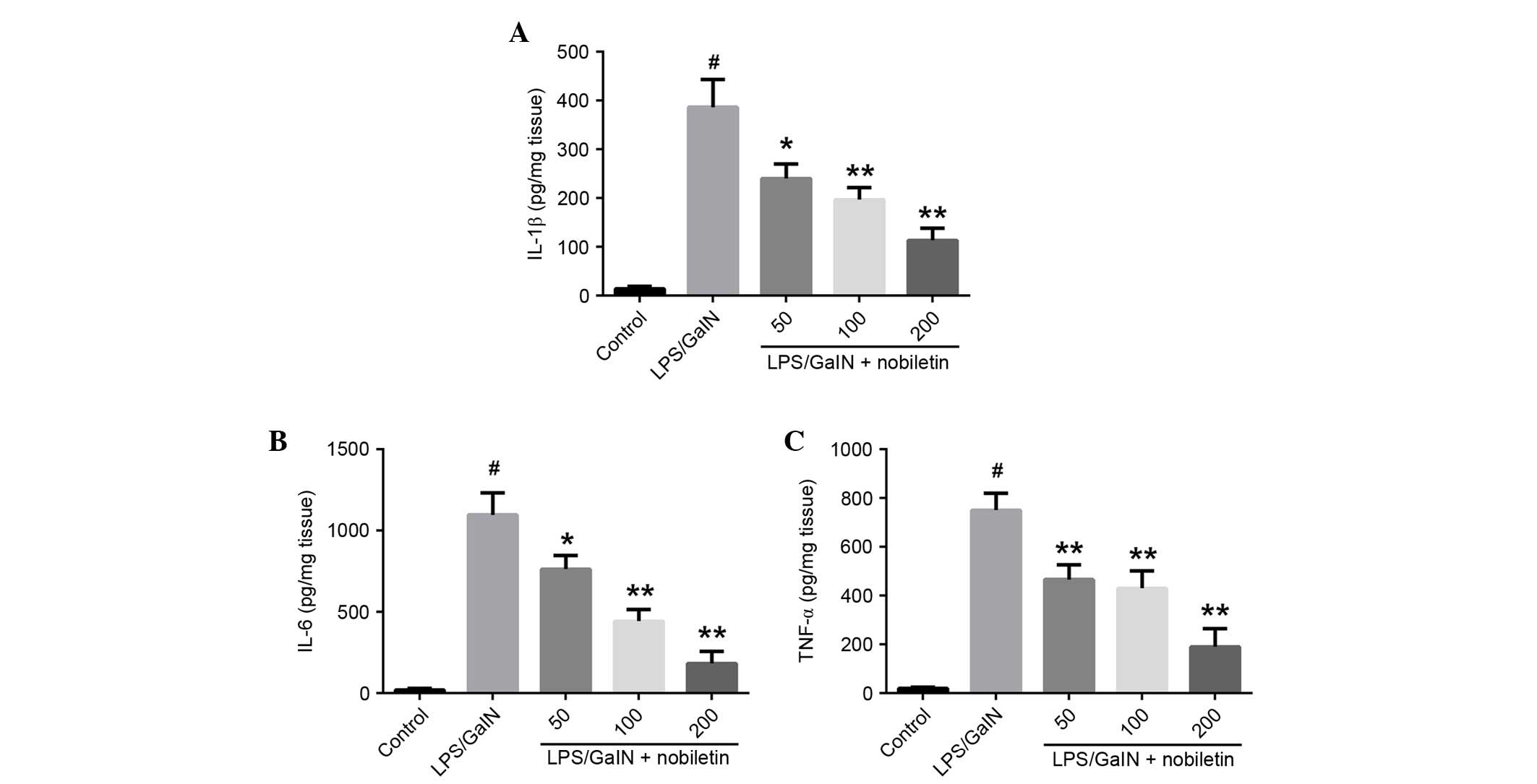
using ELISA kits. As presented in Fig.
3, IL-1β, IL-6 and TNF-α levels were significantly increased in
the LPS/GalN group compared with in the control group. Nobiletin
treatment (50, 100 and 200 mg/kg) significantly suppressed
LPS/GalN-induced hepatic IL-1β, IL-6 and TNF-α levels in a
dose-dependent manner.
Nobiletin inhibits hepatic iNOS and
COX-2 expression
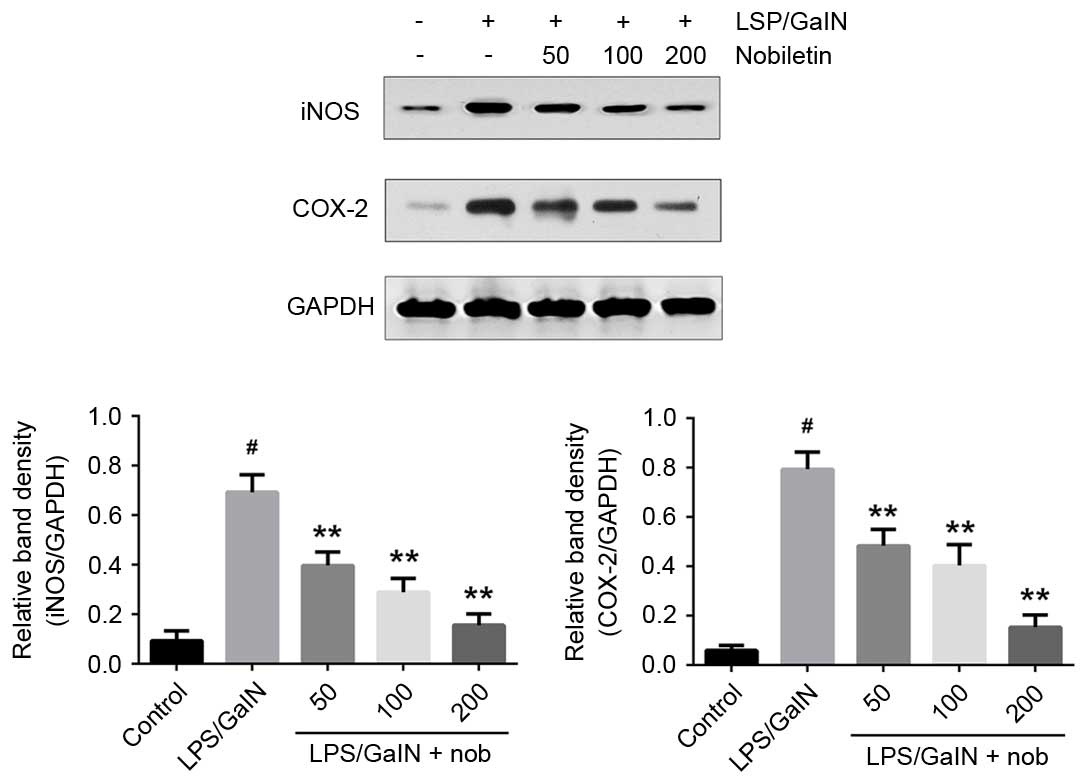
Hepatic iNOS and COX-2 expression levels were
detected 24 h after LPS/GalN treatment by western blot analysis.
The results indicated that iNOS and COX-2 levels were significantly
increased in the LPS/GalN group compared with in the control group.
Treatment with nobiletin (50, 100 and 200 mg/kg) dose-dependently
reduced hepatic iNOS and COX-2 levels (Fig. 4).
Nobiletin inhibits NF-κB
activation
NF-κB has been reported to have a dominant role in
the inflammatory response (14).
In the present study, the effects of nobiletin on the degradation
of IκBα and the activation of NF-κB were detected by western blot
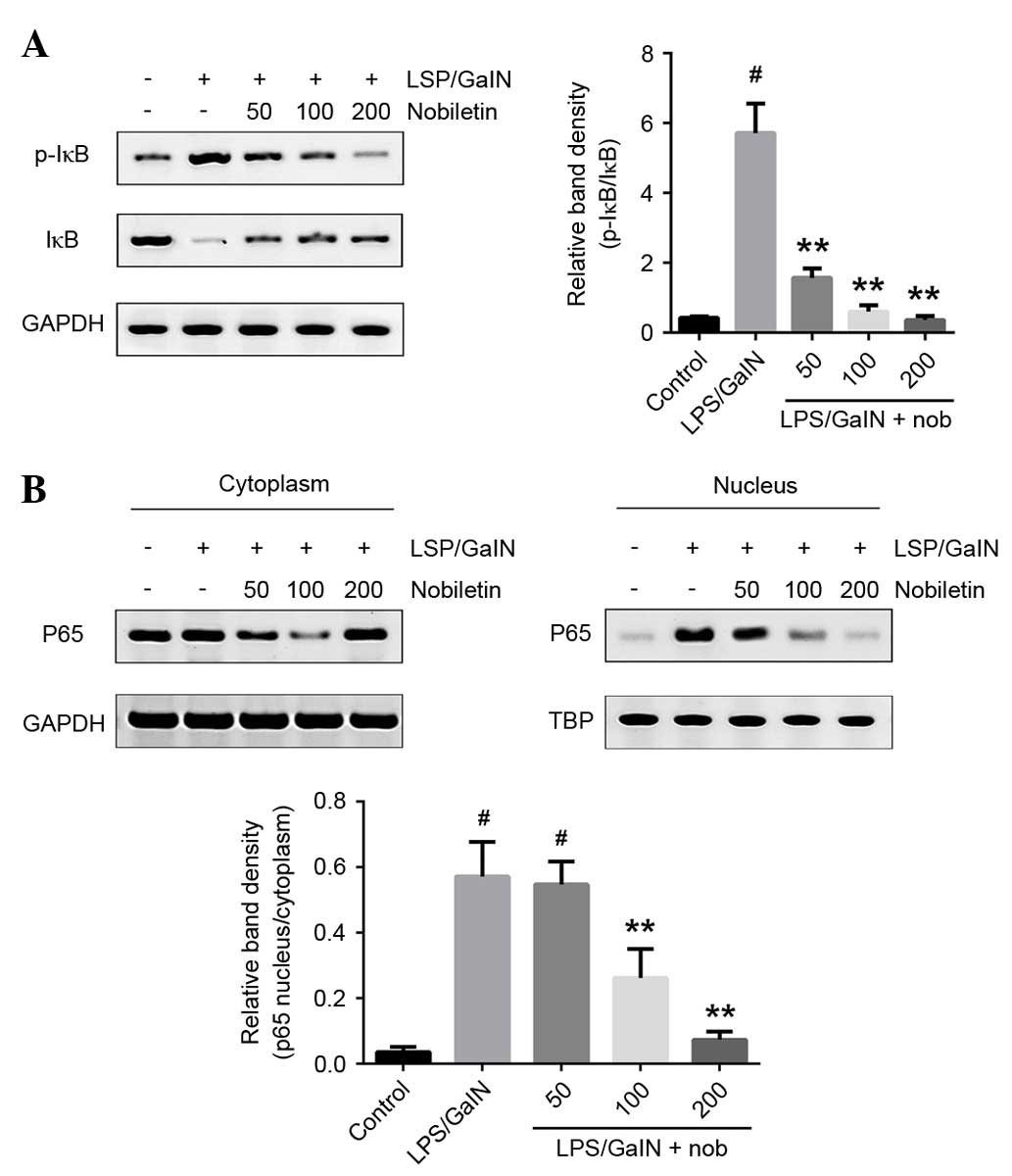
analysis. The results revealed that LPS/GalN exposure induced
phosphorylation and degradation of IκBα, and NF-κB p65
translocation into the nucleus; however, these effects were
attenuated following nobiletin treatment (Fig. 5).
Nobiletin promotes the expression of
Nrf2 and HO-1
Nrf2 is considered an important transcription factor
in regulation of the antioxidant response (15). In the present study, the effects of
nobiletin were detected on Nrf2 and HO-1 expression by western blot
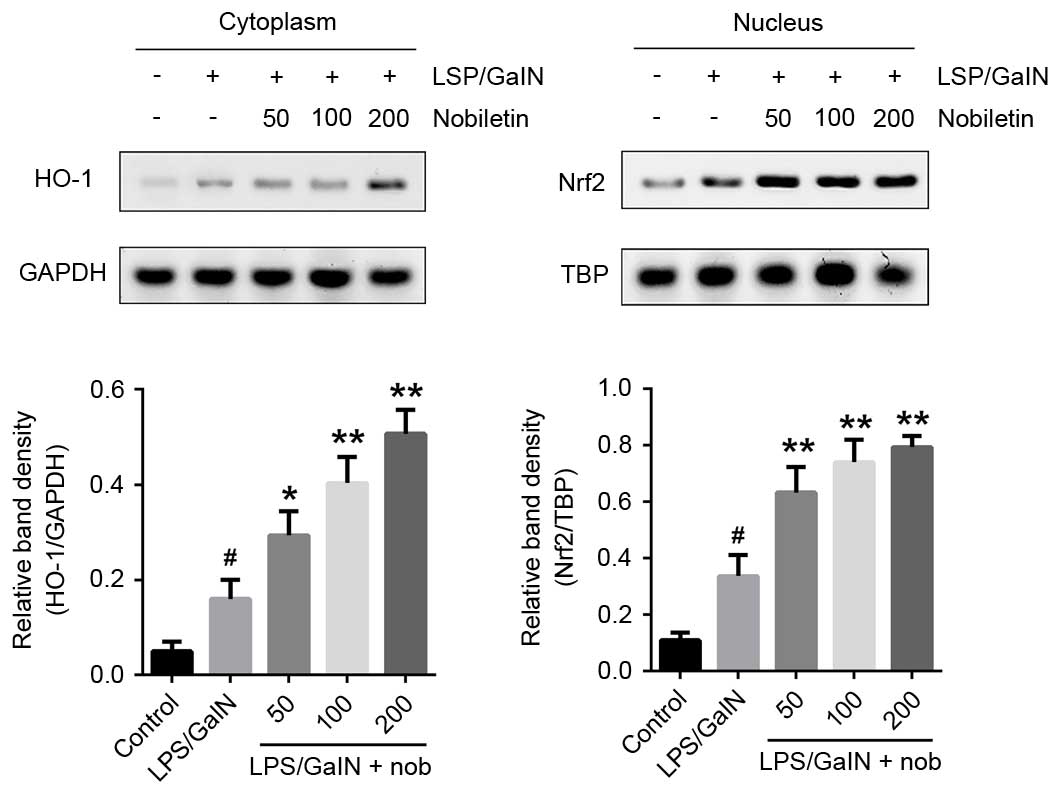
analysis. As shown in Fig. 6, the
expression levels of Nrf2 in the nucleus and HO-1 in the cytoplasm
were significantly increased 24 h after LPS/GalN treatment.
Notably, these increases in Nrf2 and HO-1 expression were augmented
by nobiletin.
Discussion
The present study demonstrated that nobiletin exerts
a protective effect on LPS/GalN-induced acute liver injury in mice.
The results indicated that nobiletin treatment significantly
attenuated hepatic pathological damage, hepatic enzyme release,
proinflammatory cytokine production and inflammatory cell
infiltration. Furthermore, the results revealed that nobiletin
inhibits NF-κB activation, and upregulates the expression levels of
Nrf2 and HO-1. Therefore, the present study suggests that nobiletin
may be considered a promising therapeutic reagent for the treatment
of acute liver injury.
ALT and AST are two transaminase enzymes that are
important for the synthesis of amino acids. ALT is predominantly
present in the liver, whereas AST is also present in other organs
and tissues. Significantly elevated levels of ALT and AST are often
associated with hepatic ailments, such as viral hepatitis, liver
damage and bile duct problems; and are therefore commonly used for
assessing the progression of liver disease (16). Treatment with LPS/GalN can increase
hepatocyte membrane permeability and induce hepatocyte necrosis,
which may increase the levels of AST and ALT. In the present study,
serum ALT and AST levels, and histological analysis of liver
tissues, were used to assess the protective effects of nobiletin on
LPS/GalN-induced acute liver injury. The results indicated that
nobiletin significantly decreased serum ALT and AST levels.
Furthermore, histological analysis demonstrated that nobiletin
attenuated cellular swelling and necrosis in the liver, and
inhibited inflammatory cell infiltration. These results suggested
that nobiletin may exert a protective effect on LPS/GalN-induced
hepatic injury.
Inflammation is an important pathological mechanism
responsible for propagating LPS/GalN-induced liver injury (17). Previous studies have revealed that
LPS may activate Kupffer cells, which can mediate the hepatic
inflammatory process by producing TNF-α, IL-1β and IL-6, as well as
other proinflammatory cytokines (18,19).
TNF-α is an important inflammatory mediators involved in
LPS/GalN-induced liver injury, which can potentially induce
apoptosis of hepatocytes, subsequently leading to organ failure
(20–22). In addition, TNF-α may initiate the
inflammatory cascade and induce the production of other cytokines,
including IL-1β and IL-6 (23).
Previous studies have reported that inhibition of TNF-α synthesis
inhibits cytokine production and attenuates liver injury (24). In addition, iNOS and COX-2 are
important proinflammatory enzymes involved in the development of
liver injury (25,26). Elevated iNOS and COX-2 levels are
often observed in LPS/GalN-induced liver injury in mice (27). In the present study, nobiletin
significantly inhibited LPS/GalN-induced increases in hepatic
TNF-α, IL-1β, IL-6, COX-2 and iNOS levels.
NF-κB is an upstream regulator of various genes
associated with the inflammatory response (28). Once activated by LPS, NF-κB p65
dissociates from its inhibitory protein IκBα and translocates from
the cytoplasm to the nucleus, where it may induce transcription of
inflammatory mediators, such as TNF-α, COX-2 and iNOS (29,30).
Therefore, the present study assessed the effects of nobiletin on
the NF-κB signaling pathway. The results indicated that LPS/GalN
induced the phosphorylation and degradation of IκBα and the nuclear
translocation of NF-κB p65; however, these effects were attenuated
by nobiletin.
Nrf2 is an important transcription factor involved
in regulating the oxidative stress response (31,32).
It regulates the transcription of antioxidant and detoxification
genes, such as HO-1 (33,34). In the present study, the expression
levels of Nrf2 in the nucleus and HO-1 in the cytoplasm were
significantly increased in the liver tissue of LPS/GalN-treated
mice. Notably, these increases were augmented by nobiletin. These
results suggested that nobiletin may alleviate LPS/GalN-induced
oxidative damage by stimulating the oxidative defense system.
Furthermore, several studies have reported that there is an
interaction between the Nrf2 and NF-κB signaling pathways (35,36).
Nrf2 can negatively regulate the NF-κB signaling pathway and
ameliorate NF-κB-related inflammatory response and oxidative injury
in mice (37). Therefore, the
inhibition of NF-κB observed in the liver tissue may be due to
activation of Nrf2 by nobiletin treatment.
In conclusion, the present study demonstrated that
treatment with nobiletin reduces LPS/GalN-induced proinflammatory
cytokine production and attenuates liver injury in a mouse model.
This protective mechanism may be dependent on the inhibition of
NF-κB activation and the activation of Nrf2. These findings support
the potential use of nobiletin as a therapeutic agent for the
prevention of acute liver injury.
References
|
1
|
Pierre PG, Solbreux P and Vaerman JP:
Cholera toxin-induced fluid secretion in rat gut ligated loops:
Influence of bile from normal or cholera toxin-immunized rats.
Immunology. 68:319–324. 1989.PubMed/NCBI
|
|
2
|
Forbes SJ, Gupta S and Dhawan A: Cell
therapy for liver disease: From liver transplantation to cell
factory. J Hepatol. 62:(Suppl 1). S157–S169. 2015. View Article : Google Scholar : PubMed/NCBI
|
|
3
|
Bernal W, Lee WM, Wendon J, Larsen FS and
Williams R: Acute liver failure: A curable disease by 2024? J
Hepatol. 62:(Suppl 1). S112–S120. 2015. View Article : Google Scholar : PubMed/NCBI
|
|
4
|
Kuroda N, Inoue K, Ikeda T, Hara Y, Wake K
and Sato T: Apoptotic response through a high mobility box 1
protein-dependent mechanism in LPS/GalN-induced mouse liver failure
and glycyrrhizin-mediated inhibition. PLoS One. 9:e928842014.
View Article : Google Scholar : PubMed/NCBI
|
|
5
|
Shukla P, Rao GM, Pandey G, Sharma S,
Mittapelly N, Shegokar R and Mishra PR: Therapeutic interventions
in sepsis: Current and anticipated pharmacological agents. Br J
Pharmacol. 171:5011–5031. 2014.PubMed/NCBI
|
|
6
|
Tsutsui H and Nishiguchi S: Importance of
Kupffer cells in the development of acute liver injuries in mice.
Int J Mol Sci. 15:7711–7730. 2014. View Article : Google Scholar : PubMed/NCBI
|
|
7
|
Moratalla A, Caparrós E, Juanola O,
Portune K, Puig-Kröger A, Estrada-Capetillo L, Bellot P,
Gómez-Hurtado I, Piñero P, Zapater P, et al: Bifidobacterium
pseudocatenulatum CECT7765 induces an M2 anti-inflammatory
transition in macrophages from patients with cirrhosis. J Hepatol.
64:135–145. 2015. View Article : Google Scholar : PubMed/NCBI
|
|
8
|
Nakajima A, Ohizumi Y and Yamada K:
Anti-dementia activity of nobiletin, a citrus flavonoid: A review
of animal studies. Clin Psychopharmacol Neurosci. 12:75–82. 2014.
View Article : Google Scholar : PubMed/NCBI
|
|
9
|
Xiu LJ, Sun DZ, Jiao JP, Yan B, Qin ZF,
Liu X, Wei PK and Yue XQ: Anticancer effects of traditional Chinese
herbs with phlegm-eliminating properties-An overview. J
Ethnopharmacol. 172:155–161. 2015. View Article : Google Scholar : PubMed/NCBI
|
|
10
|
Horigome S, Yoshida I, Tsuda A, Harada T,
Yamaguchi A, Yamazaki K, Inohana S, Isagawa S, Kibune N, Satoyama
T, et al: Identification and evaluation of anti-inflammatory
compounds from Kaempferia parviflora. Biosci Biotechnol Biochem.
78:851–860. 2014. View Article : Google Scholar : PubMed/NCBI
|
|
11
|
Malik S, Bhatia J, Suchal K, Gamad N,
Dinda AK, Gupta YK and Arya DS: Nobiletin ameliorates
cisplatin-induced acute kidney injury due to its anti-oxidant,
anti-inflammatory and anti-apoptotic effects. Exp Toxicol Pathol.
67:427–433. 2015. View Article : Google Scholar : PubMed/NCBI
|
|
12
|
Choi BK, Kim TW, Lee DR, Jung WH, Lim JH,
Jung JY, Yang SH and Suh JW: A polymethoxy flavonoids-rich Citrus
aurantium extract ameliorates ethanol-induced liver injury through
modulation of AMPK and Nrf2-related signals in a binge drinking
mouse model. Phytother Res. 29:1577–1584. 2015. View Article : Google Scholar : PubMed/NCBI
|
|
13
|
Tominari T, Hirata M, Matsumoto C, Inada M
and Miyaura C: Polymethoxy flavonoids, nobiletin and tangeretin,
prevent lipopolysaccharide-induced inflammatory bone loss in an
experimental model for periodontitis. J Pharmacol Sci. 119:390–394.
2012. View Article : Google Scholar : PubMed/NCBI
|
|
14
|
Mair F, Joller S, Hoeppli R, Onder L, Hahn
M, Ludewig B, Waisman A and Becher B: The NF kappa B-inducing
kinase is essential for the developmental programming of
skin-resident and IL-17-producing gamma delta T cells. eLife.
4:e100872015. View Article : Google Scholar : PubMed/NCBI
|
|
15
|
Lu MC, Ji JA, Jiang ZY and You QD: The
Keap1-Nrf2-ARE Pathway As a Potential Preventive and Therapeutic
Target: An Update. Med Res Rev. 36:924–963. 2016. View Article : Google Scholar : PubMed/NCBI
|
|
16
|
van Beek JH, de Moor MH, de Geus EJ, Lubke
GH, Vink JM, Willemsen G and Boomsma DI: The genetic architecture
of liver enzyme levels: GGT, ALT and AST. Behav Genet. 43:329–339.
2013. View Article : Google Scholar : PubMed/NCBI
|
|
17
|
Liang DY, Liu LM, Ye CG, Zhao L, Yu FP,
Gao DY and Wang YY, Yang ZW and Wang YY: Inhibition of UII/UTR
system relieves acute inflammation of liver through preventing
activation of NF-kappaB pathway in ALF mice. PLoS One.
8:e648952014. View Article : Google Scholar : PubMed/NCBI
|
|
18
|
Liu LM, Liang DY, Ye CG, Tu WJ and Zhu T:
The UII/UT system mediates upregulation of proinflammatory
cytokines through p38 MAPK and NF-κB pathways in LPS-stimulated
Kupffer cells. PLoS One. 10:e01213832015. View Article : Google Scholar : PubMed/NCBI
|
|
19
|
Yang P, Zhou W, Li C, Zhang M, Jiang Y,
Jiang R, Ba H, Li C, Wang J, Yin B, et al: Kupffer-cell-expressed
transmembrane TNF-α is a major contributor to lipopolysaccharide
and D-galactosamine-induced liver injury. Cell Tissue Res.
363:371–383. 2016. View Article : Google Scholar : PubMed/NCBI
|
|
20
|
Ahmad A, Raish M, Ganaie MA, Ahmad SR,
Mohsin K, Al-Jenoobi FI, Al-Mohizea AM and Alkharfy KM:
Hepatoprotective effect of Commiphora myrrha against
d-GalN/LPS-induced hepatic injury in a rat model through
attenuation of pro inflammatory cytokines and related genes. Pharm
Biol. 53:1759–1767. 2015. View Article : Google Scholar : PubMed/NCBI
|
|
21
|
Ma L, Gong X, Kuang G, Jiang R, Chen R and
Wan J: Sesamin ameliorates
lipopolysaccharide/d-galactosamine-induced fulminant hepatic
failure by suppression of Toll-like receptor 4 signaling in mice.
Biochem Biophys Res Commun. 461:230–236. 2015. View Article : Google Scholar : PubMed/NCBI
|
|
22
|
Yamada Y, Ishizaki M, Kido T, Honda R,
Tsuritani I, Nogawa K and Yamaya H: Relationship between serum
gamma-glutamyl transpeptidase activity, blood pressure and alcohol
consumption. J Hum Hypertens. 3:409–417. 1989.PubMed/NCBI
|
|
23
|
Cordero-Coma M and Sobrin L: Anti-tumor
necrosis factor-alpha therapy in uveitis. Surv Ophthalmol.
60:575–589. 2015. View Article : Google Scholar : PubMed/NCBI
|
|
24
|
Ma Z, Hou T, Shi W, Liu W and He H:
Inhibition of hepatocyte apoptosis: An important mechanism of corn
peptides attenuating liver injury induced by ethanol. Int J Mol
Sci. 16:22062–22080. 2015. View Article : Google Scholar : PubMed/NCBI
|
|
25
|
Peixoto CA and Gomes FO: The role of
phosphodiesterase-5 inhibitors in prostatic inflammation: A review.
J Inflamm (Lond). 12:542015. View Article : Google Scholar : PubMed/NCBI
|
|
26
|
Sun J, Zhang S, Zhang X, Zhang X, Dong H
and Qian Y: IL-17A is implicated in lipopolysaccharide-induced
neuroinflammation and cognitive impairment in aged rats via
microglial activation. J Neuroinflammation. 12:1652015. View Article : Google Scholar : PubMed/NCBI
|
|
27
|
Li J, Zhang X and Huang H: Protective
effect of linalool against
lipopolysaccharide/D-galactosamine-induced liver injury in mice.
Int Immunopharmacol. 23:523–529. 2014. View Article : Google Scholar : PubMed/NCBI
|
|
28
|
Senegas A, Gautheron J, Maurin AG and
Courtois G: IKK-related genetic diseases: Probing NF-κB functions
in humans and other matters. Cell Mol Life Sci. 72:1275–1287. 2015.
View Article : Google Scholar : PubMed/NCBI
|
|
29
|
Verstrepen L and Beyaert R: Receptor
proximal kinases in NF-κB signaling as potential therapeutic
targets in cancer and inflammation. Biochem Pharmacol. 92:519–529.
2014. View Article : Google Scholar : PubMed/NCBI
|
|
30
|
Muriach M, Flores-Bellver M, Romero FJ and
Barcia JM: Diabetes and the brain: Oxidative stress, inflammation,
and autophagy. Oxid Med Cell Longev. 2014:1021582014. View Article : Google Scholar : PubMed/NCBI
|
|
31
|
Dodson M, Redmann M, Rajasekaran NS,
Darley-Usmar V and Zhang J: KEAP1-NRF2 signalling and autophagy in
protection against oxidative and reductive proteotoxicity. Biochem
J. 469:347–355. 2015. View Article : Google Scholar : PubMed/NCBI
|
|
32
|
Jiménez-Osorio AS, González-Reyes S and
Pedraza-Chaverri J: Natural Nrf2 activators in diabetes. Clin Chim
Acta. 448:182–192. 2015. View Article : Google Scholar : PubMed/NCBI
|
|
33
|
Hahn ME, Timme-Laragy AR, Karchner SI and
Stegeman JJ: Nrf2 and Nrf2-related proteins in development and
developmental toxicity: Insights from studies in zebrafish (Danio
rerio). Free Radic Biol Med. 88:275–289. 2015. View Article : Google Scholar : PubMed/NCBI
|
|
34
|
Kanninen KM, Pomeshchik Y, Leinonen H,
Malm T, Koistinaho J and Levonen AL: Applications of the Keap1-Nrf2
system for gene and cell therapy. Free Radic Biol Med. 88:350–361.
2015. View Article : Google Scholar : PubMed/NCBI
|
|
35
|
Buelna-Chontal M and Zazueta C: Redox
activation of Nrf2 & NF-κB: A double end sword? Cell Signal.
25:2548–2557. 2013. View Article : Google Scholar : PubMed/NCBI
|
|
36
|
Agca CA, Tuzcu M, Hayirli A and Sahin K:
Taurine ameliorates neuropathy via regulating NF-κB and Nrf2/HO-1
signaling cascades in diabetic rats. Food Chem Toxicol. 71:116–121.
2014. View Article : Google Scholar : PubMed/NCBI
|
|
37
|
Jiang T, Tian F, Zheng H, Whitman SA, Lin
Y, Zhang Z, Zhang N and Zhang DD: Nrf2 suppresses lupus nephritis
through inhibition of oxidative injury and the NF-κB-mediated
inflammatory response. Kidney Int. 85:333–343. 2014. View Article : Google Scholar : PubMed/NCBI
|