Spandidos Publications Logo
  • About
    • About Spandidos
    • Aims and Scopes
    • Abstracting and Indexing
    • Editorial Policies
    • Reprints and Permissions
    • Job Opportunities
    • Terms and Conditions
    • Contact
  • Journals
    • All Journals
    • Oncology Letters
      • Oncology Letters
      • Information for Authors
      • Editorial Policies
      • Editorial Board
      • Aims and Scope
      • Abstracting and Indexing
      • Bibliographic Information
      • Archive
    • International Journal of Oncology
      • International Journal of Oncology
      • Information for Authors
      • Editorial Policies
      • Editorial Board
      • Aims and Scope
      • Abstracting and Indexing
      • Bibliographic Information
      • Archive
    • Molecular and Clinical Oncology
      • Molecular and Clinical Oncology
      • Information for Authors
      • Editorial Policies
      • Editorial Board
      • Aims and Scope
      • Abstracting and Indexing
      • Bibliographic Information
      • Archive
    • Experimental and Therapeutic Medicine
      • Experimental and Therapeutic Medicine
      • Information for Authors
      • Editorial Policies
      • Editorial Board
      • Aims and Scope
      • Abstracting and Indexing
      • Bibliographic Information
      • Archive
    • International Journal of Molecular Medicine
      • International Journal of Molecular Medicine
      • Information for Authors
      • Editorial Policies
      • Editorial Board
      • Aims and Scope
      • Abstracting and Indexing
      • Bibliographic Information
      • Archive
    • Biomedical Reports
      • Biomedical Reports
      • Information for Authors
      • Editorial Policies
      • Editorial Board
      • Aims and Scope
      • Abstracting and Indexing
      • Bibliographic Information
      • Archive
    • Oncology Reports
      • Oncology Reports
      • Information for Authors
      • Editorial Policies
      • Editorial Board
      • Aims and Scope
      • Abstracting and Indexing
      • Bibliographic Information
      • Archive
    • Molecular Medicine Reports
      • Molecular Medicine Reports
      • Information for Authors
      • Editorial Policies
      • Editorial Board
      • Aims and Scope
      • Abstracting and Indexing
      • Bibliographic Information
      • Archive
    • World Academy of Sciences Journal
      • World Academy of Sciences Journal
      • Information for Authors
      • Editorial Policies
      • Editorial Board
      • Aims and Scope
      • Abstracting and Indexing
      • Bibliographic Information
      • Archive
    • International Journal of Functional Nutrition
      • International Journal of Functional Nutrition
      • Information for Authors
      • Editorial Policies
      • Editorial Board
      • Aims and Scope
      • Abstracting and Indexing
      • Bibliographic Information
      • Archive
    • International Journal of Epigenetics
      • International Journal of Epigenetics
      • Information for Authors
      • Editorial Policies
      • Editorial Board
      • Aims and Scope
      • Abstracting and Indexing
      • Bibliographic Information
      • Archive
    • Medicine International
      • Medicine International
      • Information for Authors
      • Editorial Policies
      • Editorial Board
      • Aims and Scope
      • Abstracting and Indexing
      • Bibliographic Information
      • Archive
  • Articles
  • Information
    • Information for Authors
    • Information for Reviewers
    • Information for Librarians
    • Information for Advertisers
    • Conferences
  • Language Editing
Spandidos Publications Logo
  • About
    • About Spandidos
    • Aims and Scopes
    • Abstracting and Indexing
    • Editorial Policies
    • Reprints and Permissions
    • Job Opportunities
    • Terms and Conditions
    • Contact
  • Journals
    • All Journals
    • Biomedical Reports
      • Information for Authors
      • Editorial Policies
      • Editorial Board
      • Aims and Scope
      • Abstracting and Indexing
      • Bibliographic Information
      • Archive
    • Experimental and Therapeutic Medicine
      • Information for Authors
      • Editorial Policies
      • Editorial Board
      • Aims and Scope
      • Abstracting and Indexing
      • Bibliographic Information
      • Archive
    • International Journal of Epigenetics
      • Information for Authors
      • Editorial Policies
      • Editorial Board
      • Aims and Scope
      • Abstracting and Indexing
      • Bibliographic Information
      • Archive
    • International Journal of Functional Nutrition
      • Information for Authors
      • Editorial Policies
      • Editorial Board
      • Aims and Scope
      • Abstracting and Indexing
      • Bibliographic Information
      • Archive
    • International Journal of Molecular Medicine
      • Information for Authors
      • Editorial Policies
      • Editorial Board
      • Aims and Scope
      • Abstracting and Indexing
      • Bibliographic Information
      • Archive
    • International Journal of Oncology
      • Information for Authors
      • Editorial Policies
      • Editorial Board
      • Aims and Scope
      • Abstracting and Indexing
      • Bibliographic Information
      • Archive
    • Medicine International
      • Information for Authors
      • Editorial Policies
      • Editorial Board
      • Aims and Scope
      • Abstracting and Indexing
      • Bibliographic Information
      • Archive
    • Molecular and Clinical Oncology
      • Information for Authors
      • Editorial Policies
      • Editorial Board
      • Aims and Scope
      • Abstracting and Indexing
      • Bibliographic Information
      • Archive
    • Molecular Medicine Reports
      • Information for Authors
      • Editorial Policies
      • Editorial Board
      • Aims and Scope
      • Abstracting and Indexing
      • Bibliographic Information
      • Archive
    • Oncology Letters
      • Information for Authors
      • Editorial Policies
      • Editorial Board
      • Aims and Scope
      • Abstracting and Indexing
      • Bibliographic Information
      • Archive
    • Oncology Reports
      • Information for Authors
      • Editorial Policies
      • Editorial Board
      • Aims and Scope
      • Abstracting and Indexing
      • Bibliographic Information
      • Archive
    • World Academy of Sciences Journal
      • Information for Authors
      • Editorial Policies
      • Editorial Board
      • Aims and Scope
      • Abstracting and Indexing
      • Bibliographic Information
      • Archive
  • Articles
  • Information
    • For Authors
    • For Reviewers
    • For Librarians
    • For Advertisers
    • Conferences
  • Language Editing
Login Register Submit
  • This site uses cookies
  • You can change your cookie settings at any time by following the instructions in our Cookie Policy. To find out more, you may read our Privacy Policy.

    I agree
Search articles by DOI, keyword, author or affiliation
Search
Advanced Search
presentation
Molecular Medicine Reports
Join Editorial Board Propose a Special Issue
Print ISSN: 1791-2997 Online ISSN: 1791-3004
Journal Cover
January-2017 Volume 15 Issue 1

Full Size Image

Sign up for eToc alerts
Recommend to Library

Journals

International Journal of Molecular Medicine

International Journal of Molecular Medicine

International Journal of Molecular Medicine is an international journal devoted to molecular mechanisms of human disease.

International Journal of Oncology

International Journal of Oncology

International Journal of Oncology is an international journal devoted to oncology research and cancer treatment.

Molecular Medicine Reports

Molecular Medicine Reports

Covers molecular medicine topics such as pharmacology, pathology, genetics, neuroscience, infectious diseases, molecular cardiology, and molecular surgery.

Oncology Reports

Oncology Reports

Oncology Reports is an international journal devoted to fundamental and applied research in Oncology.

Experimental and Therapeutic Medicine

Experimental and Therapeutic Medicine

Experimental and Therapeutic Medicine is an international journal devoted to laboratory and clinical medicine.

Oncology Letters

Oncology Letters

Oncology Letters is an international journal devoted to Experimental and Clinical Oncology.

Biomedical Reports

Biomedical Reports

Explores a wide range of biological and medical fields, including pharmacology, genetics, microbiology, neuroscience, and molecular cardiology.

Molecular and Clinical Oncology

Molecular and Clinical Oncology

International journal addressing all aspects of oncology research, from tumorigenesis and oncogenes to chemotherapy and metastasis.

World Academy of Sciences Journal

World Academy of Sciences Journal

Multidisciplinary open-access journal spanning biochemistry, genetics, neuroscience, environmental health, and synthetic biology.

International Journal of Functional Nutrition

International Journal of Functional Nutrition

Open-access journal combining biochemistry, pharmacology, immunology, and genetics to advance health through functional nutrition.

International Journal of Epigenetics

International Journal of Epigenetics

Publishes open-access research on using epigenetics to advance understanding and treatment of human disease.

Medicine International

Medicine International

An International Open Access Journal Devoted to General Medicine.

Journal Cover
January-2017 Volume 15 Issue 1

Full Size Image

Sign up for eToc alerts
Recommend to Library

  • Article
  • Citations
    • Cite This Article
    • Download Citation
    • Create Citation Alert
    • Remove Citation Alert
    • Cited By
  • Similar Articles
    • Related Articles (in Spandidos Publications)
    • Similar Articles (Google Scholar)
    • Similar Articles (PubMed)
  • Download PDF
  • Download XML
  • View XML
Article Open Access

Midazolam anesthesia protects neuronal cells from oxidative stress-induced death via activation of the JNK-ERK pathway

  • Authors:
    • Jing‑Yu Liu
    • Feng Guo
    • Hong‑Ling Wu
    • Ying Wang
    • Jin‑Shan Liu
  • View Affiliations / Copyright

    Affiliations: Department of Anesthesiology, Dongying People's Hospital, Dongying, Shandong 257091, P.R. China, Department of Anesthesiology, Dongying District People's Hospital, Dongying, Shandong 257091, P.R. China, Department of Anesthesiology, Kenli People's Hospital, Dongying, Shandong 257091, P.R. China
    Copyright: © Liu et al. This is an open access article distributed under the terms of Creative Commons Attribution License.
  • Pages: 169-179
    |
    Published online on: December 12, 2016
       https://doi.org/10.3892/mmr.2016.6031
  • Expand metrics +
Metrics: Total Views: 0 (Spandidos Publications: | PMC Statistics: )
Metrics: Total PDF Downloads: 0 (Spandidos Publications: | PMC Statistics: )
Cited By (CrossRef): 0 citations Loading Articles...

This article is mentioned in:


Abstract

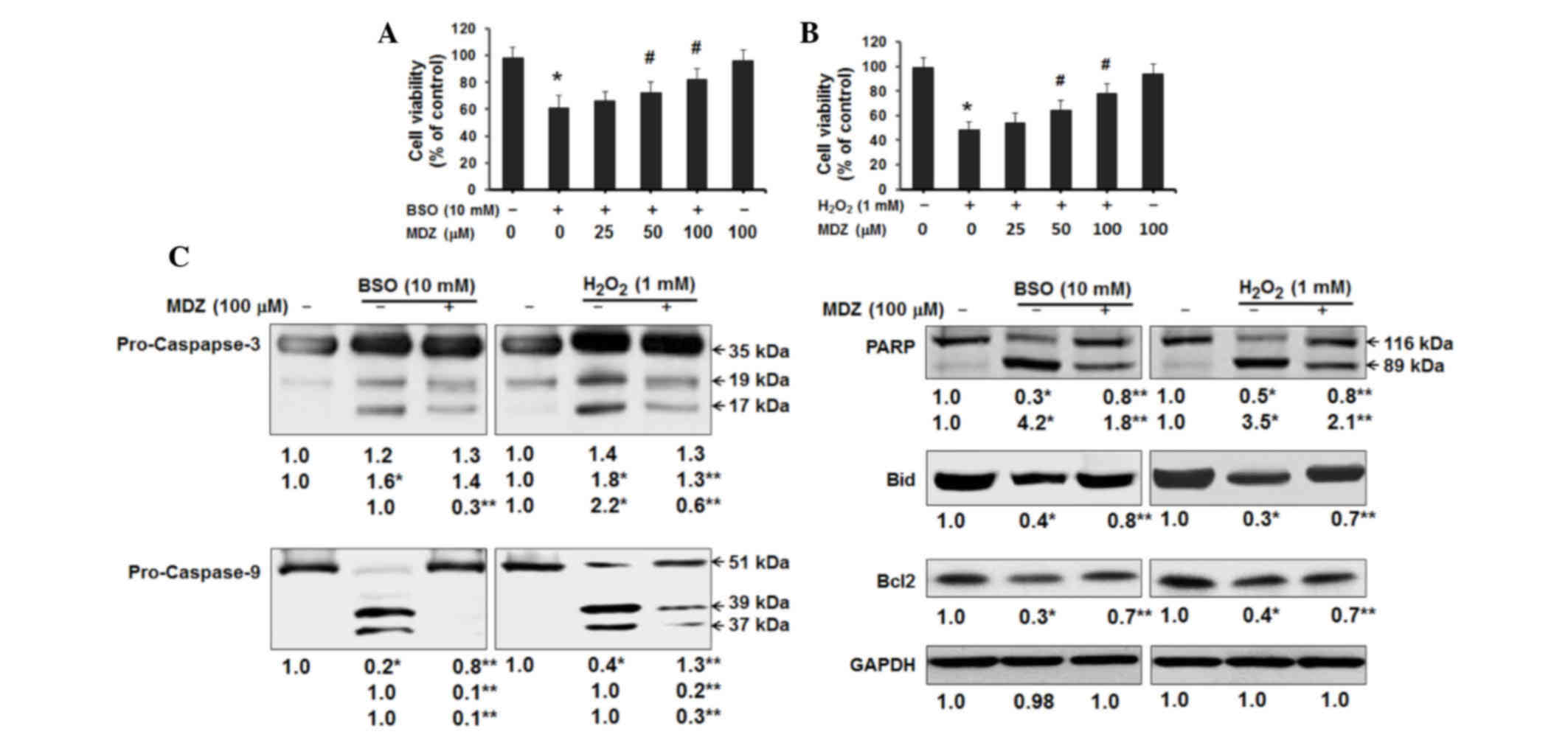
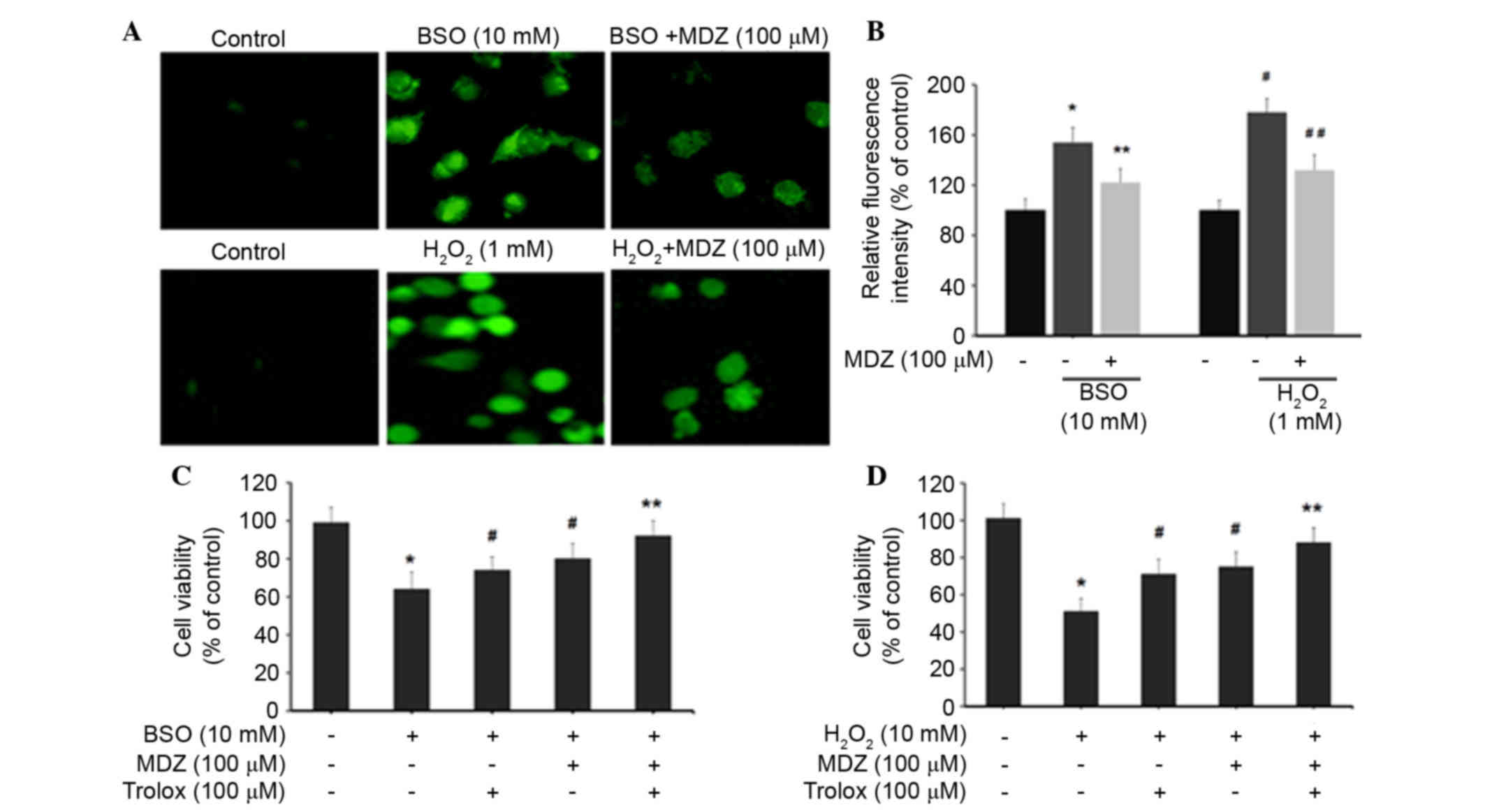
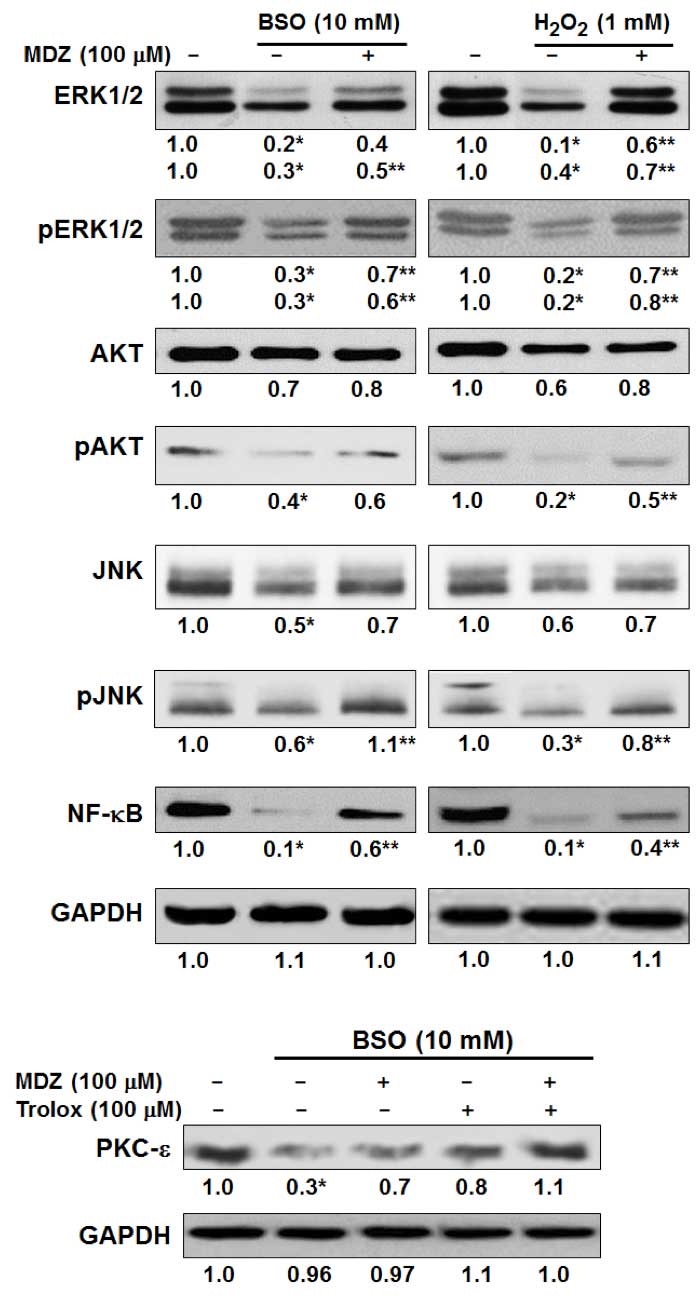
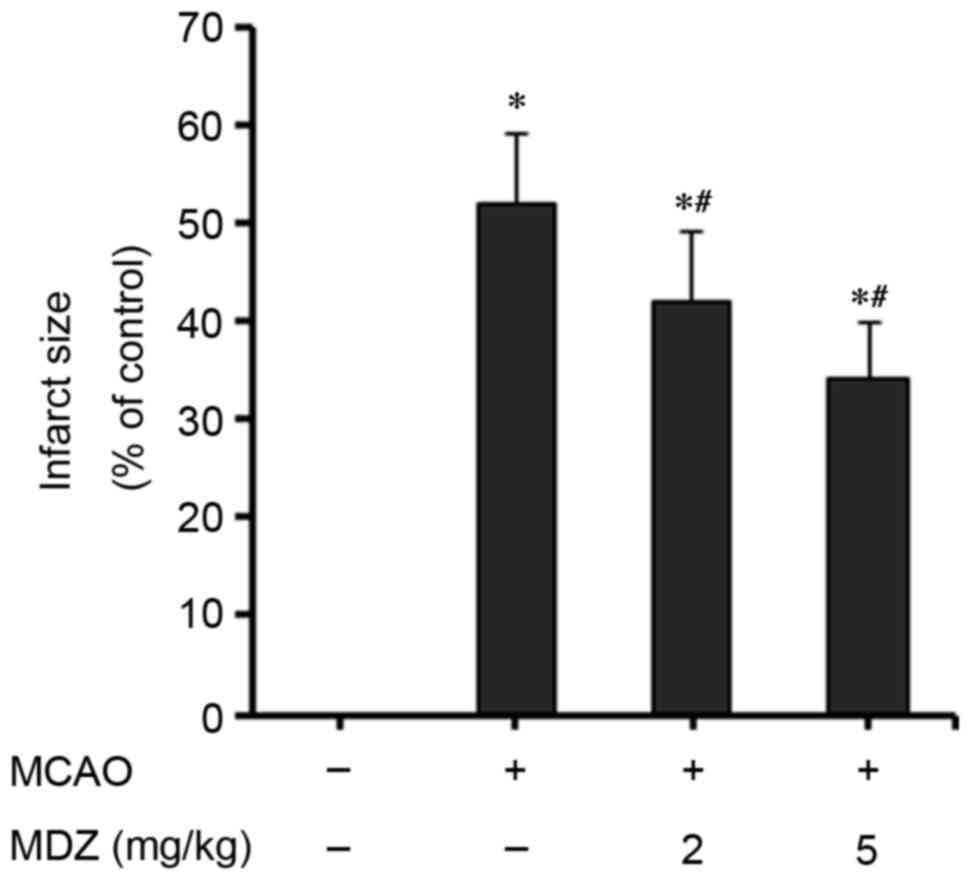
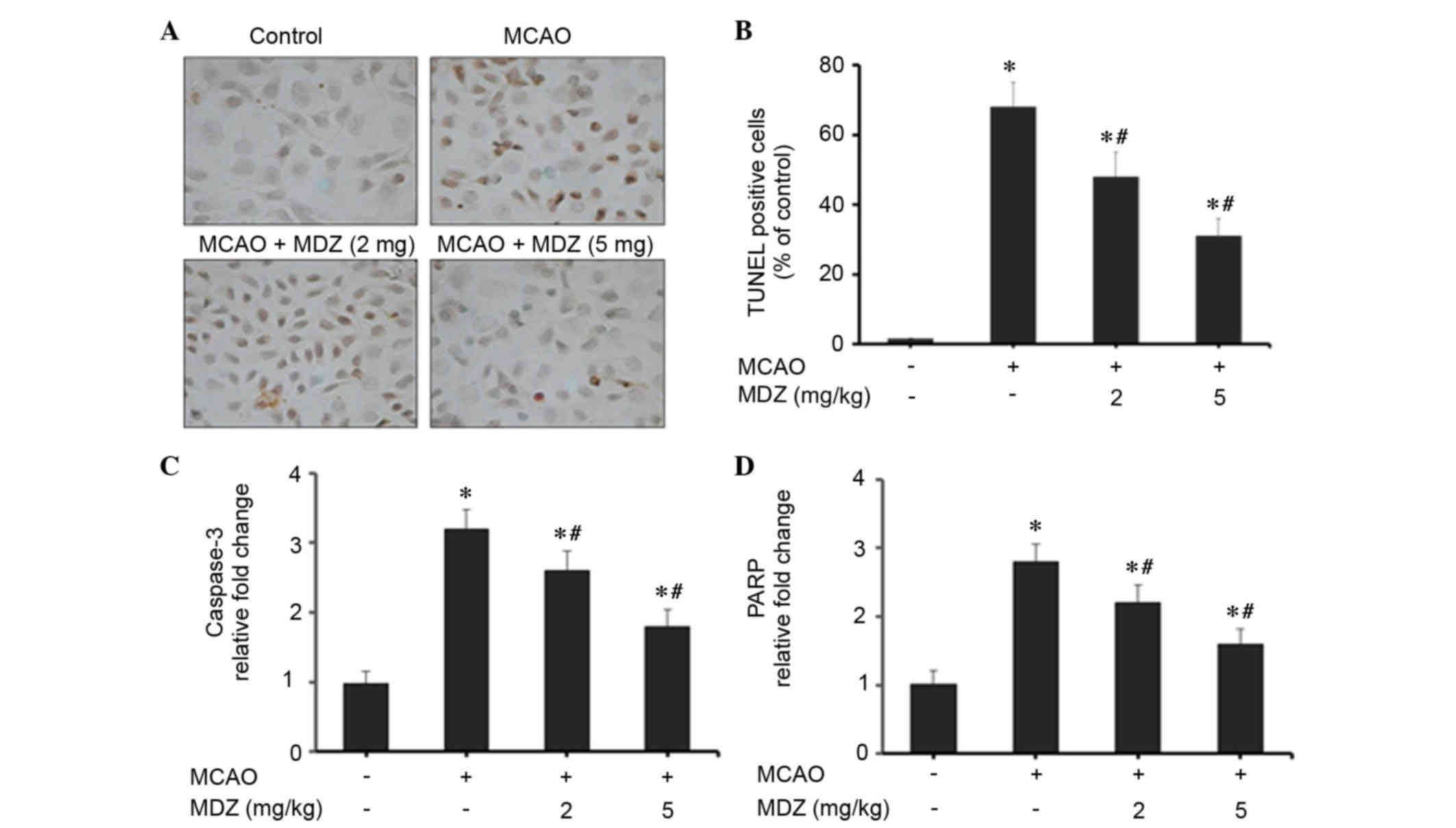
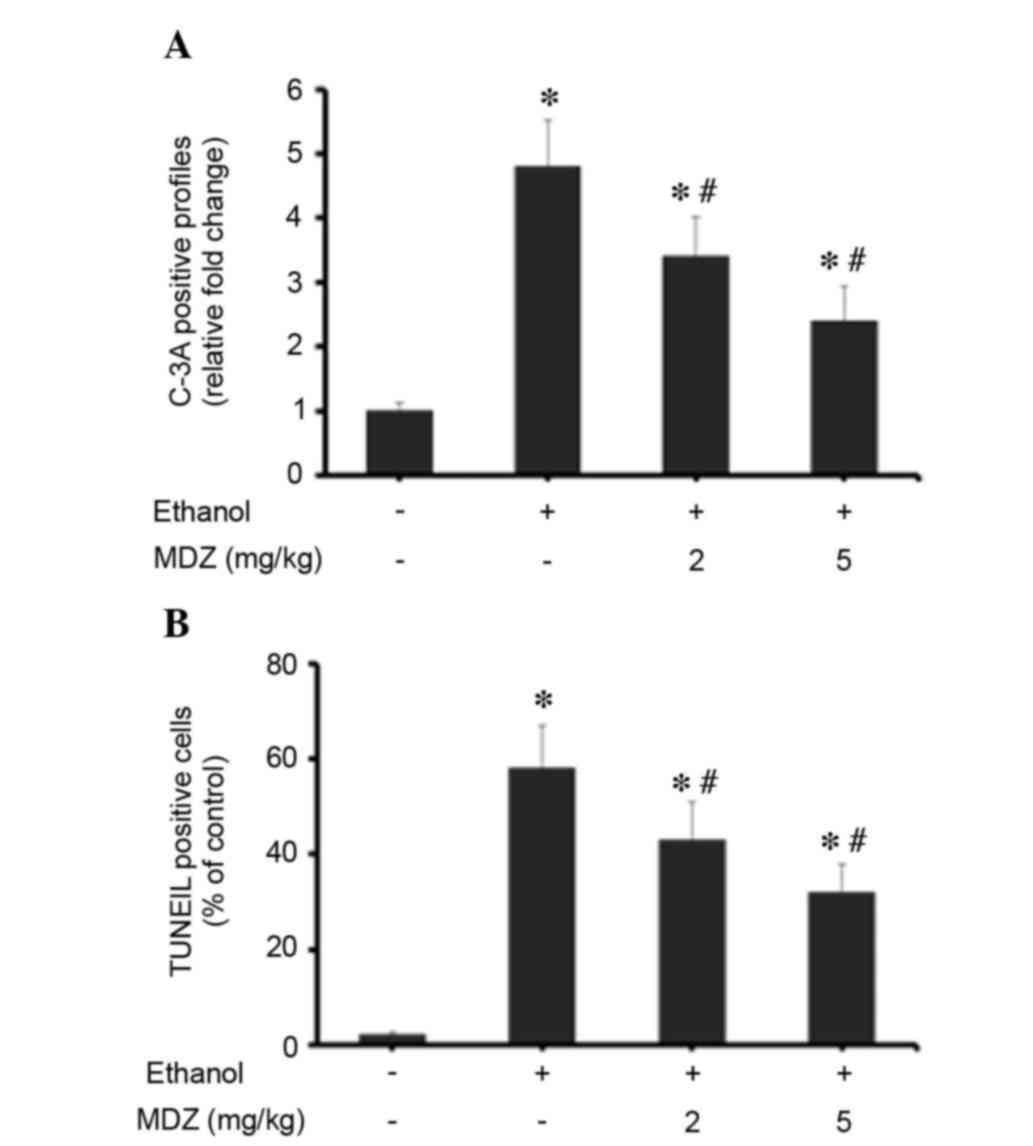
Midazolam is an anesthetic agent commonly used during clinical and surgical procedures, which has been shown to exert ROS‑suppressing and apoptosis‑modulating pharmacological activities in various cellular systems. However, the effects of midazolam on oxidative stress in neuronal cells require elucidation. The present study investigated the effects of midazolam on buthionine sulfoximine (BSO)‑ and hydrogen peroxide (H2O2)‑induced oxidative stress in primary cortical neuronal cells. In addition, the effects of midazolam on middle cerebral artery occlusion (MCAO) in mice and on ethanol‑induced neuroapoptosis in the brains of neonatal mice were determined. Subsequently, cell viability was detected using the MTT assay; intracellular reactive oxygen species (ROS) generation was determined using the 2',7'‑dichlorodihydrofluorescein diacetate method with confocal microscopy; terminal deoxynucleotidyl transferase dUTP nick end labeling (TUNEL) staining was conducted to detect apoptotic cells; immunohistochemistry was performed to detect activated caspase‑3; neuronal deficit and infarct volume analyses were conducted; and quantitative polymerase chain reaction and western blotting were performed to detect the expression levels of genes and proteins associated with apoptosis and cell survival pathways. The results demonstrated that BSO (10 mM) and H2O2 (1 mM) suppressed proliferation of cortical neuronal cells by inducing apoptosis. These effects were suppressed following treatment with midazolam in a dose‑dependent manner. In addition, BSO and H2O2 induced ROS generation in neuronal cells; however, this was effectively suppressed by midazolam (100 µM). Beneficial synergistic effects were detected when midazolam was used in combination with the known antioxidant trolox. BSO and H2O2 also suppressed the protein expression levels of c‑Jun N‑terminal kinases (JNK), phosphorylated (p)JNK, extracellular signal‑regulated kinases (ERK)1/2, pERK1/2, AKT and nuclear factor‑κB; however, expression was recovered following treatment with midazolam. Midazolam also activated protein kinase C‑ε, which was suppressed by BSO, in cortical neuronal cells. In MCAO mice, midazolam post‑conditioning significantly suppressed infarct size and reduced the number of TUNEL‑positive cells. In addition, the expression levels of caspase‑3 and poly (ADP‑ribose) polymerase were suppressed in a dose‑dependent manner. In neonatal mice, midazolam reduced ethanol‑induced activated caspase‑3 staining and apoptotic TUNEL staining. The results of the present study demonstrated that midazolam may protect against neuronal degeneration and neuroapoptosis induced by physiological and oxidative stress.
View Figures

Figure 1

Figure 2

Figure 3

Figure 4

Figure 5

Figure 6

View References

1 

So EC, Chang YT, Hsing CH, Poon PW, Leu SF and Huang BM: The effect of midazolam on mouse Leydig cell steroidogenesis and apoptosis. Toxicol Lett. 192:169–178. 2010. View Article : Google Scholar : PubMed/NCBI

2 

Jevtovic-Todorovic V, Hartman RE, Izumi Y, Benshoff ND, Dikranian K, Zorumski CF, Olney JW and Wozniak DF: Early exposure to common anesthetic agents causes widespread neurodegeneration in the developing rat brain and persistent learning deficits. J Neurosci. 23:876–882. 2003.PubMed/NCBI

3 

Head BP, Patel HH, Niesman IR, Drummond JC, Roth DM and Patel PM: Inhibition of p75 neurotrophin receptor attenuates isoflurane-mediated neuronal apoptosis in the neonatal central nervous system. Anesthesiology. 110:813–825. 2009. View Article : Google Scholar : PubMed/NCBI

4 

Vutskits L, Gascon E, Tassonyi E and Kiss JZ: Clinically relevant concentrations of propofol but not midazolam alter in vitro dendritic development of isolated gamma-aminobutyric acid-positive interneurons. Anesthesiology. 102:970–976. 2005. View Article : Google Scholar : PubMed/NCBI

5 

Stratmann G, Sall JW, May LD, Bell JS, Magnusson KR, Rau V, Visrodia KH, Alvi RS, Ku B, Lee MT and Dai R: Isoflurane differentially affects neurogenesis and long-term neurocognitive function in 60-day-old and 7-day-old rats. Anesthesiology. 110:834–848. 2009. View Article : Google Scholar : PubMed/NCBI

6 

Walker SM, Westin BD, Deumens R, Grafe M and Yaksh TL: Effects of intrathecal ketamine in the neonatal rat: Evaluation of apoptosis and long-term functional outcome. Anesthesiology. 113:147–159. 2010. View Article : Google Scholar : PubMed/NCBI

7 

Briner A, De Roo M, Dayer A, Muller D, Habre W and Vutskits L: Volatile anesthetics rapidly increase dendritic spine density in the rat medial prefrontal cortex during synaptogenesis. Anesthesiology. 112:546–556. 2010. View Article : Google Scholar : PubMed/NCBI

8 

De Roo M, Klauser P, Briner A, Nikonenko I, Mendez P, Dayer A, Kiss JZ, Muller D and Vutskits L: Anesthetics rapidly promote synaptogenesis during a critical period of brain development. PLoS One. 4:e70432009. View Article : Google Scholar : PubMed/NCBI

9 

Yahalom B, Athiraman U, Soriano SG, Zurakowski D, Carpino EA, Corfas G and Berde CB: Spinal anesthesia in infant rats: Development of a model and assessment of neurologic outcomes. Anesthesiology. 114:1325–1335. 2011. View Article : Google Scholar : PubMed/NCBI

10 

Scallet AC, Schmued LC, Slikker W Jr, Grunberg N, Faustino PJ, Davis H, Lester D, Pine PS, Sistare F and Hanig JP: Developmental neurotoxicity of ketamine: Morphometric confirmation, exposure parameters, and multiple fluorescent labeling of apoptotic neurons. Toxicol Sci. 81:364–370. 2004. View Article : Google Scholar : PubMed/NCBI

11 

Abdel-Wahab AF and Al-Harizy WM: Propofol protects against ischemia/reperfusion injury associated with reduced apoptosis in rat liver. ISRN Anesthesiology 2013. Article ID 517478. 82013.

12 

Arai Y, Kondo T, Tanabe K, Zhao QL, Li FJ, Ogawa R, Li M and Kasuya M: Enhancement of hyperthermia-induced apoptosis by local anesthetics on human histiocytic lymphoma U937 cells. J Biol Chem. 277:18986–18993. 2002. View Article : Google Scholar : PubMed/NCBI

13 

Mishra SK, Kang JH, Lee CW, Oh SH, Ryu JS, Bae YS and Kim HM: Midazolam induces cellular apoptosis in human cancer cells and inhibits tumor growth in xenograft mice. Mol Cells. 36:219–226. 2013. View Article : Google Scholar : PubMed/NCBI

14 

Young C, Jevtovic-Todorovic V, Qin YQ, Tenkova T, Wang H, Labruyere J and Olney JW: Potential of ketamine and midazolam, individually or in combination, to induce apoptotic neurodegeneration in the infant mouse brain. Br J Pharmacol. 146:189–197. 2005.PubMed/NCBI

15 

Stevens MF, Werdehausen R, Gaza N, Hermanns H, Kremer D, Bauer I, Küry P, Hollmann MW and Braun S: Midazolam activates the intrinsic pathway of apoptosis independent of benzodiazepine and death receptor signaling. Reg Anesth Pain Med. 36:343–349. 2011. View Article : Google Scholar : PubMed/NCBI

16 

Casellas P, Galiegue S and Basile AS: Peripheral benzodiazepine receptors and mitochondrial function. Neurochem Int. 40:475–486. 2002. View Article : Google Scholar : PubMed/NCBI

17 

Chiang T, Messing RO and Chou WH: Mouse model of middle cerebral artery occlusion. J Vis Exp. pii:27612011.

18 

Longa EZ, Weinstein PR, Carlson S and Cummins R: Reversible middle cerebral artery occlusion without craniectomy in rats. Stroke. 20:84–91. 1989. View Article : Google Scholar : PubMed/NCBI

19 

Livak KJ and Schmittgen TD: Analysis of relative gene expression data using real-time quantitative PCR and the 2(−Delta Delta C(T)) method. Methods. 25:402–408. 2001. View Article : Google Scholar : PubMed/NCBI

20 

Young C and Olney JW: Neuroapoptosis in the infant mouse brain triggered by a transient small increase in blood alcohol concentration. Neurobiol Dis. 22:548–554. 2006. View Article : Google Scholar : PubMed/NCBI

21 

Wüllner U, Seyfried J, Groscurth P, Beinroth S, Winter S, Gleichmann M, Heneka M, Löschmann P, Schulz JB, Weller M and Klockgether T: Glutathione depletion and neuronal cell death: The role of reactive oxygen intermediates and mitochondrial function. Brain Res. 826:53–62. 1999. View Article : Google Scholar : PubMed/NCBI

22 

Valencia A and Morán J: Reactive oxygen species induce different cell death mechanisms in cultured neurons. Free Radic Biol Med. 36:1112–1125. 2004. View Article : Google Scholar : PubMed/NCBI

23 

Griffiths JD, Le NV, Grant S, Bjorksten A, Hebbard P and Royse C: Symptomatic local anaesthetic toxicity and plasma ropivacaine concentrations after transversus abdominis plane block for Caesarean section. Br J Anaesth. 110:996–1000. 2013. View Article : Google Scholar : PubMed/NCBI

24 

Sakura S, Kirihara Y, Muguruma T, Kishimoto T and Saito Y: The comparative neurotoxicity of intrathecal lidocaine and bupivacaine in rats. Anesth Analg. 101:541–547. 2005. View Article : Google Scholar : PubMed/NCBI

25 

Zhang DX, Ding HZ, Jiang S, Zeng YM and Tang QF: An in vitro study of the neuroprotective effect of propofol on hypoxic hippocampal slice. Brain Inj. 28:1758–1765. 2014. View Article : Google Scholar : PubMed/NCBI

26 

Liang C, Cang J, Wang H and Xue Z: Propofol attenuates cerebral ischemia/reperfusion injury partially using heme oxygenase-1. J Neurosurg Anesthesiol. 25:311–316. 2013. View Article : Google Scholar : PubMed/NCBI

27 

Shao H, Zhang Y, Dong Y, Yu B, Xia W and Xie Z: Chronic treatment with anesthetic propofol improves cognitive function and attenuates caspase activation in both aged and Alzheimer's disease transgenic mice. J Alzheimers Dis. 41:499–513. 2014.PubMed/NCBI

28 

Shi C, Zhao L, Zhu B, Li Q, Yew DT, Yao Z and Xu J: Protective effects of Ginkgo biloba extract (EGb761) and its constituents quercetin and ginkgolide B against beta-amyloid peptide-induced toxicity in SH-SY5Y cells. Chem Biol Interact. 181:115–123. 2009. View Article : Google Scholar : PubMed/NCBI

29 

Bournival J, Quessy P and Martinoli MG: Protective effects of resveratrol and quercetin against MPP+ -induced oxidative stress act by modulating markers of apoptotic death in dopaminergic neurons. Cell Mol Neurobiol. 29:1169–1180. 2009. View Article : Google Scholar : PubMed/NCBI

30 

Chong WS, Hyun CL, Park MK, Park JM, Song HO, Park T, Lim YS, Cho CK, Kang PS and Kwon HU: Midazolam protects B35 neuroblastoma cells through Akt-phosphorylation in reactive oxygen species derived cellular injury. Korean J Anesthesiol. 62:166–171. 2012. View Article : Google Scholar : PubMed/NCBI

31 

Satoh T, Nakatsuka D, Watanabe Y, Nagata I, Kikuchi H and Namura S: Neuroprotection by MAPK/ERK kinase inhibition with U0126 against oxidative stress in a mouse neuronal cell line and rat primary cultured cortical neurons. Neurosci Lett. 288:163–166. 2000. View Article : Google Scholar : PubMed/NCBI

32 

Stanciu M, Wang Y, Kentor R, Burke N, Watkins S, Kress G, Reynolds I, Klann E, Angiolieri MR, Johnson JW and DeFranco DB: Persistent activation of ERK contributes to glutamate-induced oxidative toxicity in a neuronal cell line and primary cortical neuron cultures. J Biol Chem. 275:12200–12206. 2000. View Article : Google Scholar : PubMed/NCBI

33 

McCubrey JA, Steelman LS, Chappell WH, Abrams SL, Wong EW, Chang F, Lehmann B, Terrian DM, Milella M, Tafuri A, et al: Roles of the Raf/MEK/ERK pathway in cell growth, malignant transformation and drug resistance. Biochim Biophys Acta. 1773:1263–1284. 2007. View Article : Google Scholar : PubMed/NCBI

Related Articles

  • Abstract
  • View
  • Download
  • Twitter
Copy and paste a formatted citation
Spandidos Publications style
Liu JY, Guo F, Wu HL, Wang Y and Liu JS: Midazolam anesthesia protects neuronal cells from oxidative stress-induced death via activation of the JNK-ERK pathway. Mol Med Rep 15: 169-179, 2017.
APA
Liu, J., Guo, F., Wu, H., Wang, Y., & Liu, J. (2017). Midazolam anesthesia protects neuronal cells from oxidative stress-induced death via activation of the JNK-ERK pathway. Molecular Medicine Reports, 15, 169-179. https://doi.org/10.3892/mmr.2016.6031
MLA
Liu, J., Guo, F., Wu, H., Wang, Y., Liu, J."Midazolam anesthesia protects neuronal cells from oxidative stress-induced death via activation of the JNK-ERK pathway". Molecular Medicine Reports 15.1 (2017): 169-179.
Chicago
Liu, J., Guo, F., Wu, H., Wang, Y., Liu, J."Midazolam anesthesia protects neuronal cells from oxidative stress-induced death via activation of the JNK-ERK pathway". Molecular Medicine Reports 15, no. 1 (2017): 169-179. https://doi.org/10.3892/mmr.2016.6031
Copy and paste a formatted citation
x
Spandidos Publications style
Liu JY, Guo F, Wu HL, Wang Y and Liu JS: Midazolam anesthesia protects neuronal cells from oxidative stress-induced death via activation of the JNK-ERK pathway. Mol Med Rep 15: 169-179, 2017.
APA
Liu, J., Guo, F., Wu, H., Wang, Y., & Liu, J. (2017). Midazolam anesthesia protects neuronal cells from oxidative stress-induced death via activation of the JNK-ERK pathway. Molecular Medicine Reports, 15, 169-179. https://doi.org/10.3892/mmr.2016.6031
MLA
Liu, J., Guo, F., Wu, H., Wang, Y., Liu, J."Midazolam anesthesia protects neuronal cells from oxidative stress-induced death via activation of the JNK-ERK pathway". Molecular Medicine Reports 15.1 (2017): 169-179.
Chicago
Liu, J., Guo, F., Wu, H., Wang, Y., Liu, J."Midazolam anesthesia protects neuronal cells from oxidative stress-induced death via activation of the JNK-ERK pathway". Molecular Medicine Reports 15, no. 1 (2017): 169-179. https://doi.org/10.3892/mmr.2016.6031
Follow us
  • Twitter
  • LinkedIn
  • Facebook
About
  • Spandidos Publications
  • Careers
  • Cookie Policy
  • Privacy Policy
How can we help?
  • Help
  • Live Chat
  • Contact
  • Email to our Support Team