Spandidos Publications Logo
  • About
    • About Spandidos
    • Aims and Scopes
    • Abstracting and Indexing
    • Editorial Policies
    • Reprints and Permissions
    • Job Opportunities
    • Terms and Conditions
    • Contact
  • Journals
    • All Journals
    • Oncology Letters
      • Oncology Letters
      • Information for Authors
      • Editorial Policies
      • Editorial Board
      • Aims and Scope
      • Abstracting and Indexing
      • Bibliographic Information
      • Archive
    • International Journal of Oncology
      • International Journal of Oncology
      • Information for Authors
      • Editorial Policies
      • Editorial Board
      • Aims and Scope
      • Abstracting and Indexing
      • Bibliographic Information
      • Archive
    • Molecular and Clinical Oncology
      • Molecular and Clinical Oncology
      • Information for Authors
      • Editorial Policies
      • Editorial Board
      • Aims and Scope
      • Abstracting and Indexing
      • Bibliographic Information
      • Archive
    • Experimental and Therapeutic Medicine
      • Experimental and Therapeutic Medicine
      • Information for Authors
      • Editorial Policies
      • Editorial Board
      • Aims and Scope
      • Abstracting and Indexing
      • Bibliographic Information
      • Archive
    • International Journal of Molecular Medicine
      • International Journal of Molecular Medicine
      • Information for Authors
      • Editorial Policies
      • Editorial Board
      • Aims and Scope
      • Abstracting and Indexing
      • Bibliographic Information
      • Archive
    • Biomedical Reports
      • Biomedical Reports
      • Information for Authors
      • Editorial Policies
      • Editorial Board
      • Aims and Scope
      • Abstracting and Indexing
      • Bibliographic Information
      • Archive
    • Oncology Reports
      • Oncology Reports
      • Information for Authors
      • Editorial Policies
      • Editorial Board
      • Aims and Scope
      • Abstracting and Indexing
      • Bibliographic Information
      • Archive
    • Molecular Medicine Reports
      • Molecular Medicine Reports
      • Information for Authors
      • Editorial Policies
      • Editorial Board
      • Aims and Scope
      • Abstracting and Indexing
      • Bibliographic Information
      • Archive
    • World Academy of Sciences Journal
      • World Academy of Sciences Journal
      • Information for Authors
      • Editorial Policies
      • Editorial Board
      • Aims and Scope
      • Abstracting and Indexing
      • Bibliographic Information
      • Archive
    • International Journal of Functional Nutrition
      • International Journal of Functional Nutrition
      • Information for Authors
      • Editorial Policies
      • Editorial Board
      • Aims and Scope
      • Abstracting and Indexing
      • Bibliographic Information
      • Archive
    • International Journal of Epigenetics
      • International Journal of Epigenetics
      • Information for Authors
      • Editorial Policies
      • Editorial Board
      • Aims and Scope
      • Abstracting and Indexing
      • Bibliographic Information
      • Archive
    • Medicine International
      • Medicine International
      • Information for Authors
      • Editorial Policies
      • Editorial Board
      • Aims and Scope
      • Abstracting and Indexing
      • Bibliographic Information
      • Archive
  • Articles
  • Information
    • Information for Authors
    • Information for Reviewers
    • Information for Librarians
    • Information for Advertisers
    • Conferences
  • Language Editing
Spandidos Publications Logo
  • About
    • About Spandidos
    • Aims and Scopes
    • Abstracting and Indexing
    • Editorial Policies
    • Reprints and Permissions
    • Job Opportunities
    • Terms and Conditions
    • Contact
  • Journals
    • All Journals
    • Biomedical Reports
      • Information for Authors
      • Editorial Policies
      • Editorial Board
      • Aims and Scope
      • Abstracting and Indexing
      • Bibliographic Information
      • Archive
    • Experimental and Therapeutic Medicine
      • Information for Authors
      • Editorial Policies
      • Editorial Board
      • Aims and Scope
      • Abstracting and Indexing
      • Bibliographic Information
      • Archive
    • International Journal of Epigenetics
      • Information for Authors
      • Editorial Policies
      • Editorial Board
      • Aims and Scope
      • Abstracting and Indexing
      • Bibliographic Information
      • Archive
    • International Journal of Functional Nutrition
      • Information for Authors
      • Editorial Policies
      • Editorial Board
      • Aims and Scope
      • Abstracting and Indexing
      • Bibliographic Information
      • Archive
    • International Journal of Molecular Medicine
      • Information for Authors
      • Editorial Policies
      • Editorial Board
      • Aims and Scope
      • Abstracting and Indexing
      • Bibliographic Information
      • Archive
    • International Journal of Oncology
      • Information for Authors
      • Editorial Policies
      • Editorial Board
      • Aims and Scope
      • Abstracting and Indexing
      • Bibliographic Information
      • Archive
    • Medicine International
      • Information for Authors
      • Editorial Policies
      • Editorial Board
      • Aims and Scope
      • Abstracting and Indexing
      • Bibliographic Information
      • Archive
    • Molecular and Clinical Oncology
      • Information for Authors
      • Editorial Policies
      • Editorial Board
      • Aims and Scope
      • Abstracting and Indexing
      • Bibliographic Information
      • Archive
    • Molecular Medicine Reports
      • Information for Authors
      • Editorial Policies
      • Editorial Board
      • Aims and Scope
      • Abstracting and Indexing
      • Bibliographic Information
      • Archive
    • Oncology Letters
      • Information for Authors
      • Editorial Policies
      • Editorial Board
      • Aims and Scope
      • Abstracting and Indexing
      • Bibliographic Information
      • Archive
    • Oncology Reports
      • Information for Authors
      • Editorial Policies
      • Editorial Board
      • Aims and Scope
      • Abstracting and Indexing
      • Bibliographic Information
      • Archive
    • World Academy of Sciences Journal
      • Information for Authors
      • Editorial Policies
      • Editorial Board
      • Aims and Scope
      • Abstracting and Indexing
      • Bibliographic Information
      • Archive
  • Articles
  • Information
    • For Authors
    • For Reviewers
    • For Librarians
    • For Advertisers
    • Conferences
  • Language Editing
Login Register Submit
  • This site uses cookies
  • You can change your cookie settings at any time by following the instructions in our Cookie Policy. To find out more, you may read our Privacy Policy.

    I agree
Search articles by DOI, keyword, author or affiliation
Search
Advanced Search
presentation
Molecular Medicine Reports
Join Editorial Board Propose a Special Issue
Print ISSN: 1791-2997 Online ISSN: 1791-3004
Journal Cover
March-2017 Volume 15 Issue 3

Full Size Image

Sign up for eToc alerts
Recommend to Library

Journals

International Journal of Molecular Medicine

International Journal of Molecular Medicine

International Journal of Molecular Medicine is an international journal devoted to molecular mechanisms of human disease.

International Journal of Oncology

International Journal of Oncology

International Journal of Oncology is an international journal devoted to oncology research and cancer treatment.

Molecular Medicine Reports

Molecular Medicine Reports

Covers molecular medicine topics such as pharmacology, pathology, genetics, neuroscience, infectious diseases, molecular cardiology, and molecular surgery.

Oncology Reports

Oncology Reports

Oncology Reports is an international journal devoted to fundamental and applied research in Oncology.

Experimental and Therapeutic Medicine

Experimental and Therapeutic Medicine

Experimental and Therapeutic Medicine is an international journal devoted to laboratory and clinical medicine.

Oncology Letters

Oncology Letters

Oncology Letters is an international journal devoted to Experimental and Clinical Oncology.

Biomedical Reports

Biomedical Reports

Explores a wide range of biological and medical fields, including pharmacology, genetics, microbiology, neuroscience, and molecular cardiology.

Molecular and Clinical Oncology

Molecular and Clinical Oncology

International journal addressing all aspects of oncology research, from tumorigenesis and oncogenes to chemotherapy and metastasis.

World Academy of Sciences Journal

World Academy of Sciences Journal

Multidisciplinary open-access journal spanning biochemistry, genetics, neuroscience, environmental health, and synthetic biology.

International Journal of Functional Nutrition

International Journal of Functional Nutrition

Open-access journal combining biochemistry, pharmacology, immunology, and genetics to advance health through functional nutrition.

International Journal of Epigenetics

International Journal of Epigenetics

Publishes open-access research on using epigenetics to advance understanding and treatment of human disease.

Medicine International

Medicine International

An International Open Access Journal Devoted to General Medicine.

Journal Cover
March-2017 Volume 15 Issue 3

Full Size Image

Sign up for eToc alerts
Recommend to Library

  • Article
  • Citations
    • Cite This Article
    • Download Citation
    • Create Citation Alert
    • Remove Citation Alert
    • Cited By
  • Similar Articles
    • Related Articles (in Spandidos Publications)
    • Similar Articles (Google Scholar)
    • Similar Articles (PubMed)
  • Download PDF
  • Download XML
  • View XML
Article Open Access

Protective effects of physiological testosterone on advanced glycation end product‑induced injury in human endothelial cells

  • Authors:
    • Yaping Xie
    • Dan Yu
    • Jiahua Wu
    • Lin Li
  • View Affiliations / Copyright

    Affiliations: Department of Hematology, Hangzhou No. 1 People's Hospital, Hangzhou, Zhejiang 310016, P.R. China, Department of Endocrinology, The Affiliated Sir Run Run Shaw Hospital, School of Medicine, Zhejiang University, Hangzhou, Zhejiang 310016, P.R. China
    Copyright: © Xie et al. This is an open access article distributed under the terms of Creative Commons Attribution License.
  • Pages: 1165-1171
    |
    Published online on: January 19, 2017
       https://doi.org/10.3892/mmr.2017.6130
  • Expand metrics +
Metrics: Total Views: 0 (Spandidos Publications: | PMC Statistics: )
Metrics: Total PDF Downloads: 0 (Spandidos Publications: | PMC Statistics: )
Cited By (CrossRef): 0 citations Loading Articles...

This article is mentioned in:


Abstract

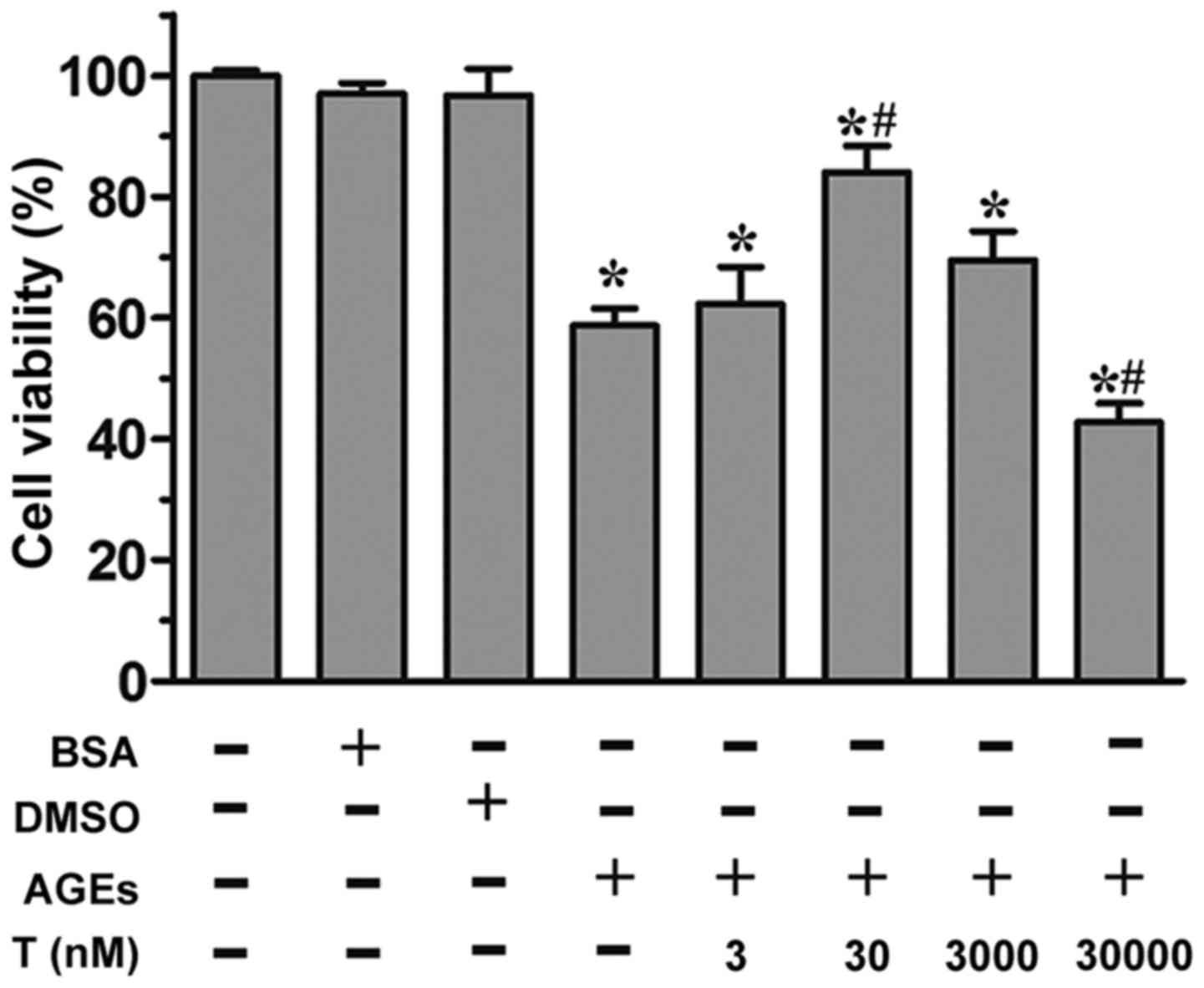
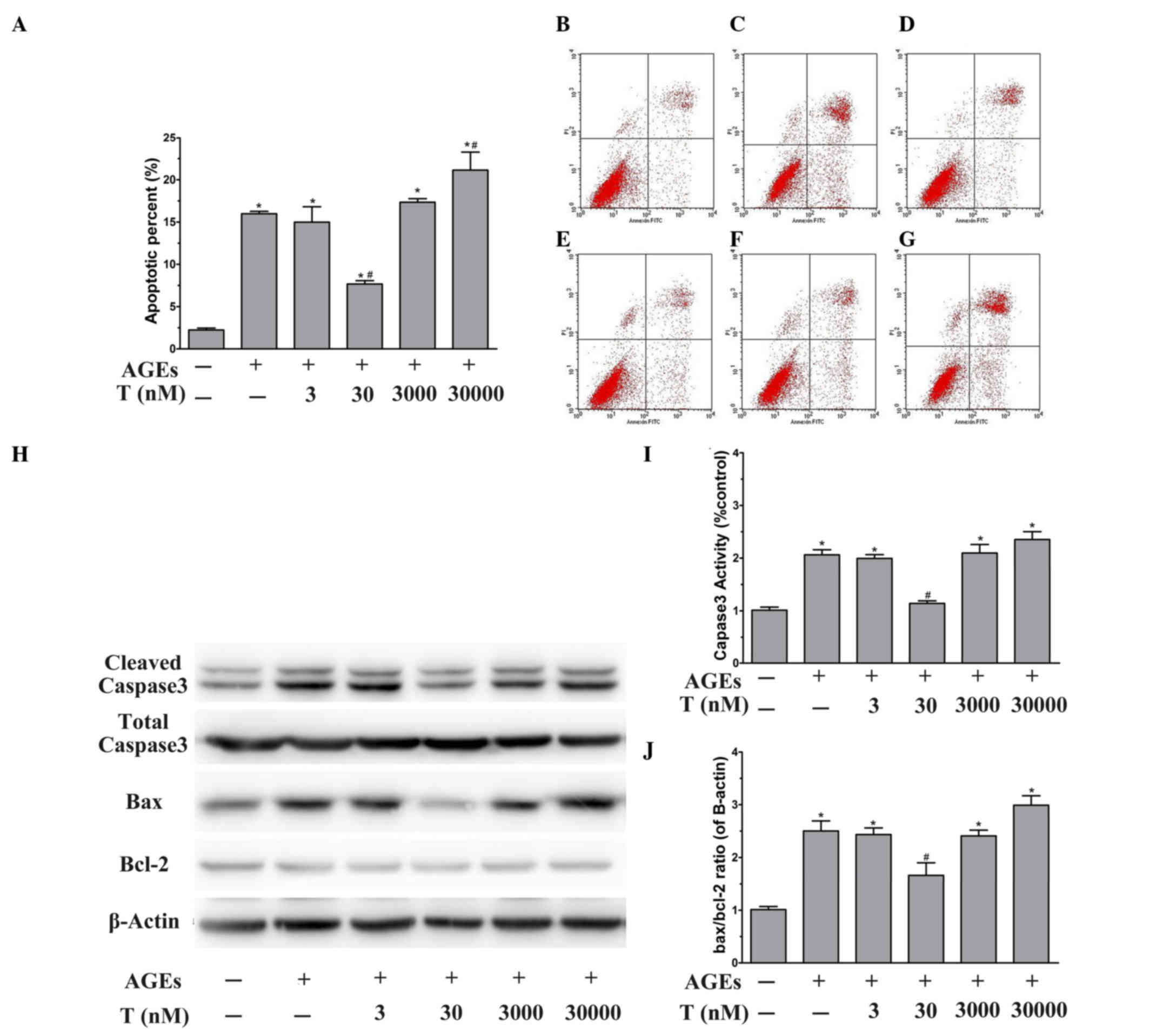
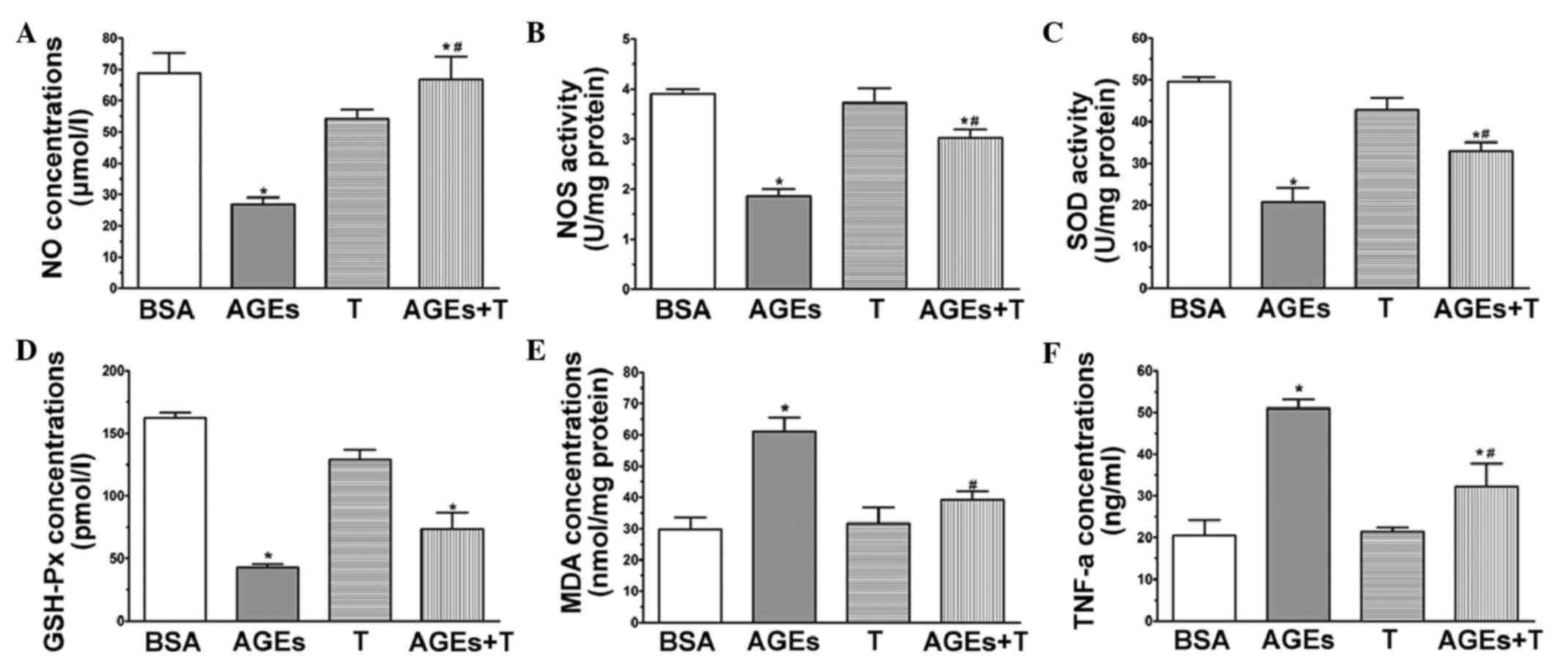
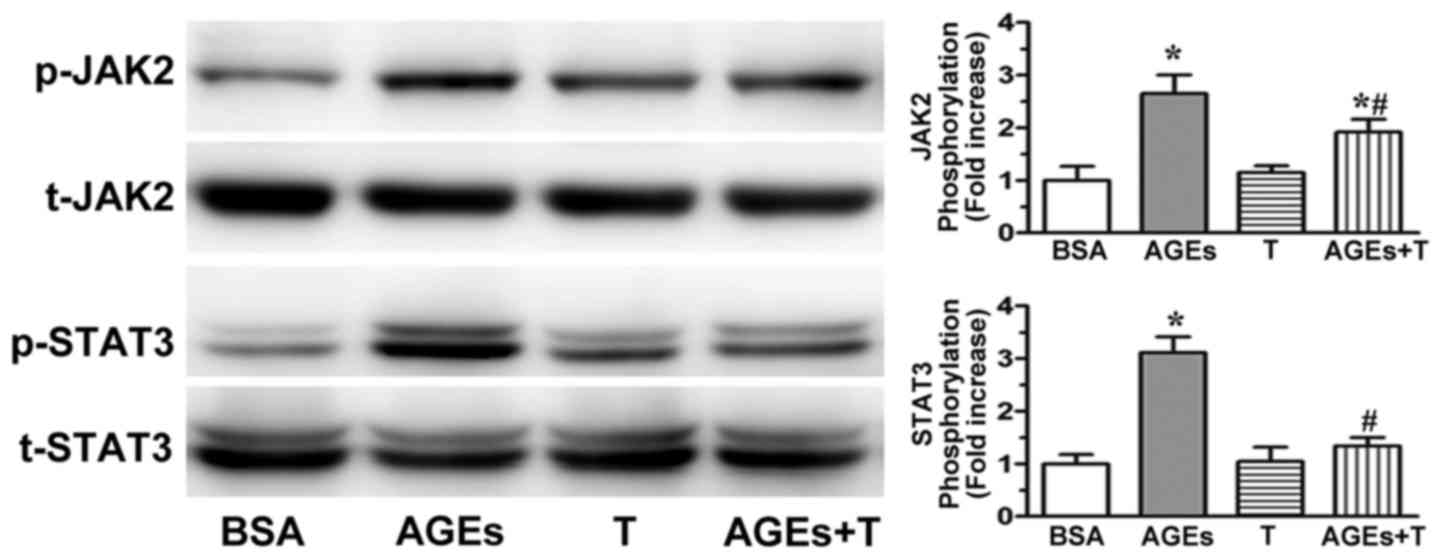
The effect of testosterone, a sex steroid, on endothelial cells is controversial as it is uncertain if it has a protective effect on them. Whether physiological testosterone can inhibit the deleterious effects of advanced glycation end products (AGEs) on endothelial cells remains to be elucidated. The present study focused on elucidating the effect of testosterone on the injury of endothelial cells induced by AGEs. Human umbilical vein endothelial cells (HUVECs) were cultured in vitro and treated with AGEs in the presence or absence of various concentrations of testosterone. The cell viability in each group was measured using an MTS assay. Early‑stage apoptosis was detected using flow cytometry with Annexin V‑fluorescein isothiocyanate/propidium iodide double staining, and the expression levels of apoptosis‑associated proteins, B cell lymphoma‑2 (Bcl‑2), Bcl‑2‑associated X protein (Bax) and caspase‑3, were determined using western blot analysis. Oxidative stress and pro‑inflammatory parameters in the medium were evaluated using an enzyme‑linked immunosorbent assay. The MTS results showed that AGEs significantly decreased the proliferation of HUVECs, whereas a physiological concentration of testosterone alleviated this damage. Physiological concentrations of testosterone protected the HUVECs from AGE‑induced apoptosis, mediated by caspase‑3 and Bax/Bcl‑2. In addition, treatment of the HUVECs with AGEs caused a significant decrease in anti‑oxidative parameters, but increased the concentrations of malondialdehyde and tumor necrosis factor‑α. The activation of Janus kinase 2 and signal transducer and activator of transcription 3 was significantly increased by incubation with AGEs. However, pre‑incubation with a physiological concentration of testosterone attenuated these changes. Therefore, the data obtained in the present study established the potential role of physiological testosterone in ameliorating AGE‑induced damage in HUVECs.
View Figures

Figure 1

Figure 2

Figure 3

Figure 4

View References

1 

Rahman S, Rahman T, Ismail AA and Rashid AR: Diabetes-associated macrovasculopathy: Pathophysiology and pathogenesis. Diabetes Obes Metab. 9:767–780. 2007. View Article : Google Scholar : PubMed/NCBI

2 

Cooper ME, Bonnet F, Oldfield M and Jandeleit-Dahm K: Mechanisms of diabetic vasculopathy: An overview. Am J Hypertens. 14:475–486. 2001. View Article : Google Scholar : PubMed/NCBI

3 

Neves D: Advanced glycation end-products: A common pathway in diabetes and age-related erectile dysfunction. Free Radic Res 47 Suppl. 1:49–69. 2013. View Article : Google Scholar

4 

Prasad A, Bekker P and Tsimikas S: Advanced glycation end products and diabetic cardiovascular disease. Cardiol Rev. 20:177–183. 2012. View Article : Google Scholar : PubMed/NCBI

5 

Basta G, Schmidt AM and De Caterina R: Advanced glycation end products and vascular inflammation: Implications for accelerated atherosclerosis in diabetes. Cardiovasc Res. 63:582–592. 2004. View Article : Google Scholar : PubMed/NCBI

6 

Goldin A, Beckman JA, Schmidt AM and Creager MA: Advanced glycation end products: Sparking the development of diabetic vascular injury. Circulation. 114:597–605. 2006. View Article : Google Scholar : PubMed/NCBI

7 

Min C, Kang E, Yu SH, Shinn SH and Kim YS: Advanced glycation end products induce apoptosis and procoagulant activity in cultured human umbilical vein endothelial cells. Diabetes Res Clin Pract. 46:197–202. 1999. View Article : Google Scholar : PubMed/NCBI

8 

Mendelsohn ME and Karas RH: The protective effects of estrogen on the cardiovascular system. N Engl J Med. 340:1801–1811. 1999. View Article : Google Scholar : PubMed/NCBI

9 

Bagatell CJ and Bremner WJ: Androgens in men-uses and abuses. N Engl J Med. 334:707–714. 1996. View Article : Google Scholar : PubMed/NCBI

10 

Sullivan ML, Martinez CM, Gennis P and Gallagher EJ: The cardiac toxicity of anabolic steroids. Prog Cardiovasc Dis. 41:1–15. 1998. View Article : Google Scholar : PubMed/NCBI

11 

Jones RD, Nettleship JE, Kapoor D, Jones HT and Channer KS: Testosterone and atherosclerosis in aging men: Purported association and clinical implications. Am J Cardiovasc Drugs. 5:141–154. 2005. View Article : Google Scholar : PubMed/NCBI

12 

Choi BG and McLaughlin MA: Why men's hearts break: Cardiovascular effects of sex steroids. Endocrinol Metab Clin North Am. 36:365–377. 2007. View Article : Google Scholar : PubMed/NCBI

13 

Smith AM, English KM, Malkin CJ, Jones RD, Jones TH and Channer KS: Testosterone does not adversely affect fibrinogen or tissue plasminogen activator (tPA) and plasminogen activator inhibitor-1 (PAI-1) levels in 46 men with chronic stable angina. Eur J Endocrinol. 152:285–291. 2005. View Article : Google Scholar : PubMed/NCBI

14 

Adams MR, Williams JK and Kaplan JR: Effects of androgens on coronary artery atherosclerosis and atherosclerosis-related impairment of vascular responsiveness. Arterioscler Thromb Vasc Biol. 15:562–570. 1995. View Article : Google Scholar : PubMed/NCBI

15 

Nathan L, Shi W, Dinh H, Mukherjee TK, Wang X, Lusis AJ and Chaudhuri G: Testosterone inhibits early atherogenesis by conversion to estradiol: Critical role of aromatase. Proc Natl Acad Sci USA. 98:3589–3593. 2001. View Article : Google Scholar : PubMed/NCBI

16 

English KM, Mandour O, Steeds RP, Diver MJ, Jones TH and Channer KS: Men with coronary artery disease have lower levels of androgens than men with normal coronary angiograms. Eur Heart J. 21:890–894. 2000. View Article : Google Scholar : PubMed/NCBI

17 

Jin H, Lin J, Fu L, Mei YF, Peng G, Tan X, Wang DM, Wang W and Li YG: Physiological testosterone stimulates tissue plasminogen activator and tissue factor pathway inhibitor and inhibits plasminogen activator inhibitor type 1 release in endothelial cells. Biochem Cell Biol. 85:246–251. 2007. View Article : Google Scholar : PubMed/NCBI

18 

Jin H, Wang DY, Mei YF, Qiu WB, Zhou Y, Wang DM, Tan XR and Li YG: Mitogen-activated protein kinases pathway is involved in physiological testosterone-induced tissue factor pathway inhibitor expression in endothelial cells. Blood Coagul Fibrinolysis. 21:420–424. 2010. View Article : Google Scholar : PubMed/NCBI

19 

Cai J, Hong Y, Weng C, Tan C, Imperato-McGinley J and Zhu YS: Androgen stimulates endothelial cell proliferation via an androgen receptor/VEGF/cyclin A-mediated mechanism. Am J Physiol Heart Circ Physiol. 300:H1210–H1221. 2011. View Article : Google Scholar : PubMed/NCBI

20 

Yu J, Akishita M, Eto M, Ogawa S, Son BK, Kato S, Ouchi Y and Okabe T: Androgen receptor-dependent activation of endothelial nitric oxide synthase in vascular endothelial cells: Role of phosphatidylinositol 3-kinase/akt pathway. Endocrinology. 151:1822–1828. 2010. View Article : Google Scholar : PubMed/NCBI

21 

Xu Y, Feng L, Wang S, Zhu Q, Zheng Z, Xiang P, He B and Tang D: Calycosin protects HUVECs from advanced glycation end products-induced macrophage infiltration. J Ethnopharmacol. 137:359–370. 2011. View Article : Google Scholar : PubMed/NCBI

22 

Zhuang X, Pang X, Zhang W, Wu W, Zhao J, Yang H and Qu W: Effects of zinc and manganese on advanced glycation end products (AGEs) formation and AGEs-mediated endothelial cell dysfunction. Life Sci. 90:131–139. 2012. View Article : Google Scholar : PubMed/NCBI

23 

Rashid G, Benchetrit S, Fishman D and Bernheim J: Effect of advanced glycation end-products on gene expression and synthesis of TNF-alpha and endothelial nitric oxide synthase by endothelial cells. Kidney Int. 66:1099–1106. 2004. View Article : Google Scholar : PubMed/NCBI

24 

Grimm S, Ott C, Horlacher M, Weber D, Hohn A and Grune T: Advanced-glycation-end-product-induced formation of immunoproteasomes: Involvement of RAGE and Jak2/STAT1. Biochem J. 448:127–139. 2012. View Article : Google Scholar : PubMed/NCBI

25 

Nedić O, Rattan SI, Grune T and Trougakos IP: Molecular effects of advanced glycation end products on cell signalling pathways, ageing and pathophysiology. Free Radic Res. 47:(Suppl 1). S28–S38. 2013. View Article : Google Scholar

26 

Rodiño-Janeiro BK, González-Peteiro M, Ucieda-Somoza R, González-Juanatey JR and Alvarez E: Glycated albumin, a precursor of advanced glycation end-products, up-regulates NADPH oxidase and enhances oxidative stress in human endothelial cells: Molecular correlate of diabetic vasculopathy. Diabetes Metab Res Rev. 26:550–558. 2010. View Article : Google Scholar : PubMed/NCBI

27 

Orasanu G and Plutzky J: The pathologic continuum of diabetic vascular disease. J Am Coll Cardiol. 53:(Suppl 5). S35–S42. 2009. View Article : Google Scholar : PubMed/NCBI

28 

Méndez JD, Xie J, Aguilar-Hernández M and Méndez-Valenzuela V: Trends in advanced glycation end products research in diabetes mellitus and its complications. Mol Cell Biochem. 341:33–41. 2010. View Article : Google Scholar : PubMed/NCBI

29 

Sang HQ, Gu JF, Yuan JR, Zhang MH, Jia XB and Feng L: The protective effect of Smilax glabra extract on advanced glycation end products-induced endothelial dysfunction in HUVECs via RAGE-ERK1/2-NF-κB pathway. J Ethnopharmacol. 155:785–795. 2014. View Article : Google Scholar : PubMed/NCBI

30 

Alexandersen P, Haarbo J, Byrjalsen I, Lawaetz H and Christiansen C: Natural androgens inhibit male atherosclerosis: A study in castrated, cholesterol-fed rabbits. Circ Res. 84:813–819. 1999. View Article : Google Scholar : PubMed/NCBI

31 

Nettleship JE, Jones TH, Channer KS and Jones RD: Physiological testosterone replacement therapy attenuates fatty streak formation and improves high-density lipoprotein cholesterol in the Tfm mouse: An effect that is independent of the classic androgen receptor. Circulation. 116:2427–2434. 2007. View Article : Google Scholar : PubMed/NCBI

32 

Hulsmans M and Holvoet P: The vicious circle between oxidative stress and inflammation in atherosclerosis. J Cell Mol Med. 14:70–78. 2010. View Article : Google Scholar : PubMed/NCBI

33 

Ho E, Galougahi Karimi K, Liu CC, Bhindi R and Figtree GA: Biological markers of oxidative stress: Applications to cardiovascular research and practice. Redox Biol. 1:483–491. 2013. View Article : Google Scholar : PubMed/NCBI

34 

Allen JD, Giordano T and Kevil CG: Nitrite and nitric oxide metabolism in peripheral artery disease. Nitric Oxide. 26:217–222. 2012. View Article : Google Scholar : PubMed/NCBI

35 

Huang JS, Guh JY, Hung WC, Yang ML, Lai YH, Chen HC and Chuang LY: Role of the Janus kinase (JAK)/signal transducters and activators of transcription (STAT) cascade in advanced glycation end-product-induced cellular mitogenesis in NRK-49F cells. Biochem J. 342:231–238. 1999. View Article : Google Scholar : PubMed/NCBI

Related Articles

  • Abstract
  • View
  • Download
  • Twitter
Copy and paste a formatted citation
Spandidos Publications style
Xie Y, Yu D, Wu J and Li L: Protective effects of physiological testosterone on advanced glycation end product‑induced injury in human endothelial cells. Mol Med Rep 15: 1165-1171, 2017.
APA
Xie, Y., Yu, D., Wu, J., & Li, L. (2017). Protective effects of physiological testosterone on advanced glycation end product‑induced injury in human endothelial cells. Molecular Medicine Reports, 15, 1165-1171. https://doi.org/10.3892/mmr.2017.6130
MLA
Xie, Y., Yu, D., Wu, J., Li, L."Protective effects of physiological testosterone on advanced glycation end product‑induced injury in human endothelial cells". Molecular Medicine Reports 15.3 (2017): 1165-1171.
Chicago
Xie, Y., Yu, D., Wu, J., Li, L."Protective effects of physiological testosterone on advanced glycation end product‑induced injury in human endothelial cells". Molecular Medicine Reports 15, no. 3 (2017): 1165-1171. https://doi.org/10.3892/mmr.2017.6130
Copy and paste a formatted citation
x
Spandidos Publications style
Xie Y, Yu D, Wu J and Li L: Protective effects of physiological testosterone on advanced glycation end product‑induced injury in human endothelial cells. Mol Med Rep 15: 1165-1171, 2017.
APA
Xie, Y., Yu, D., Wu, J., & Li, L. (2017). Protective effects of physiological testosterone on advanced glycation end product‑induced injury in human endothelial cells. Molecular Medicine Reports, 15, 1165-1171. https://doi.org/10.3892/mmr.2017.6130
MLA
Xie, Y., Yu, D., Wu, J., Li, L."Protective effects of physiological testosterone on advanced glycation end product‑induced injury in human endothelial cells". Molecular Medicine Reports 15.3 (2017): 1165-1171.
Chicago
Xie, Y., Yu, D., Wu, J., Li, L."Protective effects of physiological testosterone on advanced glycation end product‑induced injury in human endothelial cells". Molecular Medicine Reports 15, no. 3 (2017): 1165-1171. https://doi.org/10.3892/mmr.2017.6130
Follow us
  • Twitter
  • LinkedIn
  • Facebook
About
  • Spandidos Publications
  • Careers
  • Cookie Policy
  • Privacy Policy
How can we help?
  • Help
  • Live Chat
  • Contact
  • Email to our Support Team