Spandidos Publications Logo
  • About
    • About Spandidos
    • Aims and Scopes
    • Abstracting and Indexing
    • Editorial Policies
    • Reprints and Permissions
    • Job Opportunities
    • Terms and Conditions
    • Contact
  • Journals
    • All Journals
    • Oncology Letters
      • Oncology Letters
      • Information for Authors
      • Editorial Policies
      • Editorial Board
      • Aims and Scope
      • Abstracting and Indexing
      • Bibliographic Information
      • Archive
    • International Journal of Oncology
      • International Journal of Oncology
      • Information for Authors
      • Editorial Policies
      • Editorial Board
      • Aims and Scope
      • Abstracting and Indexing
      • Bibliographic Information
      • Archive
    • Molecular and Clinical Oncology
      • Molecular and Clinical Oncology
      • Information for Authors
      • Editorial Policies
      • Editorial Board
      • Aims and Scope
      • Abstracting and Indexing
      • Bibliographic Information
      • Archive
    • Experimental and Therapeutic Medicine
      • Experimental and Therapeutic Medicine
      • Information for Authors
      • Editorial Policies
      • Editorial Board
      • Aims and Scope
      • Abstracting and Indexing
      • Bibliographic Information
      • Archive
    • International Journal of Molecular Medicine
      • International Journal of Molecular Medicine
      • Information for Authors
      • Editorial Policies
      • Editorial Board
      • Aims and Scope
      • Abstracting and Indexing
      • Bibliographic Information
      • Archive
    • Biomedical Reports
      • Biomedical Reports
      • Information for Authors
      • Editorial Policies
      • Editorial Board
      • Aims and Scope
      • Abstracting and Indexing
      • Bibliographic Information
      • Archive
    • Oncology Reports
      • Oncology Reports
      • Information for Authors
      • Editorial Policies
      • Editorial Board
      • Aims and Scope
      • Abstracting and Indexing
      • Bibliographic Information
      • Archive
    • Molecular Medicine Reports
      • Molecular Medicine Reports
      • Information for Authors
      • Editorial Policies
      • Editorial Board
      • Aims and Scope
      • Abstracting and Indexing
      • Bibliographic Information
      • Archive
    • World Academy of Sciences Journal
      • World Academy of Sciences Journal
      • Information for Authors
      • Editorial Policies
      • Editorial Board
      • Aims and Scope
      • Abstracting and Indexing
      • Bibliographic Information
      • Archive
    • International Journal of Functional Nutrition
      • International Journal of Functional Nutrition
      • Information for Authors
      • Editorial Policies
      • Editorial Board
      • Aims and Scope
      • Abstracting and Indexing
      • Bibliographic Information
      • Archive
    • International Journal of Epigenetics
      • International Journal of Epigenetics
      • Information for Authors
      • Editorial Policies
      • Editorial Board
      • Aims and Scope
      • Abstracting and Indexing
      • Bibliographic Information
      • Archive
    • Medicine International
      • Medicine International
      • Information for Authors
      • Editorial Policies
      • Editorial Board
      • Aims and Scope
      • Abstracting and Indexing
      • Bibliographic Information
      • Archive
  • Articles
  • Information
    • Information for Authors
    • Information for Reviewers
    • Information for Librarians
    • Information for Advertisers
    • Conferences
  • Language Editing
Spandidos Publications Logo
  • About
    • About Spandidos
    • Aims and Scopes
    • Abstracting and Indexing
    • Editorial Policies
    • Reprints and Permissions
    • Job Opportunities
    • Terms and Conditions
    • Contact
  • Journals
    • All Journals
    • Biomedical Reports
      • Information for Authors
      • Editorial Policies
      • Editorial Board
      • Aims and Scope
      • Abstracting and Indexing
      • Bibliographic Information
      • Archive
    • Experimental and Therapeutic Medicine
      • Information for Authors
      • Editorial Policies
      • Editorial Board
      • Aims and Scope
      • Abstracting and Indexing
      • Bibliographic Information
      • Archive
    • International Journal of Epigenetics
      • Information for Authors
      • Editorial Policies
      • Editorial Board
      • Aims and Scope
      • Abstracting and Indexing
      • Bibliographic Information
      • Archive
    • International Journal of Functional Nutrition
      • Information for Authors
      • Editorial Policies
      • Editorial Board
      • Aims and Scope
      • Abstracting and Indexing
      • Bibliographic Information
      • Archive
    • International Journal of Molecular Medicine
      • Information for Authors
      • Editorial Policies
      • Editorial Board
      • Aims and Scope
      • Abstracting and Indexing
      • Bibliographic Information
      • Archive
    • International Journal of Oncology
      • Information for Authors
      • Editorial Policies
      • Editorial Board
      • Aims and Scope
      • Abstracting and Indexing
      • Bibliographic Information
      • Archive
    • Medicine International
      • Information for Authors
      • Editorial Policies
      • Editorial Board
      • Aims and Scope
      • Abstracting and Indexing
      • Bibliographic Information
      • Archive
    • Molecular and Clinical Oncology
      • Information for Authors
      • Editorial Policies
      • Editorial Board
      • Aims and Scope
      • Abstracting and Indexing
      • Bibliographic Information
      • Archive
    • Molecular Medicine Reports
      • Information for Authors
      • Editorial Policies
      • Editorial Board
      • Aims and Scope
      • Abstracting and Indexing
      • Bibliographic Information
      • Archive
    • Oncology Letters
      • Information for Authors
      • Editorial Policies
      • Editorial Board
      • Aims and Scope
      • Abstracting and Indexing
      • Bibliographic Information
      • Archive
    • Oncology Reports
      • Information for Authors
      • Editorial Policies
      • Editorial Board
      • Aims and Scope
      • Abstracting and Indexing
      • Bibliographic Information
      • Archive
    • World Academy of Sciences Journal
      • Information for Authors
      • Editorial Policies
      • Editorial Board
      • Aims and Scope
      • Abstracting and Indexing
      • Bibliographic Information
      • Archive
  • Articles
  • Information
    • For Authors
    • For Reviewers
    • For Librarians
    • For Advertisers
    • Conferences
  • Language Editing
Login Register Submit
  • This site uses cookies
  • You can change your cookie settings at any time by following the instructions in our Cookie Policy. To find out more, you may read our Privacy Policy.

    I agree
Search articles by DOI, keyword, author or affiliation
Search
Advanced Search
presentation
Molecular Medicine Reports
Join Editorial Board Propose a Special Issue
Print ISSN: 1791-2997 Online ISSN: 1791-3004
Journal Cover
March-2017 Volume 15 Issue 3

Full Size Image

Sign up for eToc alerts
Recommend to Library

Journals

International Journal of Molecular Medicine

International Journal of Molecular Medicine

International Journal of Molecular Medicine is an international journal devoted to molecular mechanisms of human disease.

International Journal of Oncology

International Journal of Oncology

International Journal of Oncology is an international journal devoted to oncology research and cancer treatment.

Molecular Medicine Reports

Molecular Medicine Reports

Covers molecular medicine topics such as pharmacology, pathology, genetics, neuroscience, infectious diseases, molecular cardiology, and molecular surgery.

Oncology Reports

Oncology Reports

Oncology Reports is an international journal devoted to fundamental and applied research in Oncology.

Experimental and Therapeutic Medicine

Experimental and Therapeutic Medicine

Experimental and Therapeutic Medicine is an international journal devoted to laboratory and clinical medicine.

Oncology Letters

Oncology Letters

Oncology Letters is an international journal devoted to Experimental and Clinical Oncology.

Biomedical Reports

Biomedical Reports

Explores a wide range of biological and medical fields, including pharmacology, genetics, microbiology, neuroscience, and molecular cardiology.

Molecular and Clinical Oncology

Molecular and Clinical Oncology

International journal addressing all aspects of oncology research, from tumorigenesis and oncogenes to chemotherapy and metastasis.

World Academy of Sciences Journal

World Academy of Sciences Journal

Multidisciplinary open-access journal spanning biochemistry, genetics, neuroscience, environmental health, and synthetic biology.

International Journal of Functional Nutrition

International Journal of Functional Nutrition

Open-access journal combining biochemistry, pharmacology, immunology, and genetics to advance health through functional nutrition.

International Journal of Epigenetics

International Journal of Epigenetics

Publishes open-access research on using epigenetics to advance understanding and treatment of human disease.

Medicine International

Medicine International

An International Open Access Journal Devoted to General Medicine.

Journal Cover
March-2017 Volume 15 Issue 3

Full Size Image

Sign up for eToc alerts
Recommend to Library

  • Article
  • Citations
    • Cite This Article
    • Download Citation
    • Create Citation Alert
    • Remove Citation Alert
    • Cited By
  • Similar Articles
    • Related Articles (in Spandidos Publications)
    • Similar Articles (Google Scholar)
    • Similar Articles (PubMed)
  • Download PDF
  • Download XML
  • View XML
Article Open Access

Moscatilin induces apoptosis of pancreatic cancer cells via reactive oxygen species and the JNK/SAPK pathway

  • Authors:
    • Lei Zhang
    • Yuan Fang
    • Xue‑Feng Xu
    • Da‑Yong Jin
  • View Affiliations / Copyright

    Affiliations: Pancreatic Cancer Group, General Surgery Department, Zhongshan Hospital, Fudan University, Shanghai 200232, P.R. China
    Copyright: © Zhang et al. This is an open access article distributed under the terms of Creative Commons Attribution License.
  • Pages: 1195-1203
    |
    Published online on: January 25, 2017
       https://doi.org/10.3892/mmr.2017.6144
  • Expand metrics +
Metrics: Total Views: 0 (Spandidos Publications: | PMC Statistics: )
Metrics: Total PDF Downloads: 0 (Spandidos Publications: | PMC Statistics: )
Cited By (CrossRef): 0 citations Loading Articles...

This article is mentioned in:


Abstract

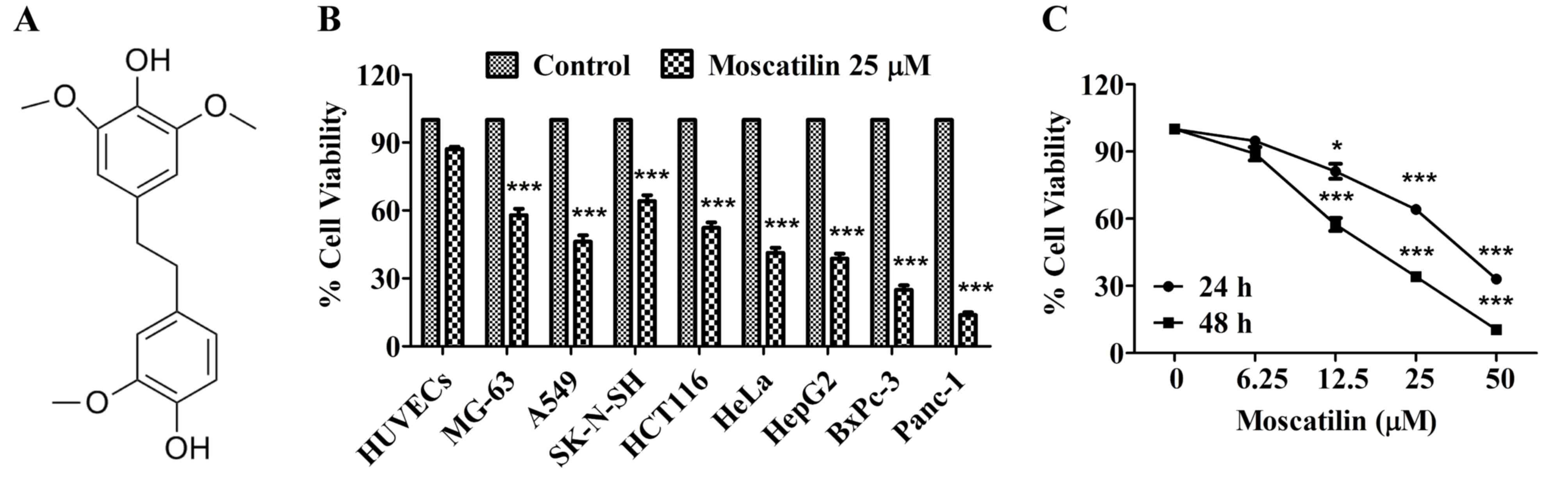
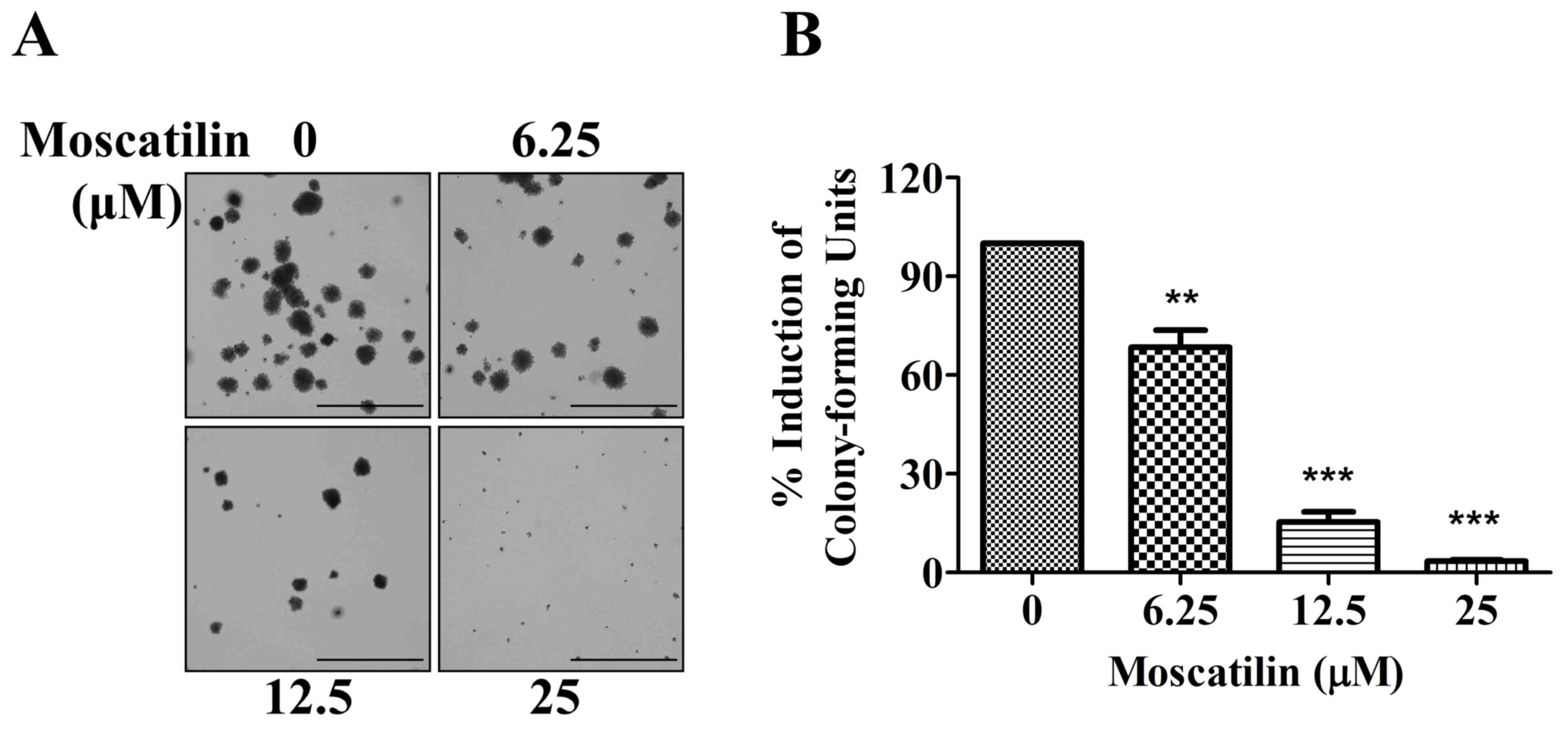
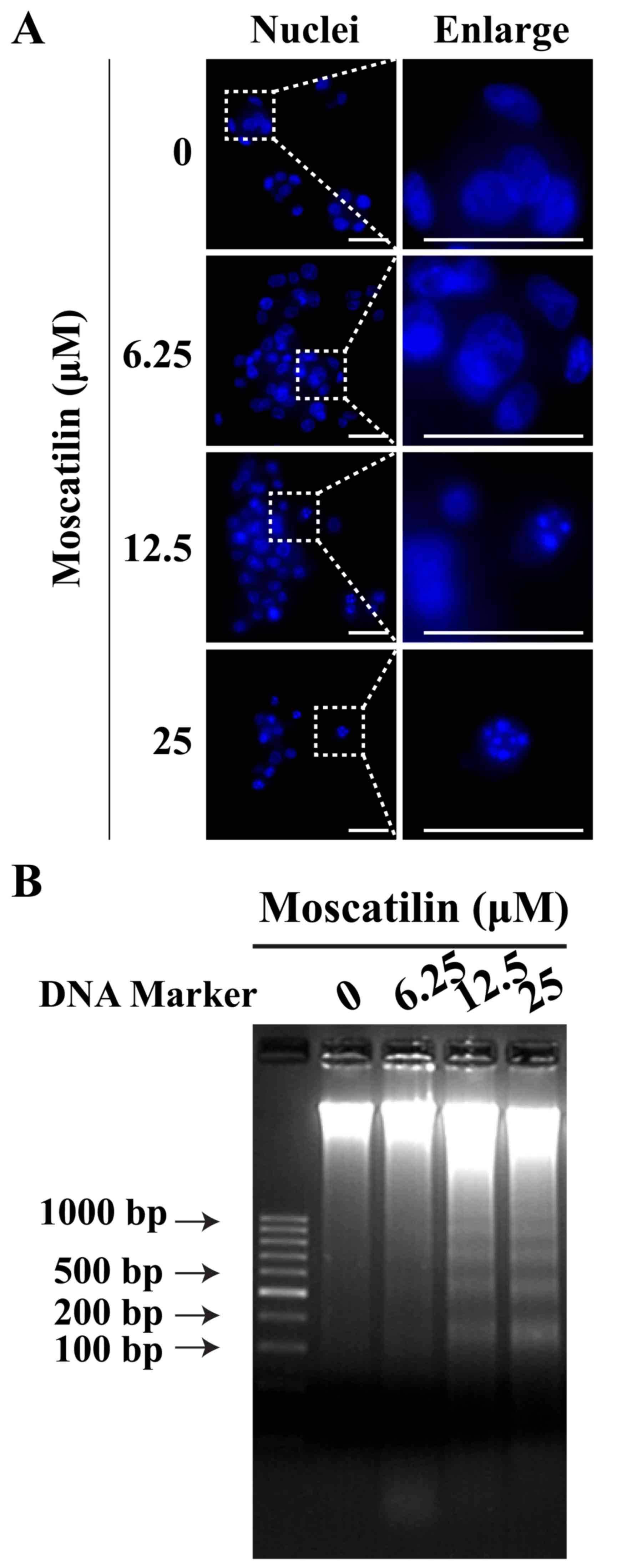
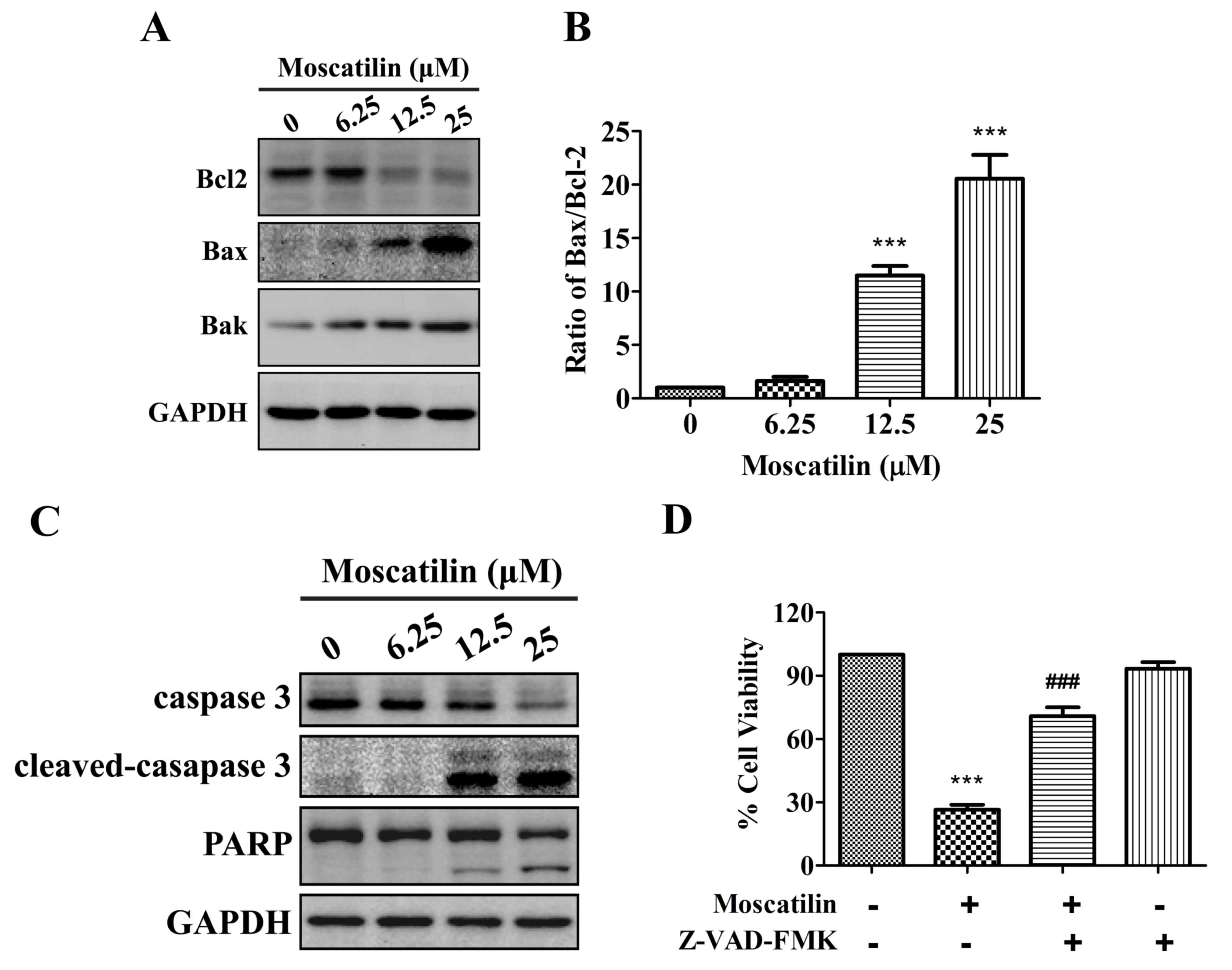
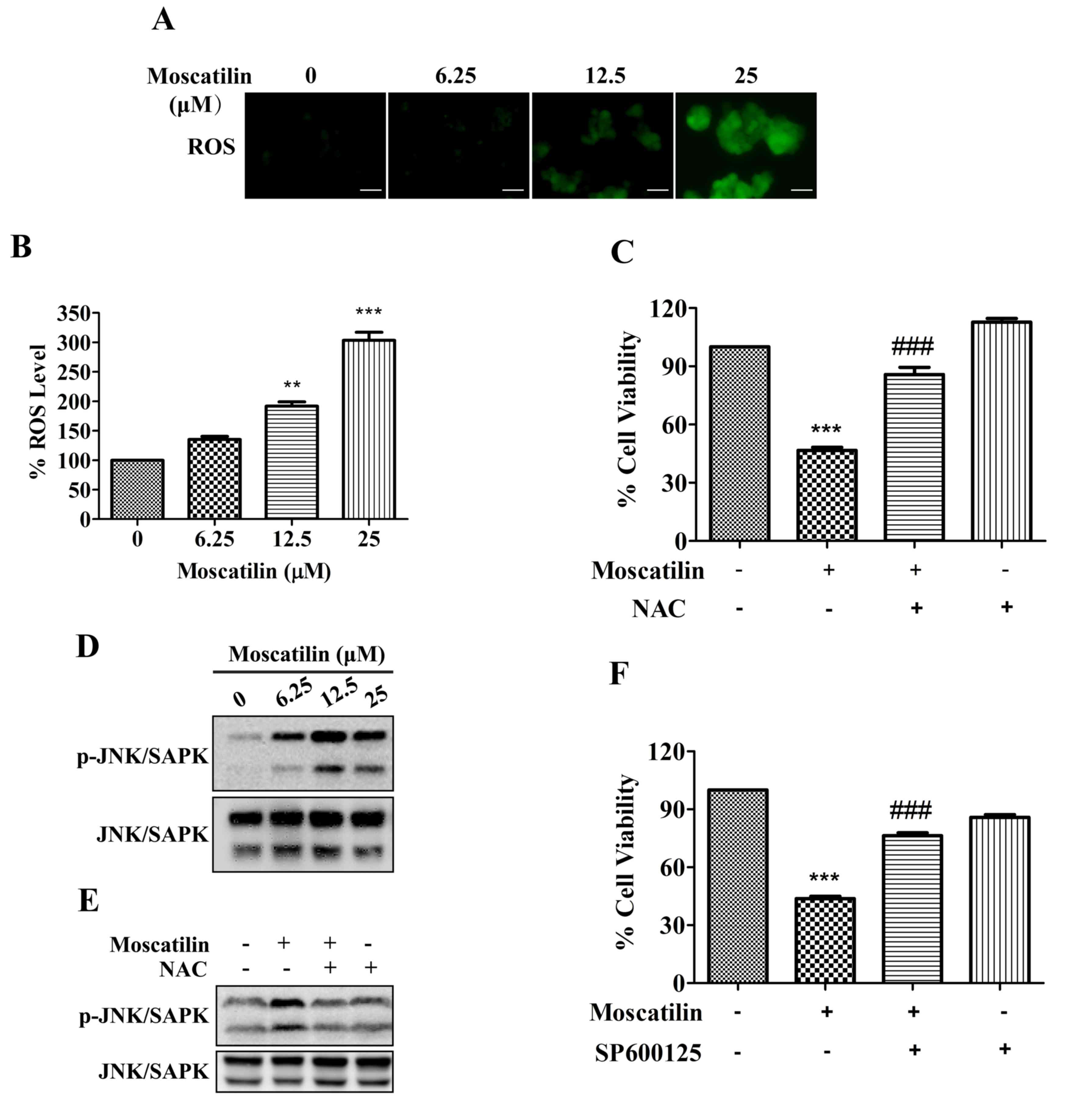
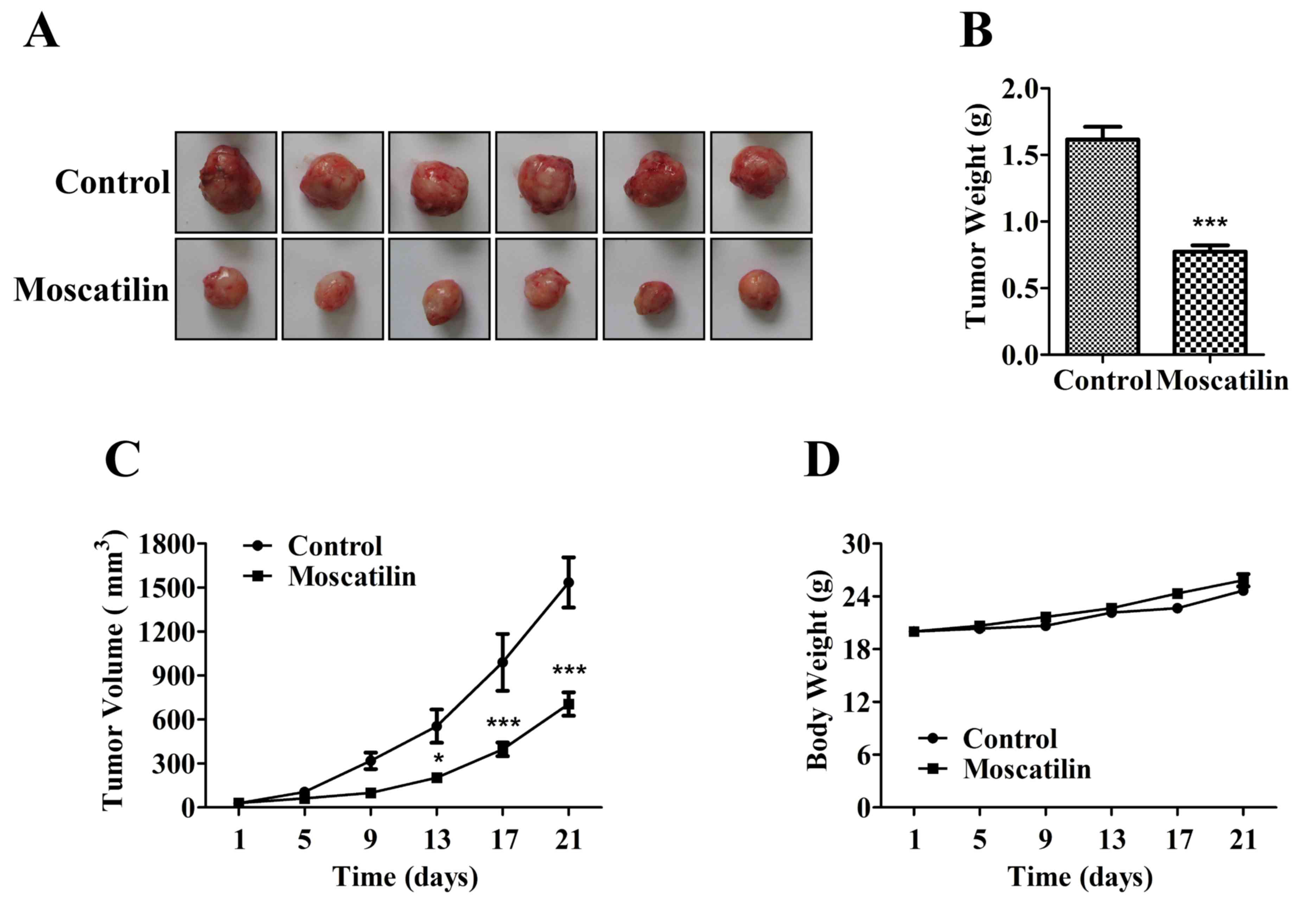
Moscatilin is a bibenzyl derivative extracted from the Dendrobium aurantiacum var. denneanum, which has traditionally been used as an immunomodulatory treatment in China. The present study was designed to determine whether moscatilin is a pro‑apoptotic agent in pancreatic cancer, and to elucidate the underlying mechanisms. The apoptotic and anti‑proliferative effects of moscatilin on pancreatic cancer cells were determined in vitro using biochemical assays, such as the MTT assay, colony formation assay, Hoechst staining and DNA fragmentation assay, and in vivo using Panc‑1 pancreatic cancer xenografts. Western blotting was also conducted to evaluate the expression levels of B‑cell lymphoma 2 (Bcl2), Bcl2‑associated X protein (Bax), Bcl2 homologous antagonist killer (Bak), caspase 3, cleaved‑caspase 3, poly (ADP‑ribose) polymerase, p‑c‑Jun N‑terminal kinase (JNK)/stress‑activated protein kinases (SAPK) and JNK/SAPK in response to moscatilin. We used DCFH‑DA to detect the production of reactive oxygen species (ROS) induced by moscatilin. The present study demonstrated that moscatilin markedly inhibited pancreatic cancer cell viability and induced cell apoptosis in a concentration‑dependent manner. Conversely, moscatilin did not affect the cell viability of human umbilical vein endothelial cells at the comparable dosage. Treatment with moscatilin suppressed clonogenicity of Panc‑1 cells in a concentration‑dependent manner. Furthermore, a decrease in Bcl2 expression, and an increase in the expression levels of Bak and Bax, was detected following treatment with moscatilin, resulting in an increase in the proapoptotic/anti‑apoptotic expression ratio (Bax/Bcl2) in Panc‑1 cells. Moscatilin also induced activation of the caspase‑dependent mitochondrial apoptotic pathway. In addition, moscatilin enhanced cellular ROS production and induced activation of JNKSAPK signaling pathway. Conversely, pretreatment with the ROS scavenger N‑acetylcysteine or the JNK/SAPK‑specific inhibitor SP600125 prevented moscatilin‑mediated reductions in cell viability. Furthermore, moscatilin inhibited tumor growth in nude mice bearing Panc‑1 cells, without apparent toxicity. In conclusion, these results demonstrated that moscatilin may induce pancreatic cell apoptosis, and therefore may be considered a potential therapeutic agent for the treatment of pancreatic cancer.
View Figures

Figure 1

Figure 2

Figure 3

Figure 4

Figure 5

Figure 6

View References

1 

Rahib L, Smith BD, Aizenber R, Rosenzweig AB, Fleshman JM and Matrisian LM: Projecting cancer incidence and deaths to 2030: The unexpected burden of thyroid, liver, and pancreas cancers in the United States. Cancer Res. 74:2913–2921. 2014. View Article : Google Scholar : PubMed/NCBI

2 

Wolfgang CL, Herman JM, Laheru DA, Klein AP, Erdek MA, Fishman EK and Hruban RH: Recent progress in pancreatic cancer. CA Cancer J Clin. 63:318–348. 2013. View Article : Google Scholar : PubMed/NCBI

3 

Paulson AS, Cao Tran HS, Tempero MA and Lowy AM: Therapeutic advances in pancreatic cancer. Gasroenterology. 144:1316–1326. 2013. View Article : Google Scholar

4 

Siegel R, Ma J, Zou Z and Jemal A: Cancer statistics, 2014. CA Cancer J Clin. 64:9–29. 2014. View Article : Google Scholar : PubMed/NCBI

5 

Liou GY and Storz P: Reactive oxygen species in cancer. Free Radic Res. 44:479–496. 2010. View Article : Google Scholar : PubMed/NCBI

6 

Alexandre J, Hu Y, Lu W, Pelicano H and Huang P: Novel action of paclitaxel against cancer cells: Bystander effect mediated by reactive oxygen species. Cancer Res. 67:3512–3517. 2007. View Article : Google Scholar : PubMed/NCBI

7 

Paduch R, Kandefer-Szerszeń M and Piersiak T: The important of release of proinflammatory cytokines, ROS, and NO in different stages of colon carcinoma growth and metastasis after treatment with cytotoxic drugs. Oncol Res. 18:419–436. 2010. View Article : Google Scholar : PubMed/NCBI

8 

Groninger E, Meeuwsen-De Boer GJ, De Graaf SS, Kamps WA and De Bont ES: Vincristine induced apoptosis in acute lymphoblastic leukaemia cells: A mitochondrial controlled pathway regulated by reactive oxygen species? Int J Oncol. 21:1339–1345. 2002.PubMed/NCBI

9 

Zhang X, Xu JK, Wang J, Wang NL, Kuriihara H, Kitanaka S and Yao XS: Bioactive bibenzyl derivatives and fluorenones from Dendrobium nobile. J Nat Prod. 70:24–28. 2007. View Article : Google Scholar : PubMed/NCBI

10 

Chen CC, Wu LG, Ko FN and Teng CM: Antiplatelet aggregation principles of Dendrobium loddigesii. J Nat Prod. 57:1271–1274. 1994. View Article : Google Scholar : PubMed/NCBI

11 

Hu JM, Chen JJ, Yu H, Zhao YX and Zhou J: Two novel bibenzyls from Dendrobium trigonopus. J Asian Nat Prod Res. 10:653–657. 2008. View Article : Google Scholar : PubMed/NCBI

12 

Gong Y, Fan Y, Liu L, Wu D, Chang Z and Wang Z: Erianin induces a JNK/SAPK-dependent metabolic inhibition in human umbilical vein endothelial cells. In Vivo. 18:223–228. 2004.PubMed/NCBI

13 

Gong YQ, Fan Y, Wu DZ, Yang H, Hu ZB and Wang ZT: In vivo and in vitro evaluation of erianin, a novel anti-angiogenic agent. Eur J Cancer. 40:1554–1565. 2004. View Article : Google Scholar : PubMed/NCBI

14 

Pengpaeng P, Sritularak B and Chanvorachote P: Dendrofalconerol A suppresses migrating cancer cells via EMT and integrin proteins. Anticancer Res. 35:201–205. 2015.PubMed/NCBI

15 

Charoenrungruang S, Chanvorachote P, Sritularak B and Pongrakhananon V: Gigantl, a bibenzyl from Dendrobium draconis, inhibits the migratory behavior of non-small cell lung cancer cells. J Nat Prod. 77:1359–1366. 2014. View Article : Google Scholar : PubMed/NCBI

16 

Chen CA, Chen CC, Shen CC, Chang HH and Chen YJ: Moscatilin induces apoptosis and mitotic catastrophe in human esophageal cancer cells. J Med Food. 16:869–877. 2013. View Article : Google Scholar : PubMed/NCBI

17 

Pai HC, Chang LH, Peng CY, Chang YL, Chen CC, Shen CC, Teng CM and Pan SL: Moscatilin inhibits migration and metastasis of human breast cancer MDA-MB-231 cells through inhibition of Akt and Twist signaling pathway. J Mol Med (Berl). 91:347–356. 2013. View Article : Google Scholar : PubMed/NCBI

18 

Kowitdamrong A, Chanvorachote P, Sritularak B and Pongrakhananon V: Moscatilin inhibits lung cancer cell motility and invasion via suppression of endogenous reactive oxygen species. Biomed Res Int. 2013:7658942013. View Article : Google Scholar : PubMed/NCBI

19 

Tsai AC, Pan SL, Liao CH, Guh JH, Wang SW, Sun HL, Liu YN, Chen CC, Shen CC, Chang YL and Teng CM: Moscatilin, a bibenzyl derivative from the India orchid Dendrobium loddigesii, suppresses tumor angiogenesis and growth in vitro and in vivo. Cancer Lett. 292:163–170. 2010. View Article : Google Scholar : PubMed/NCBI

20 

Yang L, Wang Y, Zhang G, Zhang F, Zhang Z, Wang Z and Xu L: Stimulaneous quantitative and qualitative analysis of bioactive phenols in Dendrobium aurantiacum var. Denneanum by high-performance liquid chromatography coupled with mass spectrometry and diode array detection. Biomed Chromatogr. 21:687–694. 2007. View Article : Google Scholar : PubMed/NCBI

21 

Marin V, Kaplanski G, Grès S, Farnarier C and Bongrand P: Endothelial cell culture: Protocol to obtain and cultivate human umbilical endothelial cells. J Immunol Methods. 254:183–190. 2001. View Article : Google Scholar : PubMed/NCBI

22 

Jo GH, Kim GY, Kim WJ, Park KY and Choi YH: Sulforaphane induces apoptosis in T24 human urinary bladder cancer cells through a reactive oxygen species-mediated mitochondrial pathway: The involvement of endoplasmic reticulum stress and the Nrf2 signaling pathway. Int J Oncol. 45:1497–1506. 2014.PubMed/NCBI

23 

Kello M, Drutovic D, Chripkova M, Pilatova M, Budovska M, Kulikova L, Urdzik P and Mojzis J: ROS-dependent antiproliferative effect of brassinin derivative homobrassinin in human colorectal cancer Caco2 cells. Molecules. 19:10877–10897. 2014. View Article : Google Scholar : PubMed/NCBI

24 

Vriz S, Reiter S and Galliot B: Cell death: A program to regenerate. Curr Top Dev Biol. 108:121–151. 2014. View Article : Google Scholar : PubMed/NCBI

25 

Li MX and Dewson G: Mitochondria and apoptosis: Emerging concepts. F1000Prime Rep. 7:422015.PubMed/NCBI

26 

Solary E, Dubrez L and Eymin B: The role of apoptosis in the pathogenesis and treatment of diseases. Eur Respir J. 9:1293–1305. 1996. View Article : Google Scholar : PubMed/NCBI

27 

Suliman A, Lam A, Datta R and Srivastava RK: Intracellular mechanisms of TRAIL: Apoptosis through mitochondrial-dependent and independent-pathways. Oncogene. 20:2122–2133. 2001. View Article : Google Scholar : PubMed/NCBI

28 

Vaux DL, Cory S and Adams JM: Bcl-2 gene promotes haemopoietic cell survival and cooperates with c-myc to immortalize pre-B cells. Nature. 335:440–442. 1988. View Article : Google Scholar : PubMed/NCBI

29 

Czabotar PE, Lessene G, Strasser A and Adams JM: Control of apoptosis by the BCL-2 protein family: Implications for physiology and therapy. Nat Rev Mol Cell Biol. 15:49–63. 2014. View Article : Google Scholar : PubMed/NCBI

30 

Tong LY, Chuang CC, Wu S and Zuo L: Reactive oxygen species in redox cancer therapy. Cancer Lett. 367:18–25. 2015. View Article : Google Scholar : PubMed/NCBI

31 

Surbramani R, Gonzalez E, Arumugam A, Nandy S, Gonzalez V, Medel J, Camacho F, Ortega A, Bonkoungou S, Narayan M, et al: Nimbolide inhibits pancreatic cancer growth and metastasis through ROS-mediated apoptosis and inhibition of epithelial-mesenchymal transition. Sci Rep. 6:198192016. View Article : Google Scholar : PubMed/NCBI

32 

Tian X, Dai S, Sun J, Jiang S, Sui C, Meng F, Li Y, Fu L, Jiang T, Wang Y, et al: Bufalin induces mitochondrial-dependent apoptosis in pancreatic and oral cancer cells by downregulating hTERT expression via activation of the JNK/p38 pathway. Evid Based Complement Alternat Med. 2015:5462102015. View Article : Google Scholar : PubMed/NCBI

33 

Lei YY, Wang WJ, Mei JH and Wang CL: Mitogen-activated protein kinase signal transduction in solid tumors. Asian Pac J Cancer Prev. 15:8539–8548. 2014. View Article : Google Scholar : PubMed/NCBI

34 

Pearson G, Robinson F, Gibson Beers T, Xu BE, Karandikar M, Berman K and Cobb MH: Mitogen-activated protein (MAP) kinase pathways: Regulation and physiological functions. Endocr Rev. 22:153–183. 2001. View Article : Google Scholar : PubMed/NCBI

35 

Perugini RA, McDade TP, Vittimeberga FJ Jr and Callery MP: Pancreatic cancer cell proliferation is phosphatidylinositol 3-kinase dependent. J Surg Res. 90:39–44. 2000. View Article : Google Scholar : PubMed/NCBI

36 

Tournier C: The 2 faces of JNK signaling in cancer. Genes Cancer. 4:397–400. 2013. View Article : Google Scholar : PubMed/NCBI

37 

Takahashi R, Hirata Y, Sakitani K, Nakata W, Kinoshita H, Hayakawa Y, Nakagawa H, Sakamoto K, Hikiba Y, Ijichi H, et al: Theraputic effect of c-Jun N-terminal kinase inhibition on pancreatic cancer. Cancer Sci. 104:337–344. 2013. View Article : Google Scholar : PubMed/NCBI

38 

Jia G, Kong R, Ma ZB, Han B, Wang YW, Pan SH, Li YH and Sun B: The activation of c-Jun NH2-terminal kinase is required for dihydroartemisinin-induced autophagy in pancreatic cancer cells. J Exp Clin Cancer Res. 33:82014. View Article : Google Scholar : PubMed/NCBI

39 

Li J, Liang X and Yang X: Ursolic acid inhibits growth and induces apoptosis in gemcitabine-resistant human pancreatic cancer via the JNK and PI3K/Akt/NF-kB pathways. Oncol Rep. 28:501–510. 2012.PubMed/NCBI

Related Articles

  • Abstract
  • View
  • Download
  • Twitter
Copy and paste a formatted citation
Spandidos Publications style
Zhang L, Fang Y, Xu XF and Jin DY: Moscatilin induces apoptosis of pancreatic cancer cells via reactive oxygen species and the JNK/SAPK pathway. Mol Med Rep 15: 1195-1203, 2017.
APA
Zhang, L., Fang, Y., Xu, X., & Jin, D. (2017). Moscatilin induces apoptosis of pancreatic cancer cells via reactive oxygen species and the JNK/SAPK pathway. Molecular Medicine Reports, 15, 1195-1203. https://doi.org/10.3892/mmr.2017.6144
MLA
Zhang, L., Fang, Y., Xu, X., Jin, D."Moscatilin induces apoptosis of pancreatic cancer cells via reactive oxygen species and the JNK/SAPK pathway". Molecular Medicine Reports 15.3 (2017): 1195-1203.
Chicago
Zhang, L., Fang, Y., Xu, X., Jin, D."Moscatilin induces apoptosis of pancreatic cancer cells via reactive oxygen species and the JNK/SAPK pathway". Molecular Medicine Reports 15, no. 3 (2017): 1195-1203. https://doi.org/10.3892/mmr.2017.6144
Copy and paste a formatted citation
x
Spandidos Publications style
Zhang L, Fang Y, Xu XF and Jin DY: Moscatilin induces apoptosis of pancreatic cancer cells via reactive oxygen species and the JNK/SAPK pathway. Mol Med Rep 15: 1195-1203, 2017.
APA
Zhang, L., Fang, Y., Xu, X., & Jin, D. (2017). Moscatilin induces apoptosis of pancreatic cancer cells via reactive oxygen species and the JNK/SAPK pathway. Molecular Medicine Reports, 15, 1195-1203. https://doi.org/10.3892/mmr.2017.6144
MLA
Zhang, L., Fang, Y., Xu, X., Jin, D."Moscatilin induces apoptosis of pancreatic cancer cells via reactive oxygen species and the JNK/SAPK pathway". Molecular Medicine Reports 15.3 (2017): 1195-1203.
Chicago
Zhang, L., Fang, Y., Xu, X., Jin, D."Moscatilin induces apoptosis of pancreatic cancer cells via reactive oxygen species and the JNK/SAPK pathway". Molecular Medicine Reports 15, no. 3 (2017): 1195-1203. https://doi.org/10.3892/mmr.2017.6144
Follow us
  • Twitter
  • LinkedIn
  • Facebook
About
  • Spandidos Publications
  • Careers
  • Cookie Policy
  • Privacy Policy
How can we help?
  • Help
  • Live Chat
  • Contact
  • Email to our Support Team