Spandidos Publications Logo
  • About
    • About Spandidos
    • Aims and Scopes
    • Abstracting and Indexing
    • Editorial Policies
    • Reprints and Permissions
    • Job Opportunities
    • Terms and Conditions
    • Contact
  • Journals
    • All Journals
    • Oncology Letters
      • Oncology Letters
      • Information for Authors
      • Editorial Policies
      • Editorial Board
      • Aims and Scope
      • Abstracting and Indexing
      • Bibliographic Information
      • Archive
    • International Journal of Oncology
      • International Journal of Oncology
      • Information for Authors
      • Editorial Policies
      • Editorial Board
      • Aims and Scope
      • Abstracting and Indexing
      • Bibliographic Information
      • Archive
    • Molecular and Clinical Oncology
      • Molecular and Clinical Oncology
      • Information for Authors
      • Editorial Policies
      • Editorial Board
      • Aims and Scope
      • Abstracting and Indexing
      • Bibliographic Information
      • Archive
    • Experimental and Therapeutic Medicine
      • Experimental and Therapeutic Medicine
      • Information for Authors
      • Editorial Policies
      • Editorial Board
      • Aims and Scope
      • Abstracting and Indexing
      • Bibliographic Information
      • Archive
    • International Journal of Molecular Medicine
      • International Journal of Molecular Medicine
      • Information for Authors
      • Editorial Policies
      • Editorial Board
      • Aims and Scope
      • Abstracting and Indexing
      • Bibliographic Information
      • Archive
    • Biomedical Reports
      • Biomedical Reports
      • Information for Authors
      • Editorial Policies
      • Editorial Board
      • Aims and Scope
      • Abstracting and Indexing
      • Bibliographic Information
      • Archive
    • Oncology Reports
      • Oncology Reports
      • Information for Authors
      • Editorial Policies
      • Editorial Board
      • Aims and Scope
      • Abstracting and Indexing
      • Bibliographic Information
      • Archive
    • Molecular Medicine Reports
      • Molecular Medicine Reports
      • Information for Authors
      • Editorial Policies
      • Editorial Board
      • Aims and Scope
      • Abstracting and Indexing
      • Bibliographic Information
      • Archive
    • World Academy of Sciences Journal
      • World Academy of Sciences Journal
      • Information for Authors
      • Editorial Policies
      • Editorial Board
      • Aims and Scope
      • Abstracting and Indexing
      • Bibliographic Information
      • Archive
    • International Journal of Functional Nutrition
      • International Journal of Functional Nutrition
      • Information for Authors
      • Editorial Policies
      • Editorial Board
      • Aims and Scope
      • Abstracting and Indexing
      • Bibliographic Information
      • Archive
    • International Journal of Epigenetics
      • International Journal of Epigenetics
      • Information for Authors
      • Editorial Policies
      • Editorial Board
      • Aims and Scope
      • Abstracting and Indexing
      • Bibliographic Information
      • Archive
    • Medicine International
      • Medicine International
      • Information for Authors
      • Editorial Policies
      • Editorial Board
      • Aims and Scope
      • Abstracting and Indexing
      • Bibliographic Information
      • Archive
  • Articles
  • Information
    • Information for Authors
    • Information for Reviewers
    • Information for Librarians
    • Information for Advertisers
    • Conferences
  • Language Editing
Spandidos Publications Logo
  • About
    • About Spandidos
    • Aims and Scopes
    • Abstracting and Indexing
    • Editorial Policies
    • Reprints and Permissions
    • Job Opportunities
    • Terms and Conditions
    • Contact
  • Journals
    • All Journals
    • Biomedical Reports
      • Information for Authors
      • Editorial Policies
      • Editorial Board
      • Aims and Scope
      • Abstracting and Indexing
      • Bibliographic Information
      • Archive
    • Experimental and Therapeutic Medicine
      • Information for Authors
      • Editorial Policies
      • Editorial Board
      • Aims and Scope
      • Abstracting and Indexing
      • Bibliographic Information
      • Archive
    • International Journal of Epigenetics
      • Information for Authors
      • Editorial Policies
      • Editorial Board
      • Aims and Scope
      • Abstracting and Indexing
      • Bibliographic Information
      • Archive
    • International Journal of Functional Nutrition
      • Information for Authors
      • Editorial Policies
      • Editorial Board
      • Aims and Scope
      • Abstracting and Indexing
      • Bibliographic Information
      • Archive
    • International Journal of Molecular Medicine
      • Information for Authors
      • Editorial Policies
      • Editorial Board
      • Aims and Scope
      • Abstracting and Indexing
      • Bibliographic Information
      • Archive
    • International Journal of Oncology
      • Information for Authors
      • Editorial Policies
      • Editorial Board
      • Aims and Scope
      • Abstracting and Indexing
      • Bibliographic Information
      • Archive
    • Medicine International
      • Information for Authors
      • Editorial Policies
      • Editorial Board
      • Aims and Scope
      • Abstracting and Indexing
      • Bibliographic Information
      • Archive
    • Molecular and Clinical Oncology
      • Information for Authors
      • Editorial Policies
      • Editorial Board
      • Aims and Scope
      • Abstracting and Indexing
      • Bibliographic Information
      • Archive
    • Molecular Medicine Reports
      • Information for Authors
      • Editorial Policies
      • Editorial Board
      • Aims and Scope
      • Abstracting and Indexing
      • Bibliographic Information
      • Archive
    • Oncology Letters
      • Information for Authors
      • Editorial Policies
      • Editorial Board
      • Aims and Scope
      • Abstracting and Indexing
      • Bibliographic Information
      • Archive
    • Oncology Reports
      • Information for Authors
      • Editorial Policies
      • Editorial Board
      • Aims and Scope
      • Abstracting and Indexing
      • Bibliographic Information
      • Archive
    • World Academy of Sciences Journal
      • Information for Authors
      • Editorial Policies
      • Editorial Board
      • Aims and Scope
      • Abstracting and Indexing
      • Bibliographic Information
      • Archive
  • Articles
  • Information
    • For Authors
    • For Reviewers
    • For Librarians
    • For Advertisers
    • Conferences
  • Language Editing
Login Register Submit
  • This site uses cookies
  • You can change your cookie settings at any time by following the instructions in our Cookie Policy. To find out more, you may read our Privacy Policy.

    I agree
Search articles by DOI, keyword, author or affiliation
Search
Advanced Search
presentation
Molecular Medicine Reports
Join Editorial Board Propose a Special Issue
Print ISSN: 1791-2997 Online ISSN: 1791-3004
Journal Cover
April-2017 Volume 15 Issue 4

Full Size Image

Sign up for eToc alerts
Recommend to Library

Journals

International Journal of Molecular Medicine

International Journal of Molecular Medicine

International Journal of Molecular Medicine is an international journal devoted to molecular mechanisms of human disease.

International Journal of Oncology

International Journal of Oncology

International Journal of Oncology is an international journal devoted to oncology research and cancer treatment.

Molecular Medicine Reports

Molecular Medicine Reports

Covers molecular medicine topics such as pharmacology, pathology, genetics, neuroscience, infectious diseases, molecular cardiology, and molecular surgery.

Oncology Reports

Oncology Reports

Oncology Reports is an international journal devoted to fundamental and applied research in Oncology.

Experimental and Therapeutic Medicine

Experimental and Therapeutic Medicine

Experimental and Therapeutic Medicine is an international journal devoted to laboratory and clinical medicine.

Oncology Letters

Oncology Letters

Oncology Letters is an international journal devoted to Experimental and Clinical Oncology.

Biomedical Reports

Biomedical Reports

Explores a wide range of biological and medical fields, including pharmacology, genetics, microbiology, neuroscience, and molecular cardiology.

Molecular and Clinical Oncology

Molecular and Clinical Oncology

International journal addressing all aspects of oncology research, from tumorigenesis and oncogenes to chemotherapy and metastasis.

World Academy of Sciences Journal

World Academy of Sciences Journal

Multidisciplinary open-access journal spanning biochemistry, genetics, neuroscience, environmental health, and synthetic biology.

International Journal of Functional Nutrition

International Journal of Functional Nutrition

Open-access journal combining biochemistry, pharmacology, immunology, and genetics to advance health through functional nutrition.

International Journal of Epigenetics

International Journal of Epigenetics

Publishes open-access research on using epigenetics to advance understanding and treatment of human disease.

Medicine International

Medicine International

An International Open Access Journal Devoted to General Medicine.

Journal Cover
April-2017 Volume 15 Issue 4

Full Size Image

Sign up for eToc alerts
Recommend to Library

  • Article
  • Citations
    • Cite This Article
    • Download Citation
    • Create Citation Alert
    • Remove Citation Alert
    • Cited By
  • Similar Articles
    • Related Articles (in Spandidos Publications)
    • Similar Articles (Google Scholar)
    • Similar Articles (PubMed)
  • Download PDF
  • Download XML
  • View XML
Article

The expression and significance of HOX transcript antisense RNA and epithelial-mesenchymal transition-related factors in esophageal squamous cell carcinoma

  • Authors:
    • Chunli Da
    • Yiyi Zhan
    • Yu Li
    • Yao Tan
    • Ruiguang Li
    • Ruozheng Wang
  • View Affiliations / Copyright

    Affiliations: Department of Radiotherapy for Head and Neck, Tumor Hospital of Xinjiang Medical University, Urumqi, Xinjiang 830000, P.R. China, Department of Chemotherapy for Lung Cancer, Tumor Hospital of Xinjiang Medical University, Urumqi, Xinjiang 830000, P.R. China, Department of Gerontology, Tumor Hospital of Xinjiang Medical University, Urumqi, Xinjiang 830000, P.R. China, Endoscopic Diagnosis and Treatment Center, Tumor Hospital of Xinjiang Medical University, Urumqi, Xinjiang 830000, P.R. China
  • Pages: 1853-1862
    |
    Published online on: February 16, 2017
       https://doi.org/10.3892/mmr.2017.6210
  • Expand metrics +
Metrics: Total Views: 0 (Spandidos Publications: | PMC Statistics: )
Metrics: Total PDF Downloads: 0 (Spandidos Publications: | PMC Statistics: )
Cited By (CrossRef): 0 citations Loading Articles...

This article is mentioned in:


Abstract

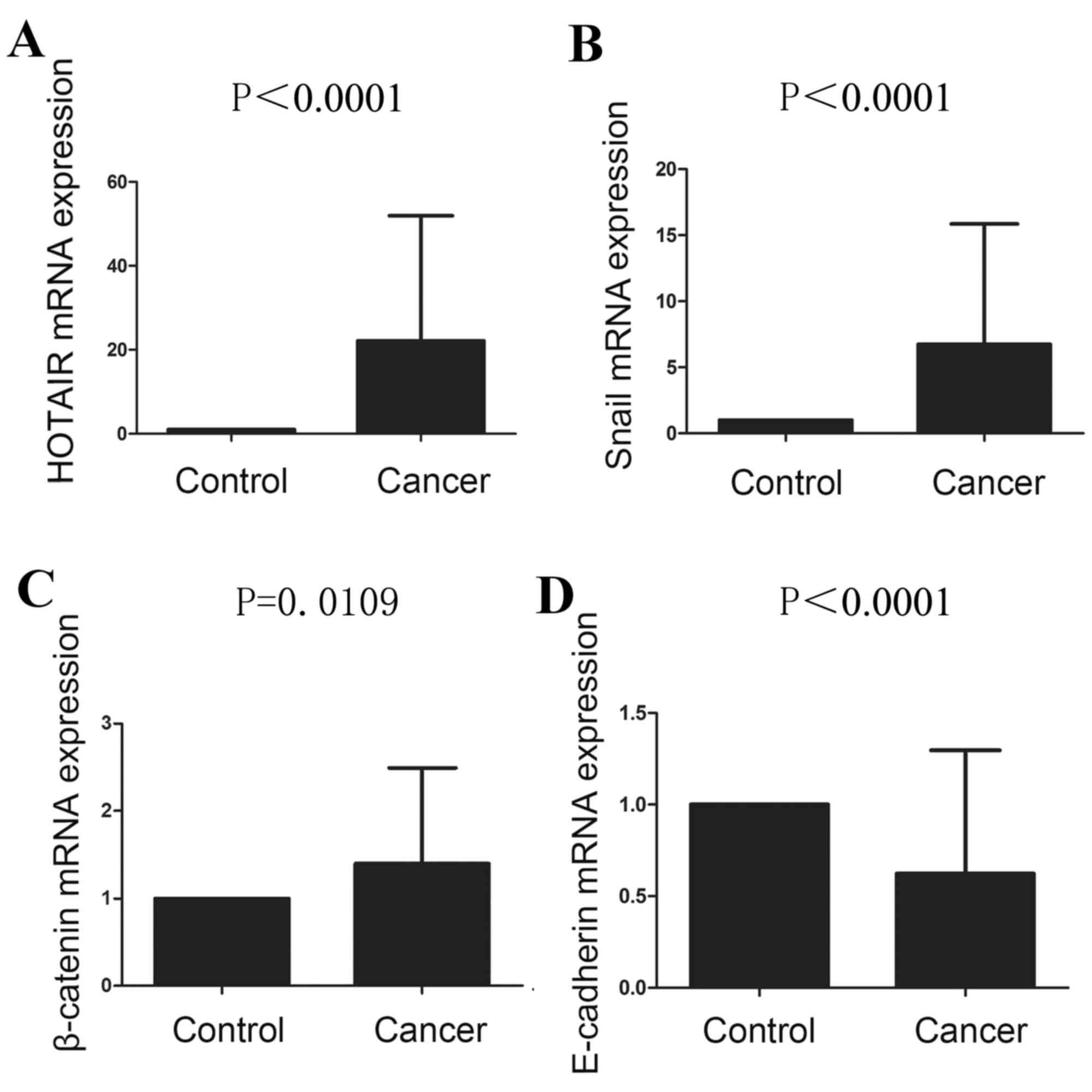
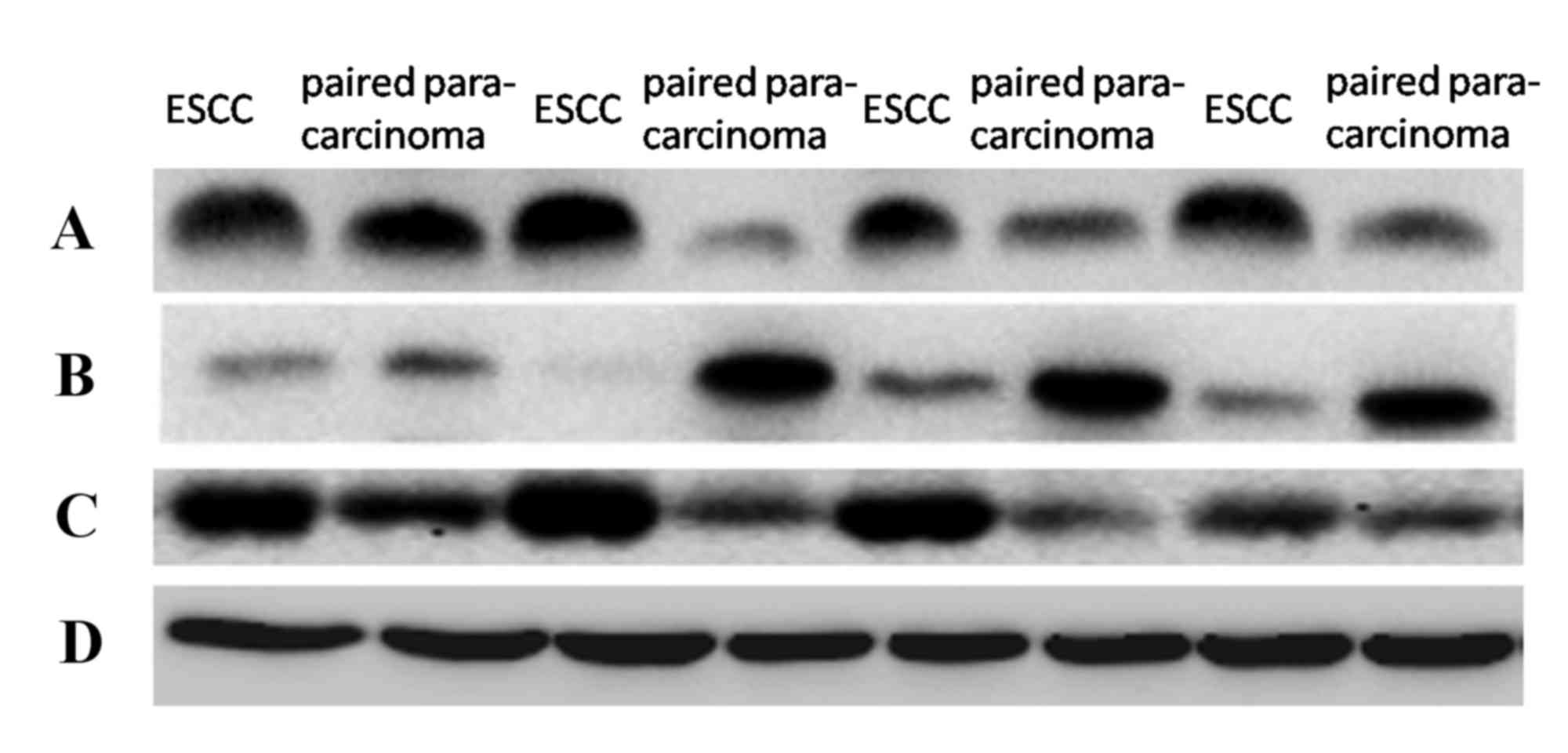
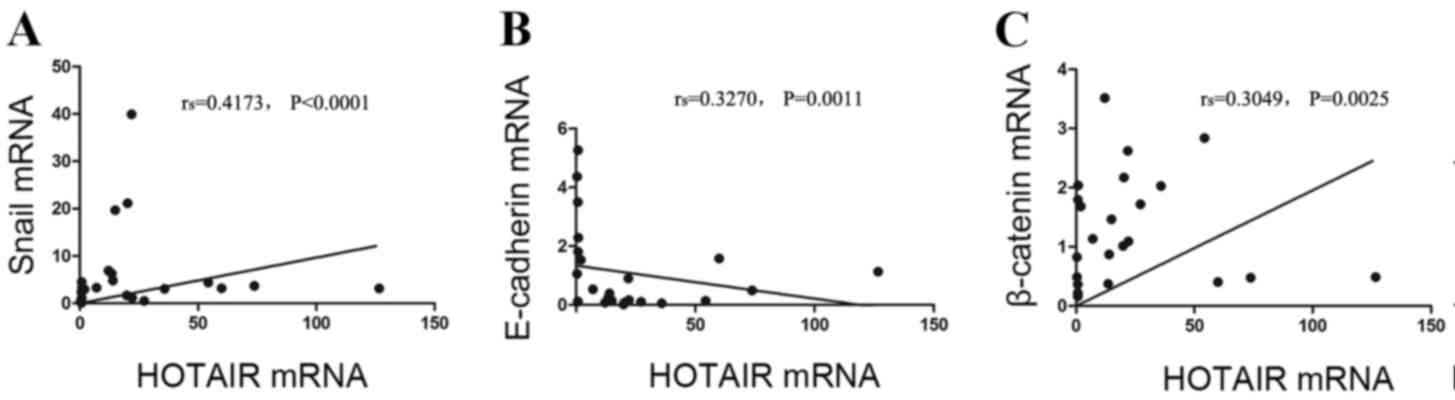
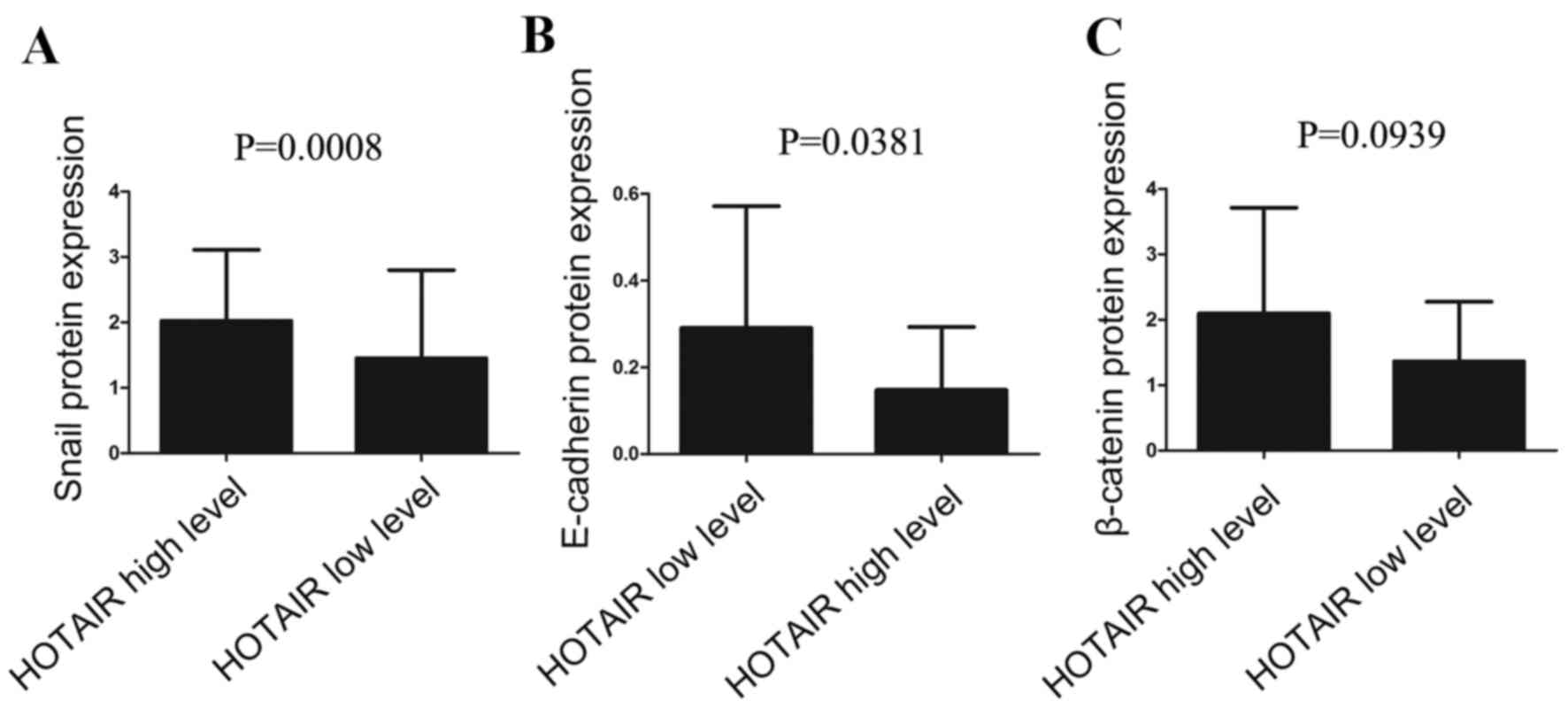
The present study investigated the correlation and significance of HOX transcript antisense RNA (HOTAIR) and epithelial-mesenchymal transition (EMT)-related factors in the occurrence and metastasis of esophageal squamous cell cancer (ESCC) progression. The mRNA and protein expression levels of HOTAIR and EMT‑related factors were detected in 96 ESCC and para‑carcinoma tissues using reverse transcription‑quantitative polymerase chain reaction and western blot analysis. The expression levels of these factors, and the correlation between these factors and clinicopathological characteristics were subsequently analyzed. HOTAIR mRNA expression levels were significantly higher in ESCC compared with in para-carcinoma tissues, and HOTAIR mRNA expression levels were significantly higher in the groups with lymph node involvement or organ metastasis compared with the group without. Furthermore, HOTAIR expression levels demonstrated a significant increasing trend from well‑differentiated cancer to poorly differentiated cancer. The mRNA and protein expression levels of zinc finger protein SNAI1 (Snail) and β‑catenin in ESCC were significantly higher compared with para-carcinoma tissues, whereas E‑cadherin mRNA and protein expression levels were lower in ESCC tissues compared with in para-carcinoma tissues. Snail mRNA and protein expression levels were also significantly higher in groups with lymph node involvement or organ metastasis compared with those without, and β‑catenin protein expression levels were significantly higher in the groups with lymph node involvement or organ metastasis compared with the group without. In the 96 ESCC tissues, HOTAIR mRNA expression levels were positively correlated with Snail mRNA and protein expression levels, and were negatively correlated with E‑cadherin expression levels. HOTAIR mRNA expression levels were also positively correlated with β‑catenin mRNA expression levels. In conclusion, HOTAIR may be involved in carcinogenesis and metastasis, and may induce the expression of EMT‑related factors; detection of these factors may assist in early diagnosis and prognostic prediction.
View Figures

Figure 1

Figure 2

Figure 3

Figure 4

View References

1 

Pakzad R, Mohammadian-Hafshejani A, Khosravi B, Soltani S, Pakzad I, Mohammadian M, Salehiniya H and Momenimovahed Z: The incidence and mortality of esophageal cancer and their relationship to development in Asia. Ann Transl Med. 4:292016.PubMed/NCBI

2 

Lin Y, Totsuka Y, He Y, Kikuchi S, Qiao Y, Ueda J, Wei W, Inoue M and Tanaka H: Epidemiology of esophageal cancer in Japan and China. J Epidemiol. 23:233–242. 2013. View Article : Google Scholar : PubMed/NCBI

3 

Enzinger PC and Mayer RJ: Esophageal cancer. N Engl J Med. 349:2241–2252. 2003. View Article : Google Scholar : PubMed/NCBI

4 

Tepper JE: Is radiation therapy needed in the treatment of gastroesophageal junction adenocarcinoma? Gastrointest Cancer Res. 2(4 Suppl): S2–S5. 2008.PubMed/NCBI

5 

Linkous AG and Yazlovitskaya EM: Novel radiosensitizing anticancer therapeutics. Anticancer Res. 32:2487–2499. 2012.PubMed/NCBI

6 

Kotake Y, Nakagawa T, Kitagawa K, Suzuki S, Liu N, Kitagawa M and Xiong Y: Long non-coding RNA ANRIL is required for the PRC2 recruitment to and silencing of p15(INK4B) tumor suppressor gene. Oncogene. 30:1956–1962. 2011. View Article : Google Scholar : PubMed/NCBI

7 

Wu HA and Bernstein E: Partners in imprinting: Noncoding RNA and polycomb group proteins. Dev Cell. 15:637–638. 2008. View Article : Google Scholar : PubMed/NCBI

8 

Khalil AM, Guttman M, Huarte M, Garber M, Raj A, Morales D Rivea, Thomas K, Presser A, Bernstein BE, van Oudenaarden A, et al: Many human large intergenic noncoding RNAs associate with chromatin-modifying complexes and affect gene expression. Proc Natl Acad Sci USA. 106:11667–11672. 2009. View Article : Google Scholar : PubMed/NCBI

9 

Rinn JL, Kertesz M, Wang JK, Squazzo SL, Xu X, Brugmann SA, Goodnough LH, Helms JA, Farnham PJ, Segal E and Chang HY: Functional demarcation of active and silent chromatin domains in human HOX loci by noncoding RNAs. Cell. 129:1311–1323. 2007. View Article : Google Scholar : PubMed/NCBI

10 

Chu C, Qu K, Zhong FL, Artandi SE and Chang HY: Genomic maps of long noncoding RNA occupancy reveal principles of RNA-chromatin interactions. Mol Cell. 44:667–678. 2011. View Article : Google Scholar : PubMed/NCBI

11 

Kogo R, Shimamura T, Mimori K, Kawahara K, Imoto S, Sudo T, Tanaka F, Shibata K, Suzuki A, Komune S, et al: Long noncoding RNA HOTAIR regulates polycomb-dependent chromatin modification and is associated with poor prognosis in colorectal cancers. Cancer Res. 71:6320–6326. 2011. View Article : Google Scholar : PubMed/NCBI

12 

Bhan A and Mandal SS: LncRNA HOTAIR: A master regulator of chromatin dynamics and cancer. Biochim Biophys Acta. 1856:151–164. 2015.PubMed/NCBI

13 

Tsai MC, Manor O, Wan Y, Mosammaparast N, Wang JK, Lan F, Shi Y, Segal E and Chang HY: Long noncoding RNA as modular scaffold of histone modification complexes. Science. 329:689–693. 2010. View Article : Google Scholar : PubMed/NCBI

14 

Yang Z, Zhou L, Wu LM, Lai MC, Xie HY, Zhang F and Zheng SS: Overexpression of long non-coding RNA HOTAIR predicts tumor recurrence in hepatocellular carcinoma patients following liver transplantation. Ann Surg Oncol. 18:1243–1250. 2011. View Article : Google Scholar : PubMed/NCBI

15 

Kogo R, Shimamura T, Mimori K, Kawahara K, Imoto S, Sudo T, Tanaka F, Shibata K, Suzuki A, Komune S, et al: Long noncoding RNA HOTAIR regulates polycomb-dependent chromatin modification and is associated with poor prognosis in colorectal cancers. Cancer Res. 71:6320–6326. 2011. View Article : Google Scholar : PubMed/NCBI

16 

Wu ZH, Wang XL, Tang HM, Jiang T, Chen J, Lu S, Qiu GQ, Peng ZH and Yan DW: Long non-coding RNA HOTAIR is a powerful predictor of metastasis and poor prognosis and is associated with epithelial-mesenchymal transition in colon cancer. Oncol Rep. 32:395–402. 2014.PubMed/NCBI

17 

Niinuma T, Suzuki H, Nojima M, Nosho K, Yamamoto H, Takamaru H, Yamamoto E, Maruyama R, Nobuoka T, Miyazaki Y, et al: Upregulation of miR-196a and HOTAIR drive malignant character in gastrointestinal stromal tumors. Cancer Res. 72:1126–1136. 2012. View Article : Google Scholar : PubMed/NCBI

18 

Liu XH, Liu ZL, Sun M, Liu J, Wang ZX and De W: The long non-coding RNA HOTAIR indicates a poor prognosis and promotes metastasis in non-small cell lung cancer. BMC Cancer. 13:4642013. View Article : Google Scholar : PubMed/NCBI

19 

Kim K, Jutooru I, Chadalapaka G, Johnson G, Frank J, Burghardt R, Kim S and Safe S: HOTAIR is a negative prognostic factor and exhibits pro-oncogenic activity in pancreatic cancer. Oncogene. 32:1616–1625. 2013. View Article : Google Scholar : PubMed/NCBI

20 

Nie Y, Liu X, Qu S, Song E, Zou H and Gong CL: Non-coding RNA HOTAIR is an independent prognostic marker for nasopharyngeal carcinoma progression and survival. Cancer Sci. 104:458–464. 2013. View Article : Google Scholar : PubMed/NCBI

21 

Li D, Feng J, Wu T, Wang Y, Sun Y, Ren J and Liu M: Long intergenic noncoding RNA HOTAIR is overexpressed and regulates PTEN methylation in laryngeal squamous cell carcinoma. Am J Pathol. 182:64–70. 2013. View Article : Google Scholar : PubMed/NCBI

22 

Cui L, Xie XY, Wang H, Chen XL, Liu SL and Hu LN: Expression of long non-coding RNA HOTAIR mRNA in ovarian cancer. Sichuan Da Xue Xue Bao Yi Xue Ban. 44:57–59. 2013.(In Chinese). PubMed/NCBI

23 

Sung CO, Park CK and Kim SH: Classification of epithelial-mesenchymal transition phenotypes in esophageal squamous cell carcinoma is strongly associated with patient prognosis. Mod Pathol. 24:1060–1068. 2011. View Article : Google Scholar : PubMed/NCBI

24 

Iwatsuki M, Mimori K, Yokobori T, Ishi H, Beppu T, Nakamori S, Baba H and Mori M: Epithelialmesenchymal transition in cancer development and its clinical significance. Cancer Sci. 101:293–299. 2010. View Article : Google Scholar : PubMed/NCBI

25 

Gupta RA, Shah N, Wang KC, Kim J, Horlings HM, Wong DJ, Tsai MC, Hung T, Argani P, Rinn JL, et al: Long non-coding RNA HOTAIR reprograms chromatin state to promote cancer metastasis. Nature. 464:1071–1076. 2010. View Article : Google Scholar : PubMed/NCBI

26 

Chen LQ: Understanding and appraisal of the new TNM classification for esophageal cancer in the AJCC Cancer Staging Manual (7th edition). Zhonghua Zhong Liu Za Zhi. 32:237–240. 2010.PubMed/NCBI

27 

Livak KJ and Schmittgen TD: Analysis of relative gene expression data using real-time quantitative PCR and the 2(−Delta Delta C(T)) Method. Methods. 25:402–408. 2001. View Article : Google Scholar : PubMed/NCBI

28 

Sharma S, Kelly TK and Jones PA: Epigenetics in cancer. Carcinogemesis. 31:27–36. 2010. View Article : Google Scholar

29 

Banerjee HN and Verma M: Epigenetic mechanisms in cancer. Biomark Med. 3:397–410. 2009. View Article : Google Scholar : PubMed/NCBI

30 

Esteller M: Epigenetics in cancer. N Engl J Med. 358:1148–1159. 2008. View Article : Google Scholar : PubMed/NCBI

31 

Li SQ, Wang HM and Cao XF: Potential clinical insights into microRNAs and their target genes in esophageal carcinoma. Biomarkers. 16:629–636. 2011. View Article : Google Scholar : PubMed/NCBI

32 

Lin R, Maeda S, Liu C, Karin M and Edgington TS: A large noncoding RNA is a marker for murine hepatocellular carcinomas and a spectrum of human carcinomas. Oncogene. 26:851–858. 2007. View Article : Google Scholar : PubMed/NCBI

33 

Matouk IJ, DeGroot N, Mezan S, Ayesh S, Abu-lail R, Hochberg A and Galun E: The H19 non-coding RNA is essential for human tumor growth. PLoS One. 2:e8452007. View Article : Google Scholar : PubMed/NCBI

34 

Pasmant E, Sabbagh A, Masliah-Planchon J, Ortonne N, Laurendeau I, Melin L, Ferkal S, Hernandez L, Leroy K, Valeyrie-Allanore L, et al: Role of noncoding RNA ANRIL in genesis of plexiform neurofibromas in neurofibromatosis type 1. J Natl Cancer Inst. 103:1713–1722. 2011. View Article : Google Scholar : PubMed/NCBI

35 

Silva JM, Boczek NJ, Berres MW, Ma X and Smith DI: LSINCT5 is overexpressed in breast and ovarian cancer and affects cellular proliferation. RNA Biol. 8:496–505. 2011. View Article : Google Scholar : PubMed/NCBI

36 

Srikantan V, Zou Z, Petrovics G, Xu L, Augustus M, Davis L, Livezey JR, Connell T, Sesterhenn IA, Yoshino K, et al: PCGEM1, a prostate-specific gene, is overexpressed in prostate cancer. Proc Natl Acad Sci USA. 97:12216–12221. 2000. View Article : Google Scholar : PubMed/NCBI

37 

Kurrey NK, Jalgaonkar SP, Joglekar AV, Ghanate AD, Chaskar PD, Doiphode RY and Bapat SA: Snail and slug mediate radioresistance and chemoresistance by antagonizing p53-mediated apoptosis and acquiring a stem-like phenotype in ovarian cancer cells. Stem Cells. 27:2059–2068. 2009. View Article : Google Scholar : PubMed/NCBI

38 

Wang Y, Shi J, Chai K, Ying X and Zhou BP: The role of snail in EMT and tumorigenesis. Curr Cancer Drug Targets. 13:963–972. 2013. View Article : Google Scholar : PubMed/NCBI

39 

Galván JA, González MV, Crespo G, Folgueras MV and Astudillo A: Snail nuclear expression parallels higher malignancy potential in neuroendocrine lung tumors. Lung Cancer. 69:289–295. 2010. View Article : Google Scholar : PubMed/NCBI

40 

Olmeda D, Moreno-Bueno G, Flores JM, Fabra A, Portillo F and Cano A: SNAI1 is required for tumor growth and lymph node metastasis of human breast carcinoma MDA-MB-231 cells. Cancer Res. 67:11721–11731. 2007. View Article : Google Scholar : PubMed/NCBI

41 

Francí C, Gallén M, Alameda F, Baró T, Iglesias M, Virtanen I and García de Herreros A: Snail1 protein in the stroma as a new putative prognosis marker for colon tumours. PLoS One. 4:e55952009. View Article : Google Scholar : PubMed/NCBI

42 

Nishioka R, Itoh S, Gui T, Gai Z, Oikawa K, Kawai M, Tani M, Yamaue H and Muragaki Y: SNAIL induces epithelial-to-mesenchymal transition in a human pancreatic cancer cell line (BxPC3) and promotes distant metastasis and invasiveness in vivo. Exp Mol Pathol. 89:149–157. 2010. View Article : Google Scholar : PubMed/NCBI

43 

Jin H, Yu Y, Zhang T, Zhou X, Zhou J, Jia L, Wu Y, Zhou BP and Feng Y: Snail is critical for tumor growth and metastasis of ovarian carcinoma. Int J Cancer. 126:2102–2111. 2010.PubMed/NCBI

44 

Aamodt R, Bondi J, Andersen SN, Bakka A, Bukholm G and Bukholm IR: The prognostic impact of protein expression of E-cadherin-catenin complexes differs between rectal and colon carcinoma. Gastroenterol Res Pract. 2010:6160232010. View Article : Google Scholar : PubMed/NCBI

45 

Kang H, Min BS, Lee KY, Kim NK, Kim SN, Choi J and Kim H: Loss of E-cadherin and MUC2 expressions correlated with poor survival in patients with stages II and III colorectal carcinoma. Ann Surg Oncol. 18:711–719. 2011. View Article : Google Scholar : PubMed/NCBI

46 

Chelidonis G, Kavantzas N, Patsouris E, Pagaki E, Agrogiannis G and Athanasiadou P: DNA ploidy, E-cadherin, beta-catenin expression and their clinicopathologic significance in imprints of non-small cell lung cancer. Anal Quant Cytol Histol. 31:332–339. 2009.PubMed/NCBI

47 

Baumgart E, Cohen MS, Neto B Silva, Jacobs MA, Wotkowicz C, Rieger-Christ KM, Biolo A, Zeheb R, Loda M, Libertino JA and Summerhayes IC: Identification and prognostic significance of an epithelial-mesenchymal transition expression profile in human bladder tumors. Clin Cancer Res. 13:1685–1694. 2007. View Article : Google Scholar : PubMed/NCBI

48 

Christofori G and Semb H: The role of the cell-adhesion molecule E-cadherin as a tumour suppressor gene. Trends Biochem Sci. 24:73–76. 1999. View Article : Google Scholar : PubMed/NCBI

49 

Adhikary A, Chakraborty S, Mazumdar M, Ghosh S, Mukherjee S, Manna A, Mohanty S, Nakka KK, Joshi S, De A, et al: Inhibition of epithelial to mesenchymal transition by E-cadherin up-regulation via repression of slug transcription and inhibition of E-cadherin degradation: Dual role of scaffold/matrix attachment region-binding protein 1 (SMAR1) in breast cancer cells. J Biol Chem. 289:25431–25444. 2014. View Article : Google Scholar : PubMed/NCBI

50 

Beck TN, Chikwem AJ, Solanki NR and Golemis EA: Bioinformatic approaches to augment study of epithelial-to-mesenchymal transition (EMT) in lung cancer. Physiol Genomics. 2014:699–724. 2014. View Article : Google Scholar

51 

Zheng H, Li W, Wang Y, Xie T, Cai Y, Wang Z and Jiang B: miR-23a inhibits E-cadherin expression and is regulated by AP-1 and NFAT4 complex during Fas-induced EMT in gastrointestinal cancer. Carcinogenesis. 35:173–183. 2014. View Article : Google Scholar : PubMed/NCBI

52 

Zhao Z, Ge J, Sun Y, Tian L, Lu J, Liu M and Zhao Y: Is E-cadherin immunoexpression a prognostic factor for head and neck squamous cell carcinoma (HNSCC)? A systematic review and meta-analysis. Oral Oncol. 48:761–767. 2012. View Article : Google Scholar : PubMed/NCBI

53 

Ge XS, Ma HJ, Zheng XH, Ruan HL, Liao XY, Xue WQ, Chen YB, Zhang Y and Jia WH: HOTAIR, A prognostic factor in esophageal squamous cell carcinoma, inhibits WIF-1 expression and activates Wnt pathway. Cancer Sci. 104:1675–1682. 2013. View Article : Google Scholar : PubMed/NCBI

54 

Xu ZY, Yu QM, Du YA, Yang LT, Dong RZ, Huang L, Yu PF and Cheng XD: Knockdown of long non-coding RNA HOTAIR suppresses tumor invasion and reverses epithelial- mesenchymal transition in gastric cancer. Int J Biol Sci. 9:587–597. 2013. View Article : Google Scholar : PubMed/NCBI

Related Articles

  • Abstract
  • View
  • Download
  • Twitter
Copy and paste a formatted citation
Spandidos Publications style
Da C, Zhan Y, Li Y, Tan Y, Li R and Wang R: The expression and significance of HOX transcript antisense RNA and epithelial-mesenchymal transition-related factors in esophageal squamous cell carcinoma. Mol Med Rep 15: 1853-1862, 2017.
APA
Da, C., Zhan, Y., Li, Y., Tan, Y., Li, R., & Wang, R. (2017). The expression and significance of HOX transcript antisense RNA and epithelial-mesenchymal transition-related factors in esophageal squamous cell carcinoma. Molecular Medicine Reports, 15, 1853-1862. https://doi.org/10.3892/mmr.2017.6210
MLA
Da, C., Zhan, Y., Li, Y., Tan, Y., Li, R., Wang, R."The expression and significance of HOX transcript antisense RNA and epithelial-mesenchymal transition-related factors in esophageal squamous cell carcinoma". Molecular Medicine Reports 15.4 (2017): 1853-1862.
Chicago
Da, C., Zhan, Y., Li, Y., Tan, Y., Li, R., Wang, R."The expression and significance of HOX transcript antisense RNA and epithelial-mesenchymal transition-related factors in esophageal squamous cell carcinoma". Molecular Medicine Reports 15, no. 4 (2017): 1853-1862. https://doi.org/10.3892/mmr.2017.6210
Copy and paste a formatted citation
x
Spandidos Publications style
Da C, Zhan Y, Li Y, Tan Y, Li R and Wang R: The expression and significance of HOX transcript antisense RNA and epithelial-mesenchymal transition-related factors in esophageal squamous cell carcinoma. Mol Med Rep 15: 1853-1862, 2017.
APA
Da, C., Zhan, Y., Li, Y., Tan, Y., Li, R., & Wang, R. (2017). The expression and significance of HOX transcript antisense RNA and epithelial-mesenchymal transition-related factors in esophageal squamous cell carcinoma. Molecular Medicine Reports, 15, 1853-1862. https://doi.org/10.3892/mmr.2017.6210
MLA
Da, C., Zhan, Y., Li, Y., Tan, Y., Li, R., Wang, R."The expression and significance of HOX transcript antisense RNA and epithelial-mesenchymal transition-related factors in esophageal squamous cell carcinoma". Molecular Medicine Reports 15.4 (2017): 1853-1862.
Chicago
Da, C., Zhan, Y., Li, Y., Tan, Y., Li, R., Wang, R."The expression and significance of HOX transcript antisense RNA and epithelial-mesenchymal transition-related factors in esophageal squamous cell carcinoma". Molecular Medicine Reports 15, no. 4 (2017): 1853-1862. https://doi.org/10.3892/mmr.2017.6210
Follow us
  • Twitter
  • LinkedIn
  • Facebook
About
  • Spandidos Publications
  • Careers
  • Cookie Policy
  • Privacy Policy
How can we help?
  • Help
  • Live Chat
  • Contact
  • Email to our Support Team