Spandidos Publications Logo
  • About
    • About Spandidos
    • Aims and Scopes
    • Abstracting and Indexing
    • Editorial Policies
    • Reprints and Permissions
    • Job Opportunities
    • Terms and Conditions
    • Contact
  • Journals
    • All Journals
    • Oncology Letters
      • Oncology Letters
      • Information for Authors
      • Editorial Policies
      • Editorial Board
      • Aims and Scope
      • Abstracting and Indexing
      • Bibliographic Information
      • Archive
    • International Journal of Oncology
      • International Journal of Oncology
      • Information for Authors
      • Editorial Policies
      • Editorial Board
      • Aims and Scope
      • Abstracting and Indexing
      • Bibliographic Information
      • Archive
    • Molecular and Clinical Oncology
      • Molecular and Clinical Oncology
      • Information for Authors
      • Editorial Policies
      • Editorial Board
      • Aims and Scope
      • Abstracting and Indexing
      • Bibliographic Information
      • Archive
    • Experimental and Therapeutic Medicine
      • Experimental and Therapeutic Medicine
      • Information for Authors
      • Editorial Policies
      • Editorial Board
      • Aims and Scope
      • Abstracting and Indexing
      • Bibliographic Information
      • Archive
    • International Journal of Molecular Medicine
      • International Journal of Molecular Medicine
      • Information for Authors
      • Editorial Policies
      • Editorial Board
      • Aims and Scope
      • Abstracting and Indexing
      • Bibliographic Information
      • Archive
    • Biomedical Reports
      • Biomedical Reports
      • Information for Authors
      • Editorial Policies
      • Editorial Board
      • Aims and Scope
      • Abstracting and Indexing
      • Bibliographic Information
      • Archive
    • Oncology Reports
      • Oncology Reports
      • Information for Authors
      • Editorial Policies
      • Editorial Board
      • Aims and Scope
      • Abstracting and Indexing
      • Bibliographic Information
      • Archive
    • Molecular Medicine Reports
      • Molecular Medicine Reports
      • Information for Authors
      • Editorial Policies
      • Editorial Board
      • Aims and Scope
      • Abstracting and Indexing
      • Bibliographic Information
      • Archive
    • World Academy of Sciences Journal
      • World Academy of Sciences Journal
      • Information for Authors
      • Editorial Policies
      • Editorial Board
      • Aims and Scope
      • Abstracting and Indexing
      • Bibliographic Information
      • Archive
    • International Journal of Functional Nutrition
      • International Journal of Functional Nutrition
      • Information for Authors
      • Editorial Policies
      • Editorial Board
      • Aims and Scope
      • Abstracting and Indexing
      • Bibliographic Information
      • Archive
    • International Journal of Epigenetics
      • International Journal of Epigenetics
      • Information for Authors
      • Editorial Policies
      • Editorial Board
      • Aims and Scope
      • Abstracting and Indexing
      • Bibliographic Information
      • Archive
    • Medicine International
      • Medicine International
      • Information for Authors
      • Editorial Policies
      • Editorial Board
      • Aims and Scope
      • Abstracting and Indexing
      • Bibliographic Information
      • Archive
  • Articles
  • Information
    • Information for Authors
    • Information for Reviewers
    • Information for Librarians
    • Information for Advertisers
    • Conferences
  • Language Editing
Spandidos Publications Logo
  • About
    • About Spandidos
    • Aims and Scopes
    • Abstracting and Indexing
    • Editorial Policies
    • Reprints and Permissions
    • Job Opportunities
    • Terms and Conditions
    • Contact
  • Journals
    • All Journals
    • Biomedical Reports
      • Information for Authors
      • Editorial Policies
      • Editorial Board
      • Aims and Scope
      • Abstracting and Indexing
      • Bibliographic Information
      • Archive
    • Experimental and Therapeutic Medicine
      • Information for Authors
      • Editorial Policies
      • Editorial Board
      • Aims and Scope
      • Abstracting and Indexing
      • Bibliographic Information
      • Archive
    • International Journal of Epigenetics
      • Information for Authors
      • Editorial Policies
      • Editorial Board
      • Aims and Scope
      • Abstracting and Indexing
      • Bibliographic Information
      • Archive
    • International Journal of Functional Nutrition
      • Information for Authors
      • Editorial Policies
      • Editorial Board
      • Aims and Scope
      • Abstracting and Indexing
      • Bibliographic Information
      • Archive
    • International Journal of Molecular Medicine
      • Information for Authors
      • Editorial Policies
      • Editorial Board
      • Aims and Scope
      • Abstracting and Indexing
      • Bibliographic Information
      • Archive
    • International Journal of Oncology
      • Information for Authors
      • Editorial Policies
      • Editorial Board
      • Aims and Scope
      • Abstracting and Indexing
      • Bibliographic Information
      • Archive
    • Medicine International
      • Information for Authors
      • Editorial Policies
      • Editorial Board
      • Aims and Scope
      • Abstracting and Indexing
      • Bibliographic Information
      • Archive
    • Molecular and Clinical Oncology
      • Information for Authors
      • Editorial Policies
      • Editorial Board
      • Aims and Scope
      • Abstracting and Indexing
      • Bibliographic Information
      • Archive
    • Molecular Medicine Reports
      • Information for Authors
      • Editorial Policies
      • Editorial Board
      • Aims and Scope
      • Abstracting and Indexing
      • Bibliographic Information
      • Archive
    • Oncology Letters
      • Information for Authors
      • Editorial Policies
      • Editorial Board
      • Aims and Scope
      • Abstracting and Indexing
      • Bibliographic Information
      • Archive
    • Oncology Reports
      • Information for Authors
      • Editorial Policies
      • Editorial Board
      • Aims and Scope
      • Abstracting and Indexing
      • Bibliographic Information
      • Archive
    • World Academy of Sciences Journal
      • Information for Authors
      • Editorial Policies
      • Editorial Board
      • Aims and Scope
      • Abstracting and Indexing
      • Bibliographic Information
      • Archive
  • Articles
  • Information
    • For Authors
    • For Reviewers
    • For Librarians
    • For Advertisers
    • Conferences
  • Language Editing
Login Register Submit
  • This site uses cookies
  • You can change your cookie settings at any time by following the instructions in our Cookie Policy. To find out more, you may read our Privacy Policy.

    I agree
Search articles by DOI, keyword, author or affiliation
Search
Advanced Search
presentation
Molecular Medicine Reports
Join Editorial Board Propose a Special Issue
Print ISSN: 1791-2997 Online ISSN: 1791-3004
Journal Cover
May-2017 Volume 15 Issue 5

Full Size Image

Sign up for eToc alerts
Recommend to Library

Journals

International Journal of Molecular Medicine

International Journal of Molecular Medicine

International Journal of Molecular Medicine is an international journal devoted to molecular mechanisms of human disease.

International Journal of Oncology

International Journal of Oncology

International Journal of Oncology is an international journal devoted to oncology research and cancer treatment.

Molecular Medicine Reports

Molecular Medicine Reports

Covers molecular medicine topics such as pharmacology, pathology, genetics, neuroscience, infectious diseases, molecular cardiology, and molecular surgery.

Oncology Reports

Oncology Reports

Oncology Reports is an international journal devoted to fundamental and applied research in Oncology.

Experimental and Therapeutic Medicine

Experimental and Therapeutic Medicine

Experimental and Therapeutic Medicine is an international journal devoted to laboratory and clinical medicine.

Oncology Letters

Oncology Letters

Oncology Letters is an international journal devoted to Experimental and Clinical Oncology.

Biomedical Reports

Biomedical Reports

Explores a wide range of biological and medical fields, including pharmacology, genetics, microbiology, neuroscience, and molecular cardiology.

Molecular and Clinical Oncology

Molecular and Clinical Oncology

International journal addressing all aspects of oncology research, from tumorigenesis and oncogenes to chemotherapy and metastasis.

World Academy of Sciences Journal

World Academy of Sciences Journal

Multidisciplinary open-access journal spanning biochemistry, genetics, neuroscience, environmental health, and synthetic biology.

International Journal of Functional Nutrition

International Journal of Functional Nutrition

Open-access journal combining biochemistry, pharmacology, immunology, and genetics to advance health through functional nutrition.

International Journal of Epigenetics

International Journal of Epigenetics

Publishes open-access research on using epigenetics to advance understanding and treatment of human disease.

Medicine International

Medicine International

An International Open Access Journal Devoted to General Medicine.

Journal Cover
May-2017 Volume 15 Issue 5

Full Size Image

Sign up for eToc alerts
Recommend to Library

  • Article
  • Citations
    • Cite This Article
    • Download Citation
    • Create Citation Alert
    • Remove Citation Alert
    • Cited By
  • Similar Articles
    • Related Articles (in Spandidos Publications)
    • Similar Articles (Google Scholar)
    • Similar Articles (PubMed)
  • Download PDF
  • Download XML
  • View XML
Article Open Access

Gene expression profile in human induced pluripotent stem cells: Chondrogenic differentiation in vitro, part B

  • Authors:
    • Ewelina Augustyniak
    • Wiktoria Maria Suchorska
    • Tomasz Trzeciak
    • Magdalena Richter
  • View Affiliations / Copyright

    Affiliations: Radiobiology Laboratory, Greater Poland Cancer Centre, 61‑866 Poznan, Poland, Department of Orthopedics and Traumatology, Poznan University of Medical Sciences, 61‑545 Poznan, Poland
    Copyright: © Augustyniak et al. This is an open access article distributed under the terms of Creative Commons Attribution License.
  • Pages: 2402-2414
    |
    Published online on: March 16, 2017
       https://doi.org/10.3892/mmr.2017.6335
  • Expand metrics +
Metrics: Total Views: 0 (Spandidos Publications: | PMC Statistics: )
Metrics: Total PDF Downloads: 0 (Spandidos Publications: | PMC Statistics: )
Cited By (CrossRef): 0 citations Loading Articles...

This article is mentioned in:


Abstract

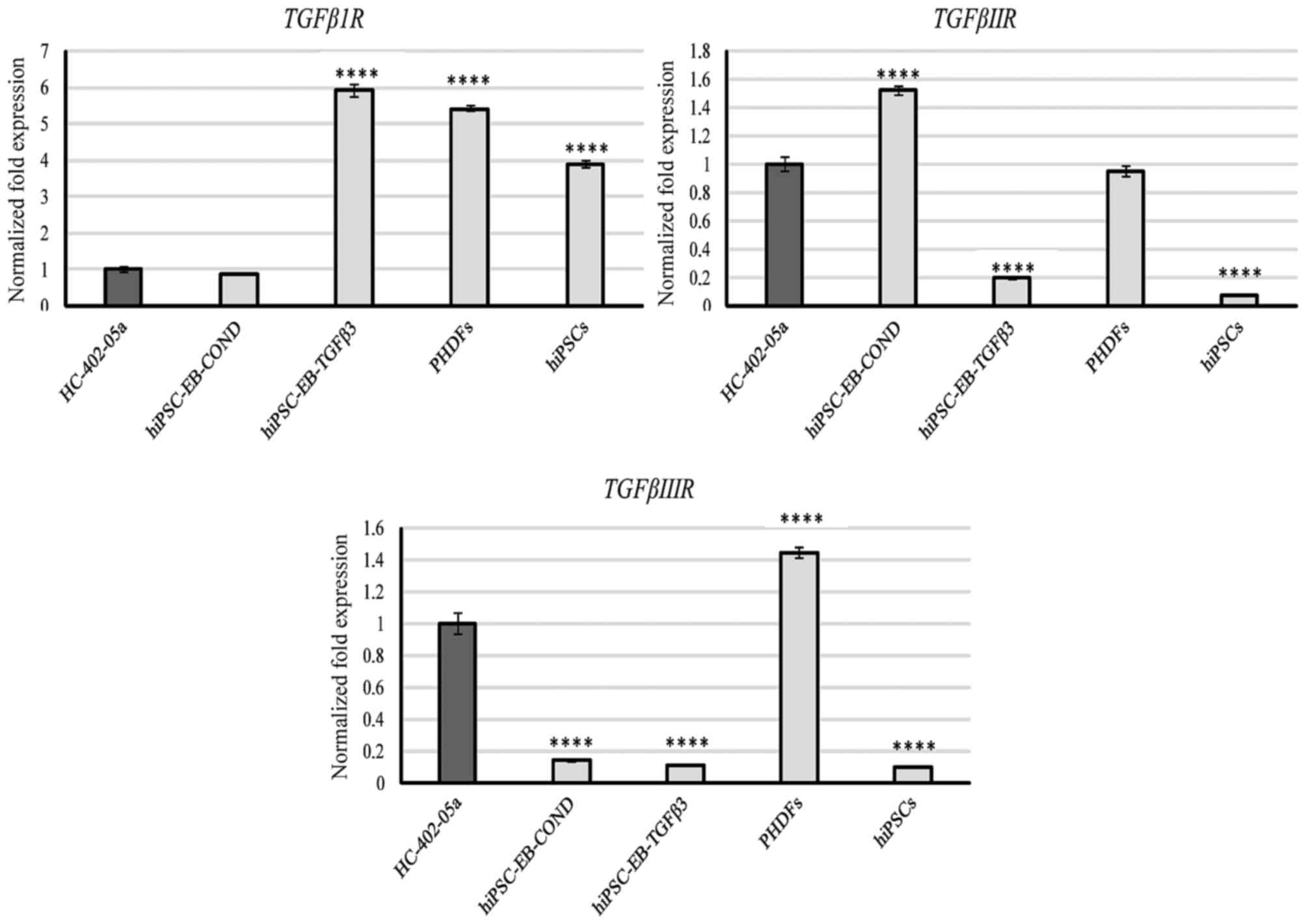
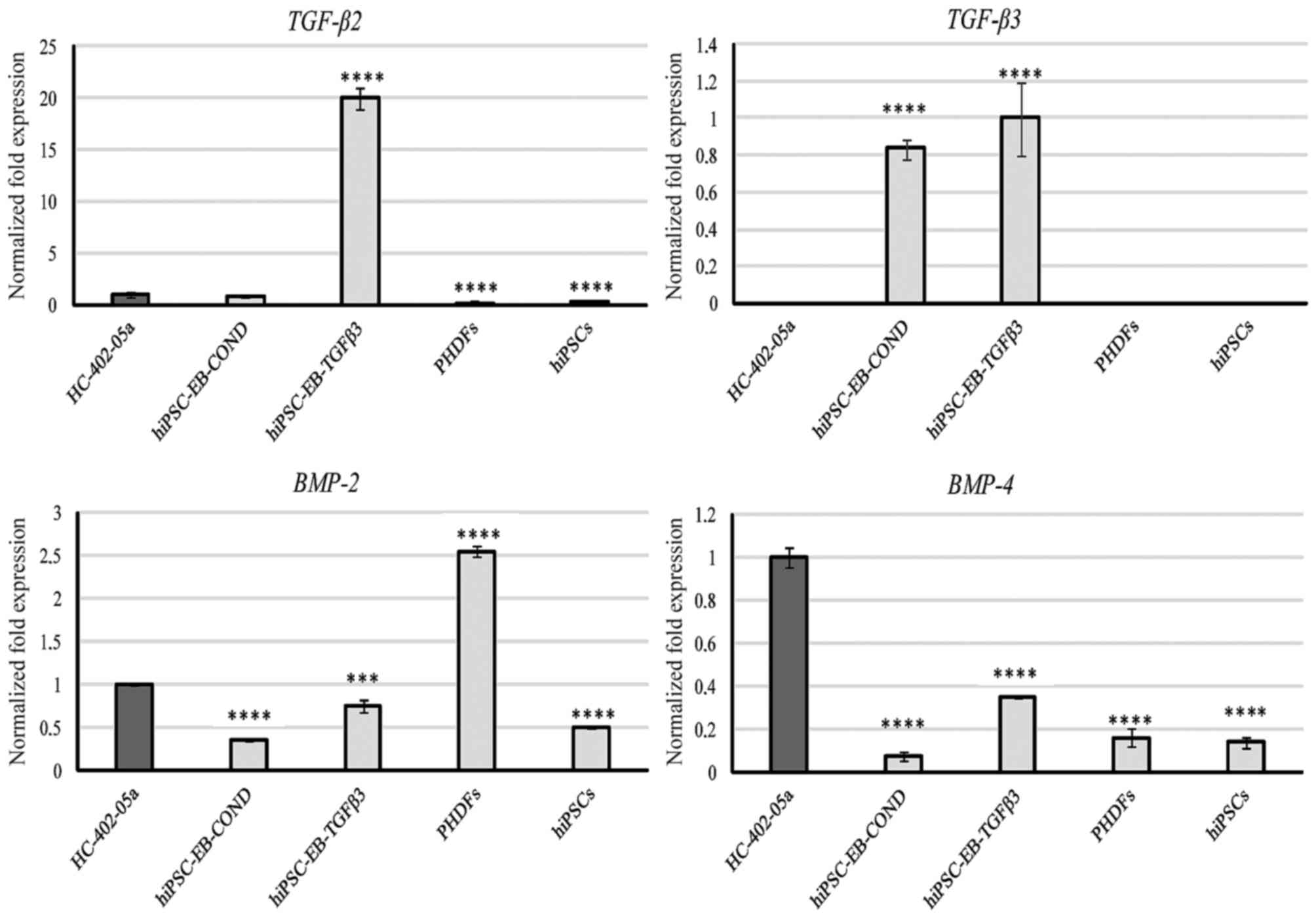
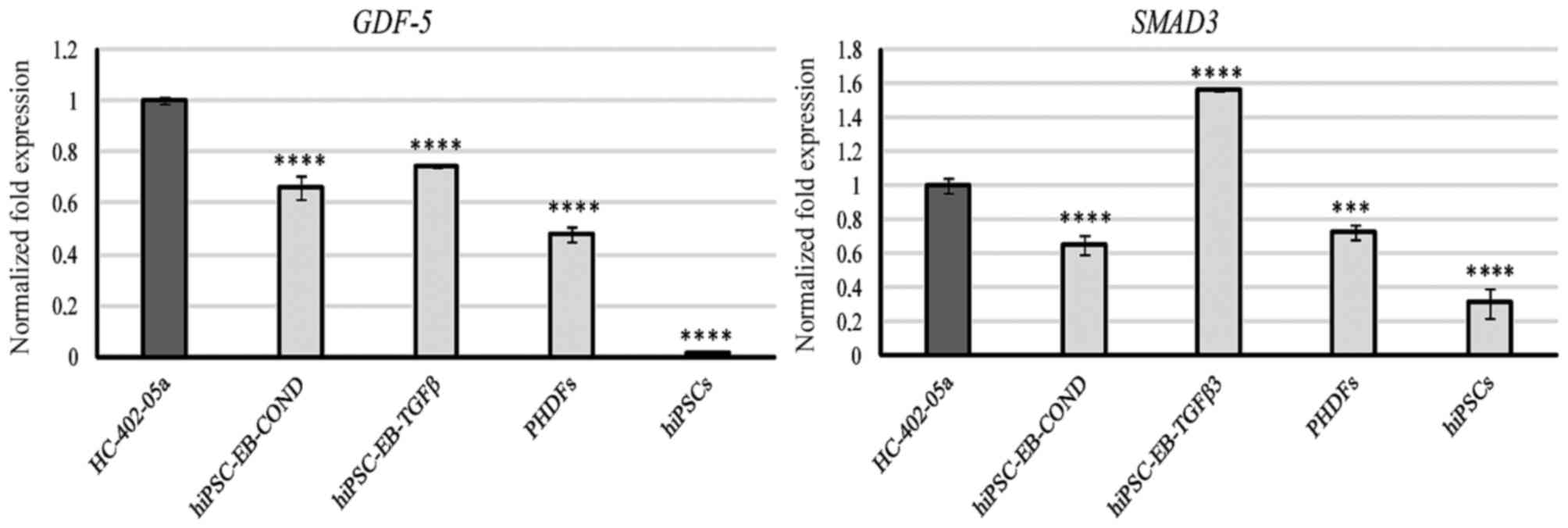
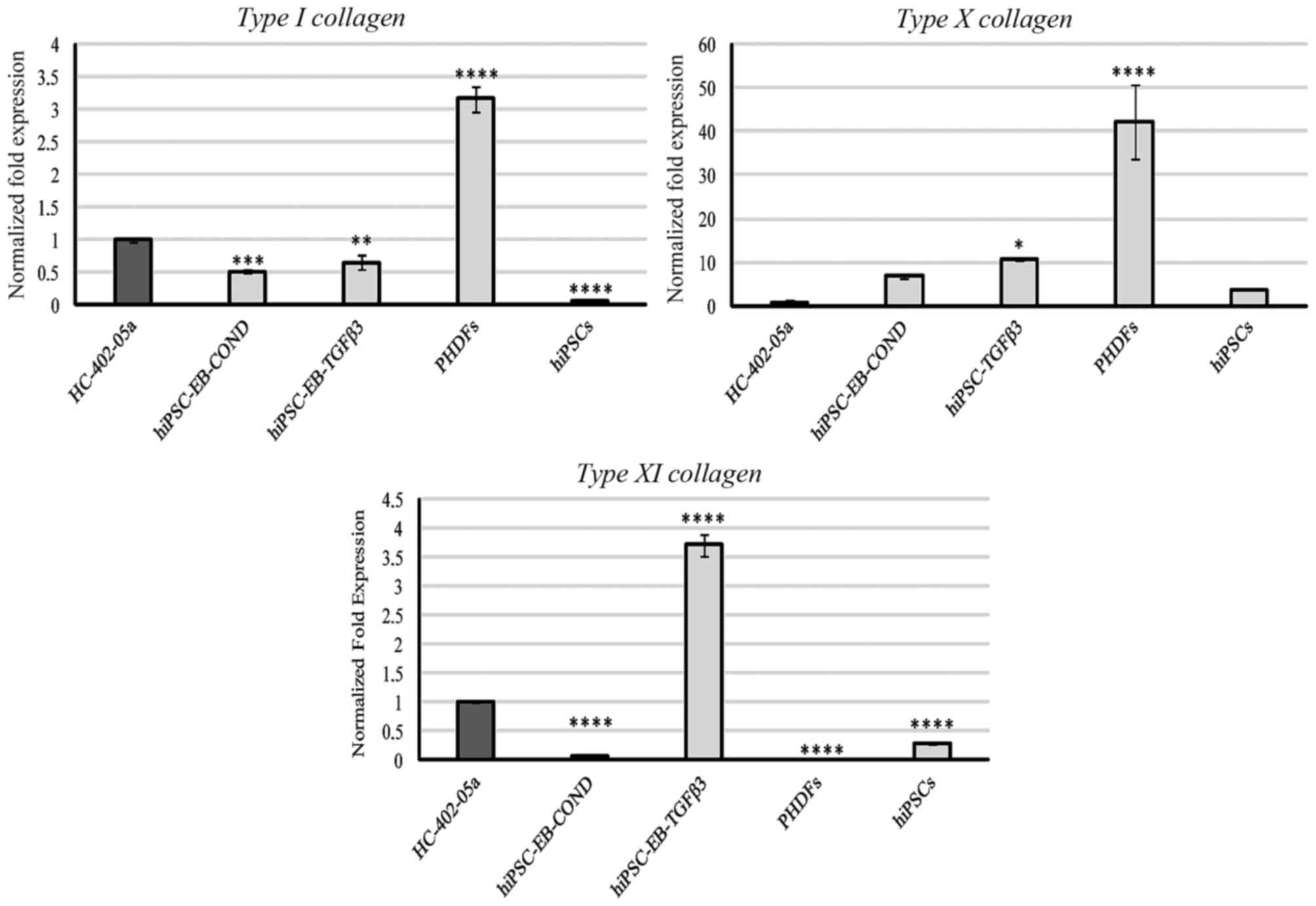
The development of human induced pluripotent stem cells (hiPSCs) is considered a turning point in tissue engineering. However, more data are required to improve understanding of key aspects of the cell differentiation process, including how specific chondrogenic processes affect the gene expression profile of chondrocyte‑like cells and the relative value of cell differentiation markers. The main aims of the present study were as follows: To determine the gene expression profile of chondrogenic‑like cells derived from hiPSCs cultured in mediums conditioned with HC‑402‑05a cells or supplemented with transforming growth factor β3 (TGF‑β3), and to assess the relative utility of the most commonly‑used chondrogenic markers as indicators of cell differentiation. These issues are relevant with regard to the use of human fibroblasts in the reprogramming process to obtain hiPSCs. Human fibroblasts are derived from mesoderm and thus share a wide range of properties with chondrocytes, which originate from the mesenchyme. The hiPSCs were obtained from human primary dermal fibroblasts during a reprogramming process. Two methods, both involving embryoid bodies (EB), were used to obtain chondrocytes from the hiPSCs: EBs formed in the presence of a chondrogenic medium with TGF‑β3 (10 ng/ml) and EBs formed in a medium conditioned with growth factors from HC‑402‑05a cells. Based on reverse transcription-quantitative polymerase chain reaction analysis, the results demonstrated that hiPSCs are capable of effective chondrogenic differentiation, with the cells obtained in the HC‑402‑05a medium presenting with morphological features and markers characteristic of mature human chondrocytes. In contrast, cells differentiated in the presence of TGF‑β3 presented with certain undesirable hypertrophic characteristics. Several genes, most notably runt‑related transcription factor 2, transforming growth factor β2 and transforming growth factor β3, were good markers of advanced and late hiPSC chondrogenic differentiation, whereas transforming growth factor β3I, II, III receptors and bone morphogenetic protein-2, bone morphogenetic protein-4 and growth differentiation factor 5 were less valuable. These findings provide valuable data on the use of stem cells in cartilage tissue regeneration.
View Figures

Figure 1

Figure 2

Figure 3

Figure 4

Figure 5

Figure 6

View References

1 

Xie A, Nie L, Shen G, Cui Z, Xu P, Ge H and Tan Q: The application of autologous platelet-rich plasma gel in cartilage regeneration. Mol Med Rep. 10:1642–1648. 2014.PubMed/NCBI

2 

Saito T, Yano F, Mori D, Kawata M, Hoshi K, Takato T, Masaki H, Otsu M, Eto K, Nakauchi H, et al: Hyaline cartilage formation and tumorigenesis of implanted tissues derived from human induced pluripotent stem cells. Biomed Res. 36:179–186. 2015. View Article : Google Scholar : PubMed/NCBI

3 

Tang J, Cui W, Song F, Zhai C, Hu H, Zuo Q and Fan W: Effects of mesenchymal stem cell on interleukin-1β-treated chondrocytes and cartilage in a rat osteoarthritic model. Mol Med Rep. 12:1753–1760. 2015.PubMed/NCBI

4 

Suchorska WM, Augustyniak E and Łukjanow M: Genetic stability of pluripotent stem cells during anti-cancer therapies. Exp Ther Med. 11:695–702. 2016.PubMed/NCBI

5 

Sommer AG, Rozelle SS, Sullivan S, Mills JA, Park SM, Smith BW, Iyer AM, French DL, Kotton DN, Gadue P, et al: Generation of human induced pluripotent stem cells from peripheral blood using the STEMCCA lentiviral vector. J Vis Exp. 2012:43272012.

6 

Barczak W, Suchorska W, Rubiś B and Kulcenty K: Universal real-time PCR-based assay for lentiviral titration. Mol Biotechnol. 57:195–200. 2015. View Article : Google Scholar : PubMed/NCBI

7 

Ye J, Hong J and Ye F: Reprogramming rat embryonic fibroblasts into induced pluripotent stem cells using transposon vectors and their chondrogenic differentiation in vitro. Mol Med Rep. 11:989–994. 2015.PubMed/NCBI

8 

Oldershaw RA, Baxter MA, Lowe ET, Bates N, Grady LM, Soncin F, Brison DR, Hardingham TE and Kimber SJ: Directed differentiation of human embryonic stem cells toward chondrocytes. Nat Biotechnol. 28:1187–1194. 2010. View Article : Google Scholar : PubMed/NCBI

9 

Phillips MD, Kuznetsov SA, Cherman N, Park K, Chen KG, McClendon BN, Hamilton RS, McKay RD, Chenoweth JG, Mallon BS and Robey PG: Directed differentiation of human induced pluripotent stem cells toward bone and cartilage: In vitro versus in vivo assays. Stem Cell Transl Med. 3:867–878. 2014. View Article : Google Scholar

10 

Toh WS and Cao T: Derivation of chondrogenic cells from human embryonic stem cells for cartilage tissue engineering. Methods Mol Biol. Jul 12–2014.(Epub ahead of print). View Article : Google Scholar : PubMed/NCBI

11 

Mardani M, Hashemibeni B, Ansar MM, Esfahani Zarkesh SH, Kazemi M, Goharian V, Esmaeili N and Esfandiary E: Comparison between chondrogenic markers of differentiated chondrocytes from adipose deived stem cells and articular chondrocytes in vitro. Iran J Basic Med Sci. 16:763–773. 2013.PubMed/NCBI

12 

Lee HJ, Choi BH, Min BH and Park SR: Changes in Surface markers of human mesenchymal stem cells during the chondrogenic differentiation and dedifferentiation processes in vitro. Arthritis Rheum. 60:2325–2332. 2009. View Article : Google Scholar : PubMed/NCBI

13 

Trzeciak T, Augustyniak E, Richter M, Kaczmarczyk J and Suchorska W: Induced pluripotent and mesenchymal stem cells as a promising tool for articular cartilage regeneration. J Cell Sci Ther. 5:42014. View Article : Google Scholar

14 

Suchorska WM, Augustyniak E, Richter M and Trzeciak T: Gene expression profile in human induced pluripotent stem cells: Chondrogenic differentiation in vitro-part A. Mol Med Rep. 15:2387–2401. 2017.

15 

Wróblewska J: A new method to generate human induced pluripotent stem cells (iPS) and the role of the protein KAP1 in epigenetic regulation of self-renewal. PhD dissertation. Poznan University of Medical Sciences. http://www.wbc.poznan.pl/Content/373798/index.pdf2015.

16 

Suchorska WM, Lach MS, Richter M, Kaczmarczyk J and Trzeciak T: Bioimaging: An useful tool to monitor differentiation of human embryonic stem cells into chondrocytes. Ann Biomed Eng. 44:1845–1859. 2016. View Article : Google Scholar : PubMed/NCBI

17 

Nejadnik H, Diecke S, Lenkov OD, Chapelin F, Doing J, Tong X, Derugin N, Chan RC, Gaur A, Yang F, et al: Improved approach for chondrogenic differentiation of human induced pluripotent stem cells. Stem Cell Rev. 11:242–253. 2015. View Article : Google Scholar : PubMed/NCBI

18 

Livak KJ and Schmittgen TD: Analysis of relative gene expression data using real-time quantitative PCR and the 2(−Delta Delta C (T)) Method. Methods. 25:402–408. 2001. View Article : Google Scholar : PubMed/NCBI

19 

Polacek M, Bruun JA, Johansen O and Martinez I: Comparative analyses of the secretome from dedifferentiated and redifferentiated adult articular chondrocytes. Cartilage. 2:186–196. 2011. View Article : Google Scholar : PubMed/NCBI

20 

Meng W, Xia Q, Wu L, Chen S, He X, Zhang L, Gao Q and Zhou H: Downregulation of TGF-beta receptors types II and III in squamous cell carcinoma and oral carcinoma-associated fibroblasts. BMC Cancer. 11:882011. View Article : Google Scholar : PubMed/NCBI

21 

Derynck R and Zhang YE: Smad-dependent and Smad-independent pathways in TGF-beta family signaling. Nature. 425:577–584. 2003. View Article : Google Scholar : PubMed/NCBI

22 

Keller B, Yang T, Chen Y, Munivez E, Bertin T, Zabel B and Lee B: Interaction of TGFβ and BMP signaling pathways during chondrogenesis. PLoS One. 6:e164212011. View Article : Google Scholar : PubMed/NCBI

23 

Shen B, Wei A, Tao H, Diwan AD and Ma DD: BMP-2 enhances TGF-beta3-mediated chondrogenic differentiation of human bone marrow multipotent mesenchymal stromal cells in alginate bead culture. Tissue Eng Part A. 15:1311–1320. 2009. View Article : Google Scholar : PubMed/NCBI

24 

Chen G, Deng C and Li YP: TGF-β and BMP signaling in osteoblast differentiation and bone formation. Int J Biol Sci. 8:272–288. 2012. View Article : Google Scholar : PubMed/NCBI

25 

Huang F and Chen YG: Regulation of TGF-β receptor activity. Cell Biosci. 2:92012. View Article : Google Scholar : PubMed/NCBI

26 

Shen J, Li S and Chen D: TGF-β signaling and the development of osteoarthritis. Bone Res. 2:140022014. View Article : Google Scholar : PubMed/NCBI

27 

Watabe T and Miyazono K: Roles of TGF-beta family signaling in stem cell renewal and differentiation. Cell Res. 19:103–115. 2009. View Article : Google Scholar : PubMed/NCBI

28 

Wang W, Rigueur D and Lyons KM: TGFβ signaling in cartilage development and maintenance. Birth Defects Res C Embryo Today. 102:37–51. 2014. View Article : Google Scholar : PubMed/NCBI

29 

Tan F, Quian C, Tanq K, Abd-Allach SM and Jing N: Inhibition of transforming growth factor β (TGF-β) signaling can substitute for Oct4 protein in reprogramming and maintain pluripotency. J Biol Chem. 290:4500–4511. 2015. View Article : Google Scholar : PubMed/NCBI

30 

Davidson Blaney EN, Vitters EL, van den Berg WB and van der Kraan PM: TGF beta-induced cartilage repair is maintained but fibrosis is blocked in the presence of Smad7. Arthritis Res Ther. 8:R652006. View Article : Google Scholar : PubMed/NCBI

31 

Tekari A, Luginbuehl R, Hofstetter W and Egli RJ: Transforming growth factor beta signaling is essential for the autonomous formation of cartilage-like tissue by expanded chondrocytes. PLoS One. 10:e01208572015. View Article : Google Scholar : PubMed/NCBI

32 

Li F and Niyibizi C: Cells derived from murine induced pluripotent stem cells (iPSC) by treatment with members of TGF-beta family give rise to osteoblasts differentiation and form bone in vivo. BMC Cell Biol. 13:352012. View Article : Google Scholar : PubMed/NCBI

33 

Sun J, Li J, Li C and Yu Y: Role of bone morphogenetic protein-2 in osteogenic differentiation of mesenchymal stem cells. Mol Med Rep. 12:4230–4237. 2015.PubMed/NCBI

34 

Shu B, Zhang M, Xie R, Wang M, Jin H, Hou W, Tang D, Harris SE, Mishina Y, O'Keefe RJ, et al: BMP-2, but not BMP-4, is crucial for chondrocyte proliferation and maturation during endochondral bone development. J Cell Sci. 124:3428–3440. 2011. View Article : Google Scholar : PubMed/NCBI

35 

Matsubara T, Kida K, Yamaguchi A, Hata K, Ichida F, Meguro H, Aburatani H, Nishimura R and Yoneda T: Bmp2 regulates Osterix through Msx2 and Runx2 during osteoblast differentiation. J Biol Chem. 283:29119–29125. 2008. View Article : Google Scholar : PubMed/NCBI

36 

Sun Z, Zhang Y, Yang S, Jia J, Ye S, Chen D and Mo F: Growth differentiation factor 5 modulation of chondrogenesis of self-assembled constructs involves gap junction-mediated intercellular communication. Dev Growth Differ. 54:809–817. 2012. View Article : Google Scholar : PubMed/NCBI

37 

Coleman CM, Vaughan EE, Browe DC, Mooney E, Howard L and Barry F: Growth differentiation factor-5 enhances in vitro mesenchymal stromal cell chondrogenesis and hypertrophy. Stem Cells Dev. 22:1968–1976. 2013. View Article : Google Scholar : PubMed/NCBI

38 

Hatakeyama Y, Hatakeyama J, Maruya Y, Oka K, Tsuruga E, Inai T and Sawa Y: Growth differentiation factor 5 (GDF-5) induces matrix metalloproteinase 2 (MMP-2) expression in peridontal ligament cells and modulates MMP-2 and MMP-13 activity in osteoblasts. Bone and Tissue Regeneration Insights. 3:1–10. 2010.

39 

Furumatsu T, Tsuda M, Taniguchi N, Tajima Y and Asahara H: Smad3 induces chondrogenesis through the activation of SOX9 via CREB-binding protein/p300 recruitment. J Biol Chem. 280:8343–8350. 2005. View Article : Google Scholar : PubMed/NCBI

40 

Zhang M, Wang M, Tan X, Li TF, Zhang YE and Chen D: Smad3 prevents beta-catenin degradation and facilitates beta-catenin nuclear translocation in chondrocytes. J Biol Chem. 285:8703–8710. 2010. View Article : Google Scholar : PubMed/NCBI

41 

Chen CG, Thuillier D, Chin EN and Alliston T: Chondrocyte-intrinsic Smad3 represses Runx2-inducible matrix metalloproteinase 13 expression to maintain articular cartilage and prevent osteoarthritis. Arthritis Rheum. 64:3278–3289. 2012. View Article : Google Scholar : PubMed/NCBI

42 

Savontaus M, Ihanamäki T, Perälä M, Metsäranta M, Sandberg-Lall M and Vuorio E: Expression of type II and IX collagen isoforms during normal and pathological cartilage and eye development. Histochem Cell Biol. 110:149–159. 1998. View Article : Google Scholar : PubMed/NCBI

43 

Krug D, Klinger M, Haller R, Hargus G, Büning J, Rohwedel J and Kramer J: Minor cartilage collagens type IX and XI are expressed during embryonic stem-cell derived in vitro chondrogenesis. Ann Ant. 195:88–97. 2013. View Article : Google Scholar

44 

Goessler UR, Bugert P, Bieback K, Baisch A, Sadick H, Verse T, Klüter H, Hörmann K and Riedel F: Expression of collagen fiber-associated proteins in human septal cartilage during in vitro dedifferentiation. Int J Mol Med. 14:1015–1022. 2004.PubMed/NCBI

45 

Mwale F, Stachura D, Roughley P and Antoniou J: Limitations of using aggrecan and type X collagen as markers of chondrogenesis in mesenchymal stem cell differentiation. J Orthop Res. 24:1791–1798. 2006. View Article : Google Scholar : PubMed/NCBI

46 

McAlinden A, Traeger G, Hansen U, Weis MA, Ravindran S, Wirthlin L, Eyre DR and Fernandes RJ: Molecular properties and fibril ultrastructure of type II and XI collagens in cartilage of mice expressing exclusively the α1 (IIA) collagen isoform. Matrix Biol. 34:105–113. 2014. View Article : Google Scholar : PubMed/NCBI

47 

Ma RS, Zhou ZL, Luo JW, Zhang H and Hou JF: The Ihh signal is essential for regulating proliferation and hypertrophy of cultured chicken chondrocytes. Comp Biochem Physiol B Biochem Mol Biol. 166:117–122. 2013. View Article : Google Scholar : PubMed/NCBI

48 

Katoh Y and Katoh M: Hedgehog signaling pathway and gastrointestinal stem cell signaling network (Review). Int J Mol Med. 18:1019–1023. 2006.PubMed/NCBI

49 

Mak KK, Konenberg HM, Chuang PT, Mackem S and Yang Y: Indian hedgehog signals independently of PTHrP to promote chondrocyte hypertrophy. Development. 135:1947–1956. 2008. View Article : Google Scholar : PubMed/NCBI

50 

Später D, Hill TP, O'sullivan RJ, Gruber M, Conner DA and Hartmann C: Wnt9asignaling is required for joint integrity and regulation of Ihh during chondrogenesis. Development. 133:3039–3049. 2006. View Article : Google Scholar : PubMed/NCBI

51 

Wang Y, Cheng Z, Elalieh HZ, Nakamura E, Nguyen MT, Mackem S, Clemens TL, Bikle DD and Chang W: IGF-1R signaling in chondrocytes modulates growth plate development by interacting with the PTHrP/Ihh pathway. J Bone Miner Res. 26:1437–1446. 2011. View Article : Google Scholar : PubMed/NCBI

52 

Kim EJ, Cho SW, Shin JO, Lee MJ, Kim KS and Jung HS: Ihh and Runx2/Runx3 signaling interact to coordinate early chondrogenesis: A mouse model. PLoS One. 8:e552962013. View Article : Google Scholar : PubMed/NCBI

53 

Tu X, Joeng KS and Long F: Indian hedgehog requires additional factors besides Runx2 to induces osteoblast differentiation. Dev Biol. 362:76–82. 2012. View Article : Google Scholar : PubMed/NCBI

54 

Liu Z, Xu J, Colvin JS and Ornitz DM: Coordination of chondrogenesis and osteogenesis by fibroblast growth factor 18. Genes Dev. 16:859–869. 2002. View Article : Google Scholar : PubMed/NCBI

55 

Bruce SJ, Butterfield NC, Metzis V, Town L, McGlinn E and Wicking C: Inactivation of Patched 1 in the mouse limb has novel inhibitory effects on the chondrogenic program. J Biol Chem. 285:27967–27981. 2010. View Article : Google Scholar : PubMed/NCBI

56 

Moon JH, Heo JS, Kim JS, Jun EK, Lee JH, Kim A, Kim J, Whang KY, Kang YK, Yeo S, et al: Reprogramming fibroblasts into induced pluripotent stem cells with Bmi1. Cell Res. 21:1305–1315. 2011. View Article : Google Scholar : PubMed/NCBI

57 

Vimalraj S, Arumugam B, Miranda PJ and Selvamurugan N: Runx2: Structure, function, and phosphorylation in osteoblast differentiation. Int J Biol Macromol. 78:202–208. 2015. View Article : Google Scholar : PubMed/NCBI

58 

Sun J, Zhou H, Deng Y, Zhang Y, Gu P, Ge S and Fan X: Conditioned medium from bone marrow mesenchymal stem cells transiently retards osteoblast differentiation by downregulating runx2. Cells Tissues Organs. 196:510–522. 2012. View Article : Google Scholar : PubMed/NCBI

59 

Ann EJ, Kim HY, Choi YH, Kim MY, Mo JS, Jung J, Yoon JH, Kim SM, Moon JS, Seo MS, et al: Inhibition of Notch1 signaling by Runx2 during osteoblast differentiation. J Bone Miner Res. 26:317–330. 2011. View Article : Google Scholar : PubMed/NCBI

60 

Komori T: Regulation of bone development and extracellular matrix protein genes by RUNX2. Cell Tissue Res. 339:189–195. 2010. View Article : Google Scholar : PubMed/NCBI

61 

Du F, Wu H, Zhou Z and Liu YU: microRNA-375 inhibits osteogenic differentiation by targeting runt-related transcription factor 2. Exp Ther Med. 10:207–212. 2015.PubMed/NCBI

Related Articles

  • Abstract
  • View
  • Download
  • Twitter
Copy and paste a formatted citation
Spandidos Publications style
Augustyniak E, Suchorska WM, Trzeciak T and Richter M: Gene expression profile in human induced pluripotent stem cells: Chondrogenic differentiation in vitro, part B. Mol Med Rep 15: 2402-2414, 2017.
APA
Augustyniak, E., Suchorska, W.M., Trzeciak, T., & Richter, M. (2017). Gene expression profile in human induced pluripotent stem cells: Chondrogenic differentiation in vitro, part B. Molecular Medicine Reports, 15, 2402-2414. https://doi.org/10.3892/mmr.2017.6335
MLA
Augustyniak, E., Suchorska, W. M., Trzeciak, T., Richter, M."Gene expression profile in human induced pluripotent stem cells: Chondrogenic differentiation in vitro, part B". Molecular Medicine Reports 15.5 (2017): 2402-2414.
Chicago
Augustyniak, E., Suchorska, W. M., Trzeciak, T., Richter, M."Gene expression profile in human induced pluripotent stem cells: Chondrogenic differentiation in vitro, part B". Molecular Medicine Reports 15, no. 5 (2017): 2402-2414. https://doi.org/10.3892/mmr.2017.6335
Copy and paste a formatted citation
x
Spandidos Publications style
Augustyniak E, Suchorska WM, Trzeciak T and Richter M: Gene expression profile in human induced pluripotent stem cells: Chondrogenic differentiation in vitro, part B. Mol Med Rep 15: 2402-2414, 2017.
APA
Augustyniak, E., Suchorska, W.M., Trzeciak, T., & Richter, M. (2017). Gene expression profile in human induced pluripotent stem cells: Chondrogenic differentiation in vitro, part B. Molecular Medicine Reports, 15, 2402-2414. https://doi.org/10.3892/mmr.2017.6335
MLA
Augustyniak, E., Suchorska, W. M., Trzeciak, T., Richter, M."Gene expression profile in human induced pluripotent stem cells: Chondrogenic differentiation in vitro, part B". Molecular Medicine Reports 15.5 (2017): 2402-2414.
Chicago
Augustyniak, E., Suchorska, W. M., Trzeciak, T., Richter, M."Gene expression profile in human induced pluripotent stem cells: Chondrogenic differentiation in vitro, part B". Molecular Medicine Reports 15, no. 5 (2017): 2402-2414. https://doi.org/10.3892/mmr.2017.6335
Follow us
  • Twitter
  • LinkedIn
  • Facebook
About
  • Spandidos Publications
  • Careers
  • Cookie Policy
  • Privacy Policy
How can we help?
  • Help
  • Live Chat
  • Contact
  • Email to our Support Team