Spandidos Publications Logo
  • About
    • About Spandidos
    • Aims and Scopes
    • Abstracting and Indexing
    • Editorial Policies
    • Reprints and Permissions
    • Job Opportunities
    • Terms and Conditions
    • Contact
  • Journals
    • All Journals
    • Oncology Letters
      • Oncology Letters
      • Information for Authors
      • Editorial Policies
      • Editorial Board
      • Aims and Scope
      • Abstracting and Indexing
      • Bibliographic Information
      • Archive
    • International Journal of Oncology
      • International Journal of Oncology
      • Information for Authors
      • Editorial Policies
      • Editorial Board
      • Aims and Scope
      • Abstracting and Indexing
      • Bibliographic Information
      • Archive
    • Molecular and Clinical Oncology
      • Molecular and Clinical Oncology
      • Information for Authors
      • Editorial Policies
      • Editorial Board
      • Aims and Scope
      • Abstracting and Indexing
      • Bibliographic Information
      • Archive
    • Experimental and Therapeutic Medicine
      • Experimental and Therapeutic Medicine
      • Information for Authors
      • Editorial Policies
      • Editorial Board
      • Aims and Scope
      • Abstracting and Indexing
      • Bibliographic Information
      • Archive
    • International Journal of Molecular Medicine
      • International Journal of Molecular Medicine
      • Information for Authors
      • Editorial Policies
      • Editorial Board
      • Aims and Scope
      • Abstracting and Indexing
      • Bibliographic Information
      • Archive
    • Biomedical Reports
      • Biomedical Reports
      • Information for Authors
      • Editorial Policies
      • Editorial Board
      • Aims and Scope
      • Abstracting and Indexing
      • Bibliographic Information
      • Archive
    • Oncology Reports
      • Oncology Reports
      • Information for Authors
      • Editorial Policies
      • Editorial Board
      • Aims and Scope
      • Abstracting and Indexing
      • Bibliographic Information
      • Archive
    • Molecular Medicine Reports
      • Molecular Medicine Reports
      • Information for Authors
      • Editorial Policies
      • Editorial Board
      • Aims and Scope
      • Abstracting and Indexing
      • Bibliographic Information
      • Archive
    • World Academy of Sciences Journal
      • World Academy of Sciences Journal
      • Information for Authors
      • Editorial Policies
      • Editorial Board
      • Aims and Scope
      • Abstracting and Indexing
      • Bibliographic Information
      • Archive
    • International Journal of Functional Nutrition
      • International Journal of Functional Nutrition
      • Information for Authors
      • Editorial Policies
      • Editorial Board
      • Aims and Scope
      • Abstracting and Indexing
      • Bibliographic Information
      • Archive
    • International Journal of Epigenetics
      • International Journal of Epigenetics
      • Information for Authors
      • Editorial Policies
      • Editorial Board
      • Aims and Scope
      • Abstracting and Indexing
      • Bibliographic Information
      • Archive
    • Medicine International
      • Medicine International
      • Information for Authors
      • Editorial Policies
      • Editorial Board
      • Aims and Scope
      • Abstracting and Indexing
      • Bibliographic Information
      • Archive
  • Articles
  • Information
    • Information for Authors
    • Information for Reviewers
    • Information for Librarians
    • Information for Advertisers
    • Conferences
  • Language Editing
Spandidos Publications Logo
  • About
    • About Spandidos
    • Aims and Scopes
    • Abstracting and Indexing
    • Editorial Policies
    • Reprints and Permissions
    • Job Opportunities
    • Terms and Conditions
    • Contact
  • Journals
    • All Journals
    • Biomedical Reports
      • Information for Authors
      • Editorial Policies
      • Editorial Board
      • Aims and Scope
      • Abstracting and Indexing
      • Bibliographic Information
      • Archive
    • Experimental and Therapeutic Medicine
      • Information for Authors
      • Editorial Policies
      • Editorial Board
      • Aims and Scope
      • Abstracting and Indexing
      • Bibliographic Information
      • Archive
    • International Journal of Epigenetics
      • Information for Authors
      • Editorial Policies
      • Editorial Board
      • Aims and Scope
      • Abstracting and Indexing
      • Bibliographic Information
      • Archive
    • International Journal of Functional Nutrition
      • Information for Authors
      • Editorial Policies
      • Editorial Board
      • Aims and Scope
      • Abstracting and Indexing
      • Bibliographic Information
      • Archive
    • International Journal of Molecular Medicine
      • Information for Authors
      • Editorial Policies
      • Editorial Board
      • Aims and Scope
      • Abstracting and Indexing
      • Bibliographic Information
      • Archive
    • International Journal of Oncology
      • Information for Authors
      • Editorial Policies
      • Editorial Board
      • Aims and Scope
      • Abstracting and Indexing
      • Bibliographic Information
      • Archive
    • Medicine International
      • Information for Authors
      • Editorial Policies
      • Editorial Board
      • Aims and Scope
      • Abstracting and Indexing
      • Bibliographic Information
      • Archive
    • Molecular and Clinical Oncology
      • Information for Authors
      • Editorial Policies
      • Editorial Board
      • Aims and Scope
      • Abstracting and Indexing
      • Bibliographic Information
      • Archive
    • Molecular Medicine Reports
      • Information for Authors
      • Editorial Policies
      • Editorial Board
      • Aims and Scope
      • Abstracting and Indexing
      • Bibliographic Information
      • Archive
    • Oncology Letters
      • Information for Authors
      • Editorial Policies
      • Editorial Board
      • Aims and Scope
      • Abstracting and Indexing
      • Bibliographic Information
      • Archive
    • Oncology Reports
      • Information for Authors
      • Editorial Policies
      • Editorial Board
      • Aims and Scope
      • Abstracting and Indexing
      • Bibliographic Information
      • Archive
    • World Academy of Sciences Journal
      • Information for Authors
      • Editorial Policies
      • Editorial Board
      • Aims and Scope
      • Abstracting and Indexing
      • Bibliographic Information
      • Archive
  • Articles
  • Information
    • For Authors
    • For Reviewers
    • For Librarians
    • For Advertisers
    • Conferences
  • Language Editing
Login Register Submit
  • This site uses cookies
  • You can change your cookie settings at any time by following the instructions in our Cookie Policy. To find out more, you may read our Privacy Policy.

    I agree
Search articles by DOI, keyword, author or affiliation
Search
Advanced Search
presentation
Molecular Medicine Reports
Join Editorial Board Propose a Special Issue
Print ISSN: 1791-2997 Online ISSN: 1791-3004
Journal Cover
August-2017 Volume 16 Issue 2

Full Size Image

Sign up for eToc alerts
Recommend to Library

Journals

International Journal of Molecular Medicine

International Journal of Molecular Medicine

International Journal of Molecular Medicine is an international journal devoted to molecular mechanisms of human disease.

International Journal of Oncology

International Journal of Oncology

International Journal of Oncology is an international journal devoted to oncology research and cancer treatment.

Molecular Medicine Reports

Molecular Medicine Reports

Covers molecular medicine topics such as pharmacology, pathology, genetics, neuroscience, infectious diseases, molecular cardiology, and molecular surgery.

Oncology Reports

Oncology Reports

Oncology Reports is an international journal devoted to fundamental and applied research in Oncology.

Experimental and Therapeutic Medicine

Experimental and Therapeutic Medicine

Experimental and Therapeutic Medicine is an international journal devoted to laboratory and clinical medicine.

Oncology Letters

Oncology Letters

Oncology Letters is an international journal devoted to Experimental and Clinical Oncology.

Biomedical Reports

Biomedical Reports

Explores a wide range of biological and medical fields, including pharmacology, genetics, microbiology, neuroscience, and molecular cardiology.

Molecular and Clinical Oncology

Molecular and Clinical Oncology

International journal addressing all aspects of oncology research, from tumorigenesis and oncogenes to chemotherapy and metastasis.

World Academy of Sciences Journal

World Academy of Sciences Journal

Multidisciplinary open-access journal spanning biochemistry, genetics, neuroscience, environmental health, and synthetic biology.

International Journal of Functional Nutrition

International Journal of Functional Nutrition

Open-access journal combining biochemistry, pharmacology, immunology, and genetics to advance health through functional nutrition.

International Journal of Epigenetics

International Journal of Epigenetics

Publishes open-access research on using epigenetics to advance understanding and treatment of human disease.

Medicine International

Medicine International

An International Open Access Journal Devoted to General Medicine.

Journal Cover
August-2017 Volume 16 Issue 2

Full Size Image

Sign up for eToc alerts
Recommend to Library

  • Article
  • Citations
    • Cite This Article
    • Download Citation
    • Create Citation Alert
    • Remove Citation Alert
    • Cited By
  • Similar Articles
    • Related Articles (in Spandidos Publications)
    • Similar Articles (Google Scholar)
    • Similar Articles (PubMed)
  • Download PDF
  • Download XML
  • View XML
Article Open Access

Protective effects of asiatic acid in a spontaneous type 2 diabetic mouse model

  • Authors:
    • Wen Sun
    • Guangyuan Xu
    • Xuan Guo
    • Guangbin Luo
    • Lili Wu
    • Yi Hou
    • Xiangyu Guo
    • Jingxin Zhou
    • Tunhai Xu
    • Lingling Qin
    • Yixin Fan
    • Li Han
    • Motlalepula Matsabisa
    • Xuesheng Ma
    • Tonghua Liu
  • View Affiliations / Copyright

    Affiliations: Key Laboratory of Health Cultivation of the Ministry of Education, Beijing University of Chinese Medicine, Beijing 100029, P.R. China, Department of Endocrinology, Dongfang Hospital of Beijing University of Chinese Medicine, Beijing 100078, P.R. China, School of Basic Medical Sciences, Beijing University of Chinese Medicine, Beijing 100029, P.R. China, Endocrinology Department, Dongzhimen Hospital, Beijing University of Chinese Medicine, Beijing 101100, P.R. China, School of Chinese Pharmacy, Beijing University of Chinese Medicine, Beijing 100029, P.R. China, Department of Science and Technology, Beijing University of Chinese Medicine, Beijing 100029, P.R. China, School of Natural Medicine, University of The Western Cape, Cape Town 7535, South Africa
    Copyright: © Sun et al. This is an open access article distributed under the terms of Creative Commons Attribution License.
  • Pages: 1333-1339
    |
    Published online on: June 2, 2017
       https://doi.org/10.3892/mmr.2017.6684
  • Expand metrics +
Metrics: Total Views: 0 (Spandidos Publications: | PMC Statistics: )
Metrics: Total PDF Downloads: 0 (Spandidos Publications: | PMC Statistics: )
Cited By (CrossRef): 0 citations Loading Articles...

This article is mentioned in:


Abstract

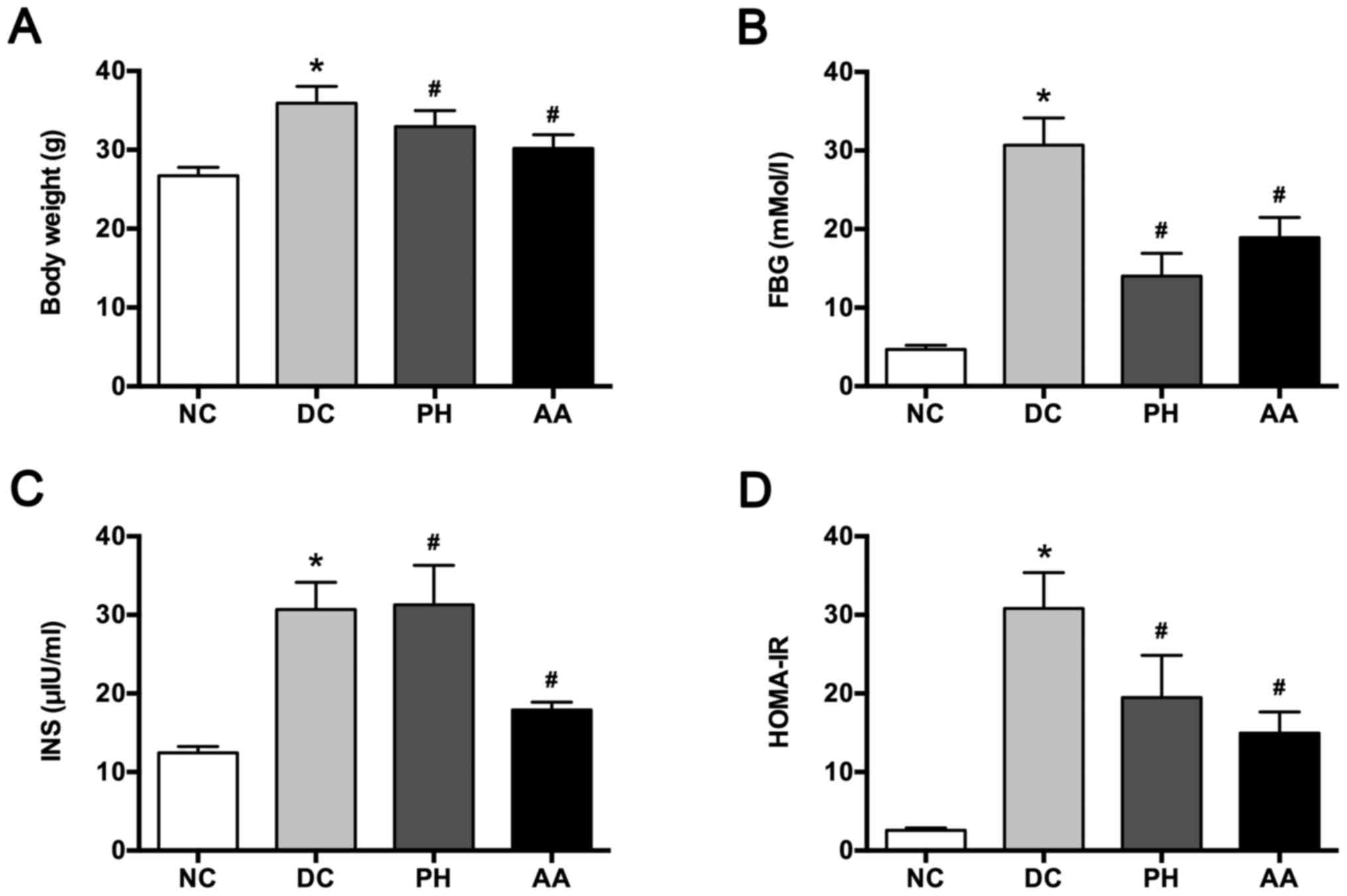
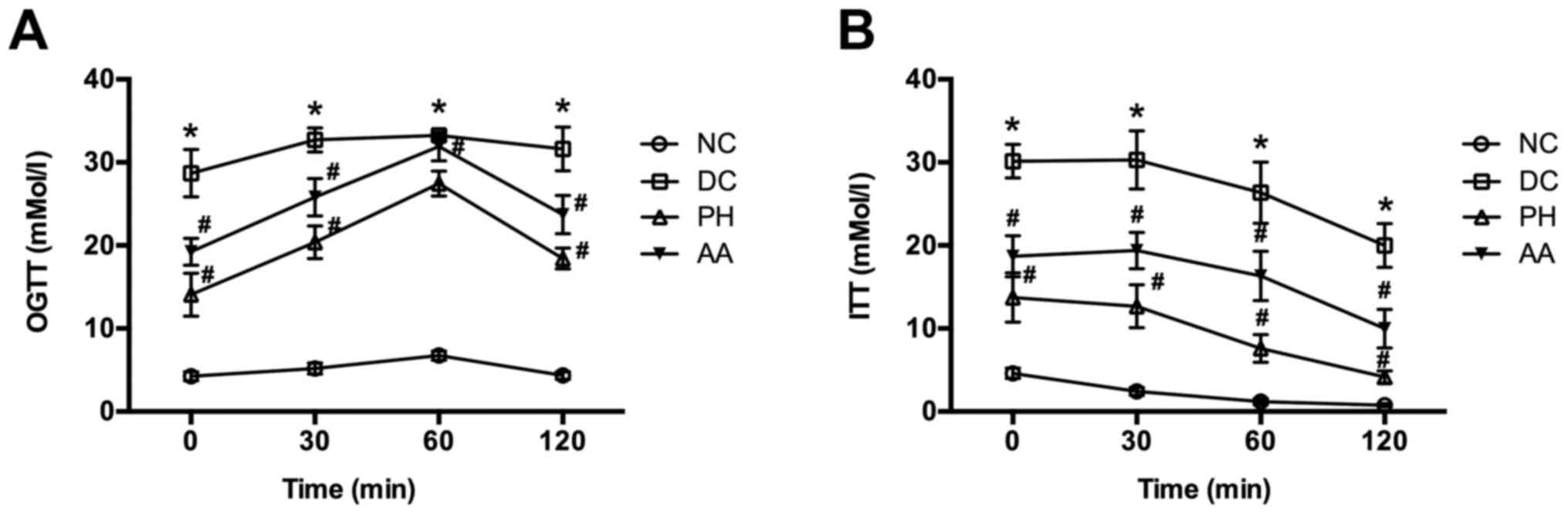
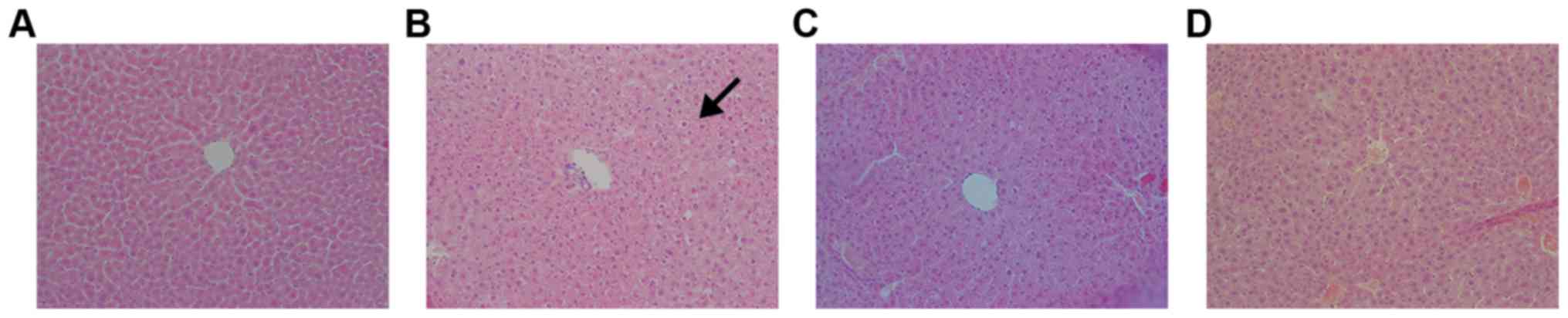
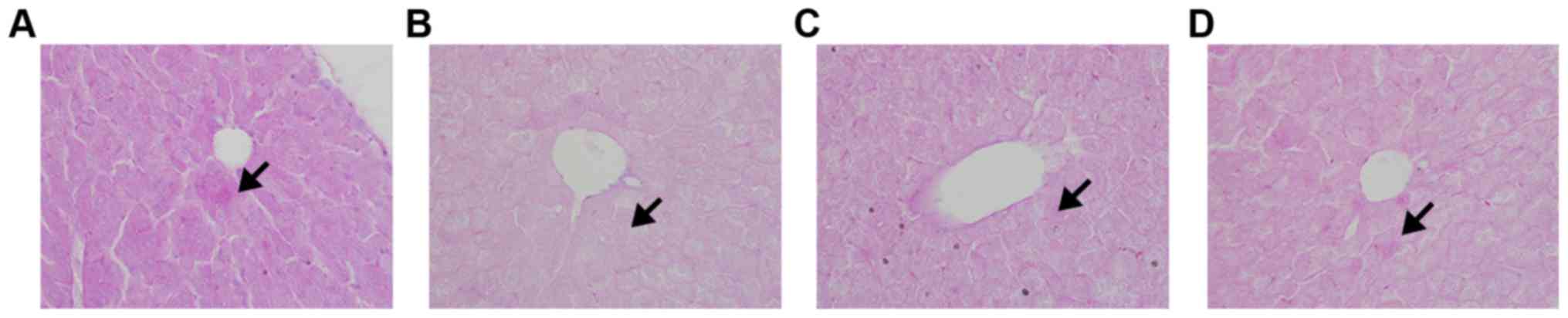
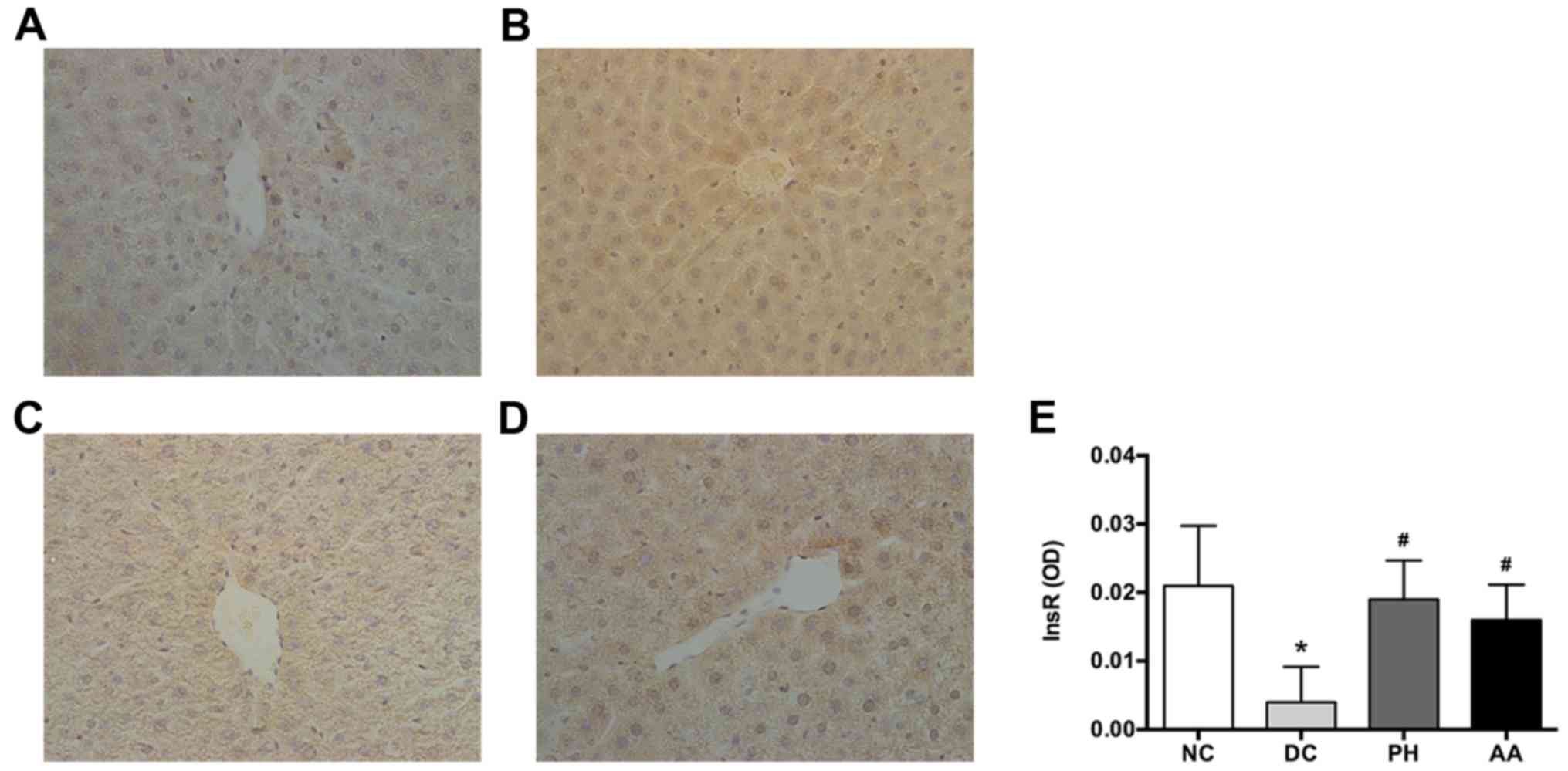
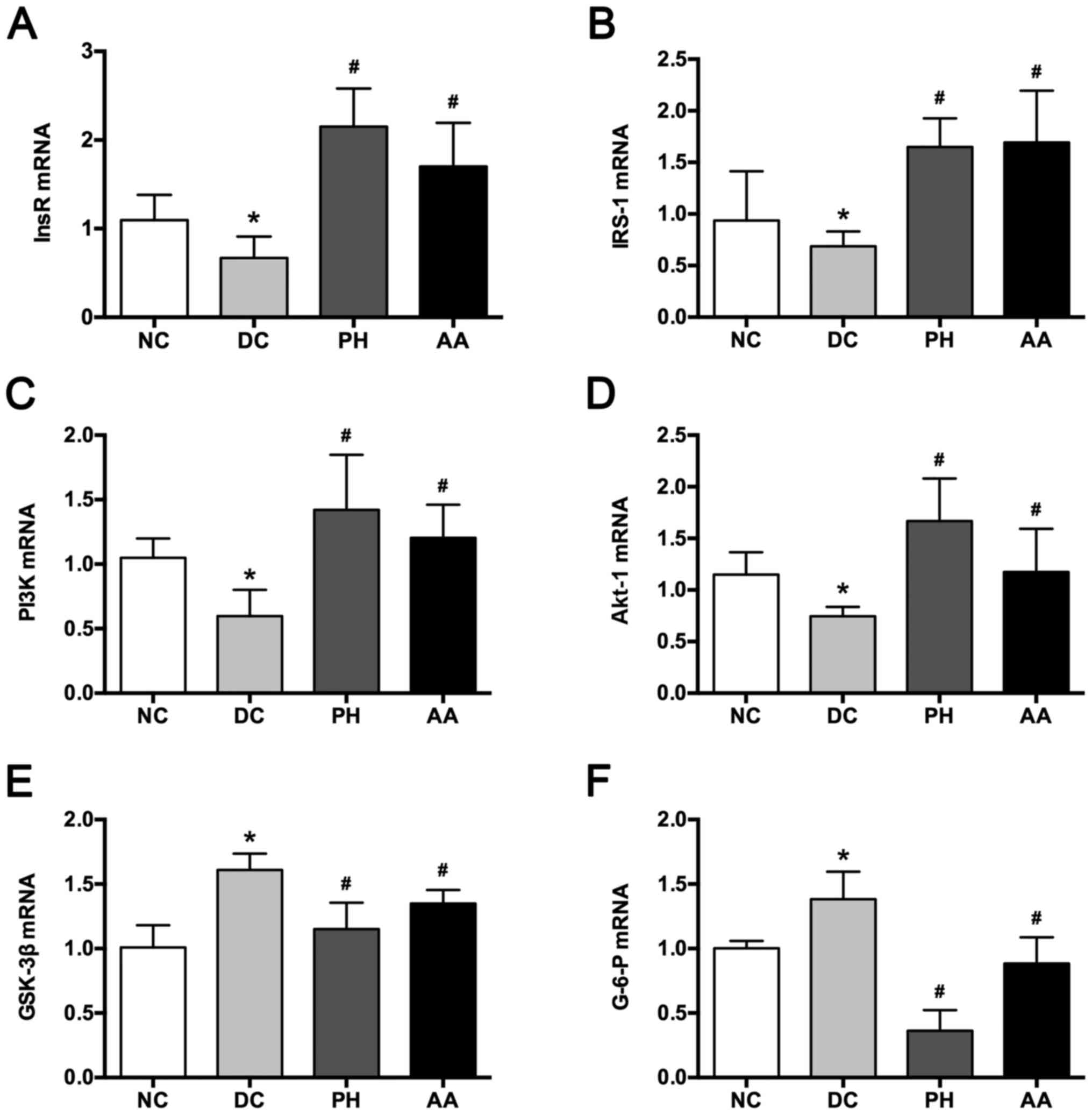
Asiatic acid (AA) has been demonstrated to exhibit anti-diabetic activity. However, the mechanisms and underlying signaling pathways remain to be elucidated. The present study was performed to confirm the protective effect of AA and demonstrate its ability to regulate the phosphatidylinositol 3‑kinase (PI3K)/protein kinase B (AKT)/glycogen synthase kinase‑3β (GSK‑3β) signaling pathway in db/db mice. Db/db mice fed on a high‑fat diet were used to model diabetes mellitus. Modeled mice were divided randomly into the model control, pioglitazone hydrochloride tablet (PH) and AA groups. Age‑matched C57 BL/6J mice served as normal controls. Lipid and glucose levels, and glycogen synthesis rates were assessed following treatment. Pathological changes were detected using hematoxylin and eosin staining. Expression of the PI3K/AKT/GSK‑3β signaling pathway at the mRNA level was measured using quantitative polymerase chain reaction analysis. The model control group revealed typical characteristics of obesity and diabetes, including high glucose and lipid levels, and decreased glycogen synthesis. Four weeks of treatment with AA or PH ameliorated these abnormalities. AA and PH treatments mitigated the upregulation of PI3K, AKT, insulin receptor, and insulin receptor substrate‑1 mRNA expression in modeled mice. Furthermore, AA and PH treatments decreased GSK‑3β and glucose‑6‑phosphatase mRNA expression compared with the normal control group. The results of the present study confirmed that AA possesses anti‑diabetic activity in db/db mice. The PI3K/AKT/GSK‑3β signaling pathway may mediate this protective effect.
View Figures

Figure 1

Figure 2

Figure 3

Figure 4

Figure 5

Figure 6

View References

1 

Anna V, van der Ploeg HP, Cheung NW, Huxley RR and Bauman AE: Sociodemographic correlates of the increasing trend in prevalence of gestational diabetes mellitus in a large population of women between 1995 and 2005. Diabetes Care. 31:2288–2293. 2008. View Article : Google Scholar : PubMed/NCBI

2 

Kaul K, Apostolopoulou M and Roden M: Insulin resistance in type 1 diabetes mellitus. Metabolism. 64:1629–1639. 2015. View Article : Google Scholar : PubMed/NCBI

3 

Srinivasan K, Viswanad B, Asrat L, Kaul CL and Ramarao P: Combination of high-fat diet-fed and low-dose streptozotocin-treated rat: A model for type 2 diabetes and pharmacological screening. Pharmacol Res. 52:313–320. 2005. View Article : Google Scholar : PubMed/NCBI

4 

von W, ilamowitz-Moellendorff A, Hunter RW, García-Rocha M, Kang L, López-Soldado I, Lantier L, Patel K, Peggie MW, Martinez-Pons C, Voss M, et al: Glucose-6-phosphate-mediated activation of liver glycogen synthase plays a key role in hepatic glycogen synthesis. Diabetes. 62:4070–4082. 2013. View Article : Google Scholar : PubMed/NCBI

5 

MacAulay K and Woodgett JR: Targeting glycogen synthase kinase-3 (GSK-3) in the treatment of Type 2 diabetes. Expert Opin Ther Targets. 12:1265–1274. 2008. View Article : Google Scholar : PubMed/NCBI

6 

Ciaraldi TP, Carter L, Mudaliar S and Henry RR: GSK-3beta and control of glucose metabolism and insulin action in human skeletal muscle. Mol Cell Endocrinol. 315:153–158. 2010. View Article : Google Scholar : PubMed/NCBI

7 

Patel S, Doble BW, MacAulay K, Sinclair EM, Drucker DJ and Woodgett JR: Tissue-specific role of glycogen synthase kinase 3beta in glucose homeostasis and insulin action. Mol Cell Biol. 28:6314–6328. 2008. View Article : Google Scholar : PubMed/NCBI

8 

Park KS: The search for genetic risk factors of type 2 diabetes mellitus. Diabetes Metab J. 35:12–22. 2011. View Article : Google Scholar : PubMed/NCBI

9 

Inzucchi SE, Bergenstal RM, Buse JB, Diamant M, Ferrannini E, Nauck M, Peters AL, Tsapas A, Wender R and Matthews DR: Management of hyperglycaemia in type 2 diabetes: A patient-centered approach. Position statement of the American Diabetes Association (ADA) and the European Association for the Study of Diabetes (EASD). Diabetologia. 55:1577–1596. 2012. View Article : Google Scholar : PubMed/NCBI

10 

Yang LX, Liu TH, Huang ZT, Li JE and Wu LL: Research progress on the mechanism of single-Chinese medicinal herbs in treating diabetes mellitus. Chin J Integr Med. 17:235–240. 2011. View Article : Google Scholar : PubMed/NCBI

11 

Prabhakar PK and Doble M: Mechanism of action of natural products used in the treatment of diabetes mellitus. Chin J Integr Med. 17:563–574. 2011. View Article : Google Scholar : PubMed/NCBI

12 

Orhan IE: Centella asiatica (L.) Urban: From traditional medicine to modern medicine with neuroprotective potential. Evid Based Complement Alternat Med. 2012:9462592012. View Article : Google Scholar : PubMed/NCBI

13 

Pakdeechote P, Bunbupha S, Kukongviriyapan U, Prachaney P, Khrisanapant W and Kukongviriyapan V: Asiatic acid alleviates hemodynamic and metabolic alterations via restoring eNOS/iNOS expression, oxidative stress, and inflammation in diet-induced metabolic syndrome rats. Nutrients. 6:355–370. 2014. View Article : Google Scholar : PubMed/NCBI

14 

Li Y, Yang F, Yuan M, Jiang L, Yuan L, Zhang X, Li Y, Dong L, Bao X and Yin S: Synthesis and evaluation of asiatic acid derivatives as anti-fibrotic agents: Structure/activity studies. Steroids. 96:44–49. 2015. View Article : Google Scholar : PubMed/NCBI

15 

Ramachandran V, Saravanan R and Senthilraja P: Antidiabetic and antihyperlipidemic activity of asiatic acid in diabetic rats, role of HMG CoA: In vivo and in silico approaches. Phytomedicine. 21:225–232. 2014. View Article : Google Scholar : PubMed/NCBI

16 

Zhang J, Ai L, Lv T, Jiang X and Liu F: Asiatic acid, a triterpene, inhibits cell proliferation through regulating the expression of focal adhesion kinase in multiple myeloma cells. Oncol Lett. 6:1762–1766. 2013.PubMed/NCBI

17 

Wang X, Lu Q, Yu DS, Chen YP, Shang J, Zhang LY, Sun HB and Liu J: Asiatic acid mitigates hyperglycemia and reduces islet fibrosis in Goto-Kakizaki rat, a spontaneous type 2 diabetic animal model. Chin J Nat Med. 13:529–534. 2015.PubMed/NCBI

18 

Ramachandran V and Saravanan R: Efficacy of asiatic acid, a pentacyclic triterpene on attenuating the key enzymes activities of carbohydrate metabolism in streptozotocin-induced diabetic rats. Phytomedicine. 20:230–236. 2013. View Article : Google Scholar : PubMed/NCBI

19 

Ramachandran V and Saravanan R: Glucose uptake through translocation and activation of GLUT4 in PI3K/Akt signaling pathway by asiatic acid in diabetic rats. Hum Exp Toxicol. 34:884–893. 2015. View Article : Google Scholar : PubMed/NCBI

20 

McKeown NM, Meigs JB, Liu S, Saltzman E, Wilson PW and Jacques PF: Carbohydrate nutrition, insulin resistance, and the prevalence of the metabolic syndrome in the Framingham Offspring Cohort. Diabetes Care. 27:538–546. 2004. View Article : Google Scholar : PubMed/NCBI

21 

King AJ: The use of animal models in diabetes research. Br J Pharmacol. 166:877–894. 2012. View Article : Google Scholar : PubMed/NCBI

22 

Wang YW, Sun GD, Sun J, Liu SJ, Wang J, Xu XH and Miao LN: Spontaneous type 2 diabetic rodent models. J Diabetes Res. 2013:4017232013. View Article : Google Scholar : PubMed/NCBI

23 

Liu J, He T, Lu Q, Shang J, Sun H and Zhang L: Asiatic acid preserves beta cell mass and mitigates hyperglycemia in streptozocin-induced diabetic rats. Diabetes Metab Res Rev. 26:448–454. 2010. View Article : Google Scholar : PubMed/NCBI

24 

Ramachandran V and Saravanan R: Asiatic acid prevents lipid peroxidation and improves antioxidant status in rats with streptozotocin-induced diabetes. J Funct Foods. 5:1077–1087. 2013. View Article : Google Scholar

25 

Guilherme A, Virbasius JV, Puri V and Czech MP: Adipocyte dysfunctions linking obesity to insulin resistance and type 2 diabetes. Nat Rev Mol Cell Biol. 9:367–377. 2008. View Article : Google Scholar : PubMed/NCBI

26 

Guo S: Insulin signaling, resistance, and the metabolic syndrome: Insights from mouse models into disease mechanisms. J Endocrinol. 220:T1–T23. 2014. View Article : Google Scholar : PubMed/NCBI

27 

Fornoni A, Pileggi A, Molano RD, Sanabria NY, Tejada T, Gonzalez-Quintana J, Ichii H, Inverardi L, Ricordi C and Pastori RL: Inhibition of c-jun N terminal kinase (JNK) improves functional beta cell mass in human islets and leads to AKT and glycogen synthase kinase-3 (GSK-3) phosphorylation. Diabetologia. 51:298–308. 2008. View Article : Google Scholar : PubMed/NCBI

28 

Bertsch S, Lang CH and Vary TC: Inhibition of glycogen synthase kinase 3[beta] activity with lithium in vitro attenuates sepsis-induced changes in muscle protein turnover. Shock. 35:266–274. 2011. View Article : Google Scholar : PubMed/NCBI

29 

Nikoulina SE, Ciaraldi TP, Mudaliar S, Mohideen P, Carter L and Henry RR: Potential role of glycogen synthase kinase-3 in skeletal muscle insulin resistance of type 2 diabetes. Diabetes. 49:263–271. 2000. View Article : Google Scholar : PubMed/NCBI

30 

Jiang SJ, Dong H, Li JB, Xu LJ, Zou X, Wang KF, Lu FE and Yi P: Berberine inhibits hepatic gluconeogenesis via the LKB1-AMPK-TORC2 signaling pathway in streptozotocin-induced diabetic rats. World J Gastroenterol. 21:7777–7785. 2015. View Article : Google Scholar : PubMed/NCBI

31 

Zhang L, Chen J, Gong Y, Liu J, Zhang L, Hua W and Sun H: Synthesis and biological evaluation of asiatic acid derivatives as inhibitors of glycogen phosphorylases. Chem Biodivers. 6:864–874. 2009. View Article : Google Scholar : PubMed/NCBI

Related Articles

  • Abstract
  • View
  • Download
  • Twitter
Copy and paste a formatted citation
Spandidos Publications style
Sun W, Xu G, Guo X, Luo G, Wu L, Hou Y, Guo X, Zhou J, Xu T, Qin L, Qin L, et al: Protective effects of asiatic acid in a spontaneous type 2 diabetic mouse model. Mol Med Rep 16: 1333-1339, 2017.
APA
Sun, W., Xu, G., Guo, X., Luo, G., Wu, L., Hou, Y. ... Liu, T. (2017). Protective effects of asiatic acid in a spontaneous type 2 diabetic mouse model. Molecular Medicine Reports, 16, 1333-1339. https://doi.org/10.3892/mmr.2017.6684
MLA
Sun, W., Xu, G., Guo, X., Luo, G., Wu, L., Hou, Y., Guo, X., Zhou, J., Xu, T., Qin, L., Fan, Y., Han, L., Matsabisa, M., Ma, X., Liu, T."Protective effects of asiatic acid in a spontaneous type 2 diabetic mouse model". Molecular Medicine Reports 16.2 (2017): 1333-1339.
Chicago
Sun, W., Xu, G., Guo, X., Luo, G., Wu, L., Hou, Y., Guo, X., Zhou, J., Xu, T., Qin, L., Fan, Y., Han, L., Matsabisa, M., Ma, X., Liu, T."Protective effects of asiatic acid in a spontaneous type 2 diabetic mouse model". Molecular Medicine Reports 16, no. 2 (2017): 1333-1339. https://doi.org/10.3892/mmr.2017.6684
Copy and paste a formatted citation
x
Spandidos Publications style
Sun W, Xu G, Guo X, Luo G, Wu L, Hou Y, Guo X, Zhou J, Xu T, Qin L, Qin L, et al: Protective effects of asiatic acid in a spontaneous type 2 diabetic mouse model. Mol Med Rep 16: 1333-1339, 2017.
APA
Sun, W., Xu, G., Guo, X., Luo, G., Wu, L., Hou, Y. ... Liu, T. (2017). Protective effects of asiatic acid in a spontaneous type 2 diabetic mouse model. Molecular Medicine Reports, 16, 1333-1339. https://doi.org/10.3892/mmr.2017.6684
MLA
Sun, W., Xu, G., Guo, X., Luo, G., Wu, L., Hou, Y., Guo, X., Zhou, J., Xu, T., Qin, L., Fan, Y., Han, L., Matsabisa, M., Ma, X., Liu, T."Protective effects of asiatic acid in a spontaneous type 2 diabetic mouse model". Molecular Medicine Reports 16.2 (2017): 1333-1339.
Chicago
Sun, W., Xu, G., Guo, X., Luo, G., Wu, L., Hou, Y., Guo, X., Zhou, J., Xu, T., Qin, L., Fan, Y., Han, L., Matsabisa, M., Ma, X., Liu, T."Protective effects of asiatic acid in a spontaneous type 2 diabetic mouse model". Molecular Medicine Reports 16, no. 2 (2017): 1333-1339. https://doi.org/10.3892/mmr.2017.6684
Follow us
  • Twitter
  • LinkedIn
  • Facebook
About
  • Spandidos Publications
  • Careers
  • Cookie Policy
  • Privacy Policy
How can we help?
  • Help
  • Live Chat
  • Contact
  • Email to our Support Team