Spandidos Publications Logo
  • About
    • About Spandidos
    • Aims and Scopes
    • Abstracting and Indexing
    • Editorial Policies
    • Reprints and Permissions
    • Job Opportunities
    • Terms and Conditions
    • Contact
  • Journals
    • All Journals
    • Oncology Letters
      • Oncology Letters
      • Information for Authors
      • Editorial Policies
      • Editorial Board
      • Aims and Scope
      • Abstracting and Indexing
      • Bibliographic Information
      • Archive
    • International Journal of Oncology
      • International Journal of Oncology
      • Information for Authors
      • Editorial Policies
      • Editorial Board
      • Aims and Scope
      • Abstracting and Indexing
      • Bibliographic Information
      • Archive
    • Molecular and Clinical Oncology
      • Molecular and Clinical Oncology
      • Information for Authors
      • Editorial Policies
      • Editorial Board
      • Aims and Scope
      • Abstracting and Indexing
      • Bibliographic Information
      • Archive
    • Experimental and Therapeutic Medicine
      • Experimental and Therapeutic Medicine
      • Information for Authors
      • Editorial Policies
      • Editorial Board
      • Aims and Scope
      • Abstracting and Indexing
      • Bibliographic Information
      • Archive
    • International Journal of Molecular Medicine
      • International Journal of Molecular Medicine
      • Information for Authors
      • Editorial Policies
      • Editorial Board
      • Aims and Scope
      • Abstracting and Indexing
      • Bibliographic Information
      • Archive
    • Biomedical Reports
      • Biomedical Reports
      • Information for Authors
      • Editorial Policies
      • Editorial Board
      • Aims and Scope
      • Abstracting and Indexing
      • Bibliographic Information
      • Archive
    • Oncology Reports
      • Oncology Reports
      • Information for Authors
      • Editorial Policies
      • Editorial Board
      • Aims and Scope
      • Abstracting and Indexing
      • Bibliographic Information
      • Archive
    • Molecular Medicine Reports
      • Molecular Medicine Reports
      • Information for Authors
      • Editorial Policies
      • Editorial Board
      • Aims and Scope
      • Abstracting and Indexing
      • Bibliographic Information
      • Archive
    • World Academy of Sciences Journal
      • World Academy of Sciences Journal
      • Information for Authors
      • Editorial Policies
      • Editorial Board
      • Aims and Scope
      • Abstracting and Indexing
      • Bibliographic Information
      • Archive
    • International Journal of Functional Nutrition
      • International Journal of Functional Nutrition
      • Information for Authors
      • Editorial Policies
      • Editorial Board
      • Aims and Scope
      • Abstracting and Indexing
      • Bibliographic Information
      • Archive
    • International Journal of Epigenetics
      • International Journal of Epigenetics
      • Information for Authors
      • Editorial Policies
      • Editorial Board
      • Aims and Scope
      • Abstracting and Indexing
      • Bibliographic Information
      • Archive
    • Medicine International
      • Medicine International
      • Information for Authors
      • Editorial Policies
      • Editorial Board
      • Aims and Scope
      • Abstracting and Indexing
      • Bibliographic Information
      • Archive
  • Articles
  • Information
    • Information for Authors
    • Information for Reviewers
    • Information for Librarians
    • Information for Advertisers
    • Conferences
  • Language Editing
Spandidos Publications Logo
  • About
    • About Spandidos
    • Aims and Scopes
    • Abstracting and Indexing
    • Editorial Policies
    • Reprints and Permissions
    • Job Opportunities
    • Terms and Conditions
    • Contact
  • Journals
    • All Journals
    • Biomedical Reports
      • Information for Authors
      • Editorial Policies
      • Editorial Board
      • Aims and Scope
      • Abstracting and Indexing
      • Bibliographic Information
      • Archive
    • Experimental and Therapeutic Medicine
      • Information for Authors
      • Editorial Policies
      • Editorial Board
      • Aims and Scope
      • Abstracting and Indexing
      • Bibliographic Information
      • Archive
    • International Journal of Epigenetics
      • Information for Authors
      • Editorial Policies
      • Editorial Board
      • Aims and Scope
      • Abstracting and Indexing
      • Bibliographic Information
      • Archive
    • International Journal of Functional Nutrition
      • Information for Authors
      • Editorial Policies
      • Editorial Board
      • Aims and Scope
      • Abstracting and Indexing
      • Bibliographic Information
      • Archive
    • International Journal of Molecular Medicine
      • Information for Authors
      • Editorial Policies
      • Editorial Board
      • Aims and Scope
      • Abstracting and Indexing
      • Bibliographic Information
      • Archive
    • International Journal of Oncology
      • Information for Authors
      • Editorial Policies
      • Editorial Board
      • Aims and Scope
      • Abstracting and Indexing
      • Bibliographic Information
      • Archive
    • Medicine International
      • Information for Authors
      • Editorial Policies
      • Editorial Board
      • Aims and Scope
      • Abstracting and Indexing
      • Bibliographic Information
      • Archive
    • Molecular and Clinical Oncology
      • Information for Authors
      • Editorial Policies
      • Editorial Board
      • Aims and Scope
      • Abstracting and Indexing
      • Bibliographic Information
      • Archive
    • Molecular Medicine Reports
      • Information for Authors
      • Editorial Policies
      • Editorial Board
      • Aims and Scope
      • Abstracting and Indexing
      • Bibliographic Information
      • Archive
    • Oncology Letters
      • Information for Authors
      • Editorial Policies
      • Editorial Board
      • Aims and Scope
      • Abstracting and Indexing
      • Bibliographic Information
      • Archive
    • Oncology Reports
      • Information for Authors
      • Editorial Policies
      • Editorial Board
      • Aims and Scope
      • Abstracting and Indexing
      • Bibliographic Information
      • Archive
    • World Academy of Sciences Journal
      • Information for Authors
      • Editorial Policies
      • Editorial Board
      • Aims and Scope
      • Abstracting and Indexing
      • Bibliographic Information
      • Archive
  • Articles
  • Information
    • For Authors
    • For Reviewers
    • For Librarians
    • For Advertisers
    • Conferences
  • Language Editing
Login Register Submit
  • This site uses cookies
  • You can change your cookie settings at any time by following the instructions in our Cookie Policy. To find out more, you may read our Privacy Policy.

    I agree
Search articles by DOI, keyword, author or affiliation
Search
Advanced Search
presentation
Molecular Medicine Reports
Join Editorial Board Propose a Special Issue
Print ISSN: 1791-2997 Online ISSN: 1791-3004
Journal Cover
September-2017 Volume 16 Issue 3

Full Size Image

Sign up for eToc alerts
Recommend to Library

Journals

International Journal of Molecular Medicine

International Journal of Molecular Medicine

International Journal of Molecular Medicine is an international journal devoted to molecular mechanisms of human disease.

International Journal of Oncology

International Journal of Oncology

International Journal of Oncology is an international journal devoted to oncology research and cancer treatment.

Molecular Medicine Reports

Molecular Medicine Reports

Covers molecular medicine topics such as pharmacology, pathology, genetics, neuroscience, infectious diseases, molecular cardiology, and molecular surgery.

Oncology Reports

Oncology Reports

Oncology Reports is an international journal devoted to fundamental and applied research in Oncology.

Experimental and Therapeutic Medicine

Experimental and Therapeutic Medicine

Experimental and Therapeutic Medicine is an international journal devoted to laboratory and clinical medicine.

Oncology Letters

Oncology Letters

Oncology Letters is an international journal devoted to Experimental and Clinical Oncology.

Biomedical Reports

Biomedical Reports

Explores a wide range of biological and medical fields, including pharmacology, genetics, microbiology, neuroscience, and molecular cardiology.

Molecular and Clinical Oncology

Molecular and Clinical Oncology

International journal addressing all aspects of oncology research, from tumorigenesis and oncogenes to chemotherapy and metastasis.

World Academy of Sciences Journal

World Academy of Sciences Journal

Multidisciplinary open-access journal spanning biochemistry, genetics, neuroscience, environmental health, and synthetic biology.

International Journal of Functional Nutrition

International Journal of Functional Nutrition

Open-access journal combining biochemistry, pharmacology, immunology, and genetics to advance health through functional nutrition.

International Journal of Epigenetics

International Journal of Epigenetics

Publishes open-access research on using epigenetics to advance understanding and treatment of human disease.

Medicine International

Medicine International

An International Open Access Journal Devoted to General Medicine.

Journal Cover
September-2017 Volume 16 Issue 3

Full Size Image

Sign up for eToc alerts
Recommend to Library

  • Article
  • Citations
    • Cite This Article
    • Download Citation
    • Create Citation Alert
    • Remove Citation Alert
    • Cited By
  • Similar Articles
    • Related Articles (in Spandidos Publications)
    • Similar Articles (Google Scholar)
    • Similar Articles (PubMed)
  • Download PDF
  • Download XML
  • View XML
Article

Involvement of exogenous 3‑deoxyglucosone in β‑cell dysfunction induces impaired glucose regulation

  • Authors:
    • Lurong Zhang
    • Liang Zhou
    • Xiudao Song
    • Guoqiang Liang
    • Zhongrui Xu
    • Fei Wang
    • Fei Huang
    • Guorong Jiang
  • View Affiliations / Copyright

    Affiliations: Suzhou Academy of Wumen Chinese Medicine, Suzhou Hospital of Traditional Chinese Medicine, Nanjing University of Chinese Medicine, Suzhou, Jiangsu 215003, P.R. China
  • Pages: 2976-2984
    |
    Published online on: June 27, 2017
       https://doi.org/10.3892/mmr.2017.6856
  • Expand metrics +
Metrics: Total Views: 0 (Spandidos Publications: | PMC Statistics: )
Metrics: Total PDF Downloads: 0 (Spandidos Publications: | PMC Statistics: )
Cited By (CrossRef): 0 citations Loading Articles...

This article is mentioned in:


Abstract

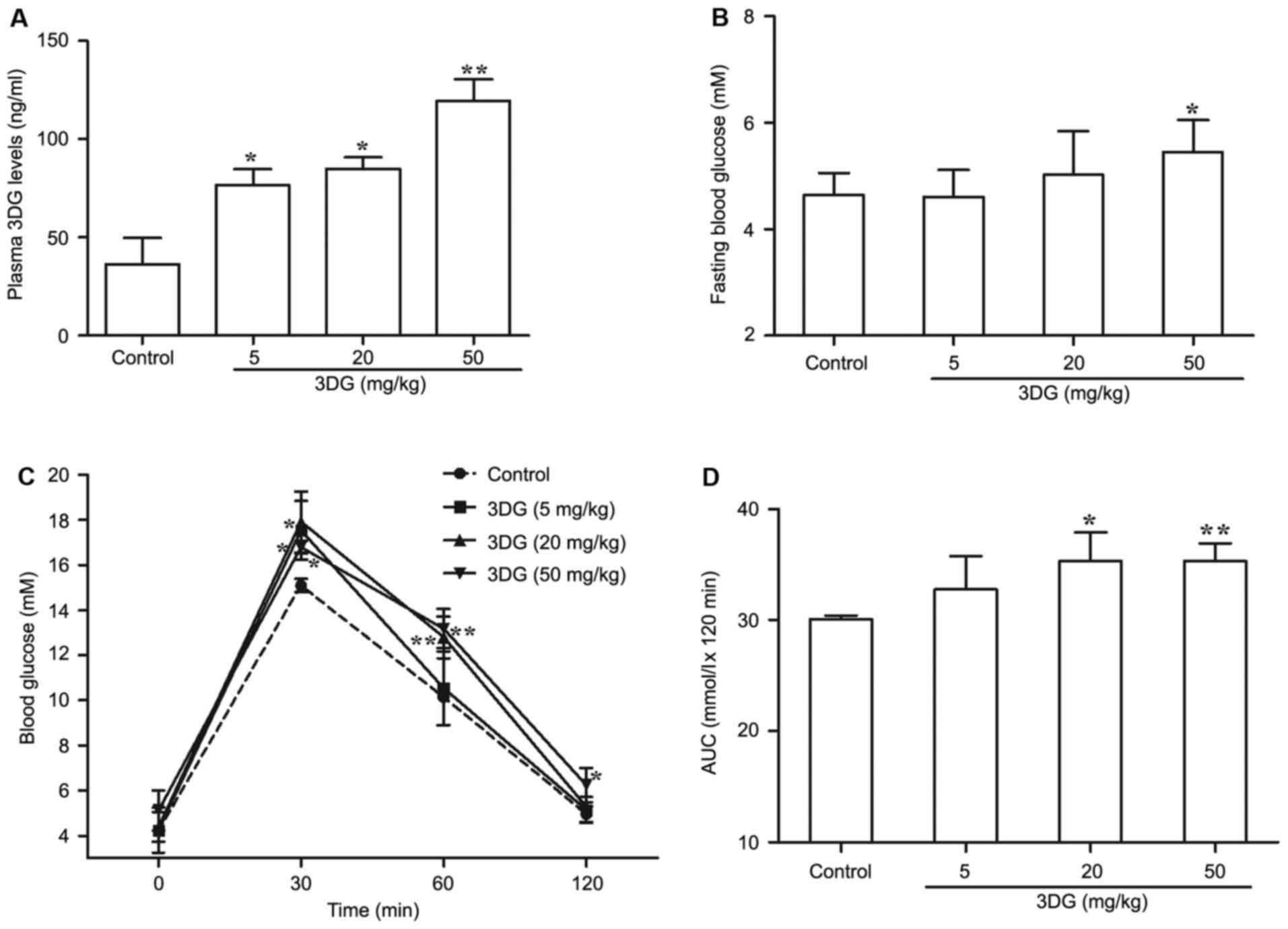
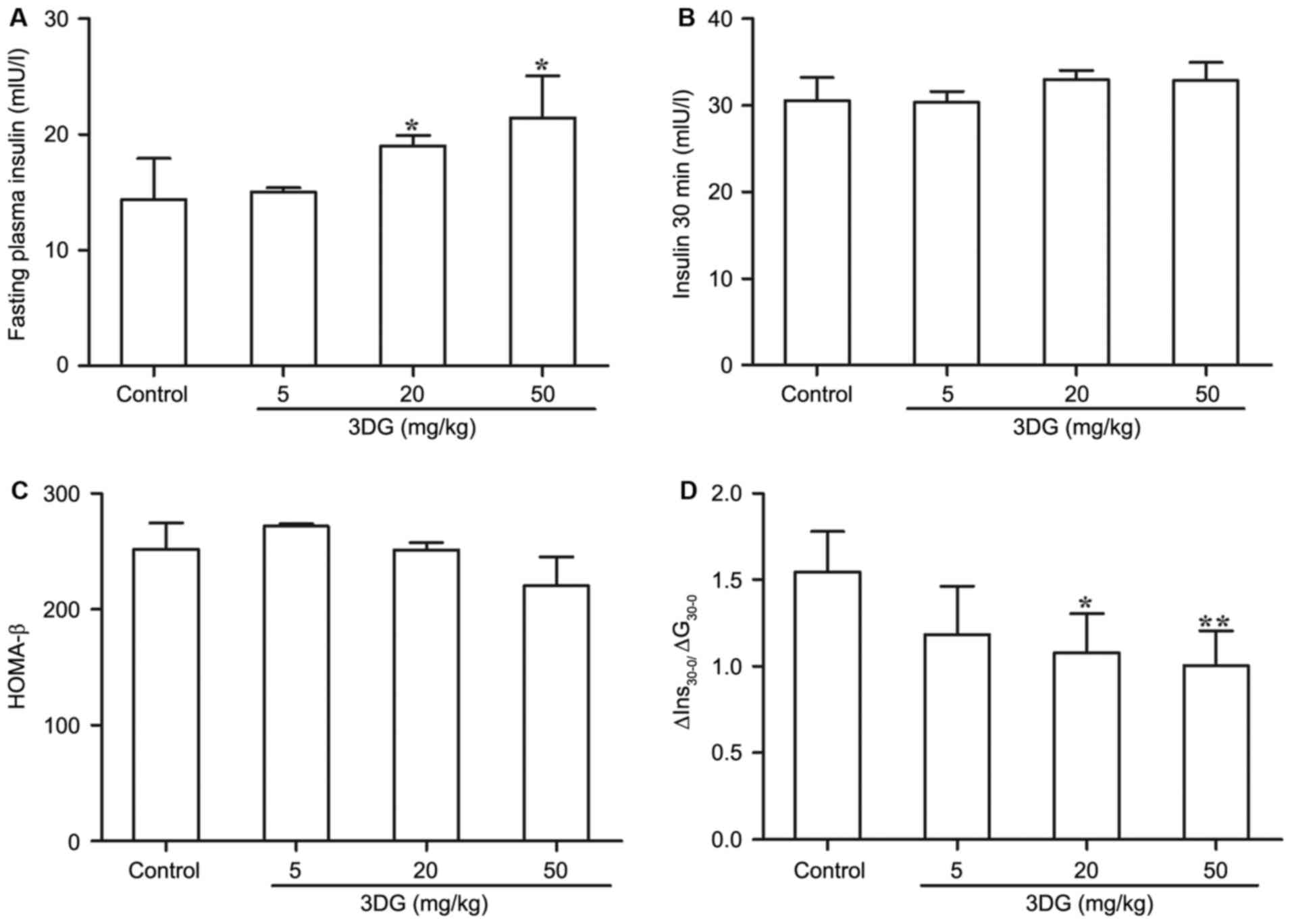
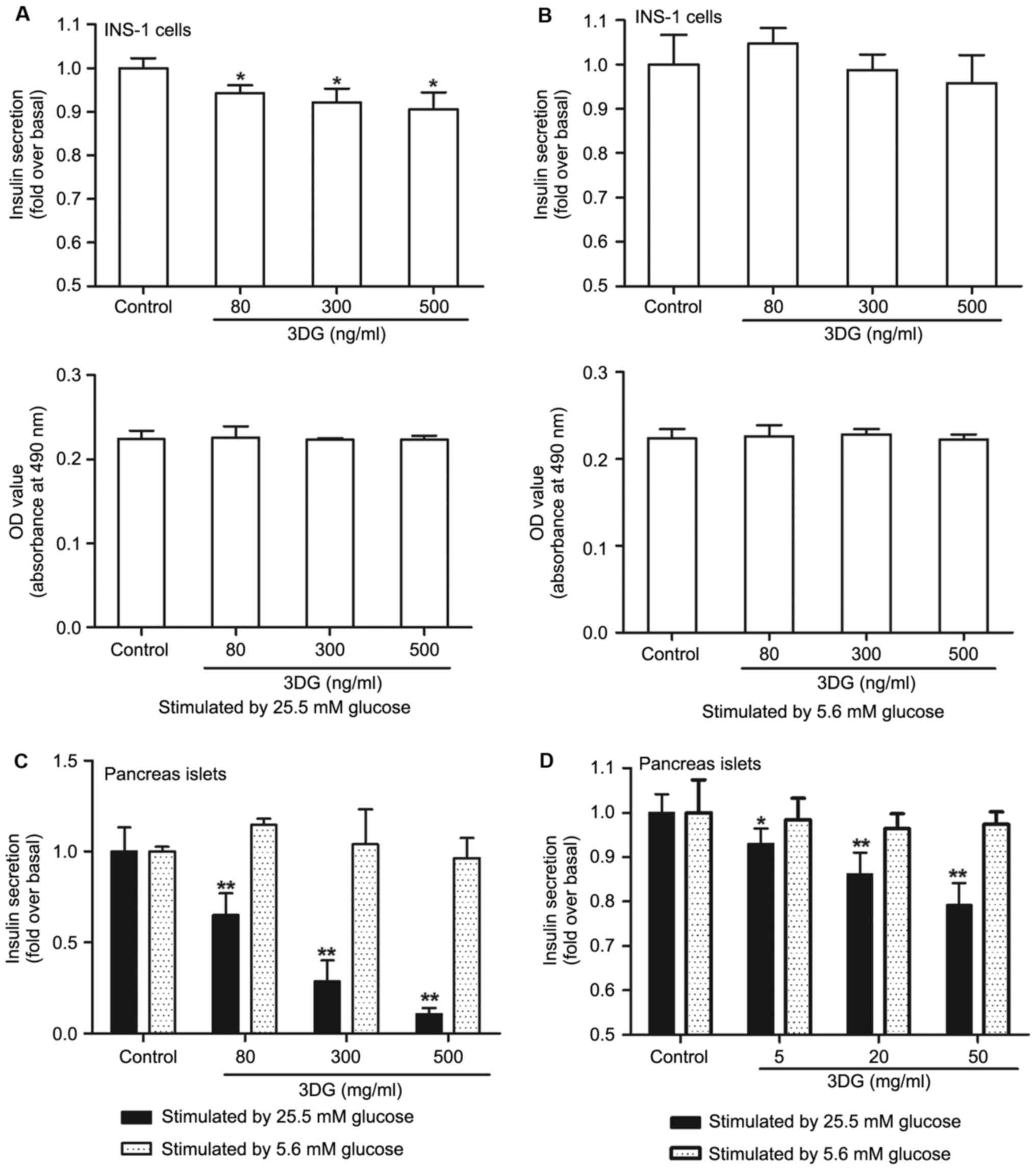
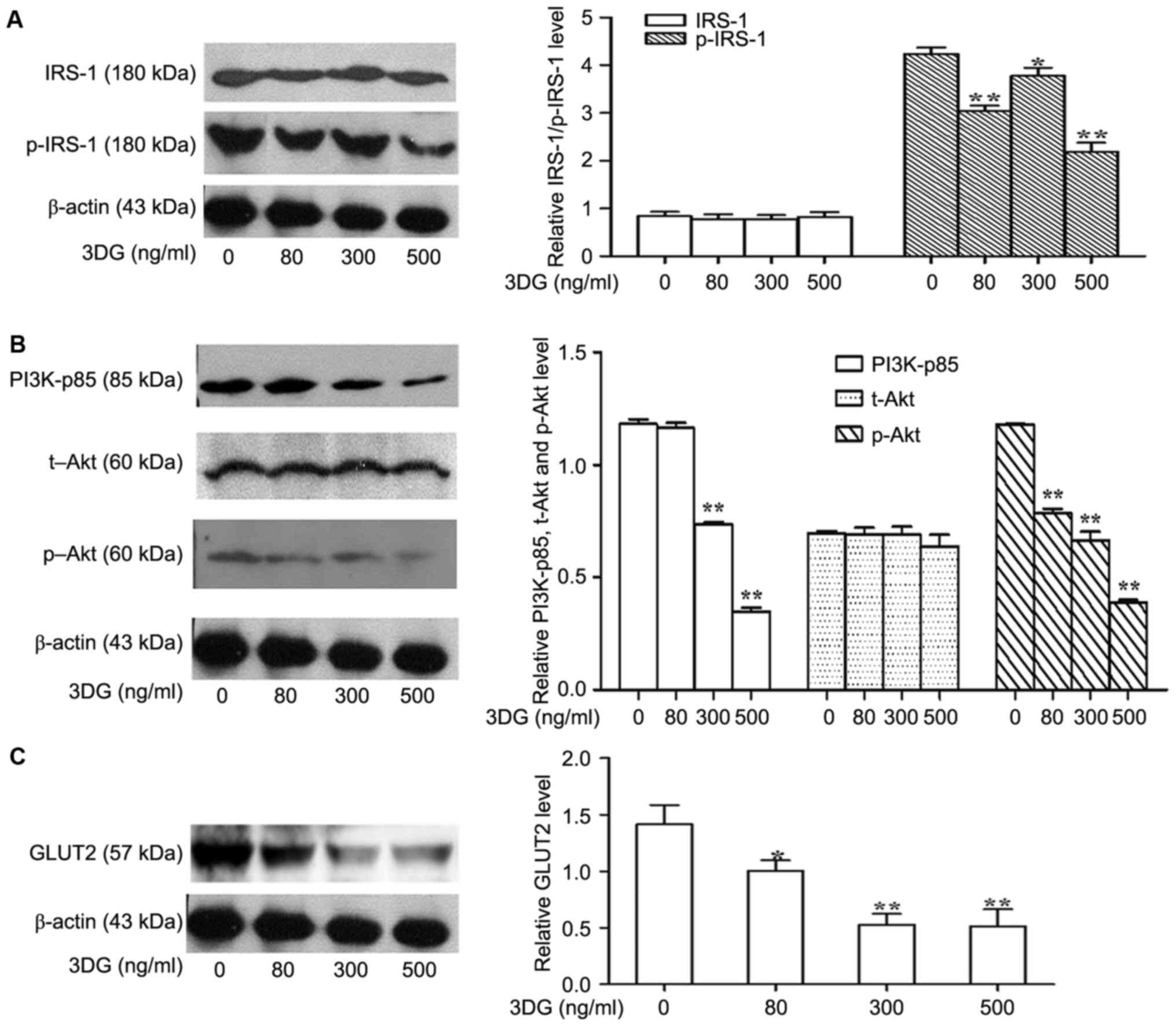
β‑cell dysfunction is the primary cause of type 2 diabetes mellitus (T2DM). 1,2‑dicarbonyl compounds, such as 3‑deoxyglucosone (3DG) have been reported to increase the risk of T2DM. Abnormal elevation of plasma 3DG may impair β‑cell function and thereby, it is linked to T2DM. Previous findings suggest that exogenous 3DG may serve an important role in the development of pre‑diabetes. In the present study, the authors examine whether exogenous 3DG induces impaired glucose regulation in mice by decreasing β‑cell function involving of accumulation of plasma 3DG. At two weeks following administration of 3DG, fasting blood glucose (FBG) levels, oral glucose tolerance (by a glucose meter) and plasma levels of 3DG (by HPLC) and insulin (by radioimmunoassay) were measured. Glucose‑stimulated insulin secretion in cultured pancreas islets and INS‑1 cells was measured by radioimmunoassay. Western blotting was used to examine the expression of the key molecules of the insulin‑PI3K signaling pathway. 3DG treatment increased FBG and fasting blood insulin levels, reduced oral glucose tolerance in conjunction with decreased ∆Ins30‑0/∆G30‑0. In 3DG‑treated mice, an increase in the plasma 3DG level was observed, which was most likely the mechanism for decreased β‑cell function. This idea was further supported by these results that non‑cytotoxic 3DG concentration obviously decreased glucose‑stimulated insulin secretion in cultured pancreas islets and INS‑1 cells exposure to high glucose (25.5 mM). 3DG decreased the expression of GLUT2 and phosphorylation of IRS‑1, PI3K‑p85 and Akt in high glucose‑induced INS‑1 cells. To the best of the authors' knowledge, the present study is the first to demonstrate that exogenous 3DG induced normal mice to develop IGR, resulting from β‑cell dysfunction. Exogenous 3DG administration increased plasma 3DG levels, which participates in inducing β‑cell dysfunction, at least in part, through impairing IRS‑1/PI3K/GLUT2 signaling.
View Figures

Figure 1

Figure 2

Figure 3

Figure 4

View References

1 

Giuseppe D, Muhammad AG and Defronzo RA: What are the pharmacotherapy options for treating prediabetes? Expert Opin Pharmaco. 15:2003–2018. 2014. View Article : Google Scholar

2 

Abdul-Ghani MA, Tripathy D and DeFronzo RA: Contributions of beta-cell dysfunction and insulin resistance to the pathogenesis of impaired glucose tolerance and impaired fasting glucose. Diabetes Care. 29:1130–1139. 2006. View Article : Google Scholar : PubMed/NCBI

3 

Rhodes CJ, White MF, Leahy JL and Kahn SE: Direct autocrine action of insulin on β-cells: Does it make physiological sense? Diabetes. 62:2157–2163. 2013. View Article : Google Scholar : PubMed/NCBI

4 

Leibiger IB, Leibiger B and Berggren PO: Insulin signaling in the pancreatic beta-cell. Annu Rev Nutr. 28:233–251. 2008. View Article : Google Scholar : PubMed/NCBI

5 

Kulkarni RN, Brüning JC, Winnay JN, Postic C, Magnuson MA and Kahn CR: Tissue-specific knockout of the insulin receptor in pancreatic beta cells creates an insulin secretory defect similar to that in type 2 diabetes. Cell. 96:329–339. 1999. View Article : Google Scholar : PubMed/NCBI

6 

Kulkarni RN: Receptors for insulin and insulin-like growth factor-1 and insulin receptor substrate-1 mediate pathways that regulate islet function. Biochem Soc Trans. 30:317–322. 2002. View Article : Google Scholar : PubMed/NCBI

7 

Kulkarni RN, Winnay JN, Daniels M, Brüning JC, Flier SN, Hanahan D and Kahn CR: Altered function of insulin receptor substrate-1-deficient mouse islets and cultured beta-cell lines. J Clin Invest. 104:R69–R75. 1999. View Article : Google Scholar : PubMed/NCBI

8 

Withers DJ, Gutierrez JS, Towery H, Burks DJ, Ren JM, Previs S, Zhang Y, Bernal D, Pons S, Shulman GI, et al: Disruption of IRS-2 causes type 2 diabetes in mice. Nature. 391:900–904. 1998. View Article : Google Scholar : PubMed/NCBI

9 

Rothenberg PL, Willison LD, Simon J and Wolf BA: Glucose-induced insulin receptor tyrosine phosphorylation in insulin-secreting beta-cells. Diabetes. 44:802–809. 1995. View Article : Google Scholar : PubMed/NCBI

10 

Aspinwall CA, Qian WJ, Roper MG, Kulkarni RN, Kahn CR and Kennedy RT: Roles of insulin receptor substrate-1, phosphatidylinositol 3-kinase, and release of intracellular Ca2+ stores in insulin-stimulated insulin secretion in beta -cells. J Biol Chem. 275:22331–22338. 2000. View Article : Google Scholar : PubMed/NCBI

11 

da Silva Xavier G, Varadi A, Ainscow EK and Rutter GA: Regulation of gene expression by glucose in pancreatic beta -cells (MIN6) via insulin secretion and activation of phosphatidylinositol 3′-kinase. J Biol Chem. 275:36269–36277. 2000. View Article : Google Scholar : PubMed/NCBI

12 

Maessen DE, Hanssen NM, Scheijen JL, van der Kallen CJ, van Greevenbroek MM, Stehouwer CD and Schalkwijk CG: Post-glucose load plasma α-dicarbonyl concentrations are increased in individuals with impaired glucose metabolism and type 2 diabetes: The CODAM study. Diabetes Care. 38:913–920. 2015. View Article : Google Scholar : PubMed/NCBI

13 

Dhar A, Desai KM and Wu L: Alagebrium attenuates acute methylglyoxal-induced glucose intolerance in Sprague-Dawley rats. Br J Pharmacol. 159:166–175. 2010. View Article : Google Scholar : PubMed/NCBI

14 

Riboulet-Chavey A, Pierron A, Durand I, Murdaca J, Giudicelli J and Van Obberghen E: Methylglyoxal impairs the insulin signaling pathways independently of the formation of intracellular reactive oxygen species. Diabetes. 55:1289–1299. 2006. View Article : Google Scholar : PubMed/NCBI

15 

Jia X and Wu L: Accumulation of endogenous methylglyoxal impaired insulin signaling in adipose tissue of fructose-fed rats. Mol Cell Biochem. 306:133–139. 2007. View Article : Google Scholar : PubMed/NCBI

16 

Fiory F, Lombardi A, Miele C, Giudicelli J, Beguinot F and Van Obberghen E: Methylglyoxal impairs insulin signalling and insulin action on glucose-induced insulin secretion in the pancreatic beta cell line INS-1E. Diabetologia. 54:2941–2952. 2011. View Article : Google Scholar : PubMed/NCBI

17 

Eriksson UJ, Wentzel P, Minhas HS and Thornalley PJ: Teratogenicity of 3-deoxyglucosone and diabetic embryopathy. Diabetes. 47:1960–1966. 1998. View Article : Google Scholar : PubMed/NCBI

18 

Degen J, Hellwig M and Henle T: 1,2-dicarbonyl compounds in commonly consumed foods. J Agric Food Chem. 60:7071–7079. 2012. View Article : Google Scholar : PubMed/NCBI

19 

Okado A, Kawasaki Y, Hasuike Y, Takahashi M, Teshima T, Fujii J and Taniguchi N: Induction of apoptotic cell death by methylglyoxal and 3-deoxyglucosone in macrophage-derived cell lines. Biochem Biophys Res Commun. 225:219–224. 1996. View Article : Google Scholar : PubMed/NCBI

20 

Che W, Asahi M, Takahashi M, Kaneto H, Okado A, Higashiyama S and Taniguchi N: Selective induction of heparin-binding epidermal growth factor-like growth factor by methylglyoxal and 3-deoxyglucosone in rat aortic smooth muscle cells. The involvement of reactive oxygen species formation and a possible implication for atherogenesis in diabetes. J Biol Chem. 272:18453–18459. 1997. View Article : Google Scholar : PubMed/NCBI

21 

Kalapos MP: Methylglyoxal in living organisms: Chemistry, biochemistry, toxicology and biological implications. Toxicol Lett. 110:145–175. 1999. View Article : Google Scholar : PubMed/NCBI

22 

Niwa T: 3-Deoxyglucosone: Metabolism, analysis, biological activity, and clinical implication. J Chromatogr B Biomed Sci Appl. 731:23–36. 1999. View Article : Google Scholar : PubMed/NCBI

23 

Sassi-Gaha S, Loughlin DT, Kappler F, Schwartz ML, Su B, Tobia AM and Artlett CM: Two dicarbonyl compounds, 3-deoxyglucosone and methylglyoxal, differentially modulate dermal fibroblasts. Matrix Biol. 29:127–134. 2010. View Article : Google Scholar : PubMed/NCBI

24 

Wang Q, Jiang GR and Zhang LR: Effects of 3-deoxyglucosone on blood glucose of normal mice. Chinese J Diabetes. 18:220–222. 2010.

25 

Lal S, Kappler F, Walker M, Orchard TJ, Beisswenger PJ, Szwergold BS and Brown TR: Quantitation of 3-deoxyglucosone levels in human plasma. Arch Biochem Biophys. 342:254–260. 1997. View Article : Google Scholar : PubMed/NCBI

26 

Hamada Y, Nakamura J, Fujisawa H, Yago H, Nakashima E, Koh N and Hotta N: Effects of glycemic control on plasma 3-deoxyglucosone levels in NIDDM patients. Diabetes Care. 20:1466–1469. 1997. View Article : Google Scholar : PubMed/NCBI

27 

Beisswenger PJ, Howell SK, O'Dell RM, Wood ME, Touchette AD and Szwergold BS: alpha-Dicarbonyls increase in the postprandial period and reflect the degree of hyperglycemia. Diabetes Care. 24:726–732. 2001. View Article : Google Scholar : PubMed/NCBI

28 

Jiang G, Zhang L, Ji Q, Wang F, Xu H, Huang F and Wang C: Accumulation of plasma 3-deoxyglucosone impaired glucose regulation in Chinese seniors: Implication for senile diabetes? Diabetes Metab Syndr. 6:140–145. 2012. View Article : Google Scholar : PubMed/NCBI

29 

Liang G, Song X, Xu H, Wang F, Zhang L, Zhou L and Jiang G: 3-Deoxyglucosone induced acute glucose intolerance in sprague-dawley rats: Involvement of insulin resistance and impaired β-cell function. Exp Clin Endocrinol Diabetes. 124:431–436. 2016. View Article : Google Scholar : PubMed/NCBI

30 

Liang G, Wang F, Song X, Zhang L, Qian Z and Jiang G: 3-Deoxyglucosone induces insulin resistance by impairing insulin signaling in HepG2 cells. Mol Med Rep. 13:4506–4512. 2016.PubMed/NCBI

31 

Kahn SE, Cooper ME and Del Prato S: Pathophysiology and treatment of type 2 diabetes: Perspectives on the past, present, and future. Lancet. 383:1068–1083. 2014. View Article : Google Scholar : PubMed/NCBI

32 

Schwartz MW, Seeley RJ, Tschöp MH, Woods SC, Morton GJ, Myers MG and D'Alessio D: Cooperation between brain and islet in glucose homeostasis and diabetes. Nature. 503:59–66. 2013. View Article : Google Scholar : PubMed/NCBI

33 

Kato H, van Chuyen N, Shinoda T, Sekiya F and Hayase F: Metabolism of 3-deoxyglucosone, an intermediate compound in the Maillard reaction, administered orally or intravenously to rats. Biochim Biophys Acta. 1035:71–76. 1990. View Article : Google Scholar : PubMed/NCBI

34 

Tabák AG, Herder C, Rathmann W, Brunner EJ and Kivimäki M: Prediabetes: A high-risk state for diabetes development. Lancet. 379:2279–2290. 2012. View Article : Google Scholar : PubMed/NCBI

35 

Hu FB, Van Dam RM and Liu S: Diet and risk of type II diabetes: The role of types of fat and carbohydrate. Diabetologia. 44:805–817. 2001. View Article : Google Scholar : PubMed/NCBI

36 

Tabák AG, Jokela M, Akbaraly TN, Brunner EJ, Kivimäki M and Witte DR: Trajectories of glycaemia, insulin sensitivity, and insulin secretion before diagnosis of type 2 diabetes: An analysis from the Whitehall II study. Lancet. 373:2215–2221. 2009. View Article : Google Scholar : PubMed/NCBI

37 

Gastaldelli A, Ferrannini E, Miyazaki Y, Matsuda M, DeFronzo RA, et al: San Antonio metabolism study: Beta-cell dysfunction and glucose intolerance: Results from the San Antonio metabolism (SAM) study. Diabetologia. 47:31–39. 2004. View Article : Google Scholar : PubMed/NCBI

38 

Stancáková A, Javorský M, Kuulasmaa T, Haffner SM, Kuusisto J and Laakso M: Changes in insulin sensitivity and insulin release in relation to glycemia and glucose tolerance in 6,414 Finnish men. Diabetes. 58:1212–1221. 2009. View Article : Google Scholar : PubMed/NCBI

39 

Thorens B, Sarkar HK, Kaback HR and Lodish HF: Cloning and functional expression in bacteria of a novel glucose transporter present in liver, intestine, kidney, and beta-pancreatic islet cells. Cell. 55:281–290. 1988. View Article : Google Scholar : PubMed/NCBI

40 

Unger RH: Diabetic hyperglycemia: Link to impaired glucose transport in pancreatic beta cells. Science. 251:1200–1205. 1991. View Article : Google Scholar : PubMed/NCBI

41 

Guillam MT, Hümmler E, Schaerer E, Yeh JI, Birnbaum MJ, Beermann F, Schmidt A, Dériaz N and Thorens B: Early diabetes and abnormal postnatal pancreatic islet development in mice lacking Glut-2. Nat Genet. 17:327–330. 1997. View Article : Google Scholar : PubMed/NCBI

42 

Assmann A, Ueki K, Winnay JN, Kadowaki T and Kulkarni RN: Glucose effects on beta-cell growth and survival require activation of insulin receptors and insulin receptor substrate 2. Mol Cell Biol. 29:3219–3228. 2009. View Article : Google Scholar : PubMed/NCBI

43 

Kaneto H, Matsuoka TA, Miyatsuka T, Kawamori D, Katakami N, Yamasaki Y and Matsuhisa M: PDX-1 functions as a master factor in the pancreas. Front Biosci. 13:6406–6420. 2008. View Article : Google Scholar : PubMed/NCBI

44 

Brissova M, Shiota M, Nicholson WE, Gannon M, Knobel SM, Piston DW, Wright CV and Powers AC: Reduction in pancreatic transcription factor PDX-1 impairs glucose-stimulated insulin secretion. J Biol Chem. 13:11225–11232. 2002. View Article : Google Scholar

45 

Sakiyama H, Takahashi M, Yamamoto T, Teshima T, Lee SH, Miyamoto Y, Misonou Y and Taniguchi N: The internalization and metabolism of 3-deoxyglucosone in human umbilical vein endothelial cells. J Biochem. 139:245–253. 2006. View Article : Google Scholar : PubMed/NCBI

Related Articles

  • Abstract
  • View
  • Download
  • Twitter
Copy and paste a formatted citation
Spandidos Publications style
Zhang L, Zhou L, Song X, Liang G, Xu Z, Wang F, Huang F and Jiang G: Involvement of exogenous 3‑deoxyglucosone in β‑cell dysfunction induces impaired glucose regulation. Mol Med Rep 16: 2976-2984, 2017.
APA
Zhang, L., Zhou, L., Song, X., Liang, G., Xu, Z., Wang, F. ... Jiang, G. (2017). Involvement of exogenous 3‑deoxyglucosone in β‑cell dysfunction induces impaired glucose regulation. Molecular Medicine Reports, 16, 2976-2984. https://doi.org/10.3892/mmr.2017.6856
MLA
Zhang, L., Zhou, L., Song, X., Liang, G., Xu, Z., Wang, F., Huang, F., Jiang, G."Involvement of exogenous 3‑deoxyglucosone in β‑cell dysfunction induces impaired glucose regulation". Molecular Medicine Reports 16.3 (2017): 2976-2984.
Chicago
Zhang, L., Zhou, L., Song, X., Liang, G., Xu, Z., Wang, F., Huang, F., Jiang, G."Involvement of exogenous 3‑deoxyglucosone in β‑cell dysfunction induces impaired glucose regulation". Molecular Medicine Reports 16, no. 3 (2017): 2976-2984. https://doi.org/10.3892/mmr.2017.6856
Copy and paste a formatted citation
x
Spandidos Publications style
Zhang L, Zhou L, Song X, Liang G, Xu Z, Wang F, Huang F and Jiang G: Involvement of exogenous 3‑deoxyglucosone in β‑cell dysfunction induces impaired glucose regulation. Mol Med Rep 16: 2976-2984, 2017.
APA
Zhang, L., Zhou, L., Song, X., Liang, G., Xu, Z., Wang, F. ... Jiang, G. (2017). Involvement of exogenous 3‑deoxyglucosone in β‑cell dysfunction induces impaired glucose regulation. Molecular Medicine Reports, 16, 2976-2984. https://doi.org/10.3892/mmr.2017.6856
MLA
Zhang, L., Zhou, L., Song, X., Liang, G., Xu, Z., Wang, F., Huang, F., Jiang, G."Involvement of exogenous 3‑deoxyglucosone in β‑cell dysfunction induces impaired glucose regulation". Molecular Medicine Reports 16.3 (2017): 2976-2984.
Chicago
Zhang, L., Zhou, L., Song, X., Liang, G., Xu, Z., Wang, F., Huang, F., Jiang, G."Involvement of exogenous 3‑deoxyglucosone in β‑cell dysfunction induces impaired glucose regulation". Molecular Medicine Reports 16, no. 3 (2017): 2976-2984. https://doi.org/10.3892/mmr.2017.6856
Follow us
  • Twitter
  • LinkedIn
  • Facebook
About
  • Spandidos Publications
  • Careers
  • Cookie Policy
  • Privacy Policy
How can we help?
  • Help
  • Live Chat
  • Contact
  • Email to our Support Team