Spandidos Publications Logo
  • About
    • About Spandidos
    • Aims and Scopes
    • Abstracting and Indexing
    • Editorial Policies
    • Reprints and Permissions
    • Job Opportunities
    • Terms and Conditions
    • Contact
  • Journals
    • All Journals
    • Oncology Letters
      • Oncology Letters
      • Information for Authors
      • Editorial Policies
      • Editorial Board
      • Aims and Scope
      • Abstracting and Indexing
      • Bibliographic Information
      • Archive
    • International Journal of Oncology
      • International Journal of Oncology
      • Information for Authors
      • Editorial Policies
      • Editorial Board
      • Aims and Scope
      • Abstracting and Indexing
      • Bibliographic Information
      • Archive
    • Molecular and Clinical Oncology
      • Molecular and Clinical Oncology
      • Information for Authors
      • Editorial Policies
      • Editorial Board
      • Aims and Scope
      • Abstracting and Indexing
      • Bibliographic Information
      • Archive
    • Experimental and Therapeutic Medicine
      • Experimental and Therapeutic Medicine
      • Information for Authors
      • Editorial Policies
      • Editorial Board
      • Aims and Scope
      • Abstracting and Indexing
      • Bibliographic Information
      • Archive
    • International Journal of Molecular Medicine
      • International Journal of Molecular Medicine
      • Information for Authors
      • Editorial Policies
      • Editorial Board
      • Aims and Scope
      • Abstracting and Indexing
      • Bibliographic Information
      • Archive
    • Biomedical Reports
      • Biomedical Reports
      • Information for Authors
      • Editorial Policies
      • Editorial Board
      • Aims and Scope
      • Abstracting and Indexing
      • Bibliographic Information
      • Archive
    • Oncology Reports
      • Oncology Reports
      • Information for Authors
      • Editorial Policies
      • Editorial Board
      • Aims and Scope
      • Abstracting and Indexing
      • Bibliographic Information
      • Archive
    • Molecular Medicine Reports
      • Molecular Medicine Reports
      • Information for Authors
      • Editorial Policies
      • Editorial Board
      • Aims and Scope
      • Abstracting and Indexing
      • Bibliographic Information
      • Archive
    • World Academy of Sciences Journal
      • World Academy of Sciences Journal
      • Information for Authors
      • Editorial Policies
      • Editorial Board
      • Aims and Scope
      • Abstracting and Indexing
      • Bibliographic Information
      • Archive
    • International Journal of Functional Nutrition
      • International Journal of Functional Nutrition
      • Information for Authors
      • Editorial Policies
      • Editorial Board
      • Aims and Scope
      • Abstracting and Indexing
      • Bibliographic Information
      • Archive
    • International Journal of Epigenetics
      • International Journal of Epigenetics
      • Information for Authors
      • Editorial Policies
      • Editorial Board
      • Aims and Scope
      • Abstracting and Indexing
      • Bibliographic Information
      • Archive
    • Medicine International
      • Medicine International
      • Information for Authors
      • Editorial Policies
      • Editorial Board
      • Aims and Scope
      • Abstracting and Indexing
      • Bibliographic Information
      • Archive
  • Articles
  • Information
    • Information for Authors
    • Information for Reviewers
    • Information for Librarians
    • Information for Advertisers
    • Conferences
  • Language Editing
Spandidos Publications Logo
  • About
    • About Spandidos
    • Aims and Scopes
    • Abstracting and Indexing
    • Editorial Policies
    • Reprints and Permissions
    • Job Opportunities
    • Terms and Conditions
    • Contact
  • Journals
    • All Journals
    • Biomedical Reports
      • Information for Authors
      • Editorial Policies
      • Editorial Board
      • Aims and Scope
      • Abstracting and Indexing
      • Bibliographic Information
      • Archive
    • Experimental and Therapeutic Medicine
      • Information for Authors
      • Editorial Policies
      • Editorial Board
      • Aims and Scope
      • Abstracting and Indexing
      • Bibliographic Information
      • Archive
    • International Journal of Epigenetics
      • Information for Authors
      • Editorial Policies
      • Editorial Board
      • Aims and Scope
      • Abstracting and Indexing
      • Bibliographic Information
      • Archive
    • International Journal of Functional Nutrition
      • Information for Authors
      • Editorial Policies
      • Editorial Board
      • Aims and Scope
      • Abstracting and Indexing
      • Bibliographic Information
      • Archive
    • International Journal of Molecular Medicine
      • Information for Authors
      • Editorial Policies
      • Editorial Board
      • Aims and Scope
      • Abstracting and Indexing
      • Bibliographic Information
      • Archive
    • International Journal of Oncology
      • Information for Authors
      • Editorial Policies
      • Editorial Board
      • Aims and Scope
      • Abstracting and Indexing
      • Bibliographic Information
      • Archive
    • Medicine International
      • Information for Authors
      • Editorial Policies
      • Editorial Board
      • Aims and Scope
      • Abstracting and Indexing
      • Bibliographic Information
      • Archive
    • Molecular and Clinical Oncology
      • Information for Authors
      • Editorial Policies
      • Editorial Board
      • Aims and Scope
      • Abstracting and Indexing
      • Bibliographic Information
      • Archive
    • Molecular Medicine Reports
      • Information for Authors
      • Editorial Policies
      • Editorial Board
      • Aims and Scope
      • Abstracting and Indexing
      • Bibliographic Information
      • Archive
    • Oncology Letters
      • Information for Authors
      • Editorial Policies
      • Editorial Board
      • Aims and Scope
      • Abstracting and Indexing
      • Bibliographic Information
      • Archive
    • Oncology Reports
      • Information for Authors
      • Editorial Policies
      • Editorial Board
      • Aims and Scope
      • Abstracting and Indexing
      • Bibliographic Information
      • Archive
    • World Academy of Sciences Journal
      • Information for Authors
      • Editorial Policies
      • Editorial Board
      • Aims and Scope
      • Abstracting and Indexing
      • Bibliographic Information
      • Archive
  • Articles
  • Information
    • For Authors
    • For Reviewers
    • For Librarians
    • For Advertisers
    • Conferences
  • Language Editing
Login Register Submit
  • This site uses cookies
  • You can change your cookie settings at any time by following the instructions in our Cookie Policy. To find out more, you may read our Privacy Policy.

    I agree
Search articles by DOI, keyword, author or affiliation
Search
Advanced Search
presentation
Molecular Medicine Reports
Join Editorial Board Propose a Special Issue
Print ISSN: 1791-2997 Online ISSN: 1791-3004
Journal Cover
September-2017 Volume 16 Issue 3

Full Size Image

Sign up for eToc alerts
Recommend to Library

Journals

International Journal of Molecular Medicine

International Journal of Molecular Medicine

International Journal of Molecular Medicine is an international journal devoted to molecular mechanisms of human disease.

International Journal of Oncology

International Journal of Oncology

International Journal of Oncology is an international journal devoted to oncology research and cancer treatment.

Molecular Medicine Reports

Molecular Medicine Reports

Covers molecular medicine topics such as pharmacology, pathology, genetics, neuroscience, infectious diseases, molecular cardiology, and molecular surgery.

Oncology Reports

Oncology Reports

Oncology Reports is an international journal devoted to fundamental and applied research in Oncology.

Experimental and Therapeutic Medicine

Experimental and Therapeutic Medicine

Experimental and Therapeutic Medicine is an international journal devoted to laboratory and clinical medicine.

Oncology Letters

Oncology Letters

Oncology Letters is an international journal devoted to Experimental and Clinical Oncology.

Biomedical Reports

Biomedical Reports

Explores a wide range of biological and medical fields, including pharmacology, genetics, microbiology, neuroscience, and molecular cardiology.

Molecular and Clinical Oncology

Molecular and Clinical Oncology

International journal addressing all aspects of oncology research, from tumorigenesis and oncogenes to chemotherapy and metastasis.

World Academy of Sciences Journal

World Academy of Sciences Journal

Multidisciplinary open-access journal spanning biochemistry, genetics, neuroscience, environmental health, and synthetic biology.

International Journal of Functional Nutrition

International Journal of Functional Nutrition

Open-access journal combining biochemistry, pharmacology, immunology, and genetics to advance health through functional nutrition.

International Journal of Epigenetics

International Journal of Epigenetics

Publishes open-access research on using epigenetics to advance understanding and treatment of human disease.

Medicine International

Medicine International

An International Open Access Journal Devoted to General Medicine.

Journal Cover
September-2017 Volume 16 Issue 3

Full Size Image

Sign up for eToc alerts
Recommend to Library

  • Article
  • Citations
    • Cite This Article
    • Download Citation
    • Create Citation Alert
    • Remove Citation Alert
    • Cited By
  • Similar Articles
    • Related Articles (in Spandidos Publications)
    • Similar Articles (Google Scholar)
    • Similar Articles (PubMed)
  • Download PDF
  • Download XML
  • View XML
Article Open Access

Pien Tze Huang Gan Bao attenuates carbon tetrachloride‑induced hepatocyte apoptosis in rats, associated with suppression of p53 activation and oxidative stress

  • Authors:
    • Jinyan Zhao
    • Yuchen Zhang
    • Yun Wan
    • Haixia Hu
    • Zhenfeng Hong
  • View Affiliations / Copyright

    Affiliations: Biomedical Research Center, Academy of Integrative Medicine, Fujian University of Traditional Chinese Medicine, Fuzhou, Fujian 350122, P.R. China
    Copyright: © Zhao et al. This is an open access article distributed under the terms of Creative Commons Attribution License.
  • Pages: 2611-2619
    |
    Published online on: July 6, 2017
       https://doi.org/10.3892/mmr.2017.6936
  • Expand metrics +
Metrics: Total Views: 0 (Spandidos Publications: | PMC Statistics: )
Metrics: Total PDF Downloads: 0 (Spandidos Publications: | PMC Statistics: )
Cited By (CrossRef): 0 citations Loading Articles...

This article is mentioned in:


Abstract

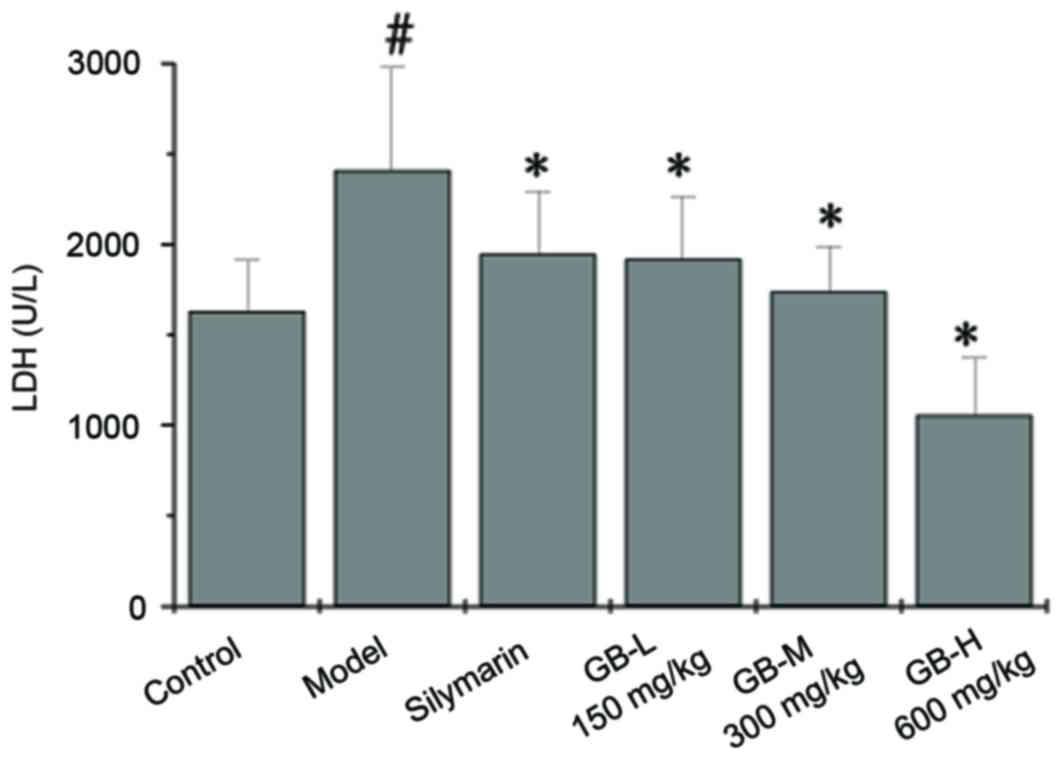
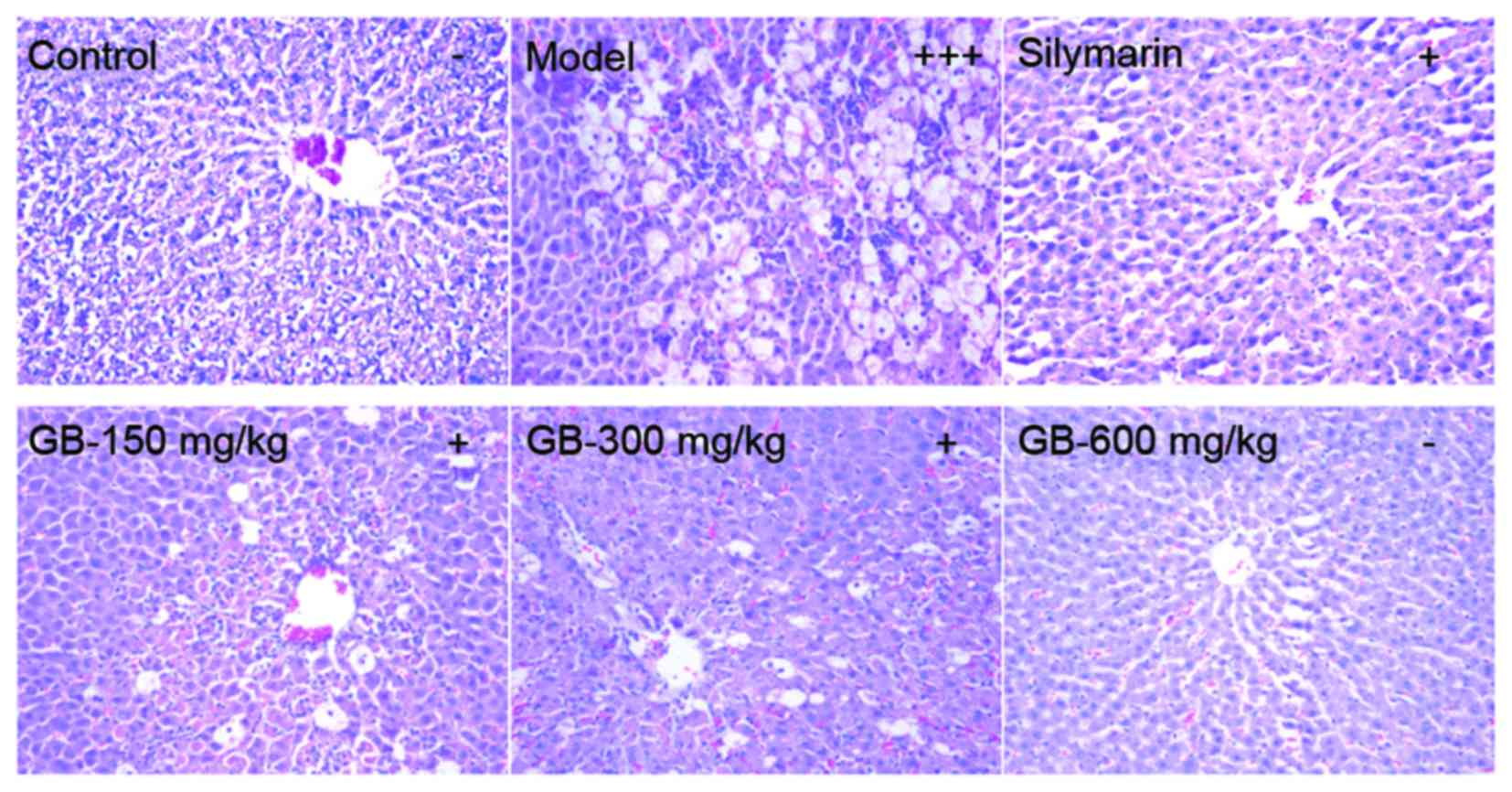
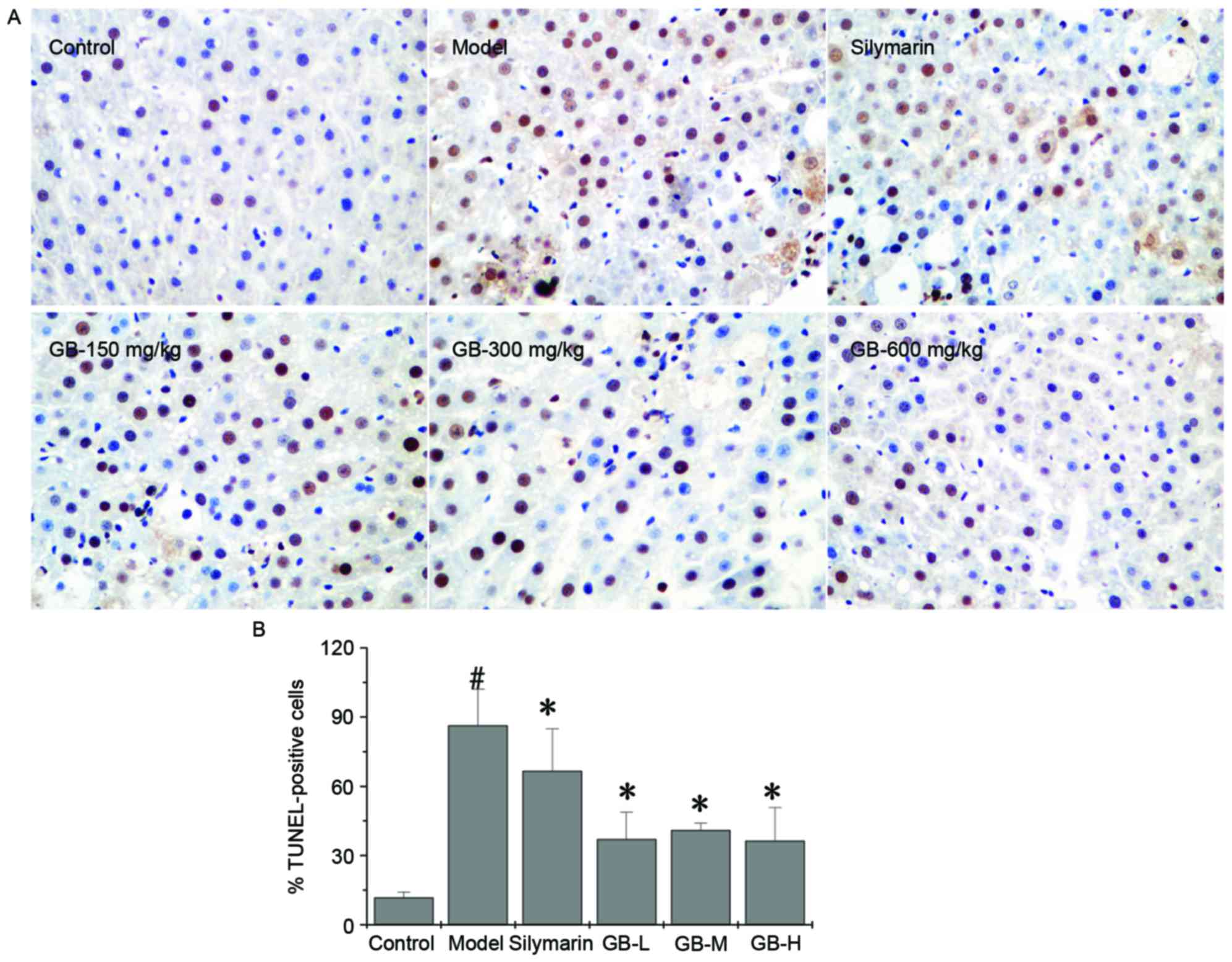
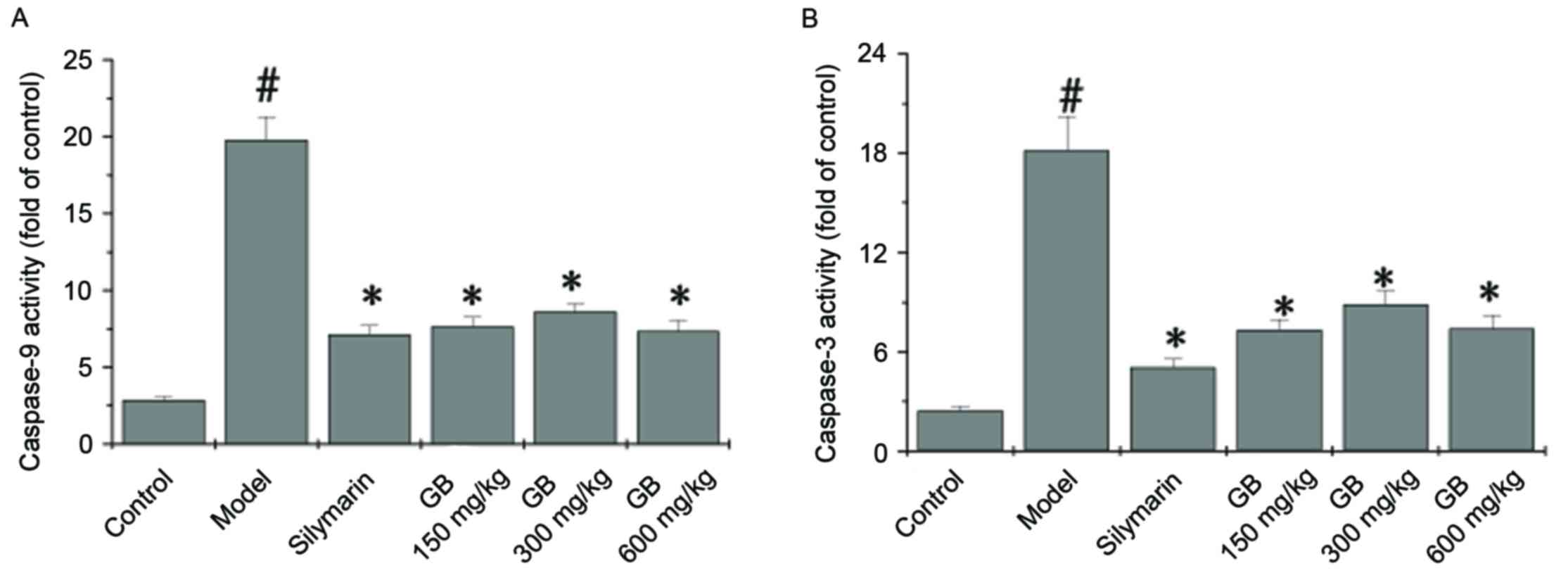
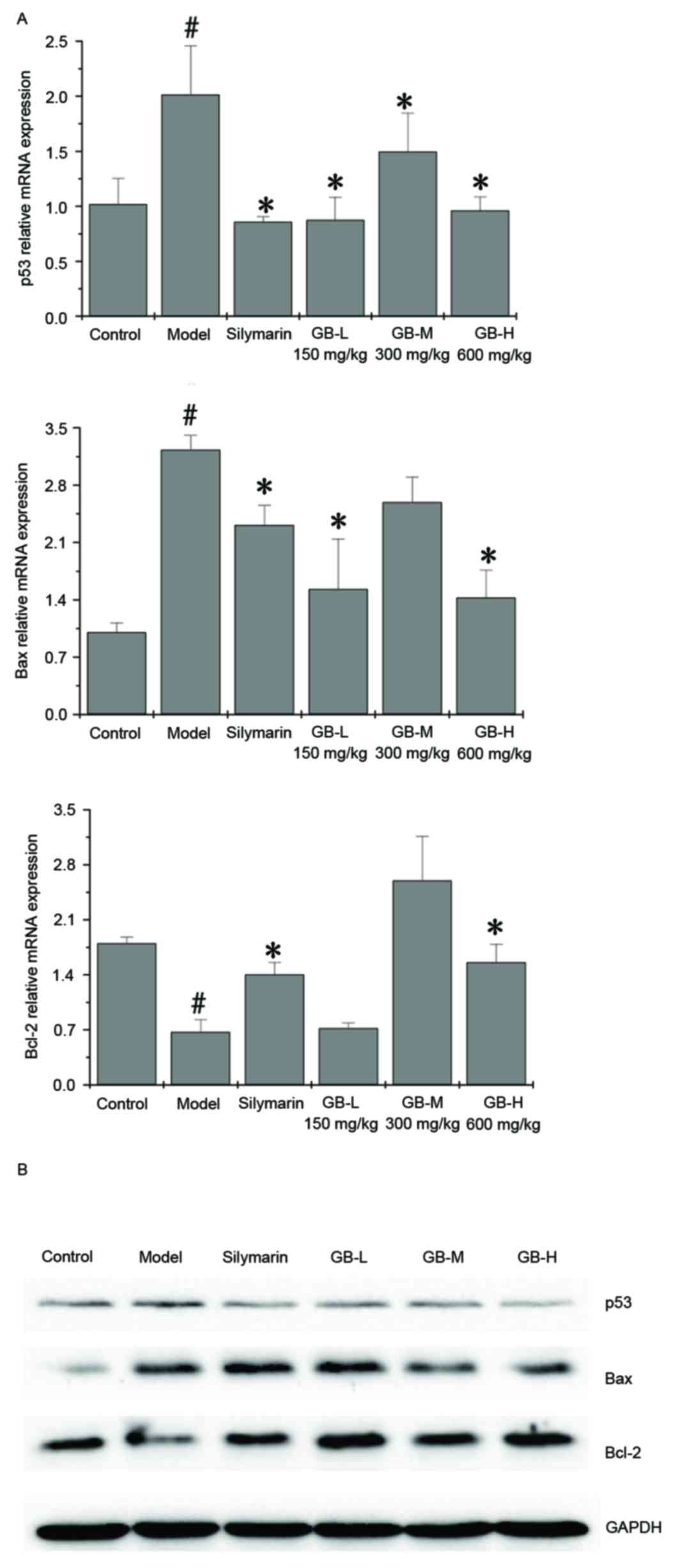
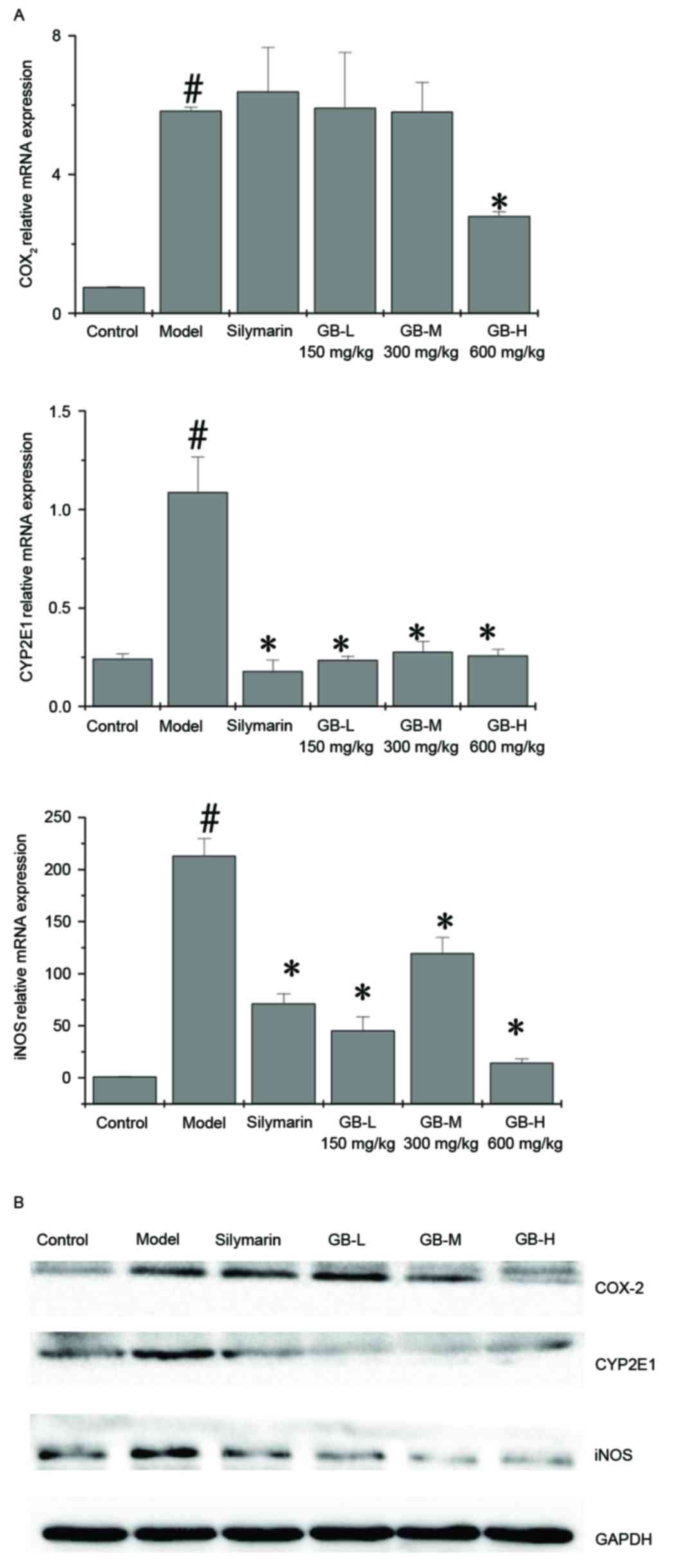
Pien Tze Huang Gan Bao (PZH‑GB), a traditional Chinese medicine, has been used for thousands of years as a protective remedy effective against liver injury induced by excessive alcohol and smoking. The present study aimed to evaluate the protective effects and potential mechanisms of PZH‑GB against carbon tetrachloride (CCl4)‑induced hepatic injury. Rats were pre‑treated with silymarin (50 mg/kg) or different doses of PZH‑GB (150, 300 or 600 mg/kg) orally administered for 7 days. At the end of treatment, the rats were intraperitoneally injected with CCl4, or control rats received a corn oil injection. The lactate dehydrogenase (LDH) levels in serum were evaluated. Apoptosis was assessed via terminal deoxynucleotidyl transferase dUTP nick end labeling (TUNEL) staining. p53, B‑cell lymphoma 2 (Bcl‑2), B cell‑lymphoma 2‑associated X protein (Bax), cyclooxygenase‑2 (COX‑2), inducible nitric oxide synthase (iNOS) and cytochrome P450 family 2 subfamily E member 1 (CYP2E1) were measured by reverse transcription‑quantitative polymerase chain reaction and western blotting. The activity of caspase‑9 and caspase‑3 were measured by a colorimetric assay. The results indicated that silymarin and PZH‑GB prevented CCl4‑induced serum LDH elevations, and CCl4 induced high levels of LDH. Compared with the CCl4 group, silymarin and PZH‑GB treatment significantly decreased LDH levels. Histopathological results revealed that silymarin and PZH‑GB ameliorated the CCl4‑induced liver histological alterations. The TUNEL results showed that compared with the control group, CCl4 induced liver cell apoptosis, while silymarin and PZH‑GB treatment inhibited apoptosis and the TUNEL‑positive cells. The elevated expression of Bax, p53, iNOS, COX‑2 and CYP2E1 were reduced by silymarin or PZH‑GB pretreatment, whereas reduced Bcl‑2 expression levels were increased. CCl4 increased the activity of caspase‑9 and ‑3 by 6.86‑ and 7.42‑fold, respectively; however, silymarin and PZH‑GB ameliorated this effect. In conclusion, silymarin and PZH‑GB treatment prevented the deleterious effects on liver functions by attenuation of oxidative stress, inflammation and mitochondrial apoptosis via the p53 signaling pathway.
View Figures

Figure 1

Figure 2

Figure 3

Figure 4

Figure 5

Figure 6

Figure 7

View References

1 

Kumar CH, Ramesh A, Kumar JN Suresh and Ishaq BM: A review on hepatoprotective activity of medicinal plants. Int J Pharmaceut Sci Res. 23:501–515. 2011.

2 

Ahsan R, Islam KM, Bulbul IJ, Musaddik A and Haque E: Hepatoprotective activity of methanol extract of some medicinal plants against carbon tetrachloride-induced hepatotoxicity in rats. Eur J Sci Res. 37:302–310. 2009.

3 

Chattopadhyay RR: Possible mechanism of hepatoprotective activity of Azadirachta indica leaf extract: part II. J Ethnopharmacol. 89:217–219. 2003. View Article : Google Scholar : PubMed/NCBI

4 

Livak KJ and Schmittgen TD: Analysis of relative gene expression data using real-time quantitative PCR and the 2(−Delta Delta C(T)) method. Methods. 25:402–408. 2001. View Article : Google Scholar : PubMed/NCBI

5 

Recknagel RO, Glende EA Jr, Dolak JA and Waller RL: Mechanisms of carbon tetrachloride toxicity. Pharmacol Ther. 43:139–154. 1989. View Article : Google Scholar : PubMed/NCBI

6 

Williams AT and Burk RF: Carbon tetrachloride hepatotoxicity: An example of free radical-mediated injury. Semin Liver Dis. 10:279–284. 1990. View Article : Google Scholar : PubMed/NCBI

7 

Slater TF: Free radicals as reactive intermediates in tissue injury. Adv Exp Med Biol. 136:575–589. 1981.PubMed/NCBI

8 

Brattin WJ, Glende EA Jr and Recknagel RO: Pathological mechanisms in carbon tetrachloride hepatotoxicity. J Free Radic Biol Med. 1:27–38. 1985. View Article : Google Scholar : PubMed/NCBI

9 

Cederbaum AI: Role of CYP2E1 in ethanol-induced oxidant stress, fatty liver and hepatotoxicity. Dig Dis. 28:802–811. 2010. View Article : Google Scholar : PubMed/NCBI

10 

Bartosz G: Reactive oxygen species: Destroyers or messengers? Biochem Pharmacol. 77:1303–1315. 2009. View Article : Google Scholar : PubMed/NCBI

11 

Cadenas E and Davies KJ: Mitochondrial free radical generation, oxidative stress, and aging. Free Radic Biol Med. 29:222–230. 2000. View Article : Google Scholar : PubMed/NCBI

12 

Circu ML and Aw TY: Reactive oxygen species, cellular redox systems, and apoptosis. Free Radic Biol Med. 48:749–762. 2010. View Article : Google Scholar : PubMed/NCBI

13 

Shi J, Aisaki K, Ikawa Y and Wake K: Evidence of hepatocyte apoptosis in rat liver after the administration of carbon tetrachloride. Am J Pathol. 153:515–525. 1998. View Article : Google Scholar : PubMed/NCBI

14 

Hoek JB, Cahill A and Pastorino JG: Alcohol and mitochondria: A dysfunctional relationship. Gastroenterology. 122:2049–2063. 2002. View Article : Google Scholar : PubMed/NCBI

15 

Volkmann N, Marassi FM, Newmeyer DD and Hanein D: The rheostat in the membrane: BCL-2 family proteins and apoptosis. Cell Death Differ. 21:206–215. 2014. View Article : Google Scholar : PubMed/NCBI

16 

Takebe H, Sato I, Tajima S, Ikeda Y, Ito K and Nose T: Effects of cianidanol (KB-53) on liver cirrhosis induced by CCl4 in rats: A pathological investigation. Nihon Yakurigaku Zasshi. 81:585–591. 1983.(In Japanese). View Article : Google Scholar : PubMed/NCBI

17 

Merino N, González R, González A and Remirez D: Histopathological evaluation on the effect of red propolis on liver damage induced by CCl4 in rats. Arch Med Res. 27:285–289. 1996.PubMed/NCBI

18 

Yadav SS, Sindram D, Perry DK and Clavien PA: Ischemic preconditioning protects the mouse liver by inhibition of apoptosis through a caspase-dependent pathway. Hepatology. 30:1223–1231. 1999. View Article : Google Scholar : PubMed/NCBI

19 

Perry DK, Smyth MJ, Stennicke HR, Salvesen GS, Duriez P, Poirier GG and Hannun YA: Zinc is a potent inhibitor of the apoptotic protease, caspase-3. A novel target for zinc in the inhibition of apoptosis. J Biol Chem. 272:18530–18533. 1997. View Article : Google Scholar : PubMed/NCBI

20 

Yao Y, Huang C, Li ZF, Wang AY, Liu LY, Zhao XG, Luo Y, Ni L, Zhang WG and Song TS: Exogenous phosphatidylethanolamine induces apoptosis of human hepatoma HepG2 cells via the bcl-2/Bax pathway. World J Gastroenterol. 15:1751–1758. 2009. View Article : Google Scholar : PubMed/NCBI

21 

Jin S and Dai CL: Attenuation of reperfusion-induced hepatocyte apoptosis is associated with reversed bcl-2/bax ratio in hemi-hepatic artery-preserved portal occlusion. J Surg Res. 174:298–304. 2012. View Article : Google Scholar : PubMed/NCBI

22 

Liu B, Shi Y, Peng W, Zhang Q, Liu J, Chen N and Zhu R: Diosmetin induces apoptosis by upregulating p53 via the TGF-β signal pathway in HepG2 hepatoma cells. Mol Med Rep. 14:159–164. 2016.PubMed/NCBI

23 

Ortega JF, de Conti A, Tryndyak V, Furtado KS, Heidor R, Horst MA, Fernandes LH, Tavares PE, Pogribna M, Shpyleva S, et al: Suppressing activity of tributyrin on hepatocarcinogenesis is associated with inhibiting the p53-CRM1 interaction and changing the cellular compartmentalization of p53 protein. Oncotarget. 7:24339–24347. 2016. View Article : Google Scholar : PubMed/NCBI

24 

Allam A, Gabr S, Ajarem J and Abdel-Maksoud M: Bcl-2 and p53 expression in hepatic tissues of Egyptian patients with Chronic Hepatitis C. J Pak Med Assoc. 65:1186–1192. 2015.PubMed/NCBI

25 

Li X, Yu J, Brock MV, Tao Q, Herman JG, Liang P and Guo M: Epigenetic silencing of BCL6B inactivates p53 signaling and causes human hepatocellular carcinoma cell resist to 5-FU. Oncotarget. 6:11547–11560. 2015. View Article : Google Scholar : PubMed/NCBI

26 

Guo XL, Liang B, Wang XW, Fan FG, Jin J, Lan R, Yang JH, Wang XC, Jin L and Cao Q: Glycyrrhizic acid attenuates CCl4-induced hepatocyte apoptosis in rats via a p53-mediated pathway. World J Gastroenterol. 19:3781–3791. 2013. View Article : Google Scholar : PubMed/NCBI

27 

Rechnagel RO and Glende EA Jr: Carbon tetrachloride hepatotoxicity: An example of lethal cleavage. CRC Crit Rev Toxicol. 2:263–297. 1973. View Article : Google Scholar : PubMed/NCBI

28 

Al-Shabanah OA, Alam K, Nagi MN, Al-Rikabi AC and Al-Bekairi AM: Protective effect of aminoguanidine, a nitric oxide synthase inhibitor, against carbon tetrachloride induced hepatotoxicity in mice. Life Sci. 66:265–270. 2000. View Article : Google Scholar : PubMed/NCBI

29 

Badger DA, Sauer JM, Hoglen NC, Jolley CS and Sipes IG: The role of inflammatory cells and cytochrome P450 in the potentiation of CCl4-induced liver injury by a single dose of retinol. Toxicol Appl Pharmacol. 141:507–519. 1996. View Article : Google Scholar : PubMed/NCBI

30 

Lowenstein CJ and Snyder SH: Nitric oxide, a novel biologic messenger. Cell. 70:705–707. 1992. View Article : Google Scholar : PubMed/NCBI

31 

Inoue T, Kwon AH, Oda M, Kaibori M, Kamiyama Y, Nishizawa M, Ito S and Okumura T: Hypoxia and heat inhibit inducible nitric oxide synthase gene expression by different mechanisms in rat hepatocytes. Hepatology. 32:1037–1044. 2000. View Article : Google Scholar : PubMed/NCBI

32 

Nadler EP, Dickinson EC, Beer-Stolz D, Alber SM, Watkins SC, Pratt DW and Ford HR: Scavenging nitric oxide reduces hepatocellular injury after endotoxin challenge. Am J Physiol Gastrointest Liver Physiol. 281:G173–G181. 2001.PubMed/NCBI

33 

Chun KS and Surh YJ: Signal transduction pathways regulating cyclooxygenase-2 expression: Potential molecular targets for chemoprevention. Biochem Pharmacol. 68:1089–1100. 2004. View Article : Google Scholar : PubMed/NCBI

34 

Chang YC, Li PC, Chen BC, Chang MS, Wang JL, Chiu WT and Lin CH: Lipoteichoic acid-induced nitric oxide synthase expression in RAW 264.7 macrophages is mediated by cyclooxygenase-2, prostaglandin E2, protein kinase A, p38 MAPK, and nuclear factor-κB pathways. Cell Signal. 18:1235–1243. 2006. View Article : Google Scholar : PubMed/NCBI

Related Articles

  • Abstract
  • View
  • Download
  • Twitter
Copy and paste a formatted citation
Spandidos Publications style
Zhao J, Zhang Y, Wan Y, Hu H and Hong Z: Pien Tze Huang Gan Bao attenuates carbon tetrachloride‑induced hepatocyte apoptosis in rats, associated with suppression of p53 activation and oxidative stress. Mol Med Rep 16: 2611-2619, 2017.
APA
Zhao, J., Zhang, Y., Wan, Y., Hu, H., & Hong, Z. (2017). Pien Tze Huang Gan Bao attenuates carbon tetrachloride‑induced hepatocyte apoptosis in rats, associated with suppression of p53 activation and oxidative stress. Molecular Medicine Reports, 16, 2611-2619. https://doi.org/10.3892/mmr.2017.6936
MLA
Zhao, J., Zhang, Y., Wan, Y., Hu, H., Hong, Z."Pien Tze Huang Gan Bao attenuates carbon tetrachloride‑induced hepatocyte apoptosis in rats, associated with suppression of p53 activation and oxidative stress". Molecular Medicine Reports 16.3 (2017): 2611-2619.
Chicago
Zhao, J., Zhang, Y., Wan, Y., Hu, H., Hong, Z."Pien Tze Huang Gan Bao attenuates carbon tetrachloride‑induced hepatocyte apoptosis in rats, associated with suppression of p53 activation and oxidative stress". Molecular Medicine Reports 16, no. 3 (2017): 2611-2619. https://doi.org/10.3892/mmr.2017.6936
Copy and paste a formatted citation
x
Spandidos Publications style
Zhao J, Zhang Y, Wan Y, Hu H and Hong Z: Pien Tze Huang Gan Bao attenuates carbon tetrachloride‑induced hepatocyte apoptosis in rats, associated with suppression of p53 activation and oxidative stress. Mol Med Rep 16: 2611-2619, 2017.
APA
Zhao, J., Zhang, Y., Wan, Y., Hu, H., & Hong, Z. (2017). Pien Tze Huang Gan Bao attenuates carbon tetrachloride‑induced hepatocyte apoptosis in rats, associated with suppression of p53 activation and oxidative stress. Molecular Medicine Reports, 16, 2611-2619. https://doi.org/10.3892/mmr.2017.6936
MLA
Zhao, J., Zhang, Y., Wan, Y., Hu, H., Hong, Z."Pien Tze Huang Gan Bao attenuates carbon tetrachloride‑induced hepatocyte apoptosis in rats, associated with suppression of p53 activation and oxidative stress". Molecular Medicine Reports 16.3 (2017): 2611-2619.
Chicago
Zhao, J., Zhang, Y., Wan, Y., Hu, H., Hong, Z."Pien Tze Huang Gan Bao attenuates carbon tetrachloride‑induced hepatocyte apoptosis in rats, associated with suppression of p53 activation and oxidative stress". Molecular Medicine Reports 16, no. 3 (2017): 2611-2619. https://doi.org/10.3892/mmr.2017.6936
Follow us
  • Twitter
  • LinkedIn
  • Facebook
About
  • Spandidos Publications
  • Careers
  • Cookie Policy
  • Privacy Policy
How can we help?
  • Help
  • Live Chat
  • Contact
  • Email to our Support Team