Spandidos Publications Logo
  • About
    • About Spandidos
    • Aims and Scopes
    • Abstracting and Indexing
    • Editorial Policies
    • Reprints and Permissions
    • Job Opportunities
    • Terms and Conditions
    • Contact
  • Journals
    • All Journals
    • Oncology Letters
      • Oncology Letters
      • Information for Authors
      • Editorial Policies
      • Editorial Board
      • Aims and Scope
      • Abstracting and Indexing
      • Bibliographic Information
      • Archive
    • International Journal of Oncology
      • International Journal of Oncology
      • Information for Authors
      • Editorial Policies
      • Editorial Board
      • Aims and Scope
      • Abstracting and Indexing
      • Bibliographic Information
      • Archive
    • Molecular and Clinical Oncology
      • Molecular and Clinical Oncology
      • Information for Authors
      • Editorial Policies
      • Editorial Board
      • Aims and Scope
      • Abstracting and Indexing
      • Bibliographic Information
      • Archive
    • Experimental and Therapeutic Medicine
      • Experimental and Therapeutic Medicine
      • Information for Authors
      • Editorial Policies
      • Editorial Board
      • Aims and Scope
      • Abstracting and Indexing
      • Bibliographic Information
      • Archive
    • International Journal of Molecular Medicine
      • International Journal of Molecular Medicine
      • Information for Authors
      • Editorial Policies
      • Editorial Board
      • Aims and Scope
      • Abstracting and Indexing
      • Bibliographic Information
      • Archive
    • Biomedical Reports
      • Biomedical Reports
      • Information for Authors
      • Editorial Policies
      • Editorial Board
      • Aims and Scope
      • Abstracting and Indexing
      • Bibliographic Information
      • Archive
    • Oncology Reports
      • Oncology Reports
      • Information for Authors
      • Editorial Policies
      • Editorial Board
      • Aims and Scope
      • Abstracting and Indexing
      • Bibliographic Information
      • Archive
    • Molecular Medicine Reports
      • Molecular Medicine Reports
      • Information for Authors
      • Editorial Policies
      • Editorial Board
      • Aims and Scope
      • Abstracting and Indexing
      • Bibliographic Information
      • Archive
    • World Academy of Sciences Journal
      • World Academy of Sciences Journal
      • Information for Authors
      • Editorial Policies
      • Editorial Board
      • Aims and Scope
      • Abstracting and Indexing
      • Bibliographic Information
      • Archive
    • International Journal of Functional Nutrition
      • International Journal of Functional Nutrition
      • Information for Authors
      • Editorial Policies
      • Editorial Board
      • Aims and Scope
      • Abstracting and Indexing
      • Bibliographic Information
      • Archive
    • International Journal of Epigenetics
      • International Journal of Epigenetics
      • Information for Authors
      • Editorial Policies
      • Editorial Board
      • Aims and Scope
      • Abstracting and Indexing
      • Bibliographic Information
      • Archive
    • Medicine International
      • Medicine International
      • Information for Authors
      • Editorial Policies
      • Editorial Board
      • Aims and Scope
      • Abstracting and Indexing
      • Bibliographic Information
      • Archive
  • Articles
  • Information
    • Information for Authors
    • Information for Reviewers
    • Information for Librarians
    • Information for Advertisers
    • Conferences
  • Language Editing
Spandidos Publications Logo
  • About
    • About Spandidos
    • Aims and Scopes
    • Abstracting and Indexing
    • Editorial Policies
    • Reprints and Permissions
    • Job Opportunities
    • Terms and Conditions
    • Contact
  • Journals
    • All Journals
    • Biomedical Reports
      • Information for Authors
      • Editorial Policies
      • Editorial Board
      • Aims and Scope
      • Abstracting and Indexing
      • Bibliographic Information
      • Archive
    • Experimental and Therapeutic Medicine
      • Information for Authors
      • Editorial Policies
      • Editorial Board
      • Aims and Scope
      • Abstracting and Indexing
      • Bibliographic Information
      • Archive
    • International Journal of Epigenetics
      • Information for Authors
      • Editorial Policies
      • Editorial Board
      • Aims and Scope
      • Abstracting and Indexing
      • Bibliographic Information
      • Archive
    • International Journal of Functional Nutrition
      • Information for Authors
      • Editorial Policies
      • Editorial Board
      • Aims and Scope
      • Abstracting and Indexing
      • Bibliographic Information
      • Archive
    • International Journal of Molecular Medicine
      • Information for Authors
      • Editorial Policies
      • Editorial Board
      • Aims and Scope
      • Abstracting and Indexing
      • Bibliographic Information
      • Archive
    • International Journal of Oncology
      • Information for Authors
      • Editorial Policies
      • Editorial Board
      • Aims and Scope
      • Abstracting and Indexing
      • Bibliographic Information
      • Archive
    • Medicine International
      • Information for Authors
      • Editorial Policies
      • Editorial Board
      • Aims and Scope
      • Abstracting and Indexing
      • Bibliographic Information
      • Archive
    • Molecular and Clinical Oncology
      • Information for Authors
      • Editorial Policies
      • Editorial Board
      • Aims and Scope
      • Abstracting and Indexing
      • Bibliographic Information
      • Archive
    • Molecular Medicine Reports
      • Information for Authors
      • Editorial Policies
      • Editorial Board
      • Aims and Scope
      • Abstracting and Indexing
      • Bibliographic Information
      • Archive
    • Oncology Letters
      • Information for Authors
      • Editorial Policies
      • Editorial Board
      • Aims and Scope
      • Abstracting and Indexing
      • Bibliographic Information
      • Archive
    • Oncology Reports
      • Information for Authors
      • Editorial Policies
      • Editorial Board
      • Aims and Scope
      • Abstracting and Indexing
      • Bibliographic Information
      • Archive
    • World Academy of Sciences Journal
      • Information for Authors
      • Editorial Policies
      • Editorial Board
      • Aims and Scope
      • Abstracting and Indexing
      • Bibliographic Information
      • Archive
  • Articles
  • Information
    • For Authors
    • For Reviewers
    • For Librarians
    • For Advertisers
    • Conferences
  • Language Editing
Login Register Submit
  • This site uses cookies
  • You can change your cookie settings at any time by following the instructions in our Cookie Policy. To find out more, you may read our Privacy Policy.

    I agree
Search articles by DOI, keyword, author or affiliation
Search
Advanced Search
presentation
Molecular Medicine Reports
Join Editorial Board Propose a Special Issue
Print ISSN: 1791-2997 Online ISSN: 1791-3004
Journal Cover
September-2017 Volume 16 Issue 3

Full Size Image

Sign up for eToc alerts
Recommend to Library

Journals

International Journal of Molecular Medicine

International Journal of Molecular Medicine

International Journal of Molecular Medicine is an international journal devoted to molecular mechanisms of human disease.

International Journal of Oncology

International Journal of Oncology

International Journal of Oncology is an international journal devoted to oncology research and cancer treatment.

Molecular Medicine Reports

Molecular Medicine Reports

Covers molecular medicine topics such as pharmacology, pathology, genetics, neuroscience, infectious diseases, molecular cardiology, and molecular surgery.

Oncology Reports

Oncology Reports

Oncology Reports is an international journal devoted to fundamental and applied research in Oncology.

Experimental and Therapeutic Medicine

Experimental and Therapeutic Medicine

Experimental and Therapeutic Medicine is an international journal devoted to laboratory and clinical medicine.

Oncology Letters

Oncology Letters

Oncology Letters is an international journal devoted to Experimental and Clinical Oncology.

Biomedical Reports

Biomedical Reports

Explores a wide range of biological and medical fields, including pharmacology, genetics, microbiology, neuroscience, and molecular cardiology.

Molecular and Clinical Oncology

Molecular and Clinical Oncology

International journal addressing all aspects of oncology research, from tumorigenesis and oncogenes to chemotherapy and metastasis.

World Academy of Sciences Journal

World Academy of Sciences Journal

Multidisciplinary open-access journal spanning biochemistry, genetics, neuroscience, environmental health, and synthetic biology.

International Journal of Functional Nutrition

International Journal of Functional Nutrition

Open-access journal combining biochemistry, pharmacology, immunology, and genetics to advance health through functional nutrition.

International Journal of Epigenetics

International Journal of Epigenetics

Publishes open-access research on using epigenetics to advance understanding and treatment of human disease.

Medicine International

Medicine International

An International Open Access Journal Devoted to General Medicine.

Journal Cover
September-2017 Volume 16 Issue 3

Full Size Image

Sign up for eToc alerts
Recommend to Library

  • Article
  • Citations
    • Cite This Article
    • Download Citation
    • Create Citation Alert
    • Remove Citation Alert
    • Cited By
  • Similar Articles
    • Related Articles (in Spandidos Publications)
    • Similar Articles (Google Scholar)
    • Similar Articles (PubMed)
  • Download PDF
  • Download XML
  • View XML
Article Open Access

Upregulation of connexin 43 and apoptosis‑associated protein expression by high glucose in H9c2 cells was improved by resveratrol via the autophagy signaling pathway

  • Authors:
    • Guang‑Yu Wang
    • Ya‑Guang Bi
    • Xiang‑Dong Liu
    • Jun‑Feng Han
    • Meng Wei
    • Qing‑Yong Zhang
  • View Affiliations / Copyright

    Affiliations: Department of Cardiology, Shanghai Sixth People's Hospital, Shanghai Jiao Tong University, Shanghai 200233, P.R. China, Department of Endocrinology and Metabolism, Shanghai Sixth People's Hospital, Shanghai Jiao Tong University, Shanghai 200233, P.R. China
    Copyright: © Wang et al. This is an open access article distributed under the terms of Creative Commons Attribution License.
  • Pages: 3262-3268
    |
    Published online on: July 12, 2017
       https://doi.org/10.3892/mmr.2017.6953
  • Expand metrics +
Metrics: Total Views: 0 (Spandidos Publications: | PMC Statistics: )
Metrics: Total PDF Downloads: 0 (Spandidos Publications: | PMC Statistics: )
Cited By (CrossRef): 0 citations Loading Articles...

This article is mentioned in:


Abstract

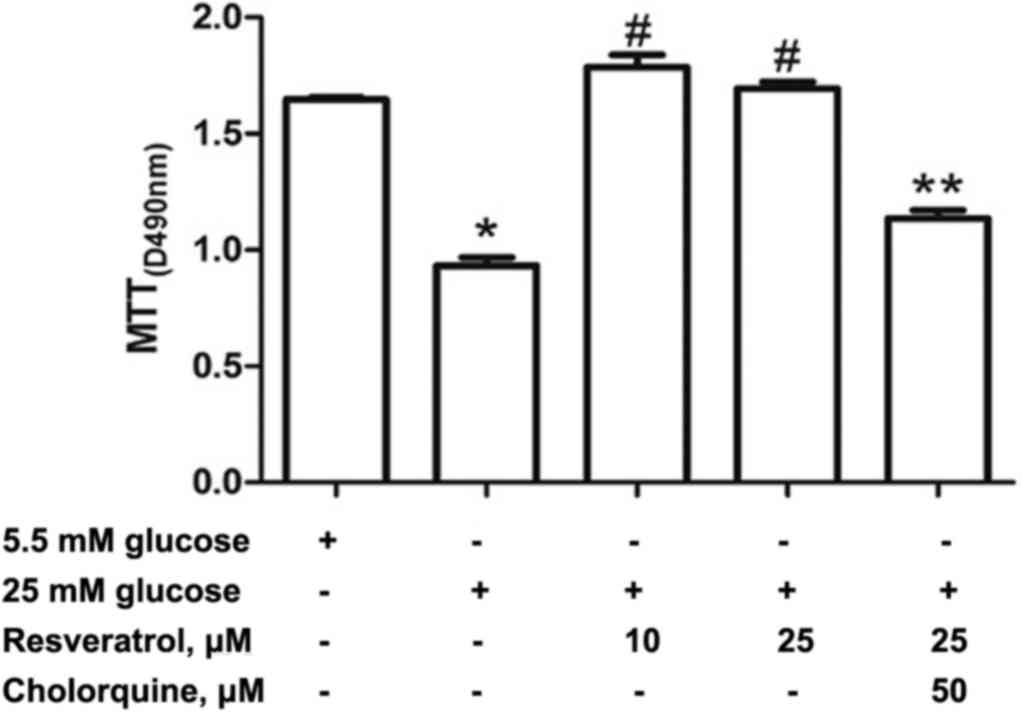
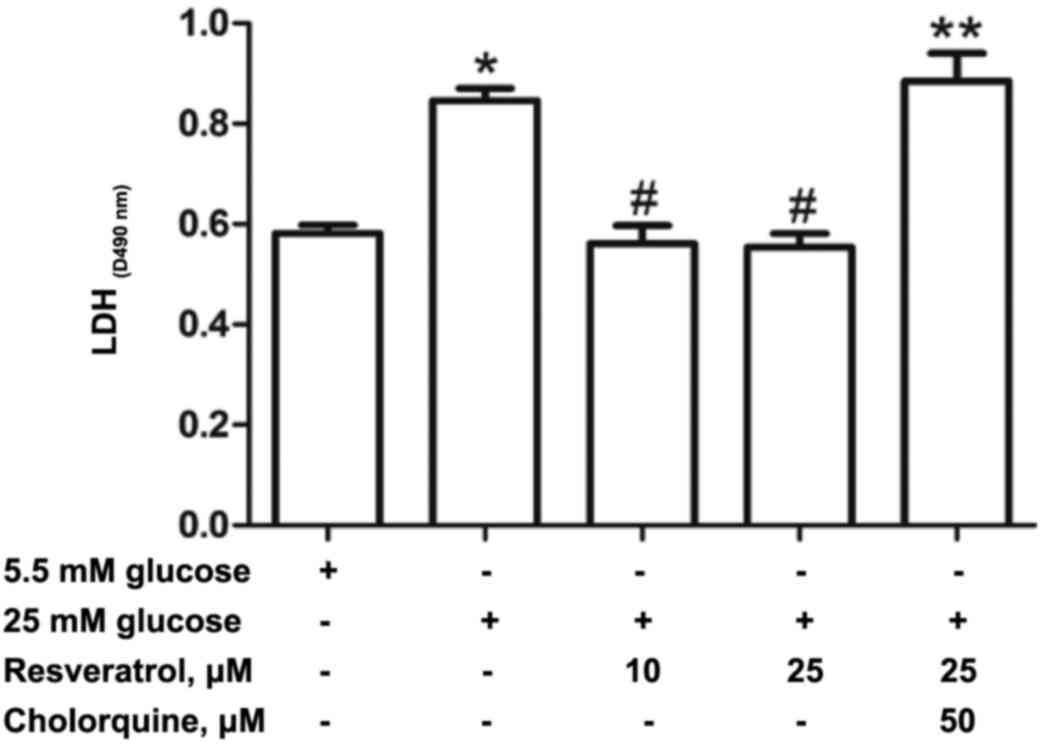
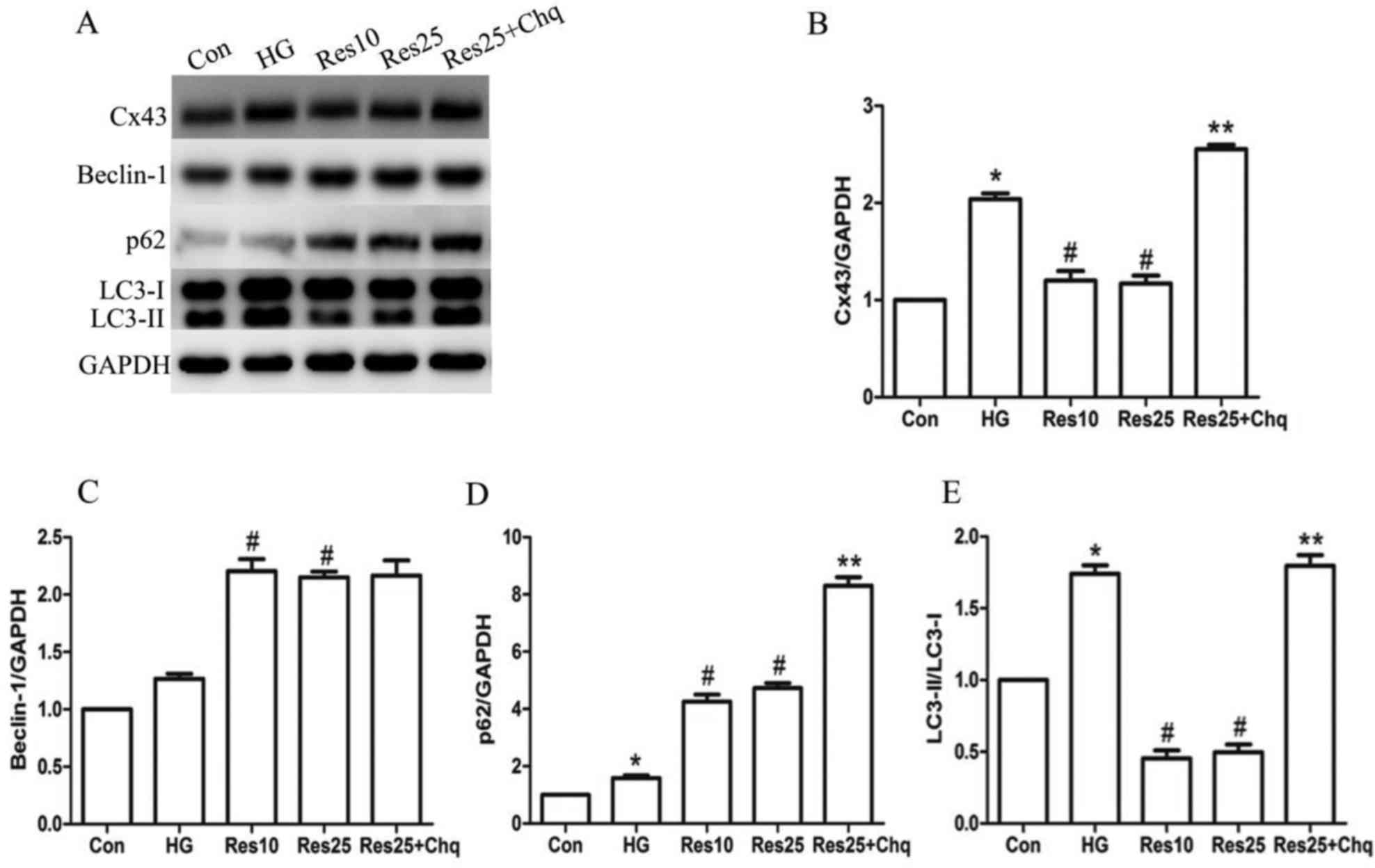
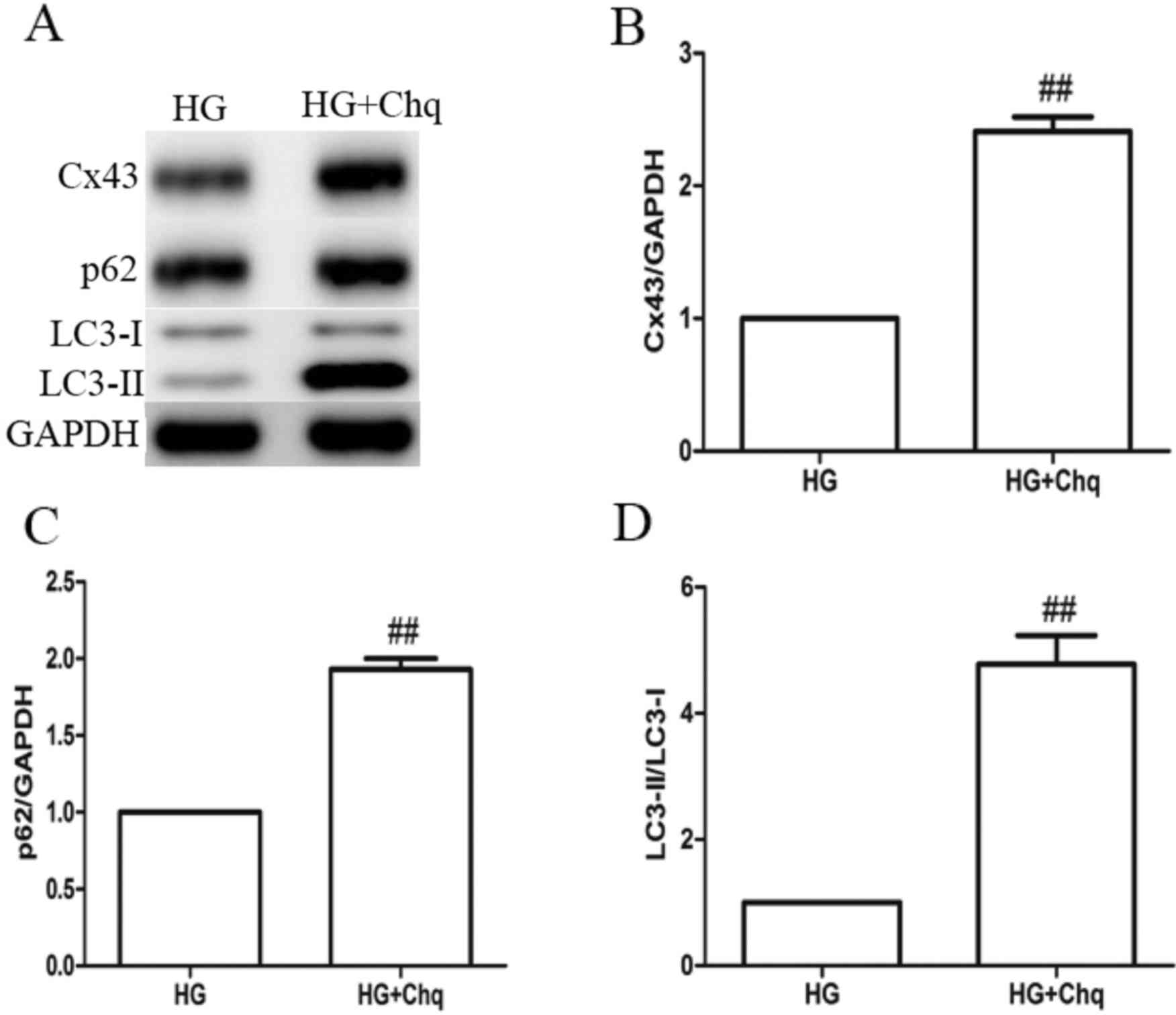
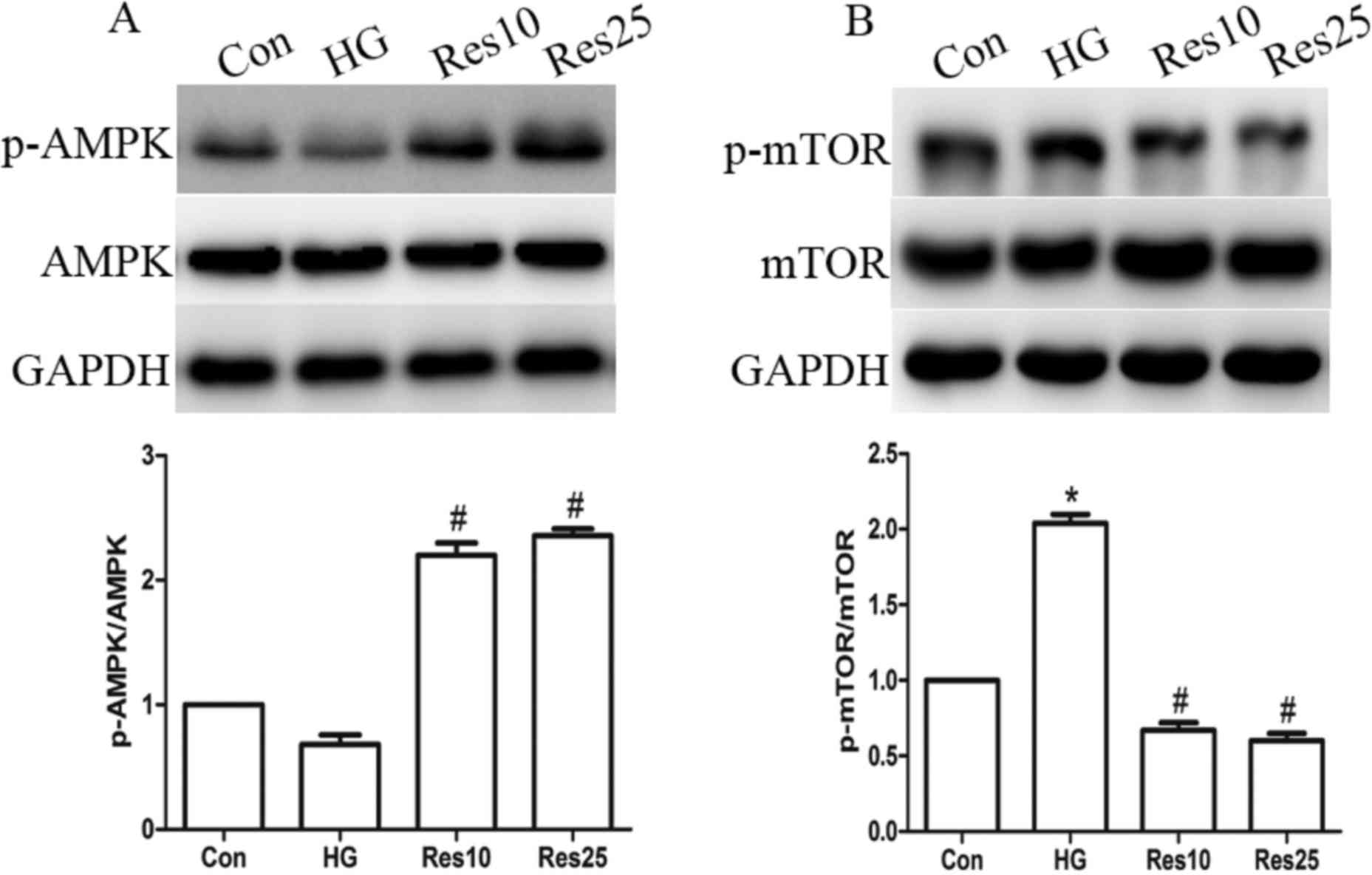
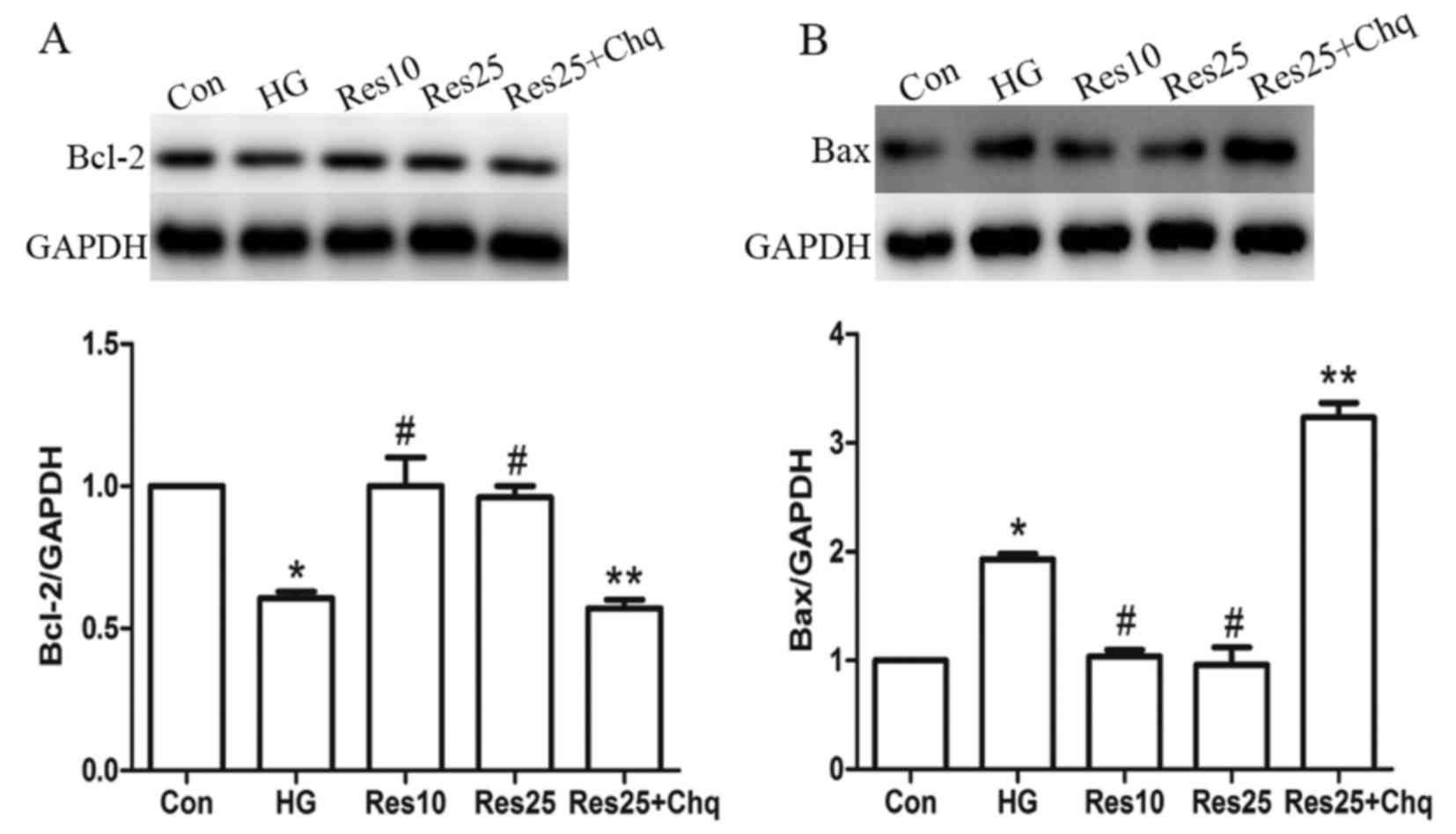
The expression of connexin43 (Cx43) protein and the apoptotic rate of cardiomyocytes may be regulated by autophagy and associated with diabetic cardiomyopathy. It is possible that the beneficial effect of resveratrol on diabetic cardiomyocytes occurs via the autophagy pathway. However, it remains to be elucidated whether resveratrol treatment may attenuate the hyperglycemia‑induced remodeling of Cx43 and apoptosis through the regulation of autophagy. H9c2 cardiac cells were incubated with 5.5 and 25 mM glucose, 25 mM glucose with chloroquine (50 µM), and 25 mM glucose with or without resveratrol (10, 25 µM) for 24 h. H9c2 cells were also incubated with 25 µM resveratrol in the presence of chloroquine (50 µM). Cell viability was determined using an MTT cell survival assay. Cytotoxicity was determined by quantification of the release of lactate dehydrogenase. The expression of Cx43, autophagic maker proteins [Beclin‑1, p62 and microtubule‑associated protein 1 light chain 3 (LC3)], apoptosis maker proteins (B‑cell lymphoma‑2 and Bcl‑2 associated X protein), AMP‑activated protein kinase (AMPK) and mammalian target of rapamycin (mTOR) were determined using western blotting. Resveratrol treatment led to reduced Cx43 expression levels compared with the 25 mM glucose treatment and significantly reduced the expression of apoptosis‑associated proteins in H9c2 cells under hyperglycemic conditions. Autophagy was increased as indicated by the upregulation of Beclin‑1 and p62 expression and the reduced LC3‑II/LC3‑I ratio. AMPK expression was increased, whereas mTOR expression was reduced in the resveratrol treatment groups. Treatment with chloroquine reversed effect of resveratrol. In conclusion, administration resveratrol may protect H9c2 cells against hyperglycemia‑induced Cx43 upregulation and apoptosis, which may be mediated through the induction of the autophagy signaling pathway.
View Figures

Figure 1

Figure 2

Figure 3

Figure 4

Figure 5

Figure 6

View References

1 

He C, Zhu H, Li H, Zou MH and Xie Z: Dissociation of Bcl-2-Beclin1 complex by activated AMPK enhances cardiac autophagy and protects against cardiomyocyte apoptosis in diabetes. Diabetes. 62:1270–1281. 2013. View Article : Google Scholar : PubMed/NCBI

2 

Xie Z, Lau K, Eby B, Lozano P, He C, Pennington B, Li H, Rathi S, Dong Y, Tian R, et al: Improvement of cardiac functions by chronic metformin treatment is associated with enhanced cardiac autophagy in diabetic OVE26 mice. Diabetes. 60:1770–1778. 2011. View Article : Google Scholar : PubMed/NCBI

3 

Martins-Marques T, Catarino S, Marques C, Pereira P and Girão H: To beat or not to beat: Degradation of Cx43 imposes the heart rhythm. Biochem Soc Trans. 43:476–481. 2015. View Article : Google Scholar : PubMed/NCBI

4 

Rohr S: Role of gap junctions in the propagation of the cardiac action potential. Cardiovasc Res. 62:309–322. 2004. View Article : Google Scholar : PubMed/NCBI

5 

Vozzi C, Dupont E, Coppen SR, Yeh HI and Severs NJ: Chamber-related differences in connexin expression in the human heart. J Mol Cell Cardiol. 31:991–1003. 1999. View Article : Google Scholar : PubMed/NCBI

6 

Zhou P, Zhang SM, Wang QL, Wu Q, Chen M and Pei JM: Anti-arrhythmic effect of verapamil is accompanied by preservation of cx43 protein in rat heart. PLoS One. 8:e715672013. View Article : Google Scholar : PubMed/NCBI

7 

Rutledge CA, Ng FS, Sulkin MS, Greener ID, Sergeyenko AM, Liu H, Gemel J, Beyer EC, Sovari AA, Efimov IR and Dudley SC: c-Src kinase inhibition reduces arrhythmia inducibility and connexin43 dysregulation after myocardial infarction. J Am Coll Cardiol. 63:928–934. 2014. View Article : Google Scholar : PubMed/NCBI

8 

Hesketh GG, Shah MH, Halperin VL, Cooke CA, Akar FG, Yen TE, Kass DA, Machamer CE, Van Eyk JE and Tomaselli GF: Ultrastructure and regulation of lateralized connexin43 in the failing heart. Circ Res. 106:1153–1163. 2010. View Article : Google Scholar : PubMed/NCBI

9 

Zhang W, Zhao G, Hu X, Wang M, Li H, Ye Y, Du Q, Yao J, Bao Z, Hong W, et al: Aliskiren-attenuated myocardium apoptosis via regulation of autophagy and connexin-43 in aged spontaneously hypertensive rats. J Cell Mol Med. 18:1247–1256. 2014. View Article : Google Scholar : PubMed/NCBI

10 

Lin H, Ogawa K, Imanaga I and Tribulova N: Remodeling of connexin 43 in the diabetic rat heart. Mol Cell Biochem. 290:69–78. 2006. View Article : Google Scholar : PubMed/NCBI

11 

Howarth FC, Nowotny N, Zilahi E, El Haj MA and Lei M: Altered expression of gap junction connexin proteins may partly underlie heart rhythm disturbances in the streptozotocin-induced diabetic rat heart. Mol Cell Biochem. 305:145–151. 2007. View Article : Google Scholar : PubMed/NCBI

12 

Howarth FC, Chandler NJ, Kharche S, Tellez JO, Greener ID, Yamanushi TT, Billeter R, Boyett MR, Zhang H and Dobrzynski H: Effects of streptozotocin-induced diabetes on connexin43 mRNA and protein expression in ventricular muscle. Mol Cell Biochem. 319:105–114. 2008. View Article : Google Scholar : PubMed/NCBI

13 

Fong JT, Kells RM, Gumpert AM, Marzillier JY, Davidson MW and Falk MM: Internalized gap junctions are degraded by autophagy. Autophagy. 8:794–811. 2012. View Article : Google Scholar : PubMed/NCBI

14 

Martins-Marques T, Catarino S, Zuzarte M, Marques C, Matafome P, Pereira P and Girão H: Ischaemia-induced autophagy leads to degradation of gap junction protein connexin43 in cardiomyocytes. Biochem J. 467:231–245. 2015. View Article : Google Scholar : PubMed/NCBI

15 

Wei H, Liu L and Chen Q: Selective removal of mitochondria via mitophagy: Distinct pathways for different mitochondrial stresses. Biochim Biophys Acta. 1853:2784–2790. 2015. View Article : Google Scholar : PubMed/NCBI

16 

Matsui Y, Takagi H, Qu X, Abdellatif M, Sakoda H, Asano T, Levine B and Sadoshima J: Distinct roles of autophagy in the heart during ischemia and reperfusion: Roles of AMP-activated protein kinase and Beclin 1 in mediating autophagy. Circ Res. 100:914–922. 2007. View Article : Google Scholar : PubMed/NCBI

17 

Lichtenstein A, Minogue PJ, Beyer EC and Berthoud VM: Autophagy: A pathway that contributes to connexin degradation. J Cell Sci. 124:910–920. 2011. View Article : Google Scholar : PubMed/NCBI

18 

Kanamori H, Takemura G, Goto K, Tsujimoto A, Mikami A, Ogino A, Watanabe T, Morishita K, Okada H, Kawasaki M, et al: Autophagic adaptations in diabetic cardiomyopathy differ between type 1 and type 2 diabetes. Autophagy. 11:1146–1160. 2015. View Article : Google Scholar : PubMed/NCBI

19 

Liu Y, Palanivel R, Rai E, Park M, Gabor TV, Scheid MP, Xu A and Sweeney G: Adiponectin stimulates autophagy and reduces oxidative stress to enhance insulin sensitivity during high-fat diet feeding in mice. Diabetes. 64:36–48. 2015. View Article : Google Scholar : PubMed/NCBI

20 

Wang B, Yang Q, Sun YY, Xing YF, Wang YB, Lu XT, Bai WW, Liu XQ and Zhao YX: Resveratrol-enhanced autophagic flux ameliorates myocardial oxidative stress injury in diabetic mice. J Cell Mol Med. 18:1599–1611. 2014. View Article : Google Scholar : PubMed/NCBI

21 

Gurusamy N, Lekli I, Mukherjee S, Ray D, Ahsan MK, Gherghiceanu M, Popescu LM and Das DK: Cardioprotection by resveratrol: A novel mechanism via autophagy involving the mTORC2 pathway. Cardiovasc Res. 86:103–112. 2010. View Article : Google Scholar : PubMed/NCBI

22 

Kanamori H, Takemura G, Goto K, Tsujimoto A, Ogino A, Takeyama T, Kawaguchi T, Watanabe T, Morishita K, Kawasaki M, et al: Resveratrol reverses remodeling in hearts with large, old myocardial infarctions through enhanced autophagy-activating AMP kinase pathway. Am J Pathol. 182:701–713. 2013. View Article : Google Scholar : PubMed/NCBI

23 

Guo R and Ren J: Deficiency in AMPK attenuates ethanol-induced cardiac contractile dysfunction through inhibition of autophagosome formation. Cardiovasc Res. 94:480–491. 2012. View Article : Google Scholar : PubMed/NCBI

24 

Pankiv S, Clausen TH, Lamark T, Brech A, Bruun JA, Outzen H, Øvervatn A, Bjørkøy G and Johansen T: p62/SQSTM1 binds directly to Atg8/LC3 to facilitate degradation of ubiquitinated protein aggregates by autophagy. J Biol Chem. 282:24131–24145. 2007. View Article : Google Scholar : PubMed/NCBI

25 

Kabeya Y, Mizushima N, Ueno T, Yamamoto A, Kirisako T, Noda T, Kominami E, Ohsumi Y and Yoshimori T: LC3, a mammalian homologue of yeast Apg8p, is localized in autophagosome membranes after processing. EMBO J. 19:5720–5728. 2000. View Article : Google Scholar : PubMed/NCBI

26 

Klionsky DJ, Abdelmohsen K, Abe A, Abedin MJ, Abeliovich H, Arozena A Acevedo, Adachi H, Adams CM, Adams PD, Adeli K, et al: Guidelines for the use and interpretation of assays for monitoring autophagy (3rd edition). Autophagy. 12:1–222. 2016. View Article : Google Scholar : PubMed/NCBI

27 

Wang R, Liu YY, Liu XY, Jia SW, Zhao J, Cui D and Wang L: Resveratrol protects neurons and the myocardium by reducing oxidative stress and ameliorating mitochondria damage in a cerebral ischemia rat model. Cell Physiol Biochem. 34:854–864. 2014. View Article : Google Scholar : PubMed/NCBI

28 

Vilar S, Quezada E, Santana L, Uriarte E, Yánez M, Fraiz N, Alcaide C, Cano E and Orallo F: Design, synthesis, and vasorelaxant and platelet antiaggregatory activities of coumarin-resveratrol hybrids. Bioorg Med Chem Lett. 16:257–261. 2006. View Article : Google Scholar : PubMed/NCBI

29 

Liu PL, Chong IW, Lee YC, Tsai JR, Wang HM, Hsieh CC, Kuo HF, Liu WL, Chen YH and Chen HL: Anti-inflammatory effects of resveratrol on Hypoxia/Reoxygenation-induced alveolar epithelial cell dysfunction. J Agric Food Chem. 63:9480–9487. 2015. View Article : Google Scholar : PubMed/NCBI

30 

Ghaly HA, Boyle PM, Vigmond EJ, Shimoni Y and Nygren A: Simulations of reduced conduction reserve in the diabetic rat heart: Response to uncoupling and reduced excitability. Ann Biomed Eng. 38:1415–1425. 2010. View Article : Google Scholar : PubMed/NCBI

31 

Okruhlicova L, Tribulova N, Misejkova M, Kucka M, Stetka R, Slezak J and Manoach M: Gap junction remodelling is involved in the susceptibility of diabetic rats to hypokalemia-induced ventricular fibrillation. Acta Histochem. 104:387–391. 2002. View Article : Google Scholar : PubMed/NCBI

32 

Santos-Almeida FM, Girão H, da Silva CA, Salgado HC and Fazan R Jr: Cholinergic stimulation with pyridostigmine protects myocardial infarcted rats against ischemic-induced arrhythmias and preserves connexin43 protein. Am J Physiol Heart Circ Physiol. 308:H101–H107. 2015. View Article : Google Scholar : PubMed/NCBI

33 

Greener ID, Sasano T, Wan X, Igarashi T, Strom M, Rosenbaum DS and Donahue JK: Connexin43 gene transfer reduces ventricular tachycardia susceptibility after myocardial infarction. J Am Coll Cardiol. 60:1103–1110. 2012. View Article : Google Scholar : PubMed/NCBI

34 

Fernandes R, Girão H and Pereira P: High glucose down-regulates intercellular communication in retinal endothelial cells by enhancing degradation of connexin 43 by a proteasome-dependent mechanism. J Biol Chem. 279:27219–27224. 2004. View Article : Google Scholar : PubMed/NCBI

35 

Yu L, Zhao Y, Fan Y, Wang M, Xu S and Fu G: Epigallocatechin-3 gallate, a green tea catechin, attenuated the downregulation of the cardiac gap junction induced by high glucose in neonatal rat cardiomyocytes. Cell physiol Biochem. 26:403–412. 2010. View Article : Google Scholar : PubMed/NCBI

36 

Kanno S, Kovacs A, Yamada KA and Saffitz JE: Connexin43 as a determinant of myocardial infarct size following coronary occlusion in mice. J Am Coll Cardiol. 41:681–686. 2003. View Article : Google Scholar : PubMed/NCBI

37 

Colosetti P, Puissant A, Robert G, Luciano F, Jacquel A, Gounon P, Cassuto JP and Auberger P: Autophagy is an important event for megakaryocytic differentiation of the chronic myelogenous leukemia K562 cell line. Autophagy. 5:1092–1098. 2009. View Article : Google Scholar : PubMed/NCBI

38 

Zheng Q, Su H, Ranek MJ and Wang X: Autophagy and p62 in cardiac proteinopathy. Circ Res. 109:296–308. 2011. View Article : Google Scholar : PubMed/NCBI

Related Articles

  • Abstract
  • View
  • Download
  • Twitter
Copy and paste a formatted citation
Spandidos Publications style
Wang GY, Bi YG, Liu XD, Han JF, Wei M and Zhang QY: Upregulation of connexin 43 and apoptosis‑associated protein expression by high glucose in H9c2 cells was improved by resveratrol via the autophagy signaling pathway. Mol Med Rep 16: 3262-3268, 2017.
APA
Wang, G., Bi, Y., Liu, X., Han, J., Wei, M., & Zhang, Q. (2017). Upregulation of connexin 43 and apoptosis‑associated protein expression by high glucose in H9c2 cells was improved by resveratrol via the autophagy signaling pathway. Molecular Medicine Reports, 16, 3262-3268. https://doi.org/10.3892/mmr.2017.6953
MLA
Wang, G., Bi, Y., Liu, X., Han, J., Wei, M., Zhang, Q."Upregulation of connexin 43 and apoptosis‑associated protein expression by high glucose in H9c2 cells was improved by resveratrol via the autophagy signaling pathway". Molecular Medicine Reports 16.3 (2017): 3262-3268.
Chicago
Wang, G., Bi, Y., Liu, X., Han, J., Wei, M., Zhang, Q."Upregulation of connexin 43 and apoptosis‑associated protein expression by high glucose in H9c2 cells was improved by resveratrol via the autophagy signaling pathway". Molecular Medicine Reports 16, no. 3 (2017): 3262-3268. https://doi.org/10.3892/mmr.2017.6953
Copy and paste a formatted citation
x
Spandidos Publications style
Wang GY, Bi YG, Liu XD, Han JF, Wei M and Zhang QY: Upregulation of connexin 43 and apoptosis‑associated protein expression by high glucose in H9c2 cells was improved by resveratrol via the autophagy signaling pathway. Mol Med Rep 16: 3262-3268, 2017.
APA
Wang, G., Bi, Y., Liu, X., Han, J., Wei, M., & Zhang, Q. (2017). Upregulation of connexin 43 and apoptosis‑associated protein expression by high glucose in H9c2 cells was improved by resveratrol via the autophagy signaling pathway. Molecular Medicine Reports, 16, 3262-3268. https://doi.org/10.3892/mmr.2017.6953
MLA
Wang, G., Bi, Y., Liu, X., Han, J., Wei, M., Zhang, Q."Upregulation of connexin 43 and apoptosis‑associated protein expression by high glucose in H9c2 cells was improved by resveratrol via the autophagy signaling pathway". Molecular Medicine Reports 16.3 (2017): 3262-3268.
Chicago
Wang, G., Bi, Y., Liu, X., Han, J., Wei, M., Zhang, Q."Upregulation of connexin 43 and apoptosis‑associated protein expression by high glucose in H9c2 cells was improved by resveratrol via the autophagy signaling pathway". Molecular Medicine Reports 16, no. 3 (2017): 3262-3268. https://doi.org/10.3892/mmr.2017.6953
Follow us
  • Twitter
  • LinkedIn
  • Facebook
About
  • Spandidos Publications
  • Careers
  • Cookie Policy
  • Privacy Policy
How can we help?
  • Help
  • Live Chat
  • Contact
  • Email to our Support Team