Spandidos Publications Logo
  • About
    • About Spandidos
    • Aims and Scopes
    • Abstracting and Indexing
    • Editorial Policies
    • Reprints and Permissions
    • Job Opportunities
    • Terms and Conditions
    • Contact
  • Journals
    • All Journals
    • Oncology Letters
      • Oncology Letters
      • Information for Authors
      • Editorial Policies
      • Editorial Board
      • Aims and Scope
      • Abstracting and Indexing
      • Bibliographic Information
      • Archive
    • International Journal of Oncology
      • International Journal of Oncology
      • Information for Authors
      • Editorial Policies
      • Editorial Board
      • Aims and Scope
      • Abstracting and Indexing
      • Bibliographic Information
      • Archive
    • Molecular and Clinical Oncology
      • Molecular and Clinical Oncology
      • Information for Authors
      • Editorial Policies
      • Editorial Board
      • Aims and Scope
      • Abstracting and Indexing
      • Bibliographic Information
      • Archive
    • Experimental and Therapeutic Medicine
      • Experimental and Therapeutic Medicine
      • Information for Authors
      • Editorial Policies
      • Editorial Board
      • Aims and Scope
      • Abstracting and Indexing
      • Bibliographic Information
      • Archive
    • International Journal of Molecular Medicine
      • International Journal of Molecular Medicine
      • Information for Authors
      • Editorial Policies
      • Editorial Board
      • Aims and Scope
      • Abstracting and Indexing
      • Bibliographic Information
      • Archive
    • Biomedical Reports
      • Biomedical Reports
      • Information for Authors
      • Editorial Policies
      • Editorial Board
      • Aims and Scope
      • Abstracting and Indexing
      • Bibliographic Information
      • Archive
    • Oncology Reports
      • Oncology Reports
      • Information for Authors
      • Editorial Policies
      • Editorial Board
      • Aims and Scope
      • Abstracting and Indexing
      • Bibliographic Information
      • Archive
    • Molecular Medicine Reports
      • Molecular Medicine Reports
      • Information for Authors
      • Editorial Policies
      • Editorial Board
      • Aims and Scope
      • Abstracting and Indexing
      • Bibliographic Information
      • Archive
    • World Academy of Sciences Journal
      • World Academy of Sciences Journal
      • Information for Authors
      • Editorial Policies
      • Editorial Board
      • Aims and Scope
      • Abstracting and Indexing
      • Bibliographic Information
      • Archive
    • International Journal of Functional Nutrition
      • International Journal of Functional Nutrition
      • Information for Authors
      • Editorial Policies
      • Editorial Board
      • Aims and Scope
      • Abstracting and Indexing
      • Bibliographic Information
      • Archive
    • International Journal of Epigenetics
      • International Journal of Epigenetics
      • Information for Authors
      • Editorial Policies
      • Editorial Board
      • Aims and Scope
      • Abstracting and Indexing
      • Bibliographic Information
      • Archive
    • Medicine International
      • Medicine International
      • Information for Authors
      • Editorial Policies
      • Editorial Board
      • Aims and Scope
      • Abstracting and Indexing
      • Bibliographic Information
      • Archive
  • Articles
  • Information
    • Information for Authors
    • Information for Reviewers
    • Information for Librarians
    • Information for Advertisers
    • Conferences
  • Language Editing
Spandidos Publications Logo
  • About
    • About Spandidos
    • Aims and Scopes
    • Abstracting and Indexing
    • Editorial Policies
    • Reprints and Permissions
    • Job Opportunities
    • Terms and Conditions
    • Contact
  • Journals
    • All Journals
    • Biomedical Reports
      • Information for Authors
      • Editorial Policies
      • Editorial Board
      • Aims and Scope
      • Abstracting and Indexing
      • Bibliographic Information
      • Archive
    • Experimental and Therapeutic Medicine
      • Information for Authors
      • Editorial Policies
      • Editorial Board
      • Aims and Scope
      • Abstracting and Indexing
      • Bibliographic Information
      • Archive
    • International Journal of Epigenetics
      • Information for Authors
      • Editorial Policies
      • Editorial Board
      • Aims and Scope
      • Abstracting and Indexing
      • Bibliographic Information
      • Archive
    • International Journal of Functional Nutrition
      • Information for Authors
      • Editorial Policies
      • Editorial Board
      • Aims and Scope
      • Abstracting and Indexing
      • Bibliographic Information
      • Archive
    • International Journal of Molecular Medicine
      • Information for Authors
      • Editorial Policies
      • Editorial Board
      • Aims and Scope
      • Abstracting and Indexing
      • Bibliographic Information
      • Archive
    • International Journal of Oncology
      • Information for Authors
      • Editorial Policies
      • Editorial Board
      • Aims and Scope
      • Abstracting and Indexing
      • Bibliographic Information
      • Archive
    • Medicine International
      • Information for Authors
      • Editorial Policies
      • Editorial Board
      • Aims and Scope
      • Abstracting and Indexing
      • Bibliographic Information
      • Archive
    • Molecular and Clinical Oncology
      • Information for Authors
      • Editorial Policies
      • Editorial Board
      • Aims and Scope
      • Abstracting and Indexing
      • Bibliographic Information
      • Archive
    • Molecular Medicine Reports
      • Information for Authors
      • Editorial Policies
      • Editorial Board
      • Aims and Scope
      • Abstracting and Indexing
      • Bibliographic Information
      • Archive
    • Oncology Letters
      • Information for Authors
      • Editorial Policies
      • Editorial Board
      • Aims and Scope
      • Abstracting and Indexing
      • Bibliographic Information
      • Archive
    • Oncology Reports
      • Information for Authors
      • Editorial Policies
      • Editorial Board
      • Aims and Scope
      • Abstracting and Indexing
      • Bibliographic Information
      • Archive
    • World Academy of Sciences Journal
      • Information for Authors
      • Editorial Policies
      • Editorial Board
      • Aims and Scope
      • Abstracting and Indexing
      • Bibliographic Information
      • Archive
  • Articles
  • Information
    • For Authors
    • For Reviewers
    • For Librarians
    • For Advertisers
    • Conferences
  • Language Editing
Login Register Submit
  • This site uses cookies
  • You can change your cookie settings at any time by following the instructions in our Cookie Policy. To find out more, you may read our Privacy Policy.

    I agree
Search articles by DOI, keyword, author or affiliation
Search
Advanced Search
presentation
Molecular Medicine Reports
Join Editorial Board Propose a Special Issue
Print ISSN: 1791-2997 Online ISSN: 1791-3004
Journal Cover
September-2017 Volume 16 Issue 3

Full Size Image

Sign up for eToc alerts
Recommend to Library

Journals

International Journal of Molecular Medicine

International Journal of Molecular Medicine

International Journal of Molecular Medicine is an international journal devoted to molecular mechanisms of human disease.

International Journal of Oncology

International Journal of Oncology

International Journal of Oncology is an international journal devoted to oncology research and cancer treatment.

Molecular Medicine Reports

Molecular Medicine Reports

Covers molecular medicine topics such as pharmacology, pathology, genetics, neuroscience, infectious diseases, molecular cardiology, and molecular surgery.

Oncology Reports

Oncology Reports

Oncology Reports is an international journal devoted to fundamental and applied research in Oncology.

Experimental and Therapeutic Medicine

Experimental and Therapeutic Medicine

Experimental and Therapeutic Medicine is an international journal devoted to laboratory and clinical medicine.

Oncology Letters

Oncology Letters

Oncology Letters is an international journal devoted to Experimental and Clinical Oncology.

Biomedical Reports

Biomedical Reports

Explores a wide range of biological and medical fields, including pharmacology, genetics, microbiology, neuroscience, and molecular cardiology.

Molecular and Clinical Oncology

Molecular and Clinical Oncology

International journal addressing all aspects of oncology research, from tumorigenesis and oncogenes to chemotherapy and metastasis.

World Academy of Sciences Journal

World Academy of Sciences Journal

Multidisciplinary open-access journal spanning biochemistry, genetics, neuroscience, environmental health, and synthetic biology.

International Journal of Functional Nutrition

International Journal of Functional Nutrition

Open-access journal combining biochemistry, pharmacology, immunology, and genetics to advance health through functional nutrition.

International Journal of Epigenetics

International Journal of Epigenetics

Publishes open-access research on using epigenetics to advance understanding and treatment of human disease.

Medicine International

Medicine International

An International Open Access Journal Devoted to General Medicine.

Journal Cover
September-2017 Volume 16 Issue 3

Full Size Image

Sign up for eToc alerts
Recommend to Library

  • Article
  • Citations
    • Cite This Article
    • Download Citation
    • Create Citation Alert
    • Remove Citation Alert
    • Cited By
  • Similar Articles
    • Related Articles (in Spandidos Publications)
    • Similar Articles (Google Scholar)
    • Similar Articles (PubMed)
  • Download PDF
  • Download XML
  • View XML
Article

Glucagon-like peptide-1 analogue liraglutide ameliorates atherogenesis via inhibiting advanced glycation end product-induced receptor for advanced glycosylation end product expression in apolipoprotein-E deficient mice

  • Authors:
    • Peicheng Li
    • Zhaosheng Tang
    • Lin Wang
    • Bo Feng
  • View Affiliations / Copyright

    Affiliations: Department of Endocrinology, Shanghai East Hospital, Tongji University School of Medicine, Shanghai 200000, P.R. China
  • Pages: 3421-3426
    |
    Published online on: July 14, 2017
       https://doi.org/10.3892/mmr.2017.6978
  • Expand metrics +
Metrics: Total Views: 0 (Spandidos Publications: | PMC Statistics: )
Metrics: Total PDF Downloads: 0 (Spandidos Publications: | PMC Statistics: )
Cited By (CrossRef): 0 citations Loading Articles...

This article is mentioned in:


Abstract

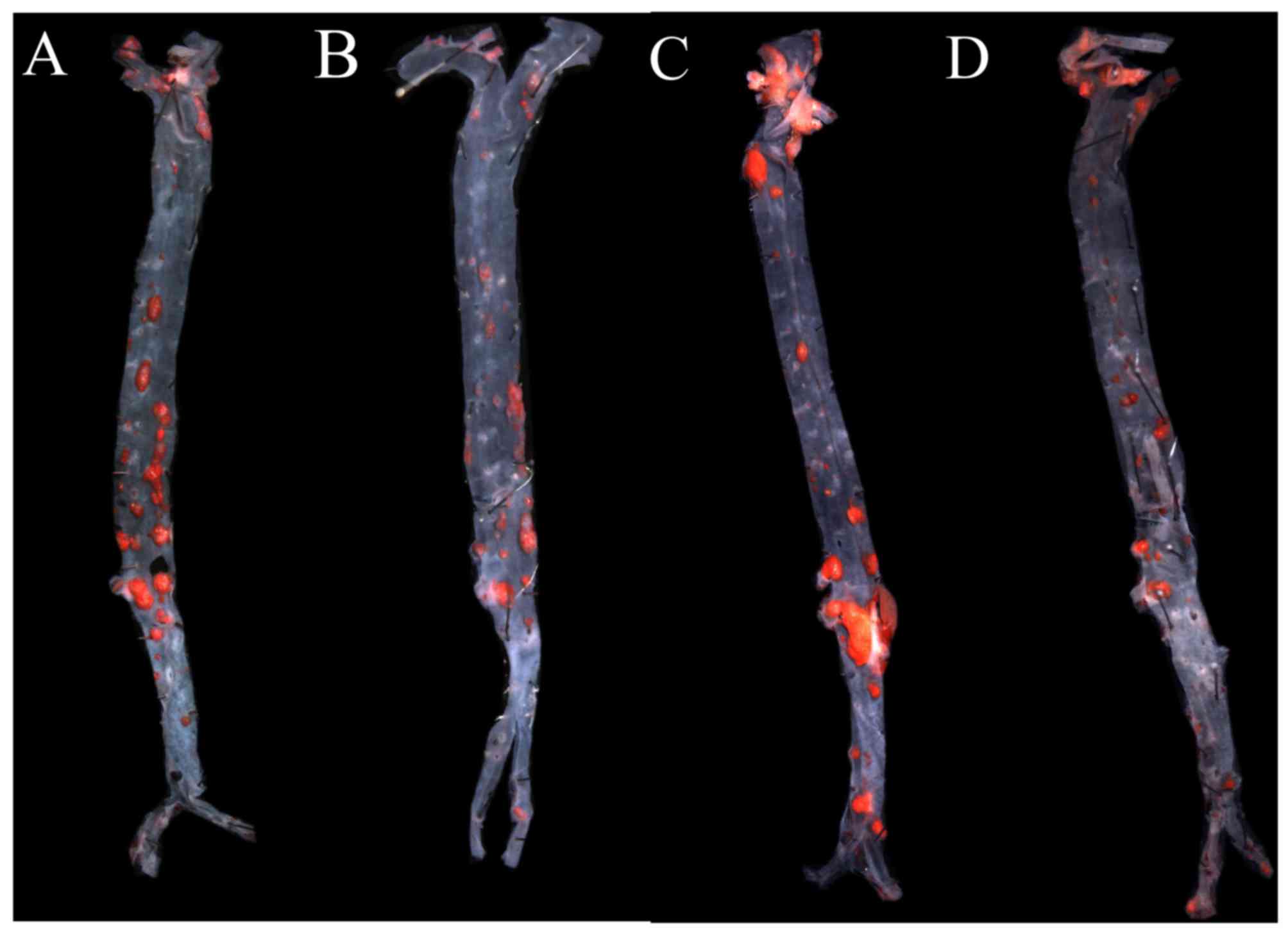
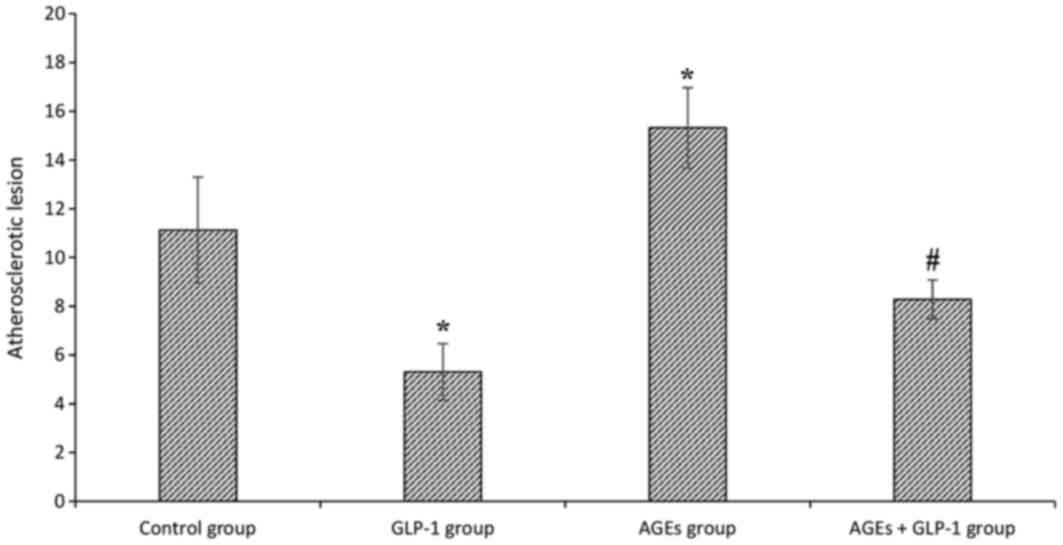
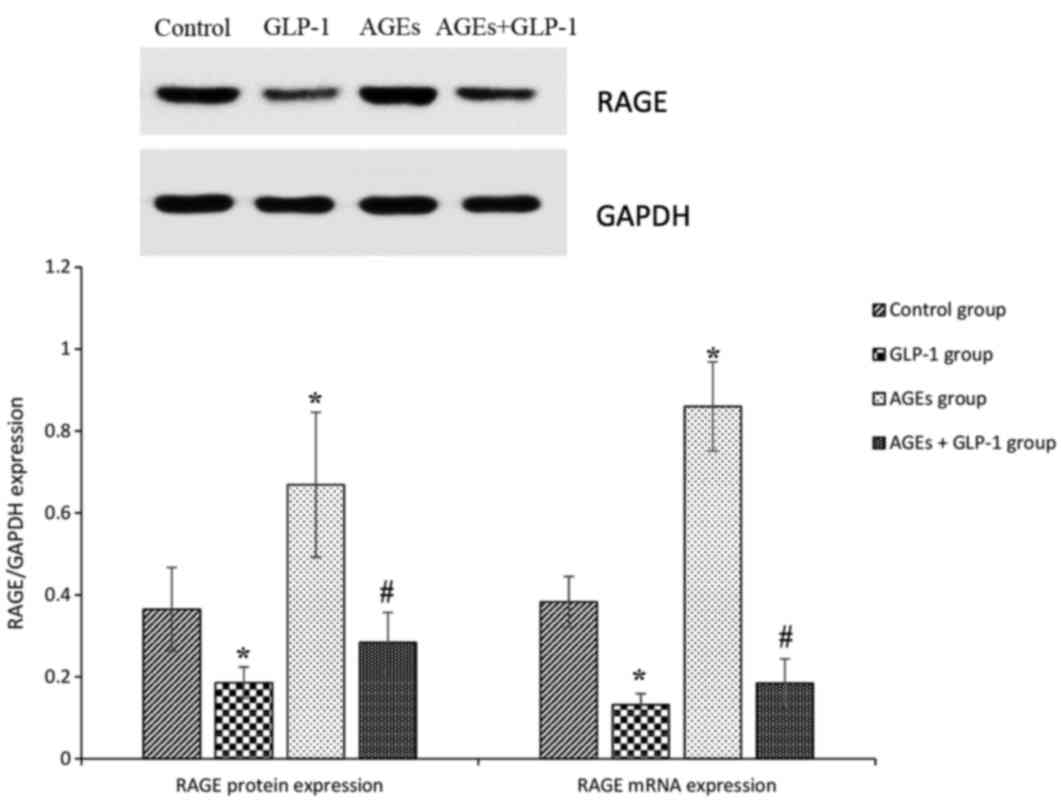
Glucagon-like peptide-1 (GLP-1) can protect arteriosclerotic lesions in apolipoprotein-E deficient (ApoE-/-) mice. Advanced glycation end products (AGEs)/receptor for advanced glycation end products (RAGE) interaction serves a key role in the development of diabetic vascular complications. The present study examined whether the GLP-1 analogue liraglutide can ameliorate atherogenesis via inhibiting AGEs-induced RAGE expression. Male ApoE-/- mice (age, 10 weeks) were divided into control, GLP-1, AGEs and AGEs+GLP-1 group. All mice were fed a high-fat diet. The AGEs and AGEs+GLP-1 groups were treated with intraperitoneal injection of AGEs (30 mg/kg/day). The GLP-1 and AGEs+GLP-1 groups were treated with subcutaneous injections of liraglutide (0.4 mg/kg/day). After 9 weeks, blood was drawn and the aortas were rapidly procured. The serum levels of AGEs, soluble RAGE (sRAGE), stromal cell-derived factor-1α (SDF-1α), total cholesterol and triacylglycerol were measured. Atherosclerotic plaque area was determined by Sudan IV staining. The mRNA and protein expression levels of RAGE were determined using reverse transcription-quantitative polymerase chain reaction and western blotting, respectively. The results demonstrated that AGEs treatment increased serum AGEs levels, increased the expression of RAGE in the aorta, and aggravated atherosclerotic lesions compared with the control. Liraglutide treatment reduced serum AGEs levels, reduced the expression of RAGE in aorta, and relieved atherosclerotic lesions compared with the control. In conclusion, these data suggested that liraglutide serves an anti-atherosclerotic effect via inhibiting AGEs-induced RAGE expression in ApoE-/- mice. These findings provide novel evidence for the use of GLP-1-type agents for the treatment of diabetic vascular complications.
View Figures

Figure 1

Figure 2

Figure 3

View References

1 

Whiting DR, Guariguata L, Weil C and Shaw J: IDF diabetes atlas: Global estimates of the prevalence of diabetes for 2011 and 2030. Diabetes Res Clin Pract. 94:311–321. 2011. View Article : Google Scholar : PubMed/NCBI

2 

Haffner SM, Lehto S, Rönnemaa T, Pyörälä K and Laakso M: Mortality from coronary heart disease in subjects with type 2 diabetes and in nondiabetic subjects with and without prior myocardial infarction. N Engl J Med. 339:229–234. 1998. View Article : Google Scholar : PubMed/NCBI

3 

Fowler MJ: Microvascular and Macrovascular Complications of Diabetes. Clinical Diabetes. 26:77–82. 2008. View Article : Google Scholar

4 

Scheen AJ and Paquot N: Blood glucose control and prevention of microangiopathy and macroangiopathy in type 2 diabetes. Rev Med Liege. 58:265–270. 2003.PubMed/NCBI

5 

Wang Y, Parlevliet ET, Geerling JJ, van der Tuin SJ, Zhang H, Bieghs V, Jawad AH, Shiri-Sverdlov R, Bot I, de Jager SC, et al: Exendin-4 decreases liver inflammation and atherosclerosis development simultaneously by reducing macrophage infiltration. Br J Pharmacol. 171:723–734. 2014. View Article : Google Scholar : PubMed/NCBI

6 

Dozier KC, Cureton EL, Kwan RO, Curran B, Sadjadi J and Victorino GP: Glucagon-like peptide-1 protects mesenteric endothelium from injury during inflammation. Peptides. 30:1735–1741. 2009. View Article : Google Scholar : PubMed/NCBI

7 

le Kim Chung T, Hosaka T, Yoshida M, Harada N, Sakaue H, Sakai T and Nakaya Y: Exendin-4, a GLP-1 receptor agonist, directly induces adiponectin expression through protein kinase A pathway and prevents inflammatory adipokine expression. Biochem Biophys Res Commun. 390:613–618. 2009. View Article : Google Scholar : PubMed/NCBI

8 

Yamagishi S: Role of advanced glycation end products (AGEs) and receptor for AGEs (RAGE) in vascular damage in diabetes. Exp Gerontol. 46:217–224. 2011. View Article : Google Scholar : PubMed/NCBI

9 

Huttunen HJ, Fages C and Rauvala H: Receptor for advanced glycation end products (RAGE)-mediated neurite outgrowth and activation of NF-kappaB require the cytoplasmic domain of the receptor but different downstream signaling pathways. J Biol Chem. 274:19919–19924. 1999. View Article : Google Scholar : PubMed/NCBI

10 

Bierhaus A, Schiekofer S, Schwaninger M, Andrassy M, Humpert PM, Chen J, Hong M, Luther T, Henle T, Klöting I, et al: Diabetes-associated sustained activation of the transcription factor nuclear factor-kappaB. Diabetes. 50:2792–2808. 2001. View Article : Google Scholar : PubMed/NCBI

11 

Cipollone F, Iezzi A, Fazia M, Zucchelli M, Pini B, Cuccurullo C, De Cesare D, De Blasis G, Muraro R, Bei R, et al: The receptor RAGE as a progression factor amplifying arachidonate-dependent inflammatory and proteolytic response in human atherosclerotic plaques: Role of glycemic control. Circulation. 108:1070–1077. 2003. View Article : Google Scholar : PubMed/NCBI

12 

Park L, Raman KG, Lee KJ, Lu Y, Ferran LJ Jr, Chow WS, Stern D and Schmidt AM: Suppression of accelerated diabetic atherosclerosis by the soluble receptor for advanced glycation endproducts. Nat Med. 4:1025–1031. 1998. View Article : Google Scholar : PubMed/NCBI

13 

Feng B, Xu L, Wang H, Yan X, Xue J, Liu F and Hu JF: Atorvastatin exerts its anti-atherosclerotic effects by targeting the receptor for advanced glycation end products. Biochim Biophys Acta. 1812:1130–1137. 2011. View Article : Google Scholar : PubMed/NCBI

14 

Vlassara H, Striker LJ, Teichberg S, Fuh H, Li YM and Steffes M: Advanced glycation end products induce glomerular sclerosis and albuminuria in normal rats. Proc Natl Acad Sci USA. 91:11704–11708. 1994. View Article : Google Scholar : PubMed/NCBI

15 

Livak KJ and Schmittgen TD: Analysis of relative gene expression data using real-time quantitative PCR and the 2(−Delta Delta C(T)) method. Methods. 25:402–408. 2001. View Article : Google Scholar : PubMed/NCBI

16 

Yagyu H, Ishibashi S, Chen Z, Osuga J, Okazaki M, Perrey S, Kitamine T, Shimada M, Ohashi K, Harada K, et al: Overexpressed lipoprotein lipase protects against atherosclerosis in apolipoprotein E knockout mice. J Lipid Res. 40:1677–1685. 1999.PubMed/NCBI

17 

Chrysant SG and Chrysant GS: Clinical implications of cardiovascular preventing pleiotropic effects of dipeptidyl peptidase-4 inhibitors. Am J Cardiol. 109:1681–1685. 2012. View Article : Google Scholar : PubMed/NCBI

18 

Arakawa M, Mita T, Azuma K, Ebato C, Goto H, Nomiyama T, Fujitani Y, Hirose T, Kawamori R and Watada H: Inhibition of monocyte adhesion to endothelial cells and attenuation of atherosclerotic lesion by a glucagon-like peptide-1 receptor agonist, exendin-4. Diabetes. 59:1030–1037. 2010. View Article : Google Scholar : PubMed/NCBI

19 

Knudsen LB: Liraglutide: The therapeutic promise from animal models. Int J Clin Pract Suppl. 4–11. 2010. View Article : Google Scholar : PubMed/NCBI

20 

Vlassara H and Palace MR: Diabetes and advanced glycation endproducts. J Intern Med. 251:87–101. 2002. View Article : Google Scholar : PubMed/NCBI

21 

Fukami K, Yamagishi S and Okuda S: Role of AGEs-RAGE system in cardiovascular disease. Curr Pharm Des. 20:2395–2402. 2014. View Article : Google Scholar : PubMed/NCBI

22 

Yamagishi S, Fukami K and Matsui T: Crosstalk between advanced glycation end products (AGEs)-receptor RAGE axis and dipeptidyl peptidase-4-incretin system in diabetic vascular complications. Cardiovasc Diabetol. 14:22015. View Article : Google Scholar : PubMed/NCBI

23 

Sourris KC and Forbes JM: Interactions between advanced glycation end-products (AGE) and their receptors in the development and progression of diabetic nephropathy-are these receptors valid therapeutic targets. Curr Drug Targets. 10:42–50. 2009. View Article : Google Scholar : PubMed/NCBI

24 

Daffu G, del Pozo CH, O'Shea KM, Ananthakrishnan R, Ramasamy R and Schmidt AM: Radical roles for RAGE in the pathogenesis of oxidative stress in cardiovascular diseases and beyond. Int J Mol Sci. 14:19891–19910. 2013. View Article : Google Scholar : PubMed/NCBI

25 

Kim W and Egan JM: The role of incretins in glucose homeostasis and diabetes treatment. Pharmacol Rev. 60:470–512. 2008. View Article : Google Scholar : PubMed/NCBI

26 

Ishibashi Y, Matsui T, Takeuchi M and Yamagishi S: Glucagon-like peptide-1 (GLP-1) inhibits advanced glycation end product (AGE)-induced up-regulation of VCAM-1 mRNA levels in endothelial cells by suppressing AGE receptor (RAGE) expression. Biochem Biophys Res Commun. 391:1405–1408. 2010. View Article : Google Scholar : PubMed/NCBI

27 

Chen S, Yin L, Xu Z, An FM, Liu AR, Wang Y, Yao WB and Gao XD: Inhibiting receptor for advanced glycation end product (AGE) and oxidative stress involved in the protective effect mediated by glucagon-like peptide-1 receptor on AGE induced neuronal apoptosis. Neurosci Lett. 612:193–198. 2016. View Article : Google Scholar : PubMed/NCBI

28 

Hudson BI, Harja E, Moser B and Schmidt AM: Soluble levels of receptor for advanced glycation endproducts (sRAGE) and coronary artery disease: The next C-reactive protein? Arterioscler Thromb Vasc Biol. 25:879–882. 2005. View Article : Google Scholar : PubMed/NCBI

29 

Basta G, Sironi AM, Lazzerini G, Del Turco S, Buzzigoli E, Casolaro A, Natali A, Ferrannini E and Gastaldelli A: Circulating soluble receptor for advanced glycation end products is inversely associated with glycemic control and S100A12 protein. J Clin Endocrinol Metab. 91:4628–4634. 2006. View Article : Google Scholar : PubMed/NCBI

30 

Falcone C, Emanuele E, D'Angelo A, Buzzi MP, Belvito C, Cuccia M and Geroldi D: Plasma levels of soluble receptor for advanced glycation end products and coronary artery disease in nondiabetic men. Arterioscler Thromb Vasc Biol. 25:1032–1037. 2005. View Article : Google Scholar : PubMed/NCBI

31 

Ratajczak MZ, Zuba-Surma E, Kucia M, Reca R, Wojakowski W and Ratajczak J: The pleiotropic effects of the SDF-1-CXCR4 axis in organogenesis, regeneration and tumorigenesis. Leukemia. 20:1915–1924. 2006. View Article : Google Scholar : PubMed/NCBI

32 

Kucia M, Reca R, Jala VR, Dawn B, Ratajczak J and Ratajczak MZ: Bone marrow as a home of heterogenous populations of nonhematopoietic stem cells. Leukemia. 19:1118–1127. 2005. View Article : Google Scholar : PubMed/NCBI

33 

Liu Z, Stanojevic V, Avadhani S, Yano T and Habener JF: Stromal cell-derived factor-1 (SDF-1)/chemokine (C-X-C motif) receptor 4 (CXCR4) axis activation induces intra-islet glucagon-like peptide-1 (GLP-1) production and enhances beta cell survival. Diabetologia. 54:2067–2076. 2011. View Article : Google Scholar : PubMed/NCBI

Related Articles

  • Abstract
  • View
  • Download
  • Twitter
Copy and paste a formatted citation
Spandidos Publications style
Li P, Tang Z, Wang L and Feng B: Glucagon-like peptide-1 analogue liraglutide ameliorates atherogenesis via inhibiting advanced glycation end product-induced receptor for advanced glycosylation end product expression in apolipoprotein-E deficient mice. Mol Med Rep 16: 3421-3426, 2017.
APA
Li, P., Tang, Z., Wang, L., & Feng, B. (2017). Glucagon-like peptide-1 analogue liraglutide ameliorates atherogenesis via inhibiting advanced glycation end product-induced receptor for advanced glycosylation end product expression in apolipoprotein-E deficient mice. Molecular Medicine Reports, 16, 3421-3426. https://doi.org/10.3892/mmr.2017.6978
MLA
Li, P., Tang, Z., Wang, L., Feng, B."Glucagon-like peptide-1 analogue liraglutide ameliorates atherogenesis via inhibiting advanced glycation end product-induced receptor for advanced glycosylation end product expression in apolipoprotein-E deficient mice". Molecular Medicine Reports 16.3 (2017): 3421-3426.
Chicago
Li, P., Tang, Z., Wang, L., Feng, B."Glucagon-like peptide-1 analogue liraglutide ameliorates atherogenesis via inhibiting advanced glycation end product-induced receptor for advanced glycosylation end product expression in apolipoprotein-E deficient mice". Molecular Medicine Reports 16, no. 3 (2017): 3421-3426. https://doi.org/10.3892/mmr.2017.6978
Copy and paste a formatted citation
x
Spandidos Publications style
Li P, Tang Z, Wang L and Feng B: Glucagon-like peptide-1 analogue liraglutide ameliorates atherogenesis via inhibiting advanced glycation end product-induced receptor for advanced glycosylation end product expression in apolipoprotein-E deficient mice. Mol Med Rep 16: 3421-3426, 2017.
APA
Li, P., Tang, Z., Wang, L., & Feng, B. (2017). Glucagon-like peptide-1 analogue liraglutide ameliorates atherogenesis via inhibiting advanced glycation end product-induced receptor for advanced glycosylation end product expression in apolipoprotein-E deficient mice. Molecular Medicine Reports, 16, 3421-3426. https://doi.org/10.3892/mmr.2017.6978
MLA
Li, P., Tang, Z., Wang, L., Feng, B."Glucagon-like peptide-1 analogue liraglutide ameliorates atherogenesis via inhibiting advanced glycation end product-induced receptor for advanced glycosylation end product expression in apolipoprotein-E deficient mice". Molecular Medicine Reports 16.3 (2017): 3421-3426.
Chicago
Li, P., Tang, Z., Wang, L., Feng, B."Glucagon-like peptide-1 analogue liraglutide ameliorates atherogenesis via inhibiting advanced glycation end product-induced receptor for advanced glycosylation end product expression in apolipoprotein-E deficient mice". Molecular Medicine Reports 16, no. 3 (2017): 3421-3426. https://doi.org/10.3892/mmr.2017.6978
Follow us
  • Twitter
  • LinkedIn
  • Facebook
About
  • Spandidos Publications
  • Careers
  • Cookie Policy
  • Privacy Policy
How can we help?
  • Help
  • Live Chat
  • Contact
  • Email to our Support Team