Spandidos Publications Logo
  • About
    • About Spandidos
    • Aims and Scopes
    • Abstracting and Indexing
    • Editorial Policies
    • Reprints and Permissions
    • Job Opportunities
    • Terms and Conditions
    • Contact
  • Journals
    • All Journals
    • Oncology Letters
      • Oncology Letters
      • Information for Authors
      • Editorial Policies
      • Editorial Board
      • Aims and Scope
      • Abstracting and Indexing
      • Bibliographic Information
      • Archive
    • International Journal of Oncology
      • International Journal of Oncology
      • Information for Authors
      • Editorial Policies
      • Editorial Board
      • Aims and Scope
      • Abstracting and Indexing
      • Bibliographic Information
      • Archive
    • Molecular and Clinical Oncology
      • Molecular and Clinical Oncology
      • Information for Authors
      • Editorial Policies
      • Editorial Board
      • Aims and Scope
      • Abstracting and Indexing
      • Bibliographic Information
      • Archive
    • Experimental and Therapeutic Medicine
      • Experimental and Therapeutic Medicine
      • Information for Authors
      • Editorial Policies
      • Editorial Board
      • Aims and Scope
      • Abstracting and Indexing
      • Bibliographic Information
      • Archive
    • International Journal of Molecular Medicine
      • International Journal of Molecular Medicine
      • Information for Authors
      • Editorial Policies
      • Editorial Board
      • Aims and Scope
      • Abstracting and Indexing
      • Bibliographic Information
      • Archive
    • Biomedical Reports
      • Biomedical Reports
      • Information for Authors
      • Editorial Policies
      • Editorial Board
      • Aims and Scope
      • Abstracting and Indexing
      • Bibliographic Information
      • Archive
    • Oncology Reports
      • Oncology Reports
      • Information for Authors
      • Editorial Policies
      • Editorial Board
      • Aims and Scope
      • Abstracting and Indexing
      • Bibliographic Information
      • Archive
    • Molecular Medicine Reports
      • Molecular Medicine Reports
      • Information for Authors
      • Editorial Policies
      • Editorial Board
      • Aims and Scope
      • Abstracting and Indexing
      • Bibliographic Information
      • Archive
    • World Academy of Sciences Journal
      • World Academy of Sciences Journal
      • Information for Authors
      • Editorial Policies
      • Editorial Board
      • Aims and Scope
      • Abstracting and Indexing
      • Bibliographic Information
      • Archive
    • International Journal of Functional Nutrition
      • International Journal of Functional Nutrition
      • Information for Authors
      • Editorial Policies
      • Editorial Board
      • Aims and Scope
      • Abstracting and Indexing
      • Bibliographic Information
      • Archive
    • International Journal of Epigenetics
      • International Journal of Epigenetics
      • Information for Authors
      • Editorial Policies
      • Editorial Board
      • Aims and Scope
      • Abstracting and Indexing
      • Bibliographic Information
      • Archive
    • Medicine International
      • Medicine International
      • Information for Authors
      • Editorial Policies
      • Editorial Board
      • Aims and Scope
      • Abstracting and Indexing
      • Bibliographic Information
      • Archive
  • Articles
  • Information
    • Information for Authors
    • Information for Reviewers
    • Information for Librarians
    • Information for Advertisers
    • Conferences
  • Language Editing
Spandidos Publications Logo
  • About
    • About Spandidos
    • Aims and Scopes
    • Abstracting and Indexing
    • Editorial Policies
    • Reprints and Permissions
    • Job Opportunities
    • Terms and Conditions
    • Contact
  • Journals
    • All Journals
    • Biomedical Reports
      • Information for Authors
      • Editorial Policies
      • Editorial Board
      • Aims and Scope
      • Abstracting and Indexing
      • Bibliographic Information
      • Archive
    • Experimental and Therapeutic Medicine
      • Information for Authors
      • Editorial Policies
      • Editorial Board
      • Aims and Scope
      • Abstracting and Indexing
      • Bibliographic Information
      • Archive
    • International Journal of Epigenetics
      • Information for Authors
      • Editorial Policies
      • Editorial Board
      • Aims and Scope
      • Abstracting and Indexing
      • Bibliographic Information
      • Archive
    • International Journal of Functional Nutrition
      • Information for Authors
      • Editorial Policies
      • Editorial Board
      • Aims and Scope
      • Abstracting and Indexing
      • Bibliographic Information
      • Archive
    • International Journal of Molecular Medicine
      • Information for Authors
      • Editorial Policies
      • Editorial Board
      • Aims and Scope
      • Abstracting and Indexing
      • Bibliographic Information
      • Archive
    • International Journal of Oncology
      • Information for Authors
      • Editorial Policies
      • Editorial Board
      • Aims and Scope
      • Abstracting and Indexing
      • Bibliographic Information
      • Archive
    • Medicine International
      • Information for Authors
      • Editorial Policies
      • Editorial Board
      • Aims and Scope
      • Abstracting and Indexing
      • Bibliographic Information
      • Archive
    • Molecular and Clinical Oncology
      • Information for Authors
      • Editorial Policies
      • Editorial Board
      • Aims and Scope
      • Abstracting and Indexing
      • Bibliographic Information
      • Archive
    • Molecular Medicine Reports
      • Information for Authors
      • Editorial Policies
      • Editorial Board
      • Aims and Scope
      • Abstracting and Indexing
      • Bibliographic Information
      • Archive
    • Oncology Letters
      • Information for Authors
      • Editorial Policies
      • Editorial Board
      • Aims and Scope
      • Abstracting and Indexing
      • Bibliographic Information
      • Archive
    • Oncology Reports
      • Information for Authors
      • Editorial Policies
      • Editorial Board
      • Aims and Scope
      • Abstracting and Indexing
      • Bibliographic Information
      • Archive
    • World Academy of Sciences Journal
      • Information for Authors
      • Editorial Policies
      • Editorial Board
      • Aims and Scope
      • Abstracting and Indexing
      • Bibliographic Information
      • Archive
  • Articles
  • Information
    • For Authors
    • For Reviewers
    • For Librarians
    • For Advertisers
    • Conferences
  • Language Editing
Login Register Submit
  • This site uses cookies
  • You can change your cookie settings at any time by following the instructions in our Cookie Policy. To find out more, you may read our Privacy Policy.

    I agree
Search articles by DOI, keyword, author or affiliation
Search
Advanced Search
presentation
Molecular Medicine Reports
Join Editorial Board Propose a Special Issue
Print ISSN: 1791-2997 Online ISSN: 1791-3004
Journal Cover
September-2017 Volume 16 Issue 3

Full Size Image

Sign up for eToc alerts
Recommend to Library

Journals

International Journal of Molecular Medicine

International Journal of Molecular Medicine

International Journal of Molecular Medicine is an international journal devoted to molecular mechanisms of human disease.

International Journal of Oncology

International Journal of Oncology

International Journal of Oncology is an international journal devoted to oncology research and cancer treatment.

Molecular Medicine Reports

Molecular Medicine Reports

Covers molecular medicine topics such as pharmacology, pathology, genetics, neuroscience, infectious diseases, molecular cardiology, and molecular surgery.

Oncology Reports

Oncology Reports

Oncology Reports is an international journal devoted to fundamental and applied research in Oncology.

Experimental and Therapeutic Medicine

Experimental and Therapeutic Medicine

Experimental and Therapeutic Medicine is an international journal devoted to laboratory and clinical medicine.

Oncology Letters

Oncology Letters

Oncology Letters is an international journal devoted to Experimental and Clinical Oncology.

Biomedical Reports

Biomedical Reports

Explores a wide range of biological and medical fields, including pharmacology, genetics, microbiology, neuroscience, and molecular cardiology.

Molecular and Clinical Oncology

Molecular and Clinical Oncology

International journal addressing all aspects of oncology research, from tumorigenesis and oncogenes to chemotherapy and metastasis.

World Academy of Sciences Journal

World Academy of Sciences Journal

Multidisciplinary open-access journal spanning biochemistry, genetics, neuroscience, environmental health, and synthetic biology.

International Journal of Functional Nutrition

International Journal of Functional Nutrition

Open-access journal combining biochemistry, pharmacology, immunology, and genetics to advance health through functional nutrition.

International Journal of Epigenetics

International Journal of Epigenetics

Publishes open-access research on using epigenetics to advance understanding and treatment of human disease.

Medicine International

Medicine International

An International Open Access Journal Devoted to General Medicine.

Journal Cover
September-2017 Volume 16 Issue 3

Full Size Image

Sign up for eToc alerts
Recommend to Library

  • Article
  • Citations
    • Cite This Article
    • Download Citation
    • Create Citation Alert
    • Remove Citation Alert
    • Cited By
  • Similar Articles
    • Related Articles (in Spandidos Publications)
    • Similar Articles (Google Scholar)
    • Similar Articles (PubMed)
  • Download PDF
  • Download XML
  • View XML
Article

Hydrogen sulfide prevents homocysteine‑induced endoplasmic reticulum stress in PC12 cells by upregulating SIRT‑1

  • Authors:
    • Chun‑Yan Wang
    • Wei Zou
    • Xiao‑Yu Liang
    • Zhi‑Sheng Jiang
    • Xiang Li
    • Hai‑Jun Wei
    • Yi‑Yun Tang
    • Ping Zhang
    • Xiao‑Qing Tang
  • View Affiliations / Copyright

    Affiliations: The Institute of Cardiovascular Disease, Medical College, University of South China, Hengyang, Hunan 421001, P.R. China, Department of Neurology, Nanhua Affiliated Hospital, University of South China, Hengyang, Hunan 421001, P.R. China, Institute of Neuroscience, Medical College, University of South China, Hengyang, Hunan 421001, P.R. China
  • Pages: 3587-3593
    |
    Published online on: July 15, 2017
       https://doi.org/10.3892/mmr.2017.7004
  • Expand metrics +
Metrics: Total Views: 0 (Spandidos Publications: | PMC Statistics: )
Metrics: Total PDF Downloads: 0 (Spandidos Publications: | PMC Statistics: )
Cited By (CrossRef): 0 citations Loading Articles...

This article is mentioned in:


Abstract

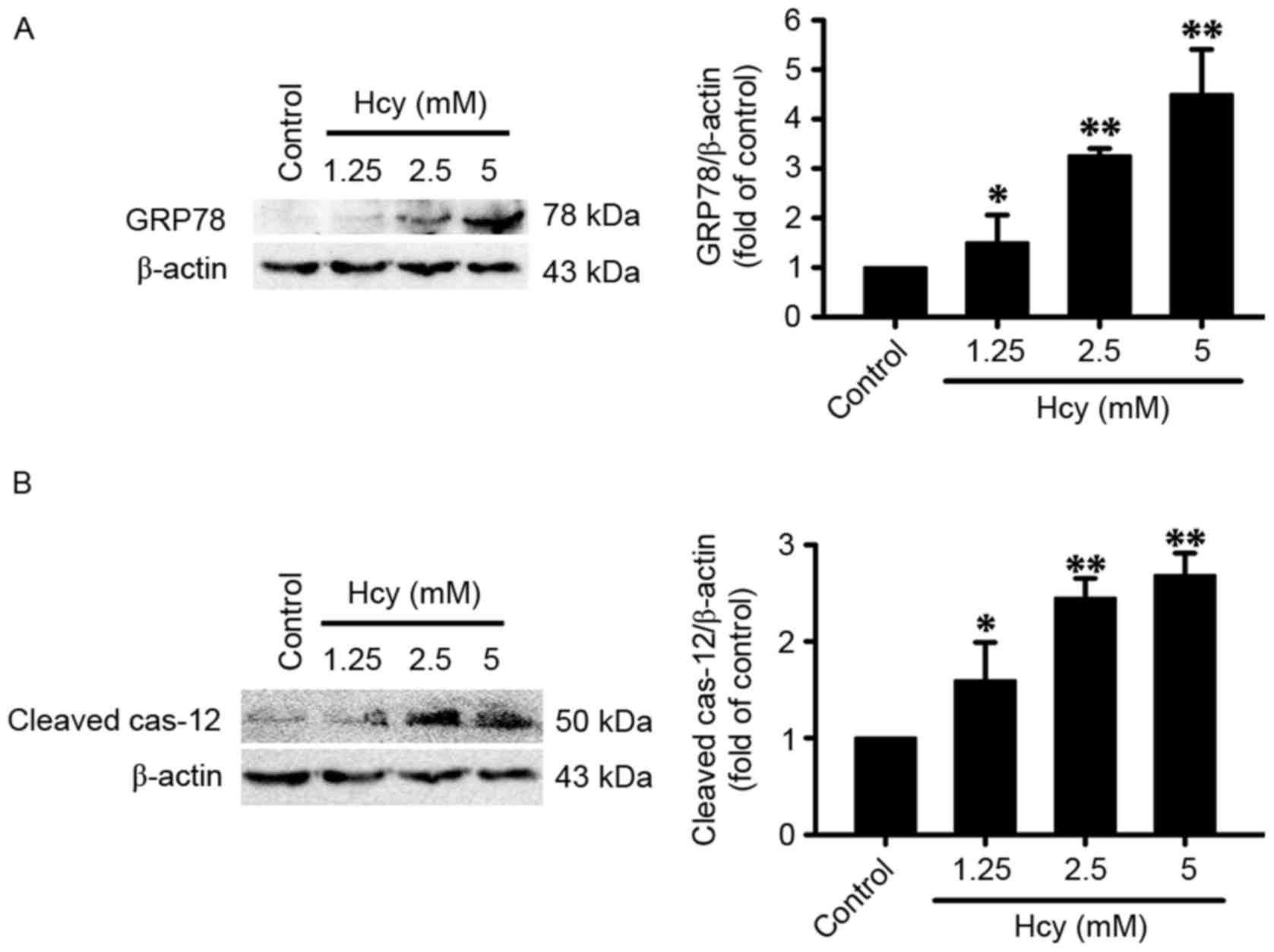
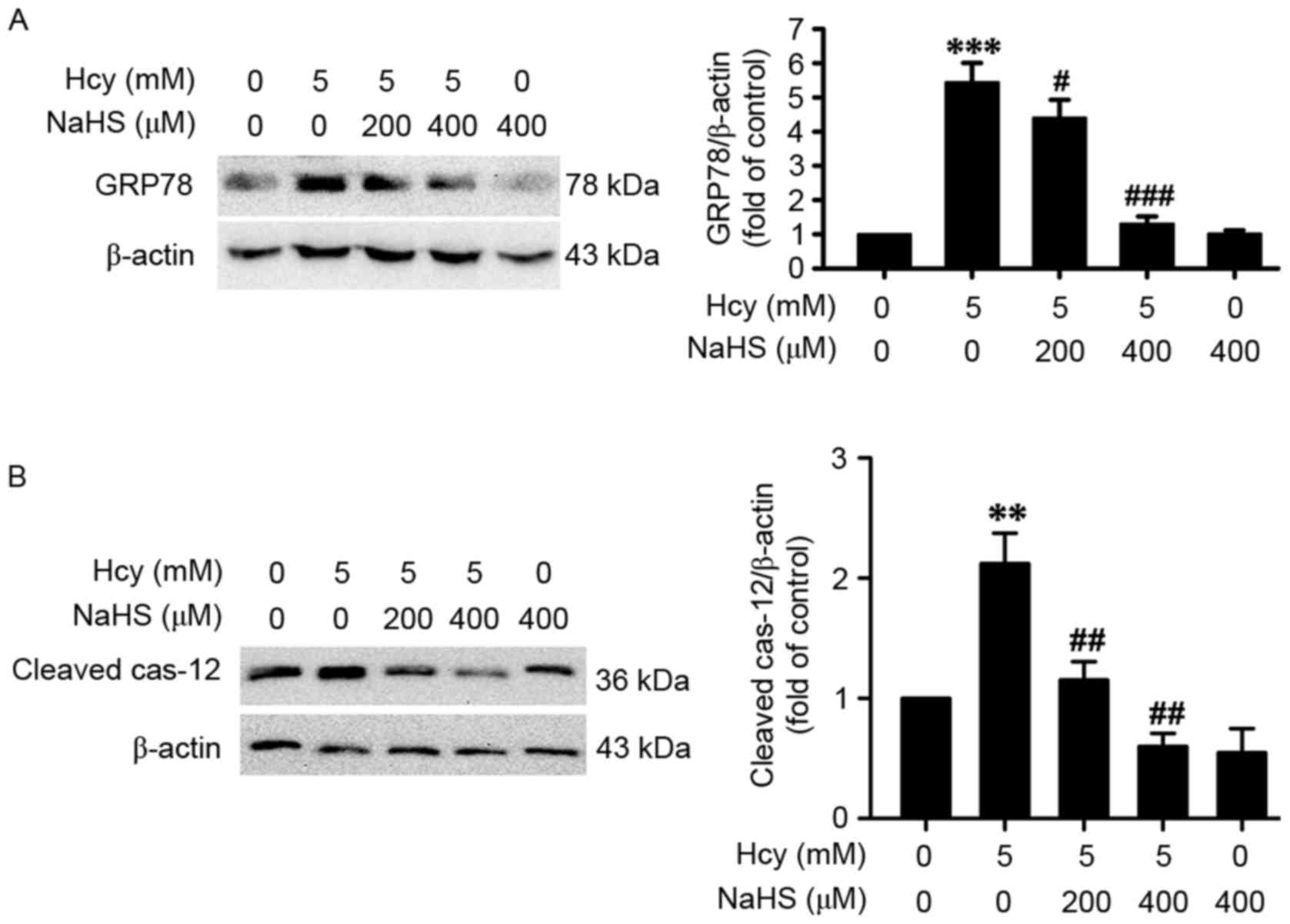
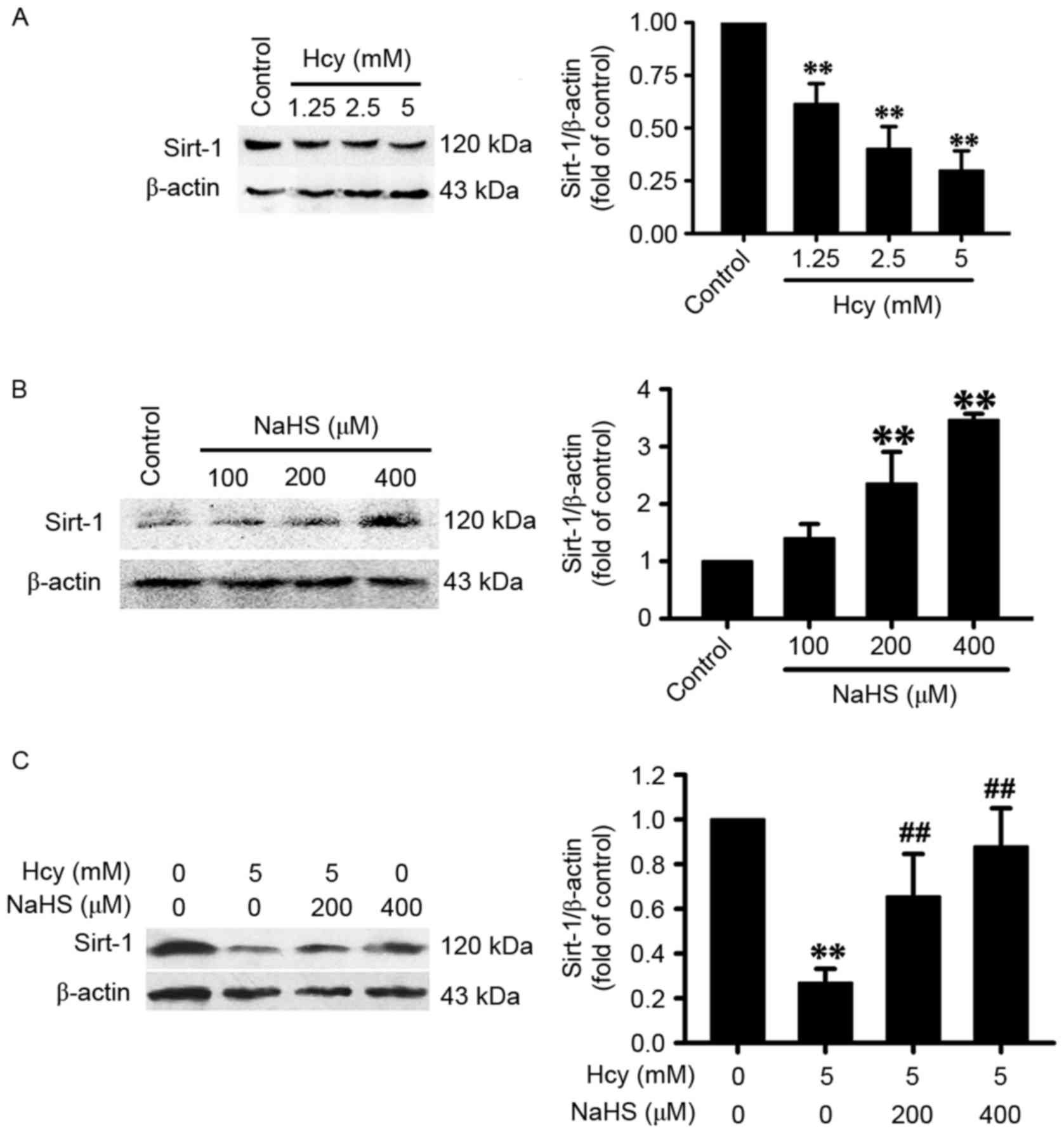
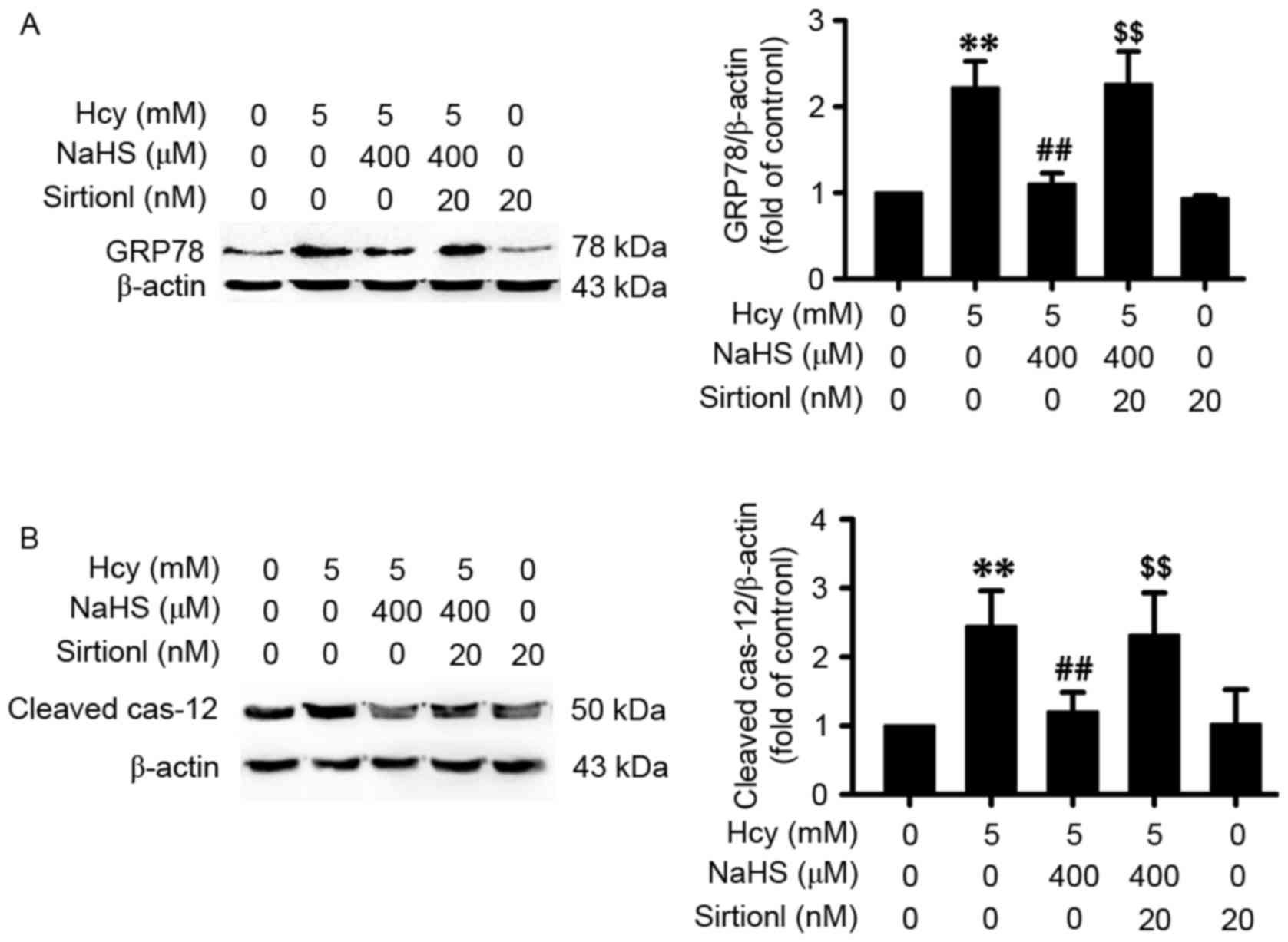
It was previously confirmed that hydrogen sulfide (H2S) has a neuroprotective effect, preventing homocysteine‑induced neurotoxicity. However, the exact molecular mechanisms underlying this protective effect remain to be fully elucidated. Endoplasmic reticulum (ER) stress contributes to homocysteine‑induced neurotoxicity. Silent mating type information regulator 2 homolog 1 (SIRT‑1) can attenuate ER stress, exerting its neuroprotective effect. Therefore, the present study aimed to investigate whether H2S protects PC12 cells against homocysteine‑induced ER stress and whether SIRT‑1 mediates this protective effect of H2S. Western blotting was used to detect the expression of SIRT‑1, glucose‑regulated protein 78 (GRP78), and cleaved caspase‑12 in PC12 cells. It was observed that sodium hydrosulfide (NaHS), an exogenous H2S donor, significantly attenuated the homocysteine‑induced ER stress responses, including increases in the protein expression levels of GRP78 and cleaved caspase‑12. Simultaneously, NaHS upregulated the expression of SIRT‑1 and reversed the homocysteine‑induced downregulation of SIRT‑1 in PC12 cells. Sirtinol, a specific inhibitor of SIRT‑1, eliminated the protective effects of H2S in homocysteine‑induced ER stress. These data indicated that H2S prevented homocysteine‑induced ER stress via enhancing the expression of SIRT‑1. These findings offer novel insight into the protective mechanisms of H2S against homocysteine‑induced neurotoxicity.
View Figures

Figure 1

Figure 2

Figure 3

Figure 4

View References

1 

Prudova A, Bauman Z, Braun A, Vitvitsky V, Lu SC and Banerjee R: S-adenosylmethionine stabilizes cystathionine beta-synthase and modulates redox capacity. Proc Natl Acad Sci USA. 103:6489–6494. 2006. View Article : Google Scholar : PubMed/NCBI

2 

Selhub J: Homocysteine metabolism. Annu Rev Nutr. 19:217–246. 1999. View Article : Google Scholar : PubMed/NCBI

3 

Van Dam F and Van Gool WA: Hyperhomocysteinemia and Alzheimer's disease: A systematic review. Arch Gerontol Geriatr. 48:425–430. 2009. View Article : Google Scholar : PubMed/NCBI

4 

Seshadri S, Beiser A, Selhub J, Jacques PF, Rosenberg IH, D'Agostino RB, Wilson PW and Wolf PA: Plasma homocysteine as a risk factor for dementia and Alzheimer's disease. N Engl J Med. 346:476–483. 2002. View Article : Google Scholar : PubMed/NCBI

5 

Miller JW: Homocysteine and Alzheimer's disease. Nutr Rev. 57:126–129. 1999.PubMed/NCBI

6 

Clarke R, Smith AD, Jobst KA, Refsum H, Sutton L and Ueland PM: Folate, vitamin B12, and serum total homocysteine levels in confirmed Alzheimer disease. Arch Neurol. 55:1449–1455. 1998. View Article : Google Scholar : PubMed/NCBI

7 

Dwyer BE, Raina AK, Perry G and Smith MA: Homocysteine and Alzheimer's disease: A modifiable risk? Free Radic Biol Med. 36:1471–1475. 2004. View Article : Google Scholar : PubMed/NCBI

8 

Sharma GS, Kumar T, Dar TA and Singh LR: Protein N-homocysteinylation: From cellular toxicity to neurodegeneration. Biochim Biophys Acta. 1850:2239–2245. 2015. View Article : Google Scholar : PubMed/NCBI

9 

Lin N, Qin S, Luo S, Cui S, Huang G and Zhang X: Homocysteine induces cytotoxicity and proliferation inhibition in neural stem cells via DNA methylation in vitro. FEBS J. 281:2088–2096. 2014. View Article : Google Scholar : PubMed/NCBI

10 

Abushik PA, Niittykoski M, Giniatullina R, Shakirzyanova A, Bart G, Fayuk D, Sibarov DA, Antonov SM and Giniatullin R: The role of NMDA and mGluR5 receptors in calcium mobilization and neurotoxicity of homocysteine in trigeminal and cortical neurons and glial cells. J Neurochem. 129:264–274. 2014. View Article : Google Scholar : PubMed/NCBI

11 

Park YJ, Ko JW, Jang Y and Kwon YH: Activation of AMP-activated protein kinase alleviates homocysteine-mediated neurotoxicity in SH-SY5Y cells. Neurochem Res. 38:1561–1571. 2013. View Article : Google Scholar : PubMed/NCBI

12 

Hoozemans JJ, Veerhuis R, Van Haastert ES, Rozemuller JM, Baas F, Eikelenboom P and Scheper W: The unfolded protein response is activated in Alzheimer's disease. Acta Neuropathol. 110:165–172. 2005. View Article : Google Scholar : PubMed/NCBI

13 

Salminen A, Kauppinen A, Suuronen T, Kaarniranta K and Ojala J: ER stress in Alzheimer's disease: A novel neuronal trigger for inflammation and Alzheimer's pathology. J Neuroinflammation. 6:412009. View Article : Google Scholar : PubMed/NCBI

14 

Cornejo VH and Hetz C: The unfolded protein response in Alzheimer's disease. Semin Immunopathol. 35:277–292. 2013. View Article : Google Scholar : PubMed/NCBI

15 

Althausen S and Paschen W: Homocysteine-induced changes in mRNA levels of genes coding for cytoplasmic- and endoplasmic reticulum-resident stress proteins in neuronal cell cultures. Brain Res Mol Brain Res. 84:32–40. 2000. View Article : Google Scholar : PubMed/NCBI

16 

Chigurupati S, Wei Z, Belal C, Vandermey M, Kyriazis GA, Thiruma V, Arumugam TV and Chan SL: The homocysteine-inducible endoplasmic reticulum stress protein counteracts calcium store depletion and induction of CCAAT enhancer-binding protein homologous protein in a neurotoxin model of Parkinson disease. J Biol Chem. 284:18323–18333. 2009. View Article : Google Scholar : PubMed/NCBI

17 

Kim HJ, Cho HK and Kwon YH: Synergistic induction of ER stress by homocysteine and beta-amyloid in SH-SY5Y cells. J Nutr Biochem. 19:754–761. 2008. View Article : Google Scholar : PubMed/NCBI

18 

Park YJ, Jang Y and Kwon YH: Protective effect of isoflavones against homocysteine-mediated neuronal degeneration in SH-SY5Y cells. Amino Acids. 39:785–794. 2010. View Article : Google Scholar : PubMed/NCBI

19 

Zhou CF and Tang XQ: Hydrogen sulfide and nervous system regulation. Chin Med J (Engl). 124:3576–3582. 2011.PubMed/NCBI

20 

Łowicka E and Beltowski J: Hydrogen sulfide (H2S)-the third gas of interest for pharmacologists. Pharmacol Rep. 59:4–24. 2007.PubMed/NCBI

21 

Kimura H, Shibuya N and Kimura Y: Hydrogen sulfide is a signaling molecule and a cytoprotectant. Antioxid Redox Signal. 17:45–57. 2012. View Article : Google Scholar : PubMed/NCBI

22 

Hu LF, Lu M, Wong PT Hon and Bian JS: Hydrogen sulfide: Neurophysiology and neuropathology. Antioxid Redox Signal. 15:405–419. 2011. View Article : Google Scholar : PubMed/NCBI

23 

Qu K, Lee SW, Bian JS, Low CM and Wong PT: Hydrogen sulfide: Neurochemistry and neurobiology. Neurochem Int. 52:155–165. 2008. View Article : Google Scholar : PubMed/NCBI

24 

Tang XQ, Shen XT, Huang YE, Chen RQ, Ren YK, Fang HR, Zhuang YY and Wang CY: Inhibition of endogenous hydrogen sulfide generation is associated with homocysteine-induced neurotoxicity: Role of ERK1/2 activation. J Mol Neurosci. 45:60–67. 2011. View Article : Google Scholar : PubMed/NCBI

25 

Tang XQ, Shen XT, Huang YE, Ren YK, Chen RQ, Hu B, He JQ, Yin WL, Xu JH and Jiang ZS: Hydrogen sulfide antagonizes homocysteine-induced neurotoxicity in PC12 cells. Neurosci Res. 68:241–249. 2010. View Article : Google Scholar : PubMed/NCBI

26 

Chen J, Zhou Y, Mueller-Steiner S, Chen LF, Kwon H, Yi S, Mucke L and Gan L: SIRT1 protects against microglia-dependent amyloid-beta toxicity through inhibiting NF-kappaB signaling. J Biol Chem. 280:40364–40374. 2005. View Article : Google Scholar : PubMed/NCBI

27 

Qin W, Yang T, Ho L, Zhao Z, Wang J, Chen L, Zhao W, Thiyagarajan M, MacGrogan D, Rodgers JT, et al: Neuronal SIRT1 activation as a novel mechanism underlying the prevention of Alzheimer disease amyloid neuropathology by calorie restriction. J Biol Chem. 281:21745–21754. 2006. View Article : Google Scholar : PubMed/NCBI

28 

Kim D, Nguyen MD, Dobbin MM, Fischer A, Sananbenesi F, Rodgers JT, Delalle I, Baur JA, Sui G, Armour SM, et al: SIRT1 deacetylase protects against neurodegeneration in models for Alzheimer's disease and amyotrophic lateral sclerosis. EMBO J. 26:3169–3179. 2007. View Article : Google Scholar : PubMed/NCBI

29 

Donmez G, Wang D, Cohen DE and Guarente L: SIRT1 suppresses beta-amyloid production by activating the alpha-secretase gene ADAM10. Cell. 142:320–332. 2010. View Article : Google Scholar : PubMed/NCBI

30 

Jeong H, Cohen DE, Cui L, Supinski A, Savas JN, Mazzulli JR, Yates JR III, Bordone L, Guarente L and Krainc D: Sirt1 mediates neuroprotection from mutant huntingtin by activation of the TORC1 and CREB transcriptional pathway. Nat Med. 18:159–165. 2012. View Article : Google Scholar

31 

Jiang M, Wang J, Fu J, Du L, Jeong H, West T, Xiang L, Peng Q, Hou Z, Cai H, et al: Neuroprotective role of Sirt1 in mammalian models of Huntington's disease through activation of multiple Sirt1 targets. Nat Med. 18:153–158. 2011. View Article : Google Scholar : PubMed/NCBI

32 

Donmez G, Arun A, Chung CY, McLean PJ, Lindquist S and Guarente L: SIRT1 protects against α-synuclein aggregation by activating molecular chaperones. J Neurosci. 32:124–132. 2012. View Article : Google Scholar : PubMed/NCBI

33 

Zhu D, Zhang J, Wu J, Li G, Yao W, Hao J and Sun J: Paliperidone protects SH-SY5Y cells against MK-801-induced neuronal damage through inhibition of Ca(2+) influx and regulation of SIRT1/miR-134 signal pathway. Mol Neurobiol. 53:2498–2509. 2016. View Article : Google Scholar : PubMed/NCBI

34 

Yan W, Fang Z, Yang Q, Dong H, Lu Y, Lei C and Xiong L: SirT1 mediates hyperbaric oxygen preconditioning-induced ischemic tolerance in rat brain. J Cereb Blood Flow Metab. 33:396–406. 2013. View Article : Google Scholar : PubMed/NCBI

35 

Li Y, Xu S, Giles A, Nakamura K, Lee JW, Hou X, Donmez G, Li J, Luo Z, Walsh K, et al: Hepatic overexpression of SIRT1 in mice attenuates endoplasmic reticulum stress and insulin resistance in the liver. FASEB J. 25:1664–1679. 2011. View Article : Google Scholar : PubMed/NCBI

36 

Jung TW, Lee KT, Lee MW and Ka KH: SIRT1 attenuates palmitate-induced endoplasmic reticulum stress and insulin resistance in HepG2 cells via induction of oxygen-regulated protein 150. Biochem Biophys Res Commun. 422:229–232. 2012. View Article : Google Scholar : PubMed/NCBI

37 

Kuszczyk M, Gordon-Krajcer W and Lazarewicz JW: Homo-cysteine-induced acute excitotoxicity in cerebellar granule cells in vitro is accompanied by PP2A-mediated dephosphorylation of tau. Neurochem Int. 55:174–180. 2009. View Article : Google Scholar : PubMed/NCBI

38 

Oldreive CE and Doherty GH: Neurotoxic effects of homocysteine on cerebellar Purkinje neurons in vitro. Neurosci Lett. 413:52–57. 2007. View Article : Google Scholar : PubMed/NCBI

39 

Lipton SA, Kim WK, Choi YB, Kumar S, D'Emilia DM, Rayudu PV, Arnelle DR and Stamler JS: Neurotoxicity associated with dual actions of homocysteine at the N-methyl-D-aspartate receptor. Proc Natl Acad Sci USA. 94:5923–5928. 1997. View Article : Google Scholar : PubMed/NCBI

40 

Bhatia P and Singh N: Homocysteine excess: Delineating the possible mechanism of neurotoxicity and depression. Fundam Clin Pharmacol. 29:522–528. 2015. View Article : Google Scholar : PubMed/NCBI

41 

Ni M, Zhang Y and Lee AS: Beyond the endoplasmic reticulum: Atypical GRP78 in cell viability, signalling and therapeutic targeting. Biochem J. 434:181–188. 2011. View Article : Google Scholar : PubMed/NCBI

42 

Lee AS: The ER chaperone and signaling regulator GRP78/BiP as a monitor of endoplasmic reticulum stress. Methods. 35:373–381. 2005. View Article : Google Scholar : PubMed/NCBI

43 

Szegezdi E, Fitzgerald U and Samali A: Caspase-12 and ER-stress-mediated apoptosis: The story so far. Ann N Y Acad Sci. 1010:186–194. 2003. View Article : Google Scholar : PubMed/NCBI

44 

Nakagawa T, Zhu H, Morishima N, Li E, Xu J, Yankner BA and Yuan J: Caspase-12 mediates endoplasmic-reticulum-specific apoptosis and cytotoxicity by amyloid-beta. Nature. 403:98–103. 2000. View Article : Google Scholar : PubMed/NCBI

45 

de la Cadena SG, Hernandez-Fonseca K, Camacho-Arroyo I and Massieu L: Glucose deprivation induces reticulum stress by the PERK pathway and caspase-7- and calpain-mediated caspase-12 activation. Apoptosis. 19:414–427. 2014. View Article : Google Scholar : PubMed/NCBI

46 

Wei H, Zhang R, Jin H, Liu D, Tang X, Tang C and Du J: Hydrogen sulfide attenuates hyperhomocysteinemia-induced cardiomyocytic endoplasmic reticulum stress in rats. Antioxid Redox Signal. 12:1079–1091. 2010. View Article : Google Scholar : PubMed/NCBI

47 

Li Y, Zhang H, Jiang C, Xu M, Pang Y, Feng J, Xiang X, Kong W, Xu G, Li Y and Wang X: Hyperhomocysteinemia promotes insulin resistance by inducing endoplasmic reticulum stress in adipose tissue. J Biol Chem. 288:9583–9592. 2013. View Article : Google Scholar : PubMed/NCBI

48 

Zbidi H, Redondo PC and López JJ, Bartegi A, Salido GM and López JJ: Homocysteine induces caspase activation by endoplasmic reticulum stress in platelets from type 2 diabetics and healthy donors. Thromb Haemost. 103:1022–1032. 2010. View Article : Google Scholar : PubMed/NCBI

49 

Park SJ, Kim KJ, Kim WU, Oh IH and Cho CS: Involvement of endoplasmic reticulum stress in homocysteine-induced apoptosis of osteoblastic cells. J Bone Miner Metab. 30:474–484. 2012. View Article : Google Scholar : PubMed/NCBI

50 

Wang XY, Yang CT, Zheng DD, Mo LQ, Lan AP, Yang ZL, Hu F, Chen PX, Liao XX and Feng JQ: Hydrogen sulfide protects H9c2 cells against doxorubicin-induced cardiotoxicity through inhibition of endoplasmic reticulum stress. Mol Cell Biochem. 363:419–426. 2012. View Article : Google Scholar : PubMed/NCBI

51 

Xie L, Tiong CX and Bian JS: Hydrogen sulfide protects SH-SY5Y cells against 6-hydroxydopamine-induced endoplasmic reticulum stress. Am J Physiol Cell Physiol. 303:C81–C91. 2012. View Article : Google Scholar : PubMed/NCBI

52 

Canto C and Auwerx J: Caloric restriction, SIRT1 and longevity. Trends Endocrinol Metab. 20:325–331. 2009. View Article : Google Scholar : PubMed/NCBI

53 

Bordone L and Guarente L: Calorie restriction, SIRT1 and metabolism: Understanding longevity. Nat Rev Mol Cell Biol. 6:298–305. 2005. View Article : Google Scholar : PubMed/NCBI

54 

Satoh A, Brace CS, Rensing N, Cliften P, Wozniak DF, Herzog ED, Yamada KA and Imai S: Sirt1 extends life span and delays aging in mice through the regulation of Nk2 homeobox 1 in the DMH and LH. Cell Metab. 18:416–430. 2013. View Article : Google Scholar : PubMed/NCBI

55 

Tang BL: SIRT1, neuronal cell survival and the insulin/IGF-1 aging paradox. Neurobiol Aging. 27:501–505. 2006. View Article : Google Scholar : PubMed/NCBI

56 

Michan S and Sinclair D: Sirtuins in mammals: Insights into their biological function. Biochem J. 404:1–13. 2007. View Article : Google Scholar : PubMed/NCBI

57 

Brunet A, Sweeney LB, Sturgill JF, Chua KF, Greer PL, Lin Y, Tran H, Ross SE, Mostoslavsky R, Cohen HY, et al: Stress-dependent regulation of FOXO transcription factors by the SIRT1 deacetylase. Science. 303:2011–2015. 2004. View Article : Google Scholar : PubMed/NCBI

58 

Milner J: Cellular regulation of SIRT1. Curr Pharm Des. 15:39–44. 2009. View Article : Google Scholar : PubMed/NCBI

59 

Herskovits AZ and Guarente L: SIRT1 in neurodevelopment and brain senescence. Neuron. 81:471–483. 2014. View Article : Google Scholar : PubMed/NCBI

60 

Ghemrawi R, Pooya S, Lorentz S, Gauchotte G, Arnold C, Gueant JL and Battaglia-Hsu SF: Decreased vitamin B12 availability induces ER stress through impaired SIRT1-deacetylation of HSF1. Cell Death Dis. 4:e5532013. View Article : Google Scholar : PubMed/NCBI

Related Articles

  • Abstract
  • View
  • Download
  • Twitter
Copy and paste a formatted citation
Spandidos Publications style
Wang CY, Zou W, Liang XY, Jiang ZS, Li X, Wei HJ, Tang YY, Zhang P and Tang XQ: Hydrogen sulfide prevents homocysteine‑induced endoplasmic reticulum stress in PC12 cells by upregulating SIRT‑1. Mol Med Rep 16: 3587-3593, 2017.
APA
Wang, C., Zou, W., Liang, X., Jiang, Z., Li, X., Wei, H. ... Tang, X. (2017). Hydrogen sulfide prevents homocysteine‑induced endoplasmic reticulum stress in PC12 cells by upregulating SIRT‑1. Molecular Medicine Reports, 16, 3587-3593. https://doi.org/10.3892/mmr.2017.7004
MLA
Wang, C., Zou, W., Liang, X., Jiang, Z., Li, X., Wei, H., Tang, Y., Zhang, P., Tang, X."Hydrogen sulfide prevents homocysteine‑induced endoplasmic reticulum stress in PC12 cells by upregulating SIRT‑1". Molecular Medicine Reports 16.3 (2017): 3587-3593.
Chicago
Wang, C., Zou, W., Liang, X., Jiang, Z., Li, X., Wei, H., Tang, Y., Zhang, P., Tang, X."Hydrogen sulfide prevents homocysteine‑induced endoplasmic reticulum stress in PC12 cells by upregulating SIRT‑1". Molecular Medicine Reports 16, no. 3 (2017): 3587-3593. https://doi.org/10.3892/mmr.2017.7004
Copy and paste a formatted citation
x
Spandidos Publications style
Wang CY, Zou W, Liang XY, Jiang ZS, Li X, Wei HJ, Tang YY, Zhang P and Tang XQ: Hydrogen sulfide prevents homocysteine‑induced endoplasmic reticulum stress in PC12 cells by upregulating SIRT‑1. Mol Med Rep 16: 3587-3593, 2017.
APA
Wang, C., Zou, W., Liang, X., Jiang, Z., Li, X., Wei, H. ... Tang, X. (2017). Hydrogen sulfide prevents homocysteine‑induced endoplasmic reticulum stress in PC12 cells by upregulating SIRT‑1. Molecular Medicine Reports, 16, 3587-3593. https://doi.org/10.3892/mmr.2017.7004
MLA
Wang, C., Zou, W., Liang, X., Jiang, Z., Li, X., Wei, H., Tang, Y., Zhang, P., Tang, X."Hydrogen sulfide prevents homocysteine‑induced endoplasmic reticulum stress in PC12 cells by upregulating SIRT‑1". Molecular Medicine Reports 16.3 (2017): 3587-3593.
Chicago
Wang, C., Zou, W., Liang, X., Jiang, Z., Li, X., Wei, H., Tang, Y., Zhang, P., Tang, X."Hydrogen sulfide prevents homocysteine‑induced endoplasmic reticulum stress in PC12 cells by upregulating SIRT‑1". Molecular Medicine Reports 16, no. 3 (2017): 3587-3593. https://doi.org/10.3892/mmr.2017.7004
Follow us
  • Twitter
  • LinkedIn
  • Facebook
About
  • Spandidos Publications
  • Careers
  • Cookie Policy
  • Privacy Policy
How can we help?
  • Help
  • Live Chat
  • Contact
  • Email to our Support Team