Spandidos Publications Logo
  • About
    • About Spandidos
    • Aims and Scopes
    • Abstracting and Indexing
    • Editorial Policies
    • Reprints and Permissions
    • Job Opportunities
    • Terms and Conditions
    • Contact
  • Journals
    • All Journals
    • Oncology Letters
      • Oncology Letters
      • Information for Authors
      • Editorial Policies
      • Editorial Board
      • Aims and Scope
      • Abstracting and Indexing
      • Bibliographic Information
      • Archive
    • International Journal of Oncology
      • International Journal of Oncology
      • Information for Authors
      • Editorial Policies
      • Editorial Board
      • Aims and Scope
      • Abstracting and Indexing
      • Bibliographic Information
      • Archive
    • Molecular and Clinical Oncology
      • Molecular and Clinical Oncology
      • Information for Authors
      • Editorial Policies
      • Editorial Board
      • Aims and Scope
      • Abstracting and Indexing
      • Bibliographic Information
      • Archive
    • Experimental and Therapeutic Medicine
      • Experimental and Therapeutic Medicine
      • Information for Authors
      • Editorial Policies
      • Editorial Board
      • Aims and Scope
      • Abstracting and Indexing
      • Bibliographic Information
      • Archive
    • International Journal of Molecular Medicine
      • International Journal of Molecular Medicine
      • Information for Authors
      • Editorial Policies
      • Editorial Board
      • Aims and Scope
      • Abstracting and Indexing
      • Bibliographic Information
      • Archive
    • Biomedical Reports
      • Biomedical Reports
      • Information for Authors
      • Editorial Policies
      • Editorial Board
      • Aims and Scope
      • Abstracting and Indexing
      • Bibliographic Information
      • Archive
    • Oncology Reports
      • Oncology Reports
      • Information for Authors
      • Editorial Policies
      • Editorial Board
      • Aims and Scope
      • Abstracting and Indexing
      • Bibliographic Information
      • Archive
    • Molecular Medicine Reports
      • Molecular Medicine Reports
      • Information for Authors
      • Editorial Policies
      • Editorial Board
      • Aims and Scope
      • Abstracting and Indexing
      • Bibliographic Information
      • Archive
    • World Academy of Sciences Journal
      • World Academy of Sciences Journal
      • Information for Authors
      • Editorial Policies
      • Editorial Board
      • Aims and Scope
      • Abstracting and Indexing
      • Bibliographic Information
      • Archive
    • International Journal of Functional Nutrition
      • International Journal of Functional Nutrition
      • Information for Authors
      • Editorial Policies
      • Editorial Board
      • Aims and Scope
      • Abstracting and Indexing
      • Bibliographic Information
      • Archive
    • International Journal of Epigenetics
      • International Journal of Epigenetics
      • Information for Authors
      • Editorial Policies
      • Editorial Board
      • Aims and Scope
      • Abstracting and Indexing
      • Bibliographic Information
      • Archive
    • Medicine International
      • Medicine International
      • Information for Authors
      • Editorial Policies
      • Editorial Board
      • Aims and Scope
      • Abstracting and Indexing
      • Bibliographic Information
      • Archive
  • Articles
  • Information
    • Information for Authors
    • Information for Reviewers
    • Information for Librarians
    • Information for Advertisers
    • Conferences
  • Language Editing
Spandidos Publications Logo
  • About
    • About Spandidos
    • Aims and Scopes
    • Abstracting and Indexing
    • Editorial Policies
    • Reprints and Permissions
    • Job Opportunities
    • Terms and Conditions
    • Contact
  • Journals
    • All Journals
    • Biomedical Reports
      • Information for Authors
      • Editorial Policies
      • Editorial Board
      • Aims and Scope
      • Abstracting and Indexing
      • Bibliographic Information
      • Archive
    • Experimental and Therapeutic Medicine
      • Information for Authors
      • Editorial Policies
      • Editorial Board
      • Aims and Scope
      • Abstracting and Indexing
      • Bibliographic Information
      • Archive
    • International Journal of Epigenetics
      • Information for Authors
      • Editorial Policies
      • Editorial Board
      • Aims and Scope
      • Abstracting and Indexing
      • Bibliographic Information
      • Archive
    • International Journal of Functional Nutrition
      • Information for Authors
      • Editorial Policies
      • Editorial Board
      • Aims and Scope
      • Abstracting and Indexing
      • Bibliographic Information
      • Archive
    • International Journal of Molecular Medicine
      • Information for Authors
      • Editorial Policies
      • Editorial Board
      • Aims and Scope
      • Abstracting and Indexing
      • Bibliographic Information
      • Archive
    • International Journal of Oncology
      • Information for Authors
      • Editorial Policies
      • Editorial Board
      • Aims and Scope
      • Abstracting and Indexing
      • Bibliographic Information
      • Archive
    • Medicine International
      • Information for Authors
      • Editorial Policies
      • Editorial Board
      • Aims and Scope
      • Abstracting and Indexing
      • Bibliographic Information
      • Archive
    • Molecular and Clinical Oncology
      • Information for Authors
      • Editorial Policies
      • Editorial Board
      • Aims and Scope
      • Abstracting and Indexing
      • Bibliographic Information
      • Archive
    • Molecular Medicine Reports
      • Information for Authors
      • Editorial Policies
      • Editorial Board
      • Aims and Scope
      • Abstracting and Indexing
      • Bibliographic Information
      • Archive
    • Oncology Letters
      • Information for Authors
      • Editorial Policies
      • Editorial Board
      • Aims and Scope
      • Abstracting and Indexing
      • Bibliographic Information
      • Archive
    • Oncology Reports
      • Information for Authors
      • Editorial Policies
      • Editorial Board
      • Aims and Scope
      • Abstracting and Indexing
      • Bibliographic Information
      • Archive
    • World Academy of Sciences Journal
      • Information for Authors
      • Editorial Policies
      • Editorial Board
      • Aims and Scope
      • Abstracting and Indexing
      • Bibliographic Information
      • Archive
  • Articles
  • Information
    • For Authors
    • For Reviewers
    • For Librarians
    • For Advertisers
    • Conferences
  • Language Editing
Login Register Submit
  • This site uses cookies
  • You can change your cookie settings at any time by following the instructions in our Cookie Policy. To find out more, you may read our Privacy Policy.

    I agree
Search articles by DOI, keyword, author or affiliation
Search
Advanced Search
presentation
Molecular Medicine Reports
Join Editorial Board Propose a Special Issue
Print ISSN: 1791-2997 Online ISSN: 1791-3004
Journal Cover
January-2018 Volume 17 Issue 1

Full Size Image

Sign up for eToc alerts
Recommend to Library

Journals

International Journal of Molecular Medicine

International Journal of Molecular Medicine

International Journal of Molecular Medicine is an international journal devoted to molecular mechanisms of human disease.

International Journal of Oncology

International Journal of Oncology

International Journal of Oncology is an international journal devoted to oncology research and cancer treatment.

Molecular Medicine Reports

Molecular Medicine Reports

Covers molecular medicine topics such as pharmacology, pathology, genetics, neuroscience, infectious diseases, molecular cardiology, and molecular surgery.

Oncology Reports

Oncology Reports

Oncology Reports is an international journal devoted to fundamental and applied research in Oncology.

Experimental and Therapeutic Medicine

Experimental and Therapeutic Medicine

Experimental and Therapeutic Medicine is an international journal devoted to laboratory and clinical medicine.

Oncology Letters

Oncology Letters

Oncology Letters is an international journal devoted to Experimental and Clinical Oncology.

Biomedical Reports

Biomedical Reports

Explores a wide range of biological and medical fields, including pharmacology, genetics, microbiology, neuroscience, and molecular cardiology.

Molecular and Clinical Oncology

Molecular and Clinical Oncology

International journal addressing all aspects of oncology research, from tumorigenesis and oncogenes to chemotherapy and metastasis.

World Academy of Sciences Journal

World Academy of Sciences Journal

Multidisciplinary open-access journal spanning biochemistry, genetics, neuroscience, environmental health, and synthetic biology.

International Journal of Functional Nutrition

International Journal of Functional Nutrition

Open-access journal combining biochemistry, pharmacology, immunology, and genetics to advance health through functional nutrition.

International Journal of Epigenetics

International Journal of Epigenetics

Publishes open-access research on using epigenetics to advance understanding and treatment of human disease.

Medicine International

Medicine International

An International Open Access Journal Devoted to General Medicine.

Journal Cover
January-2018 Volume 17 Issue 1

Full Size Image

Sign up for eToc alerts
Recommend to Library

  • Article
  • Citations
    • Cite This Article
    • Download Citation
    • Create Citation Alert
    • Remove Citation Alert
    • Cited By
  • Similar Articles
    • Related Articles (in Spandidos Publications)
    • Similar Articles (Google Scholar)
    • Similar Articles (PubMed)
  • Download PDF
  • Download XML
  • View XML
Article

Resveratrol-mediated apoptosis in renal cell carcinoma via the p53/AMP‑activated protein kinase/mammalian target of rapamycin autophagy signaling pathway

  • Authors:
    • Qingjun Liu
    • Qiang Fang
    • Shiqi Ji
    • Zhixing Han
    • Wenlong Cheng
    • Haijian Zhang
  • View Affiliations / Copyright

    Affiliations: Department of Urology, Beijing Ditan Hospital, Capital Medical Science, Beijing 100015, P.R. China, Department of Urology, First Hospital of Fangshan District, Beijing 102400, P.R. China
  • Pages: 502-508
    |
    Published online on: October 25, 2017
       https://doi.org/10.3892/mmr.2017.7868
  • Expand metrics +
Metrics: Total Views: 0 (Spandidos Publications: | PMC Statistics: )
Metrics: Total PDF Downloads: 0 (Spandidos Publications: | PMC Statistics: )
Cited By (CrossRef): 0 citations Loading Articles...

This article is mentioned in:


Abstract

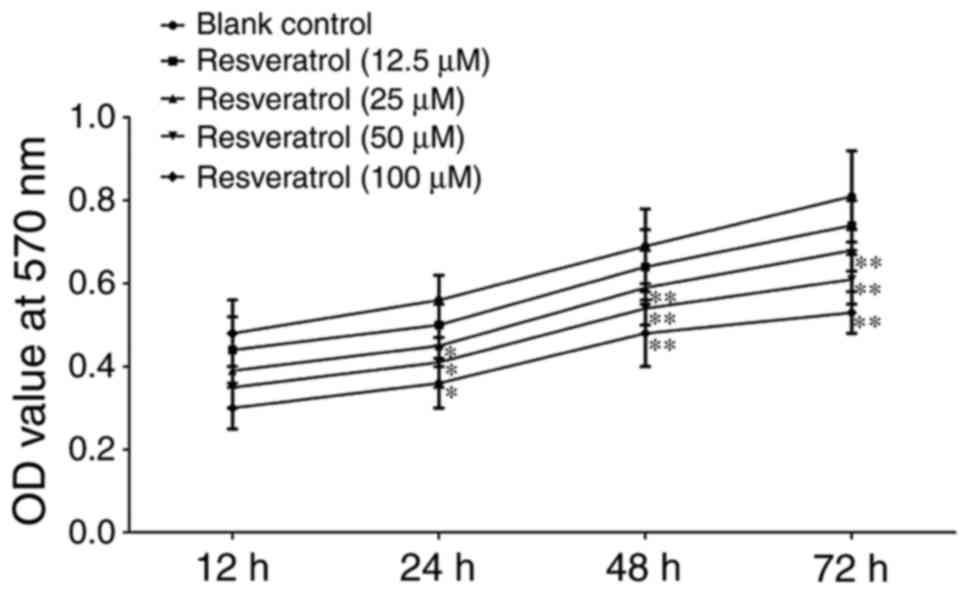
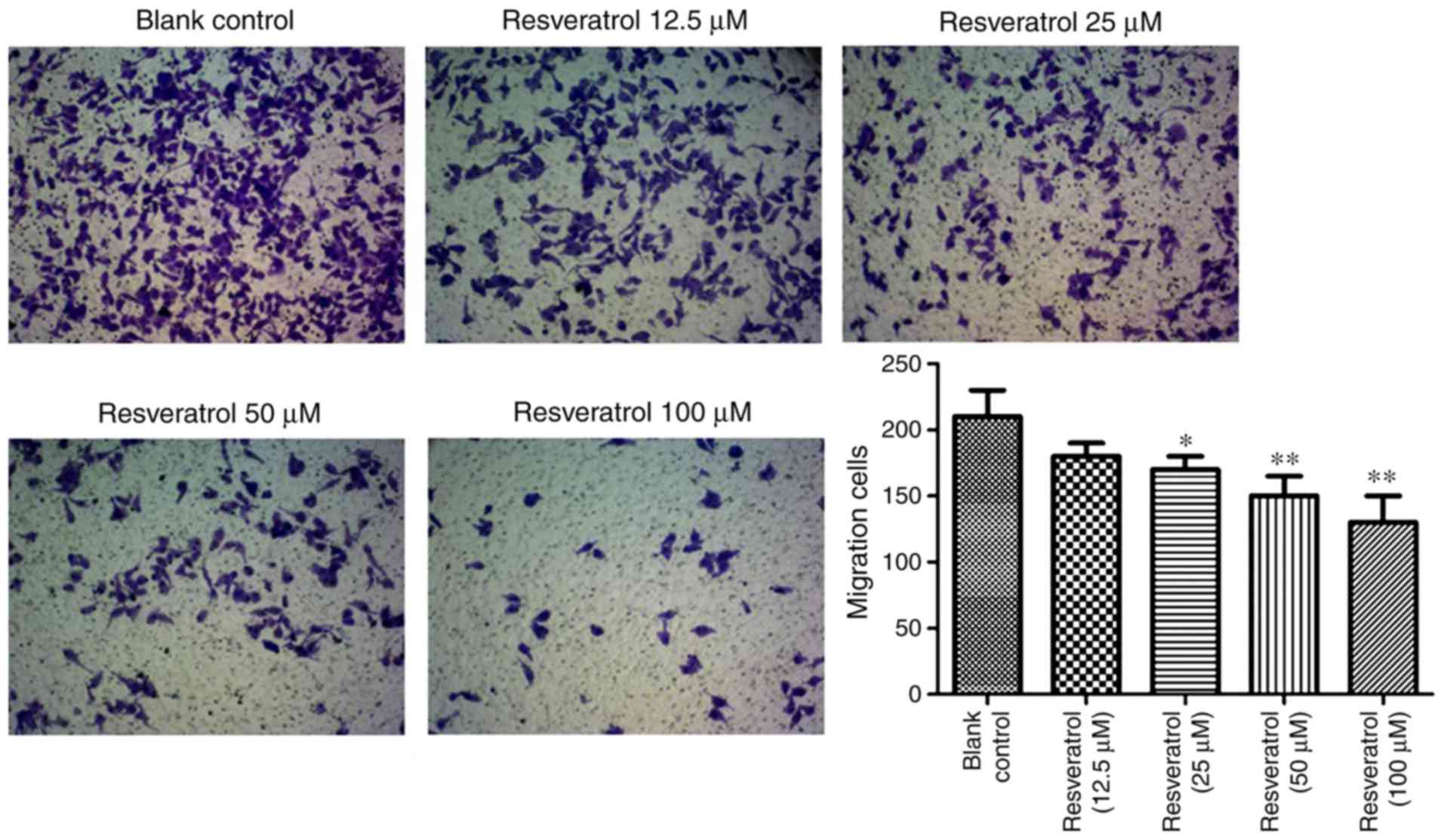
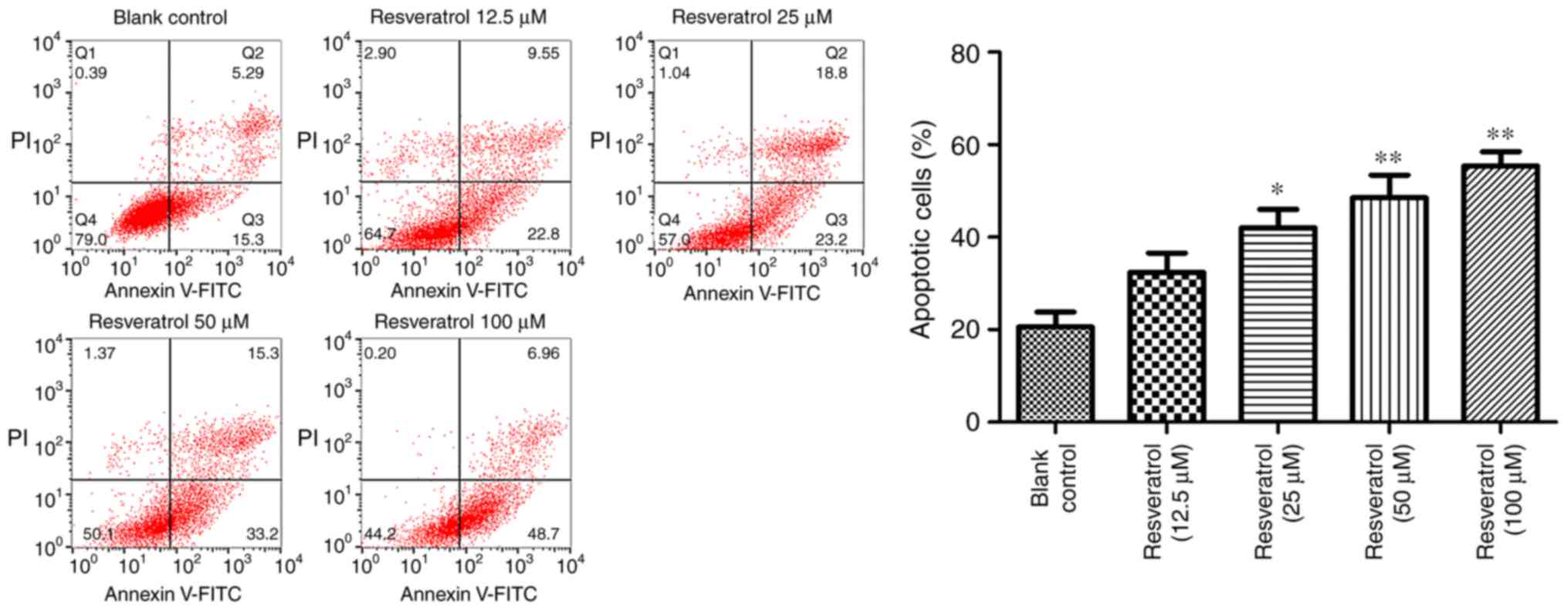
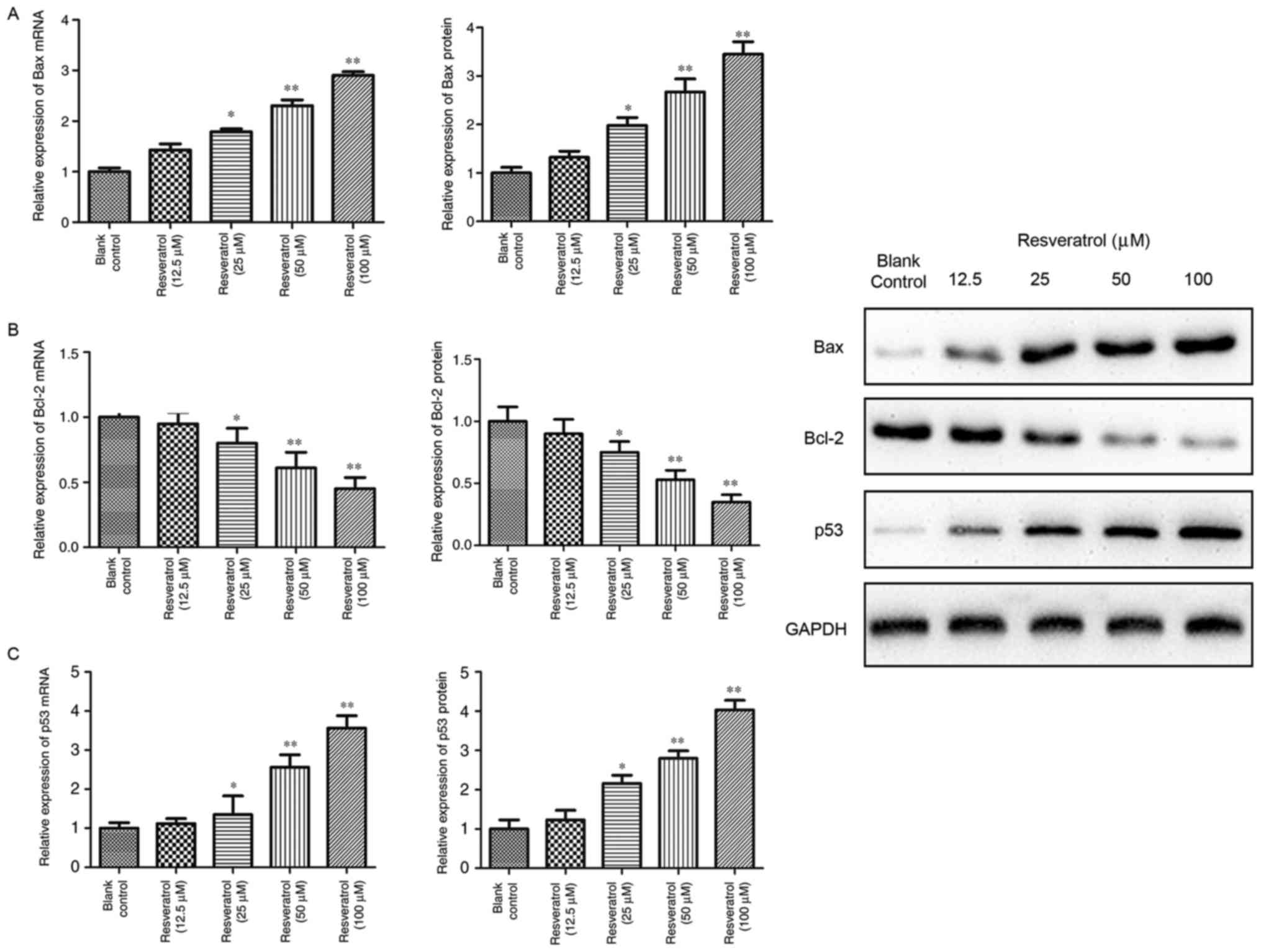
Resveratrol, known as phytoalexin, is a natural compound. Clinical studies have revealed that resveratrol has a variety of effects including anti‑inflammatory, antivirus and tumor suppressor activities. It has been reported that it may serve an important role in renal cell carcinoma (RCC) however, the molecular mechanism underlying resveratrol‑induced apoptosis in RCC is still unclear. The aim of the present study was to determine whether resveratrol could suppress RCC progression. Analysis of apoptosis demonstrated that resveratrol may act as a RCC suppressor in a dose‑ and time‑dependent manner. In addition, the results of the MTT and cell migration experiments revealed that resveratrol significantly decreased cell viability and migration. In addition, the expression of the anti‑apoptosis gene B‑cell lymphoma 2 (Bcl‑2) was downregulated by resveratrol, and the expression of pro‑apoptosis gene Bcl‑2‑associated X was upregulated at the mRNA and protein levels. Resveratrol also promoted the expression of p53 and activated phospho‑AMP‑activated protein kinase (AMPK). The phosphorylation of mammalian target of rapamycin (mTOR) was inhibited and the autophagy‑associated genes, light chain 3, autophagy related (ATG)5 and ATG7, were upregulated at the mRNA and protein levels. In conclusion, resveratrol suppressed RCC viability and migration, and promoted RCC apoptosis via the p53/AMPK/mTOR‑induced autophagy signaling pathway.
View Figures

Figure 1

Figure 2

Figure 3

Figure 4

Figure 5

Figure 6

Figure 7

View References

1 

Mitsunari K, Miyata Y, Watanabe SI, Asai A, Yasuda T, Kanda S and Sakai H: Stromal expression of Fer suppresses tumor progression in renal cell carcinoma and is a predictor of survival. Oncol Lett. 13:834–840. 2017.PubMed/NCBI

2 

Merza H and Bilusic M: Current management strategy for metastatic renal cell carcinoma and future directions. Curr Oncol Rep. 19:272017. View Article : Google Scholar : PubMed/NCBI

3 

Cho D, Signoretti S, Dabora S, Regan M, Seeley A, Mariotti M, Youmans A, Polivy A, Mandato L, McDermott D, et al: Potential histologic and molecular predictors of response to temsirolimus in patients with advanced renal cell carcinoma. Clin Genitourin Cancer. 5:379–385. 2007. View Article : Google Scholar : PubMed/NCBI

4 

Abolhasani M, Salarinejad S and Asgari M: P53 and MDM2 Over-expression and five-year survival of kidney cancer patients undergoing radical nephrectomy-iranian experience. Asian Pac J Cancer Prev. 16:5043–5047. 2015. View Article : Google Scholar : PubMed/NCBI

5 

Xu S, Yang Z, Fan Y, Guan B, Jia J, Gao Y, Wang K, Wu K, Wang X, Zheng P, et al: Curcumin enhances temsirolimus-induced apoptosis in human renal carcinoma cells through upregulation of YAP/p53. Oncol Lett. 12:4999–5006. 2016.PubMed/NCBI

6 

Kang JH, Lee JS, Hong D, Lee SH, Kim N, Lee WK, Sung TW, Gong YD and Kim SY: Renal cell carcinoma escapes death by p53 depletion through transglutaminase 2-chaperoned autophagy. Cell Death Dis. 7:e21632016. View Article : Google Scholar : PubMed/NCBI

7 

Habib SL and Liang S: Hyperactivation of Akt/mTOR and deficiency in tuberin increased the oxidative DNA damage in kidney cancer patients with diabetes. Oncotarget. 5:2542–2550. 2014. View Article : Google Scholar : PubMed/NCBI

8 

Lamming DW and Sabatini DM: A Central role for mTOR in lipid homeostasis. Cell Metab. 18:465–469. 2013. View Article : Google Scholar : PubMed/NCBI

9 

Kim YC and Guan KL: mTOR: A pharmacologic target for autophagy regulation. J Clin Invest. 125:25–32. 2015. View Article : Google Scholar : PubMed/NCBI

10 

Xu J, Pham CG, Albanese SK, Dong Y, Oyama T, Lee CH, Rodrik-Outmezguine V, Yao Z, Han S, Chen D, et al: Mechanistically distinct cancer-associated mTOR activation clusters predict sensitivity to rapamycin. J Clin Invest. 126:3526–3540. 2016. View Article : Google Scholar : PubMed/NCBI

11 

Pal SK and Quinn DI: Differentiating mTOR inhibitors in renal cell carcinoma. Cancer Treat Rev. 39:709–719. 2013. View Article : Google Scholar : PubMed/NCBI

12 

Garcia-Donas J, Rodriguez-Antona C and Jonasch E: Molecular markers to predict response to therapy. Semin Oncol. 40:444–458. 2013. View Article : Google Scholar : PubMed/NCBI

13 

Conte E, Fagone E, Fruciano M, Gili E, Iemmolo M and Vancheri C: Anti-inflammatory and antifibrotic effects of resveratrol in the lung. Histol Histopathol. 30:523–529. 2015.PubMed/NCBI

14 

Bo S, Ciccone G, Castiglione A, Gambino R, De Michieli F, Villois P, Durazzo M, Cavallo-Perin P and Cassader M: Anti-inflammatory and antioxidant effects of resveratrol in healthy smokers a randomized, double-blind, placebo-controlled, cross-over trial. Curr Med Chem. 20:1323–1331. 2013. View Article : Google Scholar : PubMed/NCBI

15 

Wong JC and Fiscus RR: Resveratrol at anti-angiogenesis/anticancer concentrations suppresses protein kinase G signaling and decreases IAPs expression in HUVECs. Anticancer Res. 35:273–281. 2015.PubMed/NCBI

16 

Saldanha JF, Leal Vde O, Stenvinkel P, Carraro-Eduardo JC and Mafra D: Resveratrol: Why is it a promising therapy for chronic kidney disease patients? Oxid Med Cell Longev. 2013:9632172013. View Article : Google Scholar : PubMed/NCBI

17 

Liu M and Liu F: Resveratrol inhibits mTOR signaling by targeting DEPTOR. Commun Integr Biol. 4:382–384. 2011. View Article : Google Scholar : PubMed/NCBI

18 

Tillu DV, Melemedjian OK, Asiedu MN, Qu N, De Felice M, Dussor G and Price TJ: Resveratrol engages AMPK to attenuate ERK and mTOR signaling in sensory neurons and inhibits incision-induced acute and chronic pain. Mol Pain. 8:52012. View Article : Google Scholar : PubMed/NCBI

19 

Li J, Qiu M, Chen L, Liu L, Tan G and Liu J: Resveratrol promotes regression of renal carcinoma cells via a renin-angiotensin system suppression-dependent mechanism. Oncol Lett. 13:613–620. 2017.PubMed/NCBI

20 

Livak KJ and Schmittgen TD: Analysis of relative gene expression data using real-time quantitative PCR and the 2(-Delta Delta C(T)) methods. Methods. 25:402–408. 2001. View Article : Google Scholar : PubMed/NCBI

21 

Kai L, Samuel SK and Levenson AS: Resveratrol enhances p53 acetylation and apoptosis in prostate cancer by inhibiting MTA1/NuRD complex. Int J Cancer. 126:1538–1548. 2010.PubMed/NCBI

22 

Zhong LX, Zhang Y, Wu ML, Liu YN, Zhang P, Chen XY, Kong QY, Liu J and Li H: Resveratrol and STAT inhibitor enhance autophagy in ovarian cancer cells. Cell Death Discov. 2:150712016. View Article : Google Scholar : PubMed/NCBI

23 

Singh SK, Banerjee S, Acosta EP, Lillard JW and Singh R: Resveratrol induces cell cycle arrest and apoptosis with docetaxel in prostate cancer cells via a p53/ p21WAF1/CIP1 and p27KIP1 pathway. Oncotarget. 8:17216–17228. 2017.PubMed/NCBI

24 

Heiss EH, Schilder YD and Dirsch VM: Cvs. J Biol Chem. 282:26759–26766. 2007. View Article : Google Scholar : PubMed/NCBI

25 

Saker Z, Tsintsadze O, Jiqia I, Managadze L and Chkhotua A: Importance of apoptosis markers (MDM2, BCL-2 and BAX) in conventional renal cell carcinoma. Georgian Med News. 27–33. 2015.PubMed/NCBI

26 

Woodard J, Joshi S, Viollet B, Hay N and Platanias LC: AMPK as a therapeutic target in renal cell carcinoma. Cancer Biol Ther. 10:1168–1177. 2010. View Article : Google Scholar : PubMed/NCBI

27 

Zhang Y, Ling Y, Yang L, Cheng Y, Yang P, Song X, Tang H, Zhong Y, Tang L, He S, et al: Liraglutide relieves myocardial damage by promoting autophagy via AMPK-mTOR signaling pathway in zucker diabetic fatty rat. Mol Cell Endocrinol. 448:98–107. 2017. View Article : Google Scholar : PubMed/NCBI

28 

Jing K, Song KS, Shin S, Kim N, Jeong S, Oh HR, Park JH, Seo KS, Heo JY, Han J, et al: Docosahexaenoic acid induces autophagy through p53/AMPK/mTOR signaling and promotes apoptosis in human cancer cells harboring wild-type p53. Autophagy. 7:1348–1358. 2011. View Article : Google Scholar : PubMed/NCBI

29 

Park SY, Chae SY, Park JO, Lee KJ and Park G: Gold-conjugated resveratrol nanoparticles attenuate the invasion and MMP-9 and COX-2 expression in breast cancer cells. Oncol Rep. 35:3248–3256. 2016. View Article : Google Scholar : PubMed/NCBI

30 

Jing X, Cheng W, Wang S, Li P and He L: Resveratrol induces cell cycle arrest in human gastric cancer MGC803 cells via the PTEN-regulated PI3K/Akt signaling pathway. Oncol Rep. 35:472–478. 2016. View Article : Google Scholar : PubMed/NCBI

31 

Liu B, Zhou Z, Zhou W, Liu J, Zhang Q, Xia J, Liu J, Chen N, Li M and Zhu R: Resveratrol inhibits proliferation in human colorectal carcinoma cells by inducing G1/S-phase cell cycle arrest and apoptosis through caspase/cyclin-CDK pathways. Mol Med Rep. 10:1697–1702. 2014. View Article : Google Scholar : PubMed/NCBI

32 

Clark PA, Bhattacharya S, Elmayan A, Darjatmoko SR, Thuro BA, Yan MB, van Ginkel PR, Polans AS and Kuo JS: Resveratrol targeting of AKT and p53 in glioblastoma and glioblastoma stem-like cells to suppress growth and infiltration. J Neurosurg. 126:1448–1460. 2016. View Article : Google Scholar : PubMed/NCBI

33 

Ku BM, Kim DS, Kim KH, Yoo BC, Kim SH, Gong YD and Kim SY: Transglutaminase 2 inhibition found to induce p53 mediated apoptosis in renal cell carcinoma. FASEB J. 27:3487–3495. 2013. View Article : Google Scholar : PubMed/NCBI

34 

Shi T, Liou LS, Sadhukhan P, Duan ZH, Novick AC, Hissong JG, Almasan A and DiDonato JA: Effects of resveratrol on gene expression in renal cell carcinoma. Cancer Biol Ther. 3:882–888. 2004. View Article : Google Scholar : PubMed/NCBI

35 

Mondal A and Bennett LL: Resveratrol enhances the efficacy of sorafenib mediated apoptosis in human breast cancer MCF7 cells through ROS, cell cycle inhibition, caspase 3 and PARP cleavage. Biomed Pharmacother. 84:1906–1914. 2016. View Article : Google Scholar : PubMed/NCBI

36 

Ben Sahra I, Le Marchand-Brustel Y, Tanti JF and Bost F: Metformin in cancer therapy: A new perspective for an old antidiabetic drug? Mol Cancer Ther. 9:1092–1099. 2010. View Article : Google Scholar : PubMed/NCBI

37 

Li F, Ma Z, Guan Z, Chen Y, Wu K, Guo P, Wang X, He D and Zeng J: Autophagy induction by silibinin positively contributes to its anti-metastatic capacity via AMPK/mTOR pathway in renal cell carcinoma. Int J Mol Sci. 16:8415–8429. 2015. View Article : Google Scholar : PubMed/NCBI

38 

Das G, Shravage BV and Baehrecke EH: Regulation and function of autophagy during cell survival and cell death. Cold Spring Harb Perspect Biol. 4:pii: a008813. 2012. View Article : Google Scholar : PubMed/NCBI

Related Articles

  • Abstract
  • View
  • Download
  • Twitter
Copy and paste a formatted citation
Spandidos Publications style
Liu Q, Fang Q, Ji S, Han Z, Cheng W and Zhang H: Resveratrol-mediated apoptosis in renal cell carcinoma via the p53/AMP‑activated protein kinase/mammalian target of rapamycin autophagy signaling pathway. Mol Med Rep 17: 502-508, 2018.
APA
Liu, Q., Fang, Q., Ji, S., Han, Z., Cheng, W., & Zhang, H. (2018). Resveratrol-mediated apoptosis in renal cell carcinoma via the p53/AMP‑activated protein kinase/mammalian target of rapamycin autophagy signaling pathway. Molecular Medicine Reports, 17, 502-508. https://doi.org/10.3892/mmr.2017.7868
MLA
Liu, Q., Fang, Q., Ji, S., Han, Z., Cheng, W., Zhang, H."Resveratrol-mediated apoptosis in renal cell carcinoma via the p53/AMP‑activated protein kinase/mammalian target of rapamycin autophagy signaling pathway". Molecular Medicine Reports 17.1 (2018): 502-508.
Chicago
Liu, Q., Fang, Q., Ji, S., Han, Z., Cheng, W., Zhang, H."Resveratrol-mediated apoptosis in renal cell carcinoma via the p53/AMP‑activated protein kinase/mammalian target of rapamycin autophagy signaling pathway". Molecular Medicine Reports 17, no. 1 (2018): 502-508. https://doi.org/10.3892/mmr.2017.7868
Copy and paste a formatted citation
x
Spandidos Publications style
Liu Q, Fang Q, Ji S, Han Z, Cheng W and Zhang H: Resveratrol-mediated apoptosis in renal cell carcinoma via the p53/AMP‑activated protein kinase/mammalian target of rapamycin autophagy signaling pathway. Mol Med Rep 17: 502-508, 2018.
APA
Liu, Q., Fang, Q., Ji, S., Han, Z., Cheng, W., & Zhang, H. (2018). Resveratrol-mediated apoptosis in renal cell carcinoma via the p53/AMP‑activated protein kinase/mammalian target of rapamycin autophagy signaling pathway. Molecular Medicine Reports, 17, 502-508. https://doi.org/10.3892/mmr.2017.7868
MLA
Liu, Q., Fang, Q., Ji, S., Han, Z., Cheng, W., Zhang, H."Resveratrol-mediated apoptosis in renal cell carcinoma via the p53/AMP‑activated protein kinase/mammalian target of rapamycin autophagy signaling pathway". Molecular Medicine Reports 17.1 (2018): 502-508.
Chicago
Liu, Q., Fang, Q., Ji, S., Han, Z., Cheng, W., Zhang, H."Resveratrol-mediated apoptosis in renal cell carcinoma via the p53/AMP‑activated protein kinase/mammalian target of rapamycin autophagy signaling pathway". Molecular Medicine Reports 17, no. 1 (2018): 502-508. https://doi.org/10.3892/mmr.2017.7868
Follow us
  • Twitter
  • LinkedIn
  • Facebook
About
  • Spandidos Publications
  • Careers
  • Cookie Policy
  • Privacy Policy
How can we help?
  • Help
  • Live Chat
  • Contact
  • Email to our Support Team