Spandidos Publications Logo
  • About
    • About Spandidos
    • Aims and Scopes
    • Abstracting and Indexing
    • Editorial Policies
    • Reprints and Permissions
    • Job Opportunities
    • Terms and Conditions
    • Contact
  • Journals
    • All Journals
    • Oncology Letters
      • Oncology Letters
      • Information for Authors
      • Editorial Policies
      • Editorial Board
      • Aims and Scope
      • Abstracting and Indexing
      • Bibliographic Information
      • Archive
    • International Journal of Oncology
      • International Journal of Oncology
      • Information for Authors
      • Editorial Policies
      • Editorial Board
      • Aims and Scope
      • Abstracting and Indexing
      • Bibliographic Information
      • Archive
    • Molecular and Clinical Oncology
      • Molecular and Clinical Oncology
      • Information for Authors
      • Editorial Policies
      • Editorial Board
      • Aims and Scope
      • Abstracting and Indexing
      • Bibliographic Information
      • Archive
    • Experimental and Therapeutic Medicine
      • Experimental and Therapeutic Medicine
      • Information for Authors
      • Editorial Policies
      • Editorial Board
      • Aims and Scope
      • Abstracting and Indexing
      • Bibliographic Information
      • Archive
    • International Journal of Molecular Medicine
      • International Journal of Molecular Medicine
      • Information for Authors
      • Editorial Policies
      • Editorial Board
      • Aims and Scope
      • Abstracting and Indexing
      • Bibliographic Information
      • Archive
    • Biomedical Reports
      • Biomedical Reports
      • Information for Authors
      • Editorial Policies
      • Editorial Board
      • Aims and Scope
      • Abstracting and Indexing
      • Bibliographic Information
      • Archive
    • Oncology Reports
      • Oncology Reports
      • Information for Authors
      • Editorial Policies
      • Editorial Board
      • Aims and Scope
      • Abstracting and Indexing
      • Bibliographic Information
      • Archive
    • Molecular Medicine Reports
      • Molecular Medicine Reports
      • Information for Authors
      • Editorial Policies
      • Editorial Board
      • Aims and Scope
      • Abstracting and Indexing
      • Bibliographic Information
      • Archive
    • World Academy of Sciences Journal
      • World Academy of Sciences Journal
      • Information for Authors
      • Editorial Policies
      • Editorial Board
      • Aims and Scope
      • Abstracting and Indexing
      • Bibliographic Information
      • Archive
    • International Journal of Functional Nutrition
      • International Journal of Functional Nutrition
      • Information for Authors
      • Editorial Policies
      • Editorial Board
      • Aims and Scope
      • Abstracting and Indexing
      • Bibliographic Information
      • Archive
    • International Journal of Epigenetics
      • International Journal of Epigenetics
      • Information for Authors
      • Editorial Policies
      • Editorial Board
      • Aims and Scope
      • Abstracting and Indexing
      • Bibliographic Information
      • Archive
    • Medicine International
      • Medicine International
      • Information for Authors
      • Editorial Policies
      • Editorial Board
      • Aims and Scope
      • Abstracting and Indexing
      • Bibliographic Information
      • Archive
  • Articles
  • Information
    • Information for Authors
    • Information for Reviewers
    • Information for Librarians
    • Information for Advertisers
    • Conferences
  • Language Editing
Spandidos Publications Logo
  • About
    • About Spandidos
    • Aims and Scopes
    • Abstracting and Indexing
    • Editorial Policies
    • Reprints and Permissions
    • Job Opportunities
    • Terms and Conditions
    • Contact
  • Journals
    • All Journals
    • Biomedical Reports
      • Information for Authors
      • Editorial Policies
      • Editorial Board
      • Aims and Scope
      • Abstracting and Indexing
      • Bibliographic Information
      • Archive
    • Experimental and Therapeutic Medicine
      • Information for Authors
      • Editorial Policies
      • Editorial Board
      • Aims and Scope
      • Abstracting and Indexing
      • Bibliographic Information
      • Archive
    • International Journal of Epigenetics
      • Information for Authors
      • Editorial Policies
      • Editorial Board
      • Aims and Scope
      • Abstracting and Indexing
      • Bibliographic Information
      • Archive
    • International Journal of Functional Nutrition
      • Information for Authors
      • Editorial Policies
      • Editorial Board
      • Aims and Scope
      • Abstracting and Indexing
      • Bibliographic Information
      • Archive
    • International Journal of Molecular Medicine
      • Information for Authors
      • Editorial Policies
      • Editorial Board
      • Aims and Scope
      • Abstracting and Indexing
      • Bibliographic Information
      • Archive
    • International Journal of Oncology
      • Information for Authors
      • Editorial Policies
      • Editorial Board
      • Aims and Scope
      • Abstracting and Indexing
      • Bibliographic Information
      • Archive
    • Medicine International
      • Information for Authors
      • Editorial Policies
      • Editorial Board
      • Aims and Scope
      • Abstracting and Indexing
      • Bibliographic Information
      • Archive
    • Molecular and Clinical Oncology
      • Information for Authors
      • Editorial Policies
      • Editorial Board
      • Aims and Scope
      • Abstracting and Indexing
      • Bibliographic Information
      • Archive
    • Molecular Medicine Reports
      • Information for Authors
      • Editorial Policies
      • Editorial Board
      • Aims and Scope
      • Abstracting and Indexing
      • Bibliographic Information
      • Archive
    • Oncology Letters
      • Information for Authors
      • Editorial Policies
      • Editorial Board
      • Aims and Scope
      • Abstracting and Indexing
      • Bibliographic Information
      • Archive
    • Oncology Reports
      • Information for Authors
      • Editorial Policies
      • Editorial Board
      • Aims and Scope
      • Abstracting and Indexing
      • Bibliographic Information
      • Archive
    • World Academy of Sciences Journal
      • Information for Authors
      • Editorial Policies
      • Editorial Board
      • Aims and Scope
      • Abstracting and Indexing
      • Bibliographic Information
      • Archive
  • Articles
  • Information
    • For Authors
    • For Reviewers
    • For Librarians
    • For Advertisers
    • Conferences
  • Language Editing
Login Register Submit
  • This site uses cookies
  • You can change your cookie settings at any time by following the instructions in our Cookie Policy. To find out more, you may read our Privacy Policy.

    I agree
Search articles by DOI, keyword, author or affiliation
Search
Advanced Search
presentation
Molecular Medicine Reports
Join Editorial Board Propose a Special Issue
Print ISSN: 1791-2997 Online ISSN: 1791-3004
Journal Cover
January-2018 Volume 17 Issue 1

Full Size Image

Sign up for eToc alerts
Recommend to Library

Journals

International Journal of Molecular Medicine

International Journal of Molecular Medicine

International Journal of Molecular Medicine is an international journal devoted to molecular mechanisms of human disease.

International Journal of Oncology

International Journal of Oncology

International Journal of Oncology is an international journal devoted to oncology research and cancer treatment.

Molecular Medicine Reports

Molecular Medicine Reports

Covers molecular medicine topics such as pharmacology, pathology, genetics, neuroscience, infectious diseases, molecular cardiology, and molecular surgery.

Oncology Reports

Oncology Reports

Oncology Reports is an international journal devoted to fundamental and applied research in Oncology.

Experimental and Therapeutic Medicine

Experimental and Therapeutic Medicine

Experimental and Therapeutic Medicine is an international journal devoted to laboratory and clinical medicine.

Oncology Letters

Oncology Letters

Oncology Letters is an international journal devoted to Experimental and Clinical Oncology.

Biomedical Reports

Biomedical Reports

Explores a wide range of biological and medical fields, including pharmacology, genetics, microbiology, neuroscience, and molecular cardiology.

Molecular and Clinical Oncology

Molecular and Clinical Oncology

International journal addressing all aspects of oncology research, from tumorigenesis and oncogenes to chemotherapy and metastasis.

World Academy of Sciences Journal

World Academy of Sciences Journal

Multidisciplinary open-access journal spanning biochemistry, genetics, neuroscience, environmental health, and synthetic biology.

International Journal of Functional Nutrition

International Journal of Functional Nutrition

Open-access journal combining biochemistry, pharmacology, immunology, and genetics to advance health through functional nutrition.

International Journal of Epigenetics

International Journal of Epigenetics

Publishes open-access research on using epigenetics to advance understanding and treatment of human disease.

Medicine International

Medicine International

An International Open Access Journal Devoted to General Medicine.

Journal Cover
January-2018 Volume 17 Issue 1

Full Size Image

Sign up for eToc alerts
Recommend to Library

  • Article
  • Citations
    • Cite This Article
    • Download Citation
    • Create Citation Alert
    • Remove Citation Alert
    • Cited By
  • Similar Articles
    • Related Articles (in Spandidos Publications)
    • Similar Articles (Google Scholar)
    • Similar Articles (PubMed)
  • Download PDF
  • Download XML
  • View XML
Article

Clinical application of a novel diagnostic scheme including pancreatic β‑cell dysfunction for traumatic multiple organ dysfunction syndrome

  • Authors:
    • Zhan‑Ke Wang
    • Rong‑Jian Chen
    • Shi‑Liang Wang
    • Guang‑Wei Li
    • Zhong‑Zhen Zhu
    • Qiang Huang
    • Zi‑Li Chen
    • Fan‑Chang Chen
    • Lei Deng
    • Xiao‑Peng Lan
    • Tian Hu
  • View Affiliations / Copyright

    Affiliations: Department of Clinical Laboratory, The 94th Hospital of People's Liberation Army, Nanchang, Jiangxi 330002, P.R. China, Department of General Surgery, The 94th Hospital of People's Liberation Army, Nanchang, Jiangxi 330002, P.R. China, Department of Burns, Third Military Medical University, Chongqing 400038, P.R. China, Department of Endocrinology, China‑Japan Friendship Hospital, Beijing 100029, P.R. China, Trauma Emergency Center, The 94th Hospital of People's Liberation Army, Nanchang, Jiangxi 330002, P.R. China, Department of Intensive Medicine, The 94th Hospital of People's Liberation Army, Nanchang, Jiangxi 330002, P.R. China, Department of Neurosurgery, The 94th Hospital of People's Liberation Army, Nanchang, Jiangxi 330002, P.R. China, Department of Clinical Laboratory, Fuzhou General Hospital of Nanjing Military Region, Fuzhou, Fujian 350025, P.R. China, Department of Wound Healing and Cell Biology Laboratory, Institute of Basic Medical Science, Trauma Centre of Postgraduate Medical School, Chinese People's Liberation Army General Hospital, Beijing 100853 P.R. China
  • Pages: 683-693
    |
    Published online on: October 26, 2017
       https://doi.org/10.3892/mmr.2017.7898
  • Expand metrics +
Metrics: Total Views: 0 (Spandidos Publications: | PMC Statistics: )
Metrics: Total PDF Downloads: 0 (Spandidos Publications: | PMC Statistics: )
Cited By (CrossRef): 0 citations Loading Articles...

This article is mentioned in:


Abstract

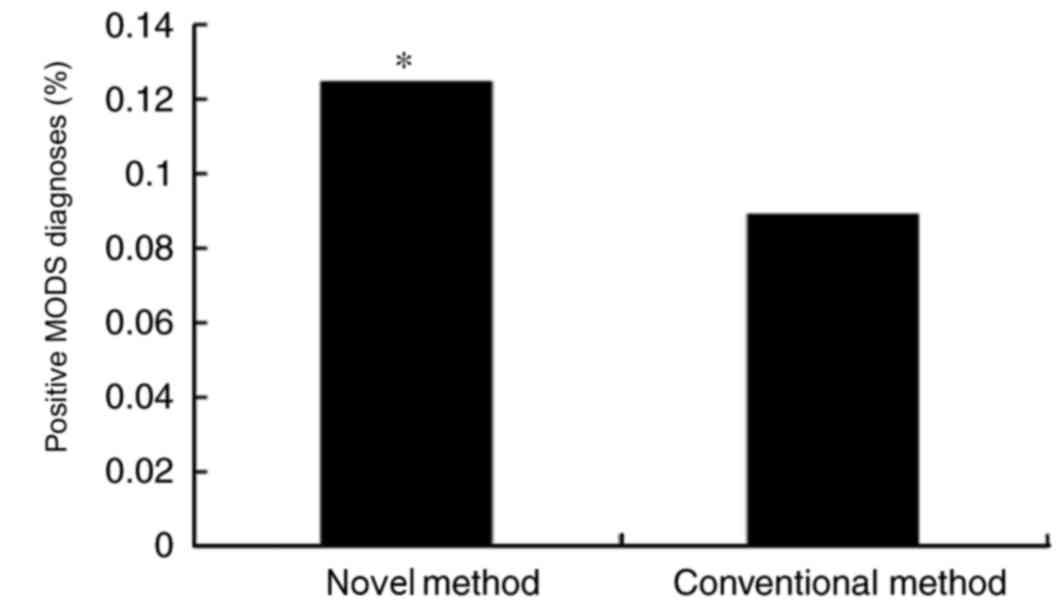
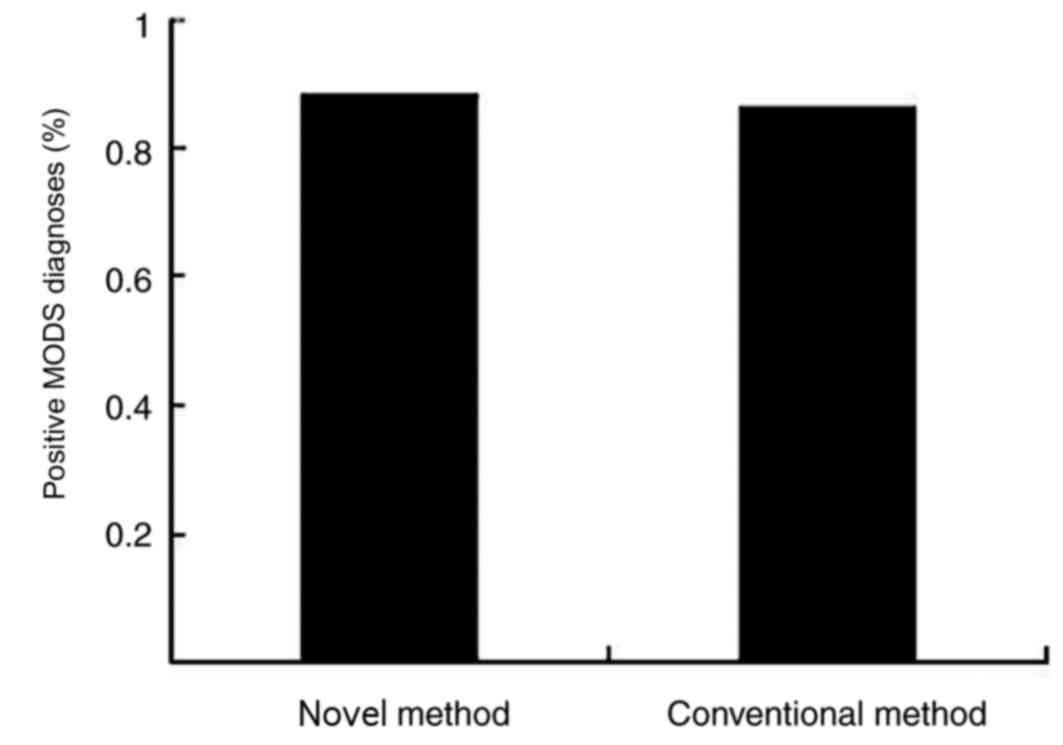
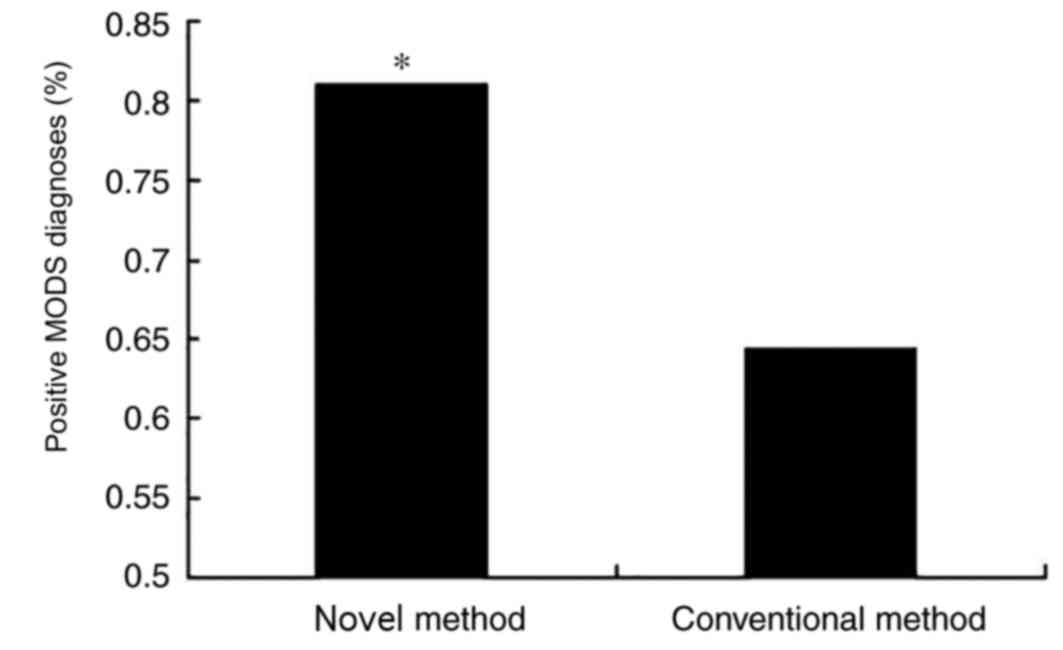
A novel diagnostic scheme that includes pancreatic β‑cell dysfunction analysis for the diagnosis of traumatic multiple organ dysfunction syndrome (MODS) was investigated to assist in the early diagnosis and detection of MODS. Early intervention and treatment of MODS has been associated with a reduced mortality rate. A total of 2,876 trauma patients (including patients post‑major surgery) were admitted to the intensive care unit of the authors' hospital between December 2010 and December 2015 and enrolled in the present study. There were 205 cases where the patient succumbed to their injuries. In addition to the conventional diagnostic scheme for traumatic MODS, indexes of pancreatic β‑cell dysfunction [fasting blood‑glucose (FBG), homeostatic model assessment‑β and (blood insulin concentration 30 min following glucose loading‑fasting insulin concentration)/(blood glucose concentration 30 min following glucose loading‑FBG concentration)] were included to establish an improved diagnostic scheme for traumatic MODS. The novel scheme was subsequently used in clinical practice alongside the conventional scheme and its effect was evaluated. The novel scheme had a significantly higher positive number of MODS diagnoses for all trauma patients compared with the conventional scheme (12.48 vs. 8.87%; P<0.01). No significant difference was identified in the final percentage of positive of MODS diagnoses for trauma‑associated mortality patients between the novel (88.30%) and the conventional scheme (86.34%). The novel scheme had a significantly higher positive number of MODS diagnoses for trauma‑associated mortality patients 3 days prior to patients succumbing to MODS compared with the conventional scheme (80.98 vs. 64.39%; P<0.01). The consensus of the MODS diagnosis of all trauma patients between the novel scheme and the conventional scheme was 100%; however, out of the patients diagnosed as positive by novel scheme 71.03% were positive by the conventional scheme. The consensus between the final MODS diagnosis and the MODS diagnosis 3 days prior to patients succumbing to their injuries between the novel scheme and the conventional scheme was 100%; however, out of the patients diagnosed as positive by novel scheme 97.79 were positive by the conventional scheme of the 205 patients who succumbed to MODS and out of the patients diagnosed as positive for MODS by novel scheme 3 days prior to succumbing, 79.52% were positive by the conventional scheme. The results of the present study demonstrated that the novel diagnostic scheme using the relevant indexes of pancreatic β‑cell dysfunction for diagnosis of traumatic MODS, was able to diagnose MODS early without excessively extending the diagnostic scope. Its clinical application should be promoted.
View Figures

Figure 1

Figure 2

Figure 3

View References

1 

Guillaume A, Pili-Floury S, Chocron S, Delabrousse E, De Parseval B, Koch S, Samain E, Capellier G and Piton G: Acute mesenteric ischemia among postcardiac surgery patients presenting with multiple organ failure. Shock. 47:296–302. 2017. View Article : Google Scholar : PubMed/NCBI

2 

Rosenthal MD and Moore FA: Persistent inflammatory, immunosuppressed, catabolic syndrome (PICS): A new phenotype of multiple organ failure. J Adv Nutr Hum Metab. 26:pii: e784. 2015.

3 

Wang C, Su Q, Zhang SW, Yin CH, Wang H and Wang BE: A clinical study on the diagnostic criteria of multiple organ dysfunction syndrome. Zhonghua Wai Ke Za Zhi. 47:40–43. 2009.(In Chinese). PubMed/NCBI

4 

Zhang SW, Wang C, Yin CH, Wang H and Wang BE: Multi-center clinical study on the diagnostic criteria for multiple organ dysfunction syndrome with illness severity score system. Zhongguo Wei Zhong Bing Ji Jiu Yi Xue. 16:328–332. 2004.(In Chinese). PubMed/NCBI

5 

Fröhlich M, Wafaisade A, Mansuri A, Koenen P, Probst C, Maegele M, Bouillon B and Sakka SG: Which score should be used for posttraumatic multiple organ failure?-Comparison of the MODS, Denver- and SOFA-Scores. Scand J Trauma Resusc Emerg Med. 24:1302016. View Article : Google Scholar : PubMed/NCBI

6 

Hutchings L, Watkinson P, Young JD and Willett K: Defining multiple organ failure after major trauma: A comparison of the denver, sequential organ failure assessment, and Marshall scoring systems. J Trauma Acute Care Surg. 82:534–541. 2017. View Article : Google Scholar : PubMed/NCBI

7 

Muthaiah B, Thippeswamy T, Kondareddy S and Chikkegowda P: Study of aetiology and outcome in acute Febrile illness patients with multiple organ dysfunction syndrome. J Clin Diagn Res. 10:OC16–OC18. 2016.PubMed/NCBI

8 

Aarvold AB, Ryan HM, Magee LA, von Dadelszen P, Fjell C and Walley KR: Multiple organ dysfunction score is superior to the obstetric-specific sepsis in obstetrics score in predicting mortality in septic obstetric patients. Crit Care Med. 45:e49–e57. 2017. View Article : Google Scholar : PubMed/NCBI

9 

Zhao PF, Fu XM, Wang C and Wang H: Multiple organ dysfunction syndrome diagnostic criteria and scoring system for the status quo. J Clin Exp Med. 12:630–636. 2013.

10 

Wang C, Su Q, Zhang SW, Yin CH, Wang H and Wang BE: Scoring system to measure the severity of the multiple organ dysfunction syndrome. Zhongguo Yi Xue Ke Xue Yuan Xue Bao. 29:497–500. 2007.(In Chinese). PubMed/NCBI

11 

Zhang YL: Multiple organ dysfunction syndrome. J Trauma Surg. 3:75–77. 2001.(In Chinese).

12 

Burke SJ, Stadler K, Lu D, Gleason E, Han A, Donohoe DR, Rogers RC, Hermann GE, Karlstad MD and Collier JJ: IL-1β reciprocally regulates chemokine and insulin secretion in pancreatic β-cells via NF-κB. Am J Physiol Endocrinol Metab. 309:E715–E726. 2015. View Article : Google Scholar : PubMed/NCBI

13 

Fatima N, Faisal SM, Zubair S, Ajmal M, Siddiqui SS, Moin S and Owais M: Role of pro-inflammatory cytokines and biochemical markers in the pathogenesis of Type 1 diabetes: Correlation with age and glycemic condition in diabetic human subjects. PLoS One. 11:01615482016. View Article : Google Scholar

14 

Donath MY, Størling J, Maedler K and Mandrup-Poulsen T: Inflammatory mediators and islet beta-cell failure: A link between type 1 and type 2diabetes. J Mol Med. 81:455–470. 2003. View Article : Google Scholar : PubMed/NCBI

15 

Wang F, Yin J, Ma Y, Jiang H and Li Y: Vitexin alleviates lipopolysaccharide-induced islet cell injury by inhibiting HMGB1 release. Mol Med Rep. 15:1079–1086. 2017. View Article : Google Scholar : PubMed/NCBI

16 

Kyle UG, Coss Bu JA, Kennedy CE and Jefferson LS: Organ dysfunction is associated with hyperglycemia in critically ill children. Intensive Care Med. 36:312–320. 2010. View Article : Google Scholar : PubMed/NCBI

17 

Jeschke MG, Pinto R, Herndon DN, Finnerty CC and Kraft R: Hypoglycemia is associated with increased postburn morbidity and mortality in pediatricpatients. Crit Care Med. 42:1221–1231. 2014. View Article : Google Scholar : PubMed/NCBI

18 

Branco RG, Chavan A and Tasker RC: Pilot evaluation of continuous subcutaneous glucose monitoring in children withmultiple organ dysfunction syndrome. Pediatr Crit Care Med. 11:415–419. 2010.PubMed/NCBI

19 

Marti JL and Leitman IM: Understanding the causes of hyperglycemia in burn patients. J Surg Res. 182:205–206. 2013. View Article : Google Scholar : PubMed/NCBI

20 

Bosarge PL, Shoultz TH, Griffin RL and Kerby JD: Stress-induced hyperglycemia is associated with higher mortality in severe traumatic brain injury. J Trauma Acute Care Surg. 79:289–294. 2015. View Article : Google Scholar : PubMed/NCBI

21 

Lei W, Wang Z and Liu L: Study on the disfunction of Pancreatic β and insulin resistance caused by severe brain injure. Chin J neurosurgery Dis Res. 6:414–418. 2007.

22 

Matthews DR, Hosker JP, Rudenski AS, Naylor BA, Treacher DF and Turner RC: Homeostasis model assessment: Insulin resistance and beta-cell function from fasting plasma glucose and insulin concentrations in man. Diabetologia. 28:412–419. 1985. View Article : Google Scholar : PubMed/NCBI

23 

Pratley RE and Weyer C: The role of impaired early insulin secretion in the pathogenesis of Type II diabetes mellitus. Diabetologia. 44:929–945. 2001. View Article : Google Scholar : PubMed/NCBI

24 

Siddiqui MS, Cheang KL, Luketic VA, Boyett S, Idowu MO, Patidar K, Puri P, Matherly S, Stravitz RT, Sterling RK and Sanyal AJ: Nonalcoholic steatohepatitis (NASH) is associated with a decline in pancreatic beta cell (β-Cell) function. Dig Dis Sci. 60:2529–2537. 2015. View Article : Google Scholar : PubMed/NCBI

25 

Zhu HQ, Yang ZJ, Zhang B, Xiao JZ and Yang WY: Ageing related changes of insulin secretion and insulin sensitivity among normal glucose tolerance individuals in China. Zhonghua Yi Xue Za Zhi. 92:1948–1953. 2012.(In Chinese). PubMed/NCBI

26 

Yamauchi K, Sato Y, Nakasone Y and Aizawa T: Comparison of HOMA-IR, HOMA-β% and disposition index between US white men and Japanese men in Japan in the ERA JUMP study: Was the calculation of disposition index legitimate. 58:1679–1680. 2015.

27 

Nolan JJ and Faerch K: Estimating insulin sensitivity and beta cell function: Perspectives from the modern pandemics of obesity and type 2 diabetes. Diabetologia. 55:2863–2877. 2012. View Article : Google Scholar : PubMed/NCBI

28 

Shi SQ: The progress of diagnosis and treatment of multiple organ dysfunction syndrome. Zhong Hua Ji Zhen Yi Xue Za Zhi. 22:824–826. 2013.(In Chinese).

29 

Wang ZG: Traumatic surgery. Shanghai: Shang Hai Ke Xue Ji Shu Chu Ban She 257; 2002

30 

Marshall JC, Cook DJ, Christou NV, Bernard GR, Sprung CL and Sibbald WJ: Multiple organ dysfunction score: A reliable descriptor of a complex clinical outcome. Crit Care Med. 23:1638–1652. 1995. View Article : Google Scholar : PubMed/NCBI

31 

Vincent JL, de Mendonça A, Cantraine F, Moreno R, Takala J, Suter PM, Sprung CL, Colardyn F and Blecher S: Use of the SOFA score to assess the incidence of organ dysfunction/failure in intensive care units: results of a multicenter, prospective study. Working group on ‘sepsis-related problems’ of the European Society of Intensive Care Medicine. Crit Care Med. 26:1793–1800. 1998. View Article : Google Scholar : PubMed/NCBI

32 

Ramtinfar S, Chabok SY, Chari AJ, Reihanian Z, Leili EK and Alizadeh A: Early detection of nonneurologic organ failure in patients with severe traumatic brain injury: Multiple organ dysfunction score or sequential organ failure assessment. Indian. J Crit Care Med. 20:575–580. 2016.

33 

Kaml GJ and Davis KA: Surgical critical care for the patient with sepsis and multiple organ dysfunction. Anesthesiol Clin. 34:681–696. 2016. View Article : Google Scholar : PubMed/NCBI

34 

Liu XY, Jiang M, Yi CL, Bai XJ and Hak DJ: Early intramedullary nailing for femoral fractures in patients with severe thoracic trauma: A systemic review and meta-analysis. Chin J Traumatol. 19:160–163. 2016. View Article : Google Scholar : PubMed/NCBI

35 

Zhou QQ and Zhang SF: Early diagnosis and clinical treatment for severe acute mountain sickness with multiple organ dysfunction syndrome. Medical J Chinese People's Liberation Army. 3510:1183–1186. 2010.

36 

Herzberg-Schäfer SA, Staiger H, Heni M, Ketterer C, Guthoff M, Kantartzis K, Machicao F, Stefan N, Häring HU and Fritsche A: Evaluation of fasting state-/oral glucose tolerance test-derived measures of insulin release for the detection of genetically impaired β-cell function. PLoS One. 5:e141942010. View Article : Google Scholar : PubMed/NCBI

37 

den Biggelaar LJ, Sep SJ, Eussen SJ, Mari A, Ferrannini E, van Greevenbroek MM, van der Kallen CJ, Schalkwijk CG, Stehouwer CD and Dagnelie PC: Discriminatory ability of simple OGTT-based beta cell function indices for prediction of prediabetes and type 2 diabetes: The CODAM study. Diabetologia. 60:432–441. 2017. View Article : Google Scholar : PubMed/NCBI

38 

Carvalho DS, Diniz MM, Haidar AA, Cavanal MF, da Silva Alves E, Carpinelli AR, Gil FZ and Hirata AE: L-Arginine supplementation improves insulin sensitivity and beta cell function in the offspring of diabetic rats through AKT and PDX-1 activation. Eur J Pharmacol. 791:780–787. 2016. View Article : Google Scholar : PubMed/NCBI

39 

Zhang F, Liu C, Wang L, Cao X, Wang YY and Yang JK: Antioxidant effect of angiotensin (1–7) in the protection of pancreatic β cell function. Mol Med Rep. 14:1963–1969. 2016. View Article : Google Scholar : PubMed/NCBI

40 

Lei WS, Wang ZK and Liu LY: Relationship between the plasma LPS and the dysfunctions of pancreatic islet β-Cell in posttraumatic MODS patients with infection and hyperglycemia. Acta Academiae Medicinae Jiangxi. 46:75–77. 2006. View Article : Google Scholar

41 

Rehou S, Mason S, Burnett M and Jeschke MG: Burned adults develop profound glucose intolerance. Crit Care Med. 44:1059–1066. 2016. View Article : Google Scholar : PubMed/NCBI

42 

Belba MK, Petrela E, Belba A, Mano V and Belba G: Statistical and clinical analysis of alterations in glucose values after burns. Ann Burns Fire Disasters. 29:163–171. 2016.PubMed/NCBI

43 

Wang Z, Chen R, Zhu Z, Zhang X and Wang S: Effects of insulin combined with ethyl pyruvate on inflammatory response and oxidative stress in multiple-organ dysfunction syndrome rats with severe burns. Am J Emerg Med. 34:2154–2158. 2016. View Article : Google Scholar : PubMed/NCBI

44 

Berchtold LA, Prause M, Størling J and Mandrup-Poulsen T: Cytokines and pancreatic β-Cell apoptosis. Adv Clin Chem. 75:99–158. 2016. View Article : Google Scholar : PubMed/NCBI

45 

Brozzi F, Gerlo S, Grieco FA, Juusola M, Balhuizen A, Lievens S, Gysemans C, Bugliani M, Mathieu C, Marchetti P, et al: Ubiquitin D Regulates IRE1α/c-Jun N-terminal Kinase (JNK) Protein-dependent Apoptosis in Pancreatic Beta Cells. J Biol Chem. 291:12040–12056. 2016. View Article : Google Scholar : PubMed/NCBI

46 

Li DW, Shen CA, Chai JK, Ma L, Shang YR and Li LZ: Structural and functional changes in islet beta cells in severely scalded rats. Zhonghua Shao Shang Za Zhi. 29:355–9. 2013.(In Chinese). PubMed/NCBI

47 

Burke SJ, Karlstad MD and Collier JJ: Pancreatic islet responses to metabolic trauma. Shock. 46:230–238. 2016. View Article : Google Scholar : PubMed/NCBI

48 

Wang ZK, Chai CC, He FT, Deng H, Xu LS and Liu MR: Relationship of hyperglycemia to infection, MODS, and survival time in dead trauma patients. Acta Aca Med Militaris Tertiae. 01:75–77. 2006.

49 

Wang ZK, Hu XY, Chai CC, Chen ZL and XU LS: The clinical value of changes of insulin resistance and insulin secretion in MODS patients after severe trauma hemorrhage. Chinese Critical Care Med. 15:43–45. 2003.(In Chinese).

50 

Sharma J, Chittawar S, Maniram RS, Dubey TN and Singh A: Clinical and epidemiological study of stress hyperglycemia among medical intensive care unit patients in Central India. Indian. J Endocrinol Metab. 21:137–141. 2017.

51 

Kiran RP, Turina M, Hammel J and Fazio V: The clinical significance of an elevated postoperative glucose value in nondiabetic patients after colorectal surgery: Evidence for the need for tight glucose control. Ann Surg. 258:599–605. 2013.PubMed/NCBI

52 

NICE-SUGAR Study Investigators, . Finfer S, Chittock DR, Su SY, Blair D, Foster D, Dhingra V, Bellomo R, Cook D, Dodek P, et al: Intensive versus conventional glucose control in critically Ill Patients. N Engl J Med. 360:1283–1297. 2009. View Article : Google Scholar : PubMed/NCBI

53 

Wang ZK, Lei WS, Chai CC, Chen ZL, Li GW, Wang SL, Xu LS and Liu LY: Effect of GIK on the dysfunction of pancreatic β cell in severe scald endotoxemia rats. Chin J Trauma. 22:709–711, (In Chinese).

54 

Chen Q, Yu W, Shi J, Shen J, Gao T, Zhang J, Xi F, Li J and Li N: Insulin alleviates the inflammatory response and oxidative stress injury in cerebral tissues in septic rats. J Inflamm (Lond). 11:182014. View Article : Google Scholar : PubMed/NCBI

55 

Wang Z, Liu L, Hu T and Lei W: Protective effect of glucose-insulin-potassium (GIK) on intestinal tissues after severe burn in experimental rats. Burns. 38:846–854. 2012. View Article : Google Scholar : PubMed/NCBI

56 

Sun Q, Li J and Gao F: New insights into insulin: The anti-inflammatory effect and its clinical relevance. World J Diabetes. 5:89–96. 2014. View Article : Google Scholar : PubMed/NCBI

Related Articles

  • Abstract
  • View
  • Download
  • Twitter
Copy and paste a formatted citation
Spandidos Publications style
Wang ZK, Chen RJ, Wang SL, Li GW, Zhu ZZ, Huang Q, Chen ZL, Chen FC, Deng L, Lan XP, Lan XP, et al: Clinical application of a novel diagnostic scheme including pancreatic β‑cell dysfunction for traumatic multiple organ dysfunction syndrome. Mol Med Rep 17: 683-693, 2018.
APA
Wang, Z., Chen, R., Wang, S., Li, G., Zhu, Z., Huang, Q. ... Hu, T. (2018). Clinical application of a novel diagnostic scheme including pancreatic β‑cell dysfunction for traumatic multiple organ dysfunction syndrome. Molecular Medicine Reports, 17, 683-693. https://doi.org/10.3892/mmr.2017.7898
MLA
Wang, Z., Chen, R., Wang, S., Li, G., Zhu, Z., Huang, Q., Chen, Z., Chen, F., Deng, L., Lan, X., Hu, T."Clinical application of a novel diagnostic scheme including pancreatic β‑cell dysfunction for traumatic multiple organ dysfunction syndrome". Molecular Medicine Reports 17.1 (2018): 683-693.
Chicago
Wang, Z., Chen, R., Wang, S., Li, G., Zhu, Z., Huang, Q., Chen, Z., Chen, F., Deng, L., Lan, X., Hu, T."Clinical application of a novel diagnostic scheme including pancreatic β‑cell dysfunction for traumatic multiple organ dysfunction syndrome". Molecular Medicine Reports 17, no. 1 (2018): 683-693. https://doi.org/10.3892/mmr.2017.7898
Copy and paste a formatted citation
x
Spandidos Publications style
Wang ZK, Chen RJ, Wang SL, Li GW, Zhu ZZ, Huang Q, Chen ZL, Chen FC, Deng L, Lan XP, Lan XP, et al: Clinical application of a novel diagnostic scheme including pancreatic β‑cell dysfunction for traumatic multiple organ dysfunction syndrome. Mol Med Rep 17: 683-693, 2018.
APA
Wang, Z., Chen, R., Wang, S., Li, G., Zhu, Z., Huang, Q. ... Hu, T. (2018). Clinical application of a novel diagnostic scheme including pancreatic β‑cell dysfunction for traumatic multiple organ dysfunction syndrome. Molecular Medicine Reports, 17, 683-693. https://doi.org/10.3892/mmr.2017.7898
MLA
Wang, Z., Chen, R., Wang, S., Li, G., Zhu, Z., Huang, Q., Chen, Z., Chen, F., Deng, L., Lan, X., Hu, T."Clinical application of a novel diagnostic scheme including pancreatic β‑cell dysfunction for traumatic multiple organ dysfunction syndrome". Molecular Medicine Reports 17.1 (2018): 683-693.
Chicago
Wang, Z., Chen, R., Wang, S., Li, G., Zhu, Z., Huang, Q., Chen, Z., Chen, F., Deng, L., Lan, X., Hu, T."Clinical application of a novel diagnostic scheme including pancreatic β‑cell dysfunction for traumatic multiple organ dysfunction syndrome". Molecular Medicine Reports 17, no. 1 (2018): 683-693. https://doi.org/10.3892/mmr.2017.7898
Follow us
  • Twitter
  • LinkedIn
  • Facebook
About
  • Spandidos Publications
  • Careers
  • Cookie Policy
  • Privacy Policy
How can we help?
  • Help
  • Live Chat
  • Contact
  • Email to our Support Team