Introduction
Stress urinary incontinence (SUI) is a functional
disorder characterized by spontaneous flow of urine caused by a
sudden increase in abdominal pressure with spontaneous contraction
of the bladder (1). SUI occurs
when intraabdominal and intravesical pressure is increased beyond
the capability of the closing mechanism without bladder
contraction. When bladder contraction causes urinary incontinence,
this is termed urgency urinary incontinence. SUI is a complex
disease involving multiple factors and is frequently accompanied by
female pelvic organ prolapse, and the severity increases with age
(2,3). At present, the common theories for
SUI pathogenesis are the pelvic floor theory and the hammock
hypothesis, which consider that structural and functional defects
of urethral support tissue, including the anterior vaginal wall,
cause the occurrence of SUI (4).
The primary components of the urethral support tissue consist of
connective tissues containing a large amount of extracellular
matrix (ECM) and a small number of cells (5). The primary component of the ECM is
collagen, including collagen I and collagen III (6). In the urethral support tissue of
patients with SUI, the collagen content has been demonstrated to be
markedly reduced (7), which is of
importance in examining the mechanism underlying SUI.
Calpain is a neutral protease that is common in
human tissues, is associated with the degradation of various
cytoskeletal proteins, and serves an important role in the
degradation of myofibrils and other ECM components (8). The mRNA and protein expression levels
of calpain in the urethral tissue of patients with SUI were
demonstrated to be increased compared with a control group
(9); therefore, calpain may serve
a role in the pathogenesis of SUI.
MicroRNAs (miRNAs/miRs) are non-coding short-chain
RNAs which are able to regulate cell proliferation and
differentiation, protein synthesis, and the progression of
diseases, including cancer (10).
It has been previously demonstrated that the dysregulated
expression of collagen may be mediated by abnormal miRNAs. miR-19b
is frequently involved in cell proliferation, collagen synthesis
and fibrogenesis (11,12). Beaumont et al (13) demonstrated that miR-19b expression
was reduced in patients with aortic stenosis, which may be a
potential biomarker of increased myocardial collagen. Xiao et
al (15) observed that in
hypertrophic scar fibroblasts, miR-185 regulated the concentration
of transforming growth factor-β1 and collagen I. Notably, Jing and
Jiang (14) reported that miR-93
regulated collagen loss by targeting stromelysin-1 (MMP3) in human
nucleus pulposus cells. Therefore, it was hypothesized that miR-93
may regulate collagen expression in SUI via calpain.
The aim of the present study was to investigate the
expression of miR-93, calpain-2, interstitial collagenase (MMP1)
and collagen I in patients with SUI, and to detect how miR-93
regulated collagen expression. The expression of miR-93, calpain-2,
MMP1 and collagen I was determined in SUI primary fibroblasts (an
in vitro experiment was performed to examine the mechanism
of miR-93 in collagen expression in SUI due to its good
controllability) and vaginal wall tissue from patients with SUI,
which may provide a theoretical basis for the development of novel
treatments for SUI.
Materials and methods
Patients and samples
Patients with SUI were diagnosed using the criteria
of the International Continence Society (Bristol, UK), and patients
with moderate or severe pelvic organ prolapse were excluded. Full
thickness of vaginal wall tissue specimens were collected from
patients with SUI (SUI group; n=18), and from patients undergoing
wound repair surgery for e.g., paraurethral cysts (control group;
n=20) from July 2015 to August 2016. All specimens were kept in
frozen (−80°C) until further use. All experiments were approved by
the Ethics Committee of the Third Hospital of Hebei Medical
University (Shijiazhuang, China). All patients gave informed
written consent.
Cell culture
Primary fibroblasts and SUI primary fibroblasts were
purchased from the Shanghai Cell Bank of the Chinese Academy of
Sciences (Shanghai, China), and cultured in Dulbecco's modified
Eagle's medium (Thermo Fisher Scientific, Inc., Waltham, MA, USA)
supplemented with 10% fetal bovine serum (Gibco; Thermo Fisher
Scientific, Inc.) in a 5% CO2 incubator at 37°C, until
cells became 80–90% confluent between passages 5 and 7.
Transfection of SUI primary
fibroblasts
Cells were seeded at a density of 4×10⁴
cells/well. miR-93 mimics, inhibitors, negative controls, small
interfering-calpain 2 (si-CAPN2) and pcDNA-CAPN2 were synthesized
by Invitrogen (Thermo Fisher Scientific, Inc.). 100 nM of each miR
or siRNA and cells were co-cultured with Lipofectamine 2000
transfection reagent (Invitrogen; Thermo Fisher Scientific, Inc.)
for cell transfections for 24 h, according to the manufacturer's
protocol. Each cell transfection was performed in triplicate. The
sequences of the miR-93 mimic, 5′-CAAAGUGCUGUUCGUGCAGGUAG-3′;
miR-93 inhibitor, 5′-CUACCUGCACGAACAGCACUUUG-3′ and si-CAPN2,
5′-CTGGAACACTATAGACCCAGA-3′.
Reverse transcription-quantitative
polymerase chain reaction (RT-qPCR) analysis
Total RNA was isolated from primary fibroblasts and
vaginal wall tissue using TRIzol reagent (Invitrogen; Thermo Fisher
Scientific, Inc.), according to the manufacturer's protocol. miRNA
reverse transcribed to cDNA was prepared using the TaqMan miRNA RT
kit (Applied Biosystems; Thermo Fisher Scientific, Inc.). The ABI
Prism 5700 Sequence Detection σystem (Applied Biosystems; Thermo
Fisher Scientific, Inc.) was used for the qPCR. A total fluid
volume of 25 µl and TaqMan qPCR Master Mix reagents (Applied
Biosystems; Thermo Fisher Scientific, Inc.) were used for
amplification. RT-qPCR was conducted for 35 cycles in a LightCycler
480 machine (Roche Diagnostics, Basel, Switzerland). It consisted
of a denaturing phase at 94°C for 1 min, 1.5 min at 60°C for primer
annealing, and an extension temperature of 72°C for 2 min. All
reactions were performed in triplicate. A 2-step cycle protocol was
used to measure mRNA expression. Data were analyzed using ABI Prism
5700 SDS software (Applied Biosystems; Thermo Fisher Scientific,
Inc.). The relative expression of miR-93, CAPN2 and MMP1 genes was
calculated via the comparative 2−ΔΔCq method (16). Primers of Calpain-2 forward,
5′-AAAAAAAGCTTGGATGGCGGGCATCGCGGC-3′ and reverse,
5′-AAAAATCTAGAAAGTACTGAGAAACAGAGCCAAGAGATAAGGTCG-3′; miR-93
forward, 5′-AGTCTCTGGGCTGACTACATCACAG-3′ and reverse,
5′-CTACTCACAAAACAGGAGTGGAATC-3′; MMP1 forward,
5′-GAGCTCAACTTCCGGGTAGA-3′ and reverse, 5′-CCCAAAAGCGTGTGACAGTA-3′;
and β-actin forward, 5′-CCACCATGTACCCAGGCATT-3′ and reverse,
5′-AGGGTGTAAAACGCAGCTCA-3′.
Western blot analysis
The proteins from primary fibroblasts and vaginal
wall tissue were extracted using radioimmunoprecipitation assay
buffer (Beyotime Institute of Biotechnology, Haimen, China) and
centrifuged at 12,000 × g for 15 min at 4°C. Protein concentrations
were determined using a Bicinchoninic Acid Protein Assay kit
(Pierce; Thermo Fisher Scientific, Inc.). Western blotting was
performed according to standard procedures. Samples containing
equal amounts of proteins (50 µg) were separated on a 10% SDS-PAGE
gel and transferred to polyvinylidene difluoride membranes (GE
Healthcare, Chicago, IL, USA) which were blocked using 5% non-fat
dried milk for 2 h at room temperature. Anti-calpain-2 (cat. no.
PA5-17494; Invitrogen; Thermo Fisher Scientific, Inc.), anti-MMP1
(cat. no. MA1-771; Invitrogen; Thermo Fisher Scientific, Inc.),
anti-β-actin (cat. no. PA1-46296; Invitrogen; Thermo Fisher
Scientific, Inc.) and anti-collagen I (cat. no. PA1-26204;
Invitrogen; Thermo Fisher Scientific, Inc.) were used as the
primary antibodies at a 1:1,000 dilution at 4°C for 12 h. The
corresponding horseradish peroxidase-conjugated secondary antibody
(Pierce; Thermo Fisher Scientific, Inc., cat. no. 31491B) was
incubated at room temperature for 1 h. Protein was detected by the
enhanced chemiluminescence system (Roche Diagnostics, Basel,
Switzerland), and analyzed by Image Lab 4.1 software. β-actin
served as the internal control protein.
Luciferase reporter assays
293T cells were used for transient transfections
with Lipofectamine 2000 reagent (Invitrogen; Thermo Fisher
Scientific, Inc.), according to the manufacturer's protocol. 293T
cells were seeded in 24-well plates at a density of
5×10⁴ cells/well. The pMIR-REPORT-CAPN2-3′UTR plasmid
was constructed by inserting the fragment of the 3′-untranslated
region (UTR) of CAPN2 containing the miR-93 putative binding region
into the pMIR-REPORT-CAPN2-3′UTR plasmid (Invitrogen; Thermo Fisher
Scientific, Inc.). For the luciferase reporter assay, the reporter
plasmid (pmiR-REPORT-CAPN2-3′UTR) and microRNAs (100 nM of miR-93
or negative control) were co-transfected using Lipofectamine 2000
(Invitrogen; Thermo Fisher Scientific, Inc.) for 48 h. Cells were
collected to measure luciferase activity using a dual luciferase
detection system by comparison with Renilla luciferase
activity (Promega Corporation, Madison, WI, USA).
ELISA analysis
The protein expression of MMP1 and hydroxyproline in
the supernatant was quantified using a Human MMP1 ELISA kit (cat.
no. ABIN625053; Abnova, Taipei, Taiwan) and a Hyp ELISA kit
(D720160; Sangon Biotech Co., Ltd.), according to the
manufacturer's protocols. The absorbance was measured at 450 nm
using a microplate reader.
Statistical analysis
SPSS 18.0 (SPSS, Inc., Chicago, IL, USA) was used
for the data analysis. Data were presented as the mean ± standard
deviation. The differences in mRNA expression and protein levels
between the control and SUI group were analyzed by a paired t-test.
The differences in relative luciferase activity, and relative mRNA
and protein levels of calpain-2 among the different groups were
analyzed using one-way analysis of variance. Student-Newman-Keuls
test was used for post-hoc multiple comparisons. P<0.05 was
considered to indicate a statistically significant difference.
Results
Expression of miR-93 and proteins in
vaginal wall tissue
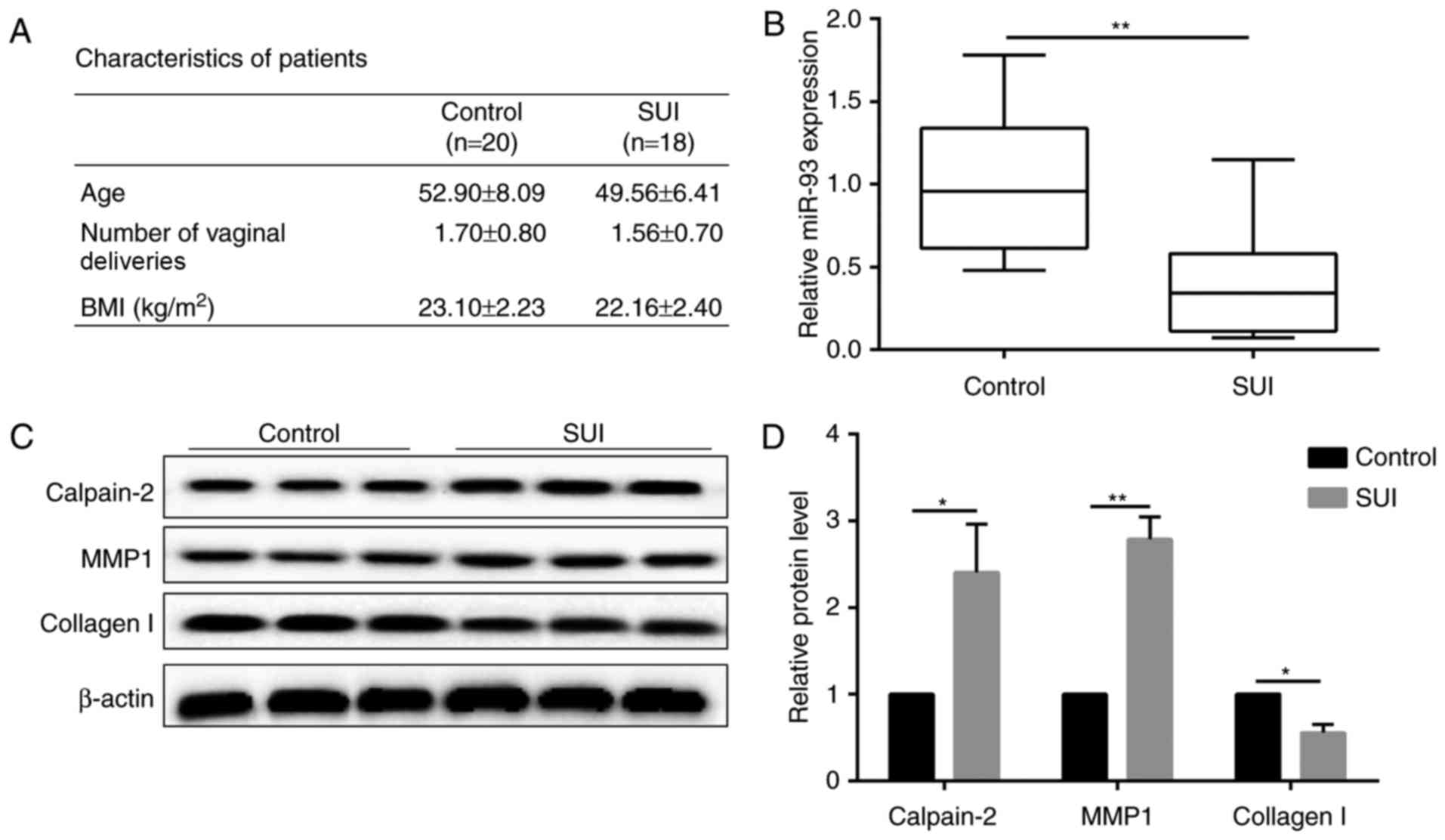
In order to investigate how miR-93 regulates
collagen, the expression of miR-93, calpain-2, MMP1 and collagen I
in vaginal wall tissue was detected in the SUI and control groups.
Data about vaginal wall tissue specimens was collected from
patients with SUI [SUI group; n=18; average age, 49.56±6.41; number
of vaginal deliveries, 1.56±0.70; body mass index (BMI),
22.16±2.40], and from patients with diseases, including
paraurethral cysts, requiring wound repair (control group; n=20;
average age, 52.90±8.09; number of vaginal deliveries, 1.70±0.80;
BMI, 23.10±2.23) (Fig. 1A). miR-93
expression in the SUI group was decrease compared with the control
group, as detected via RT-qPCR (Fig.
1B). The protein levels of calpain-2 and MMP1 were increased in
the SUI group as detected by western blotting, while the collagen I
level was decreased in SUI group (Fig.
1C and D). The results of the present study indicated that the
decrease in miR-93 and increase in calpain-2 and MMP1 may
contribute to collagen expression.
Expression of miR-93 and proteins in
vitro
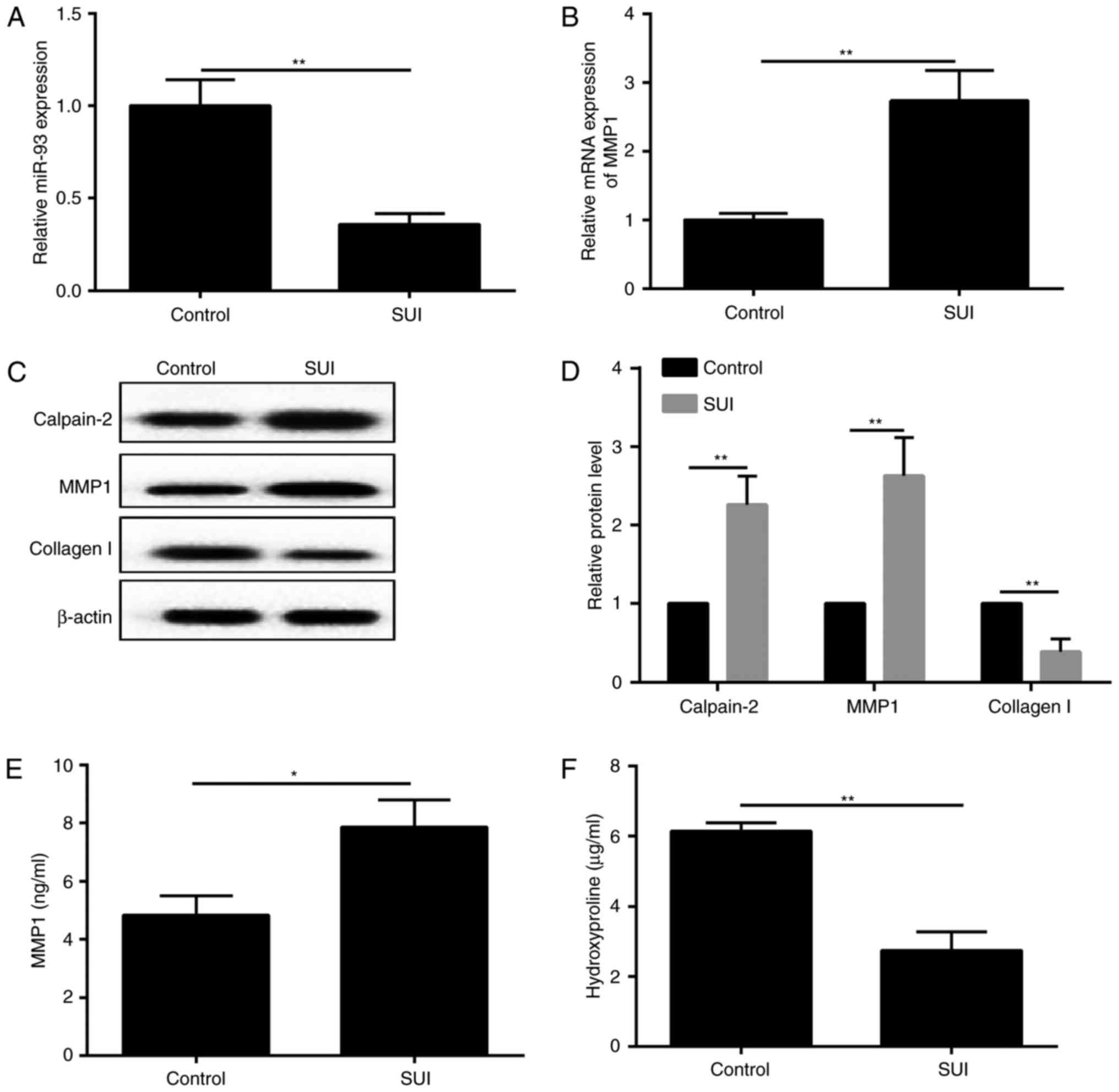
In vitro experiments were performed in the
control (primary fibroblasts) and SUI (SUI primary fibroblasts)
groups to verify the previously described expression patterns. It
was observed that miR-93 expression in the SUI group was decreased
compared with the control group (Fig.
2A), while MMP1 expression was increased in the SUI group
(Fig. 2B). The protein expression
of calpain-2 and MMP1 in the SUI group was upregulated, while
collagen I expression was downregulated in the SUI group (Fig. 2C and D). ELISA analysis
demonstrated that the MMP1 level in the supernatant in the SUI
group was increased compared with the control group, while the
hydroxyproline level in the supernatant in the SUI group was
decreased (Fig. 2E and F).
Calpain-2 is a direct target of
miR-93
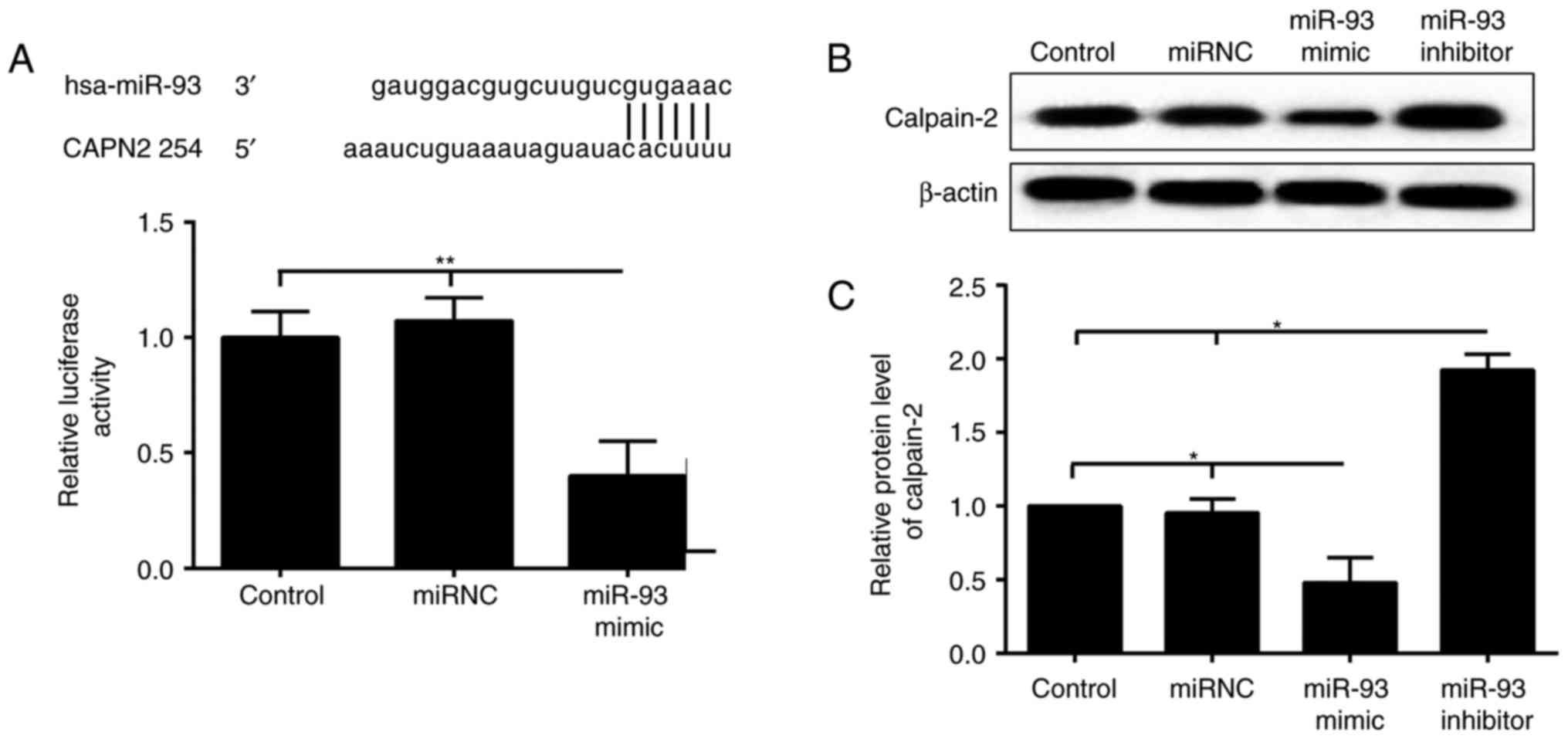
The microRNA software (microRNA.org)
was used in the present study and predicted that calpain may be a
direct target of miR-93. The regulatory effect of miR-93 on
calpain-2 was confirmed via a luciferase reporter assay in 293T
cells. It was demonstrated that miR-93 was able to bind to the
CAPN2 gene, and that overexpression of miR-93 decreased the
calpain-2 expression level (Fig.
3A). In addition, the effects of miR-93 overexpression and
miR-93 inhibition on the expression of calpain-2 were measured by
western blotting, which further verified that overexpression of
miR-93 decreased calpain-2 expression and that inhibition of miR-93
increased calpain-2 (Fig. 3B and
C). The results of the present study demonstrated that
calpain-2 was a direct target of miR-93.
miR-93 regulates MMP1 and collagen I
expression via calpain-2
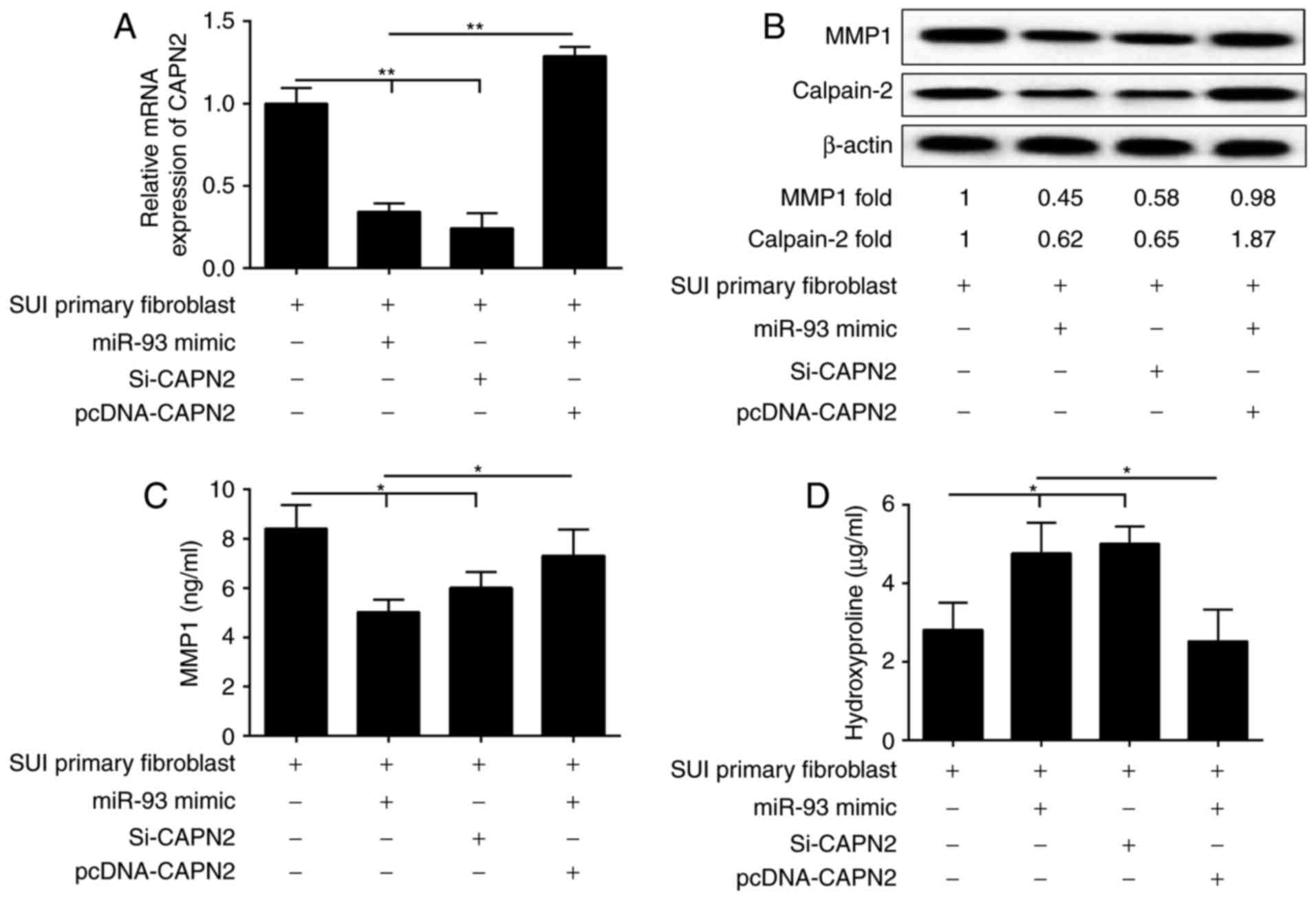
The mRNA expression of calpain-2 decreased following
miR-93 overexpression or CAPN2 silencing. The protein levels of
MMP1 and calpain-2 decreased following miR-93 overexpression or
CAPN2 silencing, and CAPN2 overexpression reversed this effect
(Fig. 4A and B). The MMP1 level
secreted by SUI primary fibroblasts decreased following miR-93
overexpression or CAPN2 silencing, and calpain-2 overexpression
reversed this effect (Fig. 4C).
The hydroxyproline level in the supernatant increased following
miR-93 overexpression or CAPN2 silencing, and calpain-2
overexpression reversed this effect (Fig. 4D).
Discussion
Previous studies have demonstrated that miRNAs exert
important roles in regulating a variety of biological and
pathological processes, including cell growth, differentiation and
apoptosis (17,18). Numerous studies have demonstrated
that miRNAs are involved in the progression of diseases that occur
in different tissues. For example, miR-139 was able to regulate
pulmonary fibrosis via β-catenin (19). miR-122 has been demonstrated to be
associated with iron overload-mediated hepatic inflammation
(20). miRNA-155 may be considered
to be a novel potential marker of subfertility in men with chronic
kidney disease (21). It has
additionally been reported that miRNAs serve roles in SUI. In 2014,
Liu et al (22) reported
that 12 miRNAs were abnormally expressed in SUI, including two
groups: In the upregulated group were let-7a, miR-101, miR-125b-2,
miR-190b and miR-892b; in the downregulated group were miR-124,
miR-330-3p, miR-485-3p, miR-517b, miR-523, miR-589, and miR-93. IN
addition, miR-93 has been reported to be involved in a number of
diseases and to be abnormally expressed in the progression and
tumorigenesis of a number of types of cancer, including
endometrial, lung, breast, hepatocellular, pancreatic, colorectal
and ovarian cancer (23). However,
the roles of miRNA in SUI remain unclear. The present study
provided new evidence that miR-93 was able to regulate the
expression of collagen in SUI via calpain-2, which enriches the
literature and supports the hypothesis that miR-93 may serve a
prominent role in SUI.
In the present study, it was observed that miR-93
expression was significantly downregulated in the vaginal wall
tissues of patients with SUI and in SUI primary fibroblasts. In
order to further investigate the function of miR-93 in the
development of SUI, a luciferase reporter assay was performed to
investigate its association with calpain-2. The results
demonstrated that miR-93 was able to bind to CAPN2; additionally,
overexpression of miR-93 decreased the expression of calpain-2,
which suggested that calpain-2 may be a direct target of miR-93. As
the primary components of the urethral support tissues are
connective tissues which contain a large number of ECM components,
and ECM metabolism is regulated by degradative enzyme matrix
metalloproteinases (MMPs) (23,24),
degradative enzyme inhibitors and tissue inhibitors of
metalloproteinases may be altered in patients with SUI. In the
present study, it was observed that MMP1 was upregulated in the
vaginal wall tissues of patients with SUI and in SUI primary
fibroblasts, suggesting that MMP1 may be negatively regulated by
miR-93, which was consistent with a previous report (14).
A previous study demonstrated that collagen
(collagen I and III) degradation may be associated with the
pathogenesis of SUI, and have indicated that dysregulation of
collagen metabolism may be involved in the development of SUI
(24). Hydroxyproline is a primary
component of collagen and has been used as a biochemical marker for
collagen content (25). The
results of the present study revealed that the expression of
hydroxyproline was downregulated in SUI primary fibroblasts, which
indicated that collagen expression was downregulated in the SUI
group. The hydroxyproline level was additionally detected when
miR-93 was overexpressed or CAPN2 was silenced, and it was
demonstrated that the hydroxyproline level was increased, while
CAPN2 overexpression reversed this effect, indicating that
calpain-2 was negatively associated with collagen expression. The
present findings suggested that the decrease in collagen expression
mediated by the downregulation of miR-93 may be involved in the
development of SUI. In addition, miR-93 may bind to CAPN2, and
miR-93 exhibited a marked negative association with calpain-2,
indicating that miR-93 may mediate collagen expression in SUI via
calpain-2.
In conclusion, the results of the present study
indicated that miR-93 was downregulated in the vaginal wall tissues
of patients with SUI and in SUI primary fibroblasts, and its level
was associated with collagen expression. Additionally, miR-93
overexpression increased the expression of collagen by targeting
calpain-2. The present findings further clarified the role of
miR-93 and provided a theoretical basis for the development of
novel treatments for SUI.
References
|
1
|
Novara G, Galfano A, Boscoloberto R, Secco
S, Cavalleri S, Ficarra V and Artibani W: Stress urinary
incontinence. Nat Rev Urol. 12:43–49. 2014.
|
|
2
|
Wu JM, Matthews CA, Conover MM, Pate V and
Jonsson FM: Lifetime risk of stress urinary incontinence or pelvic
organ prolapse surgery. Obstet Gynecol. 123:1201–1206. 2014.
View Article : Google Scholar : PubMed/NCBI
|
|
3
|
Tunn R, Paris S, Fischer W, Hamm B and
Kuchinke J: Static magnetic resonance imaging of the pelvic floor
muscle morphology in women with stress urinary incontinence and
pelvic prolapse. Neurourol Urodyn. 17:579–589. 1998. View Article : Google Scholar : PubMed/NCBI
|
|
4
|
Gomelsky A, Coco CT and Dmochowski RR:
Urinary incontinence in women: Non-pharmacologic approaches and
newer pharmacotherapies. Minerva Med. 105:263–274. 2014.PubMed/NCBI
|
|
5
|
Piculo F, Marini G, Barbosa AM, Damasceno
DC, Matheus SM, Felisbino SL, Daneshgari F and Rudge MV: Urethral
striated muscle and extracellular matrix morphological
characteristics among mildly diabetic pregnant rats: Translational
approach. Int Urogynecol J. 25:403–415. 2014. View Article : Google Scholar : PubMed/NCBI
|
|
6
|
Jabłońska-Trypuć A, Matejczyk M and
Rosochacki S: Matrix metalloproteinases (MMPs), the main
extracellular matrix (ECM) enzymes in collagen degradation, as a
target for anticancer drugs. J Enzyme Inhib Med Chem. 31:177–183.
2016. View Article : Google Scholar : PubMed/NCBI
|
|
7
|
Sangsawang B: Risk factors for the
development of stress urinary incontinence during pregnancy in
primigravidae: a review of the literature. Eur J Obstet Gynecol
Reprod Biol. 178:27–34. 2014. View Article : Google Scholar : PubMed/NCBI
|
|
8
|
Li Z, Li X, Gao X, Shen QW, Du M and Zhang
D: Phosphorylation prevents in vitro myofibrillar proteins
degradation by µ-calpain. Food Chem. 218:455–462. 2017. View Article : Google Scholar : PubMed/NCBI
|
|
9
|
Wu Y, Zhang L, Jin H, Zhou J and Xie Z:
The role of calpain-calpastatin system in the development of stress
urinary incontinence. Int Urogynecol J. 21:63–68. 2010. View Article : Google Scholar : PubMed/NCBI
|
|
10
|
Pandey R, Velasquez S, Durrani S, Jiang M,
Neiman M, Crocker JS, Benoit JB, Rubinstein J, Paul A and Ahmed RP:
MicroRNA-1825 induces proliferation of adult cardiomyocytes and
promotes cardiac regeneration post ischemic injury. Am J Transl
Res. 9:3120–3137. 2017.PubMed/NCBI
|
|
11
|
Ge S, Xie J, Liu F and He J and He J:
MicroRNA-19b reduces hepatic stellate cell proliferation by
targeting GRB2 in hepatic fibrosis models in vivo and in vitro as
part of the inhibitory effect of estradiol. J Cell Biochem.
116:2455–2464. 2015. View Article : Google Scholar : PubMed/NCBI
|
|
12
|
Lakner AM, Steuerwald NM, Walling TL,
Ghosh S, Li T, McKillop IH, Russo MW, Bonkovsky HL and Schrum LW:
Inhibitory effects of microRNA 19b in hepatic stellate
cell-mediated fibrogenesis. Hepatology. 56:300–310. 2012.
View Article : Google Scholar : PubMed/NCBI
|
|
13
|
Beaumont J, López B, Ravassa S, Hermida N,
José GS, Gallego I, Valencia F, Gómezdoblas JJ, Teresa ED and Díez
J: MicroRNA-19b is a potential biomarker of increased myocardial
collagen cross-linking in patients with aortic stenosis and heart
failure. Scientific Reports. 7:2017. View Article : Google Scholar
|
|
14
|
Jing W and Jiang W: MicroRNA-93 regulates
collagen loss by targeting MMP3 in human nucleus pulposus cells.
Cell Prolif. 48:284–292. 2015. View Article : Google Scholar : PubMed/NCBI
|
|
15
|
Xiao K, Luo X, Wang X and Gao Z:
MicroRNA-185 regulates transforming growth factor-β1 and collagen-1
in hypertrophic scar fibroblasts. Mol Med Rep. 15:1489–1496. 2017.
View Article : Google Scholar : PubMed/NCBI
|
|
16
|
Livak KJ and Schmittgen TD: Analysis of
relative gene expression data using real-time quantitative PCR and
the 2(-Delta Delta C(T)) method. Methods. 25:402–408. 2001.
View Article : Google Scholar : PubMed/NCBI
|
|
17
|
Chen L, Zhang J, Feng Y, Li R, Sun X, Du
W, Piao X, Wang H, Yang D, Sun Y, et al: MiR-410 regulates MET to
influence the proliferation and invasion of glioma. Int J Biochem
Cell Biol. 44:1711–1717. 2012. View Article : Google Scholar : PubMed/NCBI
|
|
18
|
Zhao WH, Wu SQ and Zhang YD:
Downregulation of miR-124 promotes the growth and invasiveness of
glioblastoma cells involving upregulation of PPP1R13L. Int J Mol
Med. 32:101–107. 2013. View Article : Google Scholar : PubMed/NCBI
|
|
19
|
Wang Y, Liang Y, Luo J, Nie J, Yin H, Chen
Q, Dong J, Zhu J, Xia J and Shuai W: XIST/miR-139 axis regulates
bleomycin (BLM)-induced extracellular matrix (ECM) and pulmonary
fibrosis through beta-catenin. Oncotarget. 2017.
|
|
20
|
Li M, Tang Y, Wu L, Mo F, Wang X, Li H, Qi
R, Zhang H, Srivastava A and Ling C: The hepatocyte-specific
HNF4α/miR-122 pathway contributes to iron overload-mediated hepatic
inflammation. Blood. 130:1041–1051. 2017. View Article : Google Scholar : PubMed/NCBI
|
|
21
|
Kocyigit I, Taheri S, Sener EF, Eroglu E,
Ozturk F, Unal A, Korkmaz K, Zararsiz G, Sipahioglu MH, Ozkul Y, et
al: Serum micro-rna profiles in patients with autosomal dominant
polycystic kidney disease according to hypertension and renal
function. BMC nephrology. 18:1792017. View Article : Google Scholar : PubMed/NCBI
|
|
22
|
Liu X, Lang J, Wu S, Cheng L, Wang W and
Zhu L: Differential expression of microRNAs in periurethral vaginal
wall tissues of postmenopausal women with and without stress
urinary incontinence. Menopause. 21:1122–1128. 2014. View Article : Google Scholar : PubMed/NCBI
|
|
23
|
Chen S, Chen X, Sun KX, Xiu YL, Liu BL,
Feng MX, Sang XB and Zhao Y: MicroRNA-93 promotes
epithelial-mesenchymal transition of endometrial carcinoma cells.
PLoS One. 11:2016.
|
|
24
|
Min J, Li B, Liu C, Hong S, Tang J, Hu M,
Liu Y, Li S and Hong L: Therapeutic effect and mechanism of
electrical stimulation in female stress urinary incontinence.
Urology. 104:45–51. 2017. View Article : Google Scholar : PubMed/NCBI
|
|
25
|
Aro E, Khatri R, Gerard-O'Riley R,
Mangiavini L, Myllyharju J and Schipani E: Hypoxia-inducible
factor-1 (HIF-1) but not HIF-2 is essential for hypoxic induction
of collagen prolyl 4-hydroxylases in primary newborn mouse
epiphyseal growth plate chondrocytes. J Biol Chem. 287:37134–37144.
2012. View Article : Google Scholar : PubMed/NCBI
|