Spandidos Publications Logo
  • About
    • About Spandidos
    • Aims and Scopes
    • Abstracting and Indexing
    • Editorial Policies
    • Reprints and Permissions
    • Job Opportunities
    • Terms and Conditions
    • Contact
  • Journals
    • All Journals
    • Oncology Letters
      • Oncology Letters
      • Information for Authors
      • Editorial Policies
      • Editorial Board
      • Aims and Scope
      • Abstracting and Indexing
      • Bibliographic Information
      • Archive
    • International Journal of Oncology
      • International Journal of Oncology
      • Information for Authors
      • Editorial Policies
      • Editorial Board
      • Aims and Scope
      • Abstracting and Indexing
      • Bibliographic Information
      • Archive
    • Molecular and Clinical Oncology
      • Molecular and Clinical Oncology
      • Information for Authors
      • Editorial Policies
      • Editorial Board
      • Aims and Scope
      • Abstracting and Indexing
      • Bibliographic Information
      • Archive
    • Experimental and Therapeutic Medicine
      • Experimental and Therapeutic Medicine
      • Information for Authors
      • Editorial Policies
      • Editorial Board
      • Aims and Scope
      • Abstracting and Indexing
      • Bibliographic Information
      • Archive
    • International Journal of Molecular Medicine
      • International Journal of Molecular Medicine
      • Information for Authors
      • Editorial Policies
      • Editorial Board
      • Aims and Scope
      • Abstracting and Indexing
      • Bibliographic Information
      • Archive
    • Biomedical Reports
      • Biomedical Reports
      • Information for Authors
      • Editorial Policies
      • Editorial Board
      • Aims and Scope
      • Abstracting and Indexing
      • Bibliographic Information
      • Archive
    • Oncology Reports
      • Oncology Reports
      • Information for Authors
      • Editorial Policies
      • Editorial Board
      • Aims and Scope
      • Abstracting and Indexing
      • Bibliographic Information
      • Archive
    • Molecular Medicine Reports
      • Molecular Medicine Reports
      • Information for Authors
      • Editorial Policies
      • Editorial Board
      • Aims and Scope
      • Abstracting and Indexing
      • Bibliographic Information
      • Archive
    • World Academy of Sciences Journal
      • World Academy of Sciences Journal
      • Information for Authors
      • Editorial Policies
      • Editorial Board
      • Aims and Scope
      • Abstracting and Indexing
      • Bibliographic Information
      • Archive
    • International Journal of Functional Nutrition
      • International Journal of Functional Nutrition
      • Information for Authors
      • Editorial Policies
      • Editorial Board
      • Aims and Scope
      • Abstracting and Indexing
      • Bibliographic Information
      • Archive
    • International Journal of Epigenetics
      • International Journal of Epigenetics
      • Information for Authors
      • Editorial Policies
      • Editorial Board
      • Aims and Scope
      • Abstracting and Indexing
      • Bibliographic Information
      • Archive
    • Medicine International
      • Medicine International
      • Information for Authors
      • Editorial Policies
      • Editorial Board
      • Aims and Scope
      • Abstracting and Indexing
      • Bibliographic Information
      • Archive
  • Articles
  • Information
    • Information for Authors
    • Information for Reviewers
    • Information for Librarians
    • Information for Advertisers
    • Conferences
  • Language Editing
Spandidos Publications Logo
  • About
    • About Spandidos
    • Aims and Scopes
    • Abstracting and Indexing
    • Editorial Policies
    • Reprints and Permissions
    • Job Opportunities
    • Terms and Conditions
    • Contact
  • Journals
    • All Journals
    • Biomedical Reports
      • Information for Authors
      • Editorial Policies
      • Editorial Board
      • Aims and Scope
      • Abstracting and Indexing
      • Bibliographic Information
      • Archive
    • Experimental and Therapeutic Medicine
      • Information for Authors
      • Editorial Policies
      • Editorial Board
      • Aims and Scope
      • Abstracting and Indexing
      • Bibliographic Information
      • Archive
    • International Journal of Epigenetics
      • Information for Authors
      • Editorial Policies
      • Editorial Board
      • Aims and Scope
      • Abstracting and Indexing
      • Bibliographic Information
      • Archive
    • International Journal of Functional Nutrition
      • Information for Authors
      • Editorial Policies
      • Editorial Board
      • Aims and Scope
      • Abstracting and Indexing
      • Bibliographic Information
      • Archive
    • International Journal of Molecular Medicine
      • Information for Authors
      • Editorial Policies
      • Editorial Board
      • Aims and Scope
      • Abstracting and Indexing
      • Bibliographic Information
      • Archive
    • International Journal of Oncology
      • Information for Authors
      • Editorial Policies
      • Editorial Board
      • Aims and Scope
      • Abstracting and Indexing
      • Bibliographic Information
      • Archive
    • Medicine International
      • Information for Authors
      • Editorial Policies
      • Editorial Board
      • Aims and Scope
      • Abstracting and Indexing
      • Bibliographic Information
      • Archive
    • Molecular and Clinical Oncology
      • Information for Authors
      • Editorial Policies
      • Editorial Board
      • Aims and Scope
      • Abstracting and Indexing
      • Bibliographic Information
      • Archive
    • Molecular Medicine Reports
      • Information for Authors
      • Editorial Policies
      • Editorial Board
      • Aims and Scope
      • Abstracting and Indexing
      • Bibliographic Information
      • Archive
    • Oncology Letters
      • Information for Authors
      • Editorial Policies
      • Editorial Board
      • Aims and Scope
      • Abstracting and Indexing
      • Bibliographic Information
      • Archive
    • Oncology Reports
      • Information for Authors
      • Editorial Policies
      • Editorial Board
      • Aims and Scope
      • Abstracting and Indexing
      • Bibliographic Information
      • Archive
    • World Academy of Sciences Journal
      • Information for Authors
      • Editorial Policies
      • Editorial Board
      • Aims and Scope
      • Abstracting and Indexing
      • Bibliographic Information
      • Archive
  • Articles
  • Information
    • For Authors
    • For Reviewers
    • For Librarians
    • For Advertisers
    • Conferences
  • Language Editing
Login Register Submit
  • This site uses cookies
  • You can change your cookie settings at any time by following the instructions in our Cookie Policy. To find out more, you may read our Privacy Policy.

    I agree
Search articles by DOI, keyword, author or affiliation
Search
Advanced Search
presentation
Molecular Medicine Reports
Join Editorial Board Propose a Special Issue
Print ISSN: 1791-2997 Online ISSN: 1791-3004
Journal Cover
January-2018 Volume 17 Issue 1

Full Size Image

Sign up for eToc alerts
Recommend to Library

Journals

International Journal of Molecular Medicine

International Journal of Molecular Medicine

International Journal of Molecular Medicine is an international journal devoted to molecular mechanisms of human disease.

International Journal of Oncology

International Journal of Oncology

International Journal of Oncology is an international journal devoted to oncology research and cancer treatment.

Molecular Medicine Reports

Molecular Medicine Reports

Covers molecular medicine topics such as pharmacology, pathology, genetics, neuroscience, infectious diseases, molecular cardiology, and molecular surgery.

Oncology Reports

Oncology Reports

Oncology Reports is an international journal devoted to fundamental and applied research in Oncology.

Experimental and Therapeutic Medicine

Experimental and Therapeutic Medicine

Experimental and Therapeutic Medicine is an international journal devoted to laboratory and clinical medicine.

Oncology Letters

Oncology Letters

Oncology Letters is an international journal devoted to Experimental and Clinical Oncology.

Biomedical Reports

Biomedical Reports

Explores a wide range of biological and medical fields, including pharmacology, genetics, microbiology, neuroscience, and molecular cardiology.

Molecular and Clinical Oncology

Molecular and Clinical Oncology

International journal addressing all aspects of oncology research, from tumorigenesis and oncogenes to chemotherapy and metastasis.

World Academy of Sciences Journal

World Academy of Sciences Journal

Multidisciplinary open-access journal spanning biochemistry, genetics, neuroscience, environmental health, and synthetic biology.

International Journal of Functional Nutrition

International Journal of Functional Nutrition

Open-access journal combining biochemistry, pharmacology, immunology, and genetics to advance health through functional nutrition.

International Journal of Epigenetics

International Journal of Epigenetics

Publishes open-access research on using epigenetics to advance understanding and treatment of human disease.

Medicine International

Medicine International

An International Open Access Journal Devoted to General Medicine.

Journal Cover
January-2018 Volume 17 Issue 1

Full Size Image

Sign up for eToc alerts
Recommend to Library

  • Article
  • Citations
    • Cite This Article
    • Download Citation
    • Create Citation Alert
    • Remove Citation Alert
    • Cited By
  • Similar Articles
    • Related Articles (in Spandidos Publications)
    • Similar Articles (Google Scholar)
    • Similar Articles (PubMed)
  • Download PDF
  • Download XML
  • View XML
Article

HGF induces the serine‑phosphorylation and cell surface translocation of ROMK (Kir 1.1) channels in rat kidney cells

  • Authors:
    • Takashi Kato
    • Kiyomasa Oka
    • Toshikazu Nakamura
  • View Affiliations / Copyright

    Affiliations: Department of Pharmacology, Faculty of Medicine, Kindai University, Osakasayama, Osaka 589‑8511, Japan, Research and Development, Neurogen, Inc., Ibaraki, Osaka 567‑0085, Japan
  • Pages: 1031-1034
    |
    Published online on: November 6, 2017
       https://doi.org/10.3892/mmr.2017.7969
  • Expand metrics +
Metrics: Total Views: 0 (Spandidos Publications: | PMC Statistics: )
Metrics: Total PDF Downloads: 0 (Spandidos Publications: | PMC Statistics: )
Cited By (CrossRef): 0 citations Loading Articles...

This article is mentioned in:


Abstract

Extracellular potassium homeostasis is dependent on the activity of potassium channels, which are expressed on the apical membrane of epithelial tubular cells. The renal outer medullary potassium channel (ROMK) is considered to be the major route for potassium transport into the tubule lumen. Hepatocyte growth factor (HGF) exerts multiple biological activities and is important for maintaining renal homeostasis. It is also anti‑apoptotic and mitogenic for protection and recovery from ARF. Whether HGF regulates the ion channel activities remains to be elucidated, therefore, the present study aimed to investigate the modulation of HGF on the expression of ROMK in cultured renal tubular cells. NRK‑52E cells were treated with recombinant HGF, however, no alterations in the total expression of ROMK were observed by western blot analysis. In examining the serine 44 phosphorylation of ROMK in NRK‑52E cells, the present study observed that HGF enhanced the serine 44 phosphorylation of ROMK. In addition, to investigate whether HGF‑Met signaling induces the movement of ROMK to the cell surface in NRK‑52E cells, the protein constituents of cells were separated into plasma membrane and cytoplasm. Using immunofluorescence assay, the expression of ROMK on the plasma membrane was increased in the HGF‑treated NRK‑52E cells, which suggested that ROMK was translocated to the plasma membrane following the HGF‑induced phosphorylation of serine 44. Therefore, HGF may be important in potassium excretion and perform antihyperkalemic effects through the translocation of potassium channels.

Introduction

Extracellular potassium homeostasis is maintained by the regulation of renal potassium excretion, and is dependent on the activity of potassium channels, which are expressed on the apical membrane of epithelial tubular cells. Encoded by the renal outer medullary potassium channel (ROMK) gene (also termed Kir 1.1 and KCNJ1) (1,2), ROMK channels are considered to be the major route for the transport of potassium into the tubule lumen (3,4). As ROMK channels usually exhibit a high probability of being open, the physiologic augmentation of channel activity is controlled by hormones and dietary potassium, and is achieved predominantly by regulated alterations in the number of active channels on the plasma membrane (5).

Hepatocyte growth factor (HGF) exerts multiple biological activities, including mitogenic, motogenic and morphogenic activities, on a variety of cells through its receptor, Met. The multiple functions of HGF are important in organ regeneration (6). In particular, HGF is important for maintaining renal homeostasis (7,8). The levels of HGF in the plasma increase following renal ischemia, and the inhibition of HGF-Met signaling enhances tubular apoptosis in the early stage of acute renal failure (ARF) (7) and inhibits the proliferation of tubular cells in the late stage (8). However, whether HGF regulates the ion channel activities remains to be elucidated, therefore, the present study investigated the modulation of HGF on the expression, phosphorylation and translocation of ROMK in renal tubular cells.

Materials and methods

Materials

Human recombinant HGF was purified from the medium of Chinese hamster ovary (CHO) cells transfected with human HGF cDNA of the 5-amino acid deleted type (>98% of purity on SDS-PAGE) as previously described (7,8). The following antibodies were used: Anti-Tyr1234/1235-phosphorylated Met (D26; cat. no. 3126; Cell Signaling Technology, Inc., Beverly, MA, USA), anti-Met (SP260; cat. no. sc-162; Santa Cruz Biotechnology, Inc., Danvers, MA, USA), anti-Met (B2; cat. no. sc-8057; Santa Cruz Biotechnology, Inc.), anti-ROMK (cat. no. APC001; Alomone Labs, Ltd., Jerusalem, Israel), anti-pS44/25-ROMK (cat. no A1121; Assay Biotech Co., Inc., Sunnyvale, CA, USA), anti-E-cadherin (cat. no. C20820, BD Biosciences, San Jose, CA, USA), anti-GAPDH (cat. no. sc-32233, SCB), and anti-β-actin (cat. no. A1978; Sigma-Aldrich; Merck KGaA, Darmstadt, Germany). Membrane-bound ROMK and E-cadherin were biotinylated with Sulfo-NHS-LC-biotin (Thermo Fisher Scientific, Inc., Waltham, MA, USA) according to the manufacturer's protocol. The NRK-52E normal rat kidney epithelial cell line was obtained from American Type Culture Collection (Manassas, VA, USA) cultured in Dulbecco's modified Eagle's medium (DMEM; Nacalai Tesque, Inc., Kyoto, Japan) supplemented with 10% fetal calf serum. Cells were maintained and grown at 37°C in 5% CO2 according to the supplier's recommendations.

Immunoblotting

The cells were lysed on ice with lysis buffer, containing 50 mM Tris-HCl (pH 7.5), 150 mM NaCl, 1% Triton X-100, 5 mM EDTA, protease inhibitor cocktail, 2 mM Na3VO4 and 50 mM NaF. The protein concentrations of cell lysates were measured by BCA protein assay (Thermo Fisher Scientific, Inc.). For immunoblot assay of Met and Tyr 1234/1235-phosphorylated Met, immunoprecipitation was performed as previously reported (8,9). The cell lysates (300 µg/sample) were incubated with anti-Met antibody (B2) at 4°C overnight and then precipitated with protein G/A (GE Healthcare Life Sciences, Chalfont, UK) for 2 h at 4°C. The immunoprecipitated lysates were then subjected to SDS-PAGE and transferred onto PVDF membranes. The primary antibodies (Met and Tyr 1234/1235-phosphorylated Met) were applied to PVDF membranes overnight at 4°C at a concentration of 1:4,000, followed by a second reaction with horseradish peroxidase-labeled antibodies (Dako, Glostrup, Denmark) at a concentration of 1:4,000 for 1 h at room temperature. For the immunoblot assay of ROMK, serine 44 phosphorylated ROMK and E-cadherin, the cell lysates were subjected to SDS-PAGE, and then detected as immunoblots in a similar method to total and tyrosine 1234/1235-phosphorylated Met. (1:4,000). The β-actin and GAPDH antibodies were applied overnight at 4°C at a concentration of 1:8,000, and followed by a second reaction horseradish peroxidase-conjugated antibodies (Dako) at a concentration of 1:8,000 for 1 h at room temperature. The signals were visualized on PVDF membranes, using a kit (ECL system; GE Healthcare Life Sciences). Densitometric quantification of the scanned band intensities was performed by digitizing each band via densitometry using ImageJ software version 1.47t (National Institutes of Health, Bethesda, MD, USA) on a Macintosh computer.

Immunofluorescence

The cells on cover glass were fixed with 4% paraformaldehyde in PBS for 15 min, permeabilized with 0.2% Triton X-100 in PBS for 5 min, and blocked with 5% goat serum in PBS for 1 h at room temperature. The cells were then incubated with primary antibodies (ROMK and serine 44 phophorylated ROMK) overnight at 4°C at a concentration of 1:200, followed by incubation with secondary antibodies conjugated to Alexa Fluor 488 (Thermo Fisher Scientific, Inc.) at room temperature for 20 min at a concentration of 1:600. The nuclei were stained with propidium iodide (PI; Sigma-Aldrich; Merck KGaA). Following washing with PBS, the cells were mounted with crystal mount (Biomeda Corporation, Foster City, CA, USA), and observed under an LSM5 Pascal confocal microscope (Zeiss AG, Oberkochen, Germany).

Statistical analysis

Student's t-test was performed to evaluate the significant differences of each group using Microsoft Excel for Mac 2011. Data are expressed as mean ± standard deviation. P<0.05 was considered to indicate statistically significant.

Results

HGF does not alter the expression of ROMK, but phosphorylates serine-44 of ROMK in rat kidney epithelial cells

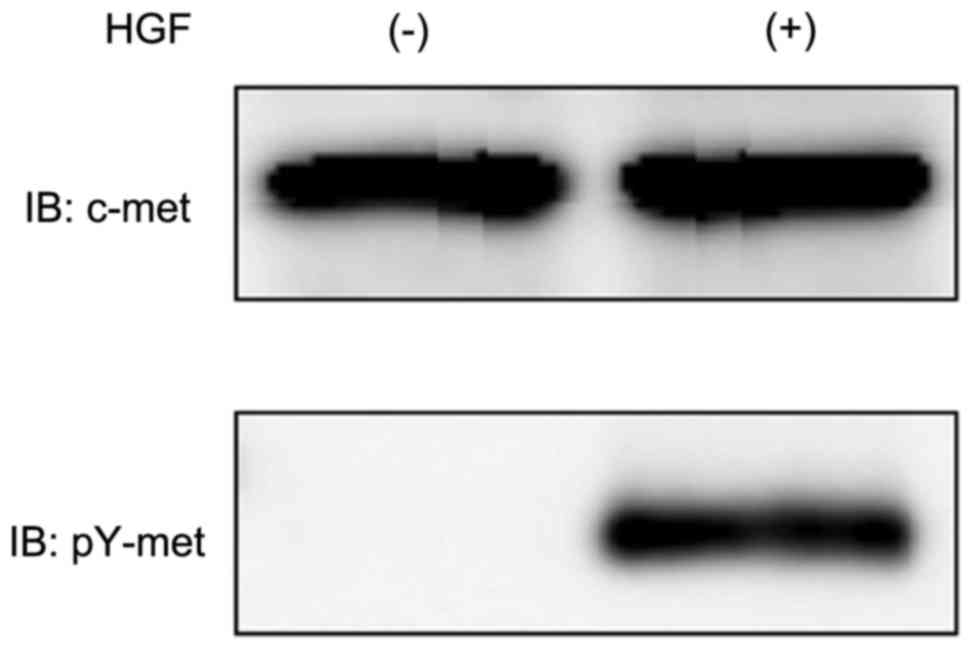
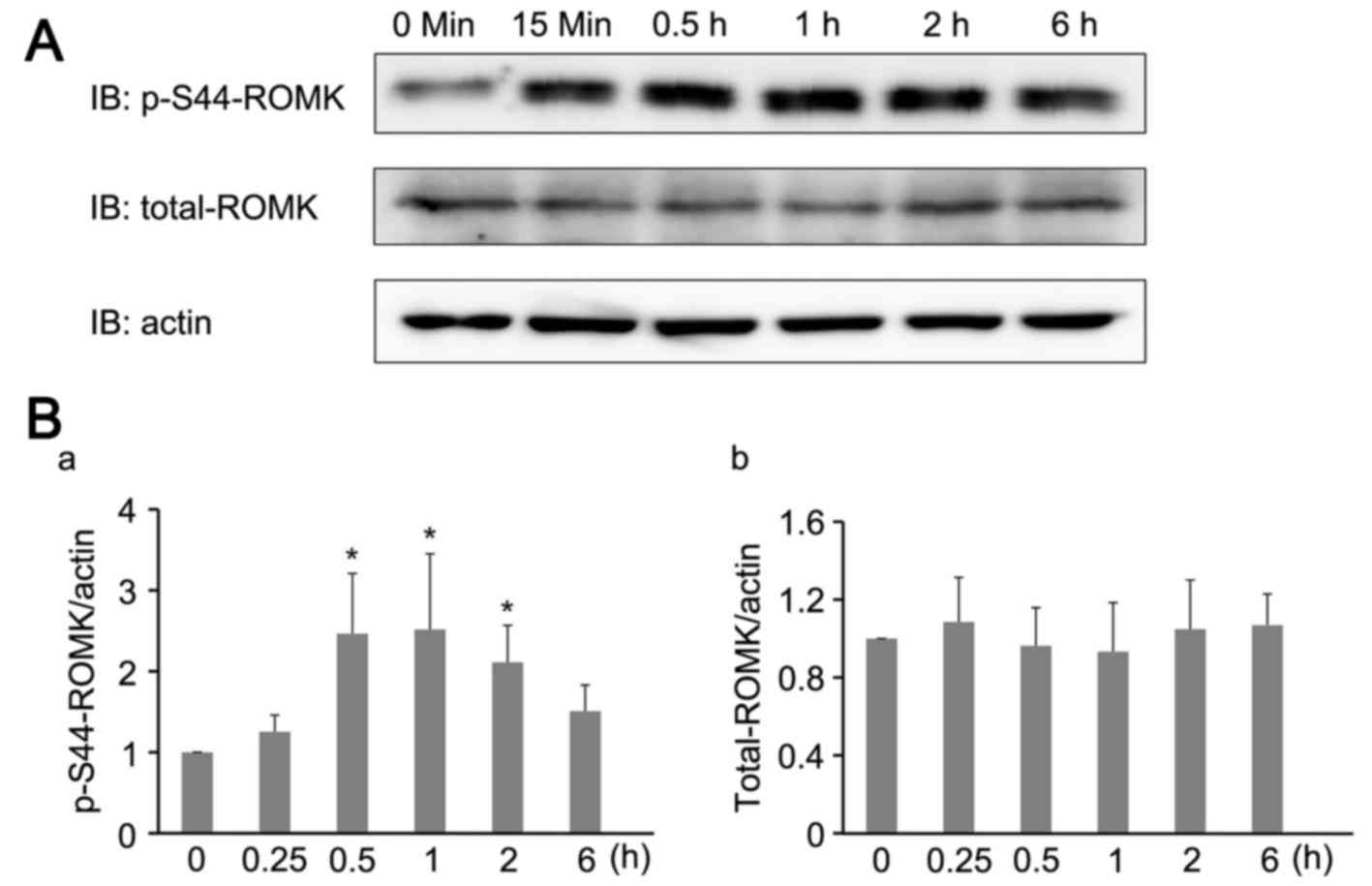
HGF led to an increase of Tyr 1234/1235-phosphorylated Met in the NRK-52E cells, determined using western blot analysis (Fig. 1), confirming it had an effect on the NRK-52E cells. Whether HGF modulated the expression of ROMK was then investigated. Following the addition of NRK-52E cells to 10 ng/ml of recombinant HGF, the expression of ROMK was measured using western blot analysis. However, no alterations in the total expression of ROMK were observed (Fig. 2A). ROMK activity is dependent on direct phosphorylation by protein kinase A (PKA). PKA-acceptor sites in ROMK, embedded within the cytoplasmic NH2-(Ser-44) and COOH-termini (Ser-219 and Ser-313) require phosphorylation for full channel activity (10). The phosphorylation of the two COOH-terminal sites is required to maintain a high probability of the channel being in an open state (10). The phosphorylation of the NH2-termination site has no effect on the probability of channel opening, however, it appears to control the number of active channels on the cell surface (10). In the present study, serine 44 phosphorylation of ROMK in the NRK-52E cells was examined. Treatment with HGF enhanced the level of serine 44 phosphorylated ROMK (Fig. 2B). The results of the immunofluorescence assay also demonstrated the upregulated serine 44 phosphorylation of ROMK (Fig. 2C).

Figure 1.

HGF activates Met in normal kidney cells. Western blot analysis was used with anti-phosphorylated tyrosine or anti-c-Met antibodies in NRK52E cells. Total c-Met was used as a loading control. IB, immunoblot; HGF, hepatocyte growth factor.

Figure 2.

HGF upregulates the serine-phosphorylation of ROMK. (A) Results of western blot analysis for the serine-phosphorylation of ROMK in NRK-52E cells following treatment with 10 ng/ml HGF. (B) Alterations in protein expression levels of (a) serine44-phosphorylated ROMK and (b) total ROMK were detected using anti-phosphorylated-ROMK (Ser44) and anti-ROMK antibodies (n=3). *P<0.05 vs. 0 h. (C) Immunofluorescence images of serine-phosphorylated ROMK (green) in HGF-treated NRK-52E cells at 2 h. Magnification, ×400. The nuclei were counterstained with propidium iodide (red). IB, immunoblot; HGF, hepatocyte growth factor; ROMK, renal outer medullary potassium channel; p-, phosphorylated.

HGF translocates ROMK into the plasma membrane in normal kidney cells

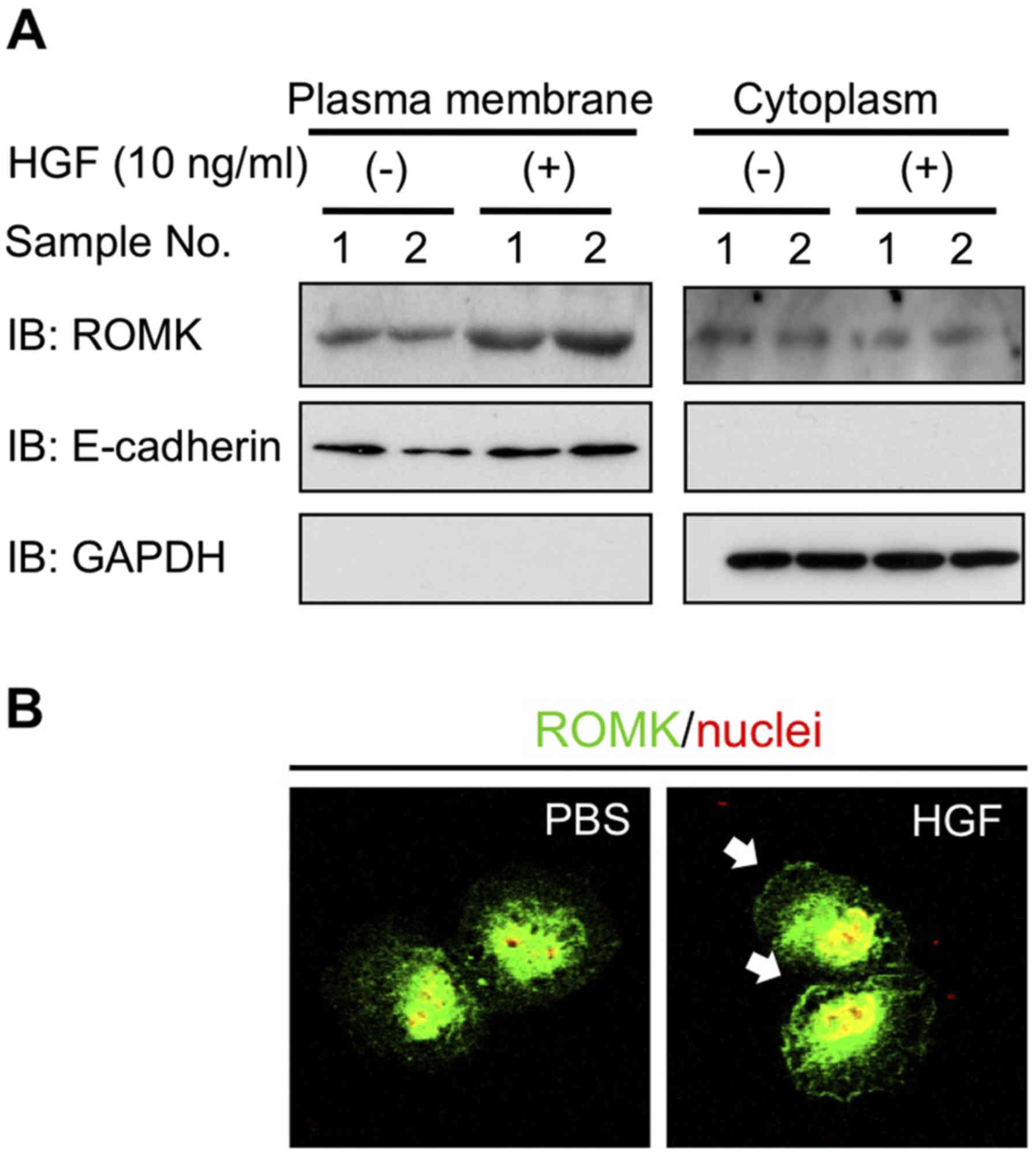
To investigate whether HGF-Met signaling induced the movement of ROMK to the cell surface in NRK-52E cells, the present study separated the protein constituents of cells into plasma membrane and cytoplasm proteins. The present study confirmed that the proteins derived from plasma membrane and cytoplasm were E-cadherin and GAPDH using an immunoblot assay (Fig. 3A). The results of the western blot analysis, revealed that the expression of ROMK on the plasma membrane was increased in the HGF-treated NRK-52E cells (Fig. 3A). In addition, the results of the immunofluorescence analysis indicated that HGF induced the translocation of ROMK into the plasma membrane (Fig. 3B).

Figure 3.

HGF enhances ROMK localization at the plasma membrane. (A) Results of western blot analysis of ROMK localization in NRK-52E cells cultured for 1 h in the presence of 10 ng/ml HGF. Anti-E-cadherin and anti-GAPDH served as protein sample controls of the plasma membrane or cytoplasm. (B) Immunofluorescence images of ROMK (green) in HGF-treated NRK-52E cells at 2 h (×400). The nuclei were counterstained with propidium iodide (red). HGF, hepatocyte growth factor; ROMK, renal outer medullary potassium channel. Arrows indicate ROMK localized at plasma membrane in NRK-52E cells. HGF, hepatocyte growth factor; ROMK, renal outer medullary potassium channel.

Discussion

By measuring the cell surface density and functional activity of wild-type and phosphorylation-site mutant ROMK channels, Yoo et al (11) suggested that the phosphorylation of serine 44 markedly increases functional channel density by recruiting on the plasma membrane, rather than by activating silent channels already present on the plasma membrane. In the present study, HGF enhanced ROMK localization on the plasma membrane through the phosphorylation of serine 44. Close inspection of the NH2-terminal PKA site in ROMK has revealed that it also falls within a canonical serum- and glucocorticoid-regulated kinase (SGK1) phosphorylation sequence (11), which suggests that the channels, and serine 44 in particular, may also be a target of SGK1. SGK1 is a member of the protein kinase B/Akt family of serine/threonine kinases in the renal collecting duct (12,13), which has been shown to regulate the cell surface expression of epithelial Na+ channels. Several pathways regulate SGK1, including growth factor signaling, comprising HGF, and stress-mediated signaling, and this is achieved through involvement of the signaling pathways in the regulation of cell survival, and cell-cell and cell-matrix interactions (14). Therefore, HGF activated ROMK through the activation of SGK1, and may have also controlled the number of functional ROMK at the plasma membrane.

Clinical crush syndrome occurs as a consequence of traumatic events, for example during accidents. As a result of muscle compression, myocytes are damaged, and this is followed by the release of intracellular constituents into the systemic circulation. Rhabdomyolysis, due to substantial cell necrosis in injured muscles, causes the release of intracellular materials, including potassium and myoglobin, into the systemic circulation, which are important in early-and late-phase life-threatening complications, including cardiac arrhythmia, myoglobinuric renal failure and systemic inflammation (15). ARF due to crush-induced rhabdomyolysis is the second most frequent cause of mortality following traumatic impact in catastrophic earthquakes (16). The repeated administration of HGF has been found to inhibit acute tubular necrosis in the renal cortex, improve renal dysfunction and protect rats from death caused by severe ARF (17). The exogenous supply of HGF may be efficacious in combating ARF with acute tubular necrosis, particularly rhabdomyolysis-induced ARF (17). HGF has mitogenic, motogenic and morphogenic functions, which accelerate the regeneration of tubular epithelial cells and the reconstruction of normal tissue architecture of the kidney. It also stimulates cation transport through the activation of tubular Na+−K+−ATPase (18). HGF may also be important in potassium excretion and perform antihyperkalemic effects through translocation of the ROMK potassium channel.

In the present study, it was found that HGF treatment led to the increased serine 44 phosphorylation of ROMK and the translocation of ROMK into the nucleus in normal kidney cells. Future investigations aim to elucidate the effects of HGF on potassium excretion.

Acknowledgements

The present study was supported by a grant from the Ministry of Education, Culture, Sports, Science and Technology of Japan (grant no. 14454911 to Dr Takashi Kato).

References

1 

Ho K, Nichols CG, Lederer WJ, Lytton J, Vassilev PM, Kanazirska MV and Hebert SC: Cloning and expression of an inwardly rectifying ATP-regulated potassium channel. Nature. 362:31–38. 1993. View Article : Google Scholar : PubMed/NCBI

2 

Lu M, Wang T, Yan Q, Yang X, Dong K, Knepper MA, Wang W, Giebisch G, Shull GE and Hebert SC: Absence of small conductance K+ channel (SK) activity in apical membranes of thick ascending limb and cortical collecting duct in ROMK (Bartter's) knockout mice. J Biol Chem. 277:37881–37887. 2002. View Article : Google Scholar : PubMed/NCBI

3 

Giebisch G: Renal potassium transport: Mechanisms and regulation. Am J Physiol. 274:F817–F833. 1998.PubMed/NCBI

4 

Palmer LG: Potassium secretion and the regulation of distal nephron K channels. Am J Physiol. 277:F821–F825. 1999.PubMed/NCBI

5 

Wang W, Sackin H and Giebisch G: Renal potassium channels and their regulation. Annu Rev Physiol. 54:81–96. 1992. View Article : Google Scholar : PubMed/NCBI

6 

Nakamura T and Mizuno S: The discovery of hepatocyte growth factor (HGF) and its significance for cell biology, life sciences and clinical medicine. Proc Jpn Acad Ser B Phys Biol Sci. 86:588–610. 2010. View Article : Google Scholar : PubMed/NCBI

7 

Mizuno S and Nakamura T: Prevention of neutrophil extravasation by hepatocyte growth factor leads to attenuations of tubular apoptosis and renal dysfunction in mouse ischemic kidneys. Am J Pathol. 166:1895–1905. 2005. View Article : Google Scholar : PubMed/NCBI

8 

Ohnishi H, Mizuno S and Nakamura T: Inhibition of tubular cell proliferation by neutralizing endogenous HGF leads to renal hypoxia and bone marrow-derived cell engraftment in acute renal failure. Am J Physiol Renal Physiol. 294:F326–F335. 2008. View Article : Google Scholar : PubMed/NCBI

9 

Kato T, Funakoshi H, Kadoyama K, Noma S, Kanai M, Ohya-Shimada W, Mizuno S, Doe N, Taniguchi T and Nakamura T: Hepatocyte growth factor overexpression in the nervous system enhances learning and memory performance in mice. J Neurosci Res. 90:1743–1755. 2012. View Article : Google Scholar : PubMed/NCBI

10 

MacGregor GG, Xu JZ, McNicholas CM, Giebisch G and Hebert SC: Partially active channels produced by PKA site mutation of the cloned renal K+ channel, ROMK2 (kir1.2). Am J Physiol. 275:F415–F422. 1998.PubMed/NCBI

11 

Yoo D, Kim BY, Campo C, Nance L, King A, Maouyo D and Welling PA: Cell surface expression of the ROMK (Kir 1.1) channel is regulated by the aldosterone-induced kinase, SGK-1, and protein kinase A. J Biol Chem. 278:23066–23075. 2003. View Article : Google Scholar : PubMed/NCBI

12 

Lang F and Cohen P: Regulation and physiological roles of serum- and glucocorticoid-induced protein kinase isoforms. Sci STKE. 2001:re172001.PubMed/NCBI

13 

Náray-Fejes-Tóth A, Canessa C, Cleaveland ES, Aldrich G and Fejes-Tóth G: SGK is an aldosterone-induced kinase in the renal collecting duct. Effects on epithelial na+ channels. J Biol Chem. 274:16973–16978. 1999. View Article : Google Scholar : PubMed/NCBI

14 

Shelly C and Herrera R: Activation of SGK1 by HGF, Rac1 and integrin-mediated cell adhesion in MDCK cells: PI-3K-dependent and -independent pathways. J Cell Sci. 115:1985–1993. 2002.PubMed/NCBI

15 

Bosch X, Poch E and Grau JM: Rhabdomyolysis and acute kidney injury. N Engl J Med. 361:62–72. 2009. View Article : Google Scholar : PubMed/NCBI

16 

Ukai T: The Great Hanshin-Awaji Earthquake and the problems with emergency medical care. Ren Fail. 19:633–645. 1997. View Article : Google Scholar : PubMed/NCBI

17 

Nagano T, Mori-Kudo I, Tsuchida A, Kawamura T, Taiji M and Noguchi H: Ameliorative effect of hepatocyte growth factor on glycerol-induced acute renal failure with acute tubular necrosis. Nephron. 91:730–738. 2002. View Article : Google Scholar : PubMed/NCBI

18 

Ishibashi K, Sasaki S, Sakamoto H, Nakamura Y, Hata T, Nakamura T and Marumo F: Hepatocyte growth factor is a paracrine factor for renal epithelial cells: Stimulation of DNA synthesis and NA,K-ATPase activity. Biochem Biophys Res Commun. 182:960–965. 1992. View Article : Google Scholar : PubMed/NCBI

Related Articles

  • Abstract
  • View
  • Download
  • Twitter
Copy and paste a formatted citation
Spandidos Publications style
Kato T, Oka K and Nakamura T: HGF induces the serine‑phosphorylation and cell surface translocation of ROMK (Kir 1.1) channels in rat kidney cells. Mol Med Rep 17: 1031-1034, 2018.
APA
Kato, T., Oka, K., & Nakamura, T. (2018). HGF induces the serine‑phosphorylation and cell surface translocation of ROMK (Kir 1.1) channels in rat kidney cells. Molecular Medicine Reports, 17, 1031-1034. https://doi.org/10.3892/mmr.2017.7969
MLA
Kato, T., Oka, K., Nakamura, T."HGF induces the serine‑phosphorylation and cell surface translocation of ROMK (Kir 1.1) channels in rat kidney cells". Molecular Medicine Reports 17.1 (2018): 1031-1034.
Chicago
Kato, T., Oka, K., Nakamura, T."HGF induces the serine‑phosphorylation and cell surface translocation of ROMK (Kir 1.1) channels in rat kidney cells". Molecular Medicine Reports 17, no. 1 (2018): 1031-1034. https://doi.org/10.3892/mmr.2017.7969
Copy and paste a formatted citation
x
Spandidos Publications style
Kato T, Oka K and Nakamura T: HGF induces the serine‑phosphorylation and cell surface translocation of ROMK (Kir 1.1) channels in rat kidney cells. Mol Med Rep 17: 1031-1034, 2018.
APA
Kato, T., Oka, K., & Nakamura, T. (2018). HGF induces the serine‑phosphorylation and cell surface translocation of ROMK (Kir 1.1) channels in rat kidney cells. Molecular Medicine Reports, 17, 1031-1034. https://doi.org/10.3892/mmr.2017.7969
MLA
Kato, T., Oka, K., Nakamura, T."HGF induces the serine‑phosphorylation and cell surface translocation of ROMK (Kir 1.1) channels in rat kidney cells". Molecular Medicine Reports 17.1 (2018): 1031-1034.
Chicago
Kato, T., Oka, K., Nakamura, T."HGF induces the serine‑phosphorylation and cell surface translocation of ROMK (Kir 1.1) channels in rat kidney cells". Molecular Medicine Reports 17, no. 1 (2018): 1031-1034. https://doi.org/10.3892/mmr.2017.7969
Follow us
  • Twitter
  • LinkedIn
  • Facebook
About
  • Spandidos Publications
  • Careers
  • Cookie Policy
  • Privacy Policy
How can we help?
  • Help
  • Live Chat
  • Contact
  • Email to our Support Team