Spandidos Publications Logo
  • About
    • About Spandidos
    • Aims and Scopes
    • Abstracting and Indexing
    • Editorial Policies
    • Reprints and Permissions
    • Job Opportunities
    • Terms and Conditions
    • Contact
  • Journals
    • All Journals
    • Oncology Letters
      • Oncology Letters
      • Information for Authors
      • Editorial Policies
      • Editorial Board
      • Aims and Scope
      • Abstracting and Indexing
      • Bibliographic Information
      • Archive
    • International Journal of Oncology
      • International Journal of Oncology
      • Information for Authors
      • Editorial Policies
      • Editorial Board
      • Aims and Scope
      • Abstracting and Indexing
      • Bibliographic Information
      • Archive
    • Molecular and Clinical Oncology
      • Molecular and Clinical Oncology
      • Information for Authors
      • Editorial Policies
      • Editorial Board
      • Aims and Scope
      • Abstracting and Indexing
      • Bibliographic Information
      • Archive
    • Experimental and Therapeutic Medicine
      • Experimental and Therapeutic Medicine
      • Information for Authors
      • Editorial Policies
      • Editorial Board
      • Aims and Scope
      • Abstracting and Indexing
      • Bibliographic Information
      • Archive
    • International Journal of Molecular Medicine
      • International Journal of Molecular Medicine
      • Information for Authors
      • Editorial Policies
      • Editorial Board
      • Aims and Scope
      • Abstracting and Indexing
      • Bibliographic Information
      • Archive
    • Biomedical Reports
      • Biomedical Reports
      • Information for Authors
      • Editorial Policies
      • Editorial Board
      • Aims and Scope
      • Abstracting and Indexing
      • Bibliographic Information
      • Archive
    • Oncology Reports
      • Oncology Reports
      • Information for Authors
      • Editorial Policies
      • Editorial Board
      • Aims and Scope
      • Abstracting and Indexing
      • Bibliographic Information
      • Archive
    • Molecular Medicine Reports
      • Molecular Medicine Reports
      • Information for Authors
      • Editorial Policies
      • Editorial Board
      • Aims and Scope
      • Abstracting and Indexing
      • Bibliographic Information
      • Archive
    • World Academy of Sciences Journal
      • World Academy of Sciences Journal
      • Information for Authors
      • Editorial Policies
      • Editorial Board
      • Aims and Scope
      • Abstracting and Indexing
      • Bibliographic Information
      • Archive
    • International Journal of Functional Nutrition
      • International Journal of Functional Nutrition
      • Information for Authors
      • Editorial Policies
      • Editorial Board
      • Aims and Scope
      • Abstracting and Indexing
      • Bibliographic Information
      • Archive
    • International Journal of Epigenetics
      • International Journal of Epigenetics
      • Information for Authors
      • Editorial Policies
      • Editorial Board
      • Aims and Scope
      • Abstracting and Indexing
      • Bibliographic Information
      • Archive
    • Medicine International
      • Medicine International
      • Information for Authors
      • Editorial Policies
      • Editorial Board
      • Aims and Scope
      • Abstracting and Indexing
      • Bibliographic Information
      • Archive
  • Articles
  • Information
    • Information for Authors
    • Information for Reviewers
    • Information for Librarians
    • Information for Advertisers
    • Conferences
  • Language Editing
Spandidos Publications Logo
  • About
    • About Spandidos
    • Aims and Scopes
    • Abstracting and Indexing
    • Editorial Policies
    • Reprints and Permissions
    • Job Opportunities
    • Terms and Conditions
    • Contact
  • Journals
    • All Journals
    • Biomedical Reports
      • Information for Authors
      • Editorial Policies
      • Editorial Board
      • Aims and Scope
      • Abstracting and Indexing
      • Bibliographic Information
      • Archive
    • Experimental and Therapeutic Medicine
      • Information for Authors
      • Editorial Policies
      • Editorial Board
      • Aims and Scope
      • Abstracting and Indexing
      • Bibliographic Information
      • Archive
    • International Journal of Epigenetics
      • Information for Authors
      • Editorial Policies
      • Editorial Board
      • Aims and Scope
      • Abstracting and Indexing
      • Bibliographic Information
      • Archive
    • International Journal of Functional Nutrition
      • Information for Authors
      • Editorial Policies
      • Editorial Board
      • Aims and Scope
      • Abstracting and Indexing
      • Bibliographic Information
      • Archive
    • International Journal of Molecular Medicine
      • Information for Authors
      • Editorial Policies
      • Editorial Board
      • Aims and Scope
      • Abstracting and Indexing
      • Bibliographic Information
      • Archive
    • International Journal of Oncology
      • Information for Authors
      • Editorial Policies
      • Editorial Board
      • Aims and Scope
      • Abstracting and Indexing
      • Bibliographic Information
      • Archive
    • Medicine International
      • Information for Authors
      • Editorial Policies
      • Editorial Board
      • Aims and Scope
      • Abstracting and Indexing
      • Bibliographic Information
      • Archive
    • Molecular and Clinical Oncology
      • Information for Authors
      • Editorial Policies
      • Editorial Board
      • Aims and Scope
      • Abstracting and Indexing
      • Bibliographic Information
      • Archive
    • Molecular Medicine Reports
      • Information for Authors
      • Editorial Policies
      • Editorial Board
      • Aims and Scope
      • Abstracting and Indexing
      • Bibliographic Information
      • Archive
    • Oncology Letters
      • Information for Authors
      • Editorial Policies
      • Editorial Board
      • Aims and Scope
      • Abstracting and Indexing
      • Bibliographic Information
      • Archive
    • Oncology Reports
      • Information for Authors
      • Editorial Policies
      • Editorial Board
      • Aims and Scope
      • Abstracting and Indexing
      • Bibliographic Information
      • Archive
    • World Academy of Sciences Journal
      • Information for Authors
      • Editorial Policies
      • Editorial Board
      • Aims and Scope
      • Abstracting and Indexing
      • Bibliographic Information
      • Archive
  • Articles
  • Information
    • For Authors
    • For Reviewers
    • For Librarians
    • For Advertisers
    • Conferences
  • Language Editing
Login Register Submit
  • This site uses cookies
  • You can change your cookie settings at any time by following the instructions in our Cookie Policy. To find out more, you may read our Privacy Policy.

    I agree
Search articles by DOI, keyword, author or affiliation
Search
Advanced Search
presentation
Molecular Medicine Reports
Join Editorial Board Propose a Special Issue
Print ISSN: 1791-2997 Online ISSN: 1791-3004
Journal Cover
January-2018 Volume 17 Issue 1

Full Size Image

Sign up for eToc alerts
Recommend to Library

Journals

International Journal of Molecular Medicine

International Journal of Molecular Medicine

International Journal of Molecular Medicine is an international journal devoted to molecular mechanisms of human disease.

International Journal of Oncology

International Journal of Oncology

International Journal of Oncology is an international journal devoted to oncology research and cancer treatment.

Molecular Medicine Reports

Molecular Medicine Reports

Covers molecular medicine topics such as pharmacology, pathology, genetics, neuroscience, infectious diseases, molecular cardiology, and molecular surgery.

Oncology Reports

Oncology Reports

Oncology Reports is an international journal devoted to fundamental and applied research in Oncology.

Experimental and Therapeutic Medicine

Experimental and Therapeutic Medicine

Experimental and Therapeutic Medicine is an international journal devoted to laboratory and clinical medicine.

Oncology Letters

Oncology Letters

Oncology Letters is an international journal devoted to Experimental and Clinical Oncology.

Biomedical Reports

Biomedical Reports

Explores a wide range of biological and medical fields, including pharmacology, genetics, microbiology, neuroscience, and molecular cardiology.

Molecular and Clinical Oncology

Molecular and Clinical Oncology

International journal addressing all aspects of oncology research, from tumorigenesis and oncogenes to chemotherapy and metastasis.

World Academy of Sciences Journal

World Academy of Sciences Journal

Multidisciplinary open-access journal spanning biochemistry, genetics, neuroscience, environmental health, and synthetic biology.

International Journal of Functional Nutrition

International Journal of Functional Nutrition

Open-access journal combining biochemistry, pharmacology, immunology, and genetics to advance health through functional nutrition.

International Journal of Epigenetics

International Journal of Epigenetics

Publishes open-access research on using epigenetics to advance understanding and treatment of human disease.

Medicine International

Medicine International

An International Open Access Journal Devoted to General Medicine.

Journal Cover
January-2018 Volume 17 Issue 1

Full Size Image

Sign up for eToc alerts
Recommend to Library

  • Article
  • Citations
    • Cite This Article
    • Download Citation
    • Create Citation Alert
    • Remove Citation Alert
    • Cited By
  • Similar Articles
    • Related Articles (in Spandidos Publications)
    • Similar Articles (Google Scholar)
    • Similar Articles (PubMed)
  • Download PDF
  • Download XML
  • View XML
Article

Phosphorylation of signal transducer and activator of transcription 3 induced by hyperglycemia is different with that induced by lipopolysaccharide or erythropoietin via receptor‑coupled signaling in cardiac cells

  • Authors:
    • Yu‑Hsin Chiu
    • Po‑Ming Ku
    • Yung‑Ze Cheng
    • Yingxiao Li
    • Juei‑Tang Cheng
    • Ho‑Shan Niu
  • View Affiliations / Copyright

    Affiliations: Division of Infectious Diseases, Chi‑Mei Medical Center‑Liouying, Tainan 73601, Taiwan, R.O.C. , Cardiovascular Center, Department of Internal Medicine, Chi‑Mei Medical Center‑Liouying, Tainan 73601, Taiwan, R.O.C. , Department of Emergency Medicine, Chi‑Mei Medical Center, Tainan 71003, Taiwan, R.O.C., Department of Medical Research, Chi‑Mei Medical Center, Tainan 71003, Taiwan, R.O.C., Department of Nursing, Tzu Chi University of Science and Technology, Hualien 97005, Taiwan, R.O.C.
  • Pages: 1311-1320
    |
    Published online on: November 6, 2017
       https://doi.org/10.3892/mmr.2017.7973
  • Expand metrics +
Metrics: Total Views: 0 (Spandidos Publications: | PMC Statistics: )
Metrics: Total PDF Downloads: 0 (Spandidos Publications: | PMC Statistics: )
Cited By (CrossRef): 0 citations Loading Articles...

This article is mentioned in:


Abstract

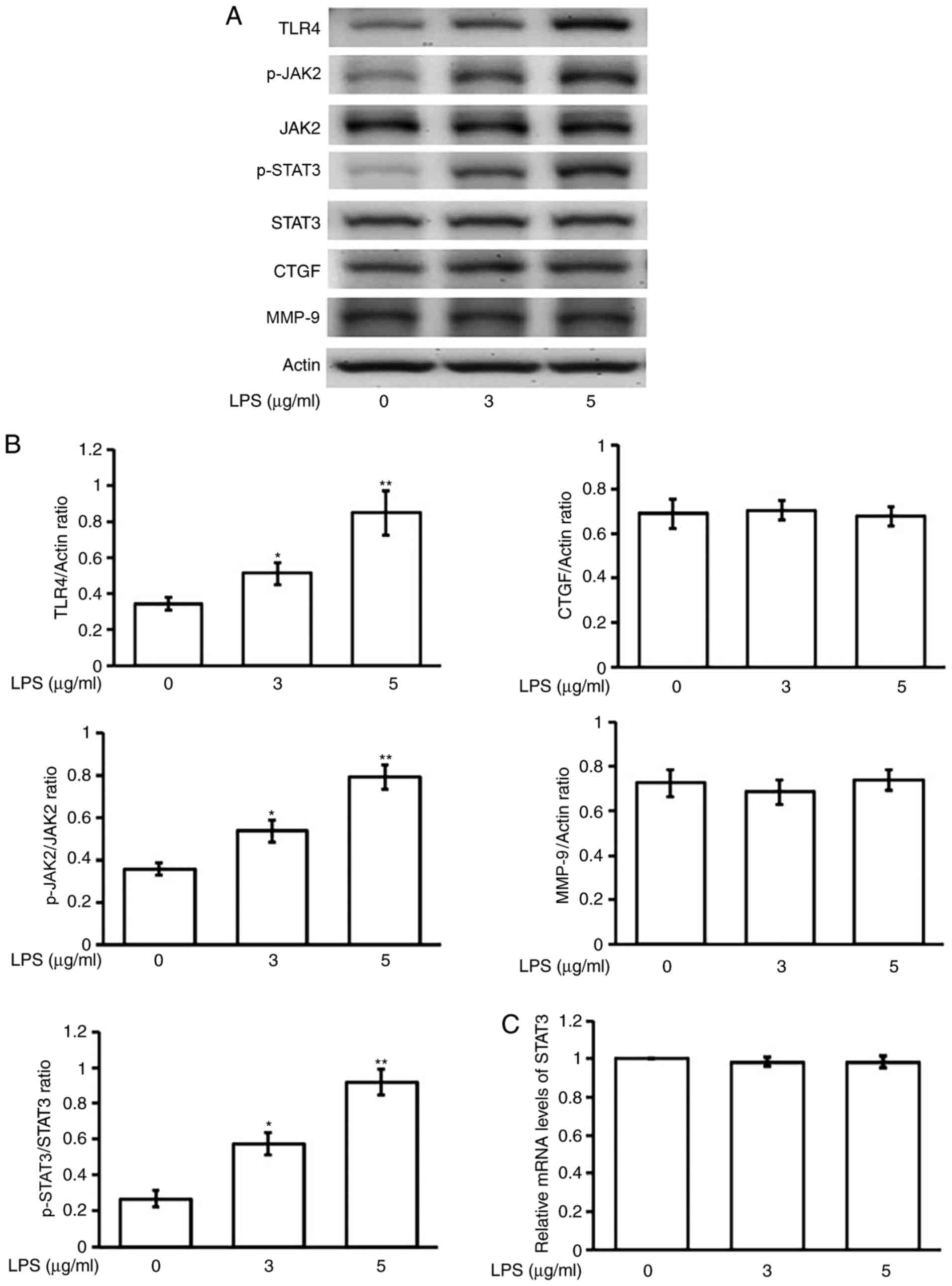
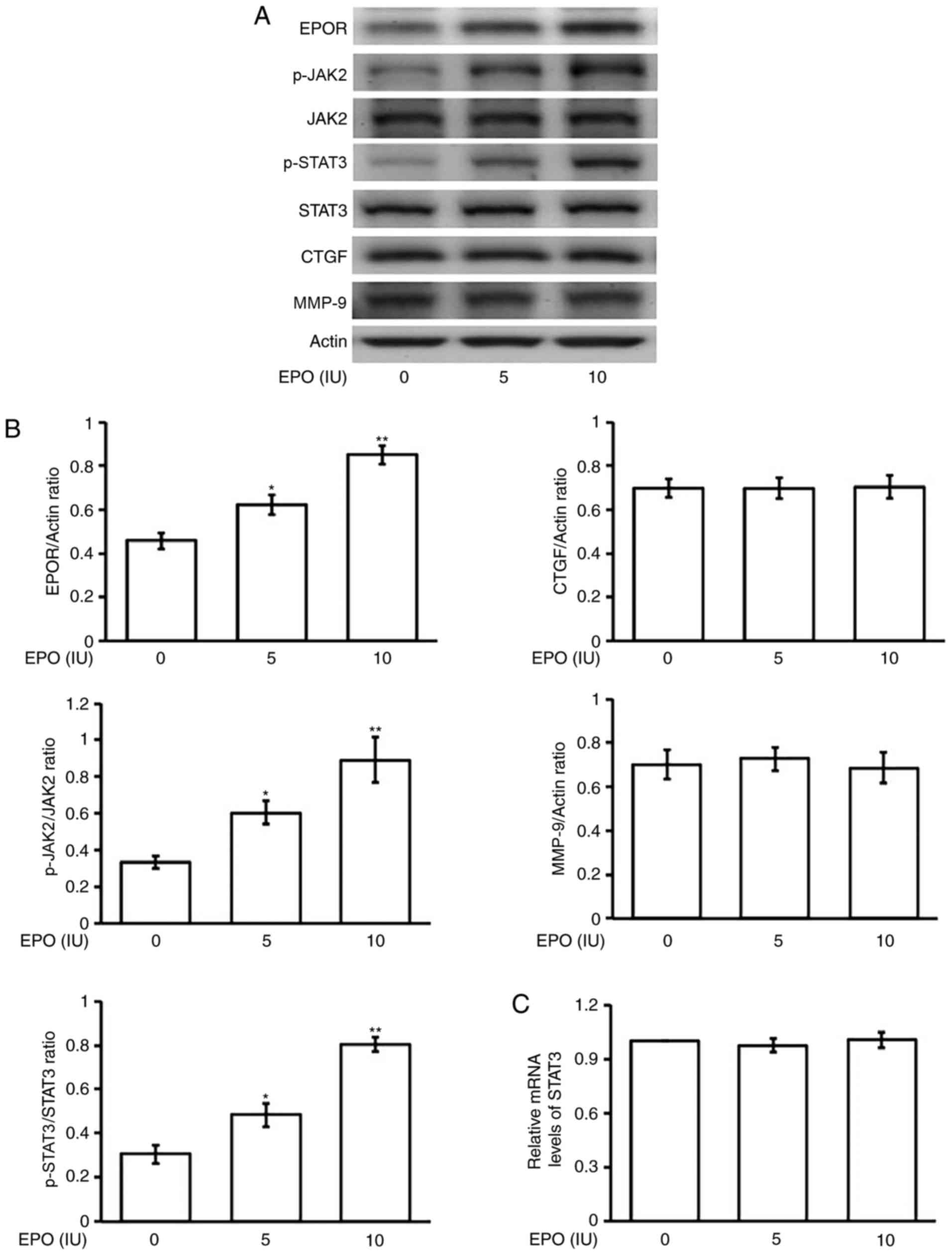
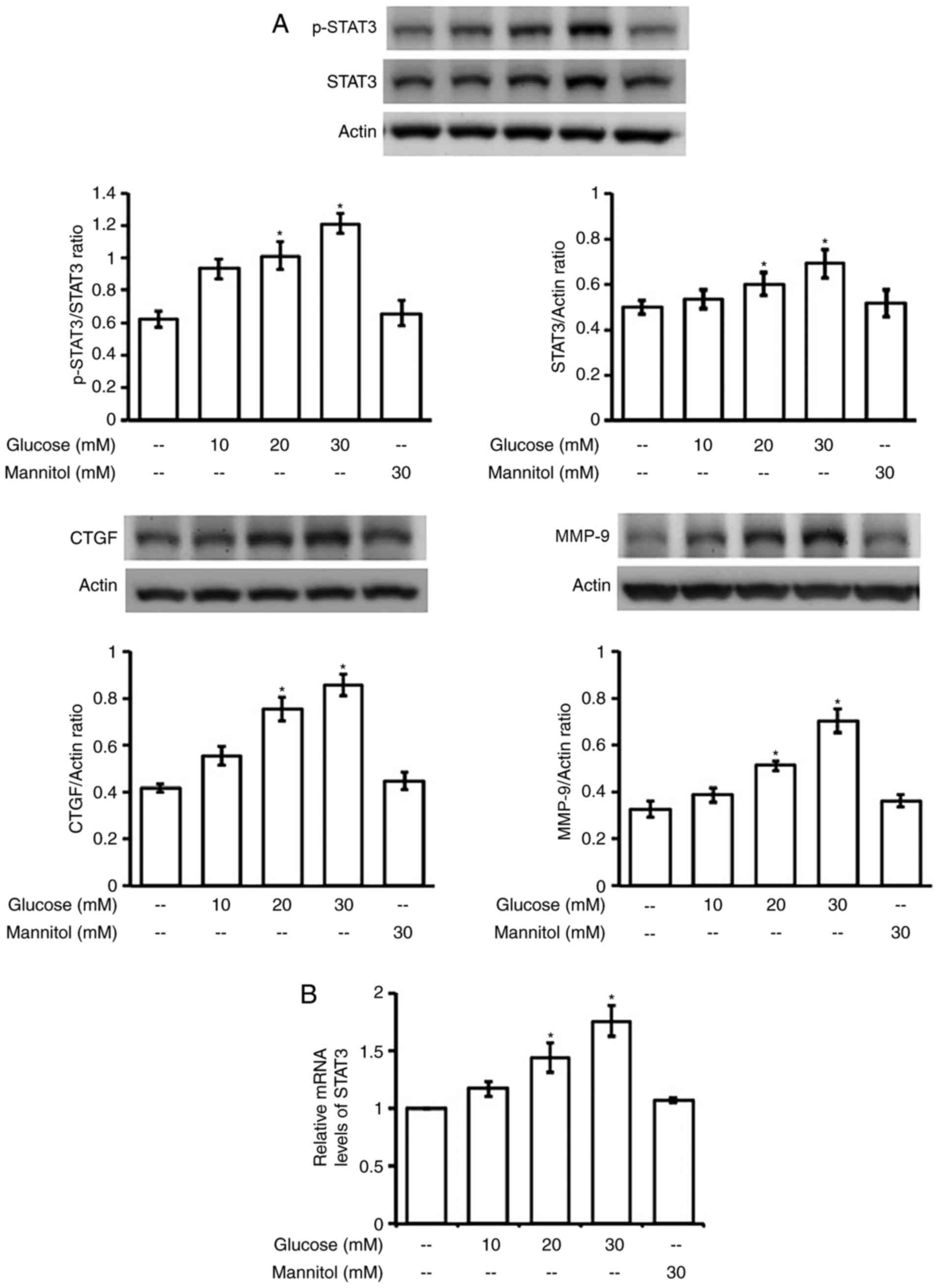
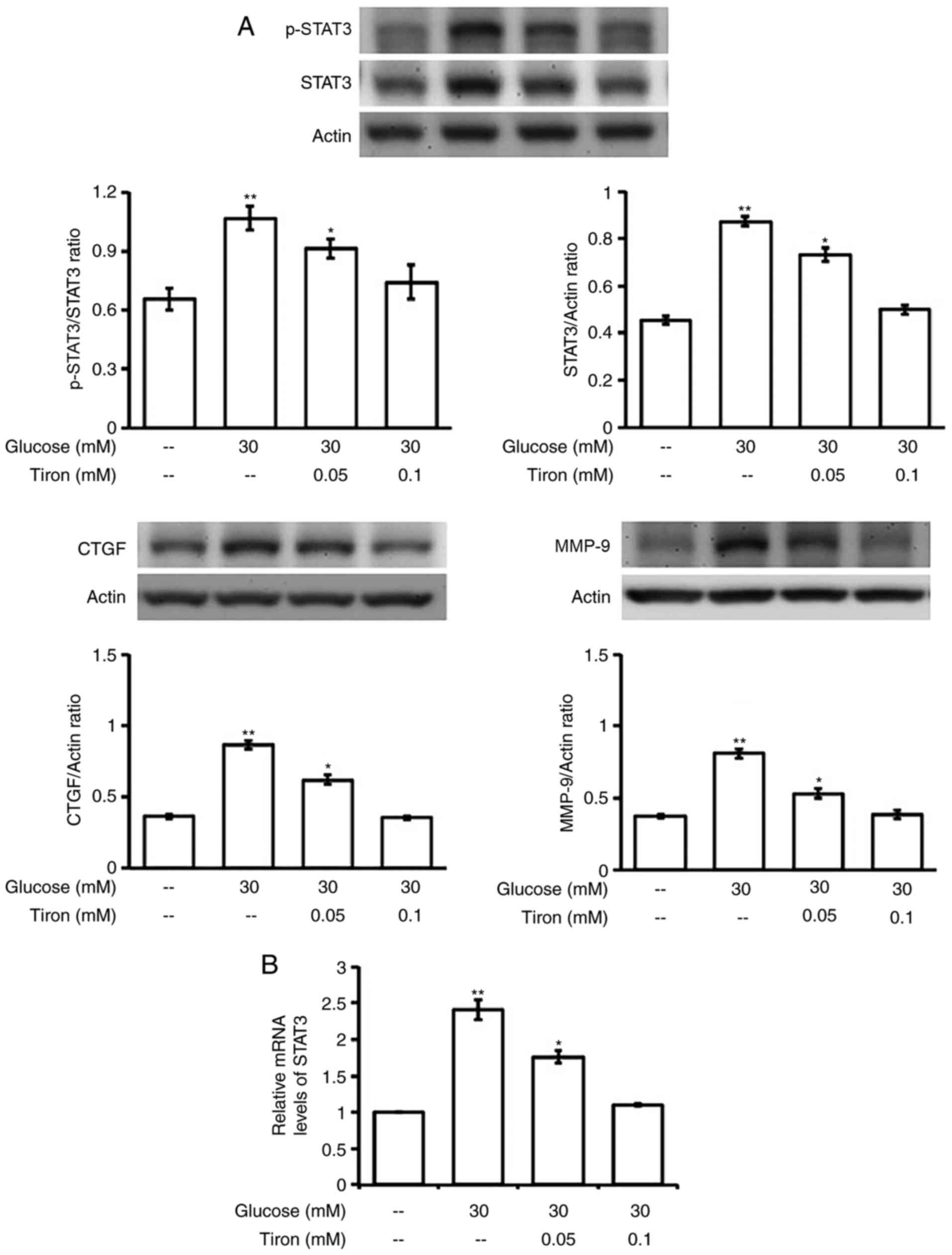
The signal transducer and activator of transcription 3 (STAT3) is known to be involved in hypertrophy and fibrosis in cardiac dysfunction. The activation of STAT3 via the phosphorylation of STAT3 is required for the production of functional activity. It has been established that lipopolysaccharide (LPS)‑induced phosphorylation of STAT3 in cardiomyocytes primarily occurs through a direct receptor‑mediated action. This effect is demonstrated to be produced rapidly. STAT3 in cardiac fibrosis of diabetes is induced by high glucose through promotion of the STAT3‑associated signaling pathway. However, the time schedule for STAT3 activation between LPS and high glucose appears to be different. Therefore, the difference in STAT3 activation between LPS and hyperglycemia in cardiomyocytes requires elucidation. The present study investigated the phosphorylation of STAT3 induced by LPS and hyperglycemia in the rat cardiac cell line H9c2. Additionally, phosphorylation of STAT3 induced by erythropoietin (EPO) via receptor activation was compared. Then, the downstream signals for fibrosis, including the connective tissue growth factor (CTGF) and matrix metalloproteinase (MMP)‑9, were determined using western blotting, while the mRNA levels were quantified. LPS induced a rapid elevation of STAT3 phosphorylation in H9c2 cells within 30 min, similar to that produced by EPO. However, LPS or EPO failed to modify the mRNA level of STAT3, and/or the downstream signals for fibrosis. High glucose increased STAT3 phosphorylation to be stable after a long period of incubation. Glucose incubation for 24 h may augment the STAT3 expression in a dose‑dependent manner. Consequently, fibrosis‑associated signals, including CTGF and MMP‑9 protein, were raised in parallel. In the presence of tiron, an antioxidant, these changes by hyperglycemia were markedly reduced, demonstrating the mediation of oxidative stress. Therefore, LPS‑ or EPO‑induced STAT3 phosphorylation is different compared with that caused by high glucose in H9c2 cells. Sustained activation of STAT3 by hyperglycemia may promote the expression of fibrosis‑associated signals, including CTGF and MMP‑9, in H9c2 cells. Therefore, regarding the cardiac dysfunctions associated with diabetes and/or hyperglycemia, the identification of nuclear STAT3 may be more reliable compared with the assay of phosphorylated STAT3 in cardiac cells.
View Figures

Figure 1

Figure 2

Figure 3

Figure 4

Figure 5

View References

1 

Haghikia A, Ricke-Hoch M, Stapel B, Gorst I and Hilfiker-Kleiner D: STAT3, a key regulator of cell-to-cell communication in the heart. Cardiovasc Res. 102:281–289. 2014. View Article : Google Scholar : PubMed/NCBI

2 

Boengler K, Hilfiker-Kleiner D, Heusch G and Schulz R: Inhibition of permeability transition pore opening by mitochondrial STAT3 and its role in myocardial ischemia/reperfusion. Basic Res Cardiol. 105:771–785. 2010. View Article : Google Scholar : PubMed/NCBI

3 

Elschami M, Scherr M, Philippens B and Gerardy-Schahn R: Reduction of STAT3 expression induces mitochondrial dysfunction and autophagy in cardiac HL-1 cells. Eur J Cell Biol. 92:21–29. 2013. View Article : Google Scholar : PubMed/NCBI

4 

Heusch G, Musiolik J, Gedik N and Skyschally A: Mitochondrial STAT3 activation and cardioprotection by ischemic postconditioning in pigs with regional myocardial ischemia/reperfusion. Circ Res. 109:1302–1308. 2011. View Article : Google Scholar : PubMed/NCBI

5 

Wegrzyn J, Potla R, Chwae YJ, Sepuri NB, Zhang Q, Koeck T, Derecka M, Szczepanek K, Szelag M, Gornicka A, et al: Function of mitochondrial Stat3 in cellular respiration. Science. 323:793–797. 2009. View Article : Google Scholar : PubMed/NCBI

6 

Haghikia A, Stapel B, Hoch M and Hilfiker-Kleiner D: STAT3 and cardiac remodeling. Heart Fail Rev. 16:35–47. 2011. View Article : Google Scholar : PubMed/NCBI

7 

Hilfiker-Kleiner D, Hilfiker A, Fuchs M, Kaminski K, Schaefer A, Schieffer B, Hillmer A, Schmiedl A, Ding Z, Podewski E, et al: Signal transducer and activator of transcription 3 is required for myocardial capillary growth, control of interstitial matrix deposition and heart protection from ischemic injury. Circ Res. 95:187–195. 2004. View Article : Google Scholar : PubMed/NCBI

8 

Zouein FA, Kurdi M and Booz GW: Dancing rhinos in stilettos: The amazing saga of the genomic and nongenomic actions of STAT3 in the heart. JAKSTAT. 2:e243522013.PubMed/NCBI

9 

Wang S, Li B, Li C, Cui W and Miao L: Potential renoprotective agents through inhibiting CTGF/CCN2 in diabetic nephropathy. J Diabetes Res. 2015:9623832015. View Article : Google Scholar : PubMed/NCBI

10 

Miller AM, Wang H, Bertola A, Park O, Horiguchi N, Ki SH, Yin S, Lafdil F and Gao B: Inflammation-associated interleukin-6/signal transducer and activator of transcription 3 activation ameliorates alcoholic and nonalcoholic fatty liver diseases in interleukin-10-deficient mice. Hepatology. 54:846–856. 2011. View Article : Google Scholar : PubMed/NCBI

11 

Jung JE, Lee HG, Cho IH, Chung DH, Yoon SH, Yang YM, Lee JW, Choi S, Park JW, Ye SK and Chung MH: STAT3 is a potential modulator of HIF-1-mediated VEGF expression in human renal carcinoma cells. FASEB J. 19:1296–1298. 2005.PubMed/NCBI

12 

Chen Y, Wang JJ, Li J, Hosoya KI, Ratan R, Townes T and Zhang SX: Activating transcription factor 4 mediates hyperglycaemia-induced endothelial inflammation and retinal vascular leakage through activation of STAT3 in a mouse model of type 1 diabetes. Diabetologia. 55:2533–2545. 2012. View Article : Google Scholar : PubMed/NCBI

13 

Saengboonmee C, Seubwai W, Pairojkul C and Wongkham S: High glucose enhances progression of cholangiocarcinoma cells via STAT3 activation. Sci Rep. 6:189952016. View Article : Google Scholar : PubMed/NCBI

14 

Liu L, McBride KM and Reich NC: STAT3 nuclear import is independent of tyrosine phosphorylation and mediated by importin-alpha3. Proc Natl Acad Sci USA. 102:8150–8155. 2005. View Article : Google Scholar : PubMed/NCBI

15 

Yang J, Chatterjee-Kishore M, Staugaitis SM, Nguyen H, Schlessinger K, Levy DE and Stark GR: Novel roles of unphosphorylated STAT3 in oncogenesis and transcriptional regulation. Cancer Res. 65:939–947. 2005.PubMed/NCBI

16 

Meldrum DR: Tumor necrosis factor in the heart. Am J Physiol. 274:R577–R595. 1998.PubMed/NCBI

17 

Wagner DR, McTiernan C, Sanders VJ and Feldman AM: Adenosine inhibits lipopolysaccharide-induced secretion of tumor necrosis factor-alpha in the failing human heart. Circulation. 97:521–524. 1998. View Article : Google Scholar : PubMed/NCBI

18 

Cowan DB, Poutias DN, Del Nido PJ and McGowan FX Jr: CD14-independent activation of cardiomyocyte signal transduction by bacterial endotoxin. Am J Physiol Heart Circ Physiol. 279:H619–H629. 2000.PubMed/NCBI

19 

Darnell JE Jr: STATs and gene regulation. Science. 277:1630–1635. 1997. View Article : Google Scholar : PubMed/NCBI

20 

Ruff-Jamison S, Zhong Z, Wen Z, Chen K, Darnell JE Jr and Cohen S: Epidermal growth factor and lipopolysaccharide activate Stat3 transcription factor in mouse liver. J Biol Chem. 269:21933–21935. 1994.PubMed/NCBI

21 

Chow JC, Young DW, Golenbock DT, Christ WJ and Gusovsky F: Toll-like receptor-4 mediates lipopolysaccharide-induced signal transduction. J Biol Chem. 274:10689–10692. 1999. View Article : Google Scholar : PubMed/NCBI

22 

Avlas O, Fallach R, Shainberg A, Porat E and Hochhauser E: Toll-like receptor 4 stimulation initiates an inflammatory response that decreases cardiomyocyte contractility. Antioxid Redox Signal. 15:1895–1909. 2011. View Article : Google Scholar : PubMed/NCBI

23 

Seavey MM and Dobrzanski P: The many faces of Janus kinase. Biochem Pharmacol. 83:1136–1145. 2012. View Article : Google Scholar : PubMed/NCBI

24 

Xiao L, Li Z, Xu P, Li Z, Xu J and Yang Z: The expression of EPOR in renal cortex during postnatal development. PloS one. 7:e419932012. View Article : Google Scholar : PubMed/NCBI

25 

Yu X, Shacka JJ, Eells JB, Suarez-Quian C, Przygodzki RM, Beleslin-Cokic B, Lin CS, Nikodem VM, Hempstead B, Flanders KC, et al: Erythropoietin receptor signalling is required for normal brain development. Development. 129:505–516. 2002.PubMed/NCBI

26 

Qiao S, Mao X, Wang Y, Lei S, Liu Y, Wang T, Wong GT, Cheung CW, Xia Z, Irwin MG, et al: Remifentanil preconditioning reduces postischemic myocardial infarction and improves left ventricular performance via activation of the janus activated kinase-2/signal transducers and activators of transcription-3 signal pathway and subsequent inhibition of glycogen synthase kinase-3beta in rats. Crit Care Med. 44:e131–e145. 2016. View Article : Google Scholar : PubMed/NCBI

27 

Fenton MJ and Golenbock DT: LPS-binding proteins and receptors. J Leukoc Biol. 64:25–32. 1998.PubMed/NCBI

28 

Dai B, Cui M, Zhu M, Su WL, Qiu MC and Zhang H: STAT1/3 and ERK1/2 synergistically regulate cardiac fibrosis induced by high glucose. J Leukoc Biol. 32:960–971. 2013.

29 

Fiaschi T, Magherini F, Gamberi T, Lucchese G, Faggian G, Modesti A and Modesti PA: Hyperglycemia and angiotensin II cooperate to enhance collagen I deposition by cardiac fibroblasts through a ROS-STAT3-dependent mechanism. Biochim Biophys Acta. 1843:2603–2610. 2014. View Article : Google Scholar : PubMed/NCBI

30 

Wu L, Tan JL, Wang ZH, Chen YX, Gao L, Liu JL, Shi YH, Endoh M and Yang HT: ROS generated during early reperfusion contribute to intermittent hypobaric hypoxia-afforded cardioprotection against postischemia-induced Ca(2+) overload and contractile dysfunction via the JAK2/STAT3 pathway. J Mol Cell Cardiol. 81:150–161. 2015. View Article : Google Scholar : PubMed/NCBI

31 

Watkins SJ, Borthwick GM and Arthur HM: The H9C2 cell line and primary neonatal cardiomyocyte cells show similar hypertrophic responses in vitro. In Vitro Cell Dev Biol Anim. 47:125–131. 2011. View Article : Google Scholar : PubMed/NCBI

32 

Fan MJ, Huang-Liu R, Shen CY, Ju DT, Lin YM, Pai P, Huang PY, Ho TJ, Tsai FJ, Tsai CH and Huang CY: Reduction of TLR4 mRNA stability and protein expressions through inhibiting cytoplasmic translocation of HuR transcription factor by E2 and/or ERα in LPS-treated H9c2 cardiomyoblast cells. Chin J Physiol. 57:8–18. 2014. View Article : Google Scholar : PubMed/NCBI

33 

Parvin A, Pranap R, Shalini U, Devendran A, Baker JE and Dhanasekaran A: Erythropoietin protects cardiomyocytes from cell death during hypoxia/reperfusion injury through activation of survival signaling pathways. PLoS One. 9:e1074532014. View Article : Google Scholar : PubMed/NCBI

34 

Yang L, Luo C, Chen C, Wang X, Shi W and Liu J: All-trans retinoic acid protects against doxorubicin-induced cardiotoxicity by activating the ERK2 signalling pathway. Br J Pharmacol. 173:357–371. 2016. View Article : Google Scholar : PubMed/NCBI

35 

Mar GY, Ku PM, Chen LJ, Cheng KC, Li YX and Cheng JT: Increase in cardiac M2-muscarinic receptor expression is regulated by GATA binding protein 4 (GATA-4) in streptozotocin-induced diabetic rats. Int J Cardiol. 167:436–441. 2013. View Article : Google Scholar : PubMed/NCBI

36 

Cheng YZ, Chen LJ, Lee WJ, Chen MF, Jung Lin H and Cheng JT: Increase of myocardial performance by rhodiola-ethanol extract in diabetic rats. J Ethnopharmacol. 144:234–239. 2012. View Article : Google Scholar : PubMed/NCBI

37 

Cheng JT, Yu BC and Tong YC: Changes of M3-muscarinic receptor protein and mRNA expressions in the bladder urothelium and muscle layer of streptozotocin-induced diabetic rats. Neurosci Lett. 423:1–5. 2007. View Article : Google Scholar : PubMed/NCBI

38 

Carraway MS, Suliman HB, Jones WS, Chen CW, Babiker A and Piantadosi CA: Erythropoietin activates mitochondrial biogenesis and couples red cell mass to mitochondrial mass in the heart. Circ Res. 106:1722–1730. 2010. View Article : Google Scholar : PubMed/NCBI

39 

Mudalagiri NR, Mocanu MM, Di Salvo C, Kolvekar S, Hayward M, Yap J, Keogh B and Yellon DM: Erythropoietin protects the human myocardium against hypoxia/reoxygenation injury via phosphatidylinositol-3 kinase and ERK1/2 activation. Br J Pharmacol. 153:50–56. 2008. View Article : Google Scholar : PubMed/NCBI

40 

Cimolai MC, Alvarez S, Bode C and Bugger H: Mitochondrial mechanisms in septic cardiomyopathy. Int J Mol Sci. 16:17763–17778. 2015. View Article : Google Scholar : PubMed/NCBI

41 

Desco MC, Asensi M, Márquez R, Martínez-Valls J, Vento M, Pallardó FV, Sastre J and Viña J: Xanthine oxidase is involved in free radical production in type 1 diabetes: Protection by allopurinol. Diabetes. 51:1118–1124. 2002. View Article : Google Scholar : PubMed/NCBI

42 

MacKichan ML and DeFranco AL: Role of ceramide in lipopolysaccharide (LPS)-induced signaling. LPS increases ceramide rather than acting as a structural homolog. J Biol Chem. 274:1767–1775. 1999. View Article : Google Scholar : PubMed/NCBI

43 

Meng X, Ao L, Brown JM, Meldrum DR, Sheridan BC, Cain BS, Banerjee A and Harken AH: LPS induces late cardiac functional protection against ischemia independent of cardiac and circulating TNF-alpha. Am J Physiol. 273:H1894–H1902. 1997.PubMed/NCBI

44 

Li L, Takemura G, Li Y, Miyata S, Esaki M, Okada H, Kanamori H, Khai NC, Maruyama R, Ogino A, et al: Preventive effect of erythropoietin on cardiac dysfunction in doxorubicin-induced cardiomyopathy. Circulation. 113:535–543. 2006. View Article : Google Scholar : PubMed/NCBI

45 

Lipsic E, Westenbrink BD, van der Meer P, van der Harst P, Voors AA, van Veldhuisen DJ, Schoemaker RG and van Gilst WH: Low-dose erythropoietin improves cardiac function in experimental heart failure without increasing haematocrit. Eur J Heart Fail. 10:22–29. 2008. View Article : Google Scholar : PubMed/NCBI

46 

Shravah J, Wang B, Pavlovic M, Kumar U, Chen DD, Luo H and Ansley DM: Propofol mediates signal transducer and activator of transcription 3 activation and crosstalk with phosphoinositide 3-kinase/AKT. JAKSTAT. 3:e295542014.PubMed/NCBI

47 

Gross ER, Hsu AK and Gross GJ: The JAK/STAT pathway is essential for opioid-induced cardioprotection: JAK2 as a mediator of STAT3, Akt and GSK-3 beta. Am J Physiol Heart Circ Physiol. 291:H827–H834. 2006. View Article : Google Scholar : PubMed/NCBI

48 

Yu H, Lee H, Herrmann A, Buettner R and Jove R: Revisiting STAT3 signalling in cancer: New and unexpected biological functions. Nat Rev Cancer. 14:736–746. 2014. View Article : Google Scholar : PubMed/NCBI

49 

Gu JJ, Montealegre ZF, Robert D, Engel MS, Qiao GX and Ren D: Wing stridulation in a Jurassic katydid (Insecta, Orthoptera) produced low-pitched musical calls to attract females. Proc Natl Acad Sci USA. 109:3868–3873. 2012. View Article : Google Scholar : PubMed/NCBI

50 

Asbun J, Manso AM and Villarreal FJ: Profibrotic influence of high glucose concentration on cardiac fibroblast functions: Effects of losartan and vitamin E. Am J Physiol Heart Circ Physiol. 288:H227–H234. 2005. View Article : Google Scholar : PubMed/NCBI

51 

Suskin N, McKelvie RS, Burns RJ, Latini R, Pericak D, Probstfield J, Rouleau JL, Sigouin C, Solymoss CB, Tsuyuki R, et al: Glucose and insulin abnormalities relate to functional capacity in patients with congestive heart failure. Eur Heart J. 21:1368–1375. 2000. View Article : Google Scholar : PubMed/NCBI

52 

Ather S, Chan W, Bozkurt B, Aguilar D, Ramasubbu K, Zachariah AA, Wehrens XH and Deswal A: Impact of noncardiac comorbidities on morbidity and mortality in a predominantly male population with heart failure and preserved versus reduced ejection fraction. J Am Coll Cardiol. 59:998–1005. 2012. View Article : Google Scholar : PubMed/NCBI

53 

Paulus WJ and Tschöpe C: A novel paradigm for heart failure with preserved ejection fraction: Comorbidities drive myocardial dysfunction and remodeling through coronary microvascular endothelial inflammation. J Am Coll Cardiol. 62:263–271. 2013. View Article : Google Scholar : PubMed/NCBI

54 

Ma H, Gong H, Chen Z, Liang Y, Yuan J, Zhang G, Wu J, Ye Y, Yang C, Nakai A, et al: Association of Stat3 with HSF1 plays a critical role in G-CSF-induced cardio-protection against ischemia/reperfusion injury. J Mol Cell Cardiol. 52:1282–1290. 2012. View Article : Google Scholar : PubMed/NCBI

55 

Butler KL, Huffman LC, Koch SE, Hahn HS and Gwathmey JK: STAT-3 activation is necessary for ischemic preconditioning in hypertrophied myocardium. Am J Physiol Heart Circ Physiol. 291:H797–H803. 2006. View Article : Google Scholar : PubMed/NCBI

56 

Roul D and Recchia FA: Metabolic alterations induce oxidative stress in diabetic and failing hearts: Different pathways, same outcome. Antioxid Redox Signal. 22:1502–1514. 2015. View Article : Google Scholar : PubMed/NCBI

57 

Varga ZV, Giricz Z, Liaudet L, Hasko G, Ferdinandy P and Pacher P: Interplay of oxidative, nitrosative/nitrative stress, inflammation, cell death and autophagy in diabetic cardiomyopathy. Biochim Biophys Acta. 1852:232–242. 2015. View Article : Google Scholar : PubMed/NCBI

58 

Monticone M, Taherian R, Stigliani S, Carra E, Monteghirfo S, Longo L, Daga A, Dono M, Zupo S, Giaretti W and Castagnola P: NAC, tiron and trolox impair survival of cell cultures containing glioblastoma tumorigenic initiating cells by inhibition of cell cycle progression. PLoS One. 9:e900852014. View Article : Google Scholar : PubMed/NCBI

Related Articles

  • Abstract
  • View
  • Download
  • Twitter
Copy and paste a formatted citation
Spandidos Publications style
Chiu YH, Ku PM, Cheng YZ, Li Y, Cheng JT and Niu HS: Phosphorylation of signal transducer and activator of transcription 3 induced by hyperglycemia is different with that induced by lipopolysaccharide or erythropoietin via receptor‑coupled signaling in cardiac cells. Mol Med Rep 17: 1311-1320, 2018.
APA
Chiu, Y., Ku, P., Cheng, Y., Li, Y., Cheng, J., & Niu, H. (2018). Phosphorylation of signal transducer and activator of transcription 3 induced by hyperglycemia is different with that induced by lipopolysaccharide or erythropoietin via receptor‑coupled signaling in cardiac cells. Molecular Medicine Reports, 17, 1311-1320. https://doi.org/10.3892/mmr.2017.7973
MLA
Chiu, Y., Ku, P., Cheng, Y., Li, Y., Cheng, J., Niu, H."Phosphorylation of signal transducer and activator of transcription 3 induced by hyperglycemia is different with that induced by lipopolysaccharide or erythropoietin via receptor‑coupled signaling in cardiac cells". Molecular Medicine Reports 17.1 (2018): 1311-1320.
Chicago
Chiu, Y., Ku, P., Cheng, Y., Li, Y., Cheng, J., Niu, H."Phosphorylation of signal transducer and activator of transcription 3 induced by hyperglycemia is different with that induced by lipopolysaccharide or erythropoietin via receptor‑coupled signaling in cardiac cells". Molecular Medicine Reports 17, no. 1 (2018): 1311-1320. https://doi.org/10.3892/mmr.2017.7973
Copy and paste a formatted citation
x
Spandidos Publications style
Chiu YH, Ku PM, Cheng YZ, Li Y, Cheng JT and Niu HS: Phosphorylation of signal transducer and activator of transcription 3 induced by hyperglycemia is different with that induced by lipopolysaccharide or erythropoietin via receptor‑coupled signaling in cardiac cells. Mol Med Rep 17: 1311-1320, 2018.
APA
Chiu, Y., Ku, P., Cheng, Y., Li, Y., Cheng, J., & Niu, H. (2018). Phosphorylation of signal transducer and activator of transcription 3 induced by hyperglycemia is different with that induced by lipopolysaccharide or erythropoietin via receptor‑coupled signaling in cardiac cells. Molecular Medicine Reports, 17, 1311-1320. https://doi.org/10.3892/mmr.2017.7973
MLA
Chiu, Y., Ku, P., Cheng, Y., Li, Y., Cheng, J., Niu, H."Phosphorylation of signal transducer and activator of transcription 3 induced by hyperglycemia is different with that induced by lipopolysaccharide or erythropoietin via receptor‑coupled signaling in cardiac cells". Molecular Medicine Reports 17.1 (2018): 1311-1320.
Chicago
Chiu, Y., Ku, P., Cheng, Y., Li, Y., Cheng, J., Niu, H."Phosphorylation of signal transducer and activator of transcription 3 induced by hyperglycemia is different with that induced by lipopolysaccharide or erythropoietin via receptor‑coupled signaling in cardiac cells". Molecular Medicine Reports 17, no. 1 (2018): 1311-1320. https://doi.org/10.3892/mmr.2017.7973
Follow us
  • Twitter
  • LinkedIn
  • Facebook
About
  • Spandidos Publications
  • Careers
  • Cookie Policy
  • Privacy Policy
How can we help?
  • Help
  • Live Chat
  • Contact
  • Email to our Support Team