Spandidos Publications Logo
  • About
    • About Spandidos
    • Aims and Scopes
    • Abstracting and Indexing
    • Editorial Policies
    • Reprints and Permissions
    • Job Opportunities
    • Terms and Conditions
    • Contact
  • Journals
    • All Journals
    • Oncology Letters
      • Oncology Letters
      • Information for Authors
      • Editorial Policies
      • Editorial Board
      • Aims and Scope
      • Abstracting and Indexing
      • Bibliographic Information
      • Archive
    • International Journal of Oncology
      • International Journal of Oncology
      • Information for Authors
      • Editorial Policies
      • Editorial Board
      • Aims and Scope
      • Abstracting and Indexing
      • Bibliographic Information
      • Archive
    • Molecular and Clinical Oncology
      • Molecular and Clinical Oncology
      • Information for Authors
      • Editorial Policies
      • Editorial Board
      • Aims and Scope
      • Abstracting and Indexing
      • Bibliographic Information
      • Archive
    • Experimental and Therapeutic Medicine
      • Experimental and Therapeutic Medicine
      • Information for Authors
      • Editorial Policies
      • Editorial Board
      • Aims and Scope
      • Abstracting and Indexing
      • Bibliographic Information
      • Archive
    • International Journal of Molecular Medicine
      • International Journal of Molecular Medicine
      • Information for Authors
      • Editorial Policies
      • Editorial Board
      • Aims and Scope
      • Abstracting and Indexing
      • Bibliographic Information
      • Archive
    • Biomedical Reports
      • Biomedical Reports
      • Information for Authors
      • Editorial Policies
      • Editorial Board
      • Aims and Scope
      • Abstracting and Indexing
      • Bibliographic Information
      • Archive
    • Oncology Reports
      • Oncology Reports
      • Information for Authors
      • Editorial Policies
      • Editorial Board
      • Aims and Scope
      • Abstracting and Indexing
      • Bibliographic Information
      • Archive
    • Molecular Medicine Reports
      • Molecular Medicine Reports
      • Information for Authors
      • Editorial Policies
      • Editorial Board
      • Aims and Scope
      • Abstracting and Indexing
      • Bibliographic Information
      • Archive
    • World Academy of Sciences Journal
      • World Academy of Sciences Journal
      • Information for Authors
      • Editorial Policies
      • Editorial Board
      • Aims and Scope
      • Abstracting and Indexing
      • Bibliographic Information
      • Archive
    • International Journal of Functional Nutrition
      • International Journal of Functional Nutrition
      • Information for Authors
      • Editorial Policies
      • Editorial Board
      • Aims and Scope
      • Abstracting and Indexing
      • Bibliographic Information
      • Archive
    • International Journal of Epigenetics
      • International Journal of Epigenetics
      • Information for Authors
      • Editorial Policies
      • Editorial Board
      • Aims and Scope
      • Abstracting and Indexing
      • Bibliographic Information
      • Archive
    • Medicine International
      • Medicine International
      • Information for Authors
      • Editorial Policies
      • Editorial Board
      • Aims and Scope
      • Abstracting and Indexing
      • Bibliographic Information
      • Archive
  • Articles
  • Information
    • Information for Authors
    • Information for Reviewers
    • Information for Librarians
    • Information for Advertisers
    • Conferences
  • Language Editing
Spandidos Publications Logo
  • About
    • About Spandidos
    • Aims and Scopes
    • Abstracting and Indexing
    • Editorial Policies
    • Reprints and Permissions
    • Job Opportunities
    • Terms and Conditions
    • Contact
  • Journals
    • All Journals
    • Biomedical Reports
      • Information for Authors
      • Editorial Policies
      • Editorial Board
      • Aims and Scope
      • Abstracting and Indexing
      • Bibliographic Information
      • Archive
    • Experimental and Therapeutic Medicine
      • Information for Authors
      • Editorial Policies
      • Editorial Board
      • Aims and Scope
      • Abstracting and Indexing
      • Bibliographic Information
      • Archive
    • International Journal of Epigenetics
      • Information for Authors
      • Editorial Policies
      • Editorial Board
      • Aims and Scope
      • Abstracting and Indexing
      • Bibliographic Information
      • Archive
    • International Journal of Functional Nutrition
      • Information for Authors
      • Editorial Policies
      • Editorial Board
      • Aims and Scope
      • Abstracting and Indexing
      • Bibliographic Information
      • Archive
    • International Journal of Molecular Medicine
      • Information for Authors
      • Editorial Policies
      • Editorial Board
      • Aims and Scope
      • Abstracting and Indexing
      • Bibliographic Information
      • Archive
    • International Journal of Oncology
      • Information for Authors
      • Editorial Policies
      • Editorial Board
      • Aims and Scope
      • Abstracting and Indexing
      • Bibliographic Information
      • Archive
    • Medicine International
      • Information for Authors
      • Editorial Policies
      • Editorial Board
      • Aims and Scope
      • Abstracting and Indexing
      • Bibliographic Information
      • Archive
    • Molecular and Clinical Oncology
      • Information for Authors
      • Editorial Policies
      • Editorial Board
      • Aims and Scope
      • Abstracting and Indexing
      • Bibliographic Information
      • Archive
    • Molecular Medicine Reports
      • Information for Authors
      • Editorial Policies
      • Editorial Board
      • Aims and Scope
      • Abstracting and Indexing
      • Bibliographic Information
      • Archive
    • Oncology Letters
      • Information for Authors
      • Editorial Policies
      • Editorial Board
      • Aims and Scope
      • Abstracting and Indexing
      • Bibliographic Information
      • Archive
    • Oncology Reports
      • Information for Authors
      • Editorial Policies
      • Editorial Board
      • Aims and Scope
      • Abstracting and Indexing
      • Bibliographic Information
      • Archive
    • World Academy of Sciences Journal
      • Information for Authors
      • Editorial Policies
      • Editorial Board
      • Aims and Scope
      • Abstracting and Indexing
      • Bibliographic Information
      • Archive
  • Articles
  • Information
    • For Authors
    • For Reviewers
    • For Librarians
    • For Advertisers
    • Conferences
  • Language Editing
Login Register Submit
  • This site uses cookies
  • You can change your cookie settings at any time by following the instructions in our Cookie Policy. To find out more, you may read our Privacy Policy.

    I agree
Search articles by DOI, keyword, author or affiliation
Search
Advanced Search
presentation
Molecular Medicine Reports
Join Editorial Board Propose a Special Issue
Print ISSN: 1791-2997 Online ISSN: 1791-3004
Journal Cover
January-2018 Volume 17 Issue 1

Full Size Image

Sign up for eToc alerts
Recommend to Library

Journals

International Journal of Molecular Medicine

International Journal of Molecular Medicine

International Journal of Molecular Medicine is an international journal devoted to molecular mechanisms of human disease.

International Journal of Oncology

International Journal of Oncology

International Journal of Oncology is an international journal devoted to oncology research and cancer treatment.

Molecular Medicine Reports

Molecular Medicine Reports

Covers molecular medicine topics such as pharmacology, pathology, genetics, neuroscience, infectious diseases, molecular cardiology, and molecular surgery.

Oncology Reports

Oncology Reports

Oncology Reports is an international journal devoted to fundamental and applied research in Oncology.

Experimental and Therapeutic Medicine

Experimental and Therapeutic Medicine

Experimental and Therapeutic Medicine is an international journal devoted to laboratory and clinical medicine.

Oncology Letters

Oncology Letters

Oncology Letters is an international journal devoted to Experimental and Clinical Oncology.

Biomedical Reports

Biomedical Reports

Explores a wide range of biological and medical fields, including pharmacology, genetics, microbiology, neuroscience, and molecular cardiology.

Molecular and Clinical Oncology

Molecular and Clinical Oncology

International journal addressing all aspects of oncology research, from tumorigenesis and oncogenes to chemotherapy and metastasis.

World Academy of Sciences Journal

World Academy of Sciences Journal

Multidisciplinary open-access journal spanning biochemistry, genetics, neuroscience, environmental health, and synthetic biology.

International Journal of Functional Nutrition

International Journal of Functional Nutrition

Open-access journal combining biochemistry, pharmacology, immunology, and genetics to advance health through functional nutrition.

International Journal of Epigenetics

International Journal of Epigenetics

Publishes open-access research on using epigenetics to advance understanding and treatment of human disease.

Medicine International

Medicine International

An International Open Access Journal Devoted to General Medicine.

Journal Cover
January-2018 Volume 17 Issue 1

Full Size Image

Sign up for eToc alerts
Recommend to Library

  • Article
  • Citations
    • Cite This Article
    • Download Citation
    • Create Citation Alert
    • Remove Citation Alert
    • Cited By
  • Similar Articles
    • Related Articles (in Spandidos Publications)
    • Similar Articles (Google Scholar)
    • Similar Articles (PubMed)
  • Download PDF
  • Download XML
  • View XML
Article

Preconditioning with carbon monoxide inhalation promotes retinal ganglion cell survival against optic nerve crush via inhibition of the apoptotic pathway

  • Authors:
    • Ruobing Wang
    • Zeli Chen
    • Jiangchun Wu
    • Fangzhou Xia
    • Qinglei Sun
    • Aijun Sun
    • Lin Liu
  • View Affiliations / Copyright

    Affiliations: Department of Ophthalmology, Renji Hospital, School of Medicine, Shanghai Jiao Tong University, Shanghai 200127, P.R. China, Department of Ophthalmology, Daping Hospital and Research Institute of Surgery, Third Military Medical University, Chongqing 400042, P.R. China, Department of Anatomy, Second Military Medical University, Shanghai 200433, P.R. China
  • Pages: 1297-1304
    |
    Published online on: November 6, 2017
       https://doi.org/10.3892/mmr.2017.7990
  • Expand metrics +
Metrics: Total Views: 0 (Spandidos Publications: | PMC Statistics: )
Metrics: Total PDF Downloads: 0 (Spandidos Publications: | PMC Statistics: )
Cited By (CrossRef): 0 citations Loading Articles...

This article is mentioned in:


Abstract

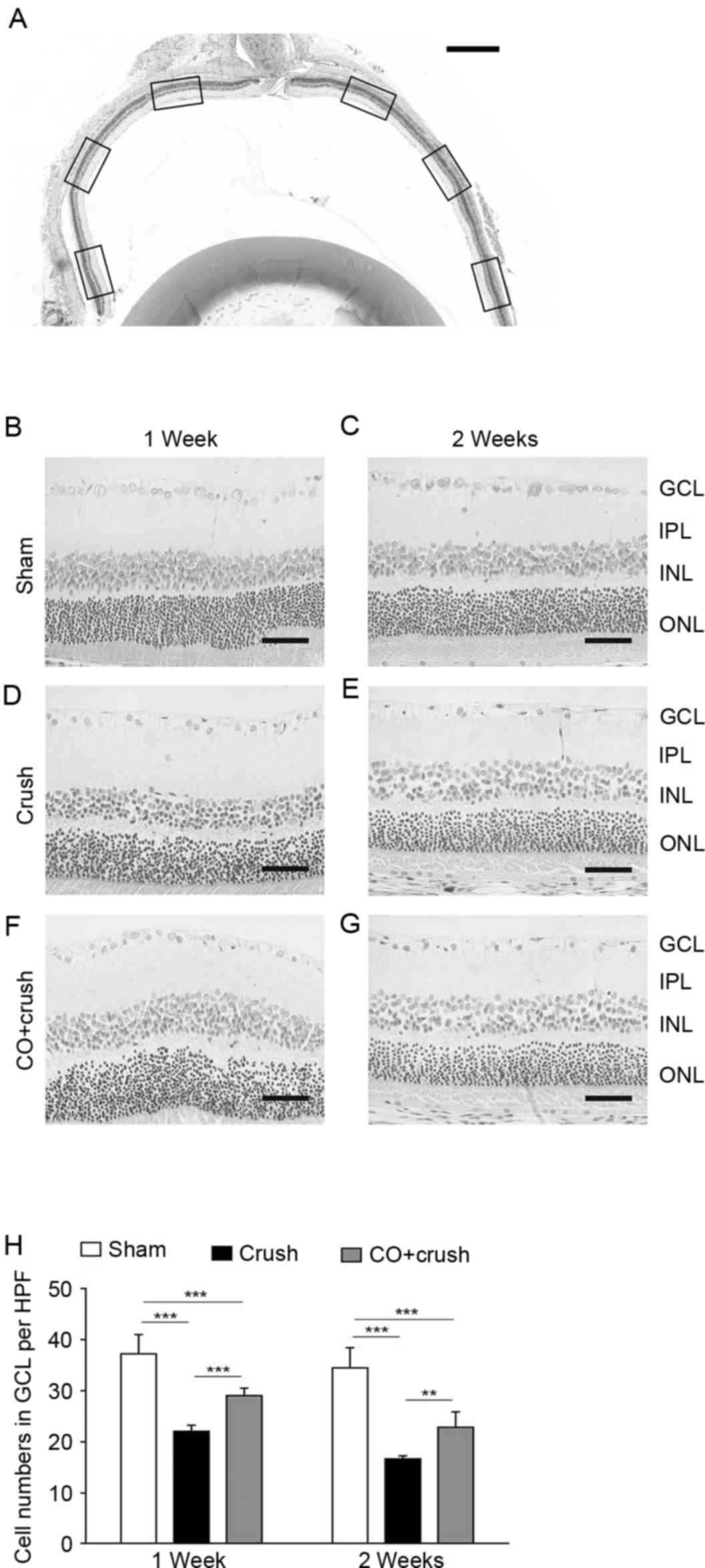
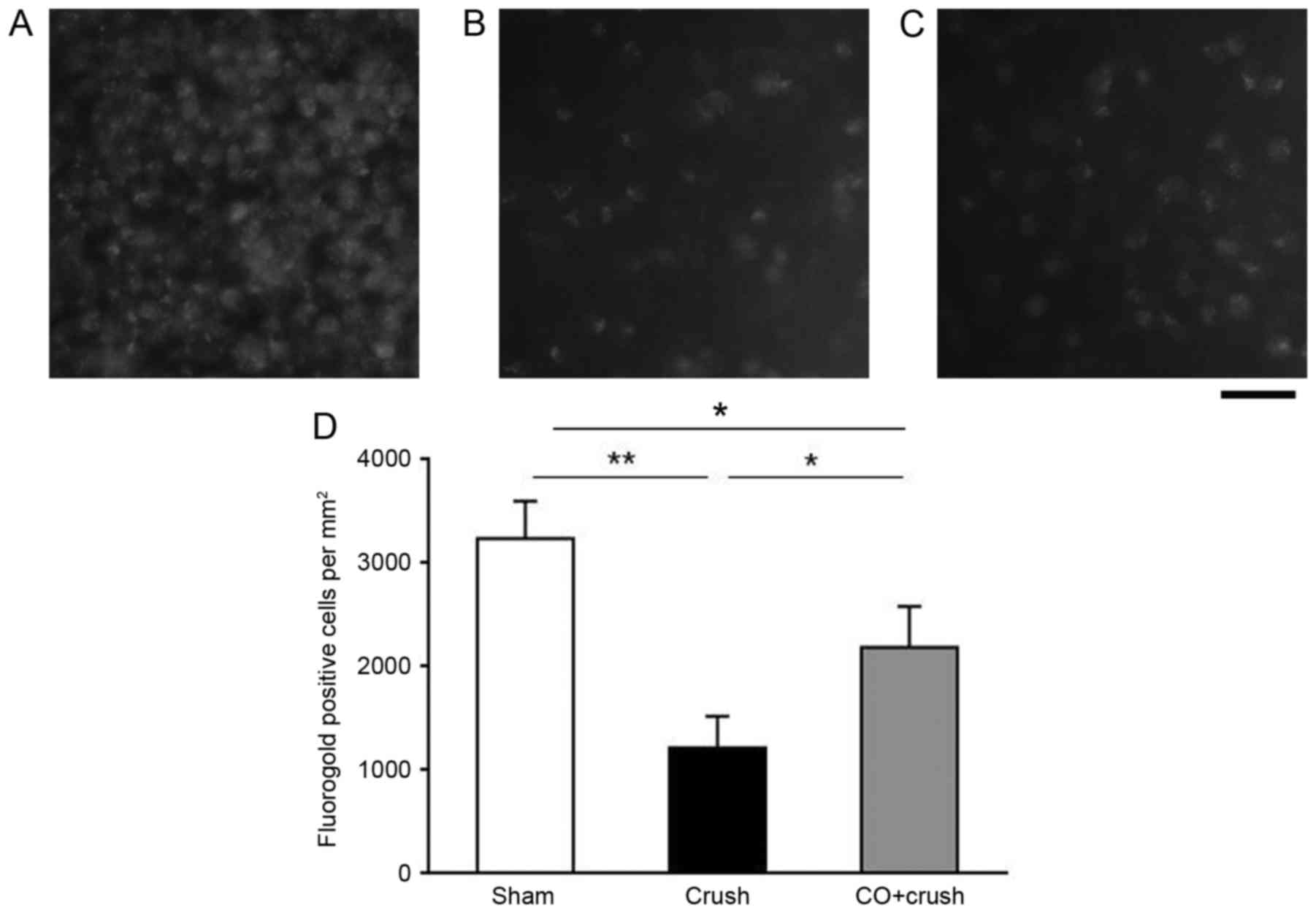
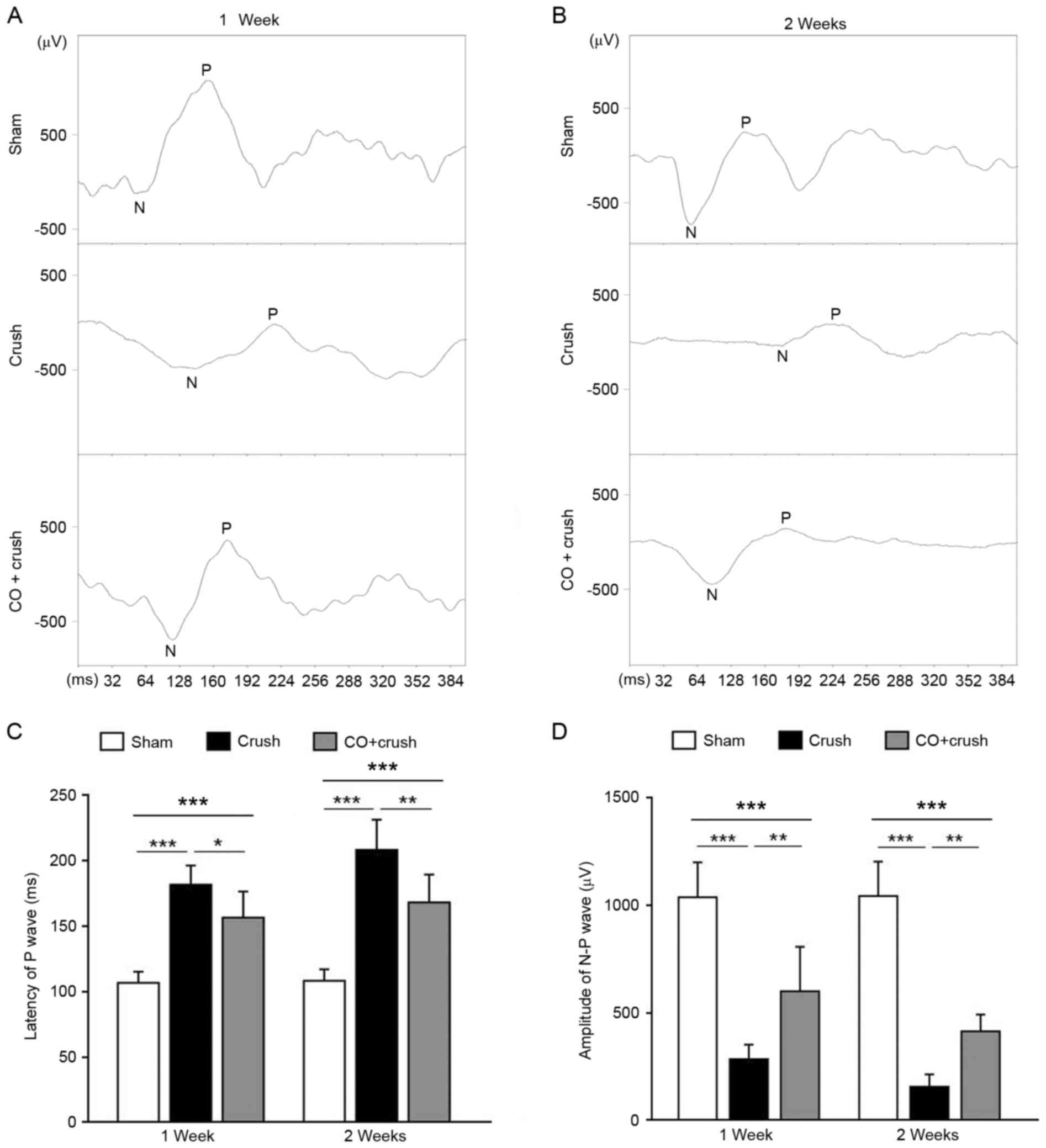
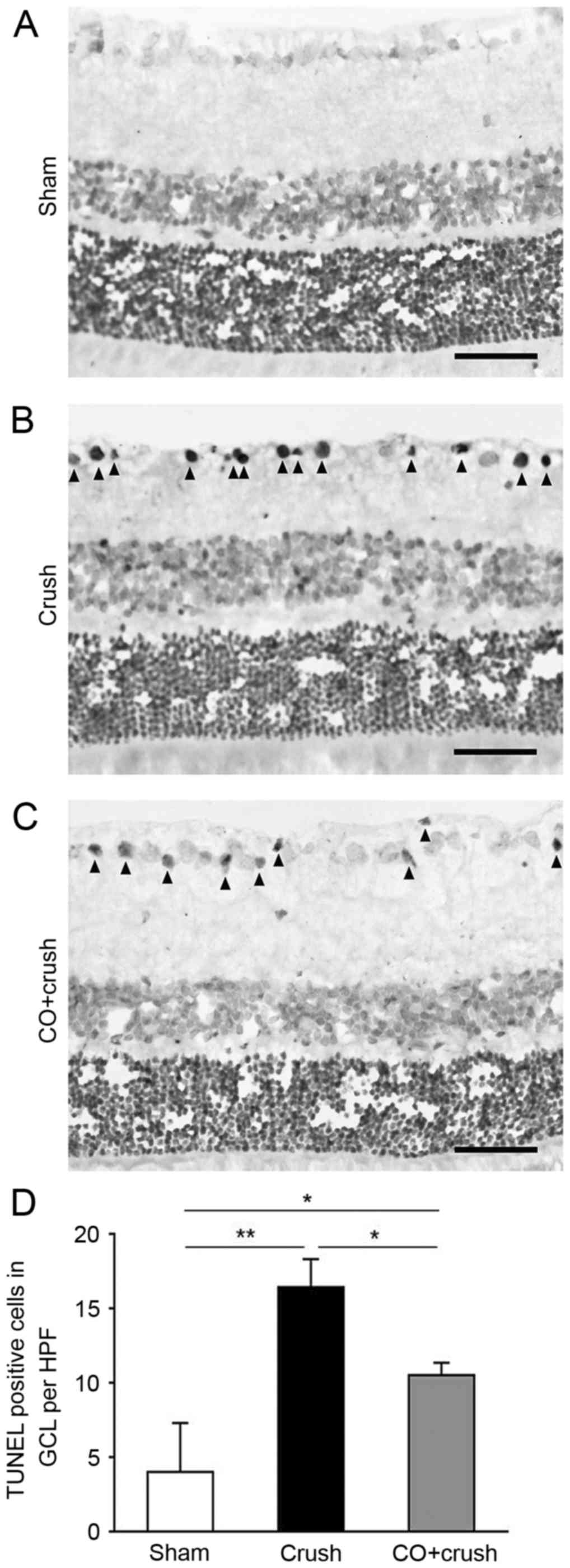
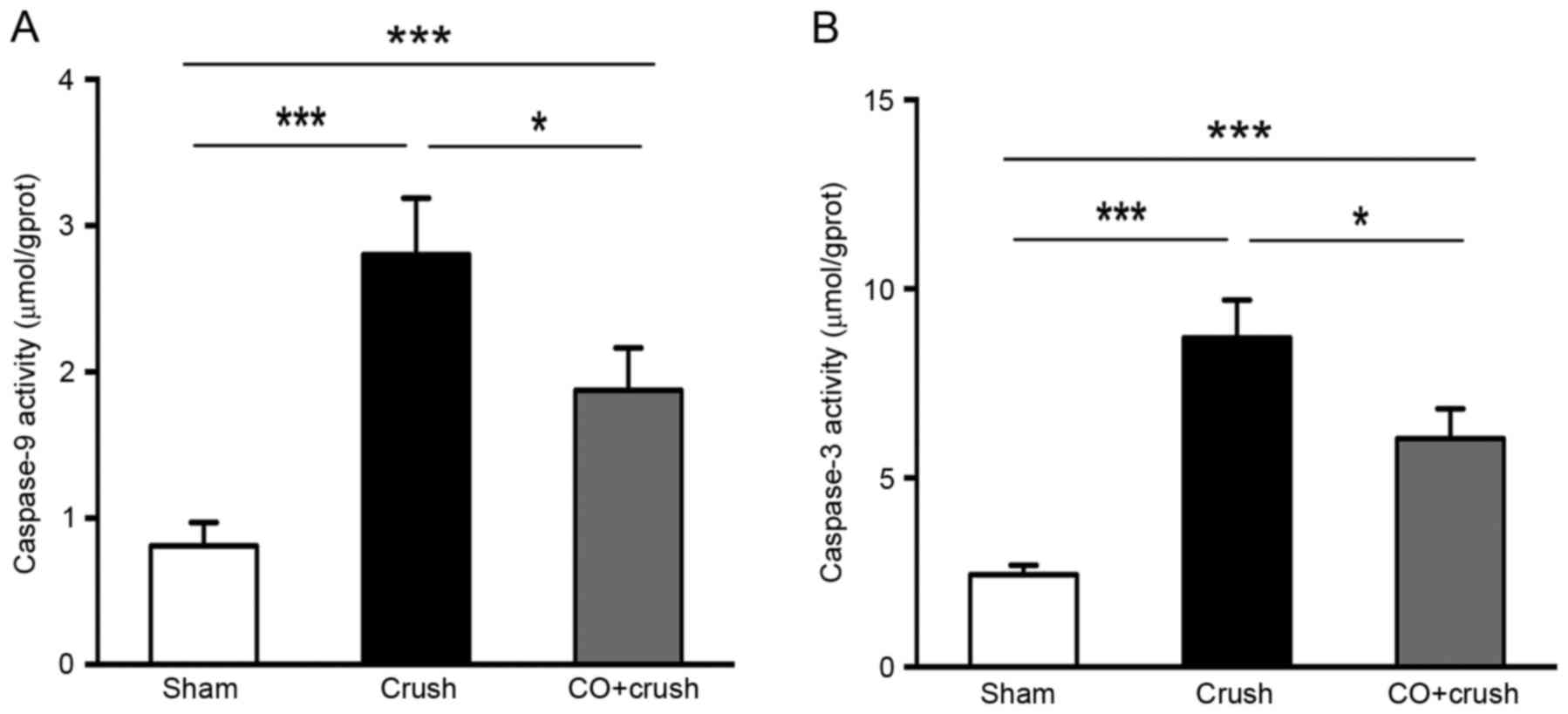
Optic neurodegeneration, in addition to central nervous trauma, initiates impairments to neurons resulting in retinal ganglion cell (RGC) damage. Carbon monoxide (CO) has been observed to elicit neuroprotection in various experimental models. The present study investigated the potential retinal neuroprotection of preconditioning with CO inhalation in a rat model of optic nerve crush (ONC). Adult male Sprague‑Dawley rats were preconditioned with inhaled CO (250 ppm) or air for 1 h prior to ONC. Animals were euthanized at 1 or 2 weeks following surgery. RGC densities were quantified by hematoxylin and eosin (H&E) staining and FluoroGold labeling. Visual function was measured via flash visual evoked potentials (FVEP). Terminal deoxynucleotidyl transferase dUTP nick end labeling (TUNEL) staining, and caspase‑9 and caspase‑3 activity in the retinas, were assessed at 2 weeks post‑ONC. The RGC density of CO + crush rats was significantly increased compared with that of the corresponding crush‑only rats at 2 weeks (survival rate, 66.2 vs. 48.2% as demonstrated by H&E staining, P<0.01; and 67.6 vs. 37.6% as demonstrated by FluoroGold labeling, P<0.05). FVEP measures indicated a significantly better‑preserved latency and amplitude of the P1 wave in the CO + crush rats compared with the crush‑only rats. The TUNEL assays demonstrated fewer apoptotic cells in the CO + crush group compared with the crush‑only group, accompanied by the suppression of caspase‑9 and caspase‑3 activity. The results of the present study suggested that inhaled CO preconditioning may be neuroprotective against ONC insult via inhibition of neuronal apoptosis.
View Figures

Figure 1

Figure 2

Figure 3

Figure 4

Figure 5

View References

1 

Sharma TP, McDowell CM, Liu Y, Wagner AH, Thole D, Faga BP, Wordinger RJ, Braun TA and Clark AF: Optic nerve crush induces spatial and temporal gene expression patterns in retina and optic nerve of BALB/cJ mice. Mol Neurodegener. 9:142014. View Article : Google Scholar : PubMed/NCBI

2 

Schwartz M: Optic nerve crush: Protection and regeneration. Brain Res Bull. 62:467–471. 2004. View Article : Google Scholar : PubMed/NCBI

3 

Stutzki H, Leibig C, Andreadaki A, Fischer D and Zeck G: Inflammatory stimulation preserves physiological properties of retinal ganglion cells after optic nerve injury. Front Cell Neurosci. 8:382014. View Article : Google Scholar : PubMed/NCBI

4 

Schmitt HM, Pelzel HR, Schlamp CL and Nickells RW: Histone deacetylase 3 (HDAC3) plays an important role in retinal ganglion cell death after acute optic nerve injury. Mol Neurodegener. 9:392014. View Article : Google Scholar : PubMed/NCBI

5 

Wang R and Xu J, Xie J, Kang Z, Sun X, Chen N, Liu L and Xu J: Hyperbaric oxygen preconditioning promotes survival of retinal ganglion cells in a rat model of optic nerve crush. J Neurotrauma. 27:763–770. 2010. View Article : Google Scholar : PubMed/NCBI

6 

Levkovitch-Verbin H, Harris-Cerruti C, Groner Y, Wheeler LA, Schwartz M and Yoles E: RGC death in mice after optic nerve crush injury: Oxidative stress and neuroprotection. Invest Ophthalmol Vis Sci. 41:4169–4174. 2000.PubMed/NCBI

7 

Bien A, Seidenbecher CI, Böckers TM, Sabel BA and Kreutz MR: Apoptotic versus necrotic characteristics of retinal ganglion cell death after partial optic nerve injury. J Neurotrauma. 16:153–163. 1999. View Article : Google Scholar : PubMed/NCBI

8 

Sun JC, Xu T, Zuo Q, Wang RB, Qi AQ, Cao WL, Sun AJ, Sun XJ and Xu J: Hydrogen-rich saline promotes survival of retinal ganglion cells in a rat model of optic nerve crush. PLoS One. 9:e992992014. View Article : Google Scholar : PubMed/NCBI

9 

Mansour-Robaey S, Clarke DB, Wang YC, Bray GM and Aguayo AJ: Effects of ocular injury and administration of brain-derived neurotrophic factor on survival and regrowth of axotomized retinal ganglion cells. Proc Natl Acad Sci USA. 91:1632–1636. 1994. View Article : Google Scholar : PubMed/NCBI

10 

Weaver LK: Carbon monoxide poisoning. Crit Care Clin. 15:297–317. 1999. View Article : Google Scholar : PubMed/NCBI

11 

Otterbein LE, Bach FH, Alam J, Soares M, Lu Tao H, Wysk M, Davis RJ, Flavell RA and Choi AM: Carbon monoxide has anti-inflammatory effects involving the mitogen-activated protein kinase pathway. Nat Med. 6:422–428. 2000. View Article : Google Scholar : PubMed/NCBI

12 

Song R, Mahidhara RS, Liu F, Ning W, Otterbein LE and Choi AM: Carbon monoxide inhibits human airway smooth muscle cell proliferation via mitogen-activated protein kinase pathway. Am J Respir Cell Mol Biol. 27:603–610. 2002. View Article : Google Scholar : PubMed/NCBI

13 

Brouard S, Otterbein LE, Anrather J, Tobiasch E, Bach FH, Choi AM and Soares MP: Carbon monoxide generated by heme oxygenase 1 suppresses endothelial cell apoptosis. J Exp Med. 192:1015–1026. 2000. View Article : Google Scholar : PubMed/NCBI

14 

Wang B, Cao W, Biswal S and Doré S: Carbon monoxide-activated Nrf2 pathway leads to protection against permanent focal cerebral ischemia. Stroke. 42:2605–2610. 2011. View Article : Google Scholar : PubMed/NCBI

15 

Biermann J, Lagrèze WA, Dimitriu C, Stoykow C and Goebel U: Preconditioning with inhalative carbon monoxide protects rat retinal ganglion cells from ischemia/reperfusion injury. Invest Ophthalmol Vis Sci. 51:3784–3791. 2010. View Article : Google Scholar : PubMed/NCBI

16 

Chen Z, Wang R, Wu J, Xia F, Sun Q, Xu J and Liu L: Low-dose carbon monoxide inhalation protects neuronal cells from apoptosis after optic nerve crush. Biochem Biophys Res Commun. 469:809–815. 2016. View Article : Google Scholar : PubMed/NCBI

17 

Yang S, He H, Zhu Y, Wan X, Zhou LF, Wang J, Wang WF, Liu L and Li B: Chemical and material communication between the optic nerves in rats. Clin Exp Ophthalmol. 43:742–748. 2015. View Article : Google Scholar : PubMed/NCBI

18 

Liu L, Sun Q, Wang R, Chen Z, Wu J, Xia F and Fan XQ: Methane attenuates retinal ischemia/reperfusion injury via anti-oxidative and anti-apoptotic pathways. Brain Res. 1646:327–333. 2016. View Article : Google Scholar : PubMed/NCBI

19 

Vigneswara V, Berry M, Logan A and Ahmed Z: Pigment epithelium-derived factor is retinal ganglion cell neuroprotective and axogenic after optic nerve crush injury. Invest Ophthalmol Vis Sci. 54:2624–2633. 2013. View Article : Google Scholar : PubMed/NCBI

20 

Mead B, Thompson A, Scheven BA, Logan A, Berry M and Leadbeater W: Comparative evaluation of methods for estimating retinal ganglion cell loss in retinal sections and wholemounts. PLoS One. 9:e1106122014. View Article : Google Scholar : PubMed/NCBI

21 

Carter DA, Bray GM and Aguayo AJ: Regenerated retinal ganglion cell axons can form well-differentiated synapses in the superior colliculus of adult hamsters. J Neurosci. 9:4042–4050. 1989.PubMed/NCBI

22 

Osterhout JA, El-Danaf RN, Nguyen PL and Huberman AD: Birthdate and outgrowth timing predict cellular mechanisms of axon target matching in the developing visual pathway. Cell Rep. 8:1006–1017. 2014. View Article : Google Scholar : PubMed/NCBI

23 

Mawrin C, Pap T, Pallas M, Dietzmann K, Behrens-Baumann W and Vorwerk CK: Changes of retinal glutamate transporter GLT-1 mRNA levels following optic nerve damage. Mol Vis. 9:10–13. 2003.PubMed/NCBI

24 

Barañano DE and Snyder SH: Neural roles for heme oxygenase: Contrasts to nitric oxide synthase. Proc Natl Acad Sci USA. 98:10996–11002. 2001. View Article : Google Scholar : PubMed/NCBI

25 

Hettiarachchi N, Dallas M, Al-Owais M, Griffiths H, Hooper N, Scragg J, Boyle J and Peers C: Heme oxygenase-1 protects against Alzheimer's amyloid-β(1–42)-induced toxicity via carbon monoxide production. Cell Death Dis. 5:e15692014. View Article : Google Scholar : PubMed/NCBI

26 

Wang X, Qin W, Qiu X, Cao J, Liu D and Sun B: A novel role of exogenous carbon monoxide on protecting cardiac function and improving survival against sepsis via mitochondrial energetic metabolism pathway. Int J Biol Sci. 10:777–788. 2014. View Article : Google Scholar : PubMed/NCBI

27 

Nikolic I, Saksida T, Mangano K, Vujicic M, Stojanovic I, Nicoletti F and Stosic-Grujicic S: Pharmacological application of carbon monoxide ameliorates islet-directed autoimmunity in mice via anti-inflammatory and anti-apoptotic effects. Diabetologia. 57:980–990. 2014. View Article : Google Scholar : PubMed/NCBI

28 

Brouard S, Berberat PO, Tobiasch E, Seldon MP, Bach FH and Soares MP: Heme oxygenase-1-derived carbon monoxide requires the activation of transcription factor NF-kappa B to protect endothelial cells from tumor necrosis factor-alpha-mediated apoptosis. J Biol Chem. 277:17950–17961. 2002. View Article : Google Scholar : PubMed/NCBI

29 

Gavrieli Y, Sherman Y and Ben-Sasson SA: Identification of programmed cell death in situ via specific labeling of nuclear DNA fragmentation. J Cell Biol. 119:493–501. 1992. View Article : Google Scholar : PubMed/NCBI

30 

Hirata H, Takahashi A, Kobayashi S, Yonehara S, Sawai H, Okazaki T, Yamamoto K and Sasada M: Caspases are activated in a branched protease cascade and control distinct downstream processes in Fas-induced apoptosis. J Exp Med. 187:587–600. 1998. View Article : Google Scholar : PubMed/NCBI

31 

Seki M, Soussou W, Manabe S and Lipton SA: Protection of retinal ganglion cells by caspase substrate-binding peptide IQACRG from N-methyl-D-aspartate receptor-mediated excitotoxicity. Invest Ophthalmol Vis Sci. 51:1198–1207. 2010. View Article : Google Scholar : PubMed/NCBI

32 

Mahrouf-Yorgov M, Augeul L, Da Silva CC, Jourdan M, Rigolet M, Manin S, Ferrera R, Ovize M, Henry A, Guguin A, et al: Mesenchymal stem cells sense mitochondria released from damaged cells as danger signals to activate their rescue properties. Cell Death Differ. 24:1224–1238. 2017. View Article : Google Scholar : PubMed/NCBI

33 

Abe T, Yazawa K, Fujino M, Imamura R, Hatayama N, Kakuta Y, Tsutahara K, Okumi M, Ichimaru N, Kaimori JY, et al: High-pressure carbon monoxide preserves rat kidney grafts from apoptosis and inflammation. Lab Invest. 97:468–477. 2017. View Article : Google Scholar : PubMed/NCBI

34 

Fagone P, Mangano K, Mammana S, Cavalli E, Di Marco R, Barcellona ML, Salvatorelli L, Magro G and Nicoletti F: Carbon monoxide-releasing molecule-A1 (CORM-A1) improves clinical signs of experimental autoimmune uveoretinitis (EAU) in rats. Clin Immunol. 157:198–204. 2015. View Article : Google Scholar : PubMed/NCBI

35 

Caumartin Y, Stephen J, Deng JP, Lian D, Lan Z, Liu W, Garcia B, Jevnikar AM, Wang H, Cepinskas G and Luke PP: Carbon monoxide-releasing molecules protect against ischemia-reperfusion injury during kidney transplantation. Kidney Int. 79:1080–1089. 2011. View Article : Google Scholar : PubMed/NCBI

36 

Ferrándiz ML, Maicas N, Garcia-Arnandis I, Terencio MC, Motterlini R, Devesa I, Joosten LA, van den Berg WB and Alcaraz MJ: Treatment with a CO-releasing molecule (CORM-3) reduces joint inflammation and erosion in murine collagen-induced arthritis. Ann Rheum Dis. 67:1211–1217. 2008. View Article : Google Scholar : PubMed/NCBI

37 

Sato K, Balla J, Otterbein L, Smith RN, Brouard S, Lin Y, Csizmadia E, Sevigny J, Robson SC, Vercellotti G, et al: Carbon monoxide generated by heme oxygenase-1 suppresses the rejection of mouse-to-rat cardiac transplants. J Immunol. 166:4185–4194. 2001. View Article : Google Scholar : PubMed/NCBI

38 

Zevin S, Saunders S, Gourlay SG, Jacob P and Benowitz NL: Cardiovascular effects of carbon monoxide and cigarette smoking. J Am Coll Cardiol. 38:1633–1638. 2001. View Article : Google Scholar : PubMed/NCBI

39 

Liu SH, Ma K, Xu XR and Xu B: A single dose of carbon monoxide intraperitoneal administration protects rat intestine from injury induced by lipopolysaccharide. Cell Stress Chaperones. 15:717–727. 2010. View Article : Google Scholar : PubMed/NCBI

Related Articles

  • Abstract
  • View
  • Download
  • Twitter
Copy and paste a formatted citation
Spandidos Publications style
Wang R, Chen Z, Wu J, Xia F, Sun Q, Sun A and Liu L: Preconditioning with carbon monoxide inhalation promotes retinal ganglion cell survival against optic nerve crush via inhibition of the apoptotic pathway. Mol Med Rep 17: 1297-1304, 2018.
APA
Wang, R., Chen, Z., Wu, J., Xia, F., Sun, Q., Sun, A., & Liu, L. (2018). Preconditioning with carbon monoxide inhalation promotes retinal ganglion cell survival against optic nerve crush via inhibition of the apoptotic pathway. Molecular Medicine Reports, 17, 1297-1304. https://doi.org/10.3892/mmr.2017.7990
MLA
Wang, R., Chen, Z., Wu, J., Xia, F., Sun, Q., Sun, A., Liu, L."Preconditioning with carbon monoxide inhalation promotes retinal ganglion cell survival against optic nerve crush via inhibition of the apoptotic pathway". Molecular Medicine Reports 17.1 (2018): 1297-1304.
Chicago
Wang, R., Chen, Z., Wu, J., Xia, F., Sun, Q., Sun, A., Liu, L."Preconditioning with carbon monoxide inhalation promotes retinal ganglion cell survival against optic nerve crush via inhibition of the apoptotic pathway". Molecular Medicine Reports 17, no. 1 (2018): 1297-1304. https://doi.org/10.3892/mmr.2017.7990
Copy and paste a formatted citation
x
Spandidos Publications style
Wang R, Chen Z, Wu J, Xia F, Sun Q, Sun A and Liu L: Preconditioning with carbon monoxide inhalation promotes retinal ganglion cell survival against optic nerve crush via inhibition of the apoptotic pathway. Mol Med Rep 17: 1297-1304, 2018.
APA
Wang, R., Chen, Z., Wu, J., Xia, F., Sun, Q., Sun, A., & Liu, L. (2018). Preconditioning with carbon monoxide inhalation promotes retinal ganglion cell survival against optic nerve crush via inhibition of the apoptotic pathway. Molecular Medicine Reports, 17, 1297-1304. https://doi.org/10.3892/mmr.2017.7990
MLA
Wang, R., Chen, Z., Wu, J., Xia, F., Sun, Q., Sun, A., Liu, L."Preconditioning with carbon monoxide inhalation promotes retinal ganglion cell survival against optic nerve crush via inhibition of the apoptotic pathway". Molecular Medicine Reports 17.1 (2018): 1297-1304.
Chicago
Wang, R., Chen, Z., Wu, J., Xia, F., Sun, Q., Sun, A., Liu, L."Preconditioning with carbon monoxide inhalation promotes retinal ganglion cell survival against optic nerve crush via inhibition of the apoptotic pathway". Molecular Medicine Reports 17, no. 1 (2018): 1297-1304. https://doi.org/10.3892/mmr.2017.7990
Follow us
  • Twitter
  • LinkedIn
  • Facebook
About
  • Spandidos Publications
  • Careers
  • Cookie Policy
  • Privacy Policy
How can we help?
  • Help
  • Live Chat
  • Contact
  • Email to our Support Team