Spandidos Publications Logo
  • About
    • About Spandidos
    • Aims and Scopes
    • Abstracting and Indexing
    • Editorial Policies
    • Reprints and Permissions
    • Job Opportunities
    • Terms and Conditions
    • Contact
  • Journals
    • All Journals
    • Oncology Letters
      • Oncology Letters
      • Information for Authors
      • Editorial Policies
      • Editorial Board
      • Aims and Scope
      • Abstracting and Indexing
      • Bibliographic Information
      • Archive
    • International Journal of Oncology
      • International Journal of Oncology
      • Information for Authors
      • Editorial Policies
      • Editorial Board
      • Aims and Scope
      • Abstracting and Indexing
      • Bibliographic Information
      • Archive
    • Molecular and Clinical Oncology
      • Molecular and Clinical Oncology
      • Information for Authors
      • Editorial Policies
      • Editorial Board
      • Aims and Scope
      • Abstracting and Indexing
      • Bibliographic Information
      • Archive
    • Experimental and Therapeutic Medicine
      • Experimental and Therapeutic Medicine
      • Information for Authors
      • Editorial Policies
      • Editorial Board
      • Aims and Scope
      • Abstracting and Indexing
      • Bibliographic Information
      • Archive
    • International Journal of Molecular Medicine
      • International Journal of Molecular Medicine
      • Information for Authors
      • Editorial Policies
      • Editorial Board
      • Aims and Scope
      • Abstracting and Indexing
      • Bibliographic Information
      • Archive
    • Biomedical Reports
      • Biomedical Reports
      • Information for Authors
      • Editorial Policies
      • Editorial Board
      • Aims and Scope
      • Abstracting and Indexing
      • Bibliographic Information
      • Archive
    • Oncology Reports
      • Oncology Reports
      • Information for Authors
      • Editorial Policies
      • Editorial Board
      • Aims and Scope
      • Abstracting and Indexing
      • Bibliographic Information
      • Archive
    • Molecular Medicine Reports
      • Molecular Medicine Reports
      • Information for Authors
      • Editorial Policies
      • Editorial Board
      • Aims and Scope
      • Abstracting and Indexing
      • Bibliographic Information
      • Archive
    • World Academy of Sciences Journal
      • World Academy of Sciences Journal
      • Information for Authors
      • Editorial Policies
      • Editorial Board
      • Aims and Scope
      • Abstracting and Indexing
      • Bibliographic Information
      • Archive
    • International Journal of Functional Nutrition
      • International Journal of Functional Nutrition
      • Information for Authors
      • Editorial Policies
      • Editorial Board
      • Aims and Scope
      • Abstracting and Indexing
      • Bibliographic Information
      • Archive
    • International Journal of Epigenetics
      • International Journal of Epigenetics
      • Information for Authors
      • Editorial Policies
      • Editorial Board
      • Aims and Scope
      • Abstracting and Indexing
      • Bibliographic Information
      • Archive
    • Medicine International
      • Medicine International
      • Information for Authors
      • Editorial Policies
      • Editorial Board
      • Aims and Scope
      • Abstracting and Indexing
      • Bibliographic Information
      • Archive
  • Articles
  • Information
    • Information for Authors
    • Information for Reviewers
    • Information for Librarians
    • Information for Advertisers
    • Conferences
  • Language Editing
Spandidos Publications Logo
  • About
    • About Spandidos
    • Aims and Scopes
    • Abstracting and Indexing
    • Editorial Policies
    • Reprints and Permissions
    • Job Opportunities
    • Terms and Conditions
    • Contact
  • Journals
    • All Journals
    • Biomedical Reports
      • Information for Authors
      • Editorial Policies
      • Editorial Board
      • Aims and Scope
      • Abstracting and Indexing
      • Bibliographic Information
      • Archive
    • Experimental and Therapeutic Medicine
      • Information for Authors
      • Editorial Policies
      • Editorial Board
      • Aims and Scope
      • Abstracting and Indexing
      • Bibliographic Information
      • Archive
    • International Journal of Epigenetics
      • Information for Authors
      • Editorial Policies
      • Editorial Board
      • Aims and Scope
      • Abstracting and Indexing
      • Bibliographic Information
      • Archive
    • International Journal of Functional Nutrition
      • Information for Authors
      • Editorial Policies
      • Editorial Board
      • Aims and Scope
      • Abstracting and Indexing
      • Bibliographic Information
      • Archive
    • International Journal of Molecular Medicine
      • Information for Authors
      • Editorial Policies
      • Editorial Board
      • Aims and Scope
      • Abstracting and Indexing
      • Bibliographic Information
      • Archive
    • International Journal of Oncology
      • Information for Authors
      • Editorial Policies
      • Editorial Board
      • Aims and Scope
      • Abstracting and Indexing
      • Bibliographic Information
      • Archive
    • Medicine International
      • Information for Authors
      • Editorial Policies
      • Editorial Board
      • Aims and Scope
      • Abstracting and Indexing
      • Bibliographic Information
      • Archive
    • Molecular and Clinical Oncology
      • Information for Authors
      • Editorial Policies
      • Editorial Board
      • Aims and Scope
      • Abstracting and Indexing
      • Bibliographic Information
      • Archive
    • Molecular Medicine Reports
      • Information for Authors
      • Editorial Policies
      • Editorial Board
      • Aims and Scope
      • Abstracting and Indexing
      • Bibliographic Information
      • Archive
    • Oncology Letters
      • Information for Authors
      • Editorial Policies
      • Editorial Board
      • Aims and Scope
      • Abstracting and Indexing
      • Bibliographic Information
      • Archive
    • Oncology Reports
      • Information for Authors
      • Editorial Policies
      • Editorial Board
      • Aims and Scope
      • Abstracting and Indexing
      • Bibliographic Information
      • Archive
    • World Academy of Sciences Journal
      • Information for Authors
      • Editorial Policies
      • Editorial Board
      • Aims and Scope
      • Abstracting and Indexing
      • Bibliographic Information
      • Archive
  • Articles
  • Information
    • For Authors
    • For Reviewers
    • For Librarians
    • For Advertisers
    • Conferences
  • Language Editing
Login Register Submit
  • This site uses cookies
  • You can change your cookie settings at any time by following the instructions in our Cookie Policy. To find out more, you may read our Privacy Policy.

    I agree
Search articles by DOI, keyword, author or affiliation
Search
Advanced Search
presentation
Molecular Medicine Reports
Join Editorial Board Propose a Special Issue
Print ISSN: 1791-2997 Online ISSN: 1791-3004
Journal Cover
January-2018 Volume 17 Issue 1

Full Size Image

Sign up for eToc alerts
Recommend to Library

Journals

International Journal of Molecular Medicine

International Journal of Molecular Medicine

International Journal of Molecular Medicine is an international journal devoted to molecular mechanisms of human disease.

International Journal of Oncology

International Journal of Oncology

International Journal of Oncology is an international journal devoted to oncology research and cancer treatment.

Molecular Medicine Reports

Molecular Medicine Reports

Covers molecular medicine topics such as pharmacology, pathology, genetics, neuroscience, infectious diseases, molecular cardiology, and molecular surgery.

Oncology Reports

Oncology Reports

Oncology Reports is an international journal devoted to fundamental and applied research in Oncology.

Experimental and Therapeutic Medicine

Experimental and Therapeutic Medicine

Experimental and Therapeutic Medicine is an international journal devoted to laboratory and clinical medicine.

Oncology Letters

Oncology Letters

Oncology Letters is an international journal devoted to Experimental and Clinical Oncology.

Biomedical Reports

Biomedical Reports

Explores a wide range of biological and medical fields, including pharmacology, genetics, microbiology, neuroscience, and molecular cardiology.

Molecular and Clinical Oncology

Molecular and Clinical Oncology

International journal addressing all aspects of oncology research, from tumorigenesis and oncogenes to chemotherapy and metastasis.

World Academy of Sciences Journal

World Academy of Sciences Journal

Multidisciplinary open-access journal spanning biochemistry, genetics, neuroscience, environmental health, and synthetic biology.

International Journal of Functional Nutrition

International Journal of Functional Nutrition

Open-access journal combining biochemistry, pharmacology, immunology, and genetics to advance health through functional nutrition.

International Journal of Epigenetics

International Journal of Epigenetics

Publishes open-access research on using epigenetics to advance understanding and treatment of human disease.

Medicine International

Medicine International

An International Open Access Journal Devoted to General Medicine.

Journal Cover
January-2018 Volume 17 Issue 1

Full Size Image

Sign up for eToc alerts
Recommend to Library

  • Article
  • Citations
    • Cite This Article
    • Download Citation
    • Create Citation Alert
    • Remove Citation Alert
    • Cited By
  • Similar Articles
    • Related Articles (in Spandidos Publications)
    • Similar Articles (Google Scholar)
    • Similar Articles (PubMed)
  • Download PDF
  • Download XML
  • View XML
Article Open Access

Low dosage of arsenic trioxide inhibits vasculogenic mimicry in hepatoblastoma without cell apoptosis

  • Authors:
    • Feng Zhang
    • Chun‑Mei Zhang
    • Shu Li
    • Kun‑Kun Wang
    • Bin‑Bin Guo
    • Yao Fu
    • Lu‑Yang Liu
    • Yu Zhang
    • Hai‑Yu Jiang
    • Chang‑Jun Wu
  • View Affiliations / Copyright

    Affiliations: Department of Ultrasonography, The First Affiliated Hospital of Harbin Medical University, Harbin, Heilongjiang 150001, P.R. China, Department of Cardiovascular, The First Affiliated Hospital of Harbin Medical University, Harbin, Heilongjiang 150001, P.R. China
    Copyright: © Zhang et al. This is an open access article distributed under the terms of Creative Commons Attribution License [CC BY_NC 4.0].
  • Pages: 1573-1582
    |
    Published online on: November 14, 2017
       https://doi.org/10.3892/mmr.2017.8046
  • Expand metrics +
Metrics: Total Views: 0 (Spandidos Publications: | PMC Statistics: )
Metrics: Total PDF Downloads: 0 (Spandidos Publications: | PMC Statistics: )
Cited By (CrossRef): 0 citations Loading Articles...

This article is mentioned in:


Abstract

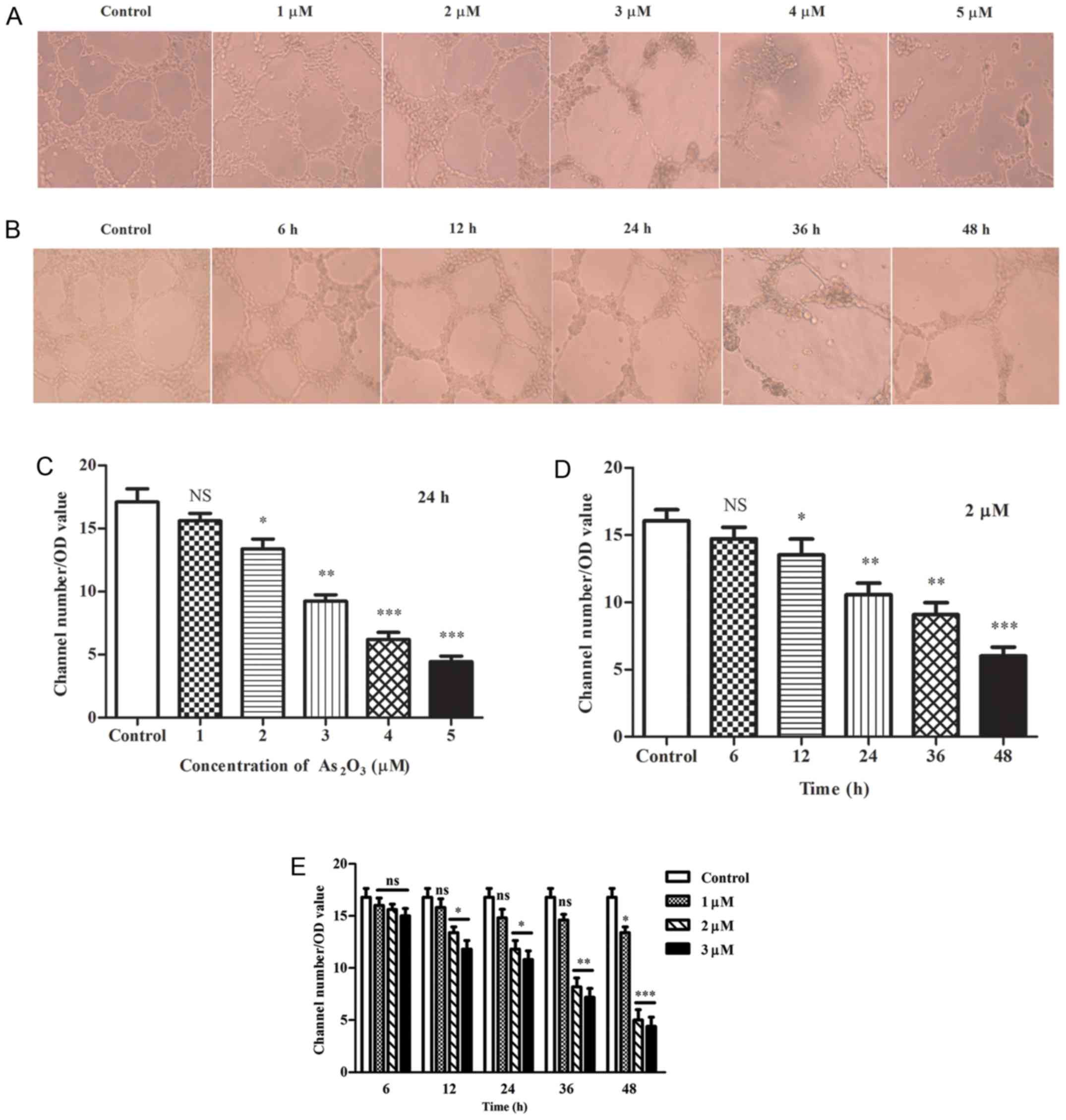
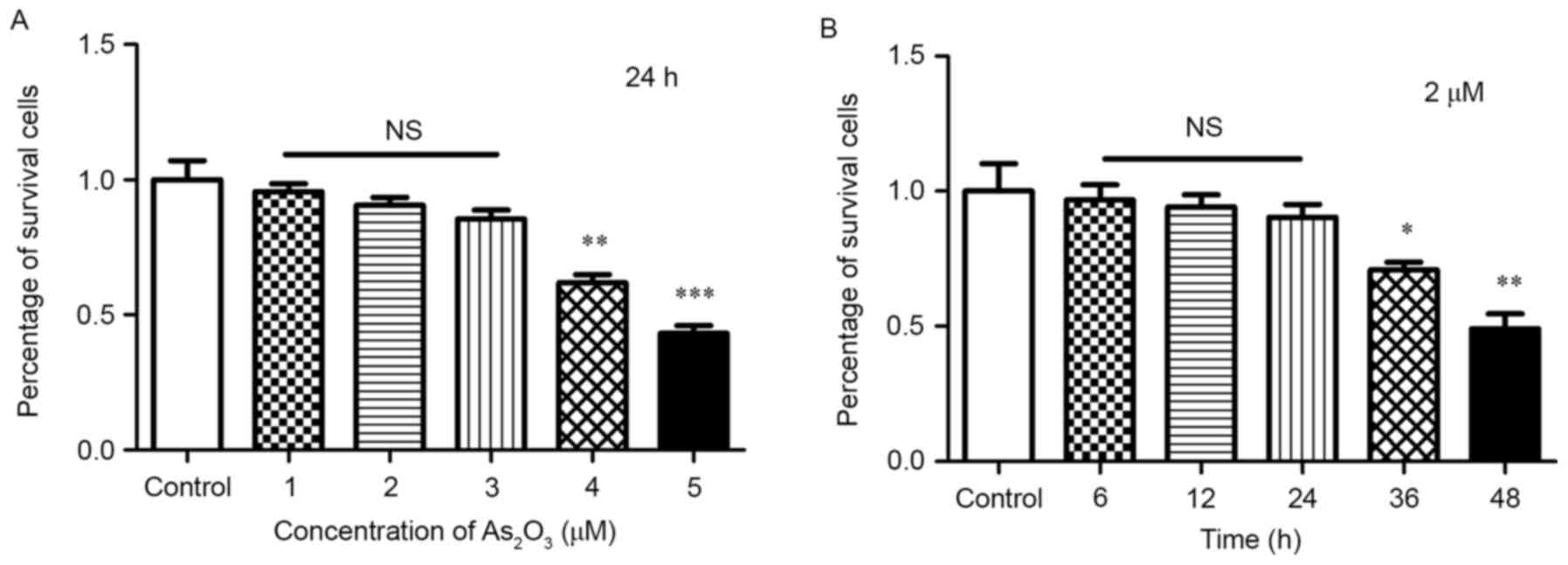
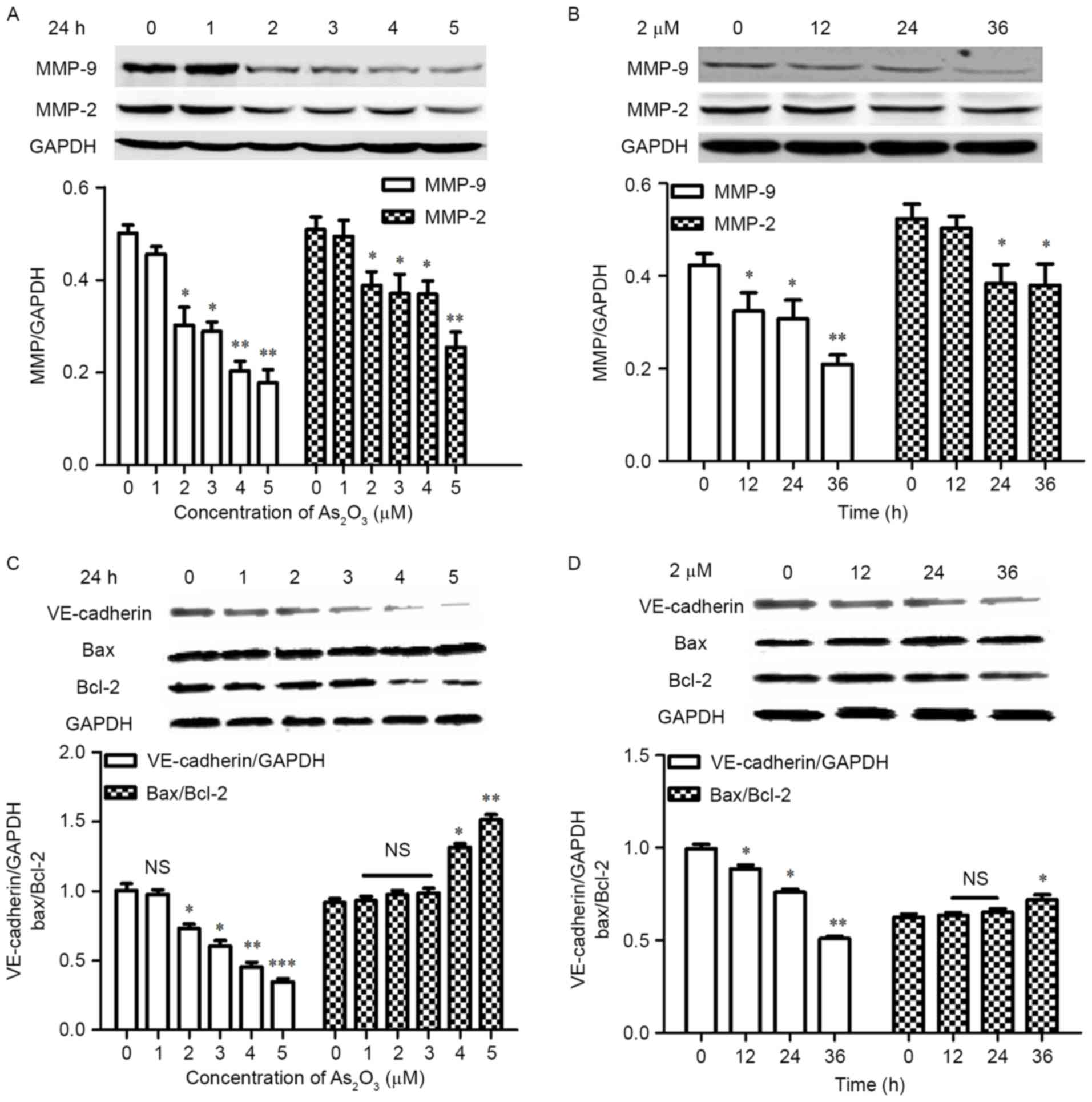
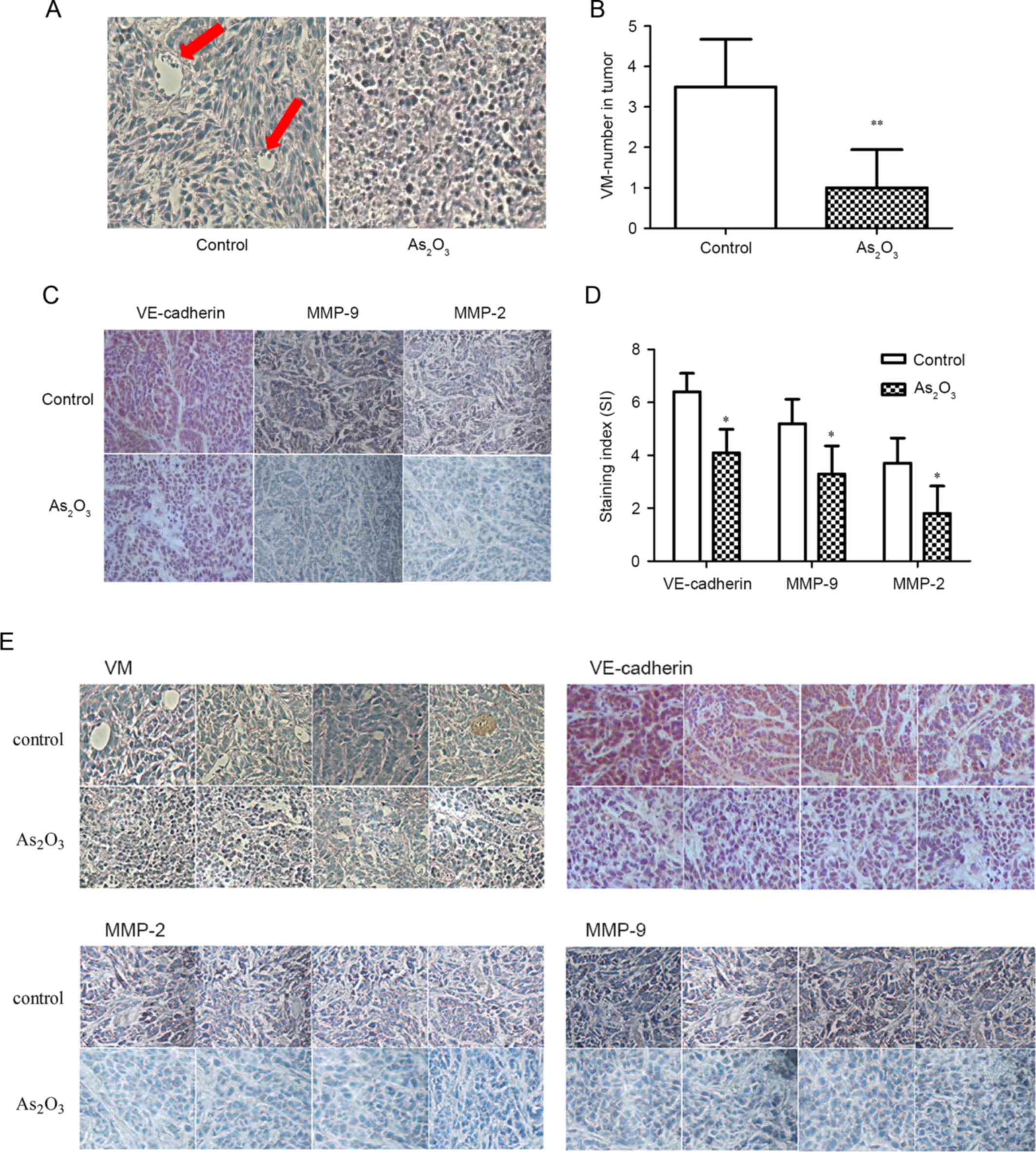
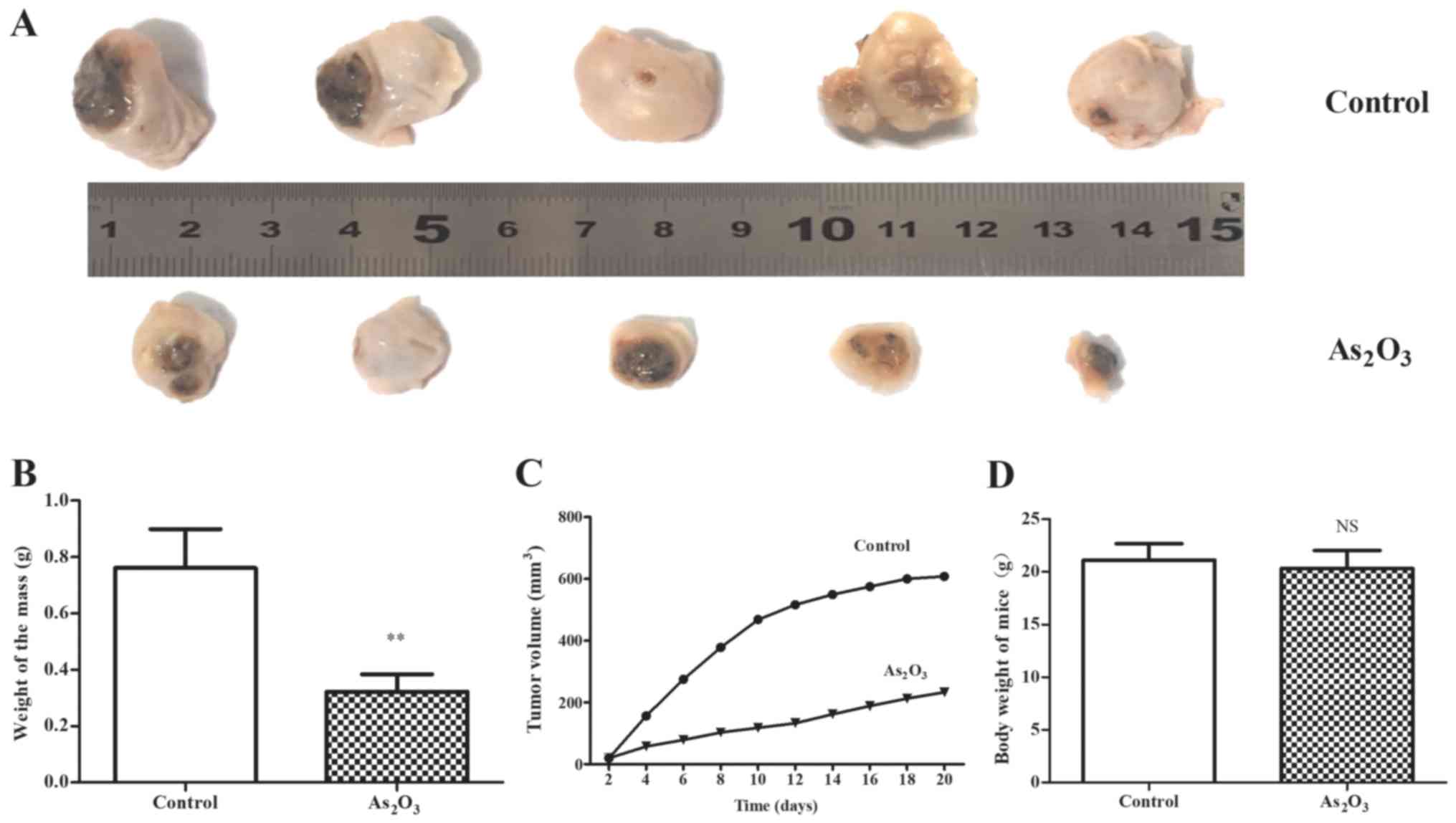
Hepatoblastoma (HB) is the most common type of pediatric liver malignancy, which predominantly occurs in young children (aged <5 years), and continues to be a therapeutic challenge in terms of metastasis and drug resistance. As a new pattern of tumor blood supply, vasculogenic mimicry (VM) is a channel structure lined by tumor cells rather than endothelial cells, which contribute to angiogenesis. VM occurs in a variety of solid tumor types, including liver cancer, such as hepatocellular carcinoma. The aim of the present study was to elucidate the effect of arsenic trioxide (As2O3) on VM. In vitro experiments identified that HB cell line HepG2 cells form typical VM structures on Matrigel, and the structures were markedly damaged by As2O3 at a low concentration before the cell viability significantly decreased. The western blot results indicated that As2O3 downregulated the expression level of VM‑associated proteins prior to the appearance of apoptotic proteins. In vivo, VM has been observed in xenografts of HB mouse models and identified by periodic acid‑Schiff+/CD105‑ channels lined by HepG2 cells without necrotic cells. As2O3 (2 mg/kg) markedly depresses tumor growth without causing serious adverse reactions by decreasing the number of VM channels via inhibiting the expression level of VM‑associated proteins. Thus, the present data strongly indicate that low dosage As2O3 reduces the formation of VM in HB cell line HepG2 cells, independent of cell apoptosis in vivo and in vitro, and may represent as a candidate drug for HB targeting VM.
View Figures

Figure 1

Figure 2

Figure 3

Figure 4

Figure 5

Figure 6

View References

1 

Heck JE, Meyers TJ, Lombardi C, Park AS, Cockburn M, Reynolds P and Ritz B: Case-control study of birth characteristics and the risk of hepatoblastoma. Cancer Epidemiol. 37:390–395. 2013. View Article : Google Scholar :

2 

Stiller CA, Pritchard J and Steliarova-Foucher E: Liver cancer in European children: Incidence and survival, 1978–1997. Report from the Automated Childhood Cancer Information System project. Eur J Cancer. 42:2115–2123. 2006. View Article : Google Scholar

3 

Czaudernaa P, Haeberle B, Hiyama E, Rangaswami A, Krailo M, Maibach R, Rinaldi E, Feng YR, Aronson D, Malogolowkin M, et al: The Children's Hepatic tumors International Collaboration (CHIC): Novel global rare tumor database yields new prognostic factors in hepatoblastoma and becomes a research model. Eur J Cancer. 52:92–101. 2016. View Article : Google Scholar

4 

Tanimura M, Matsui I, Abe J, Ikeda H, Kobayashi N, Ohira M, Yokoyama M and Kaneko M: Increased risk of hepatoblastoma among immature children with a lower birth weight. Cancer Res. 58:3032–3035. 1998.

5 

Pateva IB, Egler RA and Stearns DS: Hepatoblastoma in an 11-year-old. Case report and a review of the literature. Medicine (Baltimore). 96:e58582017. View Article : Google Scholar :

6 

Park KW, Seo CJ, Yun DY, Kim MK, Kim BS, Han YS, Oh KH and Lee CH: A case of hepatoblastoma misdiagnosed as combined hepatocellular carcinoma and cholangiocarcinoma in an adult. Clin Mol Hepatol. 21:300–308. 2015. View Article : Google Scholar :

7 

Maniotis AJ, Folberg R, Hess A, Seftor EA, Gardner LM, Pe'er J, Trent JM, Meltzer PS and Hendrix MJ: Vascular channel formation by human melanoma cells in vivo and in vitro: Vasculogenic mimicry. Am J Pathol. 155:739–752. 1999. View Article : Google Scholar :

8 

Zhang S, Guo H, Zhang D, Zhang W, Zhao X, Ren Z and Sun B: Microcirculation patterns in different stages of melanoma growth. Oncol Rep. 15:15–20. 2006.

9 

Sood AK, Seftor EA, Fletcher MS, Gardner LM, Heidger PM, Buller RE, Seftor RE and Hendrix MJ: Molecular determinants of ovarian cancer plasticity. Am J Pathol. 158:1279–1288. 2001. View Article : Google Scholar :

10 

Fujimoto A, Onodera H, Mori A, Nagayama S, Yonenaga Y and Tachibana T: Tumour plasticity and extravascular circulation in ECV304 human bladder carcinoma cells. Anticancer Res. 26:59–69. 2006. View Article : Google Scholar

11 

Baeten CI, Hillen F, Pauwels P, de Bruine AP and Baeten CG: Prognostic role of vasculogenic mimicry in colorectal cancer. Dis Colon Rectum. 52:2028–2035. 2009. View Article : Google Scholar

12 

Li M, Gu Y, Zhang Z, Zhang S, Zhang D, Saleem AF, Zhao X and Sun B: Vasculogenic mimicry: A new prognostic sign of gastric adenocarcinoma. Pathol Oncol Res. 16:259–266. 2010. View Article : Google Scholar

13 

Wu S, Yu L, Cheng Z, Song W, Zhou L and Tao Y: Expression of maspin in non-small cell lung cancer and its relationship to vasculogenic mimicry. J Huazhong Univ Sci Technolog Med Sci. 32:346–352. 2012. View Article : Google Scholar

14 

Van der Schaft DW, Hillen F, Pauwels P, Kirschmann DA, Castermans K, Egbrink MG, Tran MG, Sciot R, Hauben E, Hogendoorn PC, et al: Tumor cell plasticity in Ewing sarcoma, an alternative circulatory system stimulated by hypoxia. Cancer Res. 65:11520–11528. 2005. View Article : Google Scholar

15 

Vartanian AA, Stepanova EV, Gutorov SL, Solomko ESh, Grigorieva IN, Sokolova IN, Baryshnikov AY and Lichinitser MR: Prognostic significance of periodic acid-Schiff-positive patterns in clear cell renal cell carcinoma. Can J Urol. 16:4726–4732. 2009.

16 

Francescone R, Scully S, Bentley B, Yan W, Taylor SL, Oh D, Moral L and Shao R: Glioblastoma-derived tumor cells induce vasculogenic mimicry through Flk-1 protein activation. J Biol Chem. 287:24821–24831. 2012. View Article : Google Scholar :

17 

Folberg R and Maniotis AJ: Vasculogenic mimicry. APMIS. 112:508–525. 2004. View Article : Google Scholar

18 

Hendrix MJ, Seftor EA, Hess AR and Seftor RE: Vasculogenic mimicry and tumour-cell plasticity: Lessons from melanoma. Nat Rev Cancer. 3:411–421. 2003. View Article : Google Scholar

19 

Cascone T and Heymach JV: Targeting the angiopoietin/Tie2 pathway: Cutting tumor vessels with a double-edged sword? J Clin Oncol. 30:441–444. 2012. View Article : Google Scholar

20 

Jain RK, Duda DG, Clark JW and Loeffler JS: Lessons from phase III clinical trials on anti-VEGF therapy for cancer. Nat Clin Pract Oncol. 3:24–40. 2006. View Article : Google Scholar

21 

Goel S, Duda DG, Xu L, Munn LL, Boucher Y, Fukumura D and Jain RK: Normalization of the vasculature for treatment of cancer and other diseases. Physiol Rev. 91:1071–1121. 2011. View Article : Google Scholar :

22 

Zhang Y, Zhang Z, Li J, Li L, Han X, Han L, Hu L, Wang S, Zhao Y, Li X, et al: Long-term efficacy and safety of arsenic trioxide for first-line treatment of elderly patients with newly diagnosed acute promyelocytic leukemia. Cancer. 119:115–125. 2013. View Article : Google Scholar

23 

Breitenbach Lallemand V, Guillemin MC, Janin A, Daniel MT, Degos L, Kogan SC, Bishop JM and de Thé H: Retinoic acid and arsenic synergize to eradicate leukemic cells in a mouse model of acute promyelocytic leukemia. J Exp Med. 189:1043–1052. 1999. View Article : Google Scholar :

24 

Pettersson HM, Pietras A, Persson Munksgaard M, Karlsson J, Johansson L, Shoshan MC and Påhlman S: Arsenic trioxide is highly cytotoxic to small cell lung carcinoma cells. Mol Cancer Ther. 8:160–170. 2009. View Article : Google Scholar

25 

Yu J, Qian HL, Li Y, Wang Y, Zhang X, Liang X, Fu M and Lin C: Arsenic trioxide (As2O3) reduces the invasive and metastatic properties of cervical cancer cells in vitro and in vivo. Gynecol Oncol. 106:400–406. 2007. View Article : Google Scholar

26 

Du J, Zhou N, Liu H, Jiang F, Wang Y, Hu C, Qi H, Zhong C, Wang X and Li Z: Arsenic induces functional re-expression of estrogen receptor α by demethylation of DNA in estrogen receptor-negative human breast cancer. PLoS One. 7:e359572012. View Article : Google Scholar :

27 

Munshi NC, Tricot G, Desikan R, Badros A, Zangari M, Toor A, Morris C, Anaissie E and Barlogie B: Clinical activity of arsenic trioxide for the treatment of multiple myeloma. Leukemia. 16:1835–1837. 2002. View Article : Google Scholar

28 

Ma ZB, Xu HY, Jiang M, Yang YL, Liu LX and Li YH: Arsenic trioxide induces apoptosis of human gastrointestinal cancer cells. World J Gastroenterol. 20:5505–5510. 2014. View Article : Google Scholar :

29 

Alarifi S, Ali D, Alkahtani S, Siddiqui MA and Ali BA: Arsenic trioxide-mediated oxidative stress and genotoxicity in human hepatocellular carcinoma cells. Onco Targets Ther. 6:75–84. 2013.

30 

Lee JC, Lee HY, Moon CH, Lee SJ, Lee WH, Cha HJ, Park SC, Lee YH, Park HJ, Song HT and Min YJ: Arsenic trioxide as a vascular disrupting agent: Synergistic effect with irinotecan on tumor growth delay in a CT26 allograft model. Transl Oncol. 6:83–91. 2013. View Article : Google Scholar :

31 

Xiao YF, Wu DD, Liu SX, Chen X and Ren LF: Effect of arsenic trioxide on vascular endothelial cell proliferation and expression of vascular endothelial growth factor receptors Flt-1 and KDR in gastric cancer in nude mice. World J Gastroenterol. 13:6498–6505. 2007. View Article : Google Scholar :

32 

Thomas-Schoemann A, Batteux F, Mongaret C, Nicco C, Chéreau C, Annereau M, Dauphin A, Goldwasser F, Weill B, Lemare F and Alexandre J: Arsenic trioxide exerts antitumor activity through regulatory T cell depletion mediated by oxidative stress in a murine model of colon cancer. J Immunol. 189:5171–5177. 2012. View Article : Google Scholar

33 

Verma RJ, Vasu A and Sayyed AA: Arsenic toxicity in mice and its possible amelioration. J Environ Sci (China). 16:447–453. 2004.

34 

Sun B, Zhang S, Zhang D, Du J, Guo H, Zhao X, Zhang W and Hao X: Vasculogenic mimicry is associated with high tumor grade, invasion and metastasis, and short survival in patients with hepatocellular carcinoma. Oncol Rep. 16:693–698. 2006.

35 

Zhao N, Sun H, Sun B, Zhu D, Zhao X, Wang Y, Gu Q, Dong X, Liu F, Zhang Y and Li X: miR-27a-3p suppresses tumor metastasis and VM by down-regulating VE-cadherin expression and inhibiting EMT: An essential role for Twist-1 in HCC. Sci Rep. 6:230912016. View Article : Google Scholar :

36 

Hendrix MJ, Seftor EA, Meltzer PS, Gardner LM, Hess AR, Kirschmann DA, Schatteman GC and Seftor RE: Expression and functional significance of VE-cadherin in aggressive human melanoma cells: Role in vasculogenic mimicry. Proc Natl Acad Sci USA. 98:8018–8023. 2001. View Article : Google Scholar :

37 

Bell D, Ranganathan S, Tao J and Monga SP: Novel advances in understanding of molecular pathogenesis of hepatoblastoma: A Wnt/β-catenin perspective. Gene Expr. 17:141–154. 2017. View Article : Google Scholar

38 

Dong R, Liu GB, Liu BH, Chen G, Li K, Zheng S and Dong KR: Targeting long non-coding RNA-TUG1 inhibits tumor growth and angiogenesis in hepatoblastoma. Cell Death Dis. 7:e22782016. View Article : Google Scholar :

39 

Czauderna P, Lopez-Terrada D, Hiyama E, Häberle B, Malogolowkin MH and Meyers RL: Hepatoblastoma state of the art: Pathology, genetics, risk stratifcation, and chemotherapy. Curr Opini Pediatr. 26:19–28. 2014. View Article : Google Scholar

40 

Sun T, Zhao N, Zhao XL, Gu Q, Zhang SW, Che N, Wang XH, Du J, Liu YX and Sun BC: Expression and functional significance of Twist1 in hepatocellular carcinoma: Its role in vasculogenic mimicry. Hepatology. 51:545–556. 2010. View Article : Google Scholar

41 

López-Terrada D, Cheung SW, Finegold MJ and Knowles BB: HepG2 is a hepatoblastoma-derived cell line. Hum Pathol. 40:1512–1515. 2009. View Article : Google Scholar

42 

Xia Z, Zhang N and Ding DK: Proliferation and migration of hepatoblastoma cells are mediated by IRS-4 via PI3K/Akt pathways. Int J Clin Exp Med. 7:3763–3769. 2014.

43 

Sood AK, Fletcher MS, Coffin JE, Yang M, Seftor EA, Gruman LM, Gershenson DM and Hendrix MJ: Functional role of matrix metalloproteinases in ovarian tumor cell plasticity. Am J Obstet Gynecol. 190:899–909. 2004. View Article : Google Scholar

44 

Zhang S, Zhang D and Sun B: Vasculogenic mimicry: Current status and future prospects. Cancer Lett. 254:157–164. 2007. View Article : Google Scholar

45 

Chang C and Werb Z: The many faces of metalloproteases: Cell growth, invasion, angiogenesis and metastasis. Trends Cell Biol. 11:S37–S43. 2001. View Article : Google Scholar :

46 

Chen LX, He YJ, Zhao SZ, Wu JG, Wang JT and Zhu LM: Inhibition of tumor growth and vasculogenic mimicry by curcumin through downregulation of the EphA2/PI3K/MMP pathway in a murine choroidal melanoma model. Cancer Biol Ther. 11:229–235. 2011. View Article : Google Scholar

47 

Jinga DC, Blidaru A, Condrea I, Ardeleanu C, Dragomir C, Szegli G, Stefanescu M and Matache C: MMP-9 and MMP-2 gelatinases and TIMP-1 and TIMP-2 inhibitors in breast cancer: Correlations with prognostic factors. J Cell Mol Med. 10:499–510. 2006. View Article : Google Scholar

48 

Mönig SP, Baldus SE, Hennecken JK, Spiecker DB, Grass G, Schneider PM, Thiele J, Dienes HP and Hölscher AH: Expression of MMP-2 is associated with progression and lymph node metastasis of gastric carcinoma. Histopathology. 39:597–602. 2001. View Article : Google Scholar

49 

Kirschmann DA, Seftor EA, Hardy KM, Seftor RE and Hendrix MJ: Molecular pathways: Vasculogenic mimicry in tumor cells: Diagnostic and therapeutic implications. Clin Cancer Res. 18:2726–2732. 2012. View Article : Google Scholar :

50 

Øra I, Bondesson L, Jönsson C, Ljungberg J, Pörn-Ares I, Garwicz S and Pâhlman S: Arsenic trioxide inhibits neuroblastoma growth in vivo and promotes apoptotic cell death in vitro. Biochem Biophys Res Commun. 277:179–185. 2000. View Article : Google Scholar

51 

Siu KP, Chana JY and Fung KP: Effect of arsenic trioxide on human hepatocellular carcinoma HepG2 cells: Inhibition of proliferation and induction of apoptosis. Life Sci. 71:275–285. 2002. View Article : Google Scholar

52 

Wang Y, Bai C, Guan H, Chen R, Wang X, Wang B, Jin H and Piao F: Subchronic exposure to arsenic induces apoptosis in the hippocampus of the mouse brains through the Bcl-2/Bax pathway. J Occup Health. 57:212–221. 2015. View Article : Google Scholar

53 

Venkatramani R, Furman WL, Fuchs J, Warmann SW and Malogolowkin MH: Current and future management strategies for relapsed or progressive hepatoblastoma. Paediatr Drugs. 14:221–232. 2012. View Article : Google Scholar

54 

von Schweinitz D: Management of liver tumors in childhood. Semin Pediatr Surg. 15:17–24. 2006. View Article : Google Scholar

55 

Zheng MH, Zhang L, Gu DN, Shi HQ, Zeng QQ and Chen YP: Hepatoblastoma in adult: Review of the literature. J Clin Med Res. 1:13–16. 2009.

56 

Miller WH Jr, Schipper HM, Lee JS, Singer J and Waxman S: Mechanisms of action of arsenic trioxide. Cancer Res. 62:3893–3903. 2002.

57 

Von Schweinitz D, Hecker H, Schmidt-von-Arndt G and Harms D: Prognostic factors and staging systems in childhood hepatoblastoma. Int J Cancer. 74:593–599. 1997. View Article : Google Scholar

Related Articles

  • Abstract
  • View
  • Download
  • Twitter
Copy and paste a formatted citation
Spandidos Publications style
Zhang F, Zhang CM, Li S, Wang KK, Guo BB, Fu Y, Liu LY, Zhang Y, Jiang HY, Wu CJ, Wu CJ, et al: Low dosage of arsenic trioxide inhibits vasculogenic mimicry in hepatoblastoma without cell apoptosis. Mol Med Rep 17: 1573-1582, 2018.
APA
Zhang, F., Zhang, C., Li, S., Wang, K., Guo, B., Fu, Y. ... Wu, C. (2018). Low dosage of arsenic trioxide inhibits vasculogenic mimicry in hepatoblastoma without cell apoptosis. Molecular Medicine Reports, 17, 1573-1582. https://doi.org/10.3892/mmr.2017.8046
MLA
Zhang, F., Zhang, C., Li, S., Wang, K., Guo, B., Fu, Y., Liu, L., Zhang, Y., Jiang, H., Wu, C."Low dosage of arsenic trioxide inhibits vasculogenic mimicry in hepatoblastoma without cell apoptosis". Molecular Medicine Reports 17.1 (2018): 1573-1582.
Chicago
Zhang, F., Zhang, C., Li, S., Wang, K., Guo, B., Fu, Y., Liu, L., Zhang, Y., Jiang, H., Wu, C."Low dosage of arsenic trioxide inhibits vasculogenic mimicry in hepatoblastoma without cell apoptosis". Molecular Medicine Reports 17, no. 1 (2018): 1573-1582. https://doi.org/10.3892/mmr.2017.8046
Copy and paste a formatted citation
x
Spandidos Publications style
Zhang F, Zhang CM, Li S, Wang KK, Guo BB, Fu Y, Liu LY, Zhang Y, Jiang HY, Wu CJ, Wu CJ, et al: Low dosage of arsenic trioxide inhibits vasculogenic mimicry in hepatoblastoma without cell apoptosis. Mol Med Rep 17: 1573-1582, 2018.
APA
Zhang, F., Zhang, C., Li, S., Wang, K., Guo, B., Fu, Y. ... Wu, C. (2018). Low dosage of arsenic trioxide inhibits vasculogenic mimicry in hepatoblastoma without cell apoptosis. Molecular Medicine Reports, 17, 1573-1582. https://doi.org/10.3892/mmr.2017.8046
MLA
Zhang, F., Zhang, C., Li, S., Wang, K., Guo, B., Fu, Y., Liu, L., Zhang, Y., Jiang, H., Wu, C."Low dosage of arsenic trioxide inhibits vasculogenic mimicry in hepatoblastoma without cell apoptosis". Molecular Medicine Reports 17.1 (2018): 1573-1582.
Chicago
Zhang, F., Zhang, C., Li, S., Wang, K., Guo, B., Fu, Y., Liu, L., Zhang, Y., Jiang, H., Wu, C."Low dosage of arsenic trioxide inhibits vasculogenic mimicry in hepatoblastoma without cell apoptosis". Molecular Medicine Reports 17, no. 1 (2018): 1573-1582. https://doi.org/10.3892/mmr.2017.8046
Follow us
  • Twitter
  • LinkedIn
  • Facebook
About
  • Spandidos Publications
  • Careers
  • Cookie Policy
  • Privacy Policy
How can we help?
  • Help
  • Live Chat
  • Contact
  • Email to our Support Team