Spandidos Publications Logo
  • About
    • About Spandidos
    • Aims and Scopes
    • Abstracting and Indexing
    • Editorial Policies
    • Reprints and Permissions
    • Job Opportunities
    • Terms and Conditions
    • Contact
  • Journals
    • All Journals
    • Oncology Letters
      • Oncology Letters
      • Information for Authors
      • Editorial Policies
      • Editorial Board
      • Aims and Scope
      • Abstracting and Indexing
      • Bibliographic Information
      • Archive
    • International Journal of Oncology
      • International Journal of Oncology
      • Information for Authors
      • Editorial Policies
      • Editorial Board
      • Aims and Scope
      • Abstracting and Indexing
      • Bibliographic Information
      • Archive
    • Molecular and Clinical Oncology
      • Molecular and Clinical Oncology
      • Information for Authors
      • Editorial Policies
      • Editorial Board
      • Aims and Scope
      • Abstracting and Indexing
      • Bibliographic Information
      • Archive
    • Experimental and Therapeutic Medicine
      • Experimental and Therapeutic Medicine
      • Information for Authors
      • Editorial Policies
      • Editorial Board
      • Aims and Scope
      • Abstracting and Indexing
      • Bibliographic Information
      • Archive
    • International Journal of Molecular Medicine
      • International Journal of Molecular Medicine
      • Information for Authors
      • Editorial Policies
      • Editorial Board
      • Aims and Scope
      • Abstracting and Indexing
      • Bibliographic Information
      • Archive
    • Biomedical Reports
      • Biomedical Reports
      • Information for Authors
      • Editorial Policies
      • Editorial Board
      • Aims and Scope
      • Abstracting and Indexing
      • Bibliographic Information
      • Archive
    • Oncology Reports
      • Oncology Reports
      • Information for Authors
      • Editorial Policies
      • Editorial Board
      • Aims and Scope
      • Abstracting and Indexing
      • Bibliographic Information
      • Archive
    • Molecular Medicine Reports
      • Molecular Medicine Reports
      • Information for Authors
      • Editorial Policies
      • Editorial Board
      • Aims and Scope
      • Abstracting and Indexing
      • Bibliographic Information
      • Archive
    • World Academy of Sciences Journal
      • World Academy of Sciences Journal
      • Information for Authors
      • Editorial Policies
      • Editorial Board
      • Aims and Scope
      • Abstracting and Indexing
      • Bibliographic Information
      • Archive
    • International Journal of Functional Nutrition
      • International Journal of Functional Nutrition
      • Information for Authors
      • Editorial Policies
      • Editorial Board
      • Aims and Scope
      • Abstracting and Indexing
      • Bibliographic Information
      • Archive
    • International Journal of Epigenetics
      • International Journal of Epigenetics
      • Information for Authors
      • Editorial Policies
      • Editorial Board
      • Aims and Scope
      • Abstracting and Indexing
      • Bibliographic Information
      • Archive
    • Medicine International
      • Medicine International
      • Information for Authors
      • Editorial Policies
      • Editorial Board
      • Aims and Scope
      • Abstracting and Indexing
      • Bibliographic Information
      • Archive
  • Articles
  • Information
    • Information for Authors
    • Information for Reviewers
    • Information for Librarians
    • Information for Advertisers
    • Conferences
  • Language Editing
Spandidos Publications Logo
  • About
    • About Spandidos
    • Aims and Scopes
    • Abstracting and Indexing
    • Editorial Policies
    • Reprints and Permissions
    • Job Opportunities
    • Terms and Conditions
    • Contact
  • Journals
    • All Journals
    • Biomedical Reports
      • Information for Authors
      • Editorial Policies
      • Editorial Board
      • Aims and Scope
      • Abstracting and Indexing
      • Bibliographic Information
      • Archive
    • Experimental and Therapeutic Medicine
      • Information for Authors
      • Editorial Policies
      • Editorial Board
      • Aims and Scope
      • Abstracting and Indexing
      • Bibliographic Information
      • Archive
    • International Journal of Epigenetics
      • Information for Authors
      • Editorial Policies
      • Editorial Board
      • Aims and Scope
      • Abstracting and Indexing
      • Bibliographic Information
      • Archive
    • International Journal of Functional Nutrition
      • Information for Authors
      • Editorial Policies
      • Editorial Board
      • Aims and Scope
      • Abstracting and Indexing
      • Bibliographic Information
      • Archive
    • International Journal of Molecular Medicine
      • Information for Authors
      • Editorial Policies
      • Editorial Board
      • Aims and Scope
      • Abstracting and Indexing
      • Bibliographic Information
      • Archive
    • International Journal of Oncology
      • Information for Authors
      • Editorial Policies
      • Editorial Board
      • Aims and Scope
      • Abstracting and Indexing
      • Bibliographic Information
      • Archive
    • Medicine International
      • Information for Authors
      • Editorial Policies
      • Editorial Board
      • Aims and Scope
      • Abstracting and Indexing
      • Bibliographic Information
      • Archive
    • Molecular and Clinical Oncology
      • Information for Authors
      • Editorial Policies
      • Editorial Board
      • Aims and Scope
      • Abstracting and Indexing
      • Bibliographic Information
      • Archive
    • Molecular Medicine Reports
      • Information for Authors
      • Editorial Policies
      • Editorial Board
      • Aims and Scope
      • Abstracting and Indexing
      • Bibliographic Information
      • Archive
    • Oncology Letters
      • Information for Authors
      • Editorial Policies
      • Editorial Board
      • Aims and Scope
      • Abstracting and Indexing
      • Bibliographic Information
      • Archive
    • Oncology Reports
      • Information for Authors
      • Editorial Policies
      • Editorial Board
      • Aims and Scope
      • Abstracting and Indexing
      • Bibliographic Information
      • Archive
    • World Academy of Sciences Journal
      • Information for Authors
      • Editorial Policies
      • Editorial Board
      • Aims and Scope
      • Abstracting and Indexing
      • Bibliographic Information
      • Archive
  • Articles
  • Information
    • For Authors
    • For Reviewers
    • For Librarians
    • For Advertisers
    • Conferences
  • Language Editing
Login Register Submit
  • This site uses cookies
  • You can change your cookie settings at any time by following the instructions in our Cookie Policy. To find out more, you may read our Privacy Policy.

    I agree
Search articles by DOI, keyword, author or affiliation
Search
Advanced Search
presentation
Molecular Medicine Reports
Join Editorial Board Propose a Special Issue
Print ISSN: 1791-2997 Online ISSN: 1791-3004
Journal Cover
February-2018 Volume 17 Issue 2

Full Size Image

Sign up for eToc alerts
Recommend to Library

Journals

International Journal of Molecular Medicine

International Journal of Molecular Medicine

International Journal of Molecular Medicine is an international journal devoted to molecular mechanisms of human disease.

International Journal of Oncology

International Journal of Oncology

International Journal of Oncology is an international journal devoted to oncology research and cancer treatment.

Molecular Medicine Reports

Molecular Medicine Reports

Covers molecular medicine topics such as pharmacology, pathology, genetics, neuroscience, infectious diseases, molecular cardiology, and molecular surgery.

Oncology Reports

Oncology Reports

Oncology Reports is an international journal devoted to fundamental and applied research in Oncology.

Experimental and Therapeutic Medicine

Experimental and Therapeutic Medicine

Experimental and Therapeutic Medicine is an international journal devoted to laboratory and clinical medicine.

Oncology Letters

Oncology Letters

Oncology Letters is an international journal devoted to Experimental and Clinical Oncology.

Biomedical Reports

Biomedical Reports

Explores a wide range of biological and medical fields, including pharmacology, genetics, microbiology, neuroscience, and molecular cardiology.

Molecular and Clinical Oncology

Molecular and Clinical Oncology

International journal addressing all aspects of oncology research, from tumorigenesis and oncogenes to chemotherapy and metastasis.

World Academy of Sciences Journal

World Academy of Sciences Journal

Multidisciplinary open-access journal spanning biochemistry, genetics, neuroscience, environmental health, and synthetic biology.

International Journal of Functional Nutrition

International Journal of Functional Nutrition

Open-access journal combining biochemistry, pharmacology, immunology, and genetics to advance health through functional nutrition.

International Journal of Epigenetics

International Journal of Epigenetics

Publishes open-access research on using epigenetics to advance understanding and treatment of human disease.

Medicine International

Medicine International

An International Open Access Journal Devoted to General Medicine.

Journal Cover
February-2018 Volume 17 Issue 2

Full Size Image

Sign up for eToc alerts
Recommend to Library

  • Article
  • Citations
    • Cite This Article
    • Download Citation
    • Create Citation Alert
    • Remove Citation Alert
    • Cited By
  • Similar Articles
    • Related Articles (in Spandidos Publications)
    • Similar Articles (Google Scholar)
    • Similar Articles (PubMed)
  • Download PDF
  • Download XML
  • View XML
Article Open Access

Tan IIA inhibits H1299 cell viability through the MDM4‑IAP3 signaling pathway

Retraction in: /10.3892/mmr.2025.13435
  • Authors:
    • Yukun Zu
    • Jianning Wang
    • Wei Ping
    • Wei Sun
  • View Affiliations / Copyright

    Affiliations: Department of Thoracic Surgery, Tongji Hospital, Tongji Medical College, Huazhong University of Science and Technology, Wuhan, Hubei 430022, P.R. China
    Copyright: © Zu et al. This is an open access article distributed under the terms of Creative Commons Attribution License.
  • Pages: 2384-2392
    |
    Published online on: November 24, 2017
       https://doi.org/10.3892/mmr.2017.8152
  • Expand metrics +
Metrics: Total Views: 0 (Spandidos Publications: | PMC Statistics: )
Metrics: Total PDF Downloads: 0 (Spandidos Publications: | PMC Statistics: )
Cited By (CrossRef): 0 citations Loading Articles...

This article is mentioned in:


Abstract

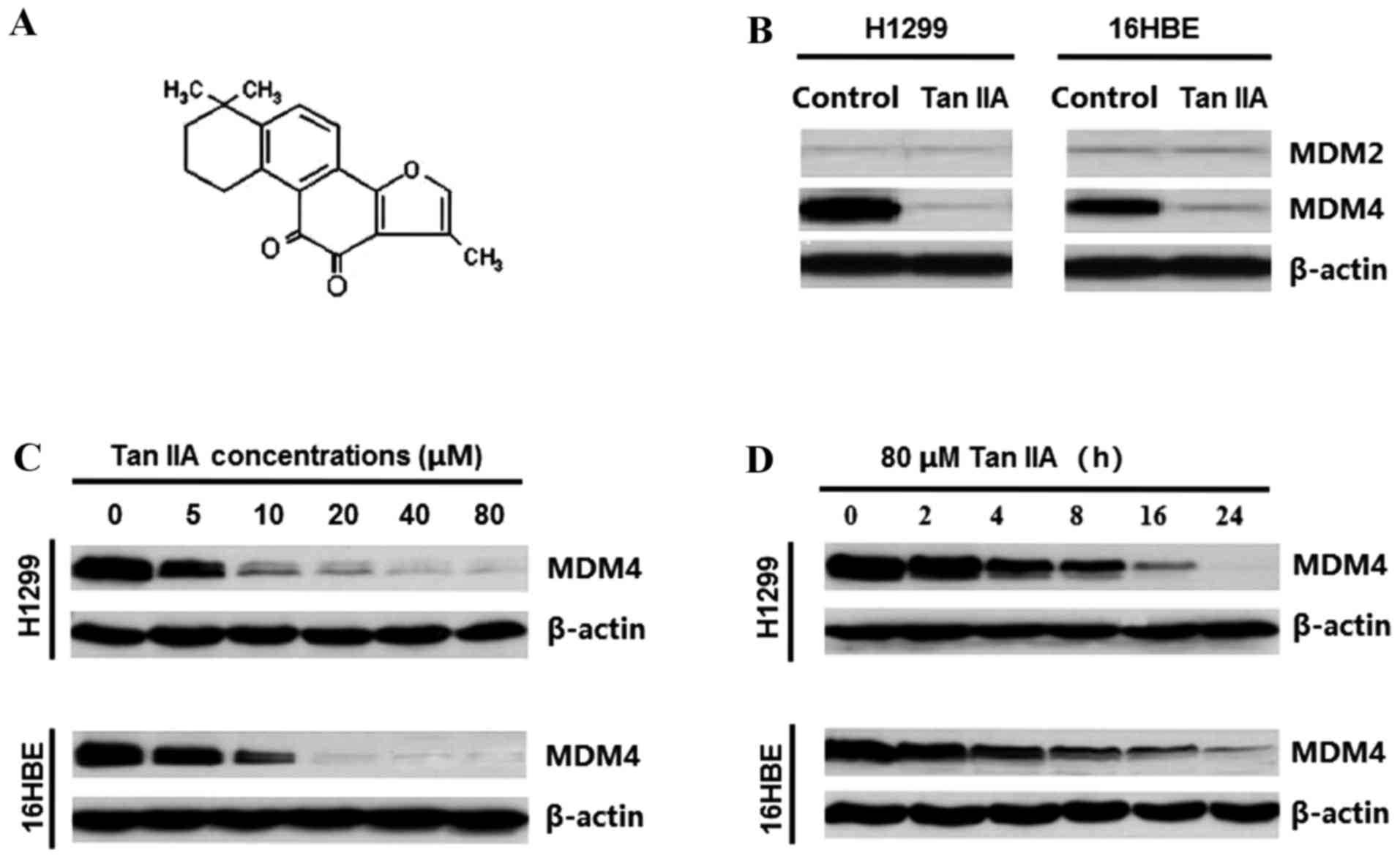
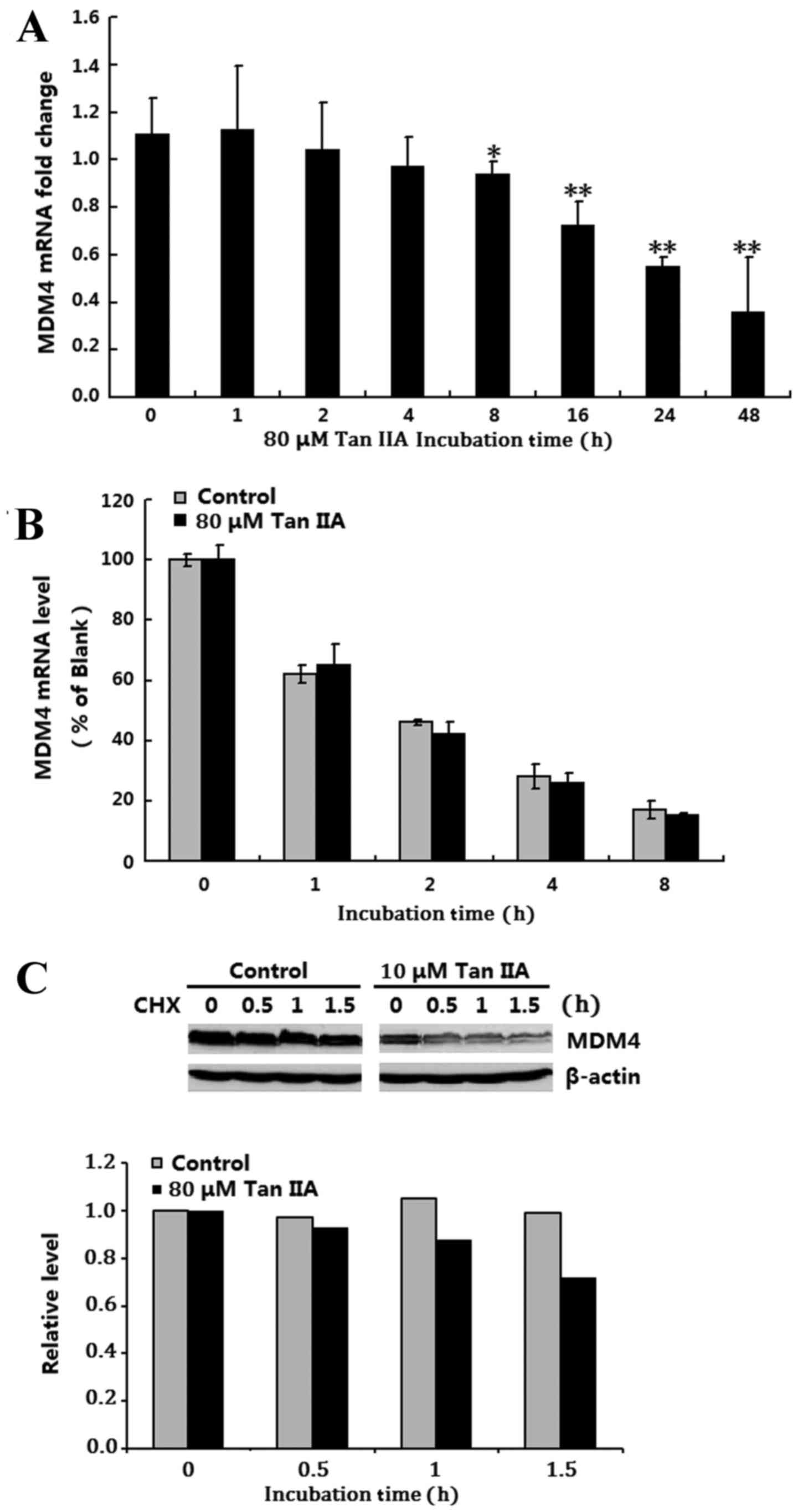
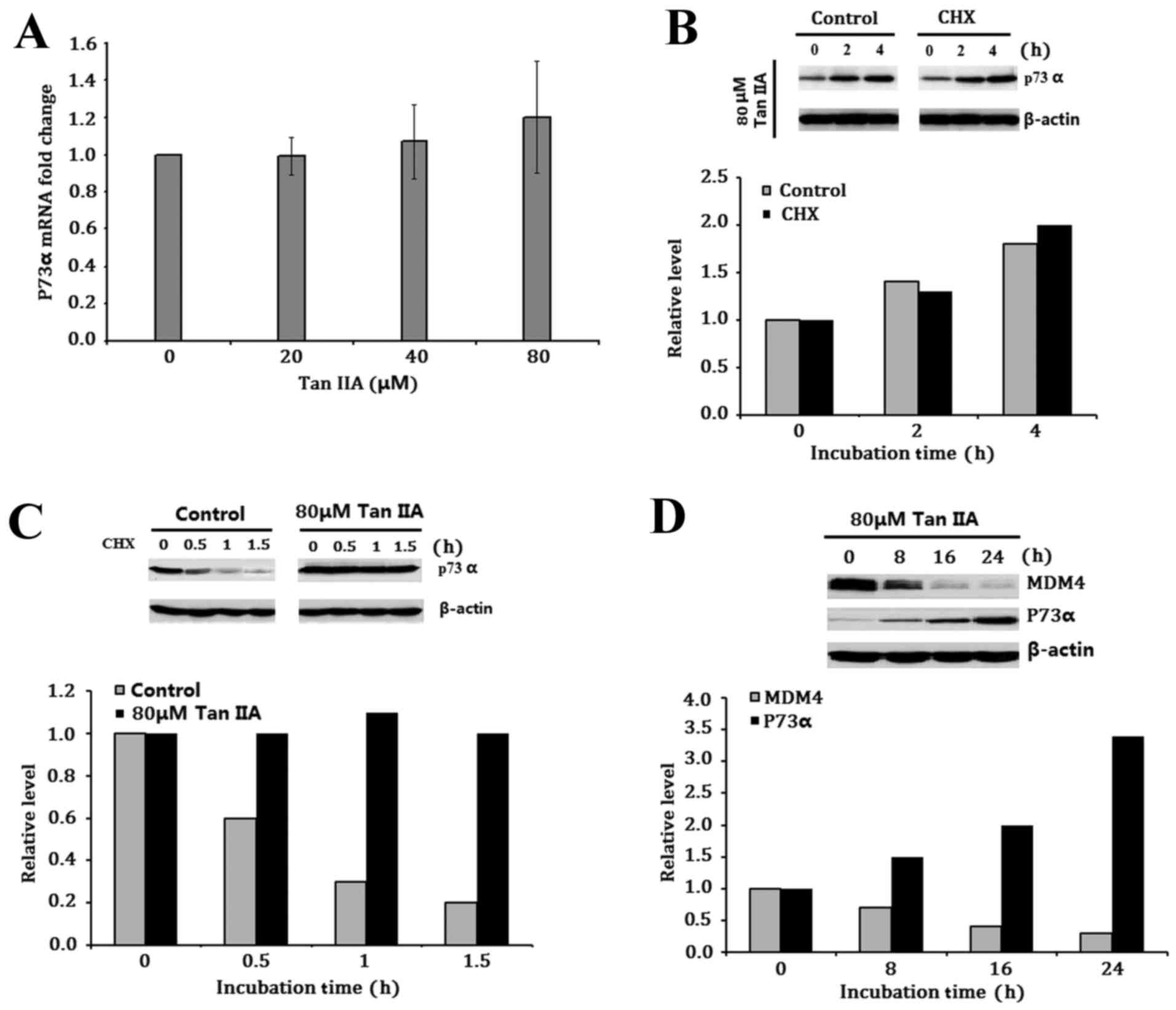
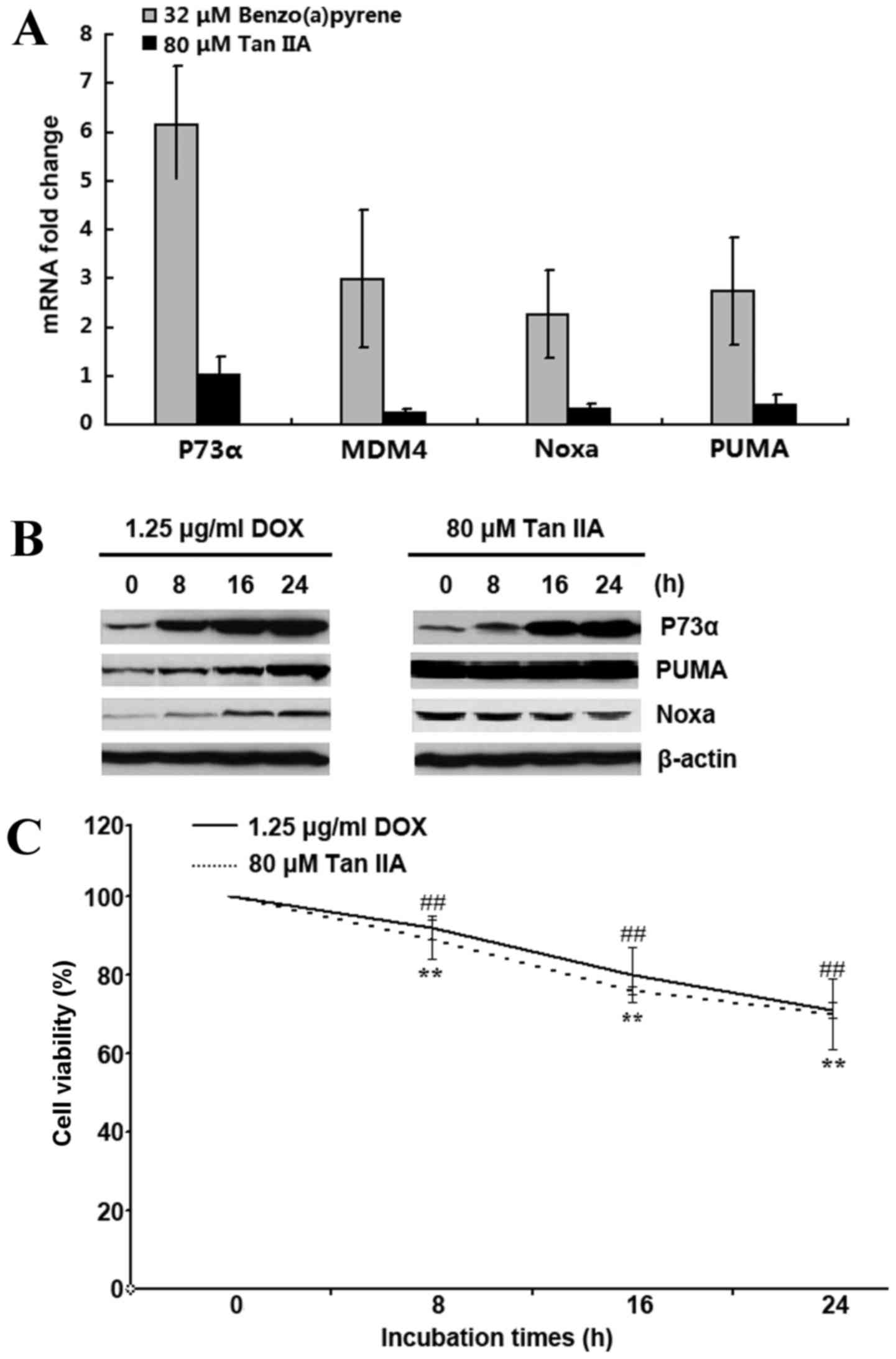
Tanshinone IIA (Tan IIA), as a bioactive compound extracted from the dried roots of Salvia miltiorrhiza (also known as Danshen), is known to inhibit cancer cell proliferation and induce apoptosis. However, the mechanisms underlying the function of Tan IIA in cancer cell apoptosis remain to be elucidated The aim of the present study was to identify the molecular mechanisms underlying the anti‑cancer effects of Tan IIA in p53‑deficient H1299 cells. Tan IIA was demonstrated to suppress murine double minute 4 (MDM4) expression in a time‑ and dose‑dependent manner through the inhibition of MDM4 mRNA synthesis. Tan IIA‑induced downregulation of MDM4 resulted in an increase of P73α and a decrease of inhibitor of apoptosis 3 (IAP3). However, P73α was not activated as two P73α target genes, BCL2 binding component 3 and phorbol‑12‑myristate‑13‑acetate‑induced protein 1, were not significantly induced. Tan IIA‑induced inhibition of IAP3 expression may be involved in Tan IIA‑induced apoptosis and inhibition of H1299 cell viability. Notably, a combination of Tan IIA and doxorubicin (DOX) exposure resulted in further MDM4 overexpression in H1299 cells, indicating that Tan IIA sensitized p53‑deficient and MDM4‑overexpressing H1299 cells to DOX‑induced apoptosis.
View Figures

Figure 1

Figure 2

Figure 3

Figure 4

Figure 5

Figure 6

Figure 7

View References

1 

Yang W, Ju JH, Jeon MJ, Han X and Shin I: Danshen (Salvia miltiorrhiza) extract inhibits proliferation of breast cancer cells via modulation of Akt activity and p27 level. Phytother Res. 24:198–204. 2010.PubMed/NCBI

2 

Franek KJ, Zhou Z, Zhang WD and Chen WY: In vitro studies of baicalin alone or in combination with Salvia miltiorrhiza extract as a potential anti-cancer agent. Int J Oncol. 26:217–224. 2005.PubMed/NCBI

3 

Munagala R, Aqil F, Jeyabalan J and Gupta RC: Tanshinone IIA inhibits viral oncogene expression leading to apoptosis and inhibition of cervical cancer. Cancer Lett. 356:536–546. 2015. View Article : Google Scholar : PubMed/NCBI

4 

Wang JF, Feng JG, Han J, Zhang BB and Mao WM: The molecular mechanisms of Tanshinone IIA on the apoptosis and arrest of human esophageal carcinoma cells. Biomed Res Int. 2014:5827302014.PubMed/NCBI

5 

Hwang SL, Yang JH, Jeong YT, Kim YD, Li X, Lu Y, Chang YC, Son KH and Chang HW: Tanshinone IIA improves endoplasmic reticulum stress-induced insulin resistance through AMP-activated protein kinase. Biochem Biophys Res Commun. 430:1246–1252. 2013. View Article : Google Scholar : PubMed/NCBI

6 

Shan YF, Shen X, Xie YK, Chen JC, Shi HQ, Yu ZP, Song QT, Zhou MT and Zhang QY: Inhibitory effects of tanshinone II-A on invasion and metastasis of human colon carcinoma cells. Acta Pharmacol Sin. 11:1537–1542. 2009. View Article : Google Scholar

7 

Chiu TL and Su CC: Tanshinone IIA induces apoptosis in human lung cancer A549 cells through the induction of reactive oxygen species and decreasing the mitochondrial membrane potential. Int J Mol Med. 25:231–236. 2010.PubMed/NCBI

8 

Reincke S, Govbakh L, Wilhelm B, Jin H, Bogdanova N, Bremer M, Karstens JH and Dörk T: Mutation analysis of the MDM4 gene in German breast cancer patients. BMC Cancer. 8:522008. View Article : Google Scholar : PubMed/NCBI

9 

Jiang Y, Rao K, Yang G, Chen X, Wang Q, Liu A, Zheng H and Yuan J: Benzo(a)pyrene induces p73 mRNA expression and necrosis in human lung adenocarcinoma H1299 cells. Environ Toxicol. 27:202–210. 2012. View Article : Google Scholar : PubMed/NCBI

10 

Alexandrova EM and Moll UM: Role of p53 family members p73 and p63 in human hematological malignancies. Leuk Lymphoma. 53:2116–2129. 2012. View Article : Google Scholar : PubMed/NCBI

11 

Fedorova NE, Emelianova SS, Vinogradskaya GR, Chichev EV, Murzakova AV, Kirichenko AA, Verbenko VN and Kushch AA: Effect of Anti-Cancer Drug Doxorubicine on Cytomegalovirus Infected Human Fibroblasts. Tsitologiia. 57:260–268. 2015.(In Russian). PubMed/NCBI

12 

Zaika AI, Kovalev S, Marchenko ND and Moll UM: Overexpression of the wild type p73 gene in breast cancer tissues and cell lines. Cancer Res. 59:3257–3263. 1999.PubMed/NCBI

13 

Stiewe T and Putzer BM: p73 in apoptosis. Apoptosis. 6:447–452. 2001. View Article : Google Scholar : PubMed/NCBI

14 

Momand J, Villegas A and Belyi VA: The evolution of MDM2 family genes. Gene. 486:23–30. 2011. View Article : Google Scholar : PubMed/NCBI

15 

Pei D, Zhang Y and Zheng J: Regulation of p53: A collaboration between Mdm2 and Mdmx. Oncotarget. 3:228–235. 2012. View Article : Google Scholar : PubMed/NCBI

16 

Michael D and Oren M: The p53 and Mdm2 families in cancer. Curr Opin Genet Dev. 12:53–59. 2002. View Article : Google Scholar : PubMed/NCBI

17 

Zeng X, Chen L, Jost CA, Maya R, Keller D, Wang X, Kaelin WG Jr, Oren M, Chen J and Lu H: MDM2 suppresses p73 function without promoting p73 degradation. Mol Cell Biol. 19:3257–3266. 1999. View Article : Google Scholar : PubMed/NCBI

18 

Katayama A, Ogino T, Bandoh N, Takahara M, Kishibe K, Nonaka S and Harabuchi Y: Overexpression of small ubiquitin-related modifier-1 and sumoylated Mdm2 in oral squamous cell carcinoma: Possible involvement in tumor proliferation and prognosis. Int J Oncol. 31:517–524. 2007.PubMed/NCBI

19 

Laurie NA, Donovan SL, Shih CS, Zhang J, Mills N, Fuller C, Teunisse A, Lam S, Ramos Y, Mohan A, et al: Inactivation of the p53 pathway in retinoblastoma. Nature. 444:61–66. 2006. View Article : Google Scholar : PubMed/NCBI

20 

Gustafsson B, Axelsson B, Gustafsson B, Christensson B and Winiarski J: MDM2 and p53 in childhood acute lymphoblastic leukemia: Higher expression in childhood leukemias with poor prognosis compared to long-term survivors. Pediatr Hematol Oncol. 18:497–508. 2001. View Article : Google Scholar : PubMed/NCBI

21 

Gustafsson B, Christenson B, Hjalmar V and Winiarski J: Cellular expression of MDM2 and p53 in childhood leukemias with poor prognosis. Med Pediatr Oncol. 34:117–124. 2000. View Article : Google Scholar : PubMed/NCBI

22 

Livak KJ and Schmittgen TD: Analysis of relative gene expression data using real-time quantitative PCR and 2(-Delta Delta C(T)) method. Methods. 25:402–408. 2001. View Article : Google Scholar : PubMed/NCBI

23 

Croons V, Martinet W, De Herman AG and Meyer GR: Differential effect of the protein synthesis inhibitors puromycin and cycloheximide on vascular smooth muscle cell viability. J Pharmacol Exp Ther. 325:824–832. 2008. View Article : Google Scholar : PubMed/NCBI

24 

Melino G, Bernassola F, Ranalli M, Yee K, Zong WX, Corazzari M, Knight RA, Green DR, Thompson C and Vousden KH: p73 Induces apoptosis via PUMA transactivation and Bax mitochondrial translocation. J Biol Chem. 27:279: 8076–8083. 2004.

25 

Grande L, Bretones G, Rosa-Garrido M, Garrido-Martin EM, Hernandez T, Fraile S, Botella L, de Alava E, Vidal A, Garcia del Muro X, et al: Transcription factors Sp1 and p73 control the expression of the proapoptotic protein NOXA in the response of testicular embryonal carcinoma cells to cisplatin. J Biol Chem. 287:26495–26505. 2012. View Article : Google Scholar : PubMed/NCBI

26 

Gu L, Zhu N, Zhang H, Durden DL, Feng Y and Zhou M: Regulation of XIAP translation and induction by MDM2 following irradiation. Cancer Cell. 15:363–375. 2009. View Article : Google Scholar : PubMed/NCBI

27 

Zhang J, Wang J, Jiang JY, Liu SD, Fu K and Liu HY: Tanshinone IIA induces cytochrome c-mediated caspase cascade apoptosis in A549 human lung cancer cells via the JNK pathway. Int J Oncol. 45:683–690. 2014. View Article : Google Scholar : PubMed/NCBI

28 

Chow KU, Nowak D, Boehrer S, Ruthardt M, Knau A, Hoelzer D, Mitrou PS and Weidmann E: Synergistic effects of chemotherapeutic drugs in lymphoma cells are associated with down-regulation of inhibitor of apoptosis proteins (IAPs), prostate-apoptosis-response-gene 4 (Par-4), death-associated protein (Daxx) and with enforced caspase activation. Biochem Pharmacol. 66:711–724. 2003. View Article : Google Scholar : PubMed/NCBI

29 

LaCasse EC, Mahoney DJ, Cheung HH, Plenchette S, Baird S and Korneluk RG: IAP-targeted therapies for cancer. Oncogene. 27:6252–6275. 2008. View Article : Google Scholar : PubMed/NCBI

30 

Eckelman BP, Salvesen GS and Scott FL: Human inhibitor of apoptosis proteins: Why XIAP is the black sheep of the family. EMBO Rep. 7:988–994. 2006. View Article : Google Scholar : PubMed/NCBI

31 

Wang R, Li B, Wang X, Lin F, Gao P, Cheng SY and Zhang HZ: Inhibiting XIAP expression by RNAi to inhibit proliferation and enhance radiosensitivity in laryngeal cancer cell line. Auris Nasus Larynx. 36:332–339. 2009. View Article : Google Scholar : PubMed/NCBI

32 

Qiao L, Li GH, Dai Y, Wang J, Li Z, Zou B, Gu Q, Ma J, Pang R, Lan HY and Wong BC: Gene expression profile in colon cancer cells with respect to XIAP expression status. Int J Colorectal Dis. 24:245–260. 2009. View Article : Google Scholar : PubMed/NCBI

33 

Paschall AV, Zimmerman MA, Torres CM, Yang D, Chen MR, Li X, Bieberich E, Bai A, Bielawski J, Bielawska A and Liuet K: Ceramide targets xIAP and cIAP1 to sensitize metastatic colon and breast cancer cells to apoptosis induction to suppress tumor progression. BMC Cancer. 14:242014. View Article : Google Scholar : PubMed/NCBI

34 

Golovine K, Makhov P, Uzzo RG, Kutikov A, Kaplan DJ, Fox E and Kolenko VM: Cadmium down-regulates expression of XIAP at the post-transcriptional level in prostate cancer cells through an NF-kappaB-independent, proteasome-mediated mechanism. Mol Cancer. 9:1832010. View Article : Google Scholar : PubMed/NCBI

35 

Wang L, He G, Zhang P, Wang X, Jiang M and Yu L: Interplay between MDM2, MDMX, Pirh2 and COP1: The negative regulators of p53. Mol Biol Rep. 38:229–236. 2011. View Article : Google Scholar : PubMed/NCBI

36 

Zhu ZF, Chen LJ, Lu R, Jia J, Liang Y, Xu Q, Zhou CL, Wang L, Wang S and Yao Z: Tripeptide tyroserleutide plus doxorubicin: Therapeutic synergy and side effect attenuation. BMC Cancer. 8:3422008. View Article : Google Scholar : PubMed/NCBI

37 

Carvalho C, Santos RX, Cardoso S, Correia S, Oliveira PJ, Santos MS and Moreira PI: Doxorubicin: The good, the bad and the ugly effect. Curr Med Chem. 16:3267–3285. 2009. View Article : Google Scholar : PubMed/NCBI

38 

Zeidán Q, Strauss M, Porras N and Anselmi G: Differential long-term subcellular responses in heart and liver to adriamycin stress. Exogenous L-carnitine cardiac and hepatic protection. J Submicrosc Cytol Pathol. 34:315–321. 2002.PubMed/NCBI

39 

Wang J, Ma W and Tu P: Synergistically Improved Anti-tumor Efficacy by Co-delivery Doxorubicin and Curcumin Polymeric Micelles. Macromol Biosci. 15:1252–1261. 2015. View Article : Google Scholar : PubMed/NCBI

Related Articles

  • Abstract
  • View
  • Download
  • Twitter
Copy and paste a formatted citation
Spandidos Publications style
Zu Y, Wang J, Ping W and Sun W: Tan IIA inhibits H1299 cell viability through the MDM4‑IAP3 signaling pathway Retraction in /10.3892/mmr.2025.13435. Mol Med Rep 17: 2384-2392, 2018.
APA
Zu, Y., Wang, J., Ping, W., & Sun, W. (2018). Tan IIA inhibits H1299 cell viability through the MDM4‑IAP3 signaling pathway Retraction in /10.3892/mmr.2025.13435. Molecular Medicine Reports, 17, 2384-2392. https://doi.org/10.3892/mmr.2017.8152
MLA
Zu, Y., Wang, J., Ping, W., Sun, W."Tan IIA inhibits H1299 cell viability through the MDM4‑IAP3 signaling pathway Retraction in /10.3892/mmr.2025.13435". Molecular Medicine Reports 17.2 (2018): 2384-2392.
Chicago
Zu, Y., Wang, J., Ping, W., Sun, W."Tan IIA inhibits H1299 cell viability through the MDM4‑IAP3 signaling pathway Retraction in /10.3892/mmr.2025.13435". Molecular Medicine Reports 17, no. 2 (2018): 2384-2392. https://doi.org/10.3892/mmr.2017.8152
Copy and paste a formatted citation
x
Spandidos Publications style
Zu Y, Wang J, Ping W and Sun W: Tan IIA inhibits H1299 cell viability through the MDM4‑IAP3 signaling pathway Retraction in /10.3892/mmr.2025.13435. Mol Med Rep 17: 2384-2392, 2018.
APA
Zu, Y., Wang, J., Ping, W., & Sun, W. (2018). Tan IIA inhibits H1299 cell viability through the MDM4‑IAP3 signaling pathway Retraction in /10.3892/mmr.2025.13435. Molecular Medicine Reports, 17, 2384-2392. https://doi.org/10.3892/mmr.2017.8152
MLA
Zu, Y., Wang, J., Ping, W., Sun, W."Tan IIA inhibits H1299 cell viability through the MDM4‑IAP3 signaling pathway Retraction in /10.3892/mmr.2025.13435". Molecular Medicine Reports 17.2 (2018): 2384-2392.
Chicago
Zu, Y., Wang, J., Ping, W., Sun, W."Tan IIA inhibits H1299 cell viability through the MDM4‑IAP3 signaling pathway Retraction in /10.3892/mmr.2025.13435". Molecular Medicine Reports 17, no. 2 (2018): 2384-2392. https://doi.org/10.3892/mmr.2017.8152
Follow us
  • Twitter
  • LinkedIn
  • Facebook
About
  • Spandidos Publications
  • Careers
  • Cookie Policy
  • Privacy Policy
How can we help?
  • Help
  • Live Chat
  • Contact
  • Email to our Support Team