Spandidos Publications Logo
  • About
    • About Spandidos
    • Aims and Scopes
    • Abstracting and Indexing
    • Editorial Policies
    • Reprints and Permissions
    • Job Opportunities
    • Terms and Conditions
    • Contact
  • Journals
    • All Journals
    • Oncology Letters
      • Oncology Letters
      • Information for Authors
      • Editorial Policies
      • Editorial Board
      • Aims and Scope
      • Abstracting and Indexing
      • Bibliographic Information
      • Archive
    • International Journal of Oncology
      • International Journal of Oncology
      • Information for Authors
      • Editorial Policies
      • Editorial Board
      • Aims and Scope
      • Abstracting and Indexing
      • Bibliographic Information
      • Archive
    • Molecular and Clinical Oncology
      • Molecular and Clinical Oncology
      • Information for Authors
      • Editorial Policies
      • Editorial Board
      • Aims and Scope
      • Abstracting and Indexing
      • Bibliographic Information
      • Archive
    • Experimental and Therapeutic Medicine
      • Experimental and Therapeutic Medicine
      • Information for Authors
      • Editorial Policies
      • Editorial Board
      • Aims and Scope
      • Abstracting and Indexing
      • Bibliographic Information
      • Archive
    • International Journal of Molecular Medicine
      • International Journal of Molecular Medicine
      • Information for Authors
      • Editorial Policies
      • Editorial Board
      • Aims and Scope
      • Abstracting and Indexing
      • Bibliographic Information
      • Archive
    • Biomedical Reports
      • Biomedical Reports
      • Information for Authors
      • Editorial Policies
      • Editorial Board
      • Aims and Scope
      • Abstracting and Indexing
      • Bibliographic Information
      • Archive
    • Oncology Reports
      • Oncology Reports
      • Information for Authors
      • Editorial Policies
      • Editorial Board
      • Aims and Scope
      • Abstracting and Indexing
      • Bibliographic Information
      • Archive
    • Molecular Medicine Reports
      • Molecular Medicine Reports
      • Information for Authors
      • Editorial Policies
      • Editorial Board
      • Aims and Scope
      • Abstracting and Indexing
      • Bibliographic Information
      • Archive
    • World Academy of Sciences Journal
      • World Academy of Sciences Journal
      • Information for Authors
      • Editorial Policies
      • Editorial Board
      • Aims and Scope
      • Abstracting and Indexing
      • Bibliographic Information
      • Archive
    • International Journal of Functional Nutrition
      • International Journal of Functional Nutrition
      • Information for Authors
      • Editorial Policies
      • Editorial Board
      • Aims and Scope
      • Abstracting and Indexing
      • Bibliographic Information
      • Archive
    • International Journal of Epigenetics
      • International Journal of Epigenetics
      • Information for Authors
      • Editorial Policies
      • Editorial Board
      • Aims and Scope
      • Abstracting and Indexing
      • Bibliographic Information
      • Archive
    • Medicine International
      • Medicine International
      • Information for Authors
      • Editorial Policies
      • Editorial Board
      • Aims and Scope
      • Abstracting and Indexing
      • Bibliographic Information
      • Archive
  • Articles
  • Information
    • Information for Authors
    • Information for Reviewers
    • Information for Librarians
    • Information for Advertisers
    • Conferences
  • Language Editing
Spandidos Publications Logo
  • About
    • About Spandidos
    • Aims and Scopes
    • Abstracting and Indexing
    • Editorial Policies
    • Reprints and Permissions
    • Job Opportunities
    • Terms and Conditions
    • Contact
  • Journals
    • All Journals
    • Biomedical Reports
      • Information for Authors
      • Editorial Policies
      • Editorial Board
      • Aims and Scope
      • Abstracting and Indexing
      • Bibliographic Information
      • Archive
    • Experimental and Therapeutic Medicine
      • Information for Authors
      • Editorial Policies
      • Editorial Board
      • Aims and Scope
      • Abstracting and Indexing
      • Bibliographic Information
      • Archive
    • International Journal of Epigenetics
      • Information for Authors
      • Editorial Policies
      • Editorial Board
      • Aims and Scope
      • Abstracting and Indexing
      • Bibliographic Information
      • Archive
    • International Journal of Functional Nutrition
      • Information for Authors
      • Editorial Policies
      • Editorial Board
      • Aims and Scope
      • Abstracting and Indexing
      • Bibliographic Information
      • Archive
    • International Journal of Molecular Medicine
      • Information for Authors
      • Editorial Policies
      • Editorial Board
      • Aims and Scope
      • Abstracting and Indexing
      • Bibliographic Information
      • Archive
    • International Journal of Oncology
      • Information for Authors
      • Editorial Policies
      • Editorial Board
      • Aims and Scope
      • Abstracting and Indexing
      • Bibliographic Information
      • Archive
    • Medicine International
      • Information for Authors
      • Editorial Policies
      • Editorial Board
      • Aims and Scope
      • Abstracting and Indexing
      • Bibliographic Information
      • Archive
    • Molecular and Clinical Oncology
      • Information for Authors
      • Editorial Policies
      • Editorial Board
      • Aims and Scope
      • Abstracting and Indexing
      • Bibliographic Information
      • Archive
    • Molecular Medicine Reports
      • Information for Authors
      • Editorial Policies
      • Editorial Board
      • Aims and Scope
      • Abstracting and Indexing
      • Bibliographic Information
      • Archive
    • Oncology Letters
      • Information for Authors
      • Editorial Policies
      • Editorial Board
      • Aims and Scope
      • Abstracting and Indexing
      • Bibliographic Information
      • Archive
    • Oncology Reports
      • Information for Authors
      • Editorial Policies
      • Editorial Board
      • Aims and Scope
      • Abstracting and Indexing
      • Bibliographic Information
      • Archive
    • World Academy of Sciences Journal
      • Information for Authors
      • Editorial Policies
      • Editorial Board
      • Aims and Scope
      • Abstracting and Indexing
      • Bibliographic Information
      • Archive
  • Articles
  • Information
    • For Authors
    • For Reviewers
    • For Librarians
    • For Advertisers
    • Conferences
  • Language Editing
Login Register Submit
  • This site uses cookies
  • You can change your cookie settings at any time by following the instructions in our Cookie Policy. To find out more, you may read our Privacy Policy.

    I agree
Search articles by DOI, keyword, author or affiliation
Search
Advanced Search
presentation
Molecular Medicine Reports
Join Editorial Board Propose a Special Issue
Print ISSN: 1791-2997 Online ISSN: 1791-3004
Journal Cover
June-2018 Volume 17 Issue 6

Full Size Image

Sign up for eToc alerts
Recommend to Library

Journals

International Journal of Molecular Medicine

International Journal of Molecular Medicine

International Journal of Molecular Medicine is an international journal devoted to molecular mechanisms of human disease.

International Journal of Oncology

International Journal of Oncology

International Journal of Oncology is an international journal devoted to oncology research and cancer treatment.

Molecular Medicine Reports

Molecular Medicine Reports

Covers molecular medicine topics such as pharmacology, pathology, genetics, neuroscience, infectious diseases, molecular cardiology, and molecular surgery.

Oncology Reports

Oncology Reports

Oncology Reports is an international journal devoted to fundamental and applied research in Oncology.

Experimental and Therapeutic Medicine

Experimental and Therapeutic Medicine

Experimental and Therapeutic Medicine is an international journal devoted to laboratory and clinical medicine.

Oncology Letters

Oncology Letters

Oncology Letters is an international journal devoted to Experimental and Clinical Oncology.

Biomedical Reports

Biomedical Reports

Explores a wide range of biological and medical fields, including pharmacology, genetics, microbiology, neuroscience, and molecular cardiology.

Molecular and Clinical Oncology

Molecular and Clinical Oncology

International journal addressing all aspects of oncology research, from tumorigenesis and oncogenes to chemotherapy and metastasis.

World Academy of Sciences Journal

World Academy of Sciences Journal

Multidisciplinary open-access journal spanning biochemistry, genetics, neuroscience, environmental health, and synthetic biology.

International Journal of Functional Nutrition

International Journal of Functional Nutrition

Open-access journal combining biochemistry, pharmacology, immunology, and genetics to advance health through functional nutrition.

International Journal of Epigenetics

International Journal of Epigenetics

Publishes open-access research on using epigenetics to advance understanding and treatment of human disease.

Medicine International

Medicine International

An International Open Access Journal Devoted to General Medicine.

Journal Cover
June-2018 Volume 17 Issue 6

Full Size Image

Sign up for eToc alerts
Recommend to Library

  • Article
  • Citations
    • Cite This Article
    • Download Citation
    • Create Citation Alert
    • Remove Citation Alert
    • Cited By
  • Similar Articles
    • Related Articles (in Spandidos Publications)
    • Similar Articles (Google Scholar)
    • Similar Articles (PubMed)
  • Download PDF
  • Download XML
  • View XML
Article Open Access

Regulation of the expression of tumor necrosis factor‑related genes by abnormal histone H3K27 acetylation: Implications for neural tube defects

  • Authors:
    • Chunlei Wan
    • Xiaozhen Liu
    • Baoling Bai
    • Haiyan Cao
    • Huili Li
    • Qin Zhang
  • View Affiliations / Copyright

    Affiliations: Beijing Municipal Key Laboratory of Child Development and Nutriomics, Capital Institute of Pediatrics, Peking University Teaching Hospital, Beijing 100020, P.R. China
    Copyright: © Wan et al. This is an open access article distributed under the terms of Creative Commons Attribution License.
  • Pages: 8031-8038
    |
    Published online on: April 19, 2018
       https://doi.org/10.3892/mmr.2018.8900
  • Expand metrics +
Metrics: Total Views: 0 (Spandidos Publications: | PMC Statistics: )
Metrics: Total PDF Downloads: 0 (Spandidos Publications: | PMC Statistics: )
Cited By (CrossRef): 0 citations Loading Articles...

This article is mentioned in:


Abstract

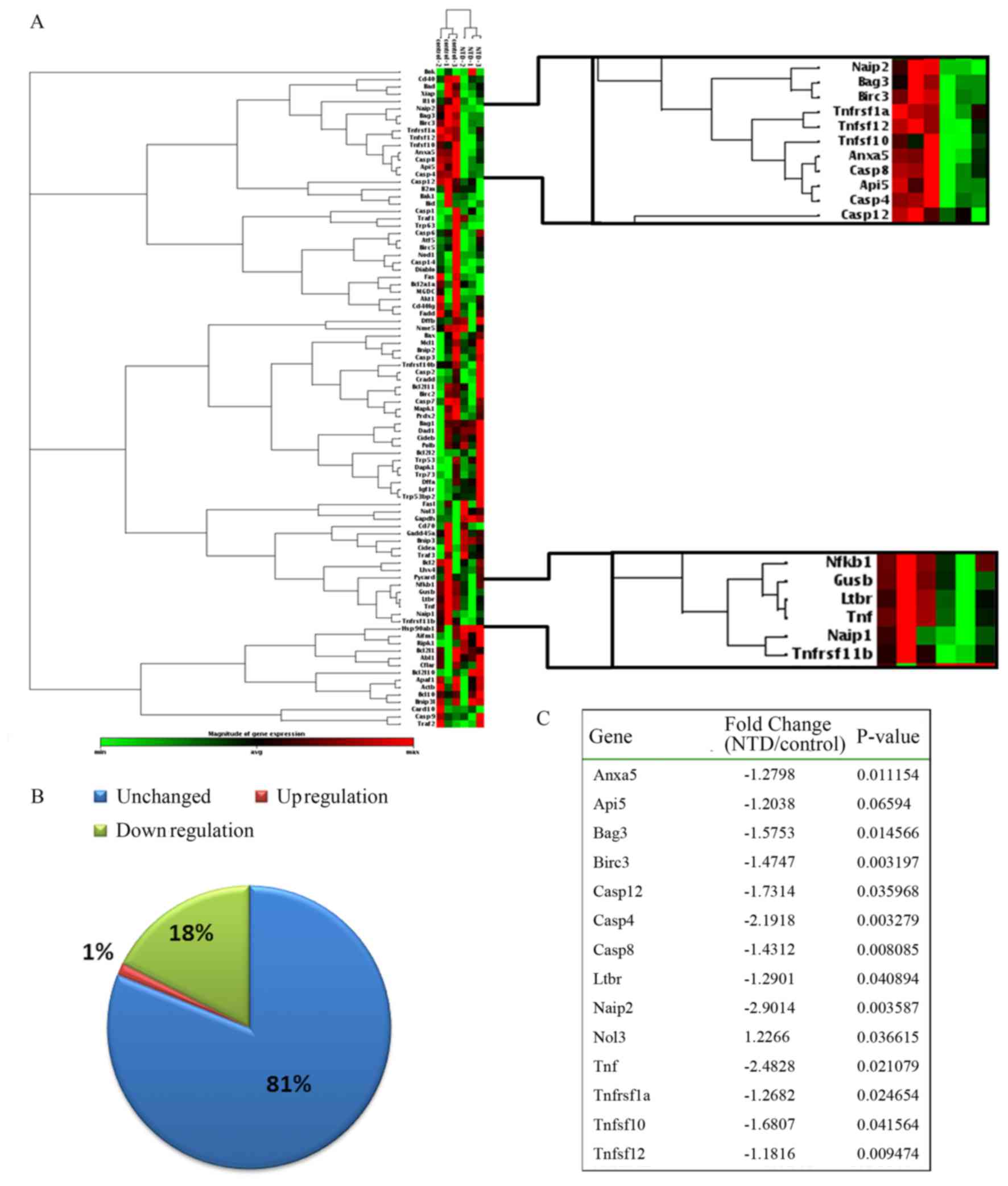
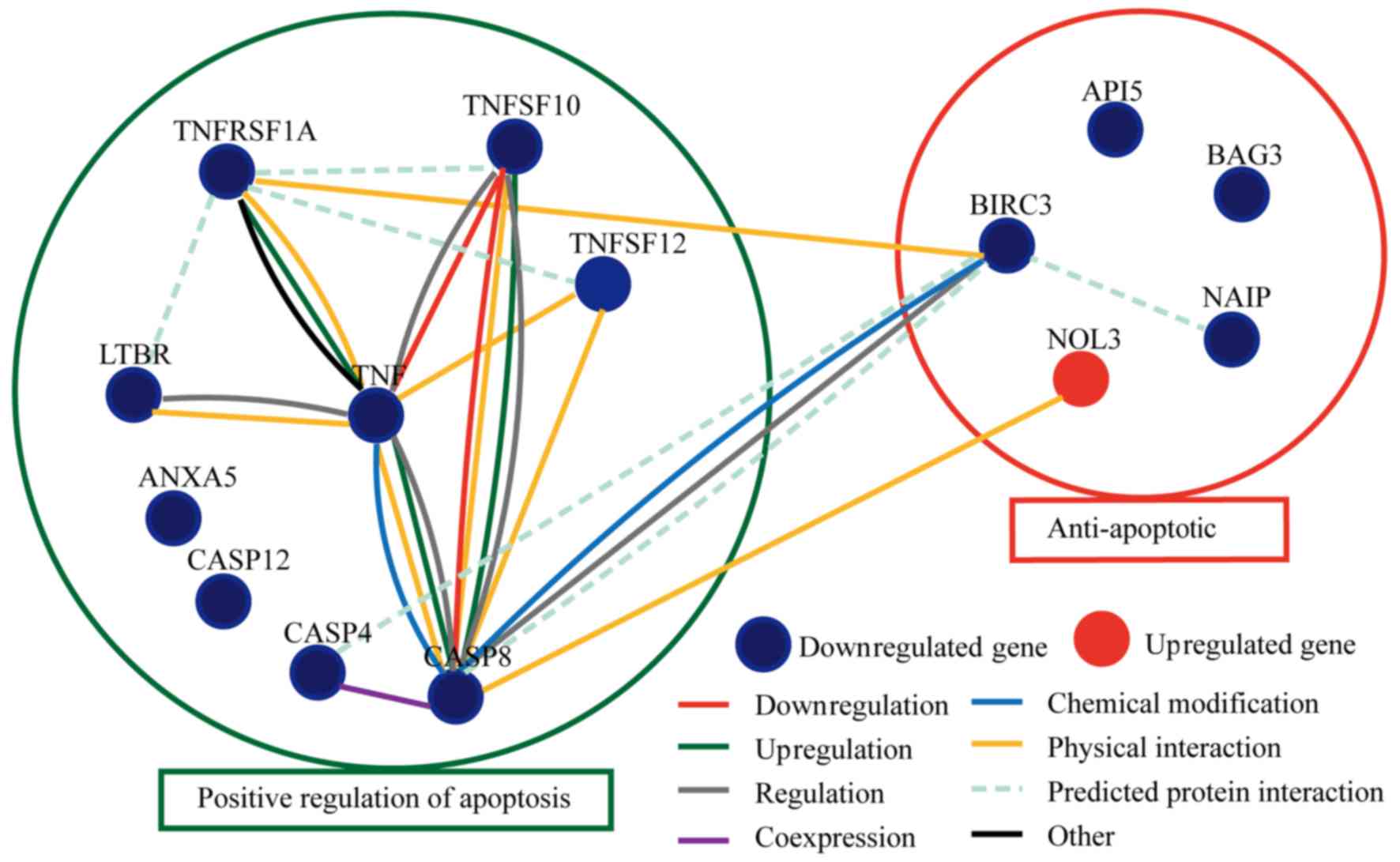
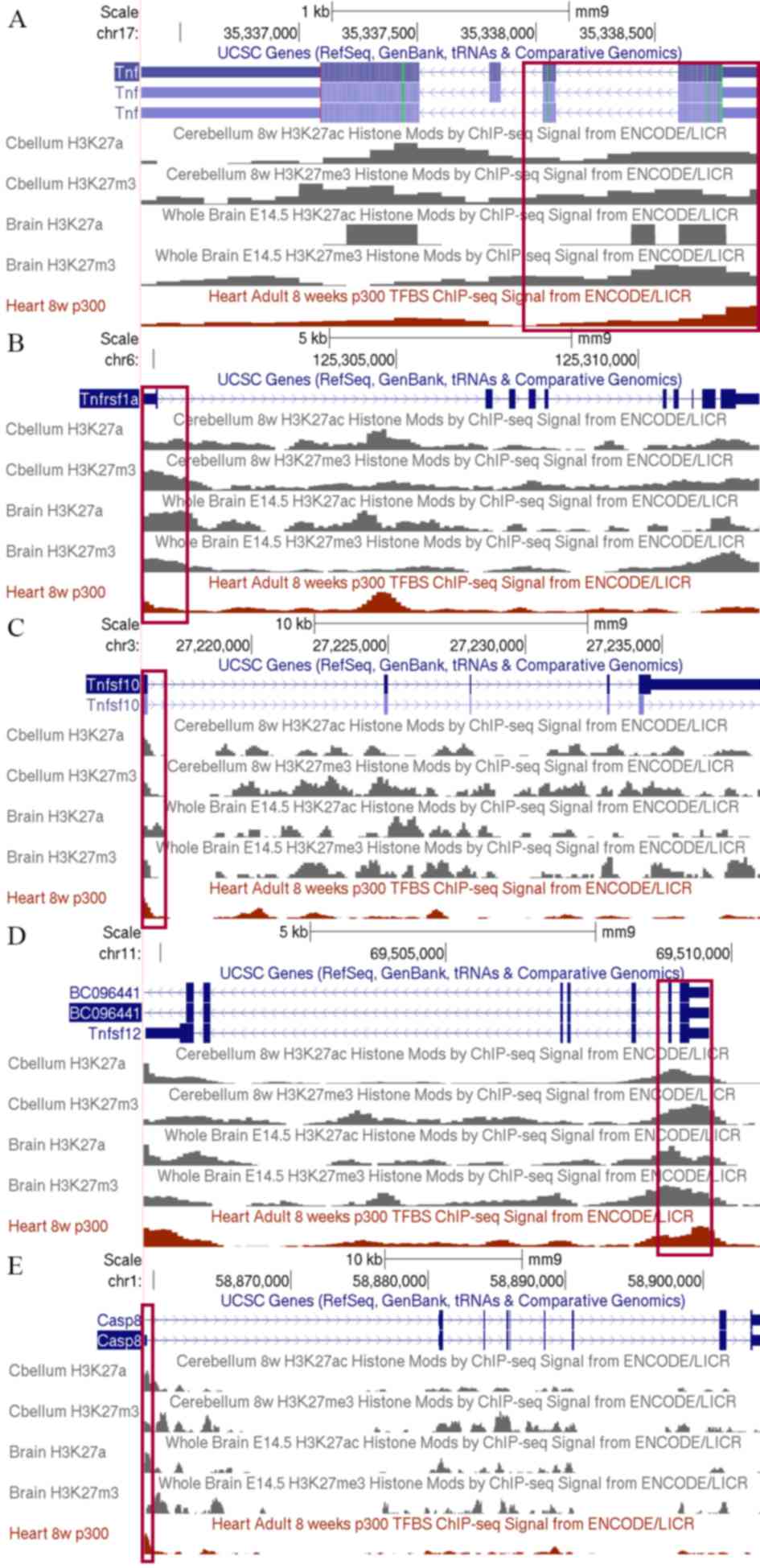
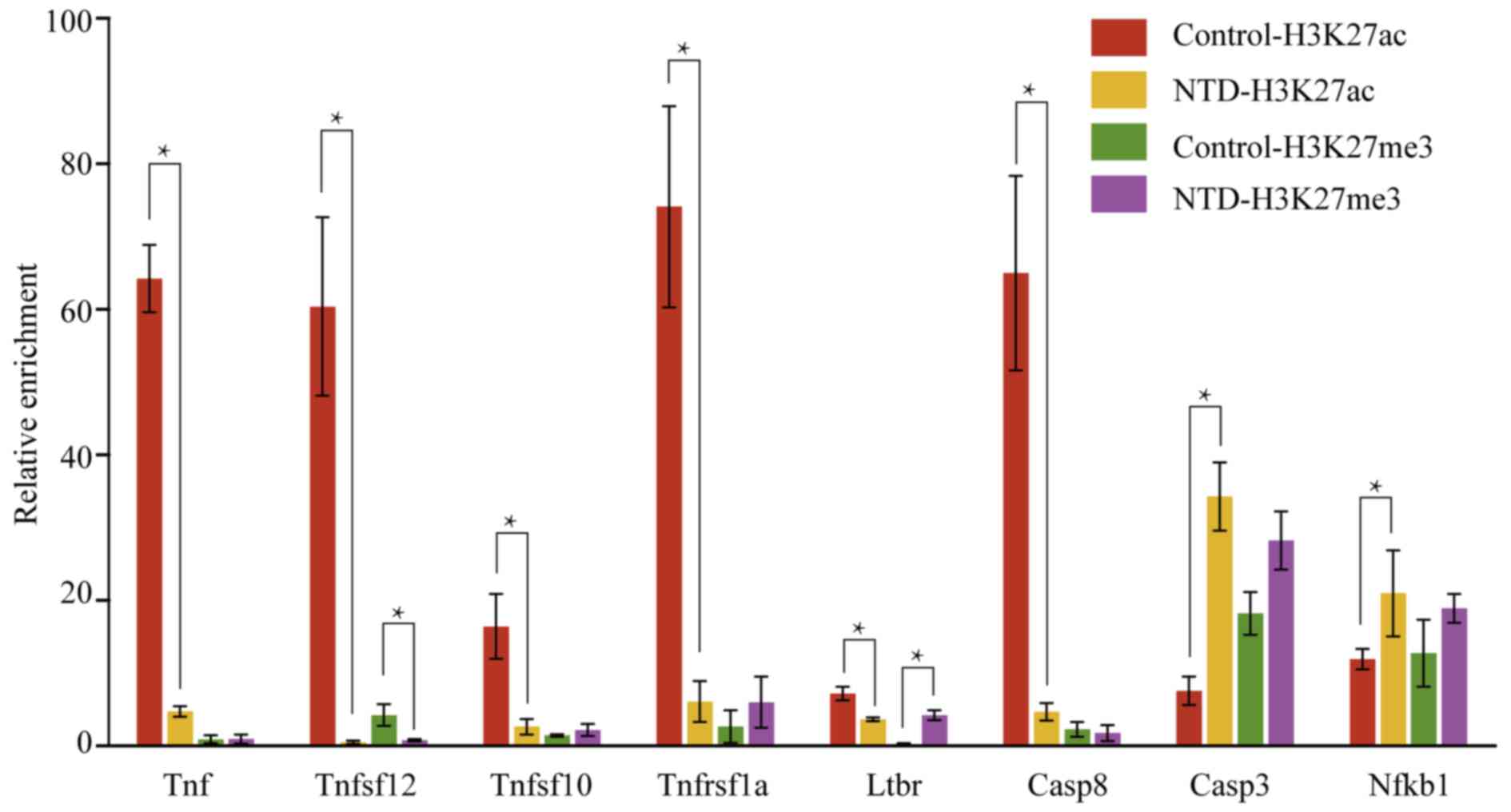
The association between apoptosis and neural tube defects (NTDs) is recognized as important, however, the precise link remains to be elucidated. Epigenetic modifications in human NTDs have been detected previously. In the present study, the occurrence of epigenetic modifications in apoptosis‑related genes was investigated in a retinoic acid (RA)‑induced mouse NTD model. Among 84 key genes involved in programmed cell death, 13 genes, including tumor necrosis factor (Tnf), annexin A5, apoptosis inhibitor 5, Bcl2‑associated athanogene 3, baculoviral IAP repeat‑containing 3, caspase (Casp)12, Casp4, Casp8, lymphotoxin β receptor, NLR family, apoptosis inhibitory protein 2, TNF receptor superfamily (Tnfrsf)1a, TNF superfamily (Tnfs)f10 and Tnfsf12, were downregulated, whereas nucleolar protein 3 was upregulated in the RA‑induced NTD mice. Chromatin immunoprecipitation assays revealed that the regulatory regions of these differentially expressed TNF‑related genes showed reduced histone H3K27 acetylation in NTDs, compared with control mice without NTDs. Reverse transcription‑quantitative polymerase chain reaction revealed that H3K27ac‑binding to the differentially regulated genes was markedly decreased in the NTD mice, whereas binding to the unchanged genes Casp3 and Nfkb1 was unaffected. In conclusion, certain TNF‑related genes appeared to be downregulated in NTDs, possibly as a result of abnormal histone H3K27 acetylation. These results shed new light on the epigenetic dysregulation of apoptosis‑related genes in NTDs.
View Figures

Figure 1

Figure 2

Figure 3

Figure 4

View References

1 

Williams J, Mai CT, Mulinare J, Isenburg J, Flood TJ, Ethen M, Frohnert B and Kirby RS: Centers for Disease Control and Prevention: Updated estimates of neural tube defects prevented by mandatory folic Acid fortification-United States, 1995–2011. MMWR Morb Mortal Wkly Rep. 64:1–5. 2015.PubMed/NCBI

2 

Li Z, Ren A, Zhang L, Ye R, Li S, Zheng J, Hong S, Wang T and Li Z: Extremely high prevalence of neural tube defects in a 4-county area in Shanxi Province, China. Birth Defects Res A Clin Mol Teratol. 76:237–240. 2006. View Article : Google Scholar : PubMed/NCBI

3 

Hansler A, Chen Q, Gray JD, Ross ME, Finnell RH and Gross SS: Untargeted metabolite profiling of murine embryos to reveal metabolic perturbations associated with neural tube closure defects. Birth Defects Res A Clin Mol Teratol. 100:623–632. 2014. View Article : Google Scholar : PubMed/NCBI

4 

Copp AJ, Greene ND and Murdoch JN: The genetic basis of mammalian neurulation. Nat Rev Genet. 4:784–793. 2003. View Article : Google Scholar : PubMed/NCBI

5 

Maden M, Gale E and Zile M: The role of vitamin A in the development of the central nervous system. J Nutr. 128 2 Suppl:471S–475S. 1998. View Article : Google Scholar : PubMed/NCBI

6 

Wei X, Li H, Miao J, Zhou F, Liu B, Wu D, Li S, Wang L, Fan Y, Wang W and Yuan Z: Disturbed apoptosis and cell proliferation in developing neuroepithelium of lumbo-sacral neural tubes in retinoic acid-induced spina bifida aperta in rat. Int J Dev Neurosci. 30:375–381. 2012. View Article : Google Scholar : PubMed/NCBI

7 

Alles AJ and Sulik KK: Retinoic acid-induced spina bifida: Evidence for a pathogenetic mechanism. Development. 108:73–81. 1990.PubMed/NCBI

8 

Ha M, Ng DW, Li WH and Chen ZJ: Coordinated histone modifications are associated with gene expression variation within and between species. Genome Res. 21:590–598. 2011. View Article : Google Scholar : PubMed/NCBI

9 

Rada-Iglesias A, Bajpai R, Swigut T, Brugmann SA, Flynn RA and Wysocka J: A unique chromatin signature uncovers early developmental enhancers in humans. Nature. 470:279–283. 2011. View Article : Google Scholar : PubMed/NCBI

10 

Balmer NV, Weng MK, Zimmer B, Ivanova VN, Chambers SM, Nikolaeva E, Jagtap S, Sachinidis A, Hescheler J, Waldmann T and Leist M: Epigenetic changes and disturbed neural development in a human embryonic stem cell-based model relating to the fetal valproate syndrome. Hum Mol Genet. 21:4104–4114. 2012. View Article : Google Scholar : PubMed/NCBI

11 

Copp AJ and Greene ND: Genetics and development of neural tube defects. J Pathol. 220:217–230. 2010.PubMed/NCBI

12 

Wang L, Wang F, Guan J, Le J, Wu L, Zou J, Zhao H, Pei L, Zheng X and Zhang T: Relation between hypomethylation of long interspersed nucleotide elements and risk of neural tube defects. Am J Clin Nutr. 91:1359–1367. 2010. View Article : Google Scholar : PubMed/NCBI

13 

Zhang Q, Xue P, Li H, Bao Y, Wu L, Chang S, Niu B, Yang F and Zhang T: Histone modification mapping in human brain reveals aberrant expression of histone H3 lysine 79 dimethylation in neural tube defects. Neurobiol Dis. 54:404–413. 2013. View Article : Google Scholar : PubMed/NCBI

14 

Chen S, Bai B, Wang X, Li H and Zhang T: Retinoic acid induced neural tube defects in C57 mice in a dose-dependent and time-specific way. Chin J Birth Health Heredity. 126–128. 2014.(In Chinese).

15 

Livak KJ and Schmittgen TD: Analysis of relative gene expression data using real-time quantitative PCR and the 2(-Delta Delta C(T)) method. Methods. 25:402–408. 2001. View Article : Google Scholar : PubMed/NCBI

16 

Martin DA, Siegel RM, Zheng L and Lenardo MJ: Membrane oligomerization and cleavage activates the caspase-8 (FLICE/MACHalpha1) death signal. J Biol Chem. 273:4345–4349. 1998. View Article : Google Scholar : PubMed/NCBI

17 

Mahmood Z and Shukla Y: Death receptors: Targets for cancer therapy. Exp Cell Res. 316:887–899. 2010. View Article : Google Scholar : PubMed/NCBI

18 

Varfolomeev EE, Schuchmann M, Luria V, Chiannilkulchai N, Beckmann JS, Mett IL, Rebrikov D, Brodianski VM, Kemper OC, Kollet O, et al: Targeted disruption of the mouse Caspase 8 gene ablates cell death induction by the TNF receptors, Fas/Apo1, and DR3 and is lethal prenatally. Immunity. 9:267–276. 1998. View Article : Google Scholar : PubMed/NCBI

19 

Sakamaki K, Inoue T, Asano M, Sudo K, Kazama H, Sakagami J, Sakata S, Ozaki M, Nakamura S, Toyokuni S, et al: Ex vivo whole-embryo culture of caspase-8-deficient embryos normalize their aberrant phenotypes in the developing neural tube and heart. Cell Death Differ. 9:1196–1206. 2002. View Article : Google Scholar : PubMed/NCBI

20 

Dubrez-Daloz L, Dupoux A and Cartier J: IAPs: More than just inhibitors of apoptosis proteins. Cell Cycle. 7:1036–1046. 2008. View Article : Google Scholar : PubMed/NCBI

21 

Tanabe Y and Jessell TM: Diversity and pattern in the developing spinal cord. Science. 274:1115–1123. 1996. View Article : Google Scholar : PubMed/NCBI

22 

Smith JL and Schoenwolf GC: Neurulation: Coming to closure. Trends Neurosci. 20:510–517. 1997. View Article : Google Scholar : PubMed/NCBI

23 

Colas JF and Schoenwolf GC: Towards a cellular and molecular understanding of neurulation. Dev Dyn. 221:117–145. 2001. View Article : Google Scholar : PubMed/NCBI

24 

Sherif ZA: Caspase activation and aberrant cell growth in a p53(+/+) cell line from a Li-Fraumeni syndrome family. Genet Res Int. 2015:7892012015.PubMed/NCBI

25 

Nicotera P: Development and death of neurons: Sealed by a common fate? Cell Death Differ. 9:1277–1278. 2002. View Article : Google Scholar : PubMed/NCBI

26 

Hidalgo A and Ffrench-Constant C: The control of cell number during central nervous system development in flies and mice. Mech Dev. 120:1311–1325. 2003. View Article : Google Scholar : PubMed/NCBI

27 

De Zio D, Giunta L, Corvaro M, Ferraro E and Cecconi F: Expanding roles of programmed cell death in mammalian neurodevelopment. Semin Cell Dev Biol. 16:281–294. 2005. View Article : Google Scholar : PubMed/NCBI

28 

Massa V, Savery D, Ybot-Gonzalez P, Ferraro E, Rongvaux A, Cecconi F, Flavell R, Greene ND and Copp AJ: Apoptosis is not required for mammalian neural tube closure. Proc Natl Acad Sci USA. 106:8233–8238. 2009. View Article : Google Scholar : PubMed/NCBI

29 

Salvesen GS and Ashkenazi A: Snapshot: Caspases. Cell. 147:476.e12011. View Article : Google Scholar

30 

Naruse I and Keino H: Apoptosis in the developing CNS. Prog Neurobiol. 47:135–155. 1995. View Article : Google Scholar : PubMed/NCBI

31 

Kuida K, Haydar TF, Kuan CY, Gu Y, Taya C, Karasuyama H, Su MS, Rakic P and Flavell RA: Reduced apoptosis and cytochrome c-mediated caspase activation in mice lacking caspase 9. Cell. 94:325–337. 1998. View Article : Google Scholar : PubMed/NCBI

32 

Kuida K, Zheng TS, Na S, Kuan C, Yang D, Karasuyama H, Rakic P and Flavell RA: Decreased apoptosis in the brain and premature lethality in CPP32-deficient mice. Nature. 384:368–372. 1996. View Article : Google Scholar : PubMed/NCBI

33 

Cecconi F, Alvarez-Bolado G, Meyer BI, Roth KA and Gruss P: Apaf1 (CED-4 homolog) regulates programmed cell death in mammalian development. Cell. 94:727–737. 1998. View Article : Google Scholar : PubMed/NCBI

34 

Hakem R, Hakem A, Duncan GS, Henderson JT, Woo M, Soengas MS, Elia A, de la Pompa JL, Kagi D, Khoo W, et al: Differential requirement for caspase 9 in apoptotic pathways in vivo. Cell. 94:339–352. 1998. View Article : Google Scholar : PubMed/NCBI

35 

Rodriguez-Leon J, Merino R, Macias D, Gañan Y, Santesteban E and Hurle JM: Retinoic acid regulates programmed cell death through BMP signalling. Nat Cell Biol. 1:125–126. 1999. View Article : Google Scholar : PubMed/NCBI

36 

Boutzen H, Saland E, Larrue C, de Toni F, Gales L, Castelli FA, Cathebas M, Zaghdoudi S, Stuani L, Kaoma T, et al: Isocitrate dehydrogenase 1 mutations prime the all-trans retinoic acid myeloid differentiation pathway in acute myeloid leukemia. J Exp Med. 213:483–497. 2016. View Article : Google Scholar : PubMed/NCBI

37 

Graham A, Francis-West P, Brickell P and Lumsden A: The signalling molecule BMP4 mediates apoptosis in the rhombencephalic neural crest. Nature. 372:684–686. 1994. View Article : Google Scholar : PubMed/NCBI

38 

Sulik KK and Dehart DB: Retinoic-acid-induced limb malformations resulting from apical ectodermal ridge cell death. Teratology. 37:527–537. 1988. View Article : Google Scholar : PubMed/NCBI

39 

Liu WJ, Zhang T, Guo QL, Liu CY and Bai YQ: Effect of ATRA on the expression of HOXA5 gene in K562 cells and its relationship with cell cycle and apoptosis. Mol Med Rep. 13:4221–4228. 2016. View Article : Google Scholar : PubMed/NCBI

40 

Holm KL, Indrevaer RL, Myklebust JH, Kolstad A, Moskaug JØ, Naderi EH and Blomhoff HK: Myeloid cell leukaemia 1 has a vital role in retinoic acid-mediated protection of Toll-like receptor 9-stimulated B-cells from spontaneous and DNA damage-induced apoptosis. Immunology. 149:62–73. 2016. View Article : Google Scholar : PubMed/NCBI

41 

Hnisz D, Abraham BJ, Lee TI, Lau A, Saint-André V, Sigova AA, Hoke HA and Young RA: Super-enhancers in the control of cell identity and disease. Cell. 155:934–947. 2013. View Article : Google Scholar : PubMed/NCBI

42 

Creyghton MP, Cheng AW, Welstead GG, Kooistra T, Carey BW, Steine EJ, Hanna J, Lodato MA, Frampton GM, Sharp PA, et al: Histone H3K27ac separates active from poised enhancers and predicts developmental state. Proc Natl Acad Sci USA. 107:21931–21936. 2010. View Article : Google Scholar : PubMed/NCBI

43 

Hayashi-Takanaka Y, Yamagata K, Wakayama T, Stasevich TJ, Kainuma T, Tsurimoto T, Tachibana M, Shinkai Y, Kurumizaka H, Nozaki N and Kimura H: Tracking epigenetic histone modifications in single cells using Fab-based live endogenous modification labeling. Nucleic Acids Res. 39:6475–6488. 2011. View Article : Google Scholar : PubMed/NCBI

Related Articles

  • Abstract
  • View
  • Download
  • Twitter
Copy and paste a formatted citation
Spandidos Publications style
Wan C, Liu X, Bai B, Cao H, Li H and Zhang Q: Regulation of the expression of tumor necrosis factor‑related genes by abnormal histone H3K27 acetylation: Implications for neural tube defects. Mol Med Rep 17: 8031-8038, 2018.
APA
Wan, C., Liu, X., Bai, B., Cao, H., Li, H., & Zhang, Q. (2018). Regulation of the expression of tumor necrosis factor‑related genes by abnormal histone H3K27 acetylation: Implications for neural tube defects. Molecular Medicine Reports, 17, 8031-8038. https://doi.org/10.3892/mmr.2018.8900
MLA
Wan, C., Liu, X., Bai, B., Cao, H., Li, H., Zhang, Q."Regulation of the expression of tumor necrosis factor‑related genes by abnormal histone H3K27 acetylation: Implications for neural tube defects". Molecular Medicine Reports 17.6 (2018): 8031-8038.
Chicago
Wan, C., Liu, X., Bai, B., Cao, H., Li, H., Zhang, Q."Regulation of the expression of tumor necrosis factor‑related genes by abnormal histone H3K27 acetylation: Implications for neural tube defects". Molecular Medicine Reports 17, no. 6 (2018): 8031-8038. https://doi.org/10.3892/mmr.2018.8900
Copy and paste a formatted citation
x
Spandidos Publications style
Wan C, Liu X, Bai B, Cao H, Li H and Zhang Q: Regulation of the expression of tumor necrosis factor‑related genes by abnormal histone H3K27 acetylation: Implications for neural tube defects. Mol Med Rep 17: 8031-8038, 2018.
APA
Wan, C., Liu, X., Bai, B., Cao, H., Li, H., & Zhang, Q. (2018). Regulation of the expression of tumor necrosis factor‑related genes by abnormal histone H3K27 acetylation: Implications for neural tube defects. Molecular Medicine Reports, 17, 8031-8038. https://doi.org/10.3892/mmr.2018.8900
MLA
Wan, C., Liu, X., Bai, B., Cao, H., Li, H., Zhang, Q."Regulation of the expression of tumor necrosis factor‑related genes by abnormal histone H3K27 acetylation: Implications for neural tube defects". Molecular Medicine Reports 17.6 (2018): 8031-8038.
Chicago
Wan, C., Liu, X., Bai, B., Cao, H., Li, H., Zhang, Q."Regulation of the expression of tumor necrosis factor‑related genes by abnormal histone H3K27 acetylation: Implications for neural tube defects". Molecular Medicine Reports 17, no. 6 (2018): 8031-8038. https://doi.org/10.3892/mmr.2018.8900
Follow us
  • Twitter
  • LinkedIn
  • Facebook
About
  • Spandidos Publications
  • Careers
  • Cookie Policy
  • Privacy Policy
How can we help?
  • Help
  • Live Chat
  • Contact
  • Email to our Support Team