Spandidos Publications Logo
  • About
    • About Spandidos
    • Aims and Scopes
    • Abstracting and Indexing
    • Editorial Policies
    • Reprints and Permissions
    • Job Opportunities
    • Terms and Conditions
    • Contact
  • Journals
    • All Journals
    • Oncology Letters
      • Oncology Letters
      • Information for Authors
      • Editorial Policies
      • Editorial Board
      • Aims and Scope
      • Abstracting and Indexing
      • Bibliographic Information
      • Archive
    • International Journal of Oncology
      • International Journal of Oncology
      • Information for Authors
      • Editorial Policies
      • Editorial Board
      • Aims and Scope
      • Abstracting and Indexing
      • Bibliographic Information
      • Archive
    • Molecular and Clinical Oncology
      • Molecular and Clinical Oncology
      • Information for Authors
      • Editorial Policies
      • Editorial Board
      • Aims and Scope
      • Abstracting and Indexing
      • Bibliographic Information
      • Archive
    • Experimental and Therapeutic Medicine
      • Experimental and Therapeutic Medicine
      • Information for Authors
      • Editorial Policies
      • Editorial Board
      • Aims and Scope
      • Abstracting and Indexing
      • Bibliographic Information
      • Archive
    • International Journal of Molecular Medicine
      • International Journal of Molecular Medicine
      • Information for Authors
      • Editorial Policies
      • Editorial Board
      • Aims and Scope
      • Abstracting and Indexing
      • Bibliographic Information
      • Archive
    • Biomedical Reports
      • Biomedical Reports
      • Information for Authors
      • Editorial Policies
      • Editorial Board
      • Aims and Scope
      • Abstracting and Indexing
      • Bibliographic Information
      • Archive
    • Oncology Reports
      • Oncology Reports
      • Information for Authors
      • Editorial Policies
      • Editorial Board
      • Aims and Scope
      • Abstracting and Indexing
      • Bibliographic Information
      • Archive
    • Molecular Medicine Reports
      • Molecular Medicine Reports
      • Information for Authors
      • Editorial Policies
      • Editorial Board
      • Aims and Scope
      • Abstracting and Indexing
      • Bibliographic Information
      • Archive
    • World Academy of Sciences Journal
      • World Academy of Sciences Journal
      • Information for Authors
      • Editorial Policies
      • Editorial Board
      • Aims and Scope
      • Abstracting and Indexing
      • Bibliographic Information
      • Archive
    • International Journal of Functional Nutrition
      • International Journal of Functional Nutrition
      • Information for Authors
      • Editorial Policies
      • Editorial Board
      • Aims and Scope
      • Abstracting and Indexing
      • Bibliographic Information
      • Archive
    • International Journal of Epigenetics
      • International Journal of Epigenetics
      • Information for Authors
      • Editorial Policies
      • Editorial Board
      • Aims and Scope
      • Abstracting and Indexing
      • Bibliographic Information
      • Archive
    • Medicine International
      • Medicine International
      • Information for Authors
      • Editorial Policies
      • Editorial Board
      • Aims and Scope
      • Abstracting and Indexing
      • Bibliographic Information
      • Archive
  • Articles
  • Information
    • Information for Authors
    • Information for Reviewers
    • Information for Librarians
    • Information for Advertisers
    • Conferences
  • Language Editing
Spandidos Publications Logo
  • About
    • About Spandidos
    • Aims and Scopes
    • Abstracting and Indexing
    • Editorial Policies
    • Reprints and Permissions
    • Job Opportunities
    • Terms and Conditions
    • Contact
  • Journals
    • All Journals
    • Biomedical Reports
      • Information for Authors
      • Editorial Policies
      • Editorial Board
      • Aims and Scope
      • Abstracting and Indexing
      • Bibliographic Information
      • Archive
    • Experimental and Therapeutic Medicine
      • Information for Authors
      • Editorial Policies
      • Editorial Board
      • Aims and Scope
      • Abstracting and Indexing
      • Bibliographic Information
      • Archive
    • International Journal of Epigenetics
      • Information for Authors
      • Editorial Policies
      • Editorial Board
      • Aims and Scope
      • Abstracting and Indexing
      • Bibliographic Information
      • Archive
    • International Journal of Functional Nutrition
      • Information for Authors
      • Editorial Policies
      • Editorial Board
      • Aims and Scope
      • Abstracting and Indexing
      • Bibliographic Information
      • Archive
    • International Journal of Molecular Medicine
      • Information for Authors
      • Editorial Policies
      • Editorial Board
      • Aims and Scope
      • Abstracting and Indexing
      • Bibliographic Information
      • Archive
    • International Journal of Oncology
      • Information for Authors
      • Editorial Policies
      • Editorial Board
      • Aims and Scope
      • Abstracting and Indexing
      • Bibliographic Information
      • Archive
    • Medicine International
      • Information for Authors
      • Editorial Policies
      • Editorial Board
      • Aims and Scope
      • Abstracting and Indexing
      • Bibliographic Information
      • Archive
    • Molecular and Clinical Oncology
      • Information for Authors
      • Editorial Policies
      • Editorial Board
      • Aims and Scope
      • Abstracting and Indexing
      • Bibliographic Information
      • Archive
    • Molecular Medicine Reports
      • Information for Authors
      • Editorial Policies
      • Editorial Board
      • Aims and Scope
      • Abstracting and Indexing
      • Bibliographic Information
      • Archive
    • Oncology Letters
      • Information for Authors
      • Editorial Policies
      • Editorial Board
      • Aims and Scope
      • Abstracting and Indexing
      • Bibliographic Information
      • Archive
    • Oncology Reports
      • Information for Authors
      • Editorial Policies
      • Editorial Board
      • Aims and Scope
      • Abstracting and Indexing
      • Bibliographic Information
      • Archive
    • World Academy of Sciences Journal
      • Information for Authors
      • Editorial Policies
      • Editorial Board
      • Aims and Scope
      • Abstracting and Indexing
      • Bibliographic Information
      • Archive
  • Articles
  • Information
    • For Authors
    • For Reviewers
    • For Librarians
    • For Advertisers
    • Conferences
  • Language Editing
Login Register Submit
  • This site uses cookies
  • You can change your cookie settings at any time by following the instructions in our Cookie Policy. To find out more, you may read our Privacy Policy.

    I agree
Search articles by DOI, keyword, author or affiliation
Search
Advanced Search
presentation
Molecular Medicine Reports
Join Editorial Board Propose a Special Issue
Print ISSN: 1791-2997 Online ISSN: 1791-3004
Journal Cover
June-2018 Volume 17 Issue 6

Full Size Image

Sign up for eToc alerts
Recommend to Library

Journals

International Journal of Molecular Medicine

International Journal of Molecular Medicine

International Journal of Molecular Medicine is an international journal devoted to molecular mechanisms of human disease.

International Journal of Oncology

International Journal of Oncology

International Journal of Oncology is an international journal devoted to oncology research and cancer treatment.

Molecular Medicine Reports

Molecular Medicine Reports

Covers molecular medicine topics such as pharmacology, pathology, genetics, neuroscience, infectious diseases, molecular cardiology, and molecular surgery.

Oncology Reports

Oncology Reports

Oncology Reports is an international journal devoted to fundamental and applied research in Oncology.

Experimental and Therapeutic Medicine

Experimental and Therapeutic Medicine

Experimental and Therapeutic Medicine is an international journal devoted to laboratory and clinical medicine.

Oncology Letters

Oncology Letters

Oncology Letters is an international journal devoted to Experimental and Clinical Oncology.

Biomedical Reports

Biomedical Reports

Explores a wide range of biological and medical fields, including pharmacology, genetics, microbiology, neuroscience, and molecular cardiology.

Molecular and Clinical Oncology

Molecular and Clinical Oncology

International journal addressing all aspects of oncology research, from tumorigenesis and oncogenes to chemotherapy and metastasis.

World Academy of Sciences Journal

World Academy of Sciences Journal

Multidisciplinary open-access journal spanning biochemistry, genetics, neuroscience, environmental health, and synthetic biology.

International Journal of Functional Nutrition

International Journal of Functional Nutrition

Open-access journal combining biochemistry, pharmacology, immunology, and genetics to advance health through functional nutrition.

International Journal of Epigenetics

International Journal of Epigenetics

Publishes open-access research on using epigenetics to advance understanding and treatment of human disease.

Medicine International

Medicine International

An International Open Access Journal Devoted to General Medicine.

Journal Cover
June-2018 Volume 17 Issue 6

Full Size Image

Sign up for eToc alerts
Recommend to Library

  • Article
  • Citations
    • Cite This Article
    • Download Citation
    • Create Citation Alert
    • Remove Citation Alert
    • Cited By
  • Similar Articles
    • Related Articles (in Spandidos Publications)
    • Similar Articles (Google Scholar)
    • Similar Articles (PubMed)
  • Download PDF
  • Download XML
  • View XML
Article Open Access

Combined inhibition of JAK1,2/Stat3‑PD‑L1 signaling pathway suppresses the immune escape of castration‑resistant prostate cancer to NK cells in hypoxia

  • Authors:
    • Li‑Jun Xu
    • Qi Ma
    • Jin Zhu
    • Jian Li
    • Bo‑Xin Xue
    • Jie Gao
    • Chuan‑Yang Sun
    • Ya‑Chen Zang
    • Yi‑Bin Zhou
    • Dong‑Rong Yang
    • Yu‑Xi Shan
  • View Affiliations / Copyright

    Affiliations: Department of Urology, The Second Affiliated Hospital of Soochow University, Suzhou, Jiangsu 215004, P.R. China, Department of Ultrasound, The Second Affiliated Hospital of Soochow University, Suzhou, Jiangsu 215004, P.R. China, First Department of Urology, The First Affiliated Hospital of Bengbu Medical College, Bengbu, Anhui 233004, P.R. China
    Copyright: © Xu et al. This is an open access article distributed under the terms of Creative Commons Attribution License.
  • Pages: 8111-8120
    |
    Published online on: April 20, 2018
       https://doi.org/10.3892/mmr.2018.8905
  • Expand metrics +
Metrics: Total Views: 0 (Spandidos Publications: | PMC Statistics: )
Metrics: Total PDF Downloads: 0 (Spandidos Publications: | PMC Statistics: )
Cited By (CrossRef): 0 citations Loading Articles...

This article is mentioned in:


Abstract

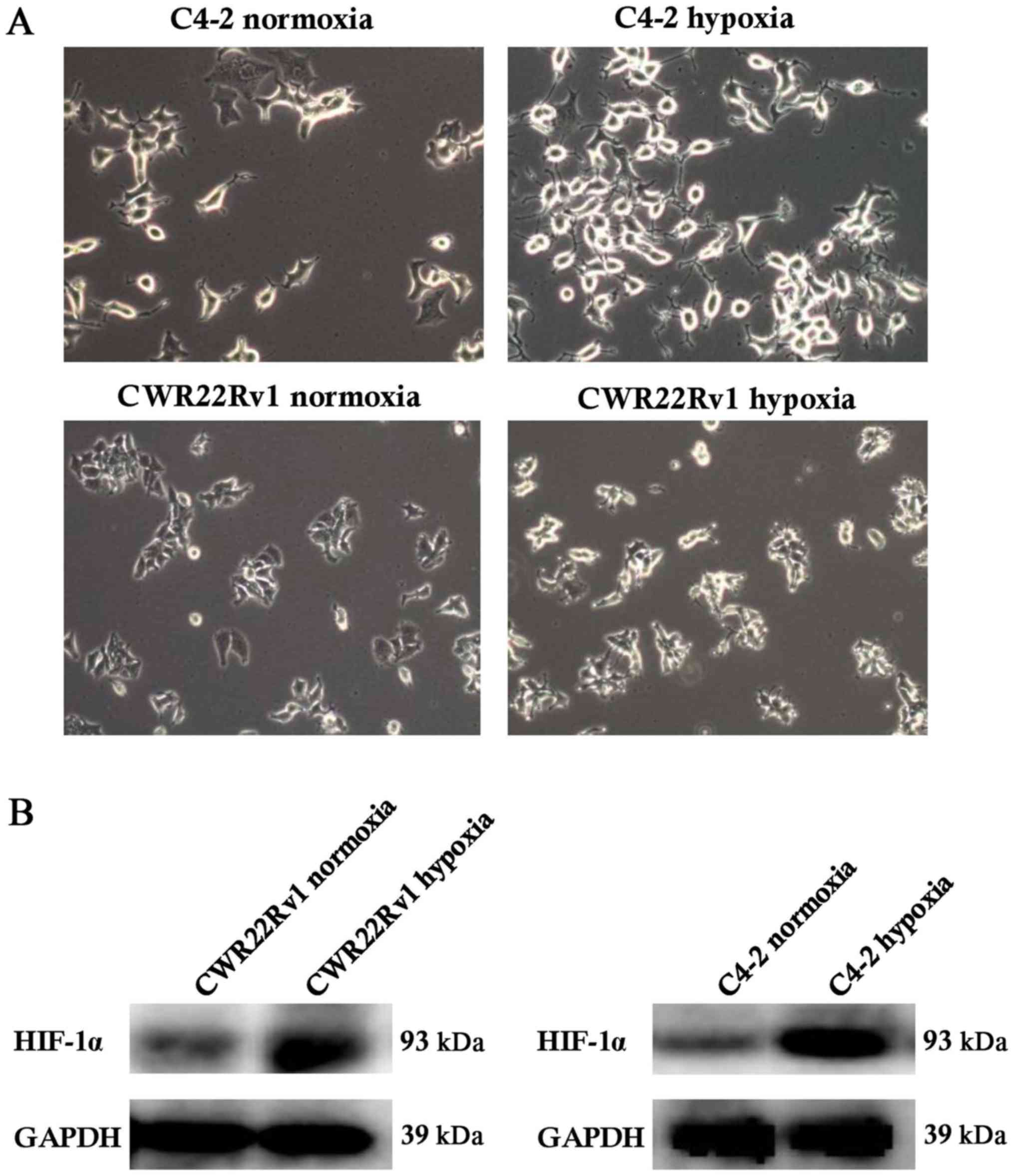
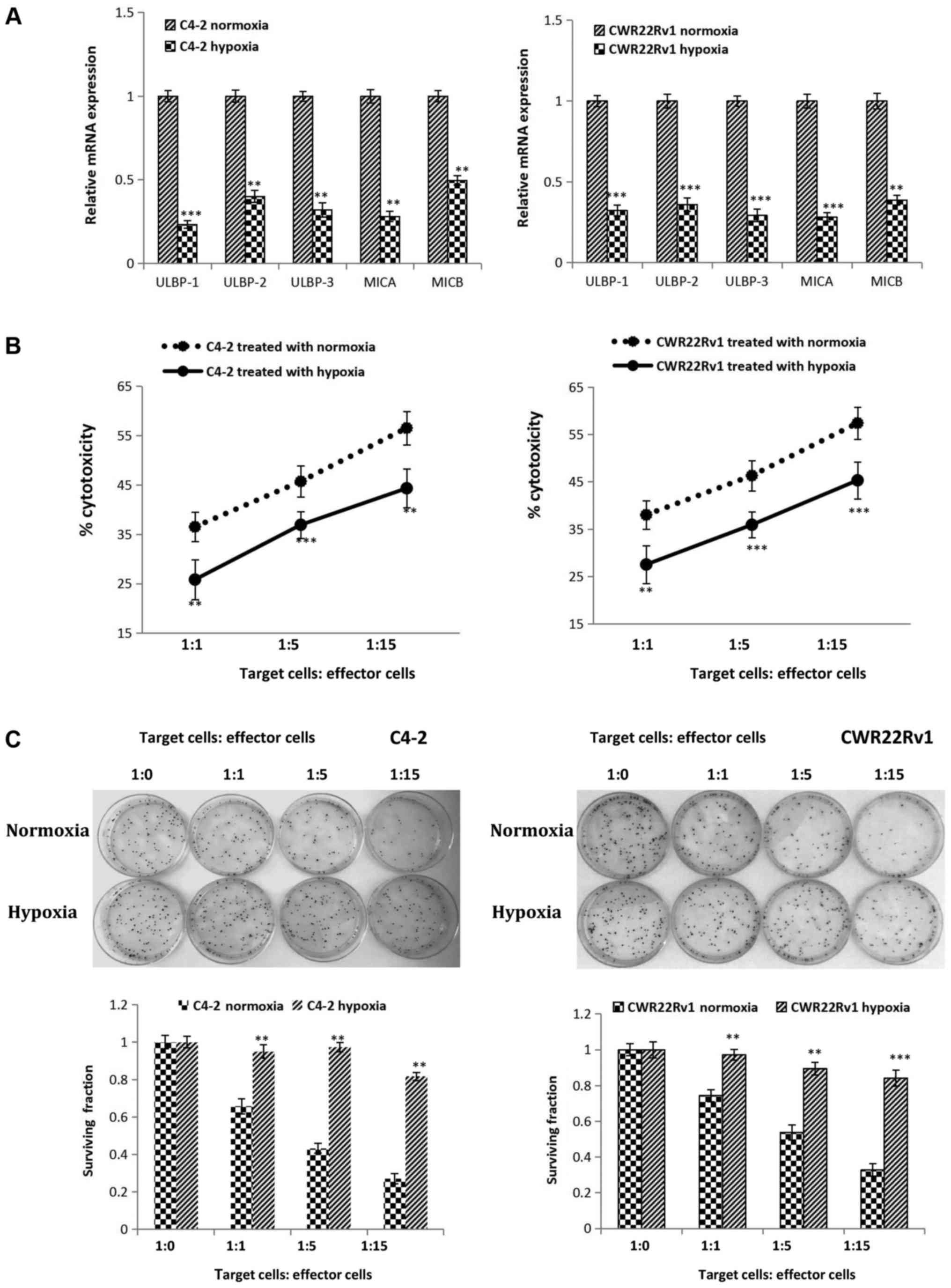
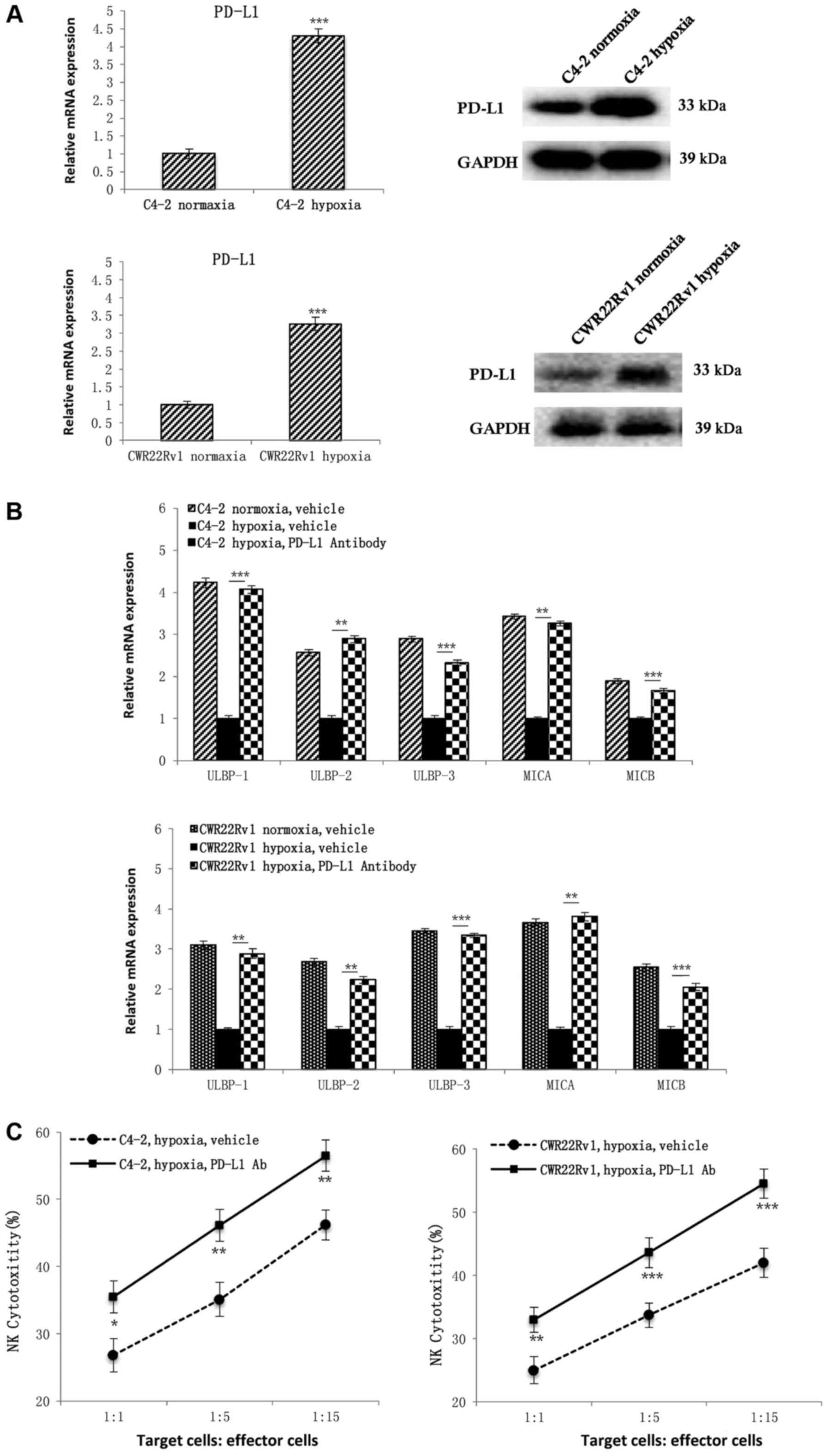
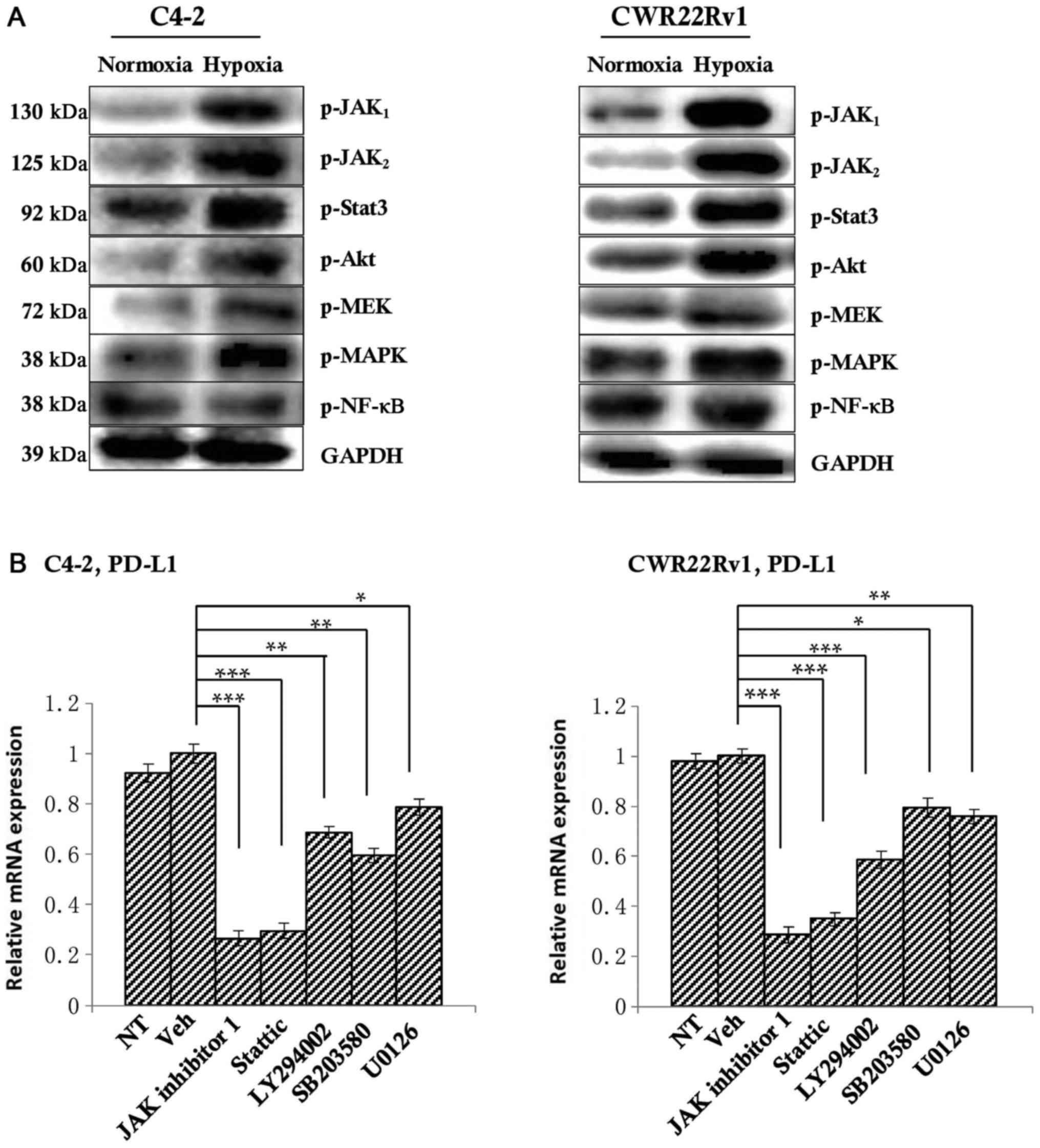
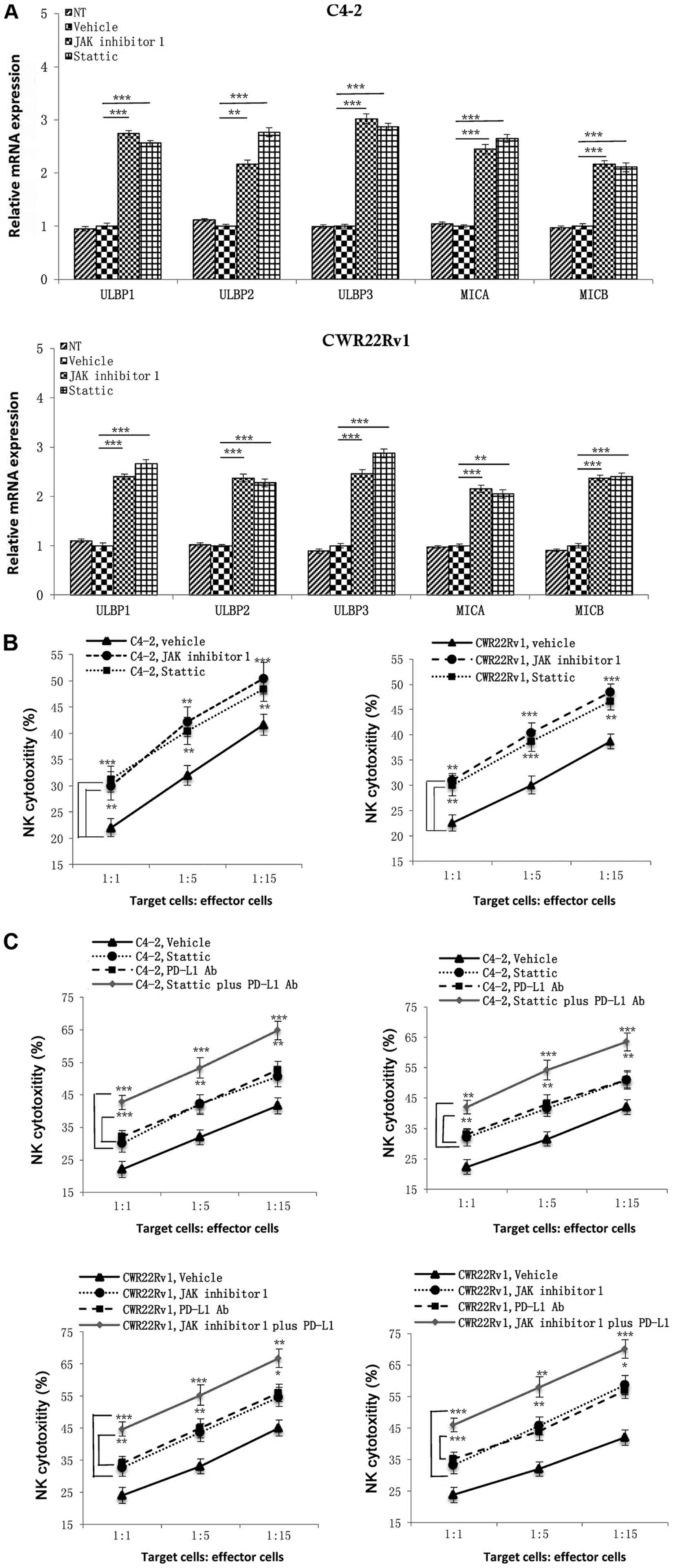
Castration‑resistant prostate cancer (CRPC) is difficult to treat in current clinical practice. Hypoxia is an important feature of the CRPC microenvironment and is closely associated with the progress of CRPC invasion. However, no research has been performed on the immune escape of CRPC from NK cells. The present study focused on this subject. Firstly, when the CRPC cell lines C4‑2 and CWR22Rv1 were induced by hypoxia, the expression of the UL16 binding protein (ULBP) ligand family of natural killer (NK) group 2D (NKG2D; ULBP‑1, ULBP‑2 and ULBP‑3) and MHC class I chain‑related proteins A and B (MICA/MICB) decreased. NKG2D is the main activating receptor of NK cells. Tumor cells were then co‑cultured with NK cells to conduct NK cell‑mediated cytotoxicity experiments, which revealed the decreased immune cytolytic activity of NK cells on hypoxia‑induced CRPC cells. In exploring the mechanism behind this observation, an increase in programmed death‑ligand 1 (PD‑L1) expression in CRPC cells induced by hypoxia was observed, while the addition of PD‑L1 antibody effectively reversed the expression of NKG2D ligand and enhanced the cytotoxic effect of NK cells on CRPC cells. In the process of exploring the upstream regulatory factors of PD‑L1, inhibition of the Janus kinase (JAK)1,2/signal transducer and activator of transcription 3 (Stat3) signaling pathway decreased the expression of PD‑L1 in CRPC cells. Finally, it was observed that combined inhibition of JAK1,2/PD‑L1 or Stat3/PD‑L1 was more effective than inhibition of a single pathway in enhancing the immune cytolytic activity of NK cells. Taking these results together, it is thought that combined inhibition of the JAK1,2/PD‑L1 and Stat3/PD‑L1 signaling pathways may enhance the immune cytolytic activity of NK cells toward hypoxia‑induced CRPC cells, which is expected to provide novel ideas and targets for the immunotherapy of CRPC.
View Figures

Figure 1

Figure 2

Figure 3

Figure 4

Figure 5

View References

1 

Cornford P, Bellmunt J, Bolla M, Briers E, De Santis M, Gross T, Henry AM, Joniau S, Lam TB, Mason MD, et al: EAU-ESTRO-SIOG Guidelines on prostate cancer. Part II: Treatment of relapsing, metastatic, and castration-resistant prostate cancer. Eur Urol. 71:630–642. 2017. View Article : Google Scholar : PubMed/NCBI

2 

Lowrance WT, Roth BJ, Kirkby E, Murad MH and Cookson MS: Castration-resistant prostate cancer: AUA Guideline Amendment 2015. J Urol. 195:1444–1452. 2016. View Article : Google Scholar : PubMed/NCBI

3 

Crawford ED, Higano CS, Shore ND, Hussain M and Petrylak DP: Treating patients with metastatic castration resistant prostate cancer: A comprehensive review of available therapies. J Urol. 194:1537–1547. 2015. View Article : Google Scholar : PubMed/NCBI

4 

Qiu J, Jiang W, Yang Y, Feng C, Chen Z, Guan G, Zhuo S and Chen J: Monitoring changes of tumor microenvironment in colorectal submucosa using multiphoton microscopy. Scanning. 37:17–22. 2015. View Article : Google Scholar : PubMed/NCBI

5 

Casey SC, Amedei A, Aquilano K, Azmi AS, Benencia F, Bhakta D, Bilsland AE, Boosani CS, Chen S, Ciriolo MR, et al: Cancer prevention and therapy through the modulation of the tumor microenvironment. Semin Cancer Biol. 35 Suppl:S199–S223. 2015. View Article : Google Scholar : PubMed/NCBI

6 

Wolff M, Kosyna FK, Dunst J, Jelkmann W and Depping R: Impact of hypoxia inducible factors on estrogen receptor expression in breast cancer cells. Arch Biochem Biophys. 613:23–30. 2017. View Article : Google Scholar : PubMed/NCBI

7 

Wu X, Qiao B, Liu Q and Zhang W: Upregulation of extracellular matrix metalloproteinase inducer promotes hypoxia-induced epithelial-mesenchymal transition in esophageal cancer. Mol Med Rep. 12:7419–7424. 2015. View Article : Google Scholar : PubMed/NCBI

8 

Clavo B, Robaina F, Fiuza D, Ruiz A, Lloret M, Rey-Baltar D, Llontop P, Riveros A, Rivero J, Castañeda F, et al: Predictive value of hypoxia in advanced head and neck cancer after treatment with hyperfractionated radio-chemotherapy and hypoxia modification. Clin Transl Oncol. 19:419–424. 2017. View Article : Google Scholar : PubMed/NCBI

9 

Li W, Dong Y, Zhang B, Kang Y, Yang X and Wang H: PEBP4 silencing inhibits hypoxia-induced epithelial-to-mesenchymal transition in prostate cancer cells. Biomed Pharmacother. 81:1–6. 2016. View Article : Google Scholar : PubMed/NCBI

10 

Li M, Wang YX, Luo Y, Zhao J, Li Q, Zhang J and Jiang Y: Hypoxia inducible factor-1α-dependent epithelial to mesenchymal transition under hypoxic conditions in prostate cancer cells. Oncol Rep. 36:521–527. 2016. View Article : Google Scholar : PubMed/NCBI

11 

Wang W, Liu M, Guan Y and Wu Q: Hypoxia-responsive Mir-301a and Mir-301b promote radioresistance of prostate cancer cells via downregulating NDRG2. Med Sci Monit. 22:2126–2132. 2016. View Article : Google Scholar : PubMed/NCBI

12 

Nomura T, Yamasaki M, Hirai K, Inoue T, Sato R, Matsuura K, Moriyama M, Sato F and Mimata H: Targeting the Vav3 oncogene enhances docetaxel-induced apoptosis through the inhibition of androgen receptor phosphorylation in LNCaP prostate cancer cells under chronic hypoxia. Mol Cancer. 12:272013. View Article : Google Scholar : PubMed/NCBI

13 

Barsoum IB, Koti M, Siemens DR and Graham CH: Mechanisms of hypoxia-mediated immune escape in cancer. Cancer Res. 74:7185–7190. 2014. View Article : Google Scholar : PubMed/NCBI

14 

Hasmim M, Noman MZ, Messai Y, Bordereaux D, Gros G, Baud V and Chouaib S: Cutting edge: Hypoxia-induced Nanog favors the intratumoral infiltration of regulatory T cells and macrophages via direct regulation of TGF-β1. J Immunol. 191:5802–5806. 2013. View Article : Google Scholar : PubMed/NCBI

15 

Noman MZ, Buart S, Romero P, Ketari S, Janji B, Mari B, Mami-Chouaib F and Chouaib S: Hypoxia-inducible miR-210 regulates the susceptibility of tumor cells to lysis by cytotoxic T cells. Cancer Res. 72:4629–4641. 2012. View Article : Google Scholar : PubMed/NCBI

16 

Lu Y, Hu J, Sun W, Duan X and Chen X: Hypoxia-mediated immune evasion of pancreatic carcinoma cells. Mol Med Rep. 11:3666–3672. 2015. View Article : Google Scholar : PubMed/NCBI

17 

Yamada N, Yamanegi K, Ohyama H, Hata M, Nakasho K, Futani H, Okamura H and Terada N: Hypoxia downregulates the expression of cell surface MICA without increasing soluble MICA in osteosarcoma cells in a HIF-1α-dependent manner. Int J Oncol. 41:2005–2012. 2012. View Article : Google Scholar : PubMed/NCBI

18 

Sarkar S, Germeraad WT, Rouschop KM, Steeghs EM, van Gelder M, Bos GM and Wieten L: Hypoxia induced impairment of NK cell cytotoxicity against multiple myeloma can be overcome by IL-2 activation of the NK cells. PLoS One. 8:e648352013. View Article : Google Scholar : PubMed/NCBI

19 

Labiano S, Palazon A and Melero I: Immune response regulation in the tumor microenvironment by hypoxia. Semin Oncol. 42:378–386. 2015. View Article : Google Scholar : PubMed/NCBI

20 

Hamilton TK, Hu N, Kolomitro K, Bell EN, Maurice DH, Graham CH and Siemens DR: Potential therapeutic applications of phosphodiesterase inhibition in prostate cancer. World J Urol. 31:325–330. 2013. View Article : Google Scholar : PubMed/NCBI

21 

Siemens DR, Hu N, Sheikhi AK, Chung E, Frederiksen LJ, Pross H and Graham CH: Hypoxia increases tumor cell shedding of MHC class I chain-related molecule: Role of nitric oxide. Cancer Res. 68:4746–4753. 2008. View Article : Google Scholar : PubMed/NCBI

22 

Barsoum IB, Smallwood CA, Siemens DR and Graham CH: A mechanism of hypoxia-mediated escape from adaptive immunity in cancer cells. Cancer Res. 74:665–674. 2014. View Article : Google Scholar : PubMed/NCBI

23 

Chen J, Jiang CC, Jin L and Zhang XD: Regulation of PD-L1: A novel role of pro-survival signalling in cancer. Ann Oncol. 27:409–416. 2016. View Article : Google Scholar : PubMed/NCBI

24 

Shi MH, Xing YF, Zhang ZL, Huang JA and Chen YJ: Effect of soluble PD-L1 released by lung cancer cells in regulating the function of T lymphocytes. Zhonghua Zhong Liu Za Zhi. 35:85–88. 2013.(In Chinese). PubMed/NCBI

25 

Akbay EA, Koyama S, Carretero J, Altabef A, Tchaicha JH, Christensen CL, Mikse OR, Cherniack AD, Beauchamp EM, Pugh TJ, et al: Activation of the PD-1 pathway contributes to immune escape in EGFR-driven lung tumors. Cancer Discov. 3:1355–1363. 2013. View Article : Google Scholar : PubMed/NCBI

26 

Mahoney KM, Freeman GJ and McDermott DF: The next immune-checkpoint inhibitors: PD-1/PD-L1 blockade in melanoma. Clin Ther. 37:764–782. 2015. View Article : Google Scholar : PubMed/NCBI

27 

Mandai M, Hamanishi J, Abiko K, Matsumura N, Baba T and Konishi I: Anti-PD-L1/PD-1 immune therapies in ovarian cancer: Basic mechanism and future clinical application. Int J Clin Oncol. 21:456–461. 2016. View Article : Google Scholar : PubMed/NCBI

28 

Bardoli AD, Afshar M, Viney R, Foster M, Porfiri E, Zarkar A, Stevenson R, James ND, Bryan RT and Patel P: The PD-1/PD-L1 axis in the pathogenesis of urothelial bladder cancer and evaluating its potential as a therapeutic target. Future Oncol. 12:595–600. 2016. View Article : Google Scholar : PubMed/NCBI

29 

Brower V: Anti-PD-L1 antibody active in metastatic bladder cancer. Lancet Oncol. 16:e112015. View Article : Google Scholar : PubMed/NCBI

30 

Vassilakopoulou M, Avgeris M, Velcheti V, Kotoula V, Rampias T, Chatzopoulos K, Perisanidis C, Kontos CK, Giotakis AI, Scorilas A, et al: Evaluation of PD-L1 expression and associated tumor-infiltrating lymphocytes in laryngeal squamous cell carcinoma. Clin Cancer Res. 22:704–713. 2016. View Article : Google Scholar : PubMed/NCBI

31 

Yao S and Chen L: PD-1 as an immune modulatory receptor. Cancer J. 20:262–264. 2014. View Article : Google Scholar : PubMed/NCBI

32 

Huang BY, Zhan YP, Zong WJ, Yu CJ, Li JF, Qu YM and Han S: The PD-1/B7-H1 pathway modulates the natural killer cells versus mouse glioma stem cells. PLoS One. 10:e01347152015. View Article : Google Scholar : PubMed/NCBI

33 

Joo HY, Yun M, Jeong J, Park ER, Shin HJ, Woo SR, Jung JK, Kim YM, Park JJ, Kim J and Lee KH: SIRT1 deacetylates and stabilizes hypoxia-inducible factor-1α (HIF-1α) via direct interactions during hypoxia. Biochem Biophys Res Commun. 462:294–300. 2015. View Article : Google Scholar : PubMed/NCBI

34 

Doi T, Ishikawa T, Okayama T, Oka K, Mizushima K, Yasuda T, Sakamoto N, Katada K, Kamada K, Uchiyama K, et al: The JAK/STAT pathway is involved in the upregulation of PD-L1 expression in pancreatic cancer cell lines. Oncol Rep. 37:1545–1554. 2017. View Article : Google Scholar : PubMed/NCBI

35 

Bellucci R, Martin A, Bommarito D, Wang K, Hansen SH, Freeman GJ and Ritz J: Interferon-γ-induced activation of JAK1 and JAK2 suppresses tumor cell susceptibility to NK cells through upregulation of PD-L1 expression. Oncoimmunology. 4:e10088242015. View Article : Google Scholar : PubMed/NCBI

36 

Atefi M, Avramis E, Lassen A, Wong DJ, Robert L, Foulad D, Cerniglia M, Titz B, Chodon T, Graeber TG, et al: Effects of MAPK and PI3K pathways on PD-L1 expression in melanoma. Clin Cancer Res. 20:3446–3457. 2014. View Article : Google Scholar : PubMed/NCBI

37 

Yang L, Huang F, Mei J, Wang X, Zhang Q, Wang H, Xi M and You Z: Posttranscriptional control of PD-L1 expression by 17β-estradiol via PI3K/Akt signaling pathway in ERα-positive cancer cell lines. Int J Gynecol Cancer. 27:196–205. 2017. View Article : Google Scholar : PubMed/NCBI

38 

Jiang X, Zhou J, Giobbie-Hurder A, Wargo J and Hodi FS: The activation of MAPK in melanoma cells resistant to BRAF inhibition promotes PD-L1 expression that is reversible by MEK and PI3K inhibition. Clin Cancer Res. 19:598–609. 2013. View Article : Google Scholar : PubMed/NCBI

39 

Gowrishankar K, Gunatilake D, Gallagher SJ, Tiffen J, Rizos H and Hersey P: Inducible but not constitutive expression of PD-L1 in human melanoma cells is dependent on activation of NF-κB. PLoS One. 10:e01234102015. View Article : Google Scholar : PubMed/NCBI

40 

Hernandez RK, Cetin K, Pirolli M, Quigley J, Quach D, Smith P, Stryker S and Liede A: Estimating high-risk castration resistant prostate cancer (CRPC) using electronic health records. Can J Urol. 22:7858–7864. 2015.PubMed/NCBI

41 

Kamoto T: Evaluation and diagnosis for castration resistant prostate cancer: CRPC. Nihon Rinsho. 72:2103–2107. 2014.(In Japanese). PubMed/NCBI

42 

Walsh JC, Lebedev A, Aten E, Madsen K, Marciano L and Kolb HC: The clinical importance of assessing tumor hypoxia: Relationship of tumor hypoxia to prognosis and therapeutic opportunities. Antioxid Redox Signal. 21:1516–1554. 2014. View Article : Google Scholar : PubMed/NCBI

43 

Jensen LD: The circadian clock and hypoxia in tumor cell de-differentiation and metastasis. Biochim Biophys Acta. 1850:1633–1641. 2015. View Article : Google Scholar : PubMed/NCBI

44 

Lanier LL: NKG2D receptor and its ligands in host defense. Cancer Immunol Res. 3:575–582. 2015. View Article : Google Scholar : PubMed/NCBI

45 

Swaika A, Hammond WA and Joseph RW: Current state of anti-PD-L1 and anti-PD-1 agents in cancer therapy. Mol Immunol. 67:4–17. 2015. View Article : Google Scholar : PubMed/NCBI

46 

Ohaegbulam KC, Assal A, Lazar-Molnar E, Yao Y and Zang X: Human cancer immunotherapy with antibodies to the PD-1 and PD-L1 pathway. Trends Mol Med. 21:24–33. 2015. View Article : Google Scholar : PubMed/NCBI

47 

Cai B, Cai JP, Luo YL, Chen C and Zhang S: The specific roles of JAK/STAT signaling pathway in sepsis. Inflammation. 38:1599–1608. 2015. View Article : Google Scholar : PubMed/NCBI

48 

Teng Y, Ross JL and Cowell JK: The involvement of JAK-STAT3 in cell motility, invasion, and metastasis. JAKSTAT. 3:e280862014.PubMed/NCBI

49 

O'Shea JJ, Holland SM and Staudt LM: JAKs and STATs in immunity, immunodeficiency, and cancer. N Engl J Med. 368:161–170. 2013. View Article : Google Scholar : PubMed/NCBI

50 

Wang SW and Sun YM: The IL-6/JAK/STAT3 pathway: Potential therapeutic strategies in treating colorectal cancer (Review). Int J Oncol. 44:1032–1040. 2014. View Article : Google Scholar : PubMed/NCBI

51 

Liu RY, Zeng Y, Lei Z, Wang L, Yang H, Liu Z, Zhao J and Zhang HT: JAK/STAT3 signaling is required for TGF-β-induced epithelial-mesenchymal transition in lung cancer cells. Int J Oncol. 44:1643–1651. 2014. View Article : Google Scholar : PubMed/NCBI

52 

Lapeire L, Hendrix A, Lambein K, Van Bockstal M, Braems G, Van Den Broecke R, Limame R, Mestdagh P, Vandesompele J, Vanhove C, et al: Cancer-associated adipose tissue promotes breast cancer progression by paracrine oncostatin M and Jak/STAT3 signaling. Cancer Res. 74:6806–6819. 2014. View Article : Google Scholar : PubMed/NCBI

53 

Duzagac F, Inan S, Simsek Ela F, Acikgoz E, Guven U, Khan SA, Rouhrazi H, Oltulu F, Aktug H, Erol A and Oktem G: JAK/STAT pathway interacts with intercellular cell adhesion molecule (ICAM) and vascular cell adhesion molecule (VCAM) while prostate cancer stem cells form tumor spheroids. J BUON. 20:1250–1257. 2015.PubMed/NCBI

54 

Kim JM and Chen DS: Immune escape to PD-L1/PD-1 blockade: Seven steps to success (or failure). Ann Oncol. 27:1492–1504. 2016. View Article : Google Scholar : PubMed/NCBI

Related Articles

  • Abstract
  • View
  • Download
  • Twitter
Copy and paste a formatted citation
Spandidos Publications style
Xu LJ, Ma Q, Zhu J, Li J, Xue BX, Gao J, Sun CY, Zang YC, Zhou YB, Yang DR, Yang DR, et al: Combined inhibition of JAK1,2/Stat3‑PD‑L1 signaling pathway suppresses the immune escape of castration‑resistant prostate cancer to NK cells in hypoxia. Mol Med Rep 17: 8111-8120, 2018.
APA
Xu, L., Ma, Q., Zhu, J., Li, J., Xue, B., Gao, J. ... Shan, Y. (2018). Combined inhibition of JAK1,2/Stat3‑PD‑L1 signaling pathway suppresses the immune escape of castration‑resistant prostate cancer to NK cells in hypoxia. Molecular Medicine Reports, 17, 8111-8120. https://doi.org/10.3892/mmr.2018.8905
MLA
Xu, L., Ma, Q., Zhu, J., Li, J., Xue, B., Gao, J., Sun, C., Zang, Y., Zhou, Y., Yang, D., Shan, Y."Combined inhibition of JAK1,2/Stat3‑PD‑L1 signaling pathway suppresses the immune escape of castration‑resistant prostate cancer to NK cells in hypoxia". Molecular Medicine Reports 17.6 (2018): 8111-8120.
Chicago
Xu, L., Ma, Q., Zhu, J., Li, J., Xue, B., Gao, J., Sun, C., Zang, Y., Zhou, Y., Yang, D., Shan, Y."Combined inhibition of JAK1,2/Stat3‑PD‑L1 signaling pathway suppresses the immune escape of castration‑resistant prostate cancer to NK cells in hypoxia". Molecular Medicine Reports 17, no. 6 (2018): 8111-8120. https://doi.org/10.3892/mmr.2018.8905
Copy and paste a formatted citation
x
Spandidos Publications style
Xu LJ, Ma Q, Zhu J, Li J, Xue BX, Gao J, Sun CY, Zang YC, Zhou YB, Yang DR, Yang DR, et al: Combined inhibition of JAK1,2/Stat3‑PD‑L1 signaling pathway suppresses the immune escape of castration‑resistant prostate cancer to NK cells in hypoxia. Mol Med Rep 17: 8111-8120, 2018.
APA
Xu, L., Ma, Q., Zhu, J., Li, J., Xue, B., Gao, J. ... Shan, Y. (2018). Combined inhibition of JAK1,2/Stat3‑PD‑L1 signaling pathway suppresses the immune escape of castration‑resistant prostate cancer to NK cells in hypoxia. Molecular Medicine Reports, 17, 8111-8120. https://doi.org/10.3892/mmr.2018.8905
MLA
Xu, L., Ma, Q., Zhu, J., Li, J., Xue, B., Gao, J., Sun, C., Zang, Y., Zhou, Y., Yang, D., Shan, Y."Combined inhibition of JAK1,2/Stat3‑PD‑L1 signaling pathway suppresses the immune escape of castration‑resistant prostate cancer to NK cells in hypoxia". Molecular Medicine Reports 17.6 (2018): 8111-8120.
Chicago
Xu, L., Ma, Q., Zhu, J., Li, J., Xue, B., Gao, J., Sun, C., Zang, Y., Zhou, Y., Yang, D., Shan, Y."Combined inhibition of JAK1,2/Stat3‑PD‑L1 signaling pathway suppresses the immune escape of castration‑resistant prostate cancer to NK cells in hypoxia". Molecular Medicine Reports 17, no. 6 (2018): 8111-8120. https://doi.org/10.3892/mmr.2018.8905
Follow us
  • Twitter
  • LinkedIn
  • Facebook
About
  • Spandidos Publications
  • Careers
  • Cookie Policy
  • Privacy Policy
How can we help?
  • Help
  • Live Chat
  • Contact
  • Email to our Support Team