Spandidos Publications Logo
  • About
    • About Spandidos
    • Aims and Scopes
    • Abstracting and Indexing
    • Editorial Policies
    • Reprints and Permissions
    • Job Opportunities
    • Terms and Conditions
    • Contact
  • Journals
    • All Journals
    • Oncology Letters
      • Oncology Letters
      • Information for Authors
      • Editorial Policies
      • Editorial Board
      • Aims and Scope
      • Abstracting and Indexing
      • Bibliographic Information
      • Archive
    • International Journal of Oncology
      • International Journal of Oncology
      • Information for Authors
      • Editorial Policies
      • Editorial Board
      • Aims and Scope
      • Abstracting and Indexing
      • Bibliographic Information
      • Archive
    • Molecular and Clinical Oncology
      • Molecular and Clinical Oncology
      • Information for Authors
      • Editorial Policies
      • Editorial Board
      • Aims and Scope
      • Abstracting and Indexing
      • Bibliographic Information
      • Archive
    • Experimental and Therapeutic Medicine
      • Experimental and Therapeutic Medicine
      • Information for Authors
      • Editorial Policies
      • Editorial Board
      • Aims and Scope
      • Abstracting and Indexing
      • Bibliographic Information
      • Archive
    • International Journal of Molecular Medicine
      • International Journal of Molecular Medicine
      • Information for Authors
      • Editorial Policies
      • Editorial Board
      • Aims and Scope
      • Abstracting and Indexing
      • Bibliographic Information
      • Archive
    • Biomedical Reports
      • Biomedical Reports
      • Information for Authors
      • Editorial Policies
      • Editorial Board
      • Aims and Scope
      • Abstracting and Indexing
      • Bibliographic Information
      • Archive
    • Oncology Reports
      • Oncology Reports
      • Information for Authors
      • Editorial Policies
      • Editorial Board
      • Aims and Scope
      • Abstracting and Indexing
      • Bibliographic Information
      • Archive
    • Molecular Medicine Reports
      • Molecular Medicine Reports
      • Information for Authors
      • Editorial Policies
      • Editorial Board
      • Aims and Scope
      • Abstracting and Indexing
      • Bibliographic Information
      • Archive
    • World Academy of Sciences Journal
      • World Academy of Sciences Journal
      • Information for Authors
      • Editorial Policies
      • Editorial Board
      • Aims and Scope
      • Abstracting and Indexing
      • Bibliographic Information
      • Archive
    • International Journal of Functional Nutrition
      • International Journal of Functional Nutrition
      • Information for Authors
      • Editorial Policies
      • Editorial Board
      • Aims and Scope
      • Abstracting and Indexing
      • Bibliographic Information
      • Archive
    • International Journal of Epigenetics
      • International Journal of Epigenetics
      • Information for Authors
      • Editorial Policies
      • Editorial Board
      • Aims and Scope
      • Abstracting and Indexing
      • Bibliographic Information
      • Archive
    • Medicine International
      • Medicine International
      • Information for Authors
      • Editorial Policies
      • Editorial Board
      • Aims and Scope
      • Abstracting and Indexing
      • Bibliographic Information
      • Archive
  • Articles
  • Information
    • Information for Authors
    • Information for Reviewers
    • Information for Librarians
    • Information for Advertisers
    • Conferences
  • Language Editing
Spandidos Publications Logo
  • About
    • About Spandidos
    • Aims and Scopes
    • Abstracting and Indexing
    • Editorial Policies
    • Reprints and Permissions
    • Job Opportunities
    • Terms and Conditions
    • Contact
  • Journals
    • All Journals
    • Biomedical Reports
      • Information for Authors
      • Editorial Policies
      • Editorial Board
      • Aims and Scope
      • Abstracting and Indexing
      • Bibliographic Information
      • Archive
    • Experimental and Therapeutic Medicine
      • Information for Authors
      • Editorial Policies
      • Editorial Board
      • Aims and Scope
      • Abstracting and Indexing
      • Bibliographic Information
      • Archive
    • International Journal of Epigenetics
      • Information for Authors
      • Editorial Policies
      • Editorial Board
      • Aims and Scope
      • Abstracting and Indexing
      • Bibliographic Information
      • Archive
    • International Journal of Functional Nutrition
      • Information for Authors
      • Editorial Policies
      • Editorial Board
      • Aims and Scope
      • Abstracting and Indexing
      • Bibliographic Information
      • Archive
    • International Journal of Molecular Medicine
      • Information for Authors
      • Editorial Policies
      • Editorial Board
      • Aims and Scope
      • Abstracting and Indexing
      • Bibliographic Information
      • Archive
    • International Journal of Oncology
      • Information for Authors
      • Editorial Policies
      • Editorial Board
      • Aims and Scope
      • Abstracting and Indexing
      • Bibliographic Information
      • Archive
    • Medicine International
      • Information for Authors
      • Editorial Policies
      • Editorial Board
      • Aims and Scope
      • Abstracting and Indexing
      • Bibliographic Information
      • Archive
    • Molecular and Clinical Oncology
      • Information for Authors
      • Editorial Policies
      • Editorial Board
      • Aims and Scope
      • Abstracting and Indexing
      • Bibliographic Information
      • Archive
    • Molecular Medicine Reports
      • Information for Authors
      • Editorial Policies
      • Editorial Board
      • Aims and Scope
      • Abstracting and Indexing
      • Bibliographic Information
      • Archive
    • Oncology Letters
      • Information for Authors
      • Editorial Policies
      • Editorial Board
      • Aims and Scope
      • Abstracting and Indexing
      • Bibliographic Information
      • Archive
    • Oncology Reports
      • Information for Authors
      • Editorial Policies
      • Editorial Board
      • Aims and Scope
      • Abstracting and Indexing
      • Bibliographic Information
      • Archive
    • World Academy of Sciences Journal
      • Information for Authors
      • Editorial Policies
      • Editorial Board
      • Aims and Scope
      • Abstracting and Indexing
      • Bibliographic Information
      • Archive
  • Articles
  • Information
    • For Authors
    • For Reviewers
    • For Librarians
    • For Advertisers
    • Conferences
  • Language Editing
Login Register Submit
  • This site uses cookies
  • You can change your cookie settings at any time by following the instructions in our Cookie Policy. To find out more, you may read our Privacy Policy.

    I agree
Search articles by DOI, keyword, author or affiliation
Search
Advanced Search
presentation
Molecular Medicine Reports
Join Editorial Board Propose a Special Issue
Print ISSN: 1791-2997 Online ISSN: 1791-3004
Journal Cover
July-2018 Volume 18 Issue 1

Full Size Image

Sign up for eToc alerts
Recommend to Library

Journals

International Journal of Molecular Medicine

International Journal of Molecular Medicine

International Journal of Molecular Medicine is an international journal devoted to molecular mechanisms of human disease.

International Journal of Oncology

International Journal of Oncology

International Journal of Oncology is an international journal devoted to oncology research and cancer treatment.

Molecular Medicine Reports

Molecular Medicine Reports

Covers molecular medicine topics such as pharmacology, pathology, genetics, neuroscience, infectious diseases, molecular cardiology, and molecular surgery.

Oncology Reports

Oncology Reports

Oncology Reports is an international journal devoted to fundamental and applied research in Oncology.

Experimental and Therapeutic Medicine

Experimental and Therapeutic Medicine

Experimental and Therapeutic Medicine is an international journal devoted to laboratory and clinical medicine.

Oncology Letters

Oncology Letters

Oncology Letters is an international journal devoted to Experimental and Clinical Oncology.

Biomedical Reports

Biomedical Reports

Explores a wide range of biological and medical fields, including pharmacology, genetics, microbiology, neuroscience, and molecular cardiology.

Molecular and Clinical Oncology

Molecular and Clinical Oncology

International journal addressing all aspects of oncology research, from tumorigenesis and oncogenes to chemotherapy and metastasis.

World Academy of Sciences Journal

World Academy of Sciences Journal

Multidisciplinary open-access journal spanning biochemistry, genetics, neuroscience, environmental health, and synthetic biology.

International Journal of Functional Nutrition

International Journal of Functional Nutrition

Open-access journal combining biochemistry, pharmacology, immunology, and genetics to advance health through functional nutrition.

International Journal of Epigenetics

International Journal of Epigenetics

Publishes open-access research on using epigenetics to advance understanding and treatment of human disease.

Medicine International

Medicine International

An International Open Access Journal Devoted to General Medicine.

Journal Cover
July-2018 Volume 18 Issue 1

Full Size Image

Sign up for eToc alerts
Recommend to Library

  • Article
  • Citations
    • Cite This Article
    • Download Citation
    • Create Citation Alert
    • Remove Citation Alert
    • Cited By
  • Similar Articles
    • Related Articles (in Spandidos Publications)
    • Similar Articles (Google Scholar)
    • Similar Articles (PubMed)
  • Download PDF
  • Download XML
  • View XML
Article

Hyperoside protects human kidney‑2 cells against oxidative damage induced by oxalic acid

  • Authors:
    • Yongliang Chen
    • Lihong Ye
    • Wangjian Li
    • Dongzhang Li
    • Feng Li
  • View Affiliations / Copyright

    Affiliations: Department of Urology, Shaoxing Central Hospital, Shaoxing, Zhejiang 312030, P.R. China
  • Pages: 486-494
    |
    Published online on: May 2, 2018
       https://doi.org/10.3892/mmr.2018.8948
  • Expand metrics +
Metrics: Total Views: 0 (Spandidos Publications: | PMC Statistics: )
Metrics: Total PDF Downloads: 0 (Spandidos Publications: | PMC Statistics: )
Cited By (CrossRef): 0 citations Loading Articles...

This article is mentioned in:


Abstract

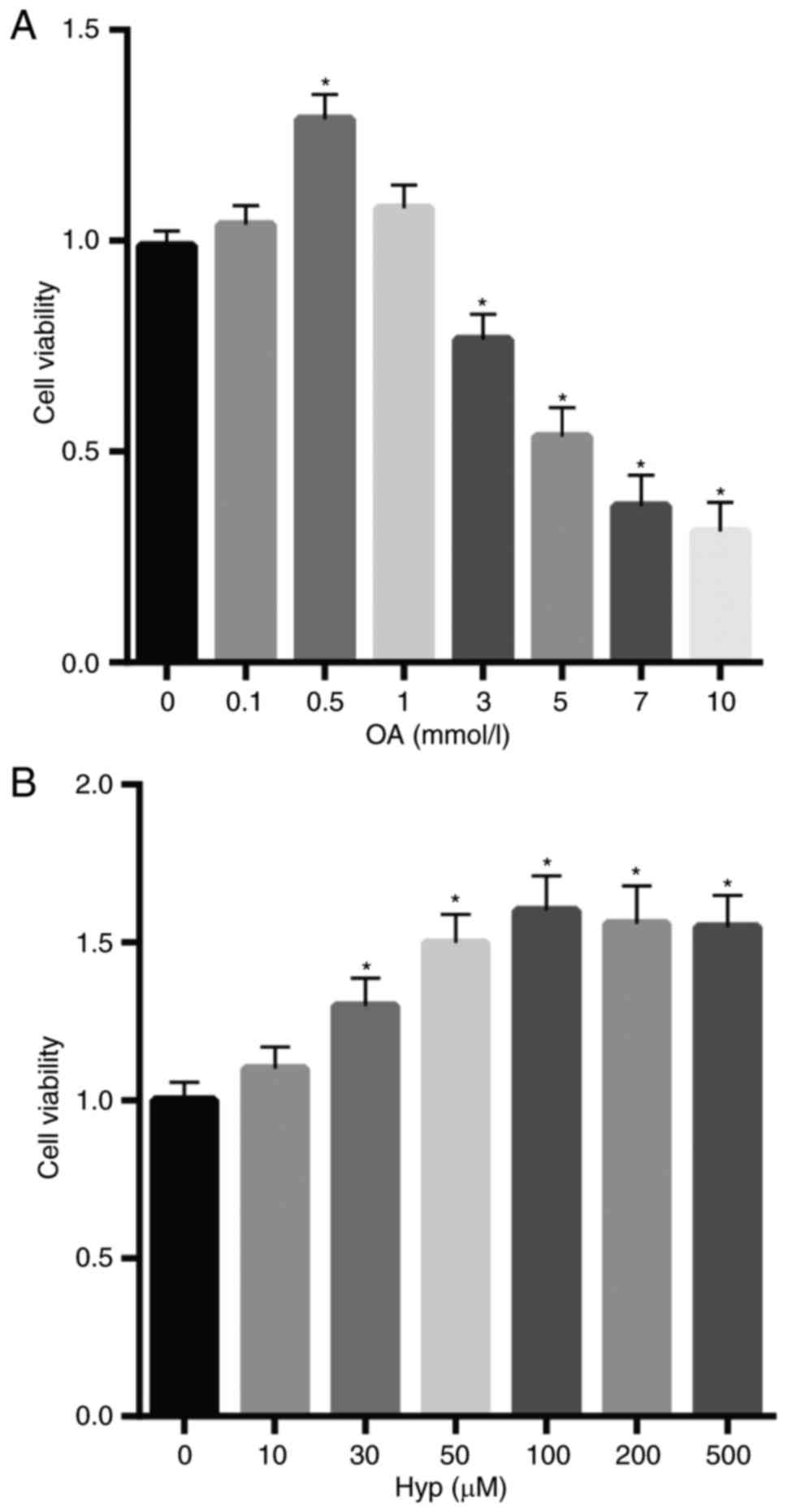
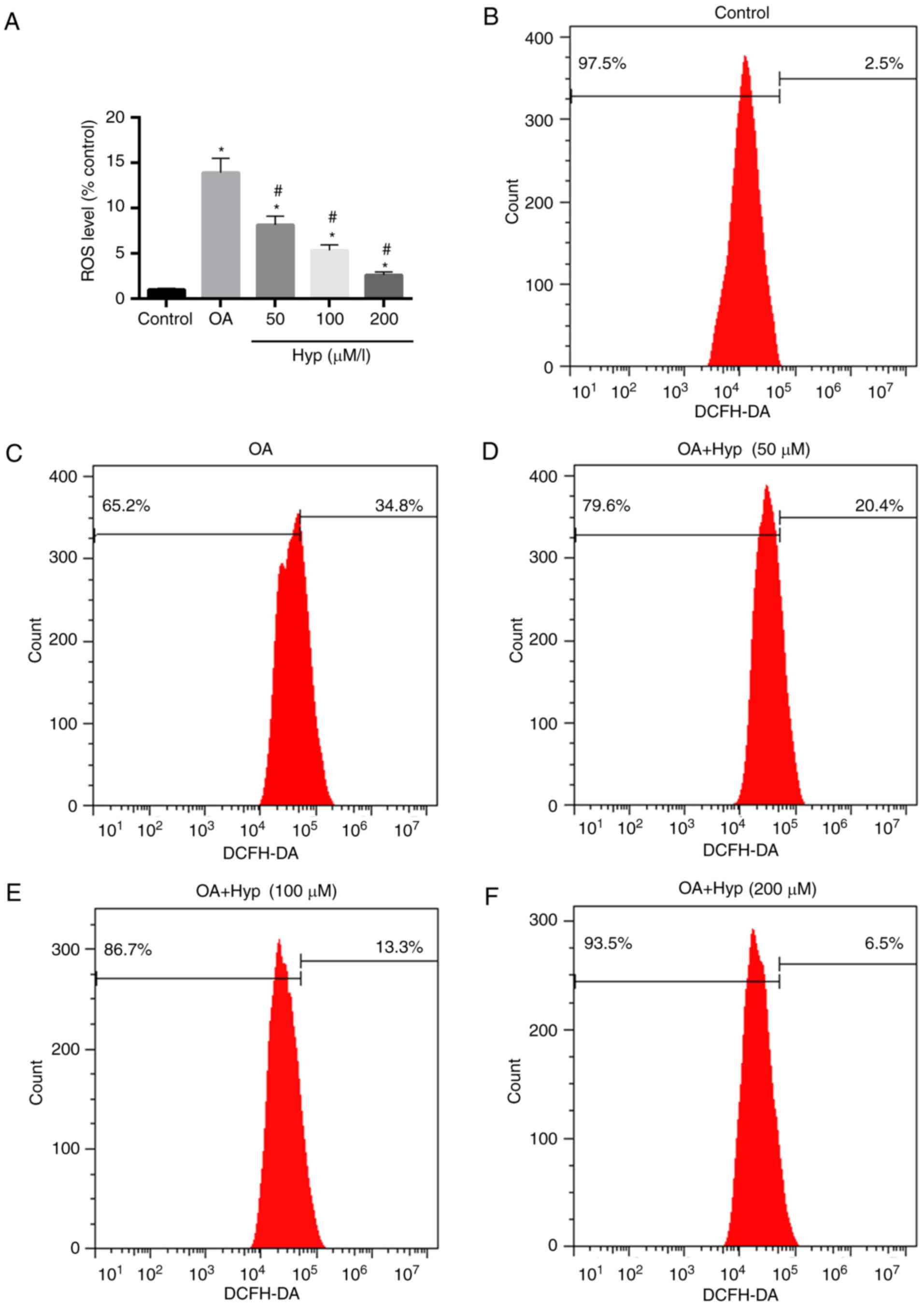
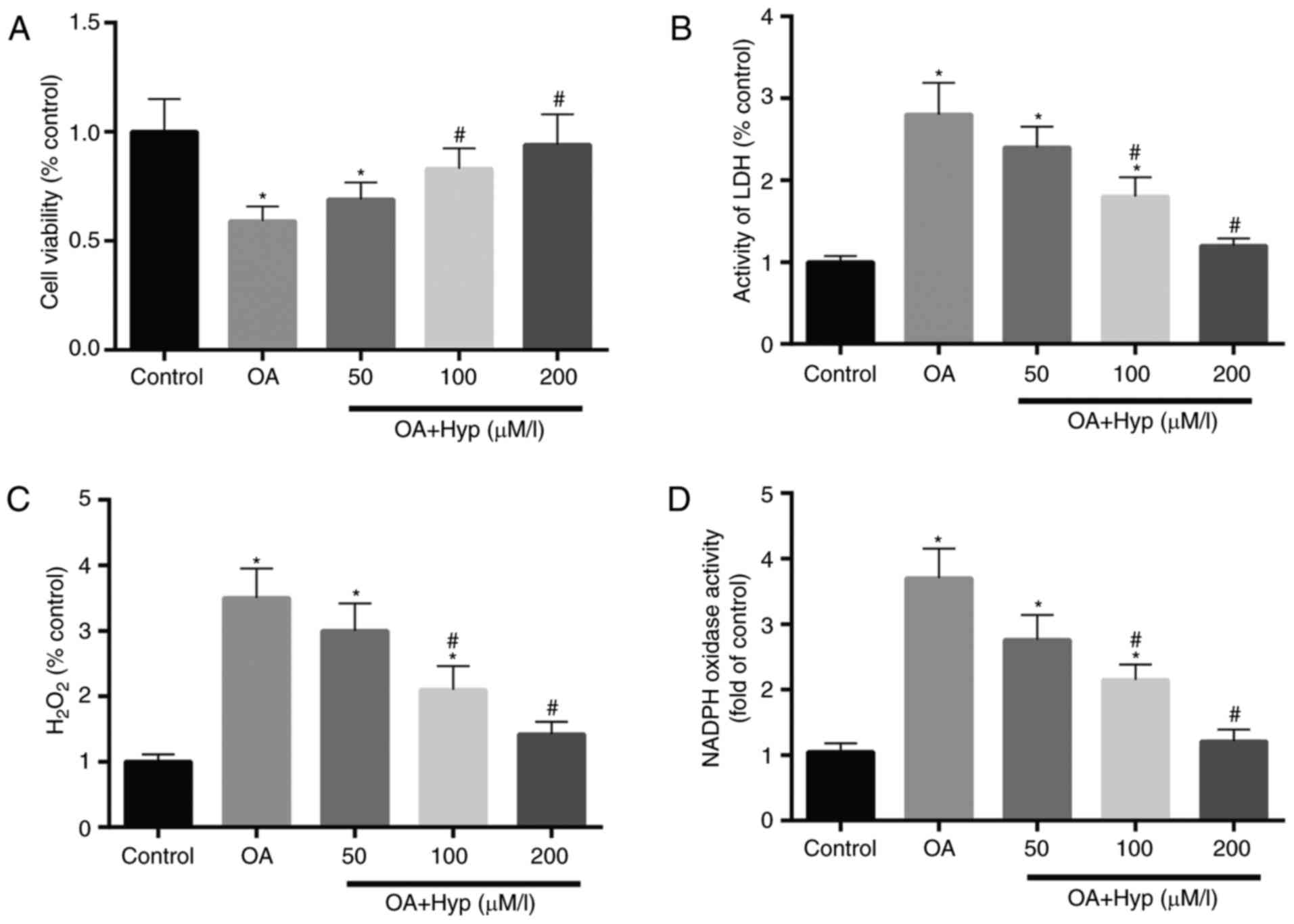
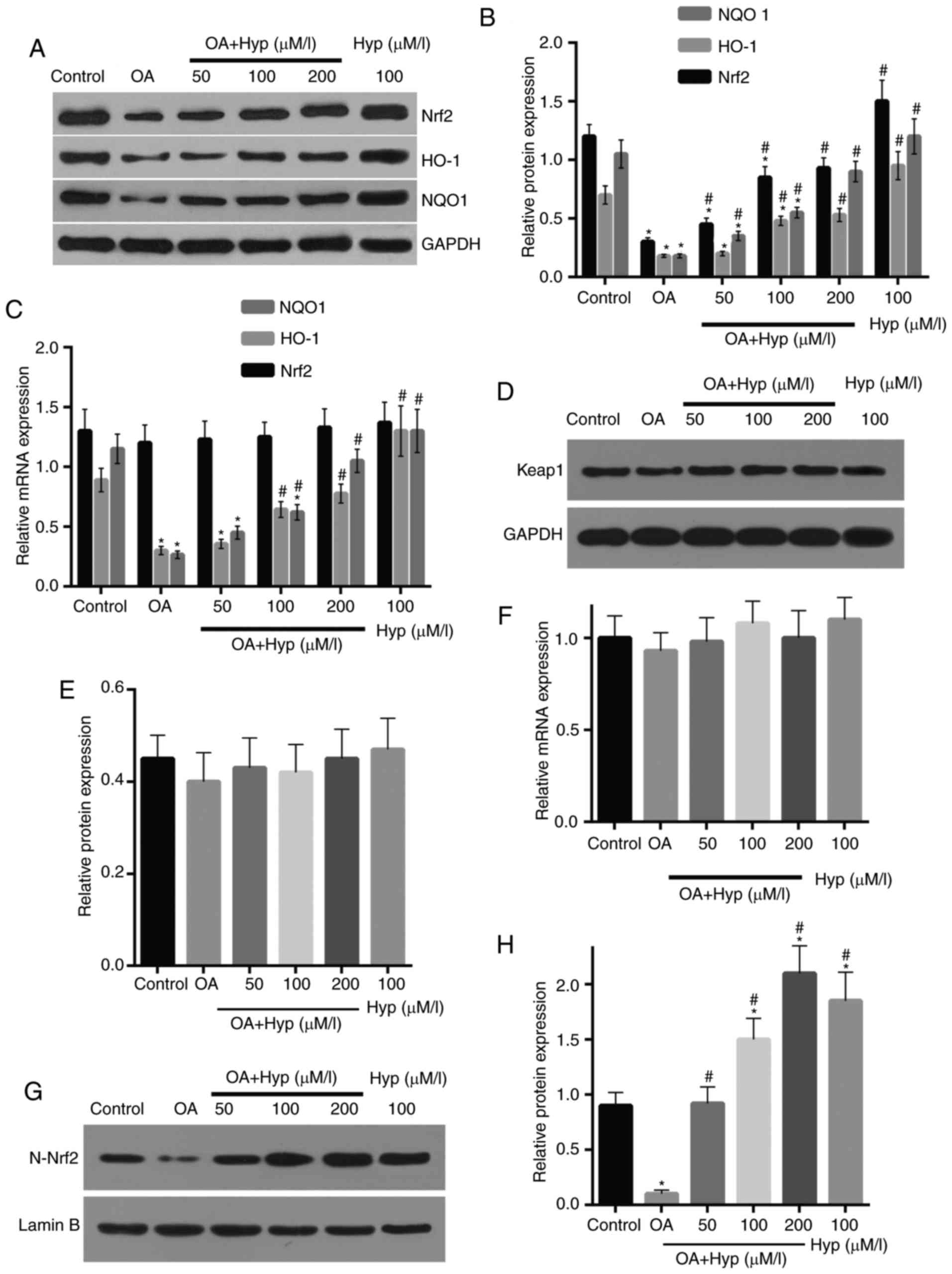
The majority of renal calculi (kidney stones) are calcium stones. Oxidative damage to renal tubular epithelial cells induced by reactive oxygen species (ROS) is the predominant cause of calcium oxalate stone formation. Hyperoside (Hyp) is a flavonol glycoside extracted from medicinal plants and appears to exhibit potent antioxidant activity in various cells. The aim of the present study was to investigate the protective effect of Hyp on renal cells exposed to oxidative stress simulated by oxalic acid (OA), and to determine whether the underlying mechanism involves the nuclear factor E2‑related factor2 (Nrf2)‑antioxidative response element signaling pathway. The study determined the indicators of high oxidative stress, including ROS and hydrogen peroxide (H2O2) in human kidney‑2 cells and the results demonstrated that the levels of ROS, as evaluated by flow cytometry, and H2O2 were significantly increased following treatment with OA (5 mmol/l) for 24 h (OA group), compared with those in the untreated control group. The increased activity of nicotinamide adenine dinucleotide phosphate (NADPH) oxidase in these cells explained this observation, as it is a major source of ROS. The results demonstrated that, in the OA group, the adhesion of calcium oxalate crystals and lactate dehydrogenase (LDH) were significantly increased, and MTT assay demonstrated that cell viability was inhibited, compared with the control, which indicated that severe injury of cells was induced by OA. However, when the cells were pre‑treated with Hyp prior to treatment with OA (drug group), the levels of ROS and H2O2, and the activities of NADPH oxidase and LD were increased, and the adhesion of calcium oxalate crystals to cells was reduced, compared with the OA group. Western blot analysis and reverse transcription‑quantitative polymerase chain reaction demonstrated that the protein and mRNA expression levels of Nrf2, heme oxygenase‑1 (HO‑1) and NAD(P)H: quinineoxidoreductase 1 (NQO1) in the Hyp groups were significantly increased, compared with those in the OA group, with the exception of Nrf2 mRNA. These results suggested that Hyp had a marked protective effect on renal cells against the oxidative damage and cytotoxicity simulated by OA. This is the first report, to the best of our knowledge, demonstrating that the ability of Hyp to enhance the endogenous functions of antioxidation and detoxification in cells may involve the Nrf2/HO‑1/NQO1 pathway.
View Figures

Figure 1

Figure 2

Figure 3

Figure 4

Figure 5

View References

1 

Merchant ML, Cummins TD, Wilkey DW, Salyer SA, Powell DW, Klein JB and Lederer ED: Proteomic analysis of renal calculi indicates an important role for inflammatory processes in calcium stone formation. Am J Physiol Renal Physiol. 295:F1254–F1258. 2008. View Article : Google Scholar : PubMed/NCBI

2 

Chauhan Prachi N, Kumar D and Kasana MS: Medicinal plants of Muzaffarnagar district used in treatment of urinary tract and kidney stones. Indian J Traditional Knowledge. 8:191–195. 2009.

3 

Cervellin G, Comelli I, Comelli D, Meschi T, Lippi G and Borghi L: Mean temperature and humidity variations, along with patient age, predict the number of visits for renal colic in a large urban Emergency Department: Results of a 9-year survey. J Epidemiol Glob Health. 2:31–38. 2012. View Article : Google Scholar : PubMed/NCBI

4 

Sorensen MD, Hsi RS, Chi T, Shara N, Wactawski-Wende J, Kahn AJ, Wang H, Hou L and Stoller ML: Women's Health Initiative Writing Group: Dietary intake of fiber, fruit, and vegetables decrease the risk of incident kidney stones in women: A Women's health initiative (WHI) report. J Urol. 192:1694–1699. 2014. View Article : Google Scholar : PubMed/NCBI

5 

Abdi R, Bagley J, Bonventre JV, Brenner BM, Carpenter CB, Chandraker A, Charytan DM, Christopher KB, Curhan GC, Denker BM, et al: Diagnosis and Management of Stone Disease. Nephrology Rounds. 4:2006.

6 

Hirose M, Yasui T, Okada A, Hamamoto S, Shimizu H, Itoh Y, Tozawa K and Kohri K: Renal tubular epithelial cell injury and oxidative stress induce calcium oxalate crystal formation in mouse kidney. Int J Urol. 17:83–92. 2010. View Article : Google Scholar : PubMed/NCBI

7 

Mckiernan SH, Tuen VC, Baldwin K, Wanagat J, Djamali A and Aiken JM: Adult-onset calorie restriction delays the accumulation of mitochondrial enzyme abnormalities in aging rat kidney tubular epithelial cells. Am J Physiol Renal Physiol. 292:F1751–F1750. 2007. View Article : Google Scholar : PubMed/NCBI

8 

Korolczuk A, Maciejewski M, Czechowska G Md Phd and Orzeł-Pankowska M: Ultrastructural examination of renal tubular epithelial cells and hepatocytes in the course of chronic cyclosporin A treatment-a possible link to oxidative stress. Ultrastruct Pathol. 37:332–339. 2013. View Article : Google Scholar : PubMed/NCBI

9 

Tikoo K, Lau SS and Monks TJ: Histone H3 phosphorylation is coupled to poly-(ADP-ribosylation) during reactive oxygen species-induced cell death in renal proximal tubular epithelial cells. Mol Pharmacol. 60:394–402. 2001. View Article : Google Scholar : PubMed/NCBI

10 

Sidle EH, Casselman R and Smith GN: Effect of cigarette smoke on placental antioxidant enzyme expression. Am J Physiol Regul Integr Comp Physiol. 293:R754–R758. 2007. View Article : Google Scholar : PubMed/NCBI

11 

Bhakkiyalakshmi E, Shalini D, Sekar TV, Rajaguru P, Paulmurugan R and Ramkumar KM: Therapeutic potential of pterostilbene against pancreatic beta-cell apoptosis through Nrf2 mechanism. Br J Pharmacol. 171:1747–1757. 2014. View Article : Google Scholar : PubMed/NCBI

12 

Gurjit KB, Inderpal SS, Saini NK, Puar Sk, Singh G and Bhatti JS: Ameliorative role of melatonin against cypermethrin induced hepatotoxicity and impaired antioxidant defense system in Wistar rats. Iosrjournals Org. 8:39–48. 2014.

13 

Fujisawa S, Atsumi T, Ishihara M and Kadoma Y: Cytotoxicity, ROS-generation activity and radical-scavenging activity of curcumin and related compounds. Anticancer Res. 24:563–569. 2004.PubMed/NCBI

14 

Wang L, Lv Y, Yao H, Yin L and Shang J: Curcumin prevents the non-alcoholic fatty hepatitis via mitochondria protection and apoptosis reduction. Int J Clin Exp Pathol. 8:11503–11509. 2015.PubMed/NCBI

15 

Miriyala S, Holley AK and St Clair DK: Mitochondrial superoxide dismutase-signals of distinction. Anticancer Agents Med Chem. 11:181–190. 2011. View Article : Google Scholar : PubMed/NCBI

16 

Kim SM, Kim YG, Jeong KH, Lee SH, Lee TW, Ihm CG and Moon JY: Angiotensin II-induced mitochondrial Nox4 is a major endogenous source of oxidative stress in kidney tubular cells. PLoS One. 7:e397392012. View Article : Google Scholar : PubMed/NCBI

17 

Zsom M, Fülöp T, Zsom L, Baráth A, Maróti Z and Endreffy E: Genetic polymorphisms and the risk of progressive renal failure in elderly Hungarian patients. Hemodial Int. 15:501–508. 2011. View Article : Google Scholar : PubMed/NCBI

18 

Hiatt RA, Ettinger B, Caan B, Quesenberry CP Jr, Duncan D and Citron JT: Randomized controlled trial of a low animal protein, high fiber diet in the prevention of recurrent calcium oxalate kidney stones. Am J Epidemiol. 144:25–33. 1996. View Article : Google Scholar : PubMed/NCBI

19 

Bahmani M, Baharvand-Ahmadi B, Tajeddini P, Rafieian-Kopaei M and Naghdi N: Identification of medicinal plants for the treatment of kidney and urinary stones. J Renal Inj Prev. 5:129–133. 2016. View Article : Google Scholar : PubMed/NCBI

20 

Sharma N, Tanwer BS and Vijayvergia R: Study of medicinal plants in Aravali regions of Rajasthan for treatment of Kidney stone and Urinary tract troubles. Int J PharmTech Res. 3:110–113. 2011.

21 

Ji YP, Xia H, Mei JP, Oh MC, Fernando PM, Kang KA, Ryu YS, Jung U, Kim IG and Hyun JW: Hyperoside Induces Endogenous Antioxidant System to Alleviate Oxidative Stress. J Cancer Prev. 21:41–47. 2016. View Article : Google Scholar : PubMed/NCBI

22 

Kruse ML, Friedrich M, Arlt A, Röcken C, Egberts JH, Sebens S and Schäfer H: Colonic Lamina propria inflammatory cells from patients with IBD induce the nuclear Factor-E2 related Factor-2 thereby leading to greater proteasome activity and apoptosis protection in human colonocytes. Inflamm Bowel Dis. 22:2593–2606. 2016. View Article : Google Scholar : PubMed/NCBI

23 

Park HR and Loch-Caruso R: Protective effect of nuclear factor E2-related factor 2 on inflammatory cytokine response to brominated diphenyl ether-47 in the HTR-8/SVneo human first trimester extravillous trophoblast cell line. Toxicol Appl Pharmacol. 281:67–77. 2014. View Article : Google Scholar : PubMed/NCBI

24 

Lee Y, Shin JM, Jang S, Choi DK, Seo MS, Kim HR, Sohn KC, Im M, Seo YJ, Lee JH and Kim CD: Role of nuclear factor E2-related factor 2 (Nrf2) in epidermal differentiation. Arch Dermatol Res. 306:677–682. 2014. View Article : Google Scholar : PubMed/NCBI

25 

McMahon M, Itoh K, Yamamoto M, Chanas SA, Henderson CJ, McLellan LI, Wolf CR, Cavin C and Hayes JD: The Cap'n'Collar basic leucine zipper transcription factor Nrf2 (NF-E2 p45-related factor 2) controls both constitutive and inducible expression of intestinal detoxification and glutathione biosynthetic enzymes. Cancer Res. 61:3299–3307. 2001.PubMed/NCBI

26 

Li W, Yu S, Liu T, Kim JH, Blank V, Li H and Kong AN: Heterodimerization with small Maf proteins enhances nuclear retention of Nrf2 via masking the NESzip motif. Biochim Biophys Acta. 1783:1847–1856. 2008. View Article : Google Scholar : PubMed/NCBI

27 

Cho HY, Reddy SP and Kleeberger SR: Nrf2 defends the lung from oxidative stress. Antioxid Redox Signal. 8:76–87. 2006. View Article : Google Scholar : PubMed/NCBI

28 

Pokkunuri ID, Chugh G and Asghar M: Human kidney-2 cells harbor functional dopamine D1 receptors that require Giα for Gq/11α signaling. Am J Physiol Renal Physiol. 305:F560–F567. 2013. View Article : Google Scholar : PubMed/NCBI

29 

Umekawa T, Byer K, Uemura H and Khan SR: Diphenyleneiodium (DPI) reduces oxalate ion- and calcium oxalate monohydrate and brushite crystal-induced upregulation of MCP-1 in NRK 52E cells. Nephrol Dial Transplant. 20:870–878. 2005. View Article : Google Scholar : PubMed/NCBI

30 

Xing HY, Liu Y, Chen JH, Sun FJ, Shi HQ and Xia PY: Hyperoside attenuates hydrogen peroxide-induced L02 cell damage via MAPK-dependent Keap1-Nrf2-ARE signaling pathway. Biochem Biophys Res Commun. 410:759–765. 2011. View Article : Google Scholar : PubMed/NCBI

31 

Panopoulos A, Harraz M, Engelhardt JF and Zandi E: Iron-mediated H2O2 production as a mechanism for cell type-specific inhibition of tumor necrosis factor alpha-induced but not interleukin-1beta-induced IkappaB kinase complex/nuclear factor-kappaB activation. J Biol Chem. 280:2912–2923. 2005. View Article : Google Scholar : PubMed/NCBI

32 

Sun L, Li W, Li W, Xiong L, Li G and Ma R: Astragaloside IV prevents damage to human mesangial cells through the inhibition of the NADPH oxidase/ROS/Akt/NF-κB pathway under high glucose conditions. Int J Mol Med. 34:167–176. 2014. View Article : Google Scholar : PubMed/NCBI

33 

Livak KJ and Schmittgen TD: Analysis of relative gene expression data using real-time quantitative PCR and the 2(-Delta Delta C(T)) method. Methods. 25:402–408. 2001. View Article : Google Scholar : PubMed/NCBI

34 

Wang L, Yue Z, Guo M, Fang L, Bai L, Li X, Tao Y, Wang S, Liu Q, Zhi D and Zhao H: Dietary flavonoid hyperoside induces apoptosis of activated human LX-2 hepatic stellate cell by suppressing canonical NF-κB signaling. Biomed Res Int. 2016:10685282016.PubMed/NCBI

35 

Piao MJ, Kang KA, Zhang R, Ko DO, Wang ZH, You HJ, Kim HS, Kim JS, Kang SS and Hyun JW: Hyperoside prevents oxidative damage induced by hydrogen peroxide in lung fibroblast cells via an antioxidant effect. Biochim Biophys Acta. 1780:1448–1457. 2008. View Article : Google Scholar : PubMed/NCBI

36 

Yang FQ, Liu M, Li W, Che JP, Wang GC and Zheng JH: Combination of quercetin and hyperoside inhibits prostate cancer cell growth and metastasis via regulation of microRNA-21. Mol Med Rep. 11:1085–1092. 2015. View Article : Google Scholar : PubMed/NCBI

37 

Matsunami T, Sato Y, Hasegawa Y, Ariga S, Kashimura H, Sato T and Yukawa M: Enhancement of reactive oxygen species and induction of apoptosis in streptozotocin-induced diabetic rats under hyperbaric oxygen exposure. Int J Clin Exp Pathol. 4:255–266. 2011.PubMed/NCBI

38 

Li J, He C, Tong W, Zou Y, Li D, Zhang C and Xu W: Tanshinone IIA blocks dexamethasone-induced apoptosis in osteoblasts through inhibiting Nox4-derived ROS production. Int J Clin Exp Pathol. 8:13695–13706. 2015.PubMed/NCBI

39 

Vanachayangkul P, Byer K, Khan S and Butterweck V: An aqueous extract of Ammi visnaga fruits and its constituents khellin and visnagin prevent cell damage caused by oxalate in renal epithelial cells. Phytomedicine. 17:653–658. 2010. View Article : Google Scholar : PubMed/NCBI

40 

Xing HY, Cai YQ, Wang XF, Wang LL, Li P, Wang GY and Chen JH: The cytoprotective effect of hyperoside against oxidative stress is mediated by the Nrf2-ARE signaling pathway through GSK-3β inactivation. PLoS One. 10:e01451832015. View Article : Google Scholar : PubMed/NCBI

41 

Xing HY, Liu Y, Chen JH, Sun FJ, Shi HQ and Xia PY: Hyperoside attenuates hydrogen peroxide-induced L02 cell damage via MAPK-dependent Keap1-Nrf2-ARE signaling pathway. Biochem Biophys Res Commun. 410:759–765. 2011. View Article : Google Scholar : PubMed/NCBI

42 

Hsieh TC, Lu X, Wang Z and Wu JM: Induction of quinone reductase NQO1 by resveratrol in human K562 cells involves the antioxidant response element ARE and is accompanied by nuclear translocation of transcription factor Nrf2. Med Chem. 2:275–285. 2006. View Article : Google Scholar : PubMed/NCBI

43 

Lee SB, Kim CY, Lee HJ, Yun JH and Nho CW: Induction of the phase II detoxification enzyme NQO1 in hepatocarcinoma cells by lignans from the fruit of Schisandra chinensis through nuclear accumulation of Nrf2. Planta Med. 75:1314–1318. 2009. View Article : Google Scholar : PubMed/NCBI

44 

Ishii Y, Itoh K, Morishima Y, Kimura T, Kiwamoto T, Iizuka T, Hegab AE, Hosoya T, Nomura A, Sakamoto T, et al: Transcription factor Nrf2 plays a pivotal role in protection against elastase-induced pulmonary inflammation and emphysema. J Immunol. 175:6968–6975. 2005. View Article : Google Scholar : PubMed/NCBI

45 

Itoh K, Mimura J and Yamamoto M: Discovery of the negative regulator of Nrf2, Keap1: A historical overview. Antioxid Redox Signal. 13:1665–1678. 2010. View Article : Google Scholar : PubMed/NCBI

Related Articles

  • Abstract
  • View
  • Download
  • Twitter
Copy and paste a formatted citation
Spandidos Publications style
Chen Y, Ye L, Li W, Li D and Li F: Hyperoside protects human kidney‑2 cells against oxidative damage induced by oxalic acid. Mol Med Rep 18: 486-494, 2018.
APA
Chen, Y., Ye, L., Li, W., Li, D., & Li, F. (2018). Hyperoside protects human kidney‑2 cells against oxidative damage induced by oxalic acid. Molecular Medicine Reports, 18, 486-494. https://doi.org/10.3892/mmr.2018.8948
MLA
Chen, Y., Ye, L., Li, W., Li, D., Li, F."Hyperoside protects human kidney‑2 cells against oxidative damage induced by oxalic acid". Molecular Medicine Reports 18.1 (2018): 486-494.
Chicago
Chen, Y., Ye, L., Li, W., Li, D., Li, F."Hyperoside protects human kidney‑2 cells against oxidative damage induced by oxalic acid". Molecular Medicine Reports 18, no. 1 (2018): 486-494. https://doi.org/10.3892/mmr.2018.8948
Copy and paste a formatted citation
x
Spandidos Publications style
Chen Y, Ye L, Li W, Li D and Li F: Hyperoside protects human kidney‑2 cells against oxidative damage induced by oxalic acid. Mol Med Rep 18: 486-494, 2018.
APA
Chen, Y., Ye, L., Li, W., Li, D., & Li, F. (2018). Hyperoside protects human kidney‑2 cells against oxidative damage induced by oxalic acid. Molecular Medicine Reports, 18, 486-494. https://doi.org/10.3892/mmr.2018.8948
MLA
Chen, Y., Ye, L., Li, W., Li, D., Li, F."Hyperoside protects human kidney‑2 cells against oxidative damage induced by oxalic acid". Molecular Medicine Reports 18.1 (2018): 486-494.
Chicago
Chen, Y., Ye, L., Li, W., Li, D., Li, F."Hyperoside protects human kidney‑2 cells against oxidative damage induced by oxalic acid". Molecular Medicine Reports 18, no. 1 (2018): 486-494. https://doi.org/10.3892/mmr.2018.8948
Follow us
  • Twitter
  • LinkedIn
  • Facebook
About
  • Spandidos Publications
  • Careers
  • Cookie Policy
  • Privacy Policy
How can we help?
  • Help
  • Live Chat
  • Contact
  • Email to our Support Team