Spandidos Publications Logo
  • About
    • About Spandidos
    • Aims and Scopes
    • Abstracting and Indexing
    • Editorial Policies
    • Reprints and Permissions
    • Job Opportunities
    • Terms and Conditions
    • Contact
  • Journals
    • All Journals
    • Oncology Letters
      • Oncology Letters
      • Information for Authors
      • Editorial Policies
      • Editorial Board
      • Aims and Scope
      • Abstracting and Indexing
      • Bibliographic Information
      • Archive
    • International Journal of Oncology
      • International Journal of Oncology
      • Information for Authors
      • Editorial Policies
      • Editorial Board
      • Aims and Scope
      • Abstracting and Indexing
      • Bibliographic Information
      • Archive
    • Molecular and Clinical Oncology
      • Molecular and Clinical Oncology
      • Information for Authors
      • Editorial Policies
      • Editorial Board
      • Aims and Scope
      • Abstracting and Indexing
      • Bibliographic Information
      • Archive
    • Experimental and Therapeutic Medicine
      • Experimental and Therapeutic Medicine
      • Information for Authors
      • Editorial Policies
      • Editorial Board
      • Aims and Scope
      • Abstracting and Indexing
      • Bibliographic Information
      • Archive
    • International Journal of Molecular Medicine
      • International Journal of Molecular Medicine
      • Information for Authors
      • Editorial Policies
      • Editorial Board
      • Aims and Scope
      • Abstracting and Indexing
      • Bibliographic Information
      • Archive
    • Biomedical Reports
      • Biomedical Reports
      • Information for Authors
      • Editorial Policies
      • Editorial Board
      • Aims and Scope
      • Abstracting and Indexing
      • Bibliographic Information
      • Archive
    • Oncology Reports
      • Oncology Reports
      • Information for Authors
      • Editorial Policies
      • Editorial Board
      • Aims and Scope
      • Abstracting and Indexing
      • Bibliographic Information
      • Archive
    • Molecular Medicine Reports
      • Molecular Medicine Reports
      • Information for Authors
      • Editorial Policies
      • Editorial Board
      • Aims and Scope
      • Abstracting and Indexing
      • Bibliographic Information
      • Archive
    • World Academy of Sciences Journal
      • World Academy of Sciences Journal
      • Information for Authors
      • Editorial Policies
      • Editorial Board
      • Aims and Scope
      • Abstracting and Indexing
      • Bibliographic Information
      • Archive
    • International Journal of Functional Nutrition
      • International Journal of Functional Nutrition
      • Information for Authors
      • Editorial Policies
      • Editorial Board
      • Aims and Scope
      • Abstracting and Indexing
      • Bibliographic Information
      • Archive
    • International Journal of Epigenetics
      • International Journal of Epigenetics
      • Information for Authors
      • Editorial Policies
      • Editorial Board
      • Aims and Scope
      • Abstracting and Indexing
      • Bibliographic Information
      • Archive
    • Medicine International
      • Medicine International
      • Information for Authors
      • Editorial Policies
      • Editorial Board
      • Aims and Scope
      • Abstracting and Indexing
      • Bibliographic Information
      • Archive
  • Articles
  • Information
    • Information for Authors
    • Information for Reviewers
    • Information for Librarians
    • Information for Advertisers
    • Conferences
  • Language Editing
Spandidos Publications Logo
  • About
    • About Spandidos
    • Aims and Scopes
    • Abstracting and Indexing
    • Editorial Policies
    • Reprints and Permissions
    • Job Opportunities
    • Terms and Conditions
    • Contact
  • Journals
    • All Journals
    • Biomedical Reports
      • Information for Authors
      • Editorial Policies
      • Editorial Board
      • Aims and Scope
      • Abstracting and Indexing
      • Bibliographic Information
      • Archive
    • Experimental and Therapeutic Medicine
      • Information for Authors
      • Editorial Policies
      • Editorial Board
      • Aims and Scope
      • Abstracting and Indexing
      • Bibliographic Information
      • Archive
    • International Journal of Epigenetics
      • Information for Authors
      • Editorial Policies
      • Editorial Board
      • Aims and Scope
      • Abstracting and Indexing
      • Bibliographic Information
      • Archive
    • International Journal of Functional Nutrition
      • Information for Authors
      • Editorial Policies
      • Editorial Board
      • Aims and Scope
      • Abstracting and Indexing
      • Bibliographic Information
      • Archive
    • International Journal of Molecular Medicine
      • Information for Authors
      • Editorial Policies
      • Editorial Board
      • Aims and Scope
      • Abstracting and Indexing
      • Bibliographic Information
      • Archive
    • International Journal of Oncology
      • Information for Authors
      • Editorial Policies
      • Editorial Board
      • Aims and Scope
      • Abstracting and Indexing
      • Bibliographic Information
      • Archive
    • Medicine International
      • Information for Authors
      • Editorial Policies
      • Editorial Board
      • Aims and Scope
      • Abstracting and Indexing
      • Bibliographic Information
      • Archive
    • Molecular and Clinical Oncology
      • Information for Authors
      • Editorial Policies
      • Editorial Board
      • Aims and Scope
      • Abstracting and Indexing
      • Bibliographic Information
      • Archive
    • Molecular Medicine Reports
      • Information for Authors
      • Editorial Policies
      • Editorial Board
      • Aims and Scope
      • Abstracting and Indexing
      • Bibliographic Information
      • Archive
    • Oncology Letters
      • Information for Authors
      • Editorial Policies
      • Editorial Board
      • Aims and Scope
      • Abstracting and Indexing
      • Bibliographic Information
      • Archive
    • Oncology Reports
      • Information for Authors
      • Editorial Policies
      • Editorial Board
      • Aims and Scope
      • Abstracting and Indexing
      • Bibliographic Information
      • Archive
    • World Academy of Sciences Journal
      • Information for Authors
      • Editorial Policies
      • Editorial Board
      • Aims and Scope
      • Abstracting and Indexing
      • Bibliographic Information
      • Archive
  • Articles
  • Information
    • For Authors
    • For Reviewers
    • For Librarians
    • For Advertisers
    • Conferences
  • Language Editing
Login Register Submit
  • This site uses cookies
  • You can change your cookie settings at any time by following the instructions in our Cookie Policy. To find out more, you may read our Privacy Policy.

    I agree
Search articles by DOI, keyword, author or affiliation
Search
Advanced Search
presentation
Molecular Medicine Reports
Join Editorial Board Propose a Special Issue
Print ISSN: 1791-2997 Online ISSN: 1791-3004
Journal Cover
July-2018 Volume 18 Issue 1

Full Size Image

Sign up for eToc alerts
Recommend to Library

Journals

International Journal of Molecular Medicine

International Journal of Molecular Medicine

International Journal of Molecular Medicine is an international journal devoted to molecular mechanisms of human disease.

International Journal of Oncology

International Journal of Oncology

International Journal of Oncology is an international journal devoted to oncology research and cancer treatment.

Molecular Medicine Reports

Molecular Medicine Reports

Covers molecular medicine topics such as pharmacology, pathology, genetics, neuroscience, infectious diseases, molecular cardiology, and molecular surgery.

Oncology Reports

Oncology Reports

Oncology Reports is an international journal devoted to fundamental and applied research in Oncology.

Experimental and Therapeutic Medicine

Experimental and Therapeutic Medicine

Experimental and Therapeutic Medicine is an international journal devoted to laboratory and clinical medicine.

Oncology Letters

Oncology Letters

Oncology Letters is an international journal devoted to Experimental and Clinical Oncology.

Biomedical Reports

Biomedical Reports

Explores a wide range of biological and medical fields, including pharmacology, genetics, microbiology, neuroscience, and molecular cardiology.

Molecular and Clinical Oncology

Molecular and Clinical Oncology

International journal addressing all aspects of oncology research, from tumorigenesis and oncogenes to chemotherapy and metastasis.

World Academy of Sciences Journal

World Academy of Sciences Journal

Multidisciplinary open-access journal spanning biochemistry, genetics, neuroscience, environmental health, and synthetic biology.

International Journal of Functional Nutrition

International Journal of Functional Nutrition

Open-access journal combining biochemistry, pharmacology, immunology, and genetics to advance health through functional nutrition.

International Journal of Epigenetics

International Journal of Epigenetics

Publishes open-access research on using epigenetics to advance understanding and treatment of human disease.

Medicine International

Medicine International

An International Open Access Journal Devoted to General Medicine.

Journal Cover
July-2018 Volume 18 Issue 1

Full Size Image

Sign up for eToc alerts
Recommend to Library

  • Article
  • Citations
    • Cite This Article
    • Download Citation
    • Create Citation Alert
    • Remove Citation Alert
    • Cited By
  • Similar Articles
    • Related Articles (in Spandidos Publications)
    • Similar Articles (Google Scholar)
    • Similar Articles (PubMed)
  • Download PDF
  • Download XML
  • View XML
Article Open Access

Bidirectional modulation of insulin action by reactive oxygen species in 3T3‑L1 adipocytes

  • Authors:
    • Mingfeng Ma
    • Yingyao Quan
    • Yong Li
    • Xu He
    • Jing Xiao
    • Meixiao Zhan
    • Wei Zhao
    • Yongjie Xin
    • Ligong Lu
    • Liangping Luo
  • View Affiliations / Copyright

    Affiliations: Department of Cardiology, Zhuhai Hospital Affiliated with Jinan University (Zhuhai People's Hospital), Zhuhai, Guangdong 519000, P.R. China, Center of Intervention Radiology, Zhuhai Precision Medicine Center, Zhuhai People's Hospital, Zhuhai, Guangdong 519000, P.R. China, Department of Medical Imaging Center, The First Affiliated Hospital of Jinan University, Guangzhou, Guangdong 510630, P.R. China
    Copyright: © Ma et al. This is an open access article distributed under the terms of Creative Commons Attribution License.
  • Pages: 807-814
    |
    Published online on: May 14, 2018
       https://doi.org/10.3892/mmr.2018.9016
  • Expand metrics +
Metrics: Total Views: 0 (Spandidos Publications: | PMC Statistics: )
Metrics: Total PDF Downloads: 0 (Spandidos Publications: | PMC Statistics: )
Cited By (CrossRef): 0 citations Loading Articles...

This article is mentioned in:


Abstract

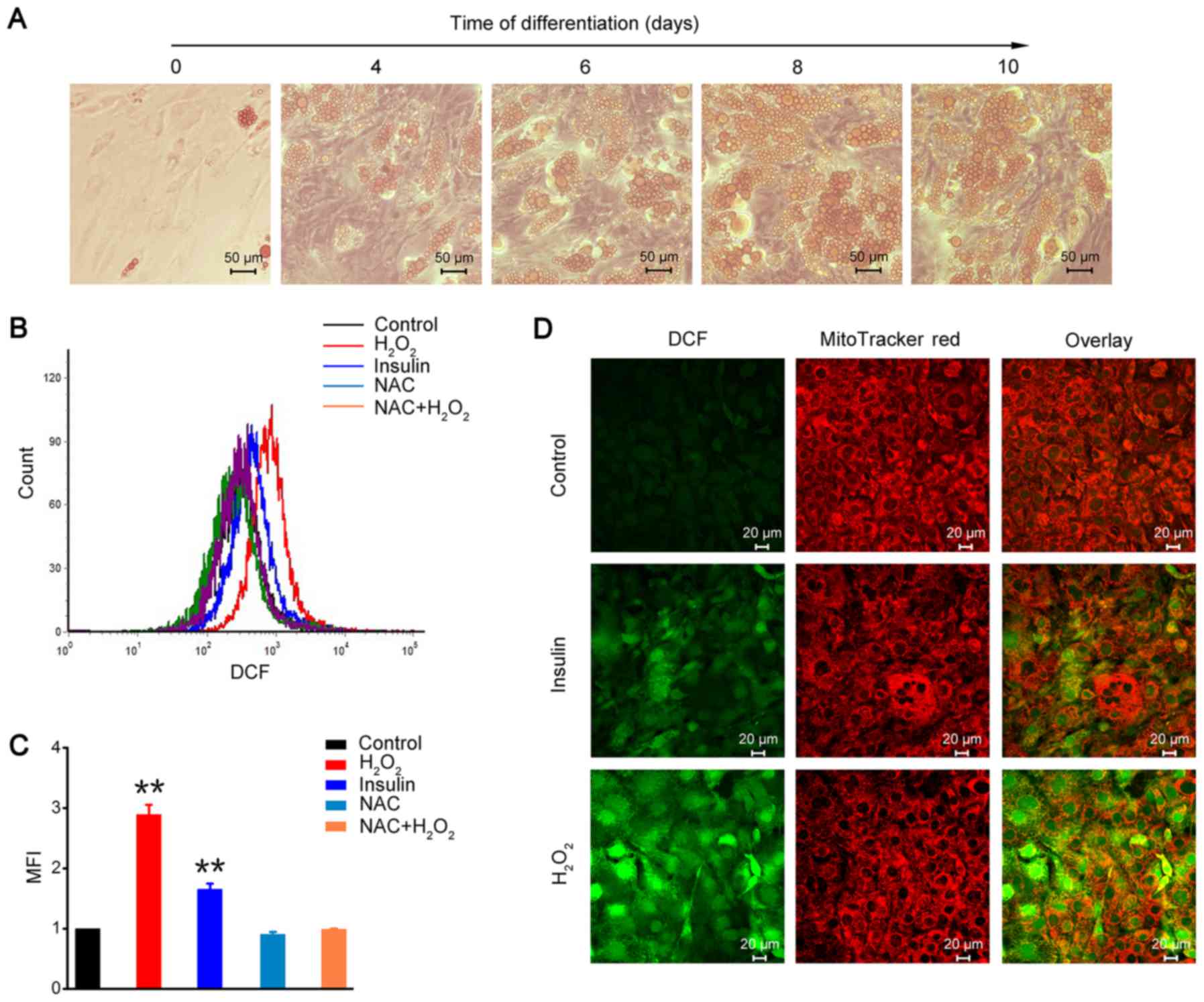
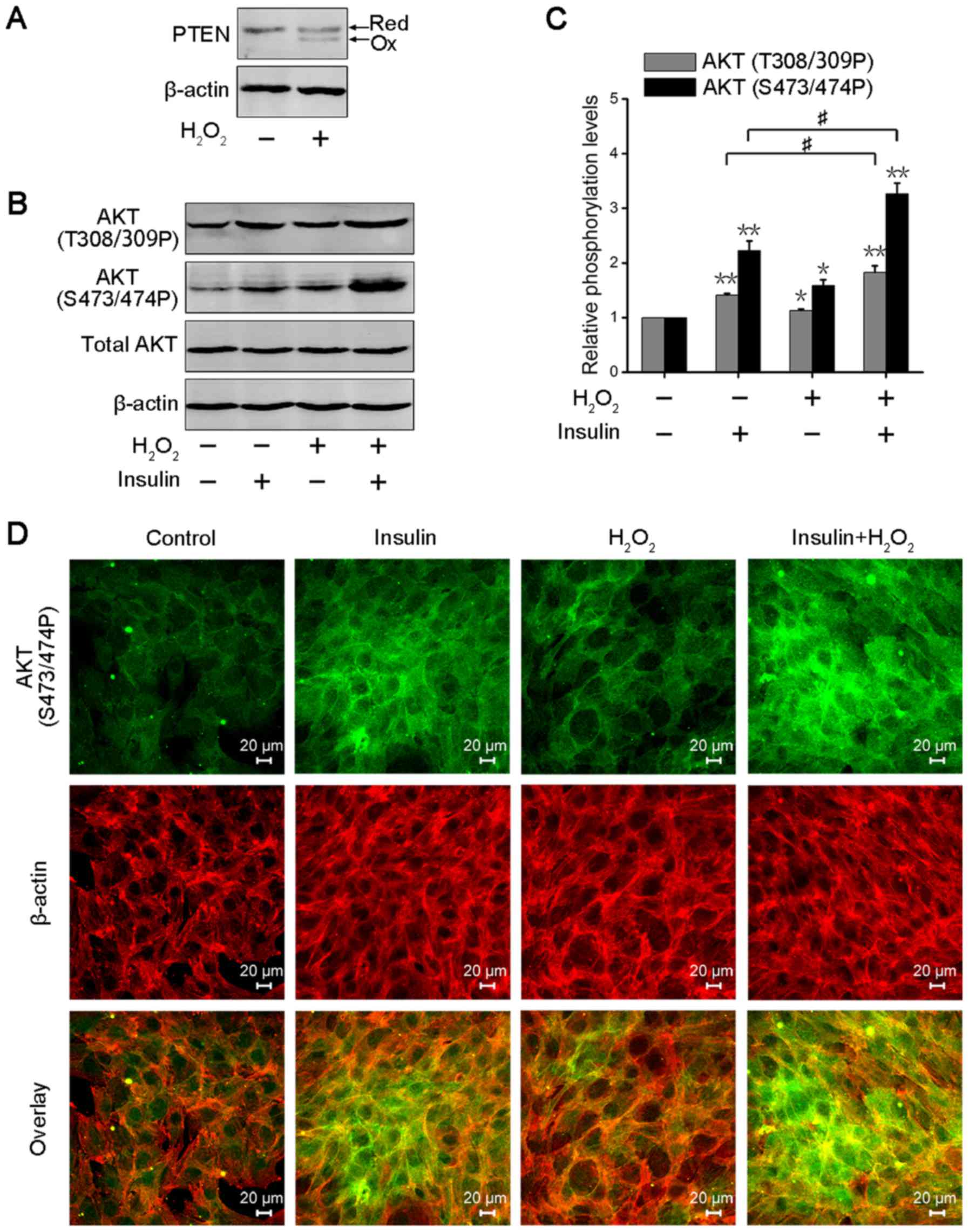
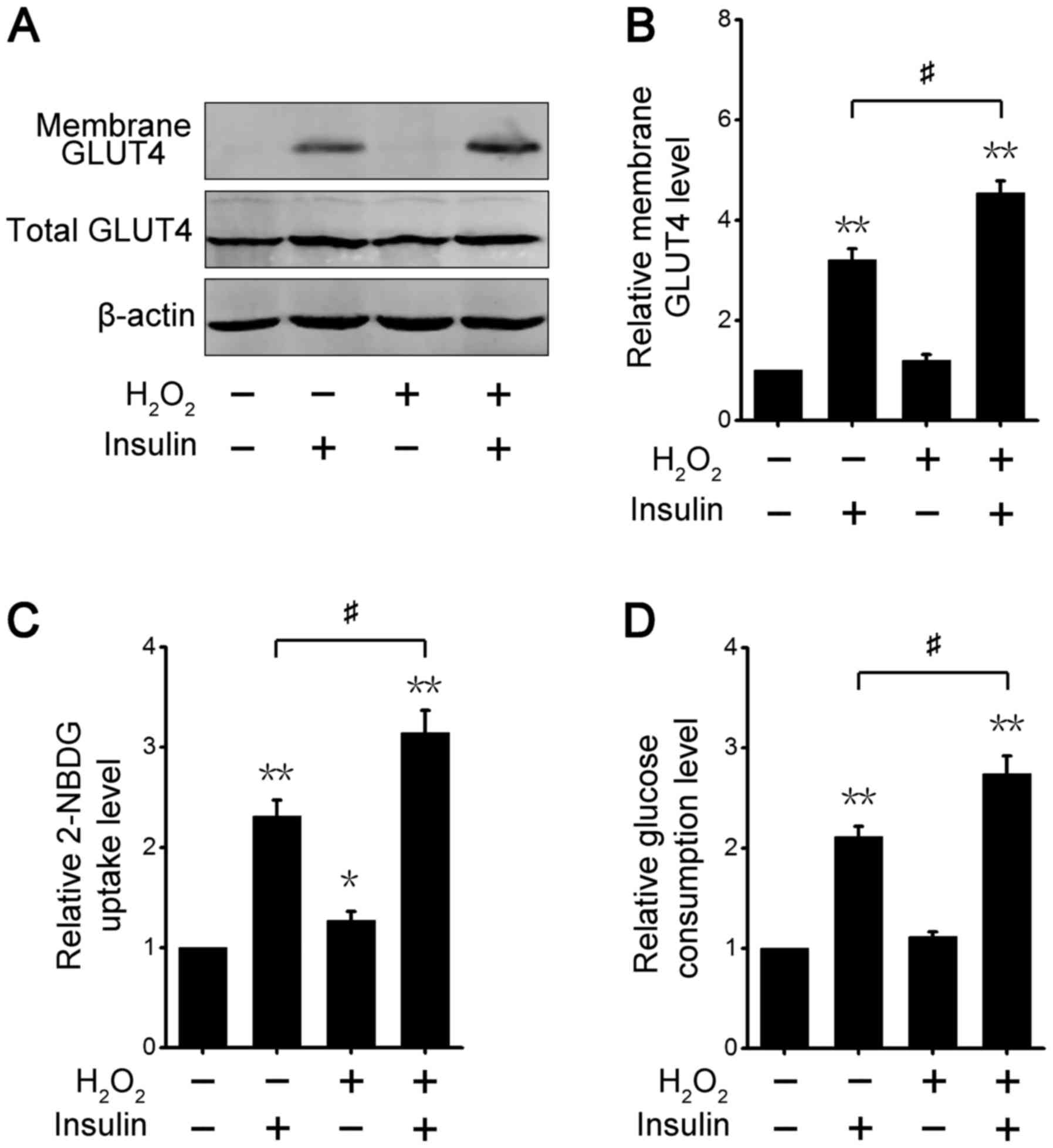
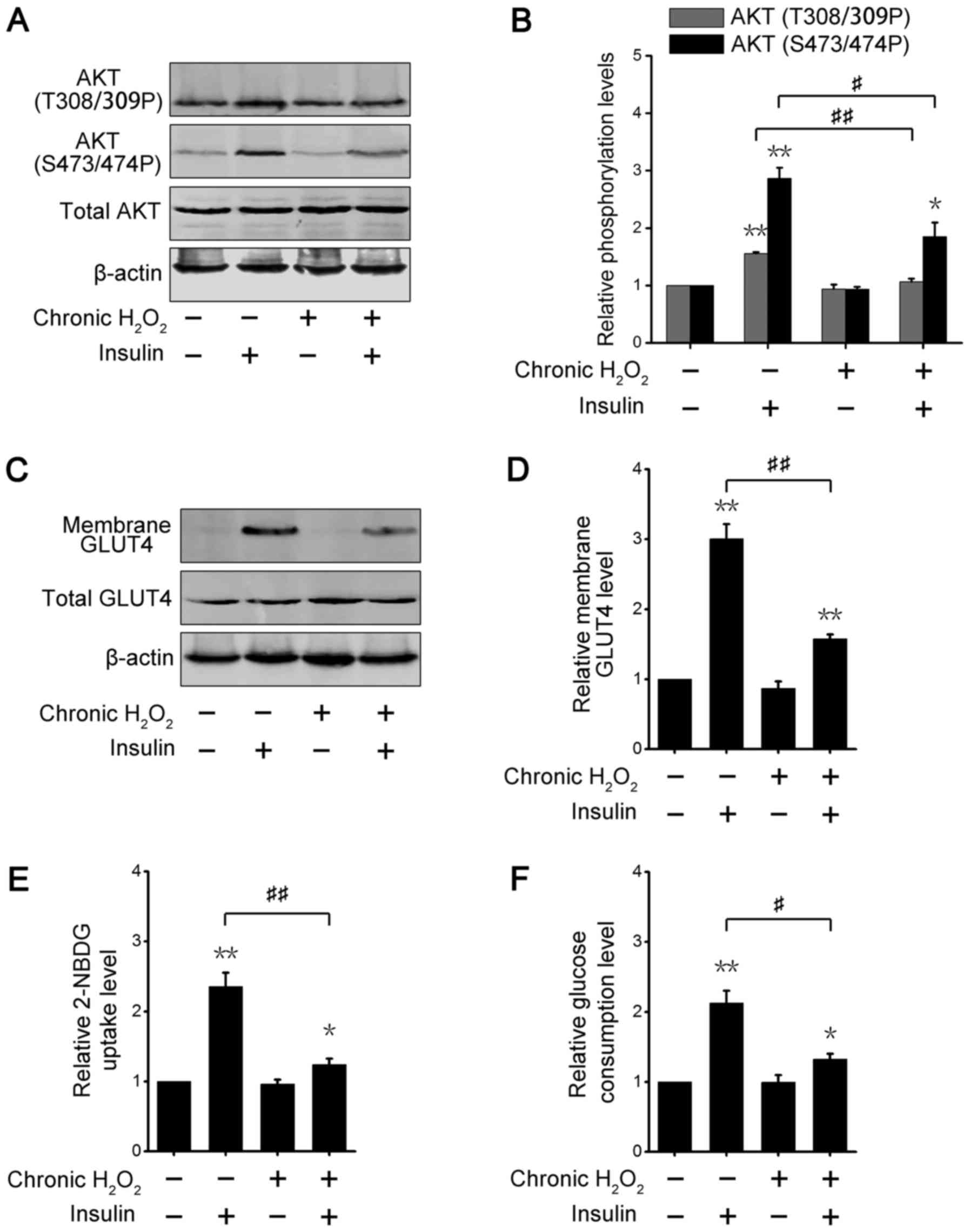
Reactive oxygen species (ROS) serve an important role in glucose‑lipid metabolic regulation. In the present study, the results demonstrated that there was bidirectional regulation of insulin action in 3T3‑L1 adipocytes treated with ROS. Transient and acute ROS exposure improved insulin‑induced metabolic effects in 3T3‑L1 adipocytes. Hydrogen peroxide (H2O2), as a stable and diffusible ROS, diffused into adipocytes and altered intracellular redox homeostasis, resulting in oxidation and inactivation of phosphatase and tensin homologue deleted on chromosome 10 (PTEN). Inactivation of PTEN enhanced the activation of insulin‑induced protein kinase B (AKT), leading to increased glucose transporter 4 (GLUT4) redistribution and glucose uptake in 3T3‑L1 adipocytes. However, chronic ROS treatment induced insulin resistance in 3T3‑L1 adipocytes. It was also revealed that insulin‑induced AKT activation, GLUT4 translocation to cell membrane and glucose uptake were significantly inhibited in chronic ROS‑treated 3T3‑L1 adipocytes. Taken together, the present study provided further demonstration that transient ROS treatment improved insulin sensitivity; however, chronic ROS exposure induced insulin resistance in 3T3‑L1 adipocytes.
View Figures

Figure 1

Figure 2

Figure 3

Figure 4

View References

1 

Turrens JF: Mitochondrial formation of reactive oxygen species. J Physiol. 552:335–344. 2003. View Article : Google Scholar : PubMed/NCBI

2 

Tiganis T: Reactive oxygen species and insulin resistance: The good, the bad and the ugly. Trends Pharmacol Sci. 32:82–89. 2011. View Article : Google Scholar : PubMed/NCBI

3 

Nishikawa T and Araki E: Impact of mitochondrial ROS production in the pathogenesis of diabetes mellitus and its complications. Antioxid Redox Signal. 9:343–353. 2007. View Article : Google Scholar : PubMed/NCBI

4 

Newsholme P, Haber EP, Hirabara SM, Rebelato EL, Procopio J, Morgan D, Oliveira-Emilio HC, Carpinelli AR and Curi R: Diabetes associated cell stress and dysfunction: Role of mitochondrial and non-mitochondrial ROS production and activity. J Physiol. 583:9–24. 2007. View Article : Google Scholar : PubMed/NCBI

5 

Riemer J, Bulleid N and Herrmann JM: Disulfide formation in the ER and mitochondria: Two solutions to a common process. Science. 324:1284–1287. 2009. View Article : Google Scholar : PubMed/NCBI

6 

Panzhinskiy E, Ren J and Nair S: Protein tyrosine phosphatase 1B and insulin resistance: role of endoplasmic reticulum stress/reactive oxygen species/nuclear factor kappa B axis. PLoS One. 8:e772282013. View Article : Google Scholar : PubMed/NCBI

7 

Freedman RB, Hirst TR and Tuite MF: Protein disulphide isomerase: Building bridges in protein folding. Trends Biochem Sci. 19:331–336. 1994. View Article : Google Scholar : PubMed/NCBI

8 

Figueira TR, Barros MH, Camargo AA, Castilho RF, Ferreira JC, Kowaltowski AJ, Sluse FE, Souza-Pinto NC and Vercesi AE: Mitochondria as a source of reactive oxygen and nitrogen species: From molecular mechanisms to human health. Antioxid Redox Sign. 18:2029–2074. 2013. View Article : Google Scholar

9 

Bedard K and Krause KH: The NOX family of ROS-generating NADPH oxidases: Physiology and pathophysiology. Physiol Rev. 87:245–313. 2007. View Article : Google Scholar : PubMed/NCBI

10 

Mukherjee SP, Lane RH and Lynn WS: Endogenous hydrogen peroxide and peroxidative metabolism in adipocytes in response to insulin and sulfhydryl reagents. Biochem Pharmacol. 27:2589–2594. 1978. View Article : Google Scholar : PubMed/NCBI

11 

May JM and de Haën C: Insulin-stimulated intracellular hydrogen peroxide production in rat epididymal fat cells. J Biol Chem. 254:2214–2220. 1979.PubMed/NCBI

12 

Seo JH, Ahn Y, Lee SR, Yeo Yeol C and Hur Chung K: The major target of the endogenously generated reactive oxygen species in response to insulin stimulation is phosphatase and tensin homolog and not phosphoinositide-3 kinase (PI-3 kinase) in the PI-3 kinase/Akt pathway. Mol Biol Cell. 16:348–357. 2005. View Article : Google Scholar : PubMed/NCBI

13 

Gericke A, Munson M and Ross AH: Regulation of the PTEN phosphatase. Gene. 374:1–9. 2006. View Article : Google Scholar : PubMed/NCBI

14 

Ross AH and Gericke A: Phosphorylation keeps PTEN phosphatase closed for business. Proc Natl Acad Sci USA. 106:1297–1298. 2009. View Article : Google Scholar : PubMed/NCBI

15 

Taniguchi CM, Emanuelli B and Kahn CR: Critical nodes in signalling pathways: Insights into insulin action. Nat Rev Mol Cell Biol. 7:85–96. 2006. View Article : Google Scholar : PubMed/NCBI

16 

Cantley LC: The phosphoinositide 3-kinase pathway. Science. 296:1655–1657. 2002. View Article : Google Scholar : PubMed/NCBI

17 

Cheng CK, Fan QW and Weiss WA: PI3K signaling in glioma-animal models and therapeutic challenges. Brain pathol. 19:112–120. 2009. View Article : Google Scholar : PubMed/NCBI

18 

Loh K, Deng H, Fukushima A, Cai X, Boivin B, Galic S, Bruce C, Shields BJ, Skiba B, Ooms LM, et al: Reactive oxygen species enhance insulin sensitivity. Cell Metab. 10:260–272. 2009. View Article : Google Scholar : PubMed/NCBI

19 

Whelan SA, Dias WB, Thiruneelakantapillai L, Lane MD and Hart GW: Regulation of insulin receptor substrate 1 (IRS-1)/AKT kinase-mediated insulin signaling by O-Linked beta-N-acetylglucosamine in 3T3-L1 adipocytes. J Biol Chem. 285:5204–5211. 2010. View Article : Google Scholar : PubMed/NCBI

20 

Cong LN, Chen H, Li Y, Zhou L, McGibbon MA, Taylor SI and Quon MJ: Physiological role of Akt in insulin-stimulated translocation of GLUT4 in transfected rat adipose cells. Mol Endocrinol. 11:1881–1890. 1997. View Article : Google Scholar : PubMed/NCBI

21 

Favaretto F, Milan G, Collin GB, Marshall JD, Stasi F, Maffei P, Vettor R and Naggert JK: GLUT4 defects in adipose tissue are early signs of metabolic alterations in Alms1GT/GT, a mouse model for obesity and insulin resistance. PLoS One. 9:e1095402014. View Article : Google Scholar : PubMed/NCBI

22 

Chen YH, Heneidi S, Lee JM, Layman LC, Stepp DW, Gamboa GM, Chen BS, Chazenbalk G and Azziz R: miRNA-93 inhibits GLUT4 and is overexpressed in adipose tissue of polycystic ovary syndrome patients and women with insulin resistance. Diabetes. 62:2278–2286. 2013. View Article : Google Scholar : PubMed/NCBI

23 

Nakashima N, Sharma PM, Imamura T, Bookstein R and Olefsky JM: The tumor suppressor PTEN negatively regulates insulin signaling in 3T3-L1 adipocytes. J Biol Chem. 275:12889–12895. 2000. View Article : Google Scholar : PubMed/NCBI

24 

Mehlem A, Hagberg CE, Muhl L, Eriksson U and Falkevall A: Imaging of neutral lipids by oil red O for analyzing the metabolic status in health and disease. Nat Protoc. 8:1149–1154. 2013. View Article : Google Scholar : PubMed/NCBI

25 

Potashnik R, Bloch-Damti A, Bashan N and Rudich A: IRS1 degradation and increased serine phosphorylation cannot predict the degree of metabolic insulin resistance induced by oxidative stress. Diabetologia. 46:639–648. 2003. View Article : Google Scholar : PubMed/NCBI

26 

Yang P, Zhao Y, Zhao L, Yuan J, Chen Y, Varghese Z, Moorhead JF, Chen Y and Ruan XZ: Paradoxical effect of rapamycin on inflammatory stress-induced insulin resistance in vitro and in vivo. Sci Rep. 5:149592015. View Article : Google Scholar : PubMed/NCBI

27 

Lee SR, Yang KS, Kwon J, Lee C, Jeong W and Rhee SG: Reversible inactivation of the tumor suppressor PTEN by H2O2. J Biol Chem. 277:20336–20342. 2002. View Article : Google Scholar : PubMed/NCBI

28 

Jiang X, Huang L and Xing D: Photoactivation of Dok1/ERK/PPARγ signaling axis inhibits excessive lipolysis in insulin-resistant adipocytes. Cell Signal. 27:1265–1275. 2015. View Article : Google Scholar : PubMed/NCBI

29 

Bernlohr DA, Bolanowski MA, Kelly TJ Jr and Lane MD: Evidence for an increase in transcription of specific mRNAs during differentiation of 3T3-L1 preadipocytes. J Biol Chem. 260:5563–5567. 1985.PubMed/NCBI

30 

Turpin SM, Nicholls HT, Willmes DM, Mourier A, Brodesser S, Wunderlich CM, Mauer J, Xu E, Hammerschmidt P, Brönneke HS, et al: Obesity-induced CerS6-dependent C16:0 ceramide production promotes weight gain and glucose intolerance. Cell Metab. 20:678–686. 2014. View Article : Google Scholar : PubMed/NCBI

31 

Quan YY, Qin GQ, Huang H, Liu YH, Wang XP and Chen TS: Dominant roles of Fenton reaction in sodium nitroprusside-induced chondrocyte apoptosis. Free Radic Biol Med. 94:135–144. 2016. View Article : Google Scholar : PubMed/NCBI

32 

Whiteman EL, Cho H and Birnbaum MJ: Role of Akt/protein kinase B in metabolism. Trends Endocrinol Metab. 13:444–451. 2002. View Article : Google Scholar : PubMed/NCBI

33 

Gonzalez E, Flier E, Molle D, Accili D and McGraw TE: Hyperinsulinemia leads to uncoupled insulin regulation of the GLUT4 glucose transporter and the FoxO1 transcription factor. Proc Natl Acad Sci USA. 108:10162–10167. 2011. View Article : Google Scholar : PubMed/NCBI

34 

Koseoglu S, Lu Z, Kumar C, Kirschmeier P and Zou J: AKT1, AKT2 and AKT3-dependent cell survival is cell line-specific and knockdown of all three isoforms selectively induces apoptosis in 20 human tumor cell lines. Cancer Biol Ther. 6:755–762. 2007. View Article : Google Scholar : PubMed/NCBI

35 

Bryant NJ, Govers R and James DE: Regulated transport of the glucose transporter GLUT4. Nat Rev Mol Cell Biol. 3:267–277. 2002. View Article : Google Scholar : PubMed/NCBI

36 

Goldstein BJ, Mahadev K, Wu X, Zhu L and Motoshima H: Role of insulin-induced reactive oxygen species in the insulin signaling pathway. Antioxid Redox Signal. 7:1021–1031. 2005. View Article : Google Scholar : PubMed/NCBI

37 

Tonks NK: Protein tyrosine phosphatases: From genes, to function, to disease. Nat Rev Mol Cell Biol. 7:833–846. 2006. View Article : Google Scholar : PubMed/NCBI

38 

Bloch-Damti A and Bashan N: Proposed mechanisms for the induction of insulin resistance by oxidative stress. Antioxid Redox Signal. 7:1553–1567. 2005. View Article : Google Scholar : PubMed/NCBI

39 

Ding H, Heng B, He W, Shi L, Lai C, Xiao L, Ren H, Mo S and Su Z: Chronic reactive oxygen species exposure inhibits glucose uptake and causes insulin resistance in C2C12 myotubes. Biochem Biophys Res Commun. 478:798–803. 2016. View Article : Google Scholar : PubMed/NCBI

40 

Matsukawa J, Matsuzawa A, Takeda K and Ichijo H: The ASK1-MAP kinase cascades in mammalian stress response. J Biochem. 136:261–265. 2004. View Article : Google Scholar : PubMed/NCBI

41 

Tobiume K, Matsuzawa A, Takahashi T, Nishitoh H, Morita K, Takeda K, Minowa O, Miyazono K, Noda T and Ichijo H: ASK1 is required for sustained activations of JNK/p38 MAP kinases and apoptosis. EMBO Rep. 2:222–228. 2001. View Article : Google Scholar : PubMed/NCBI

42 

Storz P and Toker A: Protein kinase D mediates a stress-induced NF-kappaB activation and survival pathway. EMBO J. 22:109–120. 2003. View Article : Google Scholar : PubMed/NCBI

43 

Gual P, Le Marchand-Brustel Y and Tanti JF: Positive and negative regulation of insulin signaling through IRS-1 phosphorylation. Biochimie. 87:99–109. 2005. View Article : Google Scholar : PubMed/NCBI

Related Articles

  • Abstract
  • View
  • Download
  • Twitter
Copy and paste a formatted citation
Spandidos Publications style
Ma M, Quan Y, Li Y, He X, Xiao J, Zhan M, Zhao W, Xin Y, Lu L, Luo L, Luo L, et al: Bidirectional modulation of insulin action by reactive oxygen species in 3T3‑L1 adipocytes. Mol Med Rep 18: 807-814, 2018.
APA
Ma, M., Quan, Y., Li, Y., He, X., Xiao, J., Zhan, M. ... Luo, L. (2018). Bidirectional modulation of insulin action by reactive oxygen species in 3T3‑L1 adipocytes. Molecular Medicine Reports, 18, 807-814. https://doi.org/10.3892/mmr.2018.9016
MLA
Ma, M., Quan, Y., Li, Y., He, X., Xiao, J., Zhan, M., Zhao, W., Xin, Y., Lu, L., Luo, L."Bidirectional modulation of insulin action by reactive oxygen species in 3T3‑L1 adipocytes". Molecular Medicine Reports 18.1 (2018): 807-814.
Chicago
Ma, M., Quan, Y., Li, Y., He, X., Xiao, J., Zhan, M., Zhao, W., Xin, Y., Lu, L., Luo, L."Bidirectional modulation of insulin action by reactive oxygen species in 3T3‑L1 adipocytes". Molecular Medicine Reports 18, no. 1 (2018): 807-814. https://doi.org/10.3892/mmr.2018.9016
Copy and paste a formatted citation
x
Spandidos Publications style
Ma M, Quan Y, Li Y, He X, Xiao J, Zhan M, Zhao W, Xin Y, Lu L, Luo L, Luo L, et al: Bidirectional modulation of insulin action by reactive oxygen species in 3T3‑L1 adipocytes. Mol Med Rep 18: 807-814, 2018.
APA
Ma, M., Quan, Y., Li, Y., He, X., Xiao, J., Zhan, M. ... Luo, L. (2018). Bidirectional modulation of insulin action by reactive oxygen species in 3T3‑L1 adipocytes. Molecular Medicine Reports, 18, 807-814. https://doi.org/10.3892/mmr.2018.9016
MLA
Ma, M., Quan, Y., Li, Y., He, X., Xiao, J., Zhan, M., Zhao, W., Xin, Y., Lu, L., Luo, L."Bidirectional modulation of insulin action by reactive oxygen species in 3T3‑L1 adipocytes". Molecular Medicine Reports 18.1 (2018): 807-814.
Chicago
Ma, M., Quan, Y., Li, Y., He, X., Xiao, J., Zhan, M., Zhao, W., Xin, Y., Lu, L., Luo, L."Bidirectional modulation of insulin action by reactive oxygen species in 3T3‑L1 adipocytes". Molecular Medicine Reports 18, no. 1 (2018): 807-814. https://doi.org/10.3892/mmr.2018.9016
Follow us
  • Twitter
  • LinkedIn
  • Facebook
About
  • Spandidos Publications
  • Careers
  • Cookie Policy
  • Privacy Policy
How can we help?
  • Help
  • Live Chat
  • Contact
  • Email to our Support Team