Spandidos Publications Logo
  • About
    • About Spandidos
    • Aims and Scopes
    • Abstracting and Indexing
    • Editorial Policies
    • Reprints and Permissions
    • Job Opportunities
    • Terms and Conditions
    • Contact
  • Journals
    • All Journals
    • Oncology Letters
      • Oncology Letters
      • Information for Authors
      • Editorial Policies
      • Editorial Board
      • Aims and Scope
      • Abstracting and Indexing
      • Bibliographic Information
      • Archive
    • International Journal of Oncology
      • International Journal of Oncology
      • Information for Authors
      • Editorial Policies
      • Editorial Board
      • Aims and Scope
      • Abstracting and Indexing
      • Bibliographic Information
      • Archive
    • Molecular and Clinical Oncology
      • Molecular and Clinical Oncology
      • Information for Authors
      • Editorial Policies
      • Editorial Board
      • Aims and Scope
      • Abstracting and Indexing
      • Bibliographic Information
      • Archive
    • Experimental and Therapeutic Medicine
      • Experimental and Therapeutic Medicine
      • Information for Authors
      • Editorial Policies
      • Editorial Board
      • Aims and Scope
      • Abstracting and Indexing
      • Bibliographic Information
      • Archive
    • International Journal of Molecular Medicine
      • International Journal of Molecular Medicine
      • Information for Authors
      • Editorial Policies
      • Editorial Board
      • Aims and Scope
      • Abstracting and Indexing
      • Bibliographic Information
      • Archive
    • Biomedical Reports
      • Biomedical Reports
      • Information for Authors
      • Editorial Policies
      • Editorial Board
      • Aims and Scope
      • Abstracting and Indexing
      • Bibliographic Information
      • Archive
    • Oncology Reports
      • Oncology Reports
      • Information for Authors
      • Editorial Policies
      • Editorial Board
      • Aims and Scope
      • Abstracting and Indexing
      • Bibliographic Information
      • Archive
    • Molecular Medicine Reports
      • Molecular Medicine Reports
      • Information for Authors
      • Editorial Policies
      • Editorial Board
      • Aims and Scope
      • Abstracting and Indexing
      • Bibliographic Information
      • Archive
    • World Academy of Sciences Journal
      • World Academy of Sciences Journal
      • Information for Authors
      • Editorial Policies
      • Editorial Board
      • Aims and Scope
      • Abstracting and Indexing
      • Bibliographic Information
      • Archive
    • International Journal of Functional Nutrition
      • International Journal of Functional Nutrition
      • Information for Authors
      • Editorial Policies
      • Editorial Board
      • Aims and Scope
      • Abstracting and Indexing
      • Bibliographic Information
      • Archive
    • International Journal of Epigenetics
      • International Journal of Epigenetics
      • Information for Authors
      • Editorial Policies
      • Editorial Board
      • Aims and Scope
      • Abstracting and Indexing
      • Bibliographic Information
      • Archive
    • Medicine International
      • Medicine International
      • Information for Authors
      • Editorial Policies
      • Editorial Board
      • Aims and Scope
      • Abstracting and Indexing
      • Bibliographic Information
      • Archive
  • Articles
  • Information
    • Information for Authors
    • Information for Reviewers
    • Information for Librarians
    • Information for Advertisers
    • Conferences
  • Language Editing
Spandidos Publications Logo
  • About
    • About Spandidos
    • Aims and Scopes
    • Abstracting and Indexing
    • Editorial Policies
    • Reprints and Permissions
    • Job Opportunities
    • Terms and Conditions
    • Contact
  • Journals
    • All Journals
    • Biomedical Reports
      • Information for Authors
      • Editorial Policies
      • Editorial Board
      • Aims and Scope
      • Abstracting and Indexing
      • Bibliographic Information
      • Archive
    • Experimental and Therapeutic Medicine
      • Information for Authors
      • Editorial Policies
      • Editorial Board
      • Aims and Scope
      • Abstracting and Indexing
      • Bibliographic Information
      • Archive
    • International Journal of Epigenetics
      • Information for Authors
      • Editorial Policies
      • Editorial Board
      • Aims and Scope
      • Abstracting and Indexing
      • Bibliographic Information
      • Archive
    • International Journal of Functional Nutrition
      • Information for Authors
      • Editorial Policies
      • Editorial Board
      • Aims and Scope
      • Abstracting and Indexing
      • Bibliographic Information
      • Archive
    • International Journal of Molecular Medicine
      • Information for Authors
      • Editorial Policies
      • Editorial Board
      • Aims and Scope
      • Abstracting and Indexing
      • Bibliographic Information
      • Archive
    • International Journal of Oncology
      • Information for Authors
      • Editorial Policies
      • Editorial Board
      • Aims and Scope
      • Abstracting and Indexing
      • Bibliographic Information
      • Archive
    • Medicine International
      • Information for Authors
      • Editorial Policies
      • Editorial Board
      • Aims and Scope
      • Abstracting and Indexing
      • Bibliographic Information
      • Archive
    • Molecular and Clinical Oncology
      • Information for Authors
      • Editorial Policies
      • Editorial Board
      • Aims and Scope
      • Abstracting and Indexing
      • Bibliographic Information
      • Archive
    • Molecular Medicine Reports
      • Information for Authors
      • Editorial Policies
      • Editorial Board
      • Aims and Scope
      • Abstracting and Indexing
      • Bibliographic Information
      • Archive
    • Oncology Letters
      • Information for Authors
      • Editorial Policies
      • Editorial Board
      • Aims and Scope
      • Abstracting and Indexing
      • Bibliographic Information
      • Archive
    • Oncology Reports
      • Information for Authors
      • Editorial Policies
      • Editorial Board
      • Aims and Scope
      • Abstracting and Indexing
      • Bibliographic Information
      • Archive
    • World Academy of Sciences Journal
      • Information for Authors
      • Editorial Policies
      • Editorial Board
      • Aims and Scope
      • Abstracting and Indexing
      • Bibliographic Information
      • Archive
  • Articles
  • Information
    • For Authors
    • For Reviewers
    • For Librarians
    • For Advertisers
    • Conferences
  • Language Editing
Login Register Submit
  • This site uses cookies
  • You can change your cookie settings at any time by following the instructions in our Cookie Policy. To find out more, you may read our Privacy Policy.

    I agree
Search articles by DOI, keyword, author or affiliation
Search
Advanced Search
presentation
Molecular Medicine Reports
Join Editorial Board Propose a Special Issue
Print ISSN: 1791-2997 Online ISSN: 1791-3004
Journal Cover
August-2018 Volume 18 Issue 2

Full Size Image

Sign up for eToc alerts
Recommend to Library

Journals

International Journal of Molecular Medicine

International Journal of Molecular Medicine

International Journal of Molecular Medicine is an international journal devoted to molecular mechanisms of human disease.

International Journal of Oncology

International Journal of Oncology

International Journal of Oncology is an international journal devoted to oncology research and cancer treatment.

Molecular Medicine Reports

Molecular Medicine Reports

Covers molecular medicine topics such as pharmacology, pathology, genetics, neuroscience, infectious diseases, molecular cardiology, and molecular surgery.

Oncology Reports

Oncology Reports

Oncology Reports is an international journal devoted to fundamental and applied research in Oncology.

Experimental and Therapeutic Medicine

Experimental and Therapeutic Medicine

Experimental and Therapeutic Medicine is an international journal devoted to laboratory and clinical medicine.

Oncology Letters

Oncology Letters

Oncology Letters is an international journal devoted to Experimental and Clinical Oncology.

Biomedical Reports

Biomedical Reports

Explores a wide range of biological and medical fields, including pharmacology, genetics, microbiology, neuroscience, and molecular cardiology.

Molecular and Clinical Oncology

Molecular and Clinical Oncology

International journal addressing all aspects of oncology research, from tumorigenesis and oncogenes to chemotherapy and metastasis.

World Academy of Sciences Journal

World Academy of Sciences Journal

Multidisciplinary open-access journal spanning biochemistry, genetics, neuroscience, environmental health, and synthetic biology.

International Journal of Functional Nutrition

International Journal of Functional Nutrition

Open-access journal combining biochemistry, pharmacology, immunology, and genetics to advance health through functional nutrition.

International Journal of Epigenetics

International Journal of Epigenetics

Publishes open-access research on using epigenetics to advance understanding and treatment of human disease.

Medicine International

Medicine International

An International Open Access Journal Devoted to General Medicine.

Journal Cover
August-2018 Volume 18 Issue 2

Full Size Image

Sign up for eToc alerts
Recommend to Library

  • Article
  • Citations
    • Cite This Article
    • Download Citation
    • Create Citation Alert
    • Remove Citation Alert
    • Cited By
  • Similar Articles
    • Related Articles (in Spandidos Publications)
    • Similar Articles (Google Scholar)
    • Similar Articles (PubMed)
  • Download PDF
  • Download XML
  • View XML
Article

Napsin A is negatively associated with EMT‑mediated EGFR‑TKI resistance in lung cancer cells

  • Authors:
    • Linshui Zhou
    • Xin Lv
    • Junchao Yang
    • Yuanhong Zhu
    • Zhen Wang
    • Tingzhen Xu
  • View Affiliations / Copyright

    Affiliations: Department of Respiratory Medicine, The First Affiliated Hospital of Zhejiang Chinese Medicine University, Hangzhou, Zhejiang 310006, P.R. China
  • Pages: 1247-1252
    |
    Published online on: May 25, 2018
       https://doi.org/10.3892/mmr.2018.9075
  • Expand metrics +
Metrics: Total Views: 0 (Spandidos Publications: | PMC Statistics: )
Metrics: Total PDF Downloads: 0 (Spandidos Publications: | PMC Statistics: )
Cited By (CrossRef): 0 citations Loading Articles...

This article is mentioned in:


Abstract

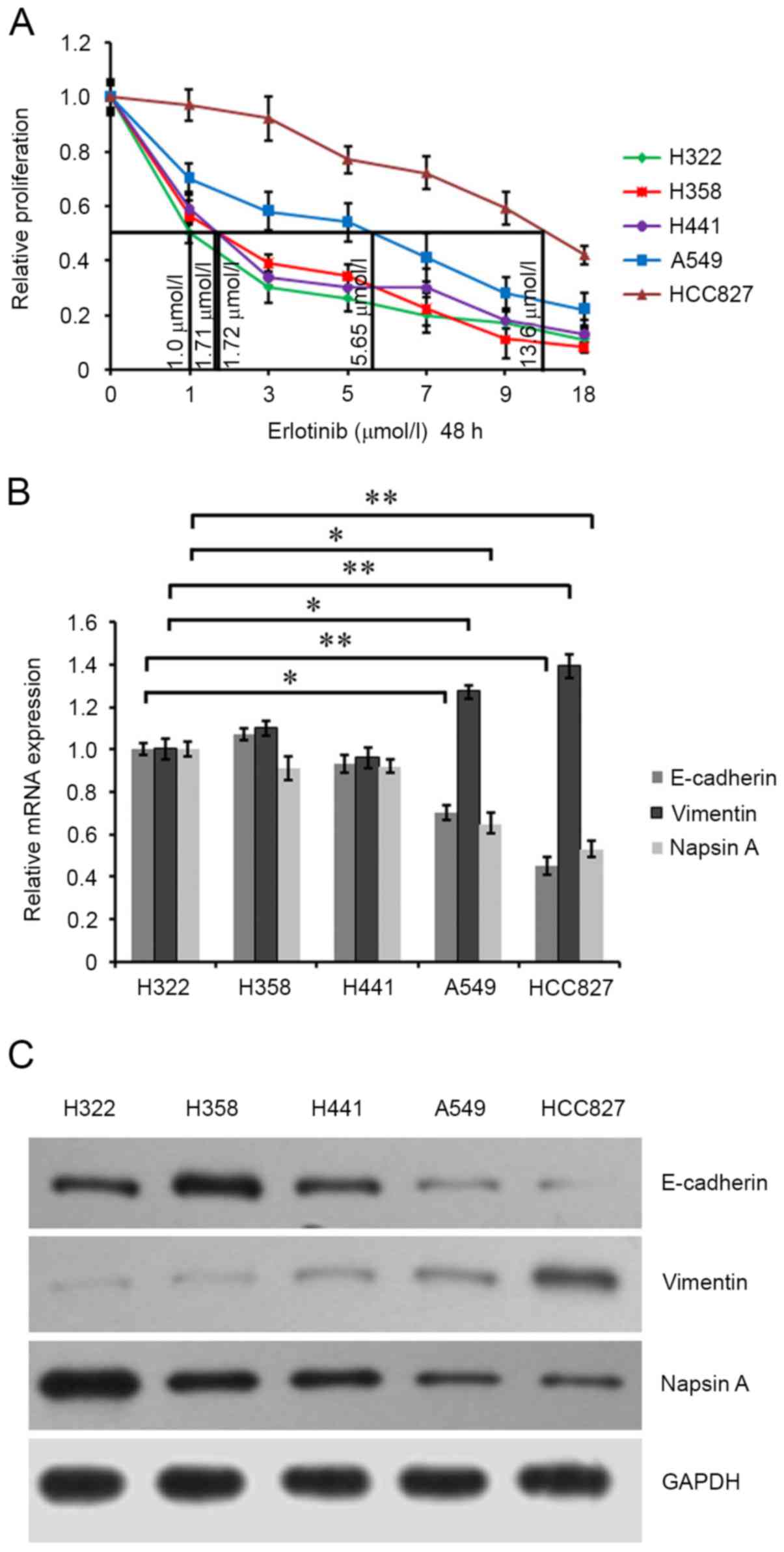
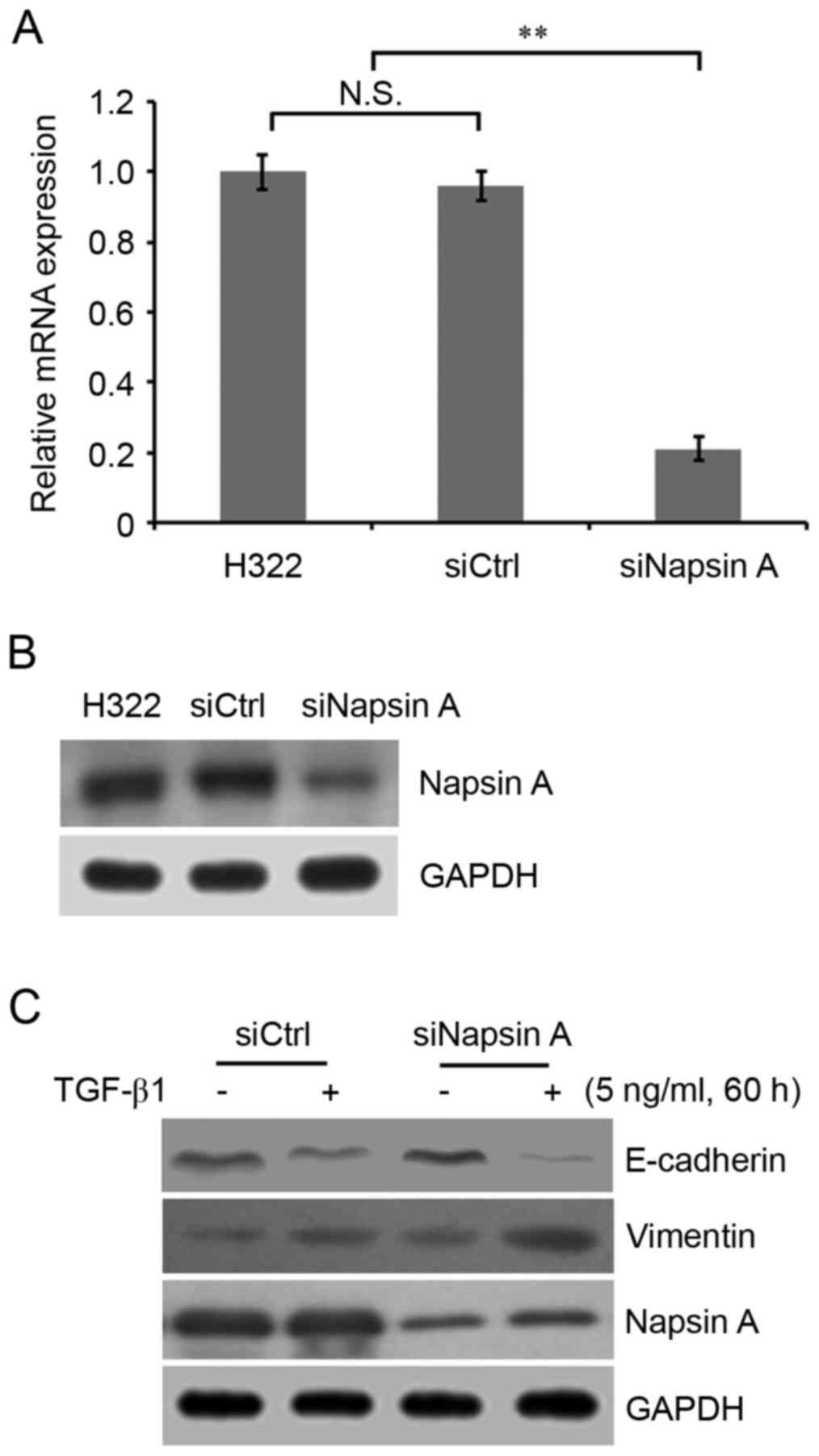
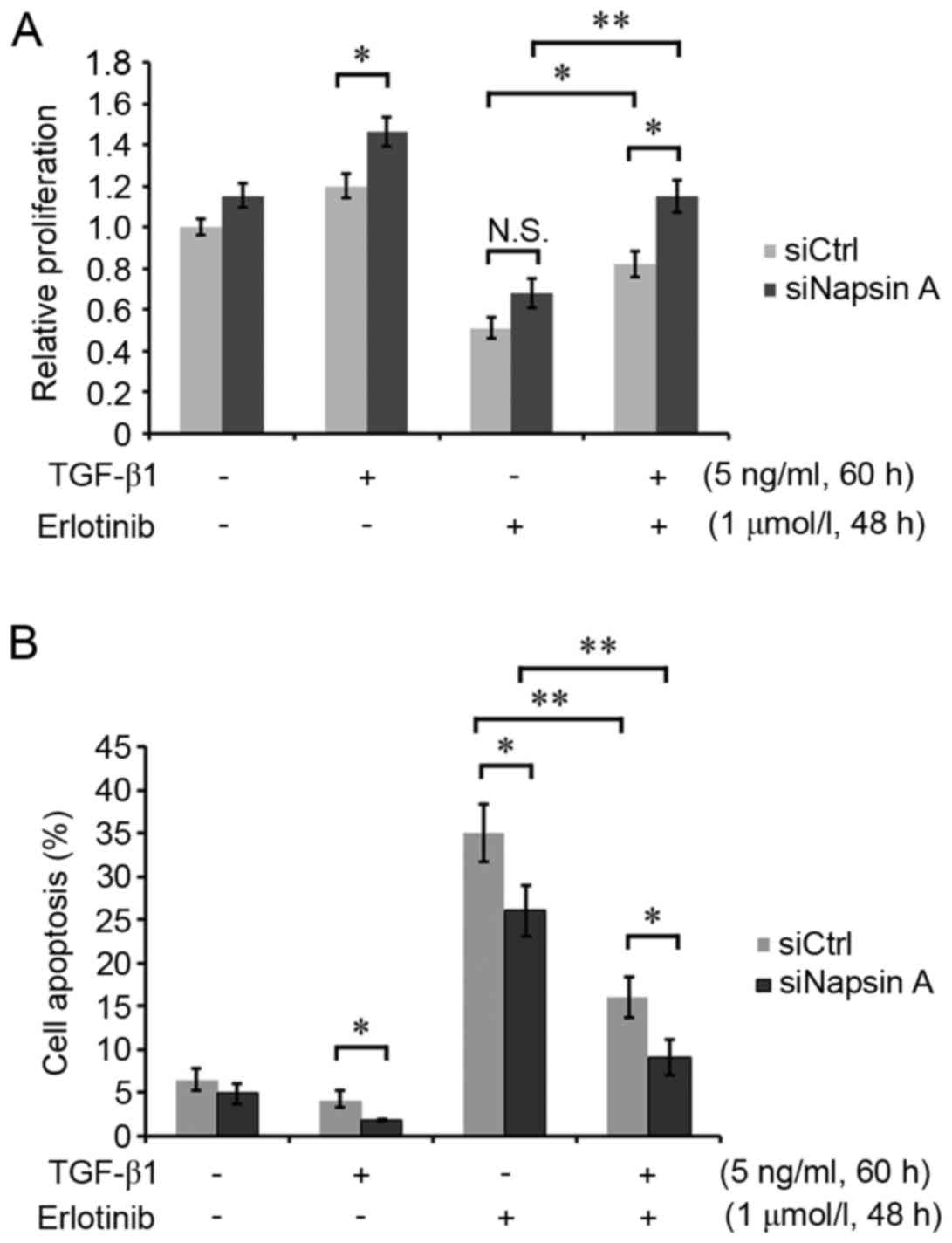
Epidermal growth factor receptor tyrosine kinase inhibitors (EGFR‑TKI) have been used as a standard therapy for patients with lung cancer with EGFR‑activating mutations. Epithelial‑mesenchymal transition (EMT) has been reported to be associated with the development of EGFR‑TKI resistance, which limits the clinical efficacy of EGFR‑TKI. Therefore, investigating the resistance‑associated mechanism is required in order to elucidate an effective therapeutic approach to enhance the sensitivity of lung cancer to EGFR‑TKI. In the present study, EGFR‑TKI erlotinib‑sensitive H358, H322 and H441 lung cancer cells, erlotinib‑moderately sensitive A549 cells, and erlotinib‑insensitive HCC827 cells with EGFR‑mutation (exon 19 deletion) were used to detect the mRNA and protein expression of the EMT‑associated proteins E‑cadherin and vimentin, and napsin A, by reverse transcription‑quantitative polymerase chain reaction analysis and western blotting. It was observed that the E‑cadherin expression level in erlotinib‑sensitive cells was increased compared with the moderately sensitive A549 cells and HCC827 cells; however, vimentin exhibited opposite expression, suggesting a correlation between EMT and erlotinib sensitivity in lung cancer cells. The napsin A expression level was observed to be positively associated with erlotinib sensitivity. In addition, napsin A highly‑expressingH322 cells were used and napsin A‑silenced cells were constructed using small interfering RNA (siRNA) technology, and were induced by transforming growth factor (TGF)‑βl. It was observed that TGF‑βl partially induced the alterations in E‑cadherin and vimentin expression and the occurrence of EMT in napsin A highly‑expressing cells, while TGF‑βl significantly induced EMT via downregulation of E‑cadherin and upregulation of vimentin in napsin A‑silenced cells; cell proliferation and apoptosis assays demonstrated that TGF‑βl induced marked resistance to erlotinib in napsin A‑silenced cells compared with napsin A‑expression cells. These data indicated that napsin A expression may inhibit TGF‑βl‑induced EMT and was negatively associated with EMT‑mediated erlotinib resistance, suggesting that napsin A expression may improve the sensitivity of lung cancer cells to EGFR‑TKI through the inhibition of EMT.
View Figures

Figure 1

Figure 2

Figure 3

View References

1 

PDQ Adult Treatment Editorial Board, . Non-small cell lung cancer treatment (PDQ®): Patient version. NCI. May 12–2002–2015.

2 

Soria JC, Mok TS, Cappuzzo F and Jänne PA: EGFR-mutated oncogene addicted non-small cell lung cancer: Current trends and future prospects. Cancer Treat Rev. 38:416–430. 2012. View Article : Google Scholar : PubMed/NCBI

3 

Nguyen KS and Neal JW: First-line treatment of EGFR-mutant non-small cell lung cancer: The role of erlotinib and other tyrosine kinase inhibitors. Biologics. 6:337–345. 2012.PubMed/NCBI

4 

Pao W, Miller VA, Politi KA, Riely GJ, Somwar R, Zakowski MF, Kris MG and Varmus H: Acquired resistance of lung adenocarcinomas to Gefitinib or erlotinib is associated with a second mutation in the EGFR kinase domain. PLoS Med. 2:e732005. View Article : Google Scholar : PubMed/NCBI

5 

Wu PF, Zhu YP, Yang CH, Wang YF and Wang GH: The mechanism and countermeasures on the secondary resistance of epidermal growth factor receptor tyrosine kinase inhibitor (EGFR-TKI). Anti Tumor Pharmacy. 5:42015.

6 

Thiery JP, Acloque H, Huang RY and Nieto MA: Epithelial-mesenchymal transitions in development and disease. Cell. 139:871–890. 2009. View Article : Google Scholar : PubMed/NCBI

7 

Yang J and Weinberg RA: Epithelial-mesenchymal transition: At the crossroads of development and tumor metastasis. Dev Cell. 14:818–829. 2008. View Article : Google Scholar : PubMed/NCBI

8 

Guarino M, Rubino B and Ballabio G: The role of epithelial-mesenchymal transition in cancer pathology. Pathology. 39:305–318. 2007. View Article : Google Scholar : PubMed/NCBI

9 

Robert G, Gaggioli C, Bailet O, Chavey C, Abbe P, Aberdam E, Sabatié E, Cano A, de Herreros Garcia A, Ballotti R and Tartare-Deckert S: SPARC represses E-cadherin and induces mesenchymal transition during melanoma development. Cancer Res. 66:7516–7523. 2006. View Article : Google Scholar : PubMed/NCBI

10 

Voulgari A and Pintzas A: Epithelial-mesenchymal transition in cancer metastasis: Mechanisms, markers and strategies to overcome drug resistance in the clinic. Biochim Biophys Acta. 1796:75–90. 2009.PubMed/NCBI

11 

Neel DS and Bivona TG: Secrets of drug resistance in NSCLC exposed by new molecular definition of EMT. Clin Cancer Res. 19:3–5. 2013. View Article : Google Scholar : PubMed/NCBI

12 

Uramoto H, Iwata T, Onitsuka T, Shimokawa H, Hanagiri T and Oyama T: Epithelial-mesenchymal transition in EGFR-TKI acquired resistant lung adenocarcinoma. Anticancer Res. 30:2513–2517. 2010.PubMed/NCBI

13 

Yao Z, Fenoglio S, Gao DC, Camiolo M, Stiles B, Lindsted T, Schlederer M, Johns C, Altorki N, Mittal V, et al: TGFb IL-6 axis mediates selective and adaptive mechanisms of resistance to molecular targeted therapy in lung cancer. Proc Natl Acad Sci USA. 107:15535–15340. 2010. View Article : Google Scholar : PubMed/NCBI

14 

Tatnell PJ, Powell DJ, Hill J, Smith TS, Tew DG and Kay J: Napsins: New human aspartic proteinases. Distinction between two closely related genes. FEBS Lett. 441:43–48. 1998. View Article : Google Scholar : PubMed/NCBI

15 

Brasch F, Ochs M, Kahne T, Guttentag S, Schauer-Vukasinovic V, Derrick M, Johnen G, Kapp N, Muller KM, Richter J, et al: Involvement of napsin A in the C- and N-terminal processing of surfactant protein B in type-II pneumocytes of the human lung. J Biol Chem. 278:49006–49014. 2003. View Article : Google Scholar : PubMed/NCBI

16 

Ueno T, Linder S, Na CL, Rice WR, Johansson J and Weaver TE: Processing of pulmonary surfactant protein B by napsin and cathepsin H. J Biol Chem. 279:16178–16184. 2004. View Article : Google Scholar : PubMed/NCBI

17 

Suzuki A, Shijubo N, Yamada G, Ichimiya S, Satoh M, Abe S and Sato N: Napsin A is useful to distinguish primary lung adenocarcinoma from adenocarcinomas of other organs. Pathol Res Pract. 201:579–586. 2005. View Article : Google Scholar : PubMed/NCBI

18 

Chuman Y, Bergman A, Ueno T, Saito S, Sakaguchi K, Alaiya AA, Franzén B, Bergman T, Arnott D, Auer G, et al: Napsin A, a member of the aspartic protease family, is abundantly expressed in normal lung and kidney tissue and is expressed in lung adenocarcinomas. FEBS Lett. 462:129–134. 1999. View Article : Google Scholar : PubMed/NCBI

19 

Schauer-Vukasinovic V, Bur D, Kling D, Grüninger F and Giller T: Human napsin A: Expression, immunochemical detection, and tissue localization. FEBS Lett. 462:135–139. 1999. View Article : Google Scholar : PubMed/NCBI

20 

Hirano T, Auer G, Maeda M, Hagiwara Y, Okada S, Ohira T, Okuzawa K, Fujioka K, Franzén B, Hibi N, et al: Human tissue distribution of TA02, which is homologous with a new type of aspartic proteinase, napsin A. Jpn J Cancer Res. 91:1015–1021. 2000. View Article : Google Scholar : PubMed/NCBI

21 

Hirano T, Gong Y, Yoshida K, Kato Y, Yashima K, Maeda M, Nakagawa A, Fujioka K, Ohira T, Ikeda N, et al: Usefulness of TA02 (napsin A) to distinguish primary lung adenocarcinoma from metastatic lung adenocarcinoma. Lung Cancer. 41:155–162. 2003. View Article : Google Scholar : PubMed/NCBI

22 

Ueno T, Linder S and Elmberger G: Aspartic proteinase napsin is a useful marker for diagnosis of primary lung adenocarcinoma. Br J Cancer. 88:1229–1233. 2003. View Article : Google Scholar : PubMed/NCBI

23 

Ueno T, Elmberger G, Weaver TE, Toi M and Linder S: The aspartic protease napsin A suppresses tumor growth independent of its catalytic activity. Lab Invest. 88:256–263. 2008. View Article : Google Scholar : PubMed/NCBI

24 

Slack JL, Bi W, Livak KJ, Beaubier N, Yu M, Clark M, Kim SH, Gallagher RE and Willman CL: Pre-clinical validation of a novel, highly sensitive assay to detect PML-RARalpha mRNA using real-time reverse-transcription polymerase chain reaction. J Mol Diagn. 3:141–149. 2001. View Article : Google Scholar : PubMed/NCBI

25 

Thomson S, Buck E, Petti F, Griffin G, Brown E, Ramnarine N, Iwata KK, Gibson N and Haley JD: Epithelial to mesenchymal transition is a determinant of sensitivity of non small cell lung carcinoma cell lines and xenografts to epidermal growth factor receptor inhibition. Cancer Res. 65:9455–9462. 2005. View Article : Google Scholar : PubMed/NCBI

26 

Grunert S, Jechlinger M and Beug H: Diverse cellular and molecular mechanisms contribute to epithelial plasticity and metastasis. Nat Rev Mol Cell Biol. 4:657–665. 2003. View Article : Google Scholar : PubMed/NCBI

27 

Zheng JX, Guan SH, Xu Q, Liu JZ and Song P: Inhibition of epithelial-mesenchymal transitionin A549 cell by transfected Napsin A. Chin Med J (Engl). 125:2734–2740. 2012.PubMed/NCBI

28 

Nakajima S, Doi R, Toyoda E, Tsuji S, Wada M, Koizumi M, Tulachan SS, Ito D, Kami K, Mori T, et al: N-cadherin expression and epithelial-mesenehymal transition in pancreatic carcinoma. Clin Cancer Res. 10:4125–4133. 2004. View Article : Google Scholar : PubMed/NCBI

29 

Ruoslahti E: RGD and other recognition sequences for integrins. Annu Rev Cell Dev Biol. 12:697–715. 1996. View Article : Google Scholar : PubMed/NCBI

30 

Juliano RL: Signal transduction by cell adhesion receptors and the cytoskeleton: Functions of integrins, cadherins, selectins, and immunoglobulin-superfamily members. Annu Rev Pharmacol Toxicol. 42:283–323. 2002. View Article : Google Scholar : PubMed/NCBI

31 

Hynes RO: Integrins: Bidirectional, allosteric signaling machines. Cell. 110:673–687. 2002. View Article : Google Scholar : PubMed/NCBI

32 

Li Y, Yang J, Dai C, Wu C and Liu Y: Role for integrin-linked kinase in mediating tubular epithelial to mesenchymal transition and renal interstitial fibrogenesis. J Clin Invest. 112:503–516. 2003. View Article : Google Scholar : PubMed/NCBI

33 

Bhowmick NA, Zent R, Ghiassi M, McDonnell M and Moses HL: Integrin beta 1 signaling is necessary for transforming growth factor-beta activation of p38MAPK and epithelial plasticity. J Biol Chem. 276:46707–46713. 2001. View Article : Google Scholar : PubMed/NCBI

34 

Hauck CR, Sieg DJ, Hsia DA, Loftus JC, Gaarde WA, Monia BP and Schlaepfer DD: Inhibition of focal adhesion kinase expression or activity disrupts epidermal growth factor-stimulated signaling promoting the migration of invasive human carcinoma cells. Cancer Res. 61:7079–7090. 2001.PubMed/NCBI

35 

Sieg DJ, Hauck CR, Ilic D, Klingbeil CK, Schaefer E, Damsky CH and Schlaepfer DD: FAK integrates growth-factor and integrin signals to promote cell migration. Nat Cell Biol. 2:249–256. 2000. View Article : Google Scholar : PubMed/NCBI

36 

Sieg DJ, Hauck CR and Schlaepfer DD: Required role of focal adhesion kinase (FAK) for integrin-stimulated cell migration. J Cell Sci. 112:2677–2691. 1999.PubMed/NCBI

37 

Hauck CR, Hsia DA and Schlaepfer DD: The focal adhesion kinase a regulator of cell migration and invasion. IUBMB Life. 53:115–119. 2002. View Article : Google Scholar : PubMed/NCBI

38 

Xie B, Zhao J, Kitagawa M, Durbin J, Madri JA, Guan JL and Fu XY: Focal adhesion kinase activates Stat1 in integrin-mediated cell migration and adhesion. J Biol Chem. 276:19512–19523. 2001. View Article : Google Scholar : PubMed/NCBI

39 

Nam SJ, Kim S, Kim JE, Lim MS, Elenitoba-Johnson KS, Kim CW and Jeon YK: Aberrant expression ofnapsinA in a subset of malignant lymphomas. Histol Histopathol. 31:213–221. 2016.PubMed/NCBI

Related Articles

  • Abstract
  • View
  • Download
  • Twitter
Copy and paste a formatted citation
Spandidos Publications style
Zhou L, Lv X, Yang J, Zhu Y, Wang Z and Xu T: Napsin A is negatively associated with EMT‑mediated EGFR‑TKI resistance in lung cancer cells. Mol Med Rep 18: 1247-1252, 2018.
APA
Zhou, L., Lv, X., Yang, J., Zhu, Y., Wang, Z., & Xu, T. (2018). Napsin A is negatively associated with EMT‑mediated EGFR‑TKI resistance in lung cancer cells. Molecular Medicine Reports, 18, 1247-1252. https://doi.org/10.3892/mmr.2018.9075
MLA
Zhou, L., Lv, X., Yang, J., Zhu, Y., Wang, Z., Xu, T."Napsin A is negatively associated with EMT‑mediated EGFR‑TKI resistance in lung cancer cells". Molecular Medicine Reports 18.2 (2018): 1247-1252.
Chicago
Zhou, L., Lv, X., Yang, J., Zhu, Y., Wang, Z., Xu, T."Napsin A is negatively associated with EMT‑mediated EGFR‑TKI resistance in lung cancer cells". Molecular Medicine Reports 18, no. 2 (2018): 1247-1252. https://doi.org/10.3892/mmr.2018.9075
Copy and paste a formatted citation
x
Spandidos Publications style
Zhou L, Lv X, Yang J, Zhu Y, Wang Z and Xu T: Napsin A is negatively associated with EMT‑mediated EGFR‑TKI resistance in lung cancer cells. Mol Med Rep 18: 1247-1252, 2018.
APA
Zhou, L., Lv, X., Yang, J., Zhu, Y., Wang, Z., & Xu, T. (2018). Napsin A is negatively associated with EMT‑mediated EGFR‑TKI resistance in lung cancer cells. Molecular Medicine Reports, 18, 1247-1252. https://doi.org/10.3892/mmr.2018.9075
MLA
Zhou, L., Lv, X., Yang, J., Zhu, Y., Wang, Z., Xu, T."Napsin A is negatively associated with EMT‑mediated EGFR‑TKI resistance in lung cancer cells". Molecular Medicine Reports 18.2 (2018): 1247-1252.
Chicago
Zhou, L., Lv, X., Yang, J., Zhu, Y., Wang, Z., Xu, T."Napsin A is negatively associated with EMT‑mediated EGFR‑TKI resistance in lung cancer cells". Molecular Medicine Reports 18, no. 2 (2018): 1247-1252. https://doi.org/10.3892/mmr.2018.9075
Follow us
  • Twitter
  • LinkedIn
  • Facebook
About
  • Spandidos Publications
  • Careers
  • Cookie Policy
  • Privacy Policy
How can we help?
  • Help
  • Live Chat
  • Contact
  • Email to our Support Team