Spandidos Publications Logo
  • About
    • About Spandidos
    • Aims and Scopes
    • Abstracting and Indexing
    • Editorial Policies
    • Reprints and Permissions
    • Job Opportunities
    • Terms and Conditions
    • Contact
  • Journals
    • All Journals
    • Oncology Letters
      • Oncology Letters
      • Information for Authors
      • Editorial Policies
      • Editorial Board
      • Aims and Scope
      • Abstracting and Indexing
      • Bibliographic Information
      • Archive
    • International Journal of Oncology
      • International Journal of Oncology
      • Information for Authors
      • Editorial Policies
      • Editorial Board
      • Aims and Scope
      • Abstracting and Indexing
      • Bibliographic Information
      • Archive
    • Molecular and Clinical Oncology
      • Molecular and Clinical Oncology
      • Information for Authors
      • Editorial Policies
      • Editorial Board
      • Aims and Scope
      • Abstracting and Indexing
      • Bibliographic Information
      • Archive
    • Experimental and Therapeutic Medicine
      • Experimental and Therapeutic Medicine
      • Information for Authors
      • Editorial Policies
      • Editorial Board
      • Aims and Scope
      • Abstracting and Indexing
      • Bibliographic Information
      • Archive
    • International Journal of Molecular Medicine
      • International Journal of Molecular Medicine
      • Information for Authors
      • Editorial Policies
      • Editorial Board
      • Aims and Scope
      • Abstracting and Indexing
      • Bibliographic Information
      • Archive
    • Biomedical Reports
      • Biomedical Reports
      • Information for Authors
      • Editorial Policies
      • Editorial Board
      • Aims and Scope
      • Abstracting and Indexing
      • Bibliographic Information
      • Archive
    • Oncology Reports
      • Oncology Reports
      • Information for Authors
      • Editorial Policies
      • Editorial Board
      • Aims and Scope
      • Abstracting and Indexing
      • Bibliographic Information
      • Archive
    • Molecular Medicine Reports
      • Molecular Medicine Reports
      • Information for Authors
      • Editorial Policies
      • Editorial Board
      • Aims and Scope
      • Abstracting and Indexing
      • Bibliographic Information
      • Archive
    • World Academy of Sciences Journal
      • World Academy of Sciences Journal
      • Information for Authors
      • Editorial Policies
      • Editorial Board
      • Aims and Scope
      • Abstracting and Indexing
      • Bibliographic Information
      • Archive
    • International Journal of Functional Nutrition
      • International Journal of Functional Nutrition
      • Information for Authors
      • Editorial Policies
      • Editorial Board
      • Aims and Scope
      • Abstracting and Indexing
      • Bibliographic Information
      • Archive
    • International Journal of Epigenetics
      • International Journal of Epigenetics
      • Information for Authors
      • Editorial Policies
      • Editorial Board
      • Aims and Scope
      • Abstracting and Indexing
      • Bibliographic Information
      • Archive
    • Medicine International
      • Medicine International
      • Information for Authors
      • Editorial Policies
      • Editorial Board
      • Aims and Scope
      • Abstracting and Indexing
      • Bibliographic Information
      • Archive
  • Articles
  • Information
    • Information for Authors
    • Information for Reviewers
    • Information for Librarians
    • Information for Advertisers
    • Conferences
  • Language Editing
Spandidos Publications Logo
  • About
    • About Spandidos
    • Aims and Scopes
    • Abstracting and Indexing
    • Editorial Policies
    • Reprints and Permissions
    • Job Opportunities
    • Terms and Conditions
    • Contact
  • Journals
    • All Journals
    • Biomedical Reports
      • Information for Authors
      • Editorial Policies
      • Editorial Board
      • Aims and Scope
      • Abstracting and Indexing
      • Bibliographic Information
      • Archive
    • Experimental and Therapeutic Medicine
      • Information for Authors
      • Editorial Policies
      • Editorial Board
      • Aims and Scope
      • Abstracting and Indexing
      • Bibliographic Information
      • Archive
    • International Journal of Epigenetics
      • Information for Authors
      • Editorial Policies
      • Editorial Board
      • Aims and Scope
      • Abstracting and Indexing
      • Bibliographic Information
      • Archive
    • International Journal of Functional Nutrition
      • Information for Authors
      • Editorial Policies
      • Editorial Board
      • Aims and Scope
      • Abstracting and Indexing
      • Bibliographic Information
      • Archive
    • International Journal of Molecular Medicine
      • Information for Authors
      • Editorial Policies
      • Editorial Board
      • Aims and Scope
      • Abstracting and Indexing
      • Bibliographic Information
      • Archive
    • International Journal of Oncology
      • Information for Authors
      • Editorial Policies
      • Editorial Board
      • Aims and Scope
      • Abstracting and Indexing
      • Bibliographic Information
      • Archive
    • Medicine International
      • Information for Authors
      • Editorial Policies
      • Editorial Board
      • Aims and Scope
      • Abstracting and Indexing
      • Bibliographic Information
      • Archive
    • Molecular and Clinical Oncology
      • Information for Authors
      • Editorial Policies
      • Editorial Board
      • Aims and Scope
      • Abstracting and Indexing
      • Bibliographic Information
      • Archive
    • Molecular Medicine Reports
      • Information for Authors
      • Editorial Policies
      • Editorial Board
      • Aims and Scope
      • Abstracting and Indexing
      • Bibliographic Information
      • Archive
    • Oncology Letters
      • Information for Authors
      • Editorial Policies
      • Editorial Board
      • Aims and Scope
      • Abstracting and Indexing
      • Bibliographic Information
      • Archive
    • Oncology Reports
      • Information for Authors
      • Editorial Policies
      • Editorial Board
      • Aims and Scope
      • Abstracting and Indexing
      • Bibliographic Information
      • Archive
    • World Academy of Sciences Journal
      • Information for Authors
      • Editorial Policies
      • Editorial Board
      • Aims and Scope
      • Abstracting and Indexing
      • Bibliographic Information
      • Archive
  • Articles
  • Information
    • For Authors
    • For Reviewers
    • For Librarians
    • For Advertisers
    • Conferences
  • Language Editing
Login Register Submit
  • This site uses cookies
  • You can change your cookie settings at any time by following the instructions in our Cookie Policy. To find out more, you may read our Privacy Policy.

    I agree
Search articles by DOI, keyword, author or affiliation
Search
Advanced Search
presentation
Molecular Medicine Reports
Join Editorial Board Propose a Special Issue
Print ISSN: 1791-2997 Online ISSN: 1791-3004
Journal Cover
September-2018 Volume 18 Issue 3

Full Size Image

Sign up for eToc alerts
Recommend to Library

Journals

International Journal of Molecular Medicine

International Journal of Molecular Medicine

International Journal of Molecular Medicine is an international journal devoted to molecular mechanisms of human disease.

International Journal of Oncology

International Journal of Oncology

International Journal of Oncology is an international journal devoted to oncology research and cancer treatment.

Molecular Medicine Reports

Molecular Medicine Reports

Covers molecular medicine topics such as pharmacology, pathology, genetics, neuroscience, infectious diseases, molecular cardiology, and molecular surgery.

Oncology Reports

Oncology Reports

Oncology Reports is an international journal devoted to fundamental and applied research in Oncology.

Experimental and Therapeutic Medicine

Experimental and Therapeutic Medicine

Experimental and Therapeutic Medicine is an international journal devoted to laboratory and clinical medicine.

Oncology Letters

Oncology Letters

Oncology Letters is an international journal devoted to Experimental and Clinical Oncology.

Biomedical Reports

Biomedical Reports

Explores a wide range of biological and medical fields, including pharmacology, genetics, microbiology, neuroscience, and molecular cardiology.

Molecular and Clinical Oncology

Molecular and Clinical Oncology

International journal addressing all aspects of oncology research, from tumorigenesis and oncogenes to chemotherapy and metastasis.

World Academy of Sciences Journal

World Academy of Sciences Journal

Multidisciplinary open-access journal spanning biochemistry, genetics, neuroscience, environmental health, and synthetic biology.

International Journal of Functional Nutrition

International Journal of Functional Nutrition

Open-access journal combining biochemistry, pharmacology, immunology, and genetics to advance health through functional nutrition.

International Journal of Epigenetics

International Journal of Epigenetics

Publishes open-access research on using epigenetics to advance understanding and treatment of human disease.

Medicine International

Medicine International

An International Open Access Journal Devoted to General Medicine.

Journal Cover
September-2018 Volume 18 Issue 3

Full Size Image

Sign up for eToc alerts
Recommend to Library

  • Article
  • Citations
    • Cite This Article
    • Download Citation
    • Create Citation Alert
    • Remove Citation Alert
    • Cited By
  • Similar Articles
    • Related Articles (in Spandidos Publications)
    • Similar Articles (Google Scholar)
    • Similar Articles (PubMed)
  • Download PDF
  • Download XML
  • View XML
Article Open Access

Low‑frequency ultrasound and microbubbles combined with simvastatin promote the apoptosis of MCF‑7 cells by affecting the LATS1/YAP/RHAMM pathway

  • Authors:
    • Haige Li
    • Chen Chen
    • Dehang Wang
  • View Affiliations / Copyright

    Affiliations: Department of Imaging, The Second Affiliated Hospital of Nanjing Medical University, Nanjing, Jiangsu 210011, P.R. China, Department of Imaging, The First Affiliated Hospital of Nanjing Medical University, Nanjing, Jiangsu 210029, P.R. China
    Copyright: © Li et al. This is an open access article distributed under the terms of Creative Commons Attribution License.
  • Pages: 2724-2732
    |
    Published online on: July 12, 2018
       https://doi.org/10.3892/mmr.2018.9273
  • Expand metrics +
Metrics: Total Views: 0 (Spandidos Publications: | PMC Statistics: )
Metrics: Total PDF Downloads: 0 (Spandidos Publications: | PMC Statistics: )
Cited By (CrossRef): 0 citations Loading Articles...

This article is mentioned in:


Abstract

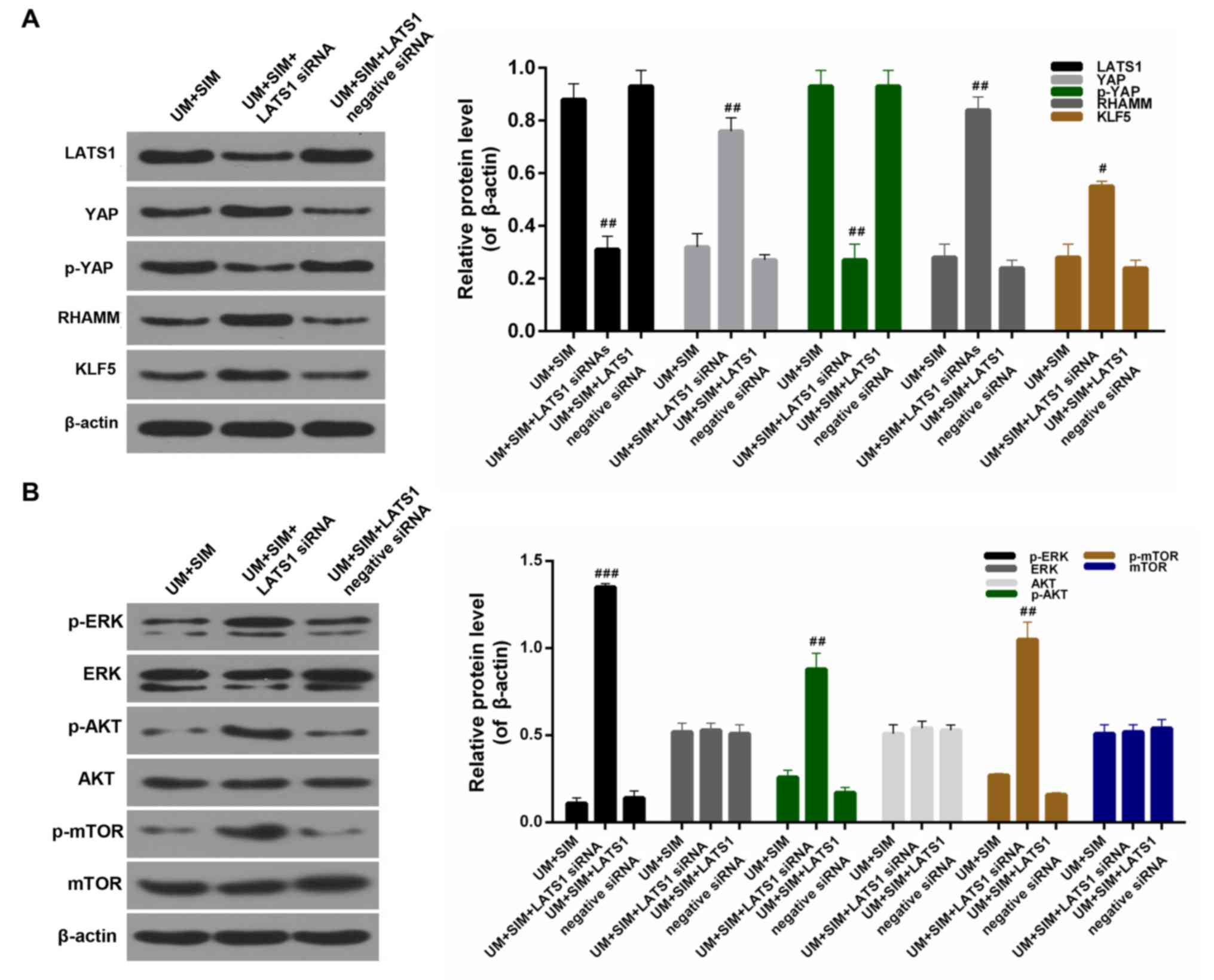
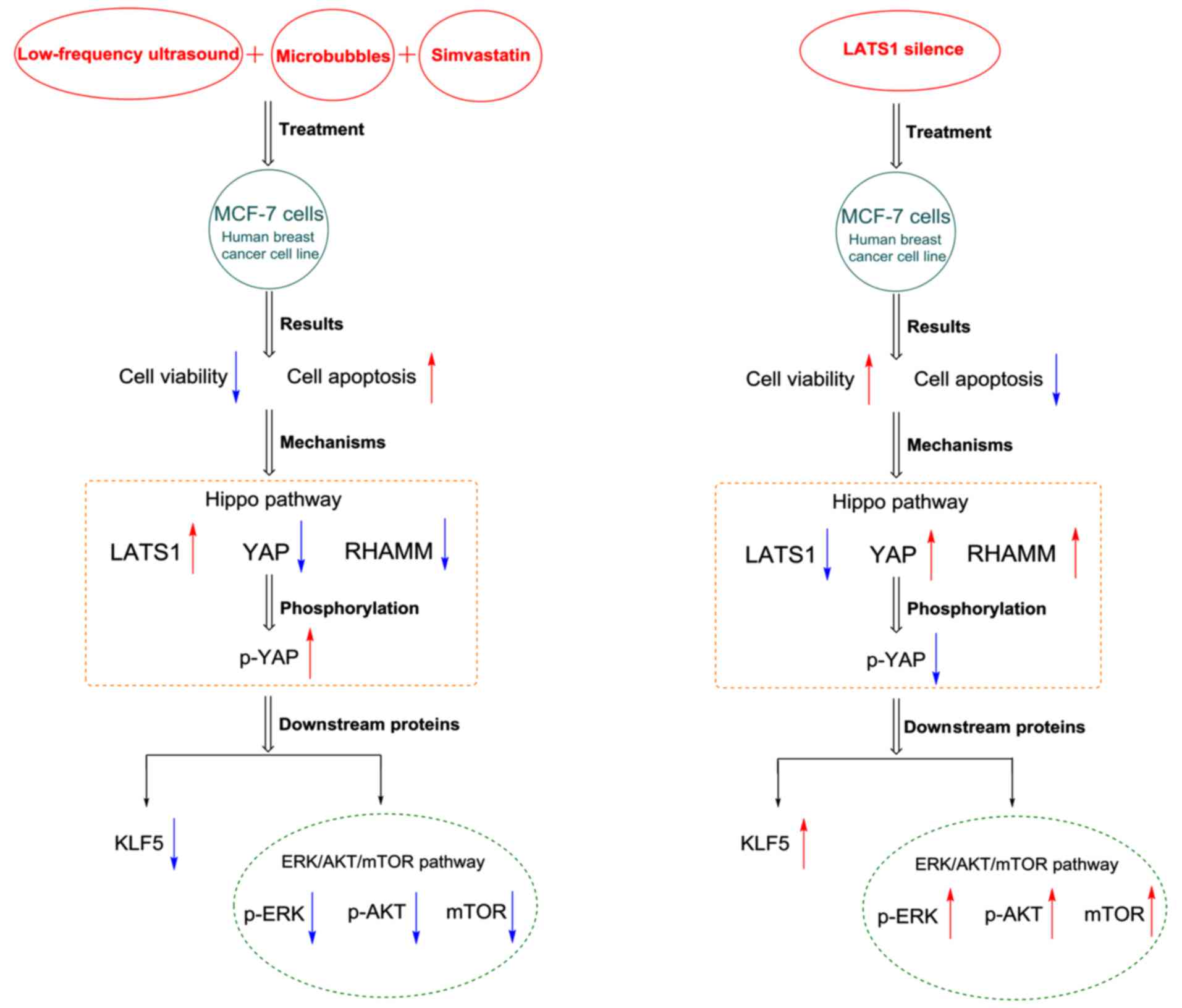
Ultrasound scanning has widespread used in clinical practice and also has therapeutic applications. Simvastatin is a statins that is able to competitively inhibit the activity of 3‑hydroxy‑3‑methylglutaryl‑coenzyme A reductase. The aim of the present study was to investigate the roles and mechanisms of low‑frequency ultrasound (LFU) and microbubbles combined with simvastatin on MCF‑7 cell growth and apoptosis. Cell viability, apoptosis and cell cycle were evaluated using an MTT assay and flow cytometry, respectively. The expression of related proteins was measured by western blot assay. The results revealed that simvastatin and LFU with microbubbles reduces the viability of MCF‑7 cells. The combination of LFU and microbubbles with simvastatin promoted the apoptosis of MCF‑7 cells. Furthermore, it was confirmed that LFU and microbubbles combined with simvastatin affected the large tumor suppressor 1 (LATS1)/yes‑associated protein (YAP)/receptor of the hyaluronan‑mediated motility (RHAMM) pathway in MCF‑7 cells. It was determined that LATS1 acts as a negative regulator in the LATS1/YAP/RHAMM pathway in MCF‑7 cells. In conclusion, the results of the present study indicate that LFU and microbubbles combined with simvastatin promotes the apoptosis of MCF‑7 cells via the LATS1/YAP/RHAMM pathway. The present study suggested a possible strategy for the treatment of breast cancer.
View Figures

Figure 1

Figure 2

Figure 3

Figure 4

Figure 5

Figure 6

Figure 7

View References

1 

Ferlay J, Parkin DM and Steliarova-Foucher E: Estimates of cancer incidence and mortality in Europe in 2008. Eur J Cancer. 46:765–781. 2010. View Article : Google Scholar : PubMed/NCBI

2 

Goldhirsch A, Winer EP, Coates AS, Gelber RD, Piccart-Gebhart M, Thurlimann B and Senn HJ: Panel members: Personalizing the treatment of women with early breast cancer: Highlights of the St gallen international expert consensus on the primary therapy of early breast cancer 2013. Ann Oncol. 24:2206–2223. 2013. View Article : Google Scholar : PubMed/NCBI

3 

DeSantis C, Ma J, Bryan L and Jemal A: Breast cancer statistics, 2013. CA Cancer J Clin. 64:52–62. 2014. View Article : Google Scholar : PubMed/NCBI

4 

Miller KD, Siegel RL, Lin CC, Mariotto AB, Kramer JL, Rowland JH, Stein KD, Alteri R and Jemal A: Cancer treatment and survivorship statistics, 2016. CA Cancer J Clin. 66:271–289. 2016. View Article : Google Scholar : PubMed/NCBI

5 

Enderle L and McNeill H: Hippo gains weight: Added insights and complexity to pathway control. Sci Signal. 6:re72013. View Article : Google Scholar : PubMed/NCBI

6 

Halder G and Johnson RL: Hippo signaling: Growth control and beyond. Development. 138:9–22. 2011. View Article : Google Scholar : PubMed/NCBI

7 

Staley BK and Irvine KD: Hippo signaling in Drosophila: Recent advances and insights. Dev Dyn. 241:3–15. 2012. View Article : Google Scholar : PubMed/NCBI

8 

Svobodová J, Šmerdová L, Procházková J, Topinka J, Líbalová H, Machala M and Vondráček J: Induction of apoptosis in undifferentiated liver progenitor cells following down-regulation of YAP1/TAZ and exposure to toxic AhR ligand. Toxicol Lett. 280:S132–S133. 2017. View Article : Google Scholar

9 

Ferraiuolo M, Verduci L, Blandino G and Strano S: Mutant p53 Protein and the Hippo Transducers YAP and TAZ: A critical oncogenic node in human cancers. Int J Mol Sci. 18:9612017. View Article : Google Scholar :

10 

Hao Y, Chun A, Cheung K, Rashidi B and Yang X: Tumor suppressor LATS1 is a negative regulator of oncogene YAP. J Biol Chem. 283:5496–5509. 2008. View Article : Google Scholar : PubMed/NCBI

11 

Harvey K and Tapon N: The Salvador-Warts-Hippo pathway-an emerging tumour-suppressor network. Nat Rev Cancer. 7:182–191. 2007. View Article : Google Scholar : PubMed/NCBI

12 

Pan D: The hippo signaling pathway in development and cancer. Dev Cell. 19:491–505. 2010. View Article : Google Scholar : PubMed/NCBI

13 

Varelas X: The Hippo pathway effectors TAZ and YAP in development, homeostasis and disease. Development. 141:1614–1626. 2014. View Article : Google Scholar : PubMed/NCBI

14 

Wang Z, Wu Y, Wang H, Zhang Y, Mei L, Fang X, Zhang X, Zhang F, Chen H, Liu Y, et al: Interplay of mevalonate and Hippo pathways regulates RHAMM transcription via YAP to modulate breast cancer cell motility. Proc Natl Acad Sci USA. 111:E89–E98. 2014. View Article : Google Scholar : PubMed/NCBI

15 

Kilili GK and Kyriakis JM: Mammalian Ste20-like kinase (Mst2) indirectly supports Raf-1/ERK pathway activity via maintenance of protein phosphatase-2A catalytic subunit levels and consequent suppression of inhibitory Raf-1 phosphorylation. J Biol Chem. 285:15076–15087. 2010. View Article : Google Scholar : PubMed/NCBI

16 

Wang C, Thor AD, Moore DH III, Zhao Y, Kerschmann R, Stern R, Watson PH and Turley EA: The overexpression of RHAMM, a hyaluronan-binding protein that regulates ras signaling, correlates with overexpression of mitogen-activated protein kinase and is a significant parameter in breast cancer progression. Clin Cancer Res. 4:567–576. 1998.PubMed/NCBI

17 

Zhang J, Ji JY, Yu M, Overholtzer M, Smolen GA, Wang R, Brugge JS, Dyson NJ and Haber DA: YAP-dependent induction of amphiregulin identifies a non-cell-autonomous component of the Hippo pathway. Nat Cell Biol. 11:1444–1450. 2009. View Article : Google Scholar : PubMed/NCBI

18 

Boudreau DM, Yu O and Johnson J: Statin use and cancer risk: A comprehensive review. Expert Opin Drug Saf. 9:603–621. 2010. View Article : Google Scholar : PubMed/NCBI

19 

Gopalan A, Yu W, Sanders BG and Kline K: Simvastatin inhibition of mevalonate pathway induces apoptosis in human breast cancer cells via activation of JNK/CHOP/DR5 signaling pathway. Cancer Lett. 329:9–16. 2013. View Article : Google Scholar : PubMed/NCBI

20 

Qi XF, Zheng L, Lee KJ, Kim DH, Kim CS, Cai DQ, Wu Z, Qin JW, Yu YH and Kim SK: HMG-CoA reductase inhibitors induce apoptosis of lymphoma cells by promoting ROS generation and regulating Akt, Erk and p38 signals via suppression of mevalonate pathway. Cell Death Dis. 4:e5182013. View Article : Google Scholar : PubMed/NCBI

21 

Pelaia G, Gallelli L, Renda T, Fratto D, Falcone D, Caraglia M, Busceti MT, Terracciano R, Vatrella A, Maselli R and Savino R: Effects of statins and farnesyl transferase inhibitors on ERK phosphorylation, apoptosis and cell viability in non-small lung cancer cells. Cell Prolif. 45:557–565. 2012. View Article : Google Scholar : PubMed/NCBI

22 

Clendenen TV, Koenig KL, Arslan AA, Lukanova A, Berrino F, Gu Y, Hallmans G, Idahl A, Krogh V, Lokshin AE, et al: Factors associated with inflammation markers, a cross-sectional analysis. Cytokine. 56:769–778. 2011. View Article : Google Scholar : PubMed/NCBI

23 

Fang Z, Tang Y, Fang J, Zhou Z, Xing Z, Guo Z, Guo X, Wang W, Jiao W, Xu Z and Liu Z: Simvastatin inhibits renal cancer cell growth and metastasis via AKT/mTOR, ERK and JAK2/STAT3 pathway. PLoS One. 8:e628232013. View Article : Google Scholar : PubMed/NCBI

24 

Kochuparambil ST, Al-Husein B, Goc A, Soliman S and Somanath PR: Anticancer efficacy of simvastatin on prostate cancer cells and tumor xenografts is associated with inhibition of Akt and reduced prostate-specific antigen expression. J Pharmacol Exp Ther. 336:496–505. 2011. View Article : Google Scholar : PubMed/NCBI

25 

Ashush H, Rozenszajn LA, Blass M, Barda-Saad M, Azimov D, Radnay J, Zipori D and Rosenschein U: Apoptosis induction of human myeloid leukemic cells by ultrasound exposure. Cancer Res. 60:1014–1020. 2000.PubMed/NCBI

26 

Rosenthal I, Sostaric JZ and Riesz P: Sonodynamic therapy-a review of the synergistic effects of drugs and ultrasound. Ultrason Sonochem. 11:349–363. 2004.PubMed/NCBI

27 

Korosoglou G, Hardt SE, Bekeredjian R, Jenne J, Konstantin M, Hagenmueller M, Katus HA and Kuecherer H: Ultrasound exposure can increase the membrane permeability of human neutrophil granulocytes containing microbubbles without causing complete cell destruction. Ultrasound Med Biol. 32:297–303. 2006. View Article : Google Scholar : PubMed/NCBI

28 

Korosoglou G, Behrens S, Bekeredjian R, Hardt S, Hagenmueller M, Dinjus E, Bohm KJ, Unger E, Katus HA and Kuecherer H: The potential of a new stable ultrasound contrast agent for site-specific targeting. An in vitro experiment. Ultrasound Med Biol. 32:1473–1478. 2006. View Article : Google Scholar : PubMed/NCBI

29 

Nie F, Xu HX, Lu MD, Wang Y and Tang Q: Anti-angiogenic gene therapy for hepatocellular carcinoma mediated by microbubble-enhanced ultrasound exposure: An in vivo experimental study. J Drug Target. 16:389–395. 2008. View Article : Google Scholar : PubMed/NCBI

30 

Wang Y, Hu B, Diao X and Zhang J: Antitumor effect of microbubbles enhanced by low frequency ultrasound cavitation on prostate carcinoma xenografts in nude mice. Exp Ther Med. 3:187–191. 2012. View Article : Google Scholar : PubMed/NCBI

31 

Xing W, Gang WZ, Yong Z, Yi ZY, Shan XC and Tao RH: Treatment of xenografted ovarian carcinoma using paclitaxel-loaded ultrasound microbubbles. Acad Radiol. 15:1574–1579. 2008. View Article : Google Scholar : PubMed/NCBI

32 

Liu HL, Fan CH, Ting CY and Yeh CK: Combining microbubbles and ultrasound for drug delivery to brain tumors: current progress and overview. Theranostics. 4:432–444. 2014. View Article : Google Scholar : PubMed/NCBI

33 

Unger E, Porter T, Lindner J and Grayburn P: Cardiovascular drug delivery with ultrasound and microbubbles. Adv Drug Deliv Rev. 72:110–126. 2014. View Article : Google Scholar : PubMed/NCBI

34 

Junhua A, Yun J, Zhenzhou W, Ling Y and Ding L: Treatment of malignant liver tumors by radiofrequency ablation combined with low-frequency ultrasound radiation with microbubbles. PLoS One. 8:e533512013. View Article : Google Scholar : PubMed/NCBI

35 

Xu WP, Shen E, Bai WK, Wang Y and Hu B: Enhanced antitumor effects of low-frequency ultrasound and microbubbles in combination with simvastatin by downregulating caveolin-1 in prostatic DU145 cells. Oncol Lett. 7:2142–2148. 2014. View Article : Google Scholar : PubMed/NCBI

36 

Yoon YI, Yoon TJ and Lee HJ: Optimization of ultrasound parameters for microbubble-nanoliposome complex-mediated delivery. Ultrasonography. 34:297–303. 2015. View Article : Google Scholar : PubMed/NCBI

37 

Lweesy K, Fraiwan L, Al-Bataineh O, Hamdi N and Dickhaus H: Optimization of ultrasound array designs for high intensity focused treatment of prostate cancer and benign prostatic hyperplasia. Med Biol Eng Comput. 47:635–640. 2009. View Article : Google Scholar : PubMed/NCBI

38 

Feng Y, Tian Z and Wan M: Bioeffects of low-intensity ultrasound in vitro: Apoptosis, protein profile alteration and potential molecular mechanism. J Ultrasound Med. 29:963–974. 2010. View Article : Google Scholar : PubMed/NCBI

39 

Zhang Z, Chen J, Chen L, Yang X, Zhong H, Qi X, Bi Y and Xu K: Low frequency and intensity ultrasound induces apoptosis of brain glioma in rats mediated by caspase-3, Bcl-2 and survivin. Brain Res. 1473:25–34. 2012. View Article : Google Scholar : PubMed/NCBI

40 

Alberts AW: Lovastatin and simvastatin-inhibitors of HMG CoA reductase and cholesterol biosynthesis. Cardiology. 77 Suppl 4:S14–S21. 1990. View Article : Google Scholar

41 

Kamigaki M, Sasaki T, Serikawa M, Inoue M, Kobayashi K, Itsuki H, Minami T, Yukutake M, Okazaki A, Ishigaki T, et al: Statins induce apoptosis and inhibit proliferation in cholangiocarcinoma cells. Int J Oncol. 39:561–568. 2011.PubMed/NCBI

42 

Toepfer N, Childress C, Parikh A, Rukstalis D and Yang W: Atorvastatin induces autophagy in prostate cancer PC3 cells through activation of LC3 transcription. Cancer Biol Ther. 12:691–699. 2011. View Article : Google Scholar : PubMed/NCBI

43 

Seeger H, Wallwiener D and Mueck AO: Statins can inhibit proliferation of human breast cancer cells in vitro. Exp Clin Endocrinol Diabetes. 111:47–48. 2003. View Article : Google Scholar : PubMed/NCBI

44 

Relja B, Meder F, Wilhelm K, Henrich D, Marzi I and Lehnert M: Simvastatin inhibits cell growth and induces apoptosis and G0/G1 cell cycle arrest in hepatic cancer cells. Int J Mol Med. 26:735–741. 2010. View Article : Google Scholar : PubMed/NCBI

45 

Cho SJ, Kim JS, Kim JM, Lee JY, Jung HC and Song IS: Simvastatin induces apoptosis in human colon cancer cells and in tumor xenografts and attenuates colitis-associated colon cancer in mice. Int J Cancer. 123:951–957. 2008. View Article : Google Scholar : PubMed/NCBI

46 

Koyuturk M, Ersoz M and Altiok N: Simvastatin induces apoptosis in human breast cancer cells: p53 and estrogen receptor independent pathway requiring signalling through JNK. Cancer Lett. 250:220–228. 2007. View Article : Google Scholar : PubMed/NCBI

47 

Chen K and Wang D: Lats1 is the Key Component of Hippo Signaling Pathway: A New Tumor Molecular Biomarker and A Potential Therapeutic Target. Chinese J Cell Biol. 37:256–262. 2015.

48 

Jansson L and Larsson J: Normal hematopoietic stem cell function in mice with enforced expression of the Hippo signaling effector YAP1. PLoS One. 7:e320132012. View Article : Google Scholar : PubMed/NCBI

49 

Zhi X, Zhao D, Zhou Z, Liu R and Chen C: YAP promotes breast cell proliferation and survival partially through stabilizing the KLF5 transcription factor. Am J Pathol. 180:2452–2461. 2012. View Article : Google Scholar : PubMed/NCBI

50 

Shin SY and Nguyen Lan LK: Unveiling hidden dynamics of hippo signalling: A systems analysis. Genes Bacfl. 7:E442016. View Article : Google Scholar

51 

Castelnovo LF, Bonalume V, Melif S, Ballabio M, Colleoni D and Magnaghi V: Schwann cell development, maturation and regeneration: A focus on classic and emerging intracellular signaling pathways. Neural Regen Res. 12:1013–1023. 2017. View Article : Google Scholar : PubMed/NCBI

52 

Lai D, Ho KC, Hao Y and Yang X: Taxol resistance in breast cancer cells is mediated by the hippo pathway component TAZ and its downstream transcriptional targets Cyr61 and CTGF. Cancer Res. 71:2728–2738. 2011. View Article : Google Scholar : PubMed/NCBI

53 

Mi W, Lin Q, Childress C, Sudol M, Robishaw J, Berlot CH, Shabahang M and Yang W: Geranylgeranylation signals to the Hippo pathway for breast cancer cell proliferation and migration. Oncogene. 34:3095–3106. 2015. View Article : Google Scholar : PubMed/NCBI

Related Articles

  • Abstract
  • View
  • Download
  • Twitter
Copy and paste a formatted citation
Spandidos Publications style
Li H, Chen C and Wang D: Low‑frequency ultrasound and microbubbles combined with simvastatin promote the apoptosis of MCF‑7 cells by affecting the LATS1/YAP/RHAMM pathway. Mol Med Rep 18: 2724-2732, 2018.
APA
Li, H., Chen, C., & Wang, D. (2018). Low‑frequency ultrasound and microbubbles combined with simvastatin promote the apoptosis of MCF‑7 cells by affecting the LATS1/YAP/RHAMM pathway. Molecular Medicine Reports, 18, 2724-2732. https://doi.org/10.3892/mmr.2018.9273
MLA
Li, H., Chen, C., Wang, D."Low‑frequency ultrasound and microbubbles combined with simvastatin promote the apoptosis of MCF‑7 cells by affecting the LATS1/YAP/RHAMM pathway". Molecular Medicine Reports 18.3 (2018): 2724-2732.
Chicago
Li, H., Chen, C., Wang, D."Low‑frequency ultrasound and microbubbles combined with simvastatin promote the apoptosis of MCF‑7 cells by affecting the LATS1/YAP/RHAMM pathway". Molecular Medicine Reports 18, no. 3 (2018): 2724-2732. https://doi.org/10.3892/mmr.2018.9273
Copy and paste a formatted citation
x
Spandidos Publications style
Li H, Chen C and Wang D: Low‑frequency ultrasound and microbubbles combined with simvastatin promote the apoptosis of MCF‑7 cells by affecting the LATS1/YAP/RHAMM pathway. Mol Med Rep 18: 2724-2732, 2018.
APA
Li, H., Chen, C., & Wang, D. (2018). Low‑frequency ultrasound and microbubbles combined with simvastatin promote the apoptosis of MCF‑7 cells by affecting the LATS1/YAP/RHAMM pathway. Molecular Medicine Reports, 18, 2724-2732. https://doi.org/10.3892/mmr.2018.9273
MLA
Li, H., Chen, C., Wang, D."Low‑frequency ultrasound and microbubbles combined with simvastatin promote the apoptosis of MCF‑7 cells by affecting the LATS1/YAP/RHAMM pathway". Molecular Medicine Reports 18.3 (2018): 2724-2732.
Chicago
Li, H., Chen, C., Wang, D."Low‑frequency ultrasound and microbubbles combined with simvastatin promote the apoptosis of MCF‑7 cells by affecting the LATS1/YAP/RHAMM pathway". Molecular Medicine Reports 18, no. 3 (2018): 2724-2732. https://doi.org/10.3892/mmr.2018.9273
Follow us
  • Twitter
  • LinkedIn
  • Facebook
About
  • Spandidos Publications
  • Careers
  • Cookie Policy
  • Privacy Policy
How can we help?
  • Help
  • Live Chat
  • Contact
  • Email to our Support Team