Spandidos Publications Logo
  • About
    • About Spandidos
    • Aims and Scopes
    • Abstracting and Indexing
    • Editorial Policies
    • Reprints and Permissions
    • Job Opportunities
    • Terms and Conditions
    • Contact
  • Journals
    • All Journals
    • Oncology Letters
      • Oncology Letters
      • Information for Authors
      • Editorial Policies
      • Editorial Board
      • Aims and Scope
      • Abstracting and Indexing
      • Bibliographic Information
      • Archive
    • International Journal of Oncology
      • International Journal of Oncology
      • Information for Authors
      • Editorial Policies
      • Editorial Board
      • Aims and Scope
      • Abstracting and Indexing
      • Bibliographic Information
      • Archive
    • Molecular and Clinical Oncology
      • Molecular and Clinical Oncology
      • Information for Authors
      • Editorial Policies
      • Editorial Board
      • Aims and Scope
      • Abstracting and Indexing
      • Bibliographic Information
      • Archive
    • Experimental and Therapeutic Medicine
      • Experimental and Therapeutic Medicine
      • Information for Authors
      • Editorial Policies
      • Editorial Board
      • Aims and Scope
      • Abstracting and Indexing
      • Bibliographic Information
      • Archive
    • International Journal of Molecular Medicine
      • International Journal of Molecular Medicine
      • Information for Authors
      • Editorial Policies
      • Editorial Board
      • Aims and Scope
      • Abstracting and Indexing
      • Bibliographic Information
      • Archive
    • Biomedical Reports
      • Biomedical Reports
      • Information for Authors
      • Editorial Policies
      • Editorial Board
      • Aims and Scope
      • Abstracting and Indexing
      • Bibliographic Information
      • Archive
    • Oncology Reports
      • Oncology Reports
      • Information for Authors
      • Editorial Policies
      • Editorial Board
      • Aims and Scope
      • Abstracting and Indexing
      • Bibliographic Information
      • Archive
    • Molecular Medicine Reports
      • Molecular Medicine Reports
      • Information for Authors
      • Editorial Policies
      • Editorial Board
      • Aims and Scope
      • Abstracting and Indexing
      • Bibliographic Information
      • Archive
    • World Academy of Sciences Journal
      • World Academy of Sciences Journal
      • Information for Authors
      • Editorial Policies
      • Editorial Board
      • Aims and Scope
      • Abstracting and Indexing
      • Bibliographic Information
      • Archive
    • International Journal of Functional Nutrition
      • International Journal of Functional Nutrition
      • Information for Authors
      • Editorial Policies
      • Editorial Board
      • Aims and Scope
      • Abstracting and Indexing
      • Bibliographic Information
      • Archive
    • International Journal of Epigenetics
      • International Journal of Epigenetics
      • Information for Authors
      • Editorial Policies
      • Editorial Board
      • Aims and Scope
      • Abstracting and Indexing
      • Bibliographic Information
      • Archive
    • Medicine International
      • Medicine International
      • Information for Authors
      • Editorial Policies
      • Editorial Board
      • Aims and Scope
      • Abstracting and Indexing
      • Bibliographic Information
      • Archive
  • Articles
  • Information
    • Information for Authors
    • Information for Reviewers
    • Information for Librarians
    • Information for Advertisers
    • Conferences
  • Language Editing
Spandidos Publications Logo
  • About
    • About Spandidos
    • Aims and Scopes
    • Abstracting and Indexing
    • Editorial Policies
    • Reprints and Permissions
    • Job Opportunities
    • Terms and Conditions
    • Contact
  • Journals
    • All Journals
    • Biomedical Reports
      • Information for Authors
      • Editorial Policies
      • Editorial Board
      • Aims and Scope
      • Abstracting and Indexing
      • Bibliographic Information
      • Archive
    • Experimental and Therapeutic Medicine
      • Information for Authors
      • Editorial Policies
      • Editorial Board
      • Aims and Scope
      • Abstracting and Indexing
      • Bibliographic Information
      • Archive
    • International Journal of Epigenetics
      • Information for Authors
      • Editorial Policies
      • Editorial Board
      • Aims and Scope
      • Abstracting and Indexing
      • Bibliographic Information
      • Archive
    • International Journal of Functional Nutrition
      • Information for Authors
      • Editorial Policies
      • Editorial Board
      • Aims and Scope
      • Abstracting and Indexing
      • Bibliographic Information
      • Archive
    • International Journal of Molecular Medicine
      • Information for Authors
      • Editorial Policies
      • Editorial Board
      • Aims and Scope
      • Abstracting and Indexing
      • Bibliographic Information
      • Archive
    • International Journal of Oncology
      • Information for Authors
      • Editorial Policies
      • Editorial Board
      • Aims and Scope
      • Abstracting and Indexing
      • Bibliographic Information
      • Archive
    • Medicine International
      • Information for Authors
      • Editorial Policies
      • Editorial Board
      • Aims and Scope
      • Abstracting and Indexing
      • Bibliographic Information
      • Archive
    • Molecular and Clinical Oncology
      • Information for Authors
      • Editorial Policies
      • Editorial Board
      • Aims and Scope
      • Abstracting and Indexing
      • Bibliographic Information
      • Archive
    • Molecular Medicine Reports
      • Information for Authors
      • Editorial Policies
      • Editorial Board
      • Aims and Scope
      • Abstracting and Indexing
      • Bibliographic Information
      • Archive
    • Oncology Letters
      • Information for Authors
      • Editorial Policies
      • Editorial Board
      • Aims and Scope
      • Abstracting and Indexing
      • Bibliographic Information
      • Archive
    • Oncology Reports
      • Information for Authors
      • Editorial Policies
      • Editorial Board
      • Aims and Scope
      • Abstracting and Indexing
      • Bibliographic Information
      • Archive
    • World Academy of Sciences Journal
      • Information for Authors
      • Editorial Policies
      • Editorial Board
      • Aims and Scope
      • Abstracting and Indexing
      • Bibliographic Information
      • Archive
  • Articles
  • Information
    • For Authors
    • For Reviewers
    • For Librarians
    • For Advertisers
    • Conferences
  • Language Editing
Login Register Submit
  • This site uses cookies
  • You can change your cookie settings at any time by following the instructions in our Cookie Policy. To find out more, you may read our Privacy Policy.

    I agree
Search articles by DOI, keyword, author or affiliation
Search
Advanced Search
presentation
Molecular Medicine Reports
Join Editorial Board Propose a Special Issue
Print ISSN: 1791-2997 Online ISSN: 1791-3004
Journal Cover
December-2018 Volume 18 Issue 6

Full Size Image

Sign up for eToc alerts
Recommend to Library

Journals

International Journal of Molecular Medicine

International Journal of Molecular Medicine

International Journal of Molecular Medicine is an international journal devoted to molecular mechanisms of human disease.

International Journal of Oncology

International Journal of Oncology

International Journal of Oncology is an international journal devoted to oncology research and cancer treatment.

Molecular Medicine Reports

Molecular Medicine Reports

Covers molecular medicine topics such as pharmacology, pathology, genetics, neuroscience, infectious diseases, molecular cardiology, and molecular surgery.

Oncology Reports

Oncology Reports

Oncology Reports is an international journal devoted to fundamental and applied research in Oncology.

Experimental and Therapeutic Medicine

Experimental and Therapeutic Medicine

Experimental and Therapeutic Medicine is an international journal devoted to laboratory and clinical medicine.

Oncology Letters

Oncology Letters

Oncology Letters is an international journal devoted to Experimental and Clinical Oncology.

Biomedical Reports

Biomedical Reports

Explores a wide range of biological and medical fields, including pharmacology, genetics, microbiology, neuroscience, and molecular cardiology.

Molecular and Clinical Oncology

Molecular and Clinical Oncology

International journal addressing all aspects of oncology research, from tumorigenesis and oncogenes to chemotherapy and metastasis.

World Academy of Sciences Journal

World Academy of Sciences Journal

Multidisciplinary open-access journal spanning biochemistry, genetics, neuroscience, environmental health, and synthetic biology.

International Journal of Functional Nutrition

International Journal of Functional Nutrition

Open-access journal combining biochemistry, pharmacology, immunology, and genetics to advance health through functional nutrition.

International Journal of Epigenetics

International Journal of Epigenetics

Publishes open-access research on using epigenetics to advance understanding and treatment of human disease.

Medicine International

Medicine International

An International Open Access Journal Devoted to General Medicine.

Journal Cover
December-2018 Volume 18 Issue 6

Full Size Image

Sign up for eToc alerts
Recommend to Library

  • Article
  • Citations
    • Cite This Article
    • Download Citation
    • Create Citation Alert
    • Remove Citation Alert
    • Cited By
  • Similar Articles
    • Related Articles (in Spandidos Publications)
    • Similar Articles (Google Scholar)
    • Similar Articles (PubMed)
  • Download PDF
  • Download XML
  • View XML
Article

Salmonella‑induced miR‑155 enhances necroptotic death in macrophage cells via targeting RIP1/3

  • Authors:
    • Young‑Tae Ro
    • Guk‑Heui Jo
    • Sun‑Ah Jung
    • Eunjoo H. Lee
    • Jongdae Shin
    • Joon H. Lee
  • View Affiliations / Copyright

    Affiliations: Laboratory of Biochemistry, Graduate School of Medicine, Konkuk University, Chungju, Chungcheong 27478, Republic of Korea, Laboratory of Cell Biology, Myunggok Eye Research Institute, Konyang University College of Medicine, Seoul 07301, Republic of Korea, Graduate School of East‑West Medical Science, Kyung Hee University, Yongin, Gyeonggi 17104, Republic of Korea
  • Pages: 5133-5140
    |
    Published online on: October 1, 2018
       https://doi.org/10.3892/mmr.2018.9525
  • Expand metrics +
Metrics: Total Views: 0 (Spandidos Publications: | PMC Statistics: )
Metrics: Total PDF Downloads: 0 (Spandidos Publications: | PMC Statistics: )
Cited By (CrossRef): 0 citations Loading Articles...

This article is mentioned in:


Abstract

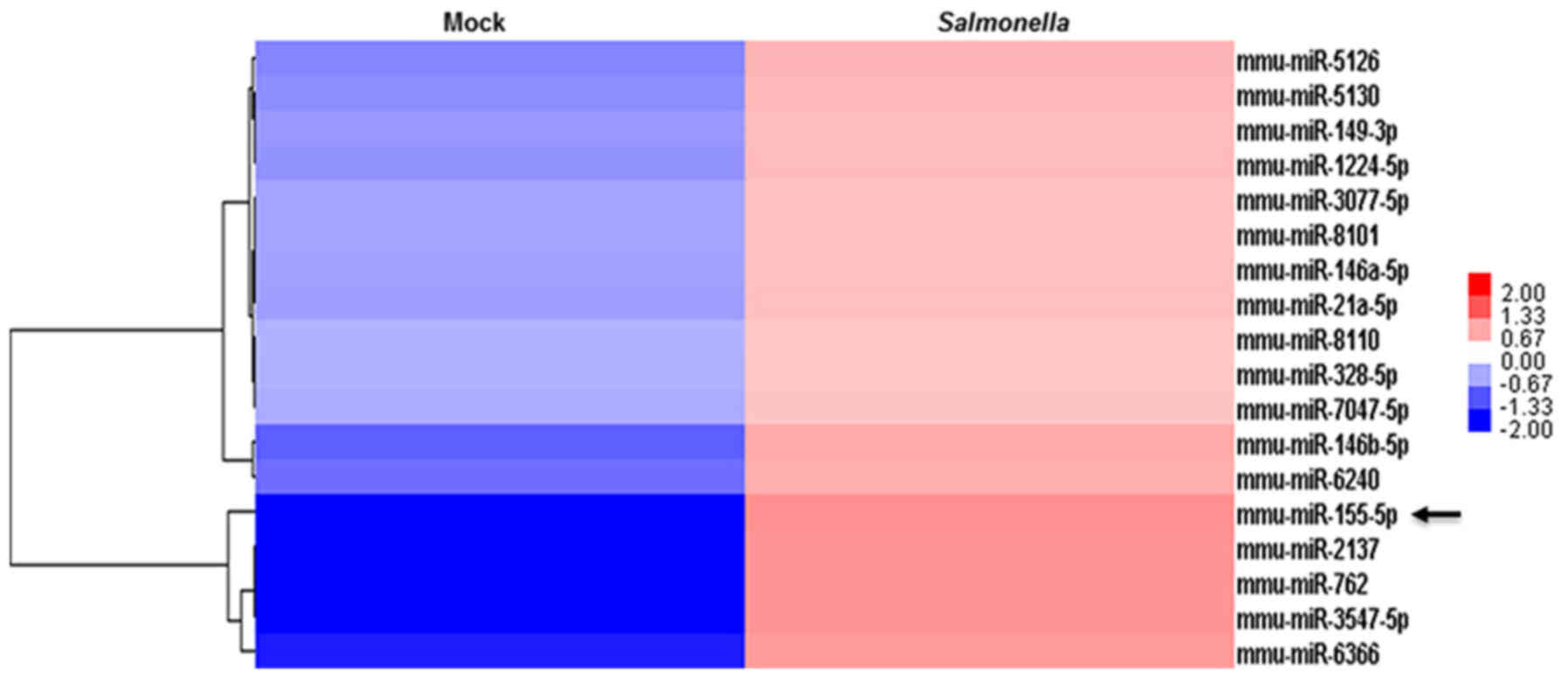
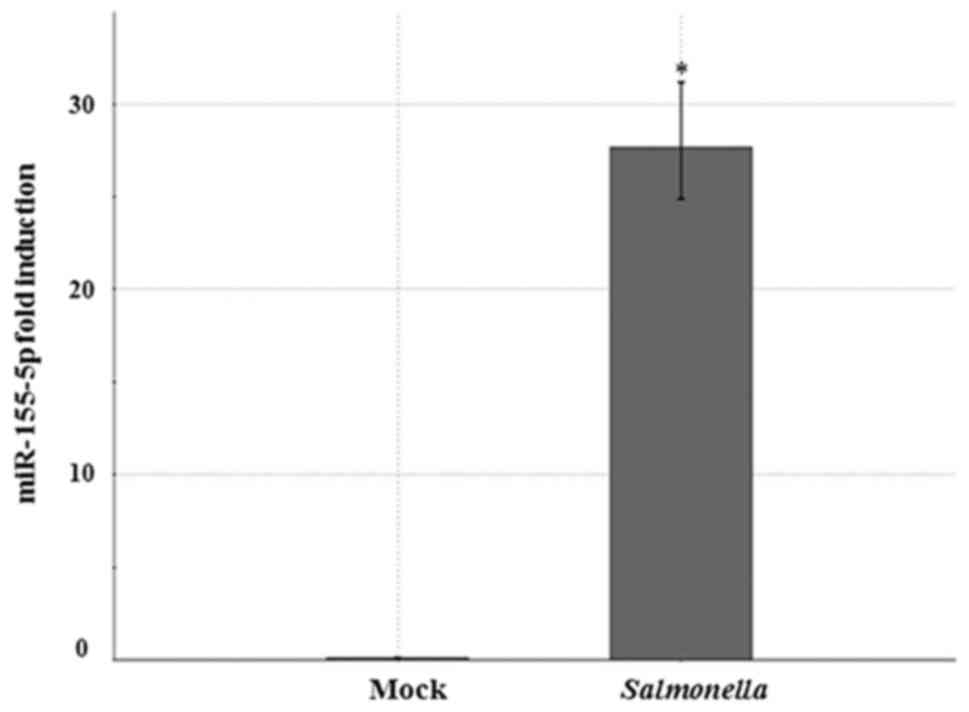
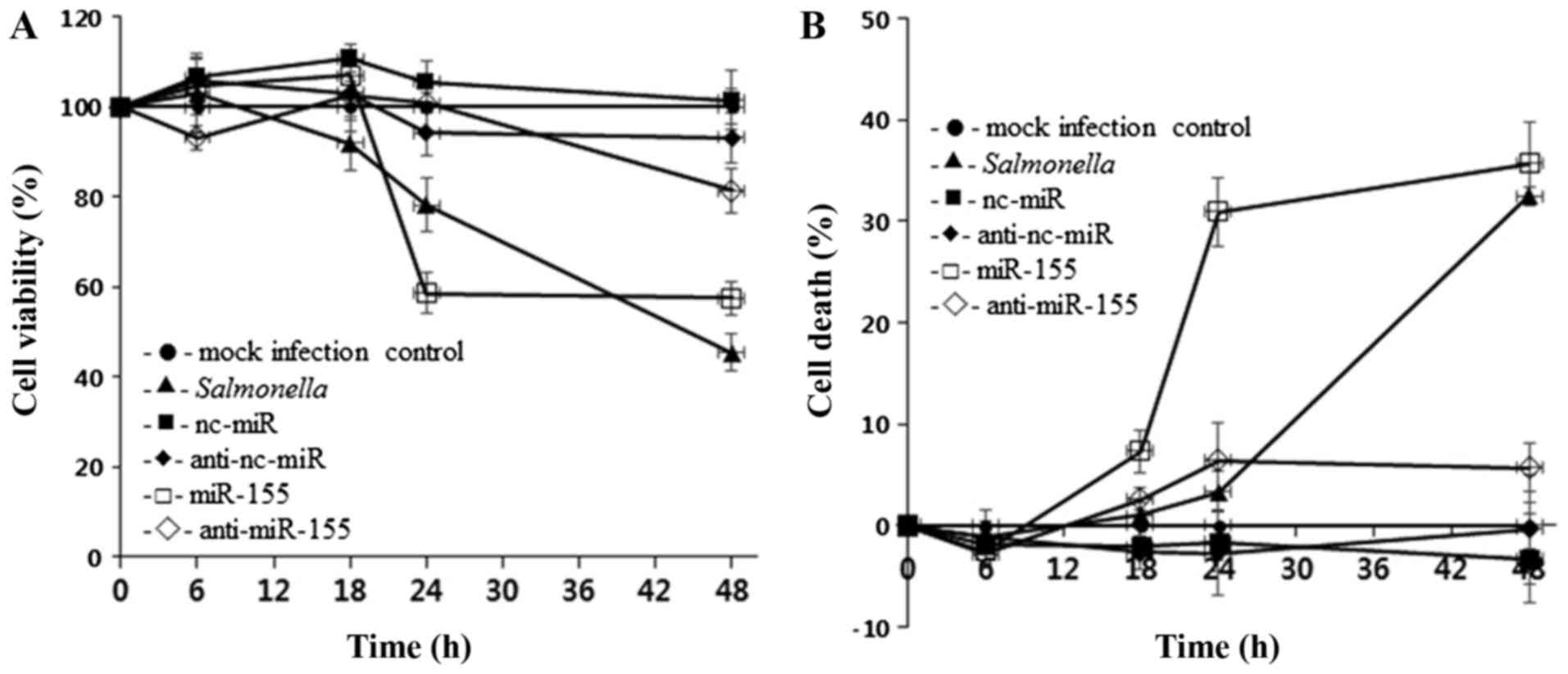
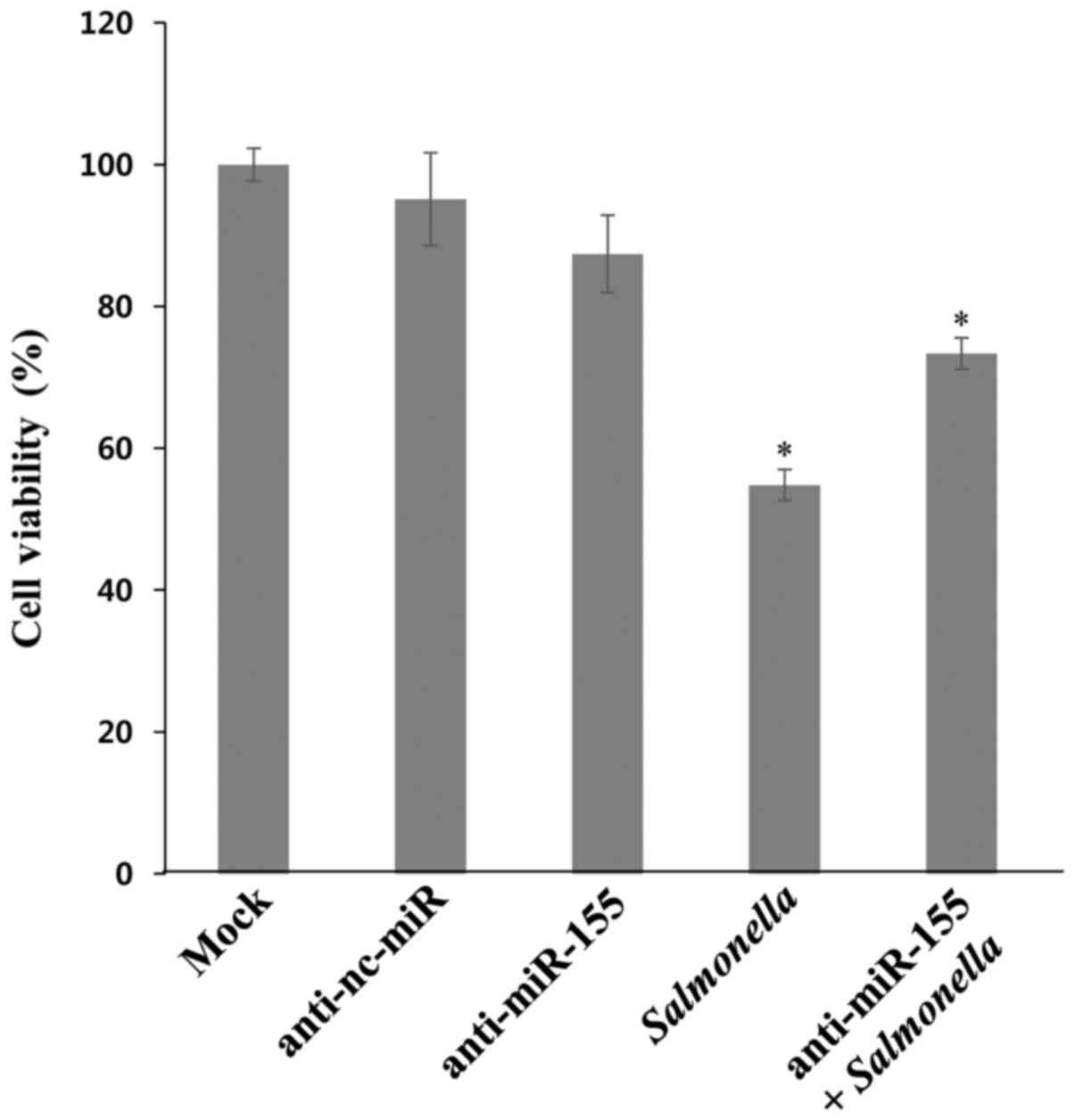
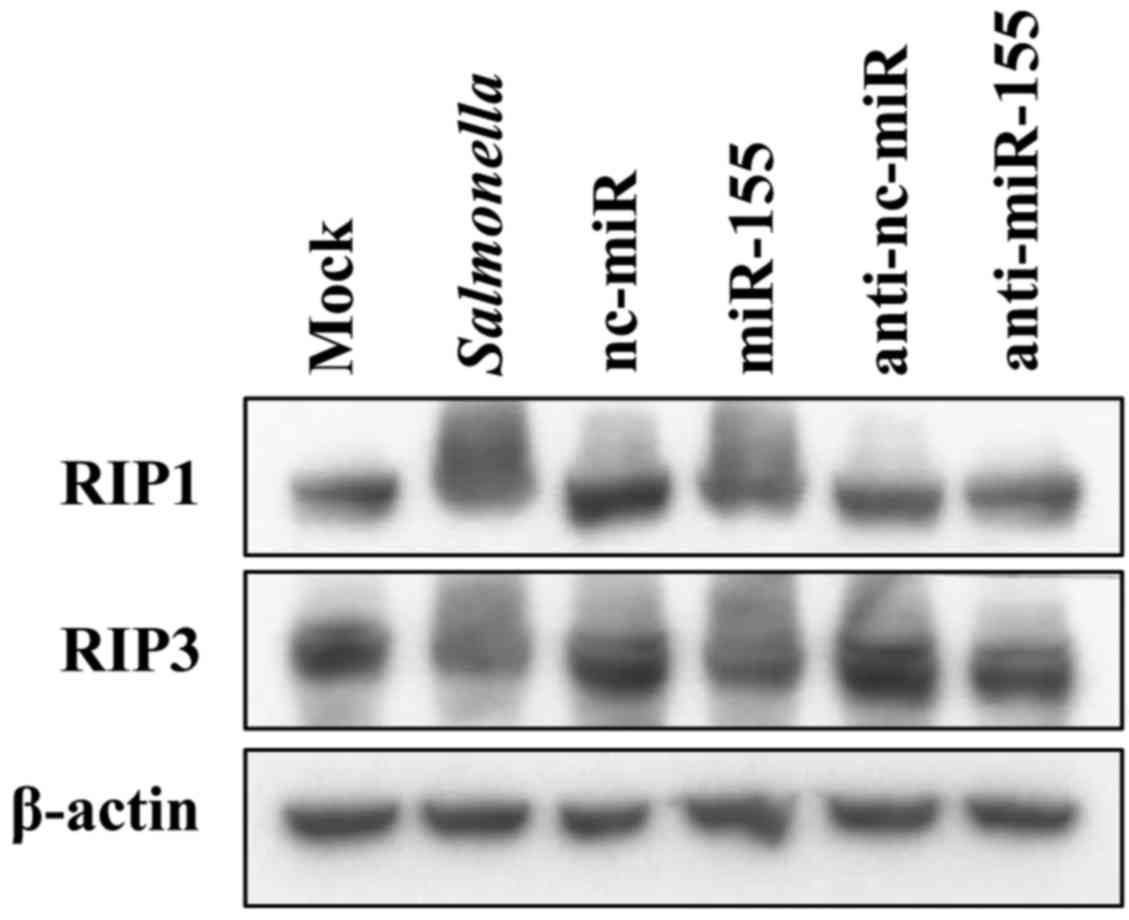
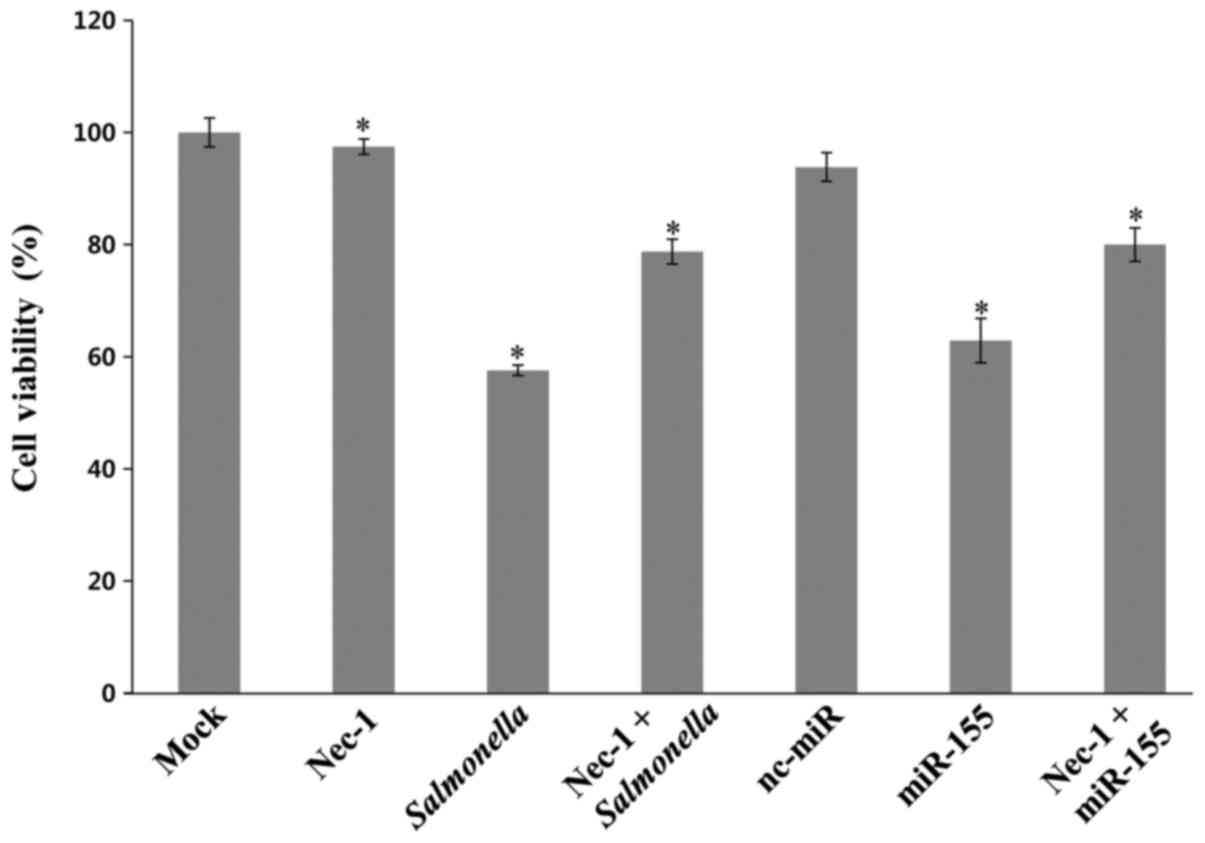
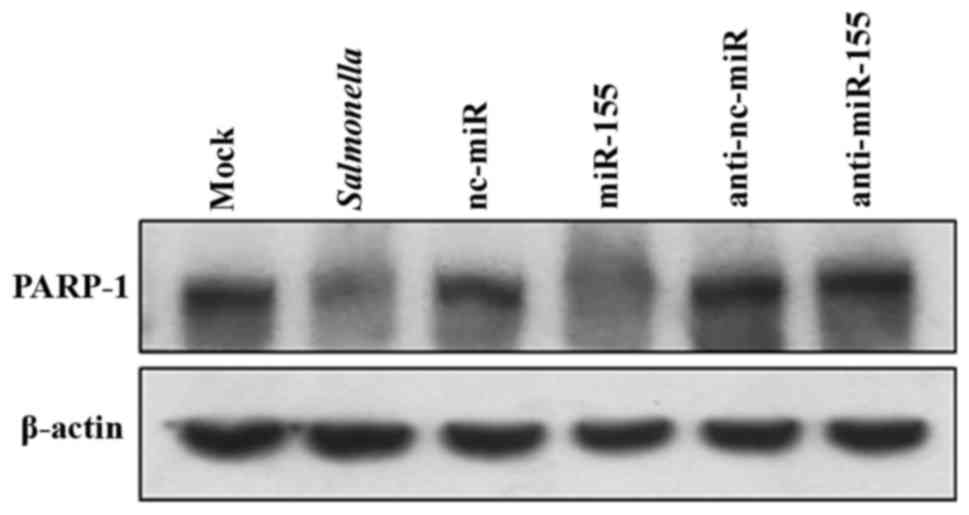
Salmonella enterica serovar Typhimurium (hereafter referred to as Salmonella), a virulent pathogen, is known to induce host‑cell death. Using reverse transcription‑quantitative polymerase chain reaction, a 28‑fold increase of microRNA (miR)‑155 expression in RAW 264.7 macrophages was observed following infection with Salmonella for 24 h. This miR‑155 upregulation increased macrophage cell death by up to 40% in 48 h following infection. Western blot analysis revealed that receptor interacting protein 1 (RIP1) and 3 (RIP3) were increased at 18 h following miR‑155 transfection to macrophages, similar to Salmonella infection. In addition, inhibition of RIP1 by pre‑incubating macrophages with necrostatin‑1, a RIP1 specific inhibitor, increased the viability of Salmonella‑infected cells and miR‑155‑transfected cells by up to 20%. The cleavage of poly (adenosine diphosphate‑ribose) polymerase‑1 (PARP‑1) was also enhanced by miR‑155 induction upon Salmonella infection. Therefore, it was suggested that RIP1/3‑induced necroptosis and PARP‑1‑mediated necrosis caused by miR‑155 induction may represent distinct routes of programmed necrotic cell death of Salmonella‑infected macrophages.
View Figures

Figure 1

Figure 2

Figure 3

Figure 4

Figure 5

Figure 6

Figure 7

View References

1 

Majno G and Joris I: Apoptosis, oncosis, and necrosis. An overview of cell death. Am J Pathol. 146:3–15. 1995.PubMed/NCBI

2 

Wu W, Liu P and Li J: Necroptosis: An emerging form of programmed cell death. Crit Rev Oncol Hematol. 82:249–258. 2012. View Article : Google Scholar : PubMed/NCBI

3 

Sosna J, Voigt S, Mathieu S, Lange A, Thon L, Davarnia P, Herdegen T, Linkermann A, Rittger A, Chan FK, et al: TNF-induced necroptosis and PARP-1-mediated necrosis represent distinct routes to programmed necrotic cell death. Cell Mol Life Sci. 71:331–348. 2014. View Article : Google Scholar : PubMed/NCBI

4 

Chen LM, Kaniga K and Galán JE: Salmonella spp. are cytotoxic for cultured macrophages. Mol Microbiol. 21:1101–1115. 1996. View Article : Google Scholar : PubMed/NCBI

5 

Brennan MA and Cookson BT: Salmonella induces macrophage death by caspase-1-dependent necrosis. Mol Microbiol. 38:31–40. 2000. View Article : Google Scholar : PubMed/NCBI

6 

Watson PR, Gautier AV, Paulin SM, Bland AP, Jones PW and Wallis TS: Salmonella enterica serovars Typhimurium and Dublin can lyse macrophages by a mechanism distinct from apoptosis. Infect Immun. 68:3744–3747. 2000. View Article : Google Scholar : PubMed/NCBI

7 

Robinson N, McComb S, Mulligan R, Dudani R, Krishnan L and Sad S: Type I interferon induces necroptosis in macrophages during infection with Salmonella enterica serovar Typhimurium. Nat Immunol. 13:954–962. 2012. View Article : Google Scholar : PubMed/NCBI

8 

Liang S and Qin X: Critical role of type I interferon-induced macrophage necroptosis during infection with Salmonella enterica serovar Typhimurium. Cell Mol Immunol. 10:99–100. 2013. View Article : Google Scholar : PubMed/NCBI

9 

Bartel DP: MicroRNAs: Genomics, biogenesis, mechanism, and function. Cell. 116:281–297. 2004. View Article : Google Scholar : PubMed/NCBI

10 

Krol J, Loedige I and Filipowicz W: The widespread regulation of microRNA biogenesis, function and decay. Nat Rev Genet. 11:597–610. 2010. View Article : Google Scholar : PubMed/NCBI

11 

Borralho PM, Kren BT, Castro RE, da Silva IB, Steer CJ and Rodrigues CM: MicroRNA-143 reduces viability and increases sensitivity to 5-fluorouracil in HCT116 human colorectal cancer cells. FEBS J. 276:6689–6700. 2009. View Article : Google Scholar : PubMed/NCBI

12 

Ostenfeld MS, Bramsen JB, Lamy P, Villadsen SB, Fristrup N, Sørensen KD, Ulhøi B, Borre M, Kjems J, Dyrskjøt L and Orntoft TF: miR-145 induces caspase-dependent and-independent cell death in urothelial cancer cell lines with targeting of an expression signature present in Ta bladder tumors. Oncogene. 29:1073–1084. 2010. View Article : Google Scholar : PubMed/NCBI

13 

O'Connell RM, Taganov KD, Boldin MP, Cheng G and Baltimore D: MicroRNA-155 is induced during the macrophage inflammatory response. Proc Natl Acad Sci USA. 104:1604–1609. 2007. View Article : Google Scholar : PubMed/NCBI

14 

Schulte LN, Eulalio A, Mollenkopf HJ, Reinhardt R and Vogel J: Analysis of the host microRNA response to Salmonella uncovers the control of major cytokines by the let-7 family. EMBO J. 30:1977–1989. 2011. View Article : Google Scholar : PubMed/NCBI

15 

Sharbati S, Sharbati J, Hoeke L, Bohmer M and Einspanier R: Quantification and accurate normalisation of small RNAs through new custom RT-qPCR arrays demonstrates Salmonella-induced microRNAs in human monocytes. BMC Genomics. 13:232012. View Article : Google Scholar : PubMed/NCBI

16 

Metzler M, Wilda M, Busch K, Viehmann S and Borkhardt A: High expression of precursor microRNA-155/BIC RNA in children with Burkitt lymphoma. Genes Chromosomes Cancer. 39:167–169. 2004. View Article : Google Scholar : PubMed/NCBI

17 

Chen Z, Ma T, Huang C, Hu T and Li J: The pivotal role of microRNA-155 in the control of cancer. J Cell Physiol. 229:545–550. 2014. View Article : Google Scholar : PubMed/NCBI

18 

Faraoni I, Antonetti FR, Cardone J and Bonmassar E: miR-155 gene: A typical multifunctional microRNA. Biochim Biophys Acta. 1792:497–505. 2009. View Article : Google Scholar : PubMed/NCBI

19 

Elton TS, Selemon H, Elton SM and Parinandi NL: Regulation of the MIR155 host gene in physiological and pathological processes. Gene. 532:1–12. 2013. View Article : Google Scholar : PubMed/NCBI

20 

Liu J, van Mil A, Vrijsen K, Zhao J, Gao L, Metz CH, Goumans MJ, Doevendans PA and Sluijter JP: MicroRNA-155 prevents necrotic cell death in human cardiomyocyte progenitor cells via targeting RIP1. J Cell Mol Med. 15:1474–1482. 2011. View Article : Google Scholar : PubMed/NCBI

21 

Holler N, Zaru R, Micheau O, Thome M, Attinger A, Valitutti S, Bodmer JL, Schneider P, Seed B and Tschopp J: Fas triggers an alternative, caspase-8-independent cell death pathway using the kinase RIP as effector molecule. Nat Immunol. 1:489–495. 2000. View Article : Google Scholar : PubMed/NCBI

22 

De Santis R, Liepelt A, Mossanen JC, Dueck A, Simons N, Mohs A, Trautwein C, Meister G, Marx G, Ostareck-Lederer A and Ostareck DH: miR-155 targets Caspase-3 mRNA in activated macrophages. RNA Biol. 13:43–58. 2016. View Article : Google Scholar : PubMed/NCBI

23 

Wang C, Zhang X, Zhang C, Zhai F, Li Y and Huang Z: MicroRNA-155 targets MAP3K10 and regulates osteosarcoma cell growth. Pathol Res Pract. 213:389–393. 2017. View Article : Google Scholar : PubMed/NCBI

24 

Lee JH, Jung SA, Kwon YA, Chung JL and Kim US: Expression of microRNAs in fibroblast of pterygium. Int J Ophthalmol. 9:967–972. 2016.PubMed/NCBI

25 

Livak KJ and Schmittgen TD: Analysis of relative gene expression data using real-time quantitative PCR and the 2(-Delta Delta C(T)) method. Methods. 25:402–408. 2001. View Article : Google Scholar : PubMed/NCBI

26 

Borenfreund E and Puerner JA: Toxicity determined in vitro by morphological alterations and neutral red absorption. Toxicol Lett. 24:119–124. 1985. View Article : Google Scholar : PubMed/NCBI

27 

Lindgren SW, Stojiljkovic I and Heffron F: Macrophage killing is an essential virulence mechanism of Salmonella typhimurium. Proc Natl Acad Sci USA. 93:4197–4201. 1996. View Article : Google Scholar : PubMed/NCBI

28 

Taganov KD, Boldin MP, Chang KJ and Baltimore D: NF-kappaB-dependent induction of microRNA miR-146, an inhibitor targeted to signaling proteins of innate immune responses. Proc Natl Acad Sci USA. 103:12481–12486. 2006. View Article : Google Scholar : PubMed/NCBI

29 

Schulte LN, Westermann AJ and Vogel J: Differential activation and functional specialization of miR-146 and miR-155 in innate immune sensing. Nucleic Acids Res. 41:542–553. 2013. View Article : Google Scholar : PubMed/NCBI

30 

Haasch D, Chen YW, Reilly RM, Chiou XG, Koterski S, Smith ML, Kroeger P, McWeeny K, Halbert DN, Mollison KW, et al: T cell activation induces a noncoding RNA transcript sensitive to inhibition by immunosuppressant drugs and encoded by the proto-oncogene, BIC. Cell Immunol. 217:78–86. 2002. View Article : Google Scholar : PubMed/NCBI

31 

Eis PS, Tam W, Sun L, Chadburn A, Li Z, Gomez MF, Lund E and Dahlberg JE: Accumulation of miR-155 and BIC RNA in human B cell lymphomas. Proc Natl Acad Sci USA. 102:3627–3632. 2005. View Article : Google Scholar : PubMed/NCBI

32 

Ceppi M, Pereira PM, Dunand-Sauthier I, Barras E, Reith W, Santos MA and Pierre P: MicroRNA-155 modulates the interleukin-1 signaling pathway in activated human monocyte-derived dendritic cells. Proc Natl Acad Sci USA. 106:2735–2740. 2009. View Article : Google Scholar : PubMed/NCBI

33 

Lu C, Huang X, Zhang X, Roensch K, Cao Q, Nakayama KI, Blazar BR, Zeng Y and Zhou X: miR-221 and miR-155 regulate human dendritic cell development, apoptosis and IL-12 production through targeting of p27kip1, KPC1 and SOCS-1. Blood. 117:4293–4303. 2011. View Article : Google Scholar : PubMed/NCBI

34 

Ruggiero T, Trabucchi M, De Santa F, Zupo S, Harfe BD, McManus MT, Rosenfeld MG, Briata P and Gherzi R: LPS induces KH-type splicing regulatory protein-dependent processing of microRNA-155 precursors in macrophages. FASEB J. 23:2898–2908. 2009. View Article : Google Scholar : PubMed/NCBI

35 

Linnstaedt SD, Gottwein E, Skalsky RL, Luftig MA and Cullen BR: Virally induced cellular microRNA miR-155 plays a key role in B-cell immortalization by Epstein-Barr virus. J Virol. 84:11670–11678. 2010. View Article : Google Scholar : PubMed/NCBI

36 

Sheridan C, Brumatti G, Elgendy M, Brunet M and Martin SJ: An ERK-dependent pathway to Noxa expression regulates apoptosis by platinum-based chemotherapeutic drugs. Oncogene. 29:6428–6441. 2010. View Article : Google Scholar : PubMed/NCBI

37 

Koch M, Mollenkopf HJ, Klemm U and Meyer TF: Induction of microRNA-155 is TLR- and type IV secretion system-dependent in macrophages and inhibits DNA-damage induced apoptosis. Proc Natl Acad Sci USA. 109:E1153–E1162. 2012. View Article : Google Scholar : PubMed/NCBI

38 

Liang H, Dong Z, Liu JF, Chuang W, Gao LZ and Ren YG: Targeting miR-155 suppresses proliferation and induces apoptosis of HL-60 cells by targeting Slug/PUMA signal. Histol Histopathol. 32:899–907. 2017.PubMed/NCBI

39 

Wang C, Zhang C, Liu LAX, Chen B, Li Y and Du J: Macrophage-derived mir-155-containing exosomes suppress fibroblast proliferation and promote fibroblast inflammation during cardiac injury. Mol Ther. 25:192–204. 2017. View Article : Google Scholar : PubMed/NCBI

40 

Wang H, Bei Y, Huang P, Zhou Q, Shi J, Sun Q, Zhong J, Li X, Kong X and Xiao J: Inhibition of miR-155 protects against LPS-induced cardiac dysfunction and apoptosis in mice. Mol Ther Nucleic Acids. 5:e3742016. View Article : Google Scholar : PubMed/NCBI

41 

D'Amours D, Sallmann FR, Dixit VM and Poirier GG: Gain-of-function of poly(ADP-ribose) polymerase-1 upon cleavage by apoptotic proteases: Implications for apoptosis. J Cell Sci. 114:3771–3778. 2001.PubMed/NCBI

42 

Degterev A, Huang Z, Boyce M, Li Y, Jagtap P, Mizushima N, Cuny GD, Mitchison TJ, Moskowitz MA and Yuan J: Chemical inhibitor of nonapoptotic cell death with therapeutic potential for ischemic brain injury. Nat Chem Biol. 1:112–119. 2005. View Article : Google Scholar : PubMed/NCBI

43 

Xu X, Chua CC, Kong J, Kostrzewa RM, Kumaraguru U, Hamdy RC and Chua BH: Necrostatin-1 protects against glutamate-induced glutathione depletion and caspase-independent cell death in HT-22 cells. J Neurochem. 103:2004–2014. 2007. View Article : Google Scholar : PubMed/NCBI

44 

Xu X, Chua CC, Zhang M, Geng D, Liu CF, Hamdy RC and Chua BH: The role of PARP activation in glutamate-induced necroptosis in HT-22 cells. Brain Res. 1343:206–212. 2010. View Article : Google Scholar : PubMed/NCBI

45 

Jouan-Lanhouet S, Arshad MI, Piquet-Pellorce C, Martin-Chouly C, Le Moigne-Muller G, Van Herreweghe F, Takahashi N, Sergent O, Lagadic-Gossmann D, Vandenabeele P, et al: TRAIL induces necroptosis involving RIPK1/RIPK3-dependent PARP-1 activation. Cell Death Differ. 19:2003–2014. 2012. View Article : Google Scholar : PubMed/NCBI

46 

Gagné JP, Moreel X, Gagné P, Labelle Y, Droit A, Chevalier-Paré M, Bourassa S, McDonald D, Hendzel MJ, Prigent C and Poirier GG: Proteomic investigation of phosphorylation sites in poly(ADP-ribose) polymerase-1 and poly(ADP-ribose) glycohydrolase. J Proteome Res. 8:1014–1029. 2009. View Article : Google Scholar : PubMed/NCBI

47 

Zhang DW, Shao J, Lin J, Zhang N, Lu BJ, Lin SC, Dong MQ and Han J: RIP3, an energy metabolism regulator that switches TNF-induced cell death from apoptosis to necrosis. Science. 325:332–336. 2009. View Article : Google Scholar : PubMed/NCBI

48 

Upton JW, Kaiser WJ and Mocarski ES: Virus inhibition of RIP3-dependent necrosis. Cell Host Microbe. 7:302–313. 2010. View Article : Google Scholar : PubMed/NCBI

49 

Li D, Xu T, Cao Y, Wang H, Li L, Chen S, Wang X and Shen Z: A cytosolic heat shock protein 90 and cochaperone CDC37 complex is required for RIP3 activation during necroptosis. Proc Natl Acad Sci USA. 112:5017–5022. 2015. View Article : Google Scholar : PubMed/NCBI

50 

Strelow A, Bernardo K, Adam-Klages S, Linke T, Sandhoff K, Krönke M and Adam D: Overexpression of acid ceramidase protects from tumor necrosis factor-induced cell death. J Exp Med. 192:601–612. 2000. View Article : Google Scholar : PubMed/NCBI

51 

Thon L, Mathieu S, Kabelitz D and Adam D: The murine TRAIL receptor signals caspase-independent cell death through ceramide. Exp Cell Res. 312:3808–3821. 2006. View Article : Google Scholar : PubMed/NCBI

Related Articles

  • Abstract
  • View
  • Download
  • Twitter
Copy and paste a formatted citation
Spandidos Publications style
Ro YT, Jo GH, Jung SA, Lee EH, Shin J and Lee JH: Salmonella‑induced miR‑155 enhances necroptotic death in macrophage cells via targeting RIP1/3. Mol Med Rep 18: 5133-5140, 2018.
APA
Ro, Y., Jo, G., Jung, S., Lee, E.H., Shin, J., & Lee, J.H. (2018). Salmonella‑induced miR‑155 enhances necroptotic death in macrophage cells via targeting RIP1/3. Molecular Medicine Reports, 18, 5133-5140. https://doi.org/10.3892/mmr.2018.9525
MLA
Ro, Y., Jo, G., Jung, S., Lee, E. H., Shin, J., Lee, J. H."Salmonella‑induced miR‑155 enhances necroptotic death in macrophage cells via targeting RIP1/3". Molecular Medicine Reports 18.6 (2018): 5133-5140.
Chicago
Ro, Y., Jo, G., Jung, S., Lee, E. H., Shin, J., Lee, J. H."Salmonella‑induced miR‑155 enhances necroptotic death in macrophage cells via targeting RIP1/3". Molecular Medicine Reports 18, no. 6 (2018): 5133-5140. https://doi.org/10.3892/mmr.2018.9525
Copy and paste a formatted citation
x
Spandidos Publications style
Ro YT, Jo GH, Jung SA, Lee EH, Shin J and Lee JH: Salmonella‑induced miR‑155 enhances necroptotic death in macrophage cells via targeting RIP1/3. Mol Med Rep 18: 5133-5140, 2018.
APA
Ro, Y., Jo, G., Jung, S., Lee, E.H., Shin, J., & Lee, J.H. (2018). Salmonella‑induced miR‑155 enhances necroptotic death in macrophage cells via targeting RIP1/3. Molecular Medicine Reports, 18, 5133-5140. https://doi.org/10.3892/mmr.2018.9525
MLA
Ro, Y., Jo, G., Jung, S., Lee, E. H., Shin, J., Lee, J. H."Salmonella‑induced miR‑155 enhances necroptotic death in macrophage cells via targeting RIP1/3". Molecular Medicine Reports 18.6 (2018): 5133-5140.
Chicago
Ro, Y., Jo, G., Jung, S., Lee, E. H., Shin, J., Lee, J. H."Salmonella‑induced miR‑155 enhances necroptotic death in macrophage cells via targeting RIP1/3". Molecular Medicine Reports 18, no. 6 (2018): 5133-5140. https://doi.org/10.3892/mmr.2018.9525
Follow us
  • Twitter
  • LinkedIn
  • Facebook
About
  • Spandidos Publications
  • Careers
  • Cookie Policy
  • Privacy Policy
How can we help?
  • Help
  • Live Chat
  • Contact
  • Email to our Support Team