Spandidos Publications Logo
  • About
    • About Spandidos
    • Aims and Scopes
    • Abstracting and Indexing
    • Editorial Policies
    • Reprints and Permissions
    • Job Opportunities
    • Terms and Conditions
    • Contact
  • Journals
    • All Journals
    • Oncology Letters
      • Oncology Letters
      • Information for Authors
      • Editorial Policies
      • Editorial Board
      • Aims and Scope
      • Abstracting and Indexing
      • Bibliographic Information
      • Archive
    • International Journal of Oncology
      • International Journal of Oncology
      • Information for Authors
      • Editorial Policies
      • Editorial Board
      • Aims and Scope
      • Abstracting and Indexing
      • Bibliographic Information
      • Archive
    • Molecular and Clinical Oncology
      • Molecular and Clinical Oncology
      • Information for Authors
      • Editorial Policies
      • Editorial Board
      • Aims and Scope
      • Abstracting and Indexing
      • Bibliographic Information
      • Archive
    • Experimental and Therapeutic Medicine
      • Experimental and Therapeutic Medicine
      • Information for Authors
      • Editorial Policies
      • Editorial Board
      • Aims and Scope
      • Abstracting and Indexing
      • Bibliographic Information
      • Archive
    • International Journal of Molecular Medicine
      • International Journal of Molecular Medicine
      • Information for Authors
      • Editorial Policies
      • Editorial Board
      • Aims and Scope
      • Abstracting and Indexing
      • Bibliographic Information
      • Archive
    • Biomedical Reports
      • Biomedical Reports
      • Information for Authors
      • Editorial Policies
      • Editorial Board
      • Aims and Scope
      • Abstracting and Indexing
      • Bibliographic Information
      • Archive
    • Oncology Reports
      • Oncology Reports
      • Information for Authors
      • Editorial Policies
      • Editorial Board
      • Aims and Scope
      • Abstracting and Indexing
      • Bibliographic Information
      • Archive
    • Molecular Medicine Reports
      • Molecular Medicine Reports
      • Information for Authors
      • Editorial Policies
      • Editorial Board
      • Aims and Scope
      • Abstracting and Indexing
      • Bibliographic Information
      • Archive
    • World Academy of Sciences Journal
      • World Academy of Sciences Journal
      • Information for Authors
      • Editorial Policies
      • Editorial Board
      • Aims and Scope
      • Abstracting and Indexing
      • Bibliographic Information
      • Archive
    • International Journal of Functional Nutrition
      • International Journal of Functional Nutrition
      • Information for Authors
      • Editorial Policies
      • Editorial Board
      • Aims and Scope
      • Abstracting and Indexing
      • Bibliographic Information
      • Archive
    • International Journal of Epigenetics
      • International Journal of Epigenetics
      • Information for Authors
      • Editorial Policies
      • Editorial Board
      • Aims and Scope
      • Abstracting and Indexing
      • Bibliographic Information
      • Archive
    • Medicine International
      • Medicine International
      • Information for Authors
      • Editorial Policies
      • Editorial Board
      • Aims and Scope
      • Abstracting and Indexing
      • Bibliographic Information
      • Archive
  • Articles
  • Information
    • Information for Authors
    • Information for Reviewers
    • Information for Librarians
    • Information for Advertisers
    • Conferences
  • Language Editing
Spandidos Publications Logo
  • About
    • About Spandidos
    • Aims and Scopes
    • Abstracting and Indexing
    • Editorial Policies
    • Reprints and Permissions
    • Job Opportunities
    • Terms and Conditions
    • Contact
  • Journals
    • All Journals
    • Biomedical Reports
      • Information for Authors
      • Editorial Policies
      • Editorial Board
      • Aims and Scope
      • Abstracting and Indexing
      • Bibliographic Information
      • Archive
    • Experimental and Therapeutic Medicine
      • Information for Authors
      • Editorial Policies
      • Editorial Board
      • Aims and Scope
      • Abstracting and Indexing
      • Bibliographic Information
      • Archive
    • International Journal of Epigenetics
      • Information for Authors
      • Editorial Policies
      • Editorial Board
      • Aims and Scope
      • Abstracting and Indexing
      • Bibliographic Information
      • Archive
    • International Journal of Functional Nutrition
      • Information for Authors
      • Editorial Policies
      • Editorial Board
      • Aims and Scope
      • Abstracting and Indexing
      • Bibliographic Information
      • Archive
    • International Journal of Molecular Medicine
      • Information for Authors
      • Editorial Policies
      • Editorial Board
      • Aims and Scope
      • Abstracting and Indexing
      • Bibliographic Information
      • Archive
    • International Journal of Oncology
      • Information for Authors
      • Editorial Policies
      • Editorial Board
      • Aims and Scope
      • Abstracting and Indexing
      • Bibliographic Information
      • Archive
    • Medicine International
      • Information for Authors
      • Editorial Policies
      • Editorial Board
      • Aims and Scope
      • Abstracting and Indexing
      • Bibliographic Information
      • Archive
    • Molecular and Clinical Oncology
      • Information for Authors
      • Editorial Policies
      • Editorial Board
      • Aims and Scope
      • Abstracting and Indexing
      • Bibliographic Information
      • Archive
    • Molecular Medicine Reports
      • Information for Authors
      • Editorial Policies
      • Editorial Board
      • Aims and Scope
      • Abstracting and Indexing
      • Bibliographic Information
      • Archive
    • Oncology Letters
      • Information for Authors
      • Editorial Policies
      • Editorial Board
      • Aims and Scope
      • Abstracting and Indexing
      • Bibliographic Information
      • Archive
    • Oncology Reports
      • Information for Authors
      • Editorial Policies
      • Editorial Board
      • Aims and Scope
      • Abstracting and Indexing
      • Bibliographic Information
      • Archive
    • World Academy of Sciences Journal
      • Information for Authors
      • Editorial Policies
      • Editorial Board
      • Aims and Scope
      • Abstracting and Indexing
      • Bibliographic Information
      • Archive
  • Articles
  • Information
    • For Authors
    • For Reviewers
    • For Librarians
    • For Advertisers
    • Conferences
  • Language Editing
Login Register Submit
  • This site uses cookies
  • You can change your cookie settings at any time by following the instructions in our Cookie Policy. To find out more, you may read our Privacy Policy.

    I agree
Search articles by DOI, keyword, author or affiliation
Search
Advanced Search
presentation
Molecular Medicine Reports
Join Editorial Board Propose a Special Issue
Print ISSN: 1791-2997 Online ISSN: 1791-3004
Journal Cover
January-2019 Volume 19 Issue 1

Full Size Image

Sign up for eToc alerts
Recommend to Library

Journals

International Journal of Molecular Medicine

International Journal of Molecular Medicine

International Journal of Molecular Medicine is an international journal devoted to molecular mechanisms of human disease.

International Journal of Oncology

International Journal of Oncology

International Journal of Oncology is an international journal devoted to oncology research and cancer treatment.

Molecular Medicine Reports

Molecular Medicine Reports

Covers molecular medicine topics such as pharmacology, pathology, genetics, neuroscience, infectious diseases, molecular cardiology, and molecular surgery.

Oncology Reports

Oncology Reports

Oncology Reports is an international journal devoted to fundamental and applied research in Oncology.

Experimental and Therapeutic Medicine

Experimental and Therapeutic Medicine

Experimental and Therapeutic Medicine is an international journal devoted to laboratory and clinical medicine.

Oncology Letters

Oncology Letters

Oncology Letters is an international journal devoted to Experimental and Clinical Oncology.

Biomedical Reports

Biomedical Reports

Explores a wide range of biological and medical fields, including pharmacology, genetics, microbiology, neuroscience, and molecular cardiology.

Molecular and Clinical Oncology

Molecular and Clinical Oncology

International journal addressing all aspects of oncology research, from tumorigenesis and oncogenes to chemotherapy and metastasis.

World Academy of Sciences Journal

World Academy of Sciences Journal

Multidisciplinary open-access journal spanning biochemistry, genetics, neuroscience, environmental health, and synthetic biology.

International Journal of Functional Nutrition

International Journal of Functional Nutrition

Open-access journal combining biochemistry, pharmacology, immunology, and genetics to advance health through functional nutrition.

International Journal of Epigenetics

International Journal of Epigenetics

Publishes open-access research on using epigenetics to advance understanding and treatment of human disease.

Medicine International

Medicine International

An International Open Access Journal Devoted to General Medicine.

Journal Cover
January-2019 Volume 19 Issue 1

Full Size Image

Sign up for eToc alerts
Recommend to Library

  • Article
  • Citations
    • Cite This Article
    • Download Citation
    • Create Citation Alert
    • Remove Citation Alert
    • Cited By
  • Similar Articles
    • Related Articles (in Spandidos Publications)
    • Similar Articles (Google Scholar)
    • Similar Articles (PubMed)
  • Download PDF
  • Download XML
  • View XML
Article Open Access

Long‑term treatment with salicylate enables NMDA receptors and impairs AMPA receptors in C57BL/6J mice inner hair cell ribbon synapse

  • Authors:
    • Wanming Cui
    • Haolin Wang
    • Yu Cheng
    • Xiaorui Ma
    • Yu Lei
    • Xingxing Ruan
    • Lin Shi
    • Mei Lv
  • View Affiliations / Copyright

    Affiliations: Department of Otorhinolaryngology, The First Affiliated Hospital of Dalian Medical University, Dalian, Liaoning 116013, P.R. China
    Copyright: © Cui et al. This is an open access article distributed under the terms of Creative Commons Attribution License.
  • Pages: 51-58
    |
    Published online on: November 5, 2018
       https://doi.org/10.3892/mmr.2018.9624
  • Expand metrics +
Metrics: Total Views: 0 (Spandidos Publications: | PMC Statistics: )
Metrics: Total PDF Downloads: 0 (Spandidos Publications: | PMC Statistics: )
Cited By (CrossRef): 0 citations Loading Articles...

This article is mentioned in:


Abstract

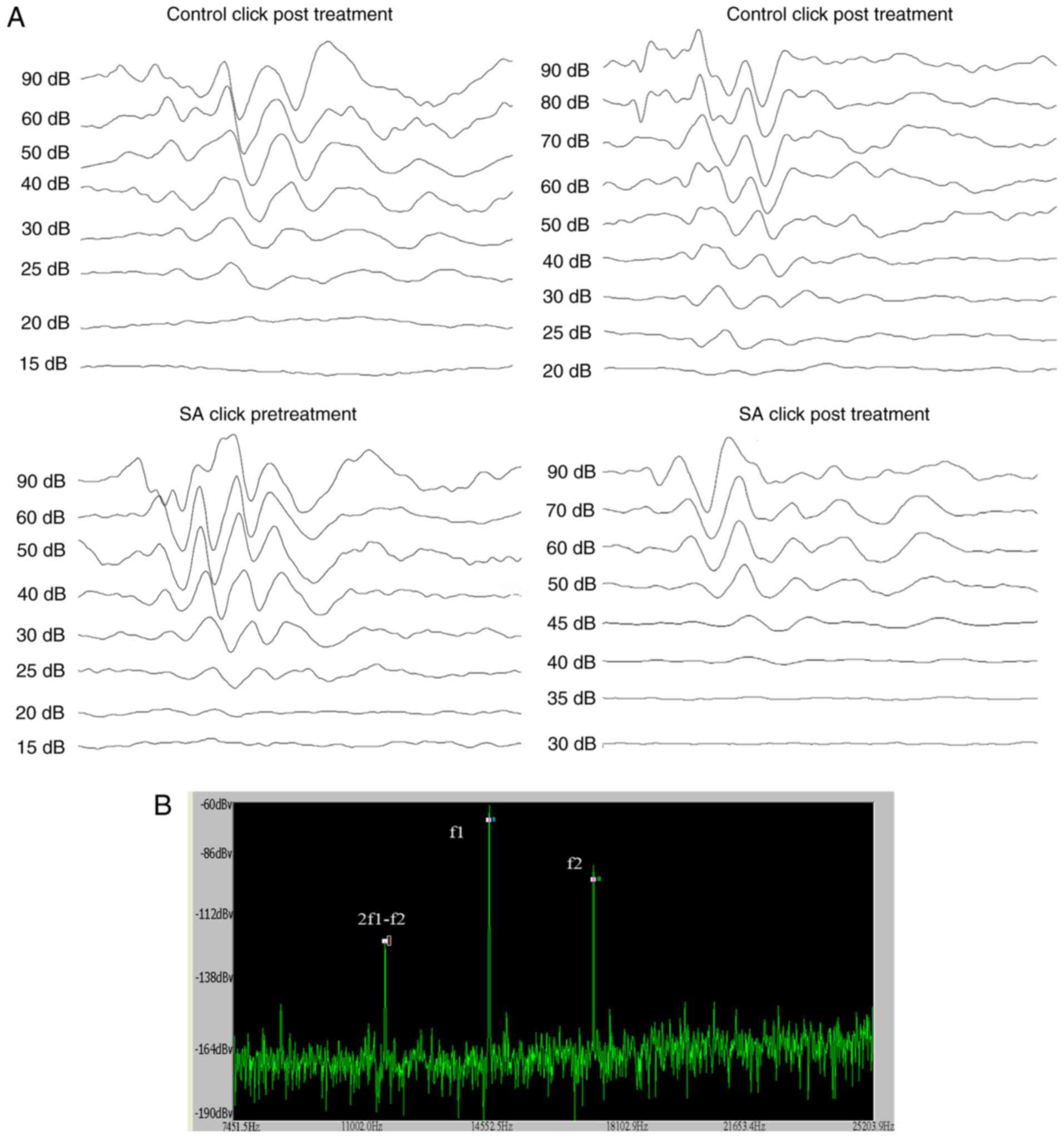
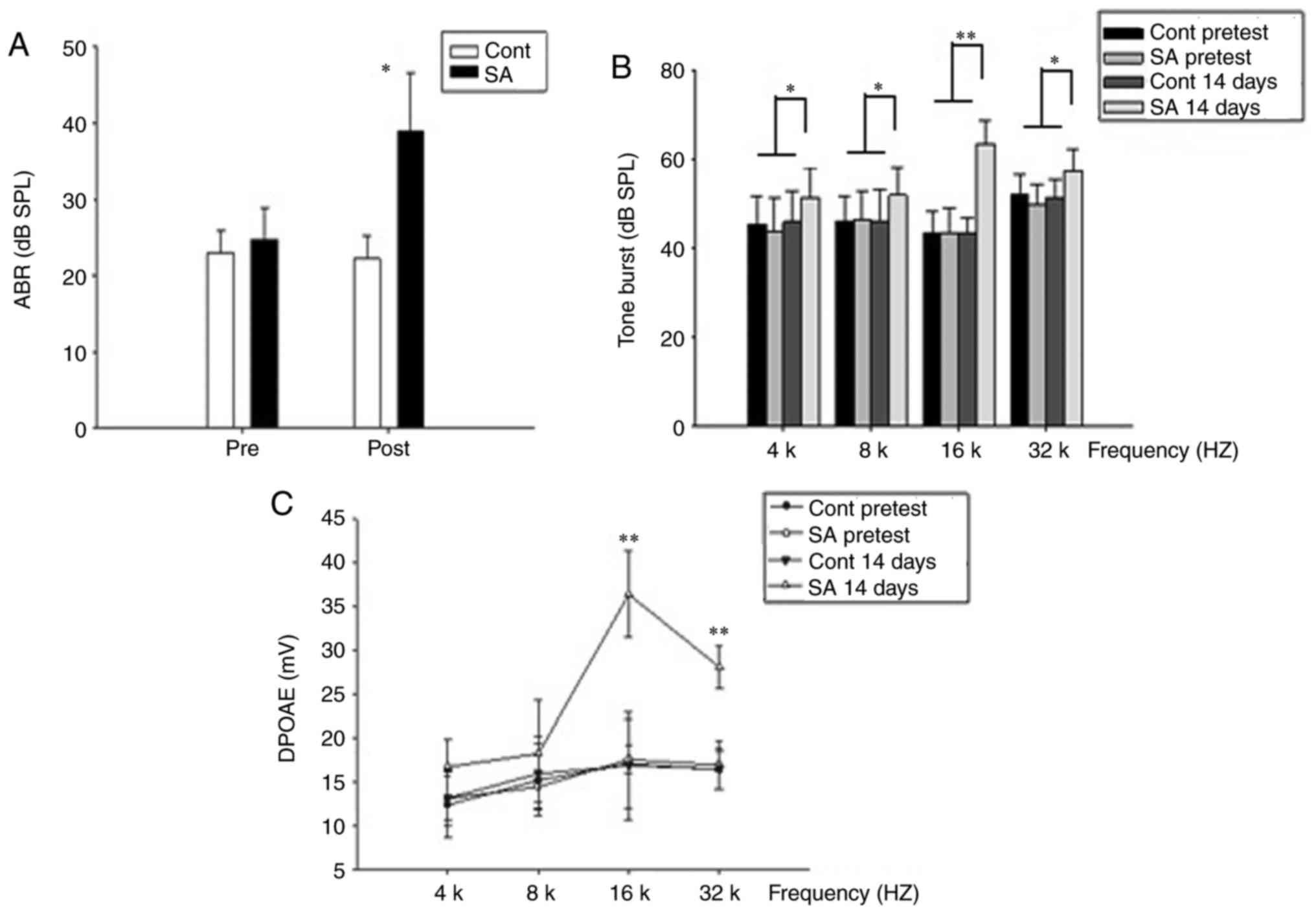
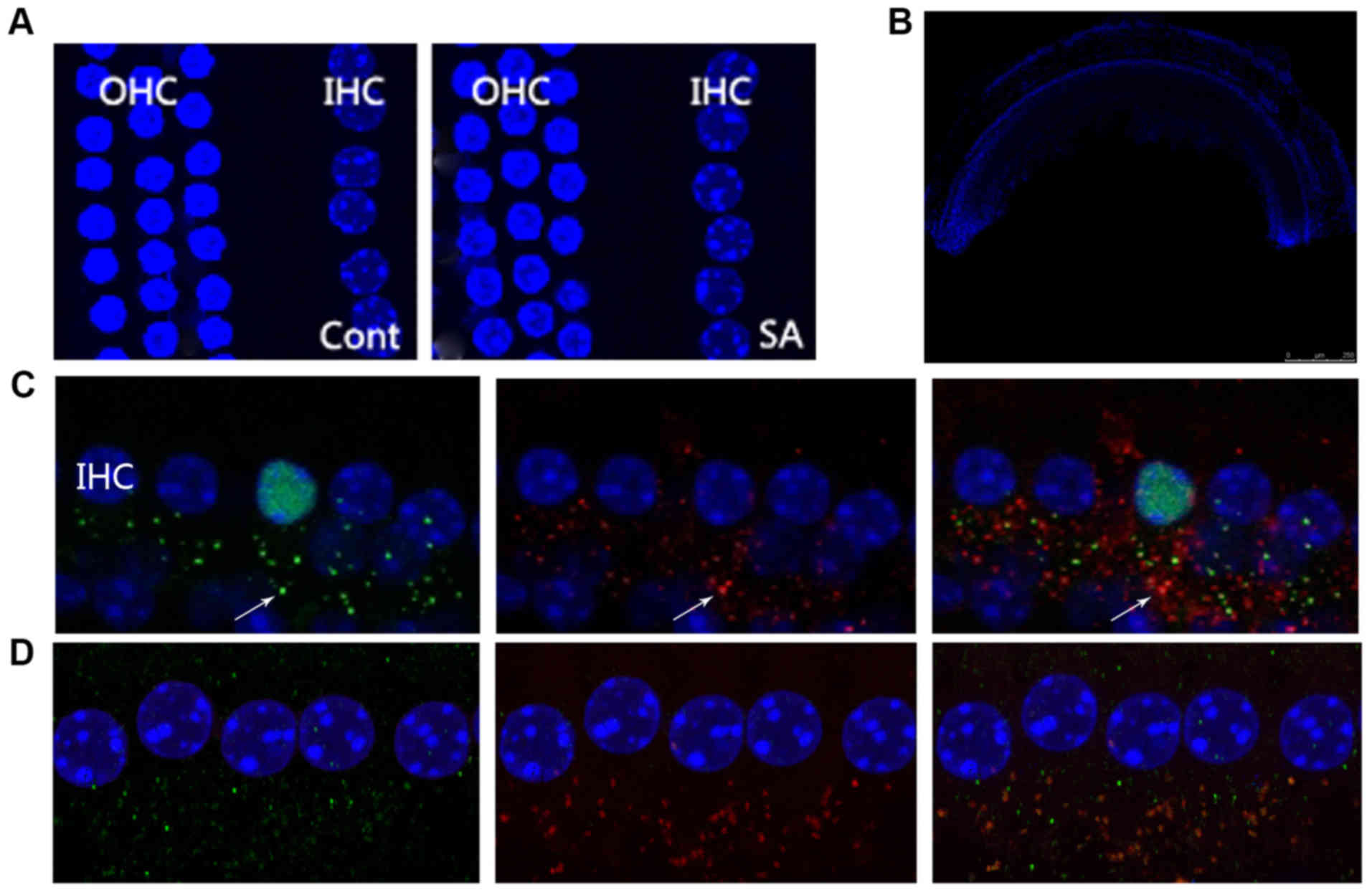
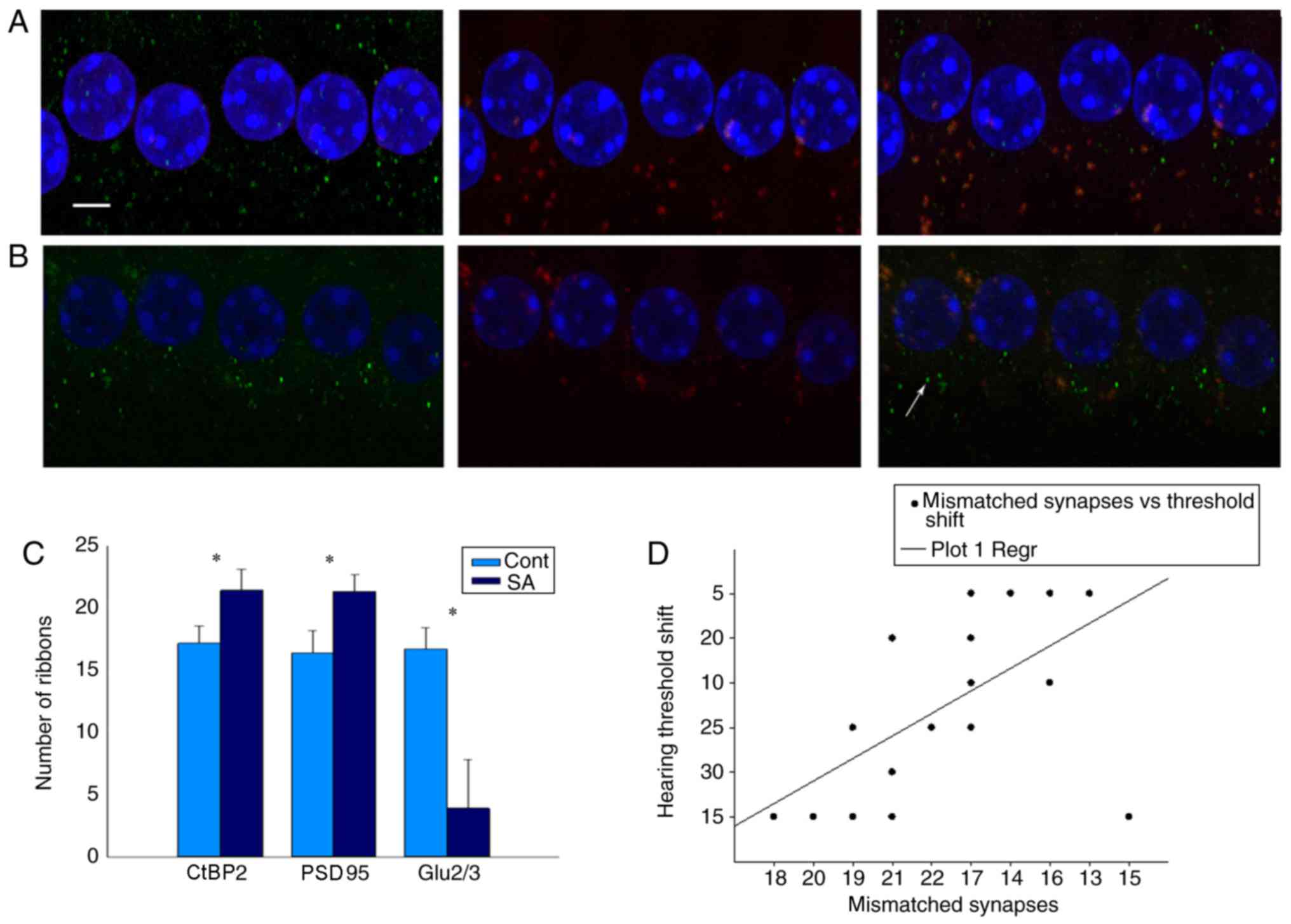
Salicylate is widely used to produce animal models of tinnitus in mice and/or rats. The side effects on auditory function, including hearing loss and tinnitus, are considered the results of the auditory nerve dysfunction. A recent study indicated that chronic treatment with salicylate for several weeks reduces compressed action potential amplitude, which is contradictory to the studies reporting excessive activation of N‑methyl‑D‑aspartate receptors (NMDAR) in tinnitus‑induced animals. The specific aims of the experiment were to detect the effect of salicylate on the inner hair cells (IHCs), ribbon synapse, as well as the association between the hearing threshold and the number of mismatched ribbon synapses. In the present study, mice were injected intraperitoneally with a low dose of salicylate (200 mg/kg) for 14 days. The auditory brainstem response and otoacoustic emission were measured to assess auditory function of the mice. The postsynaptic regions of IHC were identified with two types of immunostaining targets: Postsynaptic density protein 95 and Glu2/3. The number of spheres was counted and the synapses were reconstructed in 3‑dimensional images. Increases in distortion product otoacoustic emissions amplitudes of the salicylate group were detected, however, an elevation in the hearing threshold was also observed. A mismatch between pre‑and post‑ribbon synapses was observed. In addition, the cochlear components, including the numbers of outer hair cells and IHCs, were unlikely to be affected by salicylate. IHC ribbon synapses were more susceptible to salicylate stimuli. Furthermore, mismatch of pre‑ and post‑ribbon synapses may indicate a competitive inhibition between NMDAR and α-amino‑3‑hydroxy-5-methyl-4-isoxa-zole-propionate receptors and dysfunction of ribbon synapses.
View Figures

Figure 1

Figure 2

Figure 3

Figure 4

View References

1 

Fresca TM, Salvi RF and Archela RS: Dimensões do espaço paranaense. Editora UEL, Londrina. 2002.

2 

Moller AR: Pathophysiology of tinnitus. Otolaryngol Clin North Am. 36:249–266, v-vi. 2003. View Article : Google Scholar : PubMed/NCBI

3 

Jastreboff PJ: Tinnitus retraining therapy. Prog Brain Res. 166:415–423. 2007. View Article : Google Scholar : PubMed/NCBI

4 

Zenner HP, Pfister M and Birbaumer N: Tinnitus sensitization: Sensory and psychophysiological aspects of a new pathway of acquired centralization of chronic tinnitus. Otol Neurotol. 27:1054–1063. 2006. View Article : Google Scholar : PubMed/NCBI

5 

Puel JL and Guitton MJ: Salicylate-induced tinnitus: molecular mechanisms and modulation by anxiety. Prog Brain Res. 166:141–146. 2007. View Article : Google Scholar : PubMed/NCBI

6 

Leaver AM, Renier L, Chevillet MA, Morgan S, Kim HJ and Rauschecker JP: Dysregulation of limbic and auditory networks in tinnitus. Neuron. 69:33–43. 2011. View Article : Google Scholar : PubMed/NCBI

7 

Langguth B, Salvi R and Elgoyhen AB: Emerging pharmacotherapy of tinnitus. Expert Opin Emerg Drugs. 14:687–702. 2009. View Article : Google Scholar : PubMed/NCBI

8 

Shargorodsky J, Curhan GC and Farwell WR: Prevalence and characteristics of tinnitus among US adults. Am J Med. 123:711–718. 2010. View Article : Google Scholar : PubMed/NCBI

9 

Cazals Y: Auditory sensori-neural alterations induced by salicylate. Prog Neurobiol. 62:583–631. 2000. View Article : Google Scholar : PubMed/NCBI

10 

Jastreboff PJ, Brennan JF, Coleman JK and Sasaki CT: Phantom auditory sensation in rats: An animal model for tinnitus. Behav Neurosci. 102:811–822. 1988. View Article : Google Scholar : PubMed/NCBI

11 

Jastreboff PJ, Brennan JF and Sasaki CT: An animal model for tinnitus. Laryngoscope. 98:280–286. 1988. View Article : Google Scholar : PubMed/NCBI

12 

Escoubet B, Amsallem P, Ferrary E and Tran Ba Huy P: Prostaglandin synthesis by the cochlea of the guinea pig. Influence of aspirin, gentamicin and acoustic stimulation. Prostaglandins. 29:589–599. 1985. View Article : Google Scholar : PubMed/NCBI

13 

Jung TT, Miller SK, Rozehnal S, Woo HY, Park YM and Baer W: Effect of round window membrane application of salicylate and indomethacin on hearing and levels of arachidonic acid metabolites in perilymph. Acta Otolaryngol Suppl. 493:81–87. 1992.PubMed/NCBI

14 

Martin WH, Schwegler JW, Scheibelhoffer J and Ronis ML: Salicylate-induced changes in cat auditory nerve activity. Laryngoscope. 103:600–604. 1993. View Article : Google Scholar : PubMed/NCBI

15 

Singer W, Zuccotti A, Jaumann M, Lee SC, Panford-Walsh R, Xiong H, Zimmermann U, Franz C, Geisler HS, Köpschall I, et al: Noise-induced inner hair cell ribbon loss disturbs central arc mobilization: A novel molecular paradigm for understanding tinnitus. Mol Neurobiol. 47:261–279. 2013. View Article : Google Scholar : PubMed/NCBI

16 

Bernstein JM and Weiss AD: Further observations on salicylate ototoxicity. J Laryngol Otol. 81:915–925. 1967. View Article : Google Scholar : PubMed/NCBI

17 

Didier A, Miller JM and Nuttall AL: The vascular component of sodium salicylate ototoxicity in the guinea pig. Hear Res. 69:199–206. 1993. View Article : Google Scholar : PubMed/NCBI

18 

McFadden D, Plattsmier HS and Pasanen EG: Aspirin-induced hearing loss as a model of sensorineural hearing loss. Hear Res. 16:251–260. 1984. View Article : Google Scholar : PubMed/NCBI

19 

McFadden D, Plattsmier HS and Pasanen EG: Temporary hearing loss induced by combinations of intense sounds and nonsteroidal anti-inflammatory drugs. Am J Otolaryngol. 5:235–241. 1984. View Article : Google Scholar : PubMed/NCBI

20 

Chen GD, Kermany MH, D'Elia A, Ralli M, Tanaka C, Bielefeld EC, Ding D, Henderson D and Salvi R: Too much of a good thing: Long-term treatment with salicylate strengthens outer hair cell function but impairs auditory neural activity. Hear Res. 265:63–69. 2010. View Article : Google Scholar : PubMed/NCBI

21 

Yu N, Zhu ML, Johnson B, Liu YP, Jones RO and Zhao HB: Prestin up-regulation in chronic salicylate (aspirin) administration: An implication of functional dependence of prestin expression. Cell Mol Life Sci. 65:2407–2418. 2008. View Article : Google Scholar : PubMed/NCBI

22 

Bourre JM, Durand G, Erre JP and Aran JM: Changes in auditory brainstem responses in alpha-linolenic acid deficiency as a function of age in rats. Audiology. 38:13–18. 1999. View Article : Google Scholar : PubMed/NCBI

23 

Moser T, Neef A and Khimich D: Mechanisms underlying the temporal precision of sound coding at the inner hair cell ribbon synapse. J Physiol. 576:55–62. 2006. View Article : Google Scholar : PubMed/NCBI

24 

Starr A, Picton TW, Sininger Y, Hood LJ and Berlin CI: Auditory neuropathy. Brain. 119:741–753. 1996. View Article : Google Scholar : PubMed/NCBI

25 

Sudhof TC: The synaptic vesicle cycle. Annu Rev Neurosci. 27:509–547. 2004. View Article : Google Scholar : PubMed/NCBI

26 

Roux I, Safieddine S, Nouvian R, Grati M, Simmler MC, Bahloul A, Perfettini I, Le Gall M, Rostaing P, Hamard G, et al: Otoferlin, defective in a human deafness form, is essential for exocytosis at the auditory ribbon synapse. Cell. 127:277–289. 2006. View Article : Google Scholar : PubMed/NCBI

27 

Maier W, Bednorz M, Meister S, Roebroek A, Weggen S, Schmitt U and Pietrzik CU: LRP1 is critical for the surface distribution and internalization of the NR2B NMDA receptor subtype. Mol Neurodegener. 8:252013. View Article : Google Scholar : PubMed/NCBI

28 

Wang Q and Green SH: Functional role of neurotrophin-3 in synapse regeneration by spiral ganglion neurons on inner hair cells after excitotoxic trauma in vitro. J Neurosci. 31:7938–7949. 2011. View Article : Google Scholar : PubMed/NCBI

29 

Biou V, Bhattacharyya S and Malenka RC: Endocytosis and recycling of AMPA receptors lacking GluR2/3. Proc Natl Acad Sci USA. 105:1038–1043. 2008. View Article : Google Scholar : PubMed/NCBI

30 

Ma B, Wang L, von Wasielewski R, Lindenmaier W and Dittmar KE: Serial sectioning and three-dimensional reconstruction of mouse Peyer's patch. Micron. 39:967–975. 2008. View Article : Google Scholar : PubMed/NCBI

31 

Filippi S, Motyl B and Bandera C: Analysis of existing methods for 3D modelling of femurs starting from two orthogonal images and development of a script for a commercial software package. Comput Methods Programs Biomed. 89:76–82. 2008. View Article : Google Scholar : PubMed/NCBI

32 

Gruska M, Medalia O, Baumeister W and Leis A: Electron tomography of vitreous sections from cultured mammalian cells. J Struct Biol. 161:384–392. 2008. View Article : Google Scholar : PubMed/NCBI

33 

Punge A, Rizzoli SO, Jahn R, Wildanger JD, Meyer L, Schönle A, Kastrup L and Hell SW: 3D reconstruction of high-resolution STED microscope images. Microsc Res Tech. 71:644–650. 2008. View Article : Google Scholar : PubMed/NCBI

34 

Nakagawa T, Komune S, Uemura T and Akaike N: Excitatory amino acid response in isolated spiral ganglion cells of guinea pig cochlea. J Neurophysiol. 65:715–723. 1991. View Article : Google Scholar : PubMed/NCBI

35 

Ruel J, Chen C, Pujol R, Bobbin RP and Puel JL: AMPA-preferring glutamate receptors in cochlear physiology of adult guinea-pig. J Physiol. 518:667–680. 1999. View Article : Google Scholar : PubMed/NCBI

36 

Glowatzki E and Fuchs PA: Transmitter release at the hair cell ribbon synapse. Nat Neurosci. 5:147–154. 2002. View Article : Google Scholar : PubMed/NCBI

37 

Ruel J, Chabbert C, Nouvian R, Bendris R, Eybalin M, Leger CL, Bourien J, Mersel M and Puel JL: Salicylate enables cochlear arachidonic-acid-sensitive NMDA receptor responses. J Neurosci. 28:7313–7323. 2008. View Article : Google Scholar : PubMed/NCBI

38 

Khimich D, Nouvian R, Pujol R, Tom Dieck S, Egner A, Gundelfinger ED and Moser T: Hair cell synaptic ribbons are essential for synchronous auditory signalling. Nature. 434:889–894. 2005. View Article : Google Scholar : PubMed/NCBI

39 

Xi D, Li YC, Snyder MA, Gao RY, Adelman AE, Zhang W, Shumsky JS and Gao WJ: Group II metabotropic glutamate receptor agonist ameliorates MK801-induced dysfunction of NMDA receptors via the Akt/GSK-3β pathway in adult rat prefrontal cortex. Neuropsychopharmacology. 36:1260–1274. 2011. View Article : Google Scholar : PubMed/NCBI

40 

Berretta N and Jones RS: Tonic facilitation of glutamate release by presynaptic N-methyl-D-aspartate autoreceptors in the entorhinal cortex. Neuroscience. 75:339–344. 1996. View Article : Google Scholar : PubMed/NCBI

41 

Breukel AI, Besselsen E, Lopes da Silva FH and Ghijsen WE: A presynaptic N-methyl-D-aspartate autoreceptor in rat hippocampus modulating amino acid release from a cytoplasmic pool. Eur J Neurosci. 10:106–114. 1998. View Article : Google Scholar : PubMed/NCBI

42 

Woodhall G, Evans DI, Cunningham MO and Jones RS: NR2B-containing NMDA autoreceptors at synapses on entorhinal cortical neurons. J Neurophysiol. 86:1644–1651. 2001. View Article : Google Scholar : PubMed/NCBI

43 

Luccini E, Musante V, Neri E, Raiteri M and Pittaluga A: N-methyl-D-aspartate autoreceptors respond to low and high agonist concentrations by facilitating, respectively, exocytosis and carrier-mediated release of glutamate in rat hippocampus. J Neurosci Res. 85:3657–3665. 2007. View Article : Google Scholar : PubMed/NCBI

44 

Chen Z, Kujawa SG and Sewell WF: Auditory sensitivity regulation via rapid changes in expression of surface AMPA receptors. Nat Neurosci. 10:1238–1240. 2007. View Article : Google Scholar : PubMed/NCBI

45 

Mazurek B, Lou X, Olze H, Haupt H and Szczepek AJ: In vitro protection of auditory hair cells by salicylate from the gentamicin-induced but not neomycin-induced cell loss. Neurosci Lett. 506:107–110. 2012. View Article : Google Scholar : PubMed/NCBI

46 

Shi L, Liu L, He T, Guo X, Yu Z, Yin S and Wang J: Ribbon synapse plasticity in the cochleae of Guinea pigs after noise-induced silent damage. PLoS One. 8:e815662013. View Article : Google Scholar : PubMed/NCBI

47 

Chubykin AA, Atasoy D, Etherton MR, Brose N, Kavalali ET, Gibson JR and Südhof TC: Activity-dependent validation of excitatory versus inhibitory synapses by neuroligin-1 versus neuroligin-2. Neuron. 54:919–931. 2007. View Article : Google Scholar : PubMed/NCBI

48 

Mishra A, Traut MH, Becker L, Klopstock T, Stein V and Klein R: Genetic evidence for the adhesion protein IgSF9/Dasm1 to regulate inhibitory synapse development independent of its intracellular domain. J Neurosci. 34:4187–4199. 2014. View Article : Google Scholar : PubMed/NCBI

49 

Zugaib J and Leao RM: Enhancement of endocannabinoid-dependent depolarization-induced suppression of excitation in glycinergic neurons by prolonged exposure to high doses of salicylate. Neuroscience. 376:72–79. 2018. View Article : Google Scholar : PubMed/NCBI

Related Articles

  • Abstract
  • View
  • Download
  • Twitter
Copy and paste a formatted citation
Spandidos Publications style
Cui W, Wang H, Cheng Y, Ma X, Lei Y, Ruan X, Shi L and Lv M: Long‑term treatment with salicylate enables NMDA receptors and impairs AMPA receptors in C57BL/6J mice inner hair cell ribbon synapse. Mol Med Rep 19: 51-58, 2019.
APA
Cui, W., Wang, H., Cheng, Y., Ma, X., Lei, Y., Ruan, X. ... Lv, M. (2019). Long‑term treatment with salicylate enables NMDA receptors and impairs AMPA receptors in C57BL/6J mice inner hair cell ribbon synapse. Molecular Medicine Reports, 19, 51-58. https://doi.org/10.3892/mmr.2018.9624
MLA
Cui, W., Wang, H., Cheng, Y., Ma, X., Lei, Y., Ruan, X., Shi, L., Lv, M."Long‑term treatment with salicylate enables NMDA receptors and impairs AMPA receptors in C57BL/6J mice inner hair cell ribbon synapse". Molecular Medicine Reports 19.1 (2019): 51-58.
Chicago
Cui, W., Wang, H., Cheng, Y., Ma, X., Lei, Y., Ruan, X., Shi, L., Lv, M."Long‑term treatment with salicylate enables NMDA receptors and impairs AMPA receptors in C57BL/6J mice inner hair cell ribbon synapse". Molecular Medicine Reports 19, no. 1 (2019): 51-58. https://doi.org/10.3892/mmr.2018.9624
Copy and paste a formatted citation
x
Spandidos Publications style
Cui W, Wang H, Cheng Y, Ma X, Lei Y, Ruan X, Shi L and Lv M: Long‑term treatment with salicylate enables NMDA receptors and impairs AMPA receptors in C57BL/6J mice inner hair cell ribbon synapse. Mol Med Rep 19: 51-58, 2019.
APA
Cui, W., Wang, H., Cheng, Y., Ma, X., Lei, Y., Ruan, X. ... Lv, M. (2019). Long‑term treatment with salicylate enables NMDA receptors and impairs AMPA receptors in C57BL/6J mice inner hair cell ribbon synapse. Molecular Medicine Reports, 19, 51-58. https://doi.org/10.3892/mmr.2018.9624
MLA
Cui, W., Wang, H., Cheng, Y., Ma, X., Lei, Y., Ruan, X., Shi, L., Lv, M."Long‑term treatment with salicylate enables NMDA receptors and impairs AMPA receptors in C57BL/6J mice inner hair cell ribbon synapse". Molecular Medicine Reports 19.1 (2019): 51-58.
Chicago
Cui, W., Wang, H., Cheng, Y., Ma, X., Lei, Y., Ruan, X., Shi, L., Lv, M."Long‑term treatment with salicylate enables NMDA receptors and impairs AMPA receptors in C57BL/6J mice inner hair cell ribbon synapse". Molecular Medicine Reports 19, no. 1 (2019): 51-58. https://doi.org/10.3892/mmr.2018.9624
Follow us
  • Twitter
  • LinkedIn
  • Facebook
About
  • Spandidos Publications
  • Careers
  • Cookie Policy
  • Privacy Policy
How can we help?
  • Help
  • Live Chat
  • Contact
  • Email to our Support Team