Spandidos Publications Logo
  • About
    • About Spandidos
    • Aims and Scopes
    • Abstracting and Indexing
    • Editorial Policies
    • Reprints and Permissions
    • Job Opportunities
    • Terms and Conditions
    • Contact
  • Journals
    • All Journals
    • Oncology Letters
      • Oncology Letters
      • Information for Authors
      • Editorial Policies
      • Editorial Board
      • Aims and Scope
      • Abstracting and Indexing
      • Bibliographic Information
      • Archive
    • International Journal of Oncology
      • International Journal of Oncology
      • Information for Authors
      • Editorial Policies
      • Editorial Board
      • Aims and Scope
      • Abstracting and Indexing
      • Bibliographic Information
      • Archive
    • Molecular and Clinical Oncology
      • Molecular and Clinical Oncology
      • Information for Authors
      • Editorial Policies
      • Editorial Board
      • Aims and Scope
      • Abstracting and Indexing
      • Bibliographic Information
      • Archive
    • Experimental and Therapeutic Medicine
      • Experimental and Therapeutic Medicine
      • Information for Authors
      • Editorial Policies
      • Editorial Board
      • Aims and Scope
      • Abstracting and Indexing
      • Bibliographic Information
      • Archive
    • International Journal of Molecular Medicine
      • International Journal of Molecular Medicine
      • Information for Authors
      • Editorial Policies
      • Editorial Board
      • Aims and Scope
      • Abstracting and Indexing
      • Bibliographic Information
      • Archive
    • Biomedical Reports
      • Biomedical Reports
      • Information for Authors
      • Editorial Policies
      • Editorial Board
      • Aims and Scope
      • Abstracting and Indexing
      • Bibliographic Information
      • Archive
    • Oncology Reports
      • Oncology Reports
      • Information for Authors
      • Editorial Policies
      • Editorial Board
      • Aims and Scope
      • Abstracting and Indexing
      • Bibliographic Information
      • Archive
    • Molecular Medicine Reports
      • Molecular Medicine Reports
      • Information for Authors
      • Editorial Policies
      • Editorial Board
      • Aims and Scope
      • Abstracting and Indexing
      • Bibliographic Information
      • Archive
    • World Academy of Sciences Journal
      • World Academy of Sciences Journal
      • Information for Authors
      • Editorial Policies
      • Editorial Board
      • Aims and Scope
      • Abstracting and Indexing
      • Bibliographic Information
      • Archive
    • International Journal of Functional Nutrition
      • International Journal of Functional Nutrition
      • Information for Authors
      • Editorial Policies
      • Editorial Board
      • Aims and Scope
      • Abstracting and Indexing
      • Bibliographic Information
      • Archive
    • International Journal of Epigenetics
      • International Journal of Epigenetics
      • Information for Authors
      • Editorial Policies
      • Editorial Board
      • Aims and Scope
      • Abstracting and Indexing
      • Bibliographic Information
      • Archive
    • Medicine International
      • Medicine International
      • Information for Authors
      • Editorial Policies
      • Editorial Board
      • Aims and Scope
      • Abstracting and Indexing
      • Bibliographic Information
      • Archive
  • Articles
  • Information
    • Information for Authors
    • Information for Reviewers
    • Information for Librarians
    • Information for Advertisers
    • Conferences
  • Language Editing
Spandidos Publications Logo
  • About
    • About Spandidos
    • Aims and Scopes
    • Abstracting and Indexing
    • Editorial Policies
    • Reprints and Permissions
    • Job Opportunities
    • Terms and Conditions
    • Contact
  • Journals
    • All Journals
    • Biomedical Reports
      • Information for Authors
      • Editorial Policies
      • Editorial Board
      • Aims and Scope
      • Abstracting and Indexing
      • Bibliographic Information
      • Archive
    • Experimental and Therapeutic Medicine
      • Information for Authors
      • Editorial Policies
      • Editorial Board
      • Aims and Scope
      • Abstracting and Indexing
      • Bibliographic Information
      • Archive
    • International Journal of Epigenetics
      • Information for Authors
      • Editorial Policies
      • Editorial Board
      • Aims and Scope
      • Abstracting and Indexing
      • Bibliographic Information
      • Archive
    • International Journal of Functional Nutrition
      • Information for Authors
      • Editorial Policies
      • Editorial Board
      • Aims and Scope
      • Abstracting and Indexing
      • Bibliographic Information
      • Archive
    • International Journal of Molecular Medicine
      • Information for Authors
      • Editorial Policies
      • Editorial Board
      • Aims and Scope
      • Abstracting and Indexing
      • Bibliographic Information
      • Archive
    • International Journal of Oncology
      • Information for Authors
      • Editorial Policies
      • Editorial Board
      • Aims and Scope
      • Abstracting and Indexing
      • Bibliographic Information
      • Archive
    • Medicine International
      • Information for Authors
      • Editorial Policies
      • Editorial Board
      • Aims and Scope
      • Abstracting and Indexing
      • Bibliographic Information
      • Archive
    • Molecular and Clinical Oncology
      • Information for Authors
      • Editorial Policies
      • Editorial Board
      • Aims and Scope
      • Abstracting and Indexing
      • Bibliographic Information
      • Archive
    • Molecular Medicine Reports
      • Information for Authors
      • Editorial Policies
      • Editorial Board
      • Aims and Scope
      • Abstracting and Indexing
      • Bibliographic Information
      • Archive
    • Oncology Letters
      • Information for Authors
      • Editorial Policies
      • Editorial Board
      • Aims and Scope
      • Abstracting and Indexing
      • Bibliographic Information
      • Archive
    • Oncology Reports
      • Information for Authors
      • Editorial Policies
      • Editorial Board
      • Aims and Scope
      • Abstracting and Indexing
      • Bibliographic Information
      • Archive
    • World Academy of Sciences Journal
      • Information for Authors
      • Editorial Policies
      • Editorial Board
      • Aims and Scope
      • Abstracting and Indexing
      • Bibliographic Information
      • Archive
  • Articles
  • Information
    • For Authors
    • For Reviewers
    • For Librarians
    • For Advertisers
    • Conferences
  • Language Editing
Login Register Submit
  • This site uses cookies
  • You can change your cookie settings at any time by following the instructions in our Cookie Policy. To find out more, you may read our Privacy Policy.

    I agree
Search articles by DOI, keyword, author or affiliation
Search
Advanced Search
presentation
Molecular Medicine Reports
Join Editorial Board Propose a Special Issue
Print ISSN: 1791-2997 Online ISSN: 1791-3004
Journal Cover
January-2019 Volume 19 Issue 1

Full Size Image

Sign up for eToc alerts
Recommend to Library

Journals

International Journal of Molecular Medicine

International Journal of Molecular Medicine

International Journal of Molecular Medicine is an international journal devoted to molecular mechanisms of human disease.

International Journal of Oncology

International Journal of Oncology

International Journal of Oncology is an international journal devoted to oncology research and cancer treatment.

Molecular Medicine Reports

Molecular Medicine Reports

Covers molecular medicine topics such as pharmacology, pathology, genetics, neuroscience, infectious diseases, molecular cardiology, and molecular surgery.

Oncology Reports

Oncology Reports

Oncology Reports is an international journal devoted to fundamental and applied research in Oncology.

Experimental and Therapeutic Medicine

Experimental and Therapeutic Medicine

Experimental and Therapeutic Medicine is an international journal devoted to laboratory and clinical medicine.

Oncology Letters

Oncology Letters

Oncology Letters is an international journal devoted to Experimental and Clinical Oncology.

Biomedical Reports

Biomedical Reports

Explores a wide range of biological and medical fields, including pharmacology, genetics, microbiology, neuroscience, and molecular cardiology.

Molecular and Clinical Oncology

Molecular and Clinical Oncology

International journal addressing all aspects of oncology research, from tumorigenesis and oncogenes to chemotherapy and metastasis.

World Academy of Sciences Journal

World Academy of Sciences Journal

Multidisciplinary open-access journal spanning biochemistry, genetics, neuroscience, environmental health, and synthetic biology.

International Journal of Functional Nutrition

International Journal of Functional Nutrition

Open-access journal combining biochemistry, pharmacology, immunology, and genetics to advance health through functional nutrition.

International Journal of Epigenetics

International Journal of Epigenetics

Publishes open-access research on using epigenetics to advance understanding and treatment of human disease.

Medicine International

Medicine International

An International Open Access Journal Devoted to General Medicine.

Journal Cover
January-2019 Volume 19 Issue 1

Full Size Image

Sign up for eToc alerts
Recommend to Library

  • Article
  • Citations
    • Cite This Article
    • Download Citation
    • Create Citation Alert
    • Remove Citation Alert
    • Cited By
  • Similar Articles
    • Related Articles (in Spandidos Publications)
    • Similar Articles (Google Scholar)
    • Similar Articles (PubMed)
  • Download PDF
  • Download XML
  • View XML
Article Open Access

Hypoxia‑induced miR‑210 contributes to apoptosis of mouse spermatocyte GC‑2 cells by targeting Kruppel‑like factor 7

  • Authors:
    • Jin‑Xing Lv
    • Jian Zhou
    • Rui‑Qing Tong
    • Bin Wang
    • Xue‑Lei Chen
    • Yan‑Yan Zhuang
    • Fei Xia
    • Xue‑Dong Wei
  • View Affiliations / Copyright

    Affiliations: Reproductive Medicine Center, The First Affiliated Hospital of Soochow University, Suzhou, Jiangsu 215006, P.R. China, Department of Urology, The First Affiliated Hospital of Soochow University, Suzhou, Jiangsu 215006, P.R. China
    Copyright: © Lv et al. This is an open access article distributed under the terms of Creative Commons Attribution License.
  • Pages: 271-279
    |
    Published online on: November 12, 2018
       https://doi.org/10.3892/mmr.2018.9644
  • Expand metrics +
Metrics: Total Views: 0 (Spandidos Publications: | PMC Statistics: )
Metrics: Total PDF Downloads: 0 (Spandidos Publications: | PMC Statistics: )
Cited By (CrossRef): 0 citations Loading Articles...

This article is mentioned in:


Abstract

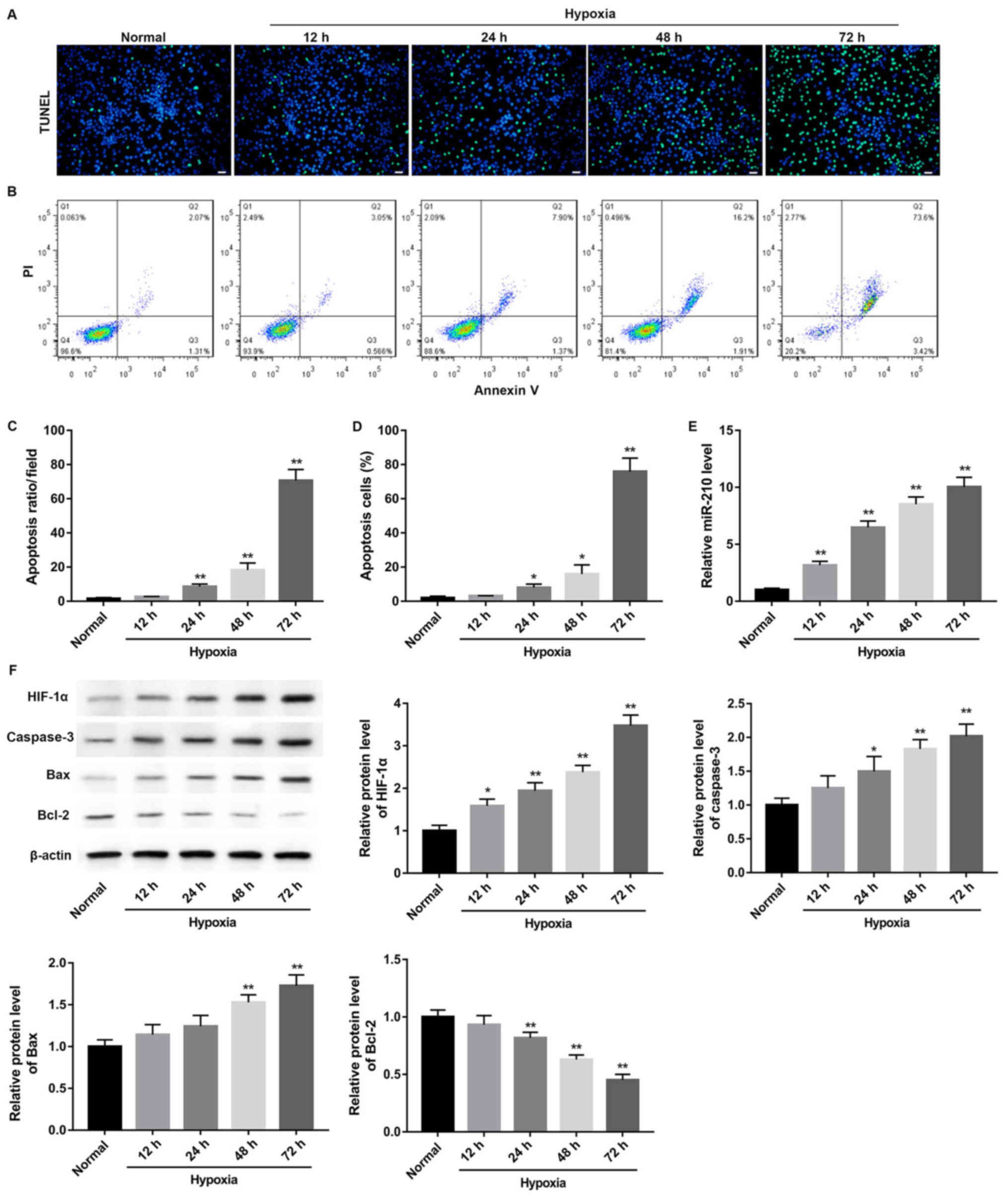
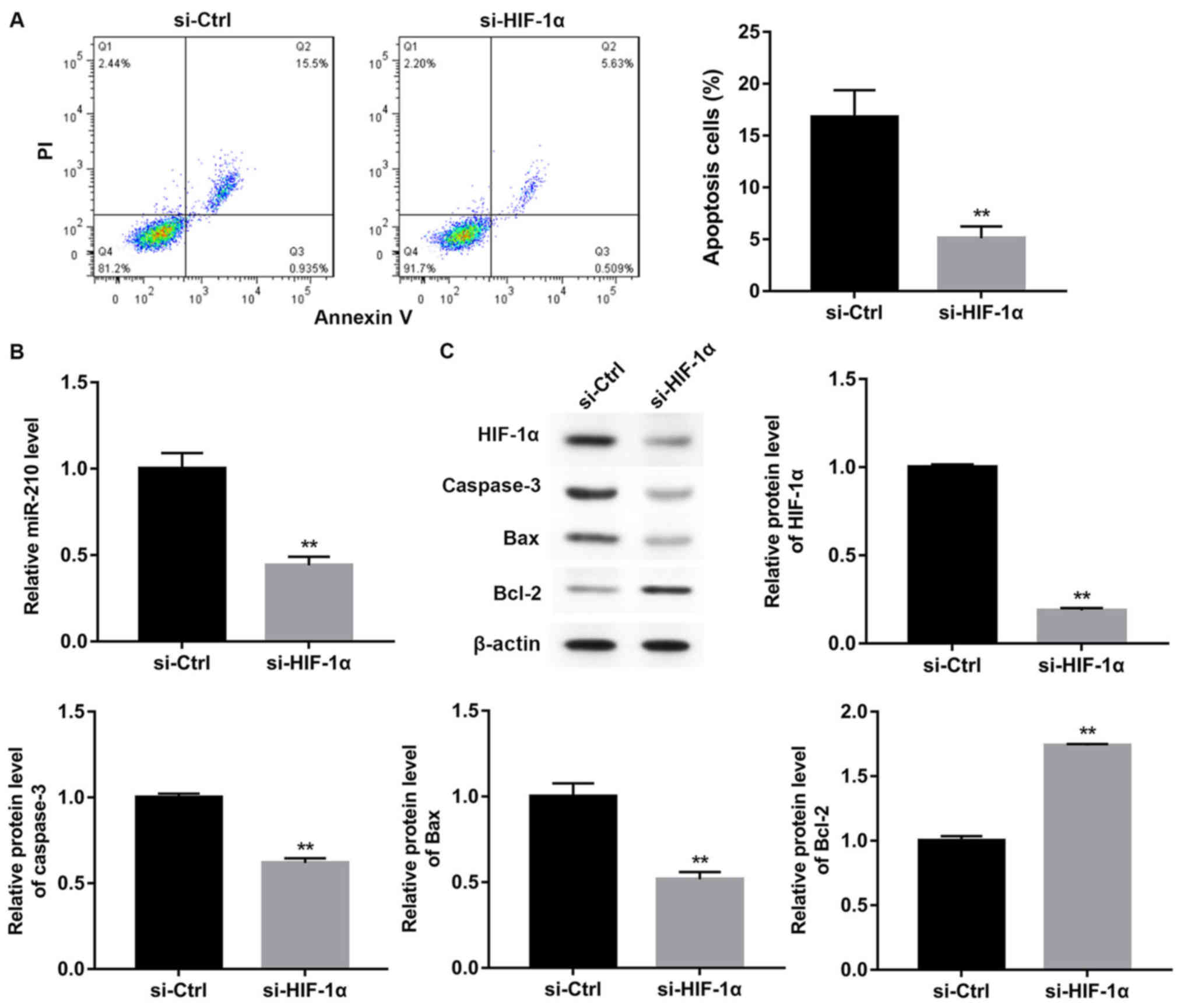
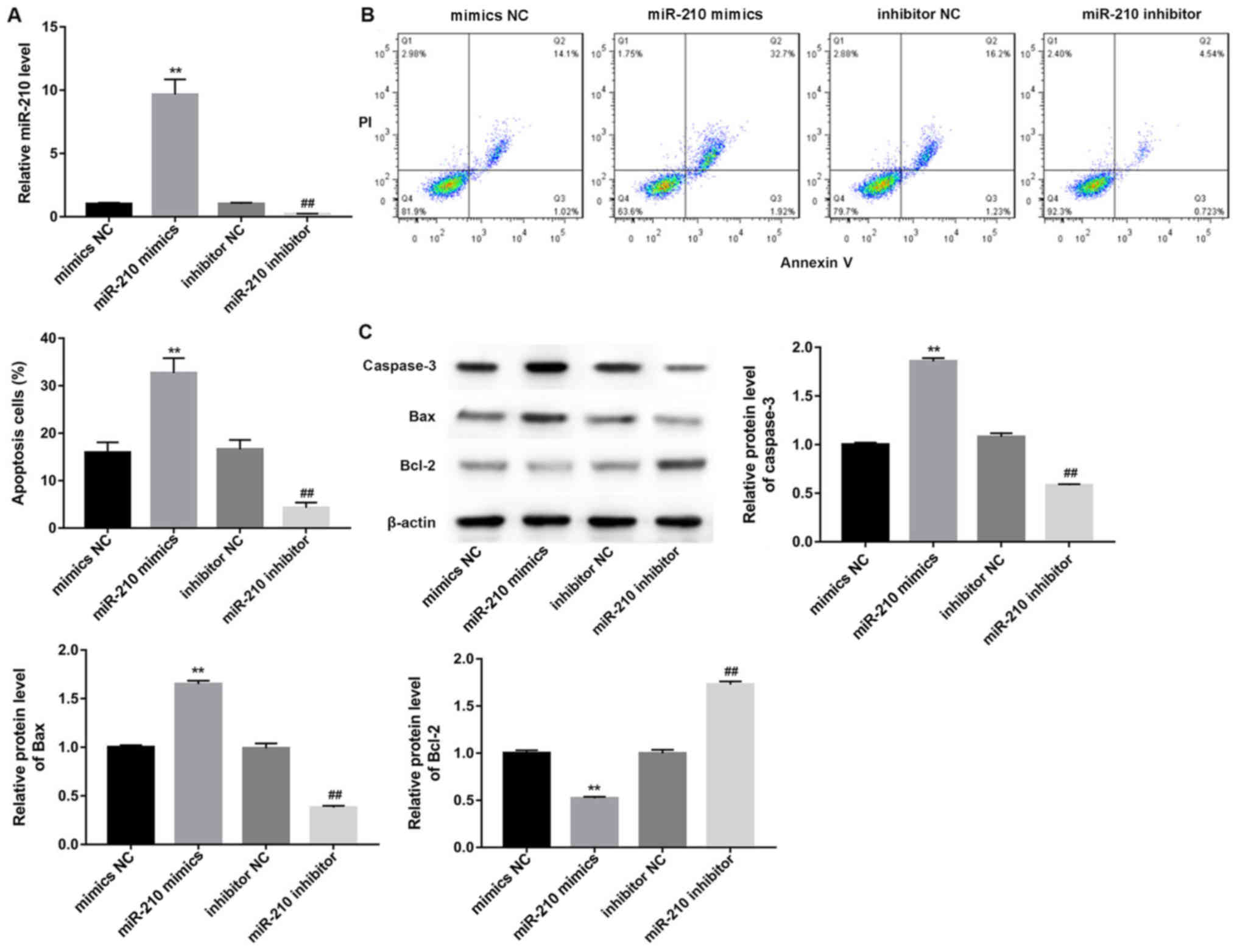
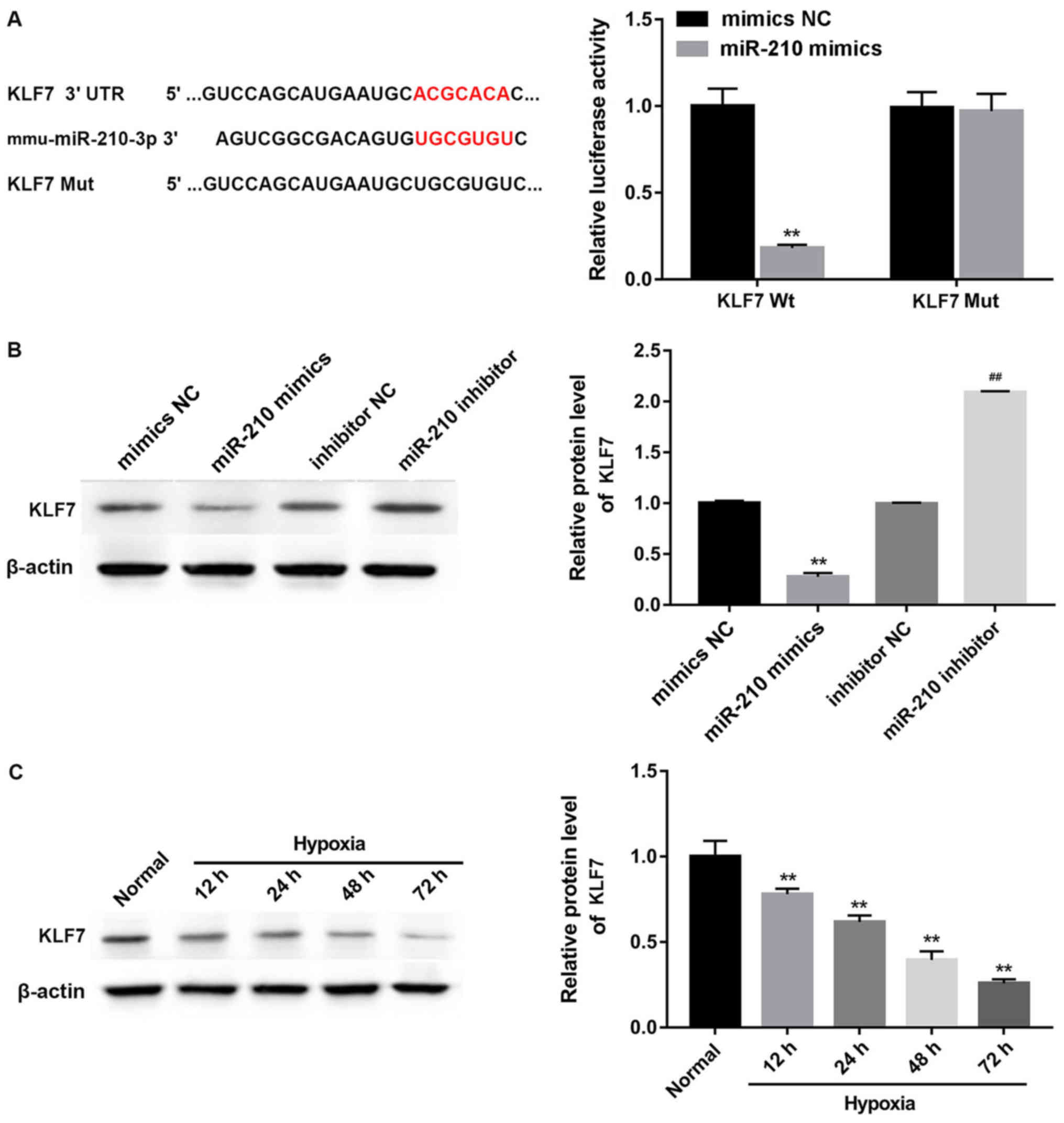
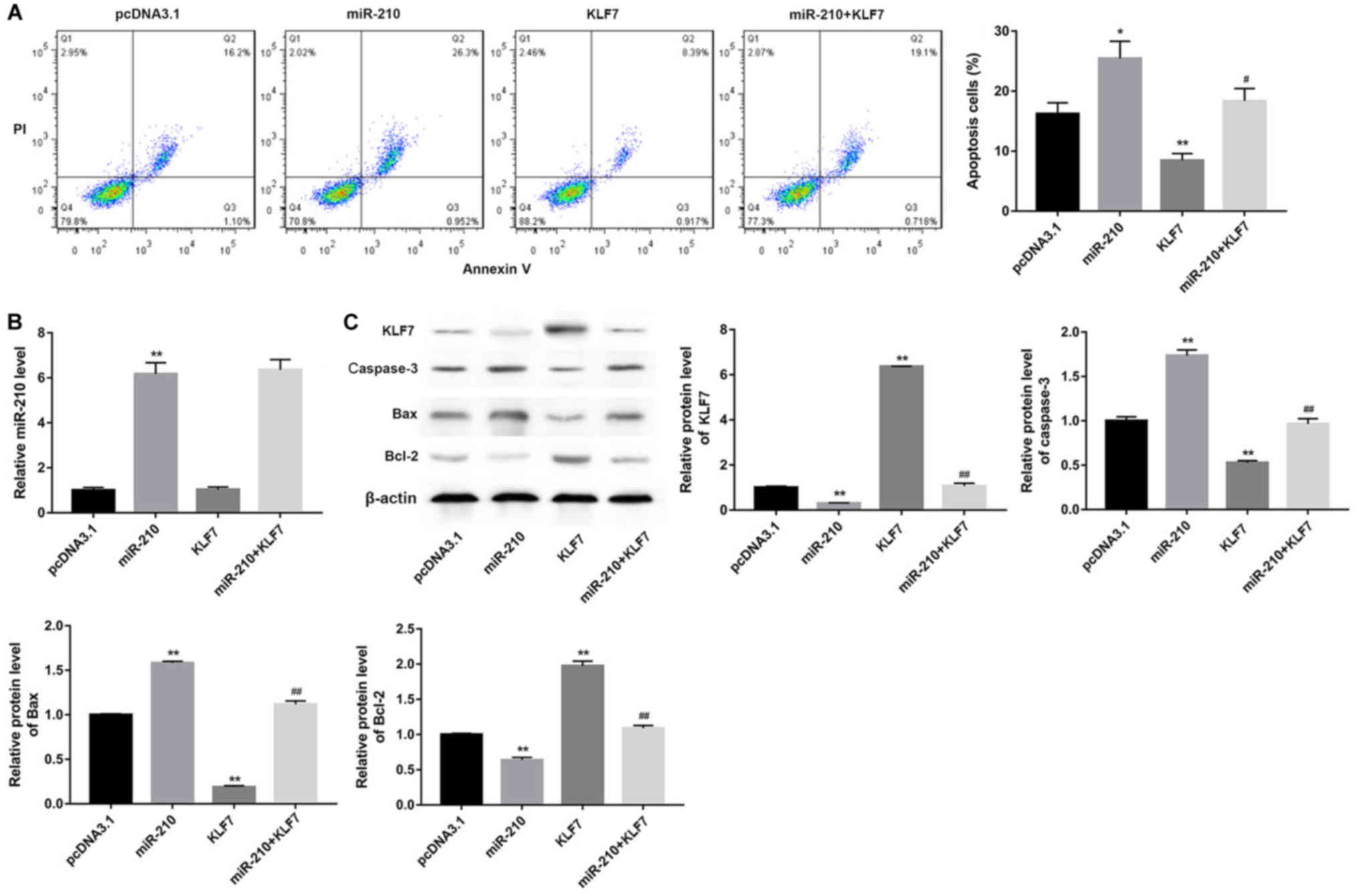
The aim of the present study was to investigate the underlying mechanisms of hypoxia‑induced microRNA (miR)‑210 effects on mouse GC‑2spd (GC‑2) cells. GC‑2 cells were subjected to hypoxia or normoxia for 12, 24, 48 and 72 h. Apoptosis of GC‑2 cells was detected using terminal deoxynucleotidyl‑transferase‑meditated dUTP nick end labeling and flow cytometry. Reverse transcription‑quantitative polymerase chain reaction was performed to analyze the expression of miR‑210. Hypoxia‑inducible factor‑1α (HIF‑1α), caspase‑3, B‑cell lymphoma 2, apoptosis regulator BAX and Kruppel‑like factor 7 (KLF7) protein expression levels were detected by western blotting. Luciferase reporter gene assays were used to assess the targeting effects of miR‑210 on KLF7. Hypoxia induced GC‑2 cell apoptosis and increased the expression of HIF‑1α and pro‑apoptotic proteins; however, decreased anti‑apoptotic protein expression levels. Furthermore, hypoxia resulted in the upregulation of miR‑210 in GC‑2 cells. HIF‑1α and miR‑210 were involved in the apoptosis of GC‑2 cells by mediating the expression of apoptosis‑associated proteins. Furthermore, KLF7 was directly targeted by miR‑210 to influence the apoptosis of GC‑2 cells subjected to hypoxia. The results suggested that hypoxia‑induced miR‑210 stimulated the activation of the apoptosis signaling pathway and contributed to the apoptosis of GC‑2 cells by targeting KLF7.
View Figures

Figure 1

Figure 2

Figure 3

Figure 4

Figure 5

View References

1 

Inhorn MC and Patrizio P: Infertility around the globe: New thinking on gender, reproductive technologies and global movements in the 21st century. Hum Reprod Update. 21:411–426. 2015. View Article : Google Scholar : PubMed/NCBI

2 

Okada H, Tajima A, Shichiri K, Tanaka A, Tanaka K and Inoue I: Genome-wide expression of azoospermia testes demonstrates a specific profile and implicates ART3 in genetic susceptibility. PloS Genet. 4:e262008. View Article : Google Scholar : PubMed/NCBI

3 

Wu H, Sun L, Wen Y, Liu Y, Yu J, Mao F, Wang Y, Tong C, Guo X, Hu Z, et al: Major spliceosome defects cause male infertility and are associated with nonobstructive azoospermia in humans. Proc Natl Acad Sci USA. 113:4134–4139. 2016. View Article : Google Scholar : PubMed/NCBI

4 

Verratti V, Berardinelli F, Giulio CD, Bosco G, Cacchio M, Pellicciotta M, Nicolai M, Martinotti S and Tenaglia R: Evidence that chronic hypoxia causes reversible impairment on male fertility. Asian J Androl. 10:602–606. 2008. View Article : Google Scholar : PubMed/NCBI

5 

Torres M, Laguna-Barraza R, Dalmases M, Calle A, Pericuesta E, Montserrat JM, Navajas D, Gutierrez-Adan A and Farré R: Male fertility is reduced by chronic intermittent hypoxia mimicking sleep apnea in mice. Sleep. 37:1757–1765. 2014. View Article : Google Scholar : PubMed/NCBI

6 

Yin J, Bing N, Liao WG and Gao YQ: Hypoxia-induced apoptosis of mouse spermatocytes is mediated by HIF-1α through a death receptor pathway and a mitochondrial pathway. J Cell Physiol. 233:1146–1155. 2018. View Article : Google Scholar : PubMed/NCBI

7 

Reyes JG, Farias JG, Henríquez-Olavarrieta S, Madrid E, Parraga M, Zepeda AB and Moreno RD: The hypoxic testicle: Physiology and pathophysiology. Oxid Med Cell Longev. 2012:9292852012. View Article : Google Scholar : PubMed/NCBI

8 

Liao W, Cai M, Chen J, Huang J, Liu F, Jiang C and Gao Y: Hypobaric hypoxia causes deleterious effects on spermatogenesis in rats. Reproduction. 139:1031–1038. 2010. View Article : Google Scholar : PubMed/NCBI

9 

Stark A, Bushati N, Jan CH, Kheradpour P, Hodges E, Brennecke J, Bartel DP, Cohen SM and Kellis M: A single Hox locus in Drosophila produces functional microRNAs from opposite DNA strands. Genes Dev. 22:8–13. 2008. View Article : Google Scholar : PubMed/NCBI

10 

Marignol L, Coffey M, Lawler M and Hollywood D: Hypoxia in prostate cancer: A powerful shield against tumour destruction? Cancer Treat Rev. 34:313–327. 2008. View Article : Google Scholar : PubMed/NCBI

11 

Kotaja N and Sassone-Corsi P: The chromatoid body: A germ-cell-specific RNA-processing centre. Nat Rev Mol Cell Biol. 8:85–90. 2007. View Article : Google Scholar : PubMed/NCBI

12 

Ro S, Park C, Sanders KM, McCarrey JR and Yan W: Cloning and expression profiling of testis-expressed microRNAs. Dev Biol. 311:592–602. 2007. View Article : Google Scholar : PubMed/NCBI

13 

Crosby ME, Devlin CM, Glazer PM, Calin GA and Ivan M: Emerging roles of microRNAs in the molecular responses to hypoxia. Curr Pharm Des. 15:3861–3866. 2009. View Article : Google Scholar : PubMed/NCBI

14 

Huang X, Ding L, Bennewith KL, Tong RT, Welford SM, Ang KK, Story M, Le QT and Giaccia AJ: Hypoxia-inducible mir-210 regulates normoxic gene expression involved in tumor initiation. Mol Cell. 35:856–867. 2009. View Article : Google Scholar : PubMed/NCBI

15 

Giannakakis A, Sandaltzopoulos R, Greshock J, Liang S, Huang J, Hasegawa K, Li C, O'Brien-Jenkins A, Katsaros D, Weber BL, et al: miR-210 links hypoxia with cell cycle regulation and is deleted in human epithelial ovarian cancer. Cancer Biol Ther. 7:255–264. 2008. View Article : Google Scholar : PubMed/NCBI

16 

Wang C, Zhang ZZ, Yang W, Ouyang ZH, Xue JB, Li XL, Zhang J, Chen WK, Yan YG and Wang WJ: MiR-210 facilitates ECM degradation by suppressing autophagy via silencing of ATG7 in human degenerated NP cells. Biomed Pharmacother. 93:470–479. 2017. View Article : Google Scholar : PubMed/NCBI

17 

Lee DC, Romero R, Kim JS, Tarca AL, Montenegro D, Pineles BL, Kim E, Lee J, Kim SY, Draghici S, et al: miR-210 targets iron-sulfur cluster scaffold homologue in human trophoblast cell lines: Siderosis of interstitial trophoblasts as a novel pathology of preterm preeclampsia and small-for-gestational-age pregnancies. Am J Pathol. 179:590–602. 2011. View Article : Google Scholar : PubMed/NCBI

18 

White K, Lu Y, Annis S, Hale AE, Chau BN, Dahlman JE, Hemann C, Opotowsky AR, Vargas SO, Rosas I, et al: Genetic and hypoxic alterations of the microRNA-210-ISCU1/2 axis promote iron-sulfur deficiency and pulmonary hypertension. EMBO Mol Med. 7:695–713. 2015. View Article : Google Scholar : PubMed/NCBI

19 

Gao Y, Cao Q, Lu L, Zhang X, Zhang Z, Dong X, Jia W and Cao Y: Kruppel-like factor family genes are expressed during Xenopus embryogenesis and involved in germ layer formation and body axis patterning. Dev Dyn. 244:1328–1346. 2015. View Article : Google Scholar : PubMed/NCBI

20 

Matsumoto N, Laub F, Aldabe R, Zhang W, Ramirez F, Yoshida T and Terada M: Cloning the cDNA for a new human zinc finger protein defines a group of closely related Krüppel-like transcription factors. J Biol Chem. 273:28229–28237. 1998. View Article : Google Scholar : PubMed/NCBI

21 

James-Zorn C, Ponferrada VG, Jarabek CJ, Burns KA, Segerdell EJ, Lee J, Snyder K, Bhattacharyya B, Karpinka JB, Fortriede J, et al: Xenbase: Expansion and updates of the Xenopus model organism database. Nucleic Acids Res. 41:D865–D870. 2013. View Article : Google Scholar : PubMed/NCBI

22 

Zhang Z, Wang H, Sun Y, Li H and Wang N: Klf7 modulates the differentiation and proliferation of chicken preadipocyte. Acta Biochim Biophys Sin (Shanghai). 45:280–288. 2013. View Article : Google Scholar : PubMed/NCBI

23 

Livak KJ and Schmittgen TD: Analysis of relative gene expression data using real-time quantitative PCR and the 2(-Delta Delta C(T)) Method. Methods. 25:402–408. 2001. View Article : Google Scholar : PubMed/NCBI

24 

Tang D, Huang Y, Liu W and Zhang X: Up-regulation of microRNA-210 is associated with spermatogenesis by targeting IGF2 in male infertility. Med Sci Monit. 22:2905–2910. 2016. View Article : Google Scholar : PubMed/NCBI

25 

Kelly TJ, Souza AL, Clish CB and Puigserver P: A hypoxia-induced positive feedback loop promotes hypoxia-inducible factor 1alpha stability through miR-210 suppression of glycerol-3-phosphate dehydrogenase 1-like. Mol Cell Biol. 31:2696–2706. 2011. View Article : Google Scholar : PubMed/NCBI

26 

Feng Y, Zhu M, Dangelmajer S, Lee YM, Wijesekera O, Castellanos CX, Denduluri A, Chaichana KL, Li Q, Zhang H, et al: Hypoxia-cultured human adipose-derived mesenchymal stem cells are non-oncogenic and have enhanced viability, motility, and tropism to brain cancer. Cell Death Dis. 5:e15672014. View Article : Google Scholar : PubMed/NCBI

27 

Salama R, Masson N, Simpson P, Sciesielski LK, Sun M, Tian YM, Ratcliffe PJ and Mole DR: Heterogeneous effects of direct hypoxia pathway activation in kidney cancer. PloS One. 10:e01346452015. View Article : Google Scholar : PubMed/NCBI

28 

de Motta LL, Ledaki I, Purshouse K, Haider S, De Bastiani MA, Baban D, Morotti M, Steers G, Wigfield S, Bridges E, et al: The BET inhibitor JQ1 selectively impairs tumour response to hypoxia and downregulates CA9 and angiogenesis in triple negative breast cancer. Oncogene. 36:122–132. 2017. View Article : Google Scholar : PubMed/NCBI

29 

Li R, Geng HH, Xiao J, Qin XT, Wang F, Xing JH, Xia YF, Mao Y, Liang JW and Ji XP: miR-7a/b attenuates post-myocardial infarction remodeling and protects H9c2 cardiomyoblast against hypoxia-induced apoptosis involving Sp1 and PARP-1. Sci Rep. 6:290822016. View Article : Google Scholar : PubMed/NCBI

30 

Taraseviciene-Stewart L, Kasahara Y, Alger L, Hirth P, Mc Mahon G, Waltenberger J, Voelkel NF and Tuder RM: Inhibition of the VEGF receptor 2 combined with chronic hypoxia causes cell death-dependent pulmonary endothelial cell proliferation and severe pulmonary hypertension. FASEB J. 15:427–438. 2001. View Article : Google Scholar : PubMed/NCBI

31 

Ma YL, Zhang LX, Liu GL, Fan Y, Peng Y and Hou WG: N-Myc downstream-regulated gene 2 (Ndrg2) is involved in ischemia-hypoxia-induced astrocyte apoptosis: A novel target for stroke therapy. Mol Neurobiol. 54:3286–3299. 2017. View Article : Google Scholar : PubMed/NCBI

32 

Zhang Q, Fan K, Wang P, Yu J, Liu R, Qi H, Sun H and Cao Y: Carvacrol induces the apoptosis of pulmonary artery smooth muscle cells under hypoxia. Eur J Pharmacol. 770:134–146. 2016. View Article : Google Scholar : PubMed/NCBI

33 

Kalakech H, Tamareille S, Pons S, Godin-Ribuot D, Carmeliet P, Furber A, Martin V, Berdeaux A, Ghaleh B and Prunier F: Role of hypoxia inducible factor-1α in remote limb ischemic preconditioning. J Mol Cell Cardiol. 65:98–104. 2013. View Article : Google Scholar : PubMed/NCBI

34 

Janke K, Brockmeier U, Kuhlmann K, Eisenacher M, Nolde J, Meyer HE, Mairbäurl H and Metzen E: Factor inhibiting HIF-1 (FIH-1) modulates protein interactions of apoptosis-stimulating p53 binding protein 2 (ASPP2). J Cell Sci. 126:2629–2640. 2013. View Article : Google Scholar : PubMed/NCBI

35 

Huang X, Yang K, Zhang Y, Wang Q and Li Y: Quinolinic acid induces cell apoptosis in PC12 cells through HIF-1-dependent RTP801 activation. Metab Brain Dis. 31:435–444. 2016. View Article : Google Scholar : PubMed/NCBI

36 

McCormick RI, Blick C, Ragoussis J, Schoedel J, Mole DR, Young AC, Selby PJ, Banks RE and Harris AL: miR-210 is a target of hypoxia-inducible factors 1 and 2 in renal cancer, regulates ISCU and correlates with good prognosis. Br J Cancer. 108:1133–1142. 2013. View Article : Google Scholar : PubMed/NCBI

37 

Mutharasan RK, Nagpal V, Ichikawa Y and Ardehali H: microRNA-210 is upregulated in hypoxic cardiomyocytes through Akt- and p53-dependent pathways and exerts cytoprotective effects. Am J Physiol Heart Circ Physiol. 301:H1519–H1530. 2011. View Article : Google Scholar : PubMed/NCBI

38 

Kaczynski J, Cook T and Urrutia R: Sp1- and Krüppel-like transcription factors. Genome Biol. 4:2062003. View Article : Google Scholar : PubMed/NCBI

39 

Laub F, Aldabe R, Friedrich V Jr, Ohnishi S, Yoshida T and Ramirez F: Developmental expression of mouse Krüppel-like transcription factor KLF7 suggests a potential role in neurogenesis. Dev Biol. 233:305–318. 2001. View Article : Google Scholar : PubMed/NCBI

40 

Kawamura Y, Tanaka Y, Kawamori R and Maeda S: Overexpression of Kruppel-like factor 7 regulates adipocytokine gene expressions in human adipocytes and inhibits glucose-induced insulin secretion in pancreatic beta-cell line. Mol Endocrinol. 20:844–856. 2006. View Article : Google Scholar : PubMed/NCBI

Related Articles

  • Abstract
  • View
  • Download
  • Twitter
Copy and paste a formatted citation
Spandidos Publications style
Lv JX, Zhou J, Tong RQ, Wang B, Chen XL, Zhuang YY, Xia F and Wei XD: Hypoxia‑induced miR‑210 contributes to apoptosis of mouse spermatocyte GC‑2 cells by targeting Kruppel‑like factor 7. Mol Med Rep 19: 271-279, 2019.
APA
Lv, J., Zhou, J., Tong, R., Wang, B., Chen, X., Zhuang, Y. ... Wei, X. (2019). Hypoxia‑induced miR‑210 contributes to apoptosis of mouse spermatocyte GC‑2 cells by targeting Kruppel‑like factor 7. Molecular Medicine Reports, 19, 271-279. https://doi.org/10.3892/mmr.2018.9644
MLA
Lv, J., Zhou, J., Tong, R., Wang, B., Chen, X., Zhuang, Y., Xia, F., Wei, X."Hypoxia‑induced miR‑210 contributes to apoptosis of mouse spermatocyte GC‑2 cells by targeting Kruppel‑like factor 7". Molecular Medicine Reports 19.1 (2019): 271-279.
Chicago
Lv, J., Zhou, J., Tong, R., Wang, B., Chen, X., Zhuang, Y., Xia, F., Wei, X."Hypoxia‑induced miR‑210 contributes to apoptosis of mouse spermatocyte GC‑2 cells by targeting Kruppel‑like factor 7". Molecular Medicine Reports 19, no. 1 (2019): 271-279. https://doi.org/10.3892/mmr.2018.9644
Copy and paste a formatted citation
x
Spandidos Publications style
Lv JX, Zhou J, Tong RQ, Wang B, Chen XL, Zhuang YY, Xia F and Wei XD: Hypoxia‑induced miR‑210 contributes to apoptosis of mouse spermatocyte GC‑2 cells by targeting Kruppel‑like factor 7. Mol Med Rep 19: 271-279, 2019.
APA
Lv, J., Zhou, J., Tong, R., Wang, B., Chen, X., Zhuang, Y. ... Wei, X. (2019). Hypoxia‑induced miR‑210 contributes to apoptosis of mouse spermatocyte GC‑2 cells by targeting Kruppel‑like factor 7. Molecular Medicine Reports, 19, 271-279. https://doi.org/10.3892/mmr.2018.9644
MLA
Lv, J., Zhou, J., Tong, R., Wang, B., Chen, X., Zhuang, Y., Xia, F., Wei, X."Hypoxia‑induced miR‑210 contributes to apoptosis of mouse spermatocyte GC‑2 cells by targeting Kruppel‑like factor 7". Molecular Medicine Reports 19.1 (2019): 271-279.
Chicago
Lv, J., Zhou, J., Tong, R., Wang, B., Chen, X., Zhuang, Y., Xia, F., Wei, X."Hypoxia‑induced miR‑210 contributes to apoptosis of mouse spermatocyte GC‑2 cells by targeting Kruppel‑like factor 7". Molecular Medicine Reports 19, no. 1 (2019): 271-279. https://doi.org/10.3892/mmr.2018.9644
Follow us
  • Twitter
  • LinkedIn
  • Facebook
About
  • Spandidos Publications
  • Careers
  • Cookie Policy
  • Privacy Policy
How can we help?
  • Help
  • Live Chat
  • Contact
  • Email to our Support Team