Spandidos Publications Logo
  • About
    • About Spandidos
    • Aims and Scopes
    • Abstracting and Indexing
    • Editorial Policies
    • Reprints and Permissions
    • Job Opportunities
    • Terms and Conditions
    • Contact
  • Journals
    • All Journals
    • Oncology Letters
      • Oncology Letters
      • Information for Authors
      • Editorial Policies
      • Editorial Board
      • Aims and Scope
      • Abstracting and Indexing
      • Bibliographic Information
      • Archive
    • International Journal of Oncology
      • International Journal of Oncology
      • Information for Authors
      • Editorial Policies
      • Editorial Board
      • Aims and Scope
      • Abstracting and Indexing
      • Bibliographic Information
      • Archive
    • Molecular and Clinical Oncology
      • Molecular and Clinical Oncology
      • Information for Authors
      • Editorial Policies
      • Editorial Board
      • Aims and Scope
      • Abstracting and Indexing
      • Bibliographic Information
      • Archive
    • Experimental and Therapeutic Medicine
      • Experimental and Therapeutic Medicine
      • Information for Authors
      • Editorial Policies
      • Editorial Board
      • Aims and Scope
      • Abstracting and Indexing
      • Bibliographic Information
      • Archive
    • International Journal of Molecular Medicine
      • International Journal of Molecular Medicine
      • Information for Authors
      • Editorial Policies
      • Editorial Board
      • Aims and Scope
      • Abstracting and Indexing
      • Bibliographic Information
      • Archive
    • Biomedical Reports
      • Biomedical Reports
      • Information for Authors
      • Editorial Policies
      • Editorial Board
      • Aims and Scope
      • Abstracting and Indexing
      • Bibliographic Information
      • Archive
    • Oncology Reports
      • Oncology Reports
      • Information for Authors
      • Editorial Policies
      • Editorial Board
      • Aims and Scope
      • Abstracting and Indexing
      • Bibliographic Information
      • Archive
    • Molecular Medicine Reports
      • Molecular Medicine Reports
      • Information for Authors
      • Editorial Policies
      • Editorial Board
      • Aims and Scope
      • Abstracting and Indexing
      • Bibliographic Information
      • Archive
    • World Academy of Sciences Journal
      • World Academy of Sciences Journal
      • Information for Authors
      • Editorial Policies
      • Editorial Board
      • Aims and Scope
      • Abstracting and Indexing
      • Bibliographic Information
      • Archive
    • International Journal of Functional Nutrition
      • International Journal of Functional Nutrition
      • Information for Authors
      • Editorial Policies
      • Editorial Board
      • Aims and Scope
      • Abstracting and Indexing
      • Bibliographic Information
      • Archive
    • International Journal of Epigenetics
      • International Journal of Epigenetics
      • Information for Authors
      • Editorial Policies
      • Editorial Board
      • Aims and Scope
      • Abstracting and Indexing
      • Bibliographic Information
      • Archive
    • Medicine International
      • Medicine International
      • Information for Authors
      • Editorial Policies
      • Editorial Board
      • Aims and Scope
      • Abstracting and Indexing
      • Bibliographic Information
      • Archive
  • Articles
  • Information
    • Information for Authors
    • Information for Reviewers
    • Information for Librarians
    • Information for Advertisers
    • Conferences
  • Language Editing
Spandidos Publications Logo
  • About
    • About Spandidos
    • Aims and Scopes
    • Abstracting and Indexing
    • Editorial Policies
    • Reprints and Permissions
    • Job Opportunities
    • Terms and Conditions
    • Contact
  • Journals
    • All Journals
    • Biomedical Reports
      • Information for Authors
      • Editorial Policies
      • Editorial Board
      • Aims and Scope
      • Abstracting and Indexing
      • Bibliographic Information
      • Archive
    • Experimental and Therapeutic Medicine
      • Information for Authors
      • Editorial Policies
      • Editorial Board
      • Aims and Scope
      • Abstracting and Indexing
      • Bibliographic Information
      • Archive
    • International Journal of Epigenetics
      • Information for Authors
      • Editorial Policies
      • Editorial Board
      • Aims and Scope
      • Abstracting and Indexing
      • Bibliographic Information
      • Archive
    • International Journal of Functional Nutrition
      • Information for Authors
      • Editorial Policies
      • Editorial Board
      • Aims and Scope
      • Abstracting and Indexing
      • Bibliographic Information
      • Archive
    • International Journal of Molecular Medicine
      • Information for Authors
      • Editorial Policies
      • Editorial Board
      • Aims and Scope
      • Abstracting and Indexing
      • Bibliographic Information
      • Archive
    • International Journal of Oncology
      • Information for Authors
      • Editorial Policies
      • Editorial Board
      • Aims and Scope
      • Abstracting and Indexing
      • Bibliographic Information
      • Archive
    • Medicine International
      • Information for Authors
      • Editorial Policies
      • Editorial Board
      • Aims and Scope
      • Abstracting and Indexing
      • Bibliographic Information
      • Archive
    • Molecular and Clinical Oncology
      • Information for Authors
      • Editorial Policies
      • Editorial Board
      • Aims and Scope
      • Abstracting and Indexing
      • Bibliographic Information
      • Archive
    • Molecular Medicine Reports
      • Information for Authors
      • Editorial Policies
      • Editorial Board
      • Aims and Scope
      • Abstracting and Indexing
      • Bibliographic Information
      • Archive
    • Oncology Letters
      • Information for Authors
      • Editorial Policies
      • Editorial Board
      • Aims and Scope
      • Abstracting and Indexing
      • Bibliographic Information
      • Archive
    • Oncology Reports
      • Information for Authors
      • Editorial Policies
      • Editorial Board
      • Aims and Scope
      • Abstracting and Indexing
      • Bibliographic Information
      • Archive
    • World Academy of Sciences Journal
      • Information for Authors
      • Editorial Policies
      • Editorial Board
      • Aims and Scope
      • Abstracting and Indexing
      • Bibliographic Information
      • Archive
  • Articles
  • Information
    • For Authors
    • For Reviewers
    • For Librarians
    • For Advertisers
    • Conferences
  • Language Editing
Login Register Submit
  • This site uses cookies
  • You can change your cookie settings at any time by following the instructions in our Cookie Policy. To find out more, you may read our Privacy Policy.

    I agree
Search articles by DOI, keyword, author or affiliation
Search
Advanced Search
presentation
Molecular Medicine Reports
Join Editorial Board Propose a Special Issue
Print ISSN: 1791-2997 Online ISSN: 1791-3004
Journal Cover
May-2019 Volume 19 Issue 5

Full Size Image

Sign up for eToc alerts
Recommend to Library

Journals

International Journal of Molecular Medicine

International Journal of Molecular Medicine

International Journal of Molecular Medicine is an international journal devoted to molecular mechanisms of human disease.

International Journal of Oncology

International Journal of Oncology

International Journal of Oncology is an international journal devoted to oncology research and cancer treatment.

Molecular Medicine Reports

Molecular Medicine Reports

Covers molecular medicine topics such as pharmacology, pathology, genetics, neuroscience, infectious diseases, molecular cardiology, and molecular surgery.

Oncology Reports

Oncology Reports

Oncology Reports is an international journal devoted to fundamental and applied research in Oncology.

Experimental and Therapeutic Medicine

Experimental and Therapeutic Medicine

Experimental and Therapeutic Medicine is an international journal devoted to laboratory and clinical medicine.

Oncology Letters

Oncology Letters

Oncology Letters is an international journal devoted to Experimental and Clinical Oncology.

Biomedical Reports

Biomedical Reports

Explores a wide range of biological and medical fields, including pharmacology, genetics, microbiology, neuroscience, and molecular cardiology.

Molecular and Clinical Oncology

Molecular and Clinical Oncology

International journal addressing all aspects of oncology research, from tumorigenesis and oncogenes to chemotherapy and metastasis.

World Academy of Sciences Journal

World Academy of Sciences Journal

Multidisciplinary open-access journal spanning biochemistry, genetics, neuroscience, environmental health, and synthetic biology.

International Journal of Functional Nutrition

International Journal of Functional Nutrition

Open-access journal combining biochemistry, pharmacology, immunology, and genetics to advance health through functional nutrition.

International Journal of Epigenetics

International Journal of Epigenetics

Publishes open-access research on using epigenetics to advance understanding and treatment of human disease.

Medicine International

Medicine International

An International Open Access Journal Devoted to General Medicine.

Journal Cover
May-2019 Volume 19 Issue 5

Full Size Image

Sign up for eToc alerts
Recommend to Library

  • Article
  • Citations
    • Cite This Article
    • Download Citation
    • Create Citation Alert
    • Remove Citation Alert
    • Cited By
  • Similar Articles
    • Related Articles (in Spandidos Publications)
    • Similar Articles (Google Scholar)
    • Similar Articles (PubMed)
  • Download PDF
  • Download XML
  • View XML
Article Open Access

Identification of hub genes in chronically hypoxic myocardium using bioinformatics analysis

  • Authors:
    • Fan Wu
    • Feng Gao
    • Siyi He
    • Yingbin Xiao
  • View Affiliations / Copyright

    Affiliations: Department of Cardiovascular Surgery, Xinqiao Hospital, Army Medical University, Chongqing 400037, P.R. China, Department of Cardiovascular Surgery, Chengdu Military General Hospital, Chengdu, Sichuan 610083, P.R. China
    Copyright: © Wu et al. This is an open access article distributed under the terms of Creative Commons Attribution License.
  • Pages: 3871-3881
    |
    Published online on: March 1, 2019
       https://doi.org/10.3892/mmr.2019.10001
  • Expand metrics +
Metrics: Total Views: 0 (Spandidos Publications: | PMC Statistics: )
Metrics: Total PDF Downloads: 0 (Spandidos Publications: | PMC Statistics: )
Cited By (CrossRef): 0 citations Loading Articles...

This article is mentioned in:


Abstract

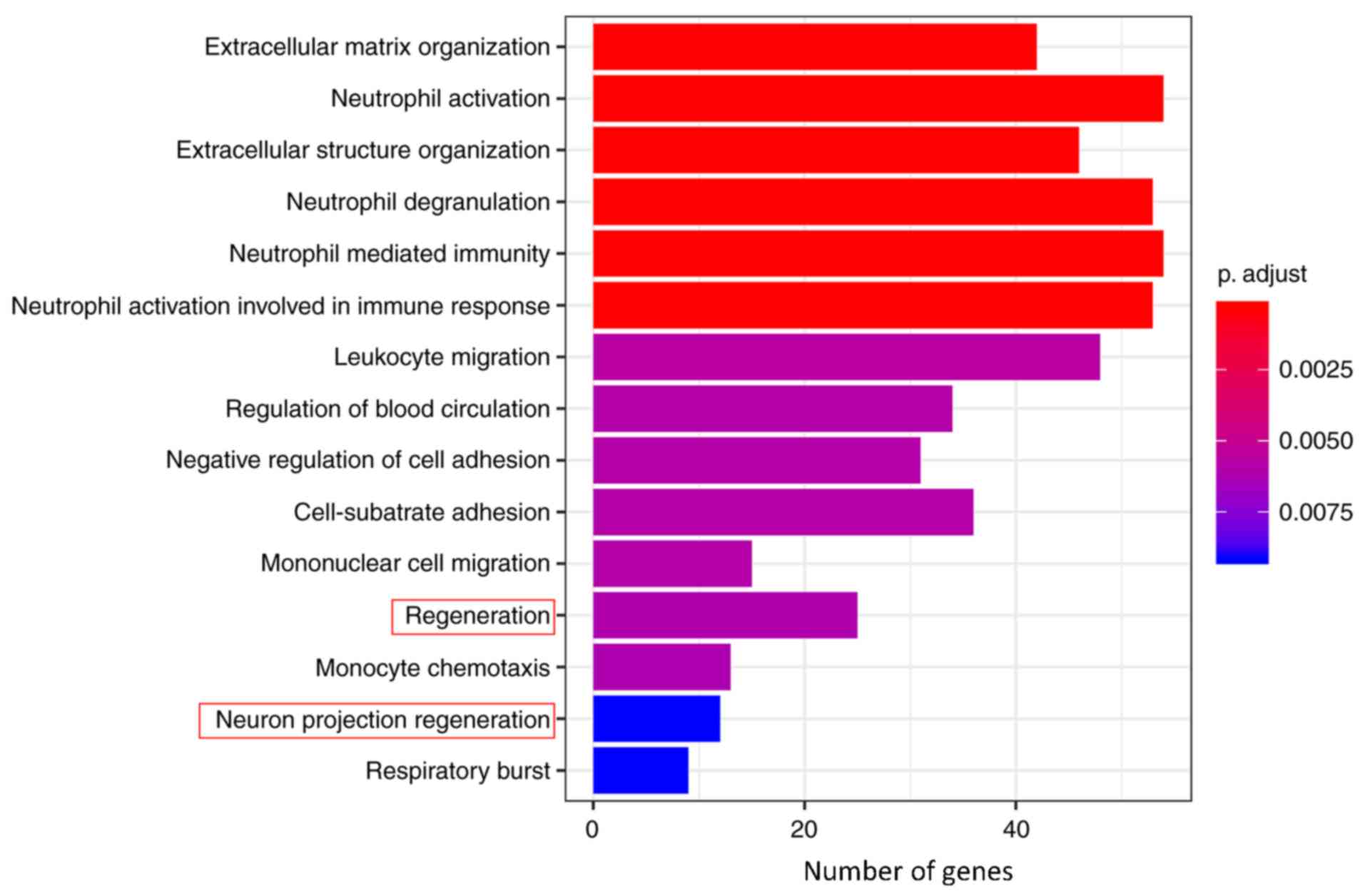
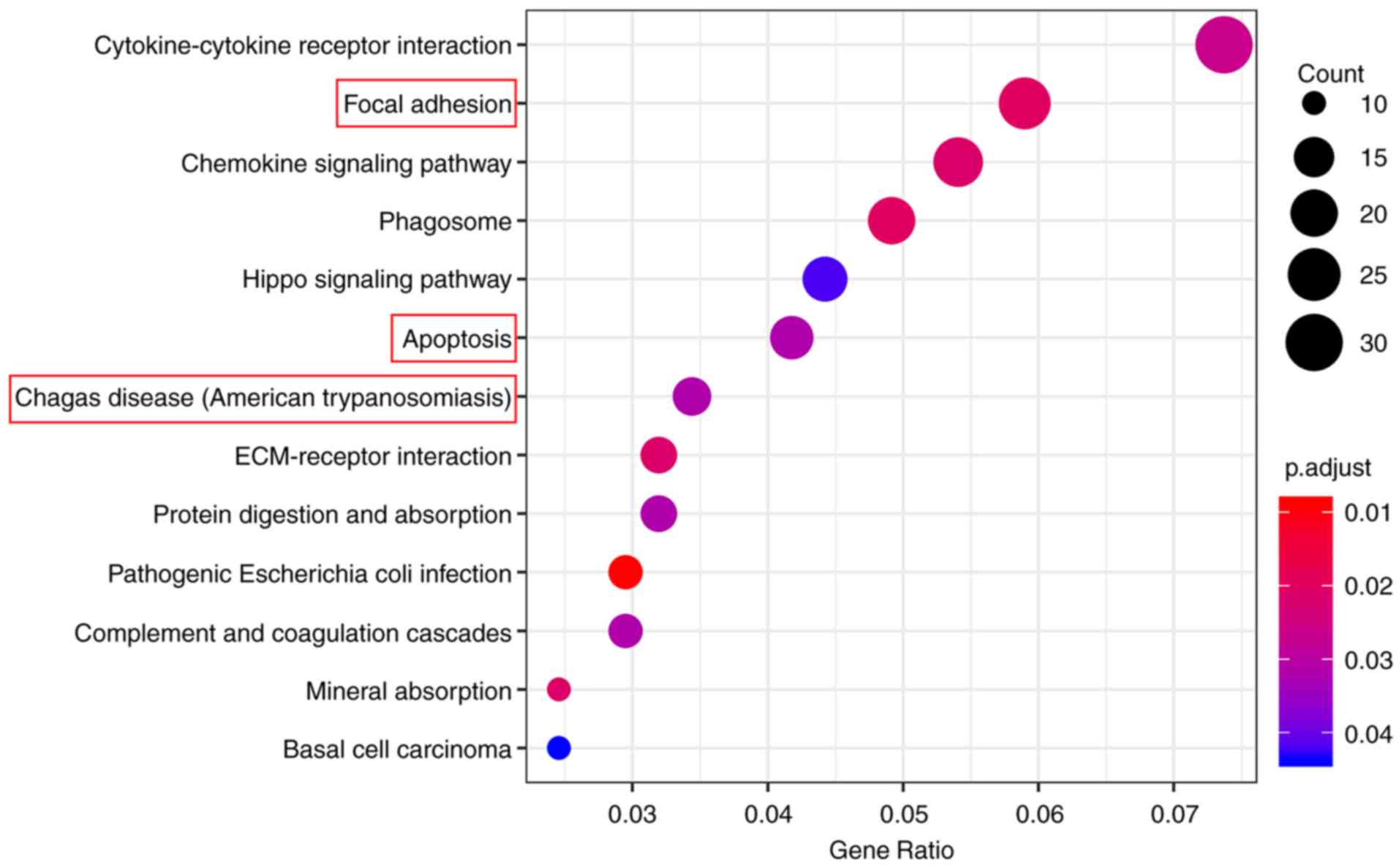
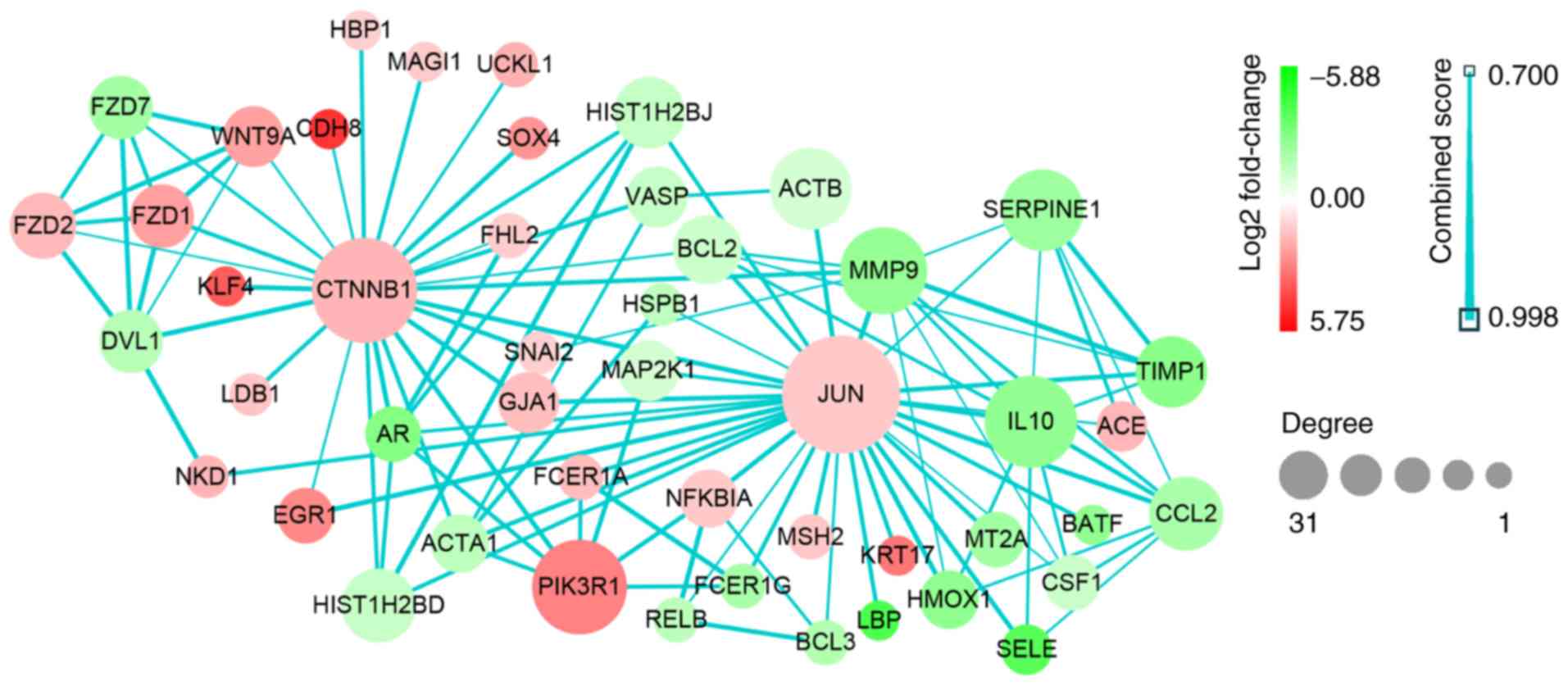
Chronic hypoxia can be observed in the heart under physiological or pathophysiological states, including embryonic development or cyanotic congenital heart disease. The aim of the present study was to examine gene expression profiles of chronically hypoxic myocardium and to explore the pathophysiological mechanisms by which the heart adapts to chronic hypoxia. Raw data from the next‑generation sequencing data set GSE36761 were downloaded from the Gene Expression Omnibus database. The data set comprised 30 specimens, including 8 healthy myocardia and 22 tetralogy of Fallot (TOF) congenital cardiac malformations; only 7 original data sets of healthy myocardia were obtained, and 5/22 TOFs were excluded. Gene ontology (GO) and Kyoto Encyclopedia of Genes and Genomes (KEGG) enrichment analyses of differentially expressed genes (DEGs) were performed. Furthermore, network analysis of DEGs using Cytoscape software based on protein‑protein interaction (PPI) data was also conducted. A total of 1,260 DEGs were selected, of which 926 DEGs were enriched in 83 GO biological process terms, including extracellular matrix organization, regeneration and monocyte chemotaxis. Furthermore, 406 DEGs were enriched in 13 KEGG pathways, including cytokine‑cytokine receptor interaction, focal adhesion and apoptosis. PPI network analysis indicated that six hub genes with correlated degree scores >25 among nodes were identified, including G protein subunit β4, C‑C motif chemokine receptor (CCR)1, CCR2, platelet factor 4, catenin β1 and Jun proto‑oncogene (JUN). Of these, JUN was enriched in GO terms of regeneration and neuron projection regeneration, and in KEGG pathways of focal adhesion, apoptosis and Chagas disease (American trypanosomiasis). The present bioinformatics analysis of these DEGs and hub genes may provide a molecular insight to the role of diverse genes in the pathophysiology of chronically hypoxic myocardium and in myocardial adaptation to chronic hypoxia.
View Figures

Figure 1

Figure 2

Figure 3

Figure 4

Figure 5

Figure 6

Figure 7

View References

1 

Compernolle V, Brusselmans K, Franco D, Moorman A, Dewerchin M, Collen D and Carmeliet P: Cardia bifida, defective heart development and abnormal neural crest migration in embryos lacking hypoxia-inducible factor-1alpha. Cardiovasc Res. 60:569–579. 2003. View Article : Google Scholar : PubMed/NCBI

2 

Burchell HB, Taylor BE, et al: Circulatory adjustments to the hypoxemia of congenital heart disease of the cyanotic type. Circulation. 1:404–414. 1950. View Article : Google Scholar : PubMed/NCBI

3 

Fan X, Ma L, Zhang Z, Li Y, Hao M, Zhao Z, Zhao Y, Liu F, Liu L, Luo X, et al: Associations of high-altitude polycythemia with polymorphisms in PIK3CD and COL4A3 in Tibetan populations. Hum Genomics. 12:372018. View Article : Google Scholar : PubMed/NCBI

4 

Humayun KN and Atiq M: Clinical profile and outcome of cyanotic congenital heart disease in neonates. J Coll Physicians Surg Pak. 18:290–293. 2008.PubMed/NCBI

5 

Rafiee P, Shi Y, Kong X, Pritchard KA Jr, Tweddell JS, Litwin SB, Mussatto K, Jaquiss RD, Su J and Baker JE: Activation of protein kinases in chronically hypoxic infant human and rabbit hearts: Role in cardioprotection. Circulation. 106:239–245. 2002. View Article : Google Scholar : PubMed/NCBI

6 

He S, Liu P, Jian Z, Li J, Zhu Y, Feng Z and Xiao Y: miR-138 protects cardiomyocytes from hypoxia-induced apoptosis via MLK3/JNK/c-jun pathway. Biochem Biophys Res Commun. 441:763–769. 2013. View Article : Google Scholar : PubMed/NCBI

7 

He S, Liu S, Wu X, Xin M, Ding S, Xin D, Ouyang H and Zhang J: Protective role of downregulated MLK3 in myocardial adaptation to chronic hypoxia. J Physiol Biochem. 73:371–380. 2016. View Article : Google Scholar : PubMed/NCBI

8 

Liu B, Zhang HG, Zhu Y, Jiang YH, Luo GP, Tang FQ, Jian Z and Xiao YB: Cardiac resident macrophages are involved in hypoxiainduced postnatal cardiomyocyte proliferation. Mol Med Rep. 15:3541–3548. 2017. View Article : Google Scholar : PubMed/NCBI

9 

Laflamme MA and Murry CE: Heart regeneration. Nature. 473:326–335. 2011. View Article : Google Scholar : PubMed/NCBI

10 

Churko JM, Mantalas GL, Snyder MP and Wu JC: Overview of high throughput sequencing technologies to elucidate molecular pathways in cardiovascular diseases. Circ Res. 112:1613–1623. 2013. View Article : Google Scholar : PubMed/NCBI

11 

Manzoni C, Kia DA, Vandrovcova J, Hardy J, Wood NW, Lewis PA and Ferrari R: Genome, transcriptome and proteome: The rise of omics data and their integration in biomedical sciences. Brief Bioinform. 19:286–302. 2018. View Article : Google Scholar : PubMed/NCBI

12 

Grunert M, Dorn C, Schueler M, Dunkel I, Schlesinger J, Mebus S, Alexi-Meskishvili V, Perrot A, Wassilew K, Timmermann B, et al: Rare and private variations in neural crest, apoptosis and sarcomere genes define the polygenic background of isolated Tetralogy of Fallot. Hum Mol Genet. 23:3115–3128. 2014. View Article : Google Scholar : PubMed/NCBI

13 

Ghorbel MT, Cherif M, Jenkins E, Mokhtari A, Kenny D, Angelini GD and Caputo M: Transcriptomic analysis of patients with tetralogy of Fallot reveals the effect of chronic hypoxia on myocardial gene expression. J Thorac Cardiovasc Surg. 140:337–345.e26. 2010. View Article : Google Scholar : PubMed/NCBI

14 

Ahmed M, Nguyen HQ, Hwang JS, Zada S, Lai TH, Kang SS and Kim DR: Systematic characterization of autophagy-related genes during the adipocyte differentiation using public-access data. Oncotarget. 9:15526–15541. 2018. View Article : Google Scholar : PubMed/NCBI

15 

Ashburner M, Ball CA, Blake JA, Botstein D, Butler H, Cherry JM, Davis AP, Dolinski K, Dwight SS, Eppig JT, et al: Gene ontology: Tool for the unification of biology. The Gene Ontology Consortium. Nat Genet. 25:25–29. 2000. View Article : Google Scholar : PubMed/NCBI

16 

Kanehisa M and Goto S: KEGG: Kyoto encyclopedia of genes and genomes. Nucleic Acids Res. 28:27–30. 2000. View Article : Google Scholar : PubMed/NCBI

17 

Yu G, Wang LG, Han Y and He QY: clusterProfiler: An R package for comparing biological themes among gene clusters. OMICS. 16:284–287. 2012. View Article : Google Scholar : PubMed/NCBI

18 

Szklarczyk D, Franceschini A, Wyder S, Forslund K, Heller D, Huerta-Cepas J, Simonovic M, Roth A, Santos A, Tsafou KP, et al: STRING v10: Protein-protein interaction networks, integrated over the tree of life. Nucleic Acids Res. 43:Database Issue. D447–D452. 2015. View Article : Google Scholar : PubMed/NCBI

19 

Roy S, Bhattacharyya DK and Kalita JK: Reconstruction of gene co-expression network from microarray data using local expression patterns. BMC Bioinformatics. 15 (Suppl 7):S102014. View Article : Google Scholar : PubMed/NCBI

20 

Bosco MC, Puppo M, Santangelo C, Anfosso L, Pfeffer U, Fardin P, Battaglia F and Varesio L: Hypoxia modifies the transcriptome of primary human monocytes: Modulation of novel immune-related genes and identification of CC-chemokine ligand 20 as a new hypoxia-inducible gene. J Immunol. 177:1941–1955. 2006. View Article : Google Scholar : PubMed/NCBI

21 

Murdoch C, Muthana M and Lewis CE: Hypoxia regulates macrophage functions in inflammation. J Immunol. 175:6257–6263. 2005. View Article : Google Scholar : PubMed/NCBI

22 

Hoenderdos K, Lodge KM, Hirst RA, Chen C, Palazzo SG, Emerenciana A, Summers C, Angyal A, Porter L, Juss JK, et al: Hypoxia upregulates neutrophil degranulation and potential for tissue injury. Thorax. 71:1030–1038. 2016. View Article : Google Scholar : PubMed/NCBI

23 

Bartels K, Grenz A and Eltzschig HK: Hypoxia and inflammation are two sides of the same coin. Proc Natl Acad Sci USA. 110:18351–18352. 2013. View Article : Google Scholar : PubMed/NCBI

24 

Taylor CT and Colgan SP: Regulation of immunity and inflammation by hypoxia in immunological niches. Nat Rev Immunol. 17:774–785. 2017. View Article : Google Scholar : PubMed/NCBI

25 

Nakada Y, Canseco DC, Thet S, Abdisalaam S, Asaithamby A, Santos CX, Shah AM, Zhang H, Faber JE, Kinter MT, et al: Hypoxia induces heart regeneration in adult mice. Nature. 541:222–227. 2017. View Article : Google Scholar : PubMed/NCBI

26 

Chen CS, Alonso JL, Ostuni E, Whitesides GM and Ingber DE: Cell shape provides global control of focal adhesion assembly. Biochem Biophys Res Commun. 307:355–361. 2003. View Article : Google Scholar : PubMed/NCBI

27 

Zaidel-Bar R, Cohen M, Addadi L and Geiger B: Hierarchical assembly of cell-matrix adhesion complexes. Biochem Soc Trans. 32:416–420. 2004. View Article : Google Scholar : PubMed/NCBI

28 

Vadali K, Cai X and Schaller MD: Focal adhesion kinase: An essential kinase in the regulation of cardiovascular functions. IUBMB Life. 59:709–716. 2007. View Article : Google Scholar : PubMed/NCBI

29 

Seko Y, Takahashi N, Sabe H, Tobe K, Kadowaki T and Nagai R: Hypoxia induces activation and subcellular translocation of focal adhesion kinase (p125(FAK)) in cultured rat cardiac myocytes. Biochem Biophys Res Commun. 262:290–296. 1999. View Article : Google Scholar : PubMed/NCBI

30 

Jung F, Weiland U, Johns RA, Ihling C and Dimmeler S: Chronic hypoxia induces apoptosis in cardiac myocytes: A possible role for Bcl-2-like proteins. Biochem Biophys Res Commun. 286:419–425. 2001. View Article : Google Scholar : PubMed/NCBI

31 

Smrcka AV: G protein β subunits: Central mediators of G protein-coupled receptor signaling. Cell Mol Life Sci. 65:2191–2214. 2008. View Article : Google Scholar : PubMed/NCBI

32 

Ruiz-Velasco V, Ikeda SR and Puhl HL: Cloning, tissue distribution, and functional expression of the human G protein beta 4-subunit. Physiol Genomics. 8:41–50. 2002. View Article : Google Scholar : PubMed/NCBI

33 

Rosskopf D, Nikula C, Manthey I, Joisten M, Frey U, Kohnen S and Siffert W: The human G protein beta4 subunit: Gene structure, expression, Ggamma and effector interaction. FEBS Lett. 544:27–32. 2003. View Article : Google Scholar : PubMed/NCBI

34 

Clapham DE and Neer EJ: G protein beta gamma subunits. Annu Rev Pharmacol Toxicol. 37:167–203. 1997. View Article : Google Scholar : PubMed/NCBI

35 

Adams JW and Brown JH: G-proteins in growth and apoptosis: Lessons from the heart. Oncogene. 20:1626–1634. 2001. View Article : Google Scholar : PubMed/NCBI

36 

Reichel CA, Khandoga A, Anders HJ, Schlondorff D, Luckow B and Krombach F: Chemokine receptors Ccr1, Ccr2, and Ccr5 mediate neutrophil migration to postischemic tissue. J Leukoc Biol. 79:114–122. 2006. View Article : Google Scholar : PubMed/NCBI

37 

Liehn EA, Merx MW, Postea O, Becher S, Djalali-Talab Y, Shagdarsuren E, Kelm M, Zernecke A and Weber C: Ccr1 deficiency reduces inflammatory remodelling and preserves left ventricular function after myocardial infarction. J Cell Mol Med. 12:496–506. 2008. View Article : Google Scholar : PubMed/NCBI

38 

Majmudar MD, Keliher EJ, Heidt T, Leuschner F, Truelove J, Sena BF, Gorbatov R, Iwamoto Y, Dutta P, Wojtkiewicz G, et al: Monocyte-directed RNAi targeting CCR2 improves infarct healing in atherosclerosis-prone mice. Circulation. 127:2038–2046. 2013. View Article : Google Scholar : PubMed/NCBI

39 

Hayasaki T, Kaikita K, Okuma T, Yamamoto E, Kuziel WA, Ogawa H and Takeya M: CC chemokine receptor-2 deficiency attenuates oxidative stress and infarct size caused by myocardial ischemia-reperfusion in mice. Circ J. 70:342–351. 2006. View Article : Google Scholar : PubMed/NCBI

40 

Zhou L, Azfer A, Niu J, Graham S, Choudhury M, Adamski FM, Younce C, Binkley PF and Kolattukudy PE: Monocyte chemoattractant protein-1 induces a novel transcription factor that causes cardiac myocyte apoptosis and ventricular dysfunction. Circ Res. 98:1177–1185. 2006. View Article : Google Scholar : PubMed/NCBI

41 

Gawaz M and Vogel S: Platelets in tissue repair: Control of apoptosis and interactions with regenerative cells. Blood. 122:2550–2554. 2013. View Article : Google Scholar : PubMed/NCBI

42 

Tanaka T, Manome Y, Wen P, Kufe DW and Fine HA: Viral vector-mediated transduction of a modified platelet factor 4 cDNA inhibits angiogenesis and tumor growth. Nat Med. 3:437–442. 1997. View Article : Google Scholar : PubMed/NCBI

43 

Liang P, Cheng SH, Cheng CK, Lau KM, Lin SY, Chow EY, Chan NP, Ip RK, Wong RS and Ng MH: Platelet factor 4 induces cell apoptosis by inhibition of STAT3 via up-regulation of SOCS3 expression in multiple myeloma. Haematologica. 98:288–295. 2013. View Article : Google Scholar : PubMed/NCBI

44 

Deuel TF, Senior RM, Chang D, Griffin GL, Heinrikson RL and Kaiser ET: Platelet factor 4 is chemotactic for neutrophils and monocytes. Proc Natl Acad Sci USA. 78:4584–4587. 1981. View Article : Google Scholar : PubMed/NCBI

45 

Fox JM, Kausar F, Day A, Osborne M, Hussain K, Mueller A, Lin J, Tsuchiya T, Kanegasaki S and Pease JE: CXCL4/Platelet Factor 4 is an agonist of CCR1 and drives human monocyte migration. Sci Rep. 8:94662018. View Article : Google Scholar : PubMed/NCBI

46 

Lam AP and Gottardi CJ: β-catenin signaling: A novel mediator of fibrosis and potential therapeutic target. Curr Opin Rheumatol. 23:562–567. 2011. View Article : Google Scholar : PubMed/NCBI

47 

Bergmann MW: WNT signaling in adult cardiac hypertrophy and remodeling: Lessons learned from cardiac development. Circ Res. 107:1198–1208. 2010. View Article : Google Scholar : PubMed/NCBI

48 

Kaidi A, Williams AC and Paraskeva C: Interaction between beta-catenin and HIF-1 promotes cellular adaptation to hypoxia. Nat Cell Biol. 9:210–217. 2007. View Article : Google Scholar : PubMed/NCBI

49 

Ozhan G and Weidinger G: Wnt/β-catenin signaling in heart regeneration. Cell Regen (Lond). 4:32015.PubMed/NCBI

50 

Meng Q and Xia Y: c-Jun, at the crossroad of the signaling network. Protein Cell. 2:889–898. 2011. View Article : Google Scholar : PubMed/NCBI

51 

Davis RJ: Signal transduction by the JNK group of MAP kinases. Cell. 103:239–252. 2000. View Article : Google Scholar : PubMed/NCBI

52 

Fan M and Chambers TC: Role of mitogen-activated protein kinases in the response of tumor cells to chemotherapy. Drug Resist Updat. 4:253–267. 2001. View Article : Google Scholar : PubMed/NCBI

53 

Zhao Z, Wang J, Tang J, Liu X, Zhong Q, Wang F, Hu W, Yuan Z, Nie C and Wei Y: JNK- and Akt-mediated Puma expression in the apoptosis of cisplatin-resistant ovarian cancer cells. Biochem J. 444:291–301. 2012. View Article : Google Scholar : PubMed/NCBI

54 

Tomicic MT, Meise R, Aasland D, Berte N, Kitzinger R, Kramer OH, Kaina B and Christmann M: Apoptosis induced by temozolomide and nimustine in glioblastoma cells is supported by JNK/c-Jun-mediated induction of the BH3-only protein BIM. Oncotarget. 6:33755–33768. 2015. View Article : Google Scholar : PubMed/NCBI

55 

Katiyar S, Casimiro MC, Dettin L, Ju X, Wagner EF, Tanaka H and Pestell RG: C-jun inhibits mammary apoptosis in vivo. Mol Biol Cell. 21:4264–4274. 2010. View Article : Google Scholar : PubMed/NCBI

56 

Eferl R, Ricci R, Kenner L, Zenz R, David JP, Rath M and Wagner EF: Liver tumor development. c-Jun antagonizes the proapoptotic activity of p53. Cell. 112:181–192. 2003. View Article : Google Scholar : PubMed/NCBI

57 

Ivanov VN, Bhoumik A, Krasilnikov M, Raz R, Owen-Schaub LB, Levy D, Horvath CM and Ronai Z: Cooperation between STAT3 and c-jun suppresses Fas transcription. Mol Cell. 7:517–528. 2001. View Article : Google Scholar : PubMed/NCBI

58 

Hettinger K, Vikhanskaya F, Poh MK, Lee MK, de Belle I, Zhang JT, Reddy SA and Sabapathy K: c-Jun promotes cellular survival by suppression of PTEN. Cell Death Differ. 14:218–229. 2007. View Article : Google Scholar : PubMed/NCBI

59 

Wisdom R, Johnson RS and Moore C: c-Jun regulates cell cycle progression and apoptosis by distinct mechanisms. EMBO J. 18:188–197. 1999. View Article : Google Scholar : PubMed/NCBI

60 

Schreiber M, Kolbus A, Piu F, Szabowski A, Möhle-Steinlein U, Tian J, Karin M, Angel P and Wagner EF: Control of cell cycle progression by c-Jun is p53 dependent. Genes Dev. 13:607–619. 1999. View Article : Google Scholar : PubMed/NCBI

Related Articles

  • Abstract
  • View
  • Download
  • Twitter
Copy and paste a formatted citation
Spandidos Publications style
Wu F, Gao F, He S and Xiao Y: Identification of hub genes in chronically hypoxic myocardium using bioinformatics analysis. Mol Med Rep 19: 3871-3881, 2019.
APA
Wu, F., Gao, F., He, S., & Xiao, Y. (2019). Identification of hub genes in chronically hypoxic myocardium using bioinformatics analysis. Molecular Medicine Reports, 19, 3871-3881. https://doi.org/10.3892/mmr.2019.10001
MLA
Wu, F., Gao, F., He, S., Xiao, Y."Identification of hub genes in chronically hypoxic myocardium using bioinformatics analysis". Molecular Medicine Reports 19.5 (2019): 3871-3881.
Chicago
Wu, F., Gao, F., He, S., Xiao, Y."Identification of hub genes in chronically hypoxic myocardium using bioinformatics analysis". Molecular Medicine Reports 19, no. 5 (2019): 3871-3881. https://doi.org/10.3892/mmr.2019.10001
Copy and paste a formatted citation
x
Spandidos Publications style
Wu F, Gao F, He S and Xiao Y: Identification of hub genes in chronically hypoxic myocardium using bioinformatics analysis. Mol Med Rep 19: 3871-3881, 2019.
APA
Wu, F., Gao, F., He, S., & Xiao, Y. (2019). Identification of hub genes in chronically hypoxic myocardium using bioinformatics analysis. Molecular Medicine Reports, 19, 3871-3881. https://doi.org/10.3892/mmr.2019.10001
MLA
Wu, F., Gao, F., He, S., Xiao, Y."Identification of hub genes in chronically hypoxic myocardium using bioinformatics analysis". Molecular Medicine Reports 19.5 (2019): 3871-3881.
Chicago
Wu, F., Gao, F., He, S., Xiao, Y."Identification of hub genes in chronically hypoxic myocardium using bioinformatics analysis". Molecular Medicine Reports 19, no. 5 (2019): 3871-3881. https://doi.org/10.3892/mmr.2019.10001
Follow us
  • Twitter
  • LinkedIn
  • Facebook
About
  • Spandidos Publications
  • Careers
  • Cookie Policy
  • Privacy Policy
How can we help?
  • Help
  • Live Chat
  • Contact
  • Email to our Support Team