Spandidos Publications Logo
  • About
    • About Spandidos
    • Aims and Scopes
    • Abstracting and Indexing
    • Editorial Policies
    • Reprints and Permissions
    • Job Opportunities
    • Terms and Conditions
    • Contact
  • Journals
    • All Journals
    • Oncology Letters
      • Oncology Letters
      • Information for Authors
      • Editorial Policies
      • Editorial Board
      • Aims and Scope
      • Abstracting and Indexing
      • Bibliographic Information
      • Archive
    • International Journal of Oncology
      • International Journal of Oncology
      • Information for Authors
      • Editorial Policies
      • Editorial Board
      • Aims and Scope
      • Abstracting and Indexing
      • Bibliographic Information
      • Archive
    • Molecular and Clinical Oncology
      • Molecular and Clinical Oncology
      • Information for Authors
      • Editorial Policies
      • Editorial Board
      • Aims and Scope
      • Abstracting and Indexing
      • Bibliographic Information
      • Archive
    • Experimental and Therapeutic Medicine
      • Experimental and Therapeutic Medicine
      • Information for Authors
      • Editorial Policies
      • Editorial Board
      • Aims and Scope
      • Abstracting and Indexing
      • Bibliographic Information
      • Archive
    • International Journal of Molecular Medicine
      • International Journal of Molecular Medicine
      • Information for Authors
      • Editorial Policies
      • Editorial Board
      • Aims and Scope
      • Abstracting and Indexing
      • Bibliographic Information
      • Archive
    • Biomedical Reports
      • Biomedical Reports
      • Information for Authors
      • Editorial Policies
      • Editorial Board
      • Aims and Scope
      • Abstracting and Indexing
      • Bibliographic Information
      • Archive
    • Oncology Reports
      • Oncology Reports
      • Information for Authors
      • Editorial Policies
      • Editorial Board
      • Aims and Scope
      • Abstracting and Indexing
      • Bibliographic Information
      • Archive
    • Molecular Medicine Reports
      • Molecular Medicine Reports
      • Information for Authors
      • Editorial Policies
      • Editorial Board
      • Aims and Scope
      • Abstracting and Indexing
      • Bibliographic Information
      • Archive
    • World Academy of Sciences Journal
      • World Academy of Sciences Journal
      • Information for Authors
      • Editorial Policies
      • Editorial Board
      • Aims and Scope
      • Abstracting and Indexing
      • Bibliographic Information
      • Archive
    • International Journal of Functional Nutrition
      • International Journal of Functional Nutrition
      • Information for Authors
      • Editorial Policies
      • Editorial Board
      • Aims and Scope
      • Abstracting and Indexing
      • Bibliographic Information
      • Archive
    • International Journal of Epigenetics
      • International Journal of Epigenetics
      • Information for Authors
      • Editorial Policies
      • Editorial Board
      • Aims and Scope
      • Abstracting and Indexing
      • Bibliographic Information
      • Archive
    • Medicine International
      • Medicine International
      • Information for Authors
      • Editorial Policies
      • Editorial Board
      • Aims and Scope
      • Abstracting and Indexing
      • Bibliographic Information
      • Archive
  • Articles
  • Information
    • Information for Authors
    • Information for Reviewers
    • Information for Librarians
    • Information for Advertisers
    • Conferences
  • Language Editing
Spandidos Publications Logo
  • About
    • About Spandidos
    • Aims and Scopes
    • Abstracting and Indexing
    • Editorial Policies
    • Reprints and Permissions
    • Job Opportunities
    • Terms and Conditions
    • Contact
  • Journals
    • All Journals
    • Biomedical Reports
      • Information for Authors
      • Editorial Policies
      • Editorial Board
      • Aims and Scope
      • Abstracting and Indexing
      • Bibliographic Information
      • Archive
    • Experimental and Therapeutic Medicine
      • Information for Authors
      • Editorial Policies
      • Editorial Board
      • Aims and Scope
      • Abstracting and Indexing
      • Bibliographic Information
      • Archive
    • International Journal of Epigenetics
      • Information for Authors
      • Editorial Policies
      • Editorial Board
      • Aims and Scope
      • Abstracting and Indexing
      • Bibliographic Information
      • Archive
    • International Journal of Functional Nutrition
      • Information for Authors
      • Editorial Policies
      • Editorial Board
      • Aims and Scope
      • Abstracting and Indexing
      • Bibliographic Information
      • Archive
    • International Journal of Molecular Medicine
      • Information for Authors
      • Editorial Policies
      • Editorial Board
      • Aims and Scope
      • Abstracting and Indexing
      • Bibliographic Information
      • Archive
    • International Journal of Oncology
      • Information for Authors
      • Editorial Policies
      • Editorial Board
      • Aims and Scope
      • Abstracting and Indexing
      • Bibliographic Information
      • Archive
    • Medicine International
      • Information for Authors
      • Editorial Policies
      • Editorial Board
      • Aims and Scope
      • Abstracting and Indexing
      • Bibliographic Information
      • Archive
    • Molecular and Clinical Oncology
      • Information for Authors
      • Editorial Policies
      • Editorial Board
      • Aims and Scope
      • Abstracting and Indexing
      • Bibliographic Information
      • Archive
    • Molecular Medicine Reports
      • Information for Authors
      • Editorial Policies
      • Editorial Board
      • Aims and Scope
      • Abstracting and Indexing
      • Bibliographic Information
      • Archive
    • Oncology Letters
      • Information for Authors
      • Editorial Policies
      • Editorial Board
      • Aims and Scope
      • Abstracting and Indexing
      • Bibliographic Information
      • Archive
    • Oncology Reports
      • Information for Authors
      • Editorial Policies
      • Editorial Board
      • Aims and Scope
      • Abstracting and Indexing
      • Bibliographic Information
      • Archive
    • World Academy of Sciences Journal
      • Information for Authors
      • Editorial Policies
      • Editorial Board
      • Aims and Scope
      • Abstracting and Indexing
      • Bibliographic Information
      • Archive
  • Articles
  • Information
    • For Authors
    • For Reviewers
    • For Librarians
    • For Advertisers
    • Conferences
  • Language Editing
Login Register Submit
  • This site uses cookies
  • You can change your cookie settings at any time by following the instructions in our Cookie Policy. To find out more, you may read our Privacy Policy.

    I agree
Search articles by DOI, keyword, author or affiliation
Search
Advanced Search
presentation
Molecular Medicine Reports
Join Editorial Board Propose a Special Issue
Print ISSN: 1791-2997 Online ISSN: 1791-3004
Journal Cover
May-2019 Volume 19 Issue 5

Full Size Image

Sign up for eToc alerts
Recommend to Library

Journals

International Journal of Molecular Medicine

International Journal of Molecular Medicine

International Journal of Molecular Medicine is an international journal devoted to molecular mechanisms of human disease.

International Journal of Oncology

International Journal of Oncology

International Journal of Oncology is an international journal devoted to oncology research and cancer treatment.

Molecular Medicine Reports

Molecular Medicine Reports

Covers molecular medicine topics such as pharmacology, pathology, genetics, neuroscience, infectious diseases, molecular cardiology, and molecular surgery.

Oncology Reports

Oncology Reports

Oncology Reports is an international journal devoted to fundamental and applied research in Oncology.

Experimental and Therapeutic Medicine

Experimental and Therapeutic Medicine

Experimental and Therapeutic Medicine is an international journal devoted to laboratory and clinical medicine.

Oncology Letters

Oncology Letters

Oncology Letters is an international journal devoted to Experimental and Clinical Oncology.

Biomedical Reports

Biomedical Reports

Explores a wide range of biological and medical fields, including pharmacology, genetics, microbiology, neuroscience, and molecular cardiology.

Molecular and Clinical Oncology

Molecular and Clinical Oncology

International journal addressing all aspects of oncology research, from tumorigenesis and oncogenes to chemotherapy and metastasis.

World Academy of Sciences Journal

World Academy of Sciences Journal

Multidisciplinary open-access journal spanning biochemistry, genetics, neuroscience, environmental health, and synthetic biology.

International Journal of Functional Nutrition

International Journal of Functional Nutrition

Open-access journal combining biochemistry, pharmacology, immunology, and genetics to advance health through functional nutrition.

International Journal of Epigenetics

International Journal of Epigenetics

Publishes open-access research on using epigenetics to advance understanding and treatment of human disease.

Medicine International

Medicine International

An International Open Access Journal Devoted to General Medicine.

Journal Cover
May-2019 Volume 19 Issue 5

Full Size Image

Sign up for eToc alerts
Recommend to Library

  • Article
  • Citations
    • Cite This Article
    • Download Citation
    • Create Citation Alert
    • Remove Citation Alert
    • Cited By
  • Similar Articles
    • Related Articles (in Spandidos Publications)
    • Similar Articles (Google Scholar)
    • Similar Articles (PubMed)
  • Download PDF
  • Download XML
  • View XML
Article Open Access

Sanguinarine induces apoptosis of human lens epithelial cells by increasing reactive oxygen species via the MAPK signaling pathway

  • Authors:
    • Yue Zhang
    • Wan‑Rong Huang
  • View Affiliations / Copyright

    Affiliations: Tianjin Eye Hospital, Clinical College of Ophthalmology, Tianjin Medical University, Tianjin 300020, P.R. China
    Copyright: © Zhang et al. This is an open access article distributed under the terms of Creative Commons Attribution License.
  • Pages: 4449-4456
    |
    Published online on: March 26, 2019
       https://doi.org/10.3892/mmr.2019.10087
  • Expand metrics +
Metrics: Total Views: 0 (Spandidos Publications: | PMC Statistics: )
Metrics: Total PDF Downloads: 0 (Spandidos Publications: | PMC Statistics: )
Cited By (CrossRef): 0 citations Loading Articles...

This article is mentioned in:


Abstract

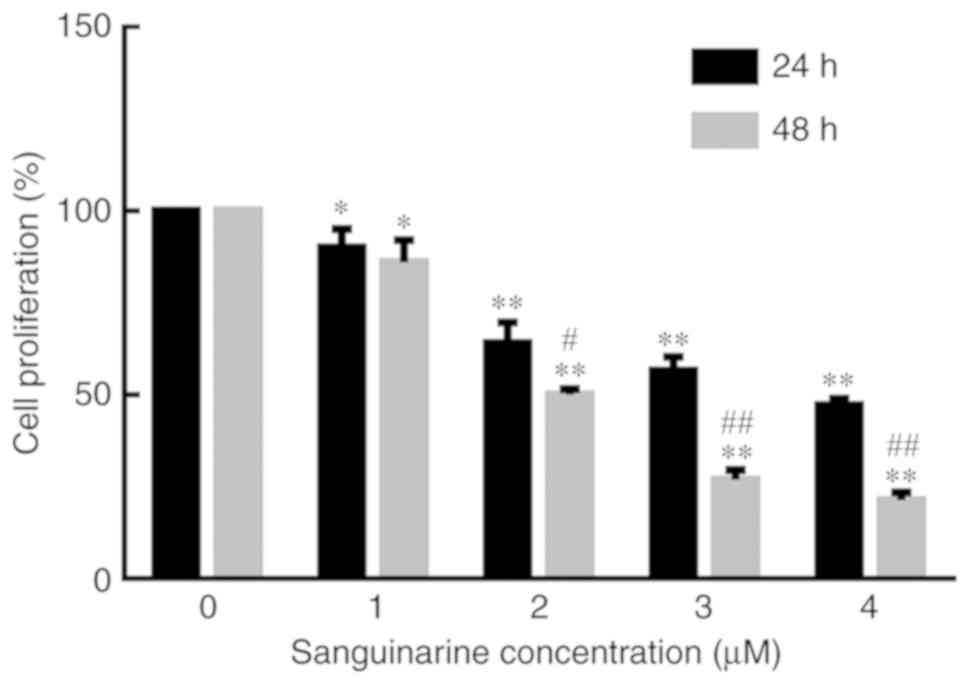
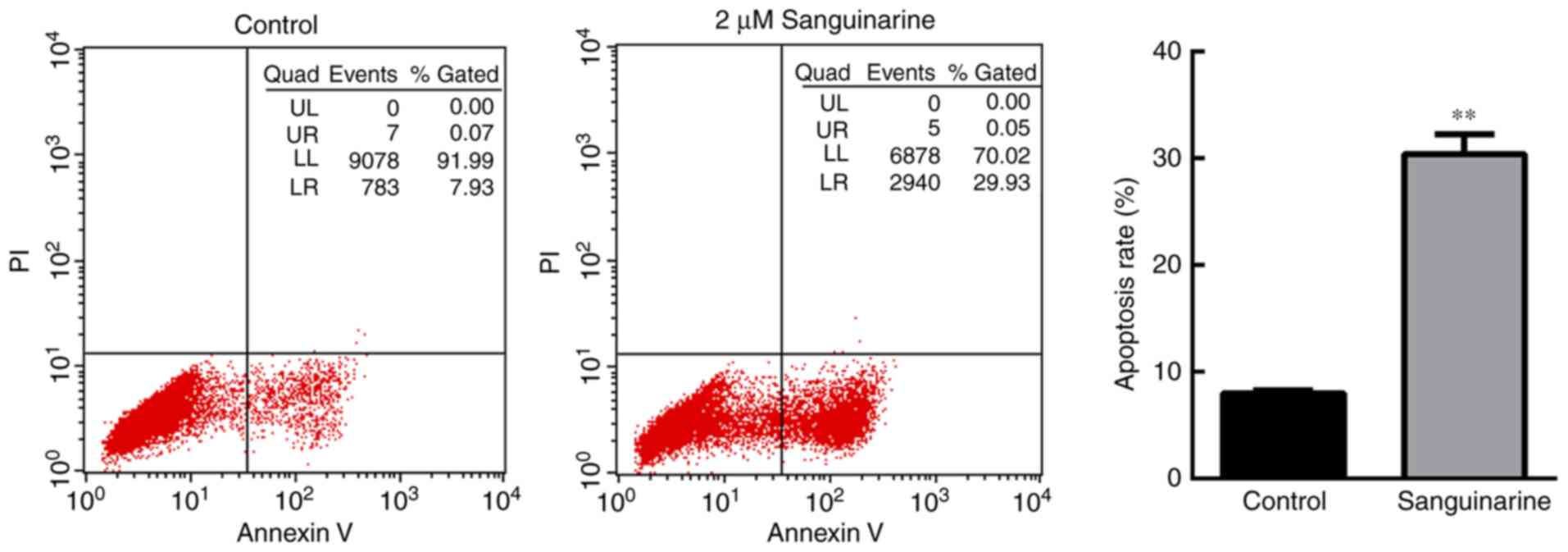
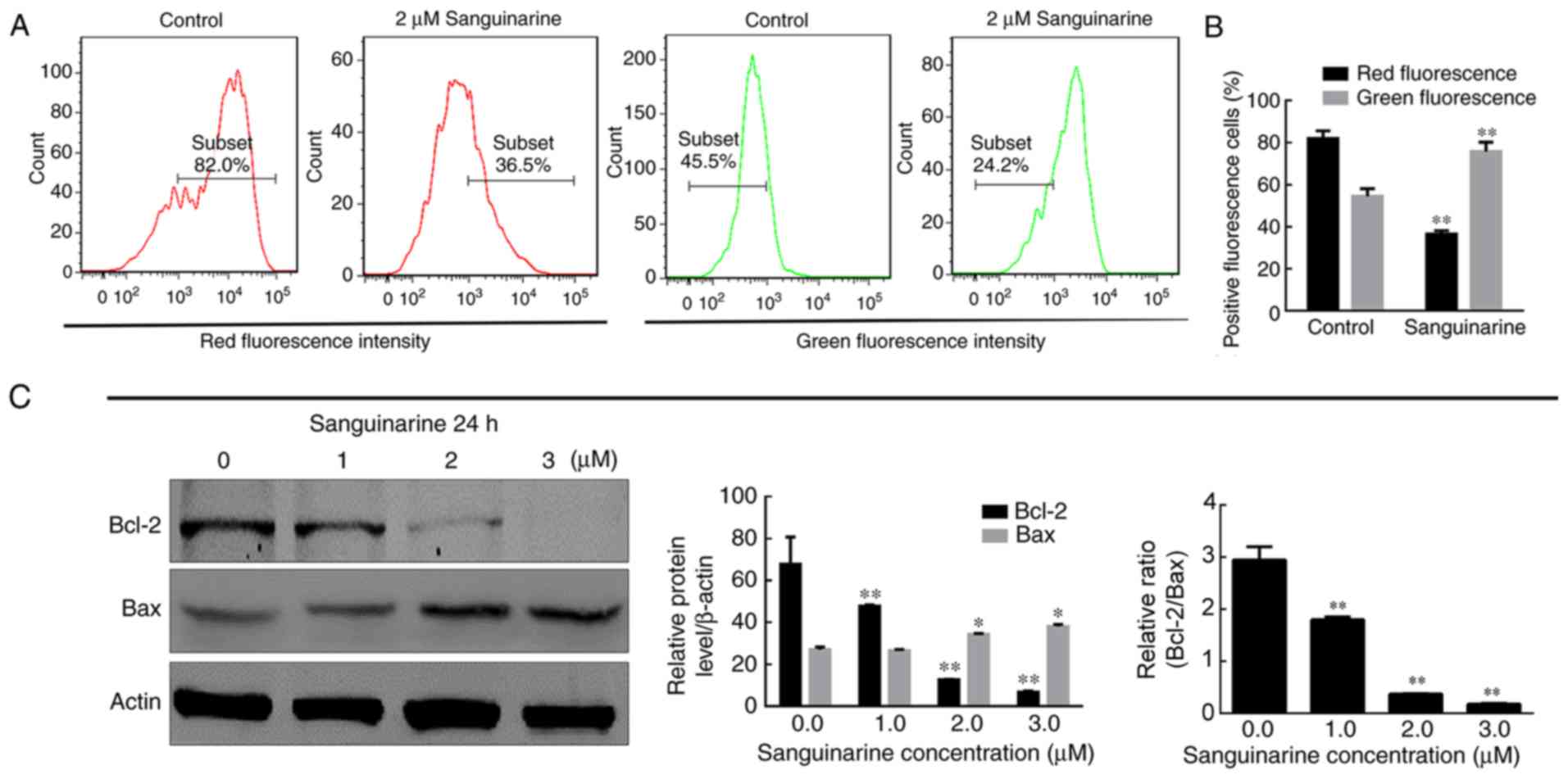
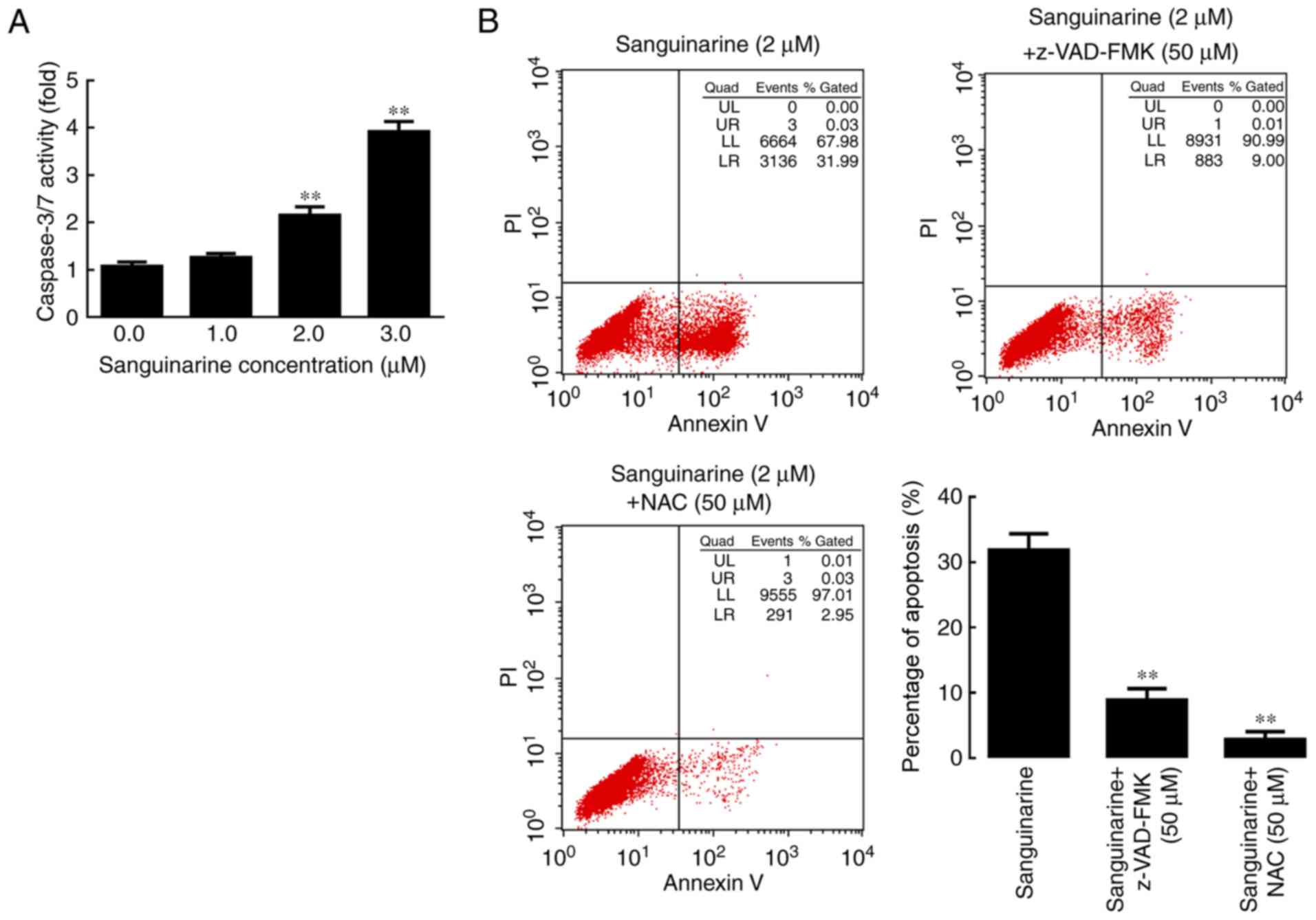
Posterior capsular opacification (PCO) remains a major complication of cataract surgery and is the most common reason for loss of vision. PCO is primarily associated with uncontrolled proliferation of residual human lens epithelial cells (HLEs). Sanguinarine is a type of benzophenanthridine alkaloid extracted from the herbaceous plant Sanguinaria canadensis, which is widely used for its anti‑microbial, anti‑inflammatory, anti‑oxidative and anti‑proliferative properties. However, studies examining the effect of sanguinarine on HLEs and the underlying mechanism are scarce. The present study aimed to investigate the effects of sanguinarine on HLEs. An MTT assay was used to determine the effect of sanguinarine on cell viability. Flow cytometry was used to evaluate cell apoptosis, and the mitochondrial membrane potential and reactive oxygen species (ROS) levels. A caspase 3/7 activity assay was also used to evaluate cell apoptosis, while western blotting was performed to determine protein levels. The results demonstrated that sanguinarine exerted an anti‑proliferative effect by inducing ROS, and caused cell apoptosis via mitochondrial and caspase‑dependent pathways. Treatment with sanguinarine led to the loss of mitochondrial membrane potential. Sanguinarine also significantly increased the phosphorylation levels of c‑Jun N‑terminal kinase and p38, which indicated the involvement of the mitogen‑activated protein kinase signaling pathway. These results suggested that sanguinarine may have a noteworthy pro‑apoptotic effect on HLEs, and may be used as a potential drug for PCO or even cataract prevention.
View Figures

Figure 1

Figure 2

Figure 3

Figure 4

Figure 5

Figure 6

View References

1 

Chang KC and Petrash JM: Aldose reductase mediates transforming growth factor β2 (TGF-β2)-induced migration and epithelial-to-mesenchymal transition of lens-derived epithelial cells. Invest Ophthalmol Vis Sci. 56:4198–4210. 2015. View Article : Google Scholar : PubMed/NCBI

2 

Meacock WR, Spalton DJ, Boyce J and Marshall J: The effect of posterior capsule opacification on visual function. Invest Ophthalmol Vis Sci. 44:4665–4669. 2003. View Article : Google Scholar : PubMed/NCBI

3 

Fernandez V, Fragoso MA, Billotte C, Lamar P, Orozco MA, Dubovy S, Willcox M and Parel JM: Efficacy of various drugs in the prevention of posterior capsule opacification: Experimental study of rabbit eyes. J Cataract Refract Surg. 30:2598–2605. 2004. View Article : Google Scholar : PubMed/NCBI

4 

Jiang YX, Lu Y, Liu TJ, Yang J, Chen Y and Fang YW: Using HSV-TK/GCV suicide gene therapy to inhibit lens epithelial cell proliferation for treatment of posterior capsular opacification. Mol Vis. 17:291–299. 2011.PubMed/NCBI

5 

Rönbeck M, Zetterström C, Wejde G and Kugelberg M: Comparison of posterior capsule opacification development with 3 intraocular lens types: Five-year prospective study. J Cataract Refract Surg. 35:1935–1940. 2009. View Article : Google Scholar : PubMed/NCBI

6 

Huang WR, Zhang Y and Tang X: Shikonin inhibits the proliferation of human lens epithelial cells by inducing apoptosis through ROS and caspase-dependent pathway. Molecules. 19:7785–7797. 2014. View Article : Google Scholar : PubMed/NCBI

7 

Laster LL and Lobene RR: New perspectives on Sanguinaria clinicals: Individual toothpaste and oral rinse testing. J Can Dent Assoc. 56 (Suppl 7):S19–S30. 1990.

8 

Miao F, Yang XJ, Zhou L, Hu HJ, Zheng F, Ding XD, Sun DM, Zhou CD and Sun W: Structural modification of sanguinarine and chelerythrine and their antibacterial activity. Nat Prod Res. 25:863–875. 2011. View Article : Google Scholar : PubMed/NCBI

9 

Slaninová I, Pěnčíková K, Urbanová J, Slanina J and Táborská E: Antitumour activities of sanguinarine and related alkaloids. Phytochem Rev. 13:51–68. 2014. View Article : Google Scholar

10 

Gaziano R, Moroni G, Buè C, Miele MT, Sinibaldi-Vallebona P and Pica F: Antitumor effects of the benzophenanthridine alkaloid sanguinarine: Evidence and perspectives. World J Gastrointest Oncol. 8:30–39. 2016. View Article : Google Scholar : PubMed/NCBI

11 

Godowski KC: Antimicrobial action of sanguinarine. J Clin Den. 1:96–101. 1989.

12 

Achkar IW, Mraiche F, Mohammad RM and Uddin S: Anticancer potential of sanguinarine for various human malignancies. Future Med Chem. 9:933–950. 2017. View Article : Google Scholar : PubMed/NCBI

13 

Wang Q, Dai P, Bao H, Liang P, Wang W, Xing A and Sun J: Anti-inflammatory and neuroprotective effects of sanguinarine following cerebral ischemia in rats. Exp Ther Med. 13:263–268. 2017. View Article : Google Scholar : PubMed/NCBI

14 

Kalogris C, Garulli C, Pietrella L, Gambini V, Pucciarelli S, Lucci C, Tilio M, Zabaleta ME, Bartolacci C, Andreani C, et al: Sanguinarine suppresses basal-like breast cancer growth through dihydrofolate reductase inhibition. Biochem Pharmacol. 90:226–234. 2014. View Article : Google Scholar : PubMed/NCBI

15 

Kuttikrishnan S, Siveen KS, Prabhu KS, Khan AQ, Akhtar S, Mateo JM, Merhi M, Taha R, Omri HE, Mraiche F, et al: Sanguinarine suppresses growth and induces apoptosis in childhood acute lymphoblastic leukemia. Leuk Lymphoma. 6:1–13. 2018.

16 

Gong X, Chen Z, Han Q, Chen C, Jing L, Liu Y, Zhao L, Yao X and Sun X: Sanguinarine triggers intrinsic apoptosis to suppress colorectal cancer growth through disassociation between STRAP and MELK. BMC Cancer. 18:5782018. View Article : Google Scholar : PubMed/NCBI

17 

Vogt A, Tamewitz A, Skoko J, Sikorski RP, Giuliano KA and Lazo JS: The benzo[c]phenanthridine alkaloid, sanguinarine, is a selective, cell-active inhibitor of mitogen-activated protein kinase phosphatase-1. J Biol Chem. 280:19078–19086. 2005. View Article : Google Scholar : PubMed/NCBI

18 

Lee TK, Park C, Jeong SJ, Jeong MJ, Kim GY, Kim WJ and Choi YH: Sanguinarine induces apoptosis of human oral squamous cell carcinoma KB cells via inactivation of the PI3K/Akt signaling pathway. Drug Dev Res. 77:227–240. 2016. View Article : Google Scholar : PubMed/NCBI

19 

Yang J, Fang Z, Wu J, Yin X, Fang Y, Zhao F, Zhu S and Li Y: Construction and application of a lung cancer stem cell model: Antitumor drug screening and molecular mechanism of the inhibitory effects of sanguinarine. Tumour Biol. 37:13871–13883. 2016. View Article : Google Scholar : PubMed/NCBI

20 

Meng YY, Liu Y, Hu ZF, Zhang Y, Ni J, Ma ZG, Liao HH, Wu QQ and Tang QZ: Sanguinarine attenuates lipopolysaccharide-induced inflammation and apoptosis by inhibiting the TLR4/NF-κB pathway in H9c2 cardiomyocytes. Curr Med Sci. 38:204–211. 2018. View Article : Google Scholar : PubMed/NCBI

21 

Nguyen KC, Willmore WG and Tayabali AF: Cadmium telluride quantum dots cause oxidative stress leading to extrinsic and intrinsic apoptosis in hepatocellular carcinoma HepG2 cells. Toxicology. 306:114–123. 2013. View Article : Google Scholar : PubMed/NCBI

22 

Zhang DS, Li YY, Chen XJ, Li YJ, Liu ZY, Xie WJ and Sun ZL: BCL2 promotor methylation and miR-15a/16-1 upregulation is associated with sanguinarine-induced apoptotic death in rat HSC-T6 cells. J Pharmacol Sci. 127:135–144. 2015. View Article : Google Scholar : PubMed/NCBI

23 

He D, Ma X, Chen Y, Cai Y, Ru X, Bruce IC, Xia Q, Shi G and Jin J: Luteolin inhibits pyrogallol-induced apoptosis through the extracellular signal-regulated kinase signaling pathway. FEBS J. 279:1834–1843. 2012. View Article : Google Scholar : PubMed/NCBI

24 

Hsu PC, Huang YT, Tsai ML, Wang YJ, Lin JK and Pan MH: Induction of apoptosis by shikonin through coordinative modulation of the Bcl-2 family, p27, and p53, release of cytochrome c, and sequential activation of caspases in human colorectal carcinoma cells. J Agric Food Chem. 52:6330–6337. 2004. View Article : Google Scholar : PubMed/NCBI

25 

Pradelli LA, Bénéteau M and Ricci JE: Mitochondrial control of caspase-dependent and -independent cell death. Cell Mol Life Sci. 67:1589–1597. 2010. View Article : Google Scholar : PubMed/NCBI

26 

Lakhani SA, Masud A, Kuida K, Porter GA Jr, Booth CJ, Mehal WZ, Inayat I and Flavell RA: Caspases 3 and 7: Key mediators of mitochondrial events of apoptosis. Science. 311:847–851. 2006. View Article : Google Scholar : PubMed/NCBI

27 

Zorov DB, Juhaszova M and Sollott SJ: Mitochondrial reactive oxygen species (ROS) and ROS-induced ROS release. Physiol Rev. 94:909–950. 2014. View Article : Google Scholar : PubMed/NCBI

28 

Fonseca-Silva F, Inacio JD, Canto-Cavalheiro MM and Almeida-Amaral EE: Reactive oxygen species production and mitochondrial dysfunction contribute to quercetin induced death in leishmania amazonensis. PLoS One. 6:e146662011. View Article : Google Scholar : PubMed/NCBI

29 

Sui X, Kong N, Ye L, Han W, Zhou J, Zhang Q, He C and Pan H: p38 and JNK MAPK pathways control the balance of apoptosis and autophagy in response to chemotherapeutic agents. Cancer Lett. 344:174–179. 2014. View Article : Google Scholar : PubMed/NCBI

30 

Wang SY, Stem MS, Oren G, Shtein R and Lichter PR: Patient-centered and visual quality outcomes of premium cataract surgery: A systematic review. Eur J Ophthalmol. 27:387–401. 2017. View Article : Google Scholar : PubMed/NCBI

31 

Awasthi N, Guo S and Wagner BJ: Posterior capsular opacification: A problem reduced but not yet eradicated. Arch Ophthalmol. 127:555–562. 2009. View Article : Google Scholar : PubMed/NCBI

32 

Poyton RO, Ball KA and Castello PR: Mitochondrial generation of free radicals and hypoxic signaling. Trends Endocrinol Metab. 20:332–340. 2009. View Article : Google Scholar : PubMed/NCBI

33 

Ricci JE, Gottlieb RA and Green DR: Caspase-mediated loss of mitochondrial function and generation of reactive oxygen species during apoptosis. J Cell Biol. 160:65–75. 2003. View Article : Google Scholar : PubMed/NCBI

34 

Park SY, Kim DY, Kang JK, Park G and Choi YW: Involvement of activation of the Nrf2/ARE pathway in protection against 6-OHDA-induced SH-SY5Y cell death by α-iso-cubebenol. Neurotoxicology. 44:160–168. 2014. View Article : Google Scholar : PubMed/NCBI

35 

Schumacker PT: Reactive oxygen species in cancer cells: Live by the sword, die by the sword. Cancer Cell. 10:175–176. 2006. View Article : Google Scholar : PubMed/NCBI

36 

Zhang B, Xie QY, Quan Y, Pan XM and Liao DF: Reactive oxygen species induce cell death via Akt signaling in rat osteoblast-like cell line ROS 17/2.8. Toxicol Ind Health. 31:1236–1242. 2013. View Article : Google Scholar : PubMed/NCBI

37 

Zubair H, Khan HY, Sohail A, Azim S, Ullah MF, Ahmad A, Sarkar FH and Hadi SM: Redox cycling of endogenous copper by thymoquinone leads to ROS-mediated DNA breakage and consequent cell death: Putative anticancer mechanism of antioxidants. Cell Death Dis. 4:e6602013. View Article : Google Scholar : PubMed/NCBI

38 

Jeong SY and Seol DW: The role of mitochondria in apoptosis. BMB Rep. 41:11–22. 2008. View Article : Google Scholar : PubMed/NCBI

39 

Kocic G, Tomovic K, Kocic H, Sokolovic D, Djordjevic B, Stojanovic S, Arsic I and Smelcerovic A: Antioxidative, membrane protective and antiapoptotic effects of melatonin, in silico study of physico-chemical profile and efficiency of nanoliposome delivery compared to betaine. RSC Adv. 7:1271–1281. 2017. View Article : Google Scholar

40 

Zhou J and Tang XC: Huperzine A attenuates apoptosis and mitochondria-dependent caspase-3 in rat cortical neurons. FEBS Lett. 526:21–25. 2002. View Article : Google Scholar : PubMed/NCBI

41 

Yuyama K, Yamamoto H, Nishizaki I, Kato T, Sora I and Yamamoto T: Caspase-independent cell death by low concentrations of nitric oxide in PC12 cells: Involvement of cytochrome C oxidase inhibition and the production of reactive oxygen species in mitochondria. J Neurosci Res. 73:351–363. 2003. View Article : Google Scholar : PubMed/NCBI

42 

Zhu JJ, Xu YQ, He JH, Yu HP, Huang CJ, Gao JM, Dong QX, Xuan YX and Li CQ: Human cardiotoxic drugs delivered by soaking and microinjection induce cardiovascular toxicity in zebrafish. J Appl Toxicol. 34:139–148. 2014. View Article : Google Scholar : PubMed/NCBI

43 

Chao JI, Su WC and Liu HF: Baicalein induces cancer cell death and proliferation retardation by the inhibition of CDC2 kinase and survivin associated with opposite role of p38 mitogen-activated protein kinase and AKT. Mol Cancer Ther. 6:3039–3048. 2007. View Article : Google Scholar : PubMed/NCBI

44 

He XQ, Chen R, Yang P, Li AP, Zhou JW and Liu QZ: Biphasic effect of arsenite on cell proliferation and apoptosis is associated with the activation of JNK and ERK1/2 in human embryo lung fibroblast cells. Toxicol Appl Pharmacol. 220:18–24. 2007. View Article : Google Scholar : PubMed/NCBI

Related Articles

  • Abstract
  • View
  • Download
  • Twitter
Copy and paste a formatted citation
Spandidos Publications style
Zhang Y and Huang WR: Sanguinarine induces apoptosis of human lens epithelial cells by increasing reactive oxygen species via the MAPK signaling pathway. Mol Med Rep 19: 4449-4456, 2019.
APA
Zhang, Y., & Huang, W. (2019). Sanguinarine induces apoptosis of human lens epithelial cells by increasing reactive oxygen species via the MAPK signaling pathway. Molecular Medicine Reports, 19, 4449-4456. https://doi.org/10.3892/mmr.2019.10087
MLA
Zhang, Y., Huang, W."Sanguinarine induces apoptosis of human lens epithelial cells by increasing reactive oxygen species via the MAPK signaling pathway". Molecular Medicine Reports 19.5 (2019): 4449-4456.
Chicago
Zhang, Y., Huang, W."Sanguinarine induces apoptosis of human lens epithelial cells by increasing reactive oxygen species via the MAPK signaling pathway". Molecular Medicine Reports 19, no. 5 (2019): 4449-4456. https://doi.org/10.3892/mmr.2019.10087
Copy and paste a formatted citation
x
Spandidos Publications style
Zhang Y and Huang WR: Sanguinarine induces apoptosis of human lens epithelial cells by increasing reactive oxygen species via the MAPK signaling pathway. Mol Med Rep 19: 4449-4456, 2019.
APA
Zhang, Y., & Huang, W. (2019). Sanguinarine induces apoptosis of human lens epithelial cells by increasing reactive oxygen species via the MAPK signaling pathway. Molecular Medicine Reports, 19, 4449-4456. https://doi.org/10.3892/mmr.2019.10087
MLA
Zhang, Y., Huang, W."Sanguinarine induces apoptosis of human lens epithelial cells by increasing reactive oxygen species via the MAPK signaling pathway". Molecular Medicine Reports 19.5 (2019): 4449-4456.
Chicago
Zhang, Y., Huang, W."Sanguinarine induces apoptosis of human lens epithelial cells by increasing reactive oxygen species via the MAPK signaling pathway". Molecular Medicine Reports 19, no. 5 (2019): 4449-4456. https://doi.org/10.3892/mmr.2019.10087
Follow us
  • Twitter
  • LinkedIn
  • Facebook
About
  • Spandidos Publications
  • Careers
  • Cookie Policy
  • Privacy Policy
How can we help?
  • Help
  • Live Chat
  • Contact
  • Email to our Support Team