Spandidos Publications Logo
  • About
    • About Spandidos
    • Aims and Scopes
    • Abstracting and Indexing
    • Editorial Policies
    • Reprints and Permissions
    • Job Opportunities
    • Terms and Conditions
    • Contact
  • Journals
    • All Journals
    • Oncology Letters
      • Oncology Letters
      • Information for Authors
      • Editorial Policies
      • Editorial Board
      • Aims and Scope
      • Abstracting and Indexing
      • Bibliographic Information
      • Archive
    • International Journal of Oncology
      • International Journal of Oncology
      • Information for Authors
      • Editorial Policies
      • Editorial Board
      • Aims and Scope
      • Abstracting and Indexing
      • Bibliographic Information
      • Archive
    • Molecular and Clinical Oncology
      • Molecular and Clinical Oncology
      • Information for Authors
      • Editorial Policies
      • Editorial Board
      • Aims and Scope
      • Abstracting and Indexing
      • Bibliographic Information
      • Archive
    • Experimental and Therapeutic Medicine
      • Experimental and Therapeutic Medicine
      • Information for Authors
      • Editorial Policies
      • Editorial Board
      • Aims and Scope
      • Abstracting and Indexing
      • Bibliographic Information
      • Archive
    • International Journal of Molecular Medicine
      • International Journal of Molecular Medicine
      • Information for Authors
      • Editorial Policies
      • Editorial Board
      • Aims and Scope
      • Abstracting and Indexing
      • Bibliographic Information
      • Archive
    • Biomedical Reports
      • Biomedical Reports
      • Information for Authors
      • Editorial Policies
      • Editorial Board
      • Aims and Scope
      • Abstracting and Indexing
      • Bibliographic Information
      • Archive
    • Oncology Reports
      • Oncology Reports
      • Information for Authors
      • Editorial Policies
      • Editorial Board
      • Aims and Scope
      • Abstracting and Indexing
      • Bibliographic Information
      • Archive
    • Molecular Medicine Reports
      • Molecular Medicine Reports
      • Information for Authors
      • Editorial Policies
      • Editorial Board
      • Aims and Scope
      • Abstracting and Indexing
      • Bibliographic Information
      • Archive
    • World Academy of Sciences Journal
      • World Academy of Sciences Journal
      • Information for Authors
      • Editorial Policies
      • Editorial Board
      • Aims and Scope
      • Abstracting and Indexing
      • Bibliographic Information
      • Archive
    • International Journal of Functional Nutrition
      • International Journal of Functional Nutrition
      • Information for Authors
      • Editorial Policies
      • Editorial Board
      • Aims and Scope
      • Abstracting and Indexing
      • Bibliographic Information
      • Archive
    • International Journal of Epigenetics
      • International Journal of Epigenetics
      • Information for Authors
      • Editorial Policies
      • Editorial Board
      • Aims and Scope
      • Abstracting and Indexing
      • Bibliographic Information
      • Archive
    • Medicine International
      • Medicine International
      • Information for Authors
      • Editorial Policies
      • Editorial Board
      • Aims and Scope
      • Abstracting and Indexing
      • Bibliographic Information
      • Archive
  • Articles
  • Information
    • Information for Authors
    • Information for Reviewers
    • Information for Librarians
    • Information for Advertisers
    • Conferences
  • Language Editing
Spandidos Publications Logo
  • About
    • About Spandidos
    • Aims and Scopes
    • Abstracting and Indexing
    • Editorial Policies
    • Reprints and Permissions
    • Job Opportunities
    • Terms and Conditions
    • Contact
  • Journals
    • All Journals
    • Biomedical Reports
      • Information for Authors
      • Editorial Policies
      • Editorial Board
      • Aims and Scope
      • Abstracting and Indexing
      • Bibliographic Information
      • Archive
    • Experimental and Therapeutic Medicine
      • Information for Authors
      • Editorial Policies
      • Editorial Board
      • Aims and Scope
      • Abstracting and Indexing
      • Bibliographic Information
      • Archive
    • International Journal of Epigenetics
      • Information for Authors
      • Editorial Policies
      • Editorial Board
      • Aims and Scope
      • Abstracting and Indexing
      • Bibliographic Information
      • Archive
    • International Journal of Functional Nutrition
      • Information for Authors
      • Editorial Policies
      • Editorial Board
      • Aims and Scope
      • Abstracting and Indexing
      • Bibliographic Information
      • Archive
    • International Journal of Molecular Medicine
      • Information for Authors
      • Editorial Policies
      • Editorial Board
      • Aims and Scope
      • Abstracting and Indexing
      • Bibliographic Information
      • Archive
    • International Journal of Oncology
      • Information for Authors
      • Editorial Policies
      • Editorial Board
      • Aims and Scope
      • Abstracting and Indexing
      • Bibliographic Information
      • Archive
    • Medicine International
      • Information for Authors
      • Editorial Policies
      • Editorial Board
      • Aims and Scope
      • Abstracting and Indexing
      • Bibliographic Information
      • Archive
    • Molecular and Clinical Oncology
      • Information for Authors
      • Editorial Policies
      • Editorial Board
      • Aims and Scope
      • Abstracting and Indexing
      • Bibliographic Information
      • Archive
    • Molecular Medicine Reports
      • Information for Authors
      • Editorial Policies
      • Editorial Board
      • Aims and Scope
      • Abstracting and Indexing
      • Bibliographic Information
      • Archive
    • Oncology Letters
      • Information for Authors
      • Editorial Policies
      • Editorial Board
      • Aims and Scope
      • Abstracting and Indexing
      • Bibliographic Information
      • Archive
    • Oncology Reports
      • Information for Authors
      • Editorial Policies
      • Editorial Board
      • Aims and Scope
      • Abstracting and Indexing
      • Bibliographic Information
      • Archive
    • World Academy of Sciences Journal
      • Information for Authors
      • Editorial Policies
      • Editorial Board
      • Aims and Scope
      • Abstracting and Indexing
      • Bibliographic Information
      • Archive
  • Articles
  • Information
    • For Authors
    • For Reviewers
    • For Librarians
    • For Advertisers
    • Conferences
  • Language Editing
Login Register Submit
  • This site uses cookies
  • You can change your cookie settings at any time by following the instructions in our Cookie Policy. To find out more, you may read our Privacy Policy.

    I agree
Search articles by DOI, keyword, author or affiliation
Search
Advanced Search
presentation
Molecular Medicine Reports
Join Editorial Board Propose a Special Issue
Print ISSN: 1791-2997 Online ISSN: 1791-3004
Journal Cover
June-2019 Volume 19 Issue 6

Full Size Image

Sign up for eToc alerts
Recommend to Library

Journals

International Journal of Molecular Medicine

International Journal of Molecular Medicine

International Journal of Molecular Medicine is an international journal devoted to molecular mechanisms of human disease.

International Journal of Oncology

International Journal of Oncology

International Journal of Oncology is an international journal devoted to oncology research and cancer treatment.

Molecular Medicine Reports

Molecular Medicine Reports

Covers molecular medicine topics such as pharmacology, pathology, genetics, neuroscience, infectious diseases, molecular cardiology, and molecular surgery.

Oncology Reports

Oncology Reports

Oncology Reports is an international journal devoted to fundamental and applied research in Oncology.

Experimental and Therapeutic Medicine

Experimental and Therapeutic Medicine

Experimental and Therapeutic Medicine is an international journal devoted to laboratory and clinical medicine.

Oncology Letters

Oncology Letters

Oncology Letters is an international journal devoted to Experimental and Clinical Oncology.

Biomedical Reports

Biomedical Reports

Explores a wide range of biological and medical fields, including pharmacology, genetics, microbiology, neuroscience, and molecular cardiology.

Molecular and Clinical Oncology

Molecular and Clinical Oncology

International journal addressing all aspects of oncology research, from tumorigenesis and oncogenes to chemotherapy and metastasis.

World Academy of Sciences Journal

World Academy of Sciences Journal

Multidisciplinary open-access journal spanning biochemistry, genetics, neuroscience, environmental health, and synthetic biology.

International Journal of Functional Nutrition

International Journal of Functional Nutrition

Open-access journal combining biochemistry, pharmacology, immunology, and genetics to advance health through functional nutrition.

International Journal of Epigenetics

International Journal of Epigenetics

Publishes open-access research on using epigenetics to advance understanding and treatment of human disease.

Medicine International

Medicine International

An International Open Access Journal Devoted to General Medicine.

Journal Cover
June-2019 Volume 19 Issue 6

Full Size Image

Sign up for eToc alerts
Recommend to Library

  • Article
  • Citations
    • Cite This Article
    • Download Citation
    • Create Citation Alert
    • Remove Citation Alert
    • Cited By
  • Similar Articles
    • Related Articles (in Spandidos Publications)
    • Similar Articles (Google Scholar)
    • Similar Articles (PubMed)
  • Download PDF
  • Download XML
  • View XML
Article Open Access

Overexpression of COX6B1 protects against I/R‑induced neuronal injury in rat hippocampal neurons

  • Authors:
    • Shan Yang
    • Peng Wu
    • Jianwen Xiao
    • Li Jiang
  • View Affiliations / Copyright

    Affiliations: Department of Pediatrics, Nanchuan People's Hospital Affiliated to Chongqing Medical University, Chongqing 408400, P.R. China, Department of Neurology, Children's Hospital Affiliated to Chongqing Medical University, Chongqing 400014, P.R. China, Department of Hematology, Children's Hospital Affiliated to Chongqing Medical University, Chongqing 400014, P.R. China
    Copyright: © Yang et al. This is an open access article distributed under the terms of Creative Commons Attribution License.
  • Pages: 4852-4862
    |
    Published online on: April 10, 2019
       https://doi.org/10.3892/mmr.2019.10144
  • Expand metrics +
Metrics: Total Views: 0 (Spandidos Publications: | PMC Statistics: )
Metrics: Total PDF Downloads: 0 (Spandidos Publications: | PMC Statistics: )
Cited By (CrossRef): 0 citations Loading Articles...

This article is mentioned in:


Abstract

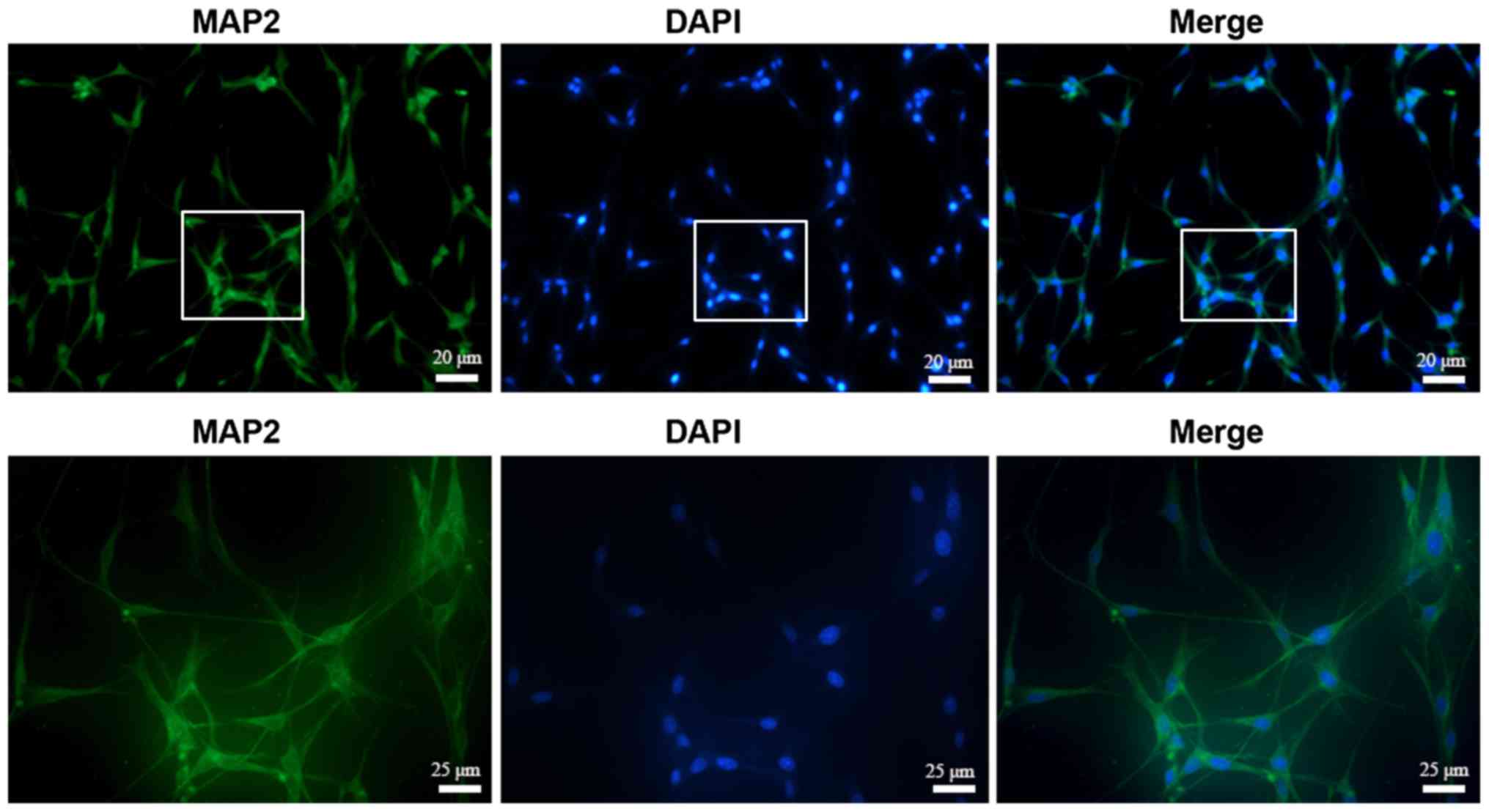
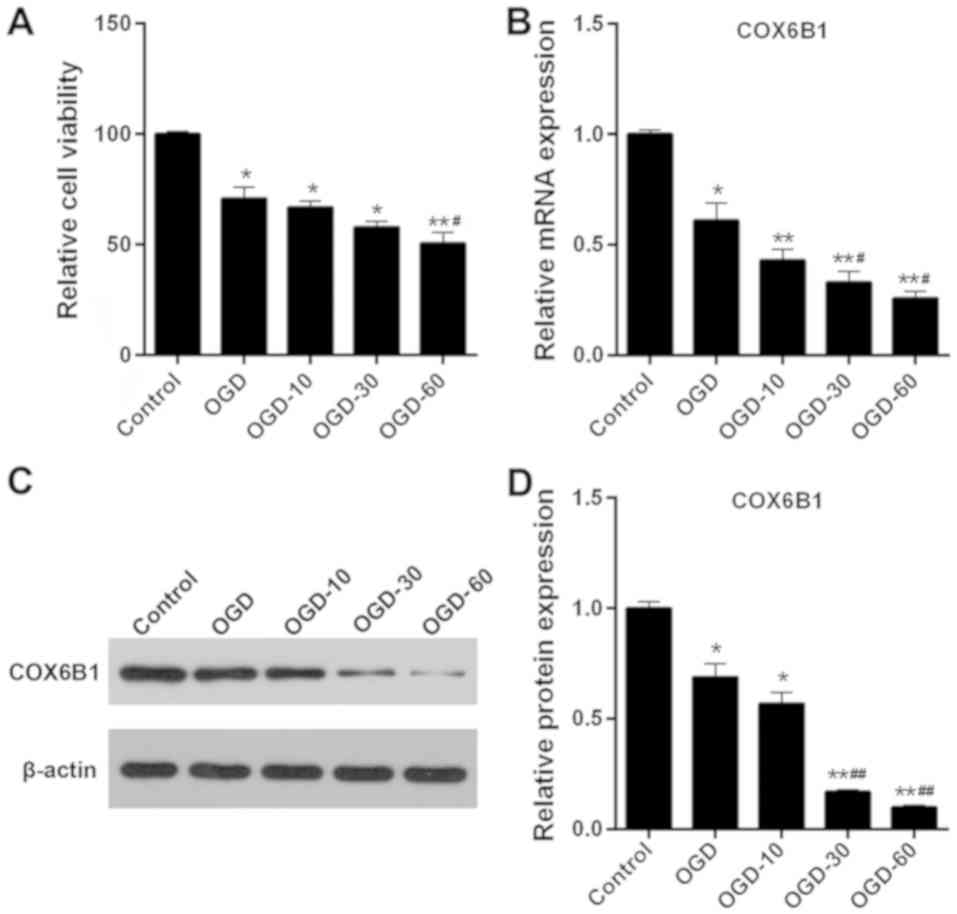
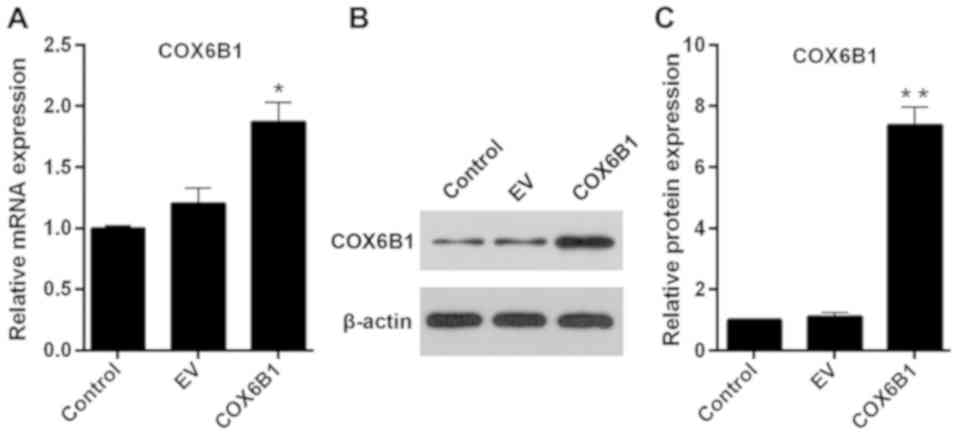
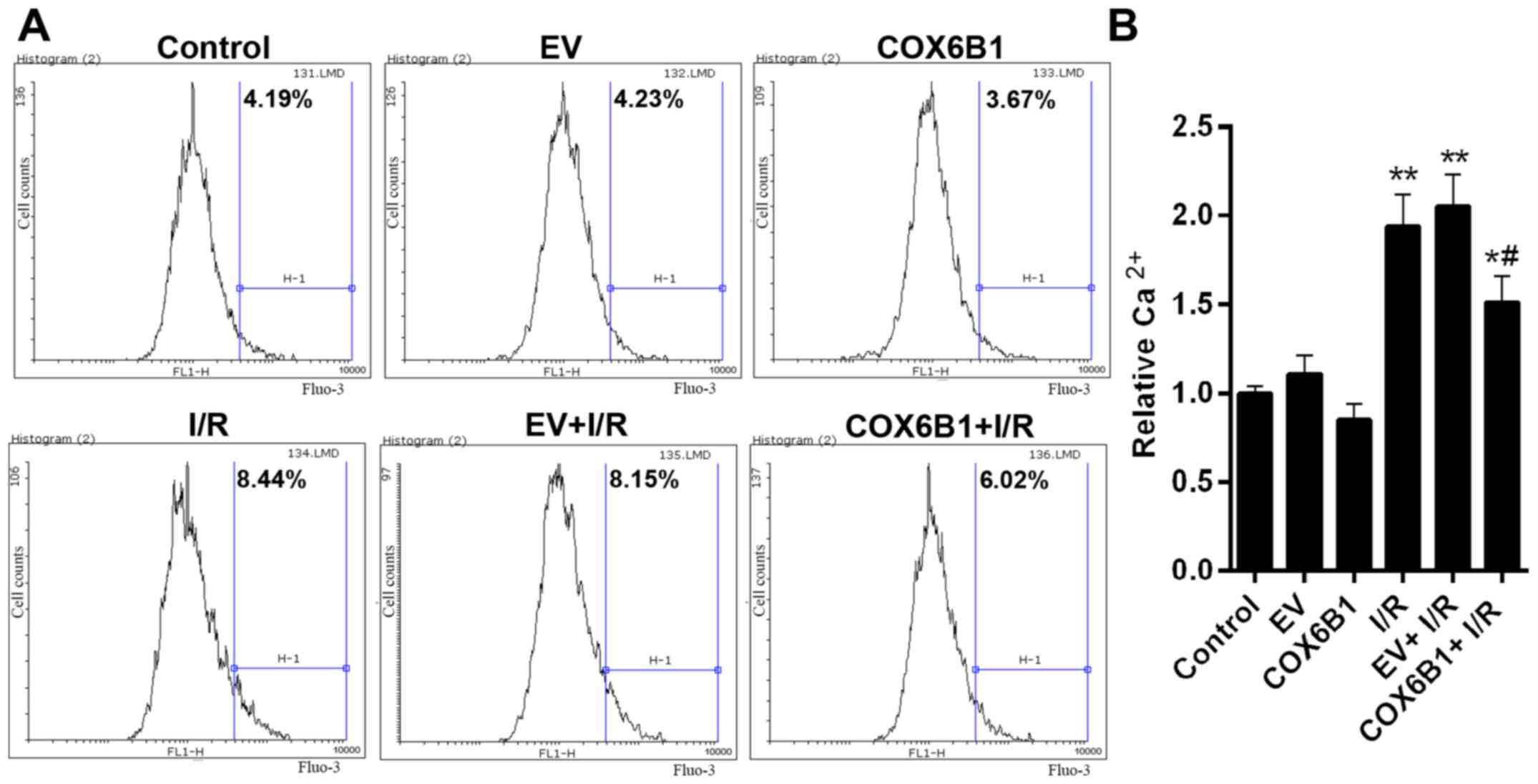
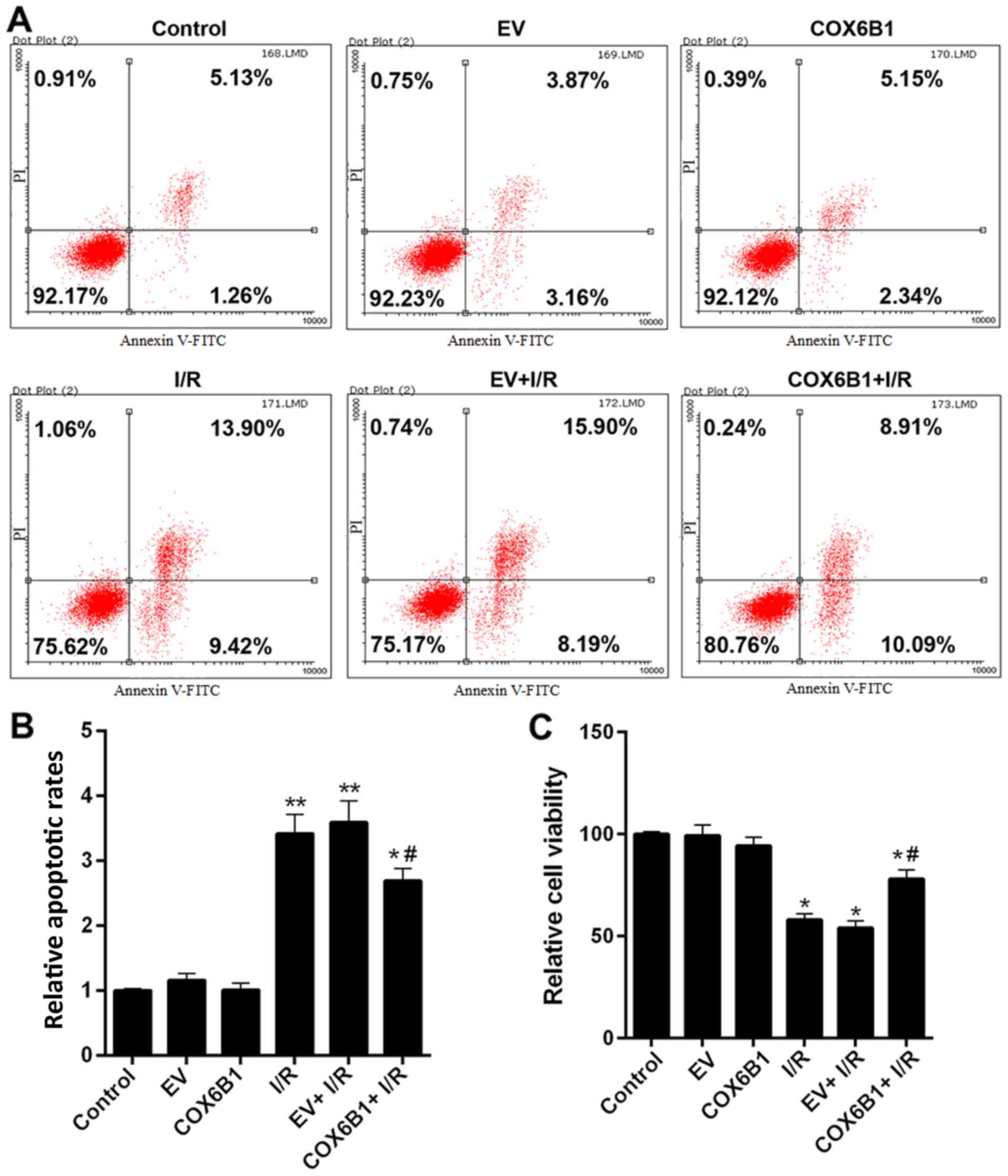
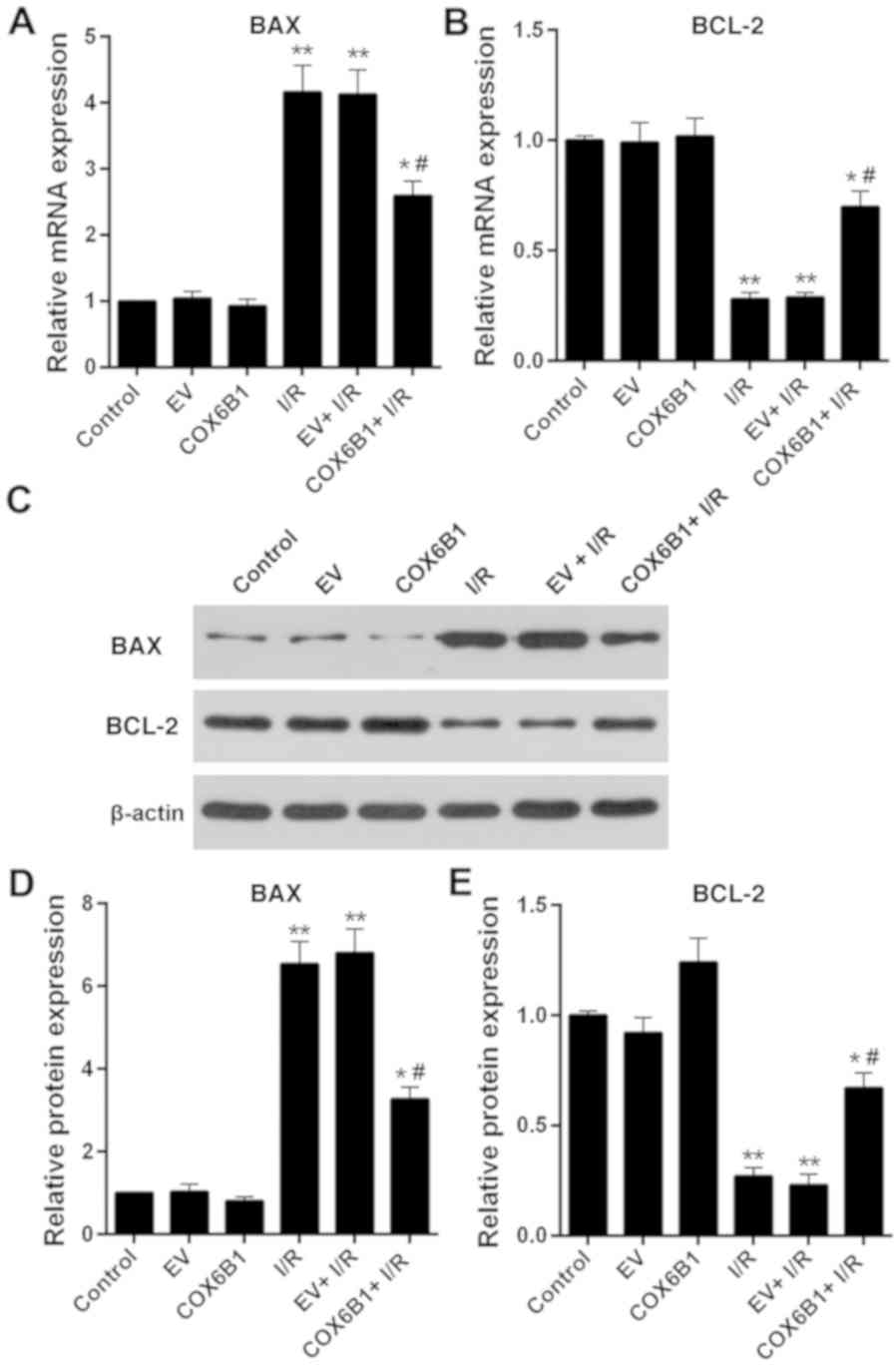
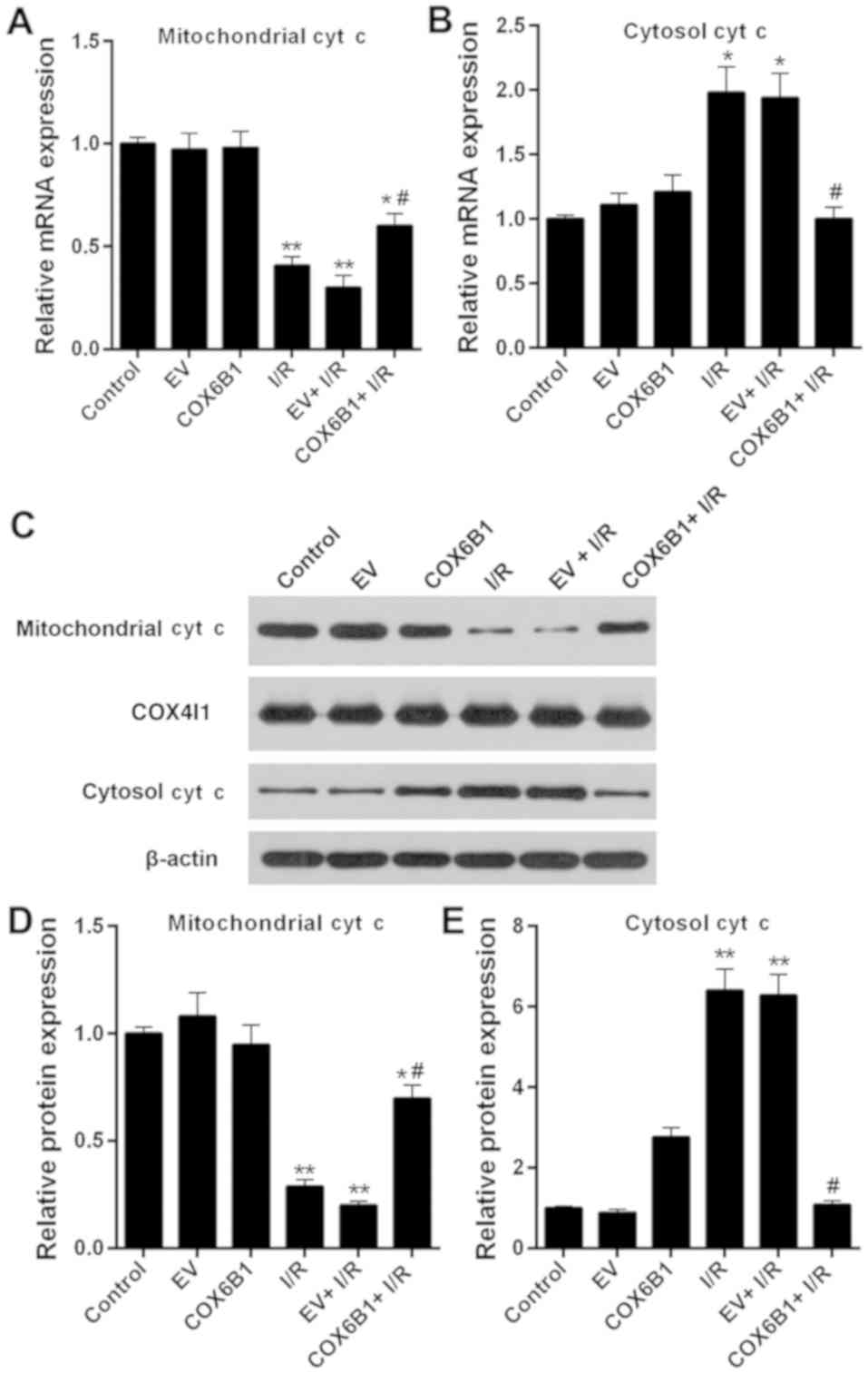
Cerebrovascular disease (CVD) is one of the leading causes of mortality worldwide. The role of cytochrome c oxidase subunit 6B1 (COX6B1) in the central nervous system remains unclear. The present study aimed to analyze the role of COX6B1 in rat hippocampal neurons extracted from fetal rats. The subcellular localization of the neuron‑specific marker microtubule‑associated protein 2 was detected by immunofluorescence assay. Cell viability was assessed using a cell counting kit, and the levels of apoptosis and cytosolic Ca2+ were analyzed by flow cytometry. The expression levels of the molecular factors downstream to COX6B1 were determined using reverse transcription‑quantitative polymerase chain reaction and western blotting. Reoxygenation following oxygen‑glucose deprivation (OGD) decreased cell viability and the expression levels of COX6B1 in a time‑dependent manner, and 60 min of reoxygenation was identified as the optimal time period for establishing an ischemia/reperfusion (I/R) model. Overexpression of COX6B1 was demonstrated to reverse the viability of hippocampal neurons following I/R treatment. Specifically, COX6B1 overexpression decreased the cytosolic concentration of Ca2+ and suppressed neuronal apoptosis, which were increased following I/R treatment. Furthermore, overexpression of COX6B1 increased the protein expression levels of apoptosis regulator BCL‑2 and mitochondrial cytochrome c (cyt c), and decreased the protein expression levels of apoptosis regulator BCL2‑associated X and cytosolic cyt c in I/R model cells. Collectively, the present study results suggested that COX6B1 overexpression may reverse I/R‑induced neuronal damage by increasing the viability of neurons, by decreasing the cytosolic levels of Ca2+ and by suppressing apoptosis. These results may facilitate the development of novel strategies for the prevention and treatment of CVD.
View Figures

Figure 1

Figure 2

Figure 3

Figure 4

Figure 5

Figure 6

Figure 7

View References

1 

Leira Y, Blanco M, Blanco J and Castillo J: Association between periodontal disease and cerebrovascular disease. A review of the literature. Rev Neurol. 61:29–38. 2015.(In Spanish). PubMed/NCBI

2 

Wang Q, Yu H, Jiang C, Sun R, Qi M, Sun S, Xu G, Cai H, Zhang Z, Zhao F, et al: Cerebral infarction as initial presentation in stress cardiomyopathy: Case report and literature review. Medicine (Baltimore). 97:e108042018. View Article : Google Scholar : PubMed/NCBI

3 

Zhang MY, Wu HW, Xu LP and Yang HJ: Pharmacological effect of Schisandrae Chinensis Fructus and relative active components on cardiovascular and cerebrovascular diseases. Zhongguo Zhong Yao Za Zhi. 43:1536–1546. 2018.(In Chinese). PubMed/NCBI

4 

Dai L, Song L, Li X, Yang Y, Zheng X, Wu Y, Li C, Zhao H and Wang Y, Wu S and Wang Y: Association of visit-to-visit blood pressure variability with the risk of all-cause mortality and cardiovascular events in general population. J Clin Hypertens (Greenwich). 20:280–288. 2018. View Article : Google Scholar : PubMed/NCBI

5 

Griffin RL, Falatko SR, Aslibekyan S, Strickland V and Harrigan MR: Aspirin for primary prevention of stroke in traumatic cerebrovascular injury: Association with increased risk of transfusion. J Neurosurg. 1–8. 2018.doi: 10.3171/2017.12.JNS172284. (Epub ahead of print). PubMed/NCBI

6 

Endepols H, Mertgens H, Backes H, Himmelreich U, Neumaier B, Graf R and Mies G: Longitudinal assessment of infarct progression, brain metabolism and behavior following anterior cerebral artery occlusion in rats. J Neurosci Methods. 253:279–291. 2015. View Article : Google Scholar : PubMed/NCBI

7 

Struys T, Govaerts K, Oosterlinck W, Casteels C, Bronckaers A, Koole M, Van Laere K, Herijgers P, Lambrichts I, Himmelreich U and Dresselaers T: In vivo evidence for long-term vascular remodeling resulting from chronic cerebral hypoperfusion in mice. J Cereb Blood Flow Metab. 37:726–739. 2017. View Article : Google Scholar : PubMed/NCBI

8 

Fan Y, Zhang C, Peng W, Li T, Yin J, Kong Y, Lan C, Li X, Wang R and Hu Z: Retraction notice to ‘Secretory pathway Ca2+-ATPase isoform 1 knockdown promotes Golgi apparatus stress injury in a mouse model of focal cerebral ischemia-reperfusion: In vivo and in vitro study’ [Brain Res. 1642 (2016) 189–196]. Brain Res. 1670:2532017. View Article : Google Scholar : PubMed/NCBI

9 

Yang ML, Tao T, Xu J, Liu Z and Xu D: Antiapoptotic effect of gene therapy with recombinant adenovirus vector containing hypoxia-inducible factor-1α after cerebral ischemia and reperfusion in rats. Chin Med J (Engl). 130:1700–1706. 2017. View Article : Google Scholar : PubMed/NCBI

10 

Hossmann KA: The two pathophysiologies of focal brain ischemia: Implications for translational stroke research. J Cereb Blood Flow Metab. 32:1310–1316. 2012. View Article : Google Scholar : PubMed/NCBI

11 

Mui K, Yoo AJ, Verduzco L, Copen WA, Hirsch JA, González RG and Schaefer PW: Cerebral blood flow thresholds for tissue infarction in patients with acute ischemic stroke treated with intra-arterial revascularization therapy depend on timing of reperfusion. AJNR Am J Neuroradiol. 32:846–851. 2011. View Article : Google Scholar : PubMed/NCBI

12 

Lenka N, Vijayasarathy C, Mullick J and Avadhani NG: Structural organization and transcription regulation of nuclear genes encoding the mammalian cytochrome c oxidase complex. Prog Nucleic Acid Res Mol Biol. 61:309–344. 1998. View Article : Google Scholar : PubMed/NCBI

13 

Barrientos A, Barros MH, Valnot I, Rötig A, Rustin P and Tzagoloff A: Cytochrome oxidase in health and disease. Gene. 286:53–63. 2002. View Article : Google Scholar : PubMed/NCBI

14 

Huttemann M, Jaradat S and Grossman LI: Cytochrome c oxidase of mammals contains a testes-specific isoform of subunit VIb-the counterpart to testes-specific cytochrome c? Mol Reprod Dev. 66:8–16. 2003. View Article : Google Scholar : PubMed/NCBI

15 

Lu J, Wang K, Rodova M, Esteves R, Berry D, E L, Crafter A, Barrett M, Cardoso SM, Onyango I, et al: Polymorphic variation in cytochrome oxidase subunit genes. J Alzheimers Dis. 21:141–154. 2010. View Article : Google Scholar : PubMed/NCBI

16 

Massa V, Fernandez-Vizarra E, Alshahwan S, Bakhsh E, Goffrini P, Ferrero I, Mereghetti P, D'Adamo P, Gasparini P and Zeviani M: Severe infantile encephalomyopathy caused by a mutation in COX6B1, a nucleus-encoded subunit of cytochrome c oxidase. Am J Hum Genet. 82:1281–1289. 2008. View Article : Google Scholar : PubMed/NCBI

17 

Abdulhag UN, Soiferman D, Schueler-Furman O, Miller C, Shaag A, Elpeleg O, Edvardson S and Saada A: Mitochondrial complex IV deficiency, caused by mutated COX6B1, is associated with encephalomyopathy, hydrocephalus and cardiomyopathy. Eur J Hum Genet. 23:159–164. 2015. View Article : Google Scholar : PubMed/NCBI

18 

Kim SE, Mori R, Komatsu T, Chiba T, Hayashi H, Park S, Sugawa MD, Dencher NA and Shimokawa I: Upregulation of cytochrome c oxidase subunit 6b1 (Cox6b1) and formation of mitochondrial supercomplexes: Implication of Cox6b1 in the effect of calorie restriction. Age (Dordr). 37:97872015. View Article : Google Scholar : PubMed/NCBI

19 

Popovic DM: Current advances in research of cytochrome c oxidase. Amino Acids. 45:1073–1087. 2013. View Article : Google Scholar : PubMed/NCBI

20 

Feng Y, Madungwe NB, da Cruz Junho CV and Bopassa JC: Activation of G protein-coupled oestrogen receptor 1 at the onset of reperfusion protects the myocardium against ischemia/reperfusion injury by reducing mitochondrial dysfunction and mitophagy. Br J Pharmacol. 174:4329–4344. 2017. View Article : Google Scholar : PubMed/NCBI

21 

Zhang W, Wang Y, Wan J, Zhang P and Pei F: COX6B1 relieves hypoxia/reoxygenation injury of neonatal rat cardiomyocytes by regulating mitochondrial function. Biotechnol Lett. 41:59–68. 2019. View Article : Google Scholar : PubMed/NCBI

22 

Livak KJ and Schmittgen TD: Analysis of relative gene expression data using real-time quantitative PCR and the 2(-Delta Delta C(T)) method. Methods. 25:402–408. 2001. View Article : Google Scholar : PubMed/NCBI

23 

Facci L and Skaper SD: Culture of rodent cortical, hippocampal, and striatal neurons. Methods Mol Biol. 1727:39–47. 2018. View Article : Google Scholar : PubMed/NCBI

24 

Rivera-Carvantes MC, Jarero-Basulto JJ, Feria-Velasco AI, Beas-Zarate C, Navarro-Meza M, Gonzalez-Lopez MB, Gudino-Cabrera G and Garcia-Rodriguez JC: Changes in the expression level of MAPK pathway components induced by monosodium glutamate-administration produce neuronal death in the hippocampus from neonatal rats. Neuroscience. 365:57–69. 2017. View Article : Google Scholar : PubMed/NCBI

25 

Caceres A, Banker G, Steward O, Binder L and Payne M: MAP2 is localized to the dendrites of hippocampal neurons which develop in culture. Brain Res. 315:314–318. 1984. View Article : Google Scholar : PubMed/NCBI

26 

Lei X, Lei L, Zhang Z and Cheng Y: Diazoxide inhibits of ER stressmediated apoptosis during oxygenglucose deprivation in vitro and cerebral ischemiareperfusion in vivo. Mol Med Rep. 17:8039–8046. 2018.PubMed/NCBI

27 

Lin YW, Chen TY, Hung CY, Tai SH, Huang SY, Chang CC, Hung HY and Lee EJ: Melatonin protects brain against ischemia/reperfusion injury by attenuating endoplasmic reticulum stress. Int J Mol Med. 42:182–192. 2018.PubMed/NCBI

28 

Baden KN, Murray J, Capaldi RA and Guillemin K: Early developmental pathology due to cytochrome c oxidase deficiency is revealed by a new zebrafish model. J Biol Chem. 282:34839–34849. 2007. View Article : Google Scholar : PubMed/NCBI

29 

Liu W, Gnanasambandam R, Benjamin J, Kaur G, Getman PB, Siegel AJ, Shortridge RD and Singh S: Mutations in cytochrome c oxidase subunit VIa cause neurodegeneration and motor dysfunction in Drosophila. Genetics. 176:937–946. 2007. View Article : Google Scholar : PubMed/NCBI

30 

Su F, Guo AC, Li WW, Zhao YL, Qu ZY, Wang YJ, Wang Q and Zhu YL: Low-dose ethanol preconditioning protects against oxygen-glucose deprivation/reoxygenation-induced neuronal injury by activating large conductance, Ca2+-Activated K+ channels in vitro. Neurosci Bull. 33:28–40. 2017. View Article : Google Scholar : PubMed/NCBI

31 

Wang Y, Shen Y, Lin HP, Li Z, Chen YY and Wang S: Large-conductance Ca(2+)-activated K(+) channel involvement in suppression of cerebral ischemia/reperfusion injury after electroacupuncture at Shuigou (GV26) acupoint in rats. Neural Regen Res. 11:957–962. 2016.PubMed/NCBI

32 

Savigni DL, O'Hare Doig RL, Szymanski CR, Bartlett CA, Lozic I, Smith NM and Fitzgerald M: Three Ca2+ channel inhibitors in combination limit chronic secondary degeneration following neurotrauma. Neuropharmacology. 75:380–390. 2013. View Article : Google Scholar : PubMed/NCBI

33 

Zolezzi JM, Carvajal FJ, Rios JA, Ordenes D, Silva-Alvarez C, Godoy JA and Inestrosa NC: Tetrahydrohyperforin induces mitochondrial dynamics and prevents mitochondrial Ca2+ overload after Aβ and Aβ-AChE complex challenge in rat hippocampal neurons. J Alzheimers Dis. 37:735–746. 2013. View Article : Google Scholar : PubMed/NCBI

34 

Ma YY, Li KY, Wang JJ, Huang YL, Huang Y and Sun FY: Vascular endothelial growth factor acutely reduces calcium influx via inhibition of the Ca2+ channels in rat hippocampal neurons. J Neurosci Res. 87:393–402. 2009. View Article : Google Scholar : PubMed/NCBI

35 

Li J, Yan D, Liu X, Wang Y, Zhao X, Zhang Y and Zhang C: U0126 protects hippocampal CA1 neurons against forebrain ischemia-induced apoptosis via the ERK1/2 signaling pathway and NMDA receptors. Neurol Res. 40:318–323. 2018. View Article : Google Scholar : PubMed/NCBI

36 

Yu Z, Cai M, Li X, Zhang J, Wu T, Yang F, Zhu W, Xiang Y, Zhang W, Xiang J and Cai D: Neuroprotective effects of Tongxinluo on focal cerebral ischemia and reperfusion injury in rats associated with the activation of the MEK1/2/ERK1/2/p90RSK signaling pathway. Brain Res. 1685:9–18. 2018. View Article : Google Scholar : PubMed/NCBI

37 

Martinou JC and Youle RJ: Mitochondria in apoptosis: Bcl-2 family members and mitochondrial dynamics. Dev Cell. 21:92–101. 2011. View Article : Google Scholar : PubMed/NCBI

38 

Ouyang YB and Giffard RG: MicroRNAs affect BCL-2 family proteins in the setting of cerebral ischemia. Neurochem Int. 77:2–8. 2014. View Article : Google Scholar : PubMed/NCBI

39 

Aboutaleb N, Shamsaei N, Rajabi H, Khaksari M, Erfani S, Nikbakht F, Motamedi P and Shahbazi A: Protection of hippocampal CA1 neurons against ischemia/reperfusion injury by exercise preconditioning via modulation of Bax/Bcl-2 ratio and prevention of caspase-3 activation. Basic Clin Neurosci. 7:21–29. 2016.PubMed/NCBI

40 

Wang JY, Shen J, Gao Q, Ye ZG, Yang SY, Liang HW, Bruce IC, Luo BY and Xia Q: Ischemic postconditioning protects against global cerebral ischemia/reperfusion-induced injury in rats. Stroke. 39:983–990. 2008. View Article : Google Scholar : PubMed/NCBI

41 

Antonawich FJ: Translocation of cytochrome c following transient global ischemia in the gerbil. Neurosci Lett. 274:123–126. 1999. View Article : Google Scholar : PubMed/NCBI

42 

Muranyi M and Li PA: Bongkrekic acid ameliorates ischemic neuronal death in the cortex by preventing cytochrome c release and inhibiting astrocyte activation. Neurosci Lett. 384:277–281. 2005. View Article : Google Scholar : PubMed/NCBI

43 

Zhao H, Yenari MA, Cheng D, Sapolsky RM and Steinberg GK: Biphasic cytochrome c release after transient global ischemia and its inhibition by hypothermia. J Cereb Blood Flow Metab. 25:1119–1129. 2005. View Article : Google Scholar : PubMed/NCBI

Related Articles

  • Abstract
  • View
  • Download
  • Twitter
Copy and paste a formatted citation
Spandidos Publications style
Yang S, Wu P, Xiao J and Jiang L: Overexpression of COX6B1 protects against I/R‑induced neuronal injury in rat hippocampal neurons. Mol Med Rep 19: 4852-4862, 2019.
APA
Yang, S., Wu, P., Xiao, J., & Jiang, L. (2019). Overexpression of COX6B1 protects against I/R‑induced neuronal injury in rat hippocampal neurons. Molecular Medicine Reports, 19, 4852-4862. https://doi.org/10.3892/mmr.2019.10144
MLA
Yang, S., Wu, P., Xiao, J., Jiang, L."Overexpression of COX6B1 protects against I/R‑induced neuronal injury in rat hippocampal neurons". Molecular Medicine Reports 19.6 (2019): 4852-4862.
Chicago
Yang, S., Wu, P., Xiao, J., Jiang, L."Overexpression of COX6B1 protects against I/R‑induced neuronal injury in rat hippocampal neurons". Molecular Medicine Reports 19, no. 6 (2019): 4852-4862. https://doi.org/10.3892/mmr.2019.10144
Copy and paste a formatted citation
x
Spandidos Publications style
Yang S, Wu P, Xiao J and Jiang L: Overexpression of COX6B1 protects against I/R‑induced neuronal injury in rat hippocampal neurons. Mol Med Rep 19: 4852-4862, 2019.
APA
Yang, S., Wu, P., Xiao, J., & Jiang, L. (2019). Overexpression of COX6B1 protects against I/R‑induced neuronal injury in rat hippocampal neurons. Molecular Medicine Reports, 19, 4852-4862. https://doi.org/10.3892/mmr.2019.10144
MLA
Yang, S., Wu, P., Xiao, J., Jiang, L."Overexpression of COX6B1 protects against I/R‑induced neuronal injury in rat hippocampal neurons". Molecular Medicine Reports 19.6 (2019): 4852-4862.
Chicago
Yang, S., Wu, P., Xiao, J., Jiang, L."Overexpression of COX6B1 protects against I/R‑induced neuronal injury in rat hippocampal neurons". Molecular Medicine Reports 19, no. 6 (2019): 4852-4862. https://doi.org/10.3892/mmr.2019.10144
Follow us
  • Twitter
  • LinkedIn
  • Facebook
About
  • Spandidos Publications
  • Careers
  • Cookie Policy
  • Privacy Policy
How can we help?
  • Help
  • Live Chat
  • Contact
  • Email to our Support Team