Spandidos Publications Logo
  • About
    • About Spandidos
    • Aims and Scopes
    • Abstracting and Indexing
    • Editorial Policies
    • Reprints and Permissions
    • Job Opportunities
    • Terms and Conditions
    • Contact
  • Journals
    • All Journals
    • Oncology Letters
      • Oncology Letters
      • Information for Authors
      • Editorial Policies
      • Editorial Board
      • Aims and Scope
      • Abstracting and Indexing
      • Bibliographic Information
      • Archive
    • International Journal of Oncology
      • International Journal of Oncology
      • Information for Authors
      • Editorial Policies
      • Editorial Board
      • Aims and Scope
      • Abstracting and Indexing
      • Bibliographic Information
      • Archive
    • Molecular and Clinical Oncology
      • Molecular and Clinical Oncology
      • Information for Authors
      • Editorial Policies
      • Editorial Board
      • Aims and Scope
      • Abstracting and Indexing
      • Bibliographic Information
      • Archive
    • Experimental and Therapeutic Medicine
      • Experimental and Therapeutic Medicine
      • Information for Authors
      • Editorial Policies
      • Editorial Board
      • Aims and Scope
      • Abstracting and Indexing
      • Bibliographic Information
      • Archive
    • International Journal of Molecular Medicine
      • International Journal of Molecular Medicine
      • Information for Authors
      • Editorial Policies
      • Editorial Board
      • Aims and Scope
      • Abstracting and Indexing
      • Bibliographic Information
      • Archive
    • Biomedical Reports
      • Biomedical Reports
      • Information for Authors
      • Editorial Policies
      • Editorial Board
      • Aims and Scope
      • Abstracting and Indexing
      • Bibliographic Information
      • Archive
    • Oncology Reports
      • Oncology Reports
      • Information for Authors
      • Editorial Policies
      • Editorial Board
      • Aims and Scope
      • Abstracting and Indexing
      • Bibliographic Information
      • Archive
    • Molecular Medicine Reports
      • Molecular Medicine Reports
      • Information for Authors
      • Editorial Policies
      • Editorial Board
      • Aims and Scope
      • Abstracting and Indexing
      • Bibliographic Information
      • Archive
    • World Academy of Sciences Journal
      • World Academy of Sciences Journal
      • Information for Authors
      • Editorial Policies
      • Editorial Board
      • Aims and Scope
      • Abstracting and Indexing
      • Bibliographic Information
      • Archive
    • International Journal of Functional Nutrition
      • International Journal of Functional Nutrition
      • Information for Authors
      • Editorial Policies
      • Editorial Board
      • Aims and Scope
      • Abstracting and Indexing
      • Bibliographic Information
      • Archive
    • International Journal of Epigenetics
      • International Journal of Epigenetics
      • Information for Authors
      • Editorial Policies
      • Editorial Board
      • Aims and Scope
      • Abstracting and Indexing
      • Bibliographic Information
      • Archive
    • Medicine International
      • Medicine International
      • Information for Authors
      • Editorial Policies
      • Editorial Board
      • Aims and Scope
      • Abstracting and Indexing
      • Bibliographic Information
      • Archive
  • Articles
  • Information
    • Information for Authors
    • Information for Reviewers
    • Information for Librarians
    • Information for Advertisers
    • Conferences
  • Language Editing
Spandidos Publications Logo
  • About
    • About Spandidos
    • Aims and Scopes
    • Abstracting and Indexing
    • Editorial Policies
    • Reprints and Permissions
    • Job Opportunities
    • Terms and Conditions
    • Contact
  • Journals
    • All Journals
    • Biomedical Reports
      • Information for Authors
      • Editorial Policies
      • Editorial Board
      • Aims and Scope
      • Abstracting and Indexing
      • Bibliographic Information
      • Archive
    • Experimental and Therapeutic Medicine
      • Information for Authors
      • Editorial Policies
      • Editorial Board
      • Aims and Scope
      • Abstracting and Indexing
      • Bibliographic Information
      • Archive
    • International Journal of Epigenetics
      • Information for Authors
      • Editorial Policies
      • Editorial Board
      • Aims and Scope
      • Abstracting and Indexing
      • Bibliographic Information
      • Archive
    • International Journal of Functional Nutrition
      • Information for Authors
      • Editorial Policies
      • Editorial Board
      • Aims and Scope
      • Abstracting and Indexing
      • Bibliographic Information
      • Archive
    • International Journal of Molecular Medicine
      • Information for Authors
      • Editorial Policies
      • Editorial Board
      • Aims and Scope
      • Abstracting and Indexing
      • Bibliographic Information
      • Archive
    • International Journal of Oncology
      • Information for Authors
      • Editorial Policies
      • Editorial Board
      • Aims and Scope
      • Abstracting and Indexing
      • Bibliographic Information
      • Archive
    • Medicine International
      • Information for Authors
      • Editorial Policies
      • Editorial Board
      • Aims and Scope
      • Abstracting and Indexing
      • Bibliographic Information
      • Archive
    • Molecular and Clinical Oncology
      • Information for Authors
      • Editorial Policies
      • Editorial Board
      • Aims and Scope
      • Abstracting and Indexing
      • Bibliographic Information
      • Archive
    • Molecular Medicine Reports
      • Information for Authors
      • Editorial Policies
      • Editorial Board
      • Aims and Scope
      • Abstracting and Indexing
      • Bibliographic Information
      • Archive
    • Oncology Letters
      • Information for Authors
      • Editorial Policies
      • Editorial Board
      • Aims and Scope
      • Abstracting and Indexing
      • Bibliographic Information
      • Archive
    • Oncology Reports
      • Information for Authors
      • Editorial Policies
      • Editorial Board
      • Aims and Scope
      • Abstracting and Indexing
      • Bibliographic Information
      • Archive
    • World Academy of Sciences Journal
      • Information for Authors
      • Editorial Policies
      • Editorial Board
      • Aims and Scope
      • Abstracting and Indexing
      • Bibliographic Information
      • Archive
  • Articles
  • Information
    • For Authors
    • For Reviewers
    • For Librarians
    • For Advertisers
    • Conferences
  • Language Editing
Login Register Submit
  • This site uses cookies
  • You can change your cookie settings at any time by following the instructions in our Cookie Policy. To find out more, you may read our Privacy Policy.

    I agree
Search articles by DOI, keyword, author or affiliation
Search
Advanced Search
presentation
Molecular Medicine Reports
Join Editorial Board Propose a Special Issue
Print ISSN: 1791-2997 Online ISSN: 1791-3004
Journal Cover
July-2019 Volume 20 Issue 1

Full Size Image

Sign up for eToc alerts
Recommend to Library

Journals

International Journal of Molecular Medicine

International Journal of Molecular Medicine

International Journal of Molecular Medicine is an international journal devoted to molecular mechanisms of human disease.

International Journal of Oncology

International Journal of Oncology

International Journal of Oncology is an international journal devoted to oncology research and cancer treatment.

Molecular Medicine Reports

Molecular Medicine Reports

Covers molecular medicine topics such as pharmacology, pathology, genetics, neuroscience, infectious diseases, molecular cardiology, and molecular surgery.

Oncology Reports

Oncology Reports

Oncology Reports is an international journal devoted to fundamental and applied research in Oncology.

Experimental and Therapeutic Medicine

Experimental and Therapeutic Medicine

Experimental and Therapeutic Medicine is an international journal devoted to laboratory and clinical medicine.

Oncology Letters

Oncology Letters

Oncology Letters is an international journal devoted to Experimental and Clinical Oncology.

Biomedical Reports

Biomedical Reports

Explores a wide range of biological and medical fields, including pharmacology, genetics, microbiology, neuroscience, and molecular cardiology.

Molecular and Clinical Oncology

Molecular and Clinical Oncology

International journal addressing all aspects of oncology research, from tumorigenesis and oncogenes to chemotherapy and metastasis.

World Academy of Sciences Journal

World Academy of Sciences Journal

Multidisciplinary open-access journal spanning biochemistry, genetics, neuroscience, environmental health, and synthetic biology.

International Journal of Functional Nutrition

International Journal of Functional Nutrition

Open-access journal combining biochemistry, pharmacology, immunology, and genetics to advance health through functional nutrition.

International Journal of Epigenetics

International Journal of Epigenetics

Publishes open-access research on using epigenetics to advance understanding and treatment of human disease.

Medicine International

Medicine International

An International Open Access Journal Devoted to General Medicine.

Journal Cover
July-2019 Volume 20 Issue 1

Full Size Image

Sign up for eToc alerts
Recommend to Library

  • Article
  • Citations
    • Cite This Article
    • Download Citation
    • Create Citation Alert
    • Remove Citation Alert
    • Cited By
  • Similar Articles
    • Related Articles (in Spandidos Publications)
    • Similar Articles (Google Scholar)
    • Similar Articles (PubMed)
  • Download PDF
  • Download XML
  • View XML
Article

Administration of live, but not inactivated, Faecalibacterium prausnitzii has a preventive effect on dextran sodium sulfate‑induced colitis in mice

  • Authors:
    • Yujiro Kawade
    • Misaki Sakai
    • Mariko Okamori
    • Mayuko Morita
    • Katsura Mizushima
    • Tomohiro Ueda
    • Tomohisa Takagi
    • Yuji Naito
    • Yoshito Itoh
    • Takashi Shimada
  • View Affiliations / Copyright

    Affiliations: Central Research Laboratories, Nichinichi Pharmaceutical Co., Ltd., Iga, Mie 518‑1417, Japan, Department of Molecular Gastroenterology and Hepatology, Kyoto Prefectural University of Medicine, Kamigyo‑ku, Kyoto 602‑8566, Japan
  • Pages: 25-32
    |
    Published online on: May 14, 2019
       https://doi.org/10.3892/mmr.2019.10234
  • Expand metrics +
Metrics: Total Views: 0 (Spandidos Publications: | PMC Statistics: )
Metrics: Total PDF Downloads: 0 (Spandidos Publications: | PMC Statistics: )
Cited By (CrossRef): 0 citations Loading Articles...

This article is mentioned in:


Abstract

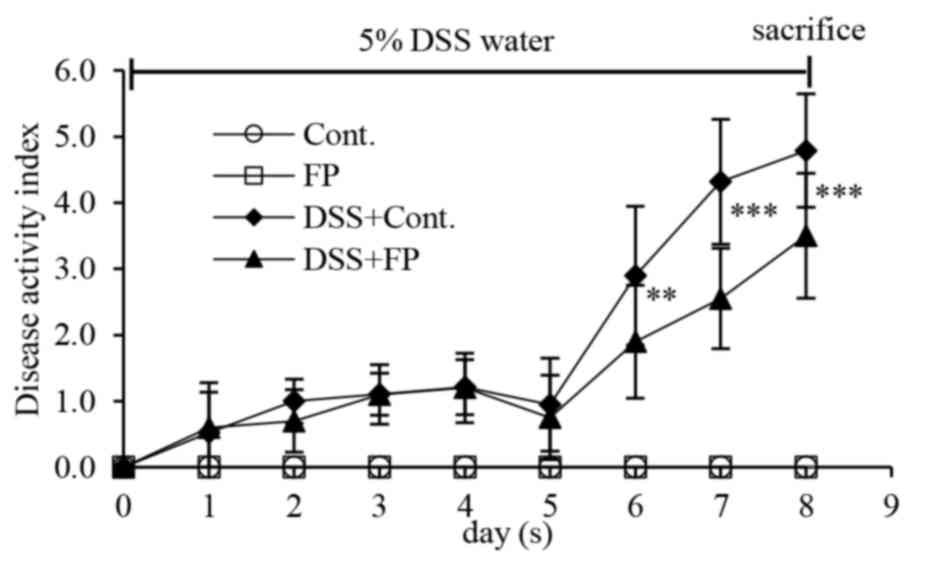
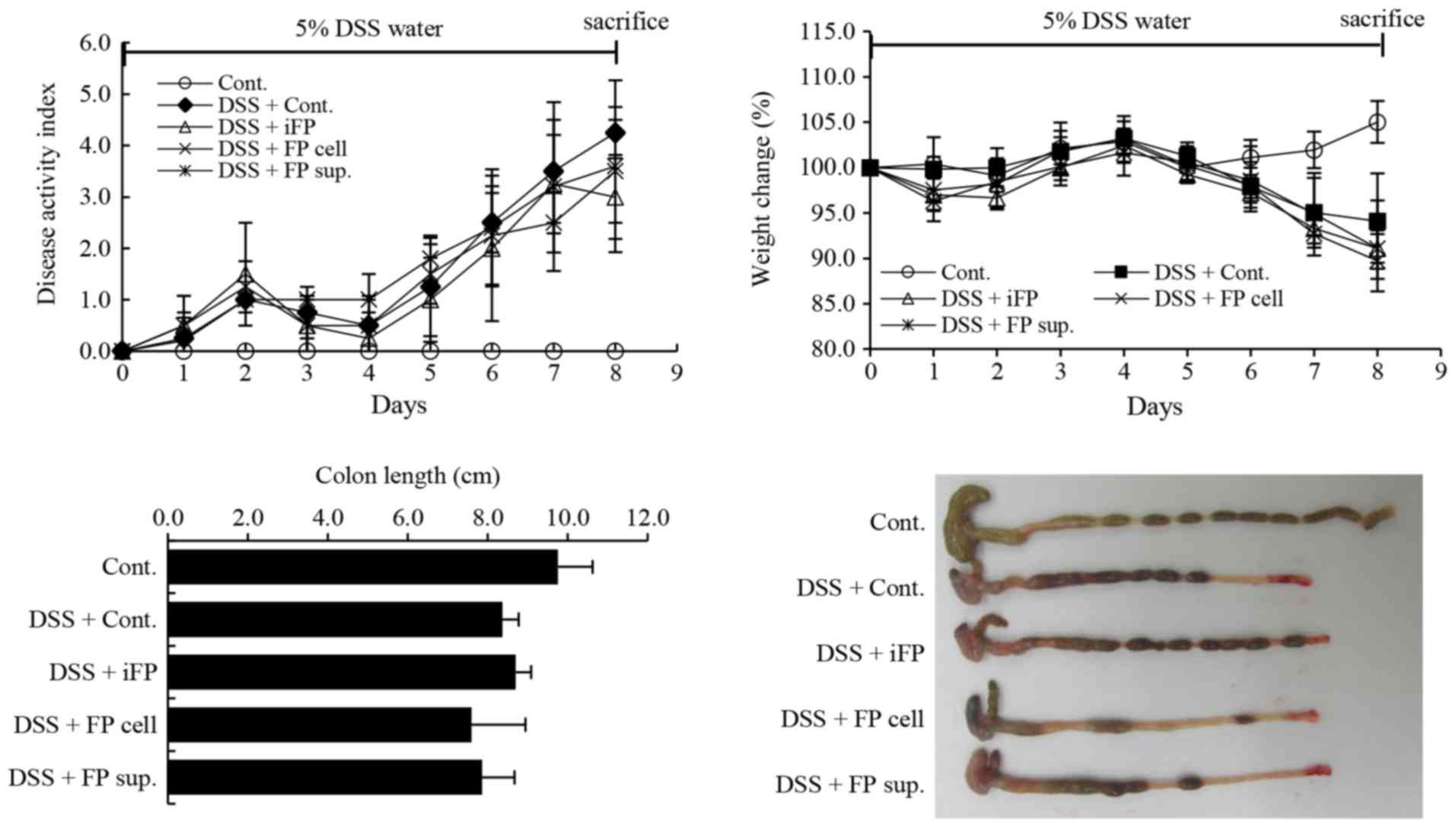
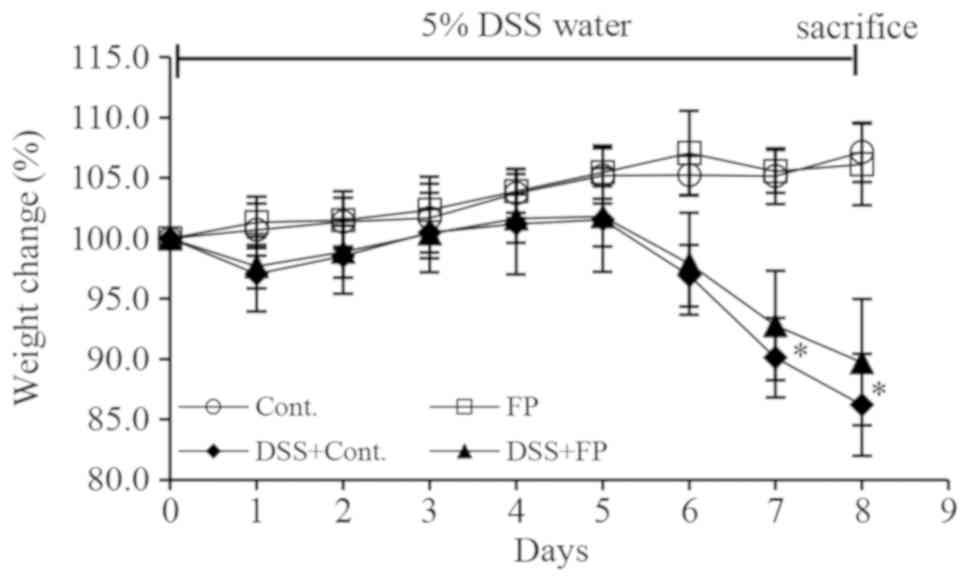
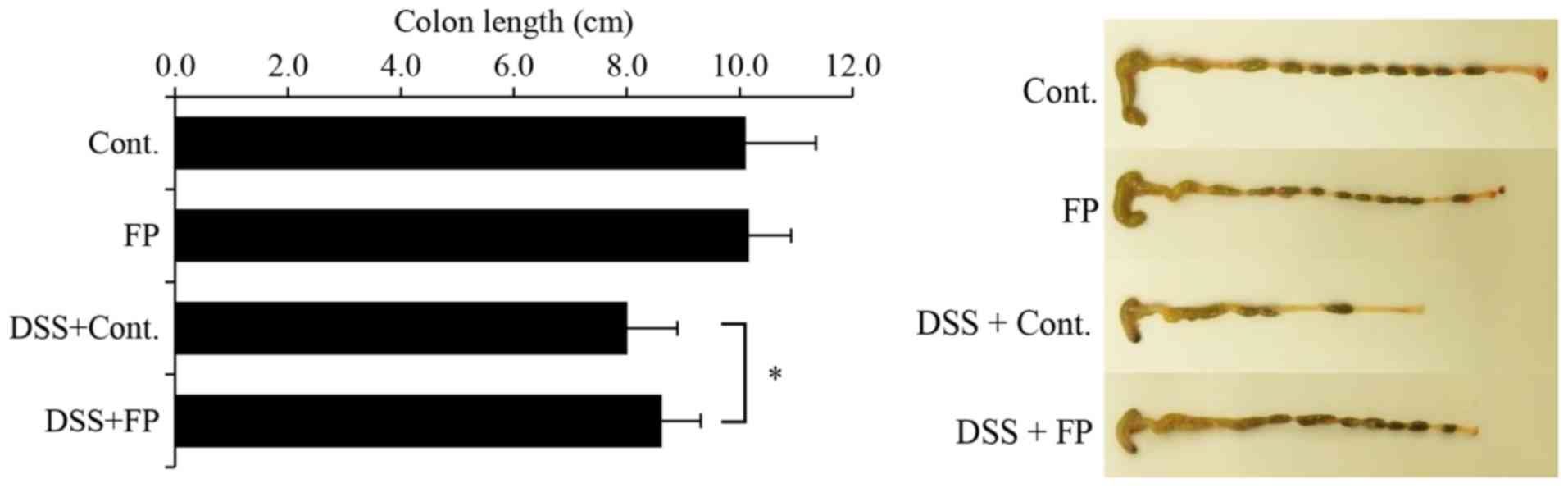
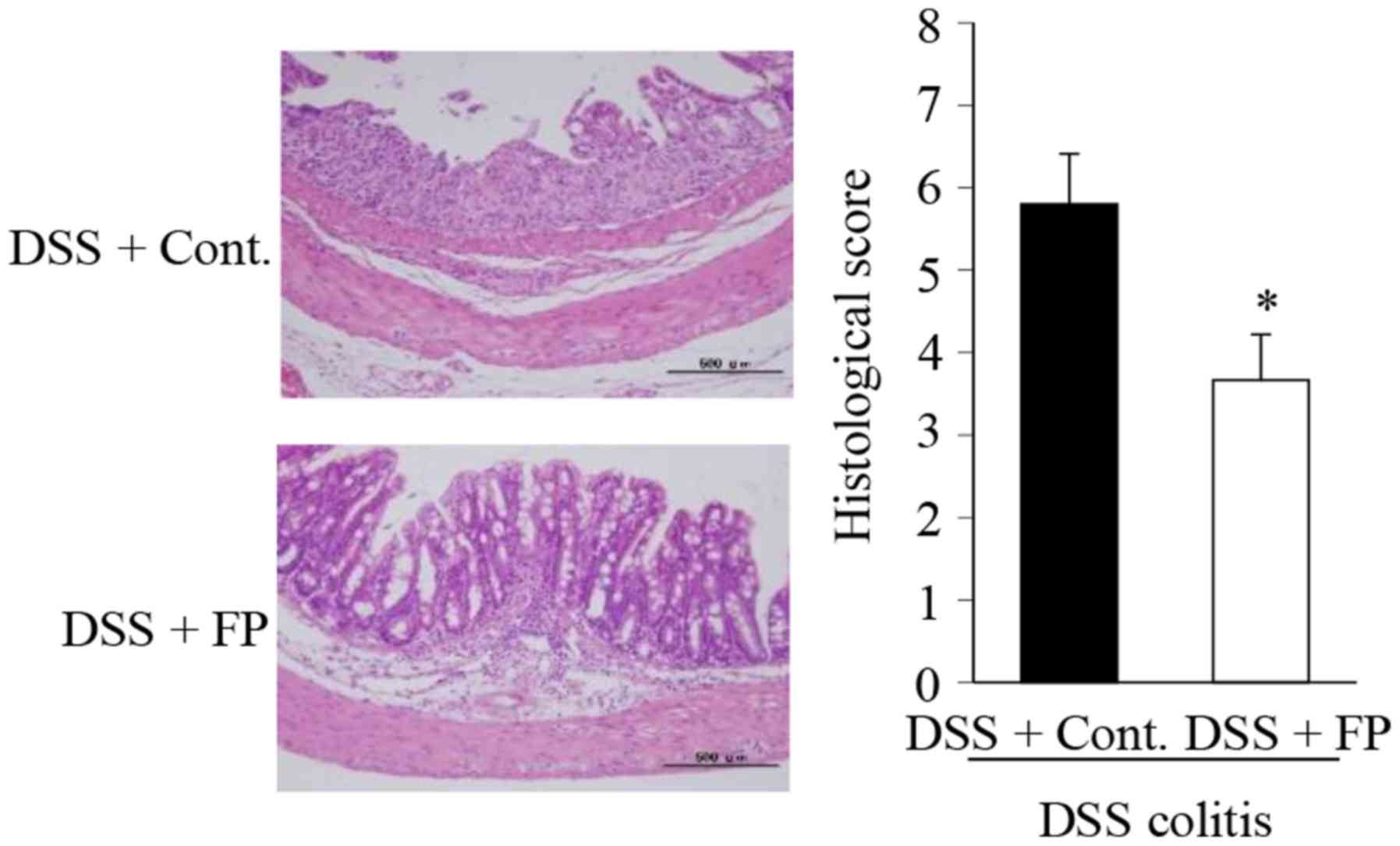
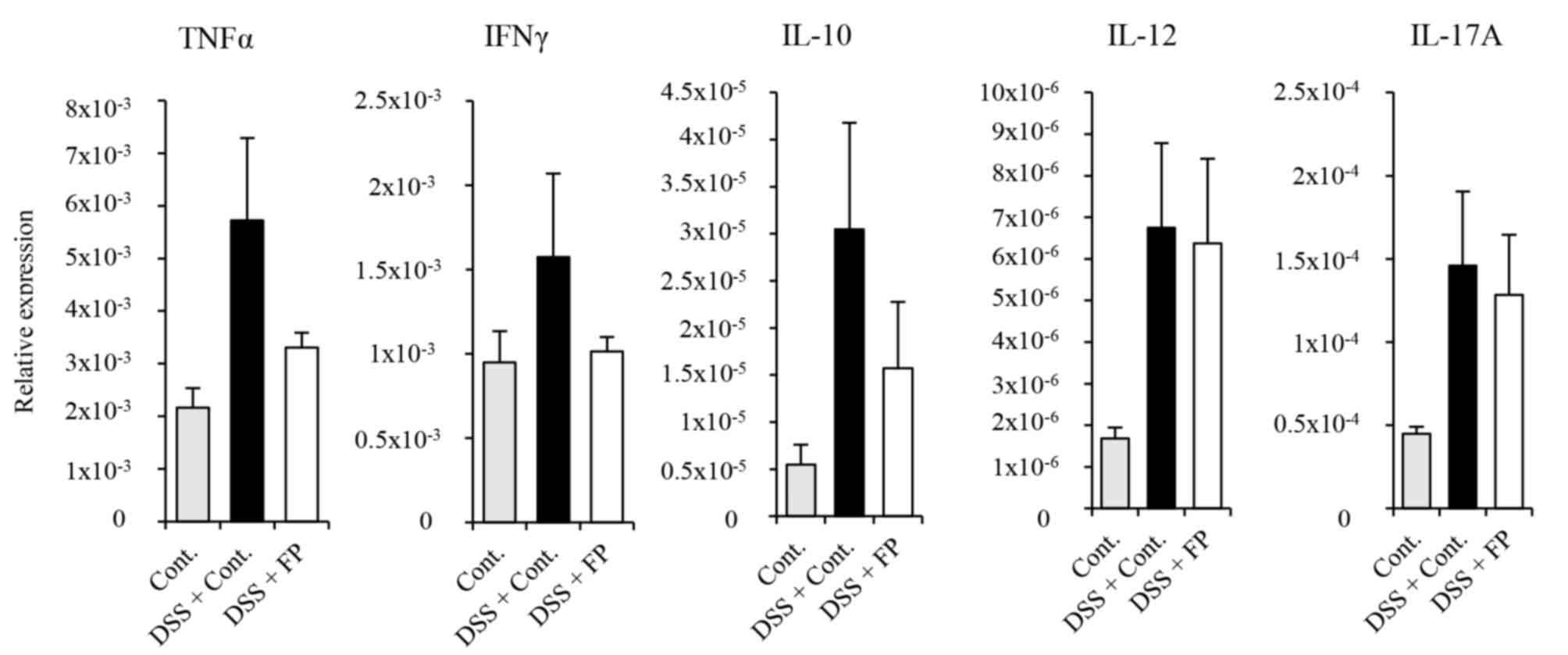
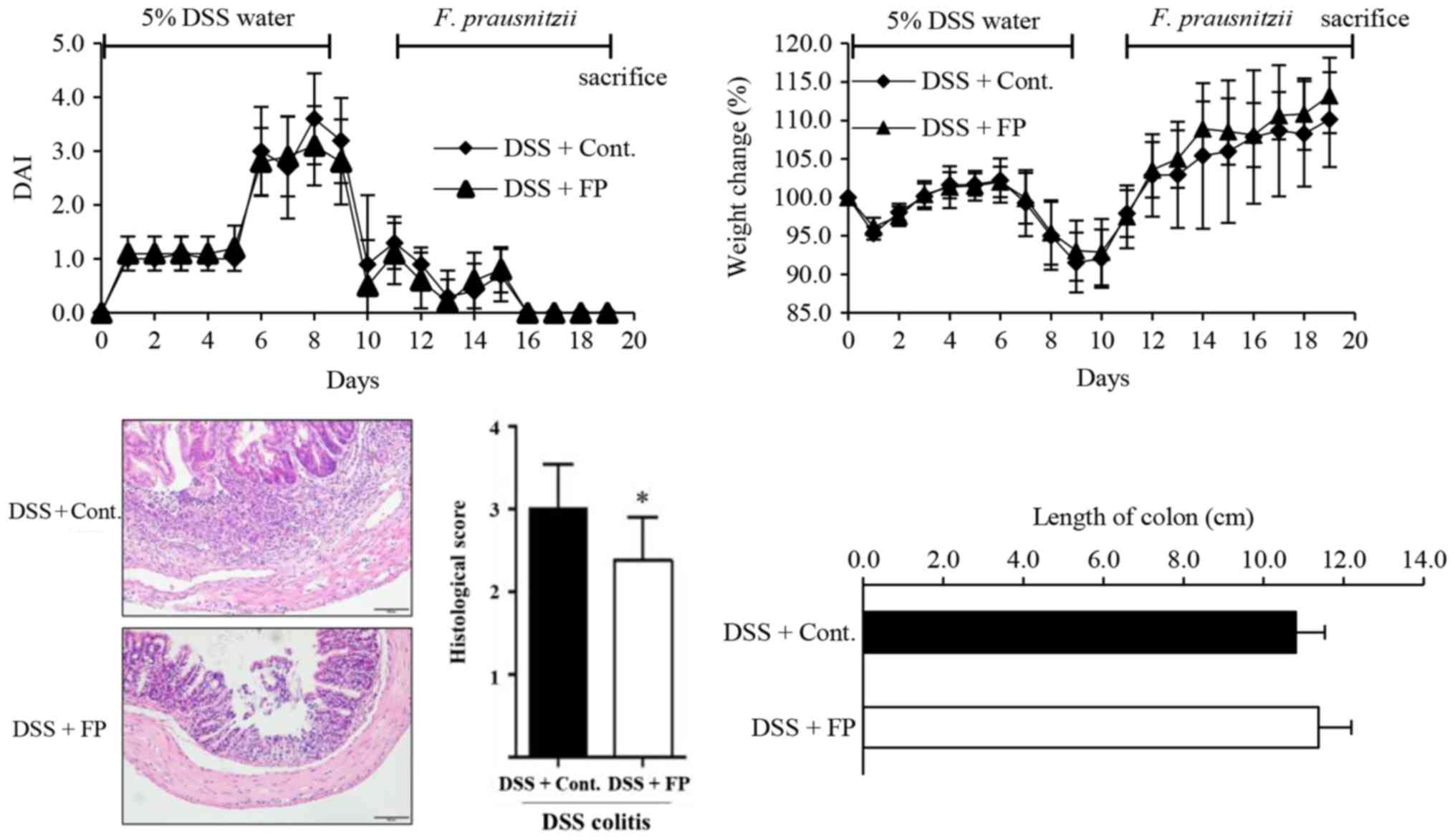
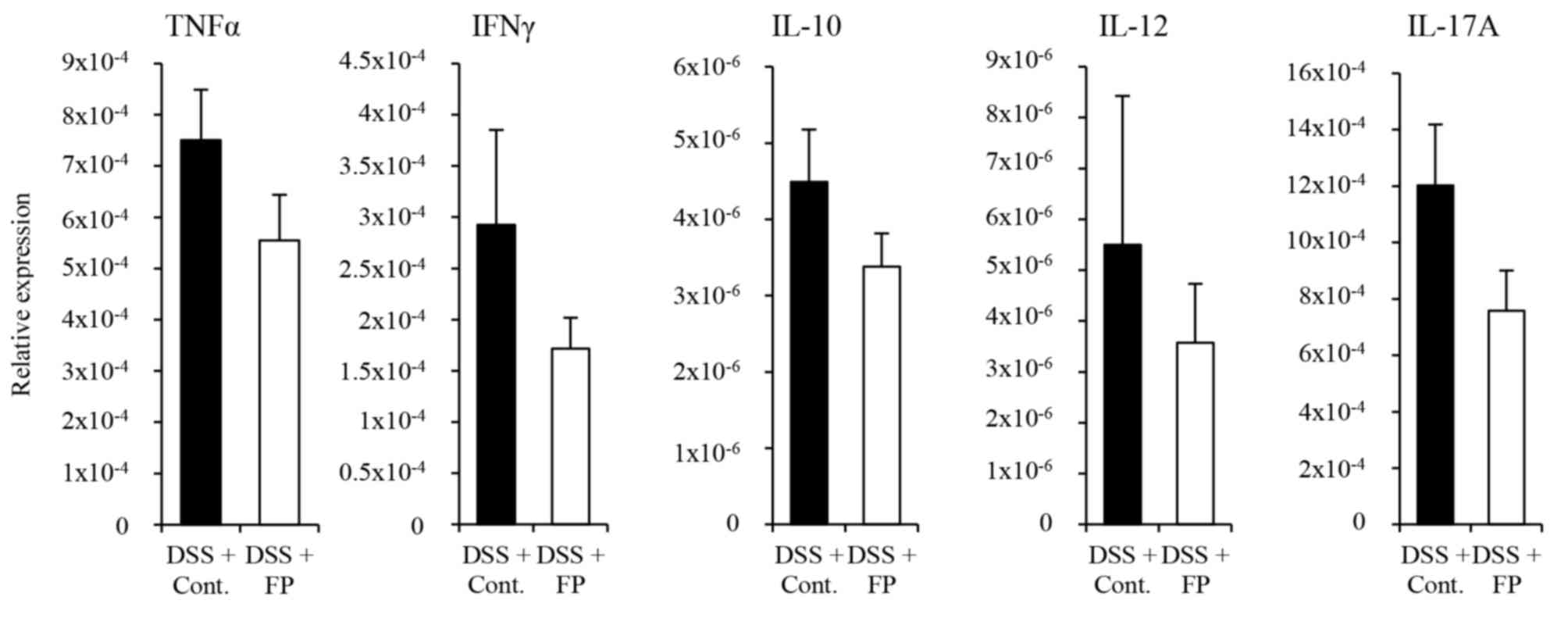
Faecalibacterium prausnitzii is one of the most abundant bacteria in the human gut microbiota. This bacterium is reported to serve an important role in inflammatory bowel diseases. In the present study, the preventive effects of F. prausnitzii on a dextran sodium sulfate (DSS)‑induced colitis model in mice were investigated. BALB/c mice were fed with 5% DSS in drinking water. Administration of live or inactivated F. prausnitzii was initiated 7 days prior to the start of DSS feeding. Mucosal cytokines were analyzed by reverse transcription‑quantitative PCR. Histological analysis of colon mucosa was also performed. The symptoms of DSS‑induced colitis (weight loss, diarrhea, bloody stools and colon shortening) were significantly improved in the group administered live F. prausnitzii, but not in the other groups. There were no significant differences in the expression of proinflammatory cytokines; however, the expression of mucosal cytokines appeared to be markedly reduced in the live F. prausnitzii‑administered group compared with the DSS‑fed control. The results suggested that preventive administration of ‘live’, but not inactivated, F. prausnitzii protected the colon against DSS‑induced colitis. Live F. prausnitzii were also administered therapeutically following the induction of colitis, resulting in an improved histological score in mice.
View Figures

Figure 1

Figure 2

Figure 3

Figure 4

Figure 5

Figure 6

Figure 7

Figure 8

View References

1 

Cato EP, Salmon CW and Moore WEC: Fusobacterium prausnitzii (Hauduroy et al.) moore and holdeman: emended description and designation of neotype strain. Int J Syst Bacteriol. 24:225–229. 1974. View Article : Google Scholar

2 

Duncan SH, Hold GL, Harmsen HJM, Stewart CS and Flint HJ: Growth requirements and fermentation products of Fusobacterium prausnitzii, and a proposal to reclassify it as Faecalibacterium prausnitzii gen. nov., comb. nov. Int J Syst Evol Microbiol. 52:2141–2146. 2002. View Article : Google Scholar : PubMed/NCBI

3 

Lopez-Siles M, Khan TM, Duncan SH, Harmsen HJM, Garcia-Gil LJ and Flint HJ: Cultured representatives of two major phylogroups of human colonic Faecalibacterium prausnitzii can utilize pectin, uronic acids, and host-derived substrates for growth. Appl Environ Microbiol. 78:420–428. 2012. View Article : Google Scholar : PubMed/NCBI

4 

Lopez-Siles M, Martinez-Medina M, Busquets D, Sabat-Mir M, Duncan SH, Flint HJ, Aldeguer X and Garcia-Gil LJ: Mucosa-associated Faecalibacterium prausnitzii and Escherichia coli co-abundance can distinguish irritable bowel syndrome and inflammatory bowel disease phenotypes. Int J Med Microbiol. 304:464–475. 2014. View Article : Google Scholar : PubMed/NCBI

5 

Nava GM and Stappenbeck TS: Diversity of the autochthonous colonic microbiota. Gut Microbes. 2:99–104. 2011. View Article : Google Scholar : PubMed/NCBI

6 

Baumgart DC and Sandborn WJ: Inflammatory bowel disease: Clinical aspects and established and evolving therapies. Lancet. 369:1641–1657. 2007. View Article : Google Scholar : PubMed/NCBI

7 

Arumugam M, Raes J, Pelletier E, Le Paslier D, Yamada T, Mende DR, Fernandes GR, Tap J, Bruls T, Batto JM, et al: Enterotypes of the human gut microbiome. Nature. 473:174–780. 2011. View Article : Google Scholar : PubMed/NCBI

8 

Hold GL, Schwiertz A, Aminov RI, Blaut M and Flint HJ: Oligonucleotide probes that detect quantitatively significant groups of butyrate-producing bacteria in human feces. Appl Environ Microbiol. 69:4320–4324. 2003. View Article : Google Scholar : PubMed/NCBI

9 

Schwiertz A, Jacobi M, Frick JS, Richter M, Rusch K and Köhler H: Microbiota in pediatric inflammatory bowel disease. J Pediatr. 157:240–244.e1. 2010. View Article : Google Scholar : PubMed/NCBI

10 

Suau A, Rochet V, Sghir A, Gramet G, Brewaeys S, Sutren M, Rigottier-Gois L and Doré J: Fusobacterium prausnitzii and related species represent a dominant group within the human fecal flora. Syst Appl Microbiol. 24:139–145. 2001. View Article : Google Scholar : PubMed/NCBI

11 

Walker AW, Ince J, Duncan SH, Webster LM, Holtrop G, Ze X, Brown D, Stares MD, Scott P, Bergerat A, et al: Dominant and diet-responsive groups of bacteria within the human colonic microbiota. ISME J. 5:220–230. 2011. View Article : Google Scholar : PubMed/NCBI

12 

Swidsinski A, Loening-Baucke V, Lochs H and Hale LP: Spatial organization of bacterial flora in normal and inflamed intestine: A fluorescence in situ hybridization study in mice. World J Gastroenterol. 11:1131–1140. 2005. View Article : Google Scholar : PubMed/NCBI

13 

Hopkins MJ, Macfarlane GT, Furrie E, Fite A and Macfarlane S: Characterisation of intestinal bacteria in infant stools using real-time PCR and northern hybridisation analyses. FEMS Microbiol Ecol. 54:77–85. 2005. View Article : Google Scholar : PubMed/NCBI

14 

Balamurugan R, Janardhan HP, George S, Chittaranjan SP and Ramakrishna BS: Bacterial succession in the colon during childhood and adolescence: Molecular studies in a southern Indian village. Am J Clin Nutr. 88:1643–1647. 2008. View Article : Google Scholar : PubMed/NCBI

15 

Wang M, Ahrné S, Antonsson M and Molin G: T-RFLP combined with principal component analysis and 16S rRNA gene sequencing: An effective strategy for comparison of fecal microbiota in infants of different ages. J Microbiol Methods. 59:53–69. 2004. View Article : Google Scholar : PubMed/NCBI

16 

Fallani M, Rigottier-Gois L, Aguilera M, Bridonneau C, Collignon A, Edwards CA, Corthier G and Doré J: Clostridium difficile and Clostridium perfringens species detected in infant faecal microbiota using 16S rRNA targeted probes. J Microbiol Methods. 67:150–161. 2006. View Article : Google Scholar : PubMed/NCBI

17 

Lopez-Siles M, Duncan SH, Garcia-Gil LJ and Martinez-Medina M: Faecalibacterium prausnitzii: From microbiology to diagnostics and prognostics. ISME J. 11:841–852. 2017. View Article : Google Scholar : PubMed/NCBI

18 

Sokol H, Pigneur B, Watterlot L, Lakhdari O, Bermúdez-Humarán LG, Gratadoux JJ, Blugeon S, Bridonneau C, Furet JP, Corthier G, et al: Faecalibacterium prausnitzii is an anti-inflammatory commensal bacterium identified by gut microbiota analysis of Crohn disease patients. Proc Natl Acad Sci USA. 105:16731–16736. 2008. View Article : Google Scholar : PubMed/NCBI

19 

Miquel S, Martín R, Rossi O, Bermúdez-Humarán LG, Chatel JM, Sokol H, Thomas M, Wells JM and Langella P: Faecalibacterium prausnitzii and human intestinal health. Curr Opin Microbiol. 16:255–261. 2013. View Article : Google Scholar : PubMed/NCBI

20 

Frank DN, St Amand AL, Feldman RA, Boedeker EC, Harpaz N and Pace NR: Molecular-phylogenetic characterization of microbial community imbalances in human inflammatory bowel diseases. Proc Natl Acad Sci USA. 104:13780–13785. 2007. View Article : Google Scholar : PubMed/NCBI

21 

Martinez-Medina M, Aldeguer X, Gonzalez-Huix F, Acero D and Garcia-Gil LJ: Abnormal microbiota composition in the ileocolonic mucosa of Crohn's disease patients as revealed by polymerase chain reaction-denaturing gradient gel electrophoresis. Inflamm Bowel Dis. 12:1136–1145. 2006. View Article : Google Scholar : PubMed/NCBI

22 

Sokol H, Seksik P, Furet JP, Firmesse O, Nion-Larmurier I, Beaugerie L, Cosnes J, Corthier G, Marteau P and Doré J: Low counts of Faecalibacterium prausnitzii in colitis microbiota. Inflamm Bowel Dis. 15:1183–1189. 2009. View Article : Google Scholar : PubMed/NCBI

23 

Swidsinski A, Loening-Baucke V, Vaneechoutte M and Doerffel Y: Active Crohn's disease and ulcerative colitis can be specifically diagnosed and monitored based on the biostructure of the fecal flora. Inflamm Bowel Dis. 14:147–161. 2008. View Article : Google Scholar : PubMed/NCBI

24 

Willing B, Halfvarson J, Dicksved J, Rosenquist M, Järnerot G, Engstrand L, Tysk C and Jansson JK: Twin studies reveal specific imbalances in the mucosa-associated microbiota of patients with ileal Crohn's disease. Inflamm Bowel Dis. 15:653–660. 2009. View Article : Google Scholar : PubMed/NCBI

25 

Furet JP, Kong LC, Tap J, Poitou C, Basdevant A, Bouillot JL, Mariat D, Corthier G, Doré J, Henegar C, et al: Differential Adaptation of Human Gut Microbiota to bariatric surgery-induced weight loss: Links with metabolic and low-grade inflammation markers. Diabetes. 59:3049–3057. 2010. View Article : Google Scholar : PubMed/NCBI

26 

Hansen R, Russell RK, Reiff C, Louis P, McIntosh F, Berry SH, Mukhopadhya I, Bisset WM, Barclay AR, Bishop J, et al: Microbiota of de-novo pediatric IBD: Increased Faecalibacterium prausnitzii and reduced bacterial diversity in Crohn's but not in ulcerative colitis. Am J Gastroenterol. 107:1913–1922. 2012. View Article : Google Scholar : PubMed/NCBI

27 

Jia W, Whitehead RN, Griffiths L, Dawson C, Waring RH, Ramsden DB, Hunter JO and Cole JA: Is the abundance of Faecalibacterium prausnitzii relevant to Crohn's disease? FEMS Microbiol Lett. 310:138–144. 2010. View Article : Google Scholar : PubMed/NCBI

28 

Kabeerdoss J, Sankaran V, Pugazhendhi S and Ramakrishna BS: Clostridium leptum group bacteria abundance and diversity in the fecal microbiota of patients with inflammatory bowel disease: A case-control study in India. BMC Gastroenterol. 13:202013. View Article : Google Scholar : PubMed/NCBI

29 

Machiels K, Joossens M, Sabino J, De Preter V, Arijs I, Eeckhaut V, Ballet V, Claes K, Van Immerseel F, Verbeke K, et al: A decrease of the butyrate-producing species Roseburia hominis and Faecalibacterium prausnitzii defines dysbiosis in patients with ulcerative colitis. Gut. 63:1275–1283. 2014. View Article : Google Scholar : PubMed/NCBI

30 

Vermeiren J, van den Abbeele P, Laukens D, Vigsnæs LK, de Vos M, Boon N and van de Wiele T: Decreased colonization of fecal Clostridium coccoides/Eubacterium rectale species from ulcerative colitis patients in an in vitro dynamic gut model with mucin environment. FEMS Microbiol Ecol. 79:685–696. 2012. View Article : Google Scholar : PubMed/NCBI

31 

Huang XL, Zhang X, Fei XY, Chen ZG, Hao YP, Zhang S, Zhang MM, Yu YQ and Yu CG: Faecalibacterium prausnitzii supernatant ameliorates dextran sulfate sodium induced colitis by regulating Th17 cell differentiation. World J Gastroenterol. 22:5201–5210. 2016. View Article : Google Scholar : PubMed/NCBI

32 

Rossi O, Khan MT, Schwarzer M, Hudcovic T, Srutkova D, Duncan SH, Stolte EH, Kozakova H, Flint HJ, Samsom JN, et al: Faecalibacterium prausnitzii strain HTF-F and its extracellular polymeric matrix attenuate clinical parameters in DSS-induced colitis. PLoS One. 10:e01230132015. View Article : Google Scholar : PubMed/NCBI

33 

Breyner NM, Michon C, de Sousa CS, Vilas Boas PB, Chain F, Azevedo VA, Langella P and Chatel JM: Microbial anti-inflammatory molecule (MAM) from Faecalibacterium prausnitzii shows a protective effect on DNBS and DSS-induced colitis model in mice through inhibition of NF-κB pathway. Front Microbiol. 8:1142017. View Article : Google Scholar : PubMed/NCBI

34 

Tran CD, Katsikeros R and Abimosleh SM: Current and novel treatments for ulcerative colitis, Ulcerative Colitis from Genetics to Complications. Shennak Prof. Mustafa: ISBN: 978-953-307-853-3, InTech. 2012, http://www.intechopen.com/books/ulcerative-colitis-from-genetics-to-complications/current-and-novel-treatments-for-ulcerative-colitis

35 

Hungate RE: Chapter IV a roll tube method for cultivation of strict anaerobes. Methods Microbiol. 3:117–132. 1969. View Article : Google Scholar

36 

National Research Council (US) Committee for the Update of the Guide for the Care and Use of Laboratory Animals, . Guide for the Care and Use of Laboratory Animals. 8th. National Academies Press (US); Washington, DC: 2011, https://www.ncbi.nlm.nih.gov/books/NBK54050

37 

Hausmann M, Obermeier F, Paper DH, Balan K, Dunger N, Menzel K, Falk W, Schoelmerich J, Herfarth H and Rogler G: In vivo treatment with the herbal phenylethanoid acteoside ameliorates intestinal inflammation in dextran sulphate sodium-induced colitis. Clin Exp Immunol. 148:373–381. 2007. View Article : Google Scholar : PubMed/NCBI

38 

Takagi T, Naito Y, Uchiyama K, Suzuki T, Hirata I, Mizushima K, Tsuboi H, Hayashi N, Handa O, Ishikawa T, et al: Carbon monoxide liberated from carbon monoxide-releasing molecule exerts an anti-inflammatory effect on dextran sulfate sodium-induced colitis in mice. Dig Dis Sci. 56:1663–1671. 2011. View Article : Google Scholar : PubMed/NCBI

39 

Livak KJ and Schmittgen TD: Analysis of relative gene expression data using real-time quantitative PCR and the 2(-Delta Delta C(T)) method. Methods. 25:402–408. 2001. View Article : Google Scholar : PubMed/NCBI

40 

Chassaing B, Aitken JD, Malleshappa M and Vijay-Kumar M: Dextran sulfate sodium (DSS)-induced colitis in mice. Curr Protoc Immunol. 104:Unit 15.25. 2014. View Article : Google Scholar : PubMed/NCBI

Related Articles

  • Abstract
  • View
  • Download
  • Twitter
Copy and paste a formatted citation
Spandidos Publications style
Kawade Y, Sakai M, Okamori M, Morita M, Mizushima K, Ueda T, Takagi T, Naito Y, Itoh Y, Shimada T, Shimada T, et al: Administration of live, but not inactivated, Faecalibacterium prausnitzii has a preventive effect on dextran sodium sulfate‑induced colitis in mice. Mol Med Rep 20: 25-32, 2019.
APA
Kawade, Y., Sakai, M., Okamori, M., Morita, M., Mizushima, K., Ueda, T. ... Shimada, T. (2019). Administration of live, but not inactivated, Faecalibacterium prausnitzii has a preventive effect on dextran sodium sulfate‑induced colitis in mice. Molecular Medicine Reports, 20, 25-32. https://doi.org/10.3892/mmr.2019.10234
MLA
Kawade, Y., Sakai, M., Okamori, M., Morita, M., Mizushima, K., Ueda, T., Takagi, T., Naito, Y., Itoh, Y., Shimada, T."Administration of live, but not inactivated, Faecalibacterium prausnitzii has a preventive effect on dextran sodium sulfate‑induced colitis in mice". Molecular Medicine Reports 20.1 (2019): 25-32.
Chicago
Kawade, Y., Sakai, M., Okamori, M., Morita, M., Mizushima, K., Ueda, T., Takagi, T., Naito, Y., Itoh, Y., Shimada, T."Administration of live, but not inactivated, Faecalibacterium prausnitzii has a preventive effect on dextran sodium sulfate‑induced colitis in mice". Molecular Medicine Reports 20, no. 1 (2019): 25-32. https://doi.org/10.3892/mmr.2019.10234
Copy and paste a formatted citation
x
Spandidos Publications style
Kawade Y, Sakai M, Okamori M, Morita M, Mizushima K, Ueda T, Takagi T, Naito Y, Itoh Y, Shimada T, Shimada T, et al: Administration of live, but not inactivated, Faecalibacterium prausnitzii has a preventive effect on dextran sodium sulfate‑induced colitis in mice. Mol Med Rep 20: 25-32, 2019.
APA
Kawade, Y., Sakai, M., Okamori, M., Morita, M., Mizushima, K., Ueda, T. ... Shimada, T. (2019). Administration of live, but not inactivated, Faecalibacterium prausnitzii has a preventive effect on dextran sodium sulfate‑induced colitis in mice. Molecular Medicine Reports, 20, 25-32. https://doi.org/10.3892/mmr.2019.10234
MLA
Kawade, Y., Sakai, M., Okamori, M., Morita, M., Mizushima, K., Ueda, T., Takagi, T., Naito, Y., Itoh, Y., Shimada, T."Administration of live, but not inactivated, Faecalibacterium prausnitzii has a preventive effect on dextran sodium sulfate‑induced colitis in mice". Molecular Medicine Reports 20.1 (2019): 25-32.
Chicago
Kawade, Y., Sakai, M., Okamori, M., Morita, M., Mizushima, K., Ueda, T., Takagi, T., Naito, Y., Itoh, Y., Shimada, T."Administration of live, but not inactivated, Faecalibacterium prausnitzii has a preventive effect on dextran sodium sulfate‑induced colitis in mice". Molecular Medicine Reports 20, no. 1 (2019): 25-32. https://doi.org/10.3892/mmr.2019.10234
Follow us
  • Twitter
  • LinkedIn
  • Facebook
About
  • Spandidos Publications
  • Careers
  • Cookie Policy
  • Privacy Policy
How can we help?
  • Help
  • Live Chat
  • Contact
  • Email to our Support Team