Spandidos Publications Logo
  • About
    • About Spandidos
    • Aims and Scopes
    • Abstracting and Indexing
    • Editorial Policies
    • Reprints and Permissions
    • Job Opportunities
    • Terms and Conditions
    • Contact
  • Journals
    • All Journals
    • Oncology Letters
      • Oncology Letters
      • Information for Authors
      • Editorial Policies
      • Editorial Board
      • Aims and Scope
      • Abstracting and Indexing
      • Bibliographic Information
      • Archive
    • International Journal of Oncology
      • International Journal of Oncology
      • Information for Authors
      • Editorial Policies
      • Editorial Board
      • Aims and Scope
      • Abstracting and Indexing
      • Bibliographic Information
      • Archive
    • Molecular and Clinical Oncology
      • Molecular and Clinical Oncology
      • Information for Authors
      • Editorial Policies
      • Editorial Board
      • Aims and Scope
      • Abstracting and Indexing
      • Bibliographic Information
      • Archive
    • Experimental and Therapeutic Medicine
      • Experimental and Therapeutic Medicine
      • Information for Authors
      • Editorial Policies
      • Editorial Board
      • Aims and Scope
      • Abstracting and Indexing
      • Bibliographic Information
      • Archive
    • International Journal of Molecular Medicine
      • International Journal of Molecular Medicine
      • Information for Authors
      • Editorial Policies
      • Editorial Board
      • Aims and Scope
      • Abstracting and Indexing
      • Bibliographic Information
      • Archive
    • Biomedical Reports
      • Biomedical Reports
      • Information for Authors
      • Editorial Policies
      • Editorial Board
      • Aims and Scope
      • Abstracting and Indexing
      • Bibliographic Information
      • Archive
    • Oncology Reports
      • Oncology Reports
      • Information for Authors
      • Editorial Policies
      • Editorial Board
      • Aims and Scope
      • Abstracting and Indexing
      • Bibliographic Information
      • Archive
    • Molecular Medicine Reports
      • Molecular Medicine Reports
      • Information for Authors
      • Editorial Policies
      • Editorial Board
      • Aims and Scope
      • Abstracting and Indexing
      • Bibliographic Information
      • Archive
    • World Academy of Sciences Journal
      • World Academy of Sciences Journal
      • Information for Authors
      • Editorial Policies
      • Editorial Board
      • Aims and Scope
      • Abstracting and Indexing
      • Bibliographic Information
      • Archive
    • International Journal of Functional Nutrition
      • International Journal of Functional Nutrition
      • Information for Authors
      • Editorial Policies
      • Editorial Board
      • Aims and Scope
      • Abstracting and Indexing
      • Bibliographic Information
      • Archive
    • International Journal of Epigenetics
      • International Journal of Epigenetics
      • Information for Authors
      • Editorial Policies
      • Editorial Board
      • Aims and Scope
      • Abstracting and Indexing
      • Bibliographic Information
      • Archive
    • Medicine International
      • Medicine International
      • Information for Authors
      • Editorial Policies
      • Editorial Board
      • Aims and Scope
      • Abstracting and Indexing
      • Bibliographic Information
      • Archive
  • Articles
  • Information
    • Information for Authors
    • Information for Reviewers
    • Information for Librarians
    • Information for Advertisers
    • Conferences
  • Language Editing
Spandidos Publications Logo
  • About
    • About Spandidos
    • Aims and Scopes
    • Abstracting and Indexing
    • Editorial Policies
    • Reprints and Permissions
    • Job Opportunities
    • Terms and Conditions
    • Contact
  • Journals
    • All Journals
    • Biomedical Reports
      • Information for Authors
      • Editorial Policies
      • Editorial Board
      • Aims and Scope
      • Abstracting and Indexing
      • Bibliographic Information
      • Archive
    • Experimental and Therapeutic Medicine
      • Information for Authors
      • Editorial Policies
      • Editorial Board
      • Aims and Scope
      • Abstracting and Indexing
      • Bibliographic Information
      • Archive
    • International Journal of Epigenetics
      • Information for Authors
      • Editorial Policies
      • Editorial Board
      • Aims and Scope
      • Abstracting and Indexing
      • Bibliographic Information
      • Archive
    • International Journal of Functional Nutrition
      • Information for Authors
      • Editorial Policies
      • Editorial Board
      • Aims and Scope
      • Abstracting and Indexing
      • Bibliographic Information
      • Archive
    • International Journal of Molecular Medicine
      • Information for Authors
      • Editorial Policies
      • Editorial Board
      • Aims and Scope
      • Abstracting and Indexing
      • Bibliographic Information
      • Archive
    • International Journal of Oncology
      • Information for Authors
      • Editorial Policies
      • Editorial Board
      • Aims and Scope
      • Abstracting and Indexing
      • Bibliographic Information
      • Archive
    • Medicine International
      • Information for Authors
      • Editorial Policies
      • Editorial Board
      • Aims and Scope
      • Abstracting and Indexing
      • Bibliographic Information
      • Archive
    • Molecular and Clinical Oncology
      • Information for Authors
      • Editorial Policies
      • Editorial Board
      • Aims and Scope
      • Abstracting and Indexing
      • Bibliographic Information
      • Archive
    • Molecular Medicine Reports
      • Information for Authors
      • Editorial Policies
      • Editorial Board
      • Aims and Scope
      • Abstracting and Indexing
      • Bibliographic Information
      • Archive
    • Oncology Letters
      • Information for Authors
      • Editorial Policies
      • Editorial Board
      • Aims and Scope
      • Abstracting and Indexing
      • Bibliographic Information
      • Archive
    • Oncology Reports
      • Information for Authors
      • Editorial Policies
      • Editorial Board
      • Aims and Scope
      • Abstracting and Indexing
      • Bibliographic Information
      • Archive
    • World Academy of Sciences Journal
      • Information for Authors
      • Editorial Policies
      • Editorial Board
      • Aims and Scope
      • Abstracting and Indexing
      • Bibliographic Information
      • Archive
  • Articles
  • Information
    • For Authors
    • For Reviewers
    • For Librarians
    • For Advertisers
    • Conferences
  • Language Editing
Login Register Submit
  • This site uses cookies
  • You can change your cookie settings at any time by following the instructions in our Cookie Policy. To find out more, you may read our Privacy Policy.

    I agree
Search articles by DOI, keyword, author or affiliation
Search
Advanced Search
presentation
Molecular Medicine Reports
Join Editorial Board Propose a Special Issue
Print ISSN: 1791-2997 Online ISSN: 1791-3004
Journal Cover
July-2019 Volume 20 Issue 1

Full Size Image

Sign up for eToc alerts
Recommend to Library

Journals

International Journal of Molecular Medicine

International Journal of Molecular Medicine

International Journal of Molecular Medicine is an international journal devoted to molecular mechanisms of human disease.

International Journal of Oncology

International Journal of Oncology

International Journal of Oncology is an international journal devoted to oncology research and cancer treatment.

Molecular Medicine Reports

Molecular Medicine Reports

Covers molecular medicine topics such as pharmacology, pathology, genetics, neuroscience, infectious diseases, molecular cardiology, and molecular surgery.

Oncology Reports

Oncology Reports

Oncology Reports is an international journal devoted to fundamental and applied research in Oncology.

Experimental and Therapeutic Medicine

Experimental and Therapeutic Medicine

Experimental and Therapeutic Medicine is an international journal devoted to laboratory and clinical medicine.

Oncology Letters

Oncology Letters

Oncology Letters is an international journal devoted to Experimental and Clinical Oncology.

Biomedical Reports

Biomedical Reports

Explores a wide range of biological and medical fields, including pharmacology, genetics, microbiology, neuroscience, and molecular cardiology.

Molecular and Clinical Oncology

Molecular and Clinical Oncology

International journal addressing all aspects of oncology research, from tumorigenesis and oncogenes to chemotherapy and metastasis.

World Academy of Sciences Journal

World Academy of Sciences Journal

Multidisciplinary open-access journal spanning biochemistry, genetics, neuroscience, environmental health, and synthetic biology.

International Journal of Functional Nutrition

International Journal of Functional Nutrition

Open-access journal combining biochemistry, pharmacology, immunology, and genetics to advance health through functional nutrition.

International Journal of Epigenetics

International Journal of Epigenetics

Publishes open-access research on using epigenetics to advance understanding and treatment of human disease.

Medicine International

Medicine International

An International Open Access Journal Devoted to General Medicine.

Journal Cover
July-2019 Volume 20 Issue 1

Full Size Image

Sign up for eToc alerts
Recommend to Library

  • Article
  • Citations
    • Cite This Article
    • Download Citation
    • Create Citation Alert
    • Remove Citation Alert
    • Cited By
  • Similar Articles
    • Related Articles (in Spandidos Publications)
    • Similar Articles (Google Scholar)
    • Similar Articles (PubMed)
  • Download PDF
  • Download XML
  • View XML
Article Open Access

High developmental pluripotency‑associated 4 expression promotes cell proliferation and glycolysis, and predicts poor prognosis in non‑small‑cell lung cancer

  • Authors:
    • Longfei Li
    • Yufeng Wang
    • Qiang Wang
    • Jingming Qu
    • Xiangju Wei
    • Jilei Xu
    • Yuanjin Wang
    • Feng Suo
    • Yangjie Zhang
  • View Affiliations / Copyright

    Affiliations: Department of Cardiothoracic Surgery, Xuzhou Cancer Hospital, Xuzhou, Jiangsu 221000, P.R. China, Department of Nuclear Medicine, Xuzhou Cancer Hospital, Xuzhou, Jiangsu 221000, P.R. China, Department of Radiotherapy and Oncology, Xuzhou Cancer Hospital, Xuzhou, Jiangsu 221000, P.R. China, Department of Orthopedics, Yunnan Cancer Hospital, The Third Affiliated Hospital of Kunming Medical University, Kunming, Yunnan 650118, P.R. China
    Copyright: © Li et al. This is an open access article distributed under the terms of Creative Commons Attribution License.
  • Pages: 445-454
    |
    Published online on: May 22, 2019
       https://doi.org/10.3892/mmr.2019.10272
  • Expand metrics +
Metrics: Total Views: 0 (Spandidos Publications: | PMC Statistics: )
Metrics: Total PDF Downloads: 0 (Spandidos Publications: | PMC Statistics: )
Cited By (CrossRef): 0 citations Loading Articles...

This article is mentioned in:


Abstract

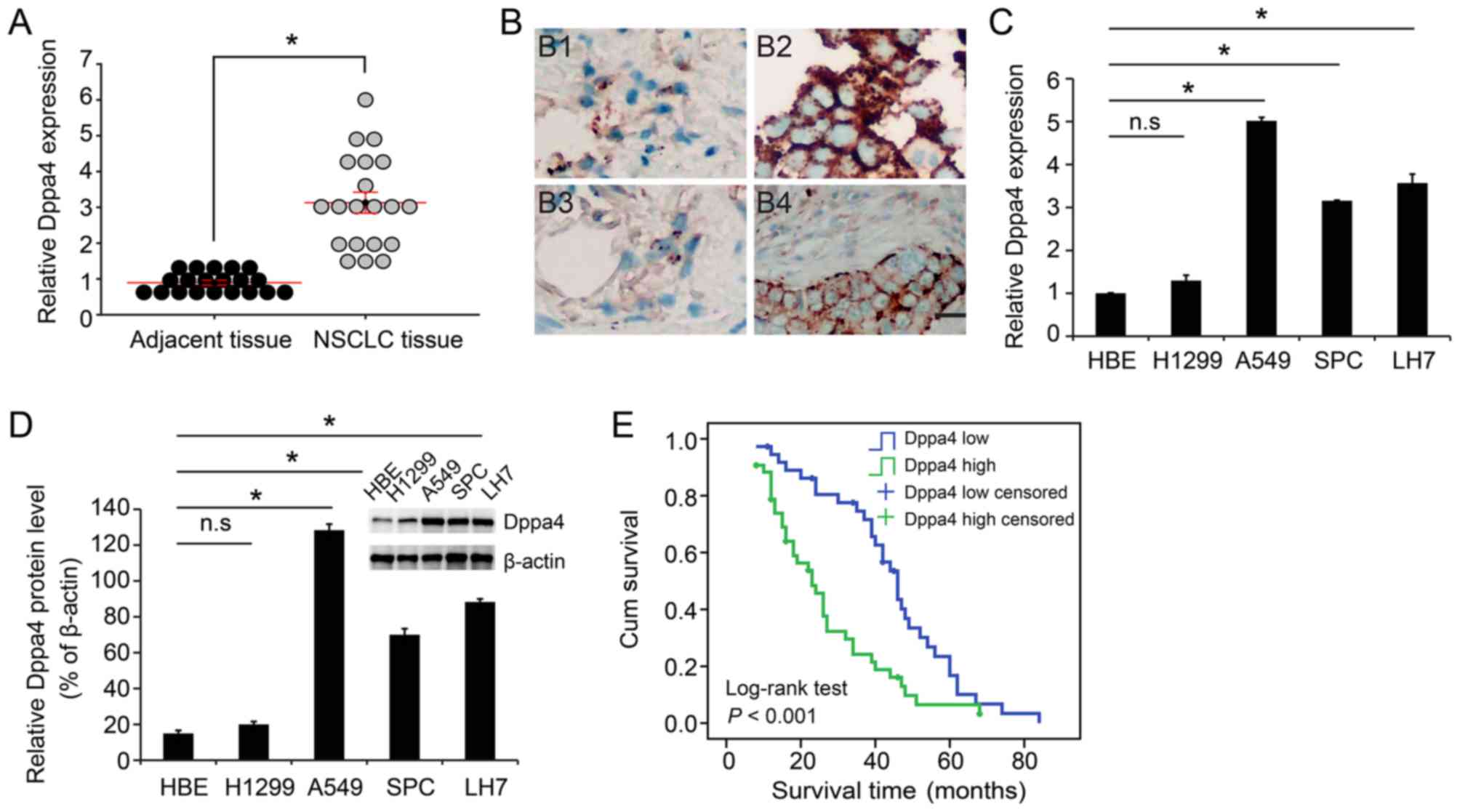
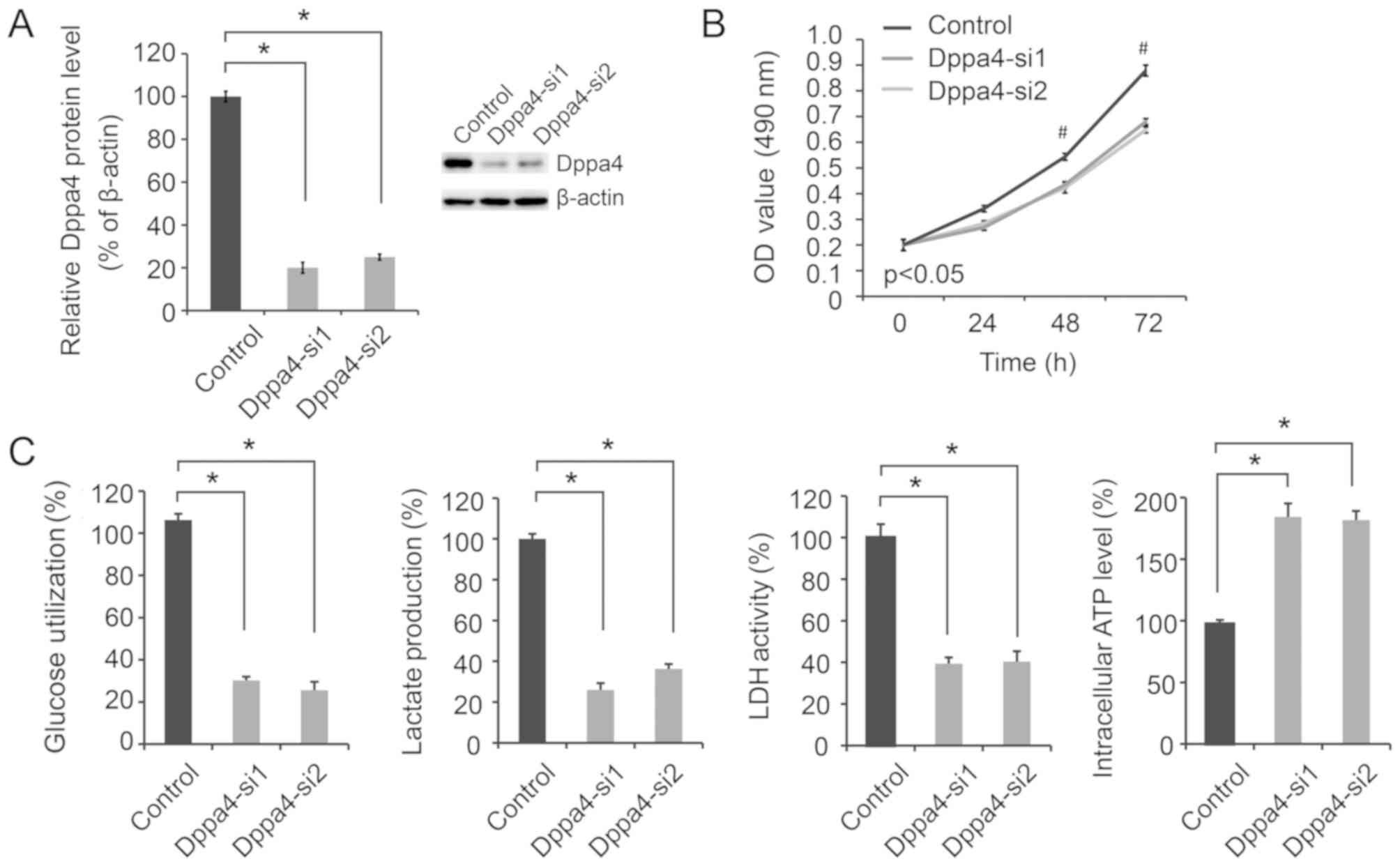
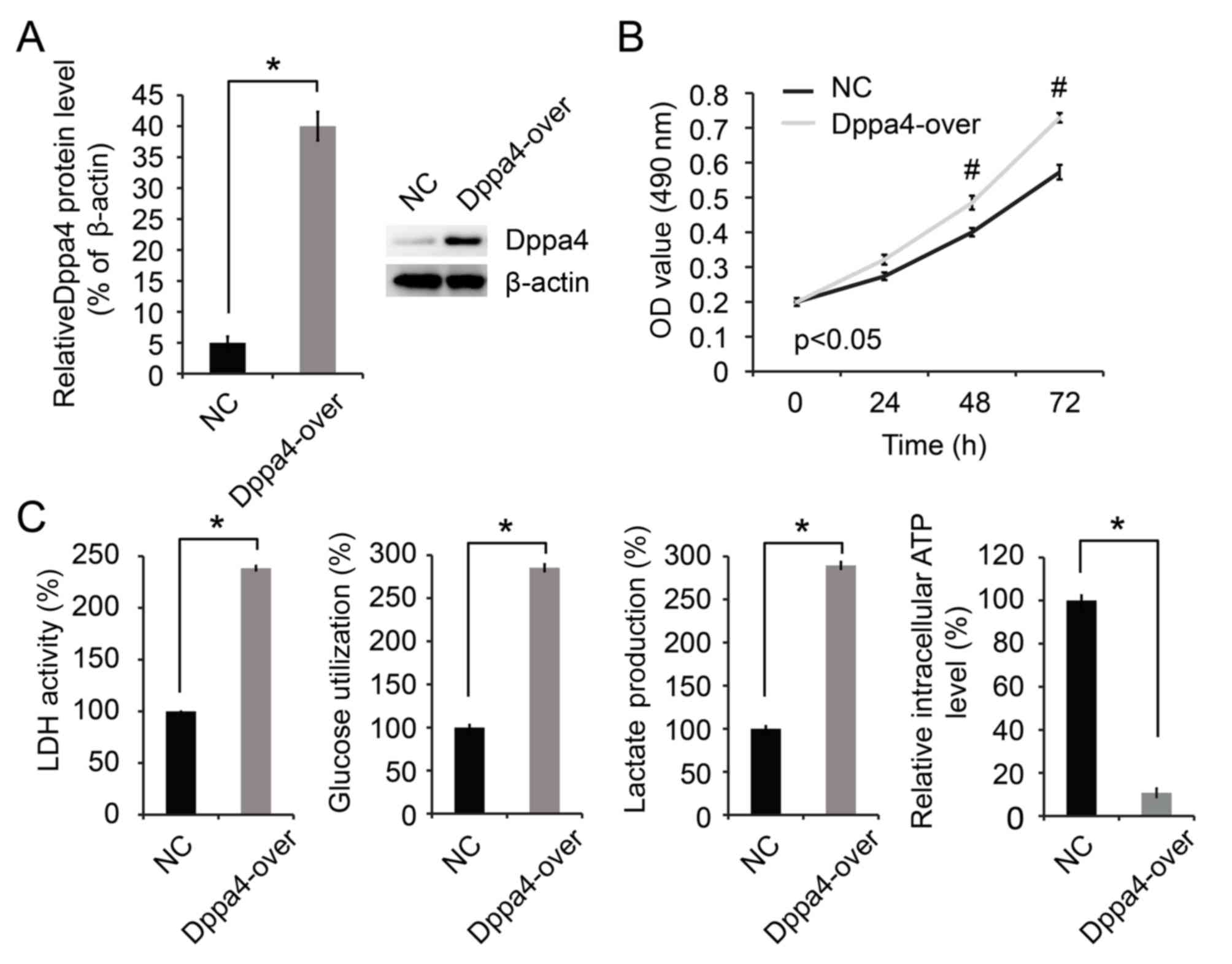
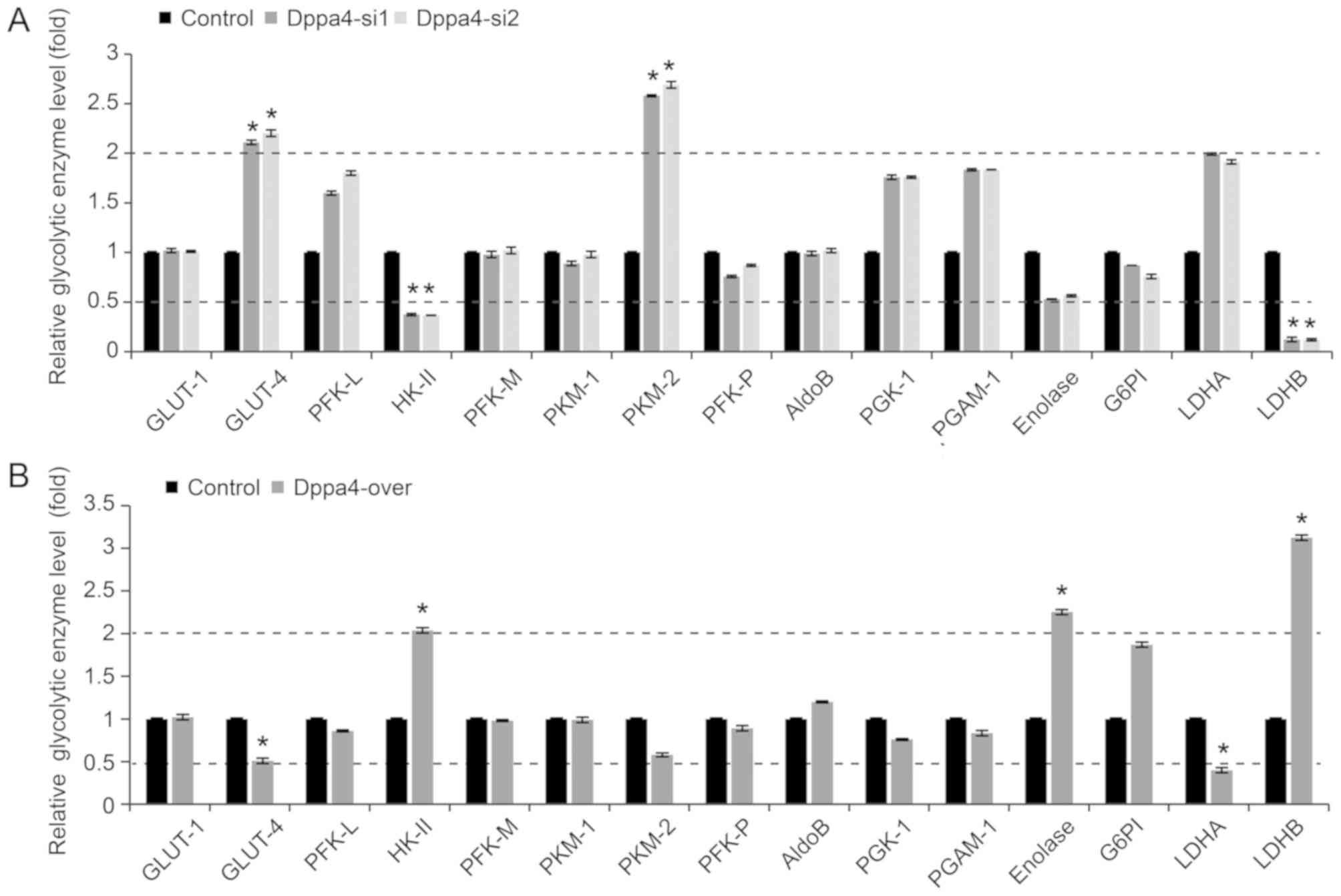
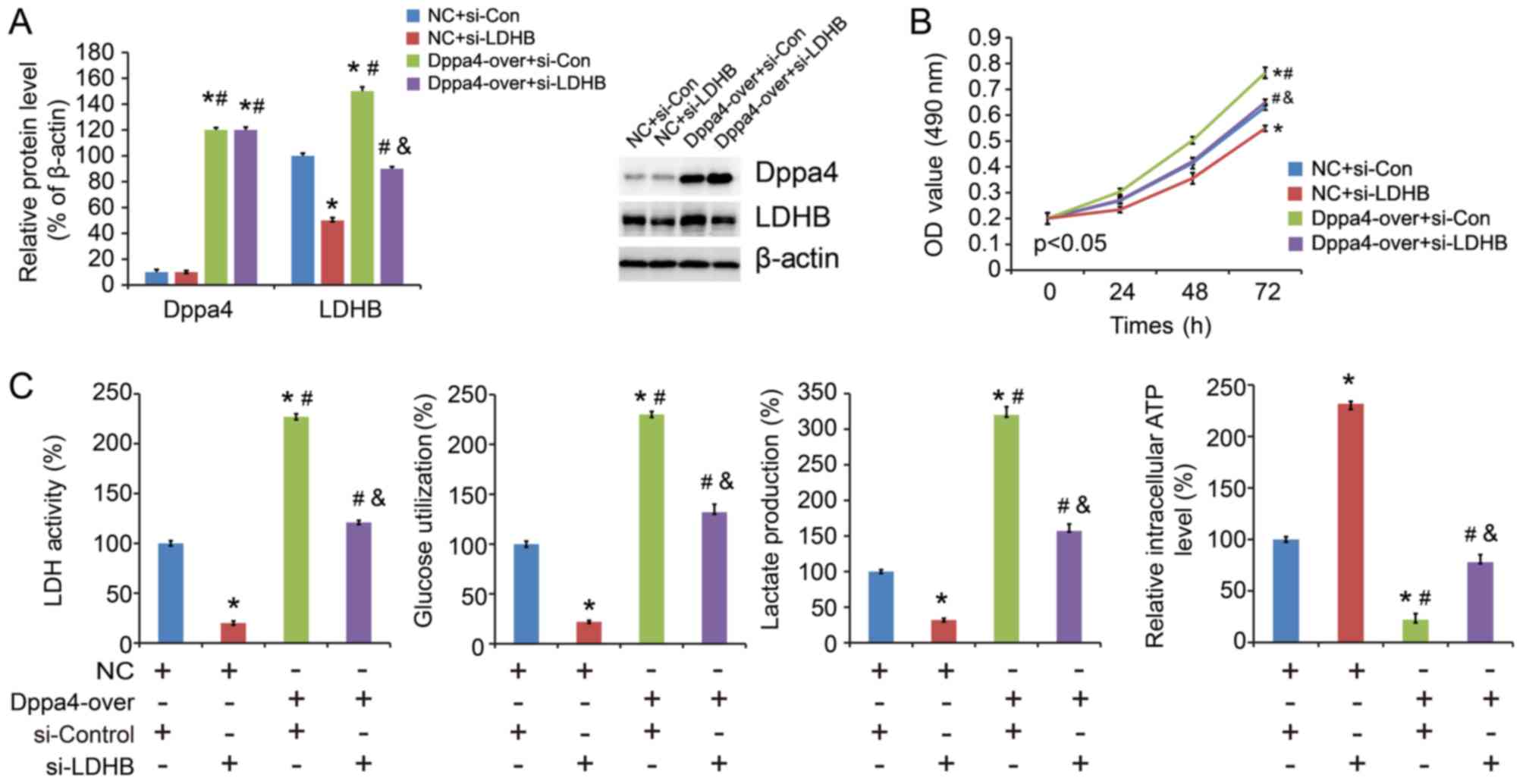
The developmental pluripotency‑associated 4 (Dppa4) gene serves critical roles in cell self‑renewal, as well as in cancer development and progression. However, the regulatory role of Dppa4 in non‑small‑cell lung cancer (NSCLC) and its underlying mechanisms remain elusive. The aim of the present study was to investigate the biological function of Dppa4 in NSCLC and its underlying mechanism of action. Dppa4 expression was measured in NSCLC tissue samples and cell lines, and its effect on cell proliferation and the expression of glycolytic enzymes was determined. In addition, the underlying mechanisms of Dppa4‑induced alterations in glycolysis were analyzed. Univariate and multivariate analyses were also performed to analyze the prognostic significance of clinicopathological characteristics. Dppa4 was found to be highly expressed in NSCLC tissues and cell lines. Furthermore, it was observed that Dppa4 was correlated with the degree of tumor differentiation and TNM stage. Univariate and multivariate analyses identified Dppa4 expression and clinical stage as prognostic factors for NSCLC patients. Kaplan‑Meier analysis further revealed that patients with lower Dppa4 expression exhibited a better prognosis. In NSCLC cells, Dppa4 knockdown inhibited cell proliferation, while Dppa4 overexpression enhanced cell proliferation, which was likely mediated by glycolysis promotion. Dppa4 knockdown had no evident effect on the majority of enzymes examined; however, glucose transporter type 4 (GLUT‑4) and pyruvate kinase isozyme M2 were significantly upregulated, and hexokinase II (HK‑II) and lactate dehydrogenase B (LDHB) were downregulated following Dppa4 knockdown. By contrast, Dppa4 overexpression resulted in downregulation of GLUT‑4, and upregulation of HK‑II, enolase and LDHB, whereas it had no effect on other enzymes. Since the most evident effect was observed on LDHB, further functional experiments demonstrated that this enzyme reversed the promoting effects of Dppa4 in NSCLC. In conclusion, Dppa4 promotes NSCLC progression, partly through glycolysis by LDHB. Thus, the Dppa4‑LDHB axis critically contributes to glycolysis in NSCLC cells, thereby promoting NSCLC development and progression.
View Figures

Figure 1

Figure 2

Figure 3

Figure 4

Figure 5

View References

1 

Siegel RL, Miller KD and Jemal A: Cancer statistics, 2018. CA Cancer J Clin. 68:7–30. 2018. View Article : Google Scholar : PubMed/NCBI

2 

Ezeh UI, Turek PJ, Reijo RA and Clark AT: Human embryonic stem cell genes OCT4, NANOG, STELLAR, and GDF3 are expressed in both seminoma and breast carcinoma. Cancer. 104:2255–2265. 2005. View Article : Google Scholar : PubMed/NCBI

3 

Pardal R, Clarke MF and Morrison SJ: Applying the principles of stem-cell biology to cancer. Nat Rev Cancer. 3:895–902. 2003. View Article : Google Scholar : PubMed/NCBI

4 

Amini S, Fathi F, Mobalegi J, Sofimajidpour H and Ghadimi T: The expressions of stem cell markers: Oct4, Nanog, Sox2, nucleostemin, Bmi, Zfx, Tcl1, Tbx3, Dppa4, and Esrrb in bladder, colon, and prostate cancer, and certain cancer cell lines. Anat Cell Biol. 47:1–11. 2014. View Article : Google Scholar : PubMed/NCBI

5 

Du J, Chen T, Zou X, Xiong B and Lu G: Dppa2 knockdown-induced differentiation and repressed proliferation of mouse embryonic stem cells. J Biochem. 147:265–271. 2010. View Article : Google Scholar : PubMed/NCBI

6 

Zhang M, Cui F, Lu S, Lu H, Xue Y, Wang J, Chen J, Zhao S, Ma S, Zhang Y, et al: Developmental pluripotency-associated 4: A novel predictor for prognosis and a potential therapeutic target for colon cancer. J Exp Clin Cancer Res. 34:602015. View Article : Google Scholar : PubMed/NCBI

7 

Tung PY, Varlakhanova NV and Knoepfler PS: Identification of DPPA4 and DPPA2 as a novel family of pluripotency-related oncogenes. Stem Cells. 31:2330–2342. 2013. View Article : Google Scholar : PubMed/NCBI

8 

Tang Y, Xiao J, Zhao S, Feng Y and Zhang H: A study on construction of plasmid pcDNA3.1 (−) CMV.CD and transfection into laryngeal cancer cell Hep-2. Lin Chuang Er Bi Yan Hou Ke Za Zhi. 19:988–991. 2005.(In Chinese). PubMed/NCBI

9 

Peirson SN, Butler JN and Foster RG: Experimental validation of novel and conventional approaches to quantitative real-time PCR data analysis. Nucleic Acids Res. 31:e732003. View Article : Google Scholar : PubMed/NCBI

10 

Livak KJ and Schmittgen TD: Analysis of relative gene expression data using real-time quantitative PCR and the 2(-Delta Delta C(T)) method. Methods. 25:402–408. 2001. View Article : Google Scholar : PubMed/NCBI

11 

Chakravarthy H, Boer B, Desler M, Mallanna SK, McKeithan TW and Rizzino A: Identification of DPPA4 and other genes as putative Sox2:Oct-3/4 target genes using a combination of in silico analysis and transcription-based assays. J Cell Physiol. 216:651–662. 2008. View Article : Google Scholar : PubMed/NCBI

12 

Abdul Khalek FJ, Gallicano GI and Mishra L: Colon cancer stem cells. Gastrointest Cancer Res. (Suppl 1):S16–S23. 2010.PubMed/NCBI

13 

Eramo A, Lotti F, Sette G, Pilozzi E, Biffoni M, Di Virgilio A, Conticello C, Ruco L, Peschle C and De Maria R: Identification and expansion of the tumorigenic lung cancer stem cell population. Cell Death Differ. 15:5042008. View Article : Google Scholar : PubMed/NCBI

14 

Jones CL, Stevens BM, D'Alessandro A, Reisz JA, Culp-Hill R, Nemkov T, Pei S, Khan N, Adane B, Ye H, et al: Inhibition of amino acid metabolism selectively targets human leukemia stem cells. Cancer Cell. 34:724–740.e4. 2018. View Article : Google Scholar : PubMed/NCBI

15 

Hanahan D and Weinberg RA: Hallmarks of cancer: The next generation. Cell. 144:646–674. 2011. View Article : Google Scholar : PubMed/NCBI

16 

Lu J, Tan M and Cai Q: The Warburg effect in tumor progression: Mitochondrial oxidative metabolism as an anti-metastasis mechanism. Cancer Lett. 356:156–164. 2015. View Article : Google Scholar : PubMed/NCBI

17 

Lin L, Huang H, Liao W, Ma H, Liu J, Wang L, Huang N and Liao Y: MACC1 supports human gastric cancer growth under metabolic stress by enhancing the Warburg effect. Oncogene. 34:2700–2710. 2015. View Article : Google Scholar : PubMed/NCBI

18 

Christofk HR, Vander Heiden MG, Wu N, Asara JM and Cantley LC: Pyruvate kinase M2 is a phosphotyrosine-binding protein. Nature. 452:181–186. 2008. View Article : Google Scholar : PubMed/NCBI

19 

Mathupala SP, Heese C and Pedersen PL: Glucose catabolism in cancer cells. The type II hexokinase promoter contains functionally active response elements for the tumor suppressor p53. J Biol Chem. 272:22776–22780. 1997. View Article : Google Scholar : PubMed/NCBI

20 

Yoshikawa T, Noguchi Y and Satoh S: Inhibition of IRS-1 phosphorylation and the alterations of GLUT4 in isolated adipocytes from cachectic tumor-bearing rats. Biochem Biophys Res Commun. 256:676–681. 1999. View Article : Google Scholar : PubMed/NCBI

21 

Leiblich A, Cross SS, Catto JW, Phillips JT, Leung HY, Hamdy FC and Rehman I: Lactate dehydrogenase-B is silenced by promoter hypermethylation in human prostate cancer. Oncogene. 25:2953–2960. 2006. View Article : Google Scholar : PubMed/NCBI

22 

Song T, Gan W, Chen J, Huang L, Yin H, He T, Huang H and Hu X: Antibodies against Clonorchis sinensis LDH could cross-react with LDHB localizing on the plasma membrane of human hepatocarcinoma cell SMMC-7721 and induce apoptosis. Parasitol Res. 115:1595–1603. 2016. View Article : Google Scholar : PubMed/NCBI

23 

McCleland ML, Adler AS, Deming L, Cosino E, Lee L, Blackwood EM, Solon M, Tao J, Li L, Shames D, et al: Lactate dehydrogenase B is required for the growth of KRAS-dependent lung adenocarcinomas. Clin Cancer Res. 19:773–784. 2013. View Article : Google Scholar : PubMed/NCBI

24 

McCleland ML, Adler AS, Shang Y, Hunsaker T, Truong T, Peterson D, Torres E, Li L, Haley B, Stephan JP, et al: An integrated genomic screen identifies LDHB as an essential gene for triple-negative breast cancer. Cancer Res. 72:5812–5823. 2012. View Article : Google Scholar : PubMed/NCBI

25 

Dennison JB, Molina JR, Mitra S, González-Angulo AM, Balko JM, Kuba MG, Sanders ME, Pinto JA, Gómez HL, Arteaga CL, et al: Lactate dehydrogenase B: A metabolic marker of response to neoadjuvant chemotherapy in breast cancer. Clin Cancer Res. 19:3703–3713. 2013. View Article : Google Scholar : PubMed/NCBI

26 

Chen R, Zhou X, Yu Z, Liu J and Huang G: Low expression of LDHB correlates with unfavorable survival in hepatocellular carcinoma: Strobe-compliant article. Medicine (Baltimore). 94:e15832015. View Article : Google Scholar : PubMed/NCBI

27 

Cui J, Quan M, Jiang W, Hu H, Jiao F, Li N, Jin Z, Wang L and Wang Y: Suppressed expression of LDHB promotes pancreatic cancer progression via inducing glycolytic phenotype. Med Oncol. 32:1432015. View Article : Google Scholar : PubMed/NCBI

28 

Maekawa M, Taniguchi T, Ishikawa J, Sugimura H, Sugano K and Kanno T: Promoter hypermethylation in cancer silences LDHB, eliminating lactate dehydrogenase isoenzymes 1–4. Clin Chem. 49:1518–1520. 2003. View Article : Google Scholar : PubMed/NCBI

29 

Revill K, Wang T, Lachenmayer A, Kojima K, Harrington A, Li J, Hoshida Y, Llovet JM and Powers S: Genome-wide methylation analysis and epigenetic unmasking identify tumor suppressor genes in hepatocellular carcinoma. Gastroenterology. 145:1424–135.e1-e25. 2013. View Article : Google Scholar : PubMed/NCBI

Related Articles

  • Abstract
  • View
  • Download
  • Twitter
Copy and paste a formatted citation
Spandidos Publications style
Li L, Wang Y, Wang Q, Qu J, Wei X, Xu J, Wang Y, Suo F and Zhang Y: High developmental pluripotency‑associated 4 expression promotes cell proliferation and glycolysis, and predicts poor prognosis in non‑small‑cell lung cancer. Mol Med Rep 20: 445-454, 2019.
APA
Li, L., Wang, Y., Wang, Q., Qu, J., Wei, X., Xu, J. ... Zhang, Y. (2019). High developmental pluripotency‑associated 4 expression promotes cell proliferation and glycolysis, and predicts poor prognosis in non‑small‑cell lung cancer. Molecular Medicine Reports, 20, 445-454. https://doi.org/10.3892/mmr.2019.10272
MLA
Li, L., Wang, Y., Wang, Q., Qu, J., Wei, X., Xu, J., Wang, Y., Suo, F., Zhang, Y."High developmental pluripotency‑associated 4 expression promotes cell proliferation and glycolysis, and predicts poor prognosis in non‑small‑cell lung cancer". Molecular Medicine Reports 20.1 (2019): 445-454.
Chicago
Li, L., Wang, Y., Wang, Q., Qu, J., Wei, X., Xu, J., Wang, Y., Suo, F., Zhang, Y."High developmental pluripotency‑associated 4 expression promotes cell proliferation and glycolysis, and predicts poor prognosis in non‑small‑cell lung cancer". Molecular Medicine Reports 20, no. 1 (2019): 445-454. https://doi.org/10.3892/mmr.2019.10272
Copy and paste a formatted citation
x
Spandidos Publications style
Li L, Wang Y, Wang Q, Qu J, Wei X, Xu J, Wang Y, Suo F and Zhang Y: High developmental pluripotency‑associated 4 expression promotes cell proliferation and glycolysis, and predicts poor prognosis in non‑small‑cell lung cancer. Mol Med Rep 20: 445-454, 2019.
APA
Li, L., Wang, Y., Wang, Q., Qu, J., Wei, X., Xu, J. ... Zhang, Y. (2019). High developmental pluripotency‑associated 4 expression promotes cell proliferation and glycolysis, and predicts poor prognosis in non‑small‑cell lung cancer. Molecular Medicine Reports, 20, 445-454. https://doi.org/10.3892/mmr.2019.10272
MLA
Li, L., Wang, Y., Wang, Q., Qu, J., Wei, X., Xu, J., Wang, Y., Suo, F., Zhang, Y."High developmental pluripotency‑associated 4 expression promotes cell proliferation and glycolysis, and predicts poor prognosis in non‑small‑cell lung cancer". Molecular Medicine Reports 20.1 (2019): 445-454.
Chicago
Li, L., Wang, Y., Wang, Q., Qu, J., Wei, X., Xu, J., Wang, Y., Suo, F., Zhang, Y."High developmental pluripotency‑associated 4 expression promotes cell proliferation and glycolysis, and predicts poor prognosis in non‑small‑cell lung cancer". Molecular Medicine Reports 20, no. 1 (2019): 445-454. https://doi.org/10.3892/mmr.2019.10272
Follow us
  • Twitter
  • LinkedIn
  • Facebook
About
  • Spandidos Publications
  • Careers
  • Cookie Policy
  • Privacy Policy
How can we help?
  • Help
  • Live Chat
  • Contact
  • Email to our Support Team