Spandidos Publications Logo
  • About
    • About Spandidos
    • Aims and Scopes
    • Abstracting and Indexing
    • Editorial Policies
    • Reprints and Permissions
    • Job Opportunities
    • Terms and Conditions
    • Contact
  • Journals
    • All Journals
    • Oncology Letters
      • Oncology Letters
      • Information for Authors
      • Editorial Policies
      • Editorial Board
      • Aims and Scope
      • Abstracting and Indexing
      • Bibliographic Information
      • Archive
    • International Journal of Oncology
      • International Journal of Oncology
      • Information for Authors
      • Editorial Policies
      • Editorial Board
      • Aims and Scope
      • Abstracting and Indexing
      • Bibliographic Information
      • Archive
    • Molecular and Clinical Oncology
      • Molecular and Clinical Oncology
      • Information for Authors
      • Editorial Policies
      • Editorial Board
      • Aims and Scope
      • Abstracting and Indexing
      • Bibliographic Information
      • Archive
    • Experimental and Therapeutic Medicine
      • Experimental and Therapeutic Medicine
      • Information for Authors
      • Editorial Policies
      • Editorial Board
      • Aims and Scope
      • Abstracting and Indexing
      • Bibliographic Information
      • Archive
    • International Journal of Molecular Medicine
      • International Journal of Molecular Medicine
      • Information for Authors
      • Editorial Policies
      • Editorial Board
      • Aims and Scope
      • Abstracting and Indexing
      • Bibliographic Information
      • Archive
    • Biomedical Reports
      • Biomedical Reports
      • Information for Authors
      • Editorial Policies
      • Editorial Board
      • Aims and Scope
      • Abstracting and Indexing
      • Bibliographic Information
      • Archive
    • Oncology Reports
      • Oncology Reports
      • Information for Authors
      • Editorial Policies
      • Editorial Board
      • Aims and Scope
      • Abstracting and Indexing
      • Bibliographic Information
      • Archive
    • Molecular Medicine Reports
      • Molecular Medicine Reports
      • Information for Authors
      • Editorial Policies
      • Editorial Board
      • Aims and Scope
      • Abstracting and Indexing
      • Bibliographic Information
      • Archive
    • World Academy of Sciences Journal
      • World Academy of Sciences Journal
      • Information for Authors
      • Editorial Policies
      • Editorial Board
      • Aims and Scope
      • Abstracting and Indexing
      • Bibliographic Information
      • Archive
    • International Journal of Functional Nutrition
      • International Journal of Functional Nutrition
      • Information for Authors
      • Editorial Policies
      • Editorial Board
      • Aims and Scope
      • Abstracting and Indexing
      • Bibliographic Information
      • Archive
    • International Journal of Epigenetics
      • International Journal of Epigenetics
      • Information for Authors
      • Editorial Policies
      • Editorial Board
      • Aims and Scope
      • Abstracting and Indexing
      • Bibliographic Information
      • Archive
    • Medicine International
      • Medicine International
      • Information for Authors
      • Editorial Policies
      • Editorial Board
      • Aims and Scope
      • Abstracting and Indexing
      • Bibliographic Information
      • Archive
  • Articles
  • Information
    • Information for Authors
    • Information for Reviewers
    • Information for Librarians
    • Information for Advertisers
    • Conferences
  • Language Editing
Spandidos Publications Logo
  • About
    • About Spandidos
    • Aims and Scopes
    • Abstracting and Indexing
    • Editorial Policies
    • Reprints and Permissions
    • Job Opportunities
    • Terms and Conditions
    • Contact
  • Journals
    • All Journals
    • Biomedical Reports
      • Information for Authors
      • Editorial Policies
      • Editorial Board
      • Aims and Scope
      • Abstracting and Indexing
      • Bibliographic Information
      • Archive
    • Experimental and Therapeutic Medicine
      • Information for Authors
      • Editorial Policies
      • Editorial Board
      • Aims and Scope
      • Abstracting and Indexing
      • Bibliographic Information
      • Archive
    • International Journal of Epigenetics
      • Information for Authors
      • Editorial Policies
      • Editorial Board
      • Aims and Scope
      • Abstracting and Indexing
      • Bibliographic Information
      • Archive
    • International Journal of Functional Nutrition
      • Information for Authors
      • Editorial Policies
      • Editorial Board
      • Aims and Scope
      • Abstracting and Indexing
      • Bibliographic Information
      • Archive
    • International Journal of Molecular Medicine
      • Information for Authors
      • Editorial Policies
      • Editorial Board
      • Aims and Scope
      • Abstracting and Indexing
      • Bibliographic Information
      • Archive
    • International Journal of Oncology
      • Information for Authors
      • Editorial Policies
      • Editorial Board
      • Aims and Scope
      • Abstracting and Indexing
      • Bibliographic Information
      • Archive
    • Medicine International
      • Information for Authors
      • Editorial Policies
      • Editorial Board
      • Aims and Scope
      • Abstracting and Indexing
      • Bibliographic Information
      • Archive
    • Molecular and Clinical Oncology
      • Information for Authors
      • Editorial Policies
      • Editorial Board
      • Aims and Scope
      • Abstracting and Indexing
      • Bibliographic Information
      • Archive
    • Molecular Medicine Reports
      • Information for Authors
      • Editorial Policies
      • Editorial Board
      • Aims and Scope
      • Abstracting and Indexing
      • Bibliographic Information
      • Archive
    • Oncology Letters
      • Information for Authors
      • Editorial Policies
      • Editorial Board
      • Aims and Scope
      • Abstracting and Indexing
      • Bibliographic Information
      • Archive
    • Oncology Reports
      • Information for Authors
      • Editorial Policies
      • Editorial Board
      • Aims and Scope
      • Abstracting and Indexing
      • Bibliographic Information
      • Archive
    • World Academy of Sciences Journal
      • Information for Authors
      • Editorial Policies
      • Editorial Board
      • Aims and Scope
      • Abstracting and Indexing
      • Bibliographic Information
      • Archive
  • Articles
  • Information
    • For Authors
    • For Reviewers
    • For Librarians
    • For Advertisers
    • Conferences
  • Language Editing
Login Register Submit
  • This site uses cookies
  • You can change your cookie settings at any time by following the instructions in our Cookie Policy. To find out more, you may read our Privacy Policy.

    I agree
Search articles by DOI, keyword, author or affiliation
Search
Advanced Search
presentation
Molecular Medicine Reports
Join Editorial Board Propose a Special Issue
Print ISSN: 1791-2997 Online ISSN: 1791-3004
Journal Cover
July-2019 Volume 20 Issue 1

Full Size Image

Sign up for eToc alerts
Recommend to Library

Journals

International Journal of Molecular Medicine

International Journal of Molecular Medicine

International Journal of Molecular Medicine is an international journal devoted to molecular mechanisms of human disease.

International Journal of Oncology

International Journal of Oncology

International Journal of Oncology is an international journal devoted to oncology research and cancer treatment.

Molecular Medicine Reports

Molecular Medicine Reports

Covers molecular medicine topics such as pharmacology, pathology, genetics, neuroscience, infectious diseases, molecular cardiology, and molecular surgery.

Oncology Reports

Oncology Reports

Oncology Reports is an international journal devoted to fundamental and applied research in Oncology.

Experimental and Therapeutic Medicine

Experimental and Therapeutic Medicine

Experimental and Therapeutic Medicine is an international journal devoted to laboratory and clinical medicine.

Oncology Letters

Oncology Letters

Oncology Letters is an international journal devoted to Experimental and Clinical Oncology.

Biomedical Reports

Biomedical Reports

Explores a wide range of biological and medical fields, including pharmacology, genetics, microbiology, neuroscience, and molecular cardiology.

Molecular and Clinical Oncology

Molecular and Clinical Oncology

International journal addressing all aspects of oncology research, from tumorigenesis and oncogenes to chemotherapy and metastasis.

World Academy of Sciences Journal

World Academy of Sciences Journal

Multidisciplinary open-access journal spanning biochemistry, genetics, neuroscience, environmental health, and synthetic biology.

International Journal of Functional Nutrition

International Journal of Functional Nutrition

Open-access journal combining biochemistry, pharmacology, immunology, and genetics to advance health through functional nutrition.

International Journal of Epigenetics

International Journal of Epigenetics

Publishes open-access research on using epigenetics to advance understanding and treatment of human disease.

Medicine International

Medicine International

An International Open Access Journal Devoted to General Medicine.

Journal Cover
July-2019 Volume 20 Issue 1

Full Size Image

Sign up for eToc alerts
Recommend to Library

  • Article
  • Citations
    • Cite This Article
    • Download Citation
    • Create Citation Alert
    • Remove Citation Alert
    • Cited By
  • Similar Articles
    • Related Articles (in Spandidos Publications)
    • Similar Articles (Google Scholar)
    • Similar Articles (PubMed)
  • Download PDF
  • Download XML
  • View XML
Article

Bupivacaine at clinically relevant concentrations induces toxicity in human intervertebral disc cells via the induction of autophagy in vitro

  • Authors:
    • Ge Yang
    • Zhuoyang Li
    • Haibo Mei
    • Weihua Ye
    • Shengxiang Huang
    • Kun Liu
    • Qian Tan
  • View Affiliations / Copyright

    Affiliations: Department of Orthopedics, Hunan Children's Hospital, The Pediatric Academy of University of South China, Changsha, Hunan 410007, P.R. China, Department of Orthopedics, First Affiliated Hospital, School of Medicine, Zhejiang University, Hangzhou, Zhejiang 310003, P.R. China
  • Pages: 837-843
    |
    Published online on: May 22, 2019
       https://doi.org/10.3892/mmr.2019.10279
  • Expand metrics +
Metrics: Total Views: 0 (Spandidos Publications: | PMC Statistics: )
Metrics: Total PDF Downloads: 0 (Spandidos Publications: | PMC Statistics: )
Cited By (CrossRef): 0 citations Loading Articles...

This article is mentioned in:


Abstract

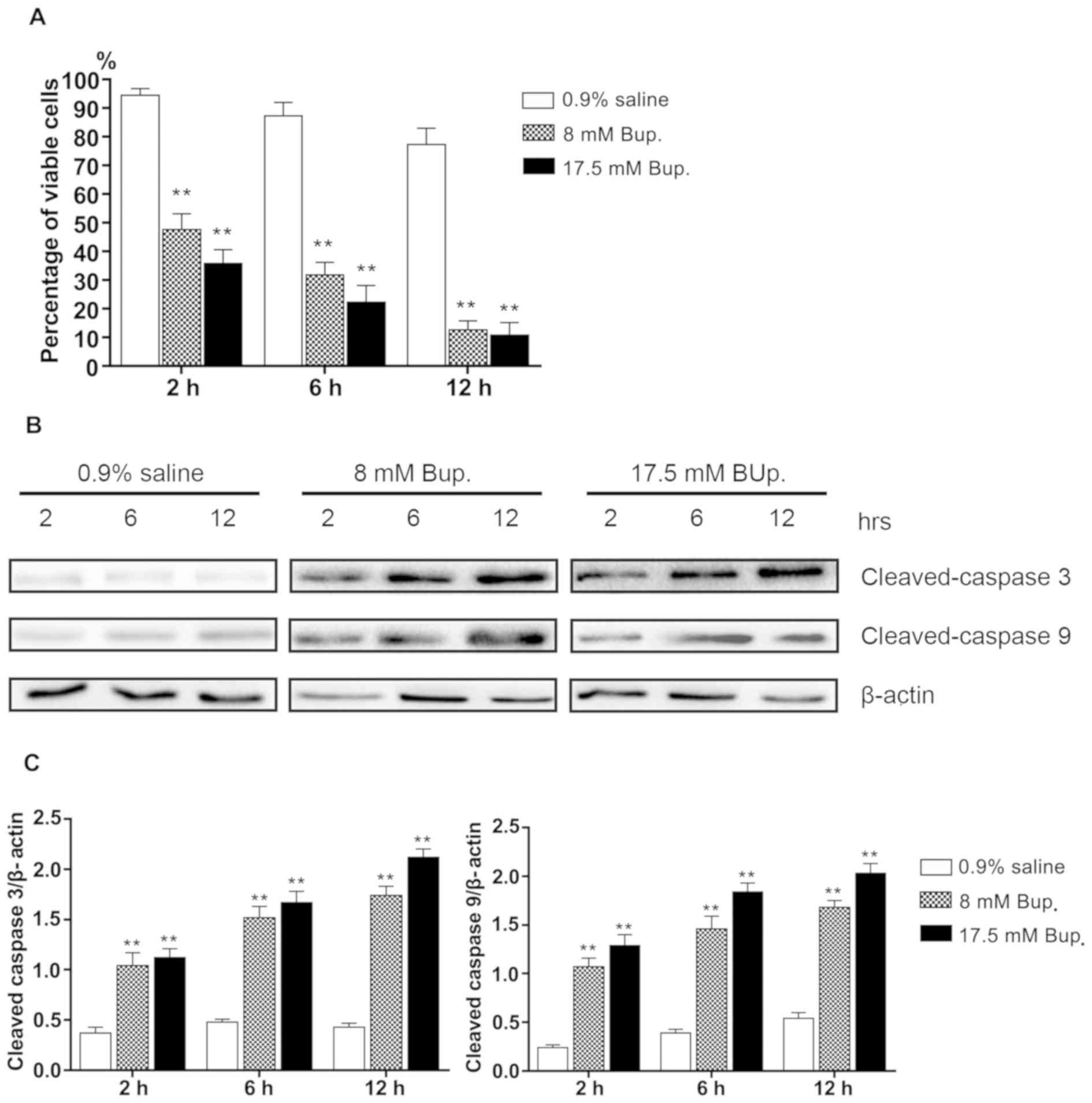
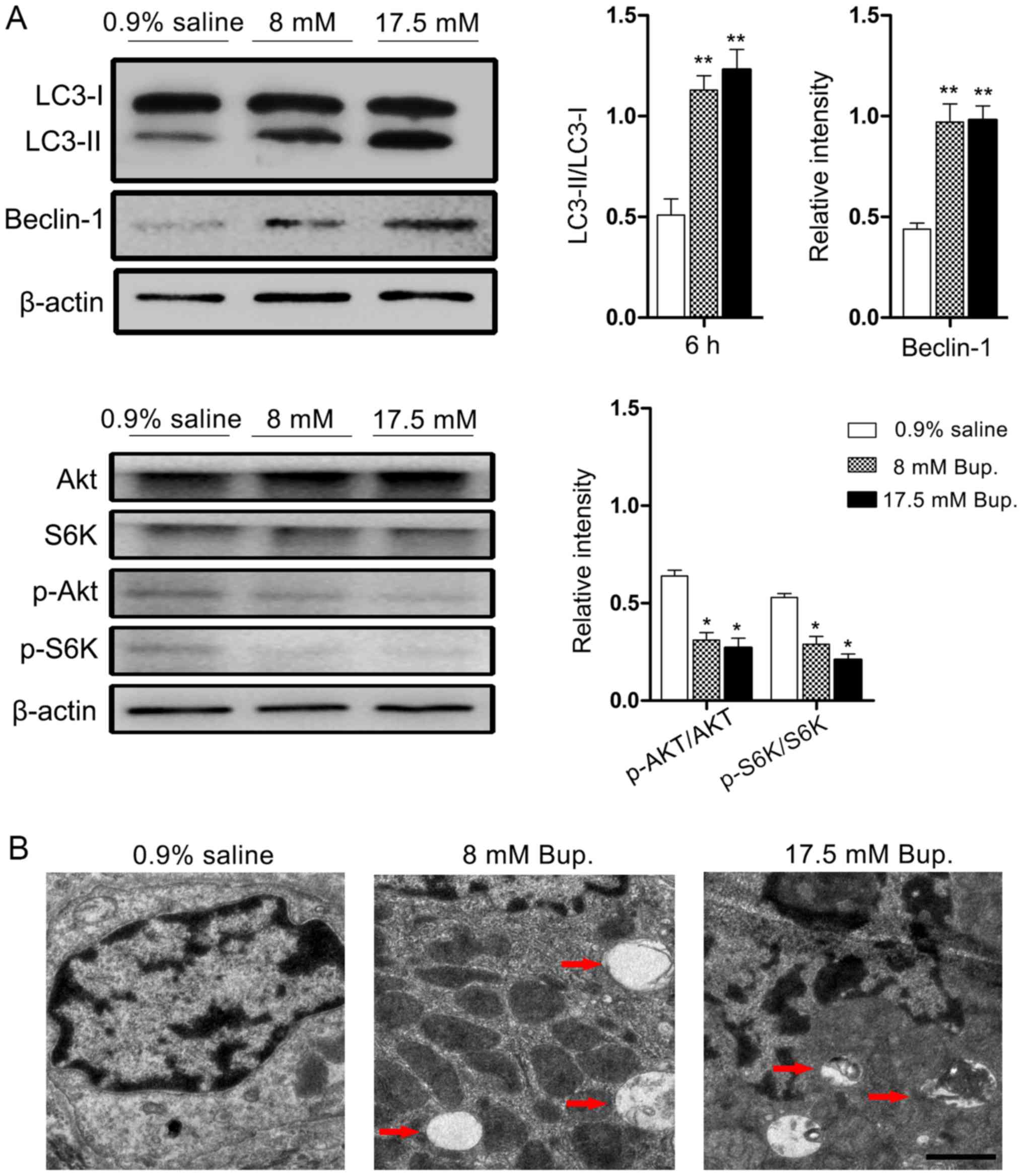
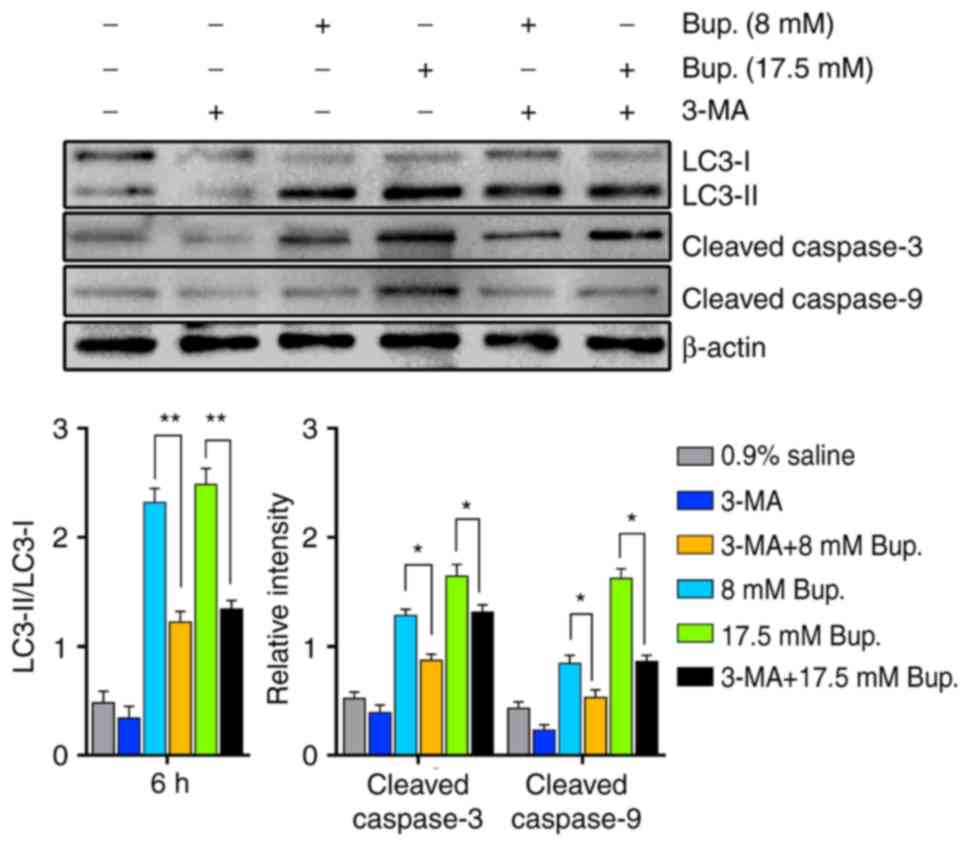
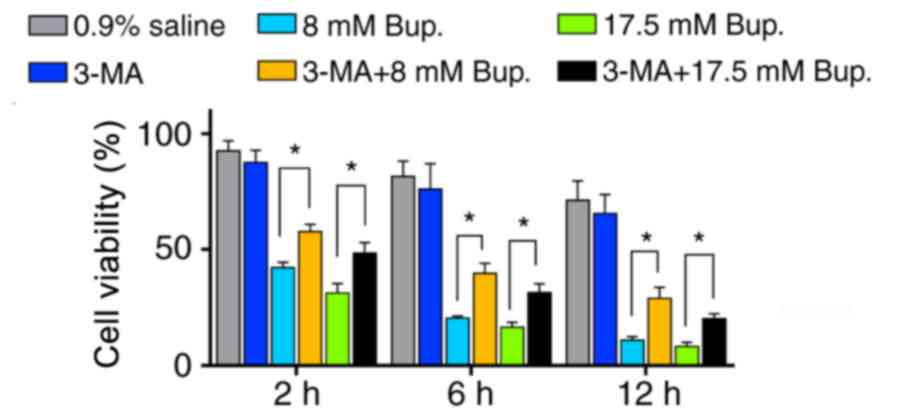
It has been reported that bupivacaine, the most widely used local anesthetic to relieve discogenic back pain in clinical settings, is cytotoxic to intervertebral disc (IVD) cells in vitro; however, the precise mechanisms of cytotoxicity induced by bupivacaine remain unclear. Autophagy is an intracellular lysosomal degradation process that is important for cellular survival. The present study investigated the role of autophagy in the survival of IVD cells subjected to bupivacaine treatment. Human nucleus pulposus (NP) cells isolated from IVD cells were exposed to various concentrations of bupivacaine for 2, 6 and 12 h, and analyzed for cellular viability using MTT assay and western blotting. Additionally, autophagosome formation and autophagy‑associated biomarkers were evaluated by electron microscopy and western blotting to determine the autophagic activity and signaling alterations in NP cells under bupivacaine treatment. Furthermore, autophagic activity was inhibited in vitro using 3‑methyladenine to further analyze the association between autophagy and apoptosis in bupivacaine‑treated NP cells. Bupivacaine exhibited time‑ and dose‑dependent cytotoxic effects on human IVD cells at clinically relevant concentrations. Bupivacaine increased autophagic activity by promoting autophagosome formation, and LC3‑II and Beclin‑1 production. Additionally, bupivacaine inhibited protein kinase B (Akt)/mammalian target of rapamycin (mTOR)/S6 kinase (S6K) signaling, which is a negative regulator of autophagic activity. Of note, pharmacological inhibition of autophagy alleviated bupivacaine‑induced cytotoxicity of IVD cells. The findings indicated that application of clinically relevant concentrations of bupivacaine upregulated autophagic activity via inhibition of Akt/mTOR/S6K signaling. In addition, the inhibition of autophagic activation served as a protective mechanism against bupivacaine‑induced cytotoxicity. Collectively, these findings may provide novel insight into the mechanisms underlying cytotoxicity induced by bupivacaine when controlling spine‑associated pain.
View Figures

Figure 1

Figure 2

Figure 3

Figure 4

View References

1 

Deyo RA and Weinstein JN: Low back pain. N Engl J Med. 344:363–370. 2001. View Article : Google Scholar : PubMed/NCBI

2 

de Schepper EI, Damen J, van Meurs JB, Ginai AZ, Popham M, Hofman A, Koes BW and Bierma-Zeinstra SM: The association between lumbar disc degeneration and low back pain: The influence of age, gender, and individual radiographic features. Spine (Phila Pa 1976). 35:531–536. 2010. View Article : Google Scholar : PubMed/NCBI

3 

Friedly J, Chan L and Deyo R: Increases in lumbosacral injections in the Medicare population: 1994 to 2001. Spine (Phila Pa 1976). 32:1754–1760. 2007. View Article : Google Scholar : PubMed/NCBI

4 

Kotilainen E, Muittari P and Kirvelä O: Intradiscal glycerol or bupivacaine in the treatment of low back pain. Acta Neurochir (Wien). 139:541–545. 1997. View Article : Google Scholar : PubMed/NCBI

5 

Ohtori S, Inoue G, Orita S, Eguchi Y, Ochiai N, Kishida S, Kuniyoshi K, Nakamura J, Aoki Y, Ishikawa T, et al: No acceleration of intervertebral disc degeneration after a single injection of bupivacaine in young age group with follow-up of 5 years. Asian Spine J. 7:212–217. 2013. View Article : Google Scholar : PubMed/NCBI

6 

Huang YH, Tsai PS and Huang CJ: Bupivacaine inhibits COX-2 expression, PGE2, and cytokine production in endotoxin-activated macrophages. Acta Anaesthesiol Scand. 52:530–535. 2008. View Article : Google Scholar : PubMed/NCBI

7 

Yanagidate F and Strichartz GR: Bupivacaine inhibits activation of neuronal spinal extracellular receptor-activated kinase through selective effects on ionotropic receptors. Anesthesiology. 104:805–814. 2006. View Article : Google Scholar : PubMed/NCBI

8 

Iwasaki K, Sudo H, Yamada K, Ito M and Iwasaki N: Cytotoxic effects of the radiocontrast agent iotrolan and anesthetic agents bupivacaine and lidocaine in three-dimensional cultures of human intervertebral disc nucleus pulposus cells: Identification of the apoptotic pathways. PLoS One. 9:e924422014. View Article : Google Scholar : PubMed/NCBI

9 

Quero L, Klawitter M, Nerlich AG, Leonardi M, Boos N and Wuertz K: Bupivacaine-the deadly friend of intervertebral disc cells? Spine J. 11:46–53. 2011. View Article : Google Scholar : PubMed/NCBI

10 

Cai XY, Xiong LM, Yang SH, Shao ZW, Xie M, Gao F and Ding F: Comparison of toxicity effects of ropivacaine, bupivacaine, and lidocaine on rabbit intervertebral disc cells in vitro. Spine J. 14:483–490. 2014. View Article : Google Scholar : PubMed/NCBI

11 

Hale AN, Ledbetter DJ, Gawriluk TR and Rucker EB III: Autophagy: Regulation and role in development. Autophagy. 9:951–972. 2013. View Article : Google Scholar : PubMed/NCBI

12 

Ma KG, Shao ZW, Yang SH, Wang J, Wang BC, Xiong LM, Wu Q and Chen SF: Autophagy is activated in compression-induced cell degeneration and is mediated by reactive oxygen species in nucleus pulposus cells exposed to compression. Osteoarthritis Cartilage. 21:2030–2038. 2013. View Article : Google Scholar : PubMed/NCBI

13 

Li R, Ma H, Zhang X, Li C, Xiong J, Lu T, Mao Y, Dai J, Liu L and Ding Z: Impaired autophagosome clearance contributes to local anesthetic bupivacaine-induced myotoxicity in mouse myoblasts. Anesthesiology. 122:595–605. 2015. View Article : Google Scholar : PubMed/NCBI

14 

Alers S, Löffler AS, Wesselborg S and Stork B: Role of AMPK-mTOR-Ulk1/2 in the regulation of autophagy: Cross talk, shortcuts, and feedbacks. Mol Cell Biol. 32:2–11. 2012. View Article : Google Scholar : PubMed/NCBI

15 

Yang GE, Duan X, Lin D, Li T, Luo D, Wang L and Lian K: Rapamycin-induced autophagy activity promotes bone fracture healing in rats. Exp Ther Med. 10:1327–1333. 2015. View Article : Google Scholar : PubMed/NCBI

16 

Beigh MA, Showkat M, Bashir B, Bashir A, Hussain Mu and Andrabi KI: Growth inhibition by bupivacaine is associated with inactivation of ribosomal protein S6 kinase 1. Biomed Res Int. 2014:8318452014. View Article : Google Scholar : PubMed/NCBI

17 

Pfirrmann CW, Metzdorf A, Zanetti M, Hodler J and Boos N: Magnetic resonance classification of lumbar intervertebral disc degeneration. Spine (Phila Pa 1976). 26:1873–1878. 2001. View Article : Google Scholar : PubMed/NCBI

18 

Hou H, Zhang Y, Huang Y, Yi Q, Lv L, Zhang T, Chen D, Hao Q and Shi Q: Inhibitors of phosphatidylinositol 3′-kinases promote mitotic cell death in HeLa cells. PLoS One. 7:e356652012. View Article : Google Scholar : PubMed/NCBI

19 

Lee H, Sowa G, Vo N, Vadala G, O'Connell S, Studer R and Kang J: Effect of bupivacaine on intervertebral disc cell viability. Spine J. 10:159–166. 2010. View Article : Google Scholar : PubMed/NCBI

20 

Roelofs PD, Deyo RA, Koes BW, Scholten RJ and van Tulder MW: Nonsteroidal anti-inflammatory drugs for low back pain: An updated Cochrane review. Spine (Phila Pa 1976). 33:1766–1774. 2008. View Article : Google Scholar : PubMed/NCBI

21 

Gump JM and Thorburn A: Autophagy and apoptosis: What is the connection? Trends Cell Biol. 21:387–392. 2011. View Article : Google Scholar : PubMed/NCBI

22 

Jain MV, Paczulla AM, Klonisch T, Dimgba FN, Rao SB, Roberg K, Schweizer F, Lengerke C, Davoodpour P, Palicharla VR, et al: Interconnections between apoptotic, autophagic and necrotic pathways: Implications for cancer therapy development. J Cell Mol Med. 17:12–29. 2013. View Article : Google Scholar : PubMed/NCBI

23 

Chaabane W, User SD, El-Gazzah M, Jaksik R, Sajjadi E, Rzeszowska-Wolny J and Los MJ: Autophagy, apoptosis, mitoptosis and necrosis: Interdependence between those pathways and effects on cancer. Arch Immunol Ther Exp (Warsz). 61:43–58. 2013. View Article : Google Scholar : PubMed/NCBI

24 

Matsunaga K, Saitoh T, Tabata K, Omori H, Satoh T, Kurotori N, Maejima I, Shirahama-Noda K, Ichimura T, Isobe T, et al: Two Beclin 1-binding proteins, Atg14L and Rubicon, reciprocally regulate autophagy at different stages. Nat Cell Biol. 11:385–396. 2009. View Article : Google Scholar : PubMed/NCBI

25 

Afanas'ev I: Signaling and damaging functions of free radicals in aging-free radical theory, hormesis, and TOR. Aging Dis. 1:75–88. 2010.PubMed/NCBI

26 

Farrand L, Oh SW, Song YS and Tsang BK: Phytochemicals: A multitargeted approach to gynecologic cancer therapy. Biomed Res Int. 2014:8901412014. View Article : Google Scholar : PubMed/NCBI

27 

Lv D, Bai Z, Yang L, Li X and Chen X: Lipid emulsionreverses bupivacaine-induced apoptosis of h9c2 cardiomyocytes: PI3K/Akt/GSK-3β signaling pathway. Environ Toxicol Pharmacol. 42:85–91. 2016. View Article : Google Scholar : PubMed/NCBI

28 

Fan YL, Li HC, Zhao W, Peng HH, Huang F, Jiang WH and Xu SY: Curcumin attenuated bupivacaine-induced neurotoxicity in SH-SY5Y cells via activation of the Akt signaling pathway. Neurochem Res. 41:2425–2432. 2016. View Article : Google Scholar : PubMed/NCBI

29 

Jiang L, Jin Y, Wang H, Jiang Y and Dong J: Glucosamine protects nucleus pulposus cells and induces autophagy via the mTOR-dependent pathway. J Orthop Res. 32:1532–1542. 2014. View Article : Google Scholar : PubMed/NCBI

30 

Hsin IL, Sheu GT, Jan MS, Sun HL, Wu TC, Chiu LY, Lue KH and Ko JL: Inhibition of lysosome degradation on autophagosome formation and responses to GMI, an immunomodulatory protein from Ganoderma microsporum. Br J Pharmacol. 167:1287–1300. 2012. View Article : Google Scholar : PubMed/NCBI

Related Articles

  • Abstract
  • View
  • Download
  • Twitter
Copy and paste a formatted citation
Spandidos Publications style
Yang G, Li Z, Mei H, Ye W, Huang S, Liu K and Tan Q: Bupivacaine at clinically relevant concentrations induces toxicity in human intervertebral disc cells via the induction of autophagy in vitro. Mol Med Rep 20: 837-843, 2019.
APA
Yang, G., Li, Z., Mei, H., Ye, W., Huang, S., Liu, K., & Tan, Q. (2019). Bupivacaine at clinically relevant concentrations induces toxicity in human intervertebral disc cells via the induction of autophagy in vitro. Molecular Medicine Reports, 20, 837-843. https://doi.org/10.3892/mmr.2019.10279
MLA
Yang, G., Li, Z., Mei, H., Ye, W., Huang, S., Liu, K., Tan, Q."Bupivacaine at clinically relevant concentrations induces toxicity in human intervertebral disc cells via the induction of autophagy in vitro". Molecular Medicine Reports 20.1 (2019): 837-843.
Chicago
Yang, G., Li, Z., Mei, H., Ye, W., Huang, S., Liu, K., Tan, Q."Bupivacaine at clinically relevant concentrations induces toxicity in human intervertebral disc cells via the induction of autophagy in vitro". Molecular Medicine Reports 20, no. 1 (2019): 837-843. https://doi.org/10.3892/mmr.2019.10279
Copy and paste a formatted citation
x
Spandidos Publications style
Yang G, Li Z, Mei H, Ye W, Huang S, Liu K and Tan Q: Bupivacaine at clinically relevant concentrations induces toxicity in human intervertebral disc cells via the induction of autophagy in vitro. Mol Med Rep 20: 837-843, 2019.
APA
Yang, G., Li, Z., Mei, H., Ye, W., Huang, S., Liu, K., & Tan, Q. (2019). Bupivacaine at clinically relevant concentrations induces toxicity in human intervertebral disc cells via the induction of autophagy in vitro. Molecular Medicine Reports, 20, 837-843. https://doi.org/10.3892/mmr.2019.10279
MLA
Yang, G., Li, Z., Mei, H., Ye, W., Huang, S., Liu, K., Tan, Q."Bupivacaine at clinically relevant concentrations induces toxicity in human intervertebral disc cells via the induction of autophagy in vitro". Molecular Medicine Reports 20.1 (2019): 837-843.
Chicago
Yang, G., Li, Z., Mei, H., Ye, W., Huang, S., Liu, K., Tan, Q."Bupivacaine at clinically relevant concentrations induces toxicity in human intervertebral disc cells via the induction of autophagy in vitro". Molecular Medicine Reports 20, no. 1 (2019): 837-843. https://doi.org/10.3892/mmr.2019.10279
Follow us
  • Twitter
  • LinkedIn
  • Facebook
About
  • Spandidos Publications
  • Careers
  • Cookie Policy
  • Privacy Policy
How can we help?
  • Help
  • Live Chat
  • Contact
  • Email to our Support Team