Spandidos Publications Logo
  • About
    • About Spandidos
    • Aims and Scopes
    • Abstracting and Indexing
    • Editorial Policies
    • Reprints and Permissions
    • Job Opportunities
    • Terms and Conditions
    • Contact
  • Journals
    • All Journals
    • Oncology Letters
      • Oncology Letters
      • Information for Authors
      • Editorial Policies
      • Editorial Board
      • Aims and Scope
      • Abstracting and Indexing
      • Bibliographic Information
      • Archive
    • International Journal of Oncology
      • International Journal of Oncology
      • Information for Authors
      • Editorial Policies
      • Editorial Board
      • Aims and Scope
      • Abstracting and Indexing
      • Bibliographic Information
      • Archive
    • Molecular and Clinical Oncology
      • Molecular and Clinical Oncology
      • Information for Authors
      • Editorial Policies
      • Editorial Board
      • Aims and Scope
      • Abstracting and Indexing
      • Bibliographic Information
      • Archive
    • Experimental and Therapeutic Medicine
      • Experimental and Therapeutic Medicine
      • Information for Authors
      • Editorial Policies
      • Editorial Board
      • Aims and Scope
      • Abstracting and Indexing
      • Bibliographic Information
      • Archive
    • International Journal of Molecular Medicine
      • International Journal of Molecular Medicine
      • Information for Authors
      • Editorial Policies
      • Editorial Board
      • Aims and Scope
      • Abstracting and Indexing
      • Bibliographic Information
      • Archive
    • Biomedical Reports
      • Biomedical Reports
      • Information for Authors
      • Editorial Policies
      • Editorial Board
      • Aims and Scope
      • Abstracting and Indexing
      • Bibliographic Information
      • Archive
    • Oncology Reports
      • Oncology Reports
      • Information for Authors
      • Editorial Policies
      • Editorial Board
      • Aims and Scope
      • Abstracting and Indexing
      • Bibliographic Information
      • Archive
    • Molecular Medicine Reports
      • Molecular Medicine Reports
      • Information for Authors
      • Editorial Policies
      • Editorial Board
      • Aims and Scope
      • Abstracting and Indexing
      • Bibliographic Information
      • Archive
    • World Academy of Sciences Journal
      • World Academy of Sciences Journal
      • Information for Authors
      • Editorial Policies
      • Editorial Board
      • Aims and Scope
      • Abstracting and Indexing
      • Bibliographic Information
      • Archive
    • International Journal of Functional Nutrition
      • International Journal of Functional Nutrition
      • Information for Authors
      • Editorial Policies
      • Editorial Board
      • Aims and Scope
      • Abstracting and Indexing
      • Bibliographic Information
      • Archive
    • International Journal of Epigenetics
      • International Journal of Epigenetics
      • Information for Authors
      • Editorial Policies
      • Editorial Board
      • Aims and Scope
      • Abstracting and Indexing
      • Bibliographic Information
      • Archive
    • Medicine International
      • Medicine International
      • Information for Authors
      • Editorial Policies
      • Editorial Board
      • Aims and Scope
      • Abstracting and Indexing
      • Bibliographic Information
      • Archive
  • Articles
  • Information
    • Information for Authors
    • Information for Reviewers
    • Information for Librarians
    • Information for Advertisers
    • Conferences
  • Language Editing
Spandidos Publications Logo
  • About
    • About Spandidos
    • Aims and Scopes
    • Abstracting and Indexing
    • Editorial Policies
    • Reprints and Permissions
    • Job Opportunities
    • Terms and Conditions
    • Contact
  • Journals
    • All Journals
    • Biomedical Reports
      • Information for Authors
      • Editorial Policies
      • Editorial Board
      • Aims and Scope
      • Abstracting and Indexing
      • Bibliographic Information
      • Archive
    • Experimental and Therapeutic Medicine
      • Information for Authors
      • Editorial Policies
      • Editorial Board
      • Aims and Scope
      • Abstracting and Indexing
      • Bibliographic Information
      • Archive
    • International Journal of Epigenetics
      • Information for Authors
      • Editorial Policies
      • Editorial Board
      • Aims and Scope
      • Abstracting and Indexing
      • Bibliographic Information
      • Archive
    • International Journal of Functional Nutrition
      • Information for Authors
      • Editorial Policies
      • Editorial Board
      • Aims and Scope
      • Abstracting and Indexing
      • Bibliographic Information
      • Archive
    • International Journal of Molecular Medicine
      • Information for Authors
      • Editorial Policies
      • Editorial Board
      • Aims and Scope
      • Abstracting and Indexing
      • Bibliographic Information
      • Archive
    • International Journal of Oncology
      • Information for Authors
      • Editorial Policies
      • Editorial Board
      • Aims and Scope
      • Abstracting and Indexing
      • Bibliographic Information
      • Archive
    • Medicine International
      • Information for Authors
      • Editorial Policies
      • Editorial Board
      • Aims and Scope
      • Abstracting and Indexing
      • Bibliographic Information
      • Archive
    • Molecular and Clinical Oncology
      • Information for Authors
      • Editorial Policies
      • Editorial Board
      • Aims and Scope
      • Abstracting and Indexing
      • Bibliographic Information
      • Archive
    • Molecular Medicine Reports
      • Information for Authors
      • Editorial Policies
      • Editorial Board
      • Aims and Scope
      • Abstracting and Indexing
      • Bibliographic Information
      • Archive
    • Oncology Letters
      • Information for Authors
      • Editorial Policies
      • Editorial Board
      • Aims and Scope
      • Abstracting and Indexing
      • Bibliographic Information
      • Archive
    • Oncology Reports
      • Information for Authors
      • Editorial Policies
      • Editorial Board
      • Aims and Scope
      • Abstracting and Indexing
      • Bibliographic Information
      • Archive
    • World Academy of Sciences Journal
      • Information for Authors
      • Editorial Policies
      • Editorial Board
      • Aims and Scope
      • Abstracting and Indexing
      • Bibliographic Information
      • Archive
  • Articles
  • Information
    • For Authors
    • For Reviewers
    • For Librarians
    • For Advertisers
    • Conferences
  • Language Editing
Login Register Submit
  • This site uses cookies
  • You can change your cookie settings at any time by following the instructions in our Cookie Policy. To find out more, you may read our Privacy Policy.

    I agree
Search articles by DOI, keyword, author or affiliation
Search
Advanced Search
presentation
Molecular Medicine Reports
Join Editorial Board Propose a Special Issue
Print ISSN: 1791-2997 Online ISSN: 1791-3004
Journal Cover
September-2019 Volume 20 Issue 3

Full Size Image

Sign up for eToc alerts
Recommend to Library

Journals

International Journal of Molecular Medicine

International Journal of Molecular Medicine

International Journal of Molecular Medicine is an international journal devoted to molecular mechanisms of human disease.

International Journal of Oncology

International Journal of Oncology

International Journal of Oncology is an international journal devoted to oncology research and cancer treatment.

Molecular Medicine Reports

Molecular Medicine Reports

Covers molecular medicine topics such as pharmacology, pathology, genetics, neuroscience, infectious diseases, molecular cardiology, and molecular surgery.

Oncology Reports

Oncology Reports

Oncology Reports is an international journal devoted to fundamental and applied research in Oncology.

Experimental and Therapeutic Medicine

Experimental and Therapeutic Medicine

Experimental and Therapeutic Medicine is an international journal devoted to laboratory and clinical medicine.

Oncology Letters

Oncology Letters

Oncology Letters is an international journal devoted to Experimental and Clinical Oncology.

Biomedical Reports

Biomedical Reports

Explores a wide range of biological and medical fields, including pharmacology, genetics, microbiology, neuroscience, and molecular cardiology.

Molecular and Clinical Oncology

Molecular and Clinical Oncology

International journal addressing all aspects of oncology research, from tumorigenesis and oncogenes to chemotherapy and metastasis.

World Academy of Sciences Journal

World Academy of Sciences Journal

Multidisciplinary open-access journal spanning biochemistry, genetics, neuroscience, environmental health, and synthetic biology.

International Journal of Functional Nutrition

International Journal of Functional Nutrition

Open-access journal combining biochemistry, pharmacology, immunology, and genetics to advance health through functional nutrition.

International Journal of Epigenetics

International Journal of Epigenetics

Publishes open-access research on using epigenetics to advance understanding and treatment of human disease.

Medicine International

Medicine International

An International Open Access Journal Devoted to General Medicine.

Journal Cover
September-2019 Volume 20 Issue 3

Full Size Image

Sign up for eToc alerts
Recommend to Library

  • Article
  • Citations
    • Cite This Article
    • Download Citation
    • Create Citation Alert
    • Remove Citation Alert
    • Cited By
  • Similar Articles
    • Related Articles (in Spandidos Publications)
    • Similar Articles (Google Scholar)
    • Similar Articles (PubMed)
  • Download PDF
  • Download XML
  • View XML
Article Open Access

TAK242 suppresses the TLR4 signaling pathway and ameliorates DCD liver IRI in rats

  • Authors:
    • Xiang Zhong
    • Qi Xiao
    • Zhongzhong Liu
    • Wei Wang
    • Chin‑Hui Lai
    • Wang Yang
    • Pengpeng Yue
    • Qifa Ye
    • Jiansheng Xiao
  • View Affiliations / Copyright

    Affiliations: Department of General Surgery, The First Affiliated Hospital of Nanchang University, Nanchang, Jiangxi 330006, P.R. China, Department of Hepatobiliary Diseases, Zhongnan Hospital of Wuhan University, Wuhan, Hubei 430071, P.R. China
    Copyright: © Zhong et al. This is an open access article distributed under the terms of Creative Commons Attribution License.
  • Pages: 2101-2110
    |
    Published online on: June 27, 2019
       https://doi.org/10.3892/mmr.2019.10439
  • Expand metrics +
Metrics: Total Views: 0 (Spandidos Publications: | PMC Statistics: )
Metrics: Total PDF Downloads: 0 (Spandidos Publications: | PMC Statistics: )
Cited By (CrossRef): 0 citations Loading Articles...

This article is mentioned in:


Abstract

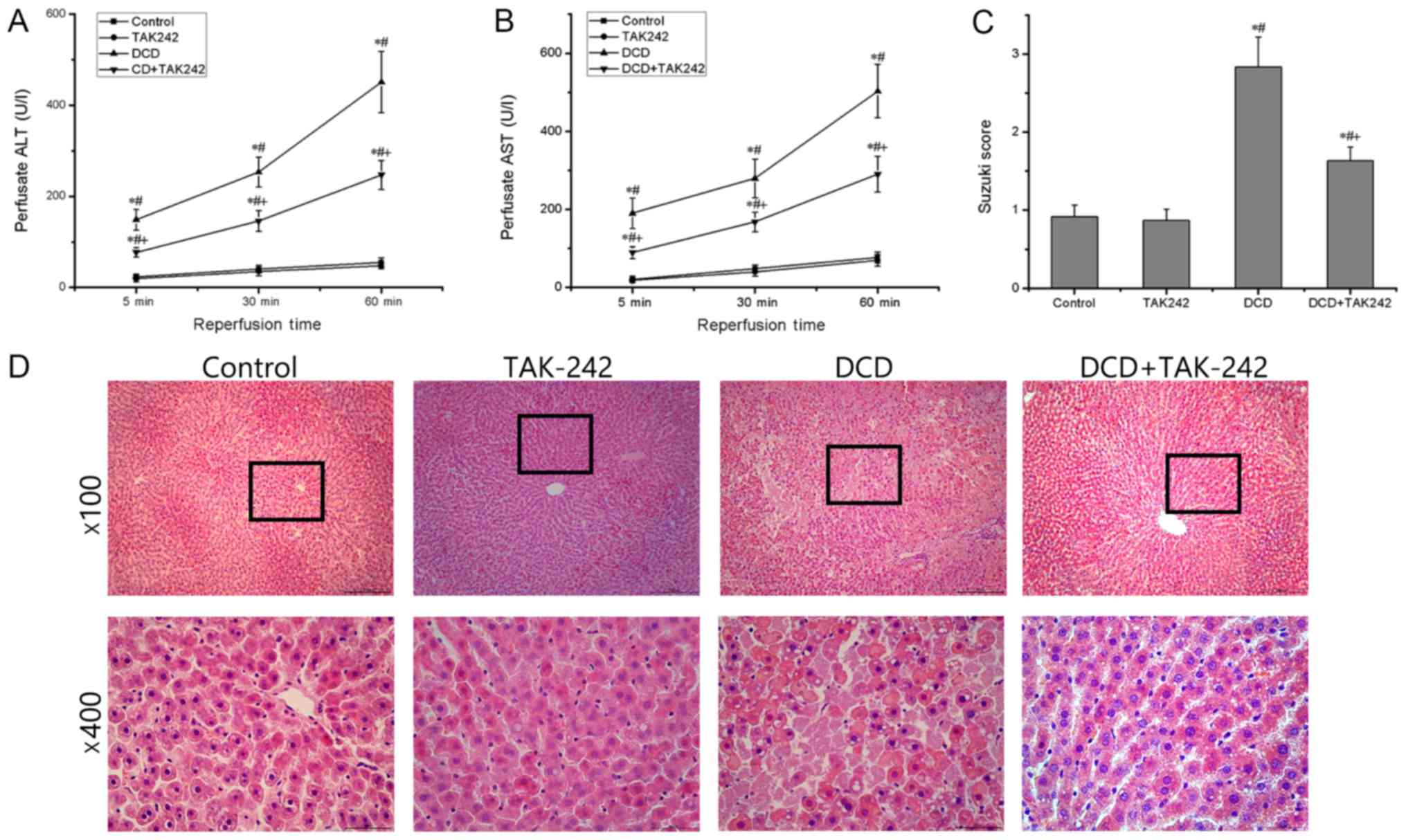
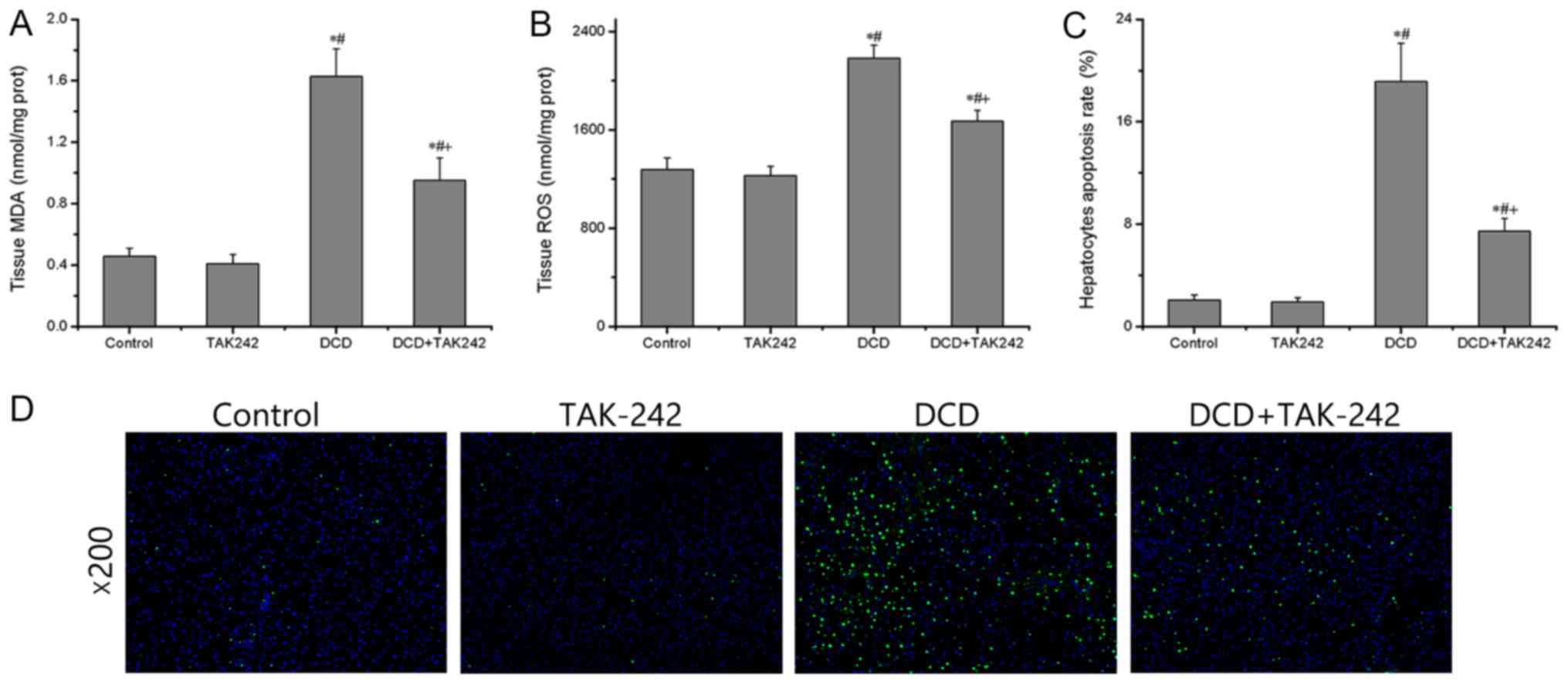
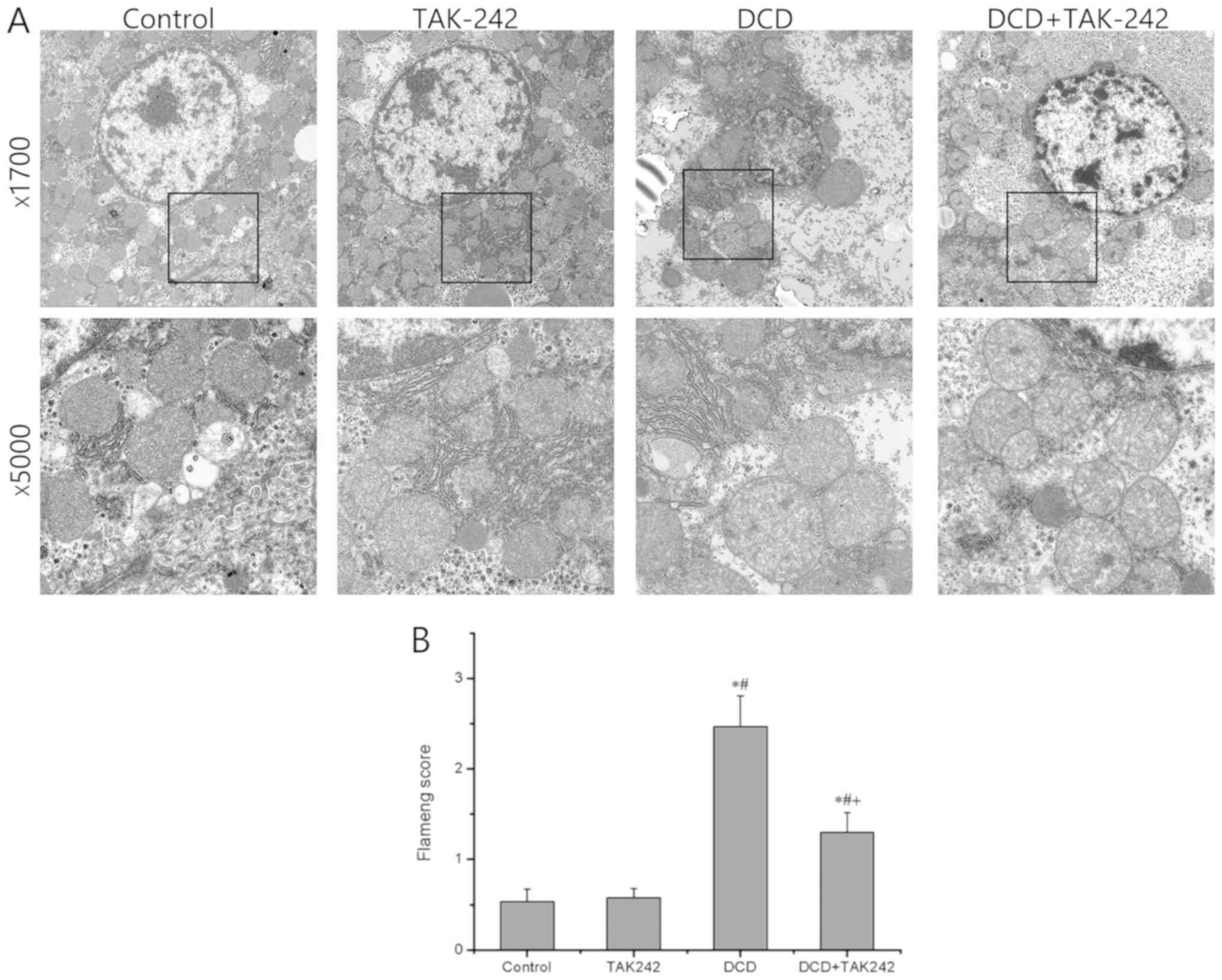
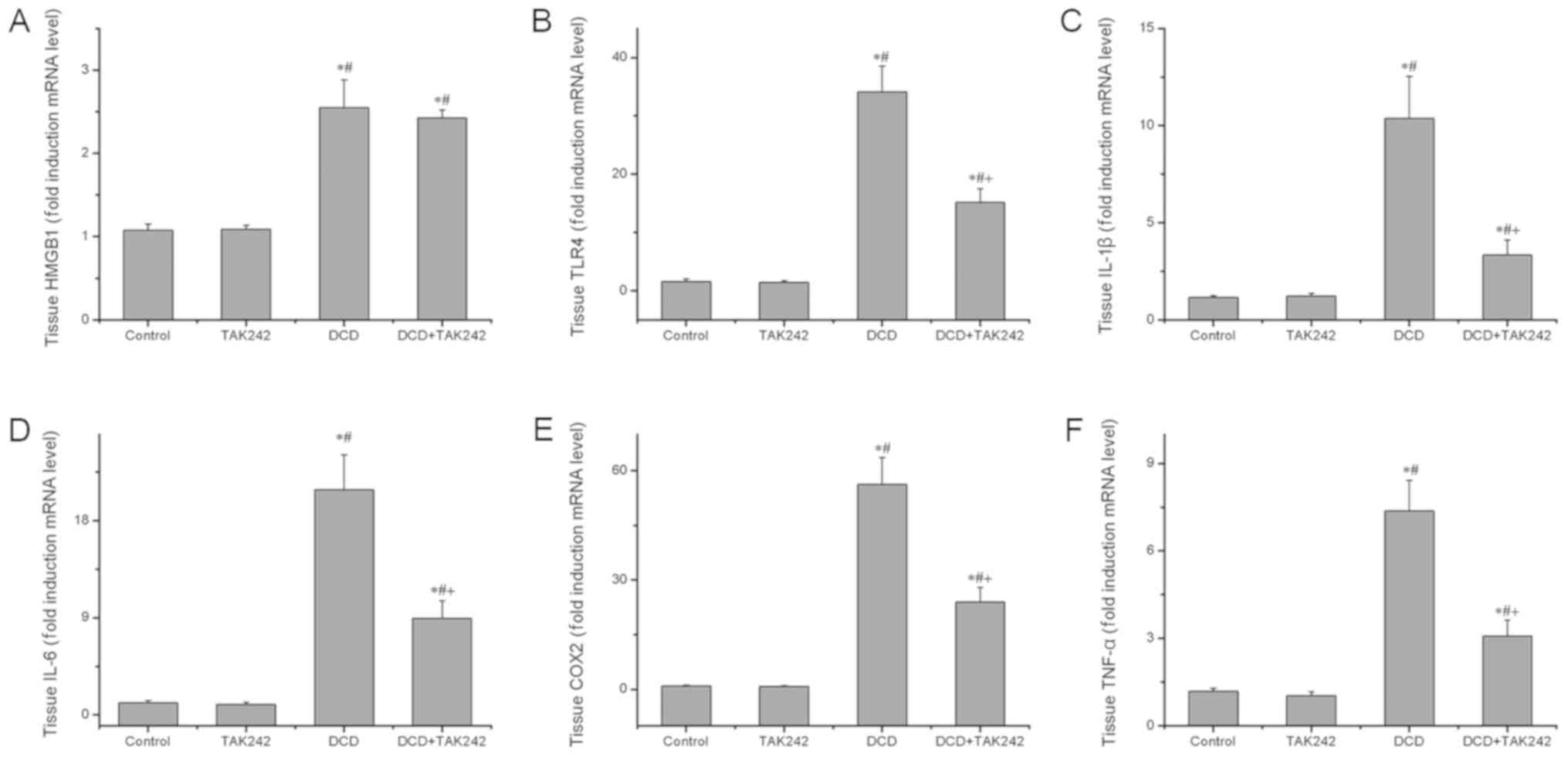
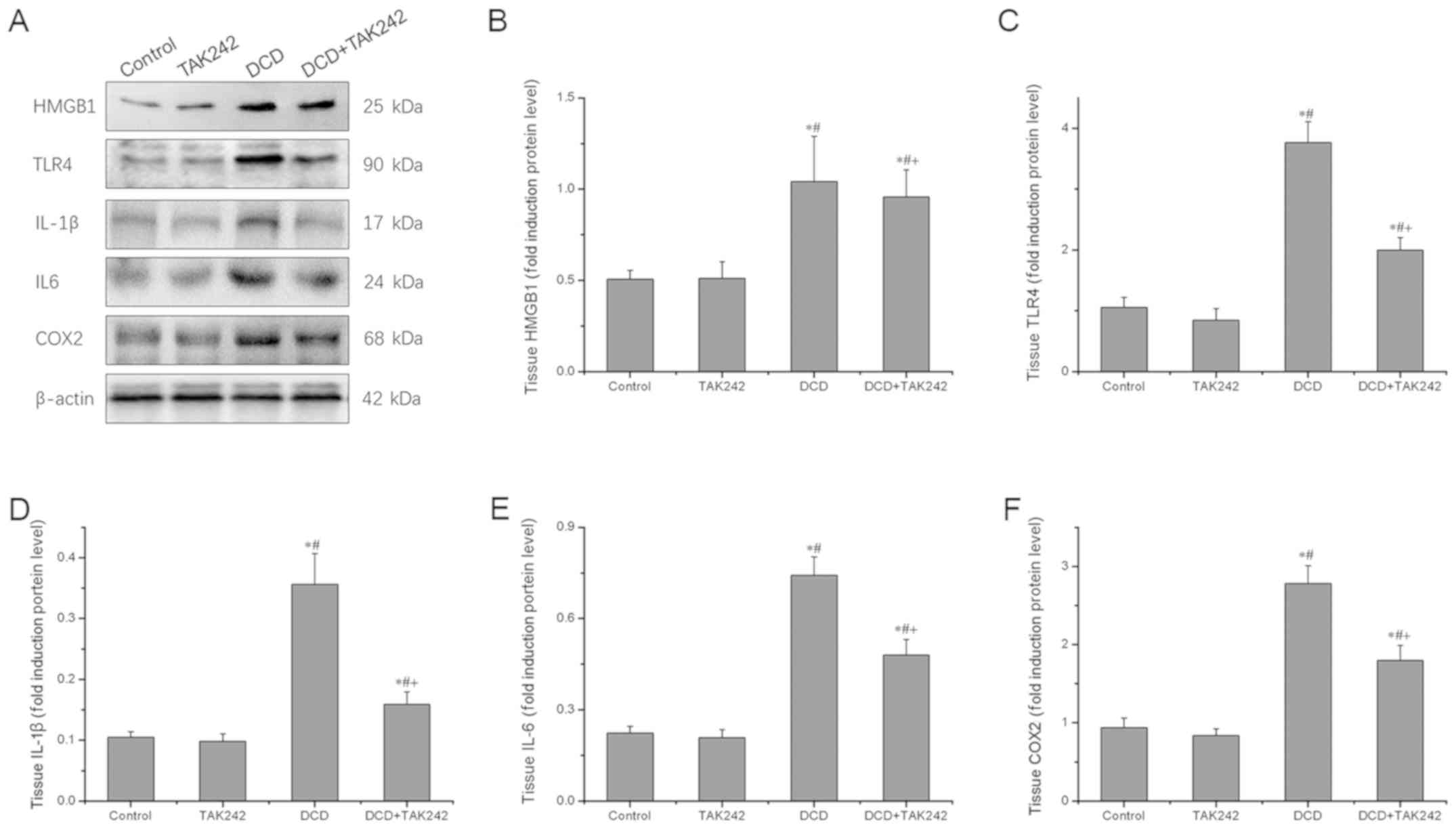
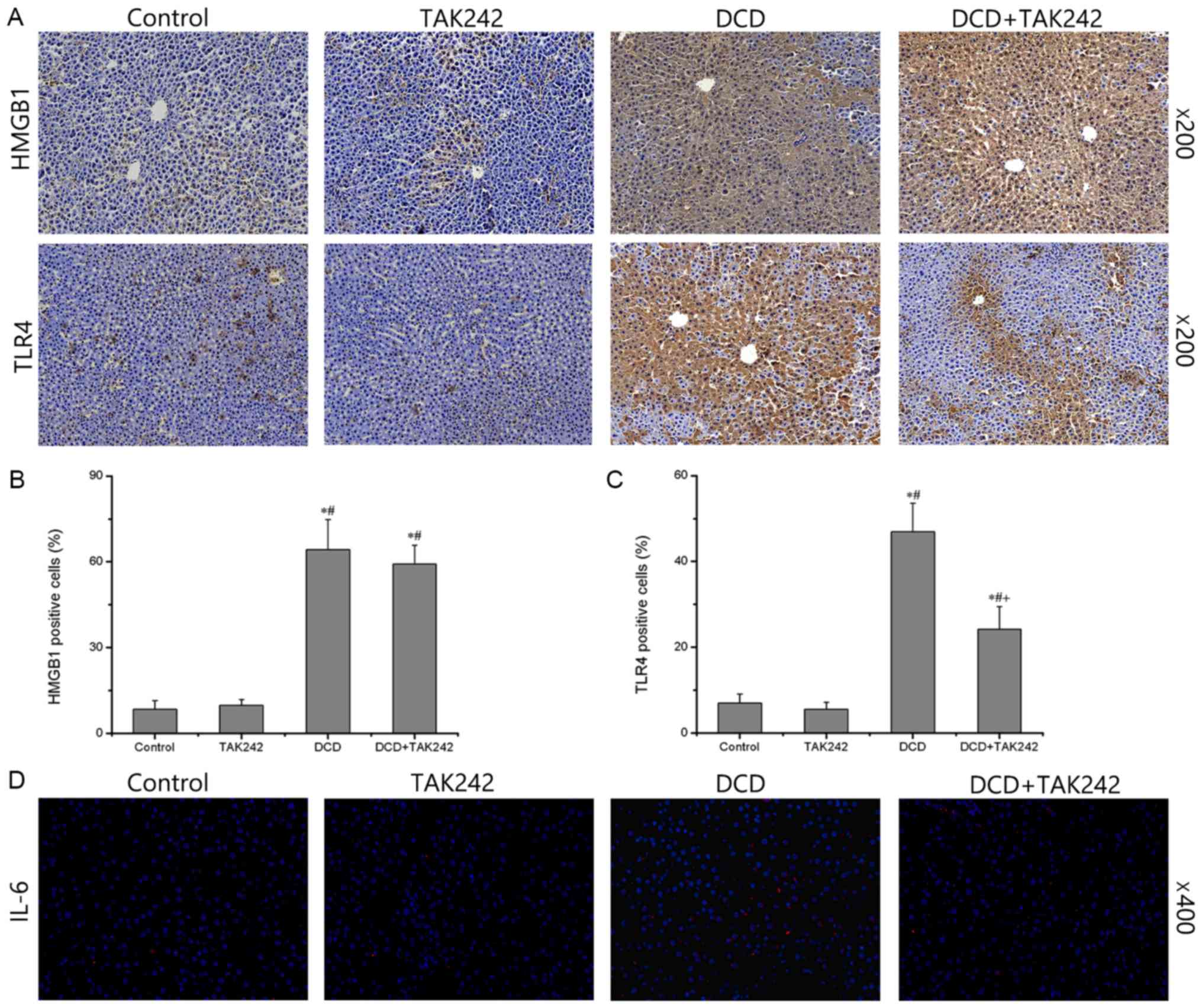
Ischemia‑reperfusion injury (IRI) is a notable cause of tissue damage during surgical procedures and a major risk factor in graft dysfunction in liver transplantation. Livers obtained from donors after circulatory death (DCD) are prone to IRI and toll‑like receptor 4 (TLR4) serves a prominent role in the inflammatory response associated with DCD liver IRI. The present study was designed to investigate whether TAK242, a specific TLR4 inhibitor, improves hepatic IRI following a DCD graft and to investigate its underlying protective mechanisms. Male Sprague‑Dawley rats were randomized into 4 groups: Control, TAK242, DCD and DCD+TAK242 groups. Rats were pretreated with TAK242 or its vehicle for 30 min, then the livers were harvested without warm ischemia (control group and TAK242 group) or with warm ischemia in situ for 30 min. The livers were stored in cold University of Wisconsin solution for 24 h and subsequently perfused for 60 min with an isolated perfused rat liver system. Rat liver injury was evaluated thereafter. When compared with the DCD group, DCD livers with TAK242 pretreatment displayed significantly improved hepatic tissue injury and less tissue necrosis (P<0.05). Compared with DCD livers, mechanistic experiments revealed that TAK242 pretreatment alleviated mitochondrial dysfunction, reduced reactive oxygen species and malondialdehyde levels and inhibited apoptosis. Additionally, TAK242 significantly inhibited the IRI‑associated inflammatory response, indicated by the decreased expression of TLR4, interleukin (IL)‑1β, IL‑6 and cyclooxygenase 2 at the mRNA and protein levels (P<0.05). TAK242 ameliorates DCD liver IRI via suppressing the TLR4 signaling pathway in rats. The results of the present study have revealed that TAK242 pretreatment harbors a potential benefit for liver transplantation.
View Figures

Figure 1

Figure 2

Figure 3

Figure 4

Figure 5

Figure 6

View References

1 

Ortega-Deballon I, Hornby L and Shemie SD: Protocols for uncontrolled donation after circulatory death: A systematic review of international guidelines, practices and transplant outcomes. Crit Care. 19:2682015. View Article : Google Scholar : PubMed/NCBI

2 

Bendorf A, Kelly PJ, Kerridge IH, McCaughan GW, Myerson B, Stewart C and Pussell BA: An international comparison of the effect of policy shifts to organ donation following cardiocirculatory death (DCD) on donation rates after brain death (DBD) and transplantation rates. PLoS One. 8:e620102013. View Article : Google Scholar : PubMed/NCBI

3 

Jay C, Ladner D, Wang E, Lyuksemburg V, Kang R, Chang Y, Feinglass J, Holl JL, Abecassis M and Skaro AI: A comprehensive risk assessment of mortality following donation after cardiac death liver transplant-an analysis of the national registry. J Hepatol. 55:808–813. 2011. View Article : Google Scholar : PubMed/NCBI

4 

Dageforde LA, Feurer ID, Pinson CW and Moore DE: Is liver transplantation using organs donated after cardiac death cost-effective or does it decrease waitlist death by increasing recipient death? HPB (Oxford). 15:182–189. 2013. View Article : Google Scholar : PubMed/NCBI

5 

Nastos C, Kalimeris K, Papoutsidakis N, Tasoulis MK, Lykoudis PM, Theodoraki K, Nastou D, Smyrniotis V and Arkadopoulos N: Global consequences of liver ischemia/reperfusion injury. Oxid Med Cell Longev. 2014:9069652014. View Article : Google Scholar : PubMed/NCBI

6 

Zhai Y, Petrowsky H, Hong JC, Busuttil RW and Kupiec-Weglinski JW: Ischaemia-reperfusion injury in liver transplantation-from bench to bedside. Nat Rev Gastroenterol Hepatol. 10:79–89. 2013. View Article : Google Scholar : PubMed/NCBI

7 

Zhai Y, Busuttil RW and Kupiec-Weglinski JW: Liver ischemia and reperfusion injury: New insights into mechanisms of innate-adaptive immune-mediated tissue inflammation. Am J Transplant. 11:1563–1569. 2011. View Article : Google Scholar : PubMed/NCBI

8 

Deoliveira ML, Jassem W, Valente R, Khorsandi SE, Santori G, Prachalias A, Srinivasan P, Rela M and Heaton N: Biliary complications after liver transplantation using grafts from donors after cardiac death: Results from a matched control study in a single large volume center. Ann Surg. 254:716–723. 2011. View Article : Google Scholar : PubMed/NCBI

9 

Zorov DB, Juhaszova M and Sollott SJ: Mitochondrial reactive oxygen species (ROS) and ROS-induced ROS release. Physiol Rev. 94:909–950. 2014. View Article : Google Scholar : PubMed/NCBI

10 

Chouchani ET, Pell VR, Gaude E, Aksentijević D, Sundier SY, Robb EL, Logan A, Nadtochiy SM, Ord ENJ, Smith AC, et al: Ischaemic accumulation of succinate controls reperfusion injury through mitochondrial ROS. Nature. 515:431–435. 2014. View Article : Google Scholar : PubMed/NCBI

11 

Szabo G and Petrasek J: Inflammasome activation and function in liver disease. Nat Rev Gastroenterol Hepatol. 12:387–400. 2015. View Article : Google Scholar : PubMed/NCBI

12 

Quesnelle KM, Bystrom PV and Toledo-Pereyra LH: Molecular responses to ischemia and reperfusion in the liver. Arch Toxicol. 89:651–657. 2015. View Article : Google Scholar : PubMed/NCBI

13 

Lu L, Zhou H, Ni M, Wang X, Busuttil R, Kupiec-Weglinski J and Zhai Y: Innate immune regulations and liver ischemia reperfusion injury. Transplantation. 100:2601–2610. 2016. View Article : Google Scholar : PubMed/NCBI

14 

Theodoraki K, Karmaniolou I, Tympa A, Tasoulis MK, Nastos C, Vassiliou I, Arkadopoulos N and Smyrniotis V: Beyond preconditioning: Postconditioning as an alternative technique in the prevention of liver ischemia-reperfusion injury. Oxid Med Cell Longev. 2016:82359212016. View Article : Google Scholar : PubMed/NCBI

15 

Bejaoui M, Pantazi E, Folch-Puy E, Baptista PM, García-Gil A, Adam R and Roselló-Catafau J: Emerging concepts in liver graft preservation. World J Gastroenterol. 21:396–407. 2015. View Article : Google Scholar : PubMed/NCBI

16 

Radojkovic M, Stojanovic M, Stanojevic G, Radojkovic D, Gligorijevic J, Ilic I and Stojanovic N: Ischemic preconditioning vs adenosine vs prostaglandin E1 for protection against liver ischemia/reperfusion injury. Brazilian J Med Biol Res. 50:e61852017. View Article : Google Scholar

17 

Mergental H, Perera MT, Laing RW, Muiesan P, Isaac JR, Smith A, Stephenson BT, Cilliers H, Neil DA, Hübscher SG, et al: Transplantation of declined liver allografts following normothermic ex-situ evaluation. Am J Transplant. 16:3235–3245. 2016. View Article : Google Scholar : PubMed/NCBI

18 

Sha T, Sunamoto M, Kitazaki T, Sato J, Ii M and Iizawa Y: Therapeutic effects of TAK-242, a novel selective Toll-like receptor 4 signal transduction inhibitor, in mouse endotoxin shock model. Eur J Pharmacol. 571:231–239. 2007. View Article : Google Scholar : PubMed/NCBI

19 

Li M, Wang ZN, Yang LF, Yan Y, Cai LM, Li YT, Qiao YK and Chen ZG: TLR4 antagonist suppresses airway remodeling in asthma by inhibiting the T-helper 2 response. Exp Ther Med. 14:2911–2916. 2017. View Article : Google Scholar : PubMed/NCBI

20 

Committee for the Update of the Guide for the care and use of Laboratory Animals, Institute for Laboratory Animal Research, Division on Earth and Life Studies et al, . Guide For the care and use of laboratory animals eighth edition [EB/OL].

21 

Zhao Y, Zhao Y, Zhang M, Zhao J, Ma X, Huang T, Pang H, Li J and Song J: Inhibition of TLR4 signalling-induced inflammation attenuates secondary injury after diffuse axonal injury in rats. Mediators Inflamm. 2016:47069152016. View Article : Google Scholar : PubMed/NCBI

22 

Yokoi T, Yokoyama Y, Kokuryo T, Yamaguchi J and Nagino M: Inhibition of Toll-like receptor 4 ameliorates experimental postischemic injury in the cholestatic liver through inhibition of high-mobility group box protein b1 (HMGB1) signaling. Surgery. 163:270–276. 2018. View Article : Google Scholar : PubMed/NCBI

23 

Schlegel A, Graf R, Clavien PA and Dutkowski P: Hypothermic oxygenated perfusion (HOPE) protects from biliary injury in a rodent model of DCD liver transplantation. J Hepatol. 59:984–991. 2013. View Article : Google Scholar : PubMed/NCBI

24 

Liu Z, Zhang X, Xiao Q, Ye S, Lai CH, Luo J, Huang X, Wang W, Zeng C, Zhong Z, et al: Pretreatment donors after circulatory death with simvastatin alleviates liver ischemia reperfusion injury through a KLF2-dependent mechanism in rat. Oxid Med Cell Longev. 2017:38619142017. View Article : Google Scholar : PubMed/NCBI

25 

Suzuki S, Toledo-Pereyra LH, Rodriguez FJ and Cejalvo D: Neutrophil infiltration as an important factor in liver ischemia and reperfusion injury. Modulating effects of FK506 and cyclosporine. Transplantation. 55:1265–1272. 1993. View Article : Google Scholar : PubMed/NCBI

26 

Flameng W, Borgers M, Daenen W and Stalpaert G: Ultrastructural and cytochemical correlates of myocardial protection by cardiac hypothermia in man. J Thorac Cardiovasc Surg. 79:413–424. 1980.PubMed/NCBI

27 

Livak KJ and Schmittgen TD: Analysis of relative gene expression data using real-time quantitative PCR and the 2(-Delta Delta C(T)) method. Methods. 25:402–408. 2001. View Article : Google Scholar : PubMed/NCBI

28 

Mateo R, Cho Y, Singh G, Stapfer M, Donovan J, Kahn J, Fong TL, Sher L, Jabbour N, Aswad S, et al: Risk factors for graft survival after liver transplantation from donation after cardiac death donors: An analysis of OPTN/UNOS data. Am J Transplant. 6:791–796. 2006. View Article : Google Scholar : PubMed/NCBI

29 

Eltzschig HK and Eckle T: Ischemia and reperfusion-from mechanism to translation. Nat Med. 17:1391–401. 2011. View Article : Google Scholar : PubMed/NCBI

30 

Nace GW, Huang H, Klune JR, Eid RE, Rosborough BR, Korff S, Li S, Shapiro RA, Stolz DB, Sodhi CP, et al: Cellular specific role of toll-like receptor 4 in hepatic ischemia-reperfusion injury. Hepatology. 58:374–387. 2013. View Article : Google Scholar : PubMed/NCBI

31 

Takashima K, Matsunaga N, Yoshimatsu M, Hazeki K, Kaisho T, Uekata M, Hazeki O, Akira S, Iizawa Y and Ii M: Analysis of binding site for the novel small-molecule TLR4 signal transduction inhibitor TAK242 and its therapeutic effect on mouse sepsis model. Br J Pharmacol. 157:1250–1262. 2009. View Article : Google Scholar : PubMed/NCBI

32 

Granger DN and Kvietys PR: Reperfusion injury and reactive oxygen species: The evolution of a concept. Redox Biol. 6:524–551. 2015. View Article : Google Scholar : PubMed/NCBI

33 

Kalogeris T, Baines CP, Krenz M and Korthuis RJ: Cell biology of ischemia/reperfusion injury. Int Rev Cell Mol Biol. 298:229–317. 2012. View Article : Google Scholar : PubMed/NCBI

34 

Papanicolaou KN, Phillippo MM and Walsh K: Mitofusins and the mitochondrial permeability transition: The potential downside of mitochondrial fusion. Am J Physiol Heart Circ Physiol. 303:H243–H255. 2012. View Article : Google Scholar : PubMed/NCBI

35 

Baines CP and Molkentin JD: Adenine nucleotide translocase-1 induces cardiomyocyte death through upregulation of the pro-apoptotic protein Bax. J Mol Cell Cardiol. 46:969–977. 2009. View Article : Google Scholar : PubMed/NCBI

36 

Luedde T, Kaplowitz N and Schwabe RF: Cell death and cell death responses in liver disease: Mechanisms and clinical relevance. Gastroenterology. 147:765–783.e4. 2014. View Article : Google Scholar : PubMed/NCBI

37 

Chen L, Ren F, Zhang H, Wen T, Piao Z, Zhou L, Zheng S, Zhang J, Chen Y, Han Y, et al: Inhibition of glycogen synthase kinase 3β ameliorates D-GalN/LPS-induced liver injury by reducing endoplasmic reticulum stress-triggered apoptosis. PLoS One. 7:e452022012. View Article : Google Scholar : PubMed/NCBI

38 

Hamada T, Duarte S, Tsuchihashi S, Busuttil RW and Coito AJ: Inducible nitric oxide synthase deficiency impairs matrix metalloproteinase-9 activity and disrupts leukocyte migration in hepatic ischemia/reperfusion injury. Am J Pathol. 174:2265–2277. 2009. View Article : Google Scholar : PubMed/NCBI

39 

Tian Y, Wang J, Wang W, Ding Y, Sun Z, Zhang Q, Wang Y, Xie H, Yan S and Zheng S: Mesenchymal stem cells improve mouse non-heart-beating liver graft survival by inhibiting Kupffer cell apoptosis via TLR4-ERK1/2-Fas/FasL-caspase3 pathway regulation. Stem Cell Res Ther. 7:1572016. View Article : Google Scholar : PubMed/NCBI

40 

Konishi T, Schuster RM and Lentsch AB: Liver repair and regeneration after ischemia-reperfusion injury is associated with prolonged fibrosis. Am J Physiol Gastrointest Liver Physiol. 316:G323–G331. 2019. View Article : Google Scholar : PubMed/NCBI

41 

Marrone G, Shah VH and Gracia-Sancho J: Sinusoidal communication in liver fibrosis and regeneration. J Hepatol. 65:608–617. 2016. View Article : Google Scholar : PubMed/NCBI

42 

Barton GM and Kagan JC: A cell biological view of Toll-like receptor function: Regulation through compartmentalization. Nat Rev Immunol. 9:535–542. 2009. View Article : Google Scholar : PubMed/NCBI

43 

Zhai Y, Shen XD, O'Connell R, Gao F, Lassman C, Busuttil RW, Cheng G and Kupiec-Weglinski JW: Cutting edge: TLR4 activation mediates liver ischemia/reperfusion inflammatory response via ifn regulatory factor 3-dependent MyD88-independent pathway. J Immunol. 12:7115–7119. 2004. View Article : Google Scholar

44 

Wittebole X, Castanares-Zapatero D and Laterre PF: Toll-like receptor 4 modulation as a strategy to treat sepsis. Mediators Inflamm. 2010:5683962010. View Article : Google Scholar : PubMed/NCBI

45 

de Mingo Á, de Gregorio E, Moles A, Tarrats N, Tutusaus A, Colell A, Fernandez-Checa JC, Morales A and Marí M: Cysteine cathepsins control hepatic NF-κB-dependent inflammation via sirtuin-1 regulation. Cell Death Dis. 7:e24642016. View Article : Google Scholar : PubMed/NCBI

46 

Tsung A, Klune JR, Zhang X, Jeyabalan G, Cao Z, Peng X, Stolz DB, Geller DA, Rosengart MR and Billiar TR: HMGB1 release induced by liver ischemia involves Toll-like receptor 4-dependent reactive oxygen species production and calcium-mediated signaling. J Exp Med. 204:2913–2923. 2007. View Article : Google Scholar : PubMed/NCBI

47 

Zhao G, Fu C, Wang L, Zhu L, Yan Y, Xiang Y, Zheng F, Gong F, Chen S and Chen G: Down-regulation of nuclear HMGB1 reduces ischemia-induced HMGB1 translocation and release and protects against liver ischemia-reperfusion injury. Sci Rep. 7:462722017. View Article : Google Scholar : PubMed/NCBI

48 

Zhang GY, Lu D, Duan SF, Gao YR, Liu SY, Hong Y, Dong PZ, Chen YG, Li T, Wang DY, et al: Hydrogen Sulfide alleviates lipopolysaccharide-induced diaphragm dysfunction in rats by reducing apoptosis and inflammation through ROS/MAPK and TLR4/NF-κB signaling pathways. Oxid Med Cell Longev. 2018:96478092018. View Article : Google Scholar : PubMed/NCBI

49 

Wang L, Li N, Lin D and Zang Y: Curcumin protects against hepatic ischemia/reperfusion induced injury through inhibiting TLR4/NF-κB pathway. Oncotarget. 8:65414–65420. 2017.PubMed/NCBI

50 

Yu Y, Tang D and Kang R: Oxidative stress-mediated HMGB1 biology. Front Physiol. 6:932015. View Article : Google Scholar : PubMed/NCBI

51 

Yang H, Wang H, Chavan SS and Andersson U: High mobility group box protein 1 (HMGB1): The prototypical endogenous danger molecule. Mol Med. 21 (Suppl):S6–S12. 2015. View Article : Google Scholar : PubMed/NCBI

Related Articles

  • Abstract
  • View
  • Download
  • Twitter
Copy and paste a formatted citation
Spandidos Publications style
Zhong X, Xiao Q, Liu Z, Wang W, Lai CH, Yang W, Yue P, Ye Q and Xiao J: TAK242 suppresses the TLR4 signaling pathway and ameliorates DCD liver IRI in rats. Mol Med Rep 20: 2101-2110, 2019.
APA
Zhong, X., Xiao, Q., Liu, Z., Wang, W., Lai, C., Yang, W. ... Xiao, J. (2019). TAK242 suppresses the TLR4 signaling pathway and ameliorates DCD liver IRI in rats. Molecular Medicine Reports, 20, 2101-2110. https://doi.org/10.3892/mmr.2019.10439
MLA
Zhong, X., Xiao, Q., Liu, Z., Wang, W., Lai, C., Yang, W., Yue, P., Ye, Q., Xiao, J."TAK242 suppresses the TLR4 signaling pathway and ameliorates DCD liver IRI in rats". Molecular Medicine Reports 20.3 (2019): 2101-2110.
Chicago
Zhong, X., Xiao, Q., Liu, Z., Wang, W., Lai, C., Yang, W., Yue, P., Ye, Q., Xiao, J."TAK242 suppresses the TLR4 signaling pathway and ameliorates DCD liver IRI in rats". Molecular Medicine Reports 20, no. 3 (2019): 2101-2110. https://doi.org/10.3892/mmr.2019.10439
Copy and paste a formatted citation
x
Spandidos Publications style
Zhong X, Xiao Q, Liu Z, Wang W, Lai CH, Yang W, Yue P, Ye Q and Xiao J: TAK242 suppresses the TLR4 signaling pathway and ameliorates DCD liver IRI in rats. Mol Med Rep 20: 2101-2110, 2019.
APA
Zhong, X., Xiao, Q., Liu, Z., Wang, W., Lai, C., Yang, W. ... Xiao, J. (2019). TAK242 suppresses the TLR4 signaling pathway and ameliorates DCD liver IRI in rats. Molecular Medicine Reports, 20, 2101-2110. https://doi.org/10.3892/mmr.2019.10439
MLA
Zhong, X., Xiao, Q., Liu, Z., Wang, W., Lai, C., Yang, W., Yue, P., Ye, Q., Xiao, J."TAK242 suppresses the TLR4 signaling pathway and ameliorates DCD liver IRI in rats". Molecular Medicine Reports 20.3 (2019): 2101-2110.
Chicago
Zhong, X., Xiao, Q., Liu, Z., Wang, W., Lai, C., Yang, W., Yue, P., Ye, Q., Xiao, J."TAK242 suppresses the TLR4 signaling pathway and ameliorates DCD liver IRI in rats". Molecular Medicine Reports 20, no. 3 (2019): 2101-2110. https://doi.org/10.3892/mmr.2019.10439
Follow us
  • Twitter
  • LinkedIn
  • Facebook
About
  • Spandidos Publications
  • Careers
  • Cookie Policy
  • Privacy Policy
How can we help?
  • Help
  • Live Chat
  • Contact
  • Email to our Support Team