Spandidos Publications Logo
  • About
    • About Spandidos
    • Aims and Scopes
    • Abstracting and Indexing
    • Editorial Policies
    • Reprints and Permissions
    • Job Opportunities
    • Terms and Conditions
    • Contact
  • Journals
    • All Journals
    • Oncology Letters
      • Oncology Letters
      • Information for Authors
      • Editorial Policies
      • Editorial Board
      • Aims and Scope
      • Abstracting and Indexing
      • Bibliographic Information
      • Archive
    • International Journal of Oncology
      • International Journal of Oncology
      • Information for Authors
      • Editorial Policies
      • Editorial Board
      • Aims and Scope
      • Abstracting and Indexing
      • Bibliographic Information
      • Archive
    • Molecular and Clinical Oncology
      • Molecular and Clinical Oncology
      • Information for Authors
      • Editorial Policies
      • Editorial Board
      • Aims and Scope
      • Abstracting and Indexing
      • Bibliographic Information
      • Archive
    • Experimental and Therapeutic Medicine
      • Experimental and Therapeutic Medicine
      • Information for Authors
      • Editorial Policies
      • Editorial Board
      • Aims and Scope
      • Abstracting and Indexing
      • Bibliographic Information
      • Archive
    • International Journal of Molecular Medicine
      • International Journal of Molecular Medicine
      • Information for Authors
      • Editorial Policies
      • Editorial Board
      • Aims and Scope
      • Abstracting and Indexing
      • Bibliographic Information
      • Archive
    • Biomedical Reports
      • Biomedical Reports
      • Information for Authors
      • Editorial Policies
      • Editorial Board
      • Aims and Scope
      • Abstracting and Indexing
      • Bibliographic Information
      • Archive
    • Oncology Reports
      • Oncology Reports
      • Information for Authors
      • Editorial Policies
      • Editorial Board
      • Aims and Scope
      • Abstracting and Indexing
      • Bibliographic Information
      • Archive
    • Molecular Medicine Reports
      • Molecular Medicine Reports
      • Information for Authors
      • Editorial Policies
      • Editorial Board
      • Aims and Scope
      • Abstracting and Indexing
      • Bibliographic Information
      • Archive
    • World Academy of Sciences Journal
      • World Academy of Sciences Journal
      • Information for Authors
      • Editorial Policies
      • Editorial Board
      • Aims and Scope
      • Abstracting and Indexing
      • Bibliographic Information
      • Archive
    • International Journal of Functional Nutrition
      • International Journal of Functional Nutrition
      • Information for Authors
      • Editorial Policies
      • Editorial Board
      • Aims and Scope
      • Abstracting and Indexing
      • Bibliographic Information
      • Archive
    • International Journal of Epigenetics
      • International Journal of Epigenetics
      • Information for Authors
      • Editorial Policies
      • Editorial Board
      • Aims and Scope
      • Abstracting and Indexing
      • Bibliographic Information
      • Archive
    • Medicine International
      • Medicine International
      • Information for Authors
      • Editorial Policies
      • Editorial Board
      • Aims and Scope
      • Abstracting and Indexing
      • Bibliographic Information
      • Archive
  • Articles
  • Information
    • Information for Authors
    • Information for Reviewers
    • Information for Librarians
    • Information for Advertisers
    • Conferences
  • Language Editing
Spandidos Publications Logo
  • About
    • About Spandidos
    • Aims and Scopes
    • Abstracting and Indexing
    • Editorial Policies
    • Reprints and Permissions
    • Job Opportunities
    • Terms and Conditions
    • Contact
  • Journals
    • All Journals
    • Biomedical Reports
      • Information for Authors
      • Editorial Policies
      • Editorial Board
      • Aims and Scope
      • Abstracting and Indexing
      • Bibliographic Information
      • Archive
    • Experimental and Therapeutic Medicine
      • Information for Authors
      • Editorial Policies
      • Editorial Board
      • Aims and Scope
      • Abstracting and Indexing
      • Bibliographic Information
      • Archive
    • International Journal of Epigenetics
      • Information for Authors
      • Editorial Policies
      • Editorial Board
      • Aims and Scope
      • Abstracting and Indexing
      • Bibliographic Information
      • Archive
    • International Journal of Functional Nutrition
      • Information for Authors
      • Editorial Policies
      • Editorial Board
      • Aims and Scope
      • Abstracting and Indexing
      • Bibliographic Information
      • Archive
    • International Journal of Molecular Medicine
      • Information for Authors
      • Editorial Policies
      • Editorial Board
      • Aims and Scope
      • Abstracting and Indexing
      • Bibliographic Information
      • Archive
    • International Journal of Oncology
      • Information for Authors
      • Editorial Policies
      • Editorial Board
      • Aims and Scope
      • Abstracting and Indexing
      • Bibliographic Information
      • Archive
    • Medicine International
      • Information for Authors
      • Editorial Policies
      • Editorial Board
      • Aims and Scope
      • Abstracting and Indexing
      • Bibliographic Information
      • Archive
    • Molecular and Clinical Oncology
      • Information for Authors
      • Editorial Policies
      • Editorial Board
      • Aims and Scope
      • Abstracting and Indexing
      • Bibliographic Information
      • Archive
    • Molecular Medicine Reports
      • Information for Authors
      • Editorial Policies
      • Editorial Board
      • Aims and Scope
      • Abstracting and Indexing
      • Bibliographic Information
      • Archive
    • Oncology Letters
      • Information for Authors
      • Editorial Policies
      • Editorial Board
      • Aims and Scope
      • Abstracting and Indexing
      • Bibliographic Information
      • Archive
    • Oncology Reports
      • Information for Authors
      • Editorial Policies
      • Editorial Board
      • Aims and Scope
      • Abstracting and Indexing
      • Bibliographic Information
      • Archive
    • World Academy of Sciences Journal
      • Information for Authors
      • Editorial Policies
      • Editorial Board
      • Aims and Scope
      • Abstracting and Indexing
      • Bibliographic Information
      • Archive
  • Articles
  • Information
    • For Authors
    • For Reviewers
    • For Librarians
    • For Advertisers
    • Conferences
  • Language Editing
Login Register Submit
  • This site uses cookies
  • You can change your cookie settings at any time by following the instructions in our Cookie Policy. To find out more, you may read our Privacy Policy.

    I agree
Search articles by DOI, keyword, author or affiliation
Search
Advanced Search
presentation
Molecular Medicine Reports
Join Editorial Board Propose a Special Issue
Print ISSN: 1791-2997 Online ISSN: 1791-3004
Journal Cover
September-2019 Volume 20 Issue 3

Full Size Image

Sign up for eToc alerts
Recommend to Library

Journals

International Journal of Molecular Medicine

International Journal of Molecular Medicine

International Journal of Molecular Medicine is an international journal devoted to molecular mechanisms of human disease.

International Journal of Oncology

International Journal of Oncology

International Journal of Oncology is an international journal devoted to oncology research and cancer treatment.

Molecular Medicine Reports

Molecular Medicine Reports

Covers molecular medicine topics such as pharmacology, pathology, genetics, neuroscience, infectious diseases, molecular cardiology, and molecular surgery.

Oncology Reports

Oncology Reports

Oncology Reports is an international journal devoted to fundamental and applied research in Oncology.

Experimental and Therapeutic Medicine

Experimental and Therapeutic Medicine

Experimental and Therapeutic Medicine is an international journal devoted to laboratory and clinical medicine.

Oncology Letters

Oncology Letters

Oncology Letters is an international journal devoted to Experimental and Clinical Oncology.

Biomedical Reports

Biomedical Reports

Explores a wide range of biological and medical fields, including pharmacology, genetics, microbiology, neuroscience, and molecular cardiology.

Molecular and Clinical Oncology

Molecular and Clinical Oncology

International journal addressing all aspects of oncology research, from tumorigenesis and oncogenes to chemotherapy and metastasis.

World Academy of Sciences Journal

World Academy of Sciences Journal

Multidisciplinary open-access journal spanning biochemistry, genetics, neuroscience, environmental health, and synthetic biology.

International Journal of Functional Nutrition

International Journal of Functional Nutrition

Open-access journal combining biochemistry, pharmacology, immunology, and genetics to advance health through functional nutrition.

International Journal of Epigenetics

International Journal of Epigenetics

Publishes open-access research on using epigenetics to advance understanding and treatment of human disease.

Medicine International

Medicine International

An International Open Access Journal Devoted to General Medicine.

Journal Cover
September-2019 Volume 20 Issue 3

Full Size Image

Sign up for eToc alerts
Recommend to Library

  • Article
  • Citations
    • Cite This Article
    • Download Citation
    • Create Citation Alert
    • Remove Citation Alert
    • Cited By
  • Similar Articles
    • Related Articles (in Spandidos Publications)
    • Similar Articles (Google Scholar)
    • Similar Articles (PubMed)
  • Download PDF
  • Download XML
  • View XML
Article Open Access

E3 ubiquitin ligase siah‑1 nuclear accumulation is critical for homocysteine‑induced impairment of C6 astroglioma cells

  • Authors:
    • Xiangzhu Tian
    • Li Gong
    • Aiping Jin
    • Yu Wang
    • Xiaoyu Zhou
    • Yan Tan
  • View Affiliations / Copyright

    Affiliations: Department of Neurology, Tenth People's Hospital, Tongji University, Shanghai 200072, P.R. China, Department of Neurology, The Sixth People's Hospital of Nantong, Nantong, Jiangsu 226011, P.R. China
    Copyright: © Tian et al. This is an open access article distributed under the terms of Creative Commons Attribution License.
  • Pages: 2227-2235
    |
    Published online on: July 1, 2019
       https://doi.org/10.3892/mmr.2019.10449
  • Expand metrics +
Metrics: Total Views: 0 (Spandidos Publications: | PMC Statistics: )
Metrics: Total PDF Downloads: 0 (Spandidos Publications: | PMC Statistics: )
Cited By (CrossRef): 0 citations Loading Articles...

This article is mentioned in:


Abstract

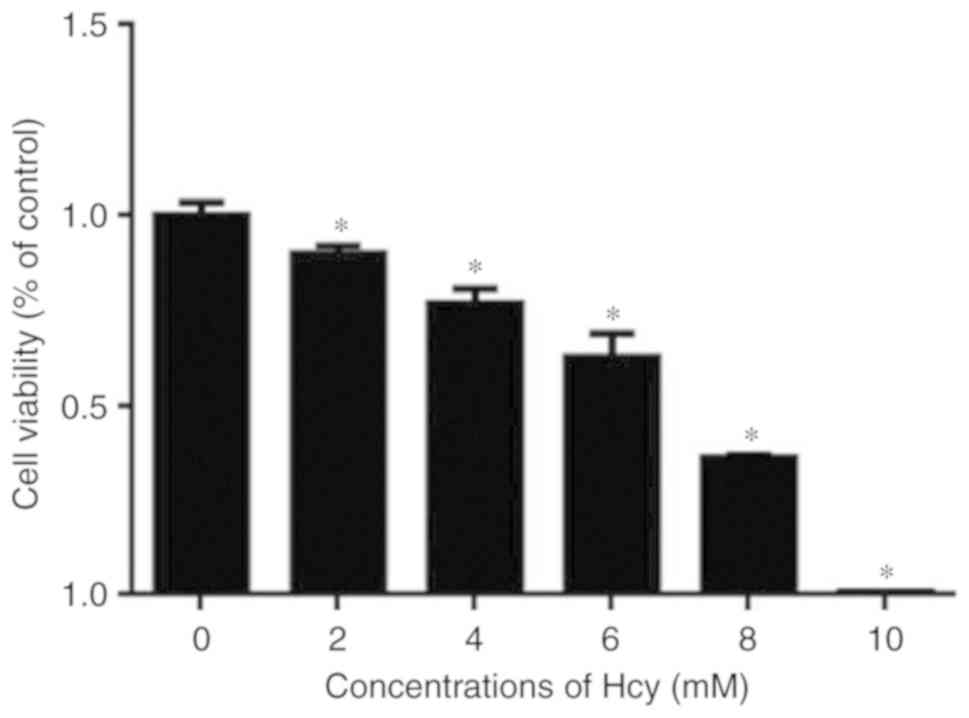
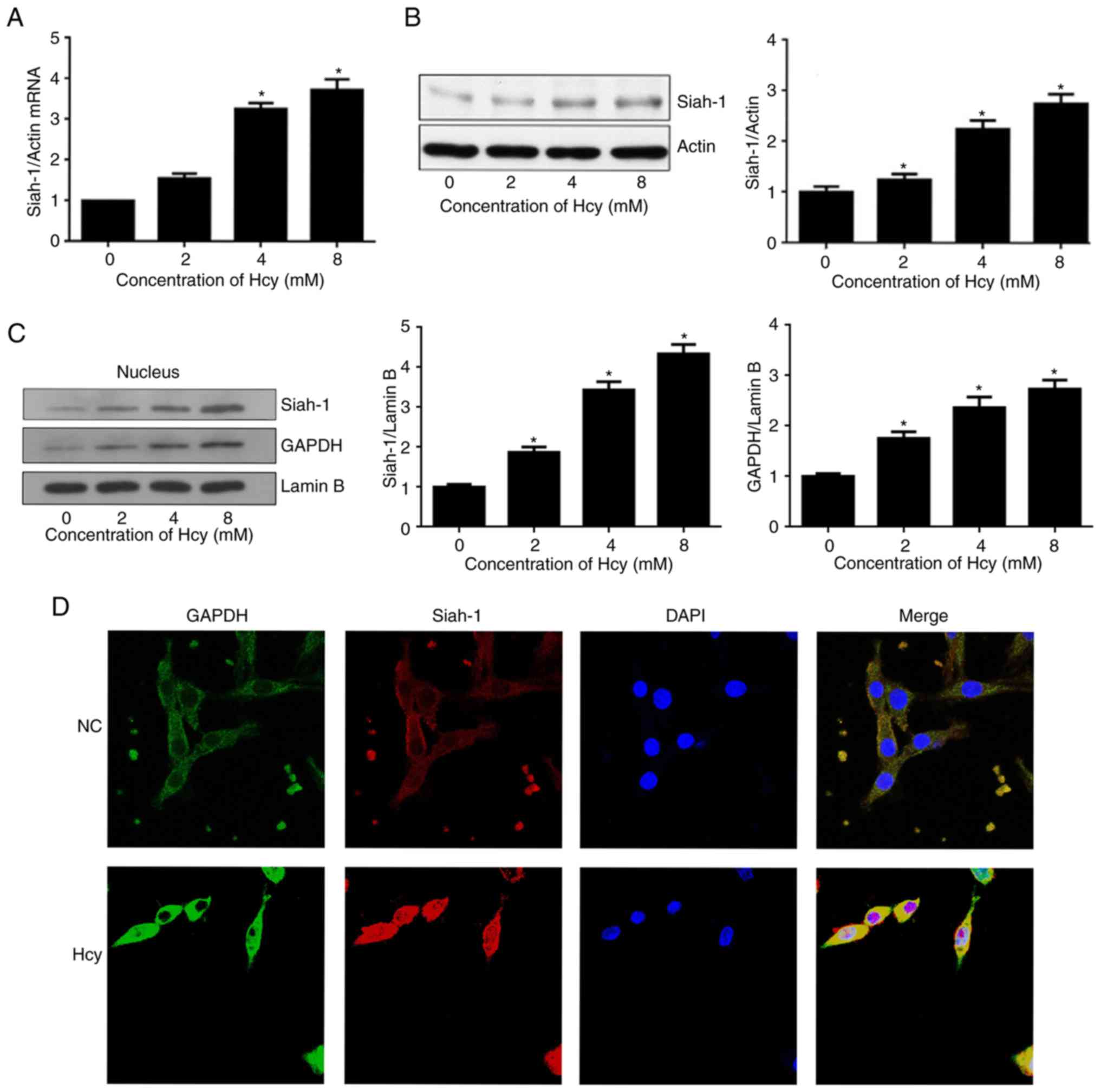
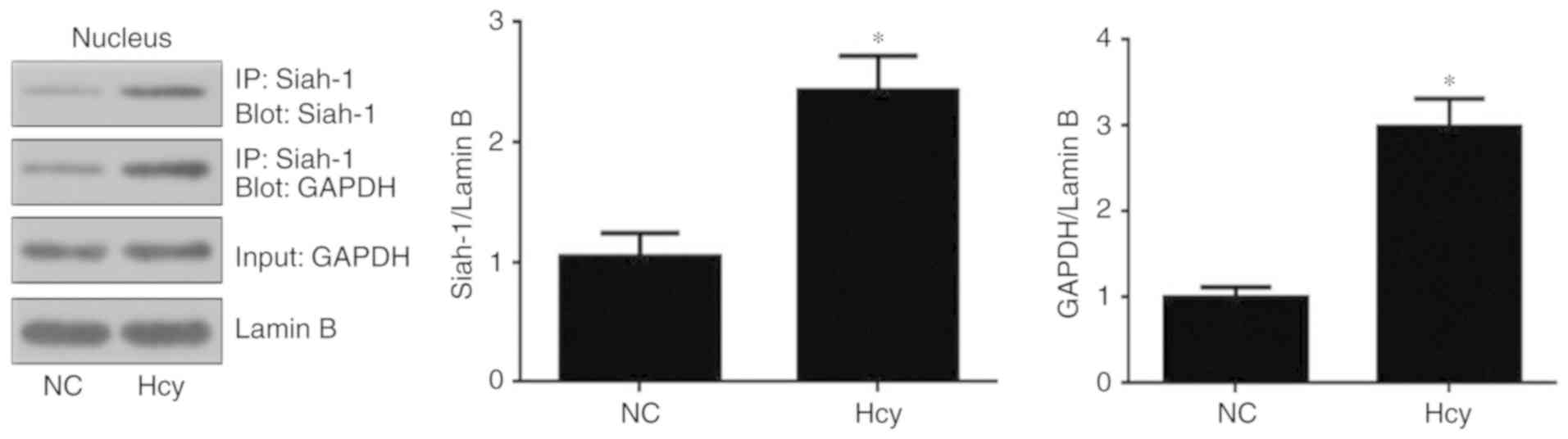
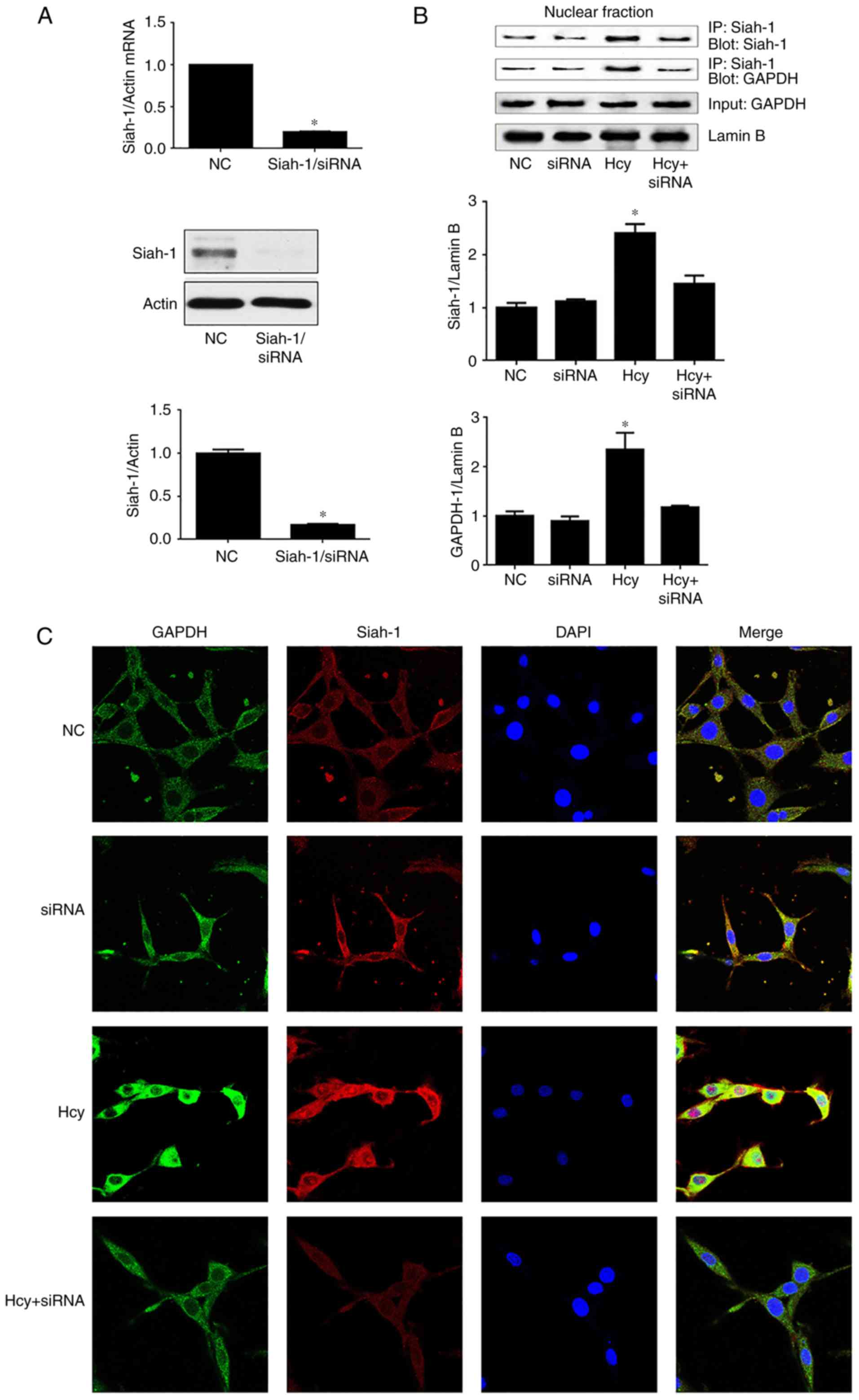
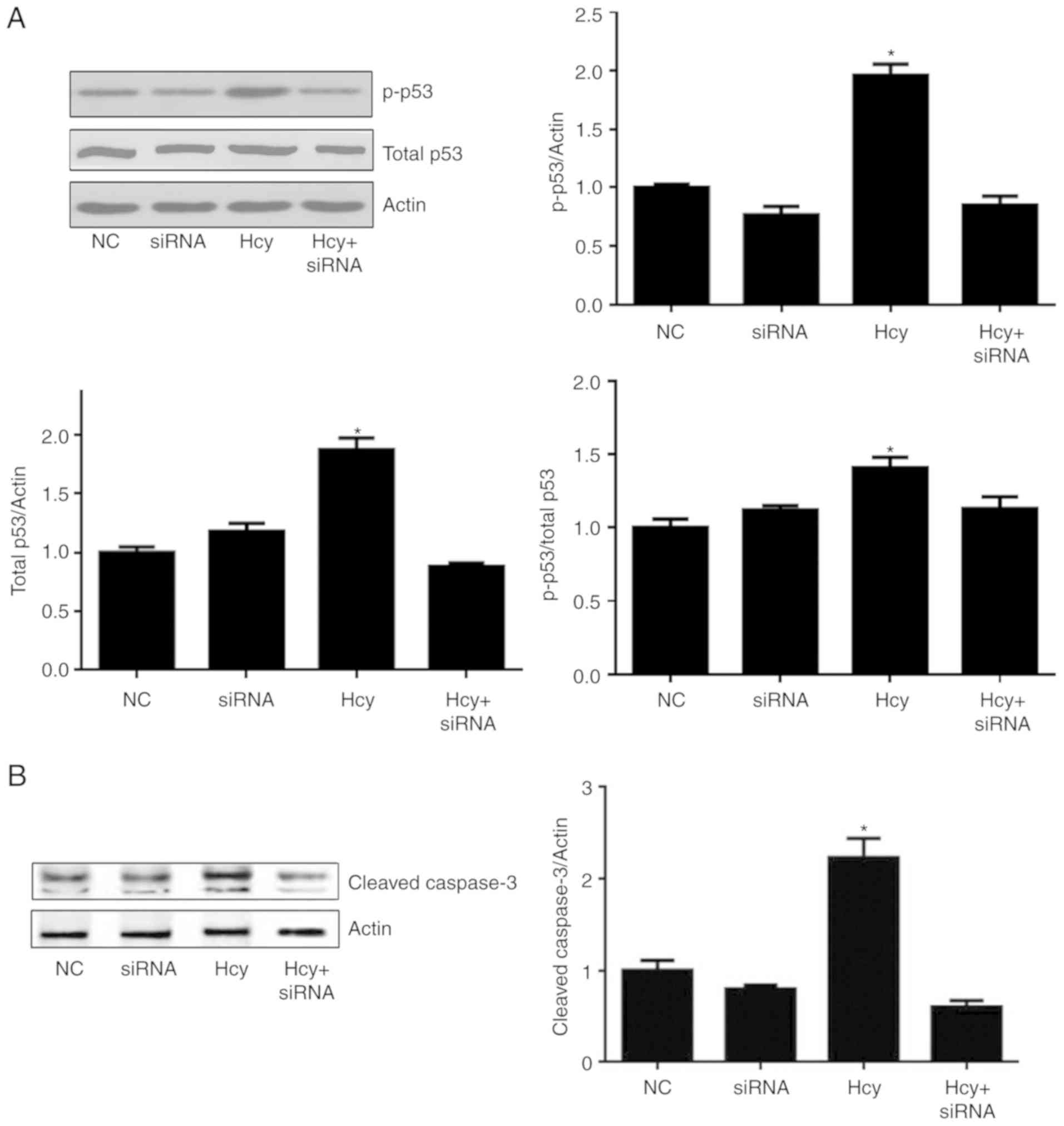
Elevated plasma homocysteine (Hcy), known as hyperhomocysteinemia (HHcy), is an independent risk factor for neurodegenerative diseases. Hcy, even at a low concentration, can promote free radical formation and increase oxidative stress, leading to neuronal death, which may be an important mechanism underlying the pathogenesis of neurodegenerative diseases. Although several reports have indicated that the nuclear translocation of glyceraldehyde 3‑phosphate dehydrogenase (GAPDH) may be involved in Hcy‑induced apoptosis, the exact mechanism remains to be fully elucidated. The siah E3 ubiquitin protein ligase 1 (siah‑1) gene was found to be critical for the translocation of GAPDH from the cytoplasm to the nucleus. In the present study, the role of siah‑1 was investigated in the nuclear translocation of GAPDH in rat C6 astroglioma cells treated with Hcy. C6 cells were treated with various concentrations of Hcy for 48 h and the expression level of siah‑1 was examined using reverse transcription‑quantitative polymerase chain reaction and western blotting analysis. In addition, the subcellular localization of siah‑1 and GAPDH and the interaction between these two factors were investigated by immunofluorescence staining and co‑immunoprecipitation assay, respectively. The results showed that Hcy at a high concentration increased the expression of siah‑1 and induced nuclear translocation of siah‑1 and GAPDH. In addition, siah‑1 knockdown by siah‑1 small interfering RNA significantly decreased the Hcy‑induced nuclear accumulation of GAPDH and inhibited the impairment of C6 cells. These findings suggest that siah‑1 is involved in Hcy‑induced cell damage by promoting the nuclear translocation of GAPDH.
View Figures

Figure 1

Figure 2

Figure 3

Figure 4

Figure 5

View References

1 

Kim H and Lee KJ: Serum homocysteine levels are correlated with behavioral and psychological symptoms of Alzheimer's disease. Neuropsychiatr Dis Treat. 10:1887–1896. 2014.PubMed/NCBI

2 

Kamat PK, Vacek JC, Kalani A and Tyagi N: Homocysteine induced cerebrovascular dysfunction: A link to Alzheimer's disease etiology. Open Neurol J. 9:9–14. 2015. View Article : Google Scholar : PubMed/NCBI

3 

Sharma M, Tiwari M and Tiwari RK: Hyperhomocysteinemia: Impact on neurodegenerative diseases. Basic Clin Pharmacol Toxicol. 117:287–296. 2015. View Article : Google Scholar : PubMed/NCBI

4 

Jin Y and Brennan L: Effects of homocysteine on metabolic pathways in cultured astrocytes. Neurochem Int. 52:1410–1415. 2008. View Article : Google Scholar : PubMed/NCBI

5 

Kruman II, Kumaravel TS, Lohani A, Pedersen WA, Cutler RG, Kruman Y, Haughey N, Lee J, Evans M and Mattson MP: Folic acid deficiency and homocysteine impair DNA repair in hippocampal neurons and sensitize them to amyloid toxicity in experimental models of Alzheimer's disease. J Neurosci. 22:1752–1762. 2002. View Article : Google Scholar : PubMed/NCBI

6 

Oldreive CE and Doherty GH: Neurotoxic effects of homocysteine on cerebellar Purkinje neurons in vitro. Neurosci Lett. 413:52–57. 2007. View Article : Google Scholar : PubMed/NCBI

7 

Maler JM, Seifert W, Hüther G, Wiltfang J, Rüther E, Kornhuber J and Bleich S: Homocysteine induces cell death of rat astrocytes in vitro. Neurosci Lett. 347:85–88. 2003. View Article : Google Scholar : PubMed/NCBI

8 

Škovierová H, Mahmood S, Blahovcová E, Hatok J, Lehotský J and Murín R: Effect of homocysteine on survival of human glial cells. Physiol Res. 64:747–754. 2015.PubMed/NCBI

9 

Turnquist C, Horikawa I, Foran E, Major EO, Vojtesek B, Lane DP, Lu X, Harris BT and Harris CC: p53 isoforms regulate astrocyte-mediated neuroprotection and neurodegeneration. Cell Death Differ. 23:1515–1528. 2016. View Article : Google Scholar : PubMed/NCBI

10 

Dallérac G and Rouach N: Astrocytes as new targets to improve cognitive functions. Prog Neurobiol. 144:48–67. 2016. View Article : Google Scholar : PubMed/NCBI

11 

Hsu CC, Cheng CH, Hsu CL, Lee WJ, Huang SC and Huang YC: Role of vitamin B6 status on antioxidant defenses, glutathione, and related enzyme activities in mice with homocysteine-induced oxidative stress. Food Nutr Res. 59:257022015. View Article : Google Scholar : PubMed/NCBI

12 

Itakura M, Nakajima H, Semi Y, Higashida S, Azuma YT and Takeuchi T: Glyceraldehyde-3-phosphate dehydrogenase aggregation inhibitor peptide: A potential therapeutic strategy against oxidative stress-induced cell death. Biochem Biophys Res Commun. 467:373–376. 2015. View Article : Google Scholar : PubMed/NCBI

13 

Fang M, Jin A, Zhao Y and Liu X: Homocysteine induces glyceraldehyde-3-phosphate dehydrogenase acetylation and apoptosis in the neuroblastoma cell line Neuro2a. Braz J Med Biol Res. 49:e45432016. View Article : Google Scholar : PubMed/NCBI

14 

Ban R, Matsuzaki H, Akashi T, Sakashita G, Taniguchi H, Park SY, Tanaka H, Furukawa K and Urano T: Mitotic regulation of the stability of microtubule plus-end tracking protein EB3 by ubiquitin ligase SIAH-1 and Aurora mitotic kinases. J Biol Chem. 284:28367–28381. 2009. View Article : Google Scholar : PubMed/NCBI

15 

Winter M, Sombroek D, Dauth I, Moehlenbrink J, Scheuermann K, Crone J and Hofmann TG: Control of HIPK2 stability by ubiquitin ligase Siah-1 and checkpoint kinases ATM and ATR. Nat Cell Biol. 10:812–824. 2008. View Article : Google Scholar : PubMed/NCBI

16 

Xu Z, Sproul A, Wang W, Kukekov N and Greene LA: Siah1 interacts with the scaffold protein POSH to promote JNK activation and apoptosis. J Biol Chem. 281:303–312. 2006. View Article : Google Scholar : PubMed/NCBI

17 

Bruzzoni-Giovanelli H, Fernandez P, Veiga L, Podgorniak MP, Powell DJ, Candeias MM, Mourah S, Calvo F and Marín M: Distinct expression patterns of the E3 ligase SIAH-1 and its partner Kid/KIF22 in normal tissues and in the breast tumoral processes. J Exp Clin Cancer Res. 29:102010. View Article : Google Scholar : PubMed/NCBI

18 

House CM, Frew IJ, Huang HL, Wiche G, Traficante N, Nice E, Catimel B and Bowtell DD: A binding motif for Siah ubiquitin ligase. Proc Natl Acad Sci USA. 100:3101–3106. 2003. View Article : Google Scholar : PubMed/NCBI

19 

House CM, Hancock NC, Möller A, Cromer BA, Fedorov V, Bowtell DD, Parker MW and Polekhina G: Elucidation of the substrate binding site of Siah ubiquitin ligase. Structure. 14:695–701. 2006. View Article : Google Scholar : PubMed/NCBI

20 

He HT, Fokas E, You A, Engenhart-Cabillic R and An HX: Siah1 proteins enhance radiosensitivity of human breast cancer cells. BMC Cancer. 10:4032010. View Article : Google Scholar : PubMed/NCBI

21 

Hara MR, Agrawal N, Kim SF, Cascio MB, Fujimuro M, Ozeki Y, Takahashi M, Cheah JH, Tankou SK, Hester LD, et al: S-nitrosylated GAPDH initiates apoptotic cell death by nuclear translocation following Siah1 binding. Nat Cell Biol. 7:665–674. 2005. View Article : Google Scholar : PubMed/NCBI

22 

Yego EC and Mohr S: siah-1 protein is necessary for high glucose-induced glyceraldehyde-3-phosphate dehydrogenase nuclear accumulation and cell death in muller cells. J Biol Chem. 285:3181–3190. 2010. View Article : Google Scholar : PubMed/NCBI

23 

Livak KJ and Schmittgen TD: Analysis of relative gene expression data using real-time quantitative PCR and the 2(-Delta Delta C(T)) method. Methods. 25:402–408. 2001. View Article : Google Scholar : PubMed/NCBI

24 

Lee JT, Wheeler TC, Li L and Chin LS: Ubiquitination of alpha-synuclein by Siah-1 promotes alpha-synuclein aggregation and apoptotic cell death. Hum Mol Genet. 17:906–917. 2008. View Article : Google Scholar : PubMed/NCBI

25 

Kruman II, Culmsee C, Chan SL, Kruman Y, Guo Z, Penix L and Mattson MP: Homocysteine elicits a DNA damage response in neurons that promotes apoptosis and hypersensitivity to excitotoxicity. J Neurosci. 20:6920–6926. 2000. View Article : Google Scholar : PubMed/NCBI

26 

Tawfik A and Smith SB: Increased ER stress as a mechanism of retinal neurovasculopathy in mice with severe hyperhomocysteinemia. Austin J Clin Ophthalmol. 1:10232014.PubMed/NCBI

27 

Ho PI, Ortiz D, Rogers E and Shea TB: Multiple aspects of homocysteine neurotoxicity: Glutamate excitotoxicity, kinase hyperactivation and DNA damage. J Neurosci Res. 70:694–702. 2002. View Article : Google Scholar : PubMed/NCBI

28 

Suarez S, McCollum GW, Jayagopal A and Penn JS: High glucose-induced retinal pericyte apoptosis depends on association of GAPDH and Siah1. J Biol Chem. 290:28311–28320. 2015. View Article : Google Scholar : PubMed/NCBI

29 

Sen N, Hara MR, Kornberg MD, Cascio MB, Bae BI, Shahani N, Thomas B, Dawson TM, Dawson VL, Snyder SH and Sawa A: Nitric oxide-induced nuclear GAPDH activates p300/CBP and mediates apoptosis. Nat Cell Biol. 10:866–873. 2008. View Article : Google Scholar : PubMed/NCBI

30 

Kwon HJ, Rhim JH, Jang IS, Kim GE, Park SC and Yeo EJ: Activation of AMP-activated protein kinase stimulates the nuclear localization of glyceraldehyde 3-phosphate dehydrogenase in human diploid fibroblasts. Exp Mol Med. 42:254–269. 2010. View Article : Google Scholar : PubMed/NCBI

31 

Zhao Y, Li Q, Jin A, Cui M and Liu X: E3 ubiquitin ligase Siah-1 downregulates synaptophysin expression under high glucose and hypoxia. Am J Transl Res. 7:15–27. 2015.PubMed/NCBI

32 

Roperch JP, Lethrone F, Prieur S, Piouffre L, Israeli D, Tuynder M, Nemani M, Pasturaud P, Gendron MC, Dausset J, et al: SIAH-1 promotes apoptosis and tumor suppression through a network involving the regulation of protein folding, unfolding, and trafficking: Identification of common effectors with p53 and p21(Waf1). Proc Natl Acad Sci USA. 96:8070–8073. 1999. View Article : Google Scholar : PubMed/NCBI

Related Articles

  • Abstract
  • View
  • Download
  • Twitter
Copy and paste a formatted citation
Spandidos Publications style
Tian X, Gong L, Jin A, Wang Y, Zhou X and Tan Y: E3 ubiquitin ligase siah‑1 nuclear accumulation is critical for homocysteine‑induced impairment of C6 astroglioma cells. Mol Med Rep 20: 2227-2235, 2019.
APA
Tian, X., Gong, L., Jin, A., Wang, Y., Zhou, X., & Tan, Y. (2019). E3 ubiquitin ligase siah‑1 nuclear accumulation is critical for homocysteine‑induced impairment of C6 astroglioma cells. Molecular Medicine Reports, 20, 2227-2235. https://doi.org/10.3892/mmr.2019.10449
MLA
Tian, X., Gong, L., Jin, A., Wang, Y., Zhou, X., Tan, Y."E3 ubiquitin ligase siah‑1 nuclear accumulation is critical for homocysteine‑induced impairment of C6 astroglioma cells". Molecular Medicine Reports 20.3 (2019): 2227-2235.
Chicago
Tian, X., Gong, L., Jin, A., Wang, Y., Zhou, X., Tan, Y."E3 ubiquitin ligase siah‑1 nuclear accumulation is critical for homocysteine‑induced impairment of C6 astroglioma cells". Molecular Medicine Reports 20, no. 3 (2019): 2227-2235. https://doi.org/10.3892/mmr.2019.10449
Copy and paste a formatted citation
x
Spandidos Publications style
Tian X, Gong L, Jin A, Wang Y, Zhou X and Tan Y: E3 ubiquitin ligase siah‑1 nuclear accumulation is critical for homocysteine‑induced impairment of C6 astroglioma cells. Mol Med Rep 20: 2227-2235, 2019.
APA
Tian, X., Gong, L., Jin, A., Wang, Y., Zhou, X., & Tan, Y. (2019). E3 ubiquitin ligase siah‑1 nuclear accumulation is critical for homocysteine‑induced impairment of C6 astroglioma cells. Molecular Medicine Reports, 20, 2227-2235. https://doi.org/10.3892/mmr.2019.10449
MLA
Tian, X., Gong, L., Jin, A., Wang, Y., Zhou, X., Tan, Y."E3 ubiquitin ligase siah‑1 nuclear accumulation is critical for homocysteine‑induced impairment of C6 astroglioma cells". Molecular Medicine Reports 20.3 (2019): 2227-2235.
Chicago
Tian, X., Gong, L., Jin, A., Wang, Y., Zhou, X., Tan, Y."E3 ubiquitin ligase siah‑1 nuclear accumulation is critical for homocysteine‑induced impairment of C6 astroglioma cells". Molecular Medicine Reports 20, no. 3 (2019): 2227-2235. https://doi.org/10.3892/mmr.2019.10449
Follow us
  • Twitter
  • LinkedIn
  • Facebook
About
  • Spandidos Publications
  • Careers
  • Cookie Policy
  • Privacy Policy
How can we help?
  • Help
  • Live Chat
  • Contact
  • Email to our Support Team