Spandidos Publications Logo
  • About
    • About Spandidos
    • Aims and Scopes
    • Abstracting and Indexing
    • Editorial Policies
    • Reprints and Permissions
    • Job Opportunities
    • Terms and Conditions
    • Contact
  • Journals
    • All Journals
    • Oncology Letters
      • Oncology Letters
      • Information for Authors
      • Editorial Policies
      • Editorial Board
      • Aims and Scope
      • Abstracting and Indexing
      • Bibliographic Information
      • Archive
    • International Journal of Oncology
      • International Journal of Oncology
      • Information for Authors
      • Editorial Policies
      • Editorial Board
      • Aims and Scope
      • Abstracting and Indexing
      • Bibliographic Information
      • Archive
    • Molecular and Clinical Oncology
      • Molecular and Clinical Oncology
      • Information for Authors
      • Editorial Policies
      • Editorial Board
      • Aims and Scope
      • Abstracting and Indexing
      • Bibliographic Information
      • Archive
    • Experimental and Therapeutic Medicine
      • Experimental and Therapeutic Medicine
      • Information for Authors
      • Editorial Policies
      • Editorial Board
      • Aims and Scope
      • Abstracting and Indexing
      • Bibliographic Information
      • Archive
    • International Journal of Molecular Medicine
      • International Journal of Molecular Medicine
      • Information for Authors
      • Editorial Policies
      • Editorial Board
      • Aims and Scope
      • Abstracting and Indexing
      • Bibliographic Information
      • Archive
    • Biomedical Reports
      • Biomedical Reports
      • Information for Authors
      • Editorial Policies
      • Editorial Board
      • Aims and Scope
      • Abstracting and Indexing
      • Bibliographic Information
      • Archive
    • Oncology Reports
      • Oncology Reports
      • Information for Authors
      • Editorial Policies
      • Editorial Board
      • Aims and Scope
      • Abstracting and Indexing
      • Bibliographic Information
      • Archive
    • Molecular Medicine Reports
      • Molecular Medicine Reports
      • Information for Authors
      • Editorial Policies
      • Editorial Board
      • Aims and Scope
      • Abstracting and Indexing
      • Bibliographic Information
      • Archive
    • World Academy of Sciences Journal
      • World Academy of Sciences Journal
      • Information for Authors
      • Editorial Policies
      • Editorial Board
      • Aims and Scope
      • Abstracting and Indexing
      • Bibliographic Information
      • Archive
    • International Journal of Functional Nutrition
      • International Journal of Functional Nutrition
      • Information for Authors
      • Editorial Policies
      • Editorial Board
      • Aims and Scope
      • Abstracting and Indexing
      • Bibliographic Information
      • Archive
    • International Journal of Epigenetics
      • International Journal of Epigenetics
      • Information for Authors
      • Editorial Policies
      • Editorial Board
      • Aims and Scope
      • Abstracting and Indexing
      • Bibliographic Information
      • Archive
    • Medicine International
      • Medicine International
      • Information for Authors
      • Editorial Policies
      • Editorial Board
      • Aims and Scope
      • Abstracting and Indexing
      • Bibliographic Information
      • Archive
  • Articles
  • Information
    • Information for Authors
    • Information for Reviewers
    • Information for Librarians
    • Information for Advertisers
    • Conferences
  • Language Editing
Spandidos Publications Logo
  • About
    • About Spandidos
    • Aims and Scopes
    • Abstracting and Indexing
    • Editorial Policies
    • Reprints and Permissions
    • Job Opportunities
    • Terms and Conditions
    • Contact
  • Journals
    • All Journals
    • Biomedical Reports
      • Information for Authors
      • Editorial Policies
      • Editorial Board
      • Aims and Scope
      • Abstracting and Indexing
      • Bibliographic Information
      • Archive
    • Experimental and Therapeutic Medicine
      • Information for Authors
      • Editorial Policies
      • Editorial Board
      • Aims and Scope
      • Abstracting and Indexing
      • Bibliographic Information
      • Archive
    • International Journal of Epigenetics
      • Information for Authors
      • Editorial Policies
      • Editorial Board
      • Aims and Scope
      • Abstracting and Indexing
      • Bibliographic Information
      • Archive
    • International Journal of Functional Nutrition
      • Information for Authors
      • Editorial Policies
      • Editorial Board
      • Aims and Scope
      • Abstracting and Indexing
      • Bibliographic Information
      • Archive
    • International Journal of Molecular Medicine
      • Information for Authors
      • Editorial Policies
      • Editorial Board
      • Aims and Scope
      • Abstracting and Indexing
      • Bibliographic Information
      • Archive
    • International Journal of Oncology
      • Information for Authors
      • Editorial Policies
      • Editorial Board
      • Aims and Scope
      • Abstracting and Indexing
      • Bibliographic Information
      • Archive
    • Medicine International
      • Information for Authors
      • Editorial Policies
      • Editorial Board
      • Aims and Scope
      • Abstracting and Indexing
      • Bibliographic Information
      • Archive
    • Molecular and Clinical Oncology
      • Information for Authors
      • Editorial Policies
      • Editorial Board
      • Aims and Scope
      • Abstracting and Indexing
      • Bibliographic Information
      • Archive
    • Molecular Medicine Reports
      • Information for Authors
      • Editorial Policies
      • Editorial Board
      • Aims and Scope
      • Abstracting and Indexing
      • Bibliographic Information
      • Archive
    • Oncology Letters
      • Information for Authors
      • Editorial Policies
      • Editorial Board
      • Aims and Scope
      • Abstracting and Indexing
      • Bibliographic Information
      • Archive
    • Oncology Reports
      • Information for Authors
      • Editorial Policies
      • Editorial Board
      • Aims and Scope
      • Abstracting and Indexing
      • Bibliographic Information
      • Archive
    • World Academy of Sciences Journal
      • Information for Authors
      • Editorial Policies
      • Editorial Board
      • Aims and Scope
      • Abstracting and Indexing
      • Bibliographic Information
      • Archive
  • Articles
  • Information
    • For Authors
    • For Reviewers
    • For Librarians
    • For Advertisers
    • Conferences
  • Language Editing
Login Register Submit
  • This site uses cookies
  • You can change your cookie settings at any time by following the instructions in our Cookie Policy. To find out more, you may read our Privacy Policy.

    I agree
Search articles by DOI, keyword, author or affiliation
Search
Advanced Search
presentation
Molecular Medicine Reports
Join Editorial Board Propose a Special Issue
Print ISSN: 1791-2997 Online ISSN: 1791-3004
Journal Cover
September-2019 Volume 20 Issue 3

Full Size Image

Sign up for eToc alerts
Recommend to Library

Journals

International Journal of Molecular Medicine

International Journal of Molecular Medicine

International Journal of Molecular Medicine is an international journal devoted to molecular mechanisms of human disease.

International Journal of Oncology

International Journal of Oncology

International Journal of Oncology is an international journal devoted to oncology research and cancer treatment.

Molecular Medicine Reports

Molecular Medicine Reports

Covers molecular medicine topics such as pharmacology, pathology, genetics, neuroscience, infectious diseases, molecular cardiology, and molecular surgery.

Oncology Reports

Oncology Reports

Oncology Reports is an international journal devoted to fundamental and applied research in Oncology.

Experimental and Therapeutic Medicine

Experimental and Therapeutic Medicine

Experimental and Therapeutic Medicine is an international journal devoted to laboratory and clinical medicine.

Oncology Letters

Oncology Letters

Oncology Letters is an international journal devoted to Experimental and Clinical Oncology.

Biomedical Reports

Biomedical Reports

Explores a wide range of biological and medical fields, including pharmacology, genetics, microbiology, neuroscience, and molecular cardiology.

Molecular and Clinical Oncology

Molecular and Clinical Oncology

International journal addressing all aspects of oncology research, from tumorigenesis and oncogenes to chemotherapy and metastasis.

World Academy of Sciences Journal

World Academy of Sciences Journal

Multidisciplinary open-access journal spanning biochemistry, genetics, neuroscience, environmental health, and synthetic biology.

International Journal of Functional Nutrition

International Journal of Functional Nutrition

Open-access journal combining biochemistry, pharmacology, immunology, and genetics to advance health through functional nutrition.

International Journal of Epigenetics

International Journal of Epigenetics

Publishes open-access research on using epigenetics to advance understanding and treatment of human disease.

Medicine International

Medicine International

An International Open Access Journal Devoted to General Medicine.

Journal Cover
September-2019 Volume 20 Issue 3

Full Size Image

Sign up for eToc alerts
Recommend to Library

  • Article
  • Citations
    • Cite This Article
    • Download Citation
    • Create Citation Alert
    • Remove Citation Alert
    • Cited By
  • Similar Articles
    • Related Articles (in Spandidos Publications)
    • Similar Articles (Google Scholar)
    • Similar Articles (PubMed)
  • Download PDF
  • Download XML
  • View XML
Article

Reactive oxygen species induce epithelial‑mesenchymal transition, glycolytic switch, and mitochondrial repression through the Dlx‑2/Snail signaling pathways in MCF‑7 cells

  • Authors:
    • Su Yeon Lee
    • Min Kyung Ju
    • Hyun Min Jeon
    • Yig Ji Lee
    • Cho Hee Kim
    • Hye Gyeong Park
    • Song Iy Han
    • Ho Sung Kang
  • View Affiliations / Copyright

    Affiliations: Department of Molecular Biology, College of Natural Sciences, Pusan National University, Busan 46241, Republic of Korea, Nanobiotechnology Center, Pusan National University, Busan 46241, Republic of Korea, Division of Natural Medical Sciences, College of Health Science, Chosun University, Gwangju, Gyeonggi 61452, Republic of Korea
  • Pages: 2339-2346
    |
    Published online on: July 3, 2019
       https://doi.org/10.3892/mmr.2019.10466
  • Expand metrics +
Metrics: Total Views: 0 (Spandidos Publications: | PMC Statistics: )
Metrics: Total PDF Downloads: 0 (Spandidos Publications: | PMC Statistics: )
Cited By (CrossRef): 0 citations Loading Articles...

This article is mentioned in:


Abstract

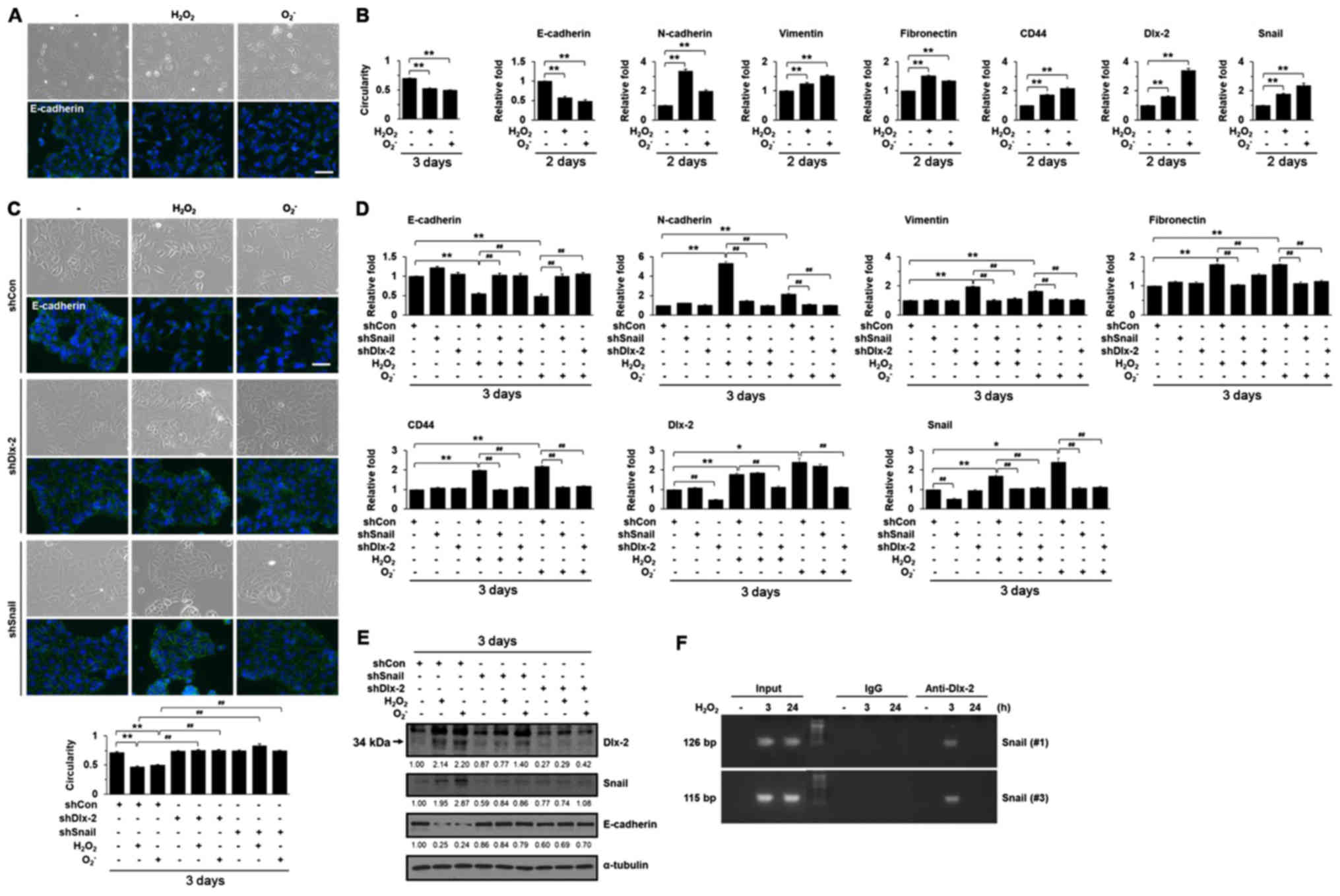
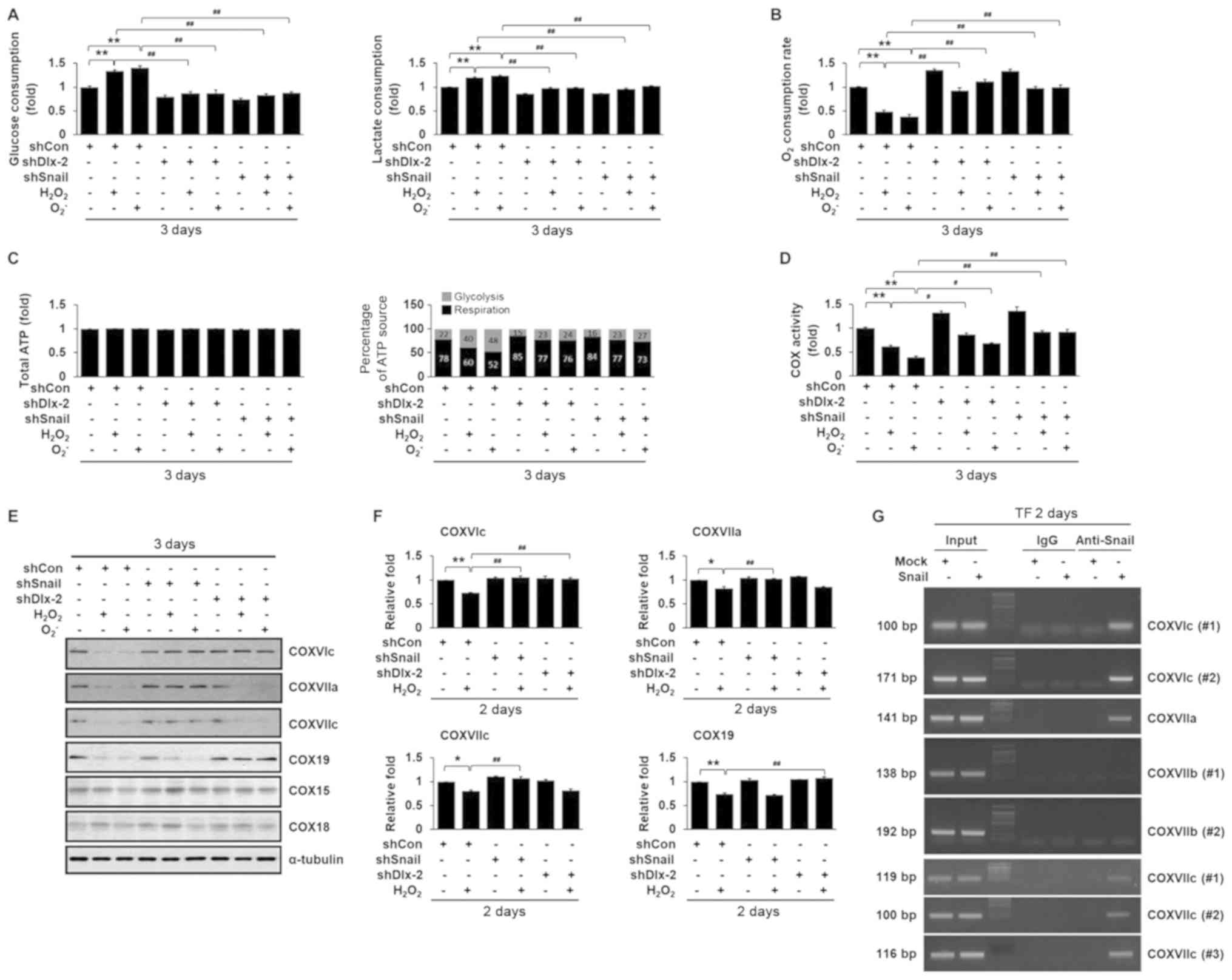
Reactive oxygen species (ROS) are important cellular second messengers involved in various aspects of cell signaling. ROS are elevated in multiple types of cancer cells, and this elevation is known to be involved in pathological processes of cancer. Although high levels of ROS exert cytotoxic effects on cancer cells, low levels of ROS stimulate cell proliferation and survival by inducing several pro‑survival signaling pathways. In addition, ROS have been shown to induce epithelial‑mesenchymal transition (EMT), which is essential for the initiation of metastasis. However, the precise mechanism of ROS‑induced EMT remains to be elucidated. In the present study, it was indicated that ROS induce EMT by activating Snail expression, which then represses E‑cadherin expression in MCF‑7 cells. It was further indicated that distal‑less homeobox‑2 (Dlx‑2), one of the human Dlx gene family proteins involved in embryonic development, acts as an upstream regulator of ROS‑induced Snail expression. It was also revealed that ROS treatment induces the glycolytic switch, a phenomenon whereby cancer cells primarily rely on glycolysis instead of mitochondrial oxidative phosphorylation for ATP production, even in the presence of oxygen. In addition, ROS inhibited oxidative phosphorylation and caused cytochrome c oxidase inhibition via the Dlx‑2/Snail cascade. These results suggest that ROS induce EMT, the glycolytic switch and mitochondrial repression by activating the Dlx‑2/Snail axis, thereby playing crucial roles in MCF‑7 cancer cell progression.
View Figures

Figure 1

Figure 2

View References

1 

Storz P: Reactive oxygen species in tumor progression. Front Biosci. 10:1881–1896. 2005. View Article : Google Scholar : PubMed/NCBI

2 

Liou GY and Storz P: Reactive oxygen species in cancer. Free Radic Res. 44:479–496. 2010. View Article : Google Scholar : PubMed/NCBI

3 

Schieber M and Chandel NS: ROS function in redox signaling and oxidative stress. Curr Biol. 24:R453–R462. 2014. View Article : Google Scholar : PubMed/NCBI

4 

Mittler R: ROS Are Good. Trends Plant Sci. 22:11–19. 2017. View Article : Google Scholar : PubMed/NCBI

5 

Di Meo S, Reed TT, Venditti P and Victor VM: Harmful and beneficial role of ROS. Oxid Med Cell Longev. 2016:79091862016. View Article : Google Scholar : PubMed/NCBI

6 

Wu WS: The signaling mechanism of ROS in tumor progression. Cancer Metastasis Rev. 25:695–705. 2006. View Article : Google Scholar : PubMed/NCBI

7 

de Sá, Junior PL, Câmara DAD, Porcacchia AS, Fonseca PMM, Jorge SD, Araldi RP and Ferreira AK: The roles of ROS in cancer heterogeneity and therapy. Oxid Med Cell Longev. 2017:24679402017.PubMed/NCBI

8 

Zorov DB, Juhaszova M and Sollott SJ: Mitochondrial reactive oxygen species (ROS) and ROS-induced ROS release. Physiol Rev. 94:909–950. 2014. View Article : Google Scholar : PubMed/NCBI

9 

Han D, Williams E and Cadenas E: Mitochondrial respiratory chain-dependent generation of superoxide anion and its release into the intermembrane space. Biochem J. 353:411–416. 2001. View Article : Google Scholar : PubMed/NCBI

10 

Burdon RH: Superoxide and hydrogen peroxide in relation to mammalian cell proliferation. Free Radic Biol Med. 18:775–794. 1995. View Article : Google Scholar : PubMed/NCBI

11 

Cannito S, Novo E, di Bonzo LV, Busletta C, Colombatto S and Parola M: Epithelial-mesenchymal transition: from molecular mechanisms, redox regulation to implications in human health and disease. Antioxid Redox Signal. 12:1383–1430. 2010. View Article : Google Scholar : PubMed/NCBI

12 

Pani G, Giannoni E, Galeotti T and Chiarugi P: Redox-based escape mechanism from death: the cancer lesson. Antioxid Redox Signal. 11:2791–2806. 2009. View Article : Google Scholar : PubMed/NCBI

13 

Cichon MA and Radisky DC: ROS-induced epithelial-mesenchymal transition in mammary epithelial cells is mediated by NF-kB-dependent activation of Snail. Oncotarget. 5:2827–2838. 2014. View Article : Google Scholar : PubMed/NCBI

14 

Lim SO, Gu JM, Kim MS, Kim HS, Park YN, Park CK, Cho JW, Park YM and Jung G: Epigenetic changes induced by reactive oxygen species in hepatocellular carcinoma: methylation of the E-cadherin promoter. Gastroenterology. 135:2128–2140, 2140 e2121-2128. 2008. View Article : Google Scholar : PubMed/NCBI

15 

De Craene B and Berx G: Regulatory networks defining EMT during cancer initiation and progression. Nat Rev Cancer. 13:97–110. 2013. View Article : Google Scholar : PubMed/NCBI

16 

Tsai JH and Yang J: Epithelial-mesenchymal plasticity in carcinoma metastasis. Genes Dev. 27:2192–2206. 2013. View Article : Google Scholar : PubMed/NCBI

17 

Puisieux A, Brabletz T and Caramel J: Oncogenic roles of EMT-inducing transcription factors. Nat Cell Biol. 16:488–494. 2014. View Article : Google Scholar : PubMed/NCBI

18 

Micalizzi DS, Farabaugh SM and Ford HL: Epithelial-mesenchymal transition in cancer: Parallels between normal development and tumor progression. J Mammary Gland Biol Neoplasia. 15:117–134. 2010. View Article : Google Scholar : PubMed/NCBI

19 

Iwatsuki M, Mimori K, Yokobori T, Ishi H, Beppu T, Nakamori S, Baba H and Mori M: Epithelial-mesenchymal transition in cancer development and its clinical significance. Cancer Sci. 101:293–299. 2010. View Article : Google Scholar : PubMed/NCBI

20 

Peinado H, Olmeda D and Cano A: Snail, Zeb and bHLH factors in tumour progression: an alliance against the epithelial phenotype? Nat Rev Cancer. 7:415–428. 2007. View Article : Google Scholar : PubMed/NCBI

21 

Wang Y, Shi J, Chai K, Ying X and Zhou BP: The role of snail in EMT and tumorigenesis. Curr Cancer Drug Targets. 13:963–972. 2013. View Article : Google Scholar : PubMed/NCBI

22 

De Craene B, Denecker G, Vermassen P, Taminau J, Mauch C, Derore A, Jonkers J, Fuchs E and Berx G: Epidermal snail expression drives skin cancer initiation and progression through enhanced cytoprotection, epidermal stem/progenitor cell expansion and enhanced metastatic potential. Cell Death Differ. 21:310–320. 2014. View Article : Google Scholar : PubMed/NCBI

23 

Lee SY, Jeon HM, Ju MK, Kim CH, Yoon G, Han SI, Park HG and Kang HS: Wnt/Snail signaling regulates cytochrome C oxidase and glucose metabolism. Cancer Res. 72:3607–3617. 2012. View Article : Google Scholar : PubMed/NCBI

24 

Warburg O: On the origin of cancer cells. Science. 123:309–314. 1956. View Article : Google Scholar : PubMed/NCBI

25 

Hsu PP and Sabatini DM: Cancer cell metabolism: Warburg and beyond. Cell. 134:703–707. 2008. View Article : Google Scholar : PubMed/NCBI

26 

Vander Heiden MG, Cantley LC and Thompson CB: Understanding the Warburg effect: the metabolic requirements of cell proliferation. Science. 324:1029–1033. 2009. View Article : Google Scholar : PubMed/NCBI

27 

Cairns RA, Harris IS and Mak TW: Regulation of cancer cell metabolism. Nat Rev Cancer. 11:85–95. 2011. View Article : Google Scholar : PubMed/NCBI

28 

Finley LW, Zhang J, Ye J, Ward PS and Thompson CB: SnapShot: cancer metabolism pathways. Cell Metab. 17:466, e462. 2013. View Article : Google Scholar : PubMed/NCBI

29 

Lee SY, Jeon HM, Ju MK, Jeong EK, Kim CH, Yoo MA, Park HG, Han SI and Kang HS: Dlx-2 is implicated in TGF-β- and Wnt-induced epithelial-mesenchymal, glycolytic switch, and mitochondrial repression by Snail activation. Int J Oncol. 46:1768–1780. 2015. View Article : Google Scholar : PubMed/NCBI

30 

Lee SY, Jeon HM, Ju MK, Jeong EK, Kim CH, Park HG, Han SI and Kang HS: Dlx-2 and glutaminase upregulate epithelial-mesenchymal transition and glycolytic switch. Oncotarget. 7:7925–7939. 2016.PubMed/NCBI

31 

Merlo GR, Zerega B, Paleari L, Trombino S, Mantero S and Levi G: Multiple functions of Dlx genes. Int J Dev Biol. 44:619–626. 2000.PubMed/NCBI

32 

Panganiban G and Rubenstein JL: Developmental functions of the Distal-less/Dlx homeobox genes. Development. 129:4371–4386. 2002.PubMed/NCBI

33 

Lee SY, Jeon HM, Kim CH, Ju MK, Bae HS, Park HG, Lim SC, Han SI and Kang HS: Homeobox gene Dlx-2 is implicated in metabolic stress-induced necrosis. Mol Cancer. 10:1132011. View Article : Google Scholar : PubMed/NCBI

34 

Yilmaz M, Maass D, Tiwari N, Waldmeier L, Schmidt P, Lehembre F and Christofori G: Transcription factor Dlx2 protects from TGFβ-induced cell-cycle arrest and apoptosis. EMBO J. 30:4489–4499. 2011. View Article : Google Scholar : PubMed/NCBI

35 

Tang P, Huang H, Chang J, Zhao GF, Lu ML and Wang Y: Increased expression of DLX2 correlates with advanced stage of gastric adenocarcinoma. World J Gastroenterol. 19:2697–2703. 2013. View Article : Google Scholar : PubMed/NCBI

36 

Yan ZH, Bao ZS, Yan W, Liu YW, Zhang CB, Wang HJ, Feng Y, Wang YZ, Zhang W, You G, et al: Upregulation of DLX2 confers a poor prognosis in glioblastoma patients by inducing a proliferative phenotype. Curr Mol Med. 13:438–445. 2013. View Article : Google Scholar : PubMed/NCBI

37 

Kim CH, Jeon HM, Lee SY, Ju MK, Moon JY, Park HG, Yoo MA, Choi BT, Yook JI, Lim SC, et al: Implication of snail in metabolic stress-induced necrosis. PLoS One. 6:e180002011. View Article : Google Scholar : PubMed/NCBI

38 

Yoon YS, Lee JH, Hwang SC, Choi KS and Yoon G: TGF beta1 induces prolonged mitochondrial ROS generation through decreased complex IV activity with senescent arrest in Mv1Lu cells. Oncogene. 24:1895–1903. 2005. View Article : Google Scholar : PubMed/NCBI

39 

Sariban-Sohraby S, Magrath IT and Balaban RS: Comparison of energy metabolism in human normal and neoplastic (Burkitt's lymphoma) lymphoid cells. Cancer Res. 43:4662–4664. 1983.PubMed/NCBI

40 

Dong C, Yuan T, Wu Y, Wang Y, Fan TW, Miriyala S, Lin Y, Yao J, Shi J, Kang T, et al: Loss of FBP1 by Snail-mediated repression provides metabolic advantages in basal-like breast cancer. Cancer Cell. 23:316–331. 2013. View Article : Google Scholar : PubMed/NCBI

41 

Jin L, Zhu C, Wang X, Li C, Cao C, Yuan J and Li S: Urocortin attenuates TGFβ1-induced Snail1 and slug expressions: inhibitory role of Smad7 in Smad2/3 signaling in breast cancer cells. J Cell Biochem. 116:2494–2503. 2015. View Article : Google Scholar : PubMed/NCBI

42 

Rios Garcia M, Steinbauer B, Srivastava K, Singhal M, Mattijssen F, Maida A, Christian S, Hess-Stumpp H, Augustin HG, et al: Acetyl-CoA carboxylase 1-dependent protein acetylation controls breast cancer metastasis and recurrence. Cell Metab. 26:842–855, e845. 2017. View Article : Google Scholar : PubMed/NCBI

43 

Xu H, Tian Y, Yuan X, Wu H, Liu Q, Pestell RG and Wu K: The role of CD44 in epithelial-mesenchymal transition and cancer development. Onco Targets Ther. 8:3783–3792. 2015.PubMed/NCBI

44 

Chanmee T, Ontong P, Kimata K and Itano N: Key roles of hyaluronan and Its CD44 receptor in the stemness and survival of cancer stem cells. Front Oncol. 5:1802015. View Article : Google Scholar : PubMed/NCBI

45 

Han X, Aslanian A and Yates JR III: Mass spectrometry for proteomics. Curr Opin Chem Biol. 12:483–490. 2008. View Article : Google Scholar : PubMed/NCBI

46 

Dettmer K, Aronov PA and Hammock BD: Mass spectrometry-based metabolomics. Mass Spectrom Rev. 26:51–78. 2007. View Article : Google Scholar : PubMed/NCBI

47 

Min C, Eddy SF, Sherr DH and Sonenshein GE: NF-kappaB and epithelial to mesenchymal transition of cancer. J Cell Biochem. 104:733–744. 2008. View Article : Google Scholar : PubMed/NCBI

48 

Taniguchi K and Karin M: NF-κB, inflammation, immunity and cancer: Coming of age. Nat Rev Immunol. 18:309–324. 2018. View Article : Google Scholar : PubMed/NCBI

49 

Pires BR, Mencalha AL, Ferreira GM, de Souza WF, Morgado-Díaz JA, Maia AM, Corrêa S and Abdelhay ES: NF-kappaB is involved in the regulation of EMT genes in breast cancer cells. PLoS One. 12:e01696222017. View Article : Google Scholar : PubMed/NCBI

50 

Huang S, Pettaway CA, Uehara H, Bucana CD and Fidler IJ: Blockade of NF-kappaB activity in human prostate cancer cells is associated with suppression of angiogenesis, invasion, and metastasis. Oncogene. 20:4188–4197. 2001. View Article : Google Scholar : PubMed/NCBI

51 

Tobar N, Villar V and Santibanez JF: ROS-NFkappaB mediates TGF-beta1-induced expression of urokinase-type plasminogen activator, matrix metalloproteinase-9 and cell invasion. Mol Cell Biochem. 340:195–202. 2010. View Article : Google Scholar : PubMed/NCBI

52 

Kang KA, Ryu YS, Piao MJ, Shilnikova K, Kang HK, Yi JM, Boulanger M, Paolillo R, Bossis G, Yoon SY, et al: DUOX2-mediated production of reactive oxygen species induces epithelial mesenchymal transition in 5-fluorouracil resistant human colon cancer cells. Redox Biol. 17:224–235. 2018. View Article : Google Scholar : PubMed/NCBI

53 

Meng Q, Shi S, Liang C, Liang D, Hua J, Zhang B, Xu J and Yu X: Abrogation of glutathione peroxidase-1 drives EMT and chemoresistance in pancreatic cancer by activating ROS-mediated Akt/GSK3β/Snail signaling. Oncogene. 37:5843–5857. 2018. View Article : Google Scholar : PubMed/NCBI

54 

Jiao L, Li DD, Yang CL, Peng RQ, Guo YQ, Zhang XS and Zhu XF: Reactive oxygen species mediate oxaliplatin-induced epithelial-mesenchymal transition and invasive potential in colon cancer. Tumour Biol. 37:8413–8423. 2016. View Article : Google Scholar : PubMed/NCBI

Related Articles

  • Abstract
  • View
  • Download
  • Twitter
Copy and paste a formatted citation
Spandidos Publications style
Lee SY, Ju MK, Jeon HM, Lee YJ, Kim CH, Park HG, Han SI and Kang HS: Reactive oxygen species induce epithelial‑mesenchymal transition, glycolytic switch, and mitochondrial repression through the Dlx‑2/Snail signaling pathways in MCF‑7 cells. Mol Med Rep 20: 2339-2346, 2019.
APA
Lee, S.Y., Ju, M.K., Jeon, H.M., Lee, Y.J., Kim, C.H., Park, H.G. ... Kang, H.S. (2019). Reactive oxygen species induce epithelial‑mesenchymal transition, glycolytic switch, and mitochondrial repression through the Dlx‑2/Snail signaling pathways in MCF‑7 cells. Molecular Medicine Reports, 20, 2339-2346. https://doi.org/10.3892/mmr.2019.10466
MLA
Lee, S. Y., Ju, M. K., Jeon, H. M., Lee, Y. J., Kim, C. H., Park, H. G., Han, S. I., Kang, H. S."Reactive oxygen species induce epithelial‑mesenchymal transition, glycolytic switch, and mitochondrial repression through the Dlx‑2/Snail signaling pathways in MCF‑7 cells". Molecular Medicine Reports 20.3 (2019): 2339-2346.
Chicago
Lee, S. Y., Ju, M. K., Jeon, H. M., Lee, Y. J., Kim, C. H., Park, H. G., Han, S. I., Kang, H. S."Reactive oxygen species induce epithelial‑mesenchymal transition, glycolytic switch, and mitochondrial repression through the Dlx‑2/Snail signaling pathways in MCF‑7 cells". Molecular Medicine Reports 20, no. 3 (2019): 2339-2346. https://doi.org/10.3892/mmr.2019.10466
Copy and paste a formatted citation
x
Spandidos Publications style
Lee SY, Ju MK, Jeon HM, Lee YJ, Kim CH, Park HG, Han SI and Kang HS: Reactive oxygen species induce epithelial‑mesenchymal transition, glycolytic switch, and mitochondrial repression through the Dlx‑2/Snail signaling pathways in MCF‑7 cells. Mol Med Rep 20: 2339-2346, 2019.
APA
Lee, S.Y., Ju, M.K., Jeon, H.M., Lee, Y.J., Kim, C.H., Park, H.G. ... Kang, H.S. (2019). Reactive oxygen species induce epithelial‑mesenchymal transition, glycolytic switch, and mitochondrial repression through the Dlx‑2/Snail signaling pathways in MCF‑7 cells. Molecular Medicine Reports, 20, 2339-2346. https://doi.org/10.3892/mmr.2019.10466
MLA
Lee, S. Y., Ju, M. K., Jeon, H. M., Lee, Y. J., Kim, C. H., Park, H. G., Han, S. I., Kang, H. S."Reactive oxygen species induce epithelial‑mesenchymal transition, glycolytic switch, and mitochondrial repression through the Dlx‑2/Snail signaling pathways in MCF‑7 cells". Molecular Medicine Reports 20.3 (2019): 2339-2346.
Chicago
Lee, S. Y., Ju, M. K., Jeon, H. M., Lee, Y. J., Kim, C. H., Park, H. G., Han, S. I., Kang, H. S."Reactive oxygen species induce epithelial‑mesenchymal transition, glycolytic switch, and mitochondrial repression through the Dlx‑2/Snail signaling pathways in MCF‑7 cells". Molecular Medicine Reports 20, no. 3 (2019): 2339-2346. https://doi.org/10.3892/mmr.2019.10466
Follow us
  • Twitter
  • LinkedIn
  • Facebook
About
  • Spandidos Publications
  • Careers
  • Cookie Policy
  • Privacy Policy
How can we help?
  • Help
  • Live Chat
  • Contact
  • Email to our Support Team