Spandidos Publications Logo
  • About
    • About Spandidos
    • Aims and Scopes
    • Abstracting and Indexing
    • Editorial Policies
    • Reprints and Permissions
    • Job Opportunities
    • Terms and Conditions
    • Contact
  • Journals
    • All Journals
    • Oncology Letters
      • Oncology Letters
      • Information for Authors
      • Editorial Policies
      • Editorial Board
      • Aims and Scope
      • Abstracting and Indexing
      • Bibliographic Information
      • Archive
    • International Journal of Oncology
      • International Journal of Oncology
      • Information for Authors
      • Editorial Policies
      • Editorial Board
      • Aims and Scope
      • Abstracting and Indexing
      • Bibliographic Information
      • Archive
    • Molecular and Clinical Oncology
      • Molecular and Clinical Oncology
      • Information for Authors
      • Editorial Policies
      • Editorial Board
      • Aims and Scope
      • Abstracting and Indexing
      • Bibliographic Information
      • Archive
    • Experimental and Therapeutic Medicine
      • Experimental and Therapeutic Medicine
      • Information for Authors
      • Editorial Policies
      • Editorial Board
      • Aims and Scope
      • Abstracting and Indexing
      • Bibliographic Information
      • Archive
    • International Journal of Molecular Medicine
      • International Journal of Molecular Medicine
      • Information for Authors
      • Editorial Policies
      • Editorial Board
      • Aims and Scope
      • Abstracting and Indexing
      • Bibliographic Information
      • Archive
    • Biomedical Reports
      • Biomedical Reports
      • Information for Authors
      • Editorial Policies
      • Editorial Board
      • Aims and Scope
      • Abstracting and Indexing
      • Bibliographic Information
      • Archive
    • Oncology Reports
      • Oncology Reports
      • Information for Authors
      • Editorial Policies
      • Editorial Board
      • Aims and Scope
      • Abstracting and Indexing
      • Bibliographic Information
      • Archive
    • Molecular Medicine Reports
      • Molecular Medicine Reports
      • Information for Authors
      • Editorial Policies
      • Editorial Board
      • Aims and Scope
      • Abstracting and Indexing
      • Bibliographic Information
      • Archive
    • World Academy of Sciences Journal
      • World Academy of Sciences Journal
      • Information for Authors
      • Editorial Policies
      • Editorial Board
      • Aims and Scope
      • Abstracting and Indexing
      • Bibliographic Information
      • Archive
    • International Journal of Functional Nutrition
      • International Journal of Functional Nutrition
      • Information for Authors
      • Editorial Policies
      • Editorial Board
      • Aims and Scope
      • Abstracting and Indexing
      • Bibliographic Information
      • Archive
    • International Journal of Epigenetics
      • International Journal of Epigenetics
      • Information for Authors
      • Editorial Policies
      • Editorial Board
      • Aims and Scope
      • Abstracting and Indexing
      • Bibliographic Information
      • Archive
    • Medicine International
      • Medicine International
      • Information for Authors
      • Editorial Policies
      • Editorial Board
      • Aims and Scope
      • Abstracting and Indexing
      • Bibliographic Information
      • Archive
  • Articles
  • Information
    • Information for Authors
    • Information for Reviewers
    • Information for Librarians
    • Information for Advertisers
    • Conferences
  • Language Editing
Spandidos Publications Logo
  • About
    • About Spandidos
    • Aims and Scopes
    • Abstracting and Indexing
    • Editorial Policies
    • Reprints and Permissions
    • Job Opportunities
    • Terms and Conditions
    • Contact
  • Journals
    • All Journals
    • Biomedical Reports
      • Information for Authors
      • Editorial Policies
      • Editorial Board
      • Aims and Scope
      • Abstracting and Indexing
      • Bibliographic Information
      • Archive
    • Experimental and Therapeutic Medicine
      • Information for Authors
      • Editorial Policies
      • Editorial Board
      • Aims and Scope
      • Abstracting and Indexing
      • Bibliographic Information
      • Archive
    • International Journal of Epigenetics
      • Information for Authors
      • Editorial Policies
      • Editorial Board
      • Aims and Scope
      • Abstracting and Indexing
      • Bibliographic Information
      • Archive
    • International Journal of Functional Nutrition
      • Information for Authors
      • Editorial Policies
      • Editorial Board
      • Aims and Scope
      • Abstracting and Indexing
      • Bibliographic Information
      • Archive
    • International Journal of Molecular Medicine
      • Information for Authors
      • Editorial Policies
      • Editorial Board
      • Aims and Scope
      • Abstracting and Indexing
      • Bibliographic Information
      • Archive
    • International Journal of Oncology
      • Information for Authors
      • Editorial Policies
      • Editorial Board
      • Aims and Scope
      • Abstracting and Indexing
      • Bibliographic Information
      • Archive
    • Medicine International
      • Information for Authors
      • Editorial Policies
      • Editorial Board
      • Aims and Scope
      • Abstracting and Indexing
      • Bibliographic Information
      • Archive
    • Molecular and Clinical Oncology
      • Information for Authors
      • Editorial Policies
      • Editorial Board
      • Aims and Scope
      • Abstracting and Indexing
      • Bibliographic Information
      • Archive
    • Molecular Medicine Reports
      • Information for Authors
      • Editorial Policies
      • Editorial Board
      • Aims and Scope
      • Abstracting and Indexing
      • Bibliographic Information
      • Archive
    • Oncology Letters
      • Information for Authors
      • Editorial Policies
      • Editorial Board
      • Aims and Scope
      • Abstracting and Indexing
      • Bibliographic Information
      • Archive
    • Oncology Reports
      • Information for Authors
      • Editorial Policies
      • Editorial Board
      • Aims and Scope
      • Abstracting and Indexing
      • Bibliographic Information
      • Archive
    • World Academy of Sciences Journal
      • Information for Authors
      • Editorial Policies
      • Editorial Board
      • Aims and Scope
      • Abstracting and Indexing
      • Bibliographic Information
      • Archive
  • Articles
  • Information
    • For Authors
    • For Reviewers
    • For Librarians
    • For Advertisers
    • Conferences
  • Language Editing
Login Register Submit
  • This site uses cookies
  • You can change your cookie settings at any time by following the instructions in our Cookie Policy. To find out more, you may read our Privacy Policy.

    I agree
Search articles by DOI, keyword, author or affiliation
Search
Advanced Search
presentation
Molecular Medicine Reports
Join Editorial Board Propose a Special Issue
Print ISSN: 1791-2997 Online ISSN: 1791-3004
Journal Cover
October-2019 Volume 20 Issue 4

Full Size Image

Sign up for eToc alerts
Recommend to Library

Journals

International Journal of Molecular Medicine

International Journal of Molecular Medicine

International Journal of Molecular Medicine is an international journal devoted to molecular mechanisms of human disease.

International Journal of Oncology

International Journal of Oncology

International Journal of Oncology is an international journal devoted to oncology research and cancer treatment.

Molecular Medicine Reports

Molecular Medicine Reports

Covers molecular medicine topics such as pharmacology, pathology, genetics, neuroscience, infectious diseases, molecular cardiology, and molecular surgery.

Oncology Reports

Oncology Reports

Oncology Reports is an international journal devoted to fundamental and applied research in Oncology.

Experimental and Therapeutic Medicine

Experimental and Therapeutic Medicine

Experimental and Therapeutic Medicine is an international journal devoted to laboratory and clinical medicine.

Oncology Letters

Oncology Letters

Oncology Letters is an international journal devoted to Experimental and Clinical Oncology.

Biomedical Reports

Biomedical Reports

Explores a wide range of biological and medical fields, including pharmacology, genetics, microbiology, neuroscience, and molecular cardiology.

Molecular and Clinical Oncology

Molecular and Clinical Oncology

International journal addressing all aspects of oncology research, from tumorigenesis and oncogenes to chemotherapy and metastasis.

World Academy of Sciences Journal

World Academy of Sciences Journal

Multidisciplinary open-access journal spanning biochemistry, genetics, neuroscience, environmental health, and synthetic biology.

International Journal of Functional Nutrition

International Journal of Functional Nutrition

Open-access journal combining biochemistry, pharmacology, immunology, and genetics to advance health through functional nutrition.

International Journal of Epigenetics

International Journal of Epigenetics

Publishes open-access research on using epigenetics to advance understanding and treatment of human disease.

Medicine International

Medicine International

An International Open Access Journal Devoted to General Medicine.

Journal Cover
October-2019 Volume 20 Issue 4

Full Size Image

Sign up for eToc alerts
Recommend to Library

  • Article
  • Citations
    • Cite This Article
    • Download Citation
    • Create Citation Alert
    • Remove Citation Alert
    • Cited By
  • Similar Articles
    • Related Articles (in Spandidos Publications)
    • Similar Articles (Google Scholar)
    • Similar Articles (PubMed)
  • Download PDF
  • Download XML
  • View XML
Article Open Access

Proteinase‑activated receptor 2 deficiency is a protective factor against cardiomyocyte apoptosis during myocardial ischemia/reperfusion injury

  • Authors:
    • Min Wang
    • Yiwen Ma
    • Tiantian Zhang
    • Lin Gao
    • Shan Zhang
    • Qizhi Chen
  • View Affiliations / Copyright

    Affiliations: Department of Cardiology, Shanghai Ninth People's Hospital, Shanghai Jiao Tong University School of Medicine, Shanghai 200011, P.R. China, Department of Anesthesiology, Shanghai Ninth People's Hospital, Shanghai Jiao Tong University School of Medicine, Shanghai 200011, P.R. China, Department of Emergency, Tumor Hospital, Fudan University, Shanghai 200032, P.R. China
    Copyright: © Wang et al. This is an open access article distributed under the terms of Creative Commons Attribution License.
  • Pages: 3764-3772
    |
    Published online on: August 26, 2019
       https://doi.org/10.3892/mmr.2019.10618
  • Expand metrics +
Metrics: Total Views: 0 (Spandidos Publications: | PMC Statistics: )
Metrics: Total PDF Downloads: 0 (Spandidos Publications: | PMC Statistics: )
Cited By (CrossRef): 0 citations Loading Articles...

This article is mentioned in:


Abstract

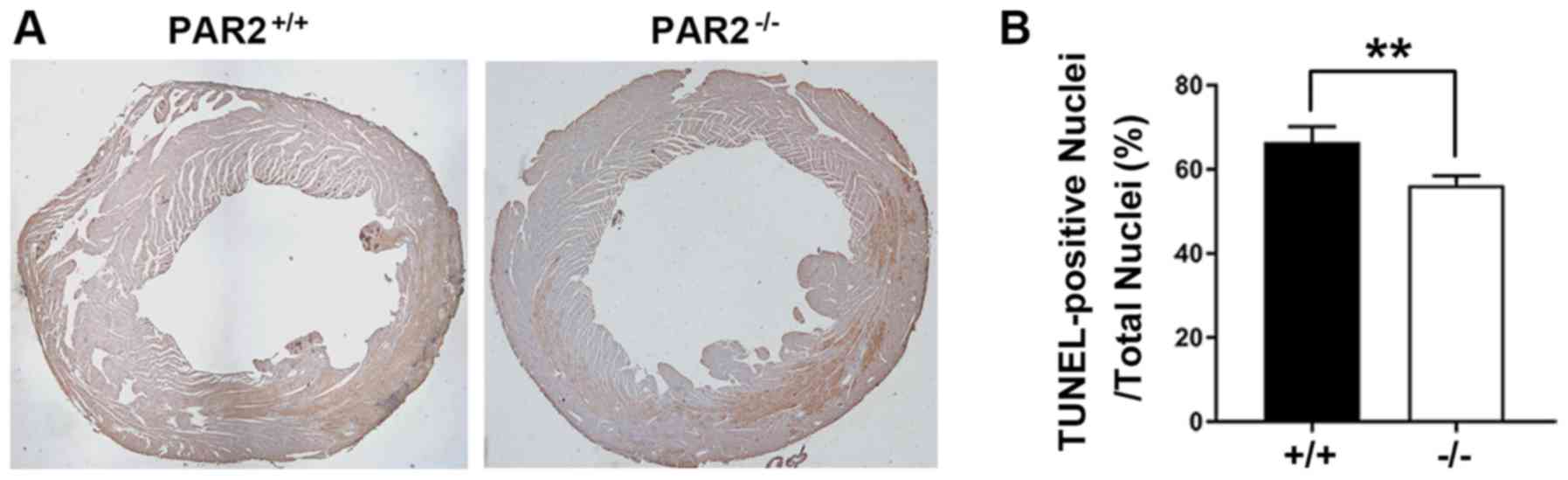
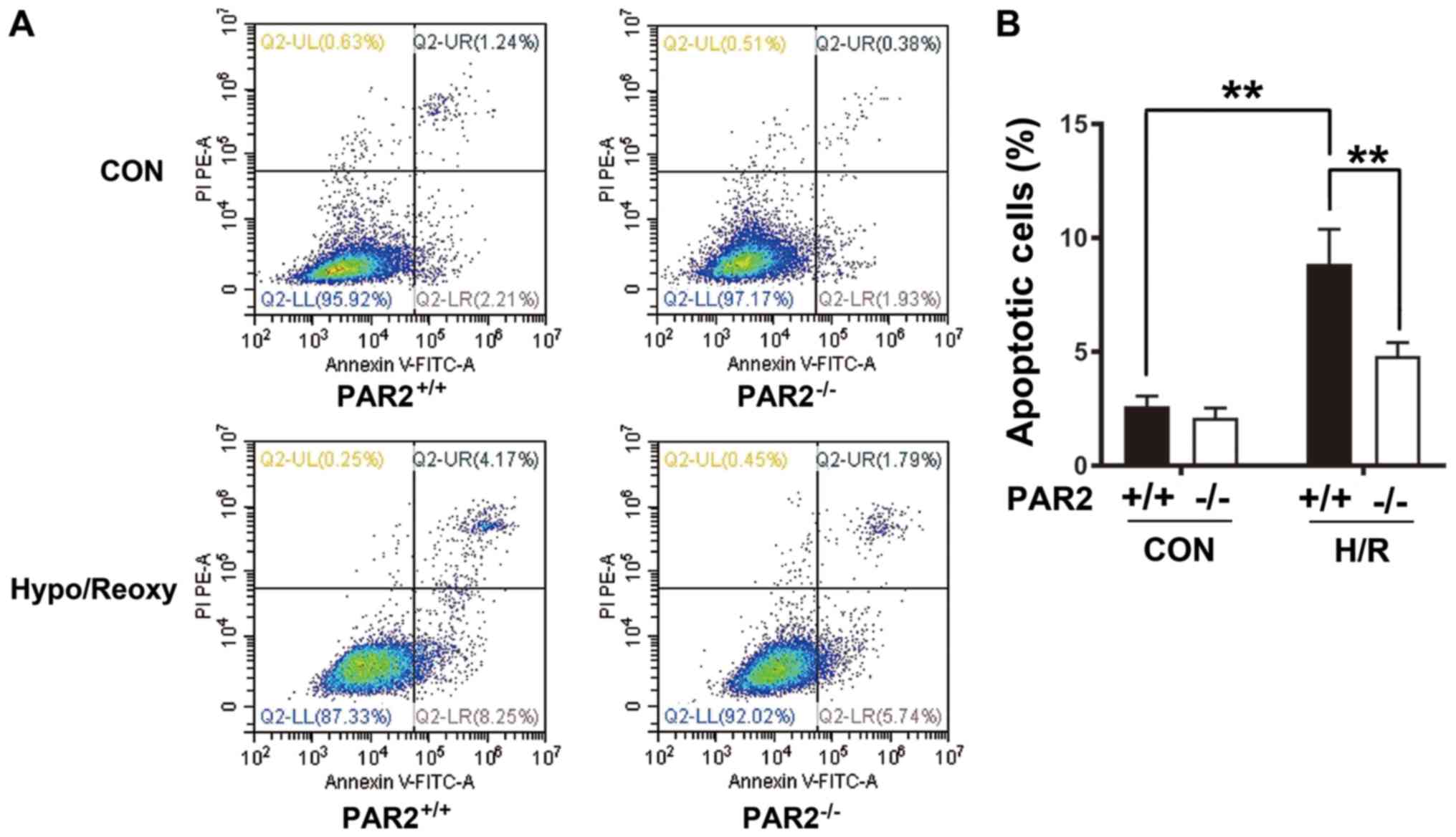
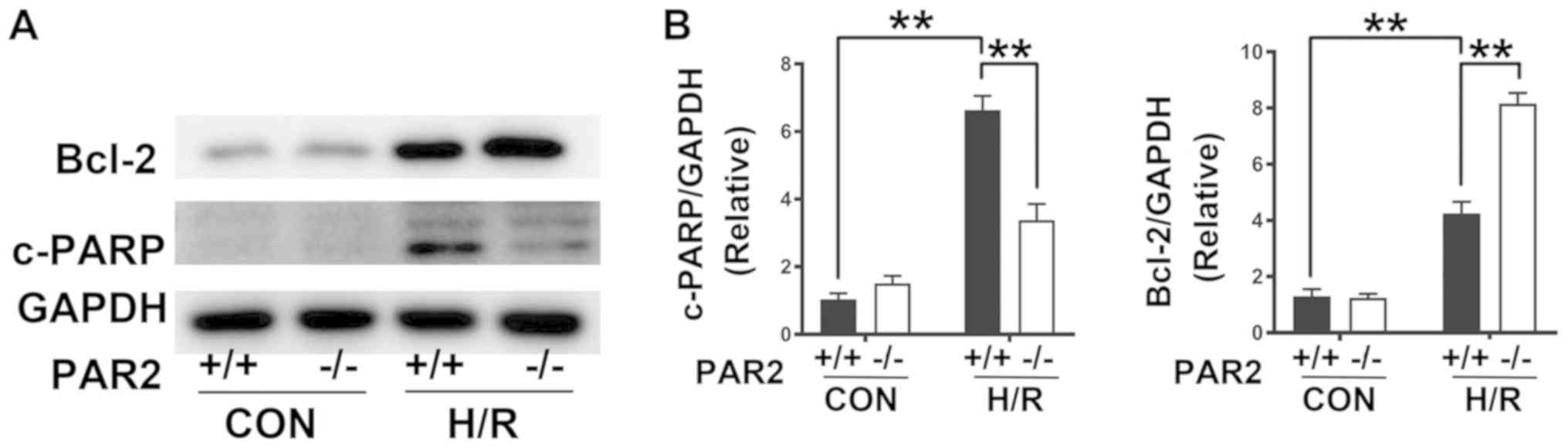
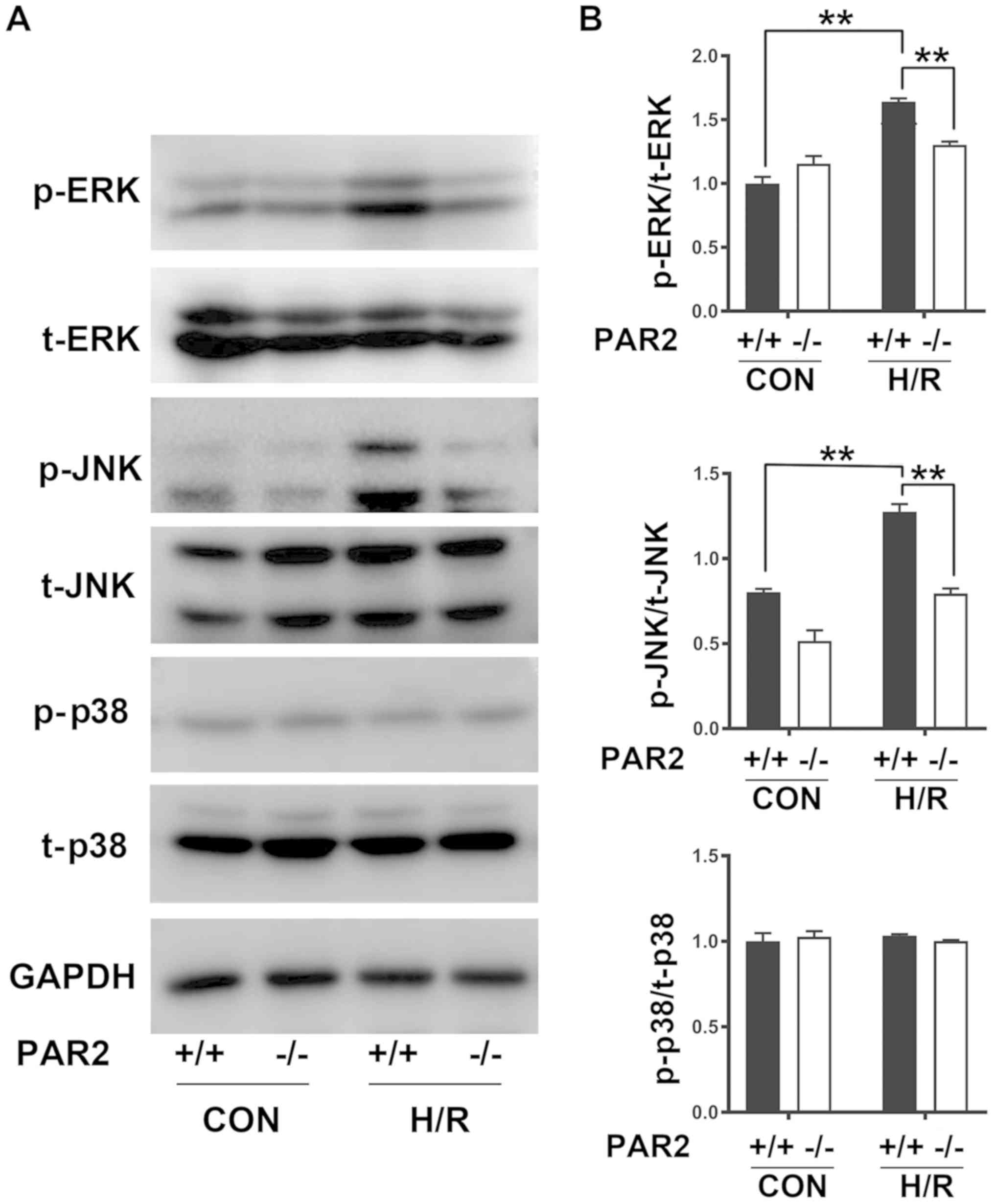
Previous studies have established that proteinase‑​activated receptor 2 (PAR2) activation protects against myocardial ischemia/reperfusion injury (MI/RI). However, the role of PAR2 deficiency in MI/RI remains unclear. The aim of the present study was to examine the effect of PAR2 deficiency on cardiomyocyte apoptosis and to clarify the potential molecular mechanisms for its protective effect against MI/RI. Using a mouse model of MI/RI, cardiac function was evaluated by echocardiography, infarct size was assessed by triphenyltetrazolium chloride staining, and myocardial cell apoptosis was measured by terminal deoxynucleotide transferase‑mediated dUTP nick end‑labeling staining. Annexin V/propidium iodide staining, and expression of Bcl‑2 and cleaved PARP were determined to assess apoptosis in myocardial H9c2 cells exposed to hypoxia/reoxygenation (H/R) injury‑simulating MI/RI. Phosphorylated ERK1/2, JNK, and p38 MAPK protein expression levels were analyzed by western blotting. The findings indicated that PAR2 deficiency markedly reduced cardiomyocyte apoptosis in the MI/RI mouse model, as well as in myocardial H9c2 cells exposed to H/R. Furthermore, PAR2 knockdown clearly prevented phosphorylation of ERK1/2 and JNK in myocardial H9c2 cells. The results revealed that PAR2 deficiency alleviated MI/RI‑associated apoptosis by inhibiting phosphorylation of ERK1/2 and JNK. Therefore, targeted PAR2 silencing may be a potential therapeutic approach for alleviation of MI/RI.
View Figures

Figure 1

Figure 2

Figure 3

Figure 4

Figure 5

Figure 6

Figure 7

Figure 8

View References

1 

Mozaffarian D, Benjamin EJ, Go AS, Anett DK, Blaha MJ, Cushman M, de Ferranti S, Despres JP, Fullerton HJ, Howard VJ, et al: Heart disease and stroke statistics-2015 update: A report from the American Heart Association. Circulation. 131:e29–e322. 2015. View Article : Google Scholar : PubMed/NCBI

2 

Jennings RB, Sommers HM, Smyth GA, Flack HA and Linn H: Myocardial necrosis induced by temporary occlusion of a coronary artery in the dog. Arch Pathol. 70:68–78. 1960.PubMed/NCBI

3 

Turer AT and Hill JA: Pathogenesis of myocardial ischemia-reperfusion injury and rationale for therapy. Am J Cardiol. 106:360–368. 2010. View Article : Google Scholar : PubMed/NCBI

4 

Wang Z, Wu G, Liu H, Xing N, Sun Y, Zhai Y, Yang B, Kong AT, Kuang H and Wang Q: Cardioprotective effect of the xanthones from Gentianella acuta against myocardial ischemia/reperfusion injury in isolated rat heart. Biomed Pharmacother. 93:626–635. 2017. View Article : Google Scholar : PubMed/NCBI

5 

Rothmeier AS and Ruf W: Protease-activated receptor 2 signaling in inflammation. Semin Immunopathol. 34:133–149. 2012. View Article : Google Scholar : PubMed/NCBI

6 

Steinberg SF: The cardiovascular actions of protease-activated receptors. Mol Pharmacol. 67:2–11. 2005. View Article : Google Scholar : PubMed/NCBI

7 

Murray DB, McLarty-Williams J, Nagalla KT and Janicki JS: Tryptase activates isolated adult cardiac fibroblasts via protease activated receptor-2 (PAR-2). J Cell Commun Signal. 6:45–51. 2012. View Article : Google Scholar : PubMed/NCBI

8 

Morris DR, Ding Y, Ricks TK, Gullapalli A, Wolfe BL and Trejo J: Protease-activated receptor-2 is essential for factor VIIa and Xa-induced signaling, migration, and invasion of breast cancer cells. Cancer Res. 66:307–314. 2006. View Article : Google Scholar : PubMed/NCBI

9 

Adams MN, Ramachandran R, Yau MK, Suen JY, Fairlie DP, Hollenberg MD and Hooper JD: Structure, function and pathophysiology of protease activated receptors. Pharmacol Ther. 130:248–282. 2011. View Article : Google Scholar : PubMed/NCBI

10 

Yau MK, Liu L and Fairlie DP: Toward drugs for protease- activated receptor 2 (PAR2). J Med Chem. 56:7477–7497. 2013. View Article : Google Scholar : PubMed/NCBI

11 

Bohm SK, Kong W, Bromme D, Smeekens SP, Anderson DC, Connolly A, Kahn M, Nelken NA, Coughlin SR, Payan DG and Bunnett NW: Molecular cloning, expression and potential functions of the human proteinase-activated receptor-2. Biochem J. 314:1009–1016. 1996. View Article : Google Scholar : PubMed/NCBI

12 

Kanke T, Macfarlane SR, Seatter MJ, Davenport E, Paul A, McKenzie RC and Plevin R: Proteinase-activated receptor-2-mediated activation of stress-activated protein kinases and inhibitory kappa B kinases in NCTC 2544 keratinocytes. J Biol Chem. 276:31657–31666. 2001. View Article : Google Scholar : PubMed/NCBI

13 

Tong XH, Ding JW, Yang J, Liu CQ, Zhang Y, Li S, Li WH and Li L: The effect of protease-activated receptor 2 on rat apoptotic cardiomyocytes underwent ischemia reperfusion injury. Zhonghua xin xue guan bing za zhi (Chinese). 37:832–836. 2009.

14 

Antoniak S, Rojas M, Spring D, Bullard TA, Verrier ED, Blaxall BC, Mackman N and Pawlinski R: Protease-activated receptor 2 deficiency reduces cardiac ischemia/reperfusion injury. Arterioscler Thromb Vasc Biol. 30:2136–2142. 2010. View Article : Google Scholar : PubMed/NCBI

15 

Rueden CT, Schindelin J, Hiner MC, DeZonia BE, Walter AE, Arena ET and Eliceiri KW: ImageJ2: ImageJ for the next generation of scientific image data. BMC Bioinformatics. 18:5292017. View Article : Google Scholar : PubMed/NCBI

16 

Odashima M, Usui S, Takagi H, Hong C, Liu J, Yokota M and Sadoshima J: Inhibition of endogenous Mst1 prevents apoptosis and cardiac dysfunction without affecting cardiac hypertrophy after myocardial infarction. Circ Res. 100:1344–1352. 2007. View Article : Google Scholar : PubMed/NCBI

17 

Chen PJ, Shang AQ, Yang JP and Wang WW: microRNA-874 inhibition targeting STAT3 protects the heart from ischemia-reperfusion injury by attenuating cardiomyocyte apoptosis in a mouse model. J Cell Physiol. 234:6182–6193. 2019. View Article : Google Scholar : PubMed/NCBI

18 

Bunck AC, Engelen MA, Schnackenburg B, Furkert J, Bremer C, Heindel W, Stypmann J and Maintz D: Feasibility of functional cardiac MR imaging in mice using a clinical 3 Tesla whole body scanner. Invest Radiol. 44:749–756. 2009. View Article : Google Scholar : PubMed/NCBI

19 

Mußbach F, Ungefroren H, Günther B, Katenkamp K, Henklein P, Westermann M, Settmacher U, Lenk L, Sebens S, Müller JP, et al: Proteinase-activated receptor 2 (PAR2) in hepatic stellate cells-evidence for a role in hepatocellular carcinoma growth in vivo. Mol Cancer. 15:542016. View Article : Google Scholar : PubMed/NCBI

20 

Gu J, Fan Y, Liu X, Zhou L, Cheng J, Cai R and Xue S: SENP1 protects against myocardial ischaemia/reperfusion injury via a HIF1 α-dependent pathway. Cardiovasc Res. 104:83–92. 2014. View Article : Google Scholar : PubMed/NCBI

21 

Liang S, Aiqun M, Figtree G and Ping Z: GAPDH-silence preserves H9C2 cells from acute hypoxia and reoxygenation injury. Int J Biol Macromol. 81:375–386. 2015. View Article : Google Scholar : PubMed/NCBI

22 

Iablokov V, Hirota CL, Peplowski MA, Ramachandran R, Mihara K, Hollenberg MD and MacNaughton WK: Proteinase- activated receptor 2 (PAR2) decreases apoptosis in colonic epithelial cells. J Biol Chem. 289:34366–34377. 2014. View Article : Google Scholar : PubMed/NCBI

23 

Li W, Liu Y, Wang B, Luo Y, Hu N, Chen D, Zhang X and Xiong Y: Protective effect of berberine against oxidative stress-induced apoptosis in rat bone marrow-derived mesenchymal stem cells. Exp Ther Med. 12:4041–4048. 2016. View Article : Google Scholar : PubMed/NCBI

24 

Dong Q, Li J, Wu QF, Zhao N, Qian C, Ding D, Wang BB, Chen L, Guo KF, Fu D, et al: Blockage of transient receptor potential vanilloid 4 alleviates myocardial ischemia/reperfusion injury in mice. Sci Rep. 7:426782017. View Article : Google Scholar : PubMed/NCBI

25 

Meng X, Song W, Deng B, Xing Z and Zhang W: 3-aminobenzamide, one of poly(ADP-ribose)polymerase-1 inhibitors, rescuesapoptosisin rat models of spinal cord injury. Int J Clin Exp Pathol. 8:12207–12215. 2015.PubMed/NCBI

26 

Badr R, Hashemi M, Javadi G, Movafagh A and Mahdian R: Assessment of global ischemic/reperfusion and Tacrolimus administration on CA1 region of hippocampus: Gene expression profiles of BAX and BCL2 genes. Bratisl Lek Listy. 117:358–362. 2016.PubMed/NCBI

27 

Sabri A, Muske G, Zhang H, Pak E, Darrow A, Andrade- Gordon P and Steinberg SF: Signaling properties and functions of two distinct cardiomyocyte protease-activated receptors. Circ Res. 86:1054–1061. 2000. View Article : Google Scholar : PubMed/NCBI

28 

Darmoul D, Gratio V, Devaud H and Laburthe M: Protease- activated receptor 2 in colon cancer: Trypsin-induced MAPK phosphorylation and cell proliferation are mediated by epidermal growth factor receptor transactivation. J Biol Chem. 279:20927–20934. 2004. View Article : Google Scholar : PubMed/NCBI

29 

Katritch V, Cherezov V and Stevens RC: Structure-function of the G protein-coupled receptor superfamily. Annu Rev Pharmacol Toxicol. 53:531–556. 2013. View Article : Google Scholar : PubMed/NCBI

30 

Jiang R, Zatta A, Kin H, Wang N, Reeves JG, Mykytenko J, Deneve J, Zhao ZQ, Guyton RA and Vinten-Johansen J: PAR-2 activation at the time of reperfusion salvages myocardium via an ERK1/2 pathway in in vivo rat hearts. Am J Physiol Heart Circ Physiol. 293:H2845–H2852. 2007. View Article : Google Scholar : PubMed/NCBI

31 

Antoniak S, Sparkenbaugh EM, Tencati M, Rojas M, Mackman N and Pawlinski R: Protease activated receptor-2 contributes to heart failure. PLoS One. 8:e817332013. View Article : Google Scholar : PubMed/NCBI

32 

Yu D, Li M, Tian Y, Liu J and Shang J: Luteolin inhibits ROS-activated MAPK pathway in myocardial ischemia/reperfusion injury. Life Sci. 122:15–25. 2015. View Article : Google Scholar : PubMed/NCBI

33 

Portbury AL, Ronnebaum SM, Zungu M, Patterson C and Willis MS: Back to your heart: Ubiquitin proteasome system-regulated signal transduction. J Mol Cell Cardiol. 52:526–537. 2012. View Article : Google Scholar : PubMed/NCBI

34 

Sun L, Fan H, Yang L, Shi L and Liu Y: Tyrosol prevents ischemia/reperfusion-induced cardiac injury in H9c2 cells: Involvement of ROS, Hsp70, JNK and ERK, and apoptosis. Molecules. 20:3758–3775. 2015. View Article : Google Scholar : PubMed/NCBI

35 

Kim YK, Kim HJ, Kwon CH, Kim JH, Woo JS, Jung JS and Kim JM: Role of ERK activation in cisplatin-induced apoptosis in OK renal epithelial cells. J Appl Toxicol. 25:374–382. 2005. View Article : Google Scholar : PubMed/NCBI

36 

Schafer C and Williams JA: Stress kinases and heat shock proteins in the pancreas: Possible roles in normal function and disease. J Gastroenterol. 35:1–9. 2000.PubMed/NCBI

37 

Napoli C, Cicala C, Wallace JL, de Nigris F, Santagada V, Caliendo G, Franconi F, Ignarro LJ and Cirino G: Protease-activated receptor-2 modulates myocardial ischemia-reperfusion injury in the rat heart. Proc Natl Acad Sci USA. 97:3678–3683. 2000. View Article : Google Scholar : PubMed/NCBI

38 

Schmidlin F, Amadesi S, Dabbagh K, Lewis DE, Knott P, Bunnett NW, Gater PR, Geppetti P, Bertrand C and Stevens ME: Protease-activated receptor 2 mediates eosinophil infiltration and hyperreactivity in allergic inflammation of the airway. J Immunol. 169:5315–5321. 2002. View Article : Google Scholar : PubMed/NCBI

39 

Ferrell WR, Lockhart JC, Kelso EB, Dunning L, Plevin R, Meek SE, Smith AJ, Hunter GD, McLean JS, McGarry F, et al: Essential role for proteinase-activated receptor-2 in arthritis. J Clin Invest. 111:35–41. 2003. View Article : Google Scholar : PubMed/NCBI

40 

McLean PG, Aston D, Sarkar D and Ahluwalia A: Protease- activated receptor-2 activation causes EDHF-like coronary vasodilation: Selective preservation in ischemia/reperfusion injury: Involvement of lipoxygenase products, VR1 receptors, and C-fibers. Circ Res. 90:465–472. 2002. View Article : Google Scholar : PubMed/NCBI

41 

Boyd JH, Mathur S, Wang Y, Bateman RM and Walley KR: Toll-like receptor stimulation in cardiomyoctes decreases contractility and initiates an NF-kappaB dependent inflammatory response. Cardiovasc Res. 72:384–393. 2006. View Article : Google Scholar : PubMed/NCBI

42 

Soh UJ, Dores MR, Chen B and Trejo J: Signal transduction by protease-activated receptors. Br J Pharmacol. 160:191–203. 2010. View Article : Google Scholar : PubMed/NCBI

43 

Freedman NJ and Shenoy SK: Regulation of inflammation by β-arrestins: Not just receptor tales. Cell Signal. 41:41–45. 2018. View Article : Google Scholar : PubMed/NCBI

44 

Patel PA, Tilley DG and Rockman HA: Physiologic and cardiac roles of beta-arrestins. J Mol Cell Cardiol. 46:300–308. 2009. View Article : Google Scholar : PubMed/NCBI

Related Articles

  • Abstract
  • View
  • Download
  • Twitter
Copy and paste a formatted citation
Spandidos Publications style
Wang M, Ma Y, Zhang T, Gao L, Zhang S and Chen Q: Proteinase‑activated receptor 2 deficiency is a protective factor against cardiomyocyte apoptosis during myocardial ischemia/reperfusion injury. Mol Med Rep 20: 3764-3772, 2019.
APA
Wang, M., Ma, Y., Zhang, T., Gao, L., Zhang, S., & Chen, Q. (2019). Proteinase‑activated receptor 2 deficiency is a protective factor against cardiomyocyte apoptosis during myocardial ischemia/reperfusion injury. Molecular Medicine Reports, 20, 3764-3772. https://doi.org/10.3892/mmr.2019.10618
MLA
Wang, M., Ma, Y., Zhang, T., Gao, L., Zhang, S., Chen, Q."Proteinase‑activated receptor 2 deficiency is a protective factor against cardiomyocyte apoptosis during myocardial ischemia/reperfusion injury". Molecular Medicine Reports 20.4 (2019): 3764-3772.
Chicago
Wang, M., Ma, Y., Zhang, T., Gao, L., Zhang, S., Chen, Q."Proteinase‑activated receptor 2 deficiency is a protective factor against cardiomyocyte apoptosis during myocardial ischemia/reperfusion injury". Molecular Medicine Reports 20, no. 4 (2019): 3764-3772. https://doi.org/10.3892/mmr.2019.10618
Copy and paste a formatted citation
x
Spandidos Publications style
Wang M, Ma Y, Zhang T, Gao L, Zhang S and Chen Q: Proteinase‑activated receptor 2 deficiency is a protective factor against cardiomyocyte apoptosis during myocardial ischemia/reperfusion injury. Mol Med Rep 20: 3764-3772, 2019.
APA
Wang, M., Ma, Y., Zhang, T., Gao, L., Zhang, S., & Chen, Q. (2019). Proteinase‑activated receptor 2 deficiency is a protective factor against cardiomyocyte apoptosis during myocardial ischemia/reperfusion injury. Molecular Medicine Reports, 20, 3764-3772. https://doi.org/10.3892/mmr.2019.10618
MLA
Wang, M., Ma, Y., Zhang, T., Gao, L., Zhang, S., Chen, Q."Proteinase‑activated receptor 2 deficiency is a protective factor against cardiomyocyte apoptosis during myocardial ischemia/reperfusion injury". Molecular Medicine Reports 20.4 (2019): 3764-3772.
Chicago
Wang, M., Ma, Y., Zhang, T., Gao, L., Zhang, S., Chen, Q."Proteinase‑activated receptor 2 deficiency is a protective factor against cardiomyocyte apoptosis during myocardial ischemia/reperfusion injury". Molecular Medicine Reports 20, no. 4 (2019): 3764-3772. https://doi.org/10.3892/mmr.2019.10618
Follow us
  • Twitter
  • LinkedIn
  • Facebook
About
  • Spandidos Publications
  • Careers
  • Cookie Policy
  • Privacy Policy
How can we help?
  • Help
  • Live Chat
  • Contact
  • Email to our Support Team