Spandidos Publications Logo
  • About
    • About Spandidos
    • Aims and Scopes
    • Abstracting and Indexing
    • Editorial Policies
    • Reprints and Permissions
    • Job Opportunities
    • Terms and Conditions
    • Contact
  • Journals
    • All Journals
    • Oncology Letters
      • Oncology Letters
      • Information for Authors
      • Editorial Policies
      • Editorial Board
      • Aims and Scope
      • Abstracting and Indexing
      • Bibliographic Information
      • Archive
    • International Journal of Oncology
      • International Journal of Oncology
      • Information for Authors
      • Editorial Policies
      • Editorial Board
      • Aims and Scope
      • Abstracting and Indexing
      • Bibliographic Information
      • Archive
    • Molecular and Clinical Oncology
      • Molecular and Clinical Oncology
      • Information for Authors
      • Editorial Policies
      • Editorial Board
      • Aims and Scope
      • Abstracting and Indexing
      • Bibliographic Information
      • Archive
    • Experimental and Therapeutic Medicine
      • Experimental and Therapeutic Medicine
      • Information for Authors
      • Editorial Policies
      • Editorial Board
      • Aims and Scope
      • Abstracting and Indexing
      • Bibliographic Information
      • Archive
    • International Journal of Molecular Medicine
      • International Journal of Molecular Medicine
      • Information for Authors
      • Editorial Policies
      • Editorial Board
      • Aims and Scope
      • Abstracting and Indexing
      • Bibliographic Information
      • Archive
    • Biomedical Reports
      • Biomedical Reports
      • Information for Authors
      • Editorial Policies
      • Editorial Board
      • Aims and Scope
      • Abstracting and Indexing
      • Bibliographic Information
      • Archive
    • Oncology Reports
      • Oncology Reports
      • Information for Authors
      • Editorial Policies
      • Editorial Board
      • Aims and Scope
      • Abstracting and Indexing
      • Bibliographic Information
      • Archive
    • Molecular Medicine Reports
      • Molecular Medicine Reports
      • Information for Authors
      • Editorial Policies
      • Editorial Board
      • Aims and Scope
      • Abstracting and Indexing
      • Bibliographic Information
      • Archive
    • World Academy of Sciences Journal
      • World Academy of Sciences Journal
      • Information for Authors
      • Editorial Policies
      • Editorial Board
      • Aims and Scope
      • Abstracting and Indexing
      • Bibliographic Information
      • Archive
    • International Journal of Functional Nutrition
      • International Journal of Functional Nutrition
      • Information for Authors
      • Editorial Policies
      • Editorial Board
      • Aims and Scope
      • Abstracting and Indexing
      • Bibliographic Information
      • Archive
    • International Journal of Epigenetics
      • International Journal of Epigenetics
      • Information for Authors
      • Editorial Policies
      • Editorial Board
      • Aims and Scope
      • Abstracting and Indexing
      • Bibliographic Information
      • Archive
    • Medicine International
      • Medicine International
      • Information for Authors
      • Editorial Policies
      • Editorial Board
      • Aims and Scope
      • Abstracting and Indexing
      • Bibliographic Information
      • Archive
  • Articles
  • Information
    • Information for Authors
    • Information for Reviewers
    • Information for Librarians
    • Information for Advertisers
    • Conferences
  • Language Editing
Spandidos Publications Logo
  • About
    • About Spandidos
    • Aims and Scopes
    • Abstracting and Indexing
    • Editorial Policies
    • Reprints and Permissions
    • Job Opportunities
    • Terms and Conditions
    • Contact
  • Journals
    • All Journals
    • Biomedical Reports
      • Information for Authors
      • Editorial Policies
      • Editorial Board
      • Aims and Scope
      • Abstracting and Indexing
      • Bibliographic Information
      • Archive
    • Experimental and Therapeutic Medicine
      • Information for Authors
      • Editorial Policies
      • Editorial Board
      • Aims and Scope
      • Abstracting and Indexing
      • Bibliographic Information
      • Archive
    • International Journal of Epigenetics
      • Information for Authors
      • Editorial Policies
      • Editorial Board
      • Aims and Scope
      • Abstracting and Indexing
      • Bibliographic Information
      • Archive
    • International Journal of Functional Nutrition
      • Information for Authors
      • Editorial Policies
      • Editorial Board
      • Aims and Scope
      • Abstracting and Indexing
      • Bibliographic Information
      • Archive
    • International Journal of Molecular Medicine
      • Information for Authors
      • Editorial Policies
      • Editorial Board
      • Aims and Scope
      • Abstracting and Indexing
      • Bibliographic Information
      • Archive
    • International Journal of Oncology
      • Information for Authors
      • Editorial Policies
      • Editorial Board
      • Aims and Scope
      • Abstracting and Indexing
      • Bibliographic Information
      • Archive
    • Medicine International
      • Information for Authors
      • Editorial Policies
      • Editorial Board
      • Aims and Scope
      • Abstracting and Indexing
      • Bibliographic Information
      • Archive
    • Molecular and Clinical Oncology
      • Information for Authors
      • Editorial Policies
      • Editorial Board
      • Aims and Scope
      • Abstracting and Indexing
      • Bibliographic Information
      • Archive
    • Molecular Medicine Reports
      • Information for Authors
      • Editorial Policies
      • Editorial Board
      • Aims and Scope
      • Abstracting and Indexing
      • Bibliographic Information
      • Archive
    • Oncology Letters
      • Information for Authors
      • Editorial Policies
      • Editorial Board
      • Aims and Scope
      • Abstracting and Indexing
      • Bibliographic Information
      • Archive
    • Oncology Reports
      • Information for Authors
      • Editorial Policies
      • Editorial Board
      • Aims and Scope
      • Abstracting and Indexing
      • Bibliographic Information
      • Archive
    • World Academy of Sciences Journal
      • Information for Authors
      • Editorial Policies
      • Editorial Board
      • Aims and Scope
      • Abstracting and Indexing
      • Bibliographic Information
      • Archive
  • Articles
  • Information
    • For Authors
    • For Reviewers
    • For Librarians
    • For Advertisers
    • Conferences
  • Language Editing
Login Register Submit
  • This site uses cookies
  • You can change your cookie settings at any time by following the instructions in our Cookie Policy. To find out more, you may read our Privacy Policy.

    I agree
Search articles by DOI, keyword, author or affiliation
Search
Advanced Search
presentation
Molecular Medicine Reports
Join Editorial Board Propose a Special Issue
Print ISSN: 1791-2997 Online ISSN: 1791-3004
Journal Cover
November-2019 Volume 20 Issue 5

Full Size Image

Sign up for eToc alerts
Recommend to Library

Journals

International Journal of Molecular Medicine

International Journal of Molecular Medicine

International Journal of Molecular Medicine is an international journal devoted to molecular mechanisms of human disease.

International Journal of Oncology

International Journal of Oncology

International Journal of Oncology is an international journal devoted to oncology research and cancer treatment.

Molecular Medicine Reports

Molecular Medicine Reports

Covers molecular medicine topics such as pharmacology, pathology, genetics, neuroscience, infectious diseases, molecular cardiology, and molecular surgery.

Oncology Reports

Oncology Reports

Oncology Reports is an international journal devoted to fundamental and applied research in Oncology.

Experimental and Therapeutic Medicine

Experimental and Therapeutic Medicine

Experimental and Therapeutic Medicine is an international journal devoted to laboratory and clinical medicine.

Oncology Letters

Oncology Letters

Oncology Letters is an international journal devoted to Experimental and Clinical Oncology.

Biomedical Reports

Biomedical Reports

Explores a wide range of biological and medical fields, including pharmacology, genetics, microbiology, neuroscience, and molecular cardiology.

Molecular and Clinical Oncology

Molecular and Clinical Oncology

International journal addressing all aspects of oncology research, from tumorigenesis and oncogenes to chemotherapy and metastasis.

World Academy of Sciences Journal

World Academy of Sciences Journal

Multidisciplinary open-access journal spanning biochemistry, genetics, neuroscience, environmental health, and synthetic biology.

International Journal of Functional Nutrition

International Journal of Functional Nutrition

Open-access journal combining biochemistry, pharmacology, immunology, and genetics to advance health through functional nutrition.

International Journal of Epigenetics

International Journal of Epigenetics

Publishes open-access research on using epigenetics to advance understanding and treatment of human disease.

Medicine International

Medicine International

An International Open Access Journal Devoted to General Medicine.

Journal Cover
November-2019 Volume 20 Issue 5

Full Size Image

Sign up for eToc alerts
Recommend to Library

  • Article
  • Citations
    • Cite This Article
    • Download Citation
    • Create Citation Alert
    • Remove Citation Alert
    • Cited By
  • Similar Articles
    • Related Articles (in Spandidos Publications)
    • Similar Articles (Google Scholar)
    • Similar Articles (PubMed)
  • Download PDF
  • Download XML
  • View XML
Article Open Access

MicroRNA‑195 inhibits epithelial‑mesenchymal transition by targeting G protein‑coupled estrogen receptor 1 in endometrial carcinoma

  • Authors:
    • Junfeng Deng
    • Weihua Wang
    • Guangyu Yu
    • Xiuzhen Ma
  • View Affiliations / Copyright

    Affiliations: Department of Obstetrics and Gynecology, Yantai Hospital of Traditional Chinese Medicine, Yantai, Shandong 264012, P.R. China
    Copyright: © Deng et al. This is an open access article distributed under the terms of Creative Commons Attribution License.
  • Pages: 4023-4032
    |
    Published online on: September 6, 2019
       https://doi.org/10.3892/mmr.2019.10652
  • Expand metrics +
Metrics: Total Views: 0 (Spandidos Publications: | PMC Statistics: )
Metrics: Total PDF Downloads: 0 (Spandidos Publications: | PMC Statistics: )
Cited By (CrossRef): 0 citations Loading Articles...

This article is mentioned in:


Abstract

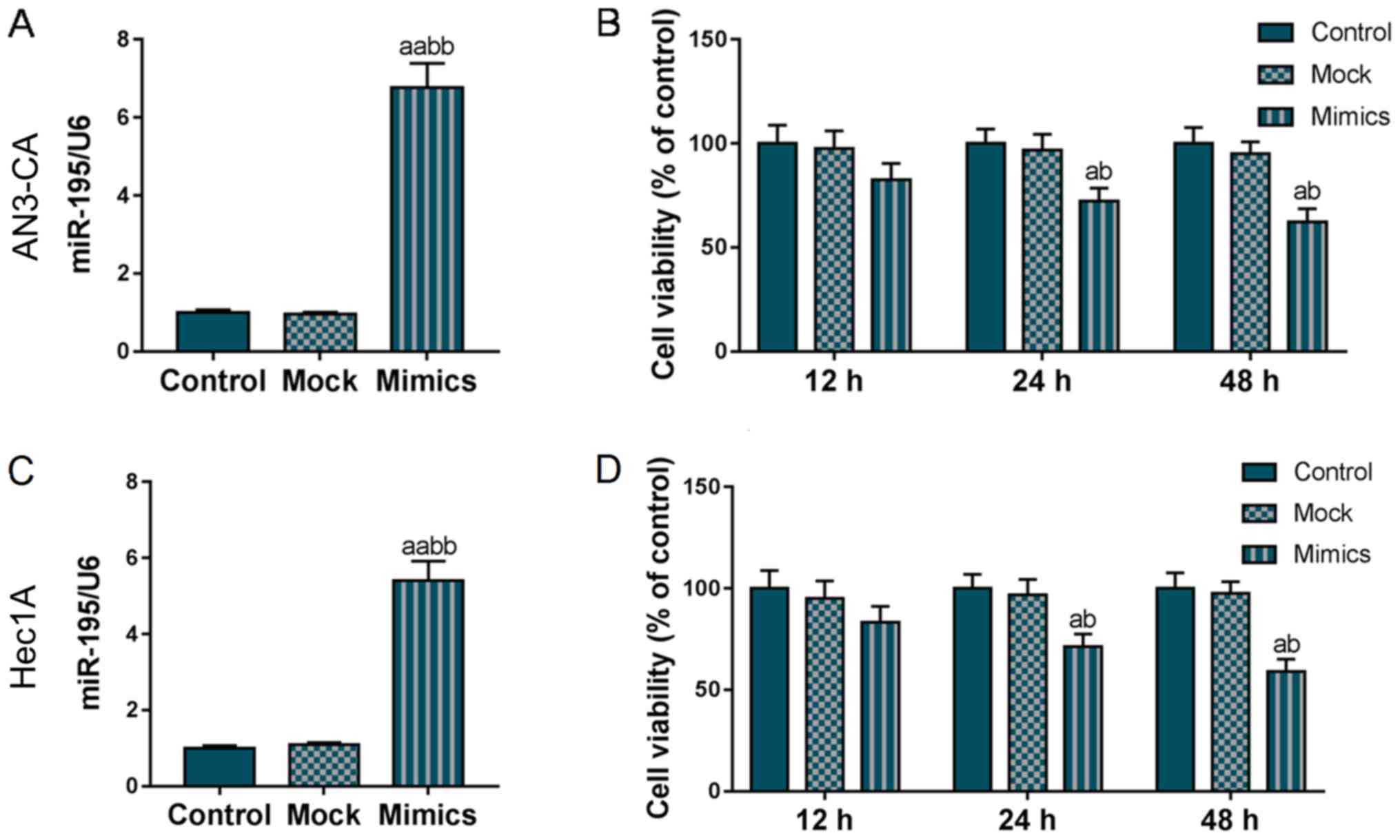
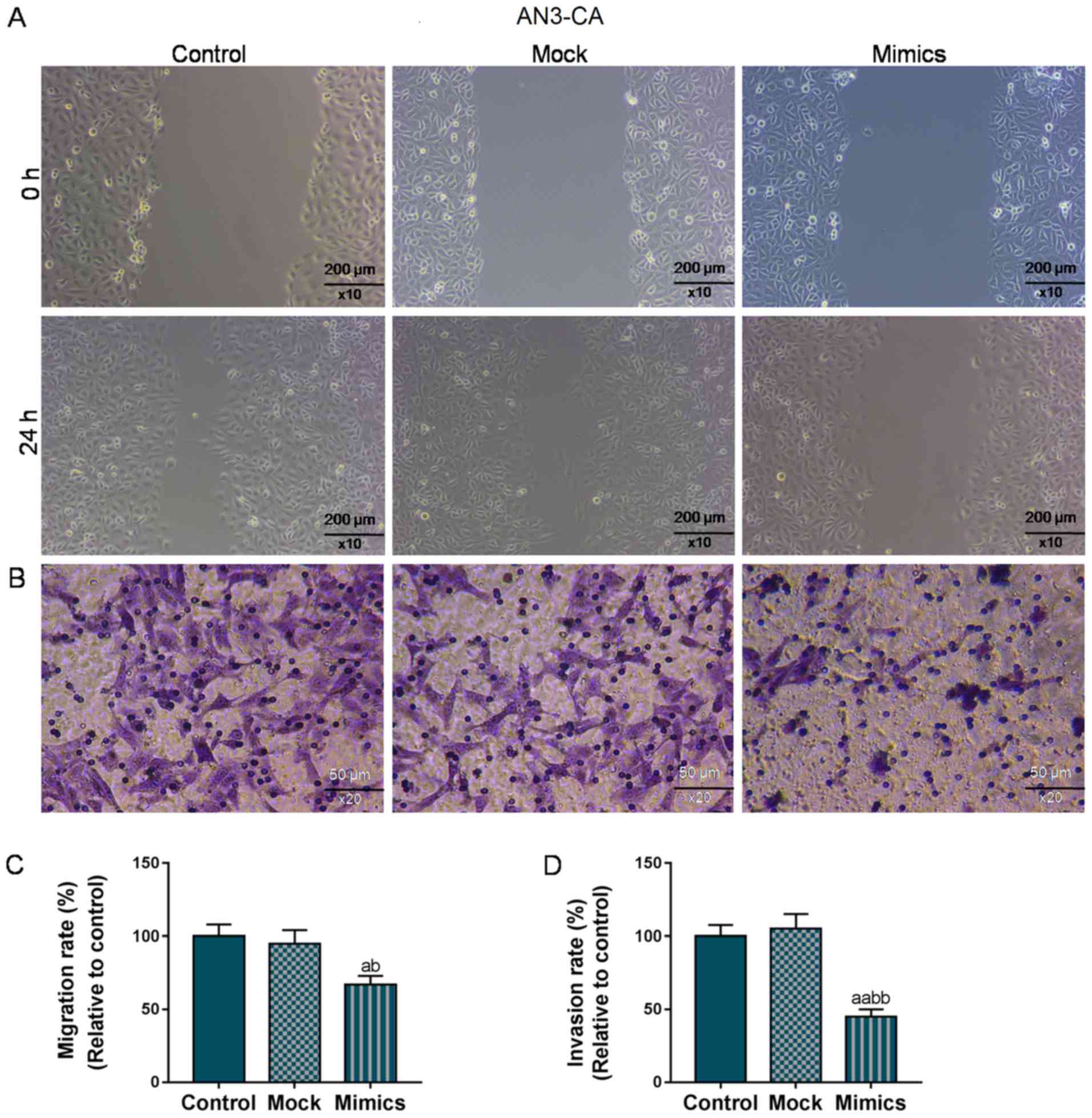
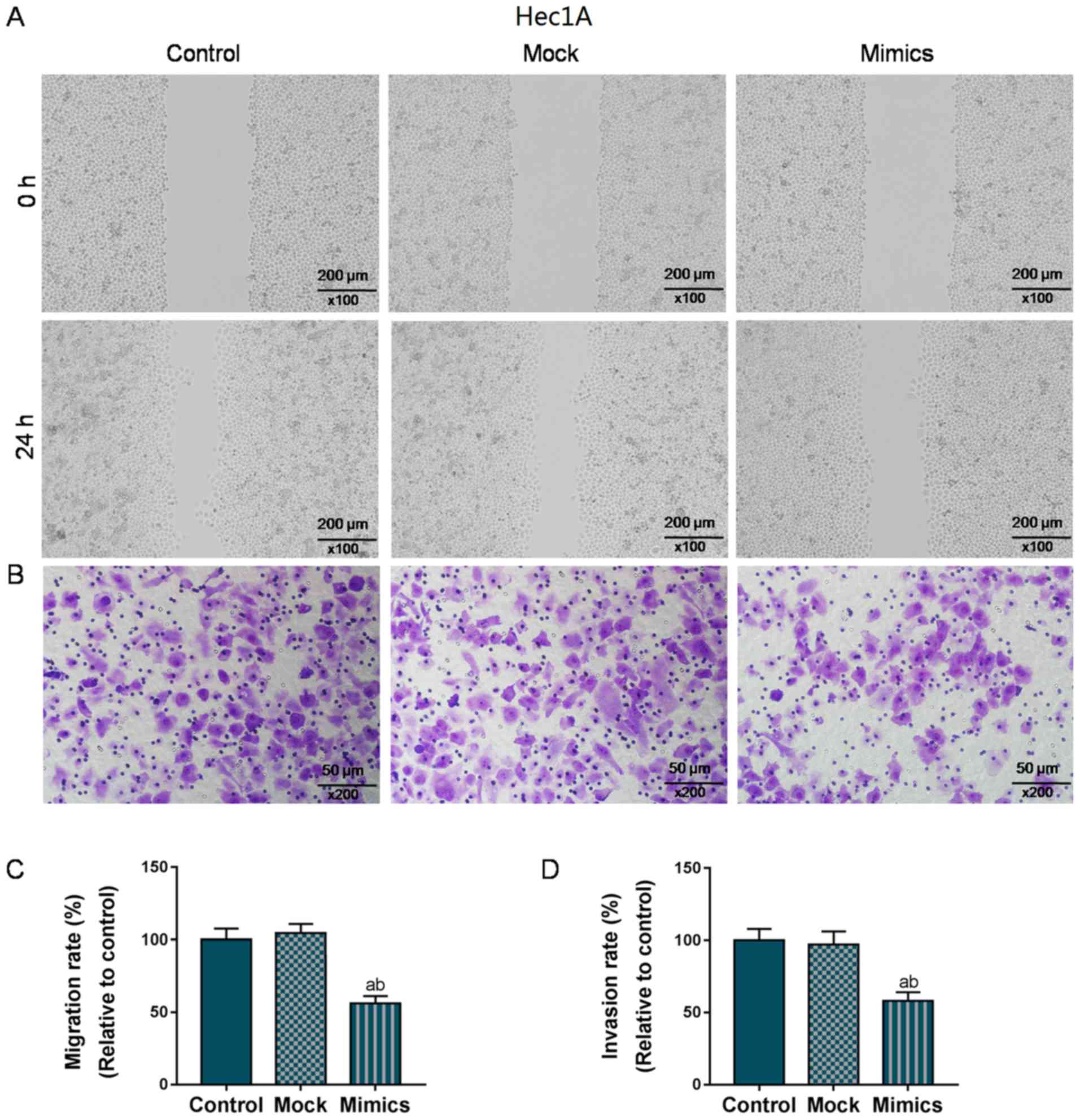
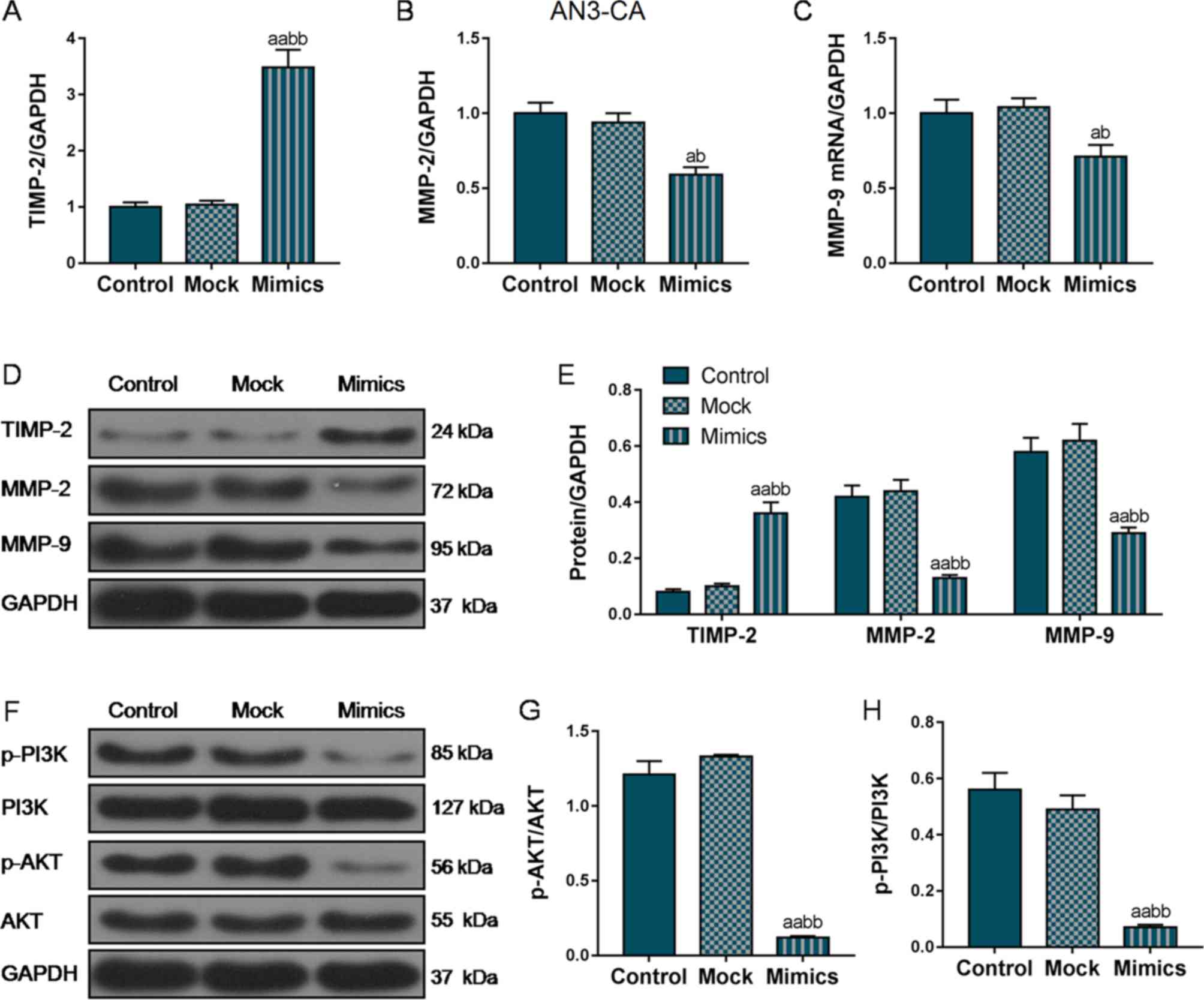
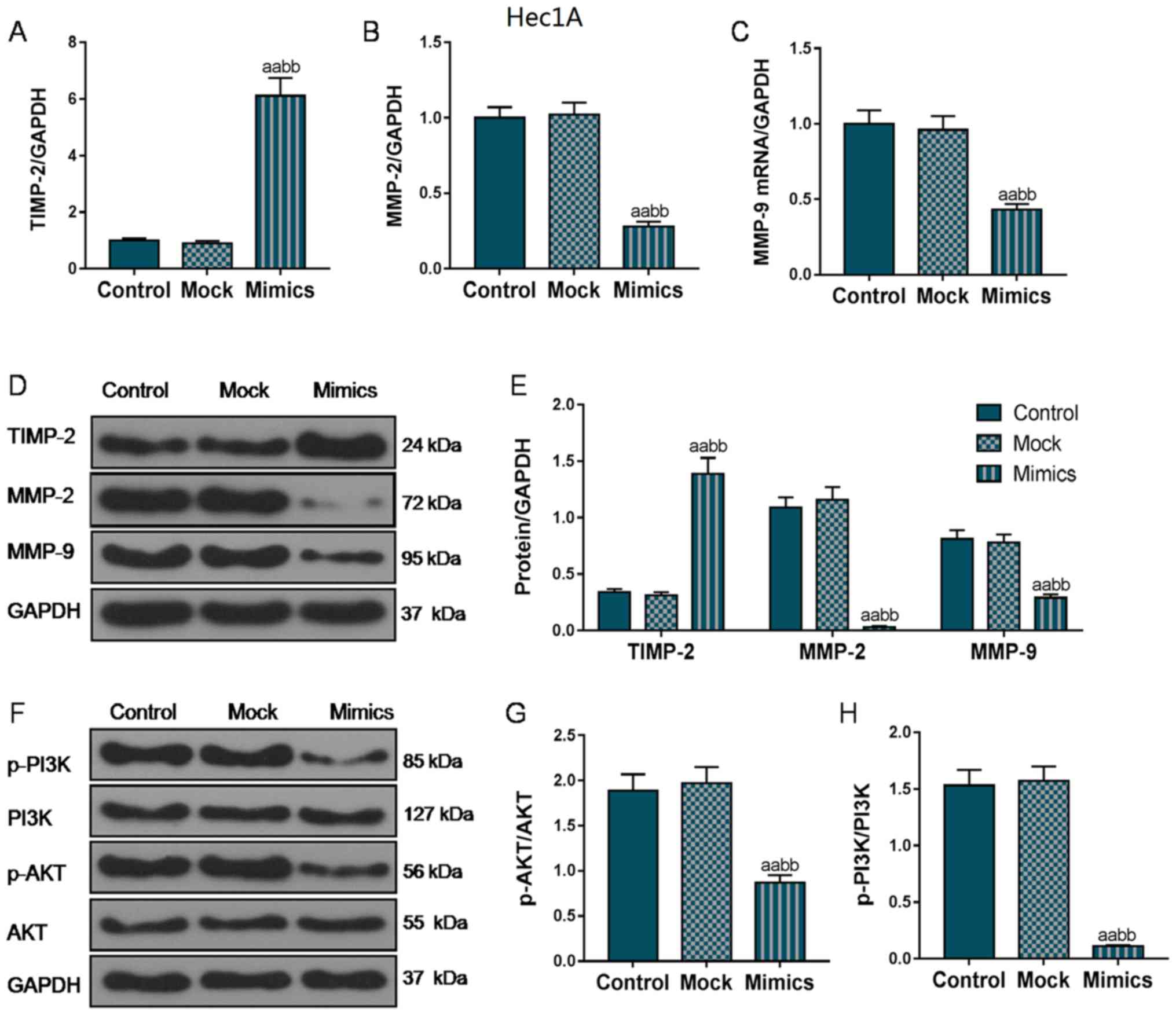
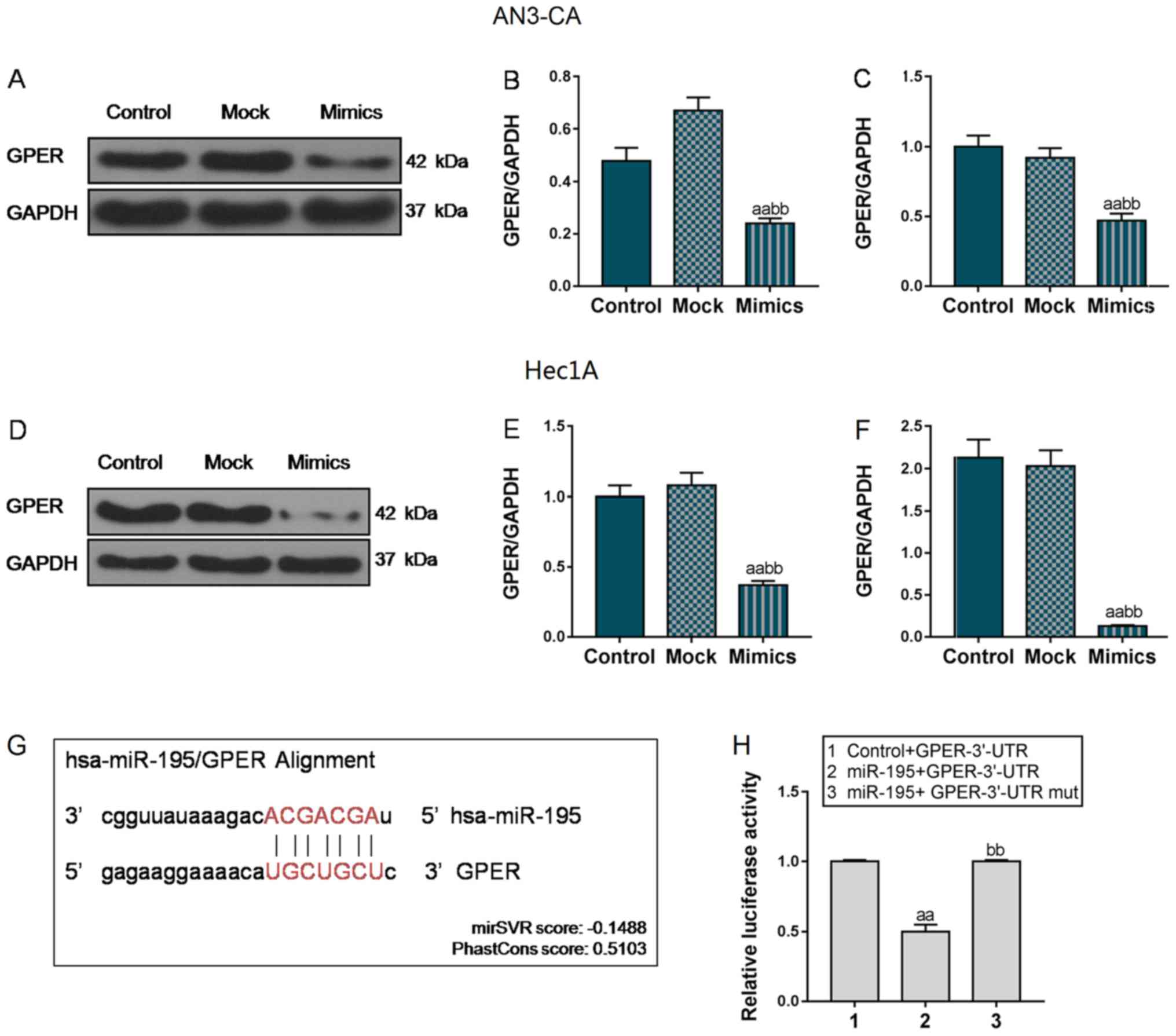
Epithelial‑mesenchymal transition (EMT) has been shown to exert promoting effects on the progression of a number of cancer types, including endometrial carcinoma (EC). MicroRNA (miRNA or miR)‑195 has been shown to function as a tumor suppressor. This study aimed to explore the potential role of miR‑195 in the EMT process of EC. miR‑195 overexpression (Mimics) and mimics control (Mock) vectors were constructed and transfected into human endometrial cancer cells (AN3‑CA and Hec1A) using Lipofectamine 2000, and cell viability was detected using the Cell Counting kit‑8 (CCK‑8). The invasive and migratory capacities of the cells transfected with the Mimics or Mock vectors were assessed by Transwell and wound healing assays. Relative mRNA and protein levels were analyzed by reverse transcription‑quantitative polymerase chain reaction (RT‑qPCR) and western blot analysis, respectively. Using TargetScan prediction, the potential target of miR‑195 was identified and was further verified by dual‑luciferase reporter assay. Following transfection with miR‑195 mimics, the viability of the AN3‑CA and Hec1A cells decreased in a time‑dependent manner, specifically at 24 h. The wound closure rate and the number of invaded cells in the Mimics group were much lower than those in the Control and Mock groups (P<0.01). miR‑195 overexpression significantly upregulated the mRNA and protein levels of tissue inhibitor of metalloproteinase 2 (TIMP‑2), while it downregulated the expression levels of matrix metalloproteinase (MMP)‑2 and MMP‑9. Moreover, the phosphorylation levels of PI3K and AKT were also notably decreased (P<0.01). G protein‑coupled estrogen receptor 1 (GPER) was identified as a target of miR‑195. On the whole, the findings of this study indicate that the inhibitory effects of miR195 on EC cell migration and invasion are associated with the PI3K/AKT signaling pathway and GPER expression.
View Figures

Figure 1

Figure 2

Figure 3

Figure 4

Figure 5

Figure 6

View References

1 

Zhang G, Cheng Y, Zhang Q, Li X, Zhou J, Wang J and Wei L: ATX-LPA axis facilitates estrogen-induced endometrial cancer cell proliferation via MAPK/ERK signaling pathway. Mol Med Rep. 17:4245–4252. 2018.PubMed/NCBI

2 

Siegel RL, Miller KD and Jemal A: Cancer Statistics, 2017. CA Cancer J Clin. 67:7–30. 2017. View Article : Google Scholar : PubMed/NCBI

3 

Ward KK, Shah NR, Saenz CC, McHale MT, Alvarez EA and Plaxe SC: Cardiovascular disease is the leading cause of death among endometrial cancer patients. Gynecol Oncol. 126:176–179. 2012. View Article : Google Scholar : PubMed/NCBI

4 

Elit L and Hirte H: Novel strategies for systemic treatment of endometrial cancer. Expert Opin Investig Drugs. 9:2831–2853. 2000. View Article : Google Scholar : PubMed/NCBI

5 

Dong P, Kaneuchi M, Konno Y, Watari H, Sudo S and Sakuragi N: Emerging therapeutic biomarkers in endometrial cancer. Biomed Res Int. 2013:1303622013. View Article : Google Scholar : PubMed/NCBI

6 

Gong B, Yue Y, Wang R, Zhang Y, Jin Q and Zhou X: Overexpression of microRNA-194 suppresses the epithelial-mesenchymal transition in targeting stem cell transcription factor Sox3 in endometrial carcinoma stem cells. Tumour Biol. 39:10104283177062172017. View Article : Google Scholar : PubMed/NCBI

7 

Oyanadel C, Holmes C, Pardo E, Retamal C, Shaughnessy R, Smith P, Cortés P, Bravo-Zehnder M, Metz C, Feuerhake T, et al: Galectin-8 induces partial epithelial-mesenchymal transition with invasive tumorigenic capabilities involving a FAK/EGFR/proteasome pathway in Madin-Darby canine kidney cells. Mol Biol Cell. 29:557–574. 2018. View Article : Google Scholar : PubMed/NCBI

8 

Meng X, Kong DH, Li N, Zong ZH, Liu BQ, Du ZX, Guan Y, Cao L and Wang HQ: Knockdown of BAG3 induces epithelial-mesenchymal transition in thyroid cancer cells through ZEB1 activation. Cell Death Dis. 5:e10922014. View Article : Google Scholar : PubMed/NCBI

9 

Mitra A, Mishra L and Li S: EMT, CTCs and CSCs in tumor relapse and drug-resistance. Oncotarget. 6:10697–10711. 2015. View Article : Google Scholar : PubMed/NCBI

10 

Huszar M, Pfeifer M, Schirmer U, Kiefel H, Konecny GE, Ben-Arie A, Edler L, Munch M, Muller-Holzner E, Jerabek-Klestil S, et al: Up-regulation of L1CAM is linked to loss of hormone receptors and E-cadherin in aggressive subtypes of endometrial carcinomas. J Pathol. 220:551–561. 2010. View Article : Google Scholar : PubMed/NCBI

11 

Kent CN and Guttilla Reed IK: Regulation of epithelial-mesenchymal transition in endometrial cancer: Connecting PI3K, estrogen signaling, and microRNAs. Clin Transl Oncol. 18:1056–1061. 2016. View Article : Google Scholar : PubMed/NCBI

12 

Prossnitz ER and Barton M: The G-protein-coupled estrogen receptor GPER in health and disease. Nat Rev Endocrinol. 7:715–726. 2011. View Article : Google Scholar : PubMed/NCBI

13 

Molina L, Figueroa CD, Bhoola KD and Ehrenfeld P: GPER-1/GPR30 a novel estrogen receptor sited in the cell membrane: Therapeutic coupling to breast cancer. Expert Opin Ther Targets. 21:755–766. 2017. View Article : Google Scholar : PubMed/NCBI

14 

Zhu P, Liao LY, Zhao TT, Mo XM, Chen GG and Liu ZM: GPER/ERK&AKT/NF-κB pathway is involved in cadmium-induced proliferation, invasion and migration of GPER-positive thyroid cancer cells. Mol Cell Endocrinol. 442:68–80. 2017. View Article : Google Scholar : PubMed/NCBI

15 

Yan Y, Jiang X, Zhao Y, Wen H and Liu G: Role of GPER on proliferation, migration and invasion in ligand-independent manner in human ovarian cancer cell line SKOV3. Cell Biochem Funct. 33:552–559. 2015. View Article : Google Scholar : PubMed/NCBI

16 

Zhang L, Li Y, Lan L, Liu R, Wu Y, Qu Q and Wen K: Tamoxifen has a proliferative effect in endometrial carcinoma mediated via the GPER/EGFR/ERK/cyclin D1 pathway: A retrospective study and an in vitro study. Mol Cell Endocrinol. 437:51–61. 2016. View Article : Google Scholar : PubMed/NCBI

17 

Petrie WK, Dennis MK, Hu C, Dai D, Arterburn JB, Smith HO, Hathaway HJ and Prossnitz ER: G protein-coupled estrogen receptor-selective ligands modulate endometrial tumor growth. Obstet Gynecol Int. 2013:4727202013. View Article : Google Scholar : PubMed/NCBI

18 

He YY, Cai B, Yang YX, Liu XL and Wan XP: Estrogenic G protein-coupled receptor 30 signaling is involved in regulation of endometrial carcinoma by promoting proliferation, invasion potential, and interleukin-6 secretion via the MEK/ERK mitogen-activated protein kinase pathway. Cancer Sci. 100:1051–1061. 2009. View Article : Google Scholar : PubMed/NCBI

19 

Smith HO, Leslie KK, Singh M, Qualls CR, Revankar CM, Joste NE and Prossnitz ER: GPR30: A novel indicator of poor survival for endometrial carcinoma. Am J Obstet Gynecol. 196:386.e1–e9.e11. 2007. View Article : Google Scholar

20 

Fan DX, Yang XH, Li YN and Guo L: 17β-estradiol on the expression of G-protein coupled estrogen receptor (GPER/GPR30) mitophagy, and the PI3K/Akt signaling pathway in ATDC5 chondrocytes in vitro. Med Sci Monit. 24:1936–1947. 2018. View Article : Google Scholar : PubMed/NCBI

21 

Zhang L, Zhao Y and Guo L: 17β-estradiol protects INS-1 insulinoma cells from mitophagy via G protein-coupled estrogen receptors and the PI3K/Akt signaling pathway. Int J Mol Med. 41:2839–2846. 2018.PubMed/NCBI

22 

Bhaskaran M and Mohan M: MicroRNAs: History, biogenesis, and their evolving role in animal development and disease. Vet Pathol. 51:759–774. 2014. View Article : Google Scholar : PubMed/NCBI

23 

Tsukamoto O, Miura K, Mishima H, Abe S, Kaneuchi M, Higashijima A, Miura S, Kinoshita A, Yoshiura K and Masuzaki H: Identification of endometrioid endometrial carcinoma-associated microRNAs in tissue and plasma. Gynecol Oncol. 132:715–721. 2014. View Article : Google Scholar : PubMed/NCBI

24 

Livak KJ and Schmittgen TD: Analysis of relative gene expression data using real-time quantitative PCR and the 2(-Delta Delta C(T)) method. Methods. 25:402–408. 2001. View Article : Google Scholar : PubMed/NCBI

25 

Drzewiecka-Jędrzejczyk M, Wlazeł R, Terlecka M and Jabłoński S: Serum metalloproteinase-2 and tissue inhibitor of metalloproteinase-2 in lung carcinoma patients. J Thorac Dis. 9:5306–5313. 2017. View Article : Google Scholar : PubMed/NCBI

26 

Bourboulia D and Stetler-Stevenson WG: Matrix metalloproteinases (MMPs) and tissue inhibitors of metalloproteinases (TIMPs): Positive and negative regulators intumor cell adhesion. Semin Cancer Biol. 20:161–168. 2010. View Article : Google Scholar : PubMed/NCBI

27 

Tang T, Shan G and Zeng F: Knockdown of DGCR5 enhances the radiosensitivity of human laryngeal carcinoma cells via inducing miR-195. J Cell Physiol. 234:12918–12925. 2019. View Article : Google Scholar : PubMed/NCBI

28 

Yu W, Liang X, Li X, Zhang Y, Sun Z, Liu Y and Wang J: MicroRNA-195: A review of its role in cancers. Onco Targets Ther. 11:7109–7123. 2018. View Article : Google Scholar : PubMed/NCBI

29 

Zhang J and Li W: Long noncoding RNA CYTOR sponges miR-195 to modulate proliferation, migration, invasion and radiosensitivity in nonsmall cell lung cancer cells. Biosci Rep. 38(pii): BSR201815992018. View Article : Google Scholar : PubMed/NCBI

30 

Wang Y, Chen H, Fu Y, Ai A, Xue S, Lyu Q and Kuang Y: MiR-195 inhibits proliferation and growth and induces apoptosis of endometrial stromal cells by targeting FKN. Int J Clin Exp Pathol. 6:2824–2834. 2013.PubMed/NCBI

31 

Kong F, Ma J, Yang H, Yang D, Wang C and Ma X: Long non-coding RNA PVT1 promotes malignancy in human endometrial carcinoma cells through negative regulation of miR-195-5p. Biochim Biophys Acta Mol Cell Res. Jul 19–2018.doi: 10.1016/j.bbamcr.2018.07.008 (Epub ahead of print). View Article : Google Scholar : PubMed/NCBI

32 

Segarra J, Balenci L, Drenth T, Maina F and Lamballe F: Combined signaling through ERK, PI3K/AKT, and RAC1/p38 is required for met-triggered cortical neuron migration. J Biol Chem. 281:4771–4778. 2006. View Article : Google Scholar : PubMed/NCBI

33 

Tian PC, Wang HL, Chen GH, Luo Q, Chen Z, Wang Y and Liu YF: 2,2′,4,4′-Tetrabromodiphenyl ether promotes human neuroblastoma SH-SY5Y cells migration via the GPER/PI3K/Akt signal pathway. Hum Exp Toxicol. 35:124–134. 2016. View Article : Google Scholar : PubMed/NCBI

34 

Ulrich LS: Endometrial cancer, types, prognosis, female hormones and antihormones. Climacteric. 14:418–425. 2011. View Article : Google Scholar : PubMed/NCBI

35 

Geletina NS, Kobelev VS, Babayants EV, Feng L, Pustylnyak VO and Gulyaeva LF: PTEN negative correlates with miR-181a in tumour tissues of non-obese endometrial cancer patients. Gene. 655:20–24. 2018. View Article : Google Scholar : PubMed/NCBI

36 

Yin H, Zhu Q, Liu M, Tu G, Li Q, Yuan J, Wen S and Yang G: GPER promotes tamoxifen-resistance in ER+ breast cancer cells by reduced Bim proteins through MAPK/Erk-TRIM2 signaling axis. Int J Oncol. 51:1191–1198. 2017. View Article : Google Scholar : PubMed/NCBI

37 

Li Y, Birnbaumer L and Teng CT: Regulation of ERRalpha gene expression by estrogen receptor agonists and antagonists in SKBR3 breast cancer cells: Differential molecular mechanisms mediated by g protein-coupled receptor GPR30/GPER-1. Mol Endocrinol. 24:969–980. 2010. View Article : Google Scholar : PubMed/NCBI

38 

He YY, Du GQ, Cai B, Yan Q, Zhou L, Chen XY, Lu W, Yang YX and Wan XP: Estrogenic transmembrane receptor of GPR30 mediates invasion and carcinogenesis by endometrial cancer cell line RL95-2. J Cancer Res Clin Oncol. 138:775–783. 2012. View Article : Google Scholar : PubMed/NCBI

39 

Guan BZ, Yan RL, Huang JW, Li FL, Zhong YX, Chen Y, Liu FN, Hu B, Huang SB and Yin LH: Activation of G protein coupled estrogen receptor (GPER) promotes the migration of renal cell carcinoma via the PI3K/AKT/MMP-9 signals. Cell Adh Migr. 12:109–117. 2018. View Article : Google Scholar : PubMed/NCBI

Related Articles

  • Abstract
  • View
  • Download
  • Twitter
Copy and paste a formatted citation
Spandidos Publications style
Deng J, Wang W, Yu G and Ma X: MicroRNA‑195 inhibits epithelial‑mesenchymal transition by targeting G protein‑coupled estrogen receptor 1 in endometrial carcinoma. Mol Med Rep 20: 4023-4032, 2019.
APA
Deng, J., Wang, W., Yu, G., & Ma, X. (2019). MicroRNA‑195 inhibits epithelial‑mesenchymal transition by targeting G protein‑coupled estrogen receptor 1 in endometrial carcinoma. Molecular Medicine Reports, 20, 4023-4032. https://doi.org/10.3892/mmr.2019.10652
MLA
Deng, J., Wang, W., Yu, G., Ma, X."MicroRNA‑195 inhibits epithelial‑mesenchymal transition by targeting G protein‑coupled estrogen receptor 1 in endometrial carcinoma". Molecular Medicine Reports 20.5 (2019): 4023-4032.
Chicago
Deng, J., Wang, W., Yu, G., Ma, X."MicroRNA‑195 inhibits epithelial‑mesenchymal transition by targeting G protein‑coupled estrogen receptor 1 in endometrial carcinoma". Molecular Medicine Reports 20, no. 5 (2019): 4023-4032. https://doi.org/10.3892/mmr.2019.10652
Copy and paste a formatted citation
x
Spandidos Publications style
Deng J, Wang W, Yu G and Ma X: MicroRNA‑195 inhibits epithelial‑mesenchymal transition by targeting G protein‑coupled estrogen receptor 1 in endometrial carcinoma. Mol Med Rep 20: 4023-4032, 2019.
APA
Deng, J., Wang, W., Yu, G., & Ma, X. (2019). MicroRNA‑195 inhibits epithelial‑mesenchymal transition by targeting G protein‑coupled estrogen receptor 1 in endometrial carcinoma. Molecular Medicine Reports, 20, 4023-4032. https://doi.org/10.3892/mmr.2019.10652
MLA
Deng, J., Wang, W., Yu, G., Ma, X."MicroRNA‑195 inhibits epithelial‑mesenchymal transition by targeting G protein‑coupled estrogen receptor 1 in endometrial carcinoma". Molecular Medicine Reports 20.5 (2019): 4023-4032.
Chicago
Deng, J., Wang, W., Yu, G., Ma, X."MicroRNA‑195 inhibits epithelial‑mesenchymal transition by targeting G protein‑coupled estrogen receptor 1 in endometrial carcinoma". Molecular Medicine Reports 20, no. 5 (2019): 4023-4032. https://doi.org/10.3892/mmr.2019.10652
Follow us
  • Twitter
  • LinkedIn
  • Facebook
About
  • Spandidos Publications
  • Careers
  • Cookie Policy
  • Privacy Policy
How can we help?
  • Help
  • Live Chat
  • Contact
  • Email to our Support Team