Spandidos Publications Logo
  • About
    • About Spandidos
    • Aims and Scopes
    • Abstracting and Indexing
    • Editorial Policies
    • Reprints and Permissions
    • Job Opportunities
    • Terms and Conditions
    • Contact
  • Journals
    • All Journals
    • Oncology Letters
      • Oncology Letters
      • Information for Authors
      • Editorial Policies
      • Editorial Board
      • Aims and Scope
      • Abstracting and Indexing
      • Bibliographic Information
      • Archive
    • International Journal of Oncology
      • International Journal of Oncology
      • Information for Authors
      • Editorial Policies
      • Editorial Board
      • Aims and Scope
      • Abstracting and Indexing
      • Bibliographic Information
      • Archive
    • Molecular and Clinical Oncology
      • Molecular and Clinical Oncology
      • Information for Authors
      • Editorial Policies
      • Editorial Board
      • Aims and Scope
      • Abstracting and Indexing
      • Bibliographic Information
      • Archive
    • Experimental and Therapeutic Medicine
      • Experimental and Therapeutic Medicine
      • Information for Authors
      • Editorial Policies
      • Editorial Board
      • Aims and Scope
      • Abstracting and Indexing
      • Bibliographic Information
      • Archive
    • International Journal of Molecular Medicine
      • International Journal of Molecular Medicine
      • Information for Authors
      • Editorial Policies
      • Editorial Board
      • Aims and Scope
      • Abstracting and Indexing
      • Bibliographic Information
      • Archive
    • Biomedical Reports
      • Biomedical Reports
      • Information for Authors
      • Editorial Policies
      • Editorial Board
      • Aims and Scope
      • Abstracting and Indexing
      • Bibliographic Information
      • Archive
    • Oncology Reports
      • Oncology Reports
      • Information for Authors
      • Editorial Policies
      • Editorial Board
      • Aims and Scope
      • Abstracting and Indexing
      • Bibliographic Information
      • Archive
    • Molecular Medicine Reports
      • Molecular Medicine Reports
      • Information for Authors
      • Editorial Policies
      • Editorial Board
      • Aims and Scope
      • Abstracting and Indexing
      • Bibliographic Information
      • Archive
    • World Academy of Sciences Journal
      • World Academy of Sciences Journal
      • Information for Authors
      • Editorial Policies
      • Editorial Board
      • Aims and Scope
      • Abstracting and Indexing
      • Bibliographic Information
      • Archive
    • International Journal of Functional Nutrition
      • International Journal of Functional Nutrition
      • Information for Authors
      • Editorial Policies
      • Editorial Board
      • Aims and Scope
      • Abstracting and Indexing
      • Bibliographic Information
      • Archive
    • International Journal of Epigenetics
      • International Journal of Epigenetics
      • Information for Authors
      • Editorial Policies
      • Editorial Board
      • Aims and Scope
      • Abstracting and Indexing
      • Bibliographic Information
      • Archive
    • Medicine International
      • Medicine International
      • Information for Authors
      • Editorial Policies
      • Editorial Board
      • Aims and Scope
      • Abstracting and Indexing
      • Bibliographic Information
      • Archive
  • Articles
  • Information
    • Information for Authors
    • Information for Reviewers
    • Information for Librarians
    • Information for Advertisers
    • Conferences
  • Language Editing
Spandidos Publications Logo
  • About
    • About Spandidos
    • Aims and Scopes
    • Abstracting and Indexing
    • Editorial Policies
    • Reprints and Permissions
    • Job Opportunities
    • Terms and Conditions
    • Contact
  • Journals
    • All Journals
    • Biomedical Reports
      • Information for Authors
      • Editorial Policies
      • Editorial Board
      • Aims and Scope
      • Abstracting and Indexing
      • Bibliographic Information
      • Archive
    • Experimental and Therapeutic Medicine
      • Information for Authors
      • Editorial Policies
      • Editorial Board
      • Aims and Scope
      • Abstracting and Indexing
      • Bibliographic Information
      • Archive
    • International Journal of Epigenetics
      • Information for Authors
      • Editorial Policies
      • Editorial Board
      • Aims and Scope
      • Abstracting and Indexing
      • Bibliographic Information
      • Archive
    • International Journal of Functional Nutrition
      • Information for Authors
      • Editorial Policies
      • Editorial Board
      • Aims and Scope
      • Abstracting and Indexing
      • Bibliographic Information
      • Archive
    • International Journal of Molecular Medicine
      • Information for Authors
      • Editorial Policies
      • Editorial Board
      • Aims and Scope
      • Abstracting and Indexing
      • Bibliographic Information
      • Archive
    • International Journal of Oncology
      • Information for Authors
      • Editorial Policies
      • Editorial Board
      • Aims and Scope
      • Abstracting and Indexing
      • Bibliographic Information
      • Archive
    • Medicine International
      • Information for Authors
      • Editorial Policies
      • Editorial Board
      • Aims and Scope
      • Abstracting and Indexing
      • Bibliographic Information
      • Archive
    • Molecular and Clinical Oncology
      • Information for Authors
      • Editorial Policies
      • Editorial Board
      • Aims and Scope
      • Abstracting and Indexing
      • Bibliographic Information
      • Archive
    • Molecular Medicine Reports
      • Information for Authors
      • Editorial Policies
      • Editorial Board
      • Aims and Scope
      • Abstracting and Indexing
      • Bibliographic Information
      • Archive
    • Oncology Letters
      • Information for Authors
      • Editorial Policies
      • Editorial Board
      • Aims and Scope
      • Abstracting and Indexing
      • Bibliographic Information
      • Archive
    • Oncology Reports
      • Information for Authors
      • Editorial Policies
      • Editorial Board
      • Aims and Scope
      • Abstracting and Indexing
      • Bibliographic Information
      • Archive
    • World Academy of Sciences Journal
      • Information for Authors
      • Editorial Policies
      • Editorial Board
      • Aims and Scope
      • Abstracting and Indexing
      • Bibliographic Information
      • Archive
  • Articles
  • Information
    • For Authors
    • For Reviewers
    • For Librarians
    • For Advertisers
    • Conferences
  • Language Editing
Login Register Submit
  • This site uses cookies
  • You can change your cookie settings at any time by following the instructions in our Cookie Policy. To find out more, you may read our Privacy Policy.

    I agree
Search articles by DOI, keyword, author or affiliation
Search
Advanced Search
presentation
Molecular Medicine Reports
Join Editorial Board Propose a Special Issue
Print ISSN: 1791-2997 Online ISSN: 1791-3004
Journal Cover
November-2019 Volume 20 Issue 5

Full Size Image

Sign up for eToc alerts
Recommend to Library

Journals

International Journal of Molecular Medicine

International Journal of Molecular Medicine

International Journal of Molecular Medicine is an international journal devoted to molecular mechanisms of human disease.

International Journal of Oncology

International Journal of Oncology

International Journal of Oncology is an international journal devoted to oncology research and cancer treatment.

Molecular Medicine Reports

Molecular Medicine Reports

Covers molecular medicine topics such as pharmacology, pathology, genetics, neuroscience, infectious diseases, molecular cardiology, and molecular surgery.

Oncology Reports

Oncology Reports

Oncology Reports is an international journal devoted to fundamental and applied research in Oncology.

Experimental and Therapeutic Medicine

Experimental and Therapeutic Medicine

Experimental and Therapeutic Medicine is an international journal devoted to laboratory and clinical medicine.

Oncology Letters

Oncology Letters

Oncology Letters is an international journal devoted to Experimental and Clinical Oncology.

Biomedical Reports

Biomedical Reports

Explores a wide range of biological and medical fields, including pharmacology, genetics, microbiology, neuroscience, and molecular cardiology.

Molecular and Clinical Oncology

Molecular and Clinical Oncology

International journal addressing all aspects of oncology research, from tumorigenesis and oncogenes to chemotherapy and metastasis.

World Academy of Sciences Journal

World Academy of Sciences Journal

Multidisciplinary open-access journal spanning biochemistry, genetics, neuroscience, environmental health, and synthetic biology.

International Journal of Functional Nutrition

International Journal of Functional Nutrition

Open-access journal combining biochemistry, pharmacology, immunology, and genetics to advance health through functional nutrition.

International Journal of Epigenetics

International Journal of Epigenetics

Publishes open-access research on using epigenetics to advance understanding and treatment of human disease.

Medicine International

Medicine International

An International Open Access Journal Devoted to General Medicine.

Journal Cover
November-2019 Volume 20 Issue 5

Full Size Image

Sign up for eToc alerts
Recommend to Library

  • Article
  • Citations
    • Cite This Article
    • Download Citation
    • Create Citation Alert
    • Remove Citation Alert
    • Cited By
  • Similar Articles
    • Related Articles (in Spandidos Publications)
    • Similar Articles (Google Scholar)
    • Similar Articles (PubMed)
  • Download PDF
  • Download XML
  • View XML

  • Supplementary Files
    • Supplementary_Data.pdf
Article

MicroRNA‑30a controls the instability of inducible CD4+ Tregs through SOCS1

  • Authors:
    • Ya Zhou
    • Yongju Li
    • Jia Lu
    • Xiaowu Hong
    • Lin Xu
  • View Affiliations / Copyright

    Affiliations: Department of Medical Physics, Zunyi Medical University, Zunyi, Guizhou 563000, P.R. China, Special Key Laboratory of Gene Detection and Therapy of Guizhou Province, Zunyi, Guizhou 563000, P.R. China, Department of Immunology, Shanghai Medical College, Fudan University, Shanghai 200032, P.R. China
  • Pages: 4303-4314
    |
    Published online on: September 10, 2019
       https://doi.org/10.3892/mmr.2019.10666
  • Expand metrics +
Metrics: Total Views: 0 (Spandidos Publications: | PMC Statistics: )
Metrics: Total PDF Downloads: 0 (Spandidos Publications: | PMC Statistics: )
Cited By (CrossRef): 0 citations Loading Articles...

This article is mentioned in:


Abstract

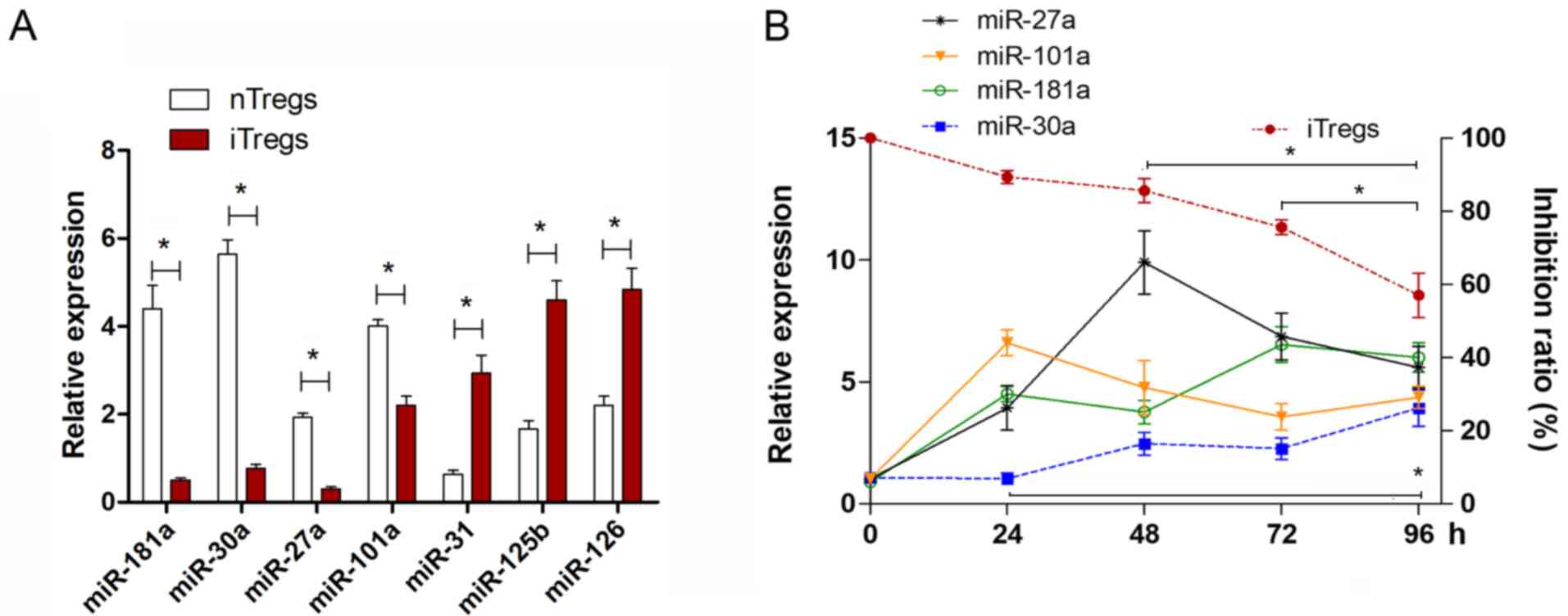
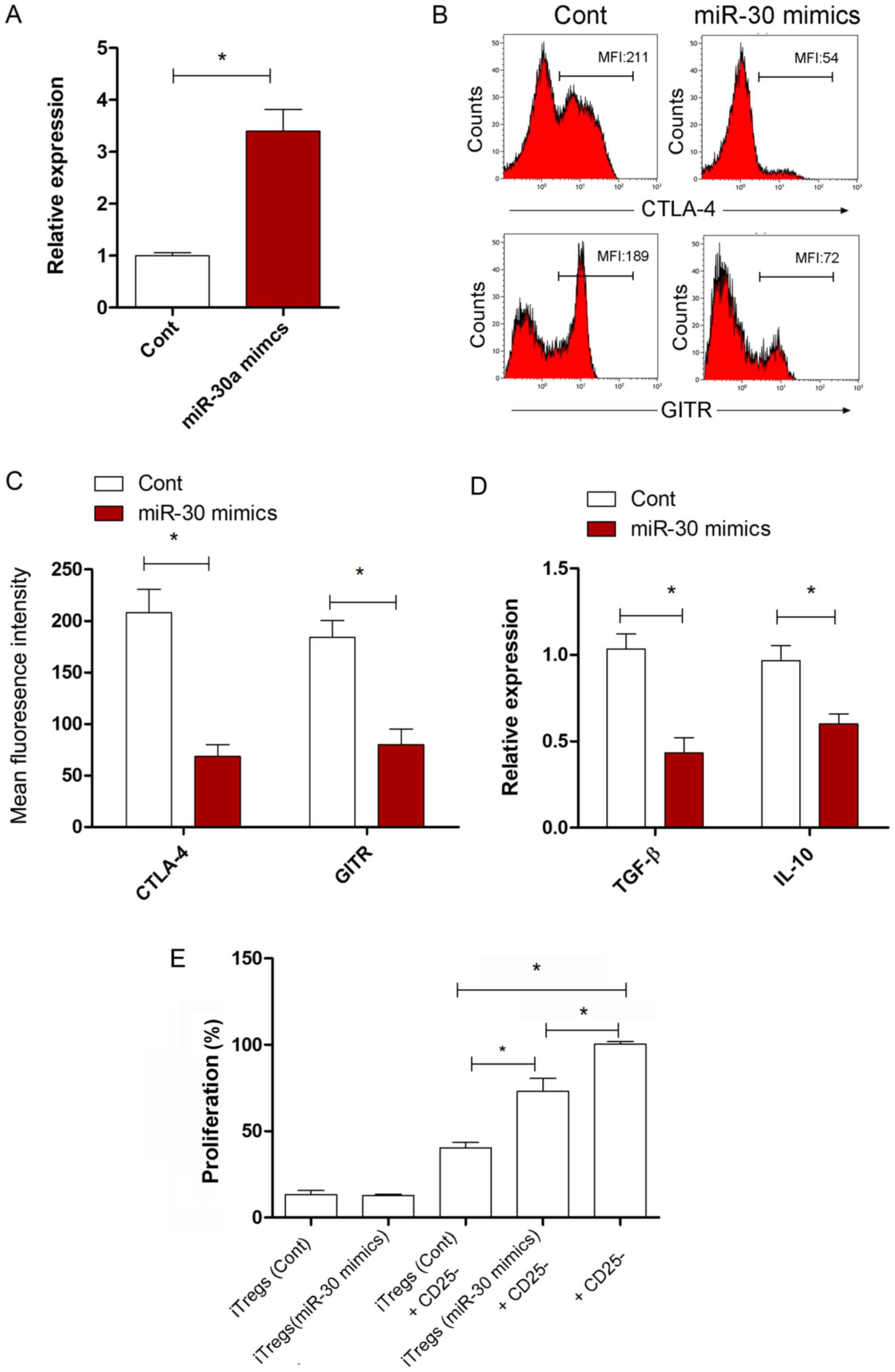
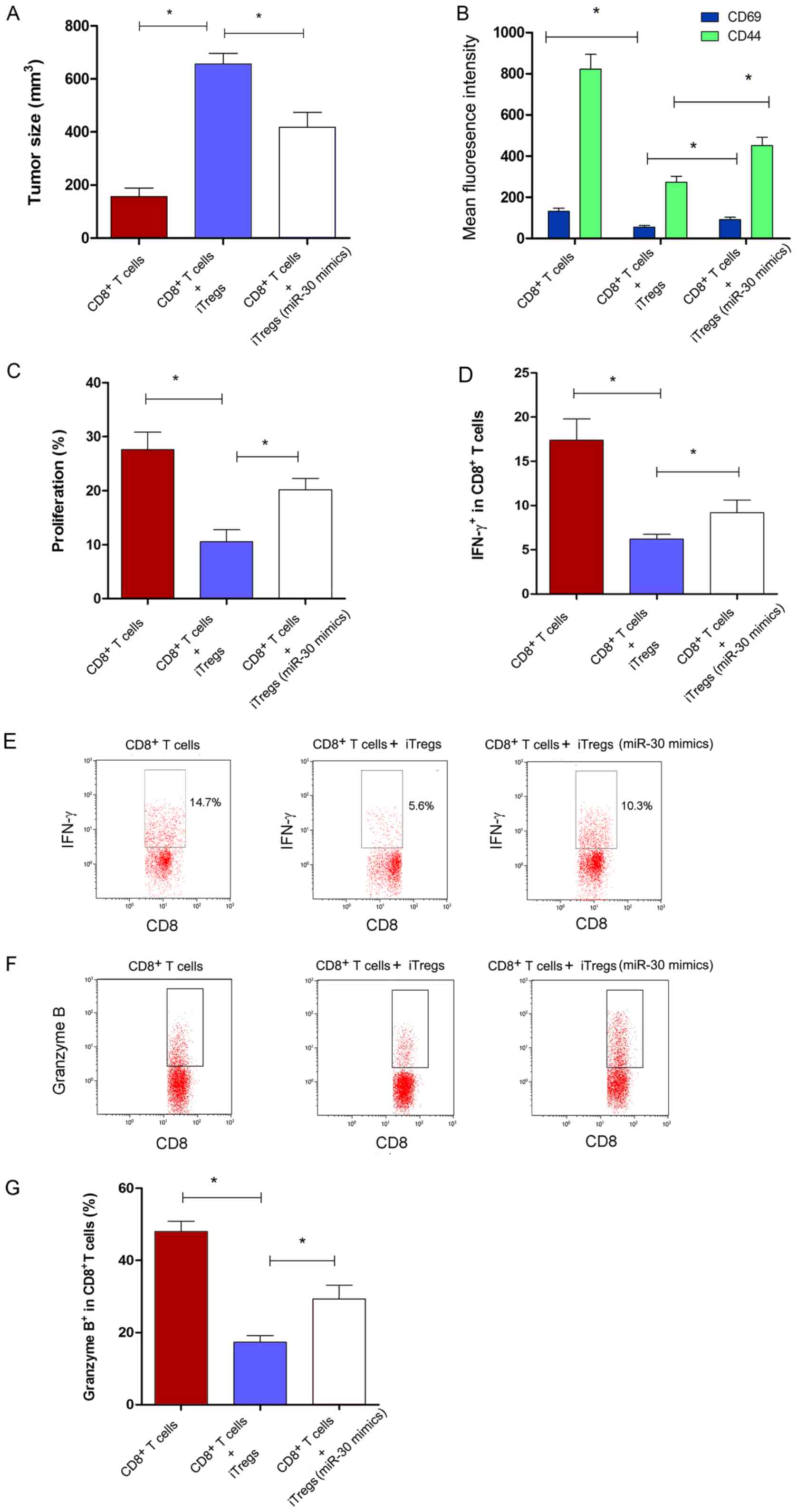
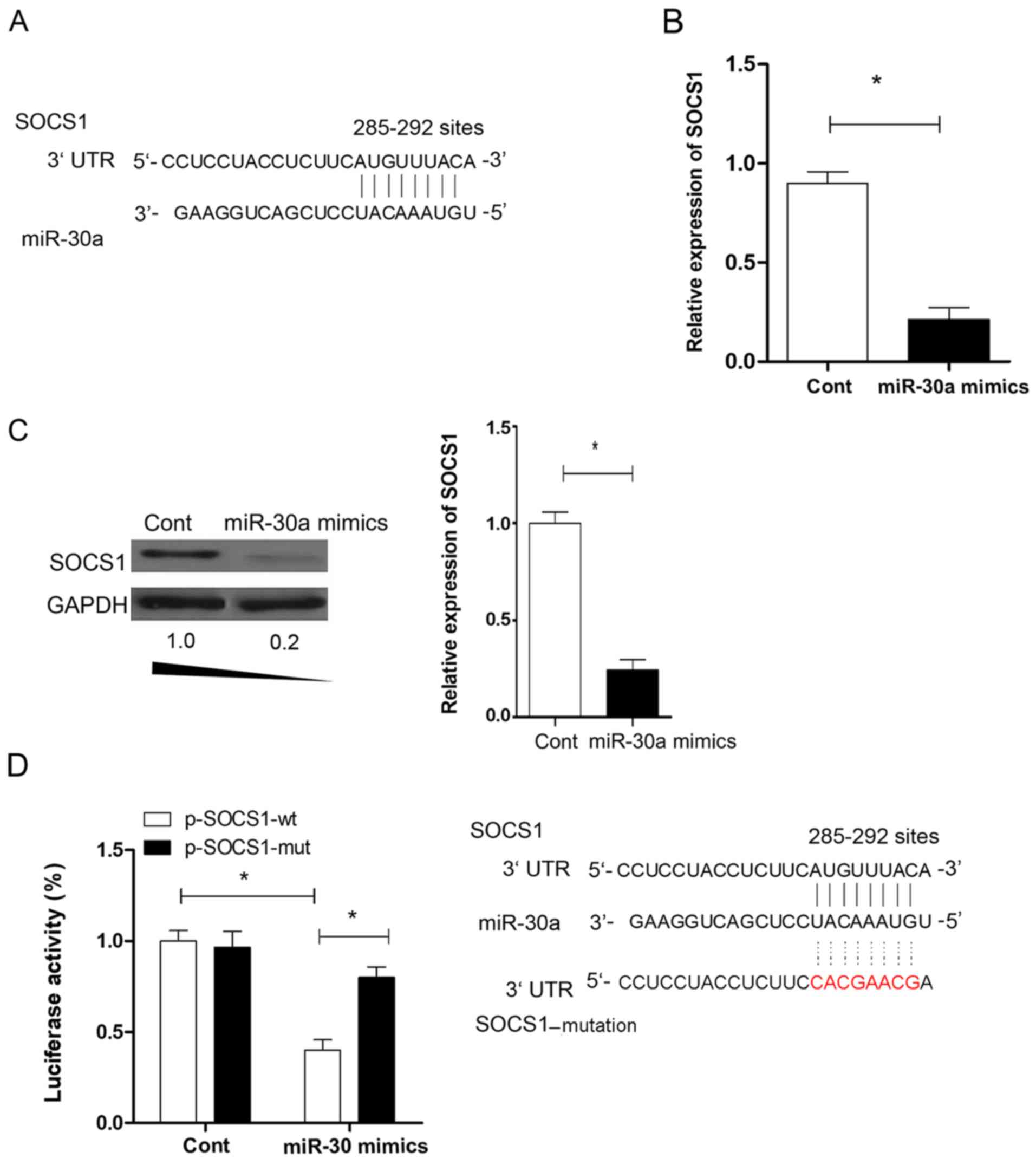
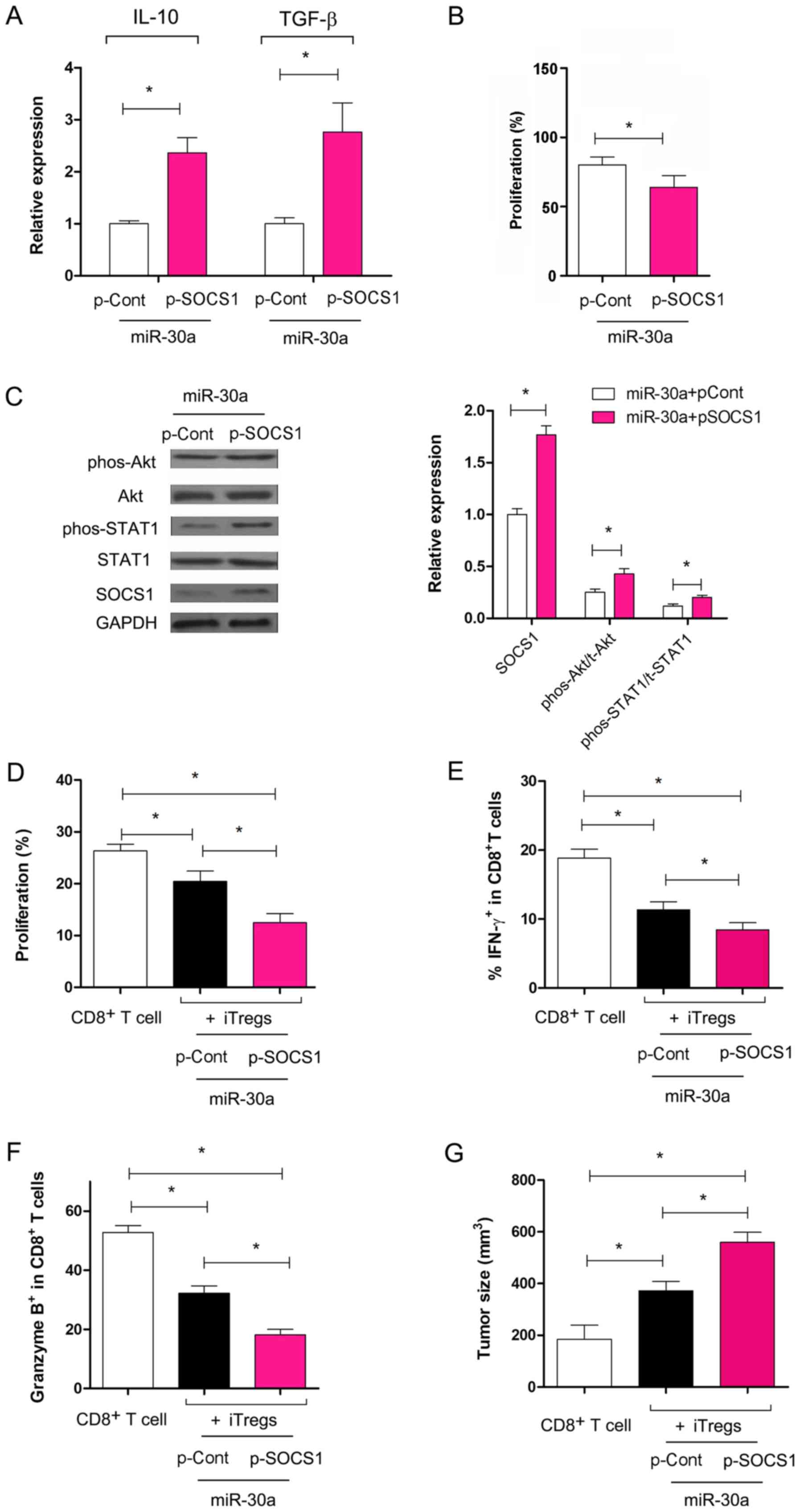
Inducible regulatory T cells (iTregs) are an important subset of Tregs and play a role in the maintenance of peripheral tolerance, and the occurrence of a number of diseases, including tumors and autoimmune diseases. However, the instability of iTregs is a major obstacle for their potential application in clinical trials. The underlying mechanism of iTreg instability remains largely unknown. In the present study, the expression level of microRNA (miRNA/miR)‑30a in murine iTregs was evaluated using reverse transcription‑quantitative PCR. miR‑30a mimics and a miR‑negative control (NC) were transiently transfected into iTregs using Nucleofector technology. The effects of miR‑30a on the suppressive function of murine iTregs in vitro and in vivo were investigated using MTT, adoptive cell transfer (ACT) and flow cytometry assays, as well as a murine model of lung cancer. In the present study, it was identified that the expression level of miR‑30a was lower in murine iTregs in vitro compared with natural (n)Tregs. Furthermore, compared with miR‑NC, miR‑30a mimics impaired the suppressive function of murine iTregs on murine CD4+ T cell proliferation in vitro, which was accompanied by the altered expression of cytotoxic T lymphocyte‑associated antigen 4 and glucocorticoid induced tumor necrosis factor receptor, as well as transforming growth factor‑β and interleukin‑10. It was also observed that, compared with miR‑NC, miR‑30a mimics abrogated the suppressive effects of murine iTregs on murine CD8+ T cell function in vivo, producing an effective antitumor effect in mice bearing 3LL lung cancer cells in the ACT assay. From a mechanistic point, the expression level of suppressor of cytokine signaling 1, a putative target of miR‑30a, was elevated, altering the activation of the Akt and STAT1 pathway in the miR‑30a mimic transfected group compared with the miR‑NC group, reducing the suppressive function of murine iTregs. The present study identified a role for miR‑30a in the instability of iTregs and provided a novel insight into the development of therapeutic strategies for promoting T‑cell immunity via the regulation of iTreg instability by targeting specific miRNAs.
View Figures

Figure 1

Figure 2

Figure 3

Figure 4

Figure 5

View References

1 

Sakaguchi S, Sakaguchi N, Asano M, Itoh M and Toda M: Immunologic self-tolerance maintained by activated T cells expressing IL-2 receptor alpha-chains (CD25). Breakdown of a single mechanism of self-tolerance causes various autoimmune diseases. J Immuno. 155:1151–1164. 1995.

2 

Liu JY, Zhang XS, Ding Y, Peng RQ, Cheng X, Zhang NH, Xia JC and Zeng YX: The changes of CD4+CD25+/CD4+ proportion in spleen of tumor-bearing BALB/c mice. J Transl Med. 3:52005. View Article : Google Scholar : PubMed/NCBI

3 

Kanamori M, Nakatsukasa H, Okada M, Lu Q and Yoshimura A: Induced regulatory T cells: Their development, stability, and applications. Trends Immunol. 37:803–811. 2016. View Article : Google Scholar : PubMed/NCBI

4 

Shevach EM and Thornton AM: tTregs, pTregs, and iTregs: Similarities and differences. Immunol Rev. 259:88–102. 2014. View Article : Google Scholar : PubMed/NCBI

5 

Wainwright DA, Dey M, Chang A and Lesniak MS: Targeting tregs in malignant brain cancer: Overcoming IDO. Front Immunol. 4:1162013. View Article : Google Scholar : PubMed/NCBI

6 

Danikowski KM, Jayaraman S and Prabhakar BS: Regulatory T cells in multiple sclerosis and myasthenia gravis. J Neuroinflammation. 14:1172017. View Article : Google Scholar : PubMed/NCBI

7 

Someya K, Nakatsukasa H, Ito M, Kondo T, Tateda KI, Akanuma T, Koya I, Sanosaka T, Kohyama J, Tsukada YI, et al: Improvement of Foxp3 stability through CNS2 demethylation by TET enzyme induction and activation. Int Immunol. 29:365–375. 2017. View Article : Google Scholar : PubMed/NCBI

8 

Gu J, Lu L, Chen M, Xu L, Lan Q, Li Q, Liu Z, Chen G, Wang P, Wang X, et al: TGF-β-induced CD4+Foxp3+ T cells attenuate acute graft-versus-host disease by suppressing expansion and killing of effector CD8+ cells. J Immunol. 193:3388–3397. 2014. View Article : Google Scholar : PubMed/NCBI

9 

Namdari H, Ghayedi M, Hadjati J, Rezaei F, Kalantar K, Rahimzadeh P and Salehi E: Effect of MicroRNA-21 transfection on in-vitro differentiation of human naive CD4+ T cells to regulatory t cells. Iran J Allergy Asthma Immunol. 16:235–244. 2017.PubMed/NCBI

10 

Jeker LT, Zhou X, Gershberg K, de Kouchkovsky D, Morar MM, Stadthagen G, Lund AH and Bluestone JA: MicroRNA 10a marks regulatory T cells. PLoS One. 7:e366842012. View Article : Google Scholar : PubMed/NCBI

11 

Spoerl D, Duroux-Richard I, Louis-Plence P and Jorgensen C: The role of miR-155 in regulatory T cells and rheumatoid arthritis. Clin Immunol. 148:56–65. 2013. View Article : Google Scholar : PubMed/NCBI

12 

Yang HY, Barbi J, Wu CY, Zheng Y, Vignali PD, Wu X, Tao JH, Park BV, Bandara S, Novack L, et al: MicroRNA-17 modulates regulatory T cell function by Targeting Co-regulators of the Foxp3 transcription factor. Immunity. 45:83–93. 2016. View Article : Google Scholar : PubMed/NCBI

13 

Qin A, Wen Z, Zhou Y, Li Y, Li Y, Luo J, Ren T and Xu L: MicroRNA-126 regulates the induction and function of CD4(+) Foxp3(+) regulatory T cells through PI3K/AKT pathway. J Cell Mol Med. 17:252–264. 2013. View Article : Google Scholar : PubMed/NCBI

14 

Li C, Zou J, Zheng G and Chu J: MiR-30a decreases multidrug resistance (MDR) of gastric cancer cells. Med Sci Monit. 0:02016.PubMed/NCBI

15 

Li Y, Zhang J, Liu Y, Zhang B, Zhong F, Wang S and Fang Z: MiR-30a-5p confers cisplatin resistance by regulating IGF1R expression in melanoma cells. BMC Cancer. 18:4042018. View Article : Google Scholar : PubMed/NCBI

16 

Park YR, Kim SL, Lee MR, Seo SY, Lee JH, Kim SH, Kim IH, Lee SO, Lee ST and Kim SW: MicroRNA-30a-5p (miR-30a) regulates cell motility and EMT by directly targeting oncogenic TM4SF1 in colorectal cancer. J Cancer Res Clin Oncol. 143:1915–1927. 2017. View Article : Google Scholar : PubMed/NCBI

17 

Xiao B, Shi X and Bai J: miR-30a regulates the proliferation and invasion of breast cancer cells by targeting Snail. Oncol Lett. 17:406–413. 2019.PubMed/NCBI

18 

Guo Y, Sun W, Gong T, Chai Y, Wang J, Hui B, Li Y, Song L and Gao Y: miR-30a radiosensitizes non-small cell lung cancer by targeting ATF1 that is involved in the phosphorylation of ATM. Oncol Rep. 37:1980–1988. 2017. View Article : Google Scholar : PubMed/NCBI

19 

Jiang X, Xu C, Lei F, Liao M, Wang W, Xu N, Zhang Y and Xie W: MiR-30a targets IL-1α and regulates islet functions as an inflammation buffer and response factor. Sci Rep. 7:52702017. View Article : Google Scholar : PubMed/NCBI

20 

Hu E, Ding L, Miao H, Liu F, Liu D, Dou H and Hou Y: MiR-30a attenuates immunosuppressive functions of IL-1β-elicited mesenchymal stem cells via targeting TAB3. FEBS Lett. 589:3899–3907. 2015. View Article : Google Scholar : PubMed/NCBI

21 

Riess M, Fuchs NV, Idica A, Hamdorf M, Flory E, Pedersen IM and König R: Interferons induce expression of SAMHD1 in Monocytes through down-regulation of miR-181a and miR-30a. J Biol Chem. 292:264–277. 2017. View Article : Google Scholar : PubMed/NCBI

22 

Wu Y, Sun Q and Dai L: Immune regulation of miR-30 on the Mycobacterium tuberculosis-induced TLR/MyD88 signaling pathway in THP-1 cells. Exp Ther Med. 14:3299–3303. 2017. View Article : Google Scholar : PubMed/NCBI

23 

Fang X, Sun D, Wang Z, Yu Z, Liu W, Pu Y, Wang D, Huang A, Liu M, Xiang Z, et al: MiR-30a positively regulates the inflammatory response of microglia in experimental autoimmune Encephalomyelitis. Neurosci Bull. 33:603–615. 2017. View Article : Google Scholar : PubMed/NCBI

24 

Qu X, Zhou J, Wang T, Han J, Ma L, Yu H, Geng D, Fan H, Zhang Q, Hua F, et al: MiR-30a inhibits Th17 differentiation and demyelination of EAE mice by targeting the IL-21R. Brain Behav Immun. 57:193–199. 2016. View Article : Google Scholar : PubMed/NCBI

25 

Livak KJ and Schmittgen TD: Analysis of relative gene expression data using real-time quantitative PCR and the 2(-Delta Delta C(T)) method. Methods. 25:402–408. 2001. View Article : Google Scholar : PubMed/NCBI

26 

Cruz LO, Hashemifar SS, Wu CJ, Cho S, Nguyen DT, Lin LL, Khan AA and Lu LF: Excessive expression of miR-27 impairs Treg-mediated immunological tolerance. J Clin Invest. 127:530–542. 2017. View Article : Google Scholar : PubMed/NCBI

27 

Ripamonti A, Provasi E, Lorenzo M, De Simone M, Ranzani V, Vangelisti S, Curti S, Bonnal RJP, Pignataro L, Torretta S, et al: Repression of miR-31 by BCL6 stabilizes the helper function of human follicular helper T cells. Proc Natl Acad Sci USA. 114:12797–12802. 2017. View Article : Google Scholar : PubMed/NCBI

28 

Takahashi R, Nakatsukasa H, Shiozawa S and Yoshimura A: SOCS1 is a key molecule that prevents regulatory T cell plasticity under inflammatory conditions. J Immunol. 199:149–158. 2017. View Article : Google Scholar : PubMed/NCBI

29 

Takahashi R and Yoshimura A: SOCS1 and regulation of regulatory T cells plasticity. J Immunol Res. 2014:9431492014. View Article : Google Scholar : PubMed/NCBI

30 

Melnik BC, John SM, Carrera-Bastos P and Schmitz G: Milk: A postnatal imprinting system stabilizing FoxP3 expression and regulatory T cell differentiation. Clin Transl Allergy. 6:182016. View Article : Google Scholar : PubMed/NCBI

31 

Friedman RC, Farh KK, Burge CB and Bartel DP: Most mammalian mRNAs are conserved targets of microRNAs. Genome Res. 19:92–105. 2009. View Article : Google Scholar : PubMed/NCBI

32 

Zhao J, Li Y, Hu Y, Chen C, Zhou Y, Tao Y, Guo M, Qin N and Xu L: MicroRNAs expression profile in CCR6(+) regulatory T cells. PeerJ. 2:e5752014. View Article : Google Scholar : PubMed/NCBI

33 

Mohammadnia-Afrouzi M, Hosseini AZ, Khalili A, Abediankenari S, Amari A, Aghili B and Nataj HH: Altered microRNA expression and immunosuppressive cytokine production by regulatory T cells of ulcerative colitis patients. Immunol Invest. 45:63–74. 2016. View Article : Google Scholar : PubMed/NCBI

34 

Hu Y, Wang C, Li Y, Zhao J, Chen C, Zhou Y, Tao Y, Guo M, Qin N, Ren T, et al: MiR-21 controls in situ expansion of CCR6+ regulatory T cells through PTEN/AKT pathway in breast cancer. Immunol Cell Biol. 93:753–64. 2015. View Article : Google Scholar : PubMed/NCBI

35 

Sánchez-Díaz R, Blanco-Dominguez R, Lasarte S, Tsilingiri K, Martín-Gayo E, Linillos-Pradillo B, de la Fuente H, Sánchez-Madrid F, Nakagawa R, Toribio ML, et al: Thymus-derived regulatory T cell development is regulated by C-Type Lectin-mediated BIC/MicroRNA 155 expression. Mol Cell Biol. 37(pii): e00341–16. 2017.PubMed/NCBI

36 

Bronevetsky Y, Burt TD and McCune JM: Lin28b regulates fetal regulatory T cell differentiation through modulation of TGF-β signaling. J Immunol. 197:4344–4350. 2016. View Article : Google Scholar : PubMed/NCBI

37 

Zhou Q, Haupt S, Kreuzer JT, Hammitzsch A, Proft F, Neumann C, Leipe J, Witt M, Schulze-Koops H and Skapenko A: Decreased expression of miR-146a and miR-155 contributes to an abnormal Treg phenotype in patients with rheumatoid arthritis. Ann Rheum Dis. 74:1265–1274. 2015. View Article : Google Scholar : PubMed/NCBI

38 

Yao R, Ma YL, Liang W, Li HH, Ma ZJ, Yu X and Liao YH: MicroRNA-155 modulates Treg and Th17 cells differentiation and Th17 cell function by targeting SOCS1. PLoS One. 7:e460822012. View Article : Google Scholar : PubMed/NCBI

39 

Xu L, Xu W, Jiang Z, Zhang F, Chu Y and Xiong S: Depletion of CD4(+)CD25(high) regulatory T cells from tumor infiltrating lymphocytes predominantly induces Th1 type immune response in vivo which inhibits tumor growth in adoptive immunotherapy. Cancer Biol Ther. 8:66–72. 2009. View Article : Google Scholar : PubMed/NCBI

40 

Ilangumaran S, Bobbala D and Ramanathan S: SOCS1: Regulator of T cells in autoimmunity and cancer. Curr Top Microbiol Immunol. 410:159–189. 2017.PubMed/NCBI

41 

Zhao M, Sun D, Guan Y, Wang Z, Sang D, Liu M, Pu Y, Fang X, Wang D, Huang A, et al: Disulfiram and Diphenhydramine Hydrochloride upregulate miR-30a to suppress IL-17-associated autoimmune inflammation. J Neurosci. 36:9253–9266. 2016. View Article : Google Scholar : PubMed/NCBI

42 

Sugase T, Takahashi T, Serada S, Fujimoto M, Ohkawara T, Hiramatsu K, Nishida T, Hirota S, Saito Y, Tanaka K, et al: SOCS1 gene therapy has antitumor effects in imatinib-resistant gastrointestinal stromal tumor cells through FAK/PI3K signaling. Gastric Cancer Nov. 21:968–976. 2018. View Article : Google Scholar

43 

Wang H, Wang J and Xia Y: Defective suppressor of cytokine signaling 1 signaling contributes to the pathogenesis of systemic lupus erythematosus. Front Immunol. 8:12922017. View Article : Google Scholar : PubMed/NCBI

44 

Knosp CA, Schiering C, Spence S, Carroll HP, Nel HJ, Osbourn M, Jackson R, Lyubomska O, Malissen B, Ingram R, et al: Regulation of Foxp3+ inducible regulatory T cell stability by SOCS2. J Immunol. 190:3235–3245. 2013. View Article : Google Scholar : PubMed/NCBI

45 

Yu CR, Kim SH, Mahdi RM and Egwuagu CE: SOCS3 deletion in T lymphocytes suppresses development of chronic ocular inflammation via upregulation of CTLA-4 and expansion of regulatory T cells. J Immunol. 191:5036–5043. 2013. View Article : Google Scholar : PubMed/NCBI

46 

Kitz A, de Marcken M, Gautron AS, Mitrovic M, Hafler DA and Dominguez-Villar M: AKT isoforms modulate Th1-like Treg generation and function in human autoimmune disease. EMBO Rep. 17:1169–1183. 2016. View Article : Google Scholar : PubMed/NCBI

47 

Kurebayashi Y, Baba Y, Minowa A, Nadya NA, Azuma M, Yoshimura A, Koyasu S and Nagai S: TGF-β-induced phosphorylation of Akt and Foxo transcription factors negatively regulates induced regulatory T cell differentiation. Biochem Biophys Res Commun. 480:114–119. 2016. View Article : Google Scholar : PubMed/NCBI

Related Articles

  • Abstract
  • View
  • Download
  • Twitter
Copy and paste a formatted citation
Spandidos Publications style
Zhou Y, Li Y, Lu J, Hong X and Xu L: MicroRNA‑30a controls the instability of inducible CD4+ Tregs through SOCS1. Mol Med Rep 20: 4303-4314, 2019.
APA
Zhou, Y., Li, Y., Lu, J., Hong, X., & Xu, L. (2019). MicroRNA‑30a controls the instability of inducible CD4+ Tregs through SOCS1. Molecular Medicine Reports, 20, 4303-4314. https://doi.org/10.3892/mmr.2019.10666
MLA
Zhou, Y., Li, Y., Lu, J., Hong, X., Xu, L."MicroRNA‑30a controls the instability of inducible CD4+ Tregs through SOCS1". Molecular Medicine Reports 20.5 (2019): 4303-4314.
Chicago
Zhou, Y., Li, Y., Lu, J., Hong, X., Xu, L."MicroRNA‑30a controls the instability of inducible CD4+ Tregs through SOCS1". Molecular Medicine Reports 20, no. 5 (2019): 4303-4314. https://doi.org/10.3892/mmr.2019.10666
Copy and paste a formatted citation
x
Spandidos Publications style
Zhou Y, Li Y, Lu J, Hong X and Xu L: MicroRNA‑30a controls the instability of inducible CD4+ Tregs through SOCS1. Mol Med Rep 20: 4303-4314, 2019.
APA
Zhou, Y., Li, Y., Lu, J., Hong, X., & Xu, L. (2019). MicroRNA‑30a controls the instability of inducible CD4+ Tregs through SOCS1. Molecular Medicine Reports, 20, 4303-4314. https://doi.org/10.3892/mmr.2019.10666
MLA
Zhou, Y., Li, Y., Lu, J., Hong, X., Xu, L."MicroRNA‑30a controls the instability of inducible CD4+ Tregs through SOCS1". Molecular Medicine Reports 20.5 (2019): 4303-4314.
Chicago
Zhou, Y., Li, Y., Lu, J., Hong, X., Xu, L."MicroRNA‑30a controls the instability of inducible CD4+ Tregs through SOCS1". Molecular Medicine Reports 20, no. 5 (2019): 4303-4314. https://doi.org/10.3892/mmr.2019.10666
Follow us
  • Twitter
  • LinkedIn
  • Facebook
About
  • Spandidos Publications
  • Careers
  • Cookie Policy
  • Privacy Policy
How can we help?
  • Help
  • Live Chat
  • Contact
  • Email to our Support Team