Spandidos Publications Logo
  • About
    • About Spandidos
    • Aims and Scopes
    • Abstracting and Indexing
    • Editorial Policies
    • Reprints and Permissions
    • Job Opportunities
    • Terms and Conditions
    • Contact
  • Journals
    • All Journals
    • Oncology Letters
      • Oncology Letters
      • Information for Authors
      • Editorial Policies
      • Editorial Board
      • Aims and Scope
      • Abstracting and Indexing
      • Bibliographic Information
      • Archive
    • International Journal of Oncology
      • International Journal of Oncology
      • Information for Authors
      • Editorial Policies
      • Editorial Board
      • Aims and Scope
      • Abstracting and Indexing
      • Bibliographic Information
      • Archive
    • Molecular and Clinical Oncology
      • Molecular and Clinical Oncology
      • Information for Authors
      • Editorial Policies
      • Editorial Board
      • Aims and Scope
      • Abstracting and Indexing
      • Bibliographic Information
      • Archive
    • Experimental and Therapeutic Medicine
      • Experimental and Therapeutic Medicine
      • Information for Authors
      • Editorial Policies
      • Editorial Board
      • Aims and Scope
      • Abstracting and Indexing
      • Bibliographic Information
      • Archive
    • International Journal of Molecular Medicine
      • International Journal of Molecular Medicine
      • Information for Authors
      • Editorial Policies
      • Editorial Board
      • Aims and Scope
      • Abstracting and Indexing
      • Bibliographic Information
      • Archive
    • Biomedical Reports
      • Biomedical Reports
      • Information for Authors
      • Editorial Policies
      • Editorial Board
      • Aims and Scope
      • Abstracting and Indexing
      • Bibliographic Information
      • Archive
    • Oncology Reports
      • Oncology Reports
      • Information for Authors
      • Editorial Policies
      • Editorial Board
      • Aims and Scope
      • Abstracting and Indexing
      • Bibliographic Information
      • Archive
    • Molecular Medicine Reports
      • Molecular Medicine Reports
      • Information for Authors
      • Editorial Policies
      • Editorial Board
      • Aims and Scope
      • Abstracting and Indexing
      • Bibliographic Information
      • Archive
    • World Academy of Sciences Journal
      • World Academy of Sciences Journal
      • Information for Authors
      • Editorial Policies
      • Editorial Board
      • Aims and Scope
      • Abstracting and Indexing
      • Bibliographic Information
      • Archive
    • International Journal of Functional Nutrition
      • International Journal of Functional Nutrition
      • Information for Authors
      • Editorial Policies
      • Editorial Board
      • Aims and Scope
      • Abstracting and Indexing
      • Bibliographic Information
      • Archive
    • International Journal of Epigenetics
      • International Journal of Epigenetics
      • Information for Authors
      • Editorial Policies
      • Editorial Board
      • Aims and Scope
      • Abstracting and Indexing
      • Bibliographic Information
      • Archive
    • Medicine International
      • Medicine International
      • Information for Authors
      • Editorial Policies
      • Editorial Board
      • Aims and Scope
      • Abstracting and Indexing
      • Bibliographic Information
      • Archive
  • Articles
  • Information
    • Information for Authors
    • Information for Reviewers
    • Information for Librarians
    • Information for Advertisers
    • Conferences
  • Language Editing
Spandidos Publications Logo
  • About
    • About Spandidos
    • Aims and Scopes
    • Abstracting and Indexing
    • Editorial Policies
    • Reprints and Permissions
    • Job Opportunities
    • Terms and Conditions
    • Contact
  • Journals
    • All Journals
    • Biomedical Reports
      • Information for Authors
      • Editorial Policies
      • Editorial Board
      • Aims and Scope
      • Abstracting and Indexing
      • Bibliographic Information
      • Archive
    • Experimental and Therapeutic Medicine
      • Information for Authors
      • Editorial Policies
      • Editorial Board
      • Aims and Scope
      • Abstracting and Indexing
      • Bibliographic Information
      • Archive
    • International Journal of Epigenetics
      • Information for Authors
      • Editorial Policies
      • Editorial Board
      • Aims and Scope
      • Abstracting and Indexing
      • Bibliographic Information
      • Archive
    • International Journal of Functional Nutrition
      • Information for Authors
      • Editorial Policies
      • Editorial Board
      • Aims and Scope
      • Abstracting and Indexing
      • Bibliographic Information
      • Archive
    • International Journal of Molecular Medicine
      • Information for Authors
      • Editorial Policies
      • Editorial Board
      • Aims and Scope
      • Abstracting and Indexing
      • Bibliographic Information
      • Archive
    • International Journal of Oncology
      • Information for Authors
      • Editorial Policies
      • Editorial Board
      • Aims and Scope
      • Abstracting and Indexing
      • Bibliographic Information
      • Archive
    • Medicine International
      • Information for Authors
      • Editorial Policies
      • Editorial Board
      • Aims and Scope
      • Abstracting and Indexing
      • Bibliographic Information
      • Archive
    • Molecular and Clinical Oncology
      • Information for Authors
      • Editorial Policies
      • Editorial Board
      • Aims and Scope
      • Abstracting and Indexing
      • Bibliographic Information
      • Archive
    • Molecular Medicine Reports
      • Information for Authors
      • Editorial Policies
      • Editorial Board
      • Aims and Scope
      • Abstracting and Indexing
      • Bibliographic Information
      • Archive
    • Oncology Letters
      • Information for Authors
      • Editorial Policies
      • Editorial Board
      • Aims and Scope
      • Abstracting and Indexing
      • Bibliographic Information
      • Archive
    • Oncology Reports
      • Information for Authors
      • Editorial Policies
      • Editorial Board
      • Aims and Scope
      • Abstracting and Indexing
      • Bibliographic Information
      • Archive
    • World Academy of Sciences Journal
      • Information for Authors
      • Editorial Policies
      • Editorial Board
      • Aims and Scope
      • Abstracting and Indexing
      • Bibliographic Information
      • Archive
  • Articles
  • Information
    • For Authors
    • For Reviewers
    • For Librarians
    • For Advertisers
    • Conferences
  • Language Editing
Login Register Submit
  • This site uses cookies
  • You can change your cookie settings at any time by following the instructions in our Cookie Policy. To find out more, you may read our Privacy Policy.

    I agree
Search articles by DOI, keyword, author or affiliation
Search
Advanced Search
presentation
Molecular Medicine Reports
Join Editorial Board Propose a Special Issue
Print ISSN: 1791-2997 Online ISSN: 1791-3004
Journal Cover
March-2019 Volume 19 Issue 3

Full Size Image

Sign up for eToc alerts
Recommend to Library

Journals

International Journal of Molecular Medicine

International Journal of Molecular Medicine

International Journal of Molecular Medicine is an international journal devoted to molecular mechanisms of human disease.

International Journal of Oncology

International Journal of Oncology

International Journal of Oncology is an international journal devoted to oncology research and cancer treatment.

Molecular Medicine Reports

Molecular Medicine Reports

Covers molecular medicine topics such as pharmacology, pathology, genetics, neuroscience, infectious diseases, molecular cardiology, and molecular surgery.

Oncology Reports

Oncology Reports

Oncology Reports is an international journal devoted to fundamental and applied research in Oncology.

Experimental and Therapeutic Medicine

Experimental and Therapeutic Medicine

Experimental and Therapeutic Medicine is an international journal devoted to laboratory and clinical medicine.

Oncology Letters

Oncology Letters

Oncology Letters is an international journal devoted to Experimental and Clinical Oncology.

Biomedical Reports

Biomedical Reports

Explores a wide range of biological and medical fields, including pharmacology, genetics, microbiology, neuroscience, and molecular cardiology.

Molecular and Clinical Oncology

Molecular and Clinical Oncology

International journal addressing all aspects of oncology research, from tumorigenesis and oncogenes to chemotherapy and metastasis.

World Academy of Sciences Journal

World Academy of Sciences Journal

Multidisciplinary open-access journal spanning biochemistry, genetics, neuroscience, environmental health, and synthetic biology.

International Journal of Functional Nutrition

International Journal of Functional Nutrition

Open-access journal combining biochemistry, pharmacology, immunology, and genetics to advance health through functional nutrition.

International Journal of Epigenetics

International Journal of Epigenetics

Publishes open-access research on using epigenetics to advance understanding and treatment of human disease.

Medicine International

Medicine International

An International Open Access Journal Devoted to General Medicine.

Journal Cover
March-2019 Volume 19 Issue 3

Full Size Image

Sign up for eToc alerts
Recommend to Library

  • Article
  • Citations
    • Cite This Article
    • Download Citation
    • Create Citation Alert
    • Remove Citation Alert
    • Cited By
  • Similar Articles
    • Related Articles (in Spandidos Publications)
    • Similar Articles (Google Scholar)
    • Similar Articles (PubMed)
  • Download PDF
  • Download XML
  • View XML
Article Open Access

HepaCAM inhibits cell proliferation and invasion in prostate cancer by suppressing nuclear translocation of the androgen receptor via its cytoplasmic domain

Corrigendum in: /10.3892/mmr.2022.12746
  • Authors:
    • Qingfu Deng
    • Li Luo
    • Zhen Quan
    • Nanjing Liu
    • Zhongbo Du
    • Wei Sun
    • Chunli Luo
    • Xiaohou Wu
  • View Affiliations / Copyright

    Affiliations: Department of Urology, First Affiliated Hospital of Chongqing Medical University, Chongqing 400042, P.R. China, Key Laboratory of Diagnostics Medicine Designated by The Ministry of Education, Chongqing Medical University, Chongqing 400042, P.R. China
    Copyright: © Deng et al. This is an open access article distributed under the terms of Creative Commons Attribution License.
  • Pages: 2115-2124
    |
    Published online on: January 10, 2019
       https://doi.org/10.3892/mmr.2019.9841
  • Expand metrics +
Metrics: Total Views: 0 (Spandidos Publications: | PMC Statistics: )
Metrics: Total PDF Downloads: 0 (Spandidos Publications: | PMC Statistics: )
Cited By (CrossRef): 0 citations Loading Articles...

This article is mentioned in:


Abstract

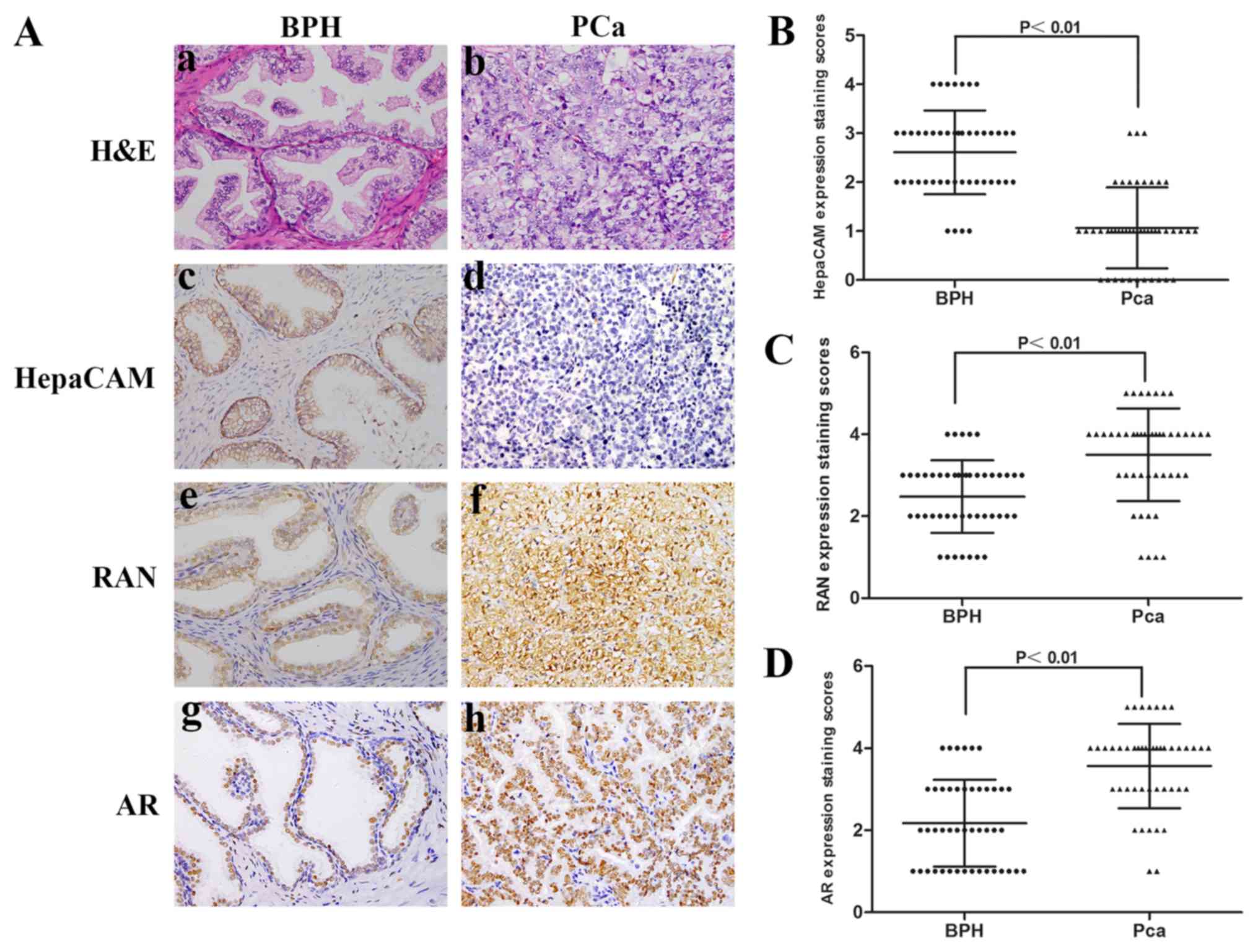
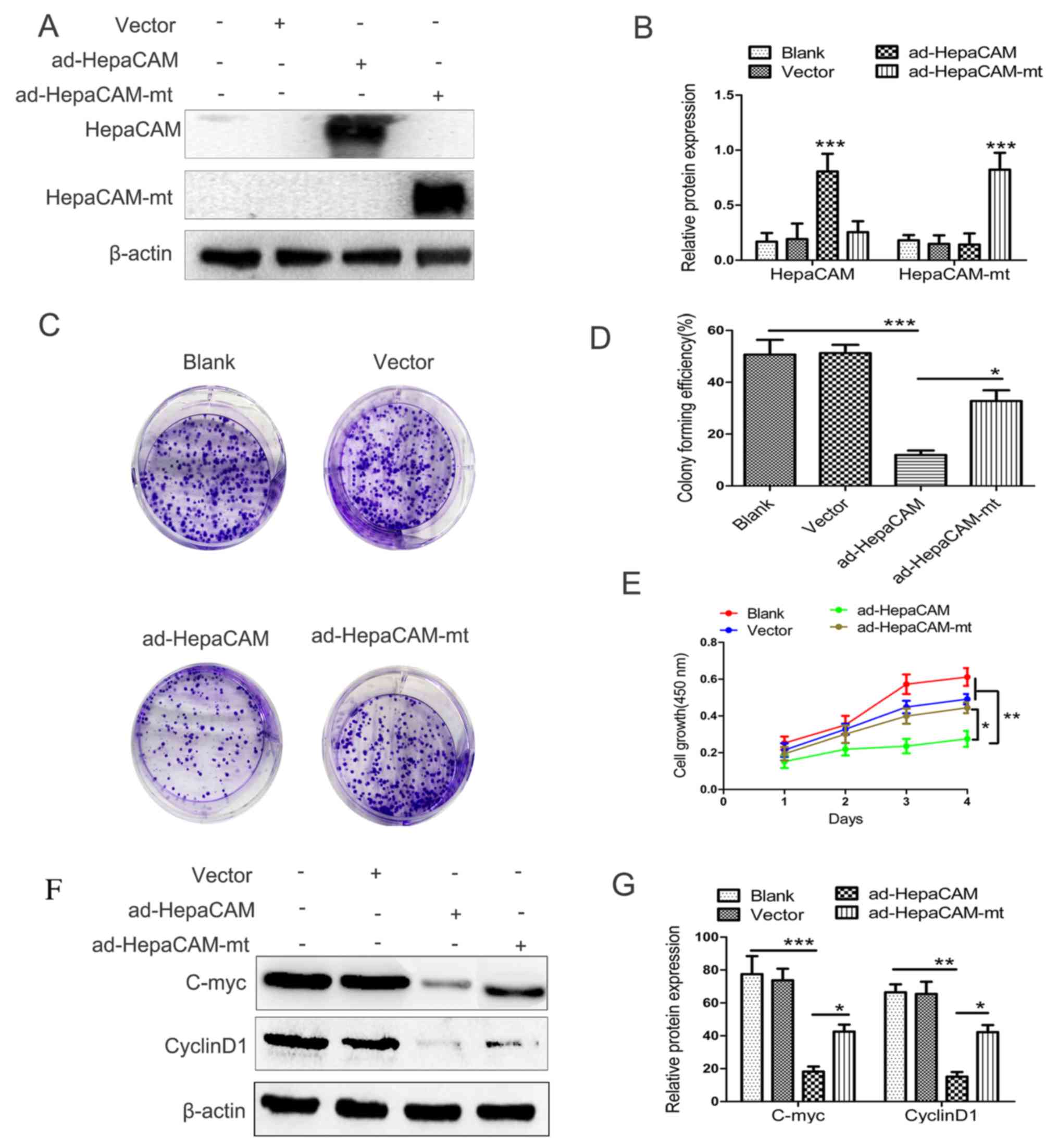
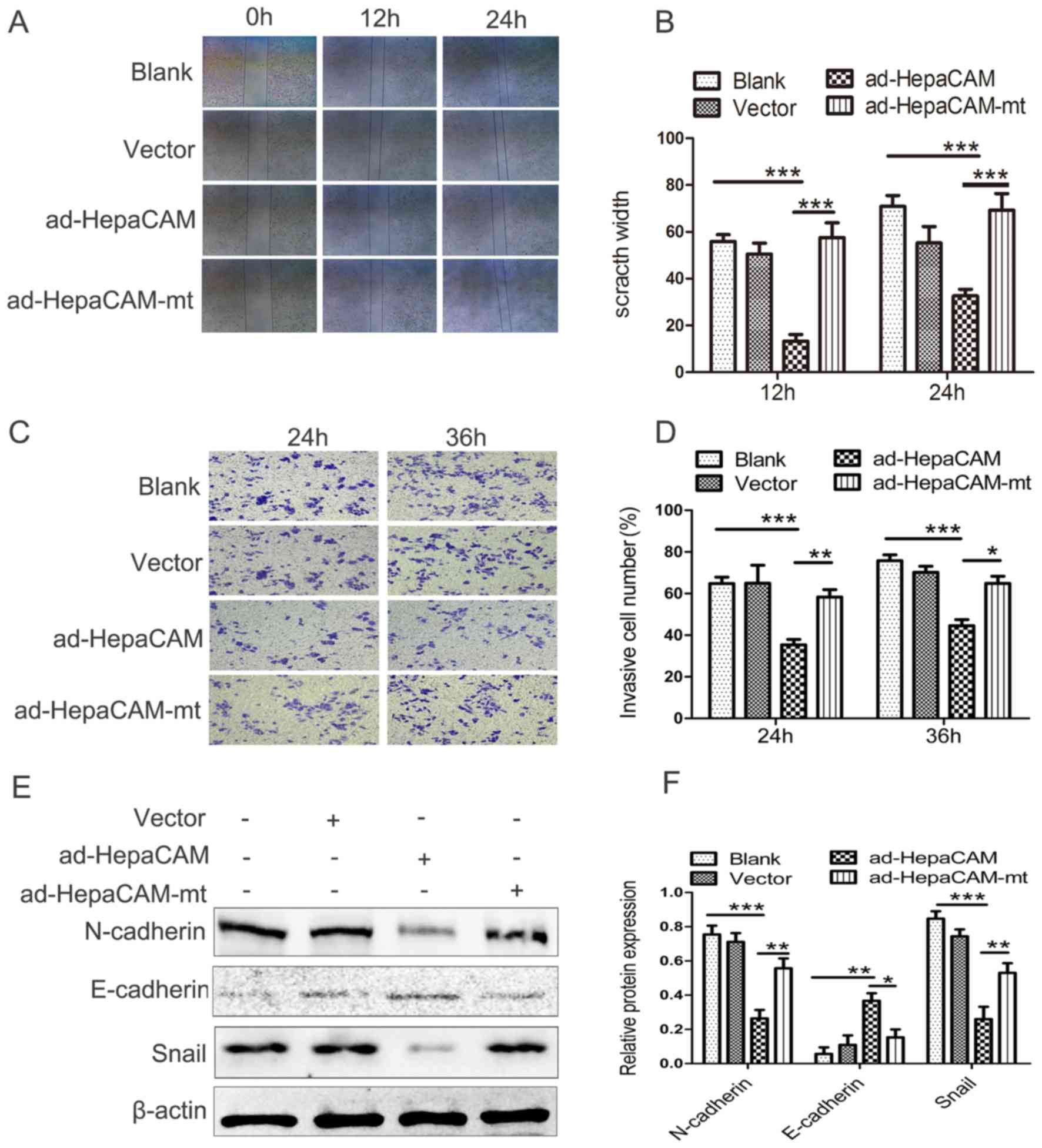
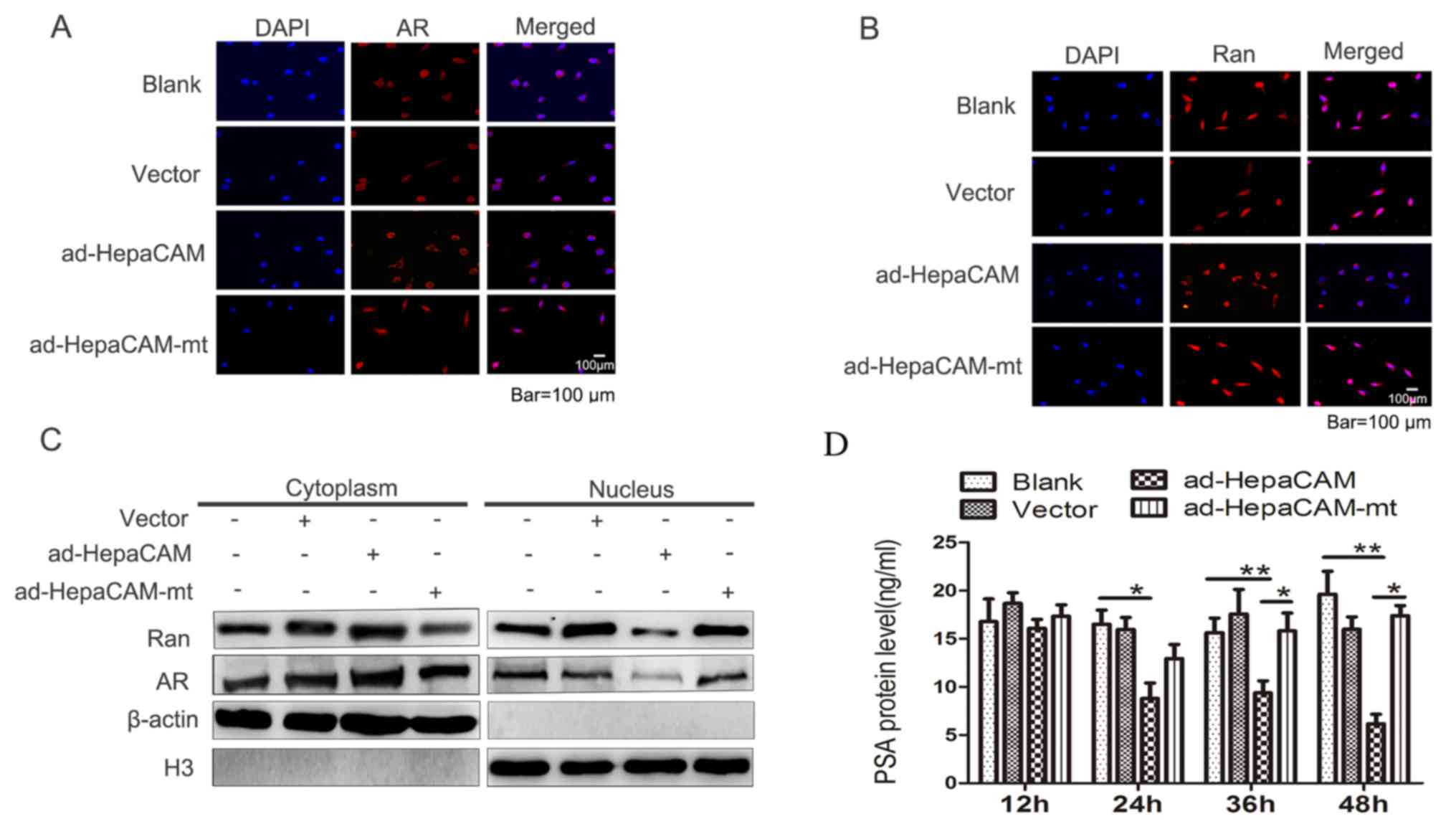
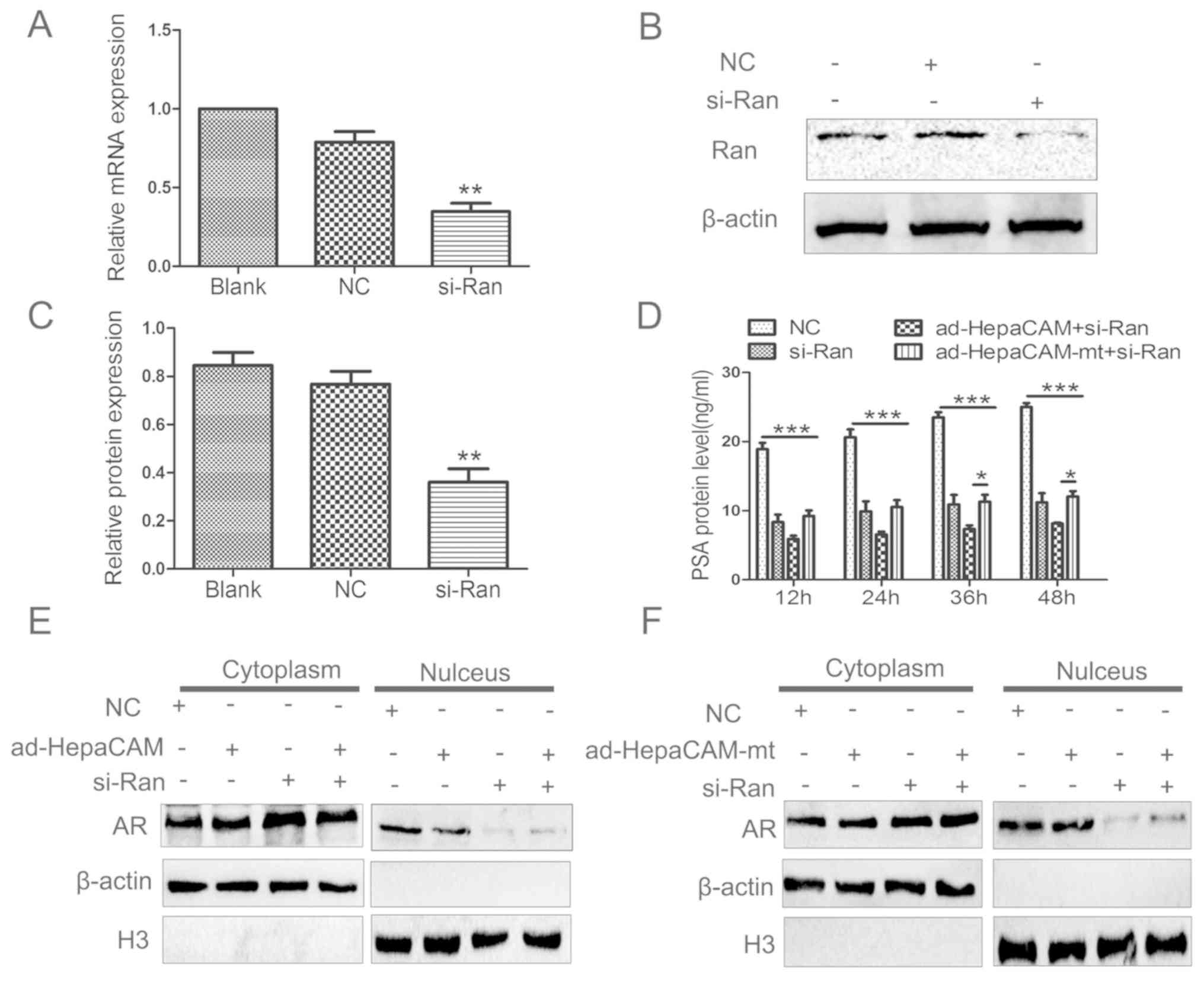
Hepatocyte cell adhesion molecule (HepaCAM) is a tumour suppressor. However, the mechanism of HepaCAM function in prostate cancer (PCa) remains unknown. In the present study, HepaCAM, androgen receptor (AR) and Ran were analysed in 46 PCa tissue samples using immunohistochemistry. Subsequently, the influence of HepaCAM and its cytoplasmic domain on cell proliferation, migration, and invasion, and associated proteins was examined using MTT, wound healing, Transwell and western blotting assays, respectively. Furthermore, nuclear translocation of AR and Ran was analysed using immunofluorescence and Western blot assays. The results demonstrated that HepaCAM expression was reduced in PCa, and there was an association between downregulation of HepaCAM and changes in the distribution of AR and Ran. Furthermore, HepaCAM, specifically the cytoplasmic domain, was involved in cell proliferation, migration and invasion. Nuclear translocation of AR was dependent on HepaCAM and its cytoplasmic domain. Additionally, HepaCAM suppression of the nuclear translocation of AR occurred via Ran. The results suggest that HepaCAM and its cytoplasmic domain suppress the nuclear translocation of AR via Ran in PCa. The cytoplasmic domain of HepaCAM may serve as a novel target for therapy in PCa.
View Figures

Figure 1

Figure 2

Figure 3

Figure 4

Figure 5

View References

1 

Siegel R, Ma J, Zou Z and Jemal A: Cancer statistics, 2014. CA Cancer J Clin. 64:9–29. 2014. View Article : Google Scholar : PubMed/NCBI

2 

Chung Moh M, Hoon Lee L and Shen S: Cloning and characterization of hepaCAM, a novel Ig-like cell adhesion molecule suppressed in human hepatocellular carcinoma. J Hepatol. 42:833–841. 2005. View Article : Google Scholar : PubMed/NCBI

3 

Moh MC, Zhang T, Lee LH and Shen S: Expression of hepaCAM is downregulated in cancers and induces senescence-like growth arrest via a p53/p21-dependent pathway in human breast cancer cells. Carcinogenesis. 29:2298–2305. 2008. View Article : Google Scholar : PubMed/NCBI

4 

Xu B, He Y, Wu X, Luo C, Liu A and Zhang J: Exploration of the correlations between interferon-γ in patient serum and HEPACAM in bladder transitional cell carcinoma, and the interferon-γ mechanism inhibiting BIU-87 proliferation. J Urol. 188:1346–1353. 2012. View Article : Google Scholar : PubMed/NCBI

5 

Xun C, Luo C, Wu X, Zhang Q, Yan L and Shen S: Expression of hepaCAM and its effect on proliferation of tumor cells in renal cell carcinoma. Urology. 75:828–834. 2010. View Article : Google Scholar : PubMed/NCBI

6 

Zhang QL, Luo CL, Wu XH, Wang CY, Xu X, Zhang YY, Liu Q and Shen SL: HepaCAM induces G1 phase arrest and promotes c-Myc degradation in human renal cell carcinoma. J Cell Biochem. 112:2910–2919. 2011. View Article : Google Scholar : PubMed/NCBI

7 

Song X, Wang Y, Du H, Fan Y, Yang X, Wang X, Wu X and Luo C: Overexpression of HepaCAM inhibits cell viability and motility through suppressing nucleus translocation of androgen receptor and ERK signaling in prostate cancer. Prostate. 74:1023–1033. 2014. View Article : Google Scholar : PubMed/NCBI

8 

Wang X, Chen E, Tang M, Yang X, Wang Y, Quan Z, Wu X and Luo C: The SMAD2/3 pathway is involved in hepaCAM-induced apoptosis by inhibiting the nuclear translocation of SMAD2/3 in bladder cancer cells. Tumour Biol. 37:10731–10743. 2016. View Article : Google Scholar : PubMed/NCBI

9 

Wen S, Chang HC, Tian J, Shang Z, Niu Y and Chang C: Stromal androgen receptor roles in the development of normal prostate, benign prostate hyperplasia, and prostate cancer. Am J Pathol. 185:293–301. 2015. View Article : Google Scholar : PubMed/NCBI

10 

Scher HI and Sawyers CL: Biology of progressive, castration-resistant prostate cancer: Directed therapies targeting the androgen-receptor signaling axis. J Clin Oncol. 23:8253–8261. 2005. View Article : Google Scholar : PubMed/NCBI

11 

Taplin ME and Balk SP: Androgen receptor: A key molecule in the progression of prostate cancer to hormone independence. J Cell Biochem. 91:483–890. 2004. View Article : Google Scholar : PubMed/NCBI

12 

Chen Y, Clegg NJ and Scher HI: Anti-androgens and androgen-depleting therapies in prostate cancer: New agents for an established target. Lancet Oncol. 10:981–991. 2009. View Article : Google Scholar : PubMed/NCBI

13 

Attard G, Cooper CS and de Bono JS: Steroid hormone receptors in prostate cancer: A hard habit to break? Cancer Cell. 16:458–462. 2009. View Article : Google Scholar : PubMed/NCBI

14 

Dehm SM and Tindall DJ: Androgen receptor structural and functional elements: Role and regulation in prostate cancer. Mol Endocrinol. 21:2855–2863. 2007. View Article : Google Scholar : PubMed/NCBI

15 

Knudsen KE and Scher HI: Starving the addiction: New opportunities for durable suppression of AR signaling in prostate cancer. Clin Cancer Res. 15:4792–4798. 2009. View Article : Google Scholar : PubMed/NCBI

16 

Adam SA and Gerace L: Cytosolic proteins that specifically bind nuclear location signals are receptors for nuclear import. Cell. 66:837–847. 1991. View Article : Google Scholar : PubMed/NCBI

17 

Rexach M and Blobel G: Protein import into nuclei: Association and dissociation reactions involving transport substrate, transport factors, and nucleoporins. Cell. 83:683–692. 1995. View Article : Google Scholar : PubMed/NCBI

18 

Weis K, Dingwall C and Lamond AI: Characterization of the nuclear protein import mechanism using Ran mutants with altered nucleotide binding specificities. EMBO J. 15:7120–7128. 1996. View Article : Google Scholar : PubMed/NCBI

19 

Sanda MG, Cadeddu JA, Kirkby E, Chen RC, Crispino T, Fontanarosa J, Freedland SJ, Greene K, Klotz LH, Makarov DV, et al: Clinically localized prostate cancer: AUA/ASTRO/SUO Guideline. Part I: Risk stratification, shared decision making, and care options. J Urol. 199:683–690. 2018. View Article : Google Scholar : PubMed/NCBI

20 

Wang Y, Wu X, Ou L, Yang X, Wang X, Tang M, Chen E and Luo C: PLCepsilon knockdown inhibits prostate cancer cell proliferation via suppression of Notch signalling and nuclear translocation of the androgen receptor. Cancer Lett. 362:61–69. 2015. View Article : Google Scholar : PubMed/NCBI

21 

Wang Q, Luo C, Wu X, Du H, Song X and Fan Y: hepaCAM and p-mTOR closely correlate in bladder transitional cell carcinoma and hepaCAM expression inhibits proliferation via an AMPK/mTOR dependent pathway in human bladder cancer cells. J Urol. 190:1912–1918. 2013. View Article : Google Scholar : PubMed/NCBI

22 

Wang L, Hou Y, Sun Y, Zhao L, Tang X, Hu P, Yang J, Zeng Z, Yang G, Cui X and Liu M: c-Ski activates cancer-associated fibroblasts to regulate breast cancer cell invasion. Mol Oncol. 7:1116–1128. 2013. View Article : Google Scholar : PubMed/NCBI

23 

Livak KJ and Schmittgen TD: Analysis of relative gene expression data using real-time quantitative PCR and the 2(-Delta Delta C(T)) method. Methods. 25:402–408. 2001. View Article : Google Scholar : PubMed/NCBI

24 

Becker KF, Rosivatz E, Blechschmidt K, Kremmer E, Sarbia M and Höfler H: Analysis of the E-cadherin repressor Snail in primary human cancers. Cells Tissues Organs. 185:204–212. 2007. View Article : Google Scholar : PubMed/NCBI

25 

Bennett NC, Gardiner RA, Hooper JD, Johnson DW and Gobe GC: Molecular cell biology of androgen receptor signalling. Int J Biochem Cell Biol. 42:813–827. 2010. View Article : Google Scholar : PubMed/NCBI

26 

Taplin ME and Balk SP: Androgen receptor: A key molecule in the progression of prostate cancer to hormone independence. J Cell Biochem. 91:483–490. 2004. View Article : Google Scholar : PubMed/NCBI

27 

Quan Z, He Y, Luo C, Xia Y, Zhao Y, Liu N and Wu X: Interleukin 6 induces cell proliferation of clear cell renal cell carcinoma by suppressing hepaCAM via the STAT3-dependent up-regulation of DNMT1 or DNMT3b. Cell Signal. 32:48–58. 2017. View Article : Google Scholar : PubMed/NCBI

28 

Moh MC, Zhang C, Luo C, Lee LH and Shen S: Structural and functional analyses of a novel ig-like cell adhesion molecule, hepaCAM, in the human breast carcinoma MCF7 cells. J Biol Chem. 280:27366–27374. 2005. View Article : Google Scholar : PubMed/NCBI

29 

Geng HT, Cao RJ, Cheng L and Liu CY: Overexpression of hepatocyte cell adhesion molecule (hepaCAM) inhibits the proliferation, migration, and invasion in colorectal cancer cells. Oncol Res. 25:1039–1046. 2017. View Article : Google Scholar : PubMed/NCBI

30 

Du Z, Li L, Sun W, Wang X, Zhang Y, Chen Z, Yuan M, Quan Z, Liu N, Hao Y, et al: HepaCAM inhibits the malignant behavior of castration-resistant prostate cancer cells by downregulating Notch signaling and PF-3084014 (a γ-secretase inhibitor) partly reverses the resistance of refractory prostate cancer to docetaxel and enzalutamide in vitro. Int J Oncol. 53:99–112. 2018.PubMed/NCBI

31 

Bluemn EG and Nelson PS: The androgen/androgen receptor axis in prostate cancer. Curr Opin Oncol. 24:251–257. 2012. View Article : Google Scholar : PubMed/NCBI

32 

Ardiani A, Gameiro SR, Kwilas AR, Donahue RN and Hodge JW: Androgen deprivation therapy sensitizes prostate cancer cells to T-cell killing through androgen receptor dependent modulation of the apoptotic pathway. Oncotarget. 5:9335–9348. 2014. View Article : Google Scholar : PubMed/NCBI

33 

Shank LC, Kelley JB, Gioeli D, Yang CS, Spencer A, Allison LA and Paschal BM: Activation of the DNA-dependent protein kinase stimulates nuclear export of the androgen receptor in vitro. J Biol Chem. 283:10568–10580. 2008. View Article : Google Scholar : PubMed/NCBI

34 

Matchett KB, McFarlane S, Hamilton SE, Eltuhamy YS, Davidson MA, Murray JT, Faheem AM and El-Tanani M: Ran GTPase in nuclear envelope formation and cancer metastasis. Adv Exp Med Biol. 773:323–351. 2014. View Article : Google Scholar : PubMed/NCBI

Related Articles

  • Abstract
  • View
  • Download
  • Twitter
Copy and paste a formatted citation
Spandidos Publications style
Deng Q, Luo L, Quan Z, Liu N, Du Z, Sun W, Luo C and Wu X: HepaCAM inhibits cell proliferation and invasion in prostate cancer by suppressing nuclear translocation of the androgen receptor via its cytoplasmic domain Corrigendum in /10.3892/mmr.2022.12746. Mol Med Rep 19: 2115-2124, 2019.
APA
Deng, Q., Luo, L., Quan, Z., Liu, N., Du, Z., Sun, W. ... Wu, X. (2019). HepaCAM inhibits cell proliferation and invasion in prostate cancer by suppressing nuclear translocation of the androgen receptor via its cytoplasmic domain Corrigendum in /10.3892/mmr.2022.12746. Molecular Medicine Reports, 19, 2115-2124. https://doi.org/10.3892/mmr.2019.9841
MLA
Deng, Q., Luo, L., Quan, Z., Liu, N., Du, Z., Sun, W., Luo, C., Wu, X."HepaCAM inhibits cell proliferation and invasion in prostate cancer by suppressing nuclear translocation of the androgen receptor via its cytoplasmic domain Corrigendum in /10.3892/mmr.2022.12746". Molecular Medicine Reports 19.3 (2019): 2115-2124.
Chicago
Deng, Q., Luo, L., Quan, Z., Liu, N., Du, Z., Sun, W., Luo, C., Wu, X."HepaCAM inhibits cell proliferation and invasion in prostate cancer by suppressing nuclear translocation of the androgen receptor via its cytoplasmic domain Corrigendum in /10.3892/mmr.2022.12746". Molecular Medicine Reports 19, no. 3 (2019): 2115-2124. https://doi.org/10.3892/mmr.2019.9841
Copy and paste a formatted citation
x
Spandidos Publications style
Deng Q, Luo L, Quan Z, Liu N, Du Z, Sun W, Luo C and Wu X: HepaCAM inhibits cell proliferation and invasion in prostate cancer by suppressing nuclear translocation of the androgen receptor via its cytoplasmic domain Corrigendum in /10.3892/mmr.2022.12746. Mol Med Rep 19: 2115-2124, 2019.
APA
Deng, Q., Luo, L., Quan, Z., Liu, N., Du, Z., Sun, W. ... Wu, X. (2019). HepaCAM inhibits cell proliferation and invasion in prostate cancer by suppressing nuclear translocation of the androgen receptor via its cytoplasmic domain Corrigendum in /10.3892/mmr.2022.12746. Molecular Medicine Reports, 19, 2115-2124. https://doi.org/10.3892/mmr.2019.9841
MLA
Deng, Q., Luo, L., Quan, Z., Liu, N., Du, Z., Sun, W., Luo, C., Wu, X."HepaCAM inhibits cell proliferation and invasion in prostate cancer by suppressing nuclear translocation of the androgen receptor via its cytoplasmic domain Corrigendum in /10.3892/mmr.2022.12746". Molecular Medicine Reports 19.3 (2019): 2115-2124.
Chicago
Deng, Q., Luo, L., Quan, Z., Liu, N., Du, Z., Sun, W., Luo, C., Wu, X."HepaCAM inhibits cell proliferation and invasion in prostate cancer by suppressing nuclear translocation of the androgen receptor via its cytoplasmic domain Corrigendum in /10.3892/mmr.2022.12746". Molecular Medicine Reports 19, no. 3 (2019): 2115-2124. https://doi.org/10.3892/mmr.2019.9841
Follow us
  • Twitter
  • LinkedIn
  • Facebook
About
  • Spandidos Publications
  • Careers
  • Cookie Policy
  • Privacy Policy
How can we help?
  • Help
  • Live Chat
  • Contact
  • Email to our Support Team