Spandidos Publications Logo
  • About
    • About Spandidos
    • Aims and Scopes
    • Abstracting and Indexing
    • Editorial Policies
    • Reprints and Permissions
    • Job Opportunities
    • Terms and Conditions
    • Contact
  • Journals
    • All Journals
    • Oncology Letters
      • Oncology Letters
      • Information for Authors
      • Editorial Policies
      • Editorial Board
      • Aims and Scope
      • Abstracting and Indexing
      • Bibliographic Information
      • Archive
    • International Journal of Oncology
      • International Journal of Oncology
      • Information for Authors
      • Editorial Policies
      • Editorial Board
      • Aims and Scope
      • Abstracting and Indexing
      • Bibliographic Information
      • Archive
    • Molecular and Clinical Oncology
      • Molecular and Clinical Oncology
      • Information for Authors
      • Editorial Policies
      • Editorial Board
      • Aims and Scope
      • Abstracting and Indexing
      • Bibliographic Information
      • Archive
    • Experimental and Therapeutic Medicine
      • Experimental and Therapeutic Medicine
      • Information for Authors
      • Editorial Policies
      • Editorial Board
      • Aims and Scope
      • Abstracting and Indexing
      • Bibliographic Information
      • Archive
    • International Journal of Molecular Medicine
      • International Journal of Molecular Medicine
      • Information for Authors
      • Editorial Policies
      • Editorial Board
      • Aims and Scope
      • Abstracting and Indexing
      • Bibliographic Information
      • Archive
    • Biomedical Reports
      • Biomedical Reports
      • Information for Authors
      • Editorial Policies
      • Editorial Board
      • Aims and Scope
      • Abstracting and Indexing
      • Bibliographic Information
      • Archive
    • Oncology Reports
      • Oncology Reports
      • Information for Authors
      • Editorial Policies
      • Editorial Board
      • Aims and Scope
      • Abstracting and Indexing
      • Bibliographic Information
      • Archive
    • Molecular Medicine Reports
      • Molecular Medicine Reports
      • Information for Authors
      • Editorial Policies
      • Editorial Board
      • Aims and Scope
      • Abstracting and Indexing
      • Bibliographic Information
      • Archive
    • World Academy of Sciences Journal
      • World Academy of Sciences Journal
      • Information for Authors
      • Editorial Policies
      • Editorial Board
      • Aims and Scope
      • Abstracting and Indexing
      • Bibliographic Information
      • Archive
    • International Journal of Functional Nutrition
      • International Journal of Functional Nutrition
      • Information for Authors
      • Editorial Policies
      • Editorial Board
      • Aims and Scope
      • Abstracting and Indexing
      • Bibliographic Information
      • Archive
    • International Journal of Epigenetics
      • International Journal of Epigenetics
      • Information for Authors
      • Editorial Policies
      • Editorial Board
      • Aims and Scope
      • Abstracting and Indexing
      • Bibliographic Information
      • Archive
    • Medicine International
      • Medicine International
      • Information for Authors
      • Editorial Policies
      • Editorial Board
      • Aims and Scope
      • Abstracting and Indexing
      • Bibliographic Information
      • Archive
  • Articles
  • Information
    • Information for Authors
    • Information for Reviewers
    • Information for Librarians
    • Information for Advertisers
    • Conferences
  • Language Editing
Spandidos Publications Logo
  • About
    • About Spandidos
    • Aims and Scopes
    • Abstracting and Indexing
    • Editorial Policies
    • Reprints and Permissions
    • Job Opportunities
    • Terms and Conditions
    • Contact
  • Journals
    • All Journals
    • Biomedical Reports
      • Information for Authors
      • Editorial Policies
      • Editorial Board
      • Aims and Scope
      • Abstracting and Indexing
      • Bibliographic Information
      • Archive
    • Experimental and Therapeutic Medicine
      • Information for Authors
      • Editorial Policies
      • Editorial Board
      • Aims and Scope
      • Abstracting and Indexing
      • Bibliographic Information
      • Archive
    • International Journal of Epigenetics
      • Information for Authors
      • Editorial Policies
      • Editorial Board
      • Aims and Scope
      • Abstracting and Indexing
      • Bibliographic Information
      • Archive
    • International Journal of Functional Nutrition
      • Information for Authors
      • Editorial Policies
      • Editorial Board
      • Aims and Scope
      • Abstracting and Indexing
      • Bibliographic Information
      • Archive
    • International Journal of Molecular Medicine
      • Information for Authors
      • Editorial Policies
      • Editorial Board
      • Aims and Scope
      • Abstracting and Indexing
      • Bibliographic Information
      • Archive
    • International Journal of Oncology
      • Information for Authors
      • Editorial Policies
      • Editorial Board
      • Aims and Scope
      • Abstracting and Indexing
      • Bibliographic Information
      • Archive
    • Medicine International
      • Information for Authors
      • Editorial Policies
      • Editorial Board
      • Aims and Scope
      • Abstracting and Indexing
      • Bibliographic Information
      • Archive
    • Molecular and Clinical Oncology
      • Information for Authors
      • Editorial Policies
      • Editorial Board
      • Aims and Scope
      • Abstracting and Indexing
      • Bibliographic Information
      • Archive
    • Molecular Medicine Reports
      • Information for Authors
      • Editorial Policies
      • Editorial Board
      • Aims and Scope
      • Abstracting and Indexing
      • Bibliographic Information
      • Archive
    • Oncology Letters
      • Information for Authors
      • Editorial Policies
      • Editorial Board
      • Aims and Scope
      • Abstracting and Indexing
      • Bibliographic Information
      • Archive
    • Oncology Reports
      • Information for Authors
      • Editorial Policies
      • Editorial Board
      • Aims and Scope
      • Abstracting and Indexing
      • Bibliographic Information
      • Archive
    • World Academy of Sciences Journal
      • Information for Authors
      • Editorial Policies
      • Editorial Board
      • Aims and Scope
      • Abstracting and Indexing
      • Bibliographic Information
      • Archive
  • Articles
  • Information
    • For Authors
    • For Reviewers
    • For Librarians
    • For Advertisers
    • Conferences
  • Language Editing
Login Register Submit
  • This site uses cookies
  • You can change your cookie settings at any time by following the instructions in our Cookie Policy. To find out more, you may read our Privacy Policy.

    I agree
Search articles by DOI, keyword, author or affiliation
Search
Advanced Search
presentation
Molecular Medicine Reports
Join Editorial Board Propose a Special Issue
Print ISSN: 1791-2997 Online ISSN: 1791-3004
Journal Cover
June-2020 Volume 21 Issue 6

Full Size Image

Sign up for eToc alerts
Recommend to Library

Journals

International Journal of Molecular Medicine

International Journal of Molecular Medicine

International Journal of Molecular Medicine is an international journal devoted to molecular mechanisms of human disease.

International Journal of Oncology

International Journal of Oncology

International Journal of Oncology is an international journal devoted to oncology research and cancer treatment.

Molecular Medicine Reports

Molecular Medicine Reports

Covers molecular medicine topics such as pharmacology, pathology, genetics, neuroscience, infectious diseases, molecular cardiology, and molecular surgery.

Oncology Reports

Oncology Reports

Oncology Reports is an international journal devoted to fundamental and applied research in Oncology.

Experimental and Therapeutic Medicine

Experimental and Therapeutic Medicine

Experimental and Therapeutic Medicine is an international journal devoted to laboratory and clinical medicine.

Oncology Letters

Oncology Letters

Oncology Letters is an international journal devoted to Experimental and Clinical Oncology.

Biomedical Reports

Biomedical Reports

Explores a wide range of biological and medical fields, including pharmacology, genetics, microbiology, neuroscience, and molecular cardiology.

Molecular and Clinical Oncology

Molecular and Clinical Oncology

International journal addressing all aspects of oncology research, from tumorigenesis and oncogenes to chemotherapy and metastasis.

World Academy of Sciences Journal

World Academy of Sciences Journal

Multidisciplinary open-access journal spanning biochemistry, genetics, neuroscience, environmental health, and synthetic biology.

International Journal of Functional Nutrition

International Journal of Functional Nutrition

Open-access journal combining biochemistry, pharmacology, immunology, and genetics to advance health through functional nutrition.

International Journal of Epigenetics

International Journal of Epigenetics

Publishes open-access research on using epigenetics to advance understanding and treatment of human disease.

Medicine International

Medicine International

An International Open Access Journal Devoted to General Medicine.

Journal Cover
June-2020 Volume 21 Issue 6

Full Size Image

Sign up for eToc alerts
Recommend to Library

  • Article
  • Citations
    • Cite This Article
    • Download Citation
    • Create Citation Alert
    • Remove Citation Alert
    • Cited By
  • Similar Articles
    • Related Articles (in Spandidos Publications)
    • Similar Articles (Google Scholar)
    • Similar Articles (PubMed)
  • Download PDF
  • Download XML
  • View XML
Article Open Access

Baicalein suppresses the proliferation and invasiveness of colorectal cancer cells by inhibiting Snail‑induced epithelial‑mesenchymal transition

  • Authors:
    • Qiongyao Zeng
    • Yu Zhang
    • Wenjing Zhang
    • Qiang Guo
  • View Affiliations / Copyright

    Affiliations: Faculty of Life Science and Biotechnology, Kunming University of Science and Technology, Kunming, Yunnan 650500, P.R. China, Department of Gastroenterology, The First People's Hospital of Yunnan Province, Kunming, Yunnan 650032, P.R. China, Faculty of Medicine, Kunming University of Science and Technology, Kunming, Yunnan 650500, P.R. China
    Copyright: © Zeng et al. This is an open access article distributed under the terms of Creative Commons Attribution License.
  • Pages: 2544-2552
    |
    Published online on: April 1, 2020
       https://doi.org/10.3892/mmr.2020.11051
  • Expand metrics +
Metrics: Total Views: 0 (Spandidos Publications: | PMC Statistics: )
Metrics: Total PDF Downloads: 0 (Spandidos Publications: | PMC Statistics: )
Cited By (CrossRef): 0 citations Loading Articles...

This article is mentioned in:


Abstract

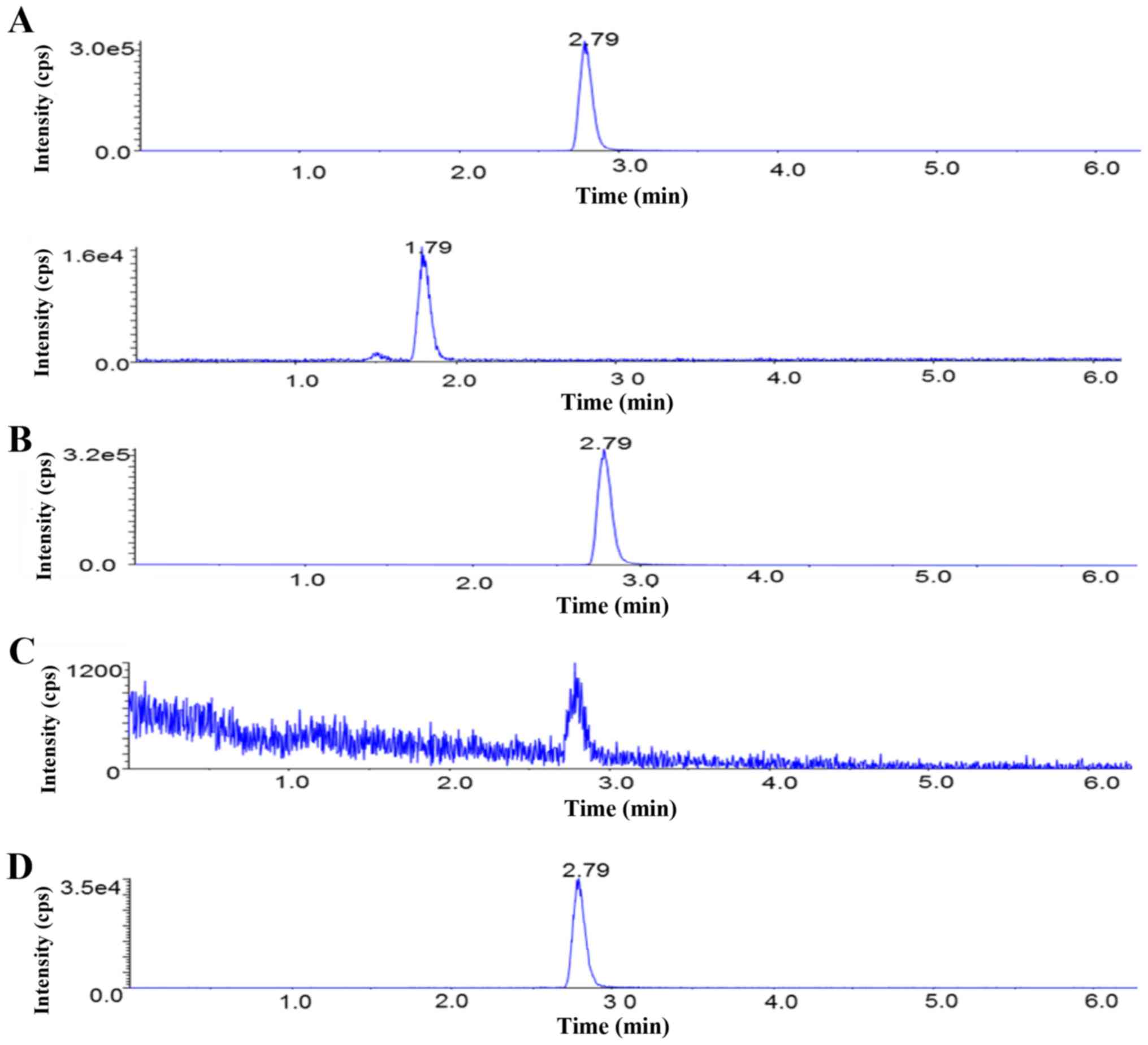
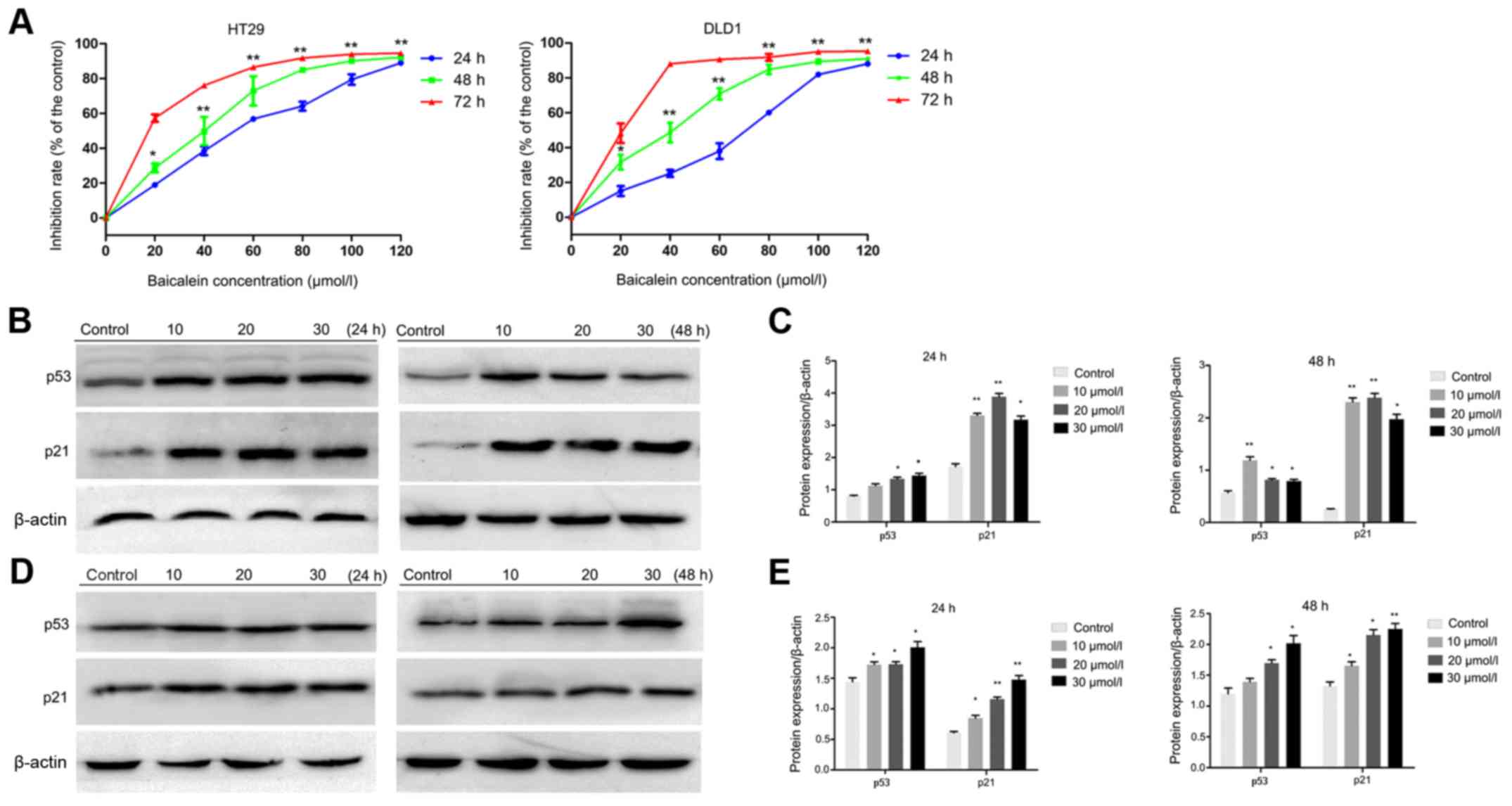
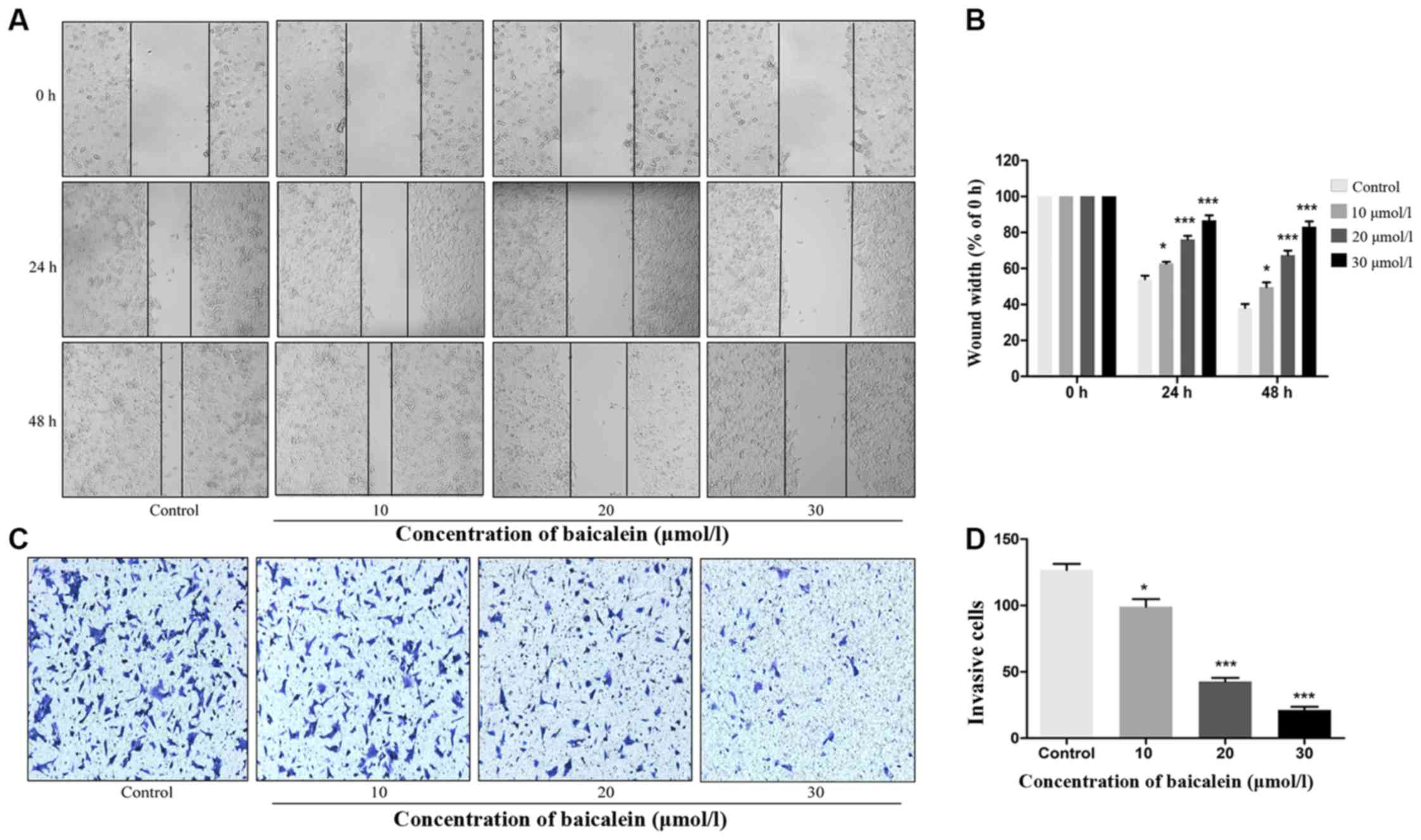
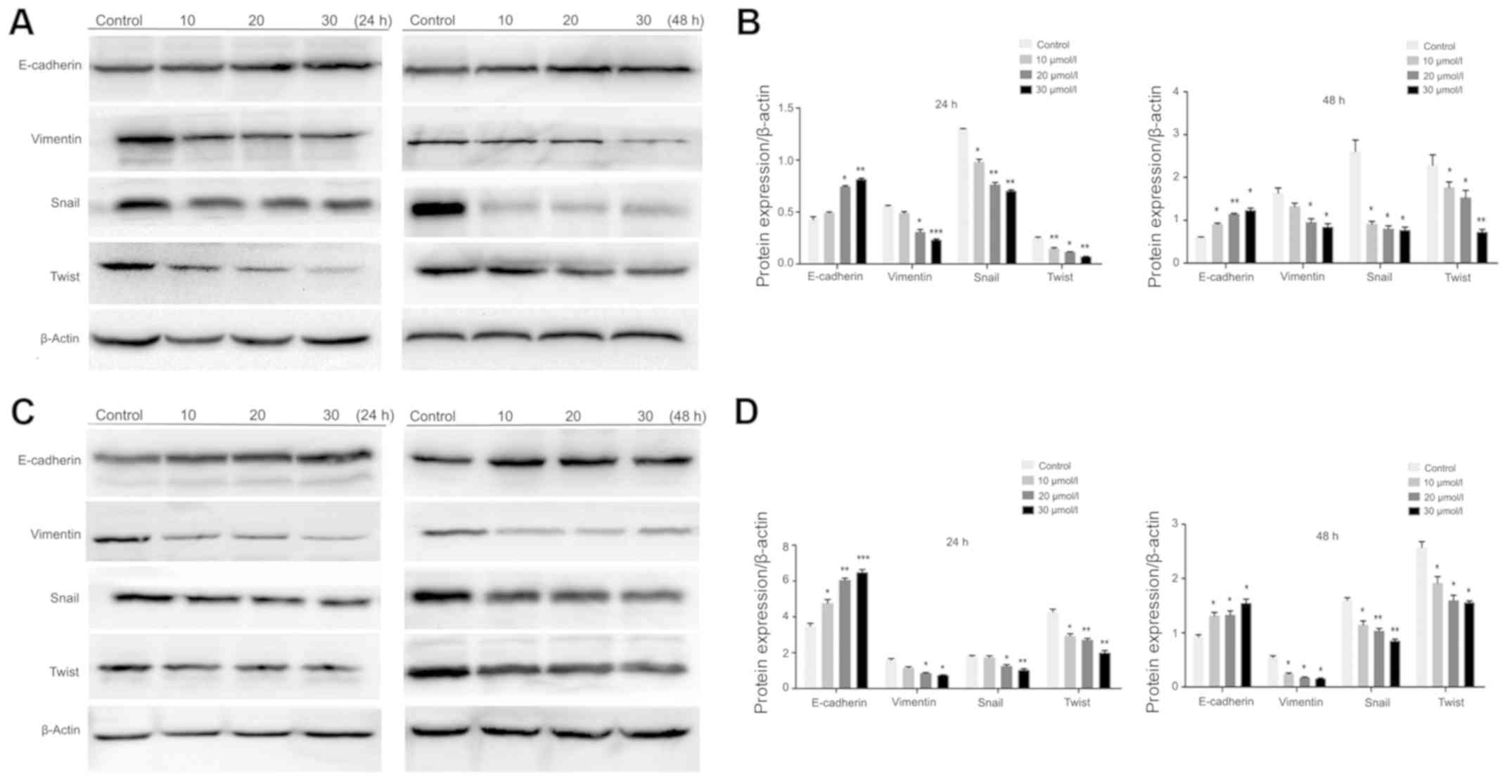
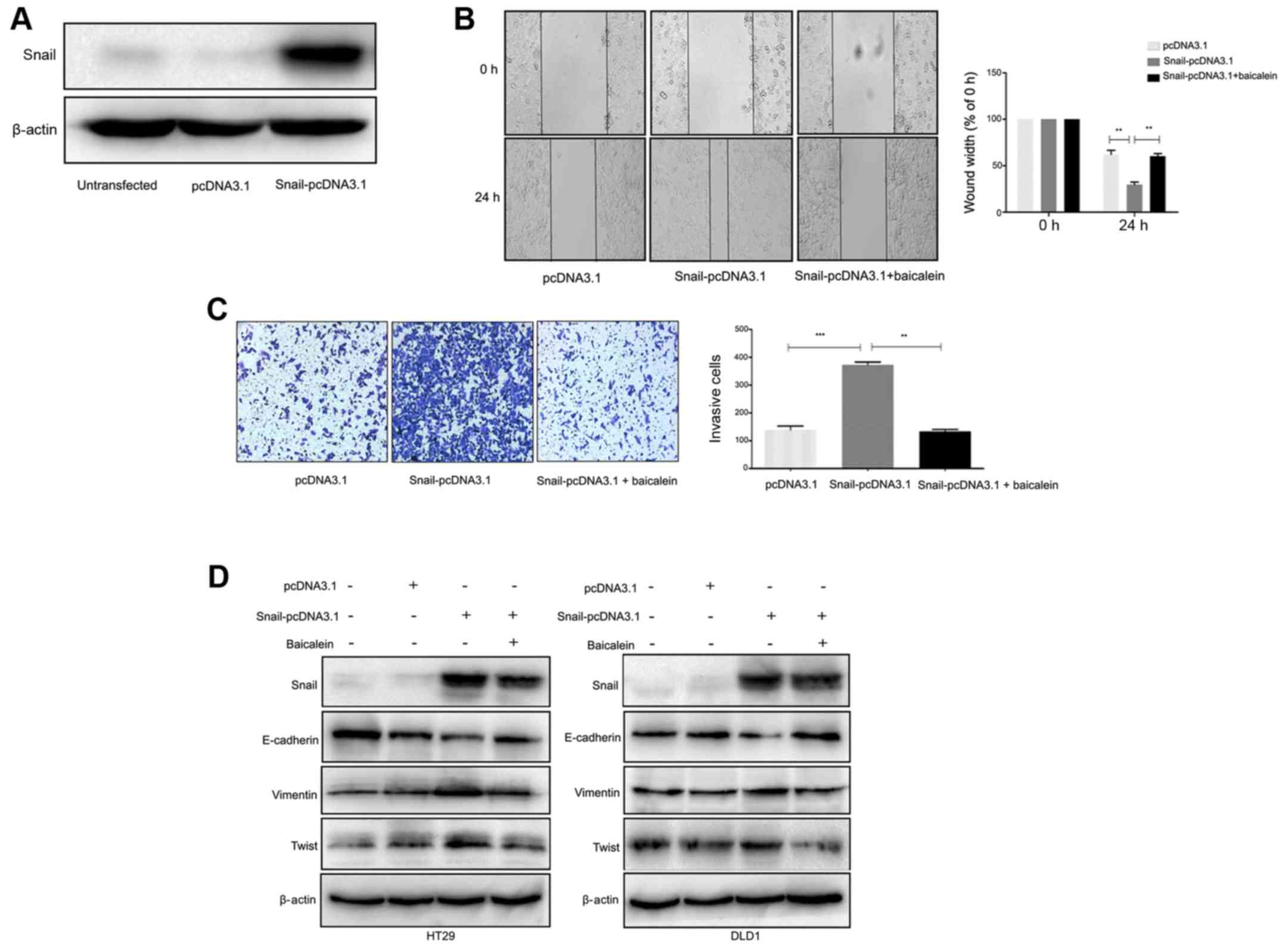
Scutellaria baicalensis (S. baicalensis) is a plant that is widely used for medicinal purposes. Baicalein, one of the primary bioactive compounds found in S. baicalensis, is thought to possess antitumor activity, although the specific mechanisms remain unclear. Therefore, the present study aimed to evaluate the ability of baicalein to disrupt the proliferation and metastatic potential of colorectal cancer (CRC) cells; a rapid and sensitive ultra‑high performance liquid chromatography‑tandem mass spectrometric method was employed for the identification of baicalein in an S. baicalensis aqueous extract and in rat plasma. To investigate the effects of baicalein, Cell Counting Kit‑8 (CCK‑8), western blotting, wound‑healing and Transwell assays were performed. The data indicated that baicalein was absorbed into the blood and was able to effectively disrupt the proliferation, migration and invasion abilities of CRC cells in a dose‑ and time‑dependent manner. Baicalein treatment was also revealed to decrease the expression of epithelial‑mesenchymal transition (EMT)‑promoting factors including vimentin, Twist1, and Snail, but to upregulate the expression of E‑cadherin in CRC cells. The expression levels of cell cycle inhibitory proteins p53 and p21 also increased following baicalein treatment. In addition, Snail‑induced vimentin and Twist1 upregulation, as well as E‑cadherin downregulation, were reversed following treatment with baicalein. In conclusion, the results of the present study indicate that baicalein may suppress EMT, at least in part, by decreasing Snail activity.
View Figures

Figure 1

Figure 2

Figure 3

Figure 4

Figure 5

View References

1 

Friedman S, Rubin PH, Bodian C, Goldstein E, Harpaz N and Present DH: Screening and surveillance colonoscopy in chronic Crohn's colitis. Gastroenterology. 120:820–826. 2001. View Article : Google Scholar : PubMed/NCBI

2 

Ferlay J, Soerjomataram I, Dikshit R, Eser S, Mathers C, Rebelo M, Parkin DM, Forman D and Bray F: Cancer incidence and mortality worldwide: Sources, methods and major patterns in GLOBOCAN 2012. Int J Cancer. 136:E359–E386. 2015. View Article : Google Scholar : PubMed/NCBI

3 

Pan J, Xu Y, Song H, Zhou X, Yao Z and Ji G: Extracts of Zuo Jin Wan, a traditional Chinese medicine, phenocopies 5-HTR1D antagonist in attenuating Wnt/β-catenin signaling in colorectal cancer cells. BMC Complement Altern Med. 17:506–517. 2017. View Article : Google Scholar : PubMed/NCBI

4 

Li K, Guo J, Wu Y, Jin D, Jiang H, Liu C and Qin C: Suppression of YAP by DDP disrupts colon tumor progression. Oncol Rep. 39:2114–2126. 2018.PubMed/NCBI

5 

Ling CQ, Yue XQ and Ling C: Three advantages of using traditional Chinese medicine to prevent and treat tumor. J Integr Med. 12:331–335. 2014. View Article : Google Scholar : PubMed/NCBI

6 

Yeung KT and Yang J: Epithelial-mesenchymal transition in tumor metastasis. Mol Oncol. 11:28–39. 2017. View Article : Google Scholar : PubMed/NCBI

7 

Tsai JH and Yang J: Epithelial-mesenchymal plasticity in carcinoma metastasis. Genes Dev. 27:2192–2206. 2013. View Article : Google Scholar : PubMed/NCBI

8 

Singh A and Settleman J: EMT, cancer stem cells and drug resistance: An emerging axis of evil in the war on cancer. Oncogene. 29:4741–4751. 2010. View Article : Google Scholar : PubMed/NCBI

9 

Cai W, Ye Q and She QB: Loss of 4E-BP1 function induces EMT and promotes cancer cell migration and invasion via cap-dependent translational activation of snail. Oncotarget. 5:6015–6027. 2014. View Article : Google Scholar : PubMed/NCBI

10 

Zheng H, Shen M, Zha YL, Li W, Wei Y, Blanco MA, Ren G, Zhou T, Storz P, Wang HY, et al: PKD1 phosphorylation-dependent degradation of SNAIL by SCF-FBXO11 regulates epithelial-mesenchymal transition and metastasis. Cancer Cell. 26:358–373. 2014. View Article : Google Scholar : PubMed/NCBI

11 

Kwon CH, Park HJ, Choi JH, Lee JR, Kim HK, Jo HJ, Kim HS, Oh N, Song GA and Park DY: Snail and serpinA1 promote tumor progression and predict prognosis in colorectal cancer. Oncotarget. 6:20312–20326. 2015. View Article : Google Scholar : PubMed/NCBI

12 

Bugel SM and Tanguay RL: Multidimensional chemobehavior analysis of flavonoids and neuroactive compounds in zebrafish. Toxicol Appl Pharmacol. 344:23–34. 2018. View Article : Google Scholar : PubMed/NCBI

13 

Bobe G, Sansbury LB, Albert PS, Cross AJ, Kahle L, Ashby J, Slattery ML, Caan B, Paskett E, Iber F, et al: Dietary flavonoids and colorectal adenoma recurrence in the Polyp Prevention Trial. Cancer Epidemiol Biomarkers Prev. 17:1344–1353. 2008. View Article : Google Scholar : PubMed/NCBI

14 

Liu K, Gao H, Wang Q, Wang L, Zhang B, Han Z, Chen X, Han M and Gao M: Hispidulin suppresses cell growth and metastasis by targeting PIM1 through JAK2/STAT3 signaling in colorectal cancer. Cancer Sci. 109:1369–1381. 2018. View Article : Google Scholar : PubMed/NCBI

15 

Razak S, Afsar T, Ullah A, Almajwal A, Alkholief M, Alshamsan A and Jahan S: Taxifolin, a natural flavonoid interacts with cell cycle regulators causes cell cycle arrest and causes tumor regression by activating Wnt/β -catenin signaling pathway. BMC Cancer. 18:1043–1061. 2018. View Article : Google Scholar : PubMed/NCBI

16 

Wenzel U, Kuntz S, Brendel MD and Daniel H: Dietary flavone is a potent apoptosis inducer in human colon carcinoma cells. Cancer Res. 60:3823–3831. 2000.PubMed/NCBI

17 

Dou J, Wang Z, Ma L, Peng B, Mao K, Li C, Su M, Zhou C and Peng G: Baicalein and baicalin inhibit colon cancer using two distinct fashions of apoptosis and senescence. Oncotarget. 9:20089–20102. 2018. View Article : Google Scholar : PubMed/NCBI

18 

Wang CZ, Calway TD, Wen XD, Smith J, Yu C, Wang Y, Mehendale SR and Yuan CS: Hydrophobic flavonoids from Scutellaria baicalensis induce colorectal cancer cell apoptosis through a mitochondrial-mediated pathway. Int J Oncol. 42:1018–1026. 2013. View Article : Google Scholar : PubMed/NCBI

19 

Huang X, Wu P, Huang F, Xu M, Chen M, Huang K, Li GP, Xu M, Yao D and Wang L: Baicalin attenuates chronic hypoxia-induced pulmonary hypertension via adenosine A2A receptor-induced SDF-1/CXCR4/PI3K/AKT signaling. J Biomed Sci. 24:52–66. 2017. View Article : Google Scholar : PubMed/NCBI

20 

Hong GE, Kim JA, Nagappan A, Yumnam S, Lee HJ, Kim EH, Lee WS, Shin SC, Park HS and Kim GS: Flavonoids identified from Korean Scutellaria baicalensis Georgi inhibit inflammatory signaling by suppressing activation of NF- κB and MAPK in RAW 264.7 cells. Evid Based Complement Alternat Med. 2013:912031–912042. 2013. View Article : Google Scholar : PubMed/NCBI

21 

Hussain I, Waheed S, Ahmad KA, Pirog JE and Syed V: Scutellaria baicalensis targets the hypoxia-inducible factor-1α and enhances cisplatin efficacy in ovarian cancer. J Cell Biochem. 119:7515–7524. 2018. View Article : Google Scholar : PubMed/NCBI

22 

Duan C, Matsumura S, Kariya N, Nishimura M and Shimono T: In vitro antibacterial activities of Scutellaria baicalensis Georgi against cariogenic bacterial. Pediatr Dent J. 17:58–64. 2017. View Article : Google Scholar

23 

Kim SJ, Kim HJ, Kim HR, Lee SH, Cho SD, Choi CS, Nam JS and Jung JY: Antitumor actions of baicalein and wogonin in HT-29 human colorectal cancer cells. Mol Med Rep. 6:1443–1449. 2012. View Article : Google Scholar : PubMed/NCBI

24 

Chen Z, Hou R, Gao S, Song D and Feng Y: Baicalein inhibits proliferation activity of human colorectal cancer cells HCT116 through downregulation of Ezrin. Cell Physiol Biochem. 49:2035–2046. 2018. View Article : Google Scholar : PubMed/NCBI

25 

Rui X, Yan XI and Zhang K: Baicalein inhibits the migration and invasion of colorectal cancer cells via suppression of the AKT signaling pathway. Oncol Lett. 11:685–688. 2016. View Article : Google Scholar : PubMed/NCBI

26 

Chai Y, Xu J and Yan B: The anti-metastatic effect of baicalein on colorectal cancer. Oncol Rep. 37:2317–2323. 2017. View Article : Google Scholar : PubMed/NCBI

27 

Cui XB, Qian XC, Huang P, Zhang YX, Li JS, Yang GM and Cai BC: Simultaneous determination of ten flavonoids of crude and wine-processed Radix Scutellariae aqueous extracts in rat plasma by UPLC-ESI-MS/MS and its application to a comparative pharmacokinetic study. Biomed Chromatogr. 29:1112–1123. 2015. View Article : Google Scholar : PubMed/NCBI

28 

Zhang Y, Zhang Z and Song R: The influence of compatibility of rhubarb and radix scutellariae on the pharmacokinetics of anthraquinones and flavonoids in rat plasma. Eur J Drug Metab Pharmacokinet. 43:291–300. 2018. View Article : Google Scholar : PubMed/NCBI

29 

Aoki T, Nishimura M, Kataoka H, Ishibashi R, Nozaki K and Miyamoto S: Complementary inhibition of cerebral aneurysm formation by eNOS and nNOS. Lab Invest. 91:619–626. 2011. View Article : Google Scholar : PubMed/NCBI

30 

Duan j, Song Z, Qi M, Bai X, Wang J, Zhang Y, Zou X, Guo Q and Wan P: Increased autophagy levels mediate cisplatin resistance in cisplatin-resistant cells while also rendering them vulnerable to autophagy induction. BioMed Res Int. 10:1736738–1736748. 2018.

31 

Qiu Y, Li C, Wang Q, Zeng X and Ji P: Tanshinone IIA induces cell death via Beclin-1-dependent autophagy in oral squamous cell carcinoma SCC-9 cell line. Cancer Med. 7:397–407. 2018. View Article : Google Scholar : PubMed/NCBI

32 

Zhang Y, Yan W and Chen X: Mutant p53 disrupts MCF-10A cell polarity in three-dimensional culture via epithelial-to-mesenchymal transitions. J Biol Chem. 286:16218–16228. 2011. View Article : Google Scholar : PubMed/NCBI

33 

Chang CJ, Chao CH, Xia W, Yang JY, Xiong Y, Li CW, Yu WH, Rehman SK, Hsu JL, Lee HH, et al: p53 regulates epithelial-mesenchymal transition and stem cell properties through modulating miRNAs. Nat Cell Biol. 13:317–323. 2011. View Article : Google Scholar : PubMed/NCBI

34 

Fan F, Samuel S, Evans KW, Lu J, Xia L, Zhou Y, Sceusi E, Tozzi F, Ye XC, Mani SA, et al: Overexpression of snail induces epithelial-mesenchymal transition and a cancer stem cell-like phenotype in human colorectal cancer cells. Cancer Med. 1:5–16. 2012. View Article : Google Scholar : PubMed/NCBI

35 

Sang Y, Cheng C, Zeng YX and Kang T: Snail promotes metastasis of nasopharyngeal carcinoma partly by down-regulating TEL2. Cancer Commun Lond. 38:58–68. 2018. View Article : Google Scholar : PubMed/NCBI

36 

Bermudezsoto MJ, Tomasbarberan FA and Garciaconesa M: Stability of polyphenols in chokeberry (Aronia melanocarpa) subjected to in vitro gastric and pancreatic digestion. Food Chem. 102:865–874. 2007. View Article : Google Scholar

37 

Sankaranarayanan R, Valiveti CK, Kumar DR, Van slambrouck S, Kesharwani S, Seefeldt T, Scaria J, Tummala H and Bhat G: Van slambrouck S, Kesharwani SS, Seefeldt T, Scaria J, Tummala H and Bhat GJ: The flavonoid metabolite 2, 4, 6-Trihydroxybenzoic acid is a CDK inhibitor and an anti-proliferative agent: A potential role in cancer prevention. Cancers (Basel). 11:2–18. 2019. View Article : Google Scholar

38 

Gao K, Xu A, Krul C, Venema K, Liu Y, Niu Y, Lu J, Bensoussan L, Seeram NP, Heber D, et al: Of the major phenolic acids formed during human microbial fermentation of tea, citrus, and soy flavonoid supplements, only 3,4-dihydroxyphenylacetic acid has antiproliferative activity. J Nutr. 136:52–57. 2006. View Article : Google Scholar : PubMed/NCBI

39 

Du LY, Qian DW, Shang EX, Liu P, Jiang S, Guo JM, Su SL, Duan JA, Xu J and Zhao M: UPLC-Q-TOF/MS-based screening and identification of the main flavonoids and their metabolites in rat bile, urine and feces after oral administration of Scutellaria baicalensis extract. J Ethnopharmacol. 169:156–162. 2015. View Article : Google Scholar : PubMed/NCBI

40 

Park KI, Park HS, Kang SR, Nagappan A, Lee DH, Kim JA, Han DY and Kim GS: Korean Scutellaria baicalensis water extract inhibits cell cycle G1/S transition by suppressing cyclin D1 expression and matrix-metalloproteinase-2 activity in human lung cancer cells. J Ethnopharmacol. 133:634–641. 2011. View Article : Google Scholar : PubMed/NCBI

41 

Zhang Y, Song L, Cai L, Wei R, Hu H and Jin W: Effects of baicalein on apoptosis, cell cycle arrest, migration and invasion of osteosarcoma cells. Food Chem Toxicol. 53:325–333. 2013. View Article : Google Scholar : PubMed/NCBI

42 

Kowalczyk E, Krzesiński P, Kura M, Niedworok J, Kowalski J and Błaszczyk J: Pharmacological effects of flavonoids from Scutellaria baicalensis. Przegl Lek. 63:95–96. 2006.(In Polish). PubMed/NCBI

43 

Chao C, Saito S, Kang J, Anderson CW, Appella E and Xu Y: p53 transcriptional activity is essential for p53-dependent apoptosis following DNA damage. EMBO J. 19:4967–4975. 2000. View Article : Google Scholar : PubMed/NCBI

44 

Yilmaz M and Christofori G: EMT, the cytoskeleton, and cancer cell invasion. Cancer Metastasis Rev. 28:15–33. 2009. View Article : Google Scholar : PubMed/NCBI

45 

Liu H, Dong Y, Gao Y, Du Z, Wang Y, Cheng P, Chen A and Huang H: The fascinating effects of baicalein on cancer: A review. Int J Mol Sci. 17:1681–1699. 2016. View Article : Google Scholar :

Related Articles

  • Abstract
  • View
  • Download
  • Twitter
Copy and paste a formatted citation
Spandidos Publications style
Zeng Q, Zhang Y, Zhang W and Guo Q: Baicalein suppresses the proliferation and invasiveness of colorectal cancer cells by inhibiting Snail‑induced epithelial‑mesenchymal transition. Mol Med Rep 21: 2544-2552, 2020.
APA
Zeng, Q., Zhang, Y., Zhang, W., & Guo, Q. (2020). Baicalein suppresses the proliferation and invasiveness of colorectal cancer cells by inhibiting Snail‑induced epithelial‑mesenchymal transition. Molecular Medicine Reports, 21, 2544-2552. https://doi.org/10.3892/mmr.2020.11051
MLA
Zeng, Q., Zhang, Y., Zhang, W., Guo, Q."Baicalein suppresses the proliferation and invasiveness of colorectal cancer cells by inhibiting Snail‑induced epithelial‑mesenchymal transition". Molecular Medicine Reports 21.6 (2020): 2544-2552.
Chicago
Zeng, Q., Zhang, Y., Zhang, W., Guo, Q."Baicalein suppresses the proliferation and invasiveness of colorectal cancer cells by inhibiting Snail‑induced epithelial‑mesenchymal transition". Molecular Medicine Reports 21, no. 6 (2020): 2544-2552. https://doi.org/10.3892/mmr.2020.11051
Copy and paste a formatted citation
x
Spandidos Publications style
Zeng Q, Zhang Y, Zhang W and Guo Q: Baicalein suppresses the proliferation and invasiveness of colorectal cancer cells by inhibiting Snail‑induced epithelial‑mesenchymal transition. Mol Med Rep 21: 2544-2552, 2020.
APA
Zeng, Q., Zhang, Y., Zhang, W., & Guo, Q. (2020). Baicalein suppresses the proliferation and invasiveness of colorectal cancer cells by inhibiting Snail‑induced epithelial‑mesenchymal transition. Molecular Medicine Reports, 21, 2544-2552. https://doi.org/10.3892/mmr.2020.11051
MLA
Zeng, Q., Zhang, Y., Zhang, W., Guo, Q."Baicalein suppresses the proliferation and invasiveness of colorectal cancer cells by inhibiting Snail‑induced epithelial‑mesenchymal transition". Molecular Medicine Reports 21.6 (2020): 2544-2552.
Chicago
Zeng, Q., Zhang, Y., Zhang, W., Guo, Q."Baicalein suppresses the proliferation and invasiveness of colorectal cancer cells by inhibiting Snail‑induced epithelial‑mesenchymal transition". Molecular Medicine Reports 21, no. 6 (2020): 2544-2552. https://doi.org/10.3892/mmr.2020.11051
Follow us
  • Twitter
  • LinkedIn
  • Facebook
About
  • Spandidos Publications
  • Careers
  • Cookie Policy
  • Privacy Policy
How can we help?
  • Help
  • Live Chat
  • Contact
  • Email to our Support Team