Spandidos Publications Logo
  • About
    • About Spandidos
    • Aims and Scopes
    • Abstracting and Indexing
    • Editorial Policies
    • Reprints and Permissions
    • Job Opportunities
    • Terms and Conditions
    • Contact
  • Journals
    • All Journals
    • Oncology Letters
      • Oncology Letters
      • Information for Authors
      • Editorial Policies
      • Editorial Board
      • Aims and Scope
      • Abstracting and Indexing
      • Bibliographic Information
      • Archive
    • International Journal of Oncology
      • International Journal of Oncology
      • Information for Authors
      • Editorial Policies
      • Editorial Board
      • Aims and Scope
      • Abstracting and Indexing
      • Bibliographic Information
      • Archive
    • Molecular and Clinical Oncology
      • Molecular and Clinical Oncology
      • Information for Authors
      • Editorial Policies
      • Editorial Board
      • Aims and Scope
      • Abstracting and Indexing
      • Bibliographic Information
      • Archive
    • Experimental and Therapeutic Medicine
      • Experimental and Therapeutic Medicine
      • Information for Authors
      • Editorial Policies
      • Editorial Board
      • Aims and Scope
      • Abstracting and Indexing
      • Bibliographic Information
      • Archive
    • International Journal of Molecular Medicine
      • International Journal of Molecular Medicine
      • Information for Authors
      • Editorial Policies
      • Editorial Board
      • Aims and Scope
      • Abstracting and Indexing
      • Bibliographic Information
      • Archive
    • Biomedical Reports
      • Biomedical Reports
      • Information for Authors
      • Editorial Policies
      • Editorial Board
      • Aims and Scope
      • Abstracting and Indexing
      • Bibliographic Information
      • Archive
    • Oncology Reports
      • Oncology Reports
      • Information for Authors
      • Editorial Policies
      • Editorial Board
      • Aims and Scope
      • Abstracting and Indexing
      • Bibliographic Information
      • Archive
    • Molecular Medicine Reports
      • Molecular Medicine Reports
      • Information for Authors
      • Editorial Policies
      • Editorial Board
      • Aims and Scope
      • Abstracting and Indexing
      • Bibliographic Information
      • Archive
    • World Academy of Sciences Journal
      • World Academy of Sciences Journal
      • Information for Authors
      • Editorial Policies
      • Editorial Board
      • Aims and Scope
      • Abstracting and Indexing
      • Bibliographic Information
      • Archive
    • International Journal of Functional Nutrition
      • International Journal of Functional Nutrition
      • Information for Authors
      • Editorial Policies
      • Editorial Board
      • Aims and Scope
      • Abstracting and Indexing
      • Bibliographic Information
      • Archive
    • International Journal of Epigenetics
      • International Journal of Epigenetics
      • Information for Authors
      • Editorial Policies
      • Editorial Board
      • Aims and Scope
      • Abstracting and Indexing
      • Bibliographic Information
      • Archive
    • Medicine International
      • Medicine International
      • Information for Authors
      • Editorial Policies
      • Editorial Board
      • Aims and Scope
      • Abstracting and Indexing
      • Bibliographic Information
      • Archive
  • Articles
  • Information
    • Information for Authors
    • Information for Reviewers
    • Information for Librarians
    • Information for Advertisers
    • Conferences
  • Language Editing
Spandidos Publications Logo
  • About
    • About Spandidos
    • Aims and Scopes
    • Abstracting and Indexing
    • Editorial Policies
    • Reprints and Permissions
    • Job Opportunities
    • Terms and Conditions
    • Contact
  • Journals
    • All Journals
    • Biomedical Reports
      • Information for Authors
      • Editorial Policies
      • Editorial Board
      • Aims and Scope
      • Abstracting and Indexing
      • Bibliographic Information
      • Archive
    • Experimental and Therapeutic Medicine
      • Information for Authors
      • Editorial Policies
      • Editorial Board
      • Aims and Scope
      • Abstracting and Indexing
      • Bibliographic Information
      • Archive
    • International Journal of Epigenetics
      • Information for Authors
      • Editorial Policies
      • Editorial Board
      • Aims and Scope
      • Abstracting and Indexing
      • Bibliographic Information
      • Archive
    • International Journal of Functional Nutrition
      • Information for Authors
      • Editorial Policies
      • Editorial Board
      • Aims and Scope
      • Abstracting and Indexing
      • Bibliographic Information
      • Archive
    • International Journal of Molecular Medicine
      • Information for Authors
      • Editorial Policies
      • Editorial Board
      • Aims and Scope
      • Abstracting and Indexing
      • Bibliographic Information
      • Archive
    • International Journal of Oncology
      • Information for Authors
      • Editorial Policies
      • Editorial Board
      • Aims and Scope
      • Abstracting and Indexing
      • Bibliographic Information
      • Archive
    • Medicine International
      • Information for Authors
      • Editorial Policies
      • Editorial Board
      • Aims and Scope
      • Abstracting and Indexing
      • Bibliographic Information
      • Archive
    • Molecular and Clinical Oncology
      • Information for Authors
      • Editorial Policies
      • Editorial Board
      • Aims and Scope
      • Abstracting and Indexing
      • Bibliographic Information
      • Archive
    • Molecular Medicine Reports
      • Information for Authors
      • Editorial Policies
      • Editorial Board
      • Aims and Scope
      • Abstracting and Indexing
      • Bibliographic Information
      • Archive
    • Oncology Letters
      • Information for Authors
      • Editorial Policies
      • Editorial Board
      • Aims and Scope
      • Abstracting and Indexing
      • Bibliographic Information
      • Archive
    • Oncology Reports
      • Information for Authors
      • Editorial Policies
      • Editorial Board
      • Aims and Scope
      • Abstracting and Indexing
      • Bibliographic Information
      • Archive
    • World Academy of Sciences Journal
      • Information for Authors
      • Editorial Policies
      • Editorial Board
      • Aims and Scope
      • Abstracting and Indexing
      • Bibliographic Information
      • Archive
  • Articles
  • Information
    • For Authors
    • For Reviewers
    • For Librarians
    • For Advertisers
    • Conferences
  • Language Editing
Login Register Submit
  • This site uses cookies
  • You can change your cookie settings at any time by following the instructions in our Cookie Policy. To find out more, you may read our Privacy Policy.

    I agree
Search articles by DOI, keyword, author or affiliation
Search
Advanced Search
presentation
Molecular Medicine Reports
Join Editorial Board Propose a Special Issue
Print ISSN: 1791-2997 Online ISSN: 1791-3004
Journal Cover
September-2020 Volume 22 Issue 3

Full Size Image

Sign up for eToc alerts
Recommend to Library

Journals

International Journal of Molecular Medicine

International Journal of Molecular Medicine

International Journal of Molecular Medicine is an international journal devoted to molecular mechanisms of human disease.

International Journal of Oncology

International Journal of Oncology

International Journal of Oncology is an international journal devoted to oncology research and cancer treatment.

Molecular Medicine Reports

Molecular Medicine Reports

Covers molecular medicine topics such as pharmacology, pathology, genetics, neuroscience, infectious diseases, molecular cardiology, and molecular surgery.

Oncology Reports

Oncology Reports

Oncology Reports is an international journal devoted to fundamental and applied research in Oncology.

Experimental and Therapeutic Medicine

Experimental and Therapeutic Medicine

Experimental and Therapeutic Medicine is an international journal devoted to laboratory and clinical medicine.

Oncology Letters

Oncology Letters

Oncology Letters is an international journal devoted to Experimental and Clinical Oncology.

Biomedical Reports

Biomedical Reports

Explores a wide range of biological and medical fields, including pharmacology, genetics, microbiology, neuroscience, and molecular cardiology.

Molecular and Clinical Oncology

Molecular and Clinical Oncology

International journal addressing all aspects of oncology research, from tumorigenesis and oncogenes to chemotherapy and metastasis.

World Academy of Sciences Journal

World Academy of Sciences Journal

Multidisciplinary open-access journal spanning biochemistry, genetics, neuroscience, environmental health, and synthetic biology.

International Journal of Functional Nutrition

International Journal of Functional Nutrition

Open-access journal combining biochemistry, pharmacology, immunology, and genetics to advance health through functional nutrition.

International Journal of Epigenetics

International Journal of Epigenetics

Publishes open-access research on using epigenetics to advance understanding and treatment of human disease.

Medicine International

Medicine International

An International Open Access Journal Devoted to General Medicine.

Journal Cover
September-2020 Volume 22 Issue 3

Full Size Image

Sign up for eToc alerts
Recommend to Library

  • Article
  • Citations
    • Cite This Article
    • Download Citation
    • Create Citation Alert
    • Remove Citation Alert
    • Cited By
  • Similar Articles
    • Related Articles (in Spandidos Publications)
    • Similar Articles (Google Scholar)
    • Similar Articles (PubMed)
  • Download PDF
  • Download XML
  • View XML

  • Supplementary Files
    • Supplementary_Data1.pdf
    • Supplementary_Data2.pdf
    • Supplementary_Data3.pdf
    • Supplementary_Data4.pdf
Article Open Access

Proteomic analysis of differentially expressed proteins in the serum of patients with acute renal allograft rejection using iTRAQ labelling technology

  • Authors:
    • Yue Zhang
    • Minglin Ou
    • Hua Lin
    • Liusheng Lai
    • Huaizhou Chen
    • Jiejing Chen
    • Weiguo Sui
    • Wen Xue
    • Ruohan Zhang
    • Qing Gan
    • Donge Tang
    • Xuyong Sun
    • Jianhui Dong
    • Qiang Yan
    • Yong Dai
  • View Affiliations / Copyright

    Affiliations: Department of Nephrology, Guilin No. 924 Hospital, Guangxi Key Laboratory of Metabolic Diseases Research, Guilin Key Laboratory of Kidney Disease Research, Guilin, Guangxi 541002, P.R. China, Department of Clinical Medical Research Center, The Second Clinical Medical College of Jinan University (Shenzhen People's Hospital), Shenzhen, Guangdong 518020, P.R. China, Department of Organ Transplantation, Institute of Transplant Medicine, No. 923 Hospital of People's Liberation Army, Guangxi Key Laboratory for Transplantation Medicine, Guangxi Transplantation Medicine Research Center of Engineering Technology, Nanning, Guangxi 530021, P.R. China
    Copyright: © Zhang et al. This is an open access article distributed under the terms of Creative Commons Attribution License.
  • Pages: 2329-2341
    |
    Published online on: July 6, 2020
       https://doi.org/10.3892/mmr.2020.11299
  • Expand metrics +
Metrics: Total Views: 0 (Spandidos Publications: | PMC Statistics: )
Metrics: Total PDF Downloads: 0 (Spandidos Publications: | PMC Statistics: )
Cited By (CrossRef): 0 citations Loading Articles...

This article is mentioned in:


Abstract

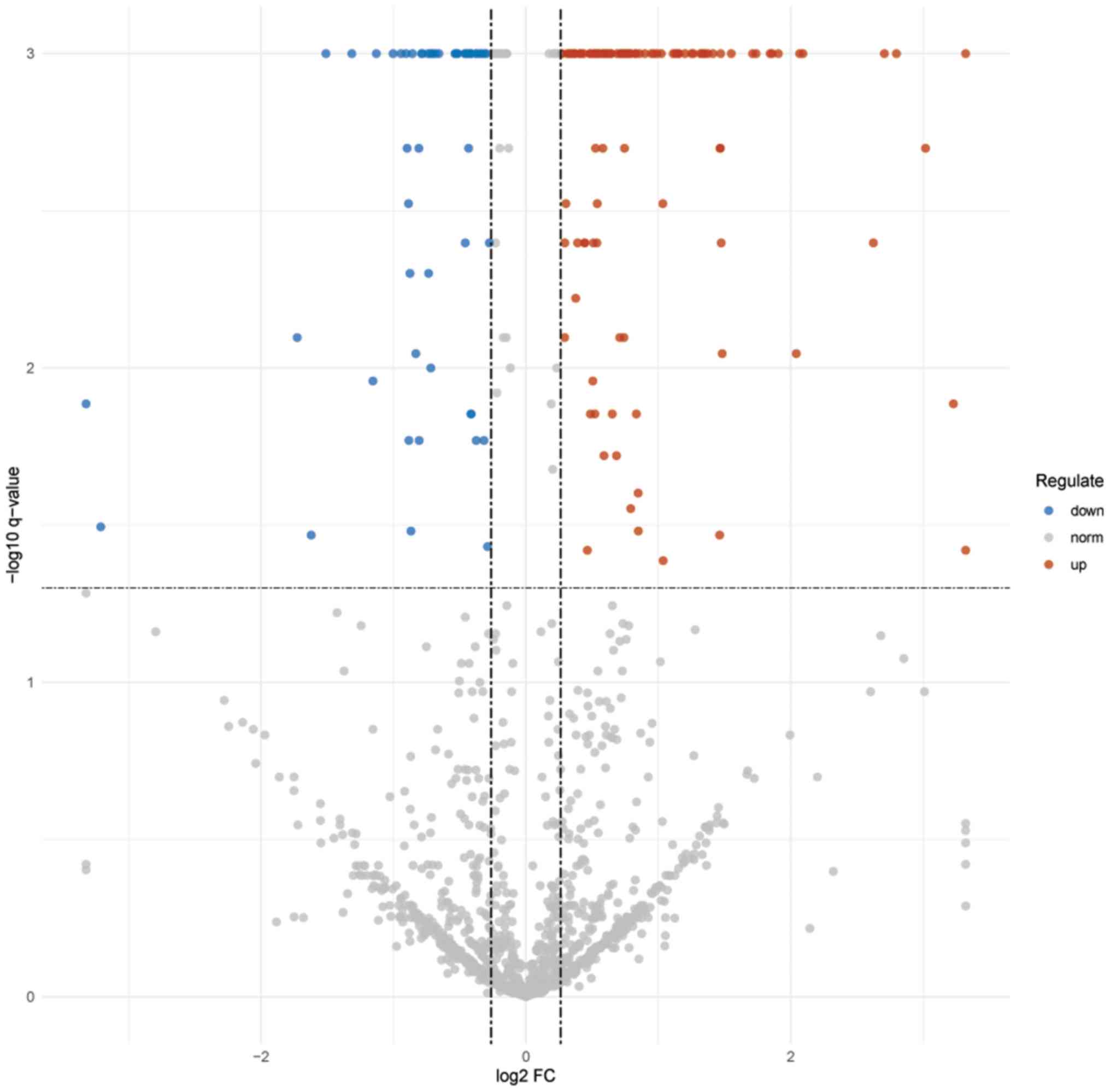
Transplantation is currently the best treatment for patients with end‑stage renal disease. However, acute rejection (AR) is the major source of failure in renal transplantation. The current best practice for the diagnosis of AR involves renal biopsy, but it is invasive, time‑consuming, costly and inconvenient. Sensitive and less invasive detection of AR episodes in renal transplant patients is essential to preserve allograft function. The present study applied isobaric tags for relative and absolute quantitation (iTRAQ) mass spectrometry to analyze serum protein expression in patients with AR and healthy controls. Overall, 1,399 proteins were identified. Using a cut‑off of Q<0.05 and a fold change of >1.2 for the variation in expression, 109 proteins were identified to be differentially expressed between the AR and control groups, 72 of which were upregulated and 37 were downregulated. Several proteins, including properdin, keratin 1, lipoprotein(a) and vitamin D‑binding protein, may have roles in the pathogenesis of AR. The present study focused on iTRAQ‑based proteomic profiling of serum samples in AR. Insight from the present study may help advance the understanding of the molecular mechanisms of AR and identify potential novel biomarkers of AR for further characterization.
View Figures

Figure 1

Figure 2

Figure 3

View References

1 

Wolfe RA, Ashby VB, Milford EL, Ojo AO, Ettenger RE, Agodoa LY, Held PJ and Port FK: Comparison of mortality in all patients on dialysis, patients on dialysis awaiting transplantation, and recipients of a first cadaveric transplant. N Engl J Med. 341:1725–1730. 1999. View Article : Google Scholar : PubMed/NCBI

2 

Hariharan S, Kasiske B, Matas A, Cohen A, Harmon W and Rabb H: Surrogate markers for long-term renal allograft survival. Am J Transplant. 4:1179–1183. 2004. View Article : Google Scholar : PubMed/NCBI

3 

Josephson MA: Monitoring and managing graft health in the kidney transplant recipient. Clin J Am Soc Nephrol. 6:1774–1780. 2011. View Article : Google Scholar : PubMed/NCBI

4 

Saundh BK, Baker R, Harris M, Welberry Smith MP, Cherukuri A and Hale A: Early BK polyomavirus (BKV) reactivation in donor kidney is a risk factor for development of BKV-associated nephropathy. J Infect Dis. 207:137–141. 2013. View Article : Google Scholar : PubMed/NCBI

5 

Sui W, Zhang R, Chen J, He H, Cui Z, Ou M, Li W, Qi S, Wen J, Lin X and Dai Y: Quantitative proteomic analysis of Down syndrome in the umbilical cord blood using iTRAQ. Mol Med Rep. 11:1391–1399. 2015. View Article : Google Scholar : PubMed/NCBI

6 

Tremlett H, Dai DL, Hollander Z, Kapanen A, Aziz T, Wilson-McManus JE, Tebbutt SJ, Borchers CH, Oger J and Cohen Freue GV: Serum proteomics in multiple sclerosis disease progression. J Proteomics. 118:2–11. 2015. View Article : Google Scholar : PubMed/NCBI

7 

Lin XC, Sui WG, Qi SW, Tang DE, Cong S, Zou GM, Zhang Y, Li H, Chen WB, Cheng ZQ and Dai Y: Quantitative proteomic profiling of renal tissue in human chronic rejection biopsy samples after renal transplantation. Transplant Proc. 47:323–331. 2015. View Article : Google Scholar : PubMed/NCBI

8 

Ross PL, Huang YN, Marchese JN, Williamson B, Parker K, Hattan S, Khainovski N, Pillai S, Dey S, Daniels S, et al: Multiplexed protein quantitation in Saccharomyces cerevisiae using amine-reactive isobaric tagging reagents. Mol Cell Proteomics. 3:1154–1169. 2004. View Article : Google Scholar : PubMed/NCBI

9 

Choe L, D'Ascenzo M, Relkin NR, Pappin D, Ross P, Williamson B, Guertin S, Pribil P and Lee KH: 8-plex quantitation of changes in cerebrospinal fluid protein expression in subjects undergoing intravenous immunoglobulin treatment for Alzheimer's disease. Proteomics. 7:3651–3660. 2007. View Article : Google Scholar : PubMed/NCBI

10 

Spanos C and Moore JB: Sample preparation approaches for iTRAQ labeling and quantitative proteomic analyses in systems biology. Methods Mol Biol. 1394:15–24. 2016. View Article : Google Scholar : PubMed/NCBI

11 

Desouza LV, Voisin SN and Siu KW: iTRAQ-labeling for biomarker discovery. Methods Mol Biol. 1002:105–114. 2013. View Article : Google Scholar : PubMed/NCBI

12 

Applied Biosystems iTRAQ™ Reagents Amine-modifying labeling reagents for multiplexed relative and absolute protein quantification chemistry reference guide. Applied Biosystems. Part Number 4351918 Rev. A. 2004.

13 

Zhang L, Jiang H, Xu G, Chu N, Xu N, Wen H, Gu B, Liu J, Mao S, Na R, et al: iTRAQ-based quantitative proteomic analysis reveals potential early diagnostic markers of clear-cell Renal cell carcinoma. Biosci Trends. 10:210–219. 2016. View Article : Google Scholar : PubMed/NCBI

14 

Wu D, Zhu D, Xu M, Rong R, Tang Q, Wang X and Zhu T: Analysis of transcriptional factors and regulation networks in patients with acute renal allograft rejection. J Proteome Res. 10:175–181. 2011. View Article : Google Scholar : PubMed/NCBI

15 

Freue GV, Sasaki M, Meredith A, Günther OP, Bergman A, Takhar M, Mui A, Balshaw RF, Ng RT, Opushneva N, et al: Proteomic signatures in plasma during early acute renal allograft rejection. Mol Cell Proteomics. 9:1954–1967. 2010. View Article : Google Scholar : PubMed/NCBI

16 

Wen B, Zhou R, Feng Q, Wang Q, Wang J and Liu S: IQuant: An automated pipeline for quantitative proteomics based upon isobaric tags. Proteomics. 14:2280–2285. 2014. View Article : Google Scholar : PubMed/NCBI

17 

Brosch M, Yu L, Hubbard T and Choudhary J: Accurate and sensitive peptide identification with mascot percolator. J Proteome Res. 8:3176–3181. 2009. View Article : Google Scholar : PubMed/NCBI

18 

Shen L, Liao L, Chen C, Guo Y, Song D, Wang Y, Chen Y, Zhang K, Ying M, Li S, et al: Proteomics Analysis of Blood Serums from Alzheimer's Disease Patients Using iTRAQ Labeling Technology. J Alzheimers Dis. 56:361–378. 2017. View Article : Google Scholar : PubMed/NCBI

19 

Wang J, Yu L, Huang X, Wang Y and Zhao J: Comparative proteome analysis of saccular intracranial aneurysms with iTRAQ quantitative proteomics. J Proteomics. 130:120–128. 2016. View Article : Google Scholar : PubMed/NCBI

20 

Wang X, Zhi Q, Liu S, Xue SL, Shen C, Li Y, Wu C, Tang Z, Chen W, Song JL, et al: Identifcation of specifc biomarkers for gastric adenocarcinoma by ITRAQ proteomic approach. Sci Rep. 6:388712016. View Article : Google Scholar : PubMed/NCBI

21 

Chen J, Ge L, Liu A, Yuan Y, Ye J, Zhong J, Liu L and Chen X: Identification of pathways related to FAF1/H. pylori-associated gastric carcinogenesis through an integrated approach based on iTRAQ quantification and literature review. J Proteomics. 131:163–176. 2016. View Article : Google Scholar : PubMed/NCBI

22 

Perez JD, Sakata MM, Colucci JA, Spinelli GA, Felipe CR, Carvalho VM, Cardozo KH, Medina-Pestana JO, Tedesco-Silva H Jr, Schor N and Casarini DE: Plasma proteomics for the assessment of acute renal transplant rejection. Life Sci. 158:111–120. 2016. View Article : Google Scholar : PubMed/NCBI

23 

Williams WW, Taheri D, Tolkoff-Rubin N and Colvin RB: Clinical role of the renal transplant biopsy. Nat Rev Nephrol. 8:110–121. 2012. View Article : Google Scholar : PubMed/NCBI

24 

Nankivell BJ and Alexander SI: Rejection of the kidney allograft. N Engl J Med. 363:1451–1462. 2010. View Article : Google Scholar : PubMed/NCBI

25 

Schwarz A, Gwinner W, Hiss M, Radermacher J, Mengel M and Haller H: Safety and adequacy of renal transplant protocol biopsies. Am J Transplant. 5:1992–1996. 2005. View Article : Google Scholar : PubMed/NCBI

26 

Muenchhoff J, Poljak A, Song F, Raftery M, Brodaty H, Duncan M, McEvoy M, Attia J, Schofield PW and Sachdev PS: Plasma protein profiling of mild cognitive impairment and Alzheimer's disease across two independent cohorts. J Alzheimers Dis. 43:1355–1373. 2015. View Article : Google Scholar : PubMed/NCBI

27 

Feng X, Zhang J, Chen WN and Ching CB: Proteome profiling of Epstein-Barr virus infected nasopharyngeal carcinoma cell line: Identification of potential biomarkers by comparative iTRAQ-coupled 2D LC/MS-MS analysis. J Proteomics. 74:567–576. 2011. View Article : Google Scholar : PubMed/NCBI

28 

Jing L, Parker CE, Seo D, Hines MW, Dicheva N, Yu Y, Schwinn D, Ginsburg GS and Chen X: Discovery of biomarker candidates for coronary artery disease from an APOE-knock out mouse model using iTRAQ-based multiplex quantitative proteomics. Proteomics. 11:2763–2776. 2011. View Article : Google Scholar : PubMed/NCBI

29 

Ye H, Sun L, Huang X, Zhang P and Zhao X: A proteomic approach for plasma biomarker discovery with 8-plex iTRAQ labeling and SCX-LC-MS/MS. Mol Cell Biochem. 343:91–99. 2010. View Article : Google Scholar : PubMed/NCBI

30 

Couttas TA, Raftery MJ, Erce MA and Wilkins MR: Monitoring cytoplasmic protein complexes with blue native gel electrophoresis and stable isotope labelling with amino acids in cell culture: Analysis of changes in the 20S proteasome. Electrophoresis. 32:1819–1823. 2011. View Article : Google Scholar : PubMed/NCBI

31 

Albaum SP, Hahne H, Otto A, Haußmann U, Becher D, Poetsch A, Goesmann A and Nattkemper TW: A guide through the computational analysis of isotope-labeled mass spectrometry-based quantitative proteomics data: An application study. Proteome Sci. 9:302011. View Article : Google Scholar : PubMed/NCBI

32 

Jin J, Ku YH and Kim Y and Kim Y, Kim K, Lee JY, Cho YM, Lee HK, Park KS and Kim Y: Differential proteome profiling using iTRAQ in microalbuminuric and normoalbuminuric type 2 diabetic patients. Exp Diabetes Res. 2012:1686022012. View Article : Google Scholar : PubMed/NCBI

33 

Leong S, Nunez AC, Lin MZ, Crossett B, Christopherson RI and Baxter RC: iTRAQ-based proteomic profiling of breast cancer cell response to doxorubicin and TRAIL. J Proteome Res. 11:3561–3572. 2012. View Article : Google Scholar : PubMed/NCBI

34 

Ou M, Zhang X, Dai Y, Gao J, Zhu M, Yang X, Li Y, Yang T and Ding M: Identification of potential microRNA-target pairs associated with osteopetrosis by deep sequencing, iTRAQ proteomics and bioinformatics. Eur J Hum Genet. 22:625–632. 2014. View Article : Google Scholar : PubMed/NCBI

35 

Cernoch M and Viklicky O: Complement in kidney transplantation. Front Med (Lausanne). 4:662017. View Article : Google Scholar : PubMed/NCBI

36 

Thadhani R, Pascual M and Bonventre JV: Acute renal failure. N Engl J Med. 334:1448–1460. 1996. View Article : Google Scholar : PubMed/NCBI

37 

Hourcade DE: The role of properdin in the assembly of the alternative pathway C3 convertases of complement. J Biol Chem. 281:2128–2132. 2006. View Article : Google Scholar : PubMed/NCBI

38 

Lesher AM, Nilsson B and Song WC: Properdin in complement activation and tissue injury. Mol Immunol. 56:191–198. 2013. View Article : Google Scholar : PubMed/NCBI

39 

Miwa T, Sato S, Gullipalli D, Nangaku M and Song WC: Blocking properdin, the alternative pathway, and anaphylatoxin receptors ameliorates renal ischemia-reperfusion injury in decay-accelerating factor and CD59 doubleknockout mice. J Immunol. 190:3552–3559. 2013. View Article : Google Scholar : PubMed/NCBI

40 

Han M, Fan L, Qin Z, Lavingia B and Stastny P: Alleles of keratin 1 in families and populations. Hum Immunol. 74:1453–1458. 2013. View Article : Google Scholar : PubMed/NCBI

41 

Remotti F, Fetsch JF and Miettinen M: Keratin 1 expression in endothelia and mesenchymal tumors: An immunohistochemical analysis of healthy and neoplastic tissues. Hum Pathol. 32:873–879. 2001. View Article : Google Scholar : PubMed/NCBI

42 

Collard CD, Montalto MC, Reenstra WR, Buras JA and Stahl GL: Endothelial oxidative stress activates the lectin complement pathway: Role of cytokeratin 1. Am J Pathol. 159:1045–1054. 2001. View Article : Google Scholar : PubMed/NCBI

43 

Sun Q, Liu Z, Chen J, Chen H, Wen J, Cheng D and Li L: Circulating anti-endothelial cell antibodies are associated with poor outcome in renal allograft recipients with acute rejection. Clin J Am Soc Nephrol. 3:1479–1486. 2008. View Article : Google Scholar : PubMed/NCBI

44 

Sun Q, Cheng Z, Cheng D, Chen J, Ji S, Wen J, Zheng C and Liu Z: De novo development of circulating anti-endothelial cell antibodies rather than pre-existing antibodies is associated with post-transplant allograft rejection. Kidney Int. 79:655–662. 2011. View Article : Google Scholar : PubMed/NCBI

45 

Sun Q, Liu Z, Yin G, Chen H, Chen J and Li L: Detectable circulating antiendothelial cell antibodies in renal allograft recipients with C4d-positive acute rejection: A report of three cases. Transplantation. 79:1759–1762. 2005. View Article : Google Scholar : PubMed/NCBI

46 

Glotz D, Lucchiari N, Pegaz-Fiornet B and Suberbielle-Boissel C: Endothelial cells as targets of allograft rejection. Transplantation. 82 (Suppl 1):S19–S21. 2006. View Article : Google Scholar : PubMed/NCBI

47 

Qin Z, Zou Y, Lavingia B and Stastny P: Identification of endothelial cell surface antigens encoded by genes other than HLA. A combined immunoprecipitation and proteomic approach for the identification of antigens recognized by antibodies against endothelial cells in transplant recipients. Hum Immunol. 74:1445–1452. 2013. View Article : Google Scholar : PubMed/NCBI

48 

Guo X, Hu J, Luo W, Luo Q, Guo J, Tian F, Ming Y and Zou Y: Analysis of sera of recipients with allograft rejection indicates that keratin 1 is the target of anti-endothelial antibodies. J Immunol Res. 2017:86798412017. View Article : Google Scholar : PubMed/NCBI

49 

Nordestgaard BG, Chapman MJ, Ray K, Borén J, Andreotti F, Watts GF, Ginsberg H, Amarenco P, Catapano A, Descamps OS, et al: Lipoprotein (a) as a cardiovascular risk factor: Current status. Eur Heart J. 31:2844–2853. 2010. View Article : Google Scholar : PubMed/NCBI

50 

Smolders B, Lemmens R and Thijs V: Lipoprotein (a) and stroke: A meta-analysis of observational studies. Stroke. 38:1959–1966. 2007. View Article : Google Scholar : PubMed/NCBI

51 

Shimoyamada H, Fan J, Watanabe T and Nagata M: Accelerated atherosclerosis with apoLipoprotein (a) and oxidized low-density lipoprotein deposition in acute rejection of transplanted kidney analogous to atherosclerosis. Clin Transplant. 16 (Suppl 8):S35–S39. 2002. View Article : Google Scholar

52 

White P and Cooke N: The multifunctional properties and characteristics of vitamin D-binding protein. Trends Endocrinol Metab. 11:320–327. 2000. View Article : Google Scholar : PubMed/NCBI

53 

Speeckaert M, Huang G, Delanghe JR and Taes YE: Biological and clinical aspects of the vitamin D binding protein (Gc-globulin) and its polymorphism. Clin Chim Acta. 372:33–42. 2006. View Article : Google Scholar : PubMed/NCBI

54 

Daiger SP, Schanfield MS and Cavalli-Sforza LL: Group-specific component (Gc) proteins bind vitamin D and 25-hydroxyvitamin D. Proc Natl Acad Sci USA. 72:2076–2080. 1975. View Article : Google Scholar : PubMed/NCBI

55 

Mathieu C and Jafari M: Immunomodulation by 1,25-dihydroxyvitamin D3: Therapeutic implications in hemodialysis and renal transplantation. Clin Nephrol. 66:275–283. 2006. View Article : Google Scholar : PubMed/NCBI

56 

Gao Y, Wu K, Xu Y, Zhou H, He W, Zhang W, Cai L, Lin X, Fang Z, Luo Z, et al: Characterization of acute renal allograft rejection by human serum proteomic analysis. J Huazhong Univ Sci Technolog Med Sci. 29:585–591. 2009. View Article : Google Scholar : PubMed/NCBI

Related Articles

  • Abstract
  • View
  • Download
  • Twitter
Copy and paste a formatted citation
Spandidos Publications style
Zhang Y, Ou M, Lin H, Lai L, Chen H, Chen J, Sui W, Xue W, Zhang R, Gan Q, Gan Q, et al: Proteomic analysis of differentially expressed proteins in the serum of patients with acute renal allograft rejection using iTRAQ labelling technology. Mol Med Rep 22: 2329-2341, 2020.
APA
Zhang, Y., Ou, M., Lin, H., Lai, L., Chen, H., Chen, J. ... Dai, Y. (2020). Proteomic analysis of differentially expressed proteins in the serum of patients with acute renal allograft rejection using iTRAQ labelling technology. Molecular Medicine Reports, 22, 2329-2341. https://doi.org/10.3892/mmr.2020.11299
MLA
Zhang, Y., Ou, M., Lin, H., Lai, L., Chen, H., Chen, J., Sui, W., Xue, W., Zhang, R., Gan, Q., Tang, D., Sun, X., Dong, J., Yan, Q., Dai, Y."Proteomic analysis of differentially expressed proteins in the serum of patients with acute renal allograft rejection using iTRAQ labelling technology". Molecular Medicine Reports 22.3 (2020): 2329-2341.
Chicago
Zhang, Y., Ou, M., Lin, H., Lai, L., Chen, H., Chen, J., Sui, W., Xue, W., Zhang, R., Gan, Q., Tang, D., Sun, X., Dong, J., Yan, Q., Dai, Y."Proteomic analysis of differentially expressed proteins in the serum of patients with acute renal allograft rejection using iTRAQ labelling technology". Molecular Medicine Reports 22, no. 3 (2020): 2329-2341. https://doi.org/10.3892/mmr.2020.11299
Copy and paste a formatted citation
x
Spandidos Publications style
Zhang Y, Ou M, Lin H, Lai L, Chen H, Chen J, Sui W, Xue W, Zhang R, Gan Q, Gan Q, et al: Proteomic analysis of differentially expressed proteins in the serum of patients with acute renal allograft rejection using iTRAQ labelling technology. Mol Med Rep 22: 2329-2341, 2020.
APA
Zhang, Y., Ou, M., Lin, H., Lai, L., Chen, H., Chen, J. ... Dai, Y. (2020). Proteomic analysis of differentially expressed proteins in the serum of patients with acute renal allograft rejection using iTRAQ labelling technology. Molecular Medicine Reports, 22, 2329-2341. https://doi.org/10.3892/mmr.2020.11299
MLA
Zhang, Y., Ou, M., Lin, H., Lai, L., Chen, H., Chen, J., Sui, W., Xue, W., Zhang, R., Gan, Q., Tang, D., Sun, X., Dong, J., Yan, Q., Dai, Y."Proteomic analysis of differentially expressed proteins in the serum of patients with acute renal allograft rejection using iTRAQ labelling technology". Molecular Medicine Reports 22.3 (2020): 2329-2341.
Chicago
Zhang, Y., Ou, M., Lin, H., Lai, L., Chen, H., Chen, J., Sui, W., Xue, W., Zhang, R., Gan, Q., Tang, D., Sun, X., Dong, J., Yan, Q., Dai, Y."Proteomic analysis of differentially expressed proteins in the serum of patients with acute renal allograft rejection using iTRAQ labelling technology". Molecular Medicine Reports 22, no. 3 (2020): 2329-2341. https://doi.org/10.3892/mmr.2020.11299
Follow us
  • Twitter
  • LinkedIn
  • Facebook
About
  • Spandidos Publications
  • Careers
  • Cookie Policy
  • Privacy Policy
How can we help?
  • Help
  • Live Chat
  • Contact
  • Email to our Support Team