Spandidos Publications Logo
  • About
    • About Spandidos
    • Aims and Scopes
    • Abstracting and Indexing
    • Editorial Policies
    • Reprints and Permissions
    • Job Opportunities
    • Terms and Conditions
    • Contact
  • Journals
    • All Journals
    • Oncology Letters
      • Oncology Letters
      • Information for Authors
      • Editorial Policies
      • Editorial Board
      • Aims and Scope
      • Abstracting and Indexing
      • Bibliographic Information
      • Archive
    • International Journal of Oncology
      • International Journal of Oncology
      • Information for Authors
      • Editorial Policies
      • Editorial Board
      • Aims and Scope
      • Abstracting and Indexing
      • Bibliographic Information
      • Archive
    • Molecular and Clinical Oncology
      • Molecular and Clinical Oncology
      • Information for Authors
      • Editorial Policies
      • Editorial Board
      • Aims and Scope
      • Abstracting and Indexing
      • Bibliographic Information
      • Archive
    • Experimental and Therapeutic Medicine
      • Experimental and Therapeutic Medicine
      • Information for Authors
      • Editorial Policies
      • Editorial Board
      • Aims and Scope
      • Abstracting and Indexing
      • Bibliographic Information
      • Archive
    • International Journal of Molecular Medicine
      • International Journal of Molecular Medicine
      • Information for Authors
      • Editorial Policies
      • Editorial Board
      • Aims and Scope
      • Abstracting and Indexing
      • Bibliographic Information
      • Archive
    • Biomedical Reports
      • Biomedical Reports
      • Information for Authors
      • Editorial Policies
      • Editorial Board
      • Aims and Scope
      • Abstracting and Indexing
      • Bibliographic Information
      • Archive
    • Oncology Reports
      • Oncology Reports
      • Information for Authors
      • Editorial Policies
      • Editorial Board
      • Aims and Scope
      • Abstracting and Indexing
      • Bibliographic Information
      • Archive
    • Molecular Medicine Reports
      • Molecular Medicine Reports
      • Information for Authors
      • Editorial Policies
      • Editorial Board
      • Aims and Scope
      • Abstracting and Indexing
      • Bibliographic Information
      • Archive
    • World Academy of Sciences Journal
      • World Academy of Sciences Journal
      • Information for Authors
      • Editorial Policies
      • Editorial Board
      • Aims and Scope
      • Abstracting and Indexing
      • Bibliographic Information
      • Archive
    • International Journal of Functional Nutrition
      • International Journal of Functional Nutrition
      • Information for Authors
      • Editorial Policies
      • Editorial Board
      • Aims and Scope
      • Abstracting and Indexing
      • Bibliographic Information
      • Archive
    • International Journal of Epigenetics
      • International Journal of Epigenetics
      • Information for Authors
      • Editorial Policies
      • Editorial Board
      • Aims and Scope
      • Abstracting and Indexing
      • Bibliographic Information
      • Archive
    • Medicine International
      • Medicine International
      • Information for Authors
      • Editorial Policies
      • Editorial Board
      • Aims and Scope
      • Abstracting and Indexing
      • Bibliographic Information
      • Archive
  • Articles
  • Information
    • Information for Authors
    • Information for Reviewers
    • Information for Librarians
    • Information for Advertisers
    • Conferences
  • Language Editing
Spandidos Publications Logo
  • About
    • About Spandidos
    • Aims and Scopes
    • Abstracting and Indexing
    • Editorial Policies
    • Reprints and Permissions
    • Job Opportunities
    • Terms and Conditions
    • Contact
  • Journals
    • All Journals
    • Biomedical Reports
      • Information for Authors
      • Editorial Policies
      • Editorial Board
      • Aims and Scope
      • Abstracting and Indexing
      • Bibliographic Information
      • Archive
    • Experimental and Therapeutic Medicine
      • Information for Authors
      • Editorial Policies
      • Editorial Board
      • Aims and Scope
      • Abstracting and Indexing
      • Bibliographic Information
      • Archive
    • International Journal of Epigenetics
      • Information for Authors
      • Editorial Policies
      • Editorial Board
      • Aims and Scope
      • Abstracting and Indexing
      • Bibliographic Information
      • Archive
    • International Journal of Functional Nutrition
      • Information for Authors
      • Editorial Policies
      • Editorial Board
      • Aims and Scope
      • Abstracting and Indexing
      • Bibliographic Information
      • Archive
    • International Journal of Molecular Medicine
      • Information for Authors
      • Editorial Policies
      • Editorial Board
      • Aims and Scope
      • Abstracting and Indexing
      • Bibliographic Information
      • Archive
    • International Journal of Oncology
      • Information for Authors
      • Editorial Policies
      • Editorial Board
      • Aims and Scope
      • Abstracting and Indexing
      • Bibliographic Information
      • Archive
    • Medicine International
      • Information for Authors
      • Editorial Policies
      • Editorial Board
      • Aims and Scope
      • Abstracting and Indexing
      • Bibliographic Information
      • Archive
    • Molecular and Clinical Oncology
      • Information for Authors
      • Editorial Policies
      • Editorial Board
      • Aims and Scope
      • Abstracting and Indexing
      • Bibliographic Information
      • Archive
    • Molecular Medicine Reports
      • Information for Authors
      • Editorial Policies
      • Editorial Board
      • Aims and Scope
      • Abstracting and Indexing
      • Bibliographic Information
      • Archive
    • Oncology Letters
      • Information for Authors
      • Editorial Policies
      • Editorial Board
      • Aims and Scope
      • Abstracting and Indexing
      • Bibliographic Information
      • Archive
    • Oncology Reports
      • Information for Authors
      • Editorial Policies
      • Editorial Board
      • Aims and Scope
      • Abstracting and Indexing
      • Bibliographic Information
      • Archive
    • World Academy of Sciences Journal
      • Information for Authors
      • Editorial Policies
      • Editorial Board
      • Aims and Scope
      • Abstracting and Indexing
      • Bibliographic Information
      • Archive
  • Articles
  • Information
    • For Authors
    • For Reviewers
    • For Librarians
    • For Advertisers
    • Conferences
  • Language Editing
Login Register Submit
  • This site uses cookies
  • You can change your cookie settings at any time by following the instructions in our Cookie Policy. To find out more, you may read our Privacy Policy.

    I agree
Search articles by DOI, keyword, author or affiliation
Search
Advanced Search
presentation
Molecular Medicine Reports
Join Editorial Board Propose a Special Issue
Print ISSN: 1791-2997 Online ISSN: 1791-3004
Journal Cover
December-2020 Volume 22 Issue 6

Full Size Image

Sign up for eToc alerts
Recommend to Library

Journals

International Journal of Molecular Medicine

International Journal of Molecular Medicine

International Journal of Molecular Medicine is an international journal devoted to molecular mechanisms of human disease.

International Journal of Oncology

International Journal of Oncology

International Journal of Oncology is an international journal devoted to oncology research and cancer treatment.

Molecular Medicine Reports

Molecular Medicine Reports

Covers molecular medicine topics such as pharmacology, pathology, genetics, neuroscience, infectious diseases, molecular cardiology, and molecular surgery.

Oncology Reports

Oncology Reports

Oncology Reports is an international journal devoted to fundamental and applied research in Oncology.

Experimental and Therapeutic Medicine

Experimental and Therapeutic Medicine

Experimental and Therapeutic Medicine is an international journal devoted to laboratory and clinical medicine.

Oncology Letters

Oncology Letters

Oncology Letters is an international journal devoted to Experimental and Clinical Oncology.

Biomedical Reports

Biomedical Reports

Explores a wide range of biological and medical fields, including pharmacology, genetics, microbiology, neuroscience, and molecular cardiology.

Molecular and Clinical Oncology

Molecular and Clinical Oncology

International journal addressing all aspects of oncology research, from tumorigenesis and oncogenes to chemotherapy and metastasis.

World Academy of Sciences Journal

World Academy of Sciences Journal

Multidisciplinary open-access journal spanning biochemistry, genetics, neuroscience, environmental health, and synthetic biology.

International Journal of Functional Nutrition

International Journal of Functional Nutrition

Open-access journal combining biochemistry, pharmacology, immunology, and genetics to advance health through functional nutrition.

International Journal of Epigenetics

International Journal of Epigenetics

Publishes open-access research on using epigenetics to advance understanding and treatment of human disease.

Medicine International

Medicine International

An International Open Access Journal Devoted to General Medicine.

Journal Cover
December-2020 Volume 22 Issue 6

Full Size Image

Sign up for eToc alerts
Recommend to Library

  • Article
  • Citations
    • Cite This Article
    • Download Citation
    • Create Citation Alert
    • Remove Citation Alert
    • Cited By
  • Similar Articles
    • Related Articles (in Spandidos Publications)
    • Similar Articles (Google Scholar)
    • Similar Articles (PubMed)
  • Download PDF
  • Download XML
  • View XML

  • Supplementary Files
    • Supplementary_Data.pdf
Article Open Access

Smad‑binding decoy reduces extracellular matrix expression in human hypertrophic scar fibroblasts

  • Authors:
    • Chen Fan
    • Samir El Andaloussi
    • Taavi Lehto
    • Kiat Whye Kong
    • Yiqi Seow
  • View Affiliations / Copyright

    Affiliations: Skin Research Institute of Singapore, Agency for Science, Technology and Research (A STAR), Singapore 138648, Republic of Singapore, Department of Laboratory Medicine, Center for Advanced Therapies, Karolinska Institute, Stockholm 14186, Sweden, Molecular Engineering Laboratory, Institute of Bioengineering and Nanotechnology, A STAR, Singapore 138669, Republic of Singapore
    Copyright: © Fan et al. This is an open access article distributed under the terms of Creative Commons Attribution License.
  • Pages: 4589-4600
    |
    Published online on: September 29, 2020
       https://doi.org/10.3892/mmr.2020.11549
  • Expand metrics +
Metrics: Total Views: 0 (Spandidos Publications: | PMC Statistics: )
Metrics: Total PDF Downloads: 0 (Spandidos Publications: | PMC Statistics: )
Cited By (CrossRef): 0 citations Loading Articles...

This article is mentioned in:


Abstract

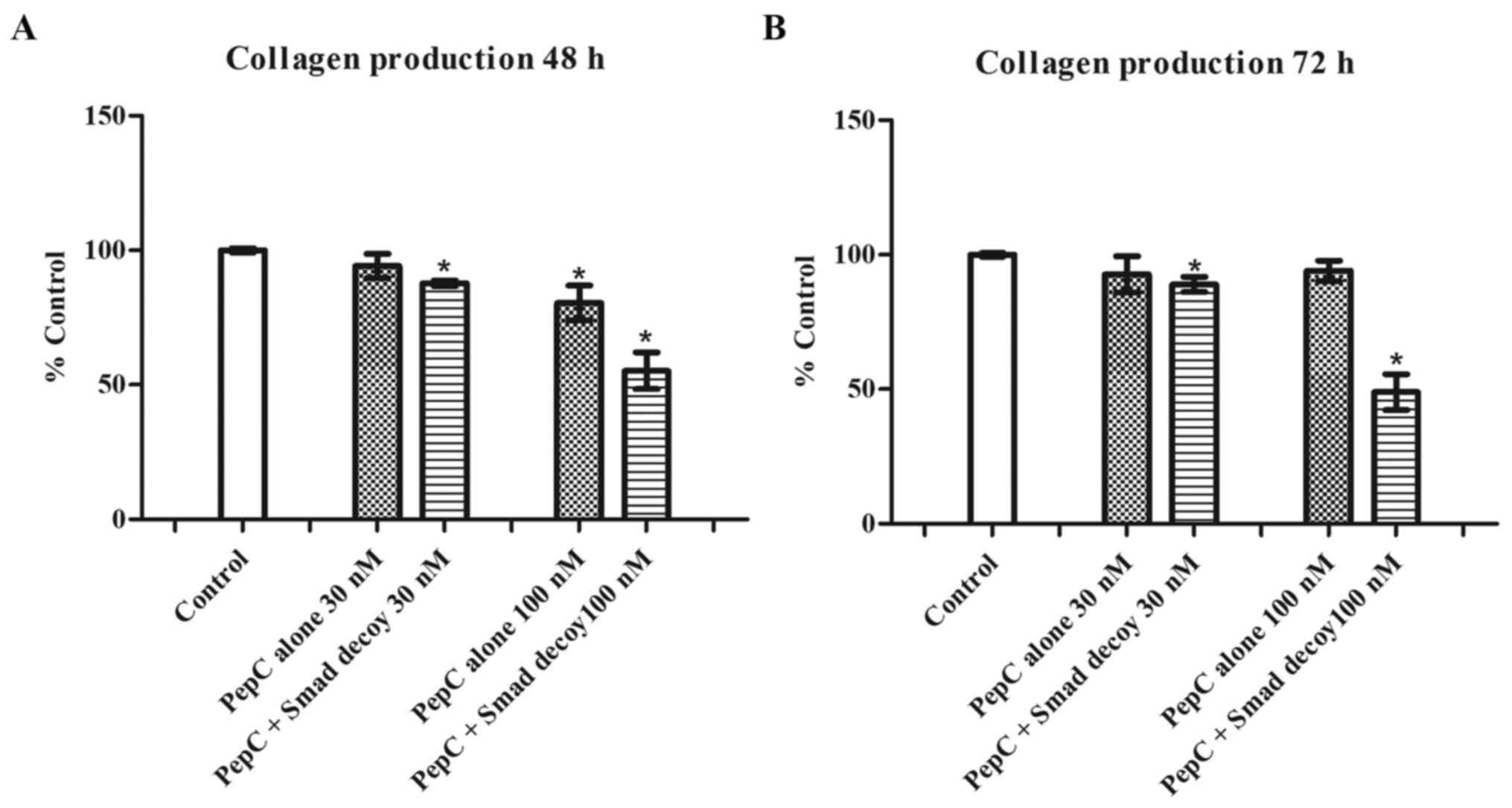
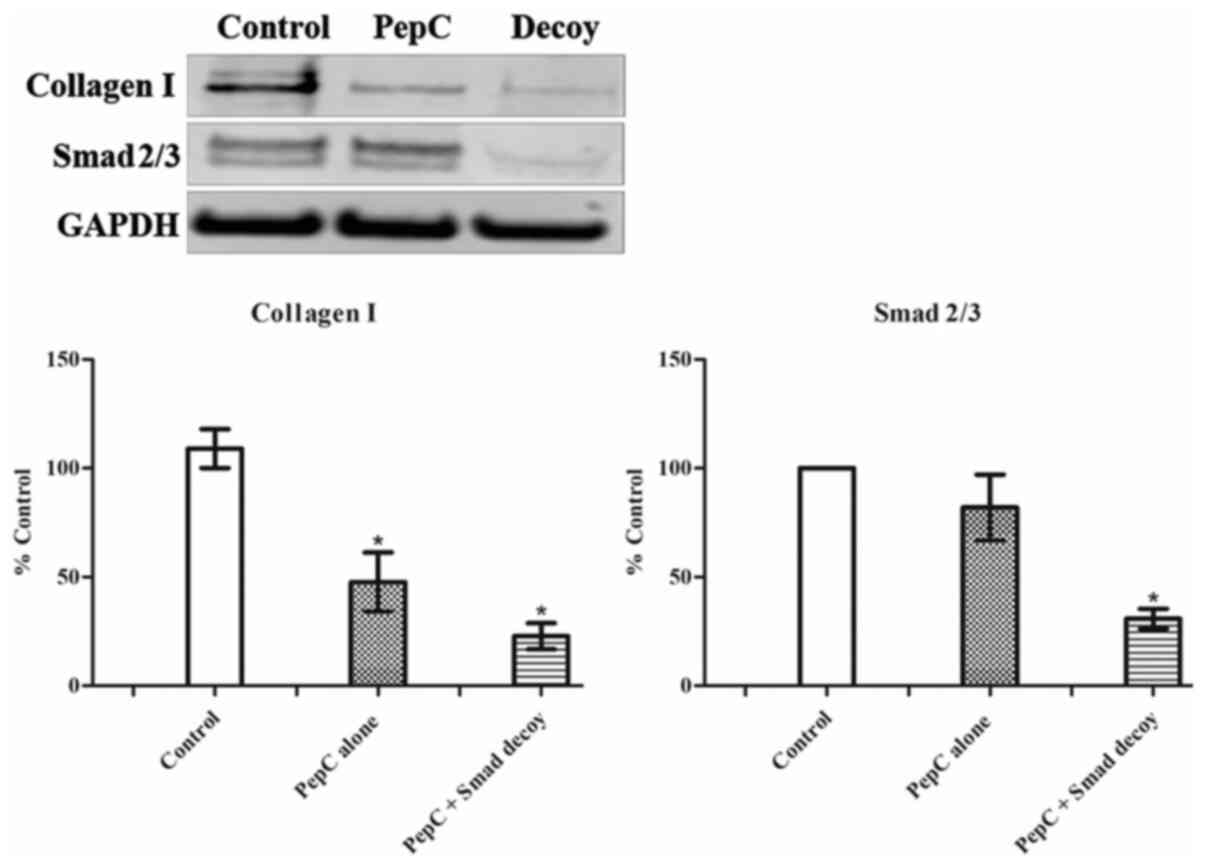
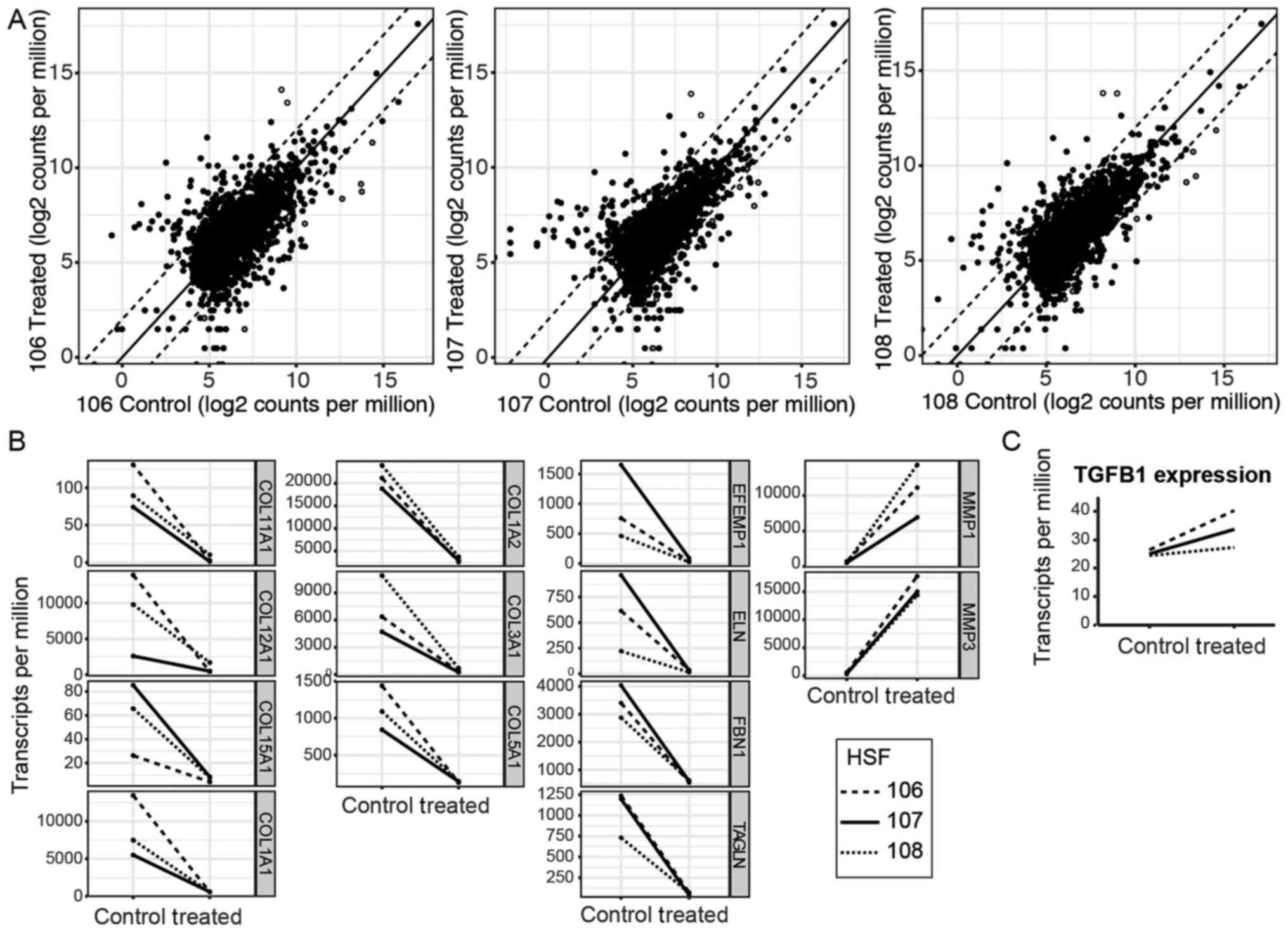
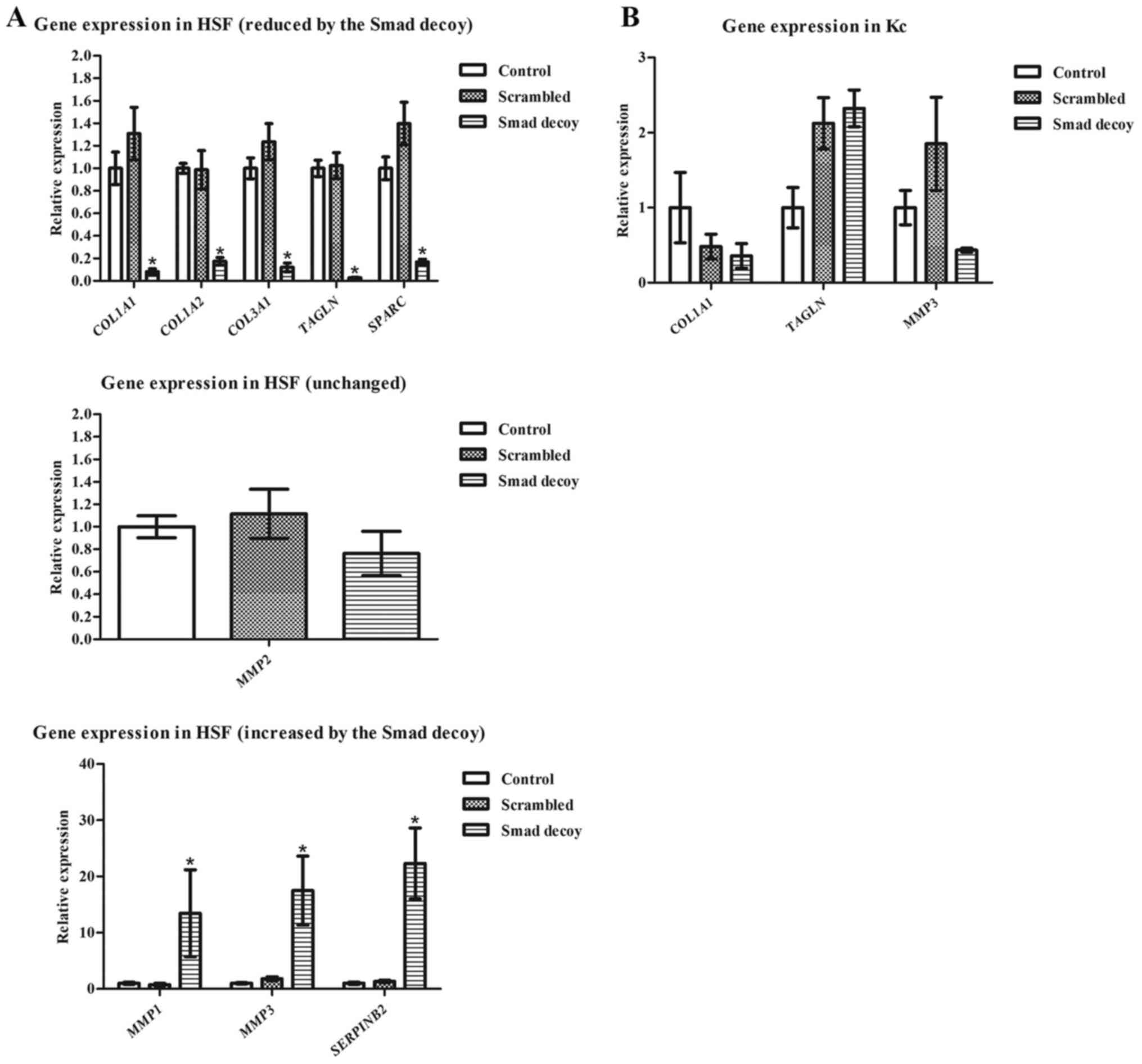
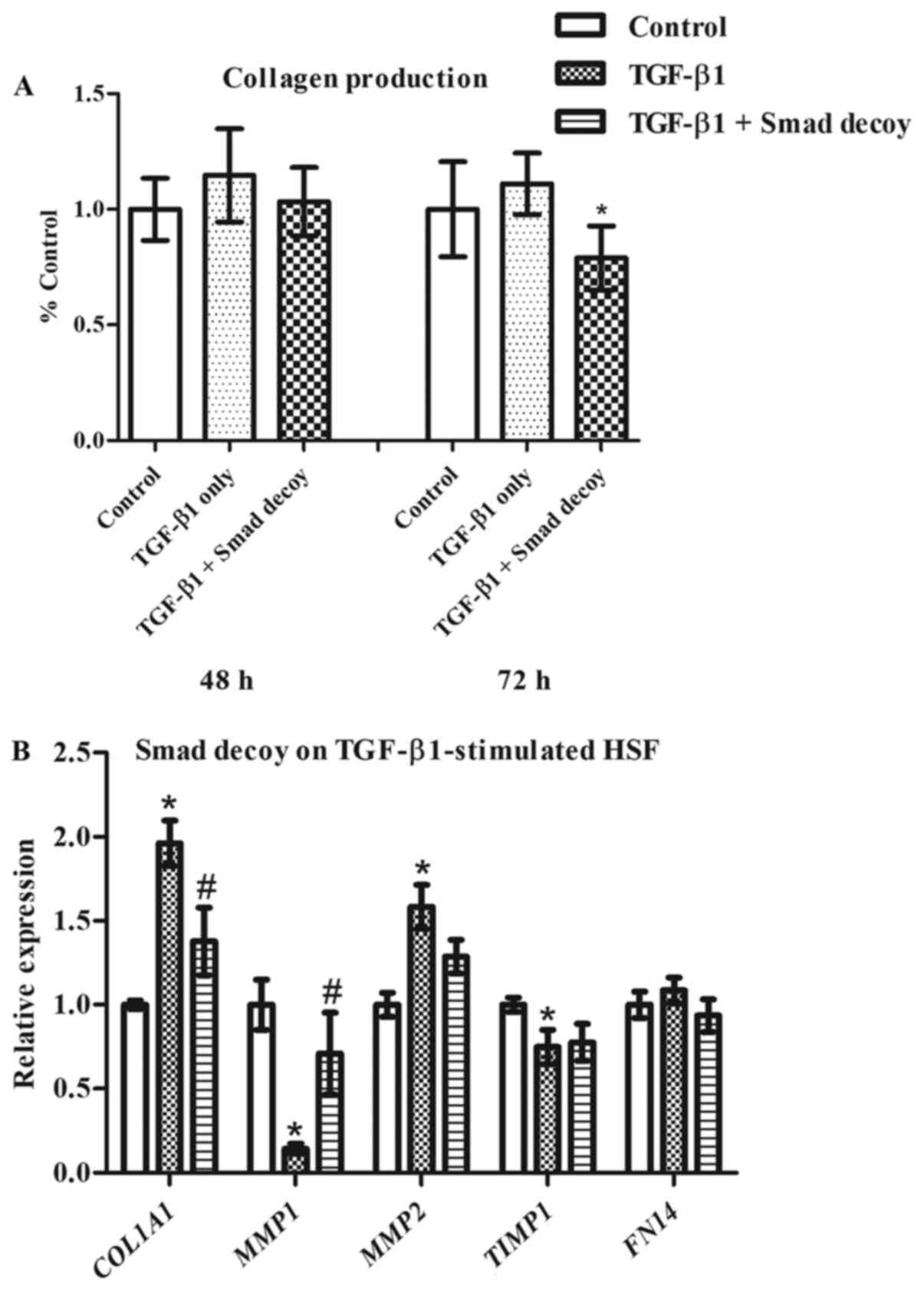
The exact mechanisms underlying hypertrophic scarring is yet to be fully understood. However, excessive collagen deposition by fibroblasts has been demonstrated to result in hypertrophic scar formation, and collagen synthesis in dermal fibroblasts is regulated by the transforming growth factor‑β1/Smad signaling pathway. In view of this, a Smad‑binding decoy was designed and its effects on hypertrophic scar‑derived human skin fibroblasts was evaluated. The results of the present study revealed that the Smad decoy attenuates the total amount of collagen, collagen I and Smad2/3 expression in scar fibroblasts. Data from RNA sequencing indicated that the Smad decoy induced more than 4‑fold change in 178 genes, primarily associated with to the extracellular matrix, compared with the untreated control. In addition, results from quantitative real‑time polymerase chain reaction further confirmed that the Smad decoy significantly attenuated the expression of extracellular matrix‑related genes, including COL1A1, COL1A2 and COL3A1. Furthermore, the Smad decoy reduced transforming growth factor‑β1‑induced collagen deposition in scar fibroblasts. Data generated from the present study provide evidence supporting the use of the Smad decoy as a potential hypertrophic scar treatment.
View Figures

Figure 1

Figure 2

Figure 3

Figure 4

Figure 5

View References

1 

Ogawa R: Keloid and hypertrophic scars are the result of chronic inflammation in the reticular dermis. Int J Mol Sci. 18:6062017. View Article : Google Scholar

2 

Bombaro KM, Engrav LH, Carrougher GJ, Wiechman SA, Faucher L, Costa BA, Heimbach DM, Rivara FP and Honari S: What is the prevalence of hypertrophic scarring following burns? Burns. 29:299–302. 2003. View Article : Google Scholar : PubMed/NCBI

3 

Xiao Z, Zhang M, Liu Y and Ren L: Botulinum toxin type a inhibits connective tissue growth factor expression in fibroblasts derived from hypertrophic scar. Aesthetic Plast Surg. 35:802–807. 2011. View Article : Google Scholar : PubMed/NCBI

4 

Son D and Harijan A: Overview of surgical scar prevention and management. J Korean Med Sci. 29:751–757. 2014. View Article : Google Scholar : PubMed/NCBI

5 

Cowin AJ, Holmes TM, Brosnan P and Ferguson MW: Expression of TGF-beta and its receptors in murine fetal and adult dermal wounds. Eur J Dermatol. 11:424–431. 2001.PubMed/NCBI

6 

Tredget EE, Yang L, Delehanty M, Shankowsky H and Scott PG: Polarized Th2 cytokine production in patients with hypertrophic scar following thermal injury. J Interferon Cytokine Res. 26:179–189. 2006. View Article : Google Scholar : PubMed/NCBI

7 

Macias MJ, Martin-Malpartida P and Massague J: Structural determinants of Smad function in TGF-β signaling. Trends Biochem Sci. 40:296–308. 2015. View Article : Google Scholar : PubMed/NCBI

8 

Zhang YE: Non-Smad pathways in TGF-beta signaling. Cell Res. 19:128–139. 2009. View Article : Google Scholar : PubMed/NCBI

9 

Shi Y and Massague J: Mechanisms of TGF-beta signaling from cell membrane to the nucleus. Cell. 113:685–700. 2003. View Article : Google Scholar : PubMed/NCBI

10 

Meng XM, Chung AC and Lan HY: Role of the TGF-β/BMP-7/Smad pathways in renal diseases. Clin Sci (Lond). 124:243–254. 2013. View Article : Google Scholar : PubMed/NCBI

11 

Chin GS, Liu W, Peled Z, Lee TY, Steinbrech DS, Hsu M and Longaker MT: Differential expression of transforming growth factor-beta receptors I and II and activation of Smad 3 in keloid fibroblasts. Plast Reconstr Surg. 108:423–429. 2001. View Article : Google Scholar : PubMed/NCBI

12 

Walraven M, Gouverneur M, Middelkoop E, Beelen RH and Ulrich MM: Altered TGF-β signaling in fetal fibroblasts: What is known about the underlying mechanisms? Wound Repair Regen. 22:3–13. 2014. View Article : Google Scholar : PubMed/NCBI

13 

Zawel L, Dai JL, Buckhaults P, Zhou S, Kinzler KW, Vogelstein B and Kern SE: Human Smad3 and Smad4 are sequence-specific transcription activators. Mol Cell. 1:611–617. 1998. View Article : Google Scholar : PubMed/NCBI

14 

Rheinwald JG and Green H: Serial cultivation of strains of human epidermal keratinocytes: The formation of keratinizing colonies from single cells. Cell. 6:331–343. 1975. View Article : Google Scholar : PubMed/NCBI

15 

Andaloussi SE, Lehto T, Mager I, Rosenthal-Aizman K, Oprea II, Simonson OE, Sork H, Ezzat K, Copolovici DM, Kurrikoff K, et al: Design of a peptide-based vector, PepFect6, for efficient delivery of siRNA in cell culture and systemically in vivo. Nucleic Acids Res. 39:3972–3987. 2011. View Article : Google Scholar : PubMed/NCBI

16 

Ezzat K, Andaloussi SE, Zaghloul EM, Lehto T, Lindberg S, Moreno PM, Viola JR, Magdy T, Abdo R, Guterstam P, et al: PepFect 14, a novel cell-penetrating peptide for oligonucleotide delivery in solution and as solid formulation. Nucleic Acids Res. 39:5284–5298. 2011. View Article : Google Scholar : PubMed/NCBI

17 

Fan C, Dong Y, Xie Y, Su Y, Zhang X, Leavesley D and Upton Z: Shikonin reduces TGF-β1-induced collagen production and contraction in hypertrophic scar-derived human skin fibroblasts. Int J Mol Med. 36:985–991. 2015. View Article : Google Scholar : PubMed/NCBI

18 

Trapnell C, Roberts A, Goff L, Pertea G, Kim D, Kelley DR, Pimentel H, Salzberg SL, Rinn JL and Pachter L: Differential gene and transcript expression analysis of RNA-seq experiments with TopHat and Cufflinks. Nat Protoc. 7:562–578. 2012. View Article : Google Scholar : PubMed/NCBI

19 

Anders S, Pyl PT and Huber W: HTSeq-a Python framework to work with high-throughput sequencing data. Bioinformatics. 31:166–169. 2015. View Article : Google Scholar : PubMed/NCBI

20 

Huang DW, Sherman BT and Lempicki RA: Systematic and integrative analysis of large gene lists using DAVID bioinformatics resources. Nat Protoc. 4:44–57. 2009. View Article : Google Scholar : PubMed/NCBI

21 

Applied Biosystems: Guide to performing relative quantitation of gene expression using real-time quantitative PCR. 2004. simplehttps://assets.thermofisher.com/TFS-Assets/LSG/manuals/cms_042380.pdf

22 

Verrecchia F, Chu ML and Mauviel A: Identification of novel TGF-beta/Smad gene targets in dermal fibroblasts using a combined cDNA microarray/promoter transactivation approach. J Biol Chem. 276:17058–17062. 2001. View Article : Google Scholar : PubMed/NCBI

23 

Fan C, Xie Y, Dong Y, Su Y and Upton Z: Investigating the potential of Shikonin as a novel hypertrophic scar treatment. J Biomed Sci. 22:702015. View Article : Google Scholar : PubMed/NCBI

24 

Chen S, Liu J, Yang M, Lai W, Ye L, Chen J, Hou X, Ding H, Zhang W, Wu Y, et al: Fn14, a downstream target of the TGF-β signaling pathway, regulates fibroblast activation. PLoS One. 10:e01438022015. View Article : Google Scholar : PubMed/NCBI

25 

Perkins K, Davey RB and Wallis KA: Silicone gel: A new treatment for burn scars and contractures. Burns Incl Therm Inj. 9:201–204. 1983. View Article : Google Scholar : PubMed/NCBI

26 

de Oliveira GV, Nunes TA and Magna LA: Silicone versus nonsilicone gel dressings: A controlled trial. Dermatol Surg. 27:721–726. 2001. View Article : Google Scholar : PubMed/NCBI

27 

Niessen FB, Spauwen PH, Schalkwijk J and Kon M: On the nature of hypertrophic scars and keloids: A review. Plast Reconstr Surg. 104:1435–1458. 1999. View Article : Google Scholar : PubMed/NCBI

28 

Casi G and Neri D: Antibody-drug conjugates and small molecule-drug conjugates: Opportunities and challenges for the development of selective anticancer cytotoxic agents. J Med Chem. 58:8751–8761. 2015. View Article : Google Scholar : PubMed/NCBI

29 

An S and Fu L: Small-molecule PROTACs: An emerging and promising approach for the development of targeted therapy drugs. EBioMedicine. 36:553–562. 2018. View Article : Google Scholar : PubMed/NCBI

30 

Wang L, Yang J, Ran B, Yang X, Zheng W, Long Y and Jiang X: Small Molecular TGF-β1-inhibitor-loaded electrospun fibrous scaffolds for preventing hypertrophic scars. ACS Appl Mater Interfaces. 9:32545–32553. 2017. View Article : Google Scholar : PubMed/NCBI

31 

Cardarelli F, Digiacomo L, Marchini C, Amici A, Salomone F, Fiume G, Rossetta A, Gratton E, Pozzi D and Caracciolo G: The intracellular trafficking mechanism of Lipofectamine-based transfection reagents and its implication for gene delivery. Sci Rep. 6:258792016. View Article : Google Scholar : PubMed/NCBI

32 

Di Lullo GA, Sweeney SM, Korkko J, Ala-Kokko L and San Antonio JD: Mapping the ligand-binding sites and disease-associated mutations on the most abundant protein in the human, type I collagen. J Biol Chem. 277:4223–4231. 2002. View Article : Google Scholar : PubMed/NCBI

33 

Zhu Y, Tao H, Jin C, Liu Y, Lu X, Hu X and Wang X: Transforming growth factor-β1 induces type II collagen and aggrecan expression via activation of extracellular signal-regulated kinase 1/2 and Smad2/3 signaling pathways. Mol Med Rep. 12:5573–5579. 2015. View Article : Google Scholar : PubMed/NCBI

34 

Santoro MM and Gaudino G: Cellular and molecular facets of keratinocyte reepithelization during wound healing. Exp Cell Res. 304:274–286. 2005. View Article : Google Scholar : PubMed/NCBI

35 

Brown NJ, Kimble RM, Gramotnev G, Rodger S and Cuttle L: Predictors of re-epithelialization in pediatric burn. Burns. 40:751–758. 2014. View Article : Google Scholar : PubMed/NCBI

36 

Das S, Mandal M, Chakraborti T, Mandal A and Chakraborti S: Structure and evolutionary aspects of matrix metalloproteinases: A brief overview. Mol Cell Biochem. 253:31–40. 2003. View Article : Google Scholar : PubMed/NCBI

37 

Eto H, Suga H, Aoi N, Kato H, Doi K, Kuno S, Tabata Y and Yoshimura K: Therapeutic potential of fibroblast growth factor-2 for hypertrophic scars: Upregulation of MMP-1 and HGF expression. Lab Invest. 92:214–223. 2012. View Article : Google Scholar : PubMed/NCBI

38 

Liu J, Shen JX, Wu HT, Li XL, Wen XF, Du CW and Zhang GJ: Collagen 1A1 (COL1A1) promotes metastasis of breast cancer and is a potential therapeutic target. Discov Med. 25:211–223. 2018.PubMed/NCBI

39 

Ma L, Gan C, Huang Y, Wang Y, Luo G and Wu J: Comparative proteomic analysis of extracellular matrix proteins secreted by hypertrophic scar with normal skin fibroblasts. Burns Trauma. 2:76–83. 2014. View Article : Google Scholar : PubMed/NCBI

40 

Seifert O, Bayat A, Geffers R, Dienus K, Buer J, Löfgren S and Matussek A: Identification of unique gene expression patterns within different lesional sites of keloids. Wound Repair Regen. 16:254–265. 2008. View Article : Google Scholar : PubMed/NCBI

41 

Amadeu TP, Braune AS, Porto LC, Desmouliere A and Costa AM: Fibrillin-1 and elastin are differentially expressed in hypertrophic scars and keloids. Wound Repair Regen. 12:169–174. 2004. View Article : Google Scholar : PubMed/NCBI

42 

Liu R, Hossain MM, Chen X and Jin JP: Mechanoregulation of SM22α/Transgelin. Biochemistry. 56:5526–5538. 2017. View Article : Google Scholar : PubMed/NCBI

43 

Assinder SJ, Stanton JA and Prasad PD: Transgelin: An actin-binding protein and tumour suppressor. Int J Biochem Cell Biol. 41:482–486. 2009. View Article : Google Scholar : PubMed/NCBI

44 

Ulrich D, Ulrich F, Unglaub F, Piatkowski A and Pallua N: Matrix metalloproteinases and tissue inhibitors of metalloproteinases in patients with different types of scars and keloids. J Plast Reconstr Aesthet Surg. 63:1015–1021. 2010. View Article : Google Scholar : PubMed/NCBI

45 

Poormasjedi-Meibod MS, Hartwell R, Kilani R and Ghahary A: Anti-scarring properties of different tryptophan derivatives. PLoS One. 9:e919552014. View Article : Google Scholar : PubMed/NCBI

46 

Martin-Malpartida P, Batet M, Kaczmarska Z, Freier R, Gomes T, Aragón E, Zou Y, Wang Q, Xi Q, Ruiz L, et al: Structural basis for genome wide recognition of 5-bp GC motifs by SMAD transcription factors. Nat Commun. 8:20702017. View Article : Google Scholar : PubMed/NCBI

47 

Walton KL, Johnson KE and Harrison CA: Targeting TGF-β Mediated SMAD signaling for the prevention of fibrosis. Front Pharmacol. 8:4612017. View Article : Google Scholar : PubMed/NCBI

48 

Basu A, Kligman LH, Samulewicz SJ and Howe CC: Impaired wound healing in mice deficient in a matricellular protein SPARC (osteonectin, BM-40). BMC Cell Biol. 2:152001. View Article : Google Scholar : PubMed/NCBI

49 

Chavez-Muñoz C, Hartwell R, Jalili RB, Jafarnejad SM, Lai A, Nabai L, Ghaffari A, Hojabrpour P, Kanaan N, Duronio V, et al: SPARC/SFN interaction, suppresses type I collagen in dermal fibroblasts. J Cell Biochem. 113:2622–2632. 2012. View Article : Google Scholar : PubMed/NCBI

50 

Dougherty KM, Pearson JM, Yang AY, Westrick RJ, Baker MS and Ginsburg D: The plasminogen activator inhibitor-2 gene is not required for normal murine development or survival. Proc Natl Acad Sci USA. 96:686–691. 1999. View Article : Google Scholar : PubMed/NCBI

51 

Rohani MG and Parks WC: Matrix remodeling by MMPs during wound repair. Matrix Biol. 44-46:113–121. 2015. View Article : Google Scholar : PubMed/NCBI

52 

Liu Y, Li Y, Li N, Teng W, Wang M, Zhang Y and Xiao Z: TGF-β1 promotes scar fibroblasts proliferation and transdifferentiation via up-regulating MicroRNA-21. Sci Rep. 6:322312016. View Article : Google Scholar : PubMed/NCBI

53 

Bai X, He T, Liu J, Wang Y, Fan L, Tao K, Shi J, Tang C, Su L and Hu D: Loureirin B inhibits fibroblast proliferation and extracellular matrix deposition in hypertrophic scar via TGF-β/Smad pathway. Exp Dermatol. 24:355–360. 2015. View Article : Google Scholar : PubMed/NCBI

54 

Kim ES, Kim MS and Moon A: TGF-beta-induced upregulation of MMP-2 and MMP-9 depends on p38 MAPK, but not ERK signaling in MCF10A human breast epithelial cells. Int J Oncol. 25:1375–1382. 2004.PubMed/NCBI

55 

Gill SE and Parks WC: Metalloproteinases and their inhibitors: Regulators of wound healing. Int J Biochem Cell Biol. 40:1334–1347. 2008. View Article : Google Scholar : PubMed/NCBI

56 

Qiu SS, Dotor J and Hontanilla B: Effect of P144® (Anti-TGF-β) in an ‘in vivo’ human hypertrophic scar model in nude mice. PLoS One. 10:e01444892015. View Article : Google Scholar : PubMed/NCBI

57 

Tredget EE, Wang R, Shen Q, Scott PG and Ghahary A: Transforming growth factor-beta mRNA and protein in hypertrophic scar tissues and fibroblasts: Antagonism by IFN-alpha and IFN-gamma in vitro and in vivo. J Interferon Cytokine Res. 20:143–151. 2000. View Article : Google Scholar : PubMed/NCBI

Related Articles

  • Abstract
  • View
  • Download
  • Twitter
Copy and paste a formatted citation
Spandidos Publications style
Fan C, El Andaloussi S, Lehto T, Kong KW and Seow Y: Smad‑binding decoy reduces extracellular matrix expression in human hypertrophic scar fibroblasts. Mol Med Rep 22: 4589-4600, 2020.
APA
Fan, C., El Andaloussi, S., Lehto, T., Kong, K.W., & Seow, Y. (2020). Smad‑binding decoy reduces extracellular matrix expression in human hypertrophic scar fibroblasts. Molecular Medicine Reports, 22, 4589-4600. https://doi.org/10.3892/mmr.2020.11549
MLA
Fan, C., El Andaloussi, S., Lehto, T., Kong, K. W., Seow, Y."Smad‑binding decoy reduces extracellular matrix expression in human hypertrophic scar fibroblasts". Molecular Medicine Reports 22.6 (2020): 4589-4600.
Chicago
Fan, C., El Andaloussi, S., Lehto, T., Kong, K. W., Seow, Y."Smad‑binding decoy reduces extracellular matrix expression in human hypertrophic scar fibroblasts". Molecular Medicine Reports 22, no. 6 (2020): 4589-4600. https://doi.org/10.3892/mmr.2020.11549
Copy and paste a formatted citation
x
Spandidos Publications style
Fan C, El Andaloussi S, Lehto T, Kong KW and Seow Y: Smad‑binding decoy reduces extracellular matrix expression in human hypertrophic scar fibroblasts. Mol Med Rep 22: 4589-4600, 2020.
APA
Fan, C., El Andaloussi, S., Lehto, T., Kong, K.W., & Seow, Y. (2020). Smad‑binding decoy reduces extracellular matrix expression in human hypertrophic scar fibroblasts. Molecular Medicine Reports, 22, 4589-4600. https://doi.org/10.3892/mmr.2020.11549
MLA
Fan, C., El Andaloussi, S., Lehto, T., Kong, K. W., Seow, Y."Smad‑binding decoy reduces extracellular matrix expression in human hypertrophic scar fibroblasts". Molecular Medicine Reports 22.6 (2020): 4589-4600.
Chicago
Fan, C., El Andaloussi, S., Lehto, T., Kong, K. W., Seow, Y."Smad‑binding decoy reduces extracellular matrix expression in human hypertrophic scar fibroblasts". Molecular Medicine Reports 22, no. 6 (2020): 4589-4600. https://doi.org/10.3892/mmr.2020.11549
Follow us
  • Twitter
  • LinkedIn
  • Facebook
About
  • Spandidos Publications
  • Careers
  • Cookie Policy
  • Privacy Policy
How can we help?
  • Help
  • Live Chat
  • Contact
  • Email to our Support Team