Spandidos Publications Logo
  • About
    • About Spandidos
    • Aims and Scopes
    • Abstracting and Indexing
    • Editorial Policies
    • Reprints and Permissions
    • Job Opportunities
    • Terms and Conditions
    • Contact
  • Journals
    • All Journals
    • Oncology Letters
      • Oncology Letters
      • Information for Authors
      • Editorial Policies
      • Editorial Board
      • Aims and Scope
      • Abstracting and Indexing
      • Bibliographic Information
      • Archive
    • International Journal of Oncology
      • International Journal of Oncology
      • Information for Authors
      • Editorial Policies
      • Editorial Board
      • Aims and Scope
      • Abstracting and Indexing
      • Bibliographic Information
      • Archive
    • Molecular and Clinical Oncology
      • Molecular and Clinical Oncology
      • Information for Authors
      • Editorial Policies
      • Editorial Board
      • Aims and Scope
      • Abstracting and Indexing
      • Bibliographic Information
      • Archive
    • Experimental and Therapeutic Medicine
      • Experimental and Therapeutic Medicine
      • Information for Authors
      • Editorial Policies
      • Editorial Board
      • Aims and Scope
      • Abstracting and Indexing
      • Bibliographic Information
      • Archive
    • International Journal of Molecular Medicine
      • International Journal of Molecular Medicine
      • Information for Authors
      • Editorial Policies
      • Editorial Board
      • Aims and Scope
      • Abstracting and Indexing
      • Bibliographic Information
      • Archive
    • Biomedical Reports
      • Biomedical Reports
      • Information for Authors
      • Editorial Policies
      • Editorial Board
      • Aims and Scope
      • Abstracting and Indexing
      • Bibliographic Information
      • Archive
    • Oncology Reports
      • Oncology Reports
      • Information for Authors
      • Editorial Policies
      • Editorial Board
      • Aims and Scope
      • Abstracting and Indexing
      • Bibliographic Information
      • Archive
    • Molecular Medicine Reports
      • Molecular Medicine Reports
      • Information for Authors
      • Editorial Policies
      • Editorial Board
      • Aims and Scope
      • Abstracting and Indexing
      • Bibliographic Information
      • Archive
    • World Academy of Sciences Journal
      • World Academy of Sciences Journal
      • Information for Authors
      • Editorial Policies
      • Editorial Board
      • Aims and Scope
      • Abstracting and Indexing
      • Bibliographic Information
      • Archive
    • International Journal of Functional Nutrition
      • International Journal of Functional Nutrition
      • Information for Authors
      • Editorial Policies
      • Editorial Board
      • Aims and Scope
      • Abstracting and Indexing
      • Bibliographic Information
      • Archive
    • International Journal of Epigenetics
      • International Journal of Epigenetics
      • Information for Authors
      • Editorial Policies
      • Editorial Board
      • Aims and Scope
      • Abstracting and Indexing
      • Bibliographic Information
      • Archive
    • Medicine International
      • Medicine International
      • Information for Authors
      • Editorial Policies
      • Editorial Board
      • Aims and Scope
      • Abstracting and Indexing
      • Bibliographic Information
      • Archive
  • Articles
  • Information
    • Information for Authors
    • Information for Reviewers
    • Information for Librarians
    • Information for Advertisers
    • Conferences
  • Language Editing
Spandidos Publications Logo
  • About
    • About Spandidos
    • Aims and Scopes
    • Abstracting and Indexing
    • Editorial Policies
    • Reprints and Permissions
    • Job Opportunities
    • Terms and Conditions
    • Contact
  • Journals
    • All Journals
    • Biomedical Reports
      • Information for Authors
      • Editorial Policies
      • Editorial Board
      • Aims and Scope
      • Abstracting and Indexing
      • Bibliographic Information
      • Archive
    • Experimental and Therapeutic Medicine
      • Information for Authors
      • Editorial Policies
      • Editorial Board
      • Aims and Scope
      • Abstracting and Indexing
      • Bibliographic Information
      • Archive
    • International Journal of Epigenetics
      • Information for Authors
      • Editorial Policies
      • Editorial Board
      • Aims and Scope
      • Abstracting and Indexing
      • Bibliographic Information
      • Archive
    • International Journal of Functional Nutrition
      • Information for Authors
      • Editorial Policies
      • Editorial Board
      • Aims and Scope
      • Abstracting and Indexing
      • Bibliographic Information
      • Archive
    • International Journal of Molecular Medicine
      • Information for Authors
      • Editorial Policies
      • Editorial Board
      • Aims and Scope
      • Abstracting and Indexing
      • Bibliographic Information
      • Archive
    • International Journal of Oncology
      • Information for Authors
      • Editorial Policies
      • Editorial Board
      • Aims and Scope
      • Abstracting and Indexing
      • Bibliographic Information
      • Archive
    • Medicine International
      • Information for Authors
      • Editorial Policies
      • Editorial Board
      • Aims and Scope
      • Abstracting and Indexing
      • Bibliographic Information
      • Archive
    • Molecular and Clinical Oncology
      • Information for Authors
      • Editorial Policies
      • Editorial Board
      • Aims and Scope
      • Abstracting and Indexing
      • Bibliographic Information
      • Archive
    • Molecular Medicine Reports
      • Information for Authors
      • Editorial Policies
      • Editorial Board
      • Aims and Scope
      • Abstracting and Indexing
      • Bibliographic Information
      • Archive
    • Oncology Letters
      • Information for Authors
      • Editorial Policies
      • Editorial Board
      • Aims and Scope
      • Abstracting and Indexing
      • Bibliographic Information
      • Archive
    • Oncology Reports
      • Information for Authors
      • Editorial Policies
      • Editorial Board
      • Aims and Scope
      • Abstracting and Indexing
      • Bibliographic Information
      • Archive
    • World Academy of Sciences Journal
      • Information for Authors
      • Editorial Policies
      • Editorial Board
      • Aims and Scope
      • Abstracting and Indexing
      • Bibliographic Information
      • Archive
  • Articles
  • Information
    • For Authors
    • For Reviewers
    • For Librarians
    • For Advertisers
    • Conferences
  • Language Editing
Login Register Submit
  • This site uses cookies
  • You can change your cookie settings at any time by following the instructions in our Cookie Policy. To find out more, you may read our Privacy Policy.

    I agree
Search articles by DOI, keyword, author or affiliation
Search
Advanced Search
presentation
Molecular Medicine Reports
Join Editorial Board Propose a Special Issue
Print ISSN: 1791-2997 Online ISSN: 1791-3004
Journal Cover
April-2021 Volume 23 Issue 4

Full Size Image

Sign up for eToc alerts
Recommend to Library

Journals

International Journal of Molecular Medicine

International Journal of Molecular Medicine

International Journal of Molecular Medicine is an international journal devoted to molecular mechanisms of human disease.

International Journal of Oncology

International Journal of Oncology

International Journal of Oncology is an international journal devoted to oncology research and cancer treatment.

Molecular Medicine Reports

Molecular Medicine Reports

Covers molecular medicine topics such as pharmacology, pathology, genetics, neuroscience, infectious diseases, molecular cardiology, and molecular surgery.

Oncology Reports

Oncology Reports

Oncology Reports is an international journal devoted to fundamental and applied research in Oncology.

Experimental and Therapeutic Medicine

Experimental and Therapeutic Medicine

Experimental and Therapeutic Medicine is an international journal devoted to laboratory and clinical medicine.

Oncology Letters

Oncology Letters

Oncology Letters is an international journal devoted to Experimental and Clinical Oncology.

Biomedical Reports

Biomedical Reports

Explores a wide range of biological and medical fields, including pharmacology, genetics, microbiology, neuroscience, and molecular cardiology.

Molecular and Clinical Oncology

Molecular and Clinical Oncology

International journal addressing all aspects of oncology research, from tumorigenesis and oncogenes to chemotherapy and metastasis.

World Academy of Sciences Journal

World Academy of Sciences Journal

Multidisciplinary open-access journal spanning biochemistry, genetics, neuroscience, environmental health, and synthetic biology.

International Journal of Functional Nutrition

International Journal of Functional Nutrition

Open-access journal combining biochemistry, pharmacology, immunology, and genetics to advance health through functional nutrition.

International Journal of Epigenetics

International Journal of Epigenetics

Publishes open-access research on using epigenetics to advance understanding and treatment of human disease.

Medicine International

Medicine International

An International Open Access Journal Devoted to General Medicine.

Journal Cover
April-2021 Volume 23 Issue 4

Full Size Image

Sign up for eToc alerts
Recommend to Library

  • Article
  • Citations
    • Cite This Article
    • Download Citation
    • Create Citation Alert
    • Remove Citation Alert
    • Cited By
  • Similar Articles
    • Related Articles (in Spandidos Publications)
    • Similar Articles (Google Scholar)
    • Similar Articles (PubMed)
  • Download PDF
  • Download XML
  • View XML
Article

ER stress mediated‑autophagy contributes to neurological dysfunction in traumatic brain injury via the ATF6 UPR signaling pathway

  • Authors:
    • Da-Yong Wang
    • Ming-Yan Hong
    • Jian Pei
    • Yun-He Gao
    • Yu Zheng
    • Xiang Xu
  • View Affiliations / Copyright

    Affiliations: Department of Neurosurgery, Tangshan Gongren Hospital, Tangshan, Hebei 063000, P.R. China
  • Article Number: 247
    |
    Published online on: February 1, 2021
       https://doi.org/10.3892/mmr.2021.11886
  • Expand metrics +
Metrics: Total Views: 0 (Spandidos Publications: | PMC Statistics: )
Metrics: Total PDF Downloads: 0 (Spandidos Publications: | PMC Statistics: )
Cited By (CrossRef): 0 citations Loading Articles...

This article is mentioned in:


Abstract

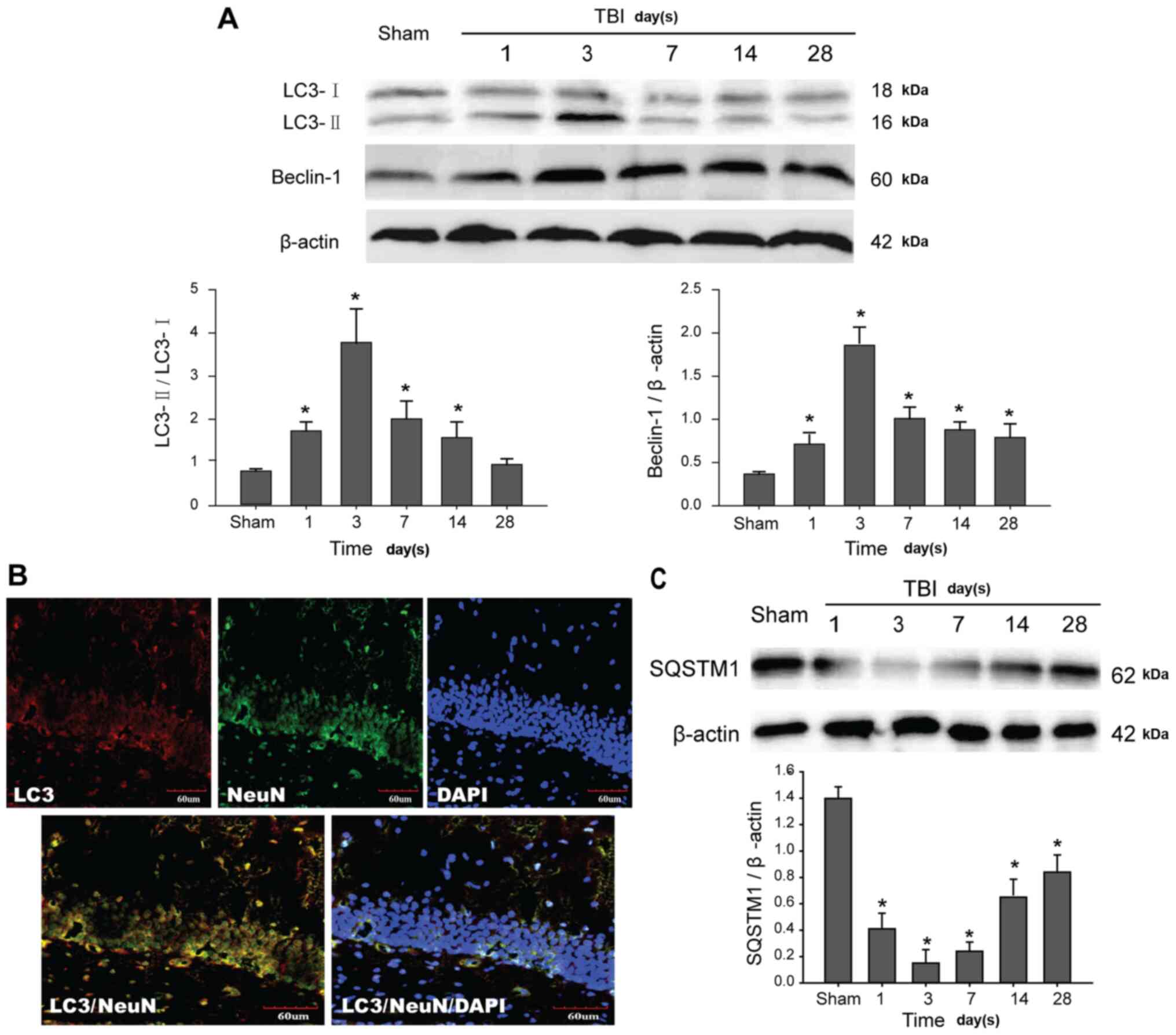
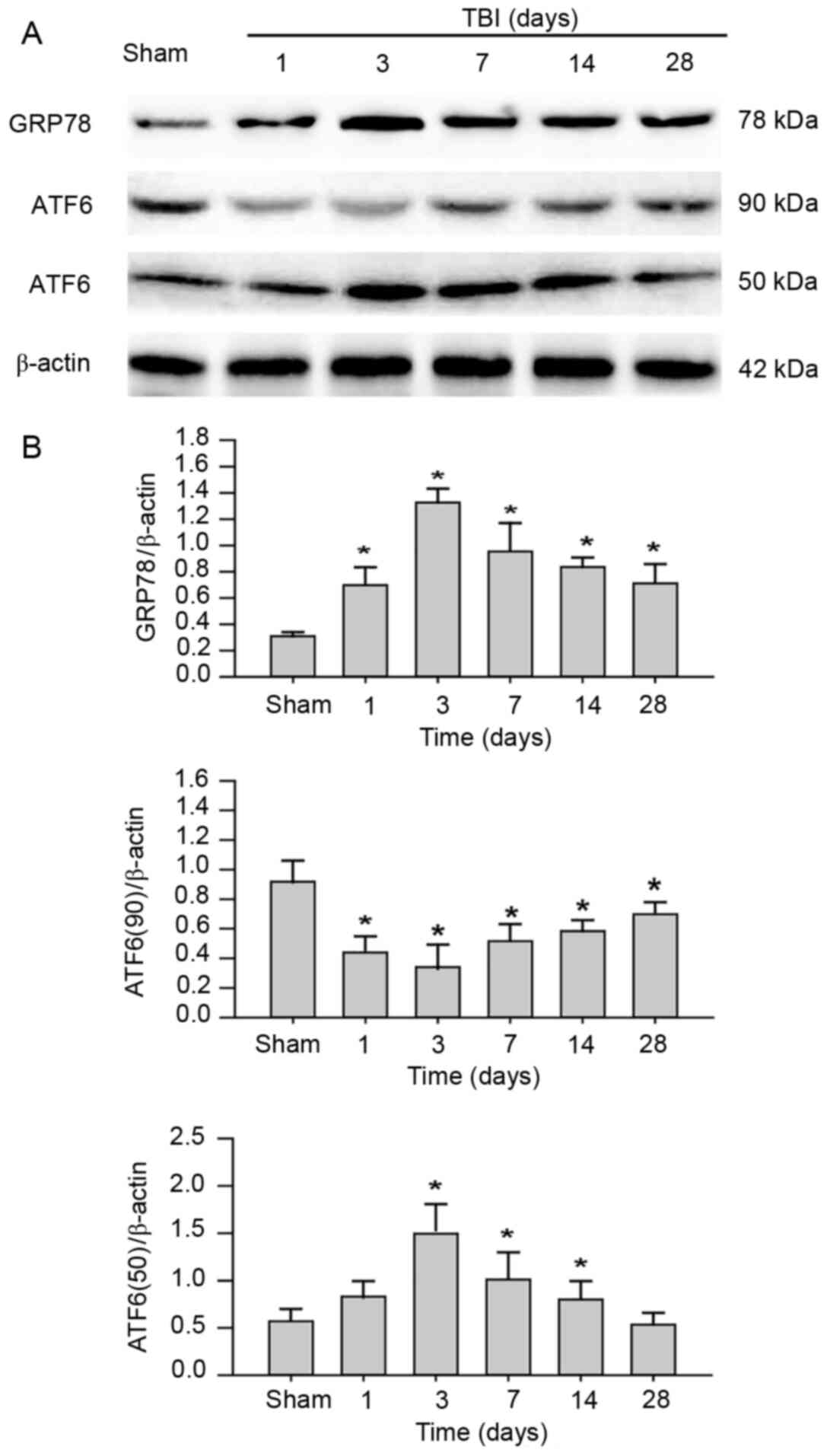
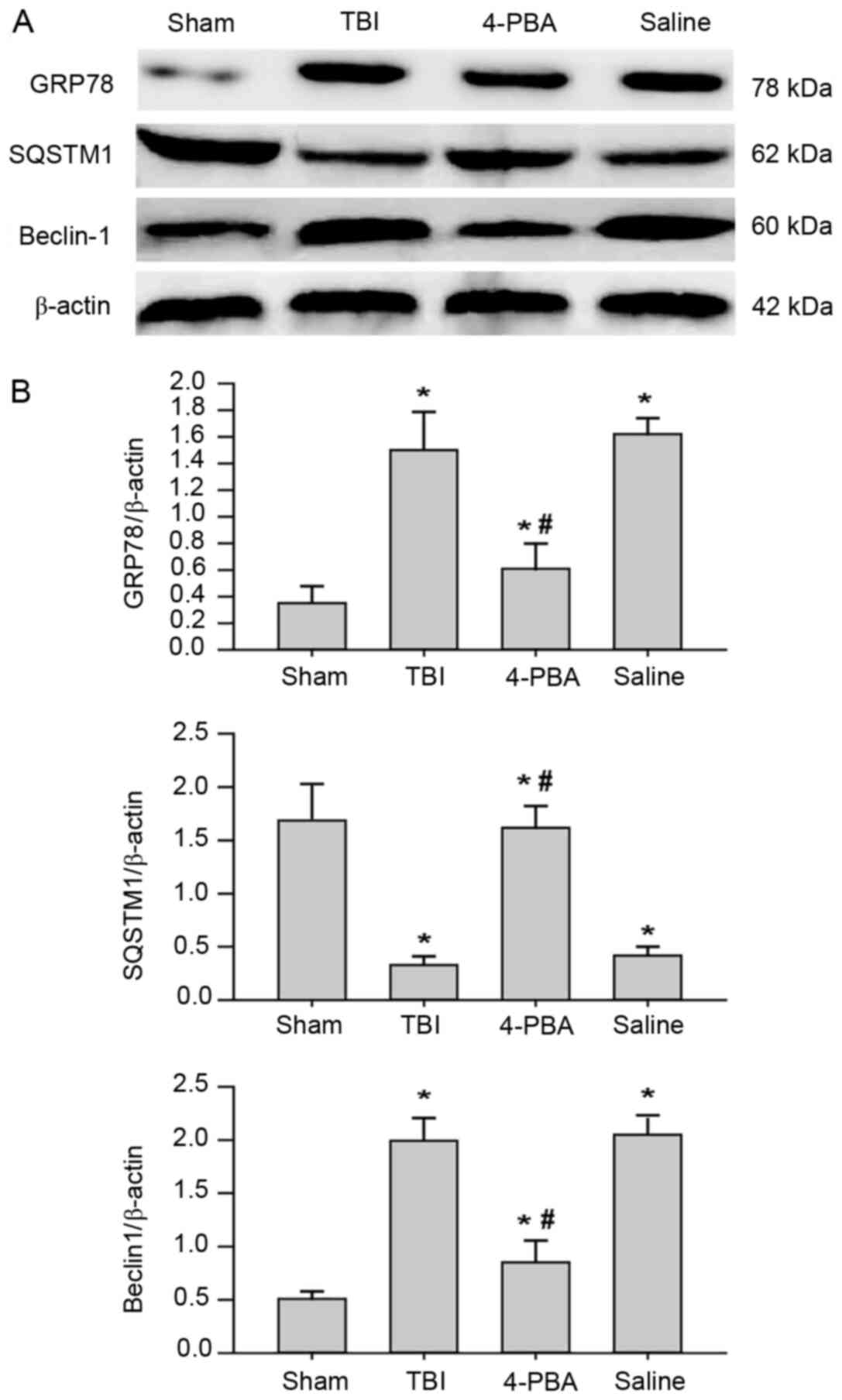
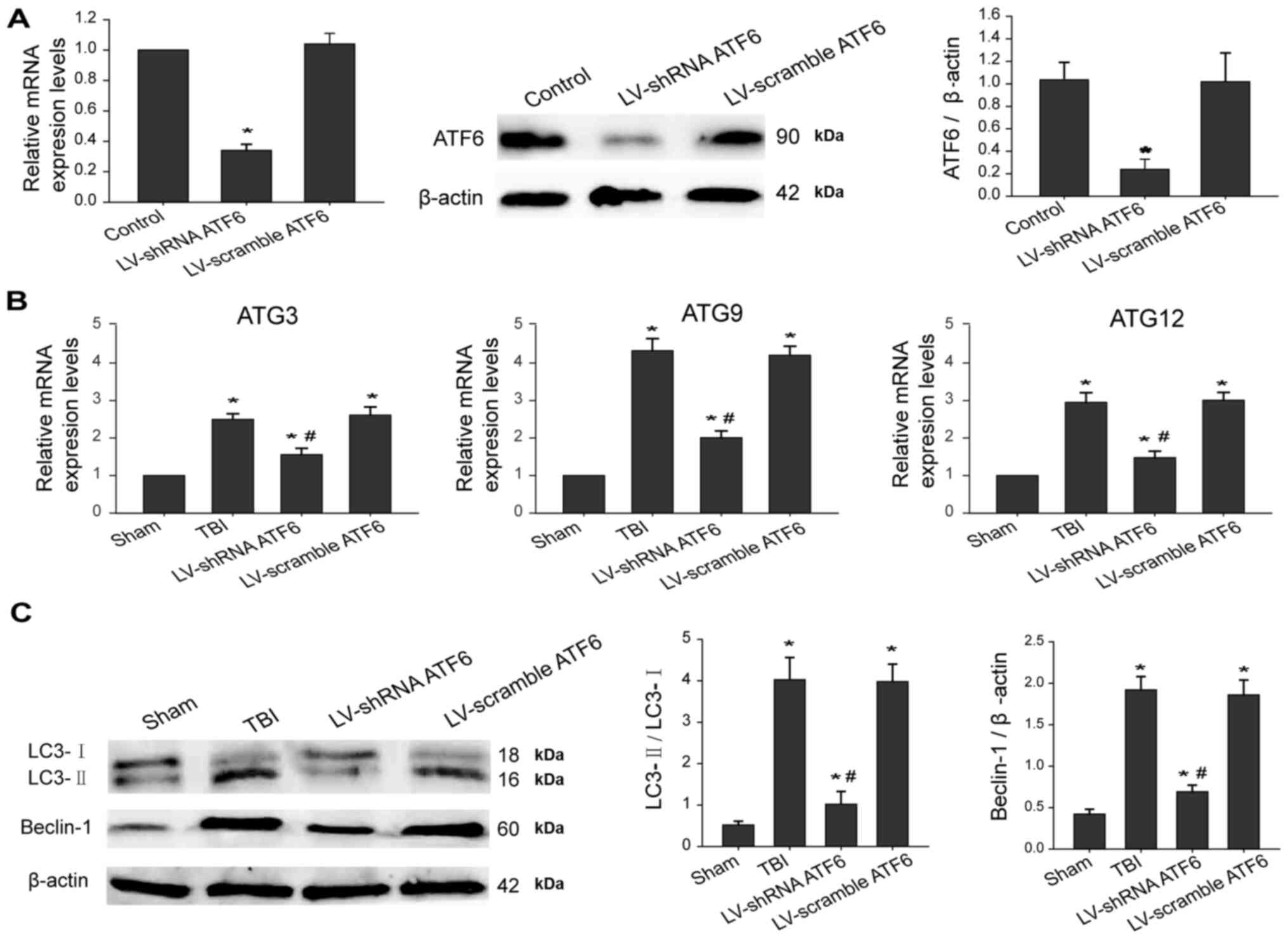
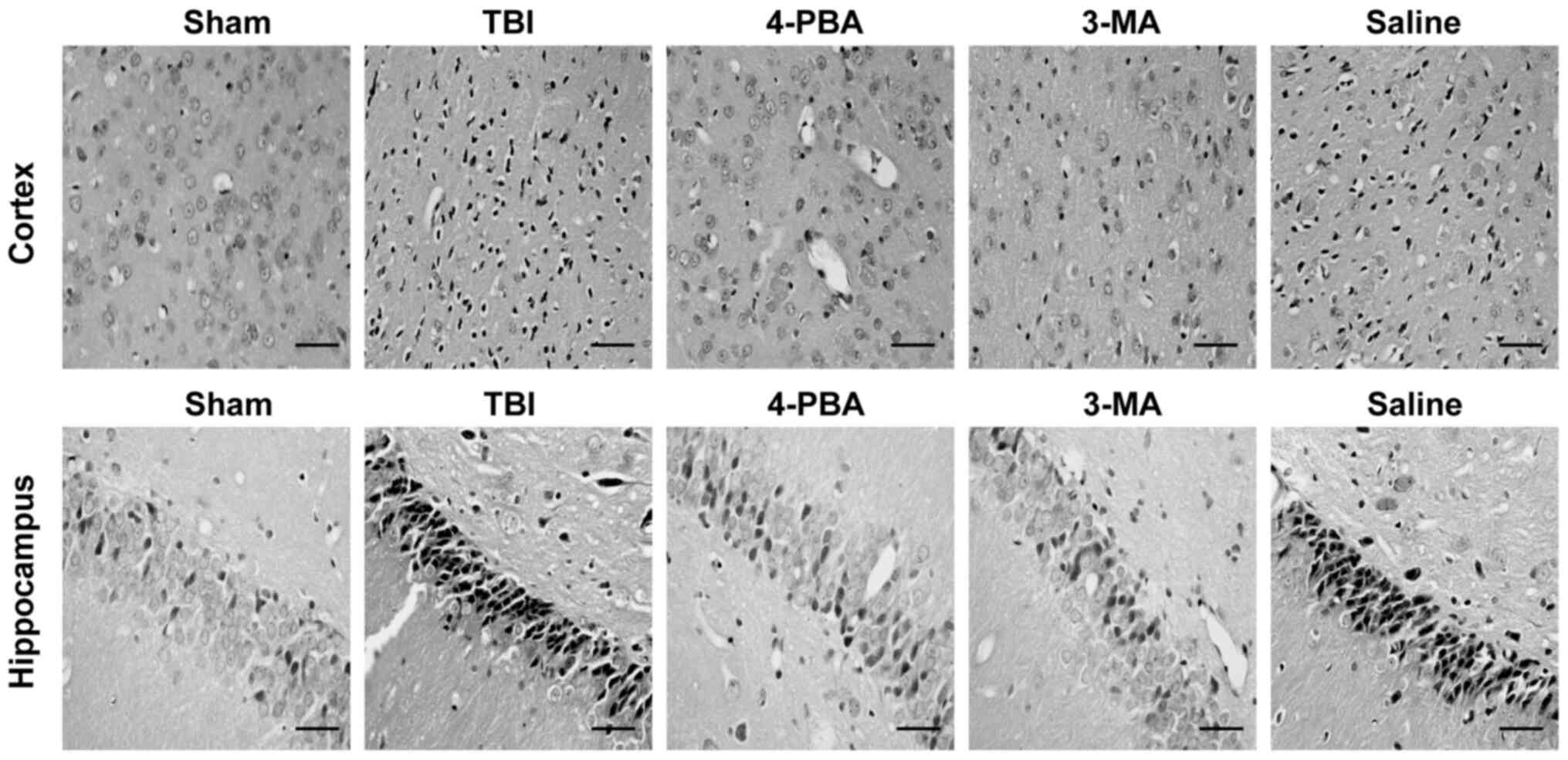
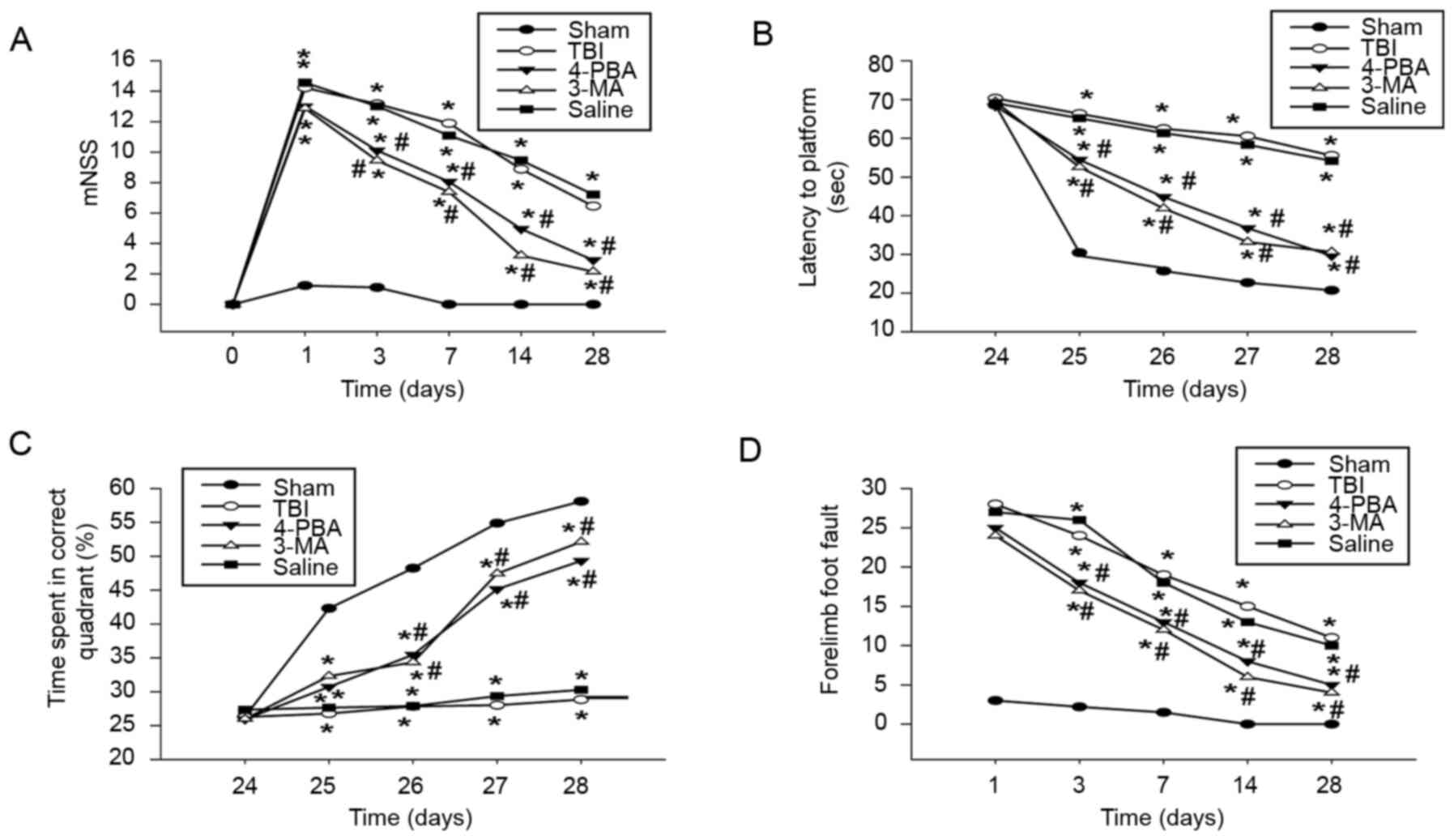
A major public health problem, traumatic brain injury (TBI) can cause severe neurological impairment. Although autophagy is closely associated with the pathogenesis of TBI, the role of autophagy in neurological deficits is unclear. The purpose of the present study was to investigate the molecular mechanisms of endoplasmic reticulum (ER) stress‑induced autophagy and its detrimental effects on neurological outcomes following TBI. A rat model of TBI was established by controlled cortical impact. ER stress activation, autophagy induction and autophagic flux dysfunction were examined in the damaged hippocampus post‑TBI. Pharmacological inhibition of ER stress significantly blocked post‑traumatic autophagy activation, as evidenced by decreased conversion of microtubule‑associated protein 1 light chain 3 (LC3)‑I to LC3‑II and Beclin‑1 expression levels in the hippocampus region. Short hairpin RNA‑mediated activating transcription factor 6 knockdown significantly prevented ER stress‑mediated autophagy stimulation via targeting essential autophagic genes, including autophagy related (ATG)3, ATG9 and ATG12. Furthermore, neurological scores, foot fault test and Morris water maze were used to evaluate the neurological functions of TBI rats. The results revealed that the blockage of ER stress or autophagy attenuated TBI‑induced traumatic damage and functional outcomes. In conclusion, these findings provided new insights into the molecular mechanisms of ER stress‑induced autophagy and demonstrated its potential role in neurological deficiency following TBI.
View Figures

Figure 1

Figure 2

Figure 3

Figure 4

Figure 5

Figure 6

View References

1 

Ng SY and Lee AYW: Traumatic Brain Injuries: Pathophysiology and Potential Therapeutic Targets. Front Cell Neurosci. 13:5282019. View Article : Google Scholar : PubMed/NCBI

2 

Dewan MC, Rattani A, Gupta S, Baticulon RE, Hung YC, Punchak M, Agrawal A, Adeleye AO, Shrime MG, Rubiano AM, et al: Estimating the global incidence of traumatic brain injury. J Neurosurg. 1:1–18. 2018.

3 

Iaccarino C, Carretta A, Nicolosi F and Morselli C: Epidemiology of severe traumatic brain injury. J Neurosurg Sci. 62:535–541. 2018.PubMed/NCBI

4 

Pavlovic D, Pekic S, Stojanovic M and Popovic V: Traumatic brain injury: Neuropathological, neurocognitive and neurobehavioral sequelae. Pituitary. 22:270–282. 2019. View Article : Google Scholar : PubMed/NCBI

5 

Ling H, Hardy J and Zetterberg H: Neurological consequences of traumatic brain injuries in sports. Mol Cell Neurosci. 66:114–122. 2015. View Article : Google Scholar : PubMed/NCBI

6 

Li D, Ni H, Rui Q, Gao R and Chen G: Deletion of Mst1 attenuates neuronal loss and improves neurological impairment in a rat model of traumatic brain injury. Brain Res. 1688:15–21. 2018. View Article : Google Scholar : PubMed/NCBI

7 

Wilson L, Stewart W, Dams-O'Connor K, Diaz-Arrastia R, Horton L, Menon DK and Polinder S: The chronic and evolving neurological consequences of traumatic brain injury. Lancet Neurol. 16:813–825. 2017. View Article : Google Scholar : PubMed/NCBI

8 

Zhang Z, Miah M, Culbreth M and Aschner M: Autophagy in neurodegenerative diseases and metal neurotoxicity. Neurochem Res. 41:409–422. 2016. View Article : Google Scholar : PubMed/NCBI

9 

Clark RS, Bayir H, Chu CT, Alber SM, Kochanek PM and Watkins SC: Autophagy is increased in mice after traumatic brain injury and is detectable in human brain after trauma and critical illness. Autophagy. 4:88–90. 2008. View Article : Google Scholar : PubMed/NCBI

10 

Wolf MS, Bayır H, Kochanek PM and Clark RSB: The role of autophagy in acute brain injury: A state of flux? Neurobiol Dis. 122:9–15. 2019. View Article : Google Scholar : PubMed/NCBI

11 

Liu CL, Chen S, Dietrich D and Hu BR: Changes in autophagy after traumatic brain injury. J Cereb Blood Flow Metab. 28:674–683. 2008. View Article : Google Scholar : PubMed/NCBI

12 

Jin Y, Wang R, Yang S, Zhang X and Dai J: Role of microglia autophagy in microglia activation after traumatic brain injury. World Neurosurg. 100:351–360. 2017. View Article : Google Scholar : PubMed/NCBI

13 

Zeng Z, Zhang Y, Jiang W, He L and Qu H: Modulation of autophagy in traumatic brain injury. J Cell Physiol. 235:1973–1985. 2020. View Article : Google Scholar : PubMed/NCBI

14 

Li D, Huang S, Zhu J, Hu T, Han Z, Zhang S, Zhao J, Chen F and Lei P: Exosomes from mir-21-5p-increased neurons play a role in neuroprotection by suppressing rab11a-mediated neuronal autophagy in vitro after traumatic brain injury. Med Sci Monit. 25:1871–1885. 2019. View Article : Google Scholar : PubMed/NCBI

15 

Feldmann LK, Le Prieult F, Felzen V, Thal SC, Engelhard K, Behl C and Mittmann T: Proteasome and autophagy-mediated impairment of late long-term potentiation (l-LTP) after traumatic brain injury in the somatosensory cortex of mice. Int J Mol Sci. 20:30482019. View Article : Google Scholar

16 

Feng Y, Cui C, Liu X, Wu Q, Hu F, Zhang H, Ma Z and Wang L: Protective role of apocynin via suppression of neuronal autophagy and TLR4/NF-κB signaling pathway in a rat model of traumatic brain injury. Neurochem Res. 42:3296–3309. 2017. View Article : Google Scholar : PubMed/NCBI

17 

Xu K, Wu F, Xu K, Li Z, Wei X, Lu Q, Jiang T, Wu F, Xu X, Xiao J, et al: NaHS restores mitochondrial function and inhibits autophagy by activating the PI3K/Akt/mTOR signalling pathway to improve functional recovery after traumatic brain injury. Chem Biol Interact. 286:96–105. 2018. View Article : Google Scholar : PubMed/NCBI

18 

Cai Y, Arikkath J, Yang L, Guo ML, Periyasamy P and Buch S: Interplay of endoplasmic reticulum stress and autophagy in neurodegenerative disorders. Autophagy. 12:225–244. 2016. View Article : Google Scholar : PubMed/NCBI

19 

Su Y and Li F: Endoplasmic reticulum stress in brain ischemia. Int J Neurosci. 126:681–691. 2016. View Article : Google Scholar : PubMed/NCBI

20 

Rashid HO, Yadav RK, Kim HR and Chae HJ: ER stress: Autophagy induction, inhibition and selection. Autophagy. 11:1956–1977. 2015. View Article : Google Scholar : PubMed/NCBI

21 

Zhang Q, Li Y, Liang T, Lu X, Zhang C, Liu X, Jiang X, Martin RC, Cheng M and Cai L: ER stress and autophagy dysfunction contribute to fatty liver in diabetic mice. Int J Biol Sci. 11:559–568. 2015. View Article : Google Scholar : PubMed/NCBI

22 

Hood KN, Zhao J, Redell JB, Hylin MJ, Harris B, Perez A, Moore AN and Dash PK: Endoplasmic reticulum stress contributes to the loss of newborn hippocampal neurons after traumatic brain injury. J Neurosci. 38:2372–2384. 2018. View Article : Google Scholar : PubMed/NCBI

23 

Hylin MJ, Holden RC, Smith AC, Logsdon AF, Qaiser R and Lucke-Wold BP: Juvenile traumatic brain injury results in cognitive deficits associated with impaired endoplasmic reticulum stress and early tauopathy. Dev Neurosci. 40:175–188. 2018. View Article : Google Scholar : PubMed/NCBI

24 

Yu Z, Sheng H, Liu S, Zhao S, Glembotski CC, Warner DS, Paschen W and Yang W: Activation of the ATF6 branch of the unfolded protein response in neurons improves stroke outcome. J Cereb Blood Flow Metab. 37:1069–1079. 2017. View Article : Google Scholar : PubMed/NCBI

25 

Adhami F, Schloemer A and Kuan CY: The roles of autophagy in cerebral ischemia. Autophagy. 3:42–44. 2007. View Article : Google Scholar : PubMed/NCBI

26 

Yin Y, Sun G, Li E, Kiselyov K and Sun D: ER stress and impaired autophagy flux in neuronal degeneration and brain injury. Ageing Res Rev. 34:3–14. 2017. View Article : Google Scholar : PubMed/NCBI

27 

Dixon CE, Clifton GL, Lighthall JW, Yaghmai AA and Hayes RL: A controlled cortical impact model of traumatic brain injury in the rat. J Neurosci Methods. 39:253–262. 1991. View Article : Google Scholar : PubMed/NCBI

28 

Wang L, Wang X, Su H, Han Z, Yu H, Wang D, Jiang R, Liu Z and Zhang J: Recombinant human erythropoietin improves the neurofunctional recovery of rats following traumatic brain injury via an increase in circulating endothelial progenitor cells. Transl Stroke Res. 6:50–59. 2015. View Article : Google Scholar : PubMed/NCBI

29 

Baskin YK, Dietrich WD and Green EJ: Two effective behavioral tasks for evaluating sensorimotor dysfunction following traumatic brain injury in mice. J Neurosci Methods. 129:87–93. 2003. View Article : Google Scholar : PubMed/NCBI

30 

Livak KJ and Schmittgen TD: Analysis of relative gene expression data using real-time quantitative PCR and the 2(−Δ Δ C(T)) Method. Methods. 25:402–408. 2001. View Article : Google Scholar : PubMed/NCBI

31 

Evans TD, Sergin I, Zhang X and Razani B: Target acquired: Selective autophagy in cardiometabolic disease. Sci Signal. 10:eaag22982017. View Article : Google Scholar : PubMed/NCBI

32 

Li Z and Li Z: Glucose regulated protein 78: A critical link between tumor microenvironment and cancer hallmarks. Biochim Biophys Acta. 1826:13–22. 2012.PubMed/NCBI

33 

Sprenkle NT, Sims SG, Sánchez CL and Meares GP: Endoplasmic reticulum stress and inflammation in the central nervous system. Mol Neurodegener. 12:422017. View Article : Google Scholar : PubMed/NCBI

34 

Shen J, Chen X, Hendershot L and Prywes R: ER stress regulation of ATF6 localization by dissociation of BiP/GRP78 binding and unmasking of Golgi localization signals. Dev Cell. 3:99–111. 2002. View Article : Google Scholar : PubMed/NCBI

35 

Whalen MJ, Carlos TM, Kochanek PM, Clark RS, Heineman S, Schiding JK, Franicola D, Memarzadeh F, Lo W, Marion DW, et al: Neutrophils do not mediate blood-brain barrier permeability early after controlled cortical impact in rats. J Neurotrauma. 16:583–594. 1999. View Article : Google Scholar : PubMed/NCBI

36 

Sun L, Zhao M, Liu M, Su P, Zhang J, Li Y, Yang X and Wu Z: Suppression of FoxO3a attenuates neurobehavioral deficits after traumatic brain injury through inhibiting neuronal autophagy. Behav Brain Res. 337:271–279. 2018. View Article : Google Scholar : PubMed/NCBI

37 

Zeng XJ, Li P, Ning YL, Zhao Y, Peng Y, Yang N, Zhao ZA, Chen JF and Zhou YG: Impaired autophagic flux is associated with the severity of trauma and the role of A2AR in brain cells after traumatic brain injury. Cell Death Dis. 9:2522018. View Article : Google Scholar : PubMed/NCBI

38 

Sun LQ, Gao JL, Cui CM, Cui Y, Jing XB, Zhao MM, Wang YC, Tian YX, Wang KJ and Cui JZ: Astrocytic p-connexin 43 regulates neuronal autophagy in the hippocampus following traumatic brain injury in rats. Mol Med Rep. 9:77–82. 2014. View Article : Google Scholar : PubMed/NCBI

39 

Zhao M, Liang F, Xu H, Yan W and Zhang J: Methylene blue exerts a neuroprotective effect against traumatic brain injury by promoting autophagy and inhibiting microglial activation. Mol Med Rep. 13:13–20. 2016. View Article : Google Scholar : PubMed/NCBI

40 

Komatsu M, Kageyama S and Ichimura Y: p62/SQSTM1/A170: Physiology and pathology. Pharmacol Res. 66:457–462. 2012. View Article : Google Scholar : PubMed/NCBI

41 

Gao Y, Zhang MY, Wang T, Fan YY, Yu LS, Ye GH, Wang ZF, Gao C, Wang HC, Luo CL, et al: IL-33/ST2L Signaling Provides Neuroprotection Through Inhibiting Autophagy, Endoplasmic Reticulum Stress, and Apoptosis in a Mouse Model of Traumatic Brain Injury. Front Cell Neurosci. 12:952018. View Article : Google Scholar : PubMed/NCBI

42 

Wang CF, Zhao CC, He Y, Li ZY, Liu WL, Huang XJ, Deng YF and Li WP: Mild hypothermia reduces endoplasmic reticulum stress-induced apoptosis and improves neuronal functions after severe traumatic brain injury. Brain Behav. 9:e012482019. View Article : Google Scholar : PubMed/NCBI

43 

Sun X, Zhang X, Zhai H, Zhang D and Ma S: Chicoric acid (CA) induces autophagy in gastric cancer through promoting endoplasmic reticulum (ER) stress regulated by AMPK. Biomed Pharmacother. 118:1091442019. View Article : Google Scholar : PubMed/NCBI

44 

Iurlaro R and Muñoz-Pinedo C: Cell death induced by endoplasmic reticulum stress. FEBS J. 283:2640–2652. 2016. View Article : Google Scholar : PubMed/NCBI

45 

Namba T, Ishihara T, Tanaka K, Hoshino T and Mizushima T: Transcriptional activation of ATF6 by endoplasmic reticulum stressors. Biochem Biophys Res Commun. 355:543–548. 2007. View Article : Google Scholar : PubMed/NCBI

46 

Sharma M, Bhattacharyya S, Sharma KB, Chauhan S, Asthana S, Abdin MZ, Vrati S and Kalia M: Japanese encephalitis virus activates autophagy through XBP1 and ATF6 ER stress sensors in neuronal cells. J Gen Virol. 98:1027–1039. 2017. View Article : Google Scholar : PubMed/NCBI

47 

Sun X, Li W, Deng Y, Dong B, Sun Y, Xue Y and Wang Y: Hepatic conditional knockout of ATF6 exacerbates liver metabolic damage by repressing autophage through MTOR pathway. Biochem Biophys Res Commun. 505:45–50. 2018. View Article : Google Scholar : PubMed/NCBI

48 

Zhou Y, Zhang S, Dai C, Tang S, Yang X, Li D, Zhao K and Xiao X: Quinocetone triggered ER stress-induced autophagy via ATF6/DAPK1-modulated mAtg9a trafficking. Cell Biol Toxicol. 32:141–152. 2016. View Article : Google Scholar : PubMed/NCBI

49 

Wang J, Kang R, Huang H, Xi X, Wang B, Wang J and Zhao Z: Hepatitis C virus core protein activates autophagy through EIF2AK3 and ATF6 UPR pathway-mediated MAP1LC3B and ATG12 expression. Autophagy. 10:766–784. 2014. View Article : Google Scholar : PubMed/NCBI

Related Articles

  • Abstract
  • View
  • Download
  • Twitter
Copy and paste a formatted citation
Spandidos Publications style
Wang D, Hong M, Pei J, Gao Y, Zheng Y and Xu X: ER stress mediated‑autophagy contributes to neurological dysfunction in traumatic brain injury via the ATF6 UPR signaling pathway. Mol Med Rep 23: 247, 2021.
APA
Wang, D., Hong, M., Pei, J., Gao, Y., Zheng, Y., & Xu, X. (2021). ER stress mediated‑autophagy contributes to neurological dysfunction in traumatic brain injury via the ATF6 UPR signaling pathway. Molecular Medicine Reports, 23, 247. https://doi.org/10.3892/mmr.2021.11886
MLA
Wang, D., Hong, M., Pei, J., Gao, Y., Zheng, Y., Xu, X."ER stress mediated‑autophagy contributes to neurological dysfunction in traumatic brain injury via the ATF6 UPR signaling pathway". Molecular Medicine Reports 23.4 (2021): 247.
Chicago
Wang, D., Hong, M., Pei, J., Gao, Y., Zheng, Y., Xu, X."ER stress mediated‑autophagy contributes to neurological dysfunction in traumatic brain injury via the ATF6 UPR signaling pathway". Molecular Medicine Reports 23, no. 4 (2021): 247. https://doi.org/10.3892/mmr.2021.11886
Copy and paste a formatted citation
x
Spandidos Publications style
Wang D, Hong M, Pei J, Gao Y, Zheng Y and Xu X: ER stress mediated‑autophagy contributes to neurological dysfunction in traumatic brain injury via the ATF6 UPR signaling pathway. Mol Med Rep 23: 247, 2021.
APA
Wang, D., Hong, M., Pei, J., Gao, Y., Zheng, Y., & Xu, X. (2021). ER stress mediated‑autophagy contributes to neurological dysfunction in traumatic brain injury via the ATF6 UPR signaling pathway. Molecular Medicine Reports, 23, 247. https://doi.org/10.3892/mmr.2021.11886
MLA
Wang, D., Hong, M., Pei, J., Gao, Y., Zheng, Y., Xu, X."ER stress mediated‑autophagy contributes to neurological dysfunction in traumatic brain injury via the ATF6 UPR signaling pathway". Molecular Medicine Reports 23.4 (2021): 247.
Chicago
Wang, D., Hong, M., Pei, J., Gao, Y., Zheng, Y., Xu, X."ER stress mediated‑autophagy contributes to neurological dysfunction in traumatic brain injury via the ATF6 UPR signaling pathway". Molecular Medicine Reports 23, no. 4 (2021): 247. https://doi.org/10.3892/mmr.2021.11886
Follow us
  • Twitter
  • LinkedIn
  • Facebook
About
  • Spandidos Publications
  • Careers
  • Cookie Policy
  • Privacy Policy
How can we help?
  • Help
  • Live Chat
  • Contact
  • Email to our Support Team